Guide
The rooms
King for All is one book. Everything else on this site is a room around it. The bar along the top keeps the rooms you will use most: Chapters, Volumes, Home, Wiki, Images, Map and 3D. The rest sit behind the ⋯. Each room below is shown as it stands, and, where the room is really an object from the script, that object is set out live.
Where to begin
Home is the hall. A loop of the peninsula plays in the middle, a wall of stills hangs beside it, and a short shelf of volumes stands underneath. If you have been here before, the door says Continue and opens the episode you left. If you have not, it says Read and starts at the beginning.

Read is the book. It opens on the foreword, then the episodes. While you are in it, the settings along the edge change how it is told. Full scroll is the whole chronicle in one sitting. Episodes hands you one at a time, with a previous and a next. Script, Immersion and Cinema are three ways of sitting in a scene. Screenplay is the text alone. Storyboard is each still with the line that belongs under it.

A person, the first time they walk on
Dialogue has its own switch. Script sets the lines like a play. Comic puts them in balloons. Tweet makes every speech a post. Hybrid uses messages for people who know each other, and posts for councils and strangers. English and Korean are the same switch, one setting for the whole site. Star a sentence as you go and it is kept for you on the quotes page.
The library
Library puts the shelf and the contents on one page: the 3D volumes on the left, every episode scrolling on the right. One volume is one chapter. The spines are gathered by part, and the cloth takes its colour from the kingdom or the person that chapter belongs to. Take a book down and its episode list opens; or scroll the rail and open any row to read.

One volume, in the hand
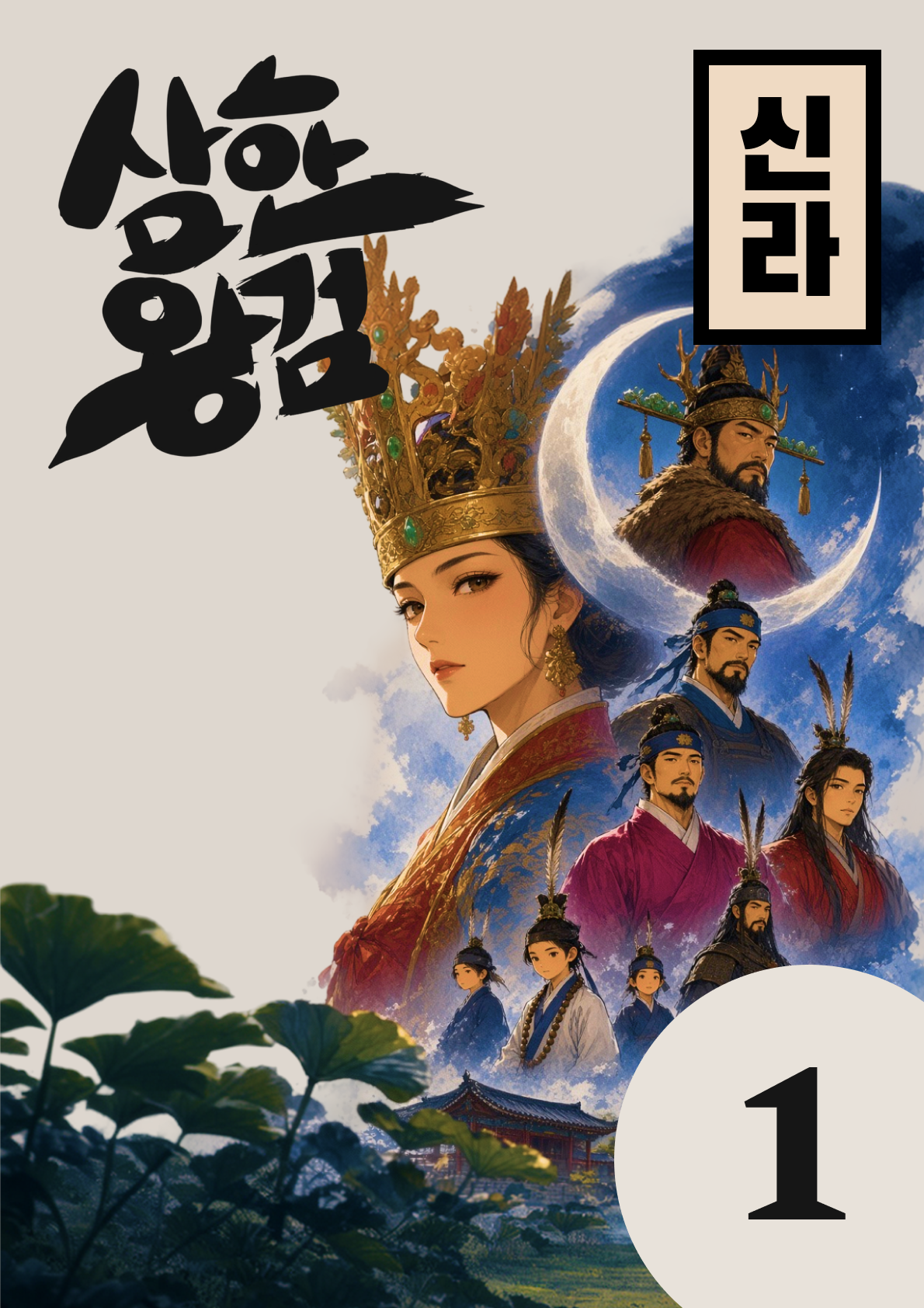
Stories is the shelf for the books that come after this chronicle: outlines, still waiting to be bound.

The world the book stands in
Wiki is the cast and the set. People, gods, animals, places, kingdoms, clans, courts, swords, ideas, and the bonds between them. Search by name, or narrow the shelves by kind and by kingdom. Open a card for the portrait, the titles held year by year, the family, and the scenes they walk through.

A place, the first time the story stands there
Map is the peninsula on one sheet. The borders move with the years. Click a place and its wiki entry opens.

The same map, cropped into a chapter
Family tree is Silla’s royal house, from Jijeung down to Sinmun, with the Gaya Kim line drawn in. Gold is Sacred Bone, blue is True Bone, purple is Gaya. The house view is the blood. The other view lays the same people out by year. Click a face.

Timeline is every dated thing on one axis. One view stacks the episodes, so you can see which stories share a year. The other stacks the lives, so you can see who is alive in the same season, and who misses whom by a winter.

Characters draws the bonds as a graph. Drag it, filter it, and open any face into the wiki.

3D is the ground under particular scenes: Wolseong, Sabi, Pyongyang, Wirye, and the fortresses. Pick a site and a year and walk it.

Pictures and sound
Images is every still in the chronicle, as a gallery. Search them. The ones marked with a star stay in their own pile.

Comic tells a few of the stories as pages. The arrows turn them, and so do the arrow keys.

Music is the short themes: a kingdom, a person, a few bars, and the sheet beside the player.

Scenes sets the stills to those themes and plays them one after another.

Beside the book
Quotes keeps three kinds of line. The ones the book itself will not let go of. The ones copied from the historical record. And the ones you star while reading. A line remembers its episode, and will take you back.

A line from the record, on its own paper
Research is what the people wore, taken from the tombs, the murals and the dynastic histories: crowns, feather caps, gold, dress, armour. The pictures in the story are checked against this room.

About is the note on why the story exists, and how the script, the cast, the pictures and the map were made. The foreword at the head of the book is the same note, said once, before the first episode.
The desk
Widgets collects every card, map and diagram that appears between the lines, so you can look at the pieces without reading toward them. Dashboard ranks the episodes. Grade is where a still is kept or cut. Directory is the long index of the whole site. These are the workshop. The book does not need them.

A diagram, as it sits between the lines
Start at the hall, or open the book.