












Chapter 56

Bihyung
AI Summary
- Cloud King's Night You’ve met the Cloud King.
- The Tomb Hill They bury the Cloud King under a hill they build for him.
- Six Sleeves Six sleeves around a table, and one boy at the end of it with a brush.
- Wine Years To be fair to him, he tries.
- Boy on the Throne Late one night a boy in his sleeping robe walks into the hall looking for his uncle.
- Peach Blossom In Saryang ward there is a woman so lovely the neighbours call her the peach blossom.
- Night Drum The drum on the palace wall is for fires and invasions.
- Somebody Carries Him Somebody carries him out.
- Brought Back Three days later they bring him back to watch.
- Sado Comes Once Sado comes once.
- Tenth Night That same autumn the charcoal seller dies of a fever.
- Family Dinner The best gate on the street belongs to Prince Suulbu.
- Characters
Episode· 651
Bihyung
Every capital keeps one madman. Surabol’s was a prince, and he was very good at it.
- Kim Yongsu
- Princess Chunmyung
- King Jinpyung
- Crown Prince Saryun
- Gildal
- Prince Suulbu
- Dohwa
- Dharma Cloud
- Geochilbu
1 still without a cue
Every capital keeps one madman. It is good for the others.
asked a fair question. The answer takes three people: a father the old man never knew, a wife who caught him doing sums, and a son who was ashamed of him for thirty years. Here it is the way the record keeps it. The other way, you’ll hear at a coronation.
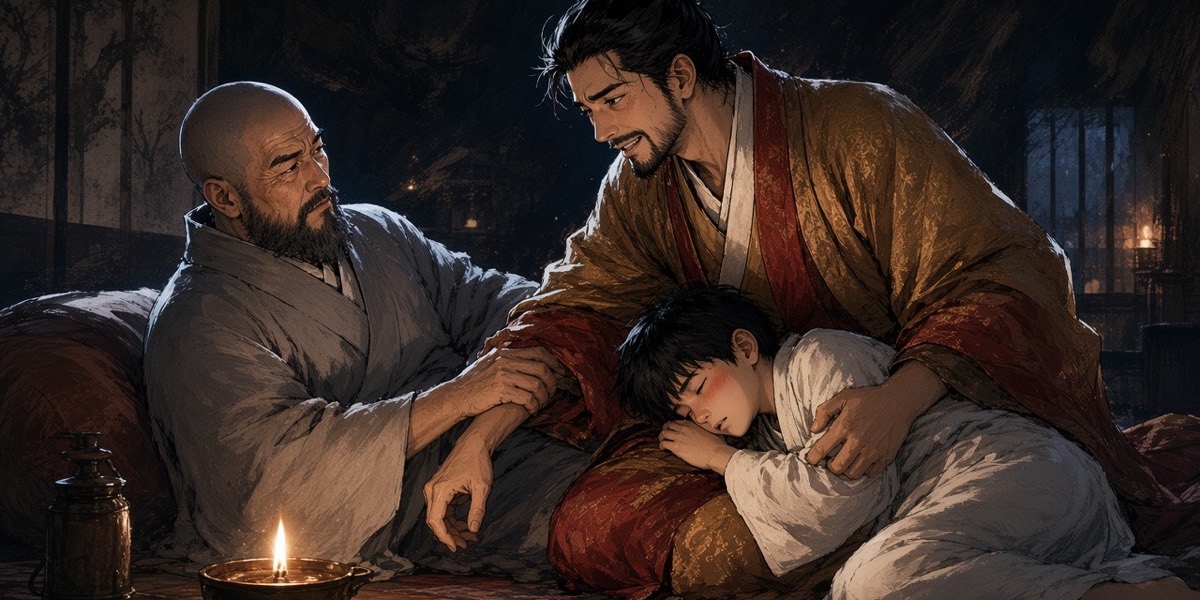
You’ve met . He doubled , broke an ally, and put up stones on every mountain he could climb. At the end he shaved his head and put on a monk’s robe, as if heaven might not recognise him.
His eldest son died four years ago. So the son kneeling by the bed tonight is the second one, , who smells of plum wine. He has no boy of his own yet. That will come later, and from a door he has not knocked on.
Asleep across ’s knees is the other boy in the family. Baekjung is eight, the dead brother’s son. His uncle has carried him to bed most nights since his father died. Tonight the boy refused to go, and fell asleep on him instead.
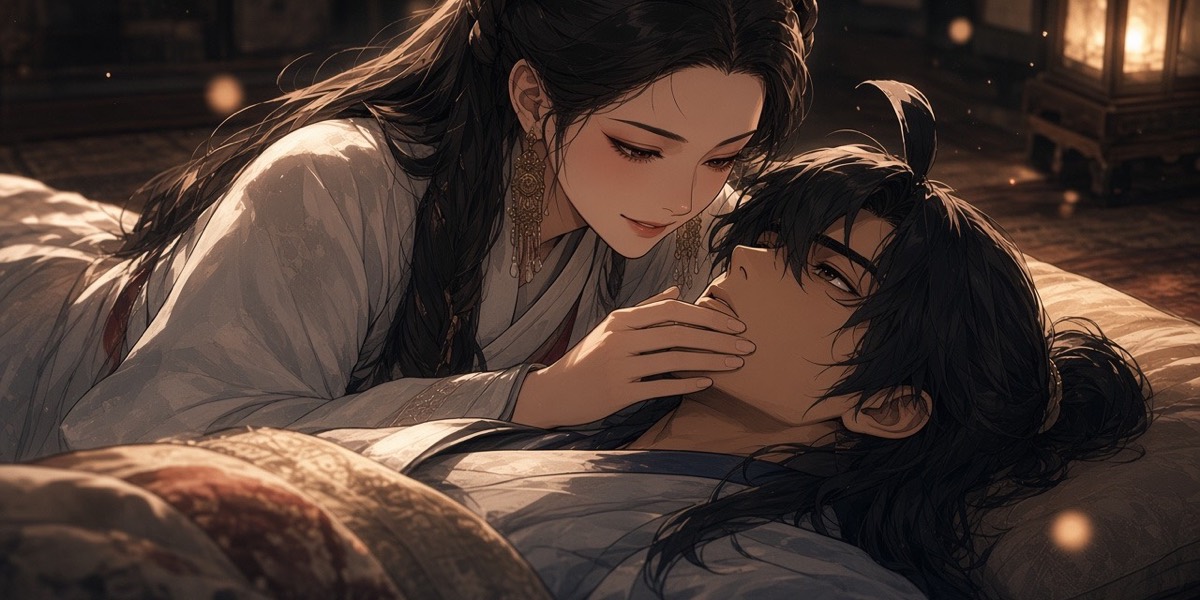
He dies before the bell. His queen, , closes his eyes herself and does not call for anyone for a long time.
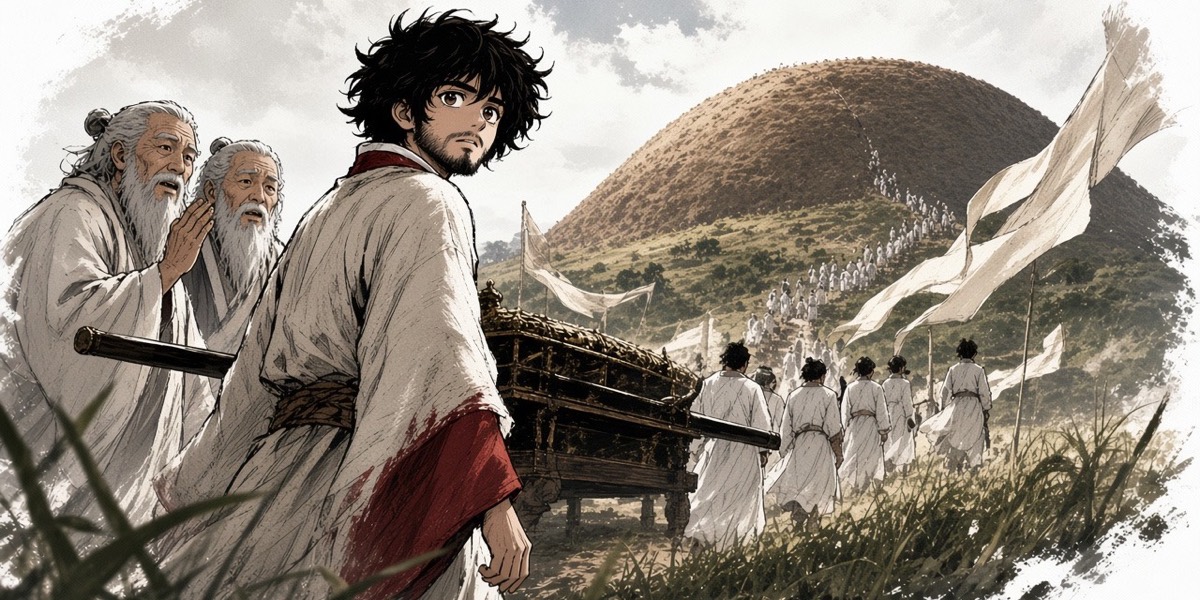
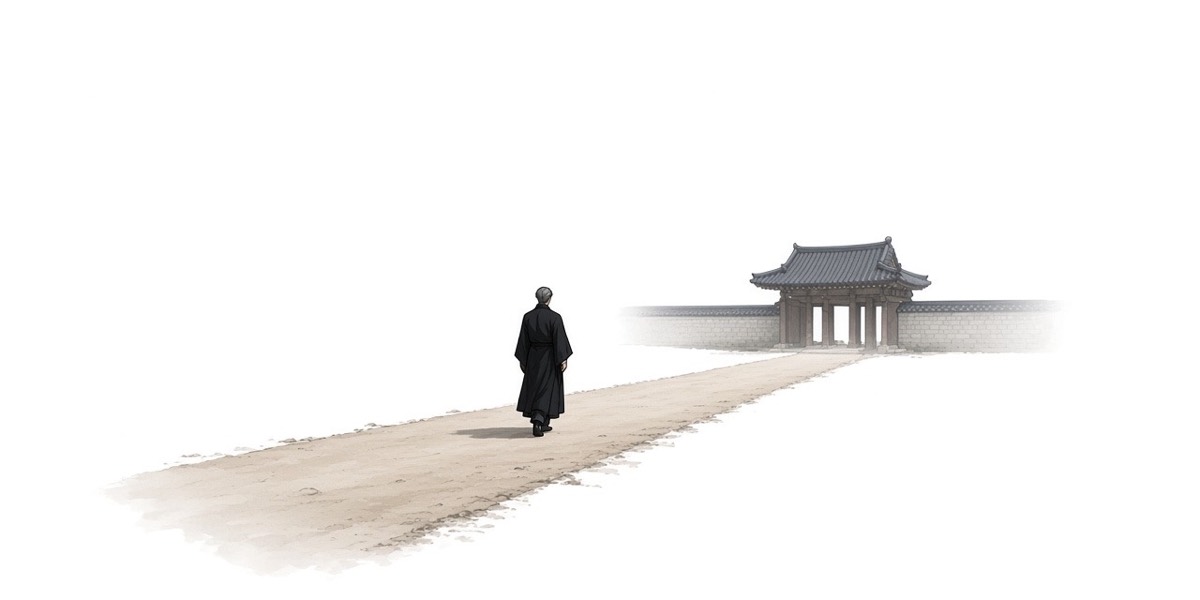
They bury under a hill they build for him. It takes a thousand men a month, and it is still smaller than he was.
The new king walks in front of the bier. He walks very straight. Twice he looks back at the coffin, as if it might have something to add.

At the top of the mound stops, turns round and looks at all of it: the hills with his father’s stones on them, the city, the six old men in a row. Then he asks for a cup. Somebody has one ready.
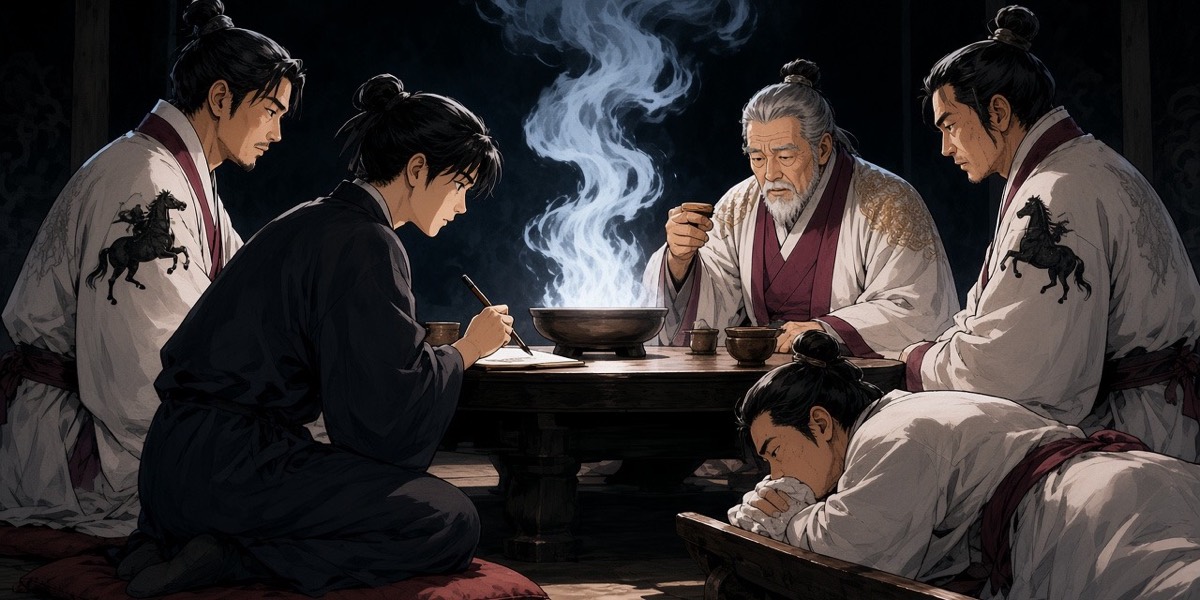
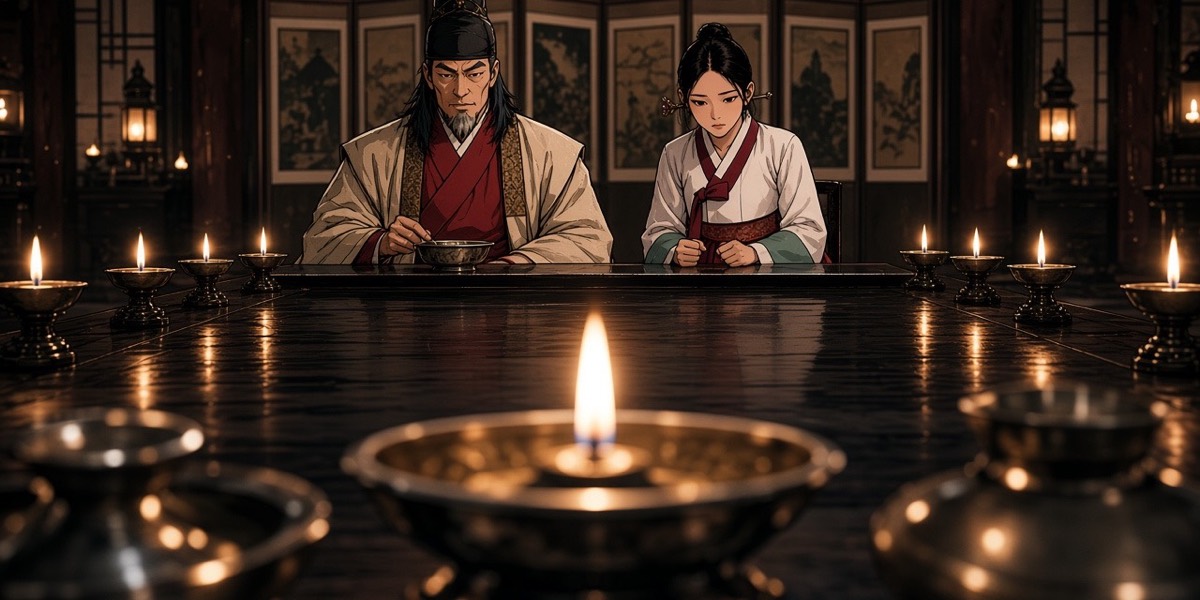
Six sleeves around a table, and one boy at the end of it with a brush. is twenty-one. He is here to write down what the old men say, and to say nothing.
Six heads turn to the end of the table. The boy goes red to the ears.
The vote is unanimous. It always is, here. writes the new king’s name in the minutes, very neatly. Fifty-six years later he will sit at the head of this table, a very old man, and swear in a queen. Remember his face.
is crowned before the month is out. They call him .
To be fair to him, he tries. The first winter comes over the western hills, and his general throws it back with three thousand seven hundred heads. builds a fort where the fight was and goes to look at it personally.
Then comes back. A mountain fort goes, then the roads around it. leans on the northern wall just to see if it moves. Every messenger who reaches the palace is muddier than the last.
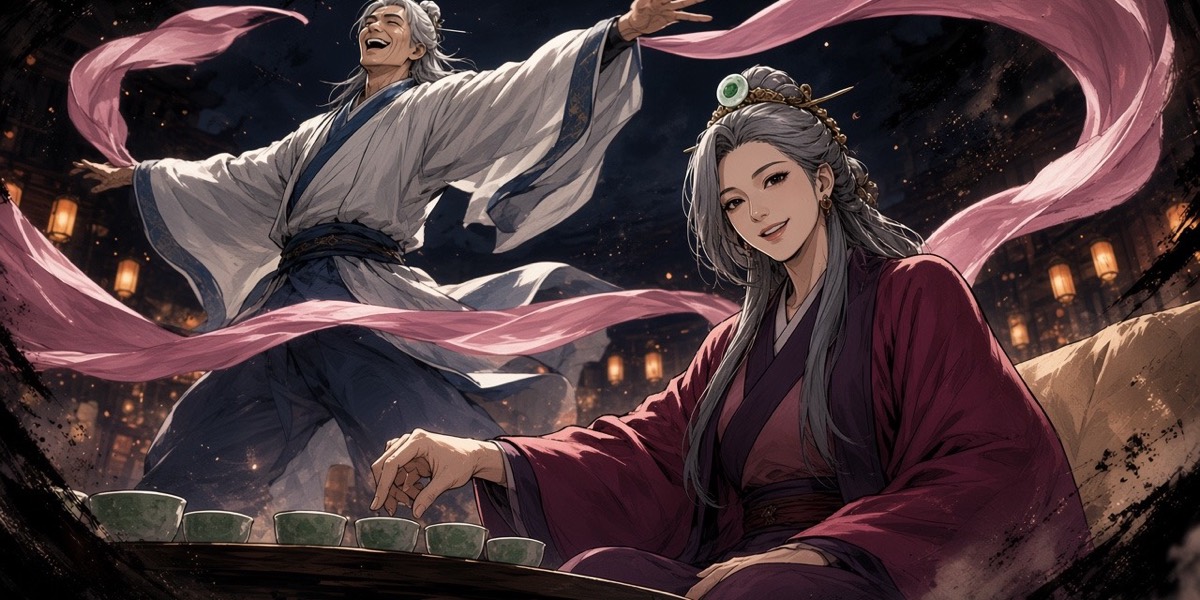
The has never had parties like his. Boats on the pond with lanterns at the prow. dancers who used to dance for other kings. Musicians from three countries who all know the same drinking songs, which tells you something about musicians.
In the middle of it all sits a fourteen-sided die of black oak. Every face carries an order: three cups in one breath, sing with no music, let anyone flick your nose. The king rolls it himself and obeys every face. That is more than he does for the Council.
He dances without a sound, very badly, standing up in a boat, and nearly drowns. A hundred people laugh in the right places. One man in every room never laughs. Tonight it is , the , who is seventy-five and has buried better kings.
There are women. There are always women. A dancer for a week, a general’s widow for a month. Once, for three nights, a councillor’s wife, which the councillor pretends not to know about and the Council does not forget. A council keeps two ledgers. One of them is for grudges.
By the second year the cups come earlier in the day. The council sits outside his door with its reports, and through the door it can hear a zither, and laughing, and a different woman’s voice each week.
Hold on to this picture: a king in a lit room, a war going badly outside it, and the door shut. You’ll see it again, eighty years from now, in another capital, with a better poet behind the door.
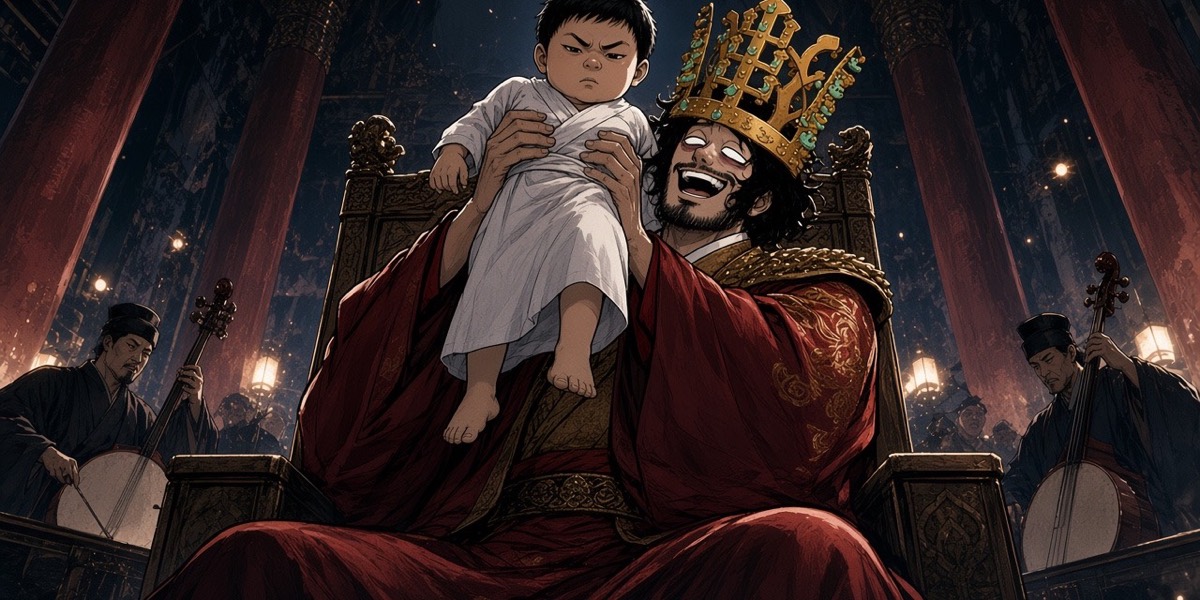
Late one night a boy in his sleeping robe walks into the hall looking for his uncle. Baekjung is ten. Nobody stops him, because nobody stops anything in this hall after midnight.
He lifts the boy onto the throne. The musicians stop. Several people suddenly find somewhere else to look.
He carries the boy back to bed himself, a little unsteady on the stairs, and ties back the sleeves of his robe the way he always does, so the boy won’t trip in the night. Remember the sleeves.
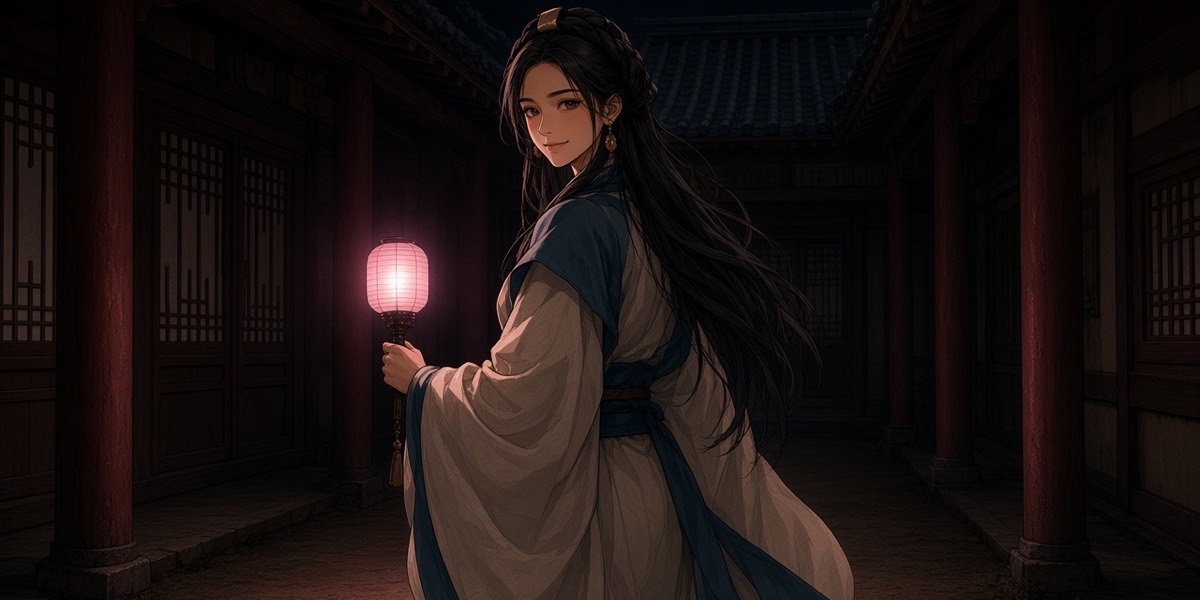
In Saryang ward there is a woman so lovely the neighbours call her . Her name is . She is married to a man who sells charcoal, and she likes him.
The king hears about her the way kings hear about everything. By evening she is standing in his hall, still in her apron.
The hall goes very quiet. The musicians look at the floor. Somebody’s cup tips and nobody rights it.
He laughs, really laughs, for the first time in a year, and lets her go home. It is the most kingly thing he does in his whole reign.
The drum on the palace wall is for fires and invasions. At midnight it beats for neither.
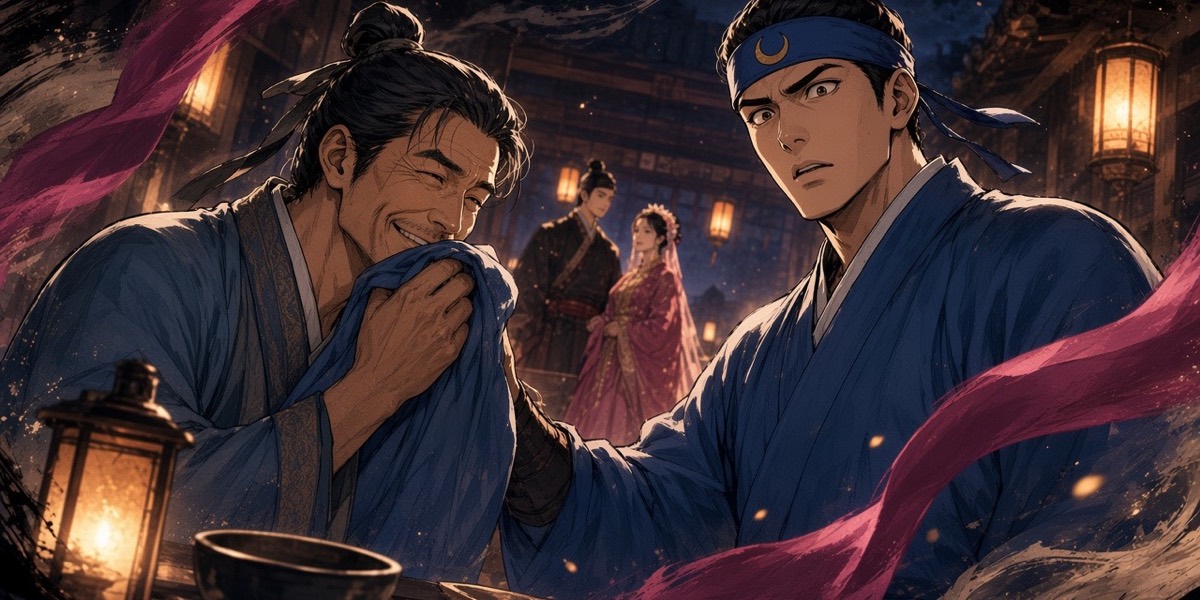
The councillors come through the dark in whatever they were sleeping in. One of them is carried. has been dying since spring. He insists on a litter, and coughs into a cloth all the way, because he was in the room that crowned this king and means to be in the one that uncrowns him.
The summons came from mother. Nobody says that out loud either.
is twenty-four. He kneels and blows on the coals until the flame turns, and when he picks up his brush his hand is already shaking. You have seen this room count. At midnight it counts faster.
Then they argue. A room that has already decided still likes to hear itself say why.
Nobody looks at the councillor whose wife it was. He looks at the brazier.
The old councillor holds his piece a long time. In this room one holdout is enough to save a king. He puts it with the others.
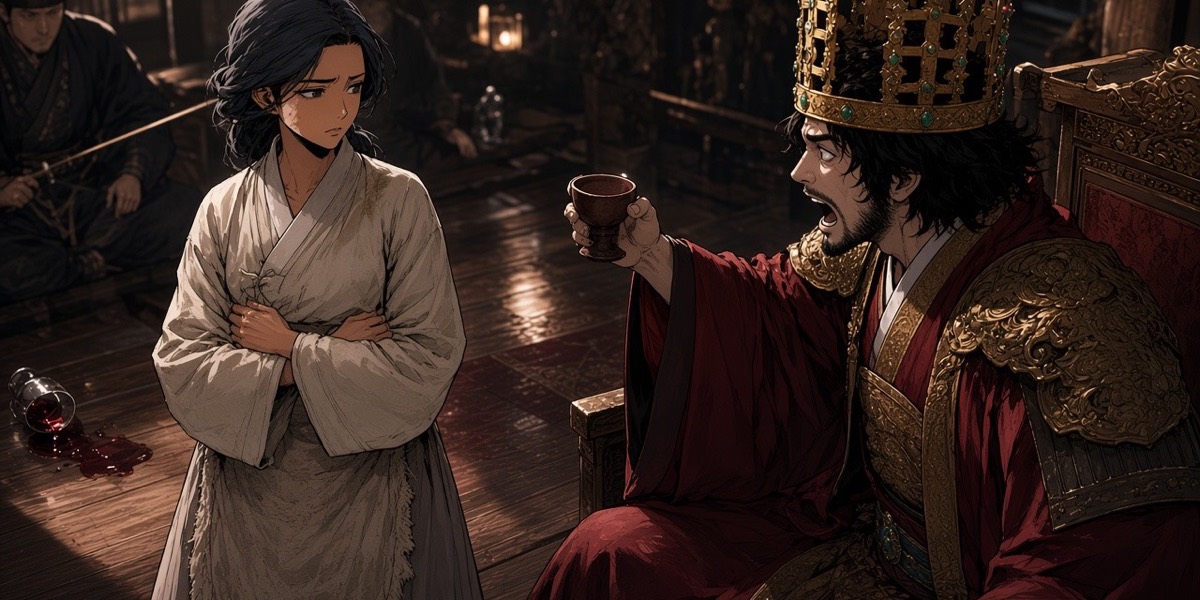
Before the first count is cold, the door bangs open. The king has come from his party. He still has a cup in his hand and a dancer’s hairpin caught in his collar.
He stays for the rest of it, swaying, because leaving would be agreeing. Six pieces go to the no side. reads the count aloud, the last thing he ever does in that room. He will be dead before the leaves turn.
Somebody carries him out.
The guard comes in the hour before dawn: forty men in lamellar with their swords sheathed, which is the polite way. The hall doors are barred from inside. The captain knocks three times, waits, and then the doors come off their pins.
Inside, the party is still going, the way a fire is still going after the house has burned. Lamps guttering. A zither with two strings left. Dancers flat against the screens. The king is on his throne with his boots off.
They lift him by the arms. He holds on to the throne, then to the doorframe, then to a pillar outside, while two of them wait very patiently for his fingers to tire.
Nobody answers. They walk him out through the west gate barefoot, still asking. The gate closes behind him. never stands inside the again.
His queen and his mother are allowed to stay, in rooms at the far edge of the grounds by the north wall, where the wind comes in. The Council calls this mercy. Being allowed to stay is how a palace makes you watch.
Three days later they bring him back to watch.
He stands at the back of the hall between two guards, washed, sober for once, in a plain robe. At the front a boy of eleven is being dressed in the crown. Somebody hemmed the robe in a hurry and forgot the sleeves. They hang past the boy’s fingers.
The boy keeps looking for someone over the heads of the lords. He finds him at the back. For a moment it is only a boy and his uncle.
lifts one hand and makes a small motion at his own wrist, the way you tie back a sleeve. The boy looks down, folds his sleeves back himself, and turns to face the room.
He is now. He will sit in that chair for fifty-three years, and he will never once let a sleeve trip him.
is shut in a house with a very high wall. He does what he has always done, only now there is no party. He drinks alone. He stops shaving. He stops asking for news, and then he stops asking for the wine to be watered.
comes once.
He dies before the first frost. He leaves no son they will name. The Council decides not to worry about his line. Not yet. The physicians write a long word for what killed him. The servants have a short one.
His house dropped a bone in one afternoon, from Sacred to True. Whatever he left behind would go down with it.
Jinhung’s grandsons part here. Jinpyung’s line keeps the Sacred Bone. Jinji’s boy and Biryun’s late son drop to True Bone, and so does everyone after them.
Even inside the royal house, nobody is simply royal. At the top is the king. Then the primary line: his queen and children, the house that holds the crown. One branch off the trunk are the secondary lines, a king’s brothers, uncles and cousins. Two branches off are the tertiary lines. Where you stand depends on one thing: how far you are from whoever wears the crown this year.
골품 · Bone Rank 성골 · Sacred Bone
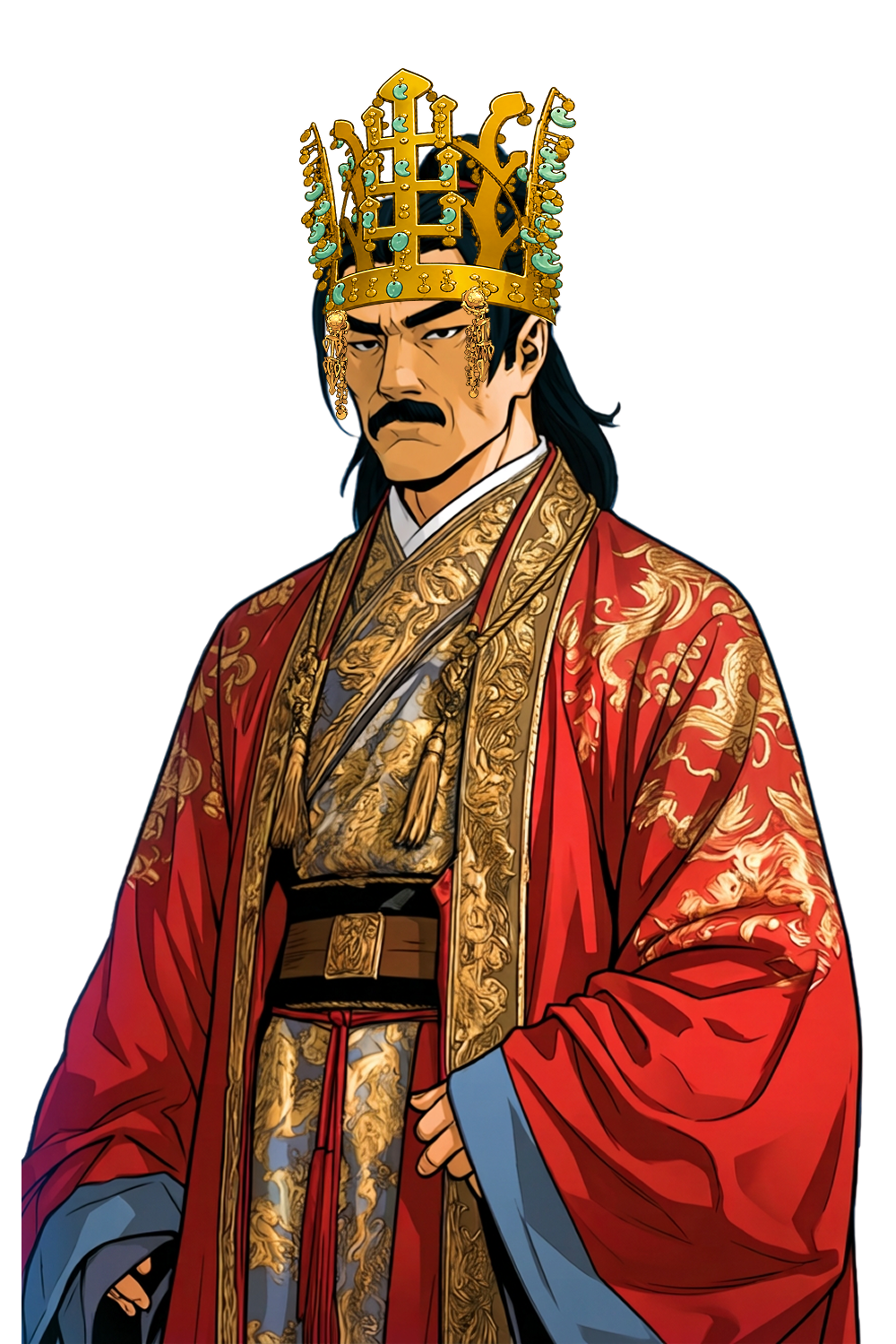
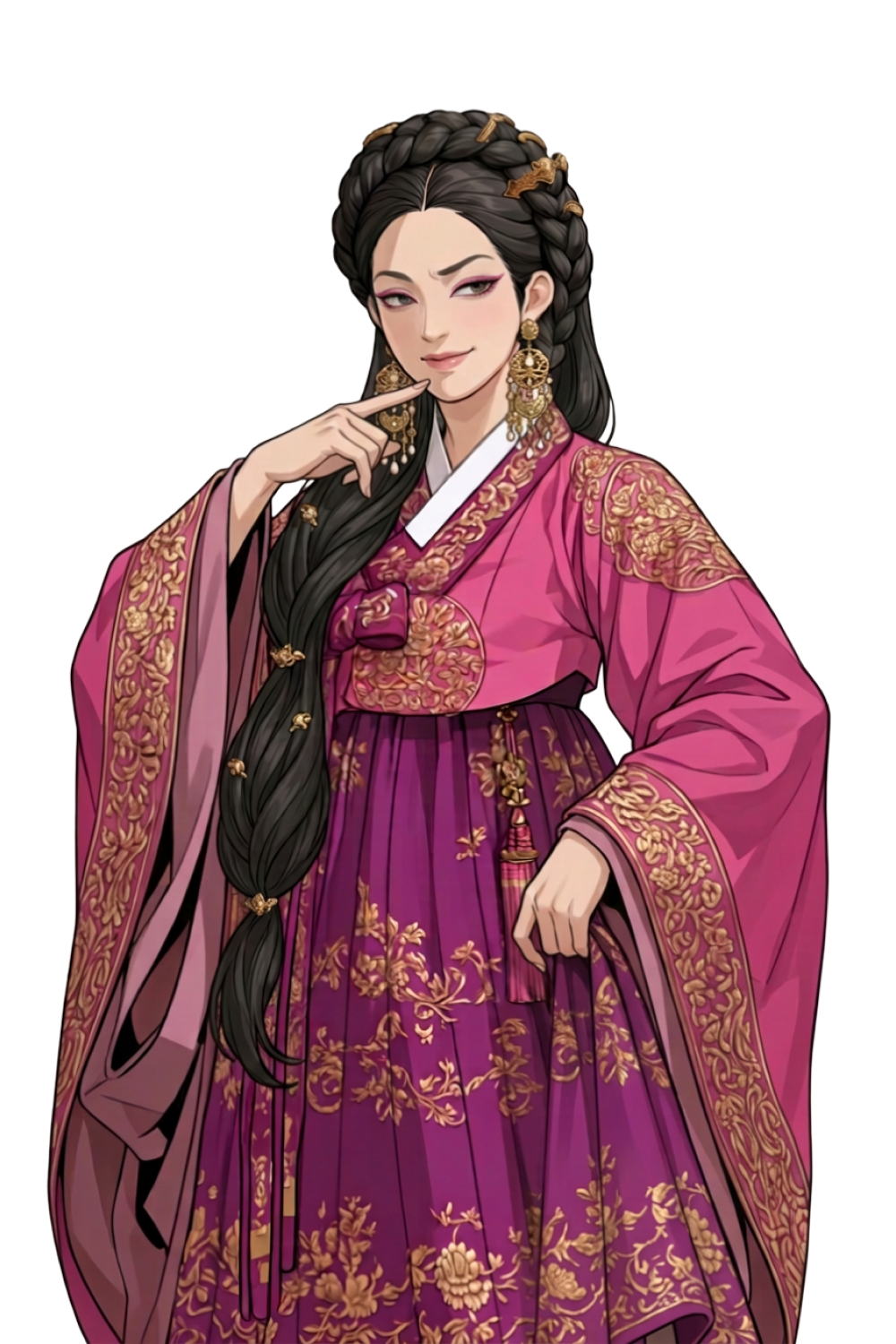
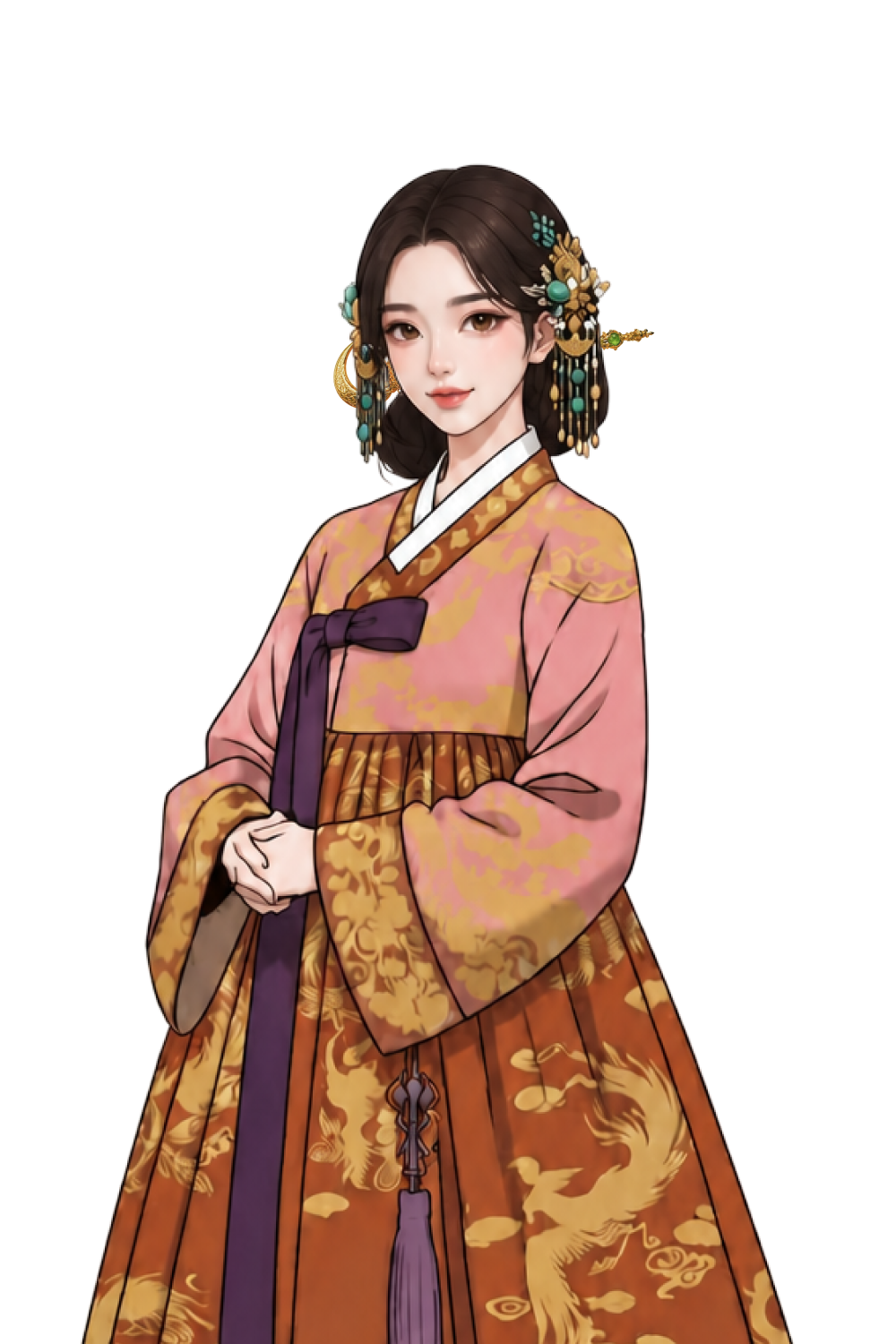
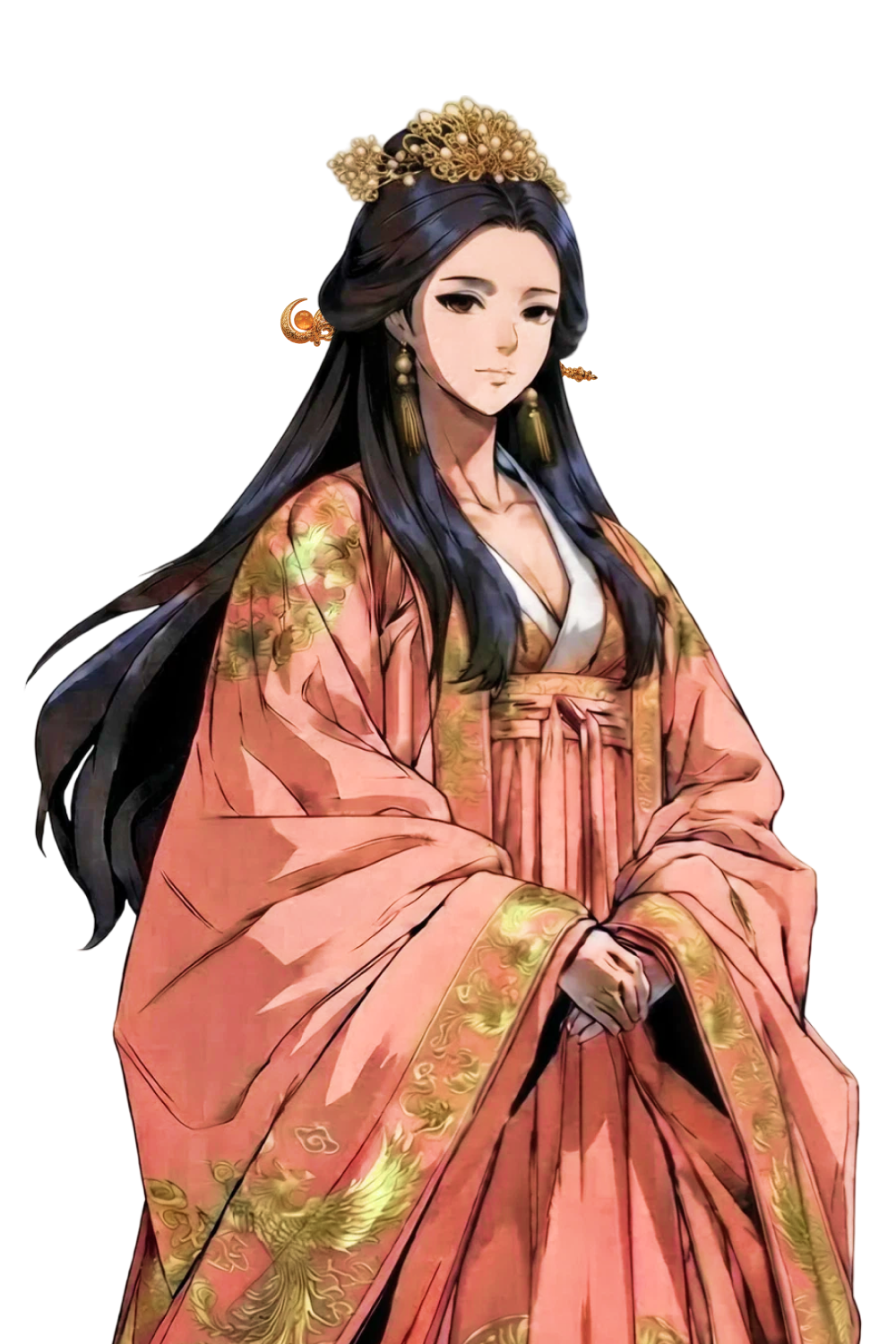
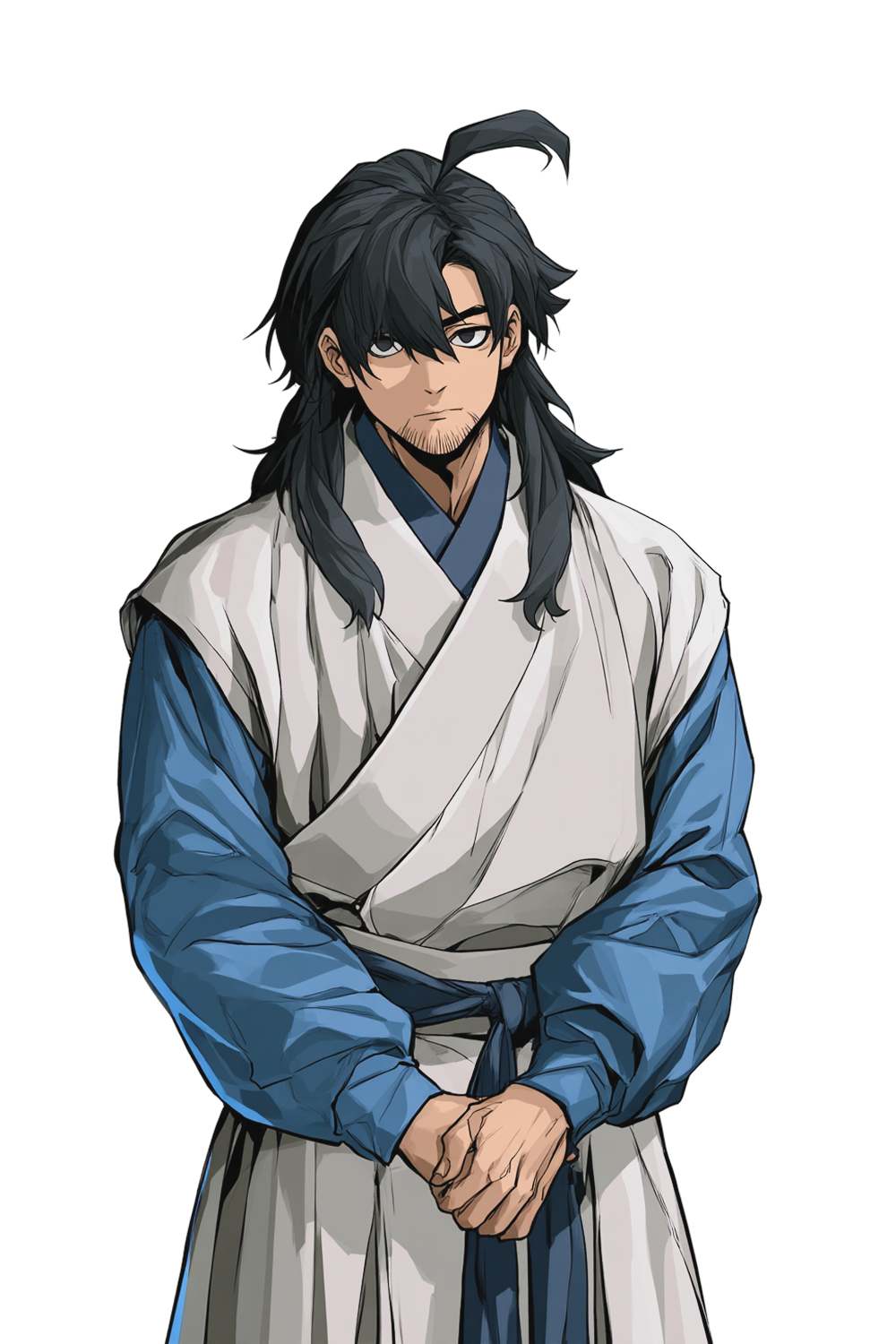
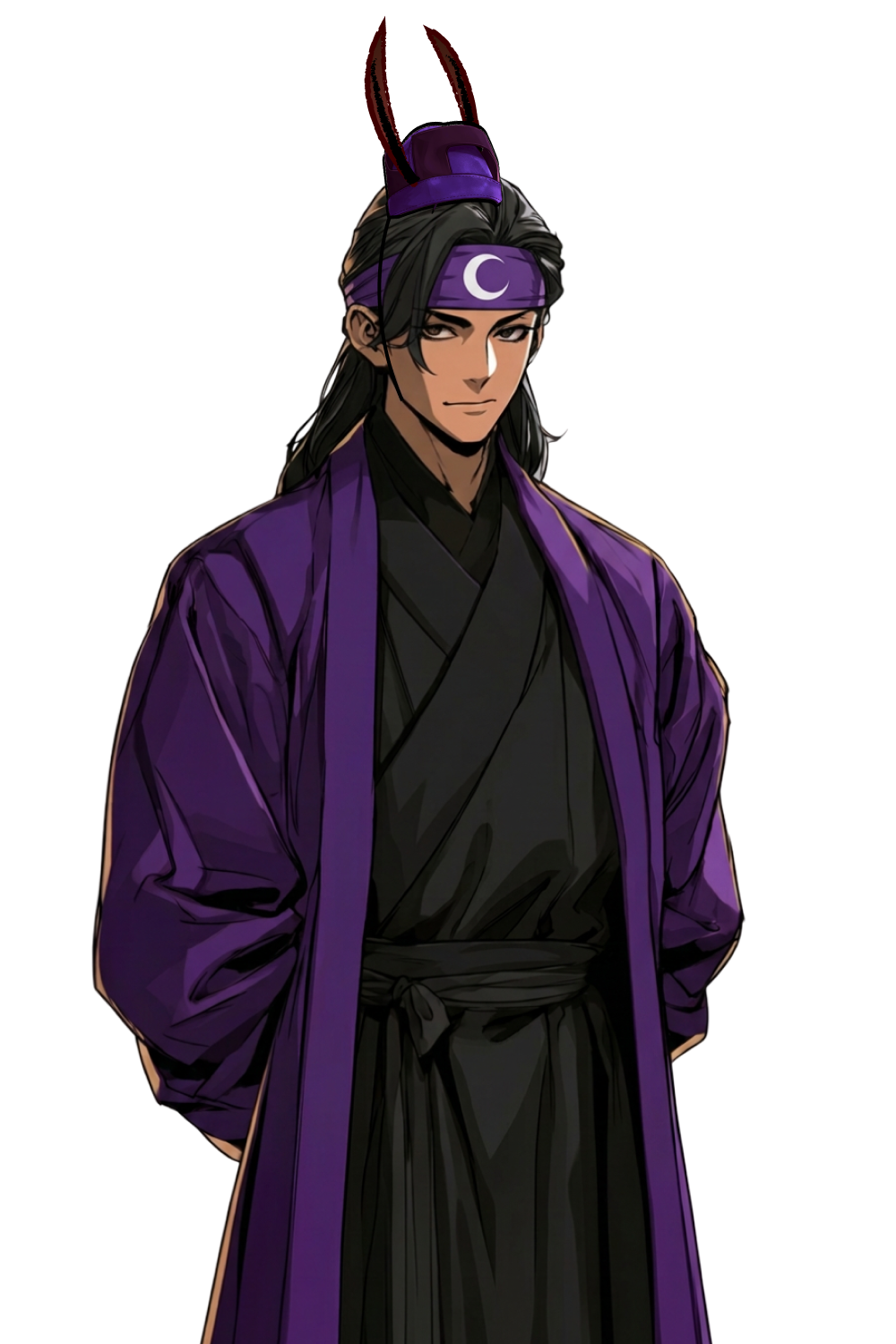
The king at the top, his daughters on the primary line, his brothers’ houses on the secondary. Jinji’s boy and Biryun’s late son stand with them, a bone lower than everyone around them.
’s fall moved his whole branch off the trunk in a single afternoon. And a side branch with a better claim than the trunk is the most dangerous thing in any palace.
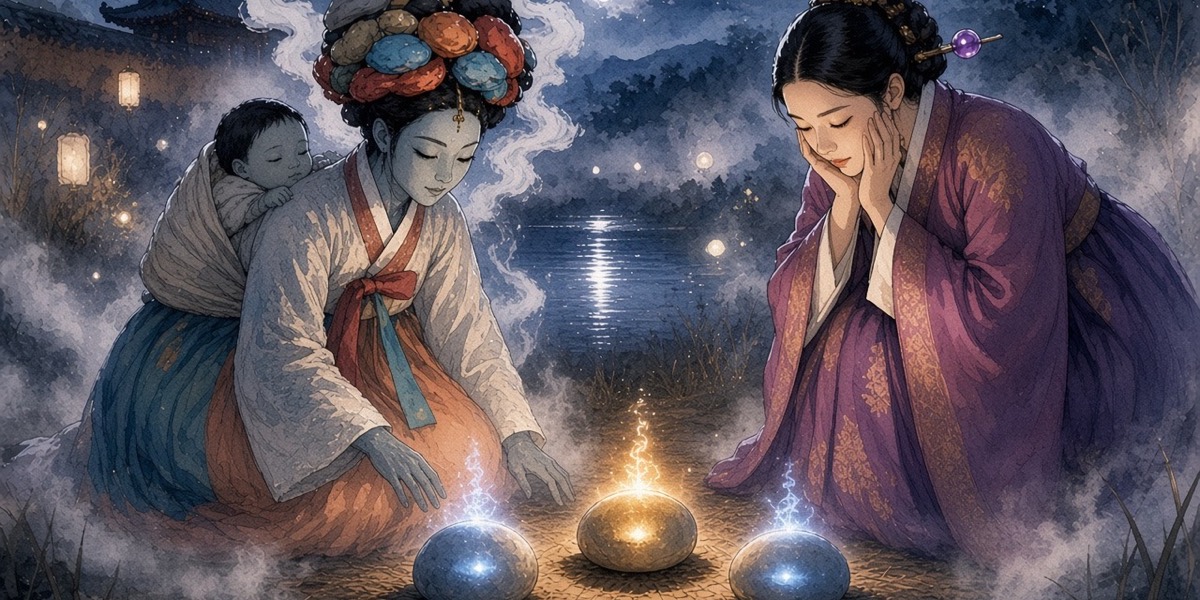
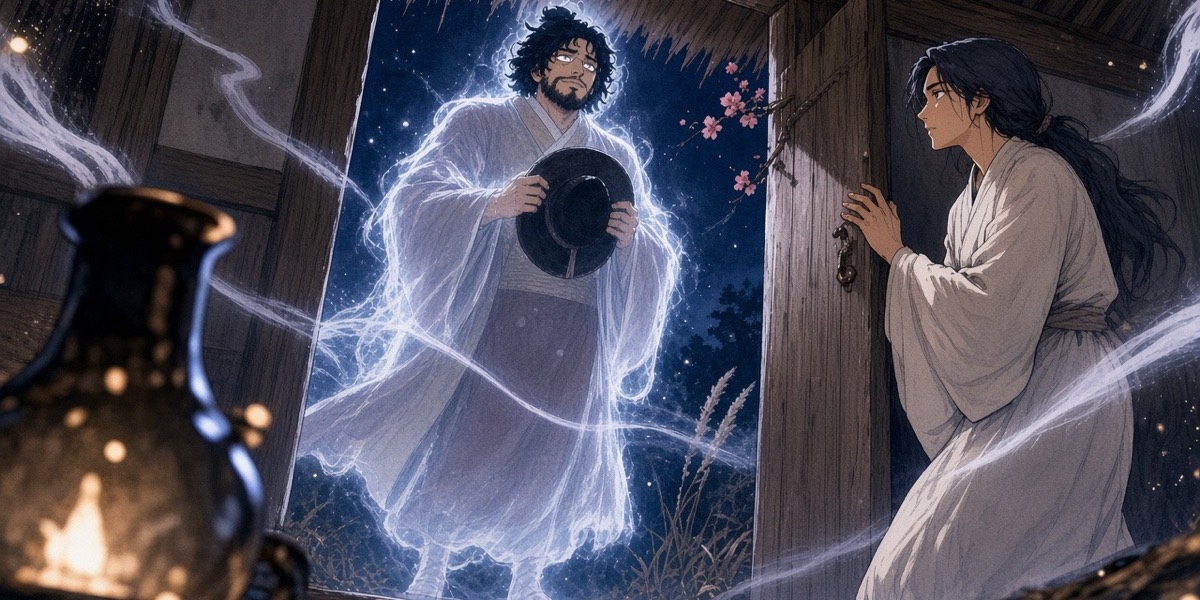
That same autumn the charcoal seller dies of a fever. buries him and wears white. On the tenth night after the funeral, somebody knocks.
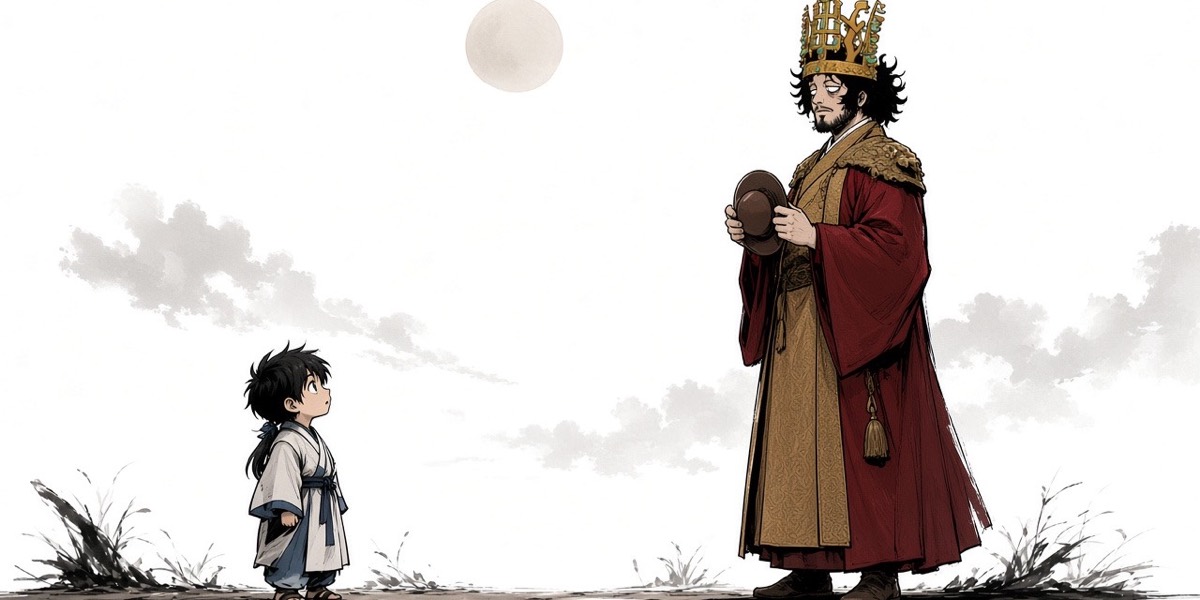
It is the king. Not a ghost-shaped smoke. The king, exactly as he was, in his good robe, a little embarrassed, holding his hat.
She does not answer him. She goes to her parents’ room in her night robe and wakes them.
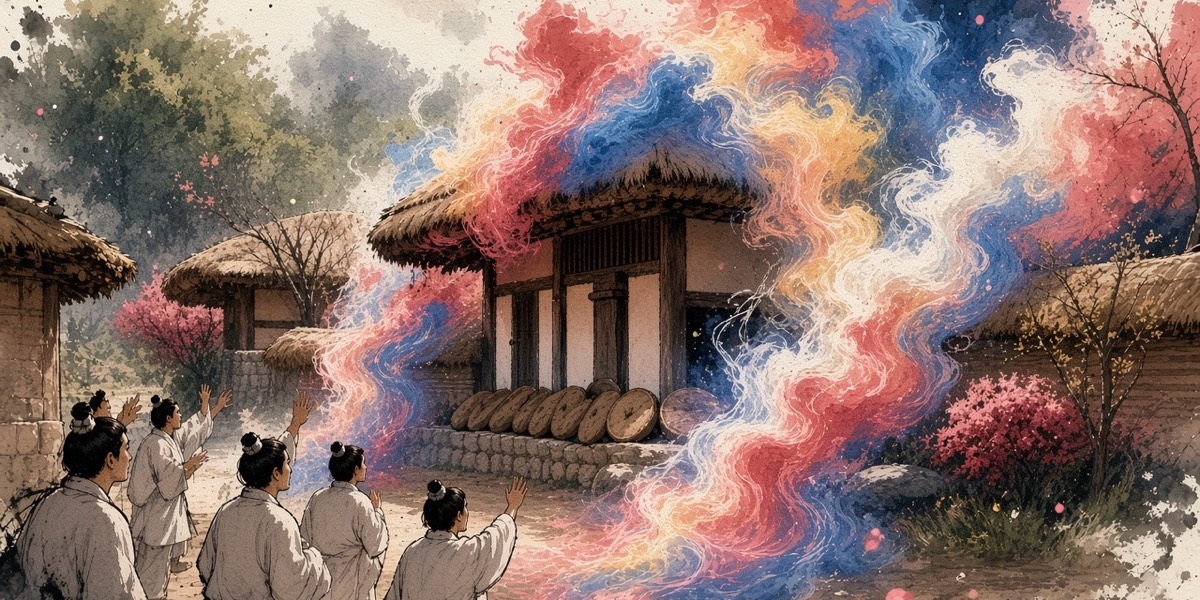
For seven days the house is wrapped in coloured cloud. The whole lane smells of incense. Neighbours stand in the street and argue about whether to call a priest, and nobody does. On the eighth morning the cloud lifts, and the king is gone.
I was watching that week. I won’t tell you what I saw. I’ll only say that her son came before the year was out, small and early and furious, and the ground shook, and the midwife ran out of the house and would not come back for her fee. Count the months if you like. The midwife did.
Three days after the birth, an old woman comes down to the hut from the palace. She swept the back rooms of the for twenty years, and nobody there ever learned her name. She has brought rice, and she has brought something else.
looks at the baby for a long time. He sneezes, which settles nothing.
So the boy gets two names: one for and one for the hut. The record keeps the hut’s. Saryang ward gives him a third, the ghost’s bastard, which at least was short.
The best gate on the street belongs to . Behind it, three people eat supper at a table built for twelve, because that is the size of table a is supposed to have.
At the kitchen door a thin boy of fourteen is setting down a basket of charcoal for his sick mother. He is the best-looking boy in Saryang ward, which the cook has noticed, and he says thank you in a way that makes cooks feel tall, so there is always a rice cake for his mother.
He hears every word about the list. He doesn’t know yet that his name is on it.
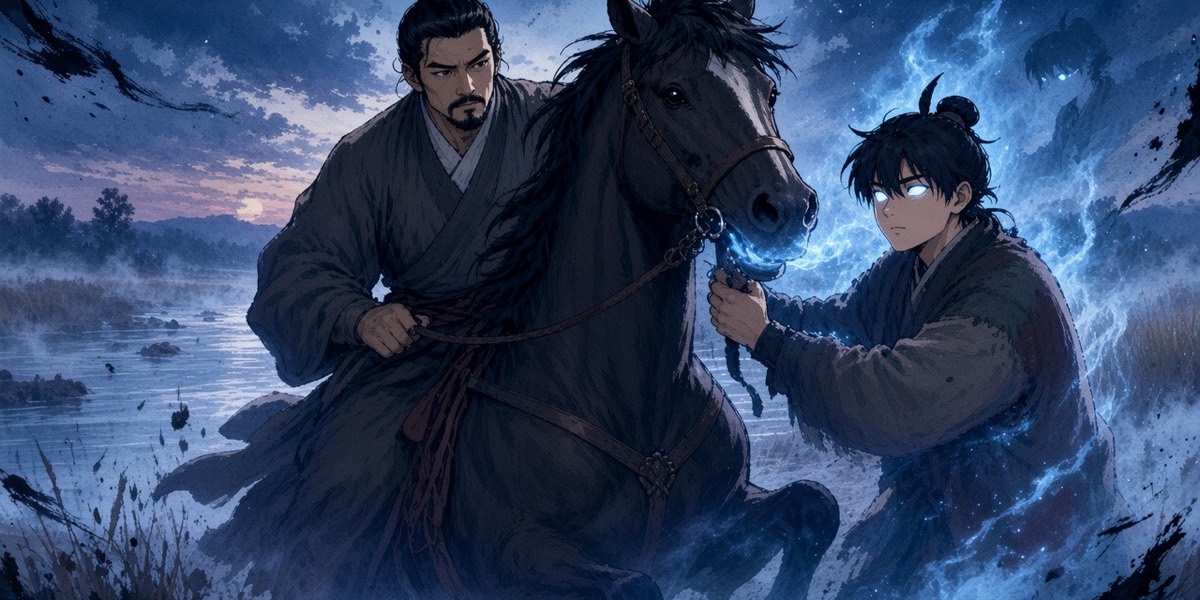
is twenty-six, bored, and cleverer than his court. Some evenings he takes off the crown, borrows a groom’s coat and rides out alone to look at the city he is always being told about. His guards hate this. They ride a hundred paces behind him, pretending not to be there.
Tonight he takes the river road below Saryang ward. The bank is high there, and the water has been eating at it all spring.
A thin boy in a patched coat has hold of his bridle. Nobody grabs a king’s bridle. Nobody here knows he is a king.
The boy is looking at nothing beside the horse’s head, and nodding at it. laughs, and is about to ride on, when the road in front of him slides into the river. Not a little. The whole bank goes, twenty paces of it with a cart track and a willow, into the brown water with a sound like a sigh.
The horse backs up on its own. The king lets it.
. A sutra name, the kind the royal house gives its sons. goes very still. Everybody in knows the song about the peach-blossom woman and the king’s ghost. He looks at the boy a long time: the jaw, the eyes. It is the way you look at a house you used to live in.
That is how the record tells it. A king, a river bank, a boy who hears the dead. The record is very fond of this scene. Hold on to it.
The first night, once the servants are asleep, the king sends for the new boy. One lamp. Nobody else in the room. Kings are almost never alone, so when one is, it’s on purpose.
The boy waits for the joke. It doesn’t come.
So the ghost’s boy comes into the palace as , a sutra name on a servant, which makes the steward wince. It will not stay his name for long.
He likes his cousin at once. Nobody in that palace has ever done that on purpose.
The Council ought to have counted him that spring. It was busy. The ’s own daughter had just run north with a officer, and every banquet in was counting her months instead.
A palace servant at fifteen is the lowest thing in the palace that can talk. A palace servant who talks to the air is lower.
They put salt in his shoes to keep the ghosts off. They throw well water over him at dawn to wash the ghost out. The cooks leave his bowl outside the kitchen door, the way you feed a dog that might bite. Nobody will sleep on the mat next to his.
He is also, inconveniently, the handsomest boy in the palace. The maids who won’t sleep near him find reasons to walk past his door. He learns every name in the kitchen in a week and uses them, which nobody in that palace has ever once done for a cook.
The pages of houses have nothing to do until they are old enough to have something to do. One night they tie him in a rice sack and throw him in the pond, to see whether a ghost’s bastard floats.
He floats. He comes up laughing, a beat late, as if somebody under the water had told him a joke. That frightens them more than anything they did to him.
The page cries. The page’s father complains to the steward. The steward has beaten, ten strokes. He laughs through all ten and thanks the steward afterwards. Then he turns to the empty corner and thanks that too.
At night he does not sleep. When the watch changes and armour goes by in the corridor, he sits up in his blanket and stares at the door until the footsteps are gone. The other servants say the ghosts come for him at the second watch, and move their blankets to the far wall.
In public the king who brought him in never once interferes. In private he asks for reports, and some nights for a game of baduk, which he loses on purpose, badly, so the boy will come back.
Seventeen, then, and barefoot, walking the bank because the palace is too loud with sleeping men. The moon is behind cloud. Something in the reeds says Majesty.
Not boy. Not ghost. Majesty.
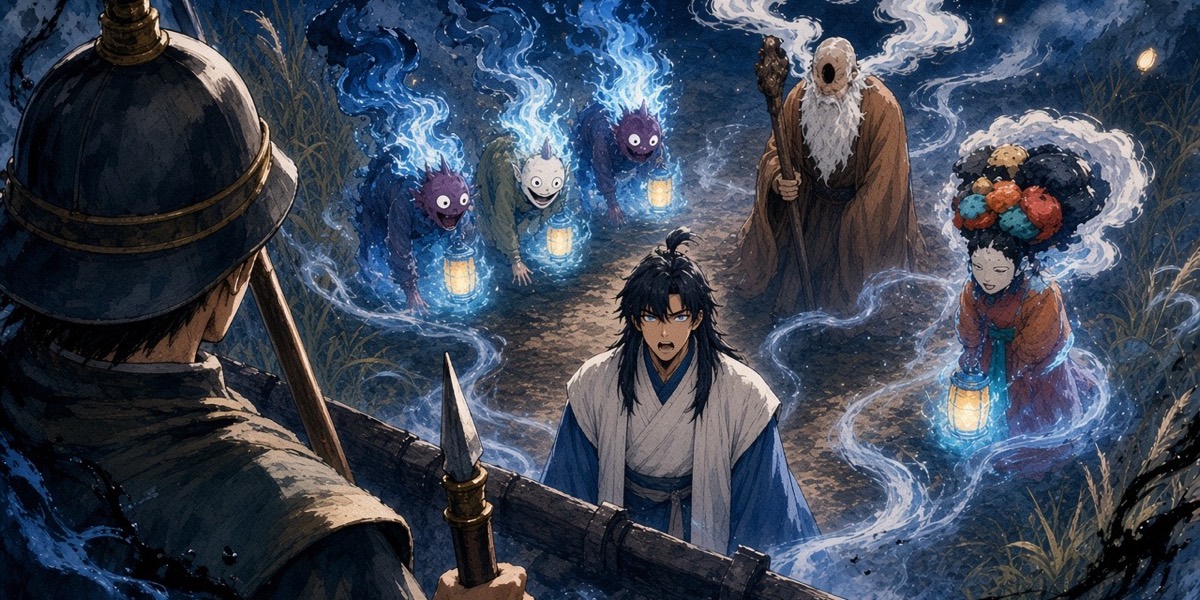
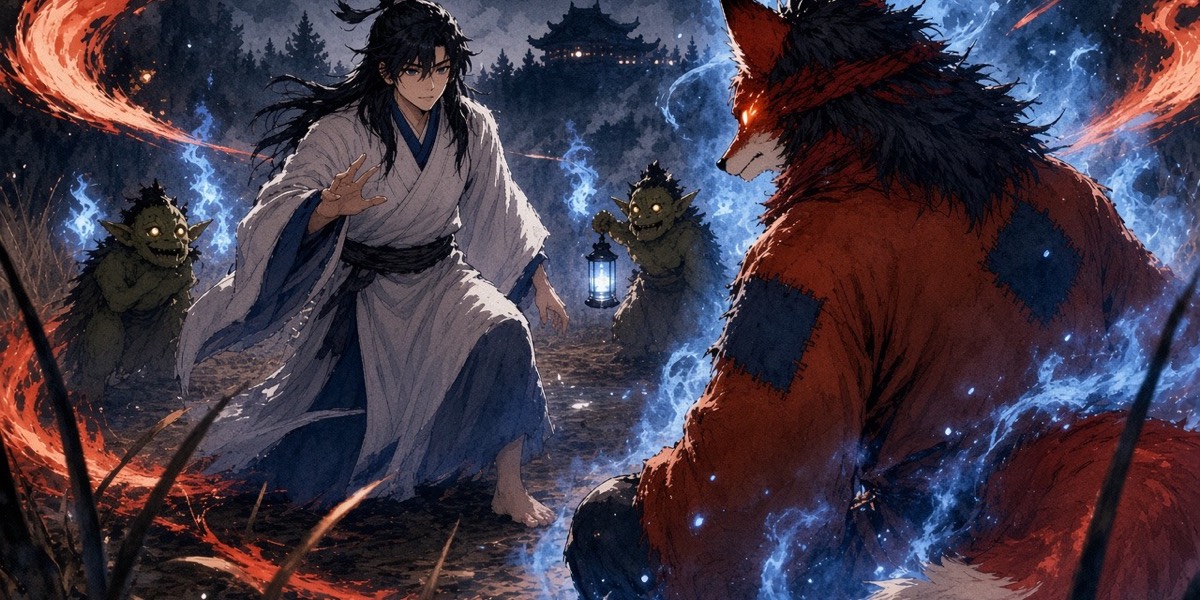
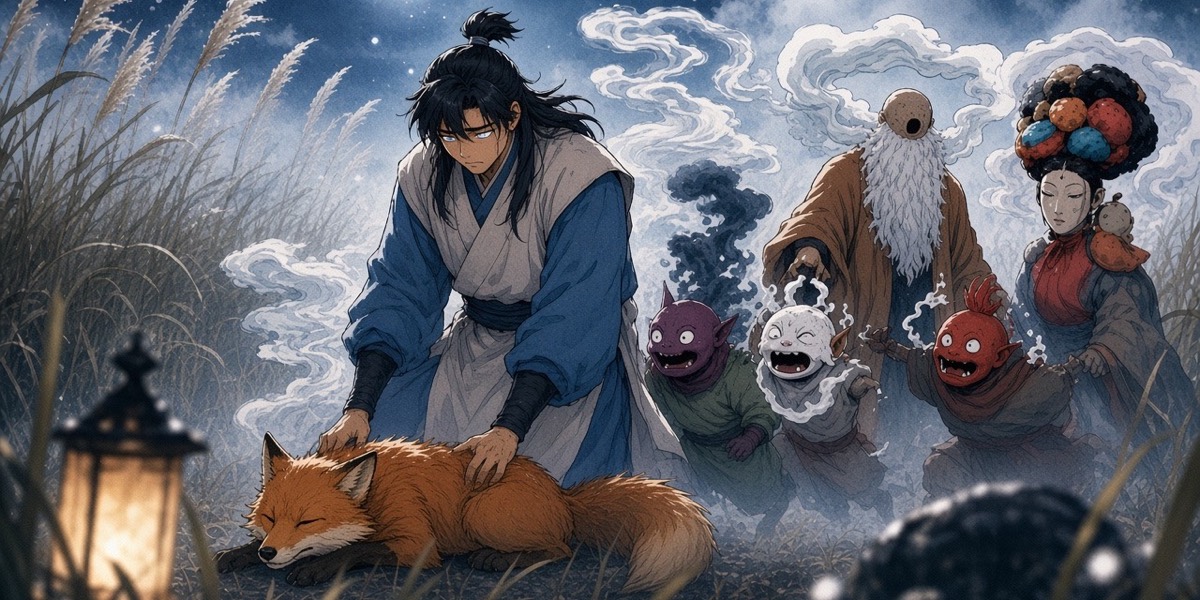
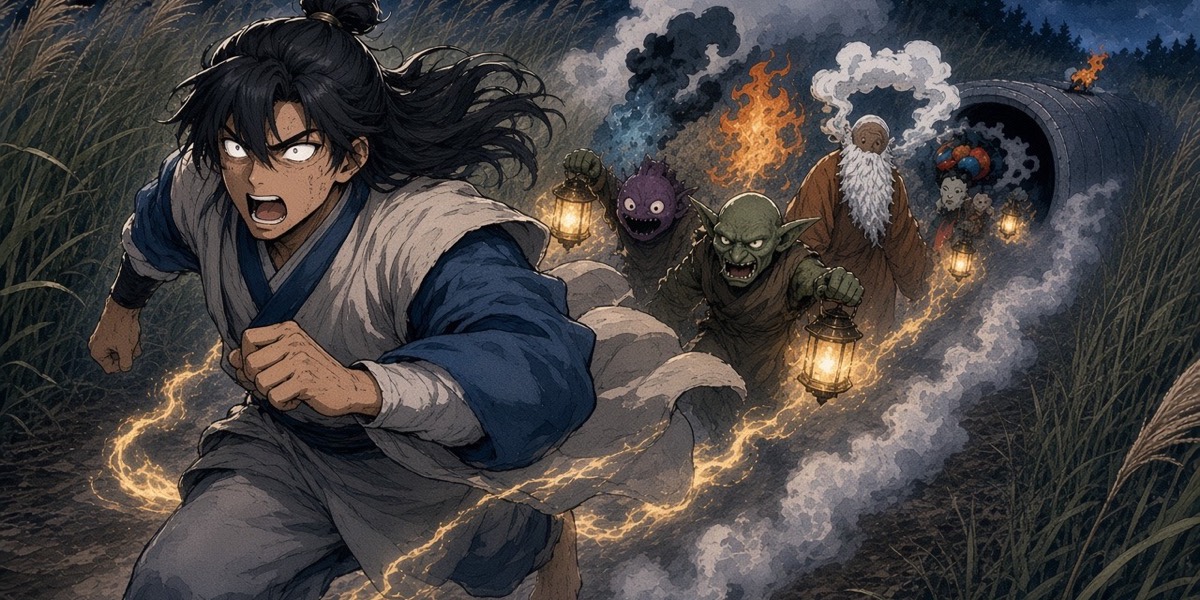
He nearly runs. Instead a fox comes out of the reeds, red as a lantern, with a goblin’s eyes, and stands up on its hind legs. It does not stop being a fox. It goes down on its forelegs in the mud, which is how a fox kneels.
He follows the fox into the reeds. The song doesn’t say what he saw there. It only says he came back at dawn answering to the spirits’ name, and went again the next night, and the next.
He gets past fifty men. The guards swear he went over the west wall of the moon palace like a bird, and came down on the bank of the Hwangchun, where something was waiting for him in the reeds. They play until the temple bells ring for dawn. Then the reeds are empty and the clerk walks back in through the front gate, yawning.
The guards swear the things in the reeds bowed to him. They swear the things called him young lord. Nobody believes that part, and those guards are moved to the north gate.
He is seventeen, and his cousin has three daughters and no son, and the court is doing arithmetic. Even a ghost’s son, if the ghost was a king, is a very interesting number. Men start visiting with gifts. Men who visit with gifts are counting.
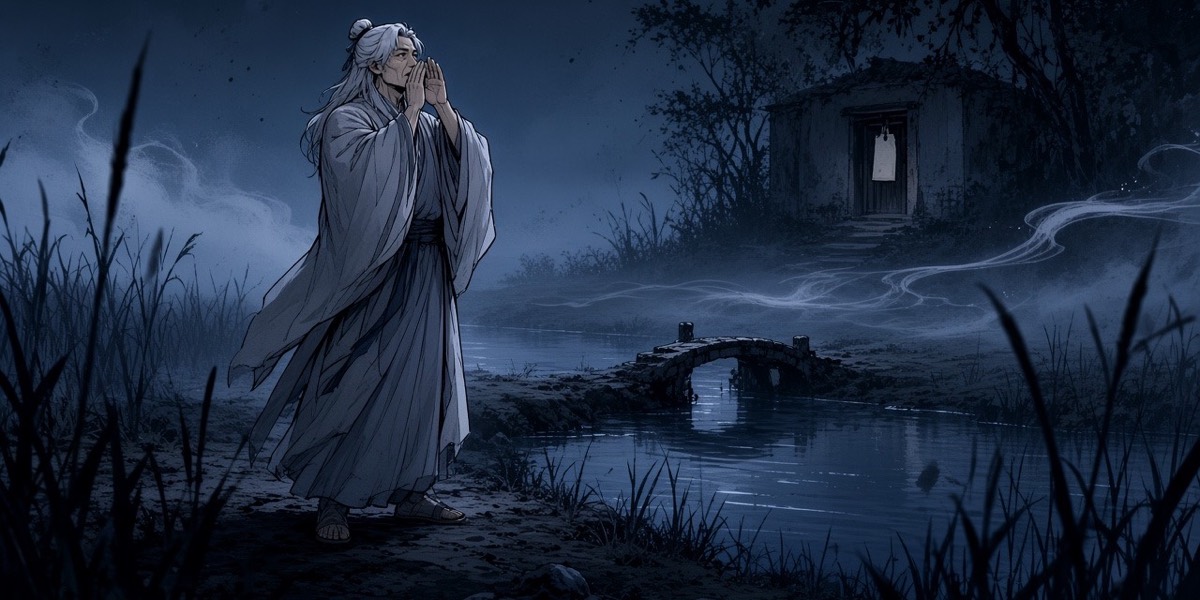
That night he goes down to the reeds in his sleeping robe and talks to them until dawn, loudly, where the night watch can hear. He laughs. By the market hour, so has everybody else.
takes the spirits’ name for him and turns it into an insult. : the ghost’s bastard, the clerk who runs with things that have no feet. Mothers use it to frighten children. Courtiers use it to end a conversation. He lets them.
The men with gifts stop coming. Nobody counts a madman.
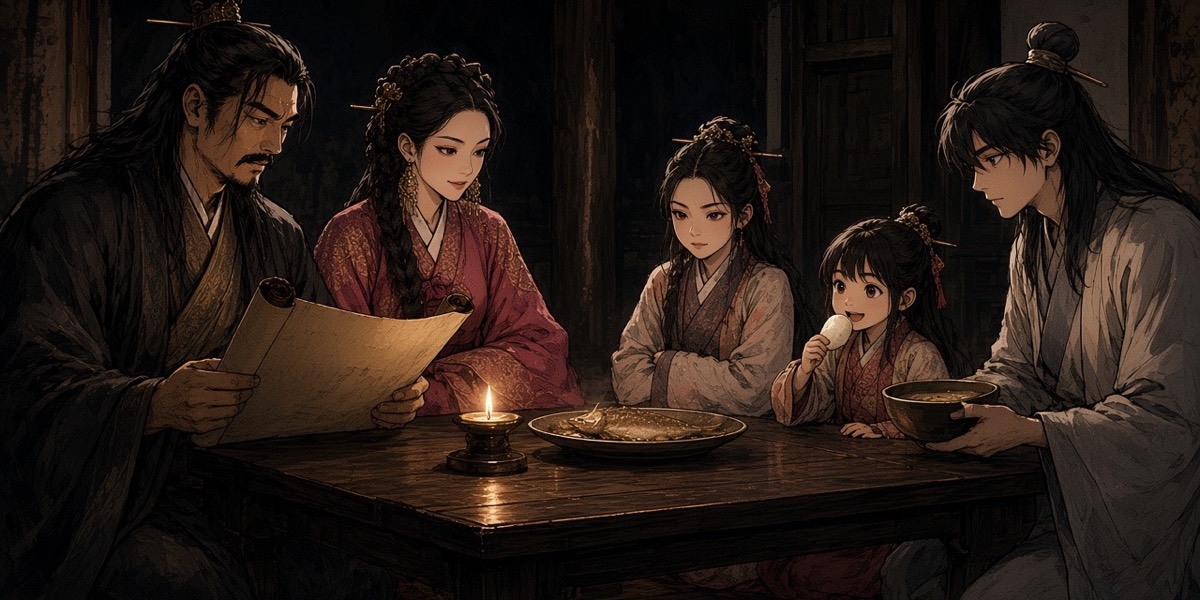
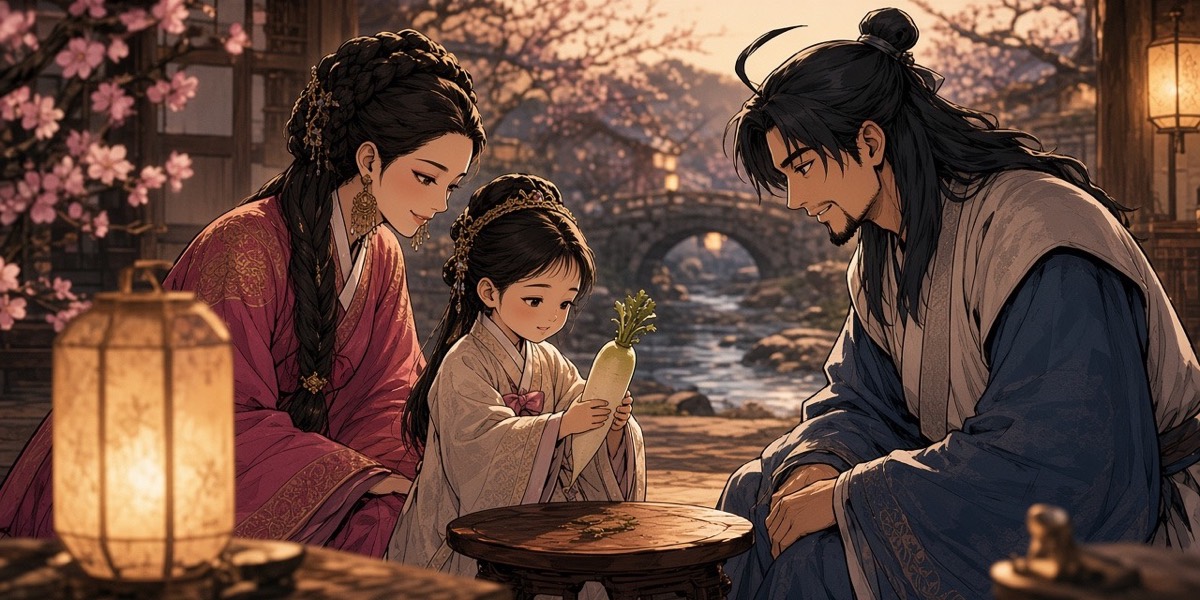
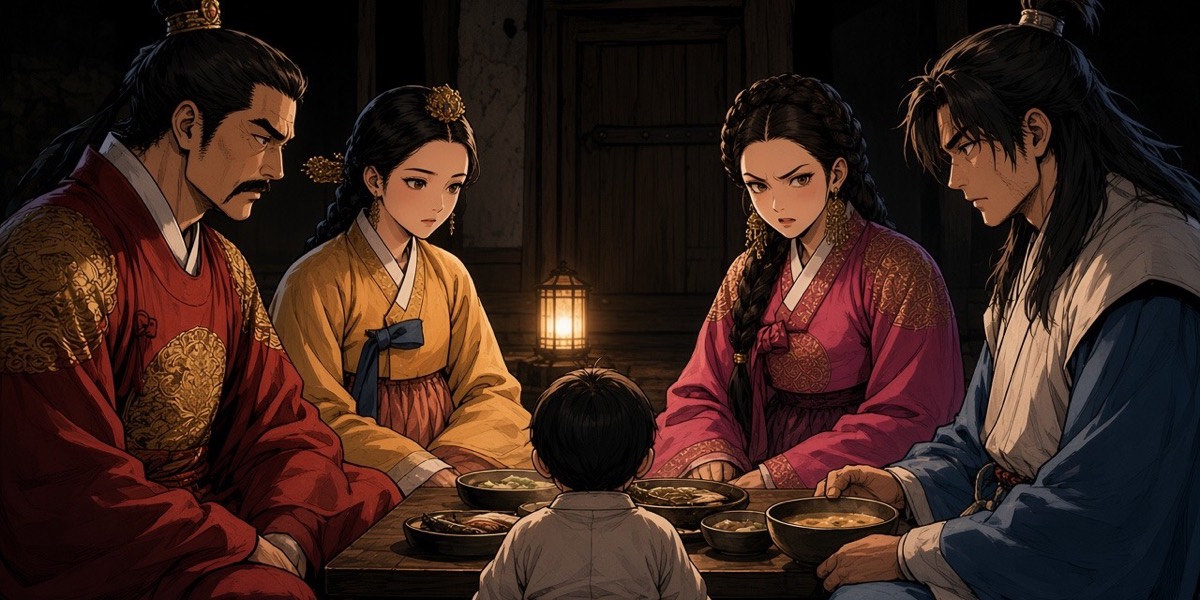
The king eats with his family when he can, which is not often, and with the door shut, which is the point. A queen, three daughters, and a servant with the soup.
eats the radish. Then the next one. The queen looks at the servant for a long moment, and then at her husband, who is pretending to read a tax roll at his own supper table.
decides that night that the madman is the most annoying man in . She is thirteen. That is how it starts.
Four years later, the same table. The fish is still there. So is the servant with the soup.
The soup does not spill. That is the first thing she will hold against him.
The comes to see the king that afternoon. He does not sit down. He compliments the garden.
opens his mouth. Nothing comes out. It is the only time anybody in that palace ever sees him lose a sentence. He compliments the garden again on his way out, which is how a retreats.
Thirty years later, when the room has to choose between the king’s daughters, it passes over the elder without once saying her name. Nobody has to explain why. never asks.
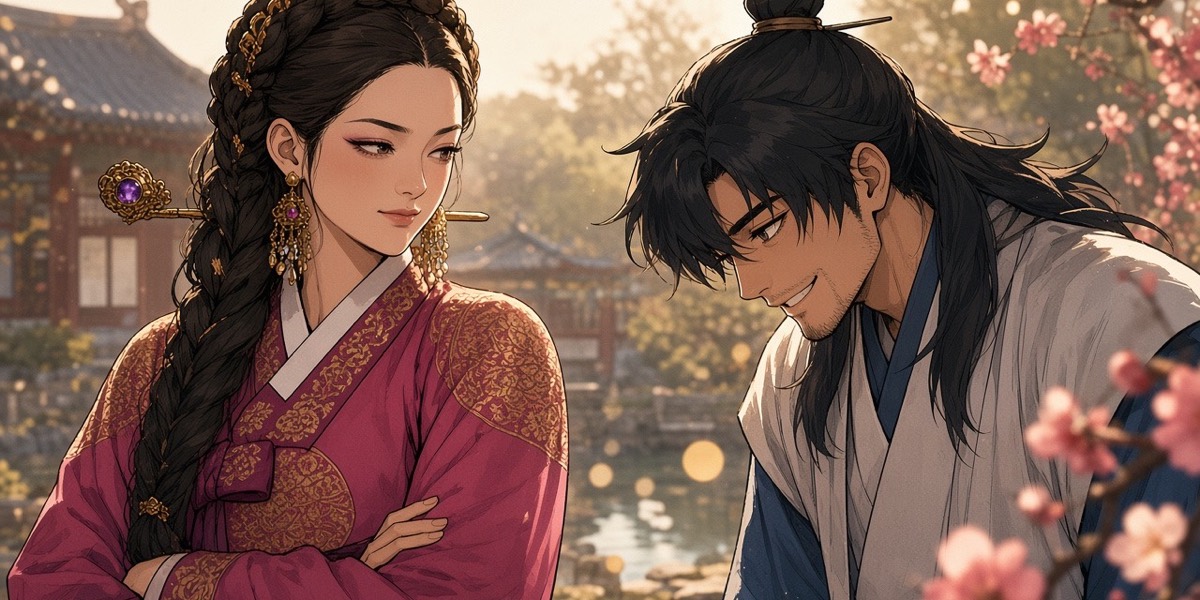
The king introduces them himself, in the garden, the way you introduce two dogs you hope will not fight. has been washed and put in a borrowed coat. Three maids find urgent business at the far end of the garden. He looks like what he is, which is a king’s son, and then he bows very deeply to a tree.
The king leaves them alone, which is a terrible idea, and he knows it, and he goes anyway.
She doesn’t laugh. Then she very nearly does, and is furious about it all the way home.
decides to test his ghost in public.
Then he goes home and counts his silver.
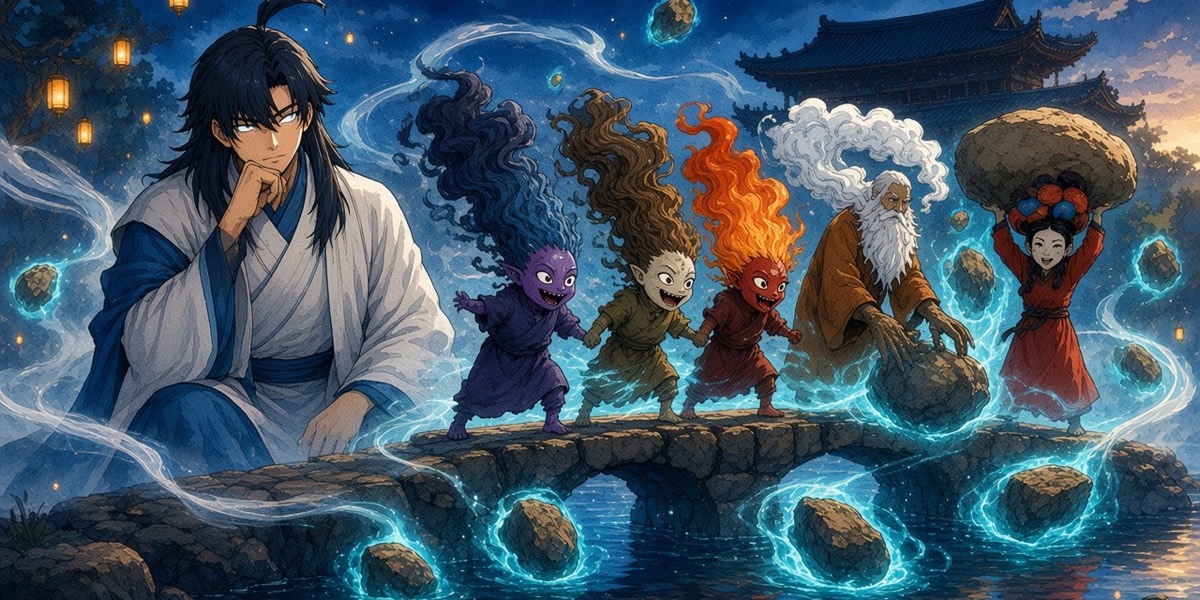
In the morning there is a bridge. Flat stones, a little crooked, wet with dew, exactly where the king pointed. The court calls it the and walks the long way round.
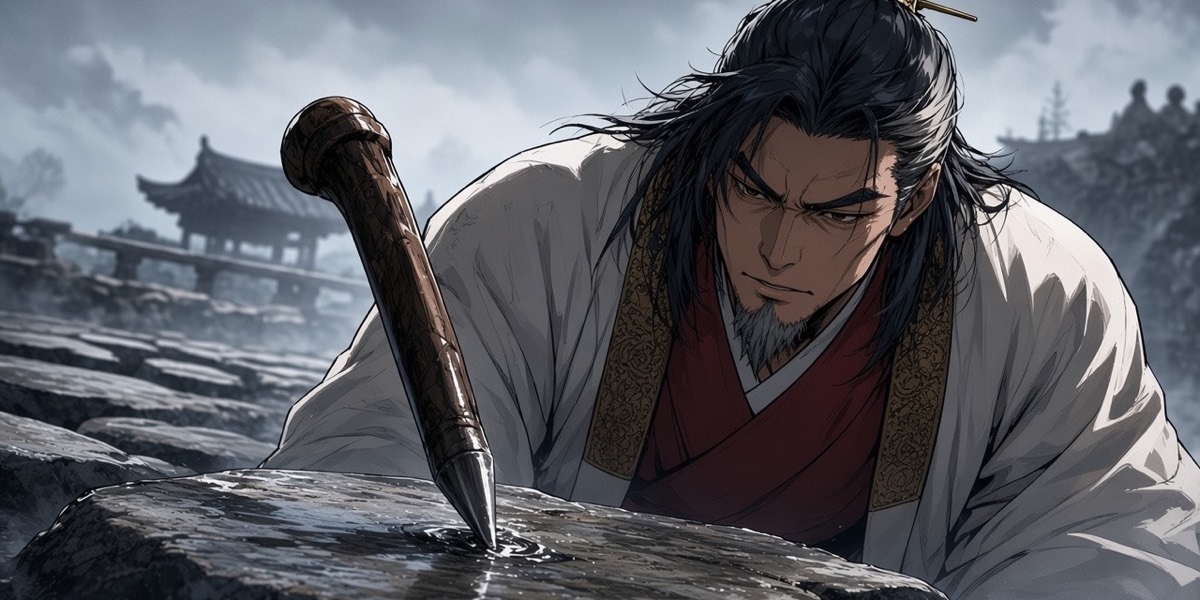
does not walk the long way round. He walks across the once, slowly, and taps each stone with his cane. Then he goes home and asks his steward what forty goblins eat.
Nobody asks why forty men nobody can name are buying rice cakes in the eastern ward that week. Nobody asks where a servant with no office found the silver. One person notices.
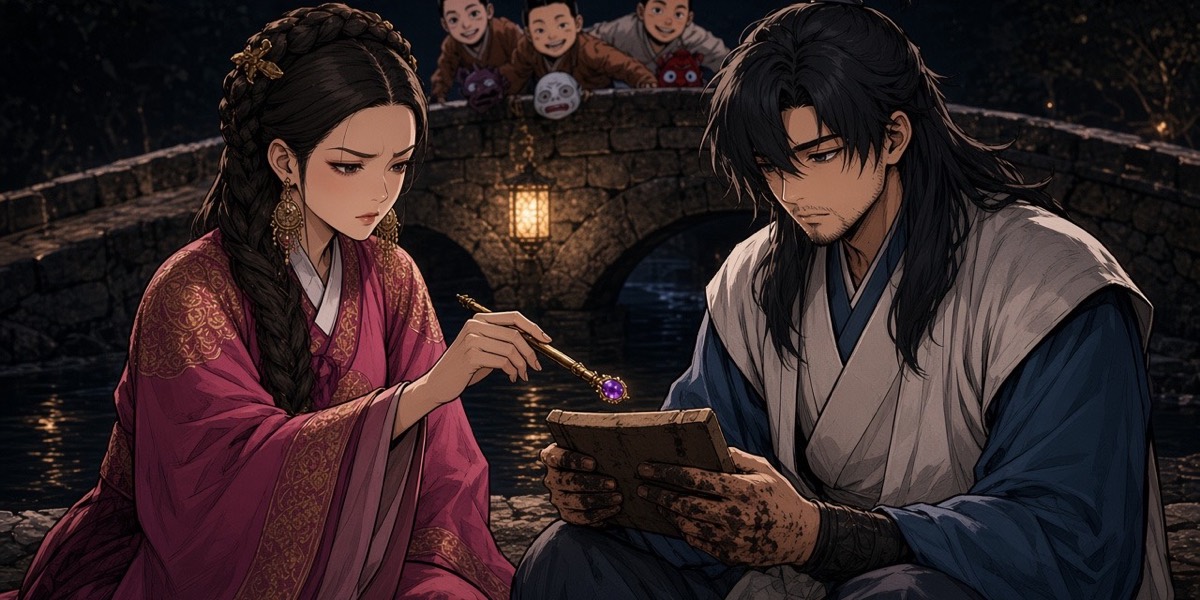
is seventeen, and engaged to a madman, and she has walked out alone to see the goblin bridge. She finds her intended sitting on it, doing sums on a wax tablet.
She doesn’t go home. Four years ago her father threatened to marry her to the madman to make her eat her fish. Now he has done it to make a point. She has not decided which of the two men she is angrier with.
She sits down on the bridge beside him, takes the stylus out of his hand without asking, and corrects one of his sums.
He laughs, a beat late. She doesn’t. She is looking at his hands, which are a clerk’s hands, ink in the creases, nothing mad about them at all.
The madman stops being mad for exactly as long as it takes to look at her.
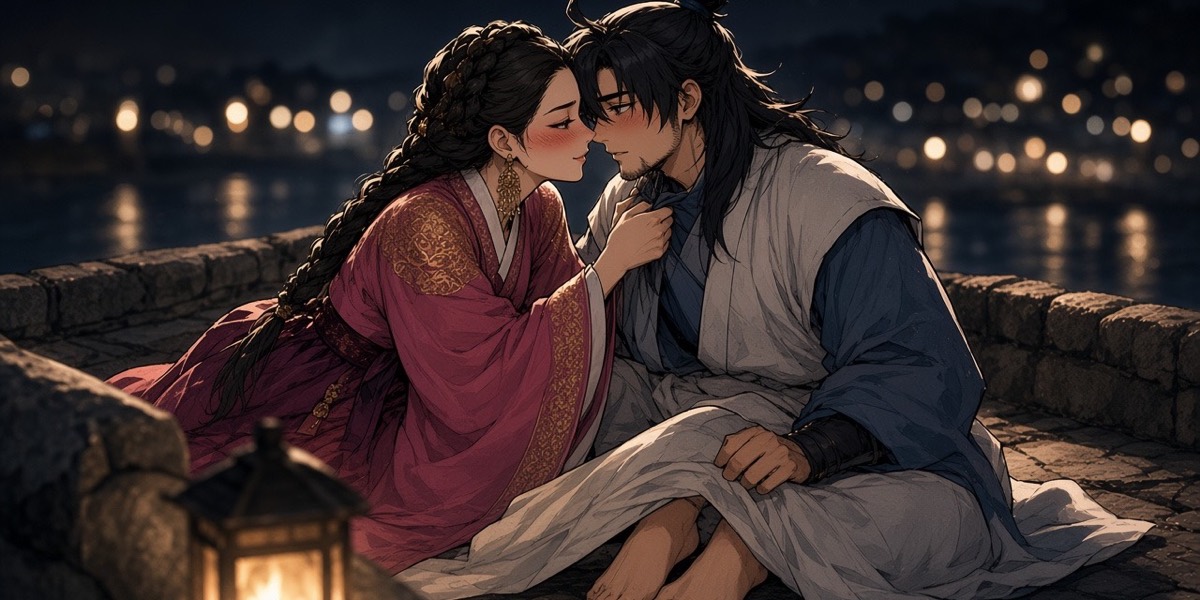
He comes back the next night. So does she.
And the song says that on the third night he shows her. Not the bridge. Everything under it.
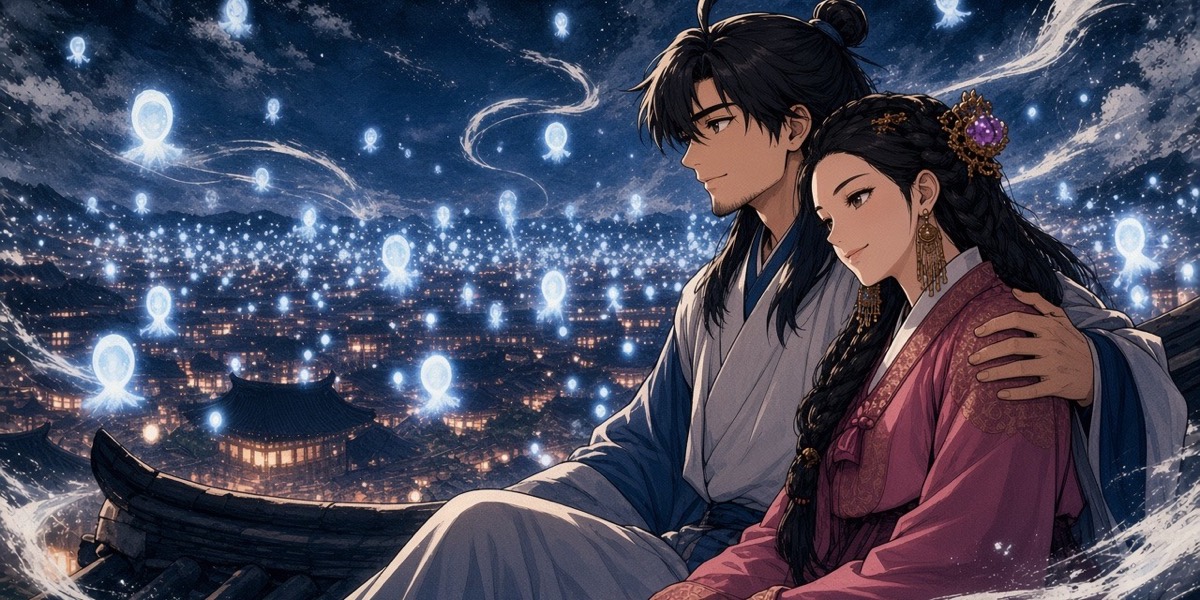
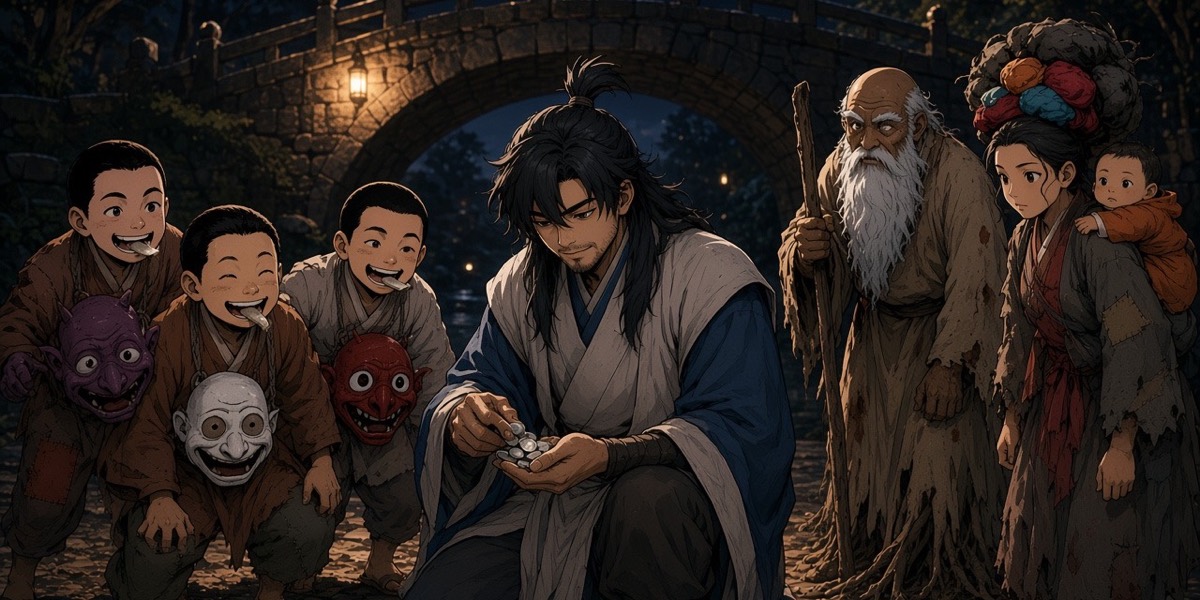
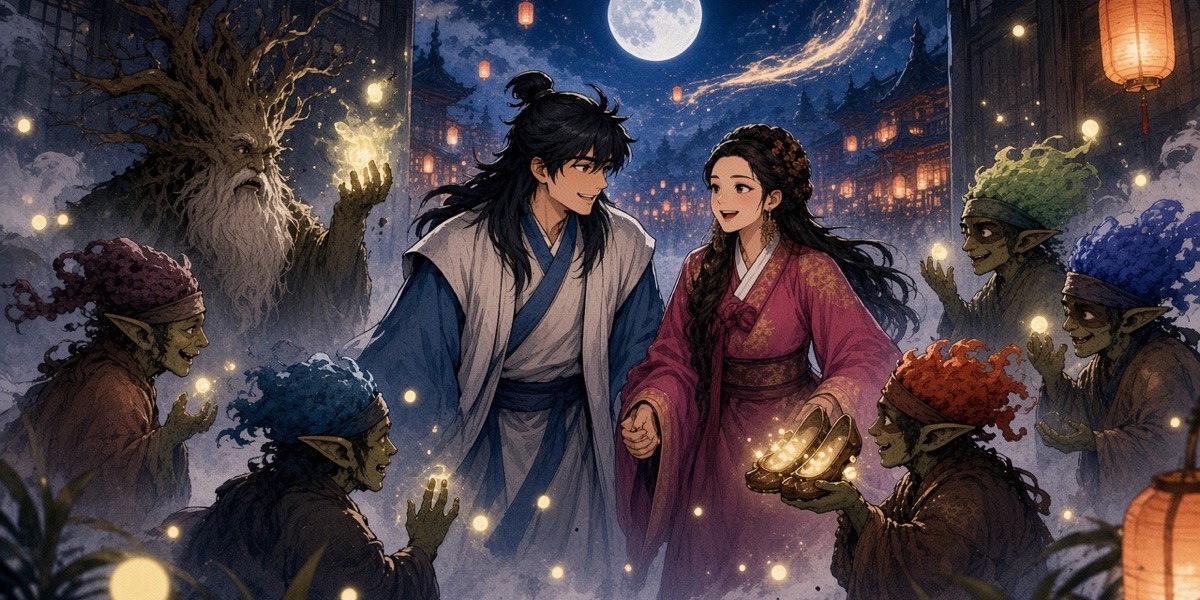
He takes her hand at the end of the bridge and walks her into the reeds, and the reeds open like a door. The goblins come out with their lanterns. There is a market of the dead under the moon. The sells stones that hum. reads her palm and refuses to say what he saw. The three rascals steal her shoes and bring them back full of fireflies.
Before dawn he lifts her onto the roof of the gate tower, and the whole city below is lamps, and half of them belong to the dead. She stops being afraid somewhere around the second watch. She never says when.
For a month they meet on the bridge after the temple bell. She brings lamp oil, because he never has any. He teaches her to read a mason’s tally, and the names the reeds use for the stars, which are not the names the palace uses. Once she makes him laugh on the beat instead of after it. They are both so surprised that neither of them says anything for the rest of the night.
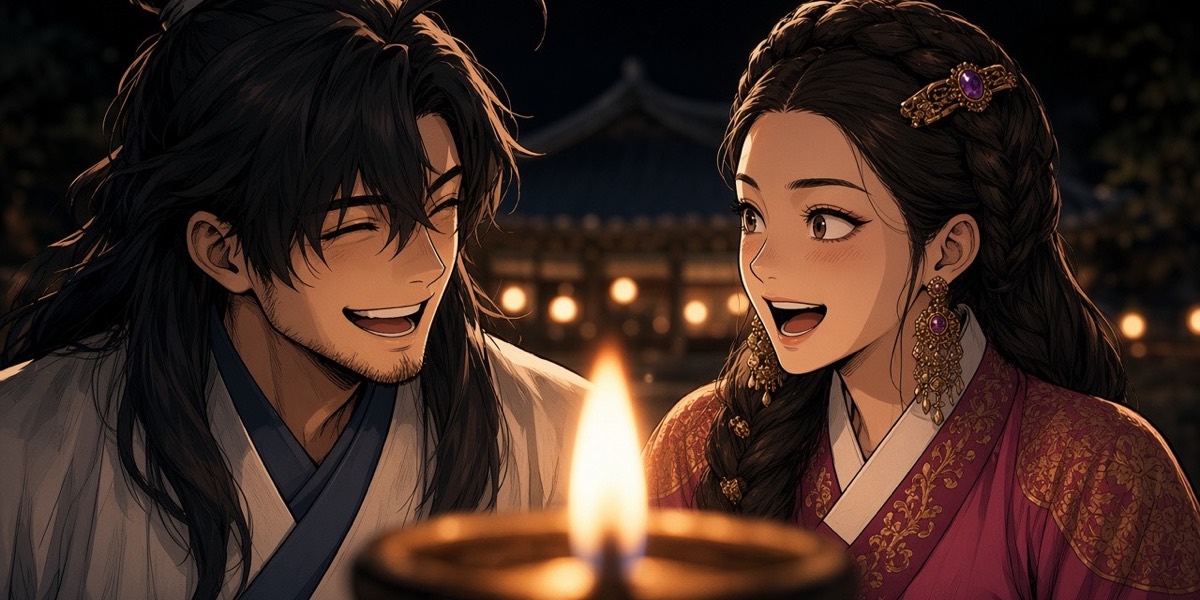
He says yes. It is the first thing he has said in eight years that nobody was meant to overhear.
The court is scandalised for a season. A princess, marrying down a bone, to a servant who argues with water. Then it decides this is good news. A princess who marries a madman has taken herself out of the count. A madman married into the king’s house is a madman nobody has to watch. Two birds, one wedding.
The wedding is small, at the house by the stream. Only one other royal child comes. is seven. She has brought a rice cake for the stream, and she sets it on the water very seriously, and spends the whole night watching her sister as if she were learning a trade.
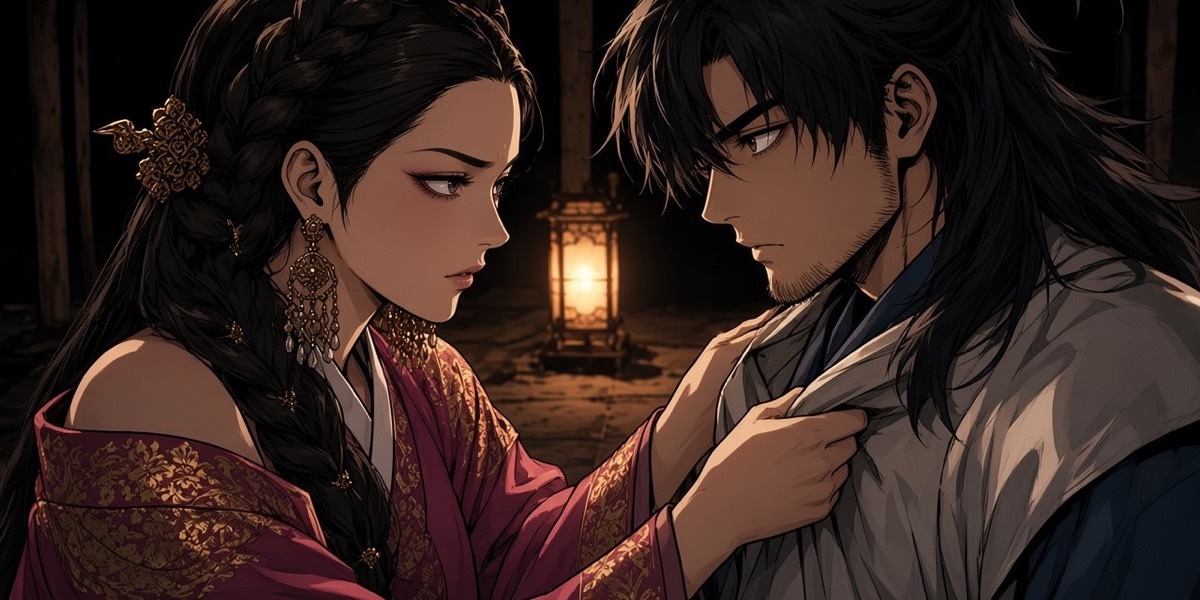
The first night in the house by the stream, out of habit, he starts telling the rafters about his day. She puts her hand over his mouth.
It is the only room in where he never once performs. The neighbours, listening at the wall for goblins, are bitterly disappointed.
The boy is three. He is asleep in the next room, which is the only reason the house is quiet.
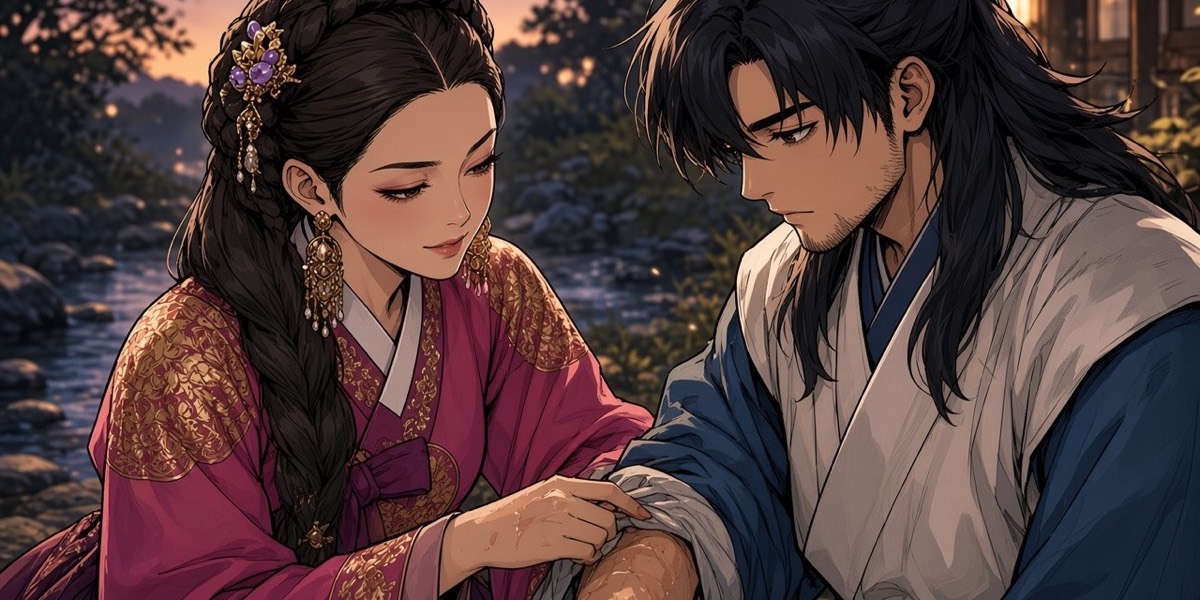
She finds him on the bank with his sleeves in the water, counting something only he can see. She ties them back. He lets her. He always lets her.
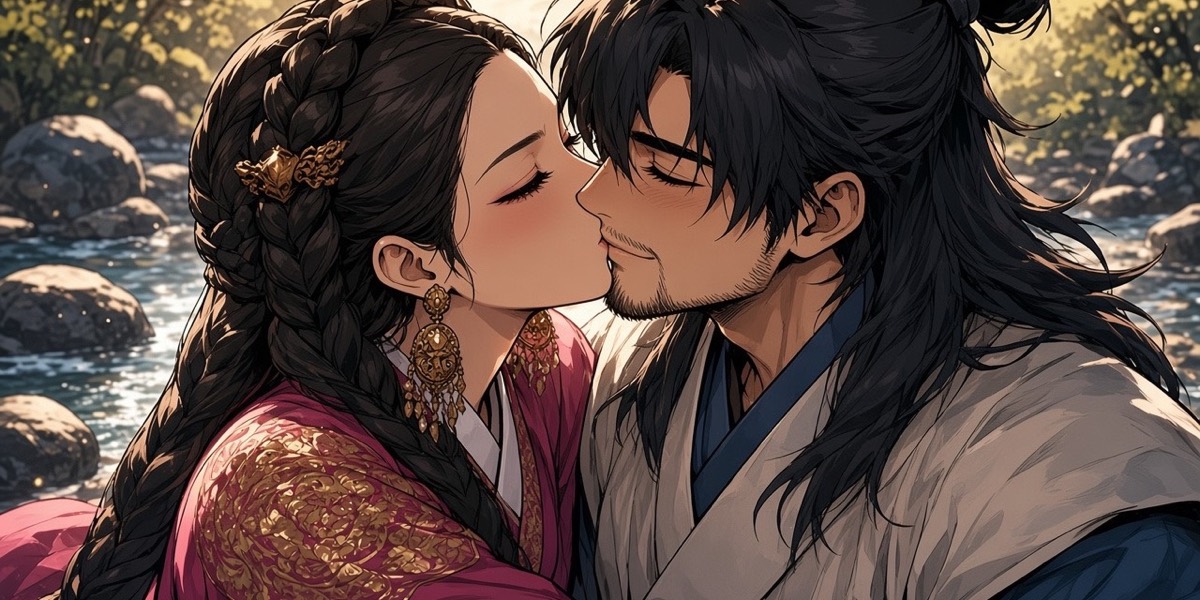
He laughs on the beat. She kisses him before he can be late about it.
They go in. The lamp is already lit. She does not let him talk to the dark.
The king is not finished with his goblins.
The next morning there is a new clerk in the palace. He is never late, never wrong and never seen to eat. Within a year there is no more loyal man in the government, which says something about the government.
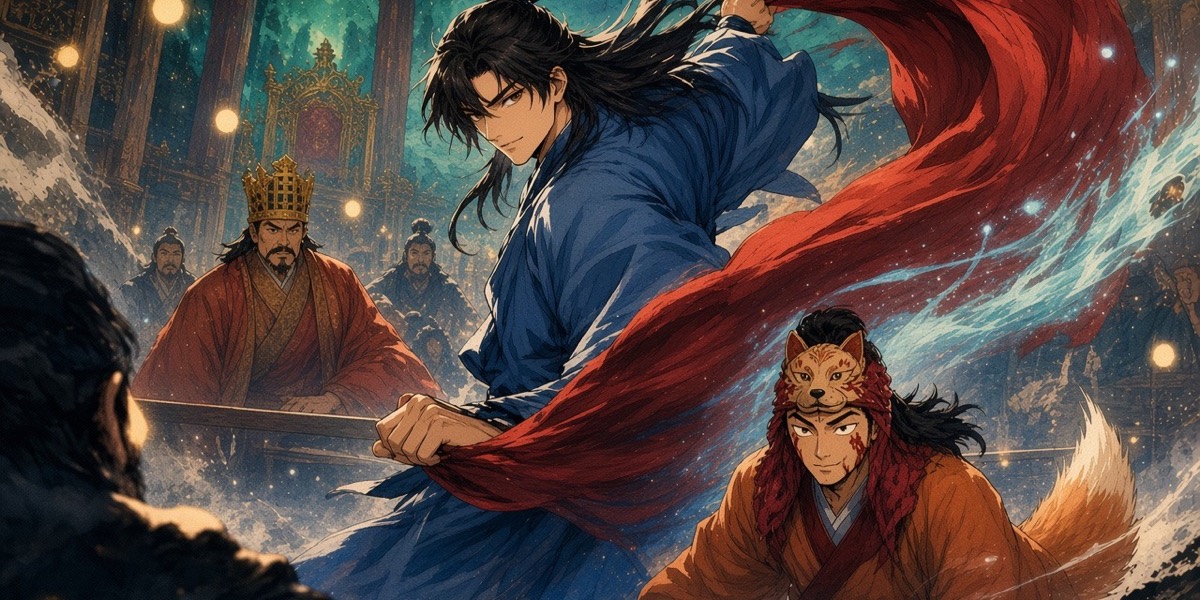
The song is very exact about how. The madman carries a fox into the throne hall in his arms, a real fox with a goblin’s eyes, and sets it down before the dais. He throws a red cloth over it. He says three words nobody can repeat afterwards. When he whips the cloth away, a young man is kneeling there in an orange robe, blinking at the lamps, and the fox is gone.
At the back of the hall watches the cloth, not the man. He watches it all the way out of the door.
explains to anyone who asks that he turned the goblin into a man overnight, the way you turn a coat. He is a little vague about the method.
A month later puts a servant behind the screen in the east corridor, where the madman talks to the rafters every evening. The servant comes back white.
The next morning he asks the king, very politely, whether a palace is the right place for a man who argues with walls.
The councillor has no son, and the king tells him to adopt one. He adopts . builds his new father a gate tower south of Heungnyun temple and sleeps on top of it every night, which the neighbours find reassuring until they think about it.
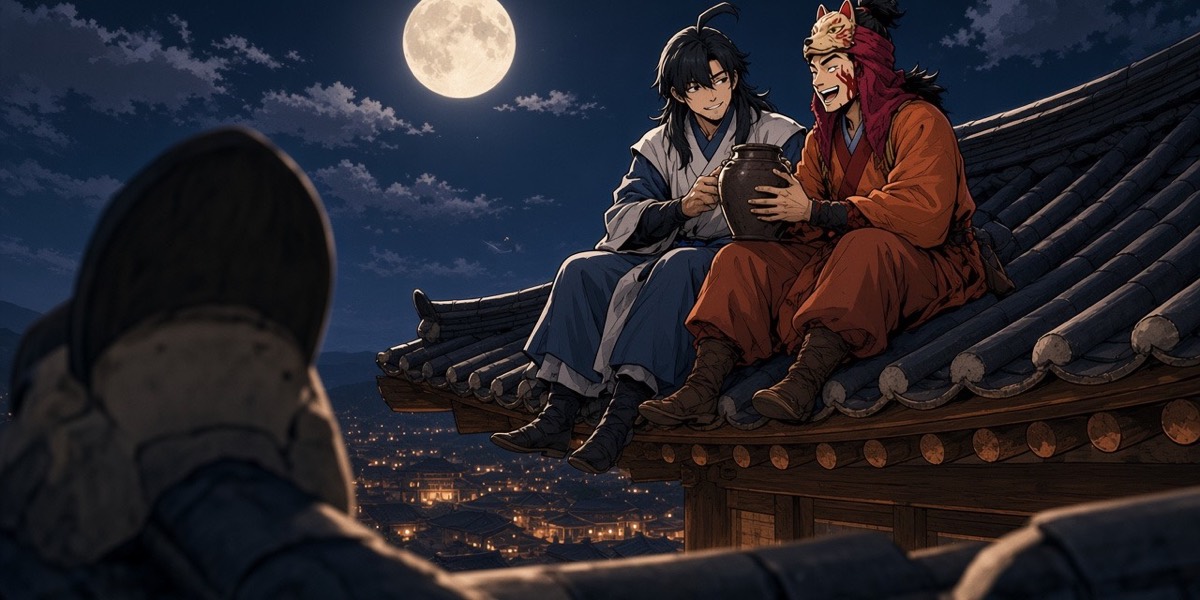
Some nights the madman climbs the gate tower, and the two of them sit on the roof with their legs over the edge. The neighbours hear the madman talking and the goblin answering, very correctly, like a man reading out a ledger.
A goblin can wear a man’s coat for years, the song says. Then one night the moon gets into the seams, and he remembers he has a tail.
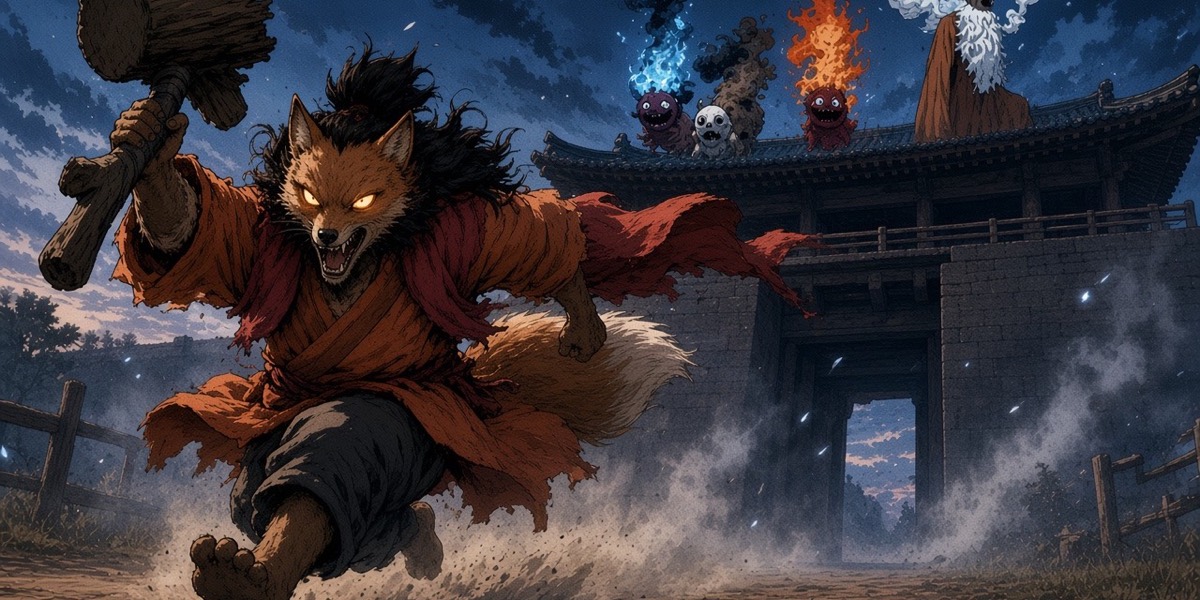
One morning the gate is empty, and a fox is running down the road to the south with its tail very low. At Heungnyun the dawn bell rings anyway, with nobody on the rope.
doesn’t chase it himself. He goes down to the reeds and says a few words, and that night the goblins bring it back to him, and kill it.
The song gives the hunt a whole verse. The goblins come out of every culvert in the city with their lanterns. The madman runs at the front of them, barefoot, calling the fox by its name, and the reeds bend flat to show which way it went.
Near midnight the fox doubles back for the , the one it laid itself. The bridge won’t have it. Every stone it set with its own paws tips under its feet, one after another, until it is standing in the stream.
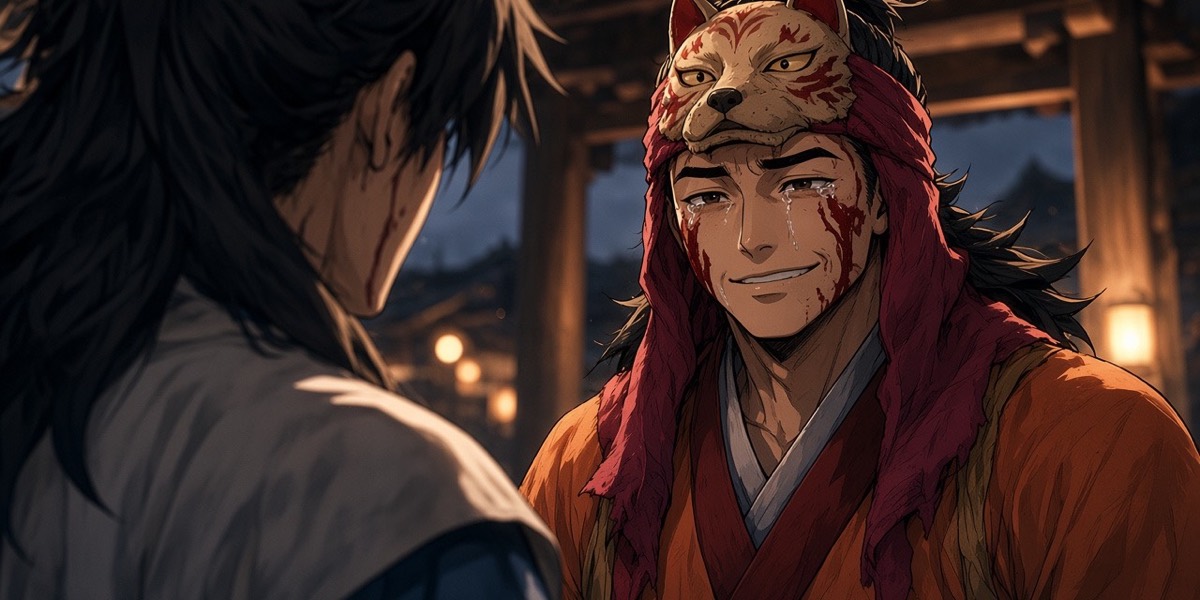
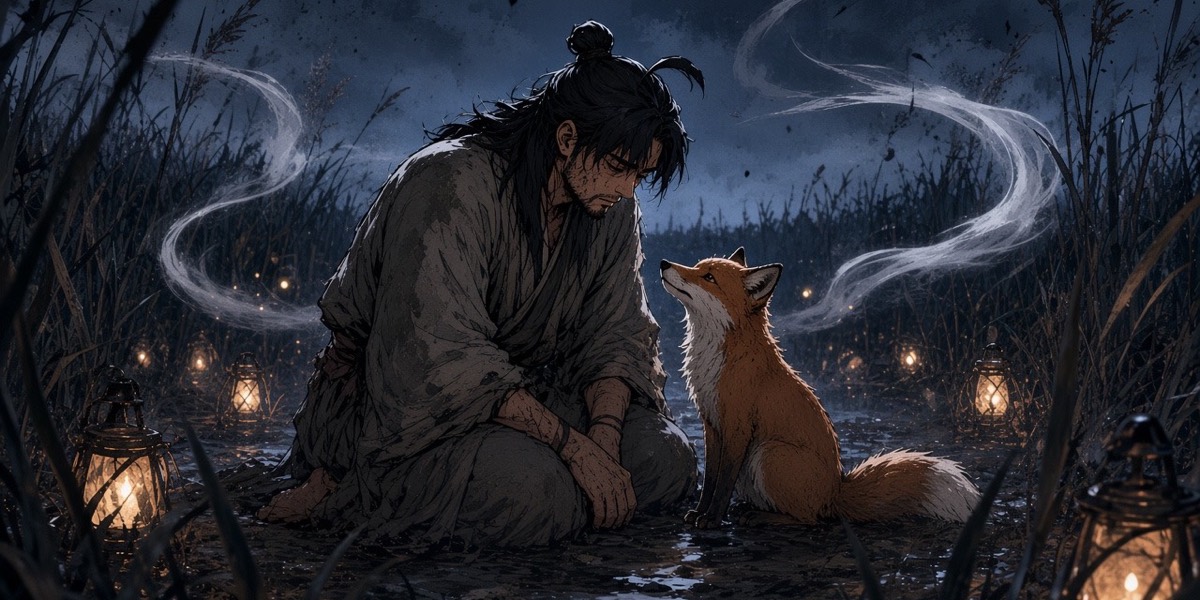
They corner it in the reeds where the south road meets the river. It sits down and folds its paws. The song lets it say one thing.
The goblins close over it like water. When they open again there is only a small red fox lying in the reeds, very still, and a madman kneeling beside it.
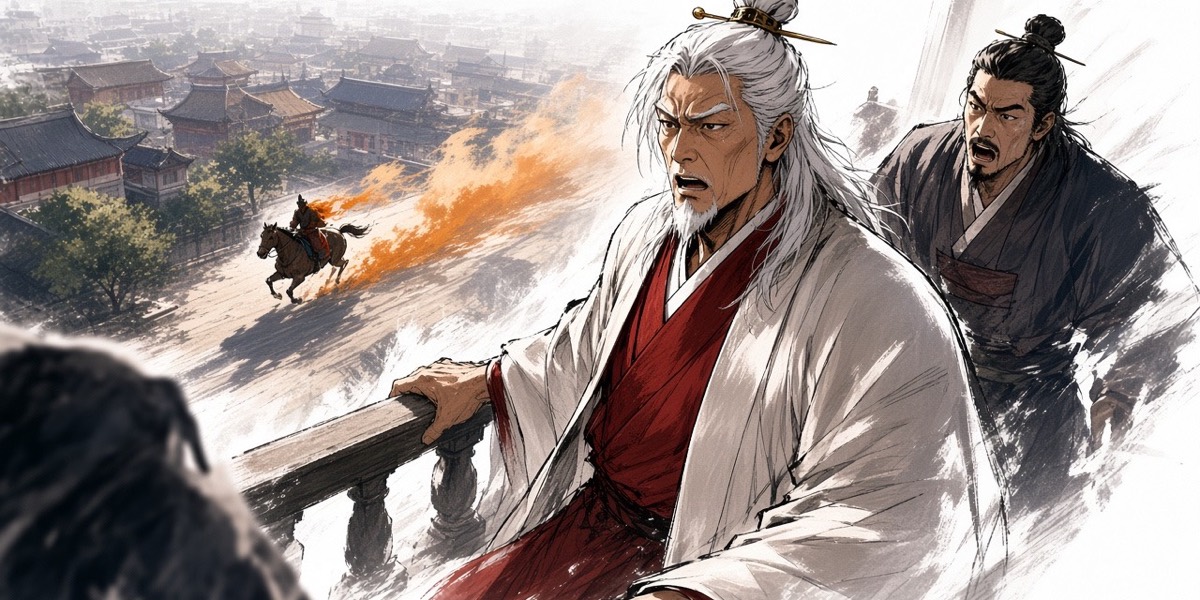
And the song remembers how it ended. He carried the fox through every ward of on his own horse, shouting the king’s name the whole way. Up on the Council’s balcony, an old man’s chair went over.
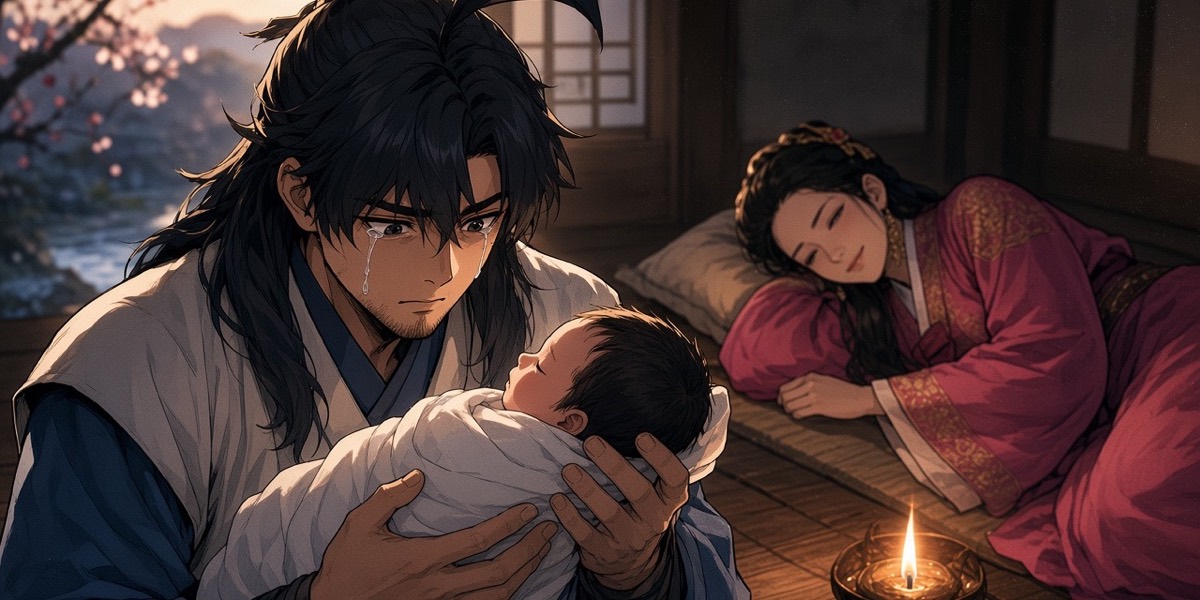
Spring comes early that year. The plum by the stream opens a week before the palace trees, and labours all night in the house by the water.
Her husband is not allowed in. He sits on the bank and talks to the stream for nine hours, loudly. The midwives agree it is the worst omen they have ever heard.
I was watching again. This time the ground doesn’t shake. The midwife stays, takes her fee, and counts it twice.
holds his son the way you hold something borrowed from a temple.
Spring and autumn. In the old books it is also the word for a chronicle, the record of who won. Nobody in the room says so. The baby has time.
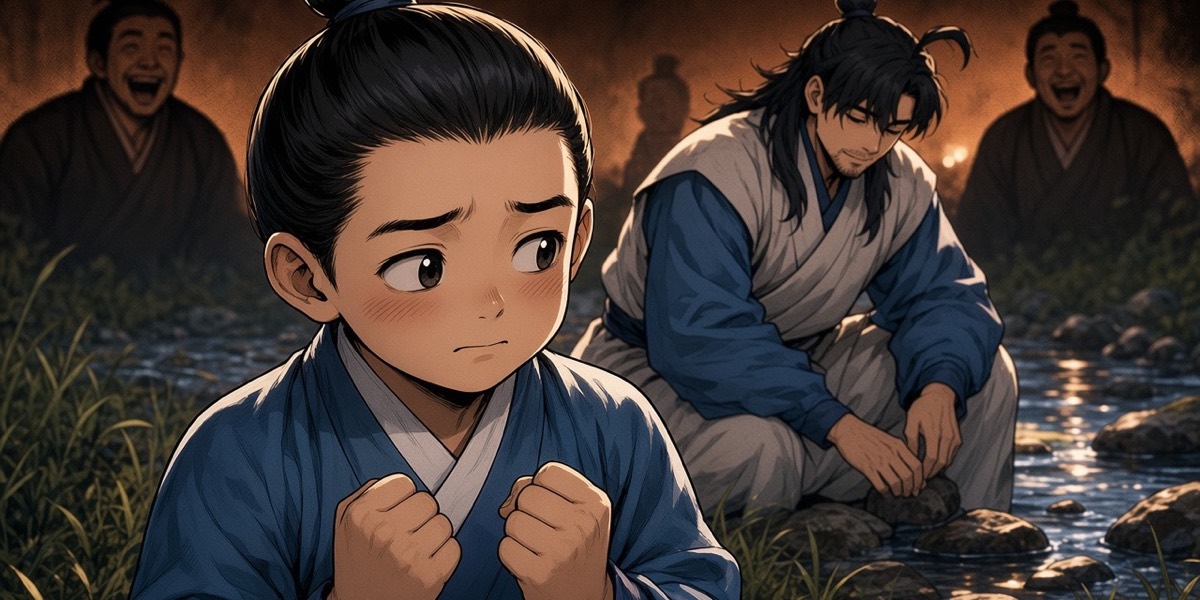
is nine and mortified. The boys in the yard call him the goblin’s whelp, and he has started to believe them.
Tonight his father is kneeling in the stream with his sleeves tied back, laying flat stones in a line and muttering to each one before he sets it down.
decides his father is the strangest man in . He will go on thinking so for thirty years. He will be wrong for all thirty.

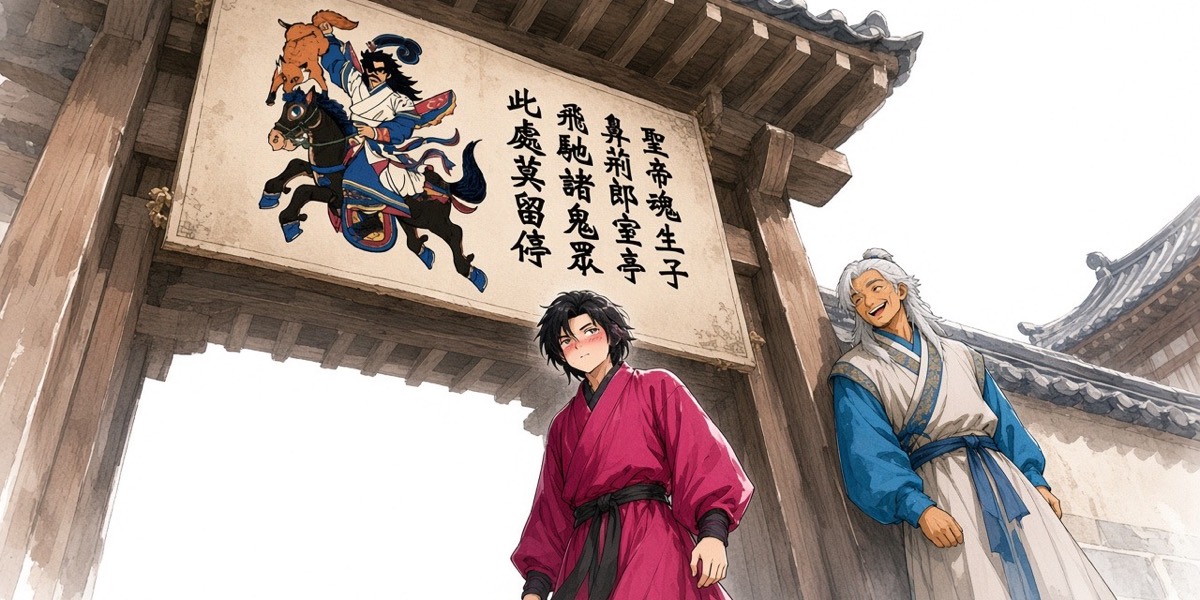
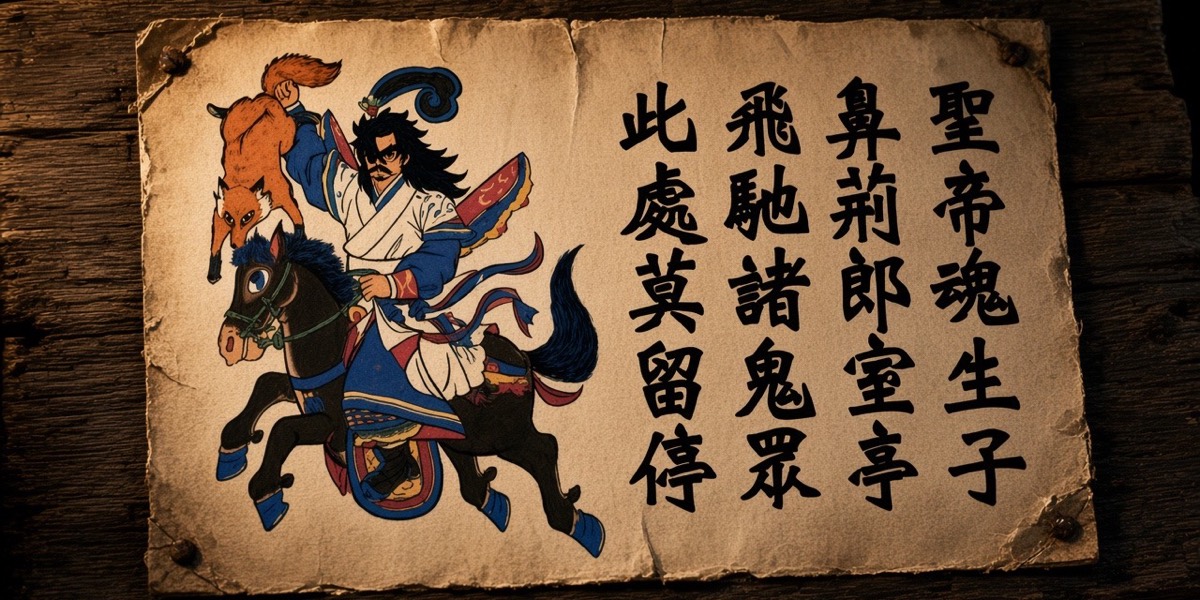
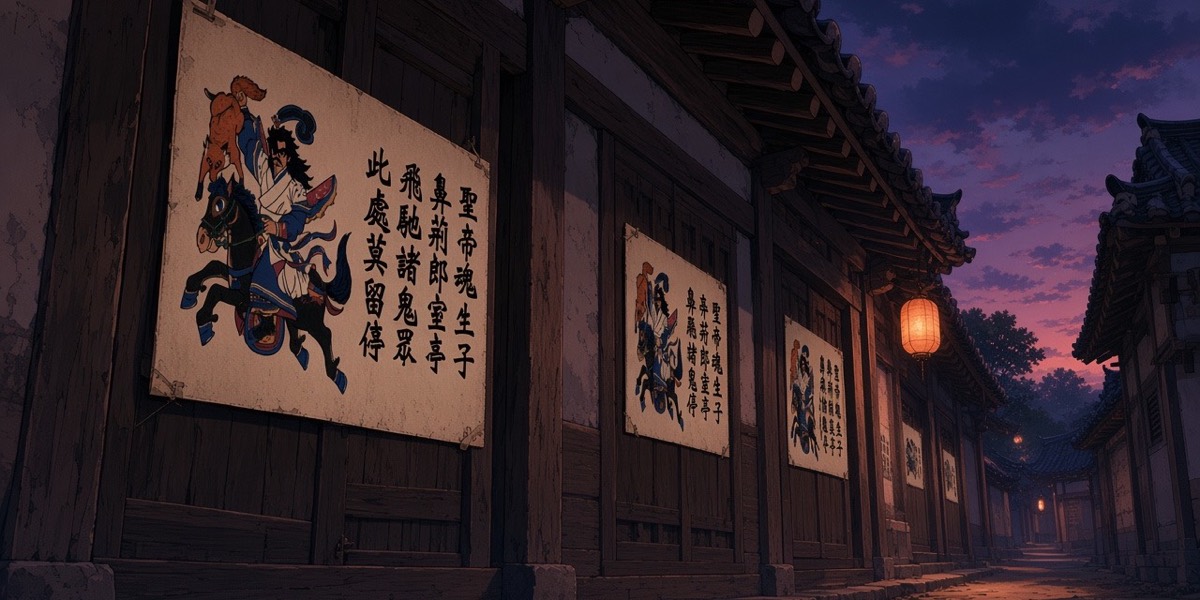
At fifteen the goblin’s whelp goes into the . His father walks him to the gate, though he has been asked three times not to, and delivers a speech he has been practising on the stream all week. On the door, a paper charm shows the same face — on a dark horse, fox by the scruff. goes pink. The whole city pastes his father on its gates; he has to walk under him.
Halfway through, his son tells forty boys that the man at the gate is the family steward. He gets confused, poor thing.
The steward walks home grinning the whole way. wants to know what’s funny.
That autumn the watch reports that the goblin’s whelp gave the moon verse for his whole class and made the Yard Marshal laugh. The steward has the watchman repeat it four times, then tells it to the stream.
Thirteen years later the goblin’s whelp gets married, after a pyre that never caught, to the sister of the strongest boy in . The groom’s father has been asked to sit near the door and not talk to anything. He talks to the door.
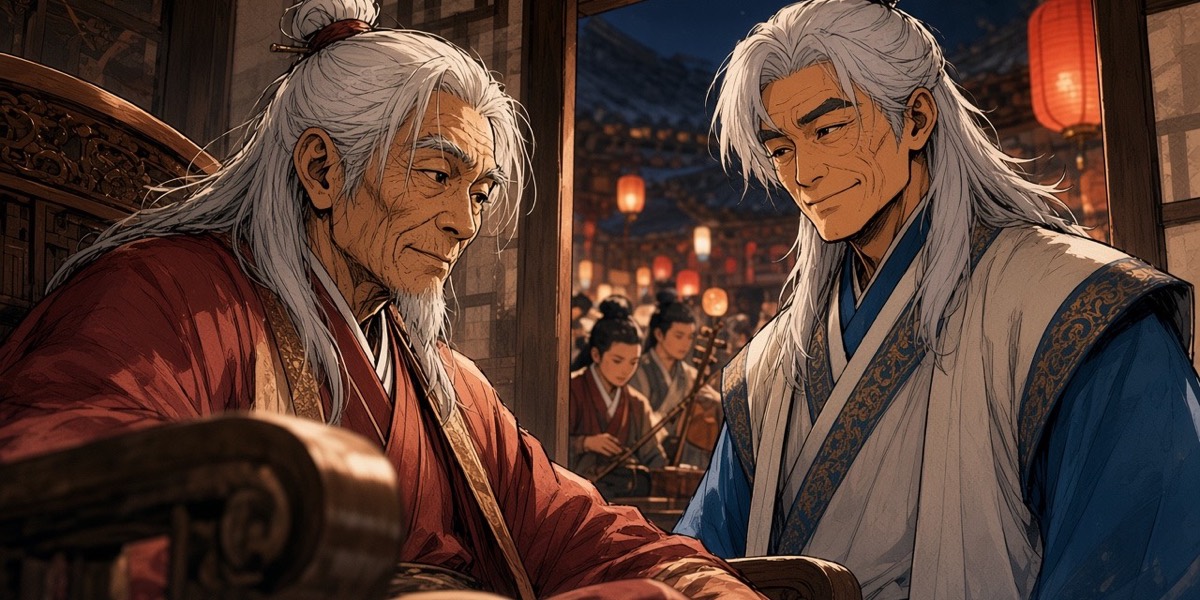
Across the hall the bride’s grandfather is carried in on a chair. is ninety and still compliments gardens. Halfway through the feast he sends his steward to the bride’s father with a cup. The bride’s father drinks half and pours the other half on the step, the way you do for the dead.
The groom’s father is the only man in the room who understands it. He has been pouring half his cup at the edge of things for twenty-three years. Nobody has ever asked him why either.
On the way out, ’s chair is carried past the door. He has it stopped.
The old man looks at him for a long time. The music goes on behind them.
He laughs, a beat late. The chair goes on. Under the table finds his hand and holds it hard enough to hurt, and does not let go until the last guest has gone.
The song spends its last verse on two people getting old in a house by a stream. It is the happiest verse in it.
She still ties his sleeves back before he goes into the water. He still talks to the stream. After a while she starts answering it for him.
When their son starts coming home with the ties torn off his coats, they sit on the step and inspect each one. finds teeth marks. declares a holiday.
At the wedding he cries, loudly, into a borrowed sleeve. The bride’s brother lends him the sleeve. It is the first time anyone has seen look alarmed.
The grandchildren come. He tells the boy ghost stories every night, and the boy dreams about goblins on a bridge. says he’ll give him nightmares.
When the granddaughter marries, he dances at the feast until his knees give out, and his wife counts his cups, and lets him have one more than she says.
And that is the story of the boy who could talk to ghosts. He grew old by the water with a woman who laughed at him, and his son grew up to be a great man.
There is one more verse. Nobody sings it at weddings.
After the fox, the goblins never come back. No lanterns in the culverts. No shoes stolen off the pages. The bridge stands empty, a little crooked, and the reeds stop bending when he walks through them.
Some nights he goes down to the water and calls them by their names. Nothing answers. The song says that is because they are afraid of him now. It doesn’t say what of.
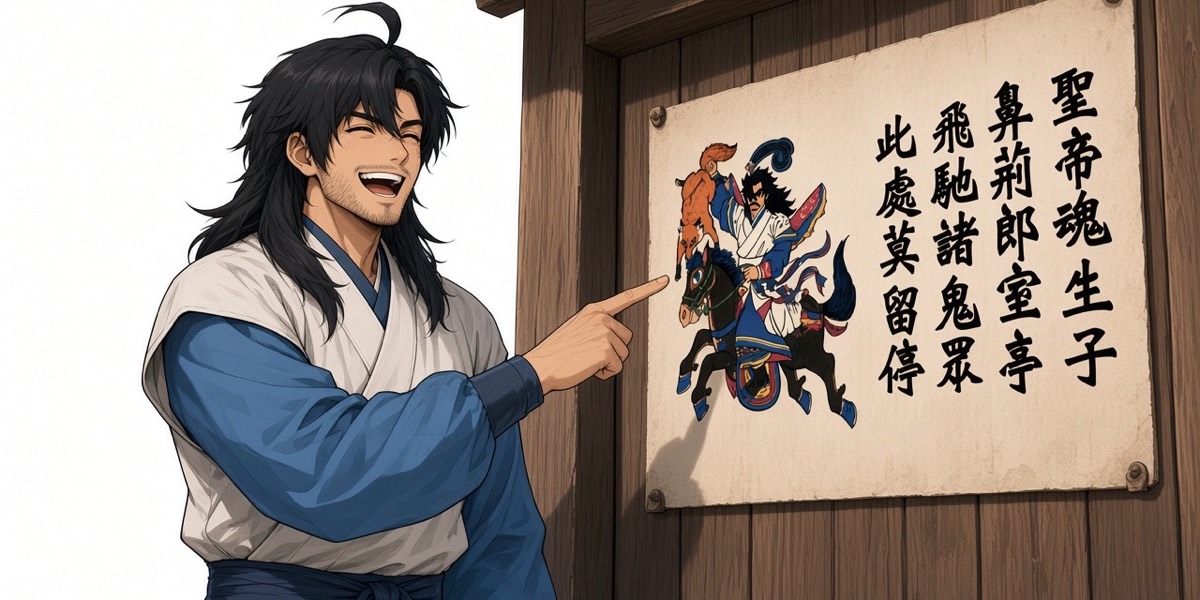
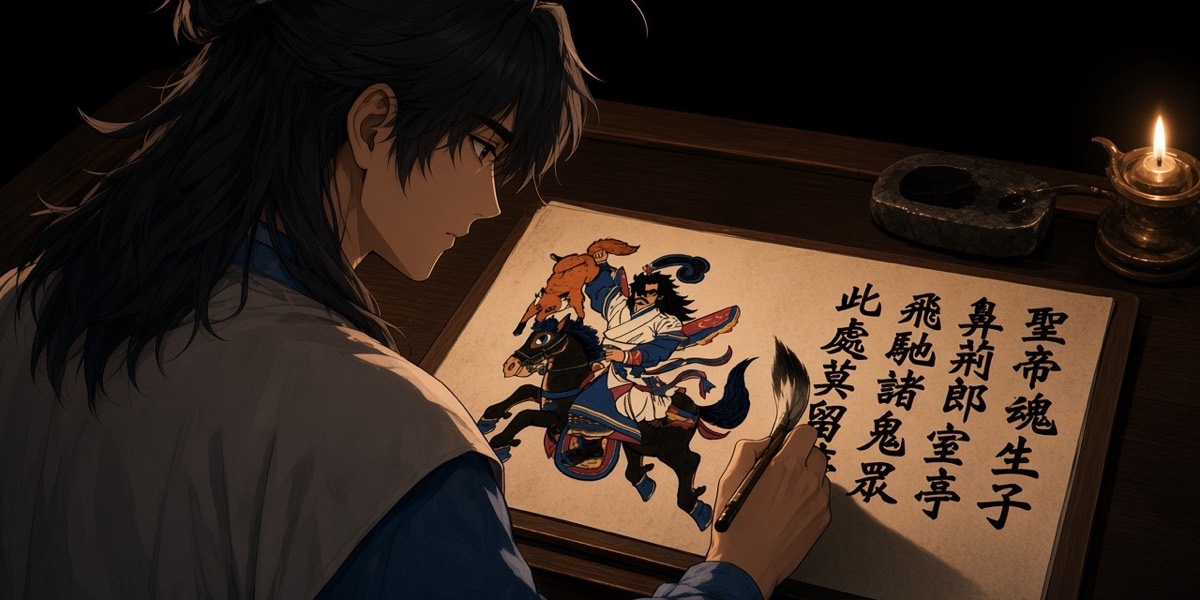
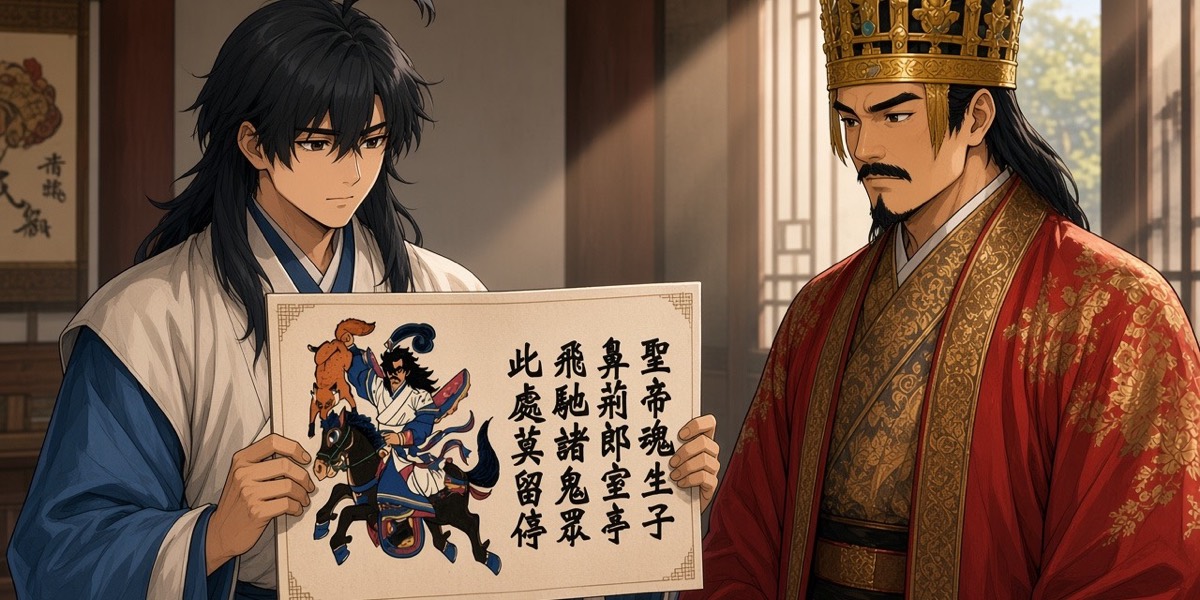
So he makes one himself. One lamp. A scrap of hanji. He draws the fox the way he remembers it, and writes the four lines the stream gave him.
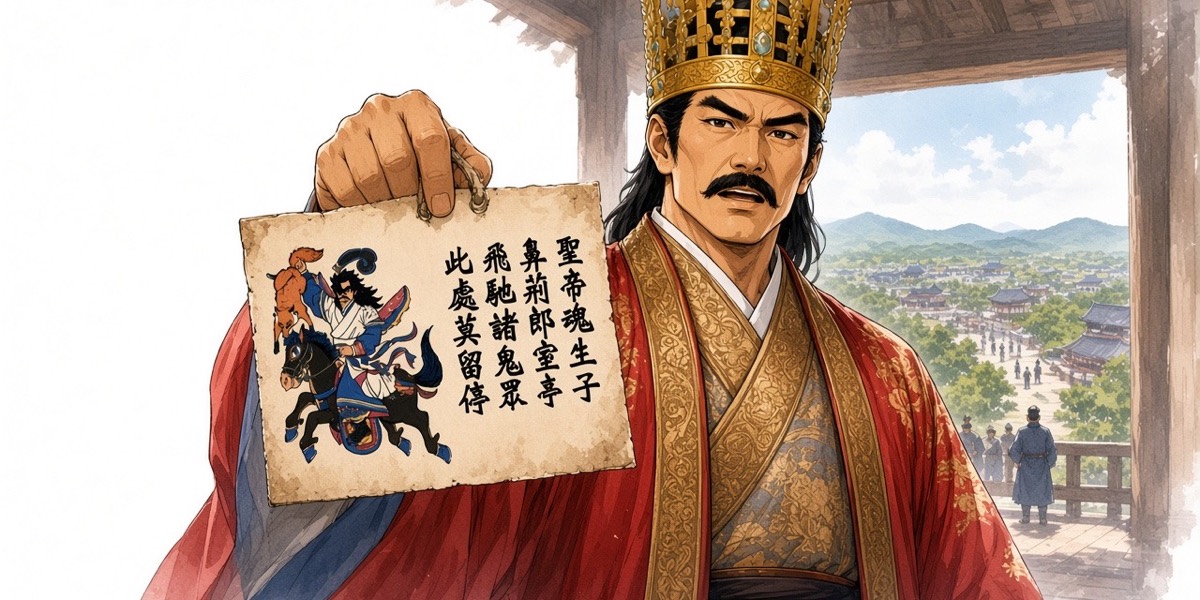
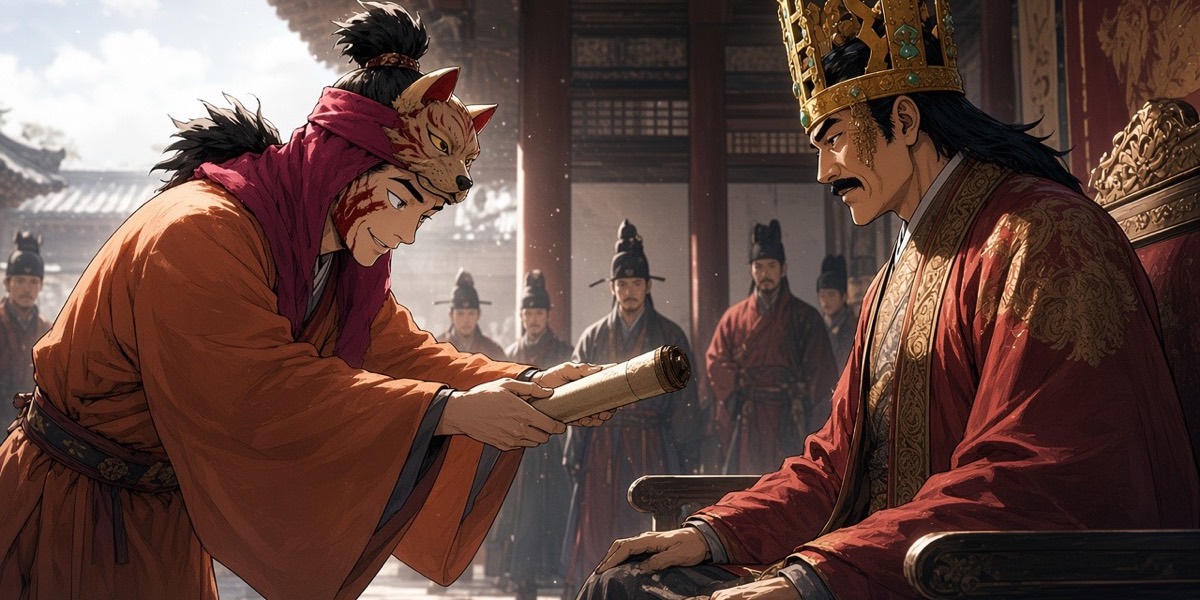
In the morning he walks it into the palace and holds it up for the king.
looks at the sheet a long time. Then he does what kings do when a clerk hands them something useful.
After that the ghosts of are afraid of one name. The city writes it on paper and pastes it over its doors — because the king told them to.
A holy king’s soul begot a son: here is the house of . All you flying, racing ghosts, do not linger here.
성스러운 임금의 혼이 낳은 아들, 비형랑의 집이로다. 날고 뛰는 귀신 무리야, 이곳에 머물지 말라.
The charm says , and the city pastes it on every door in , his own included. He finds this very funny. He painted the first one. Nobody counts a house with a charm on the door.
The tale of the peach-blossom woman, the ghost bridge and the fox is in the Samguk Yusa, which also remembers who stood over the pagoda’s two hundred workmen. The Samguk Sagi gives ’s monk’s robe and ’s war and fall. The ghost is the version two people chose, on purpose, one winter.
That is the song. Now the truth. Same bridge, same fox, fewer ghosts. On a bluff over the river, a madman is about to stop being mad…!
