













Chapter 74
Bonpuri
AI Summary
- Gimnyung Cave There is the serpent in the cave at Gimnyung, and every year the village gives it a girl.
- Sanbangduk There is Sanbangduk, who came down out of the rock to love a poor man.
- Bekjuto and Socheon-guk Years later, the hunting god married the farming goddess.
- Sanbang Rock Sanbang is one rock the size of a mountain.
- Gamunjang Not every story here ends in stone.
- The Kitchen Garden Behind the house Yuri Dora keeps a garden, which is mostly an argument with the wind.
- The Desk Jachungbi wanted to study beside a boy from the sky.
- The Parting Stream Three years at the same desk.
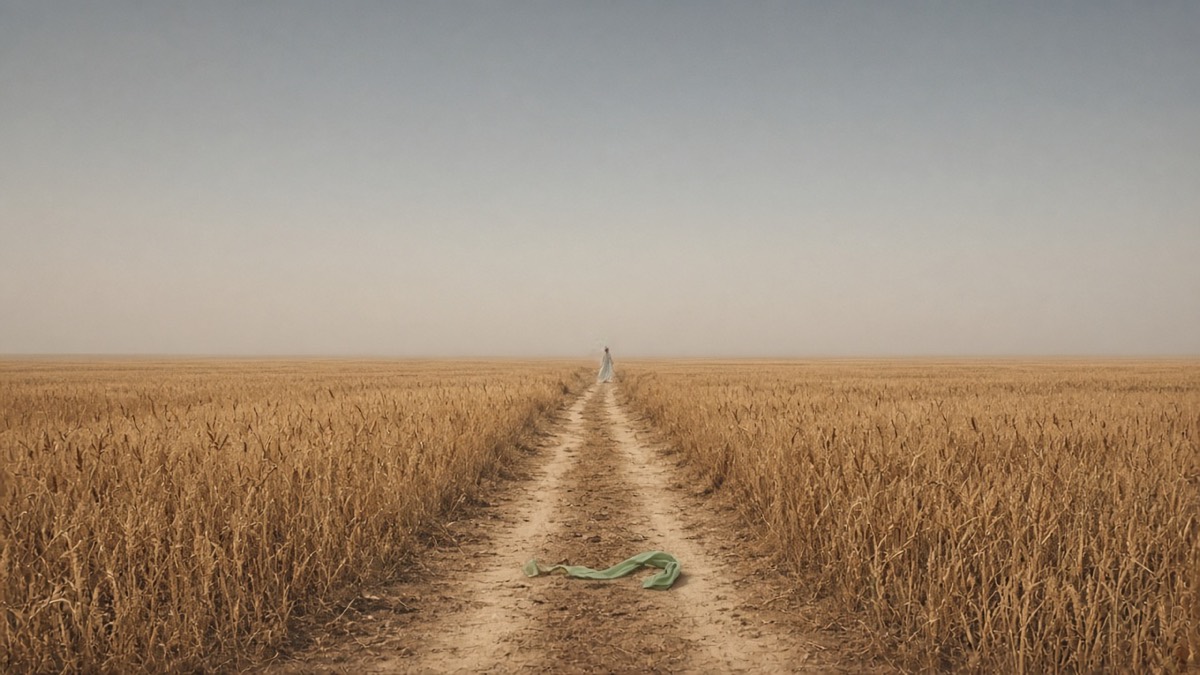
- The Western Flower Field So she walks west, past every gate, into the Western Flower Field.
- Crows The millet is up, a green fuzz over the packed ground.
- Two Cups That night Yuri Dora pours two cups, as usual.
- Black Rock He trains at the same hour on the same slab of lava on the eastern shore, and when the tide takes that slab he waits for the tide rather than use another one.
- Characters
Episode· 655
Bonpuri
Sanbangduk came down out of the rock to love a poor man. The island remembers how that went.
- Gyebek
- Yuri Dora
- Hallakgungi
- Jachungbi
- Sanbangduk
- Gameunjang-agi
- Mun Doryung
- Bekjuto
- Socheon-guk
6 stills without a cue
is made of stone. Sooner or later, so is everybody in its stories.
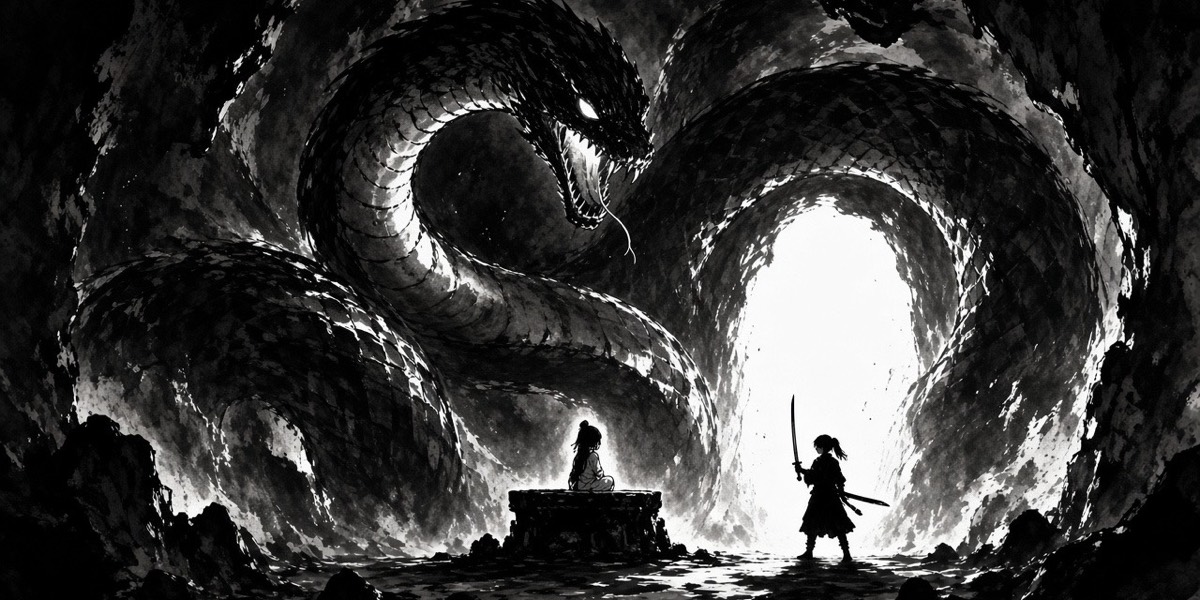
There is the serpent in the cave at Gimnyung, and every year the village gives it a girl. One year a young magistrate comes over from the mainland and refuses to.

He goes in with a spear and a great deal of smoke, and comes out with the serpent dead behind him. At the cave mouth the old catches his sleeve.

Halfway to town he hears something behind him. He wants to see whether he has won. He looks back. By evening he is dead in his bed, and nobody in the village is surprised, which is the saddest part.
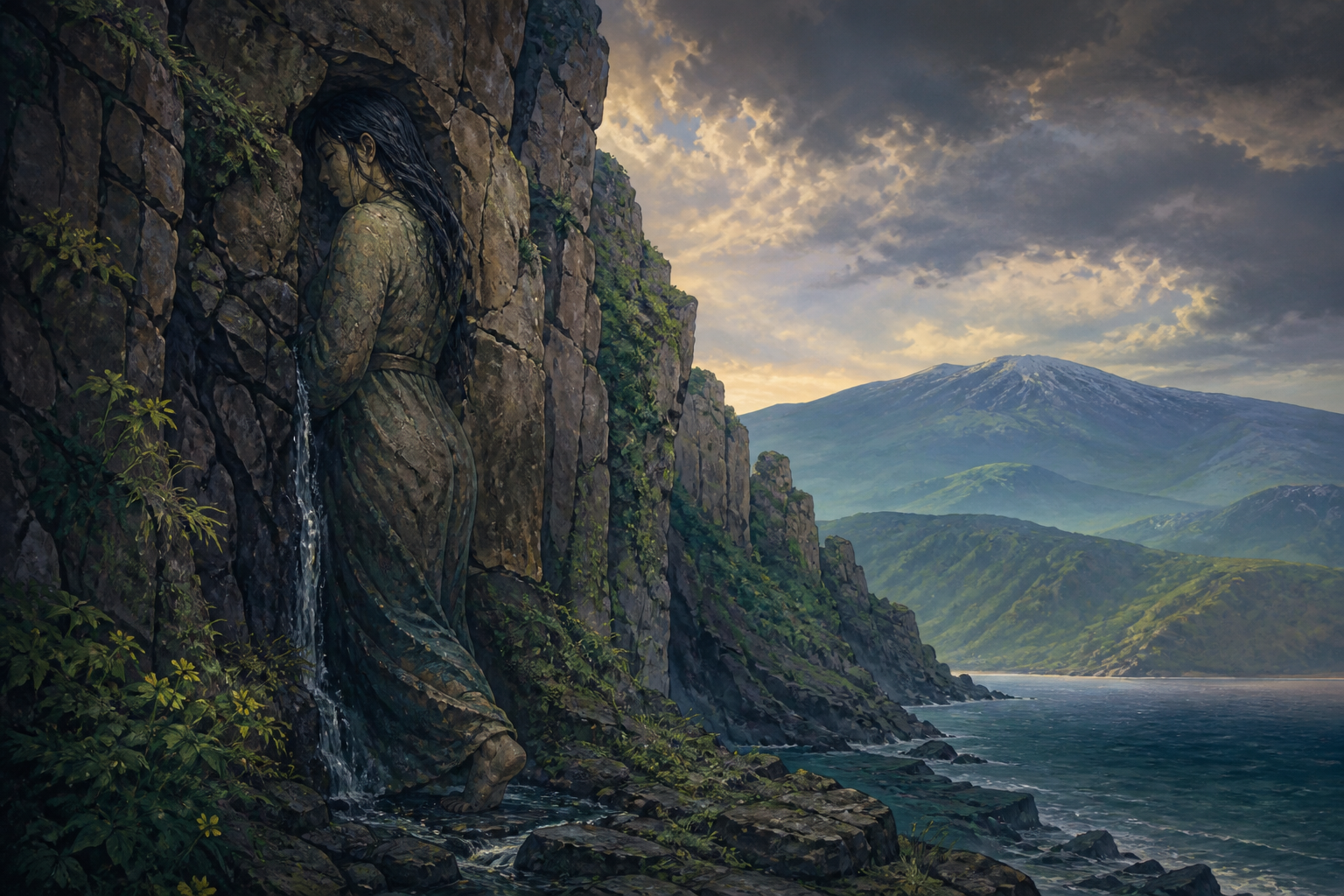
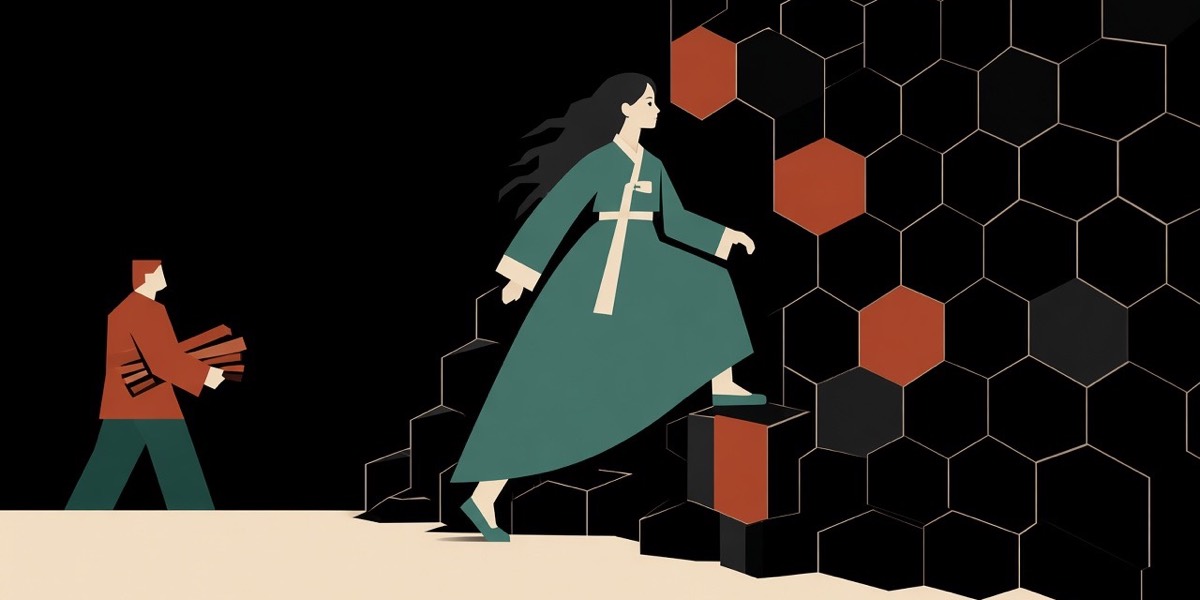
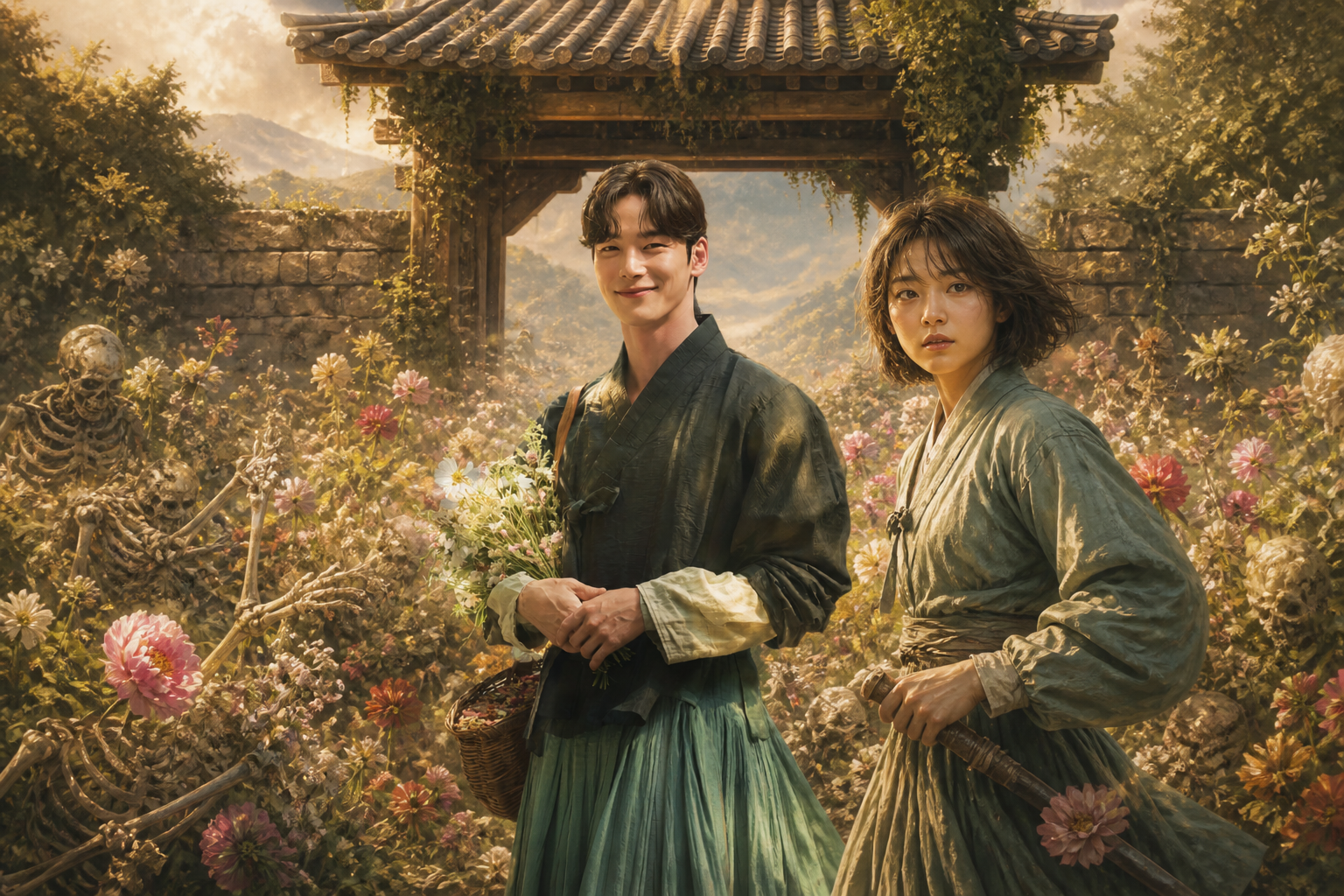
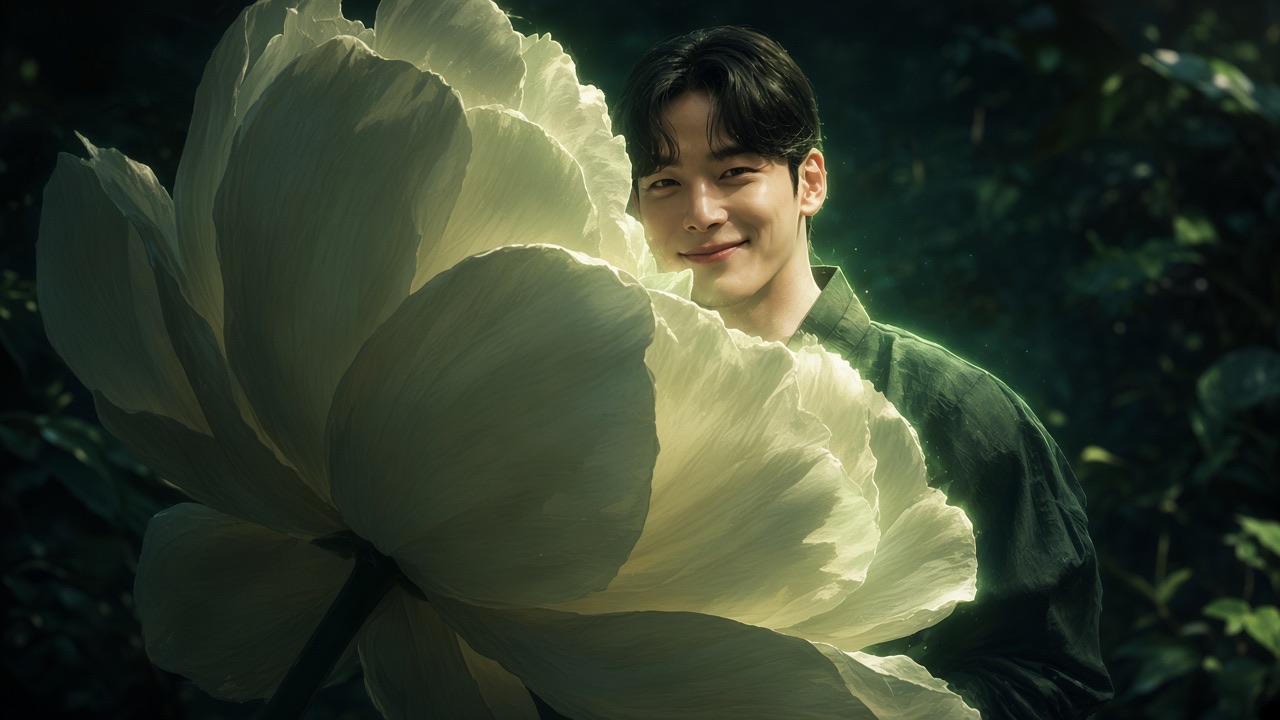
There is , who came down out of the rock to love a poor man.


Then an official on a tax round sees her at the spring.
Poor men always owe something somewhere, and the official finds it. Then the official has the husband killed to take her.
She walks back into the cliff. The spring inside it has not stopped since.
The island says its stories don’t end badly. They end in stone, which is different. Stone stays.
Years later, the hunting god married the farming goddess. She had crossed the sea to find a husband, and she brought a dowry with a purpose: an ox to plough with.
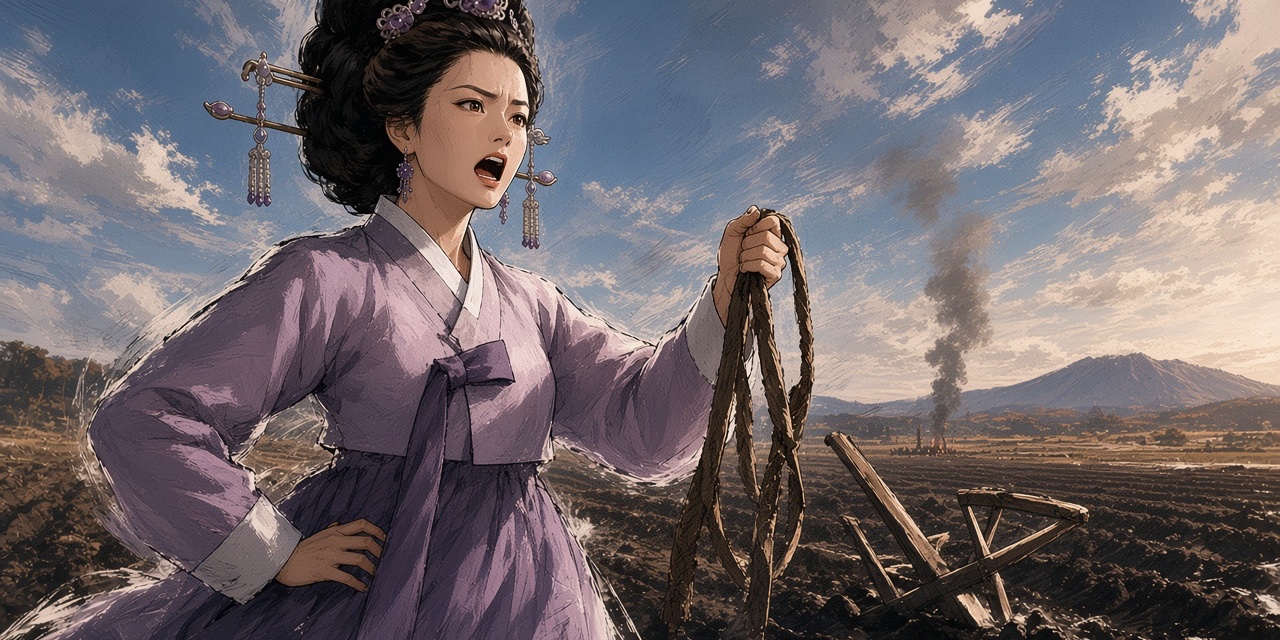

He went out with it in the morning. He came back in the evening without it, and with a very full stomach.
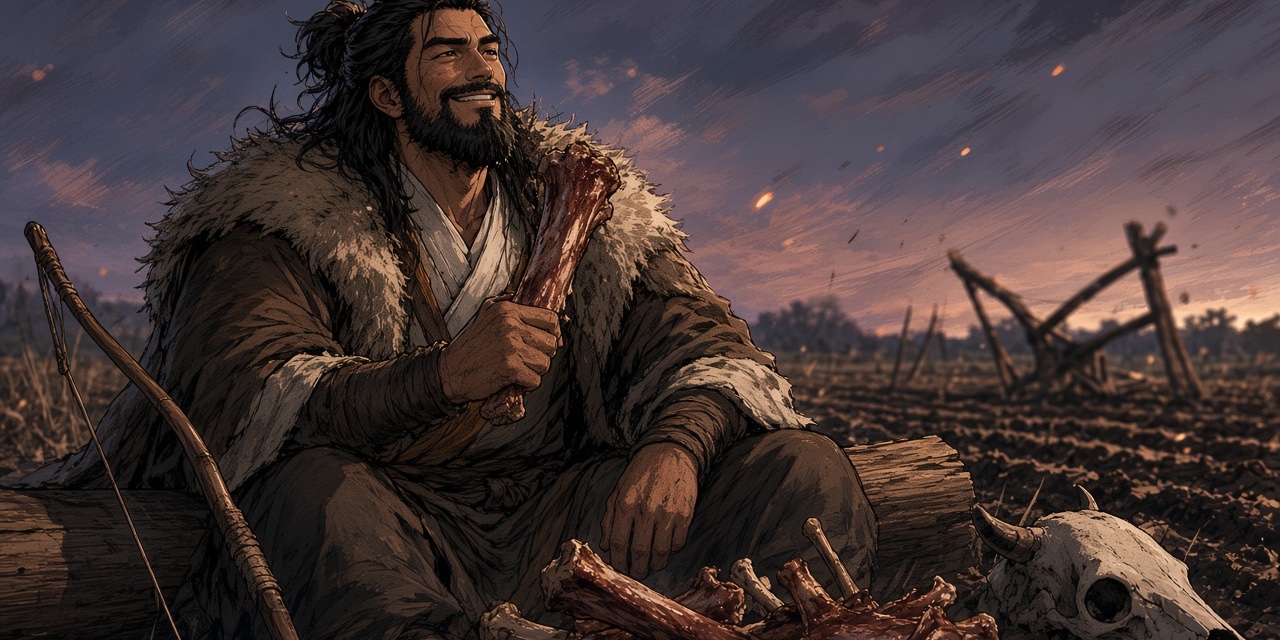

They separated. It is the first divorce in the record, the grounds are livestock, and the islanders tell it as a comedy because it is one.
Their son kicked his father in the chest at three years old.
So they put the boy in an iron chest, locked it, and set it on the water.
It drifted for years and washed up in a foreign country, and the boy came out of it a warrior, and won that country’s wars, and married its princess. And then he came home.
He came home and became the god of his own land: the god the ones who threw him out have to bow to. How many years was he in the chest? The story doesn’t say. Exiles always want to know, and it never does.
Sanbang is one rock the size of a mountain. Halfway up there is a cave, and in the cave a spring. wants a jar of that water. He wants to carry it.
stops on a ledge to get his breath, and looks at him, and believes it.
At the cave mouth, water drips from the roof into a stone basin, one drop at a time. ’s lips start to move.
Not every story here ends in stone. Some end in gold, which is worse news for somebody. A rich man had three daughters, and one evening he asked them whose luck they lived on.
The father beams. Then he turns to the youngest.
“너는 누구 덕으로 나왓느냐?” “첫쩨는 하나님이 덕이요, 둘쩨는 지화님이 덕이요, 셋쩨는 아바님이 덕이요, 넷쩨는 어머님 덕입니다만은 어머님 벳똥 알 선그믓이 덕입니다.”
“By whose grace did you come into the world?” “First, heaven’s. Second, earth’s. Third, Father’s. Fourth, Mother’s — but really, the line drawn under Mother’s navel.”
“너는 누구 덕으로 태어났느냐?” “첫째는 하늘님 덕이요, 둘째는 땅님 덕이요, 셋째는 아버님 덕이요, 넷째는 어머님 덕입니다마는, 어머님 배꼽 아래 그어진 금 덕입니다.”
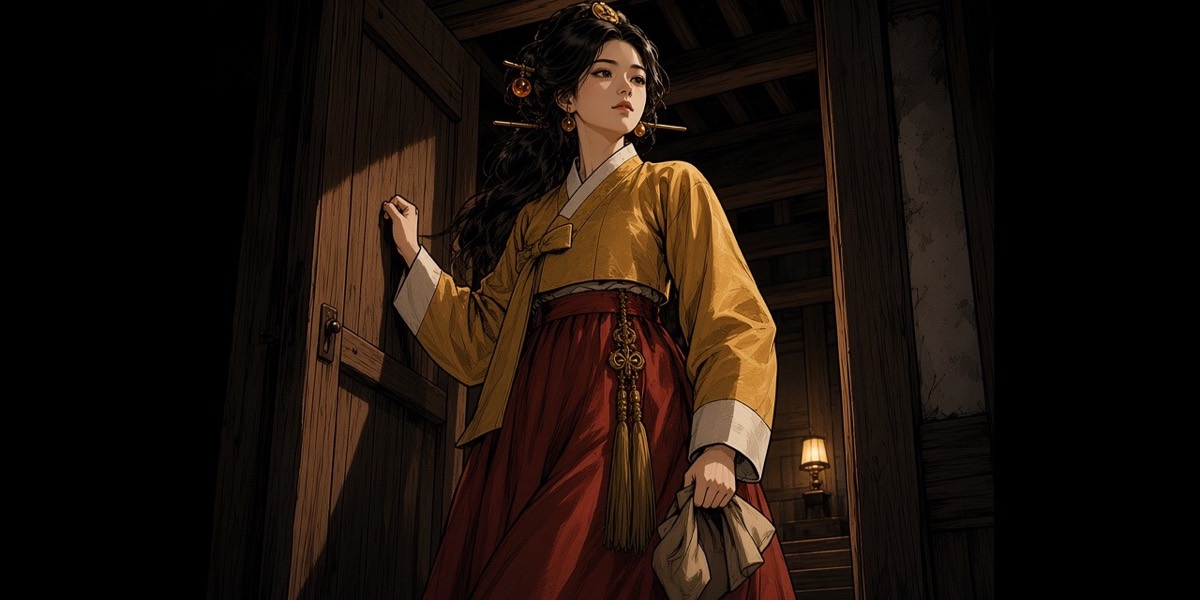

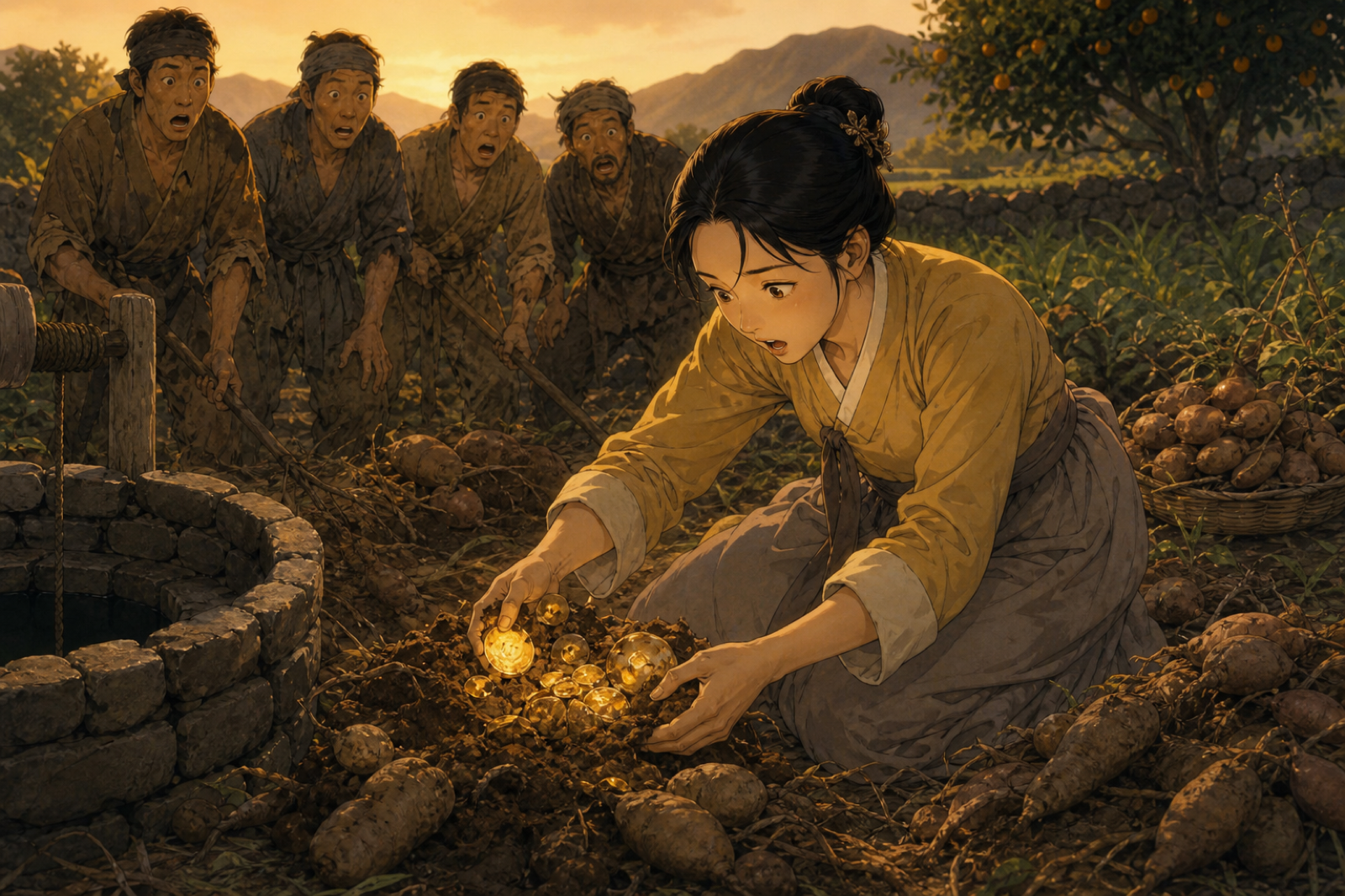
She walked until she found three brothers digging yams and married the youngest, the only one who greeted her. In the spoil he had been throwing away as stones, she found gold.
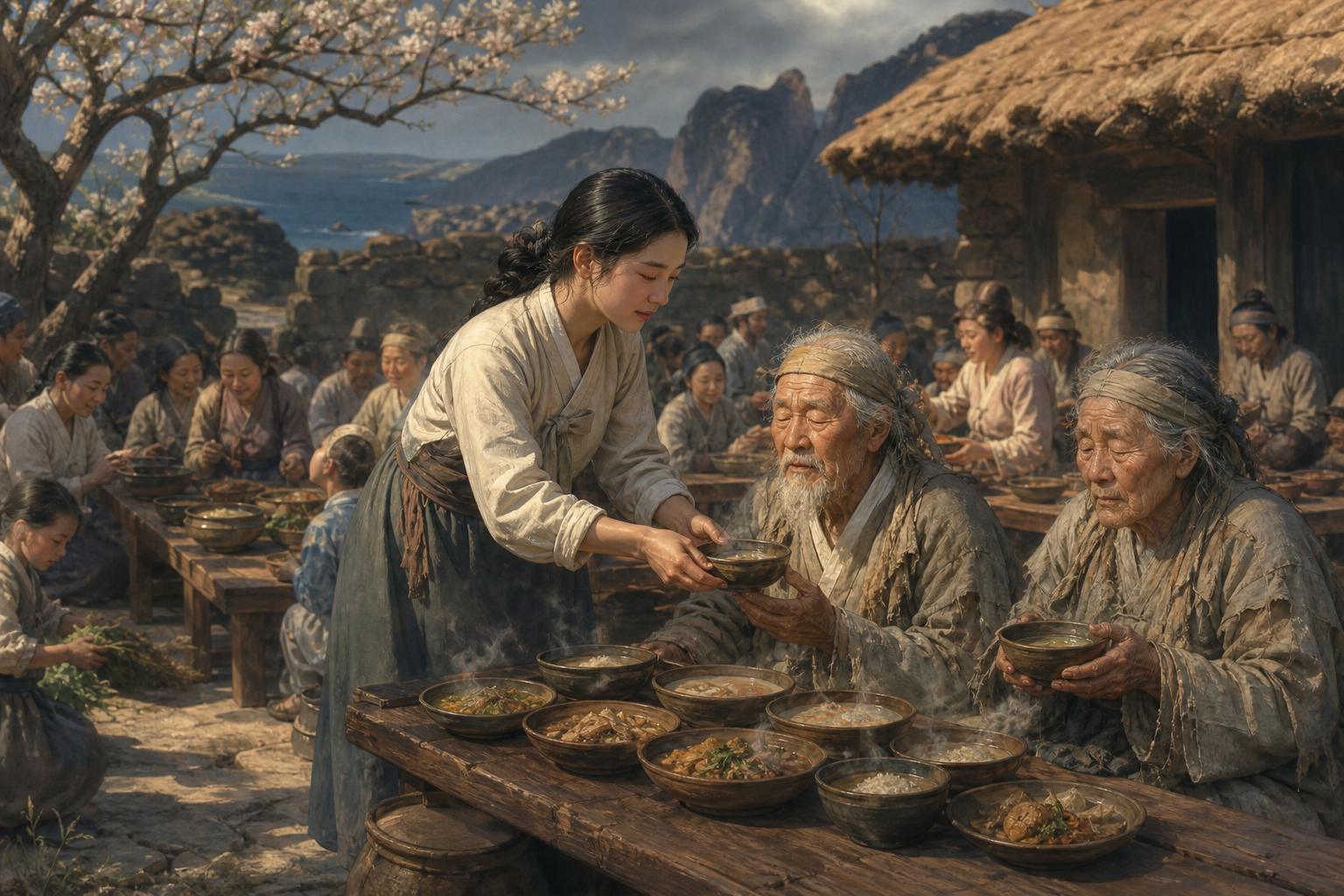
Her parents lost everything and went blind. Years later she held a beggars’ feast that lasted three days. On the third day two old blind beggars came to the gate, and she served them herself.
Their eyes opened. The first thing they saw was the daughter they had thrown out, holding the ladle.
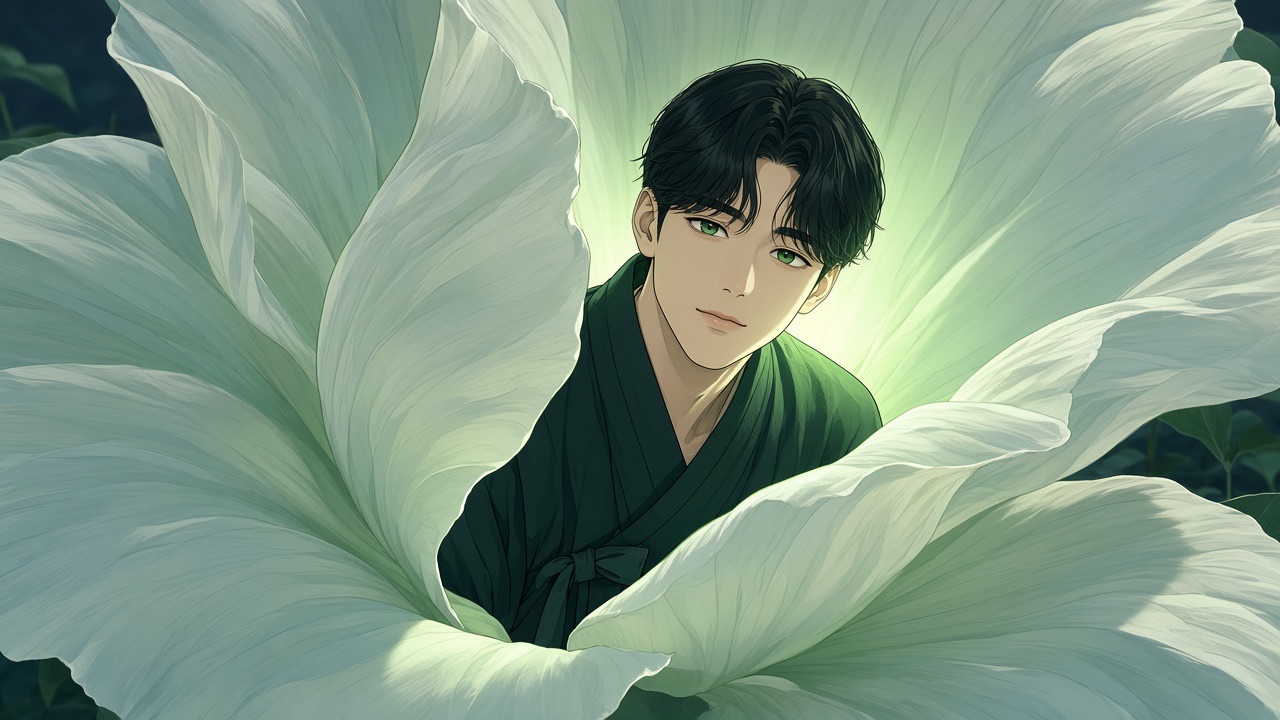
Behind the house keeps a garden, which is mostly an argument with the wind. is put to weeding. He asks which ones are weeds, is told, and pulls exactly those.
He pulls the next weed. can find nothing to put after that, so he pulls one too.
holds up two seedlings, one in each hand. Same leaf, same stem, same grey fuzz.
sends for a man to keep its flower field. He leaves his pregnant wife to wait. He forgets to say how long…!
The gardener’s flowers come back into the story, the way borrowed tools do. This time they are wanted by a girl with no patience at all.
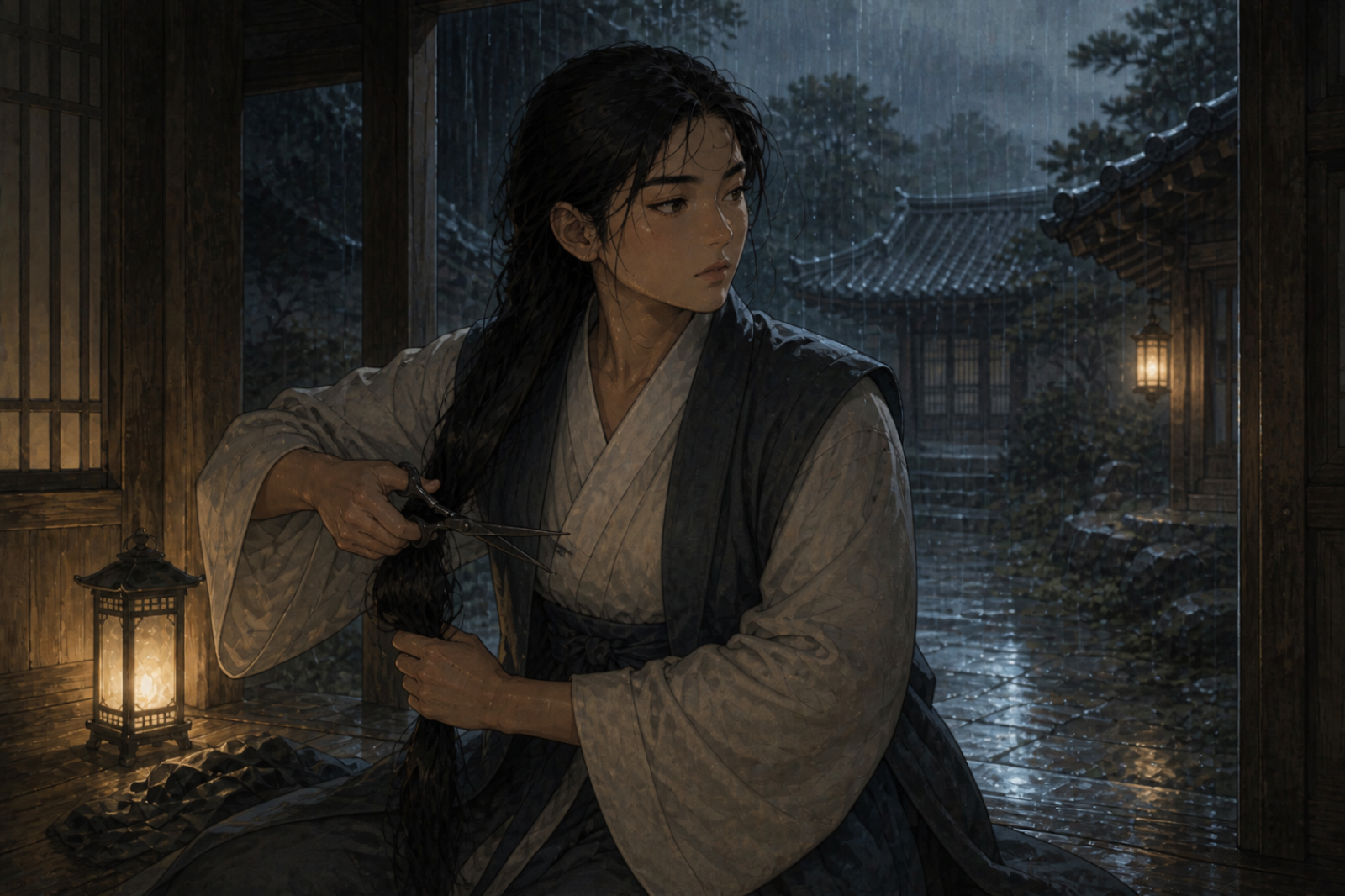
wanted to study beside a boy from the sky. Women were not allowed in the room, so she cut her hair and put on a man’s clothes.

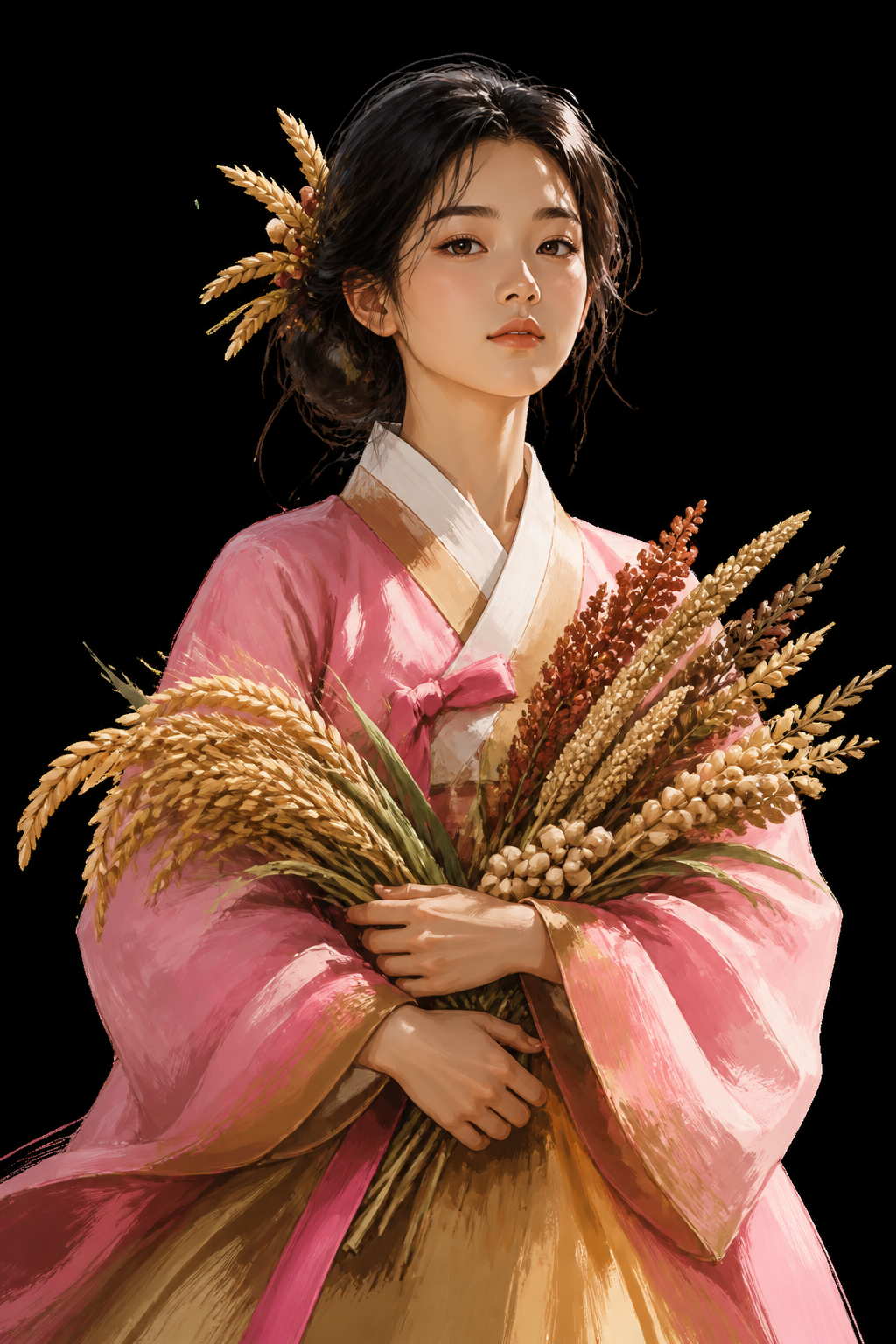
Nobody had ever written a rule against it. Nobody had imagined they would need one.
Three years at the same desk. She beat him at everything and let him believe it was close. On the last night at the parting stream she washed upstream of him and told him to look.
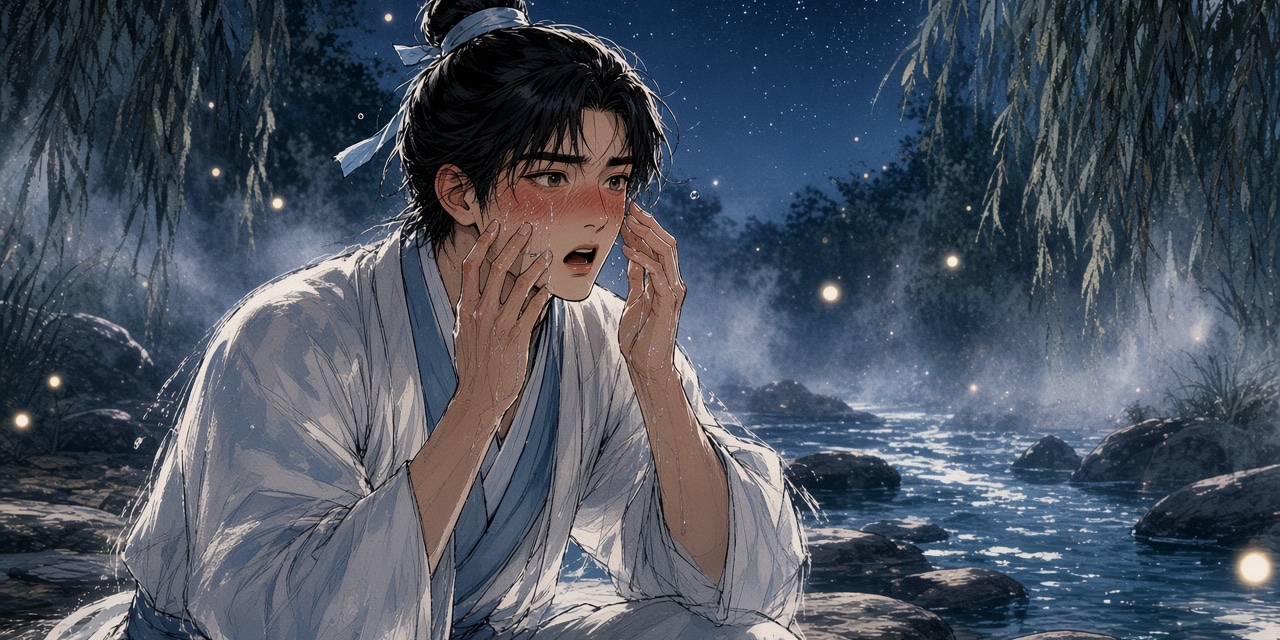
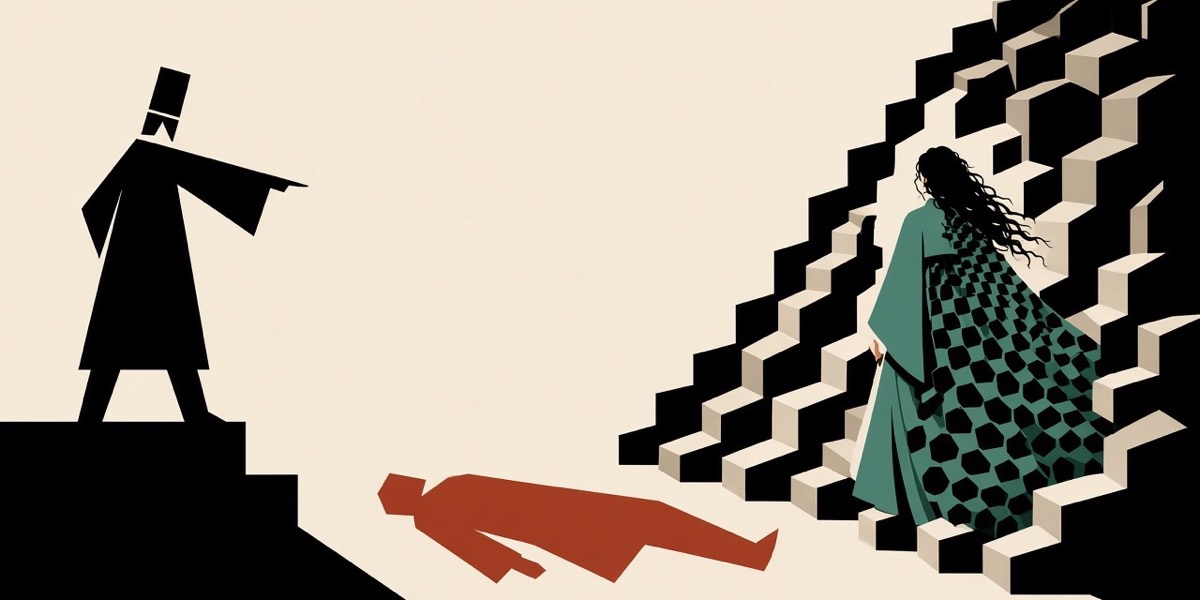
does not care for that sort of marriage. They kill him for it, and send his body down the parting stream, past her.
So she walks west, past every gate, into .

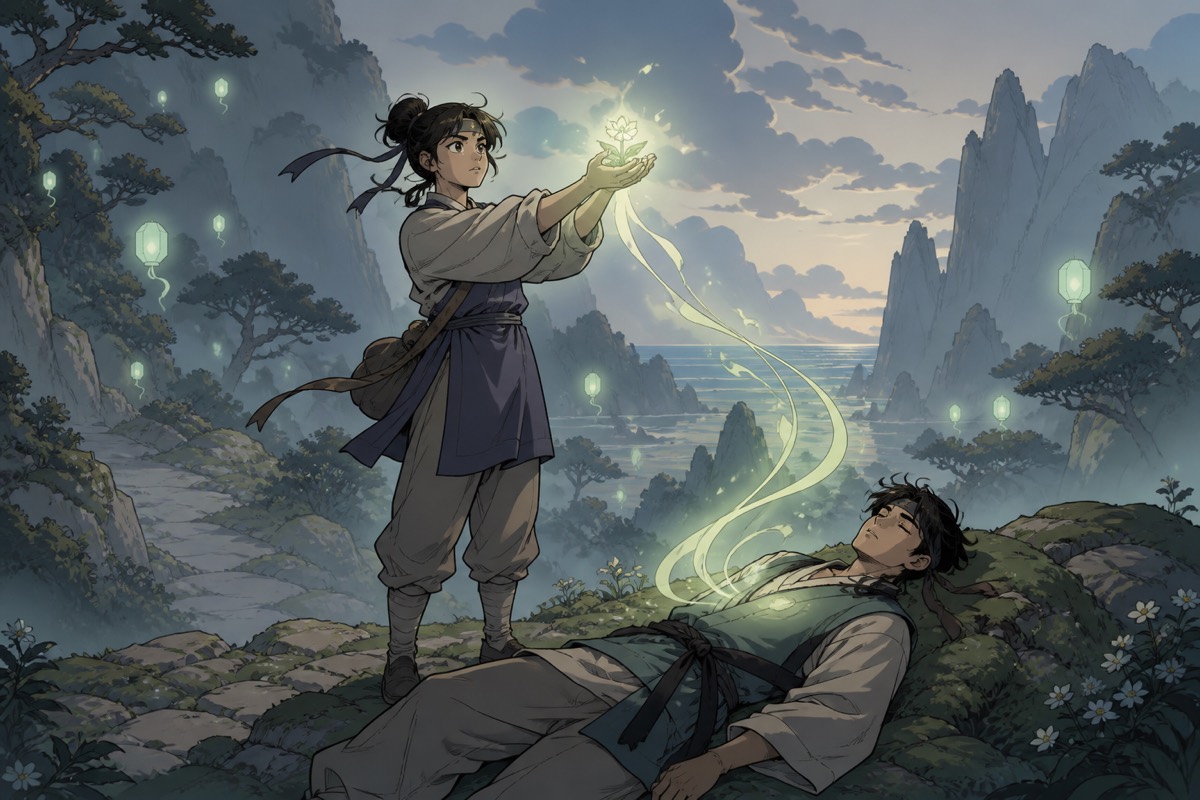
She picks the five flowers in order and puts him back together bone by bone. Bone, flesh, blood, breath, soul. He sits up on the bank like a man woken too early.
Then she brings the five grains down to , because a woman who has been to the end of the west does not come home empty-handed.
The millet is up, a green fuzz over the packed ground. So are the crows. is posted on the field wall with a clapper and a heap of pebbles.
gives him a long look. is busy with a crow, and misses it. He misses most looks.
One crow will not leave. It sits three stones down the wall and watches them with its head on one side.
The island keeps one story for last. A magistrate sends a living man down to arrest the judge of the dead…!
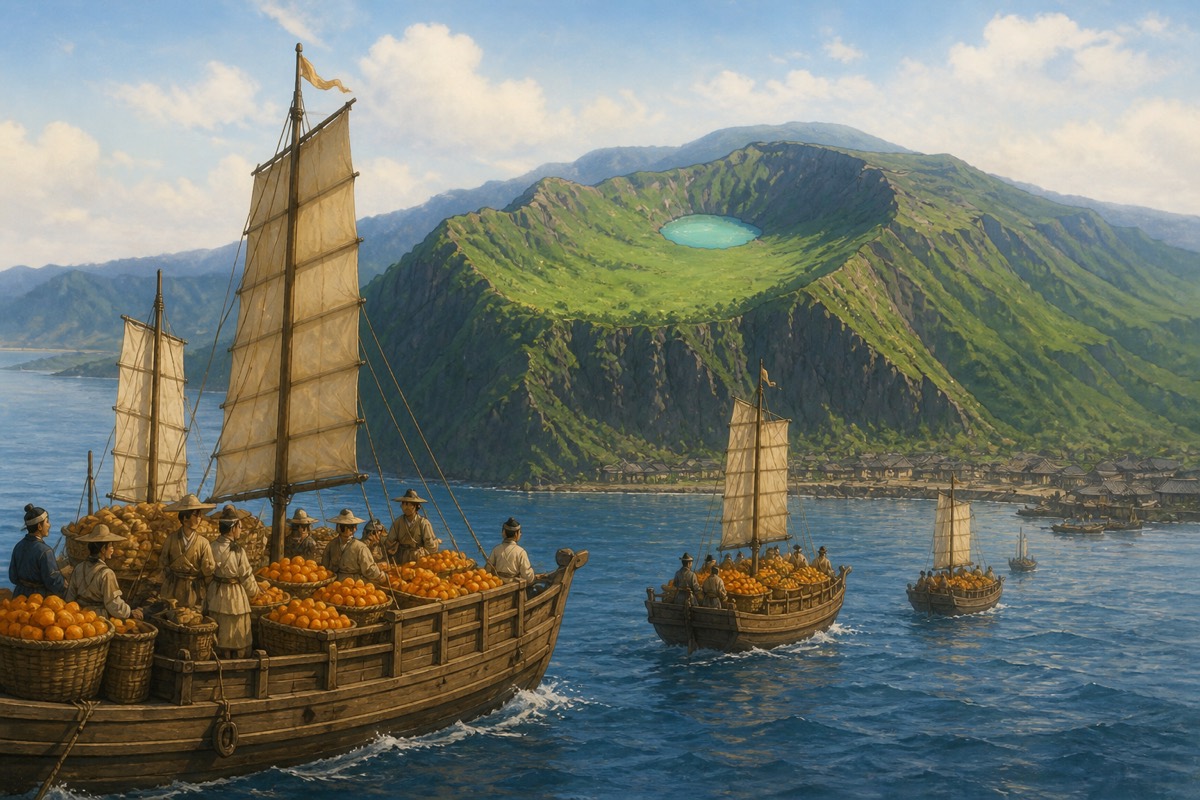
The tribute boat comes home light. The oranges stayed in . The news did not.
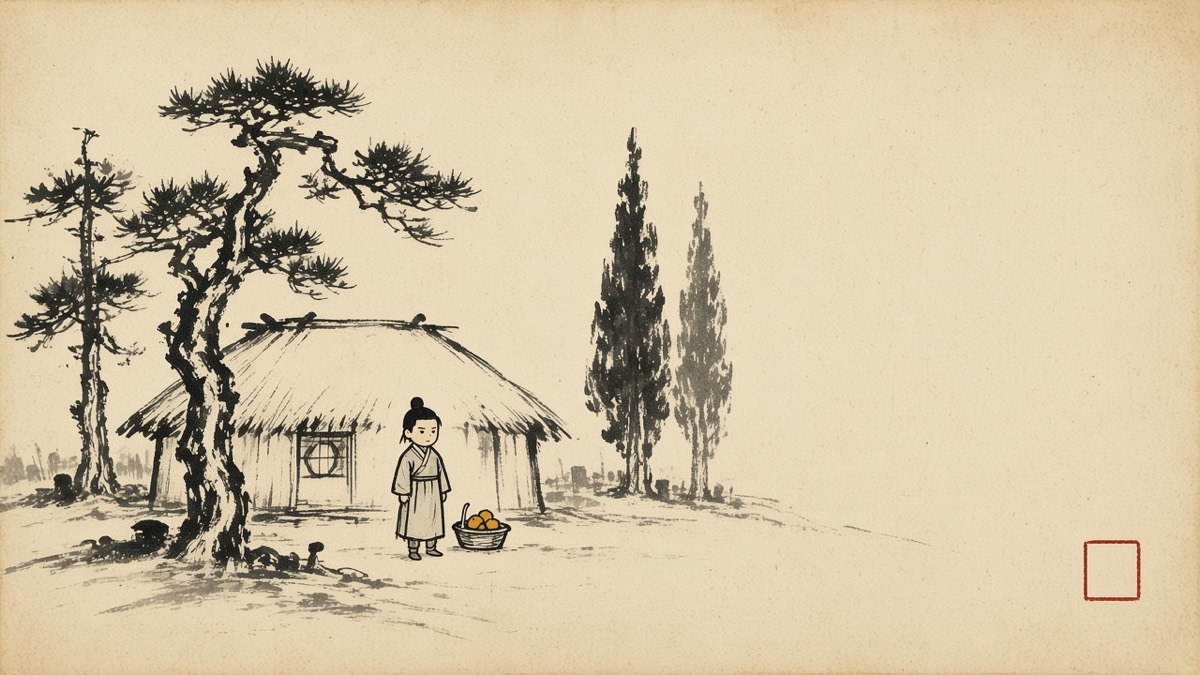
has been waiting for this boat for nine hundred and sixty-one days. He knows, because he has cut a notch for every one of them in the beam by ’s door. They are the days left on the king’s mourning, counted down from the morning he washed up. When they run out, the king can sign again.
Every one of those nights, poured two cups and told him one of the island’s stories. heard all of them standing by the door. The second cup always went cold there.
is on the sand before the sail has a shape. The captain holds a contract and has been told not to talk to him. He talks anyway. It is a long way to sail with a thing like that in your mouth.
thanks him exactly once. He walks up the beach to the beam by the door, where the notches have run out. Nothing. He has never had a number end on him before.
That night pours two cups, as usual. stands by the door, as usual. Nobody mentions the beam.
looks at him over the cup for a long time. changes the subject, which he has never done before. It comes out as a question about debts.
So when needs somewhere to put a man it cannot kill, there is an island, and the island owes it a favour.
opens his mouth, and shuts it. There is no answer to that. There is only the next morning.
He has run out of days to count. So at dawn he goes down to the black rock and starts counting something else.
He trains at the same hour on the same slab of lava on the eastern shore, and when the tide takes that slab he waits for the tide rather than use another one.
The rock is porous and cruel and nothing like a drill ground. You cannot plant a foot on it twice in the same place. Two seasons of it and he no longer needs to know where his feet are.
The village children learn the count of his drills before they learn his name, and stand on the rocks doing it badly behind him, and he does not once turn round to stop them, because stopping would be an interruption and he does not interrupt.
He is asked, once, why he counts everything, and he answers honestly, which is the only way he has ever answered anything.
The island considers this the saddest sentence anybody has said on it, and nobody explains to him why they have all gone quiet, and he does not ask, because he has not noticed.
He drills in units of five hundred. One day he will take ten of those units to a field and leave the rest behind. The count is already in his mouth.
That night he cuts a new notch at the other end of the beam. One. If the king sends, he will be ready. If the king does not send, he will be ready.
A field of yellow grass is waiting for five thousand men who will not come home…!
