



























Chapter 53
Tang



AI Summary
- The Son of Heaven Everyone on earth wants something from the Son of Heaven.
- The Audience Hall
- Faraway Lands Between audiences they seat him at a long table in a lesser hall — the guests from past the western wall.
- The Gyuku Ground The days between audiences belong to someone else.
- The Six Steeds That night the emperor dismisses the lamp-bearers and carries the lamp himself, down a gallery behind the Liangyi Hall that no envoy has been shown.
- The Farewell Banquet At a banquet meant to impress the Silla guest, the Second Emperor’s laughter is the loudest thing in the hall.
- The Lodging On the morning before he is to leave, a parcel comes to the lodging from the palace.
- HALLWAY Night in a long palace corridor.
- The Last Game Chunchu gets as far as the next courtyard.
- The Mingde Gate On the last morning Li Zhi rides down to the Mingde Gate himself, which crown princes do not do.
- The Yellow Sea A day out to sea, under a full moon, the boy at the masthead stops singing.
- The Small Boat Far to the south, a fishing boat with a patched sail runs for home.
- Characters
Episode· 647
Tang
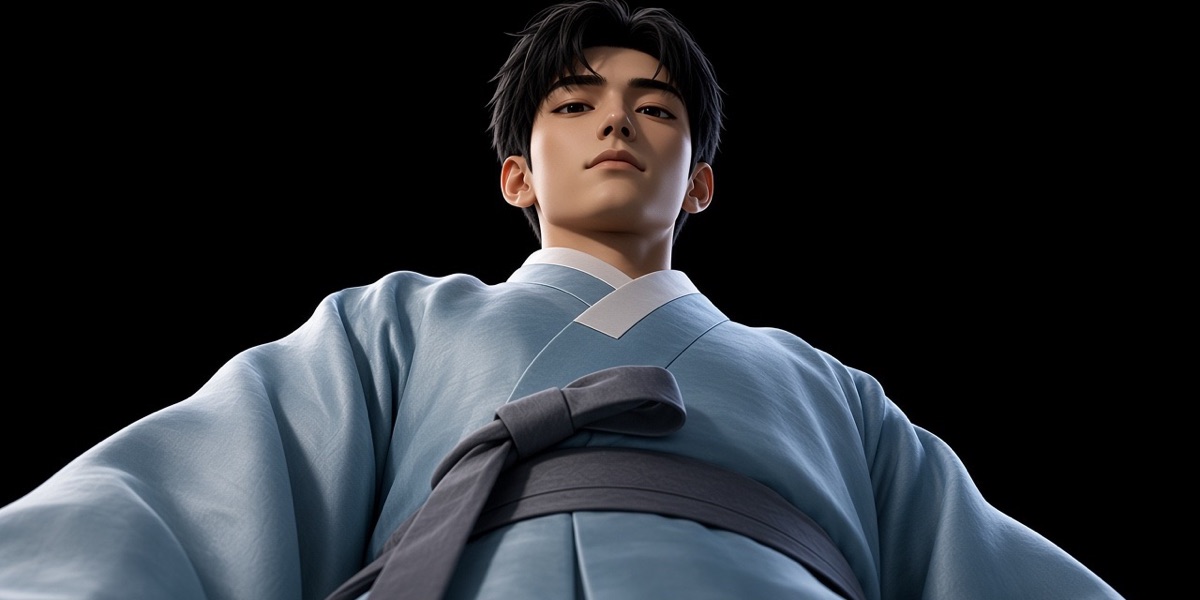
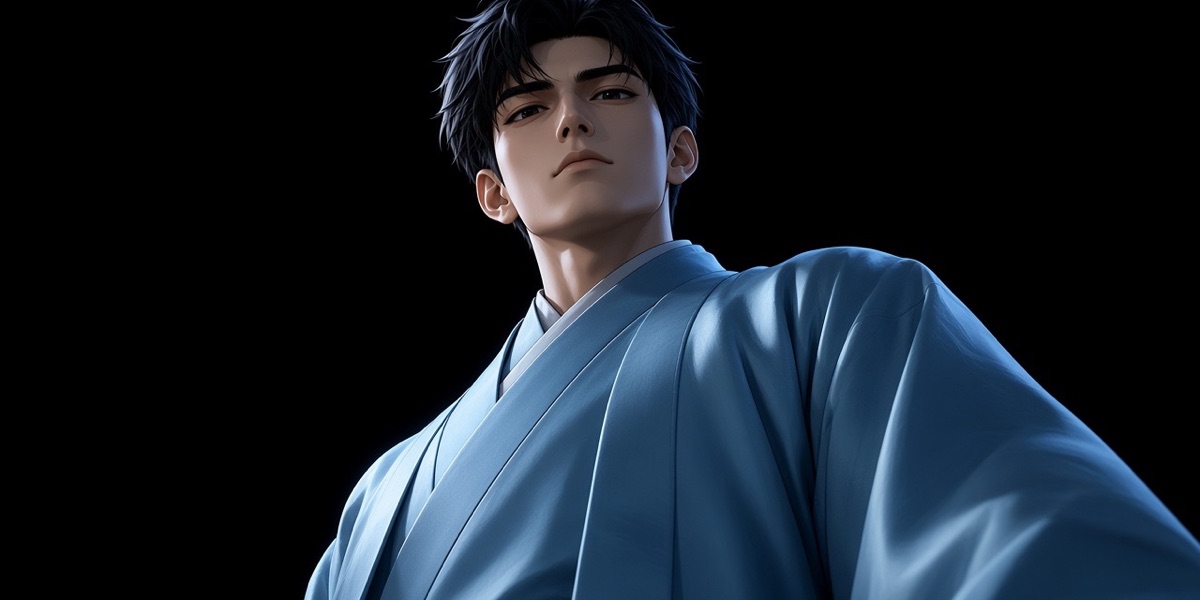
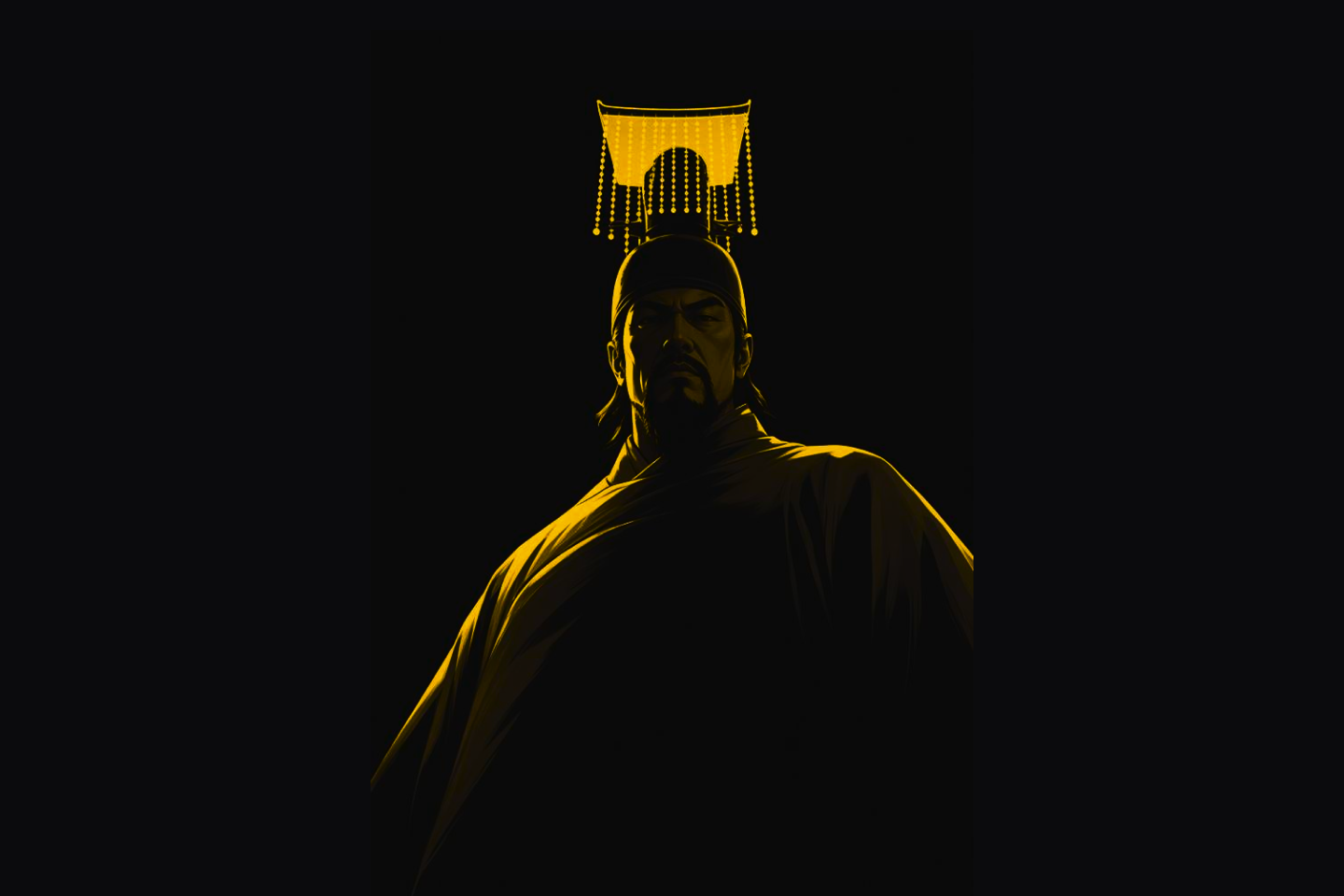
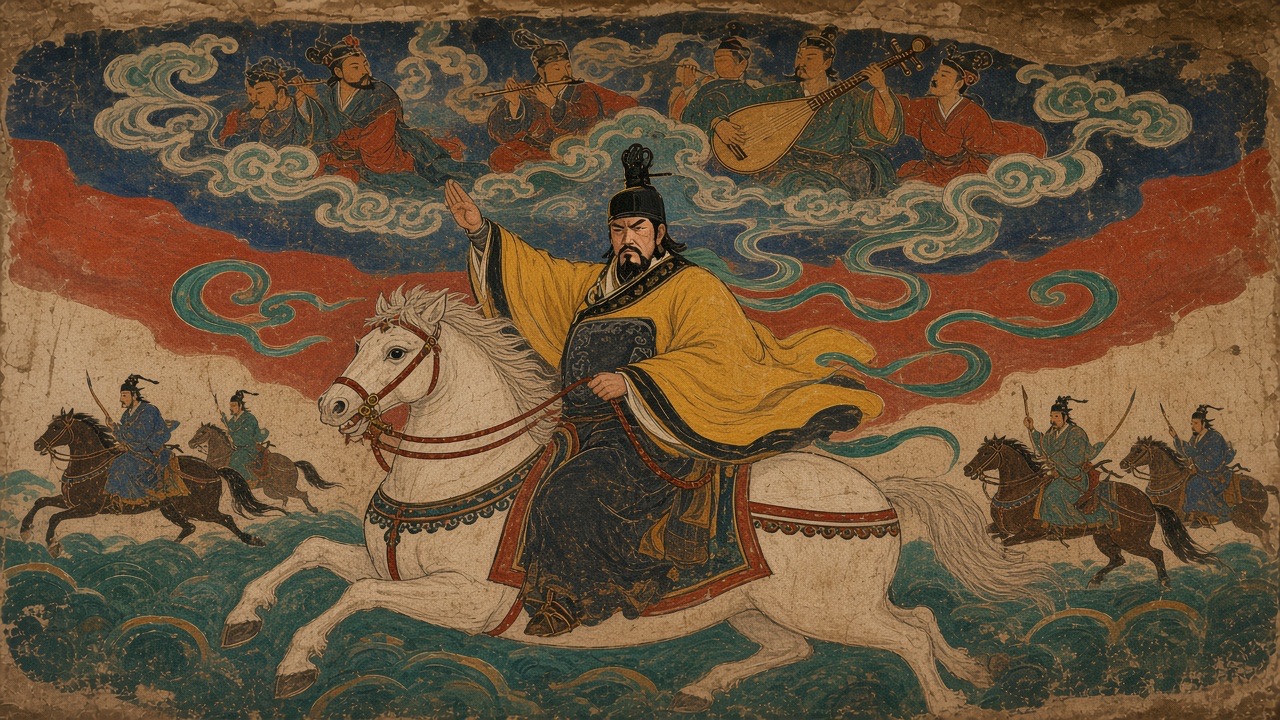
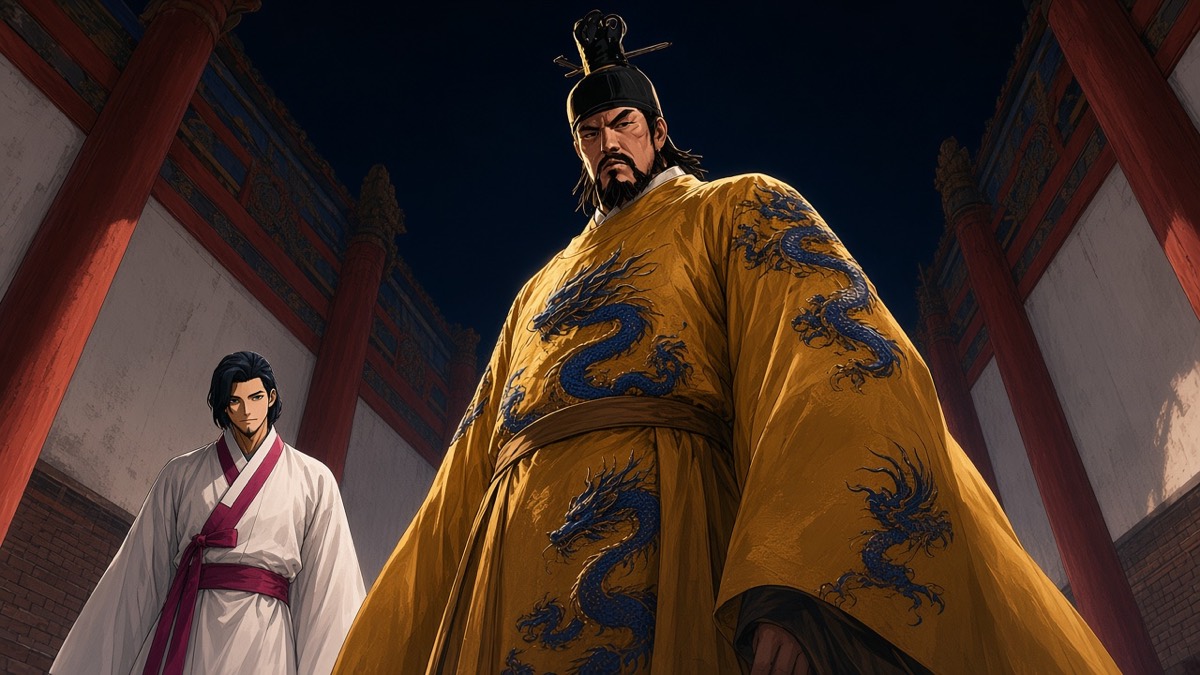
Everyone on earth wants something from the Son of Heaven. Most of them bring tribute. Chunchu brings an offer.
- Kim Chunchu
- The Second Emperor
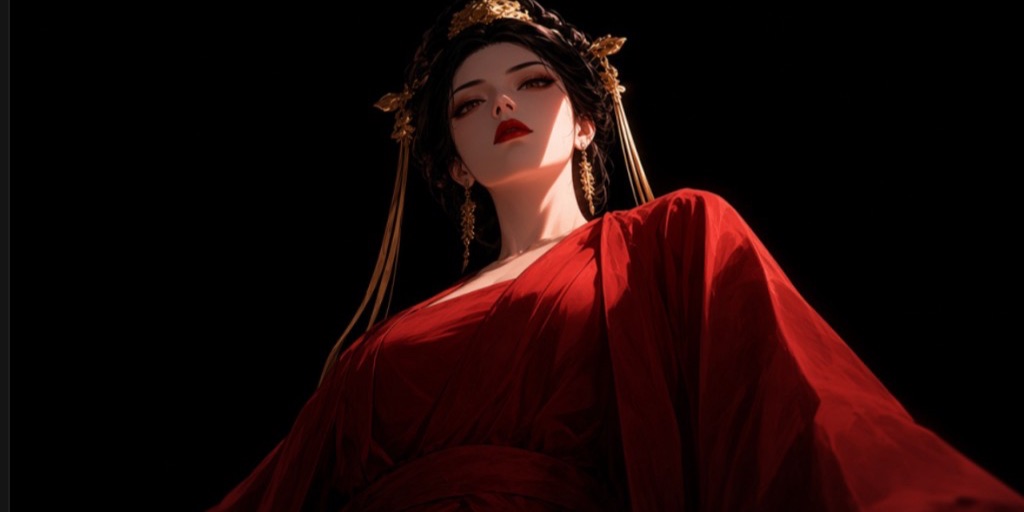
- Wu Zetian
- Li Zhi
- On Gunhae
- Persian Envoy
- Tibetan Envoy
- Kim Inmun
- Hwanung
9 stills without a cue
Everyone on earth wants something from the . Most of them bring tribute. brings an offer.
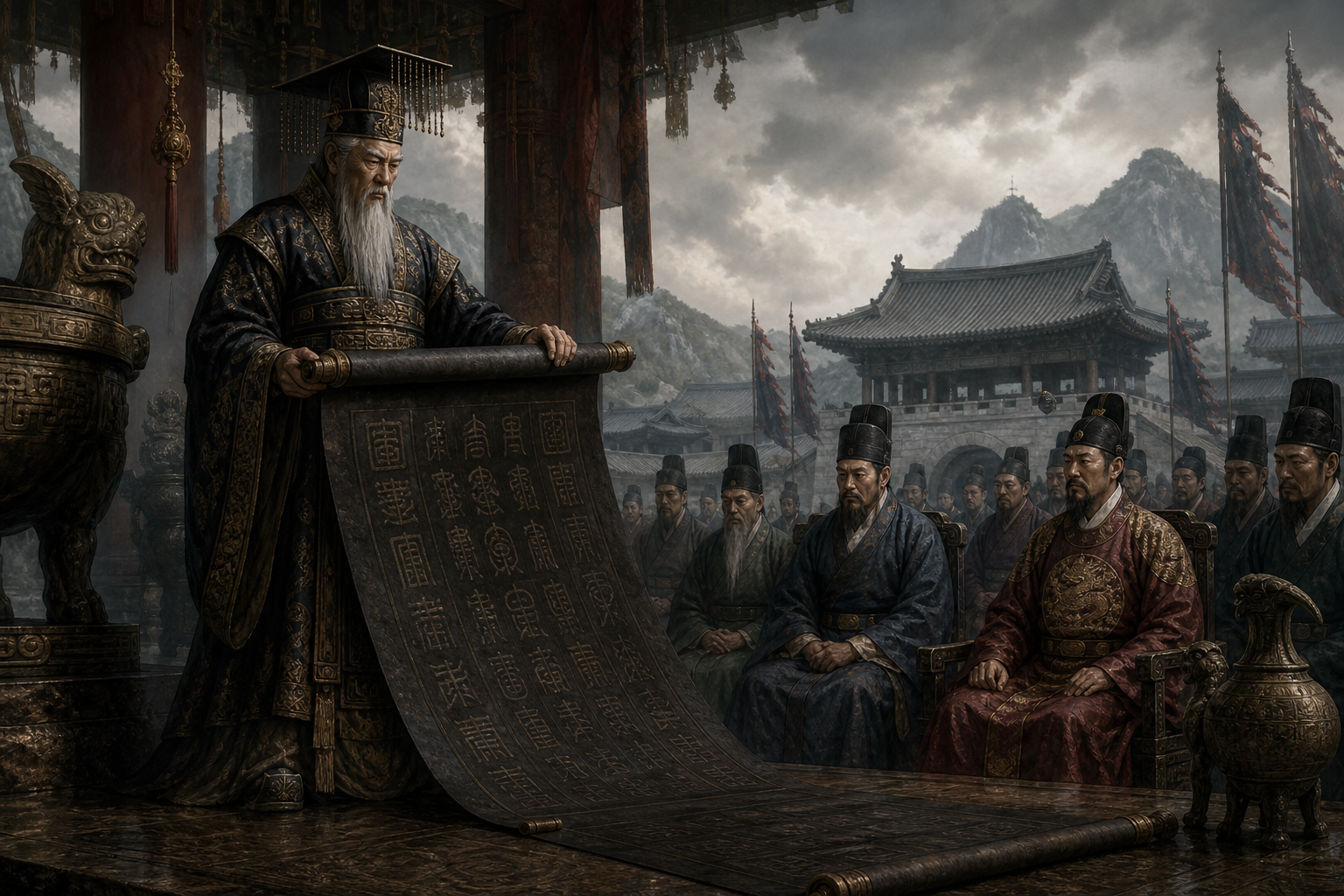
Huang, the god-kings of the dawn of the world. Di, the lord of heaven. The first man to put the two words together burned the books. Every other ruler on earth is a king. This one is the Son of Heaven, and he would like it said in that order.
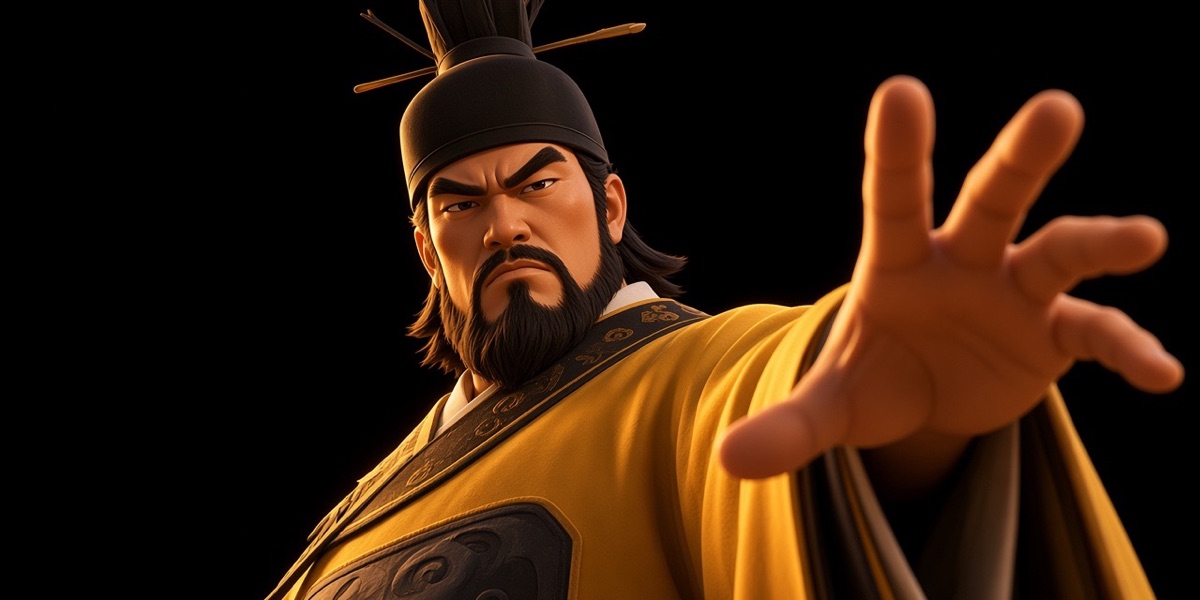
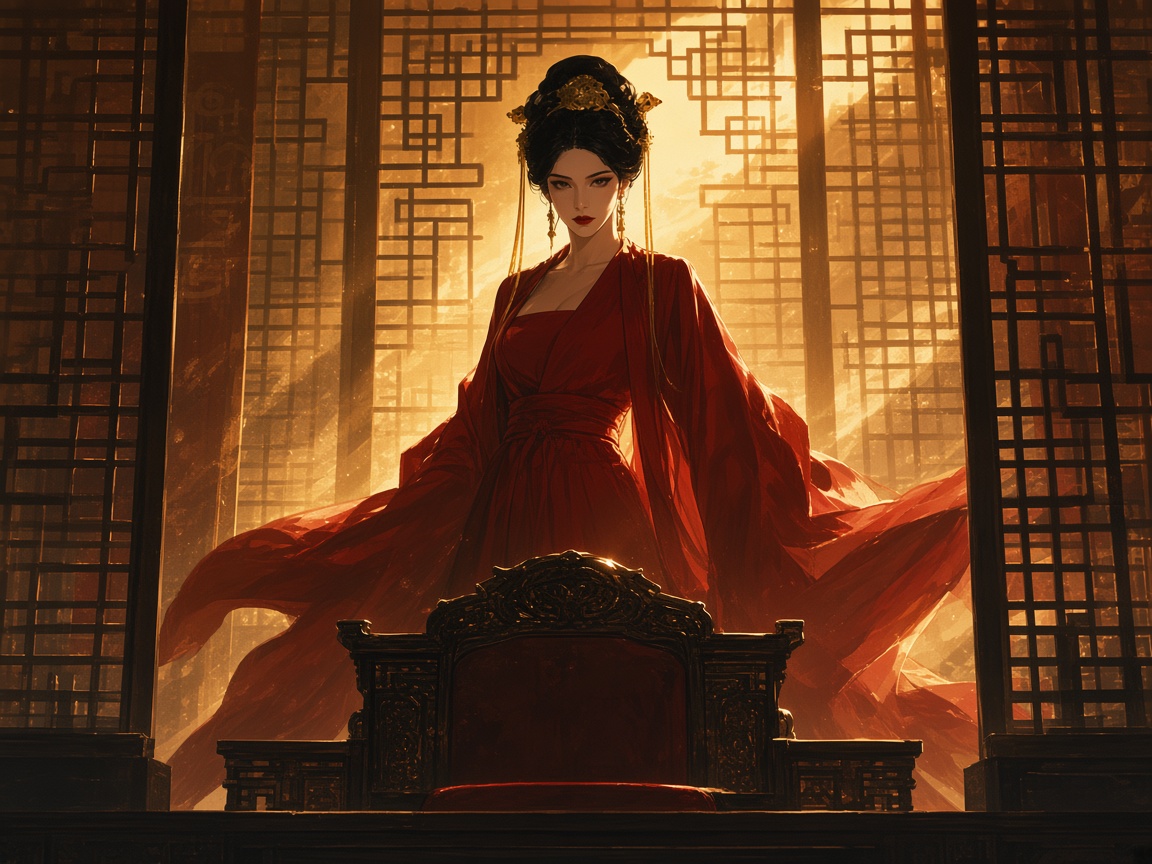
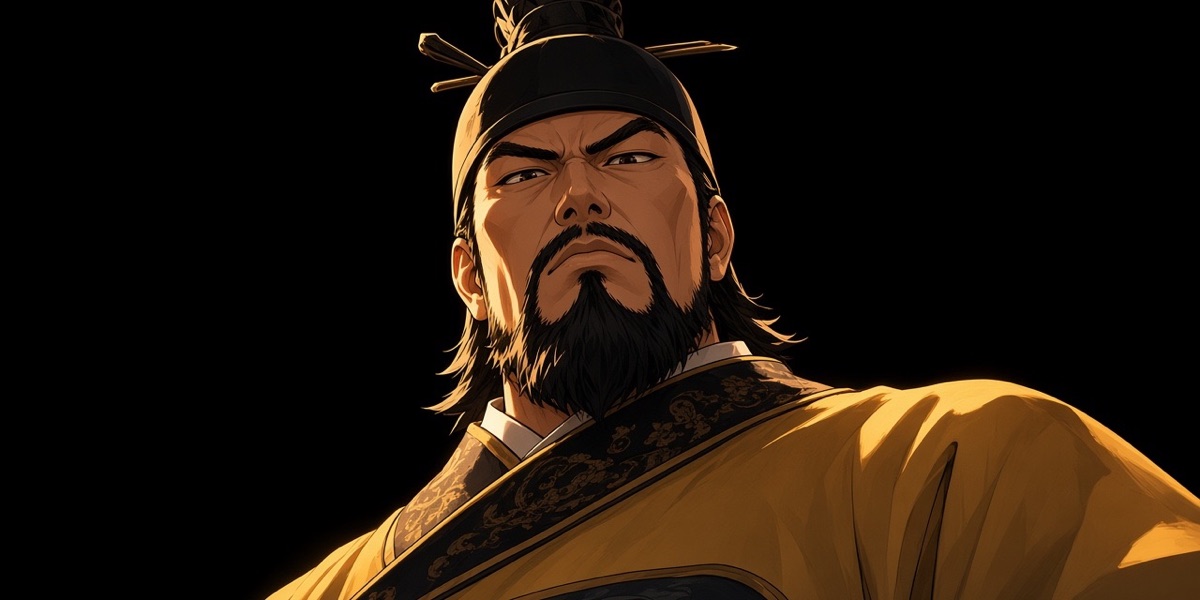
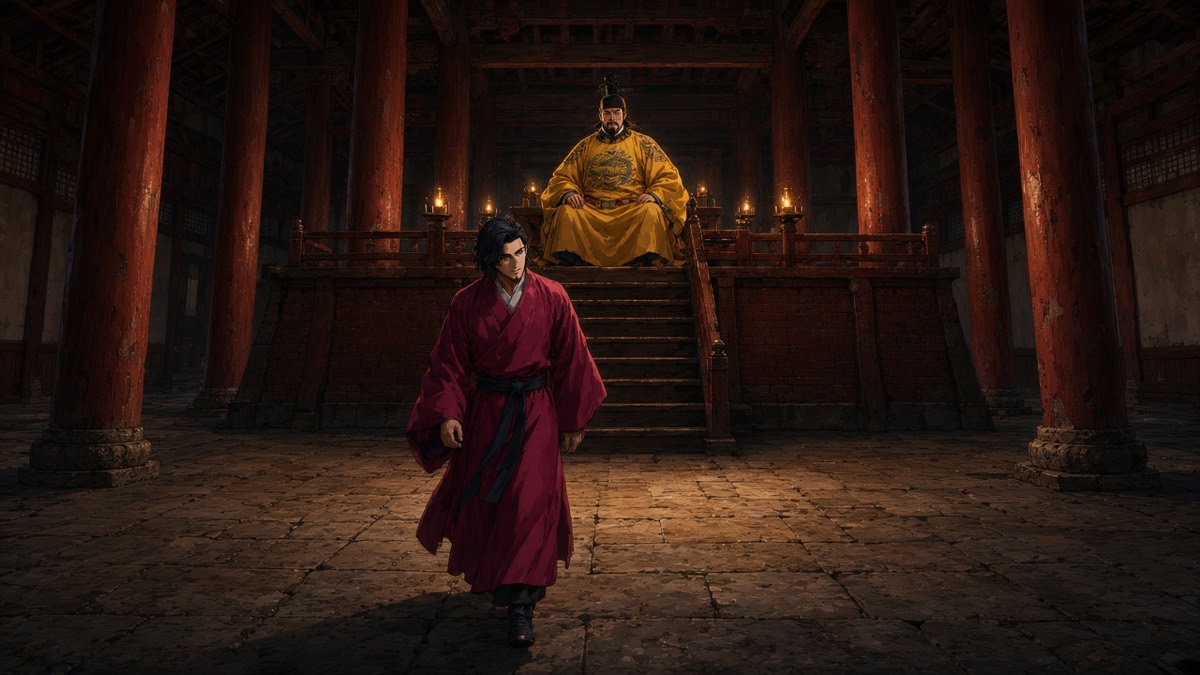
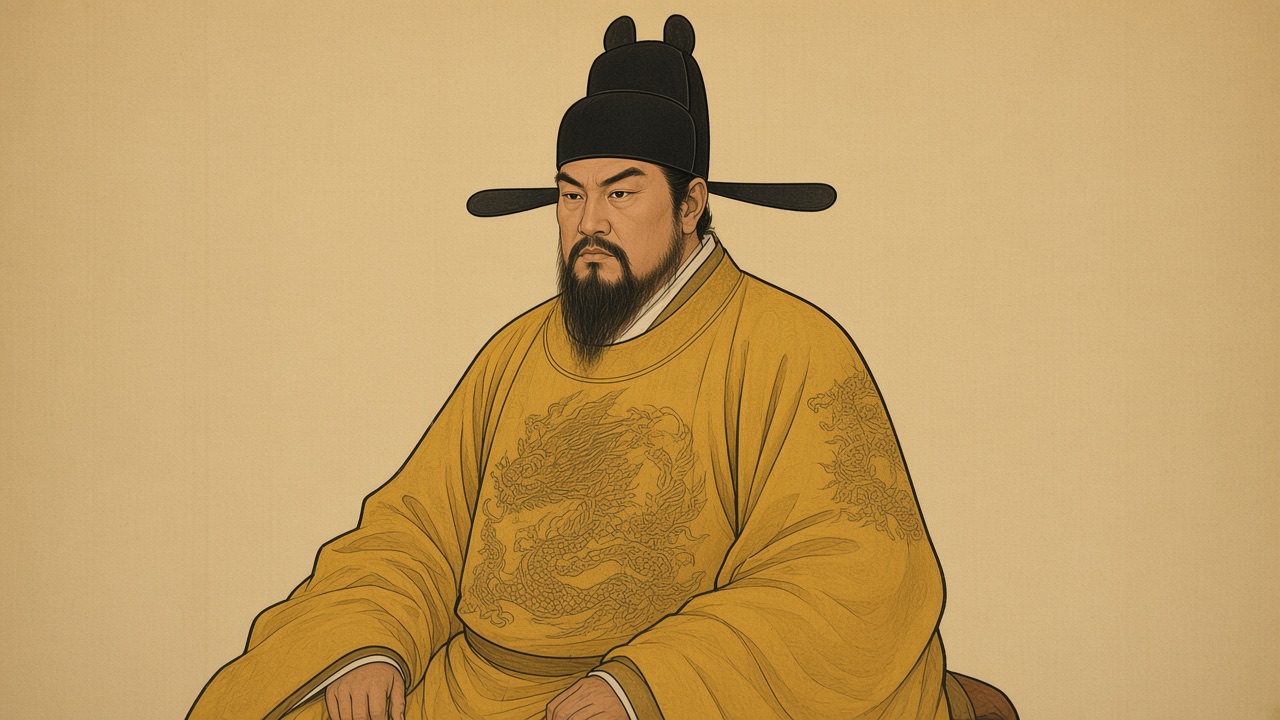
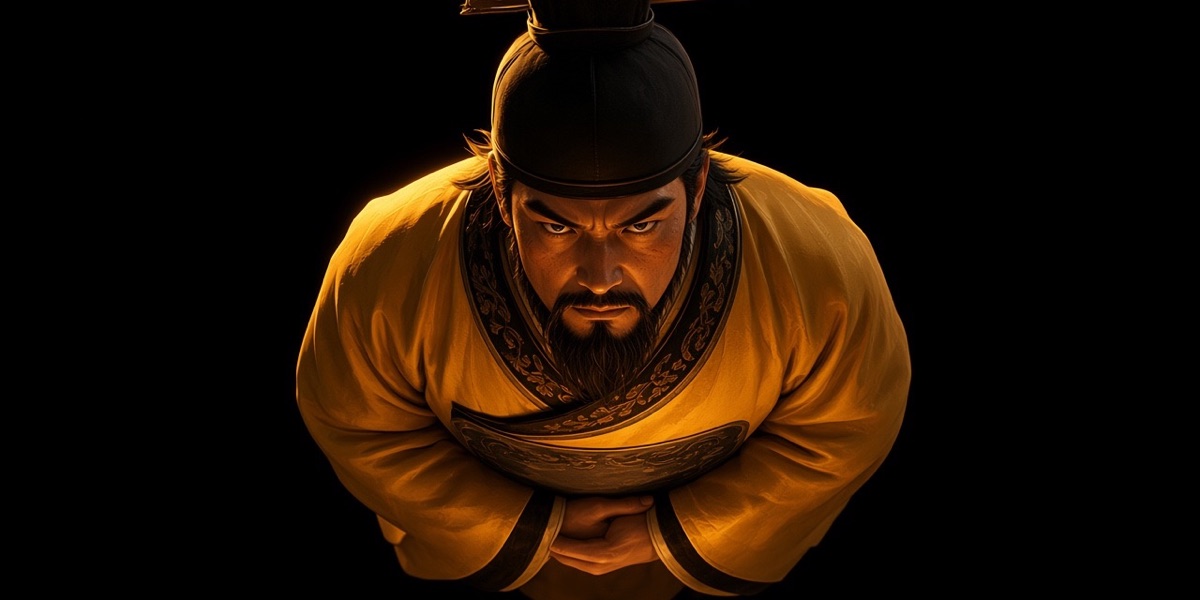
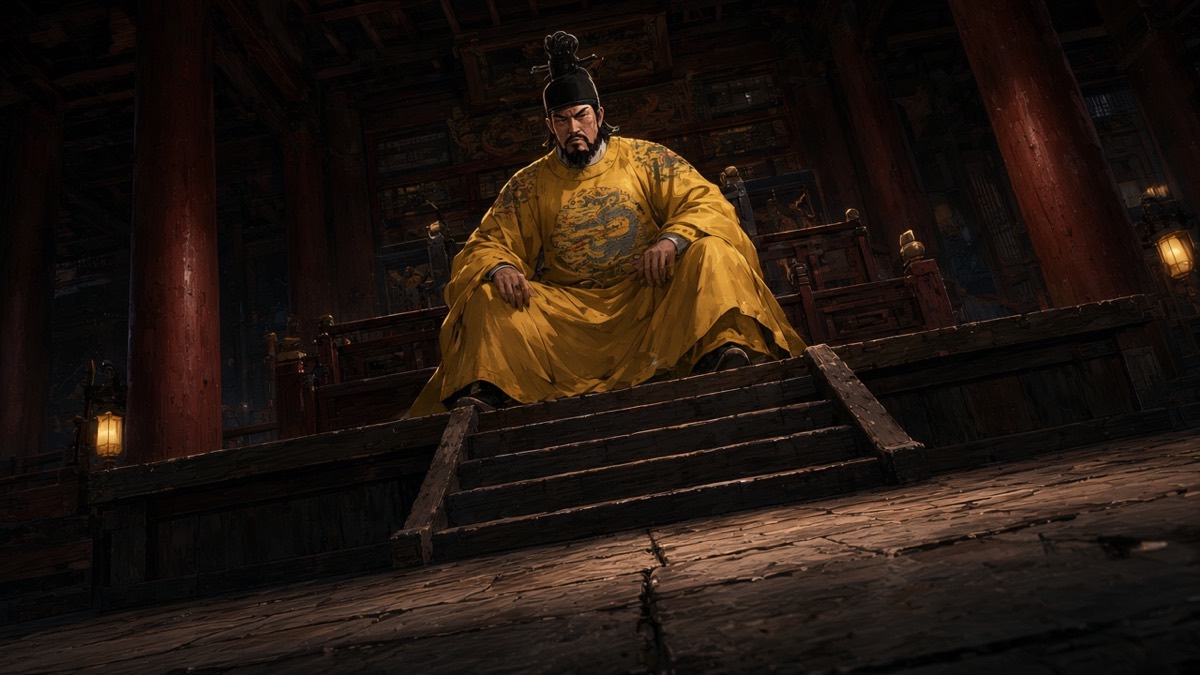
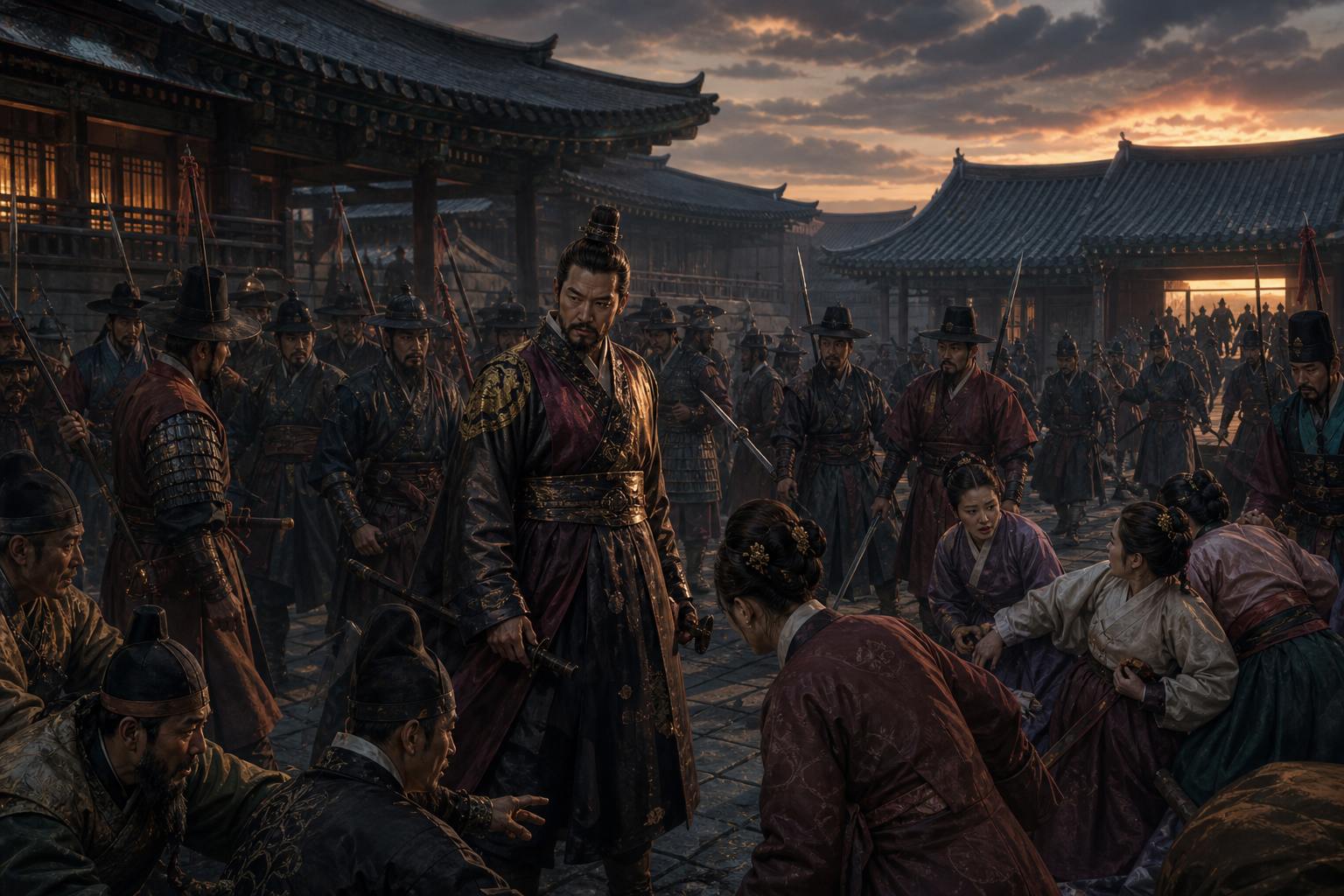
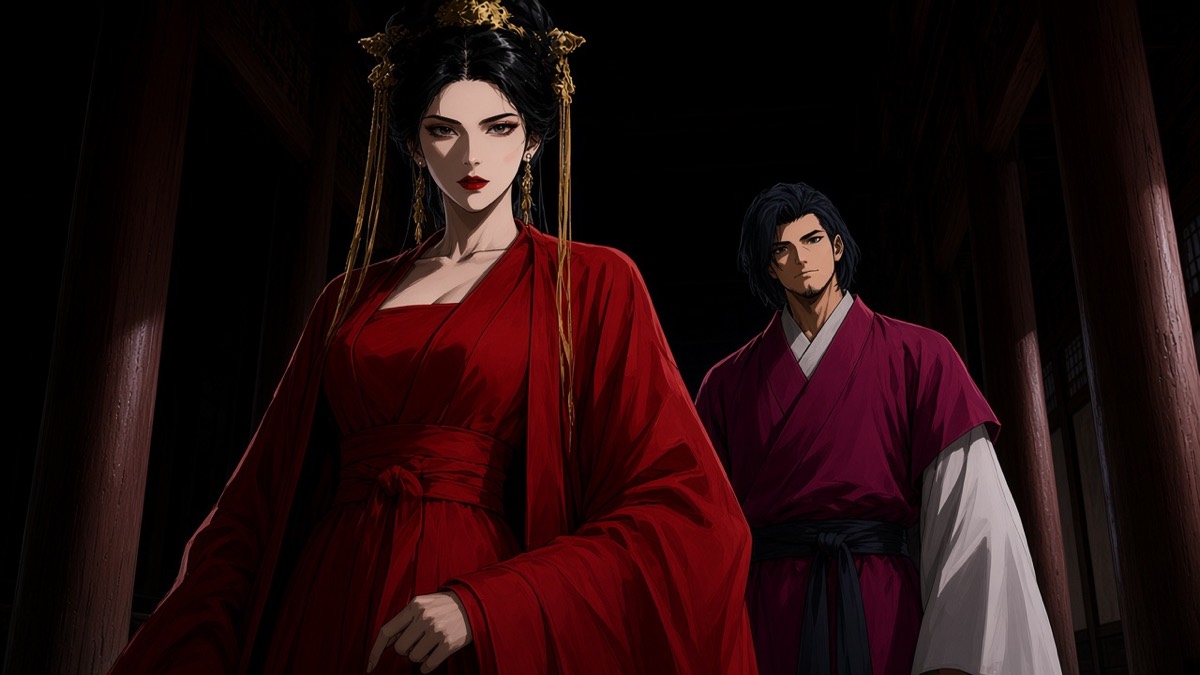
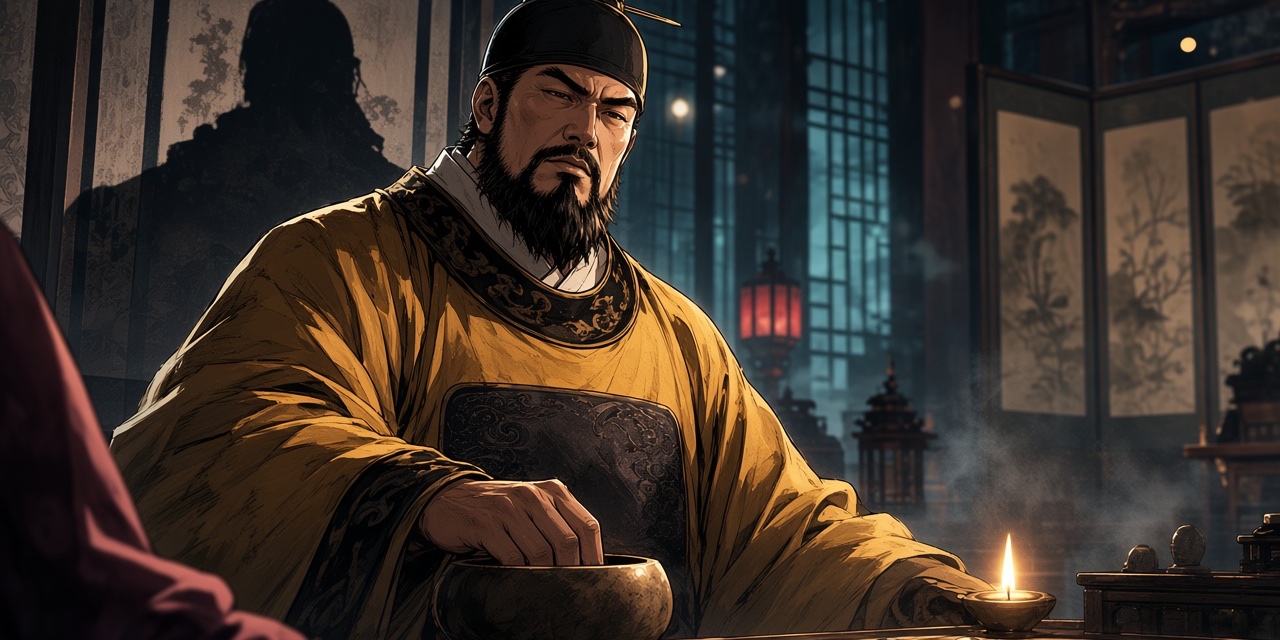
The man on the western seat is . He killed his brothers to sit there. The world has had twenty years to call that heaven.
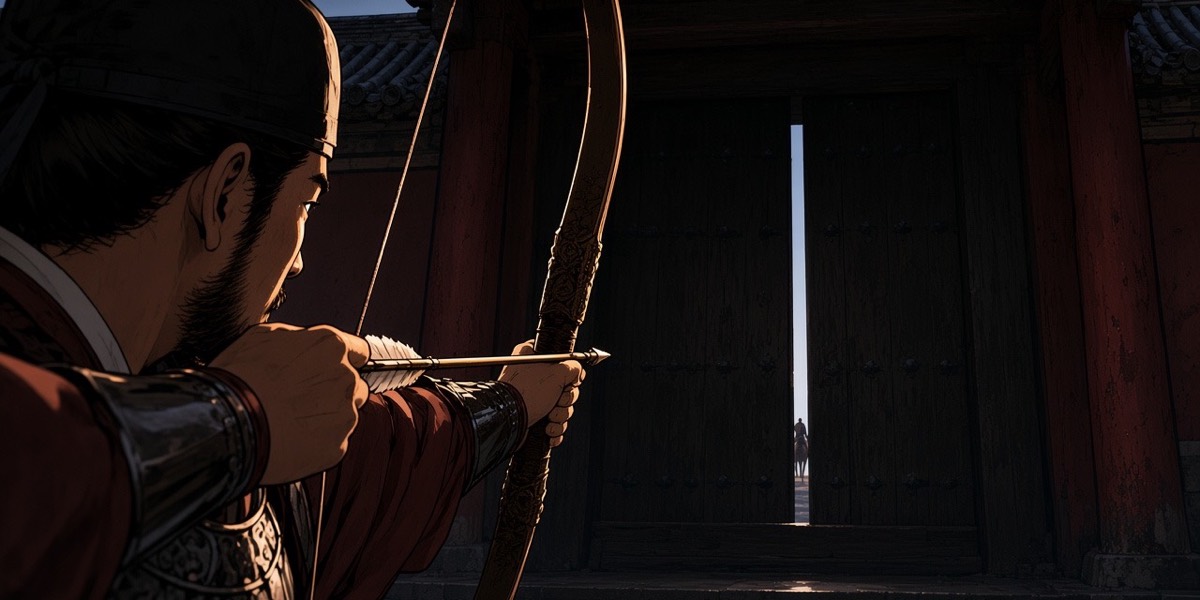
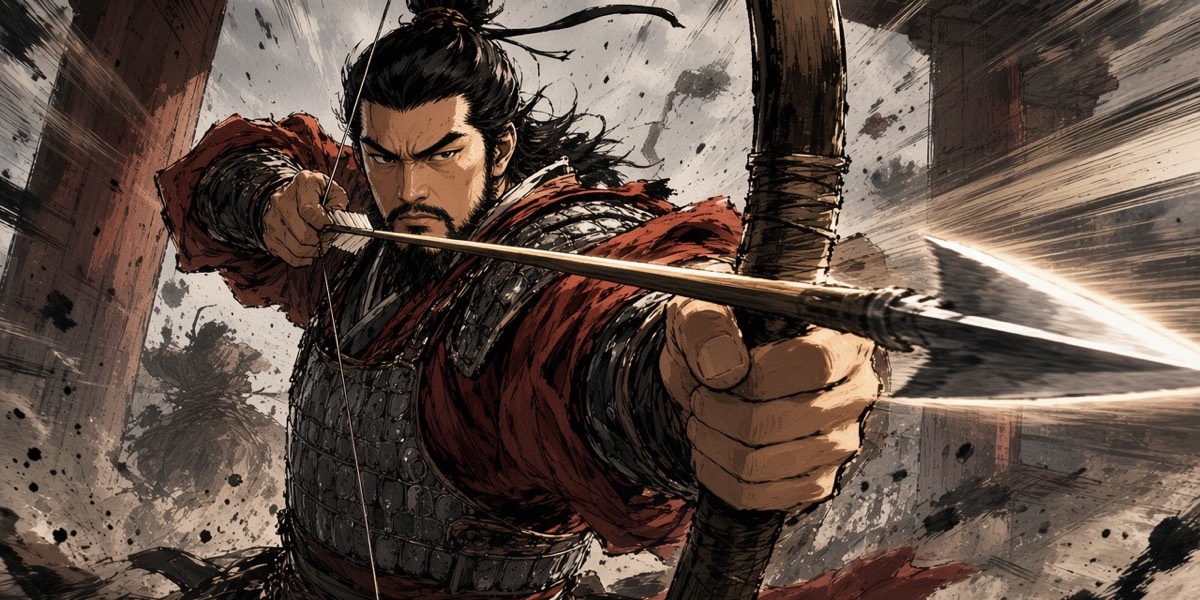
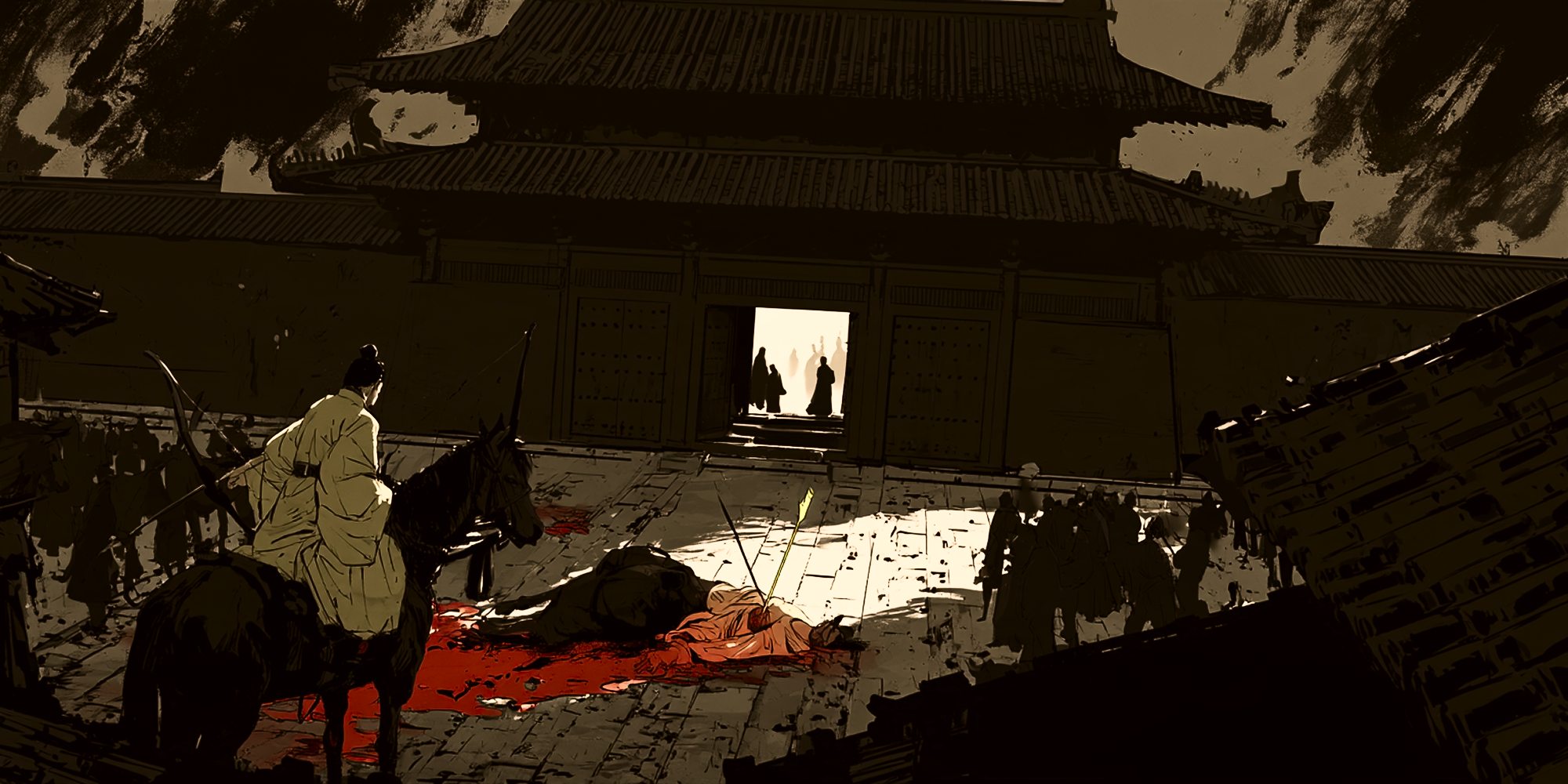
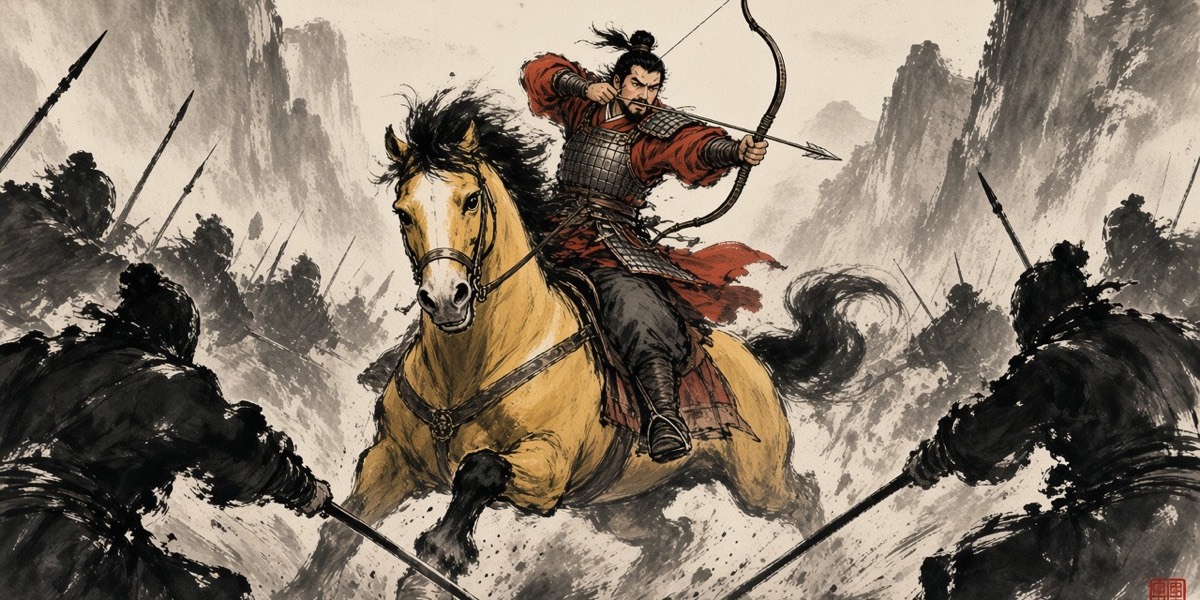
The north gate of the palace. He was already inside it. Dawn. A bow. One arrow for the elder brother. The other brother died in the knives that followed. Their father was out on a lake. Three days later the robe changed shoulders.
They looked at the floor and called him the . Across the water a prince of twenty-one has just done the smaller version, and left his uncle in the light. has seen that floor. He is about to see this one.
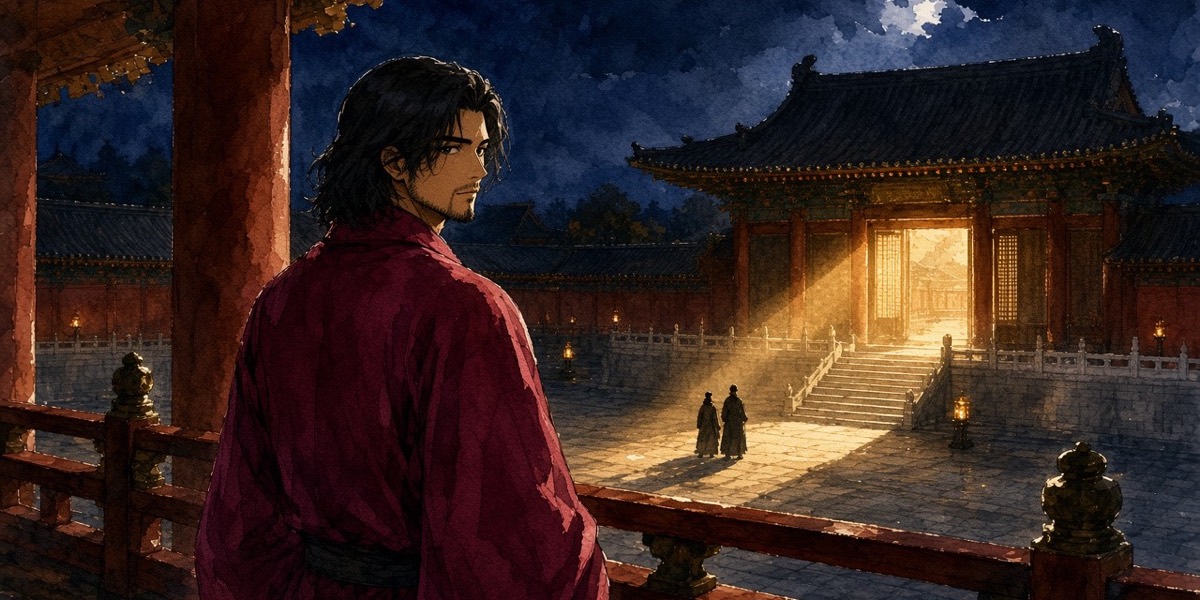
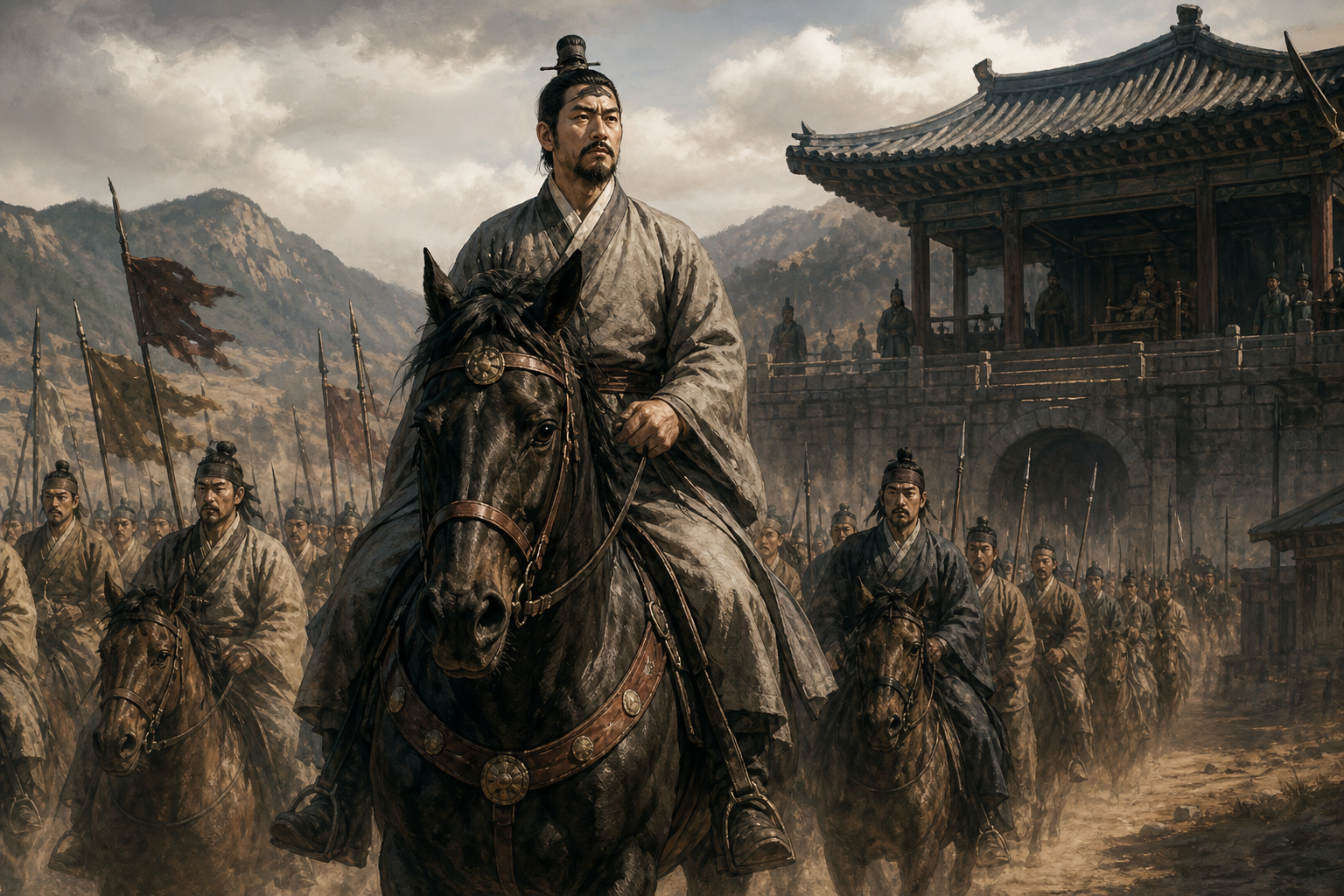
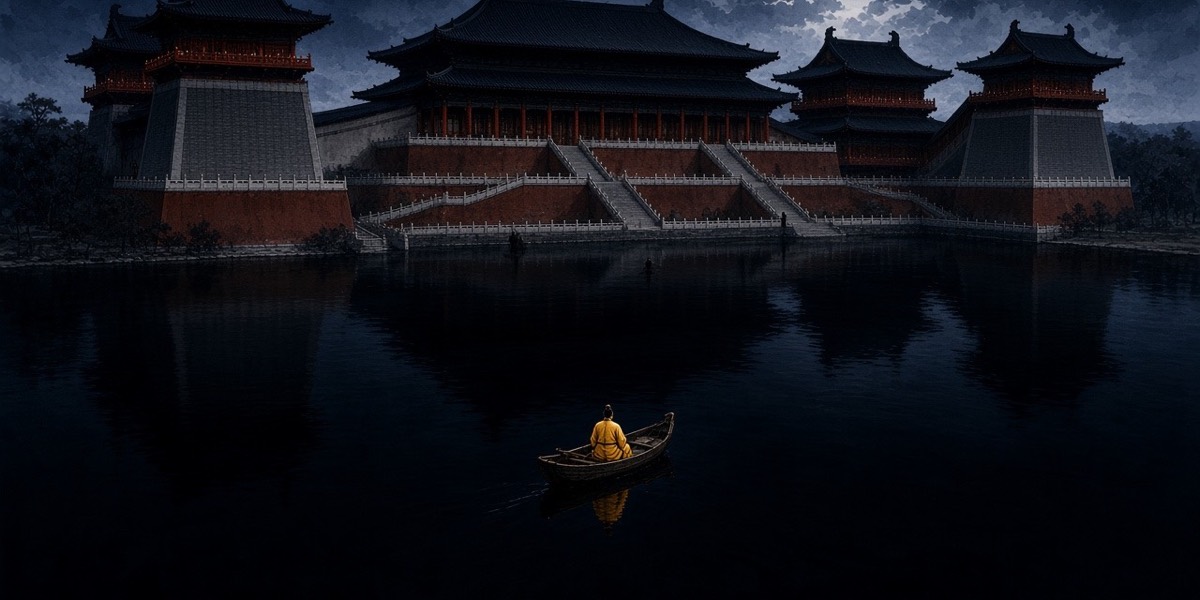
The embassy comes in at the hour the street drums stop. The great avenue opens ahead of it, a hundred and fifty paces wide and perfectly empty.
is a hundred and eight walled wards, locked at the drums. At the lodging a ward chief is waiting with a lamp and a register. He does not look at the prince’s face. He counts heads the way a man counts sacks, and writes a number.


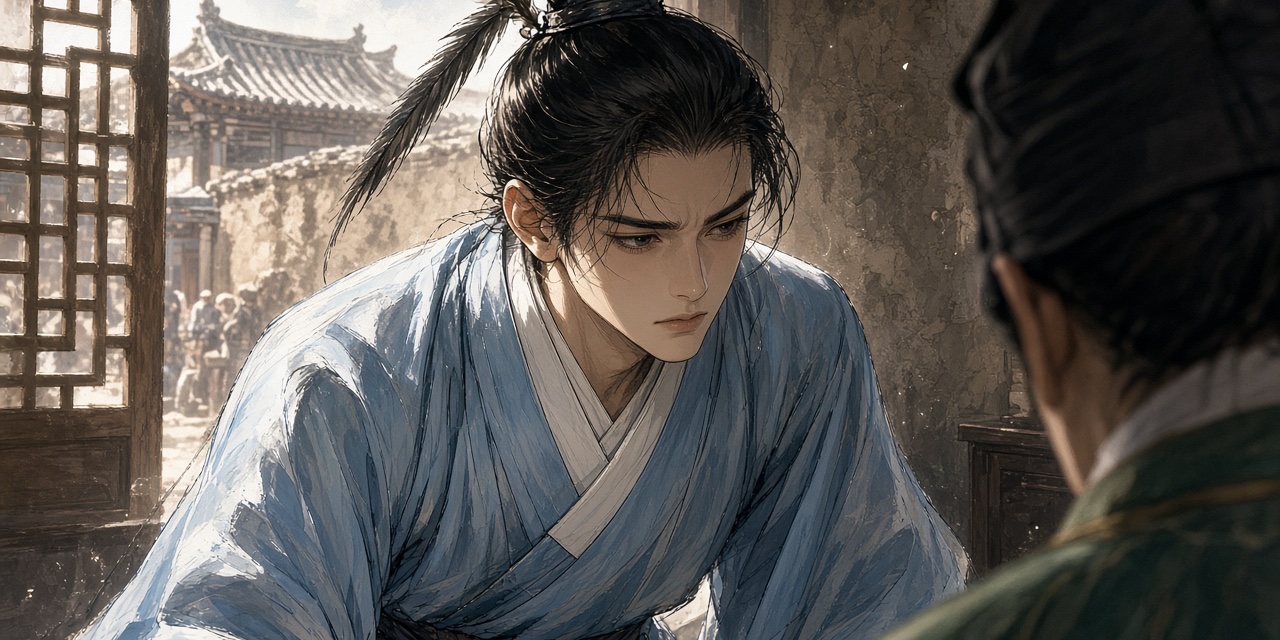
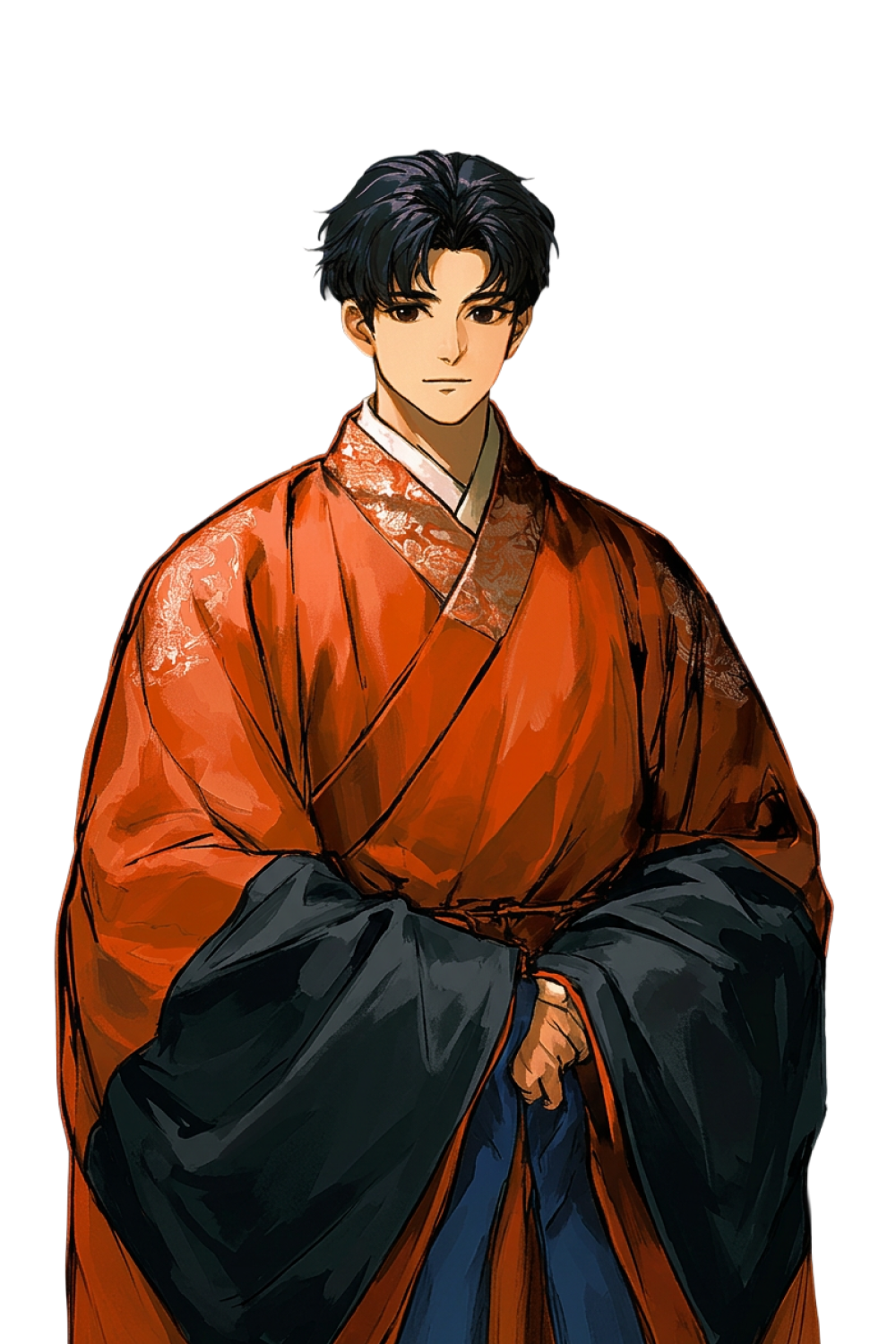
reads the register over the man’s shoulder. Eleven. He will live in this city for most of his life, and in every count it ever makes of him he will be one stroke in that column.
The tenth stroke is a young called , who writes down everything. His father died on the inner gate at . The eleventh is , who carries his master’s coat and has not said a word since the harbour. The ward chief does not look at him either.
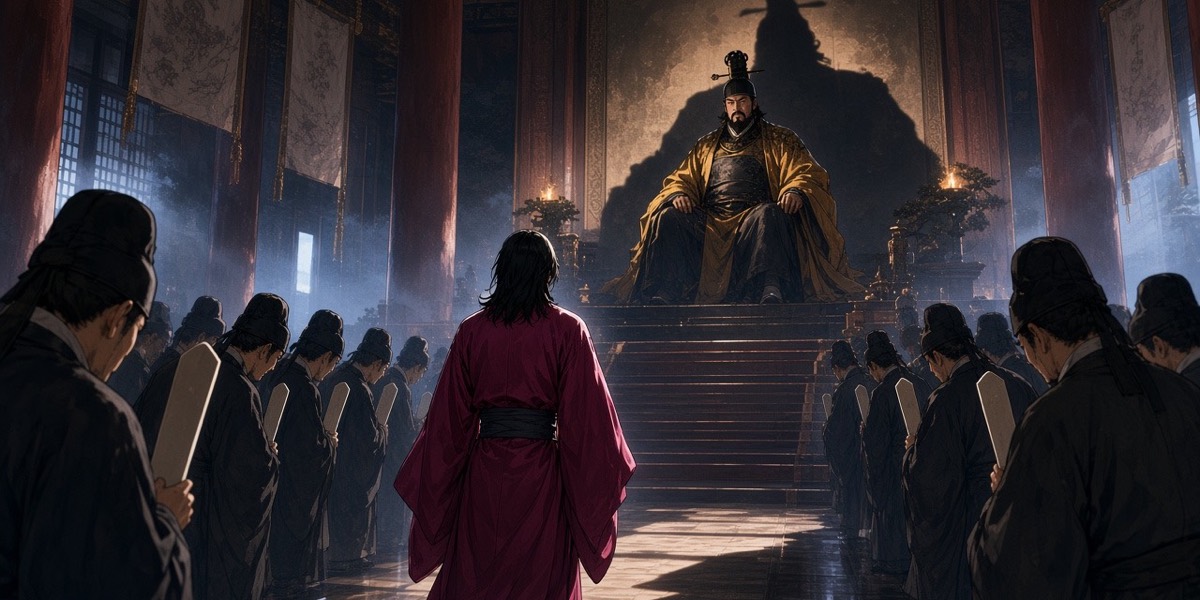
The hall stops breathing. Nobody in says that name. A clerk by the door shuts his eyes, the way men do just before a horse kicks.
Several ministers discover something interesting on the floor. The emperor does not move for one long breath. Then he laughs, and the floor stops being interesting.
Both men know the rest of that story. Neither says it out loud, which is the most honest thing either of them does all evening.
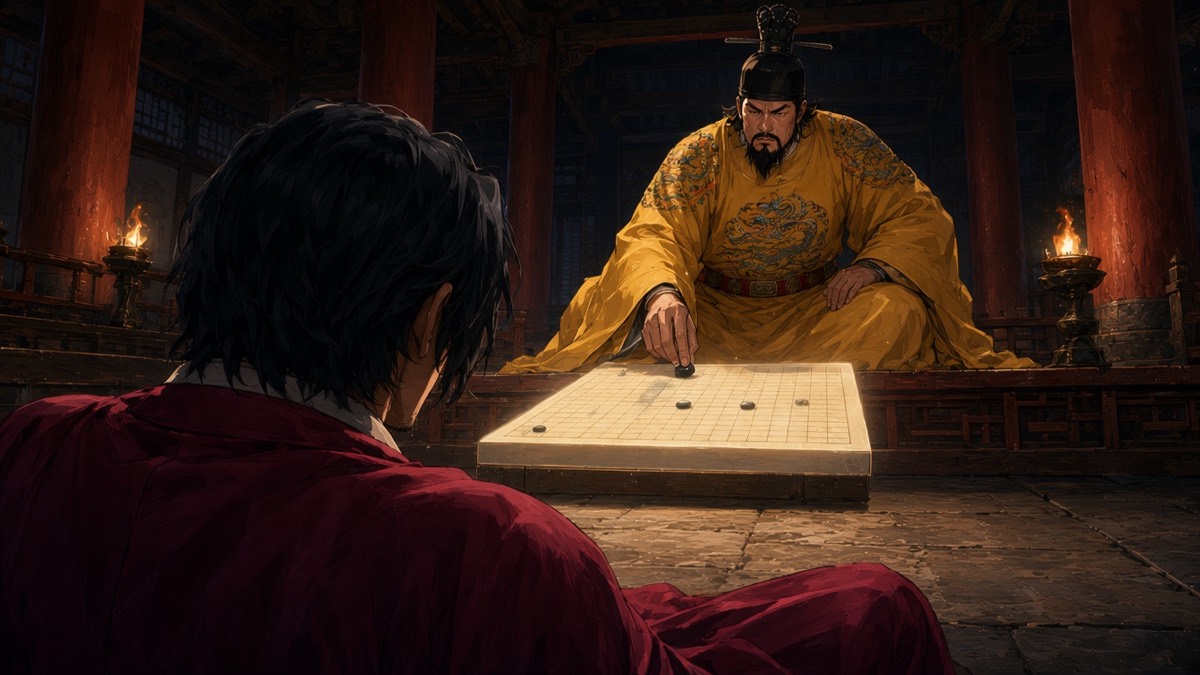
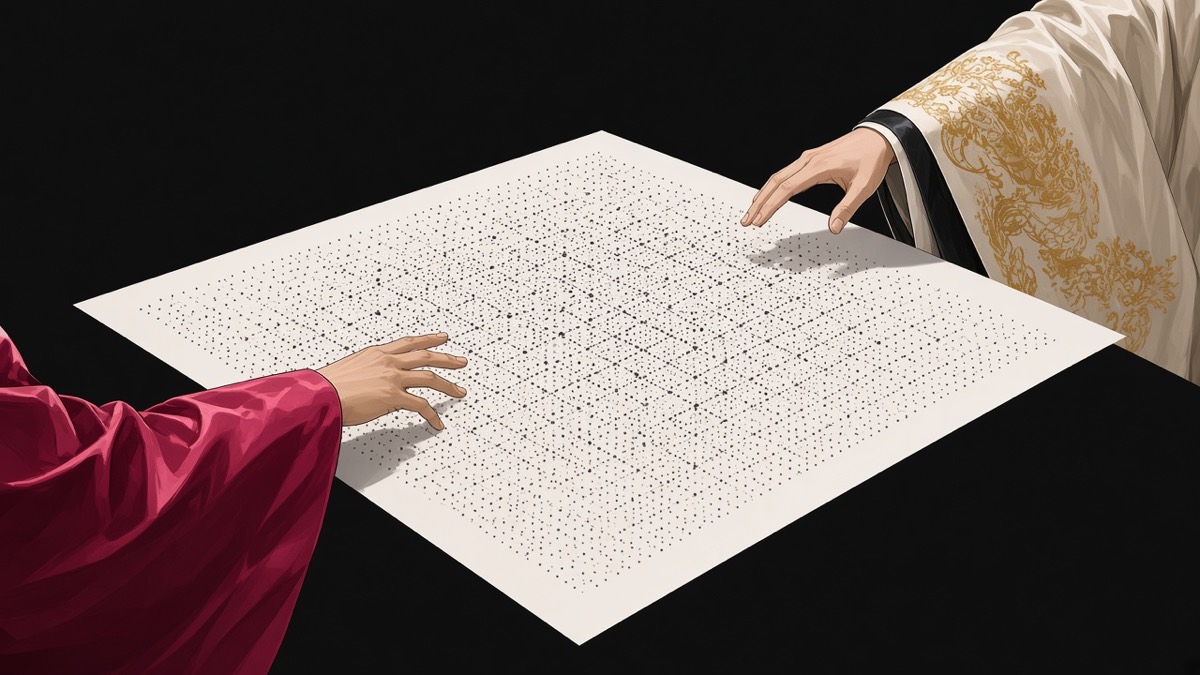
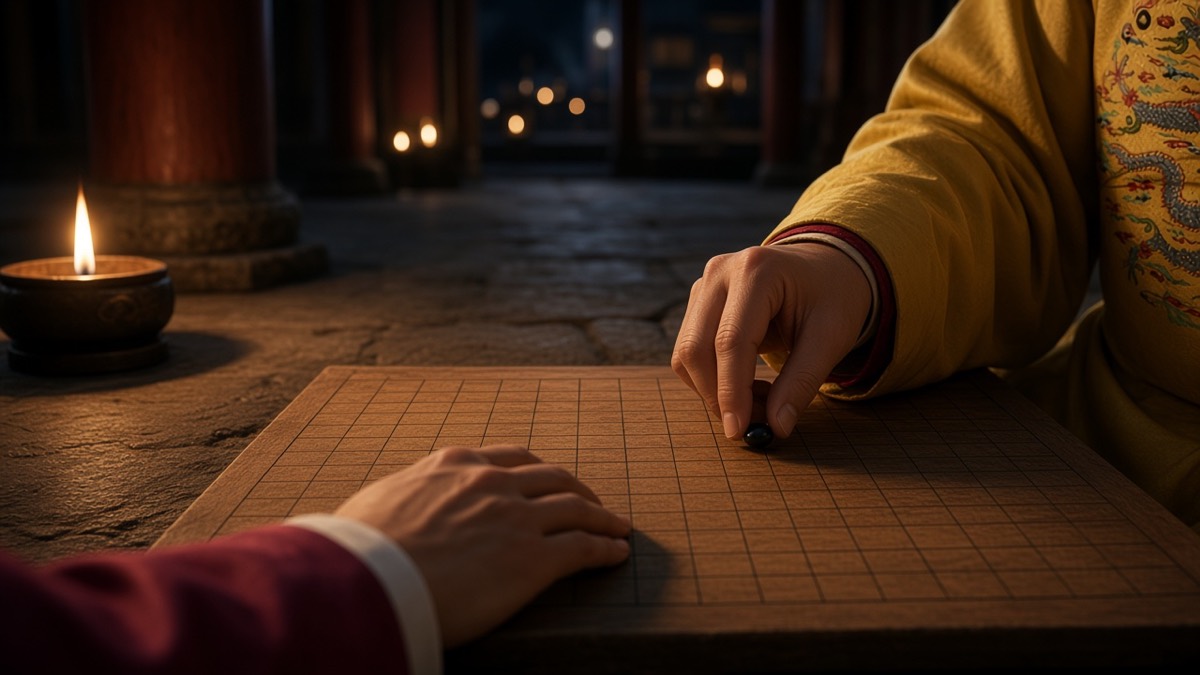
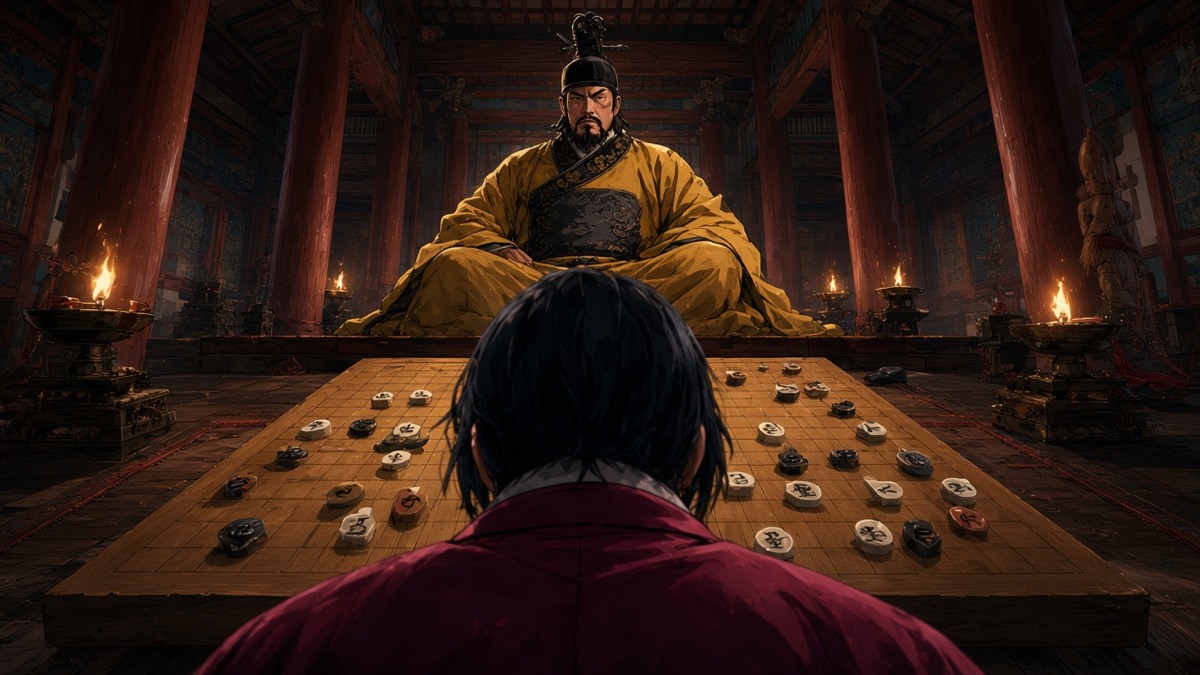
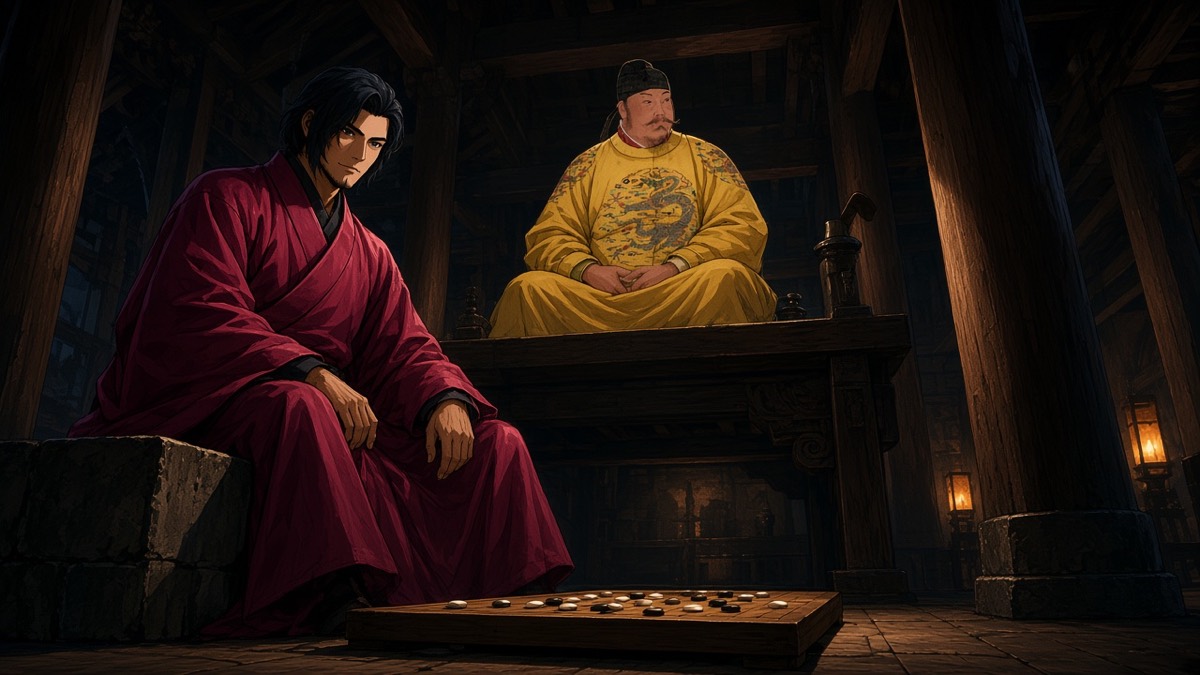
After the hall, a smaller room. A go board. The emperor keeps the platform. sits on the floor. Stones click in the dark.
opens in the far corner. Then he turns, and starts pressing the stones right beside his own.
stays in . He will be there, on and off, for the rest of his life.
Nobody has said the word army yet. has asked for it three ways. The emperor has answered with a house, a title and a hostage.
Between audiences he asks, as idly as a foreign envoy can ask anything, after a general named . A clerk of the Ministry of War spends an afternoon in the rolls on his behalf and comes back apologetic. There is no : no rank, no fief, no tomb, no widow drawing a pension. Either the emperor’s most loyal warrior is dead, or he is the only man in without paperwork. finds he wants to meet him more than he wanted to meet the emperor.
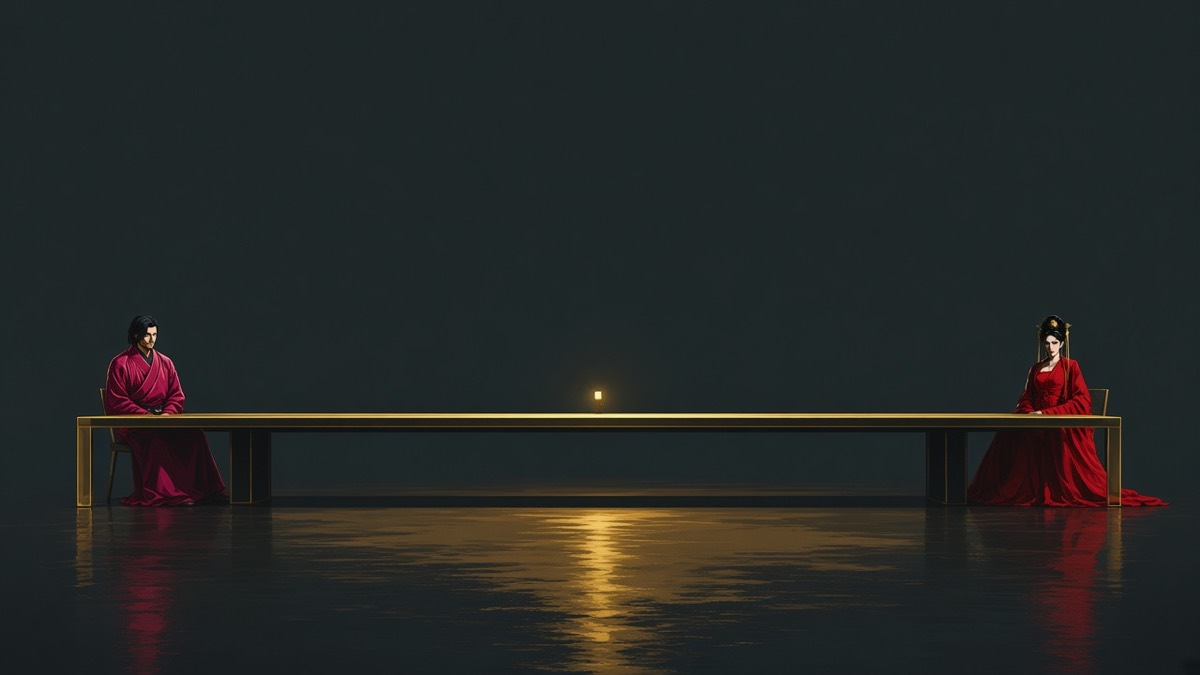
Between audiences they seat him at a long table in a lesser hall — the guests from past the western wall. He had thought was the wall.
Three cups. One lamp. The wood smells of dust and something sweeter than ’s incense. Across from him: a man in cream highland dress, and a man whose tall green hat copies and pretends it invented.


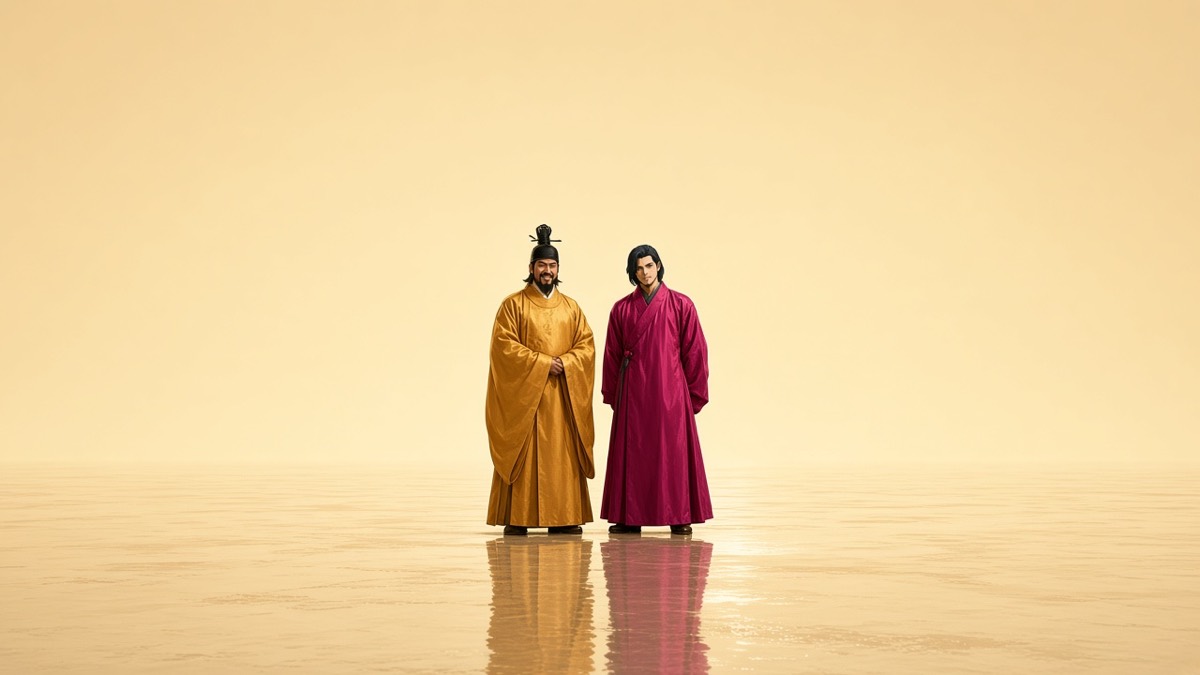
sits in the white envoy silk with the magenta bands — the dress he wore to ask a Huangdi how one realm becomes one. The question is already answered twice across this table: once rising, once gone.
He says it the way other men discuss rain. leans over the cups. A tip from a court that finished the work last season is worth more than a banquet poem.
He laughs once, quiet, hand on the table edge. was the end of the world. It is a middle. Across three cups: a civilization rising, a civilization gone — and he files both for a boy who is not yet king.
Wait for the thing nobody put on the board, he will say later. A bird from off the map. Turn the board when it lands.
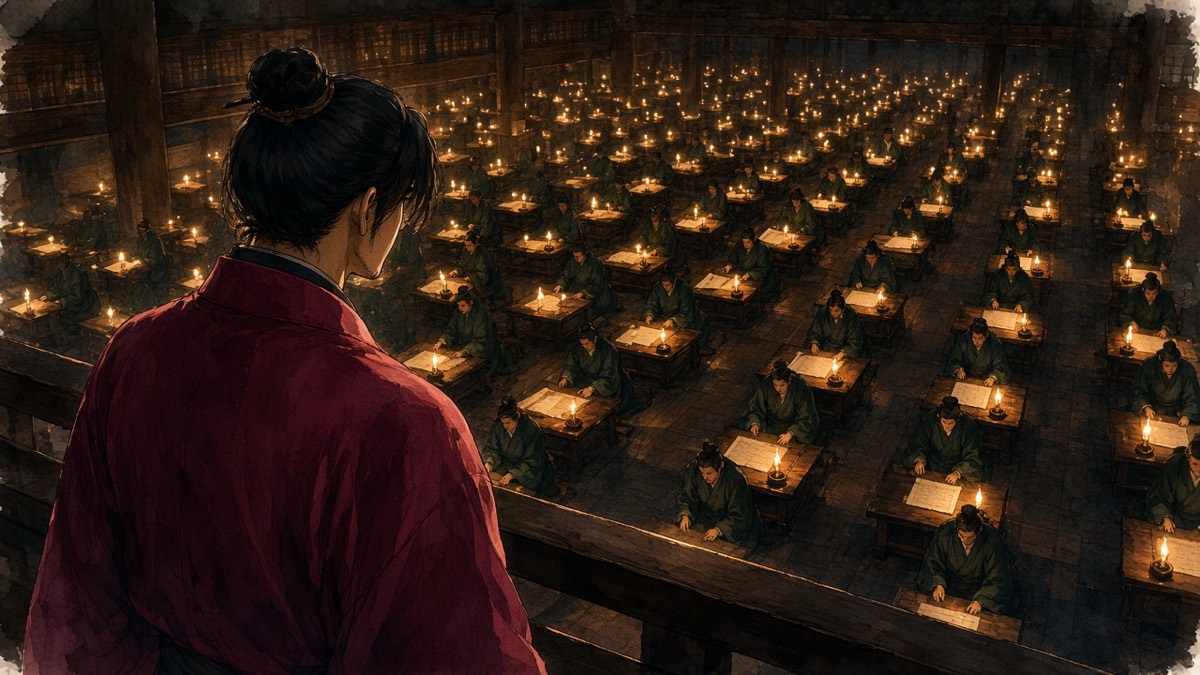
keeps the Academy halls and the Western dress cut to measure. does not need another tour of Confucius. He has already seen farther.
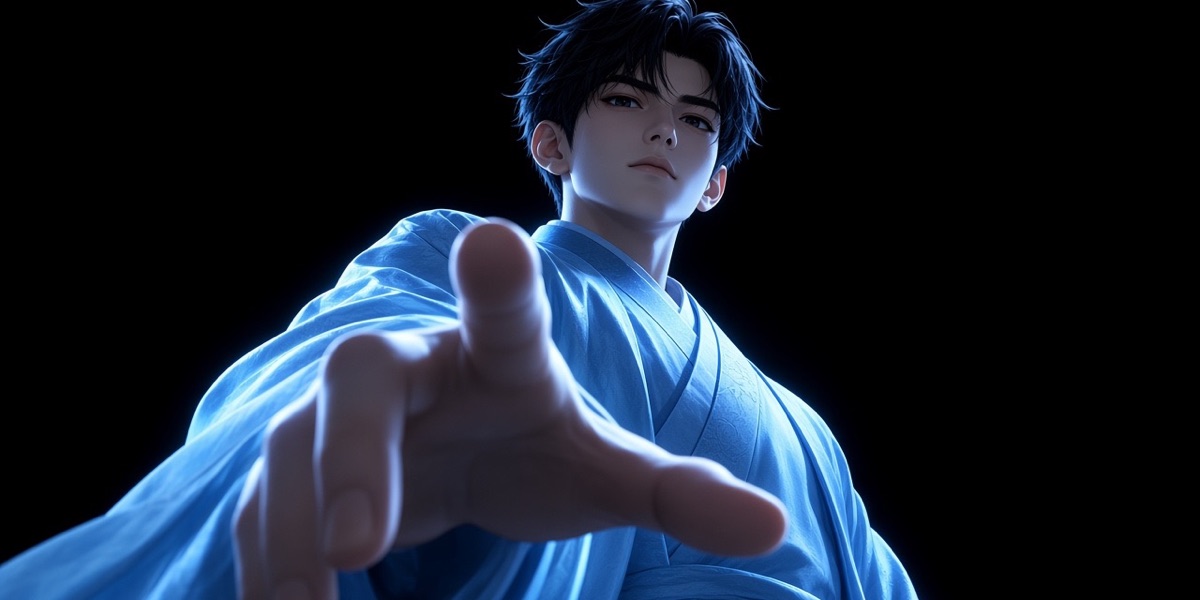
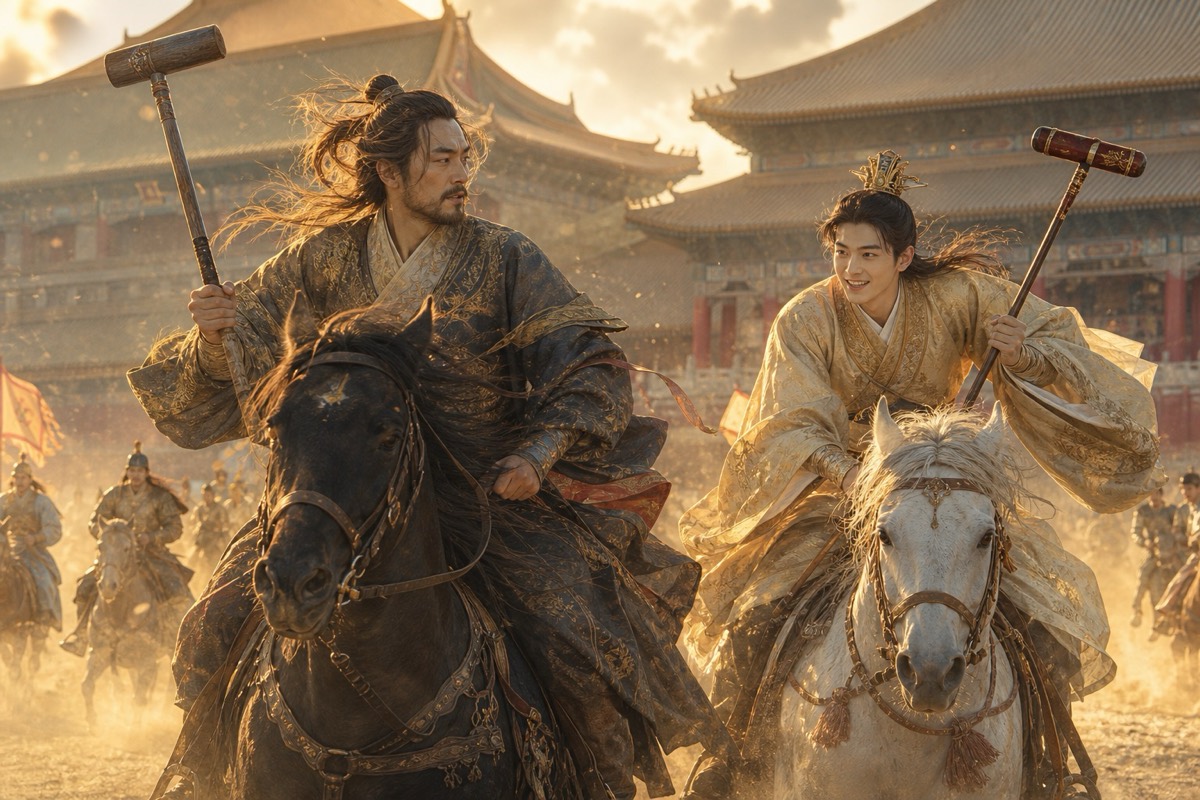
The days between audiences belong to someone else. The crown prince — , twenty years old and still allowed to laugh with his shoulders — steals from the memorial-hall the way a younger brother steals an older one from a funeral, and takes him to the imperial gyuku ground.

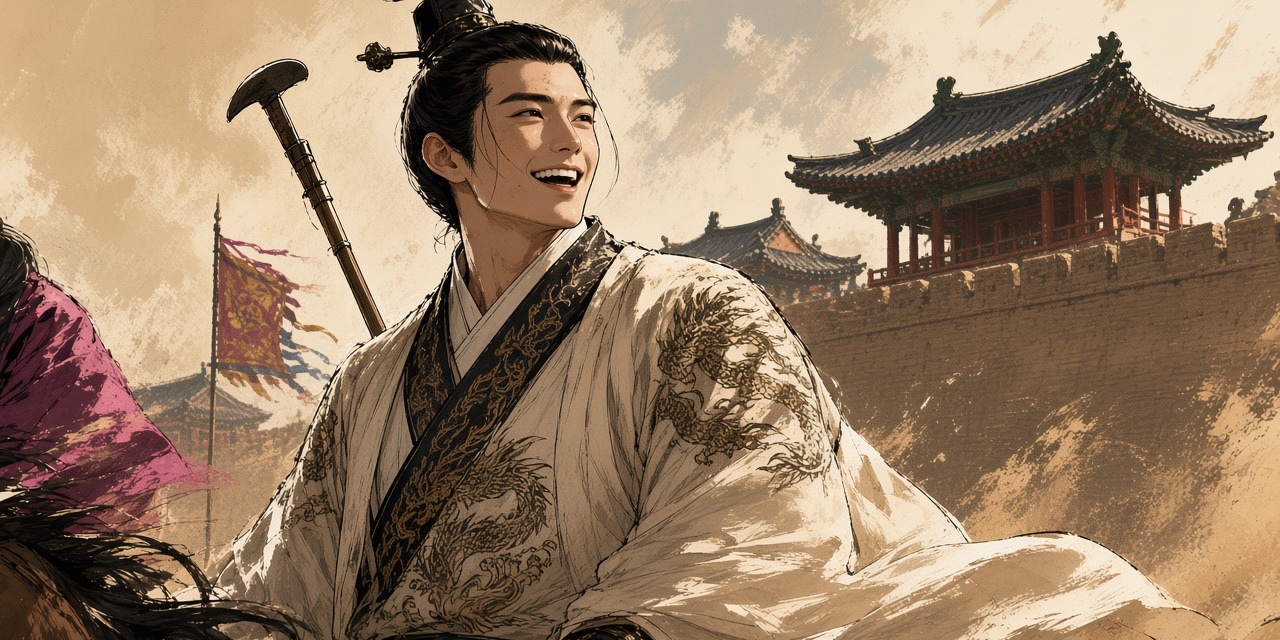
They play gyuku until the dust makes them the same colour. talks like a man who has waited his whole life to be ordinary with somebody dangerous. lets him.
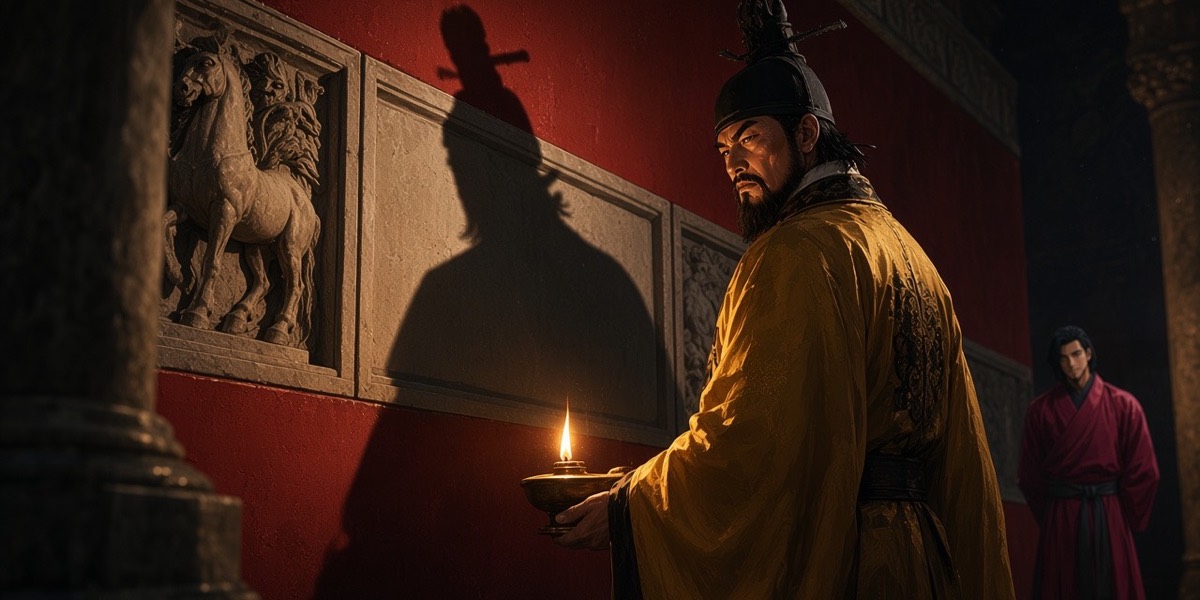
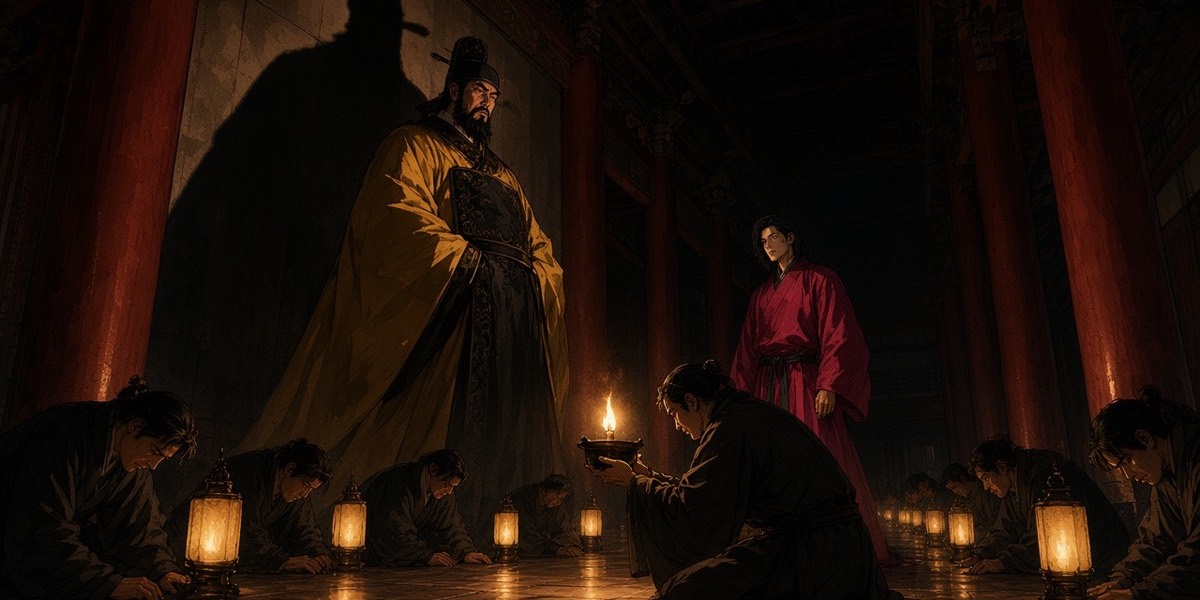
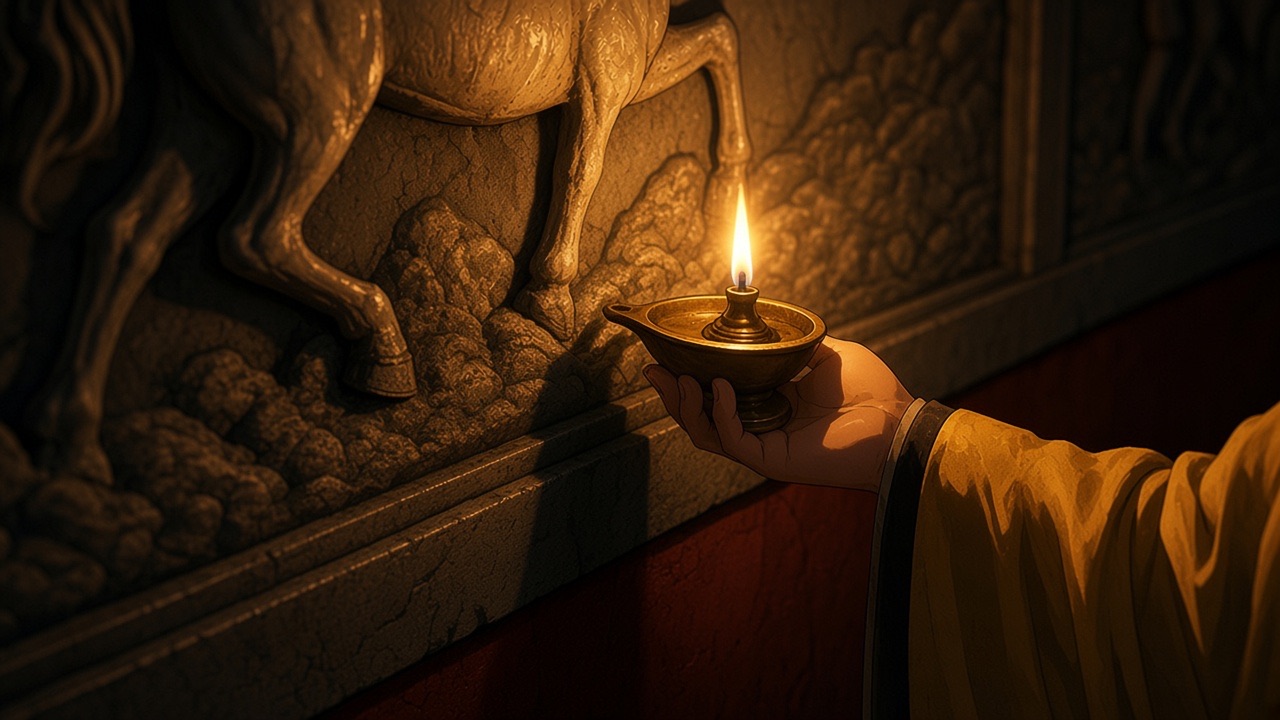
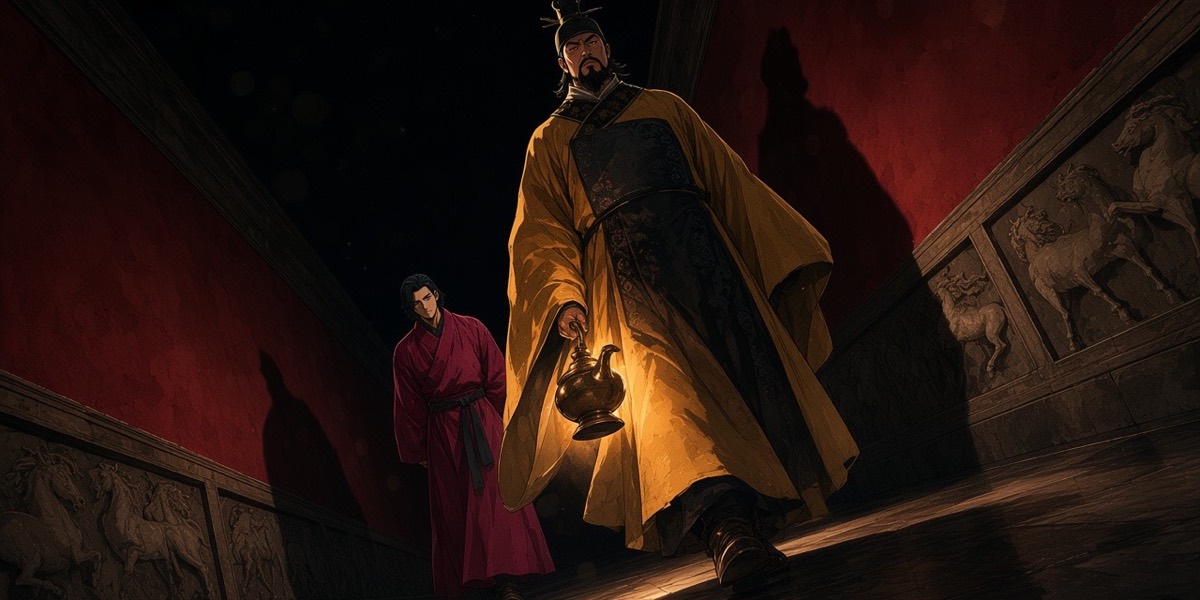
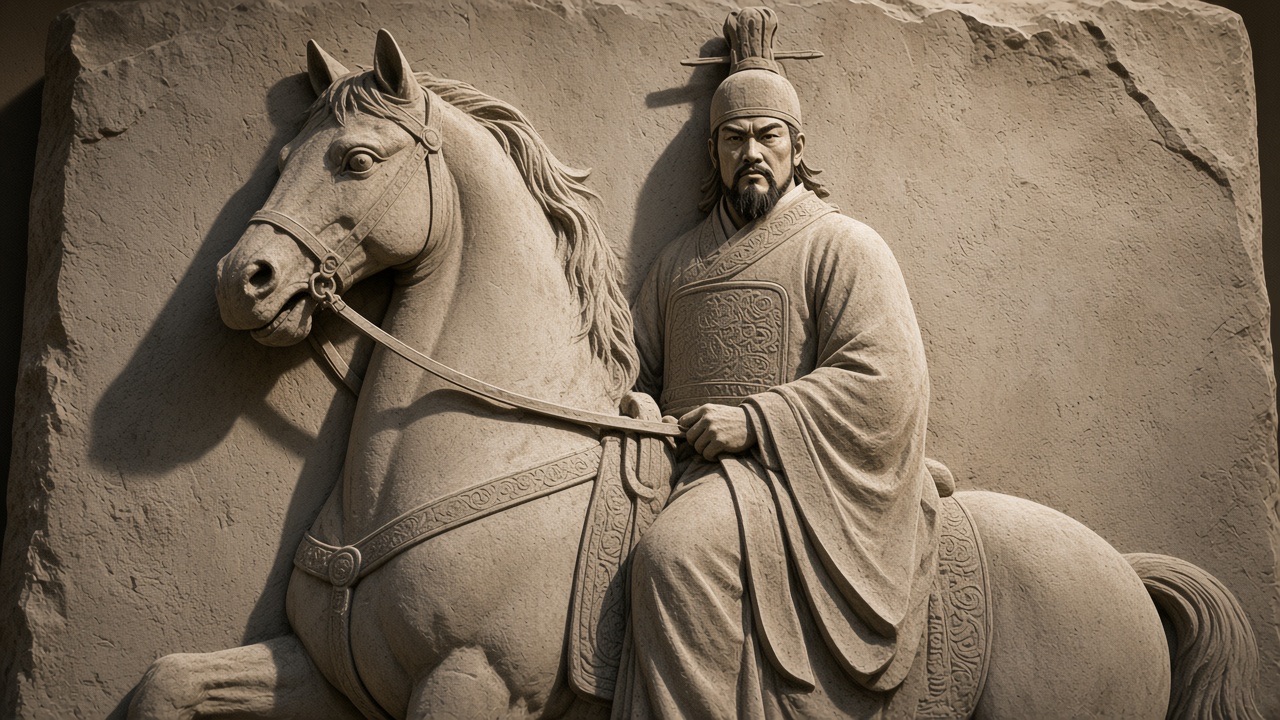
That night the emperor dismisses the lamp-bearers and carries the lamp himself, down a gallery behind the Liangyi Hall that no envoy has been shown. Along the wall runs a band of six stone horses, each long panel cut in low relief from drawings by the court painter. They are meant for the mountain at Zhaoling, where they will stand guard over a tomb. Nobody has told whose.
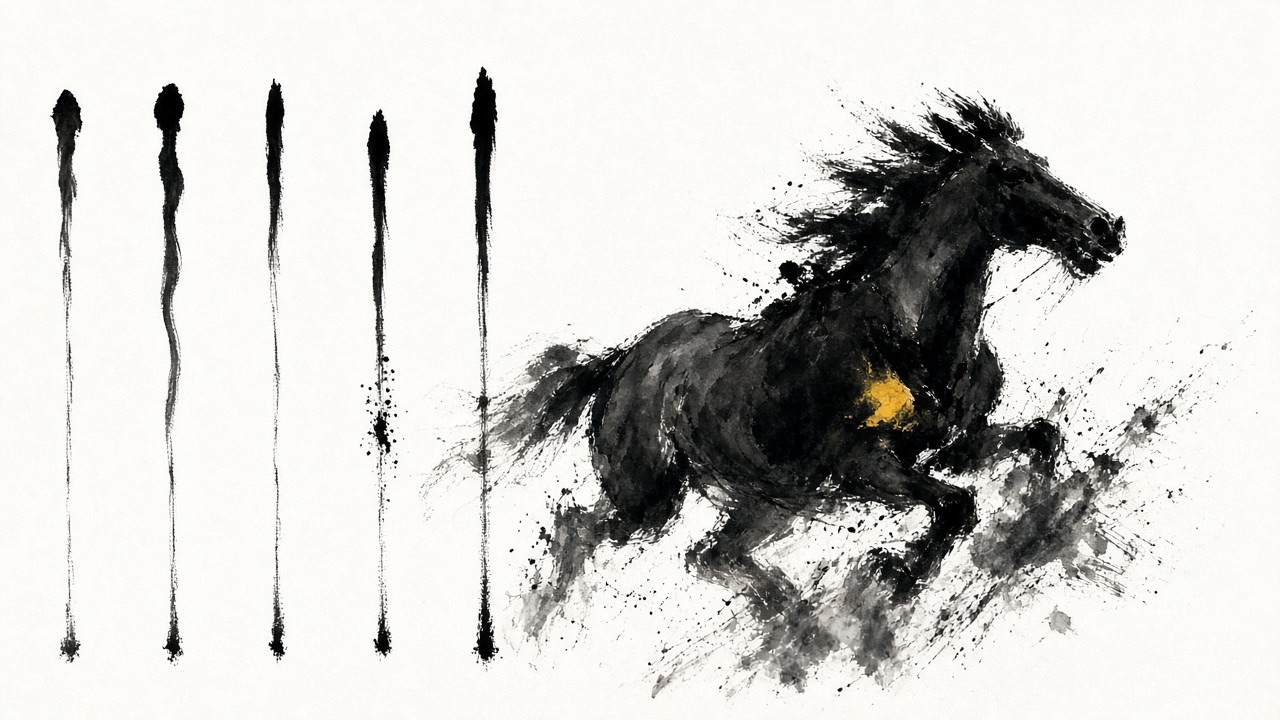
He lifts the lamp to the first panel. Out of the black comes a horse in mid-stride, cut so shallow it seems to be passing through the wall rather than standing on it. The emperor lays his palm on its hoof, as if to keep it from leaving.
They walk on. The lamp swings at his side, and their two shadows climb the wall ahead of them, larger than either man, stepping over the carved hooves.
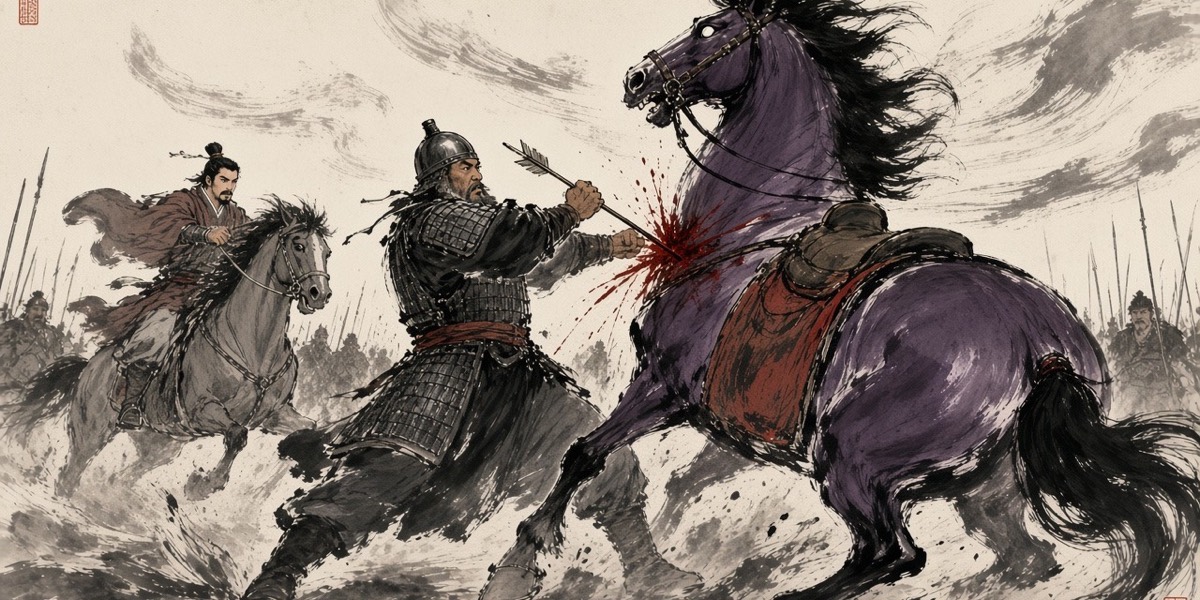
At the third panel he does not stop. The lamp slides over a horse with a man standing at its chest, and the emperor walks on as though he has not seen it.
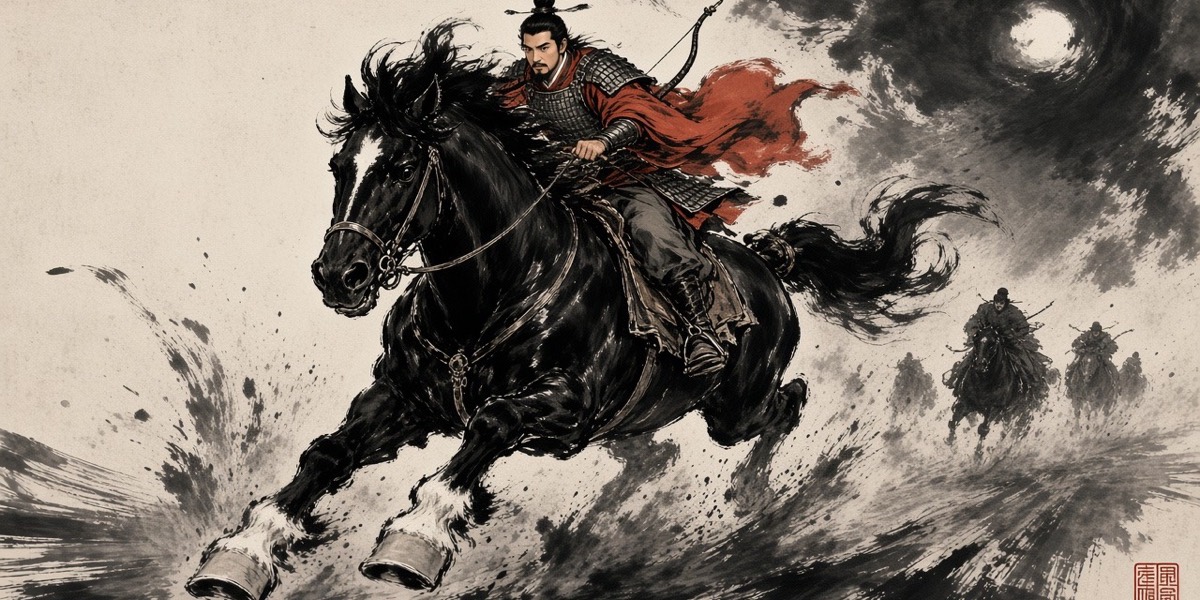
Ten paces on, the emperor stops so abruptly that nearly walks into his sleeve. This time he holds the lamp high over his head, and a grey horse comes out of the stone at full gallop.
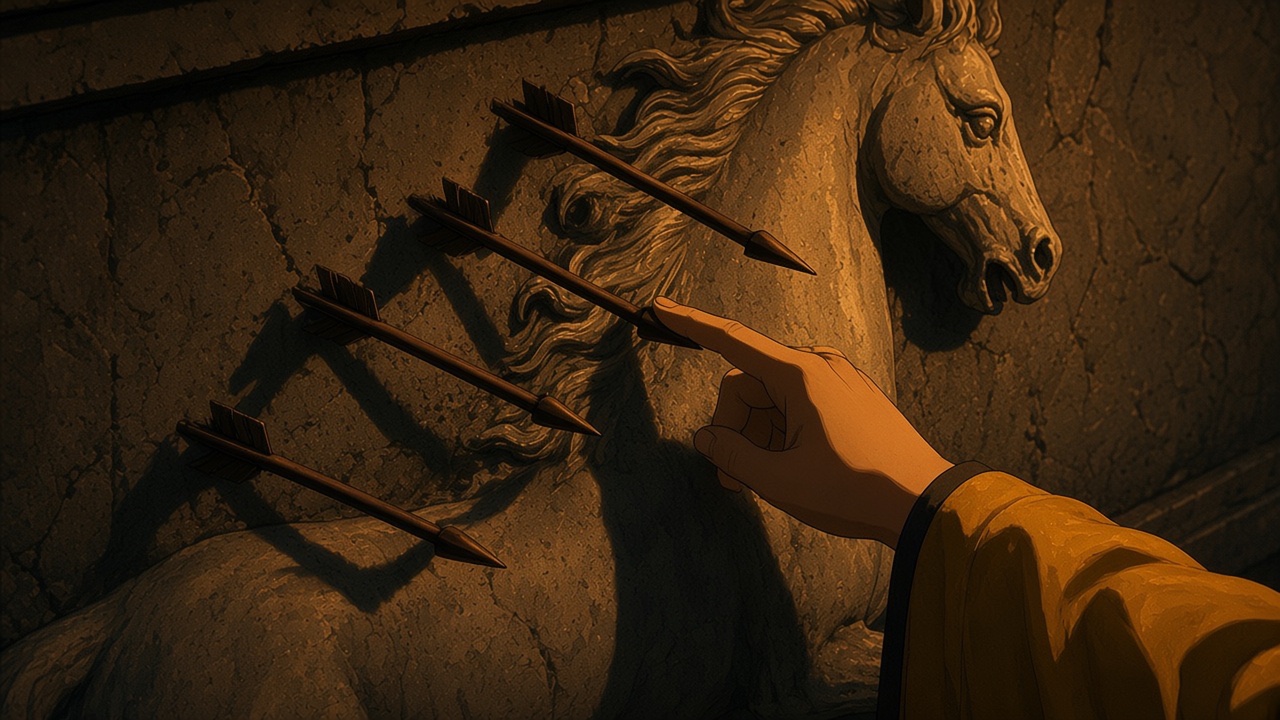
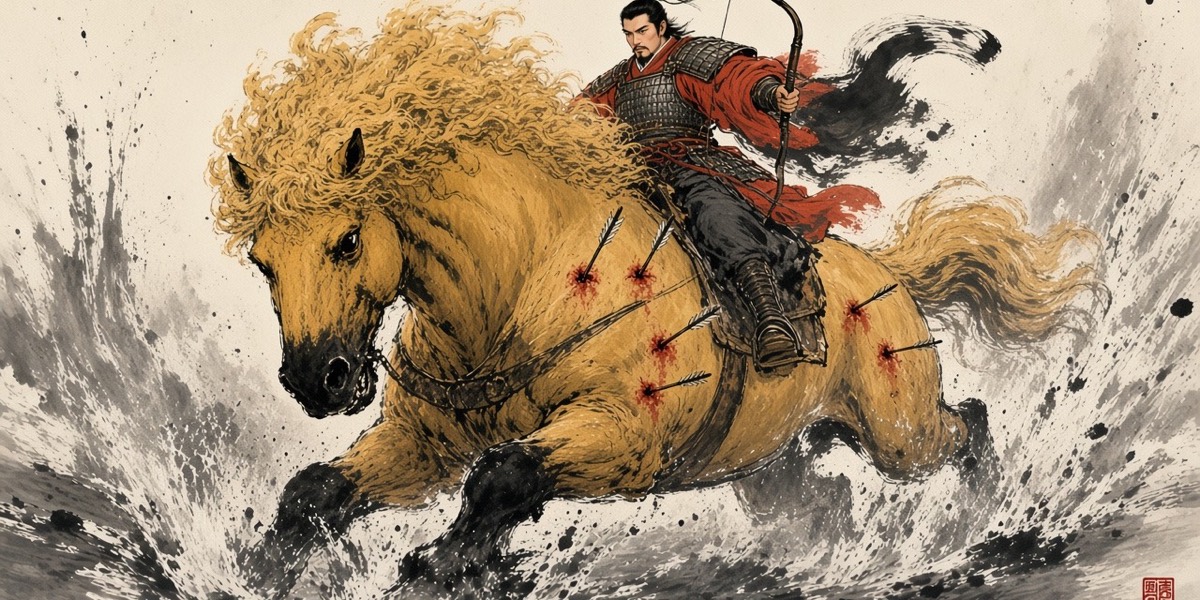
At the sixth panel he brings the lamp close enough to warm the stone, and counts along the horse’s flank with one finger, arrow by arrow, the way a man counts the graves of his own soldiers.
They reach the end of the gallery. Past the sixth horse the timber frame runs on, and inside it the stone is smooth.
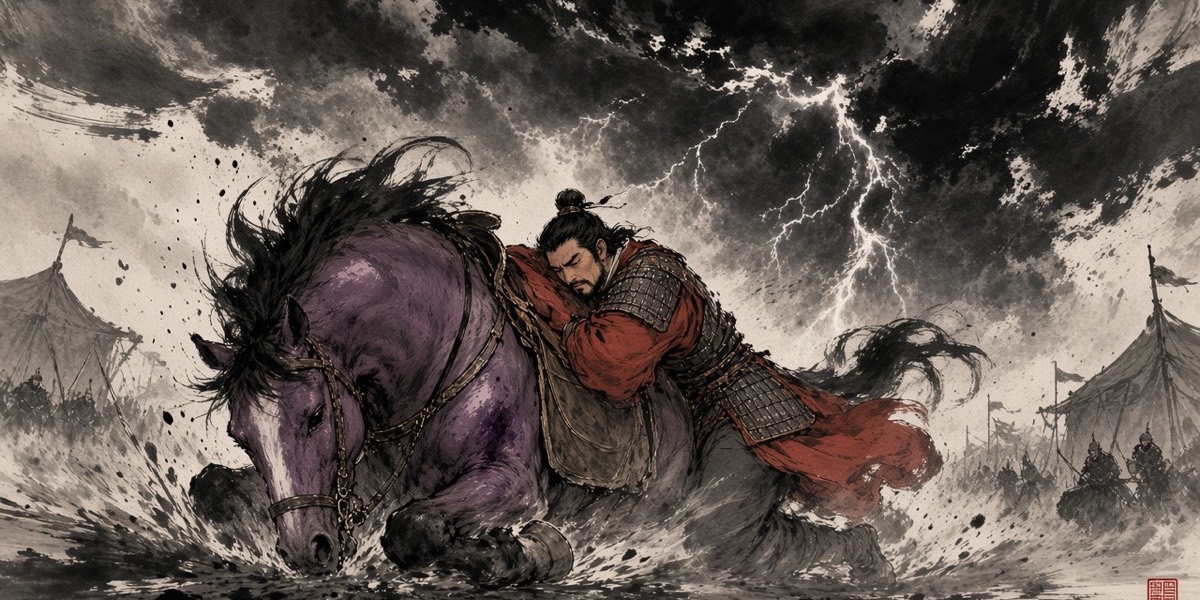
Then he turns and walks back the way they came, past the arrows, past the grey horse and the black, and follows the lamp. He stops at the third panel, the one he would not look at, and this time he lifts the light all the way up.
hears the name before he understands it. He looks at the purple horse in the stone, and at the man carved at its chest, and back at the emperor, and an afternoon of the Ministry of War’s rolls rearranges itself in his head. Horse after horse, name after name, and not once has it occurred to him.
Then the laugh goes out of him the way a lamp gutters, and he looks back up at the stone.
He does not move on. He sets the lamp on the floor beneath the panel, which is not a thing emperors do in front of foreign princes, and lays his hand flat on the carved neck, and leaves it there.
does not interrupt. It is the first time in he has seen the emperor need an audience rather than command one.
The emperor picks up the lamp and turns. It hangs low at his knee now, and from below his face is all hollows.
He coughs into his sleeve, a small dry cough, and looks at the sleeve a moment too long before he folds it away. has seen men do that. None of them were emperors.
He sets the lamp down again at the foot of the purple horse.
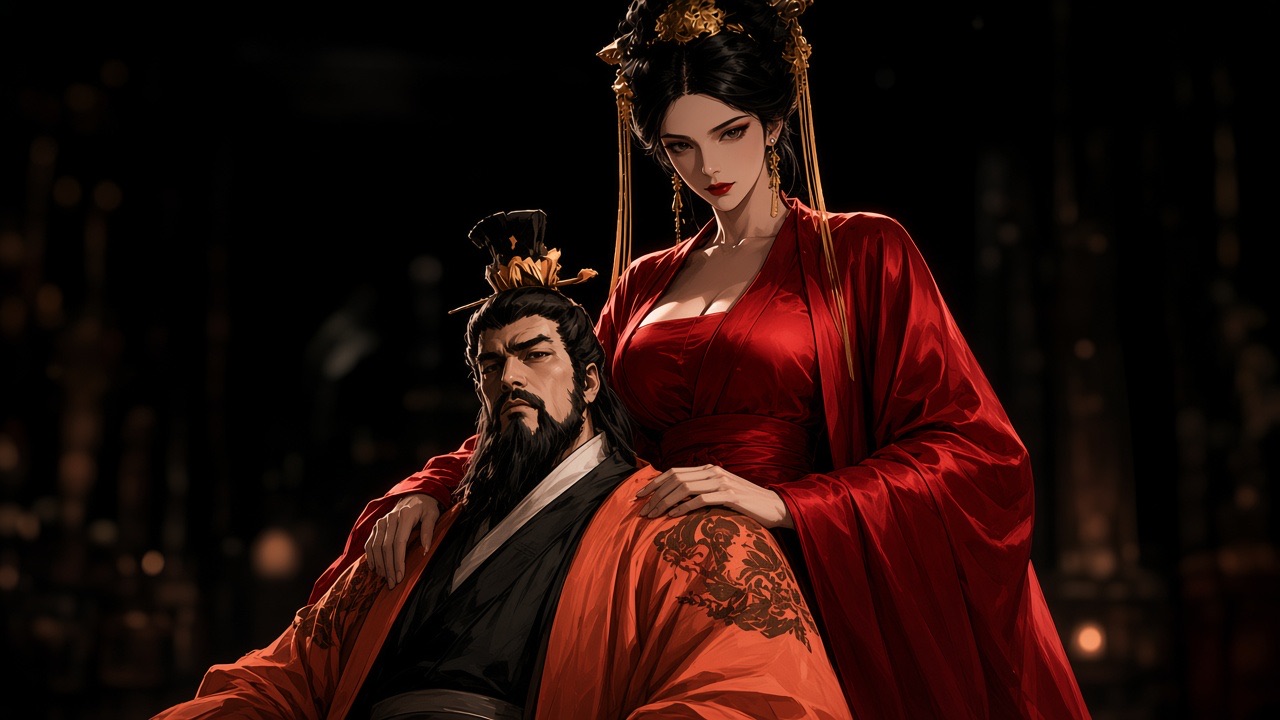
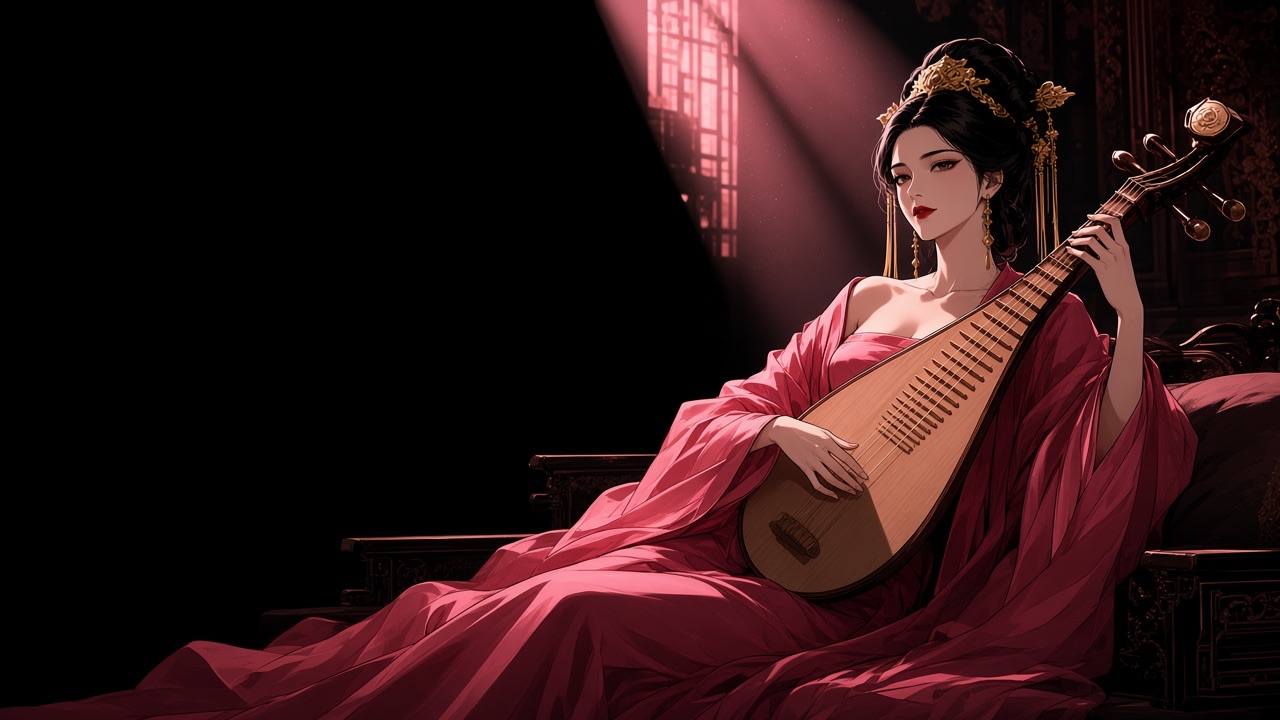
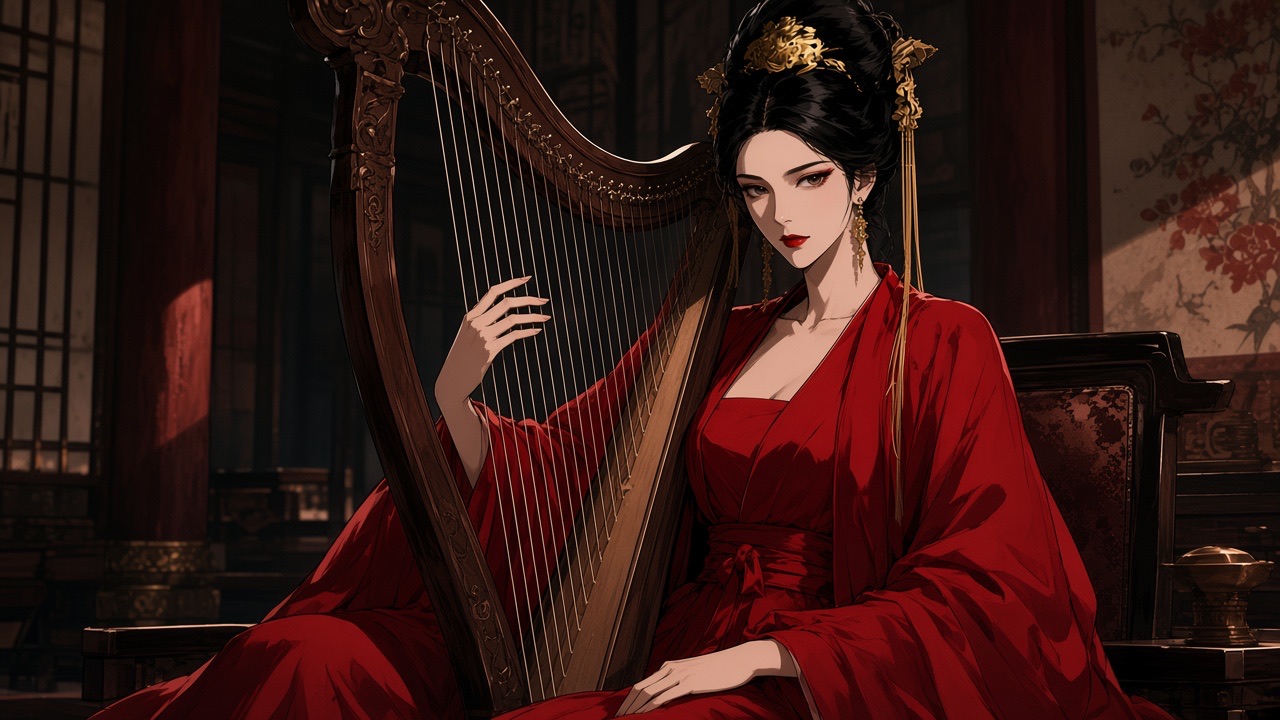
At a banquet meant to impress the guest, ’s laughter is the loudest thing in the hall. Behind a screen a concubine listens the way a strategist listens — counting who drinks, who flinches, which foreign prince the emperor calls brother.
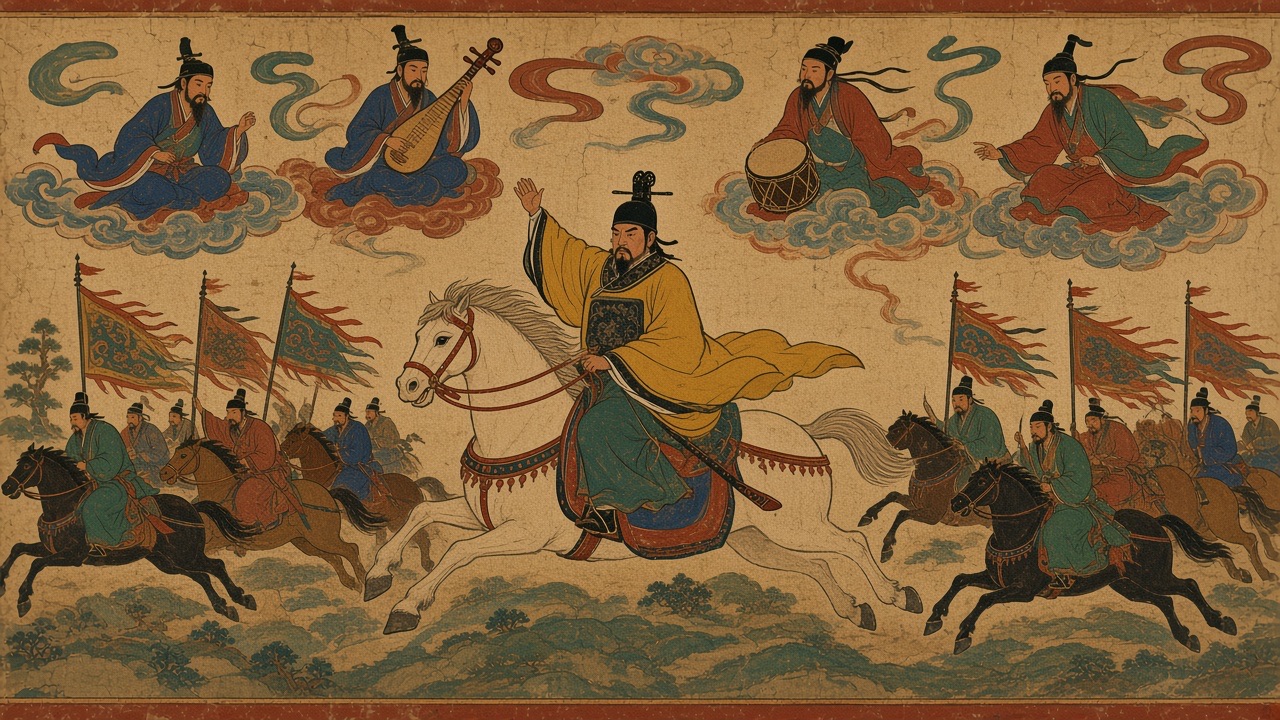
Halfway through, the emperor calls for brushes. In , a banquet without verse is just dinner.
The gale shows which grass is strong;*
the ruined age shows which minister is true.†
What does a brave man know of right?
The wise man keeps benevolence close.
- * 疾風知勁草: the first line is Emperor Guangwu’s, said to the one officer who stayed when the rest of his men drifted away (Hou Hanshu (後漢書) bk. 20, Wang Ba).
- † 板蕩: “Ban” and “Dang” are two odes in the Book of Songs lamenting a ruined reign; together they mean an age of chaos. 誠臣 stands where 忠臣 would: 忠 was the personal name of the Sui founder’s father, and writers still stepped around it.
The hall applauds, the way halls do. Then all of it turns toward the guest. An answer is expected. A barbarian is expected to need until morning.
He does not empty it. He sets it down full, asks for the brush, and writes on his knees at the low table.
At the sea’s corner a stubborn grass grows;*
only under heavy frost does the lonely minister show.
It will not lie down for a mad wind,†
but its heart already leans to the Sage Lord’s benevolence.
- * 海隅, “the sea’s corner”: the words used for when he knelt in the hall (臣之本國僻在海隅).
- † 偃, “to lie down”: Analects (論語) 12.19, “the gentleman’s virtue is the wind, the small man’s is the grass; let the wind pass over the grass and it must bend.” His grass refuses the mad wind and bows to the virtuous one. The rhymes 臣 and 仁 fall exactly where the emperor’s fell.
Nobody in the hall says anything, because nobody knows yet what the emperor thinks. The emperor reads it twice. The second time, his lips move on the last line.
Twenty characters. He has asked for an army, flattered an emperor out of his own classics, and called his neighbours a bad wind, without one word anybody could quote back at him.
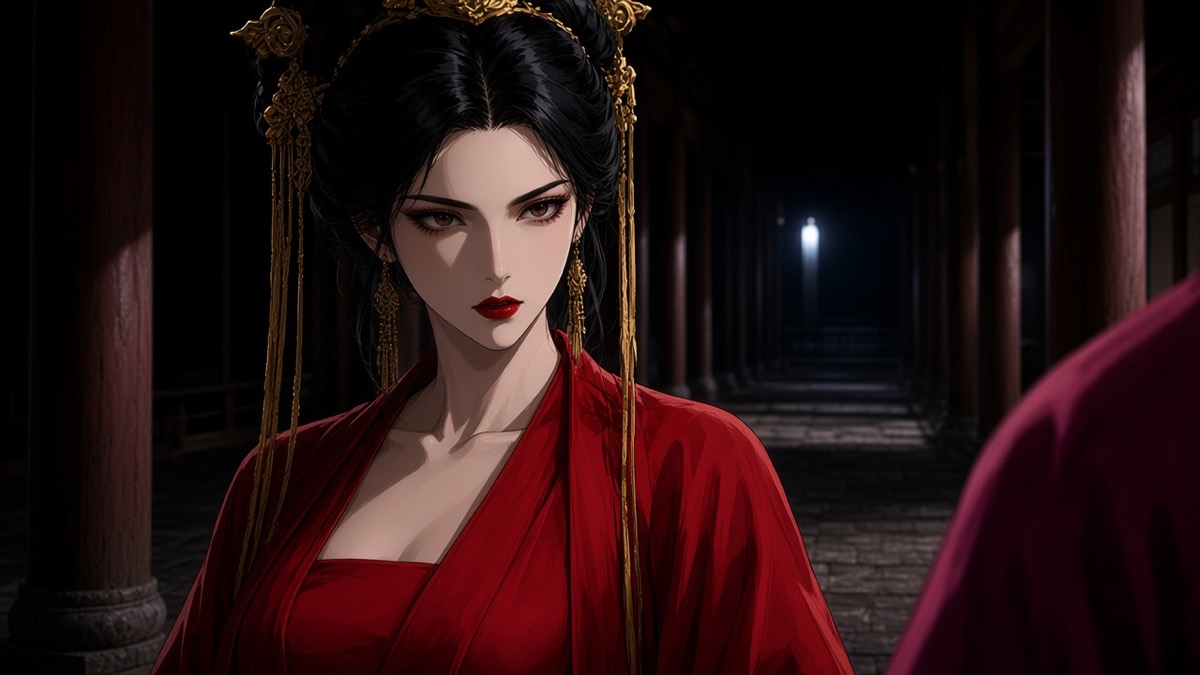
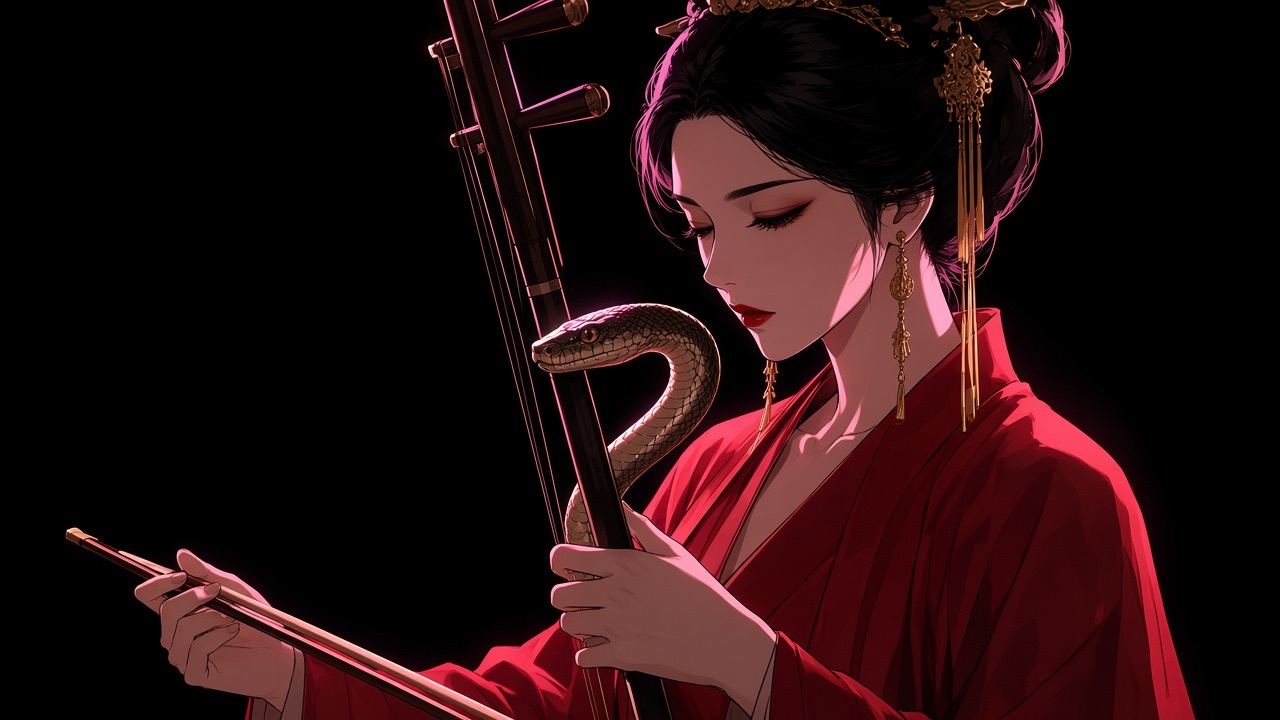
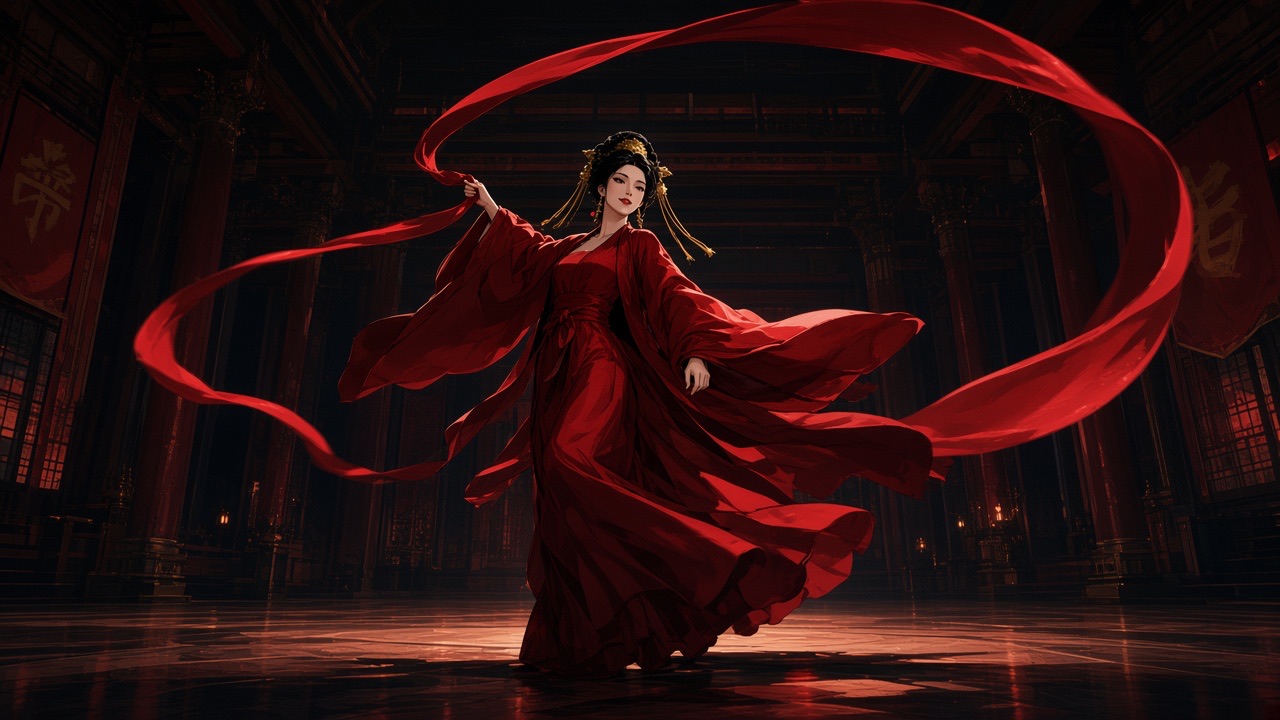
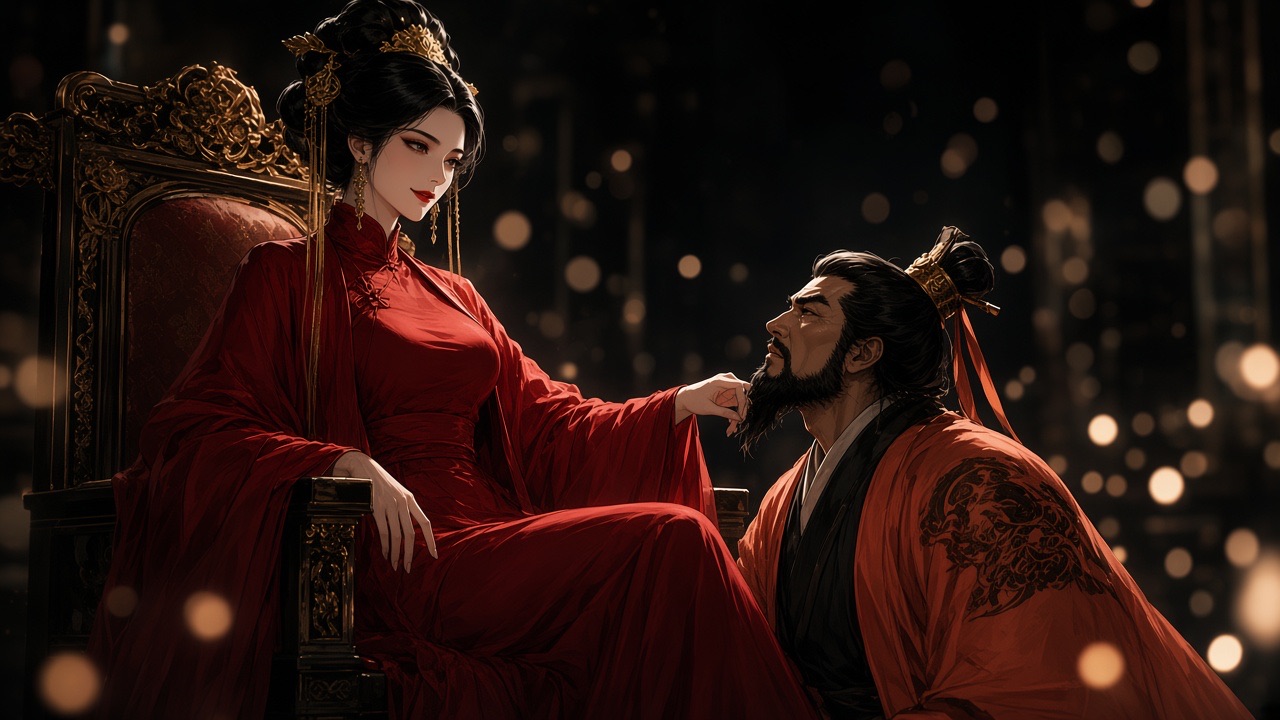
Behind the screen Wu does not merely listen. She works the room without entering it: a glance that steadies a nervous maid, a smile that slows a minister’s cup, a silence that turns every eye in the hall back to the foreign prince.
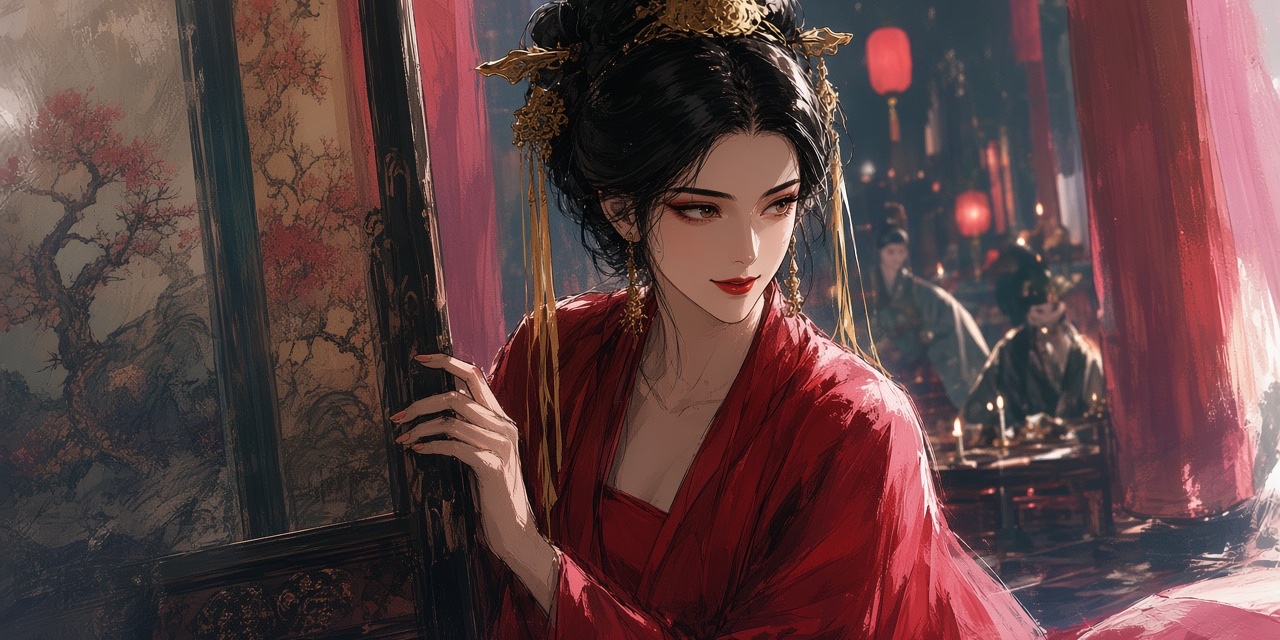
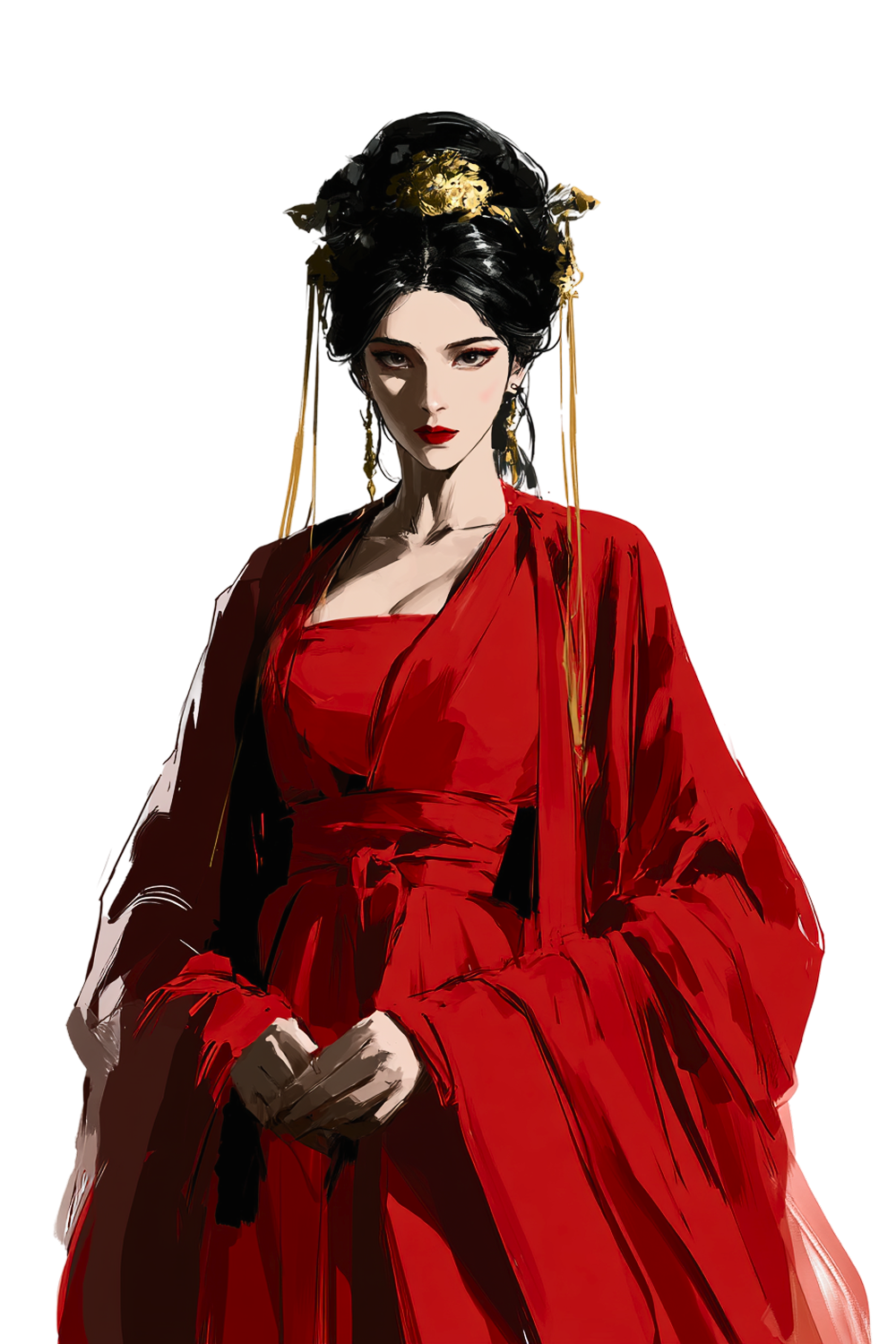
On the morning before he is to leave, a parcel comes to the lodging from the palace. Inside are rubbings of two steles in the emperor’s own hand, and a new history of the Jin dynasty, so fresh from the Historiography Office that the paste on the bindings is still soft.
One of the two rubbings is for a temple at Jinci, raised to a little brother who was once handed a leaf. reads the first column and laughs out loud. He asked the emperor for that promise in writing. Here it is, in the emperor’s own hand.
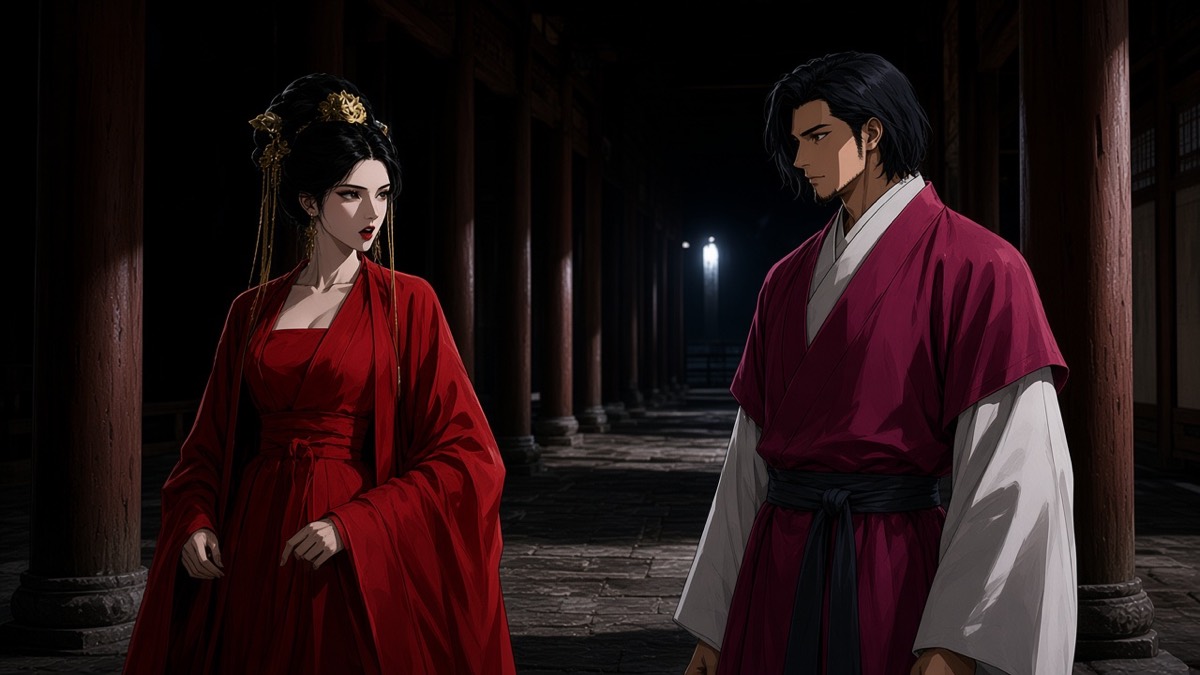
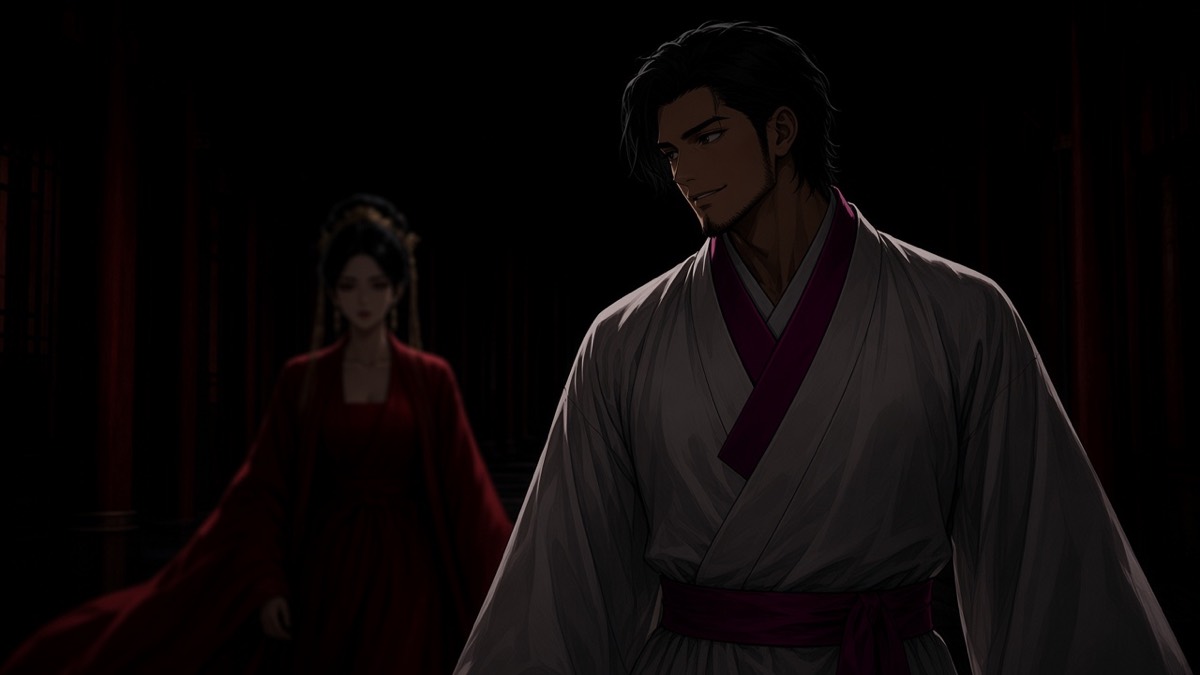
Night in a long palace corridor. Red columns, white plaster, a little light leaking from the next hall. Somewhere a banquet is still going. Out here it’s quiet enough to hear footsteps behind you.
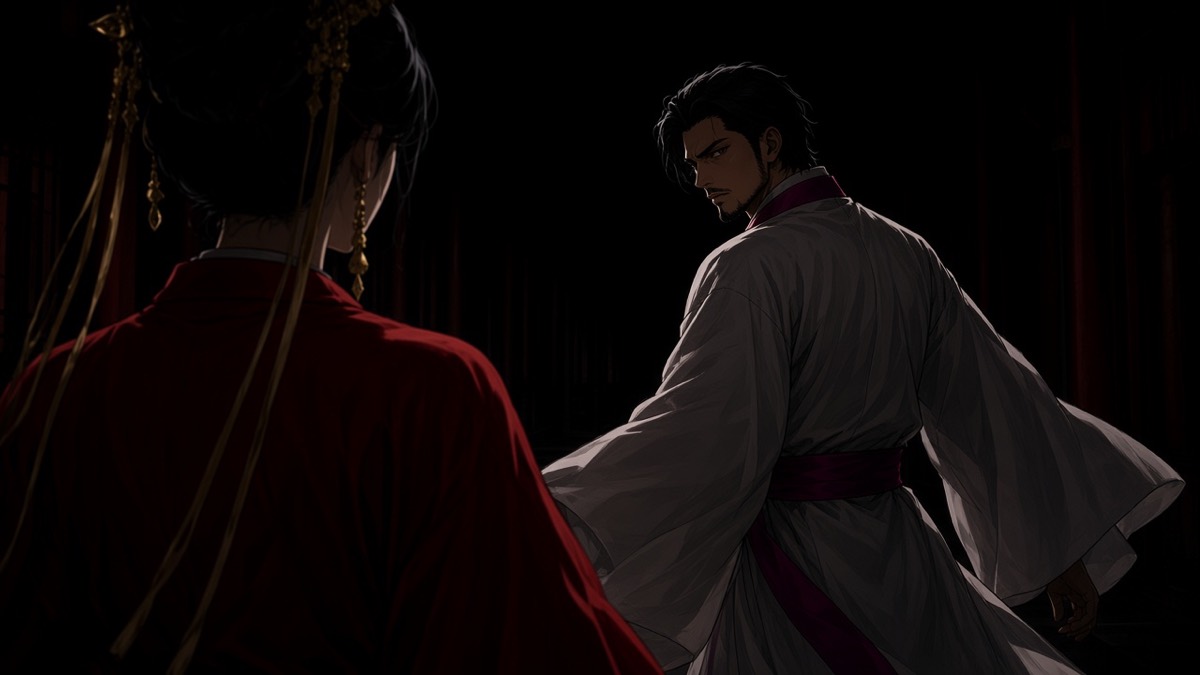
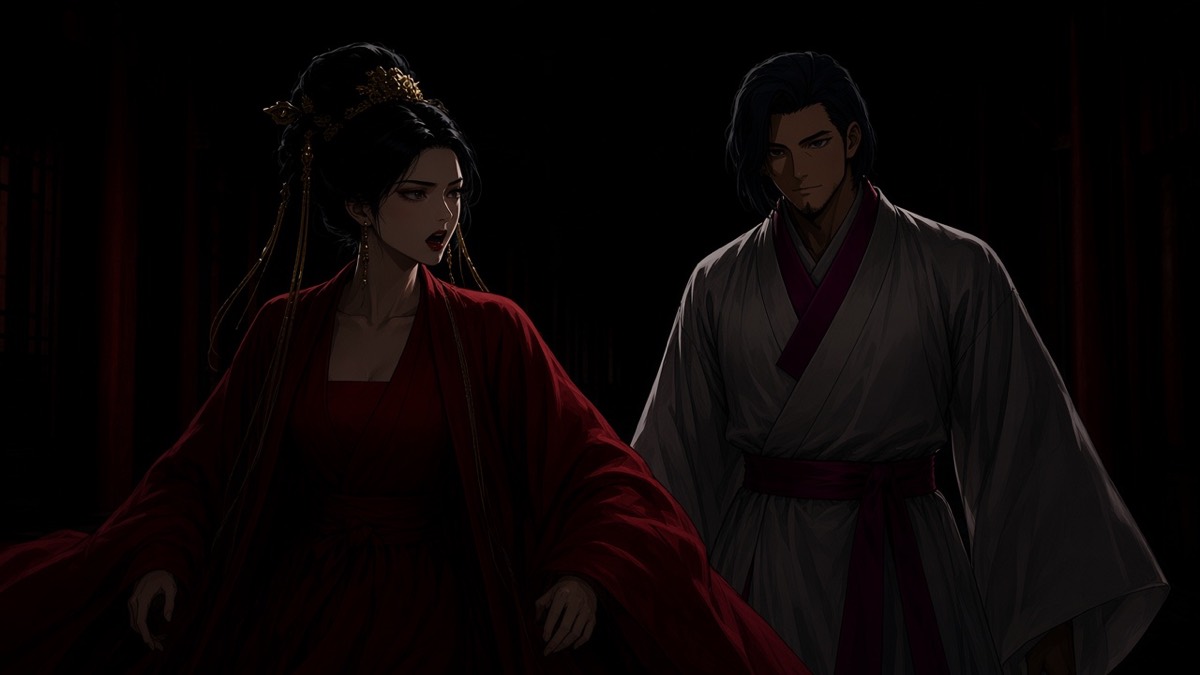
Before the embassy horses leave , a woman from the emperor’s household asks for a moment that is not on any schedule. The clerks pretend not to see. That is how courts invent privacy.
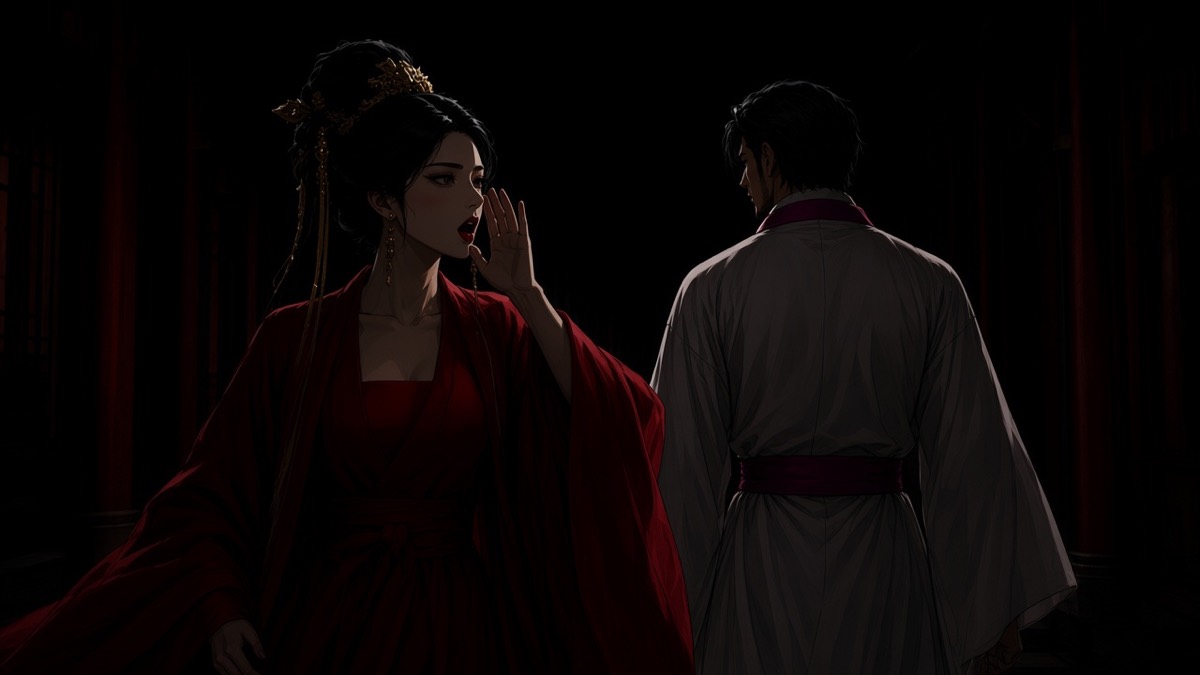
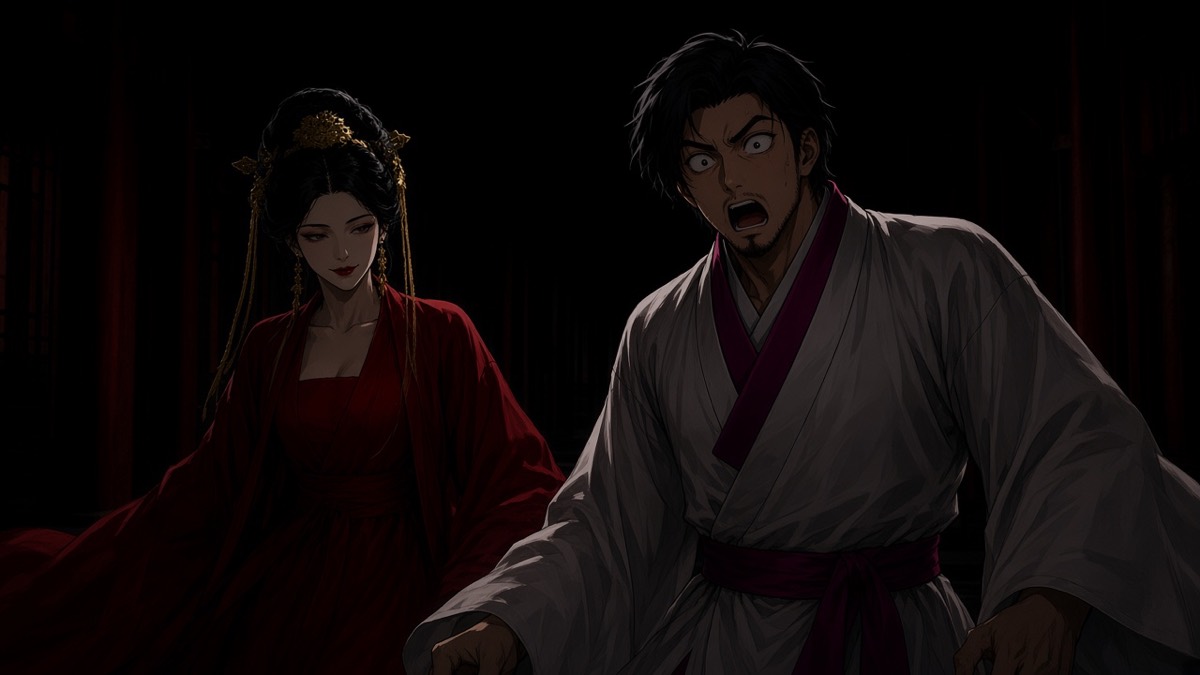
He turns in the dark.
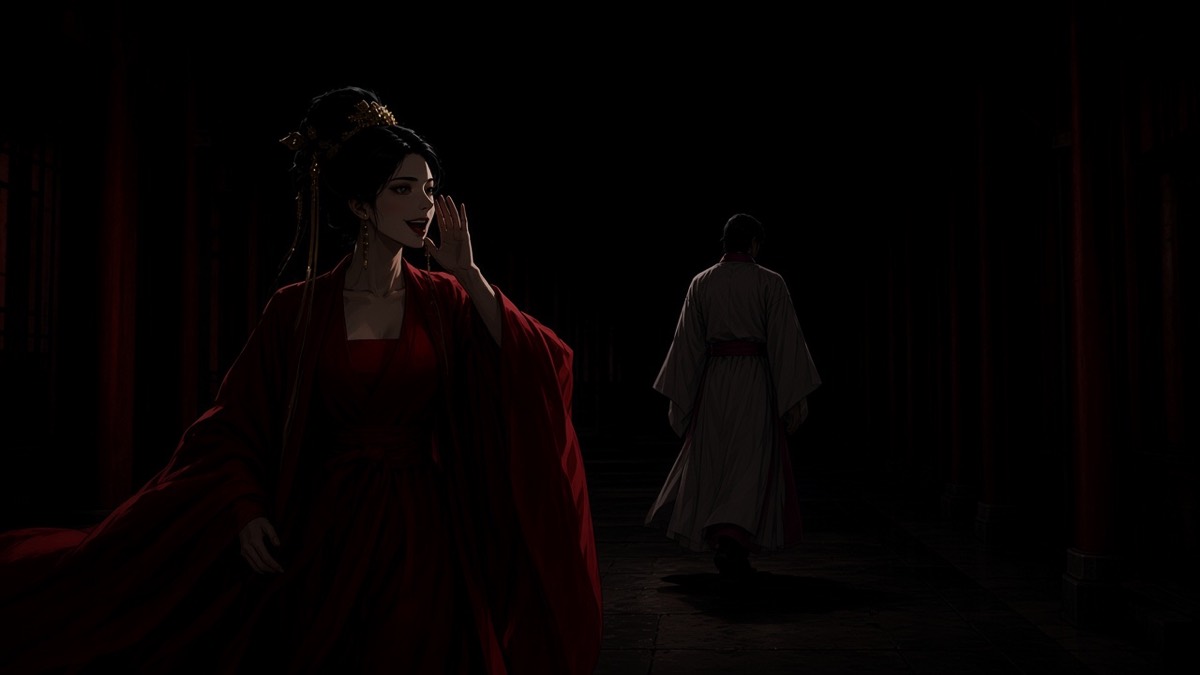
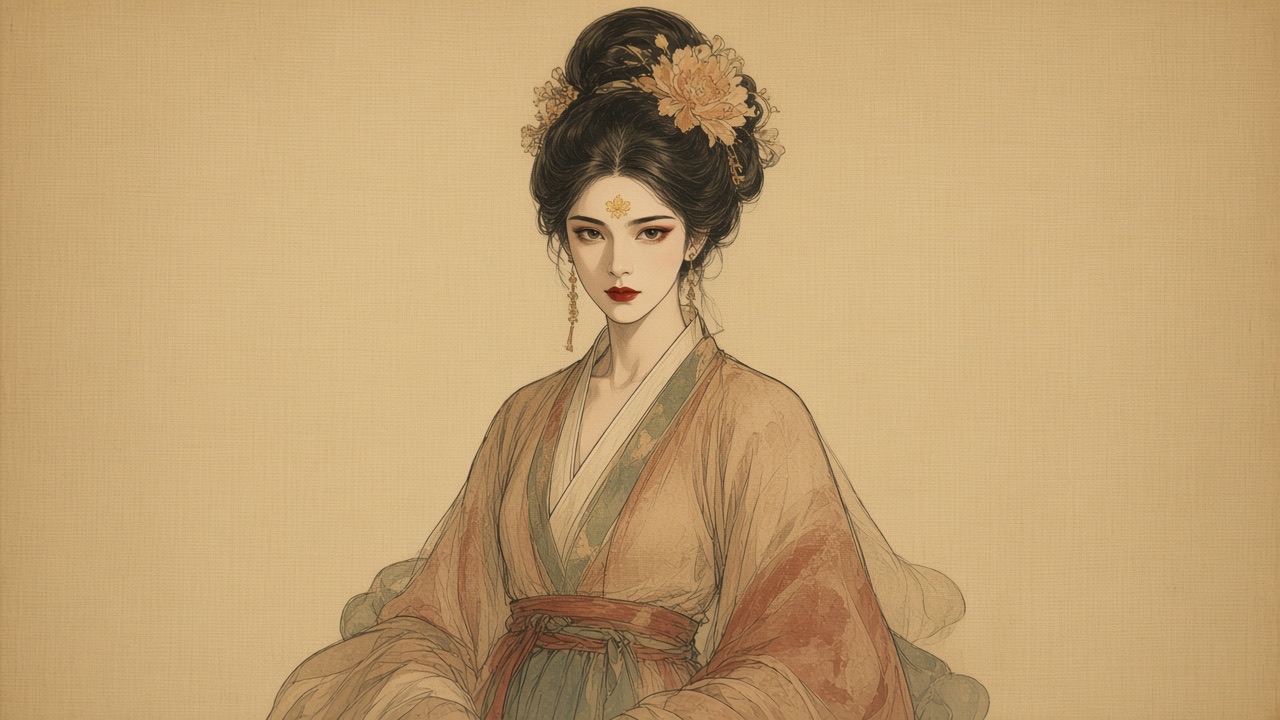
Whatever she says takes less than a breath. When she draws back she is still smiling — the social smile of a woman who could host a banquet or end a lineage with the same mouth.
gets as far as the next courtyard. A eunuch is waiting there with a lamp, as if someone had told him exactly how fast a frightened prince walks. The emperor is not asleep. The go board is out.
They play without talking. takes the far corner again. This time the emperor lets him have it.
The room does not react, because the room does not understand what has just happened. Only two men in it do.
No law forbids what he has just done; something older and more total than law forbids it. He has handed a foreign prince the one thing his own sons cannot say out loud.
makes the joke because he can feel the man needs to be laughed with, now, or the moment will curdle into something neither of them can carry out of the room.
On the last morning rides down to the Mingde Gate himself, which crown princes do not do.
At the gate does not bow like a foreign guest. He bows like a man watching his younger brother try on a coat that will never come off.
says it the way a man says a prayer he has been saving.
He leaves with the alliance sealed and his son still inside the wall. The gates do not ask who was afraid.
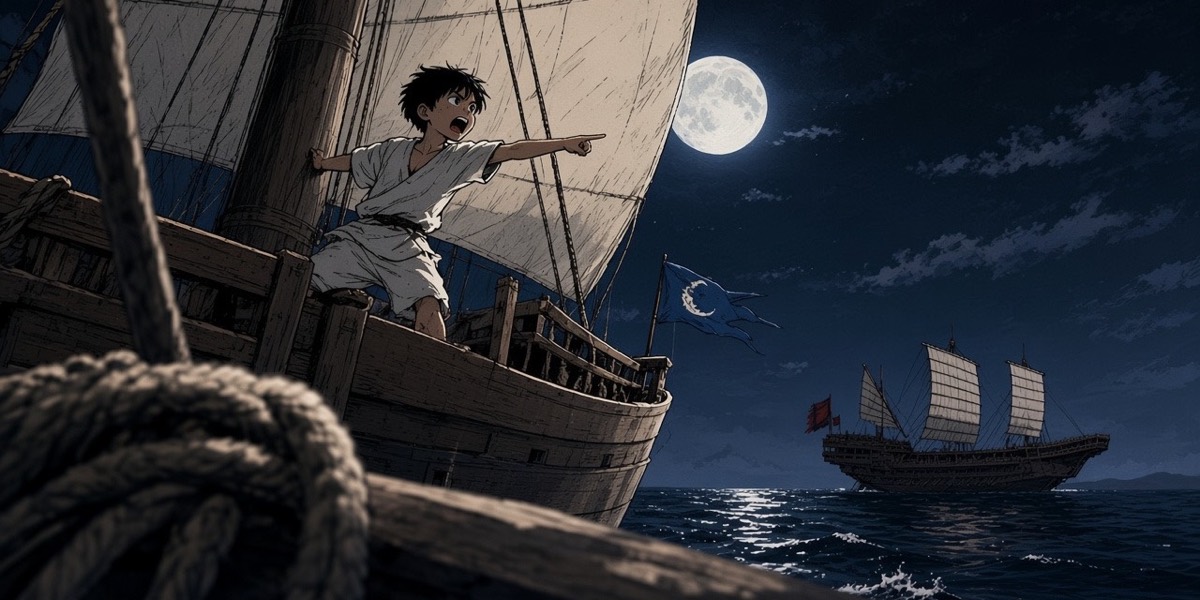
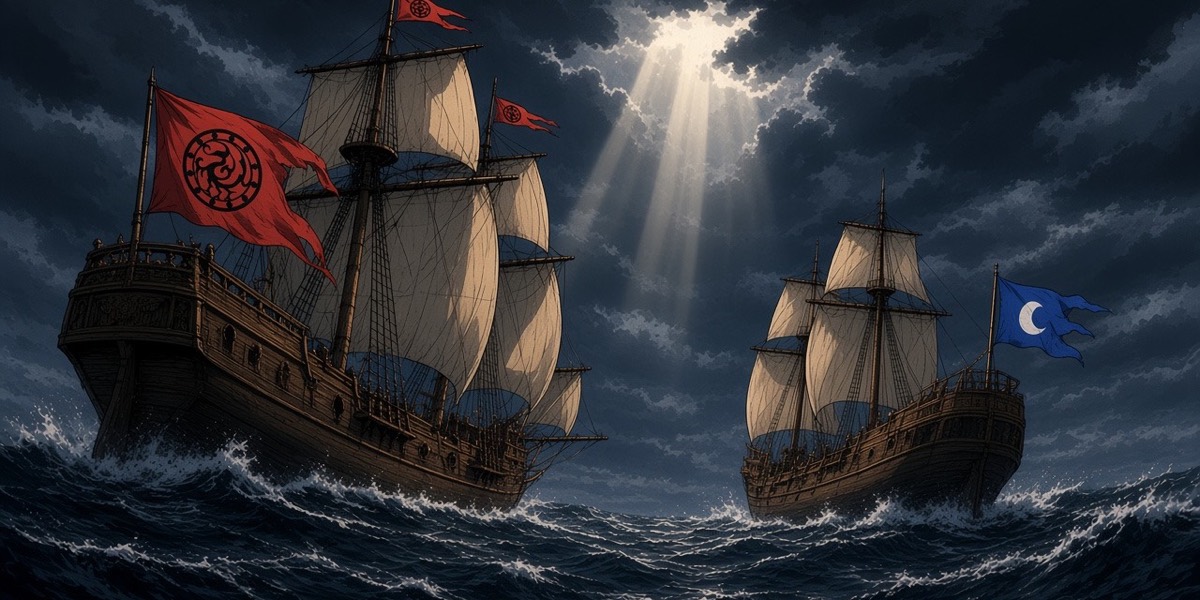
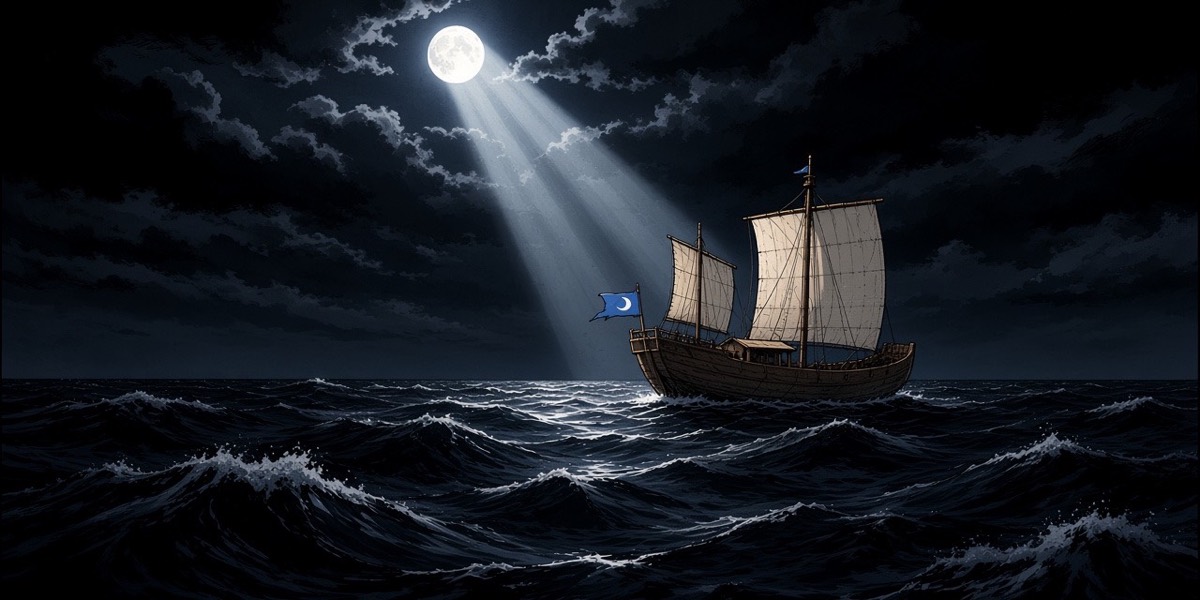
A day out to sea, under a full moon, the boy at the masthead stops singing. The embassy ship under him is a broad hull: a low cabin, two masts, cream battened sails, one small blue pennant. It was built to carry a man, not to fight.
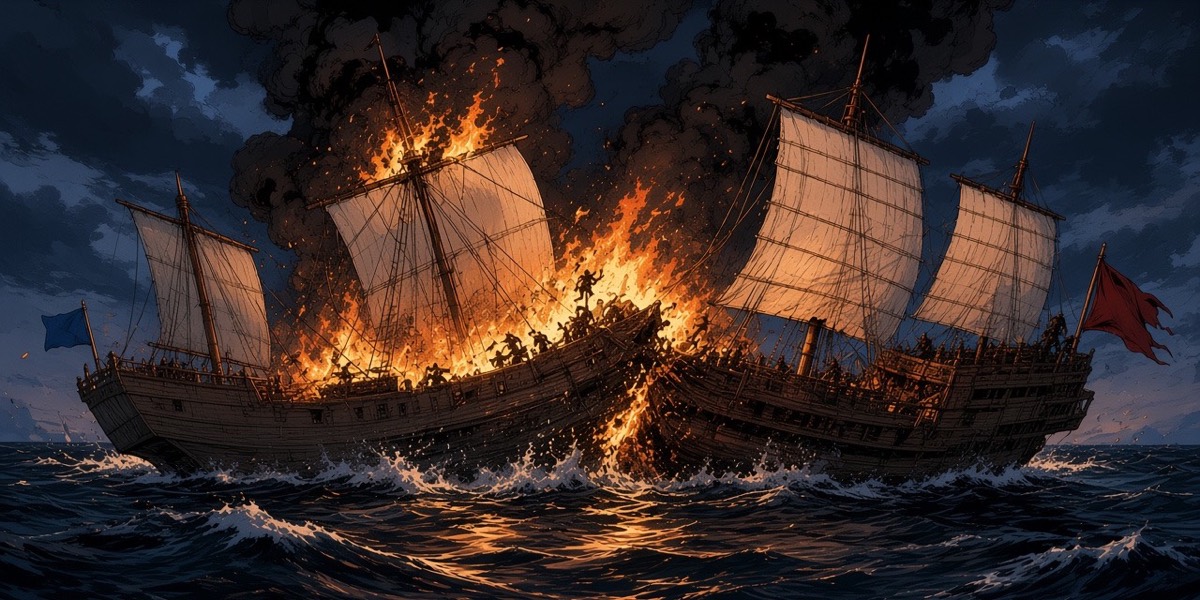
One hull comes up out of the haze behind them, black against the moon. Long, high-sided, an oar-gallery down the flank, a stern castle, three masts of cream battened sail and red banners at the stern. It was built for exactly this.
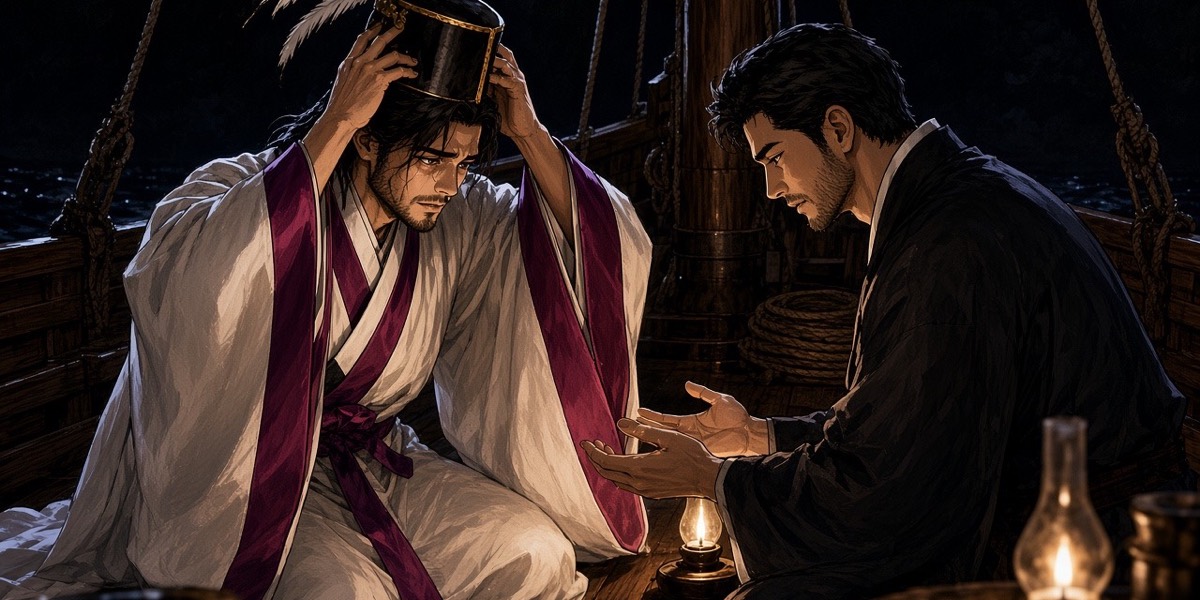
On the embassy ship’s stern deck sits a man in white and purple, the coat of a envoy, the high feathered cap on his head. He sits high, where the mast makes a chair of shadow. He does not wave. He does not go below.
The chase runs into the small hours. The embassy ship’s rowers pull until their palms open. The red banner gains anyway, one oar-stroke at a time, close enough now to hear their drum.
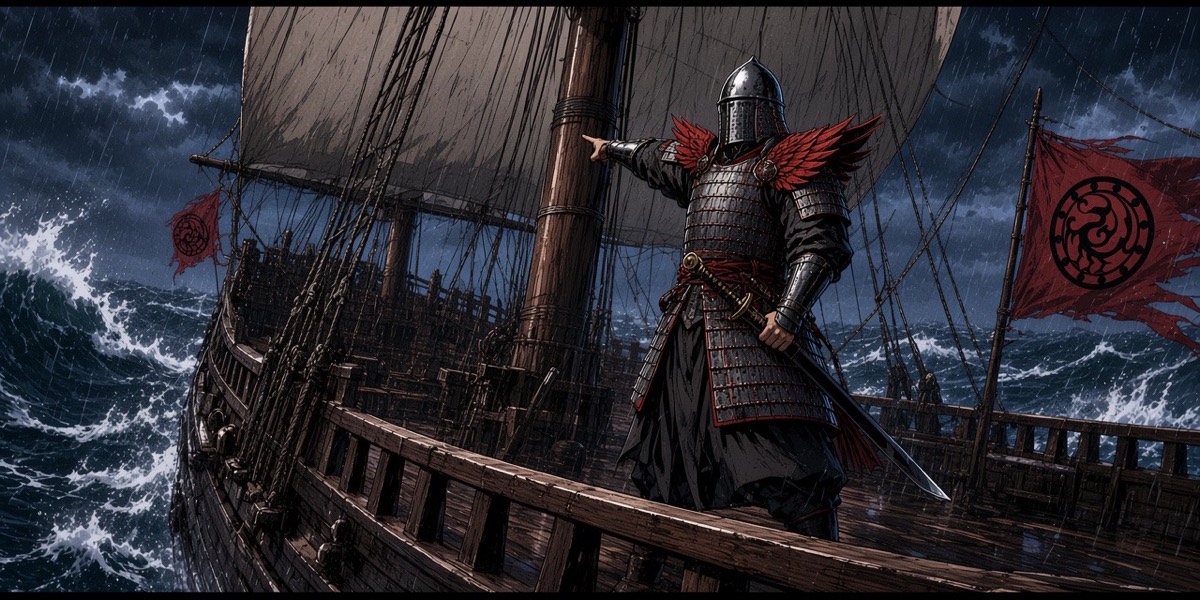
The lead ship carries the commander. Steel lamellar, red wings at the shoulders, the helm shut. One hand on the stern rail. The voice that gives the order is low, and the marines do not look twice.
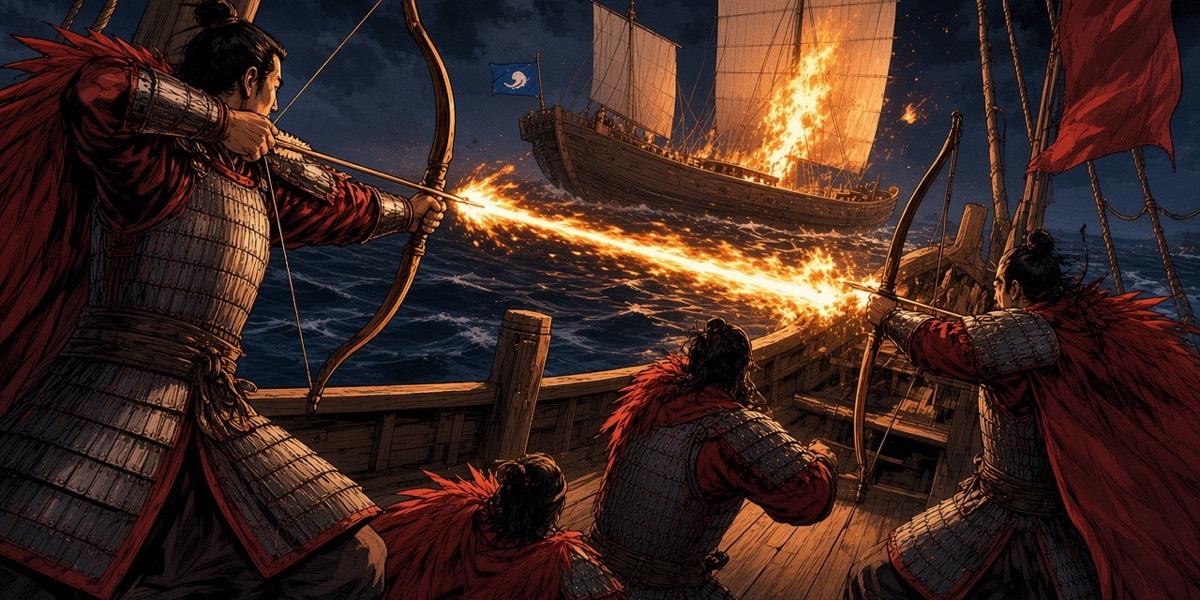
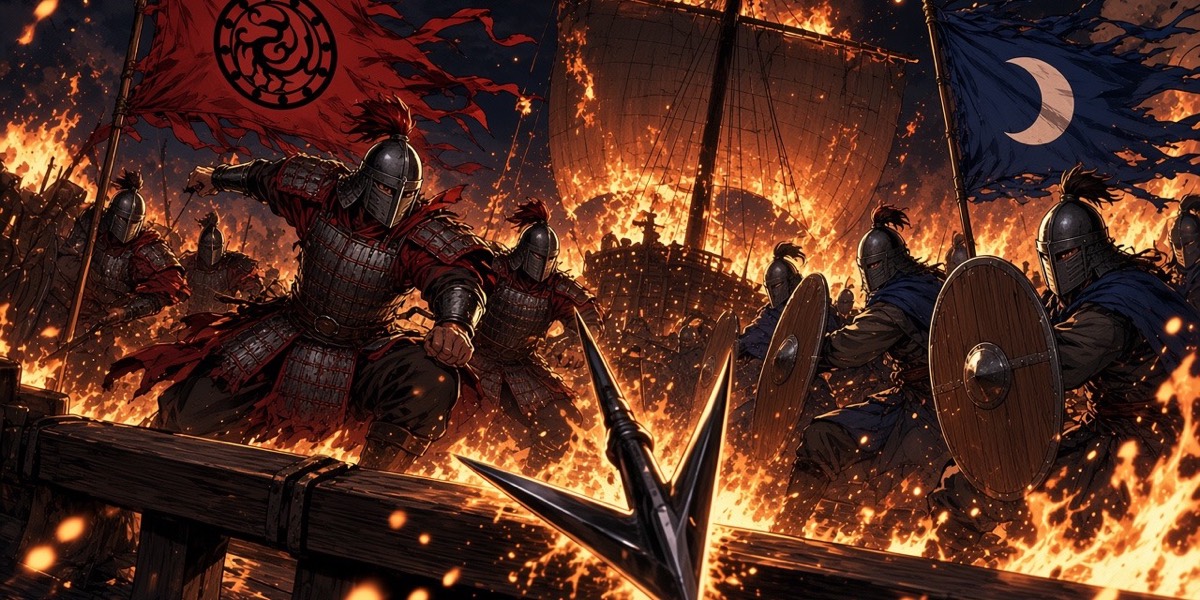
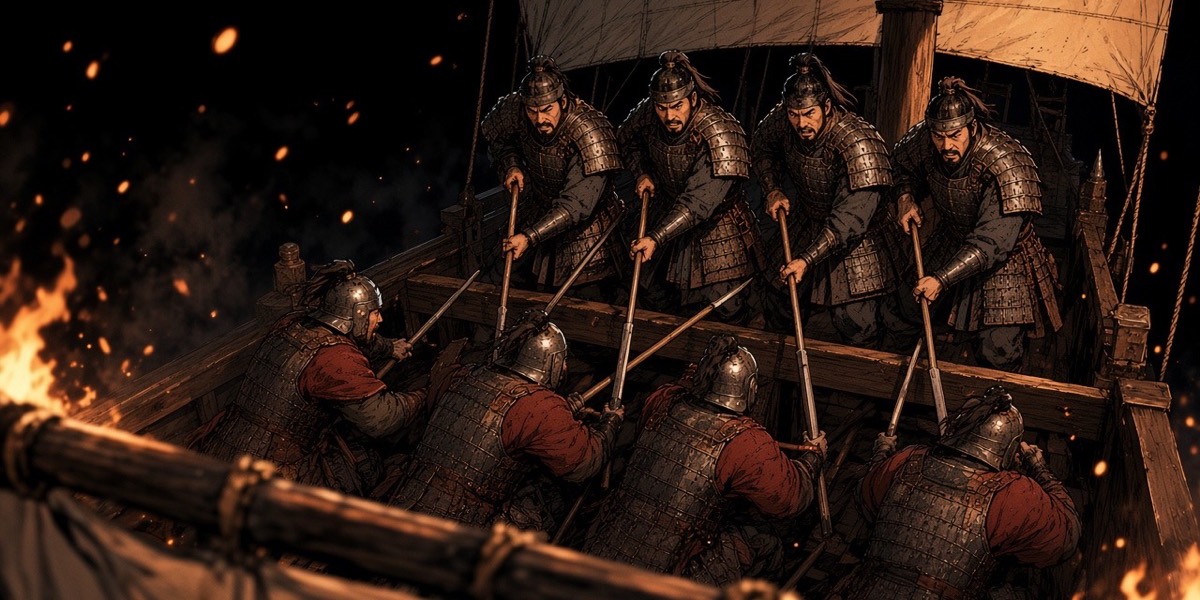
The sky fills. Fire arrows come over the water in sheets, hissing where they fall short. The embassy ship’s cream sail catches all at once and goes up like a torch. sailors beat at the flames with wet cloaks. One climbs the stern ladder, shouting.
The man in the high cap does not answer. He sits very straight. An arrow stands in the rail beside his hand, burning, and he does not look at it.
Iron hooks bite the embassy rail. The two hulls grind together, and comes over the side: marines in steel lamellar to the knee, red cloth wings at the shoulder, spears first and ring-pommel swords behind. meets them at the rail in its own lamellar and tall pointed helms, blue cloth at the collar, shields up. The deck is fire on one side and the sea on the other, and nobody has room to fall.
They hold the stern ladder. They hold it for as long as men can hold a ladder against more men, and then for a while after. Above them the envoy sits in his high cap and watches every one of them die for him, and does not move, and does not say a word.
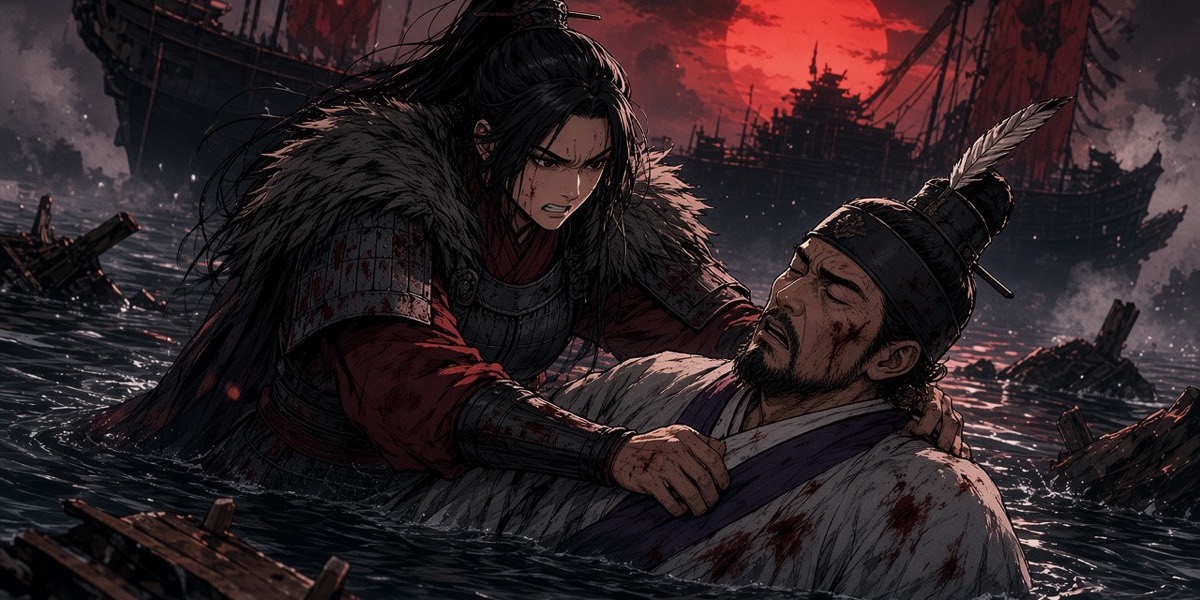
Then the commander takes the helm off. Black hair, bound up, comes loose in the sea wind. She is a woman. The marines who have been taking that low voice all night look once, and then they look at the rail, because looking twice is how you get noticed.
The lead ship comes in under oars and hits the embassy ship amidships. Timber screams. The burning mast comes down across the deck, and the ship rolls, slowly, the way a big thing does when it has decided, and goes over. Fire on the water. The moon goes down behind the wreck, and the sun comes up red behind ’s sails, which is exactly how would have arranged it if anyone had asked.
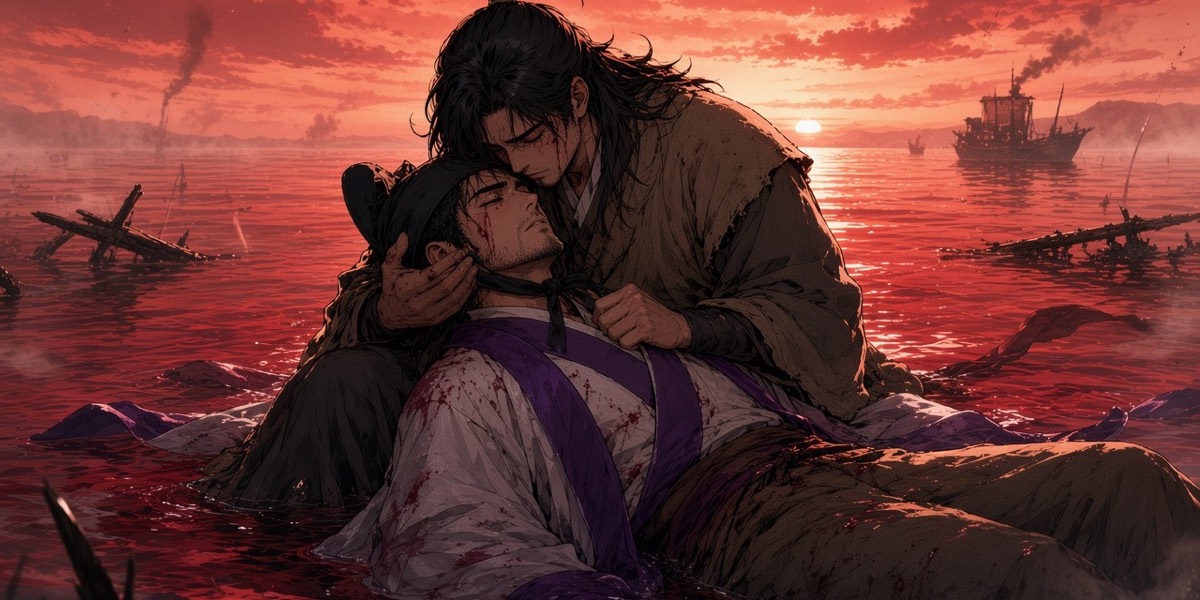
By red dawn they are wading the wreck. The commander goes from body to body herself. She finds the coat first, white and purple, floating face-down among the spars, the feathered cap still tied under the chin. She kneels in the water and turns him over.
It is not the face in the reports. Broader. Older. Bearded. Calm, the way faces are when their owner was expecting this.
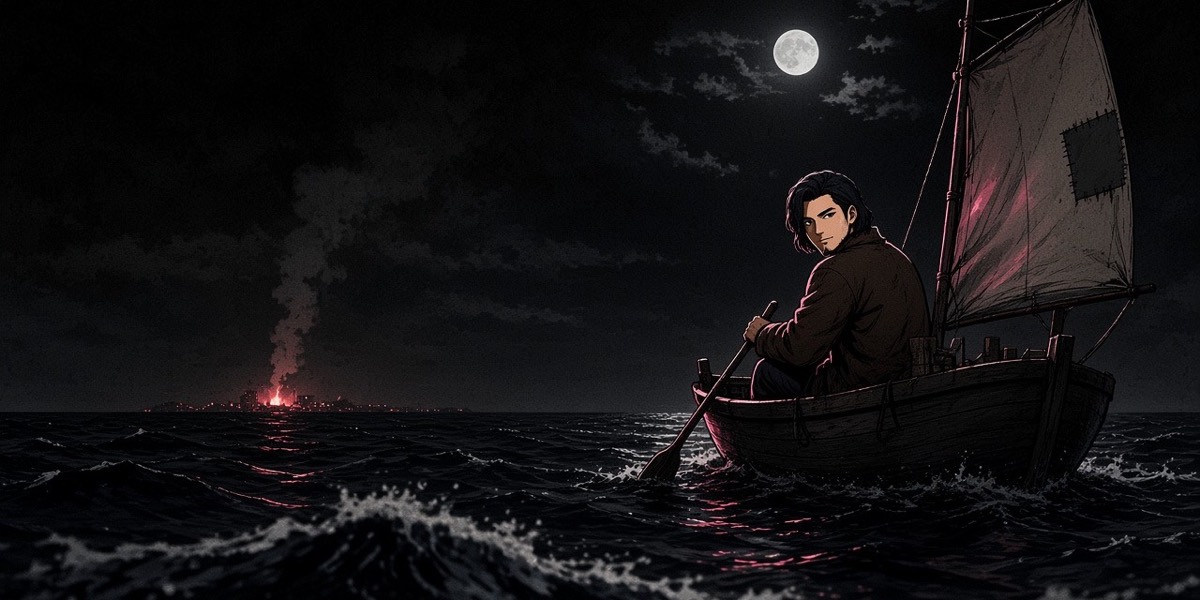
Far to the south, a fishing boat with a patched sail runs for home. Six oars. One of the rowers is wearing plain hemp and rowing badly, because nobody taught him, and because he keeps looking back at the smoke on the horizon. Ahead of the boat, low over , the moon is still up, pale and stubborn.
On the fishing boat, the man at the next oar takes off his own coat and holds it out to the envoy without a word. shakes his head. The man keeps holding it out until he takes it. Nobody on that boat has slept, and nobody will row slower than the man beside him.
He reaches the home shore in a boat wouldn’t have bothered to count.
Eleven went in at the drum. is still inside the wall. is wherever the patrol left him.
Back in , the emperor is still coughing into his sleeve. Somebody should tell the six stone horses to get ready…!
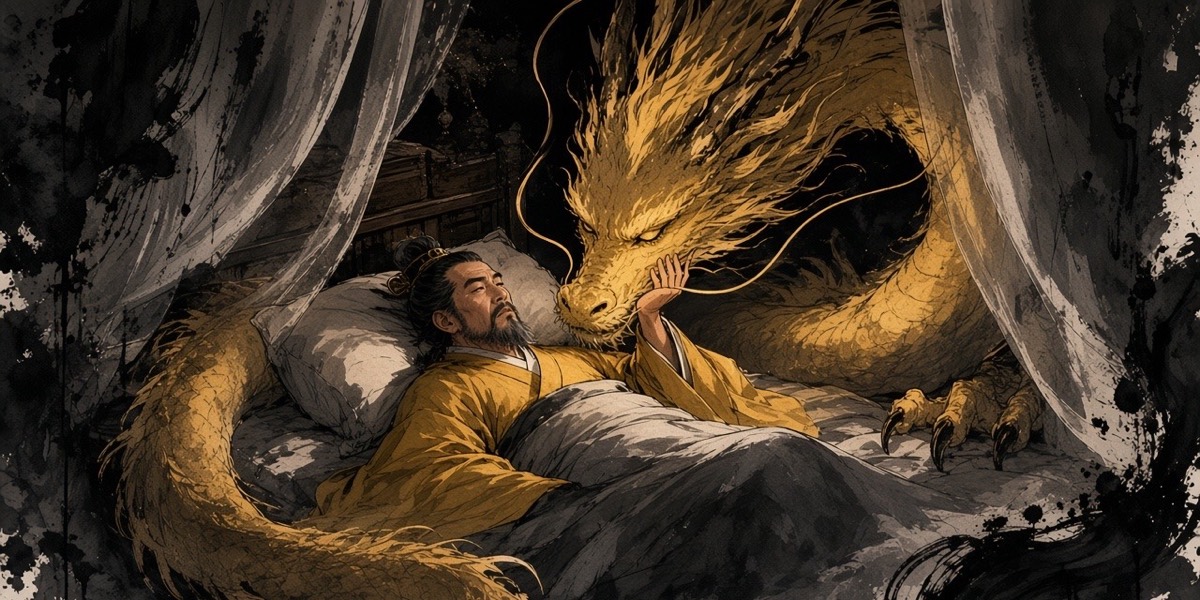
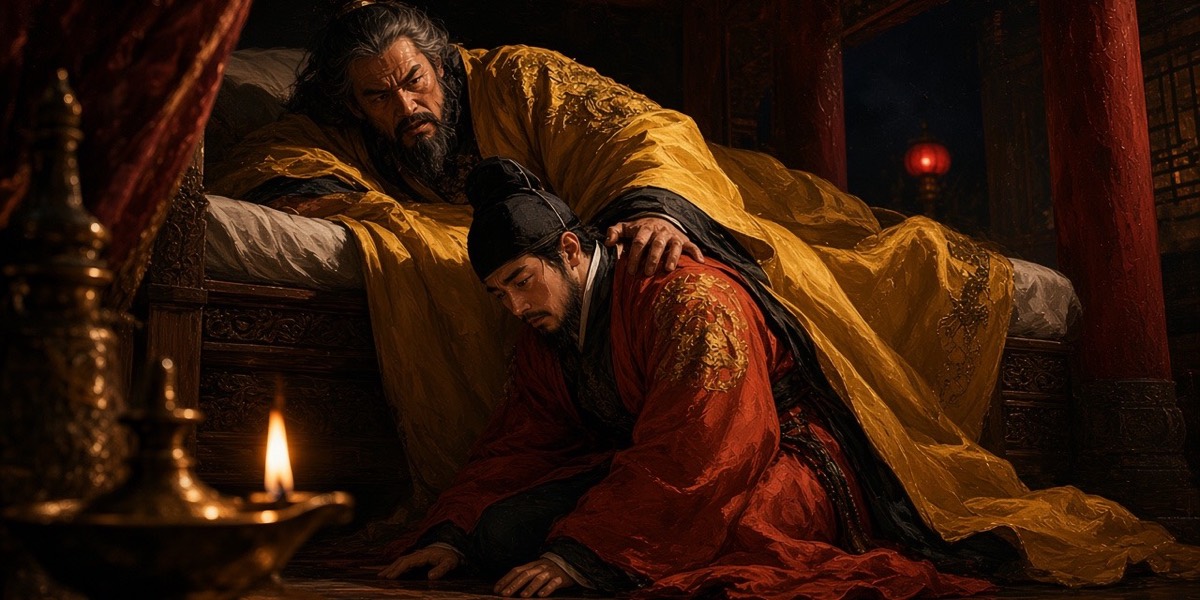
The is dying the way he did everything else: in front of witnesses.
The crown prince holds a hand that used to lift a lamp to stone horses. It has nothing left to lift. It still gives orders.
The emperor dies in the Cuiwei Palace in the fifth month. He is fifty-one. The room is kept too warm, and the silk on the bed is the colour of late wheat.
“The carriage collapses.” Nobody in Chang’an may say the emperor died. Kings die. The Son of Heaven’s carriage simply falls, and the whole empire is meant to hear it land.
The crown prince has been sitting since before dawn. He is twenty-one. He has the shoulders for the armour and not yet the face for the title. When the breathing stops, he does not move for a long time — long enough that the ministers begin to look at one another instead of at the bed.
Someone touches his elbow. Someone else is already writing. The empire does not wait for grief to finish its sentence.
The court kneels, and the young man rises — the same hands that would not leave the bed now accepting the seal, the edict, the yellow silk that means has a new centre.
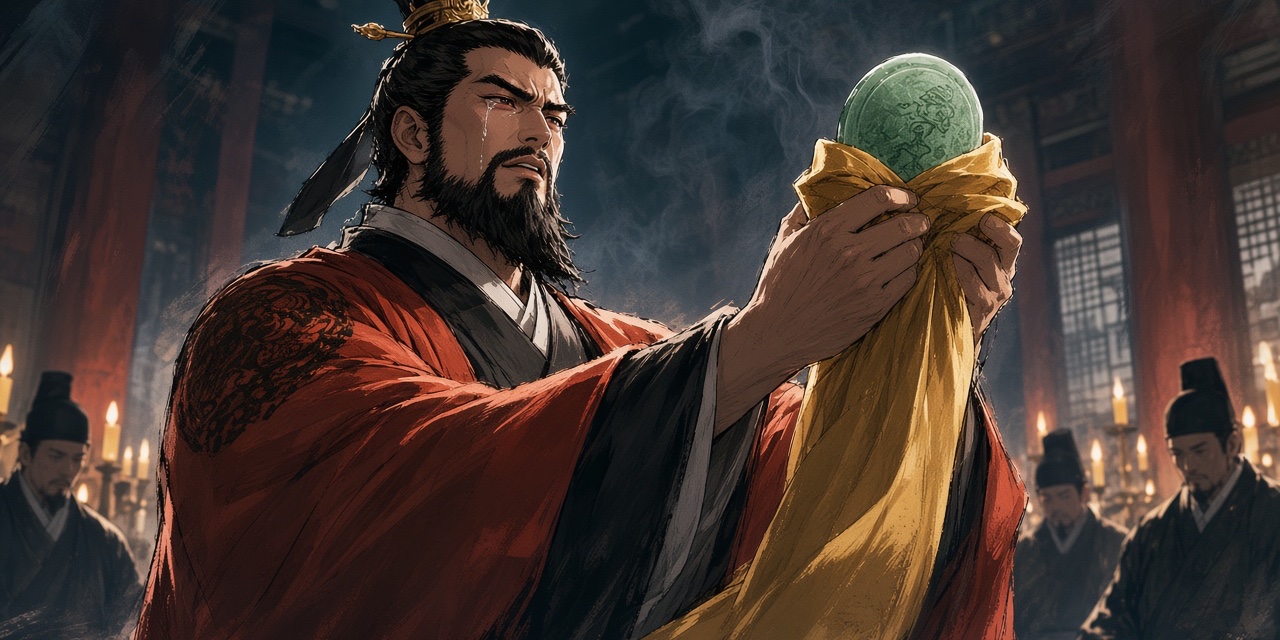
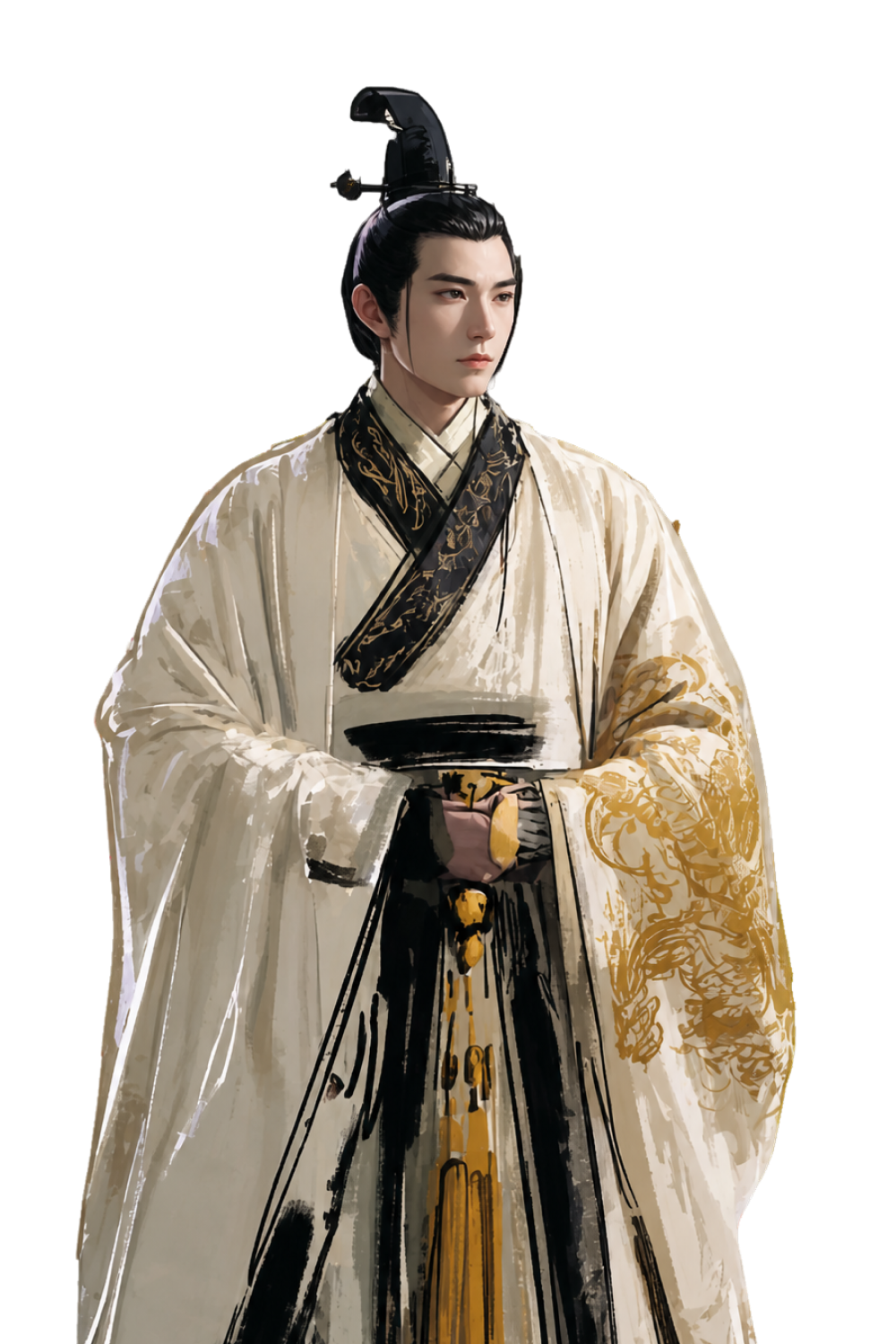
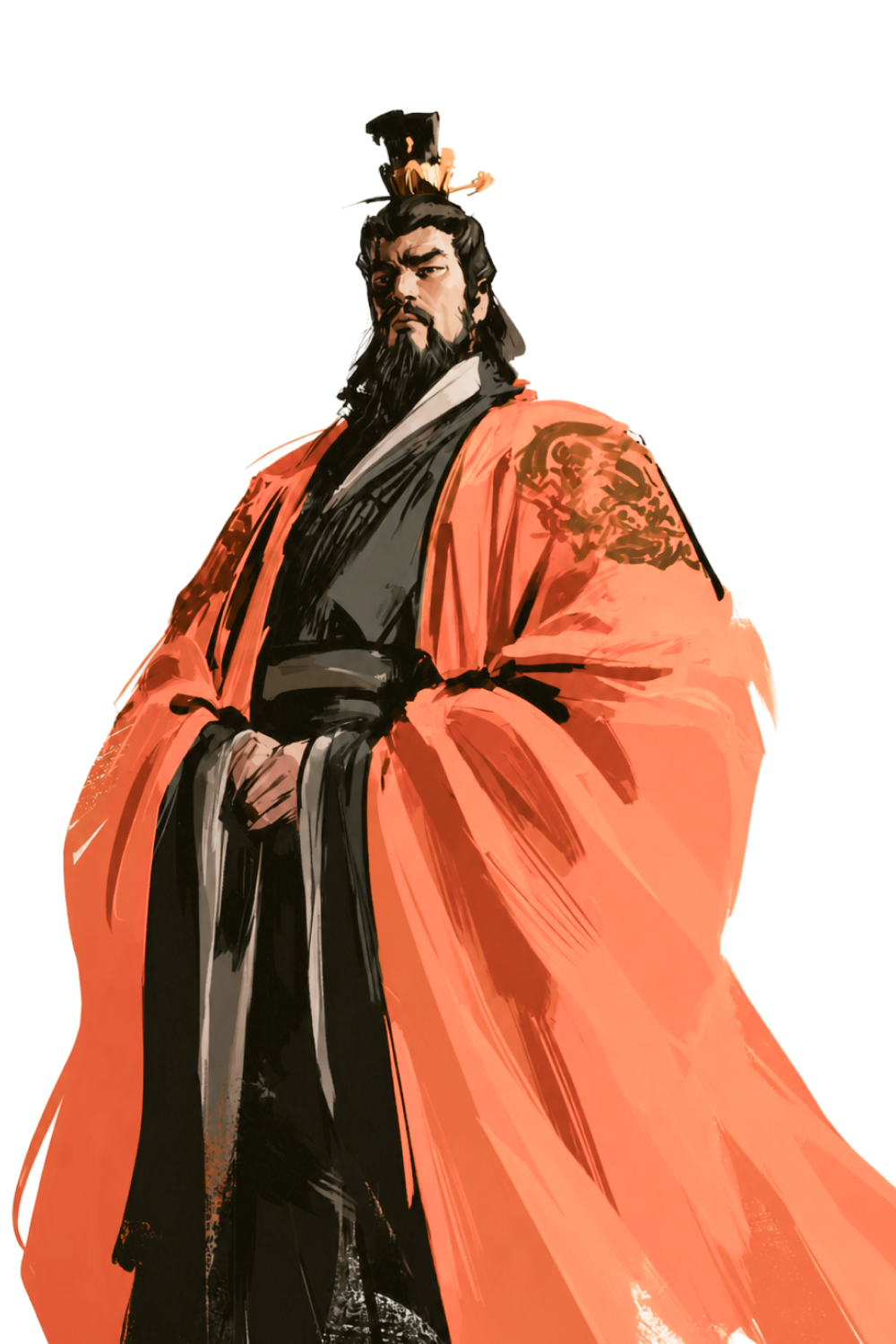 Third Emperor
He does not say I. He says the word that empties a man of his own name. The hall answers like a single throat.
The will is long on mourning and short on everything else, except one line, which the new emperor reads twice. The war in Liaodong is to stop.
The great emperor is given a temple name — . The clerks write it in the register and close the book.
Eighth year, summer, fourth month: * of died. His testamentary edict called off the Liaodong campaign.
8년 여름 4월, 당 태종*이 죽었다. 유조로 요동의 전역을 그만두게 하였다.
- * is the temple name gave him after death. In this book he is .
The empire is told how to grieve. The edict fixes the days of mourning by rank, and at dusk in every ward of the ward chief walks the lanes and listens at the doors, to be sure the weeping inside is of the proper length.
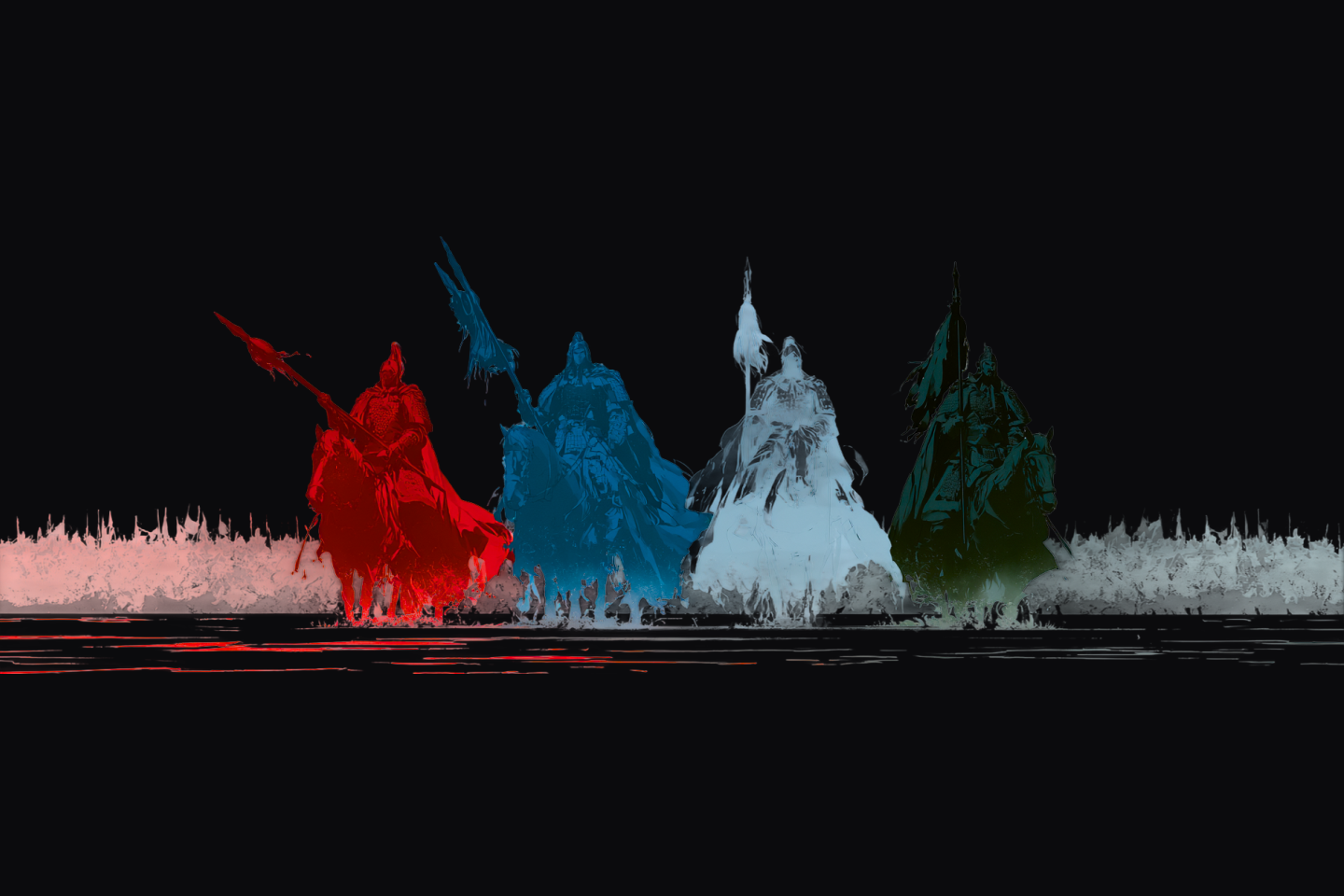
Two of his dragons, the Red and the White, both of them , petition to be killed and laid beside him, to guard the tomb the way the six stone horses will. It is the highest loyalty the steppe knows. The court is moved. The young emperor reads the petition twice.
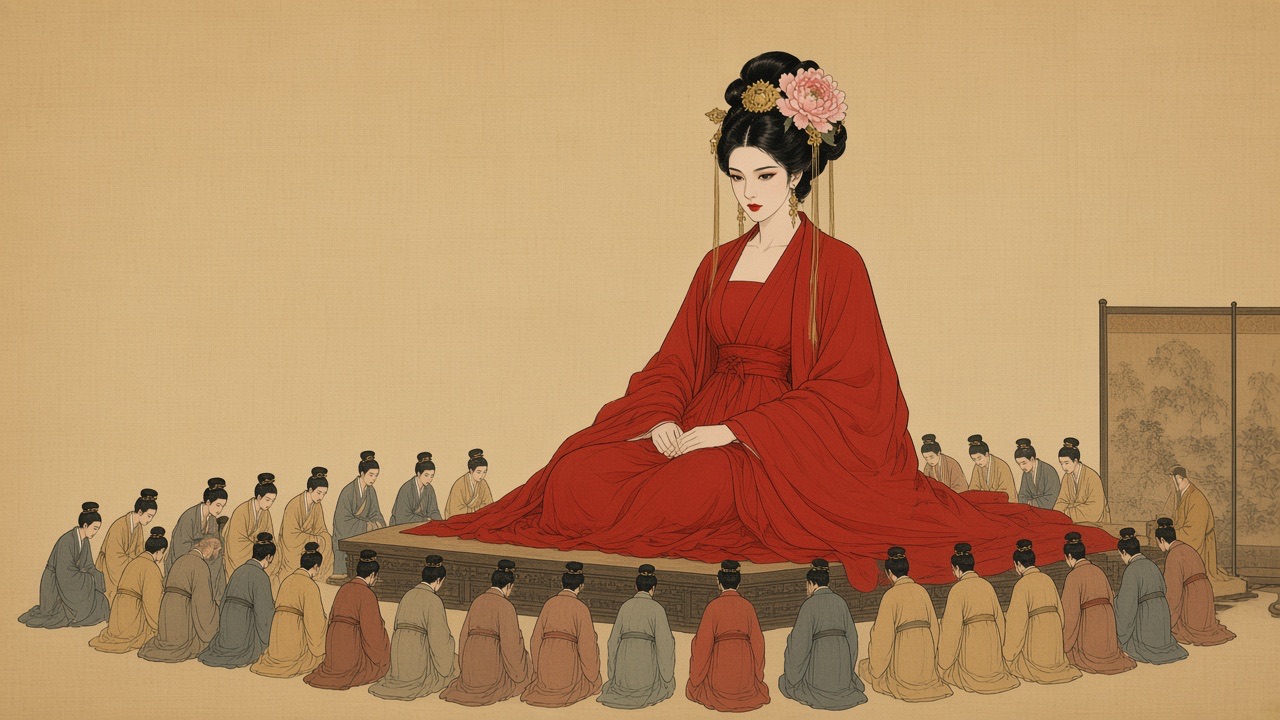
In an anteroom a young concubine waits with the other women who must not be seen grieving too loudly. Her name is not yet heavy. Her attention already is. She watches how a seal moves from a dead hand to a living one — and files the lesson where ambition keeps its dry goods.
The late emperor’s women who bore him no children are sent to the Ganye Temple, to shave their heads and pray for him for the rest of their lives. Wu goes with them.
A year later, on the anniversary, the new emperor comes to the temple to burn incense for his father. A nun in grey looks up at him from the second row, and does not look down again.
The news is on the water. Two hwarang are on it too, going the other way…!
