








Chapter 75
Hwangsan Field



AI Summary
- Yellow Mountain Fields Hundred-Victories gets to the Yellow Mountain Fields first and picks his ground.
- Dukmul Island That summer he sails east with a hundred and thirty thousand men and anchors off a small island.
- Gumdol Fortress The king rides as far as a hill fort and no farther.
- Final Ford On the ninth day, the Western fleet sails into the river mouth at Final Ford.
- The First Clash Silla comes on the first time in three columns.
- The Second Clash The second time Silla does not spread itself across three roads.
- The Third Clash The third time Pumil takes the southern road, where the ground is softest and the right camp sits lowest.
- The Fourth Clash The fourth time Yushin rides at the head of the centre himself, on the white horse, straight up the middle road toward the pass, and meets Hundred-Victories in the gap b…
- Bangul & Gwanchang Humsun calls his son to his stirrup.
- Final Stand Nobody gives an order.
- Gumdol Night King Muyeol has spent the battle forty li behind it, at Gumdol, being told things.
- Characters
Episode· 660
Hwangsan Field
Five thousand men against an empire and a kingdom. Gyebek has already done the arithmetic.
- Gyebek
- Kim Yushin
- Kangrim
- King Muyeol
- Gwanchang
- Red Fowl
- Kim Pumil
- King Euija
- Bangul
3 stills without a cue
can count to fifty thousand. He has done it twice since dawn. The answer has not improved.
gets to the Fields first and picks his ground. Then he waits, for or for arithmetic, whichever arrives with a banner.
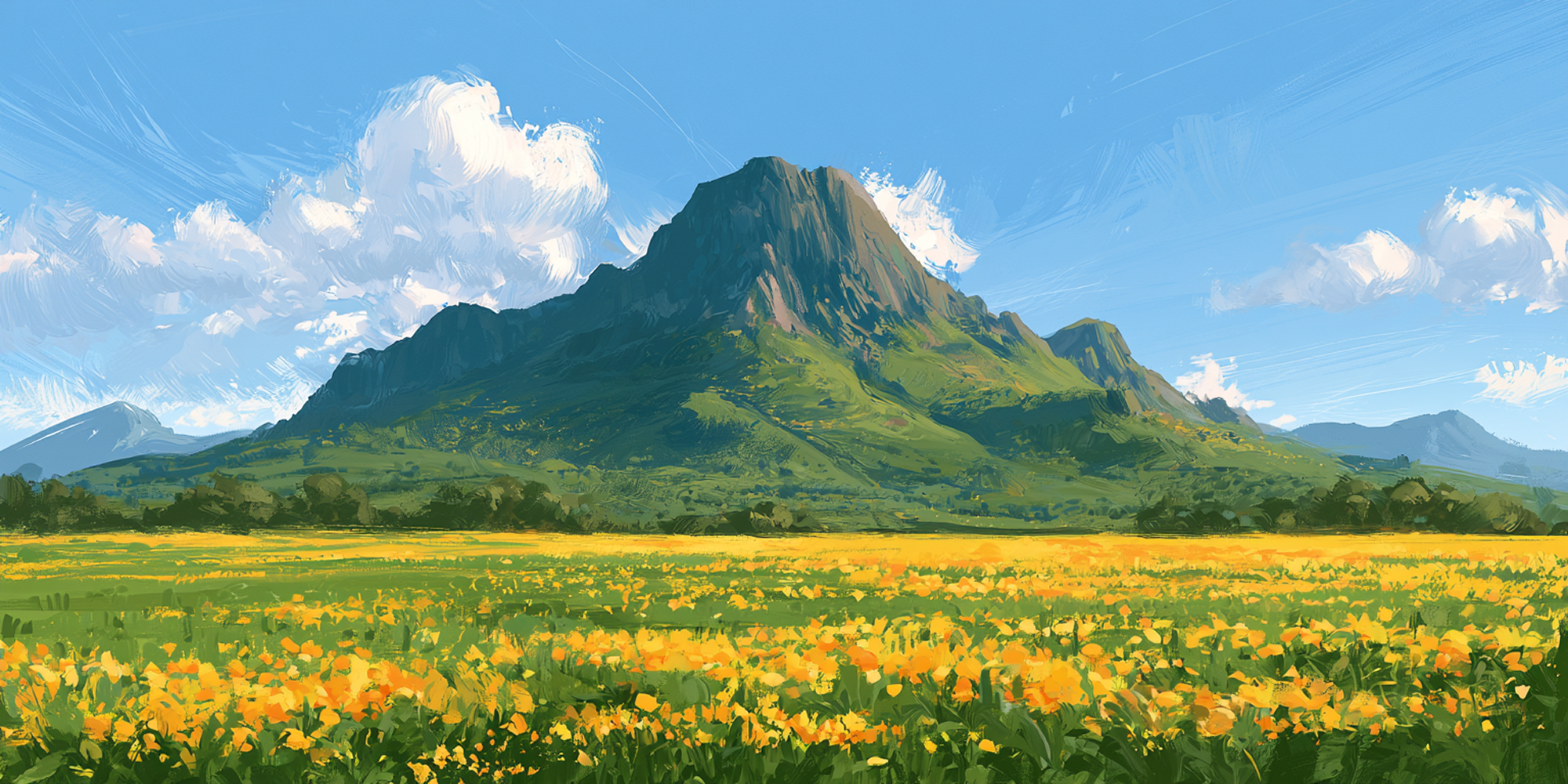
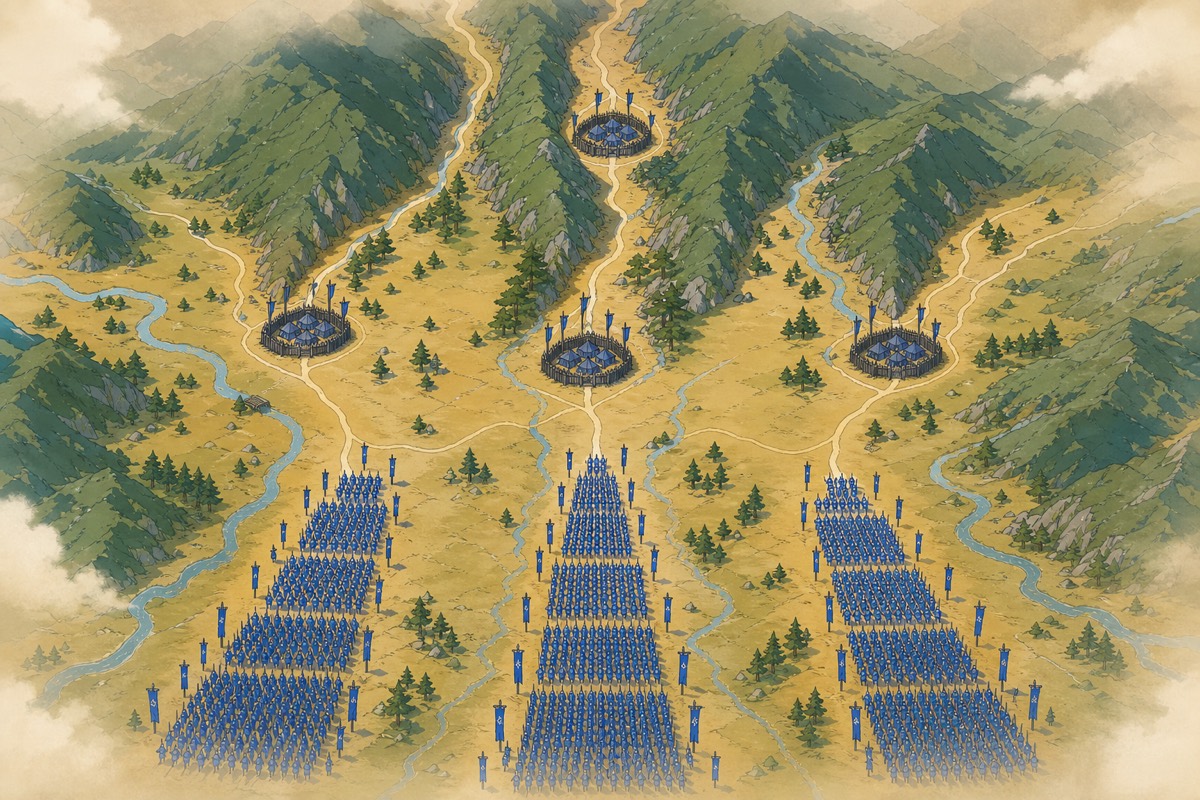
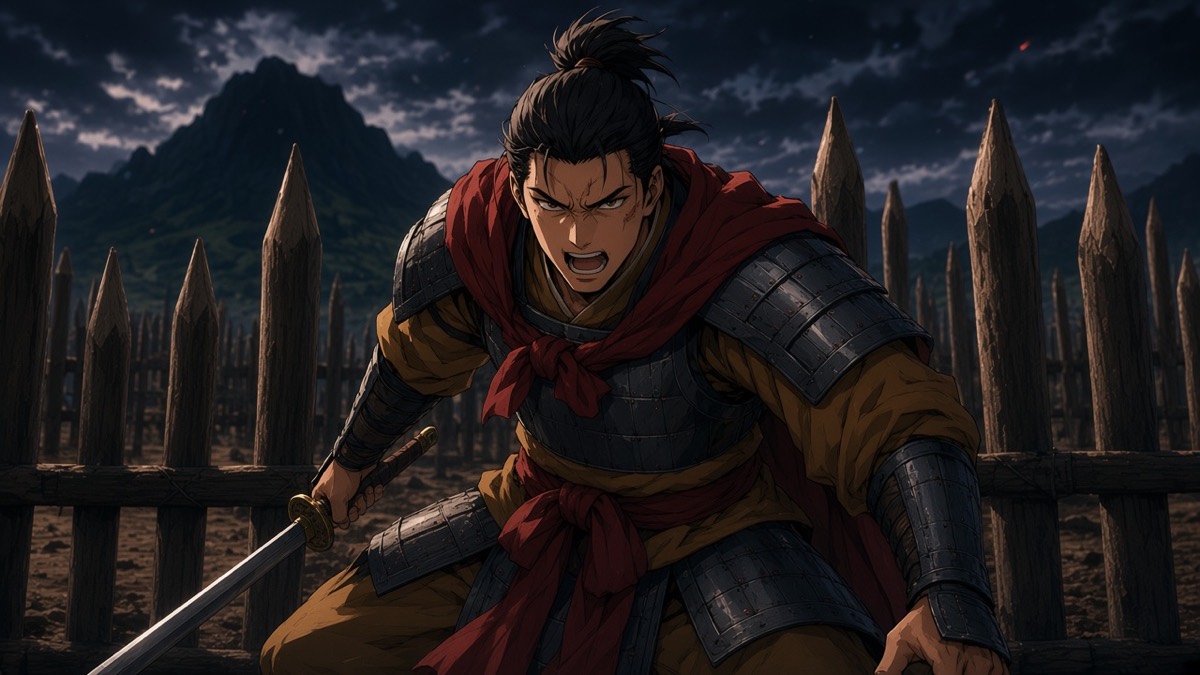
He sets three camps across the three ways in. There is no fourth way in; that is why he chose the place.
He walked the ground for two days before choosing it, in the same direction each time, and he can still tell you the number of paces between the centre camp and the stream.
His adjutant is Sukdal, a ferryman’s son from the bear ferry. He has kept ’s tallies since the border and has never once been thanked for it. He does not expect to start today.

With the men of one country I face the great armies of and , and whether the country lives or dies cannot be known…
한 나라의 사람으로 당과 신라의 대병을 당하니, 나라의 존망을 알 수 없다…
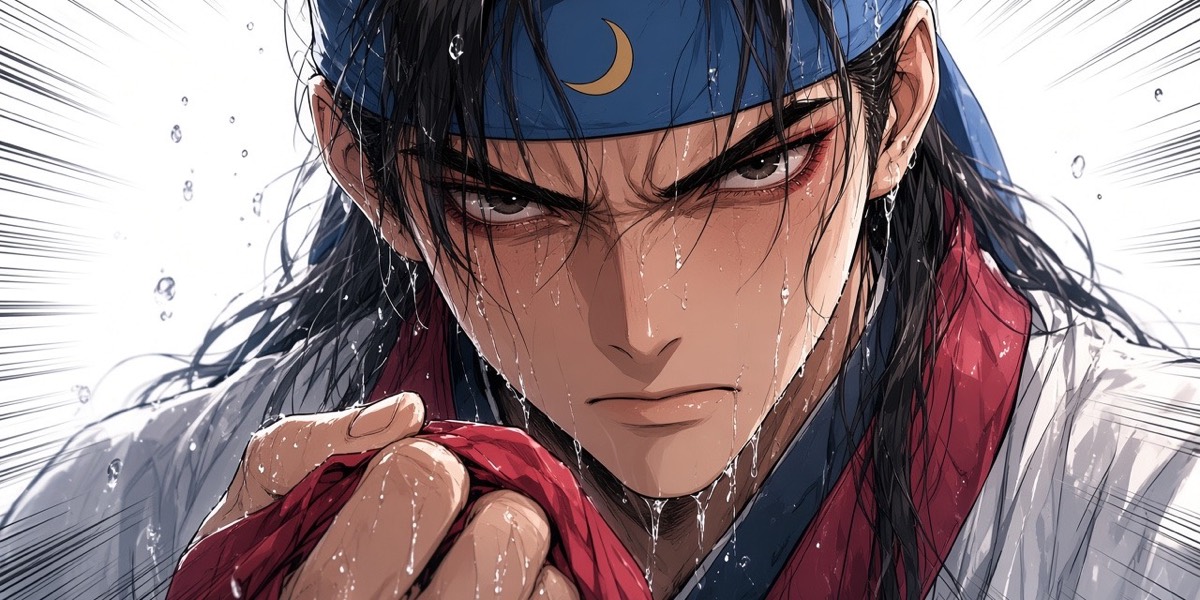
Here is the man the boatmen gave up on. His name is , and he is sixty-five. Three winters ago he took a qaghan’s camp in a blizzard, before anyone in it had found his boots. His regiment painted a red bird on his tent afterwards, and calls him the .


That summer he sails east with a hundred and thirty thousand men and anchors off a small island. A hundred ships come out to meet him. At their head is the crown prince, . He is thirty-four, and trying not to stare at the size of the Western flagship.
is rowed back to his own ship. Behind him says something to his staff that makes them laugh.
The king rides as far as a hill fort and no farther. The field belongs to his son and to . Under ride two more generals. Humsun is his younger brother, with a boy of fifteen in the ranks. has one of sixteen. Fifty thousand men march west with a date in their heads, and between them and the date sits a man called .
On the ninth day, the Western fleet sails into the river mouth at . The shore there is a mile of grey mud. ’s soldiers wait on the high ground. They watch the first the Western companies wade in up to the thigh.

His men lay willow mats on the mud, one after another, a road made of baskets, and the army walks across it dry-shod. By evening the line is broken and the river is open to .
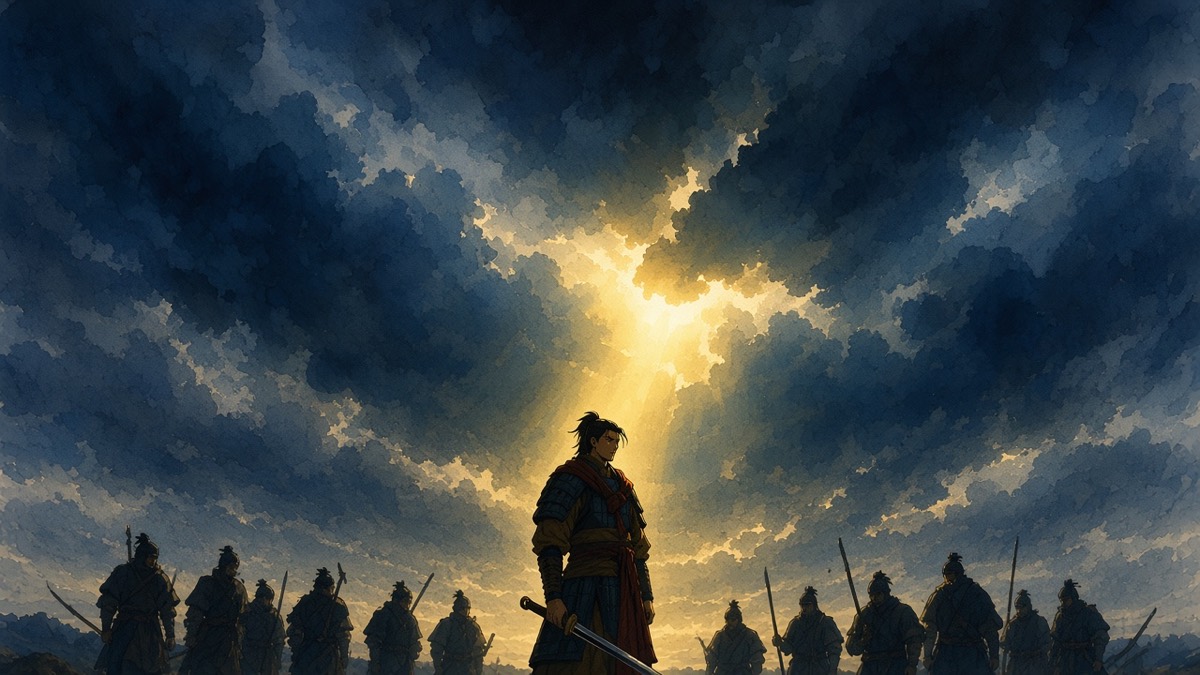
The same morning, forty miles east, the army comes down out of the hills onto the Fields, and finds five thousand men already standing in its way.
From the pass, watches the dust come off the eastern hills. It splits three ways, one cloud to each road, as if it had seen his map.
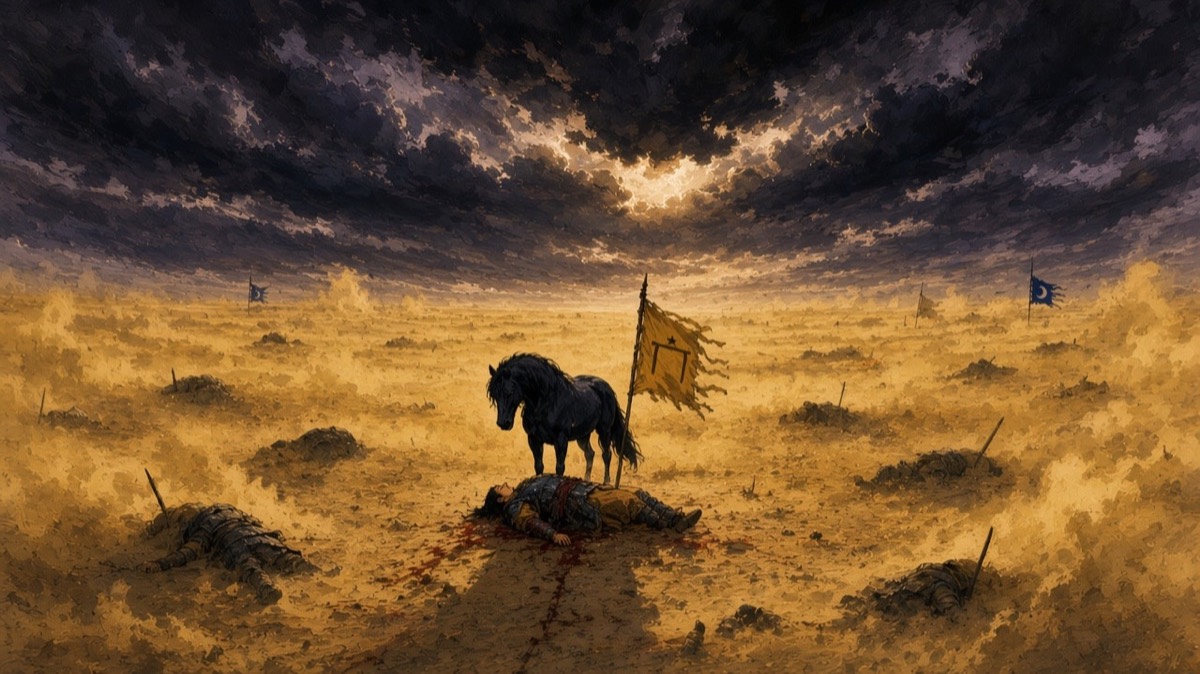
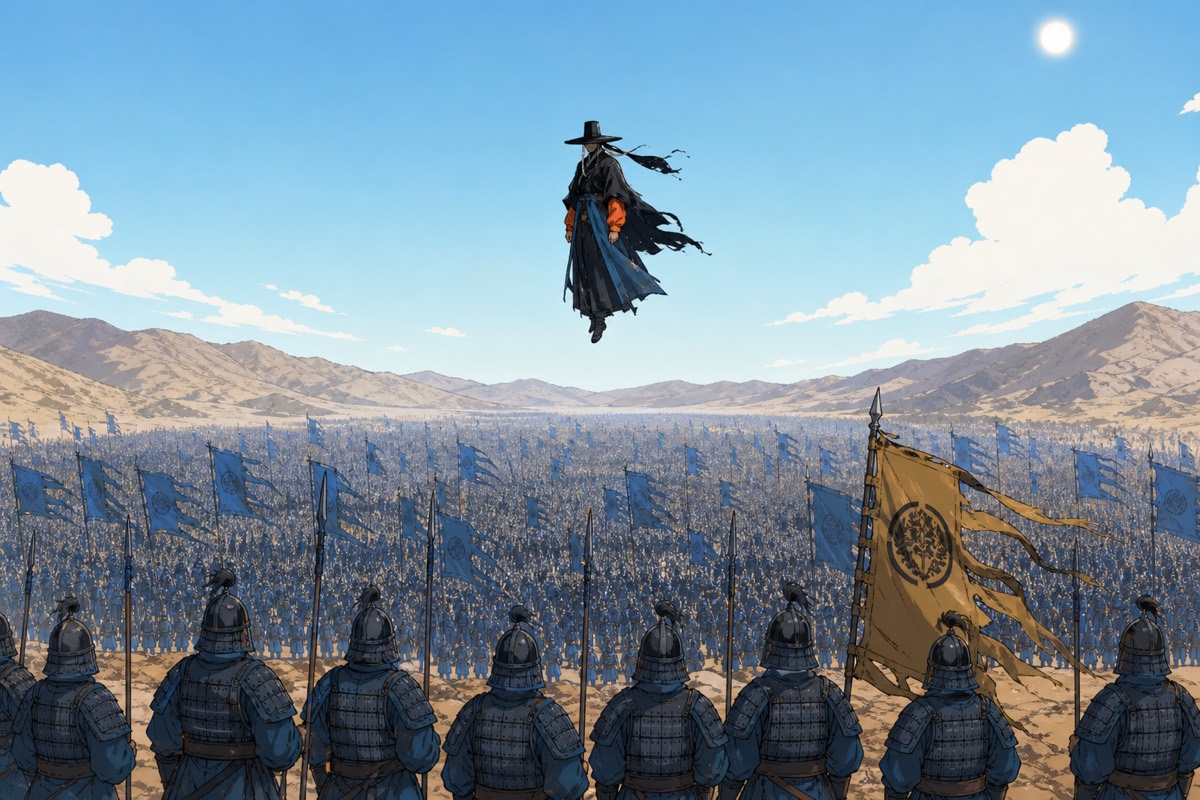
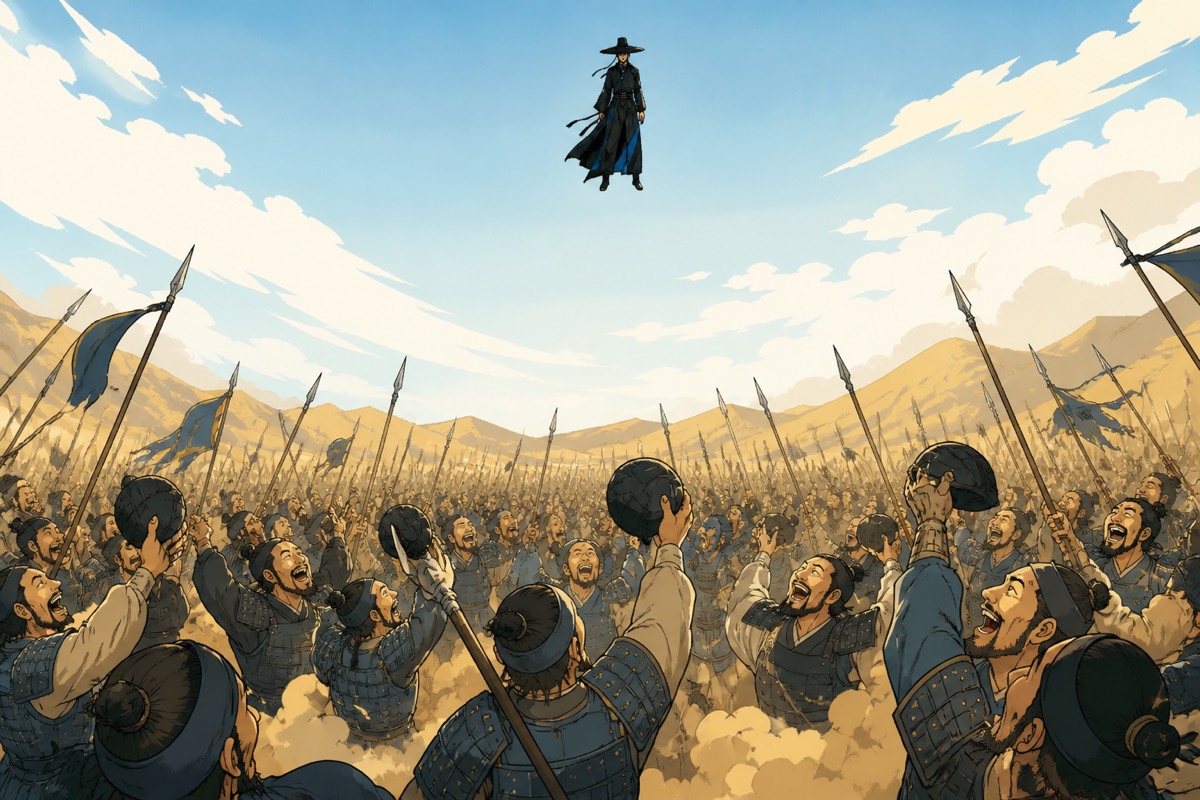
Then the air above the does what air should not. hangs there in plain day — visible not to one dying man but to all five thousand at once. They have already finished negotiating with life.
They cheer. They wave. Someone shouts a greeting as if ’s escort were a popular general arriving late to his own war. , who has collected kings with less fuss for His Majesty, actually blinks.
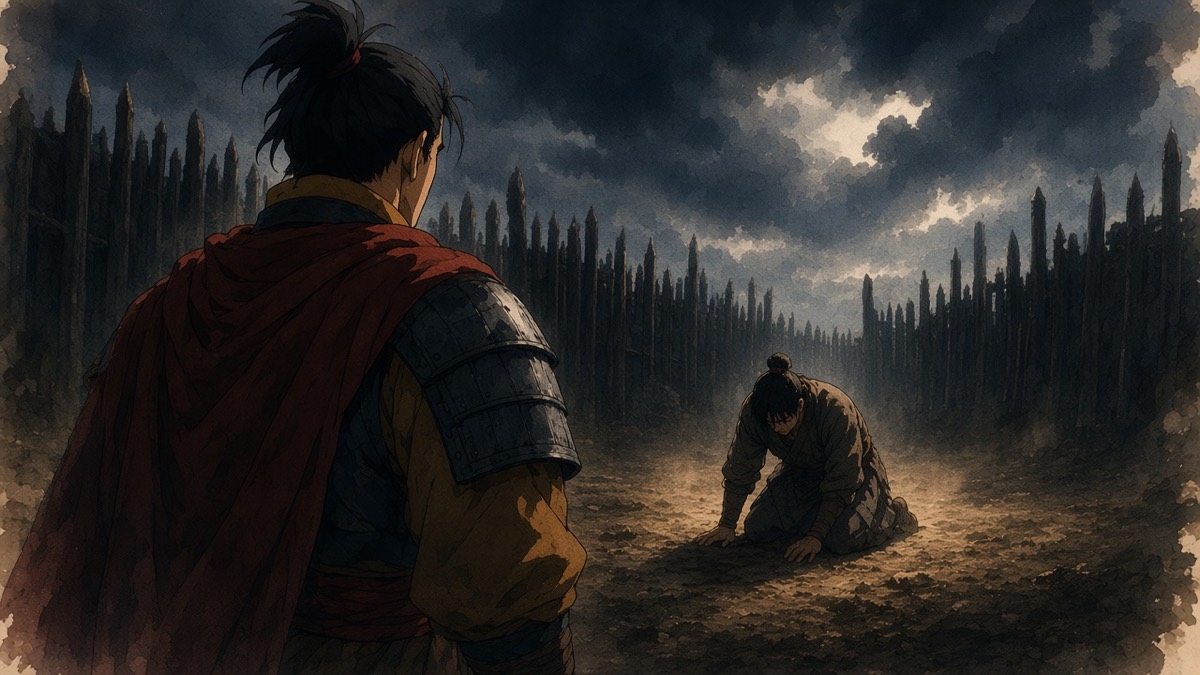
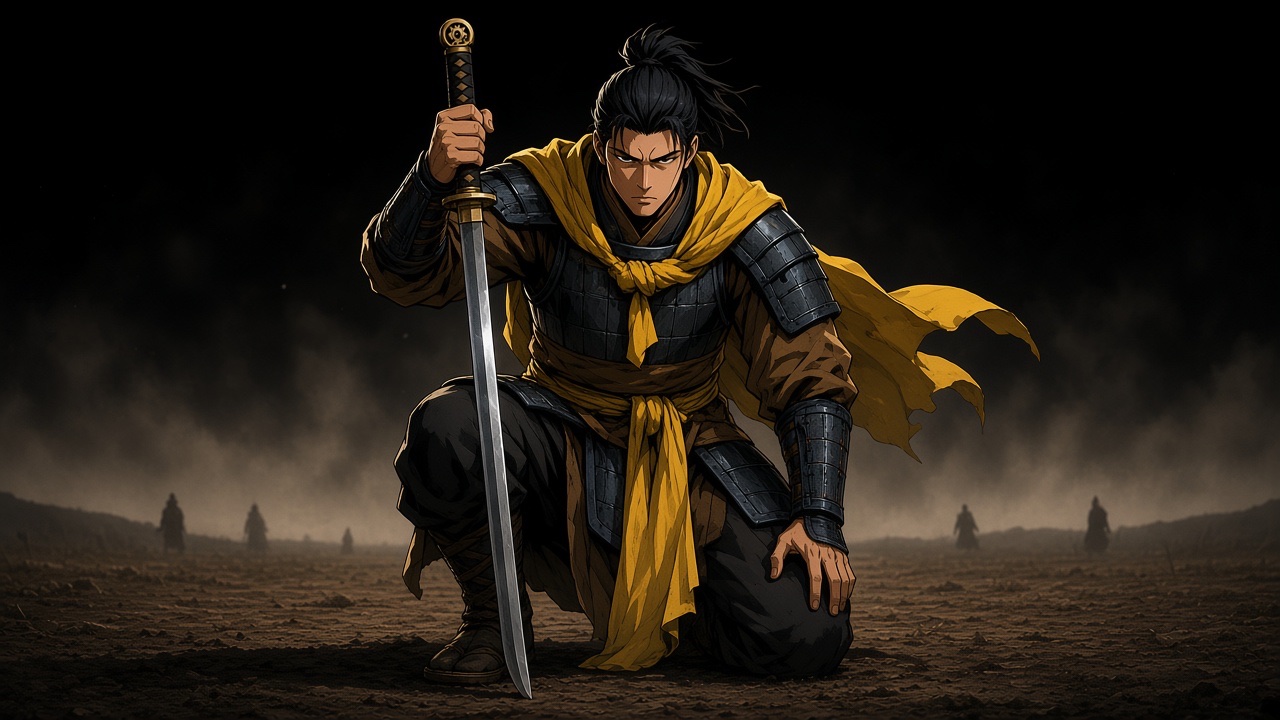
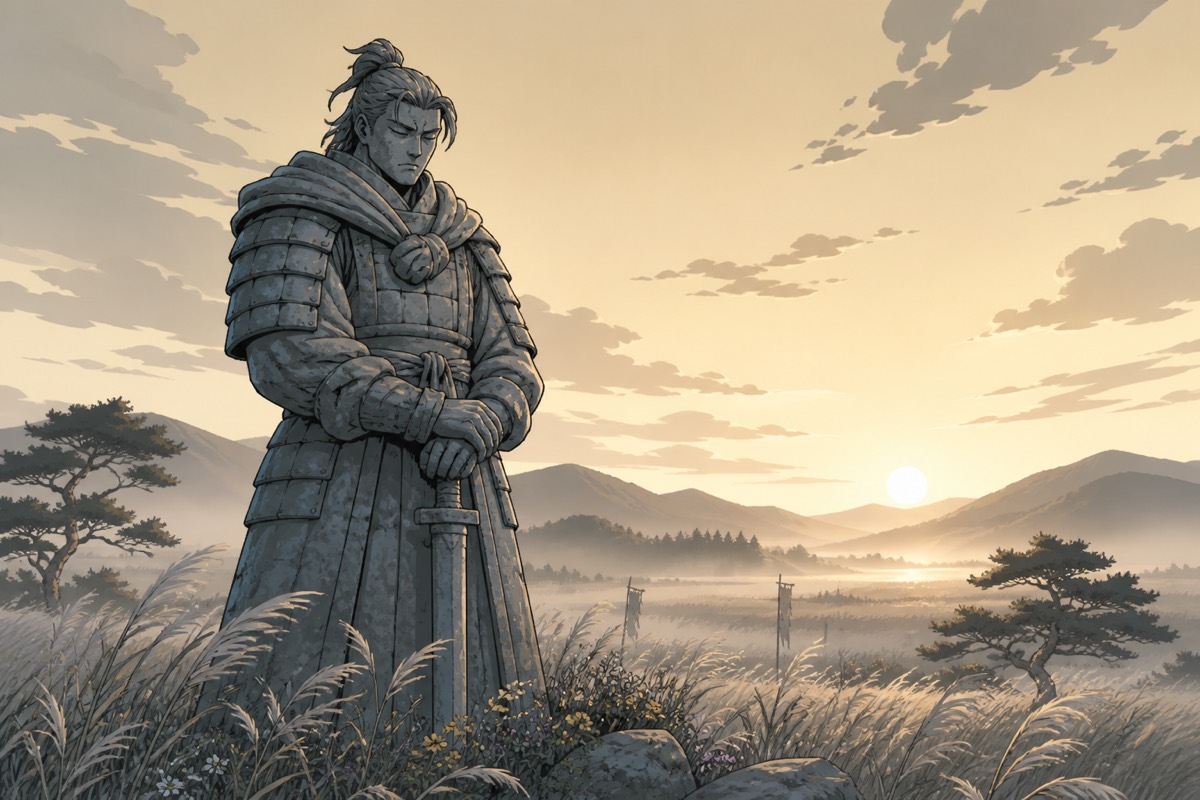
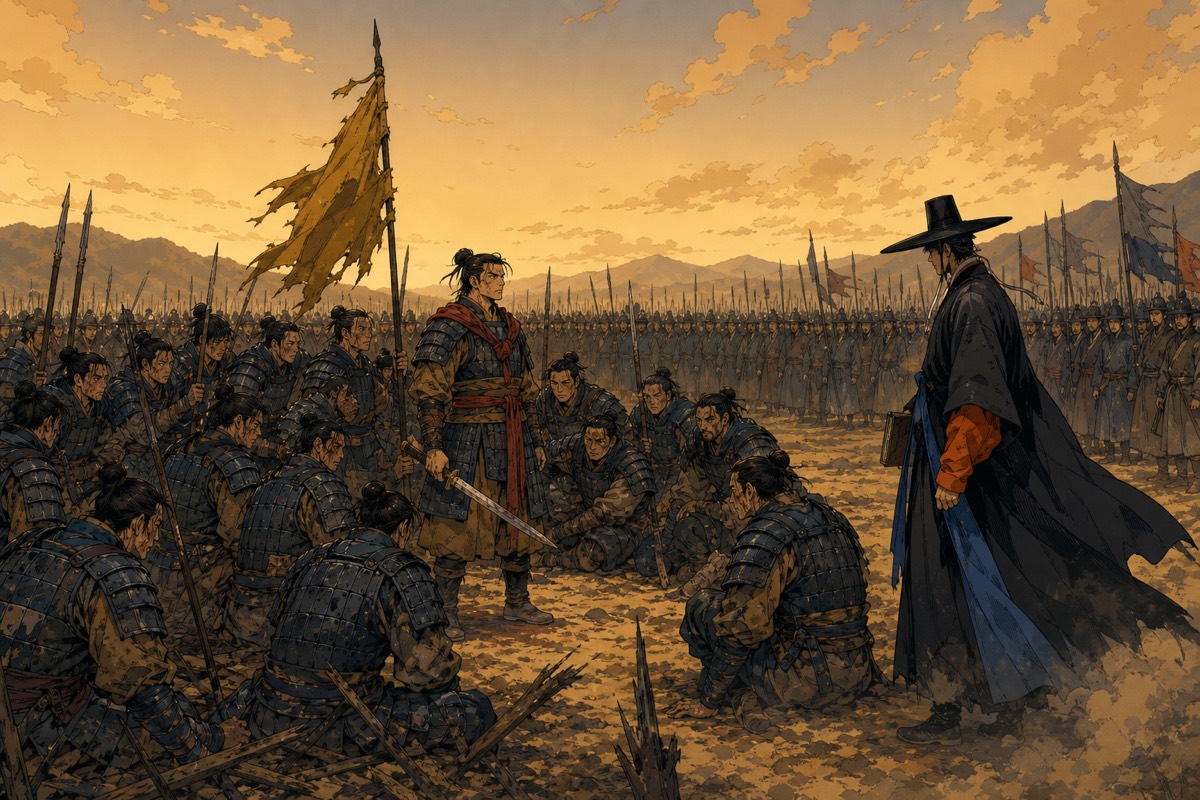
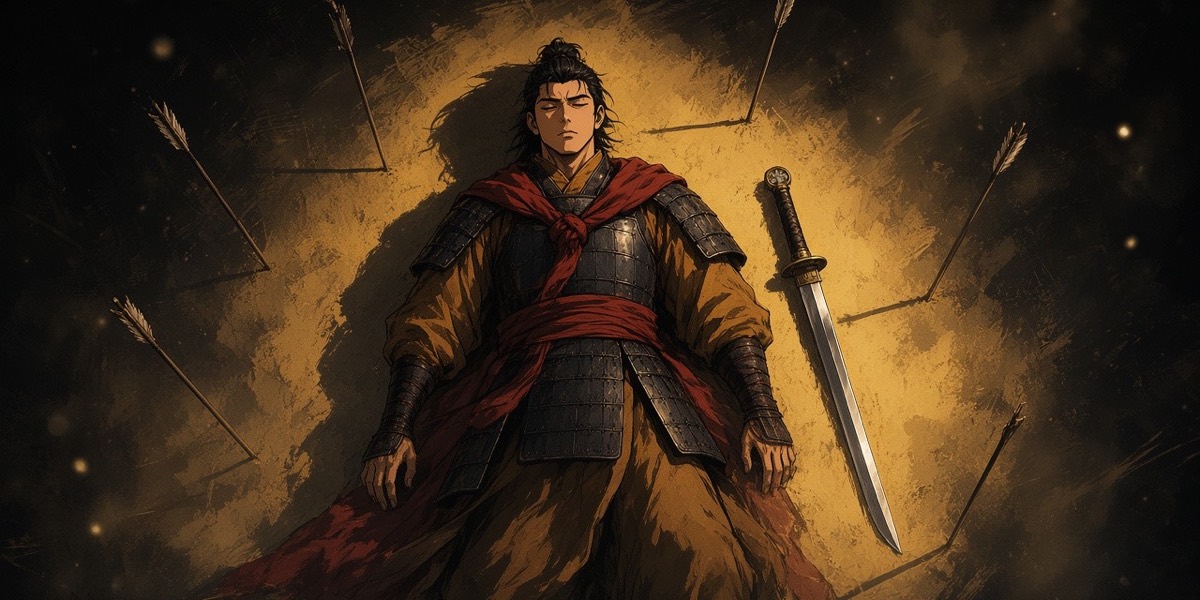
kneels. He plants his sword in the yellow dust, point down. Inside its ring pommel sits a phoenix, the same bird that rode the incense burner he once dove for. He keeps his hand on it. stands when the dust has learned the shape.
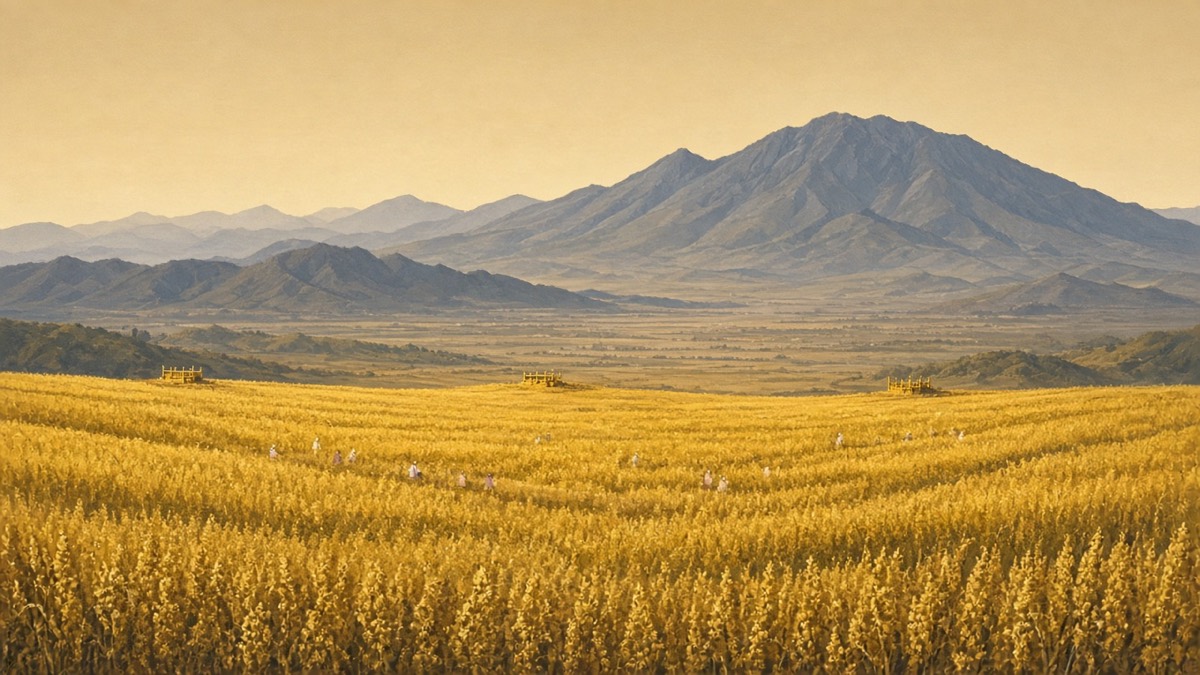
Seventh-month heat sits on the like a second army. Dust rises white off the three roads. Downstream, the Western sails already crowd the river mouth. They are waiting for the inland door to open. This field is that door.
Dust on the ridge. The marshal rides out ahead of his army.
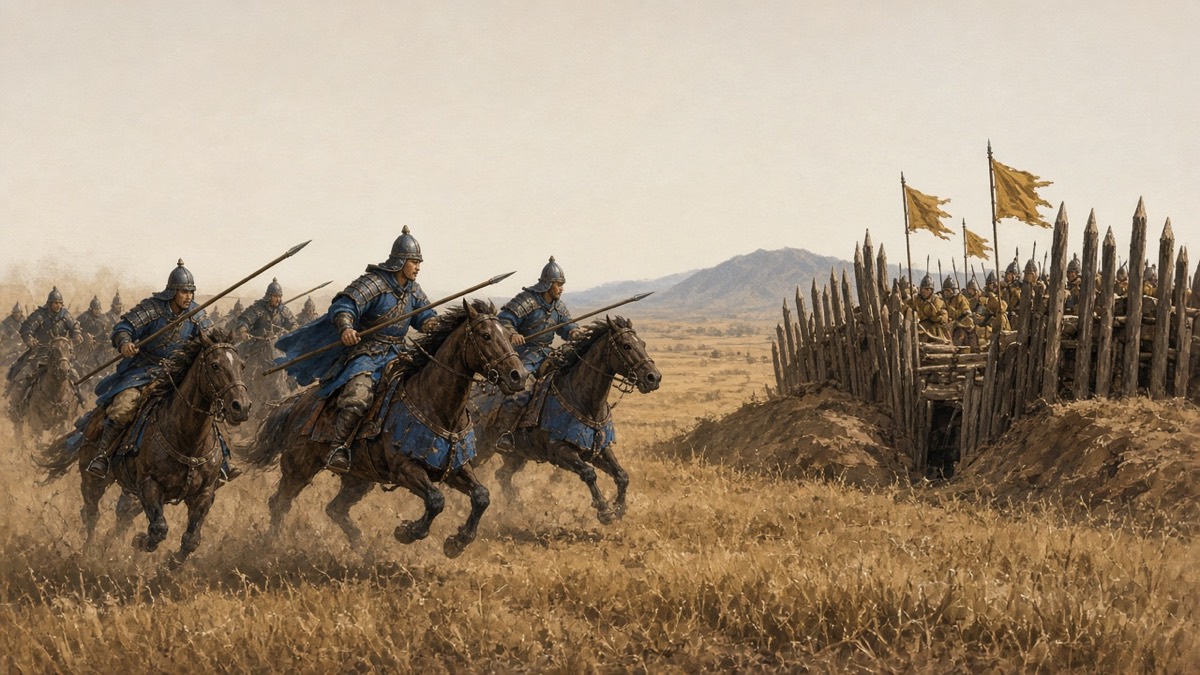
comes on the first time in three columns. Humsun takes the northern road to the left camp. takes the middle, straight at the pass. takes the southern road to the right camp. All three at once, exactly as the arithmetic says. They wade the stream, and then it is uphill. In the heat. Into yellow shields set edge to edge. The archers wait to see which column is thickest, and loose at that one. All three camps throw them back across the water into their own dust.
On the ridge Sukdal makes three marks in the dust with his thumb — left, middle, right — and wipes them out again. The tally is the same as morning. Five thousand. The arithmetic has not moved. That is the whole war plan, and it is working.
The second time does not spread itself across three roads. Humsun brings it down the northern road in one fist at the left camp, hwarang in front, on the theory that the camp which shot the most is the camp with the fewest arrows left. It is a good theory. The left camp has counted its arrows too, and has been shooting half of what it could. Behind the fist, ’s centre edges north, waiting for a hole. The fist opens on the stakes and goes back down the road, over the stream, carrying its own.
The hwarang wedge reaches the stakes. That is the farthest any man gets that day. A hwarang captain — seventeen, first campaign, helmet too big — takes a spear where the stakes break and holds it standing long enough for the men behind him to see his face. will ask his name at supper. Nobody will know it.
The third time takes the southern road, where the ground is softest and the right camp sits lowest. For the length of a held breath the road almost opens. Then it closes again on spears counted in the night. The right camp is not quite where ’s scouts drew it at dawn. It is further back and higher. Every pace of the difference is uphill, and the line arrives at the stakes with nothing left in its legs.
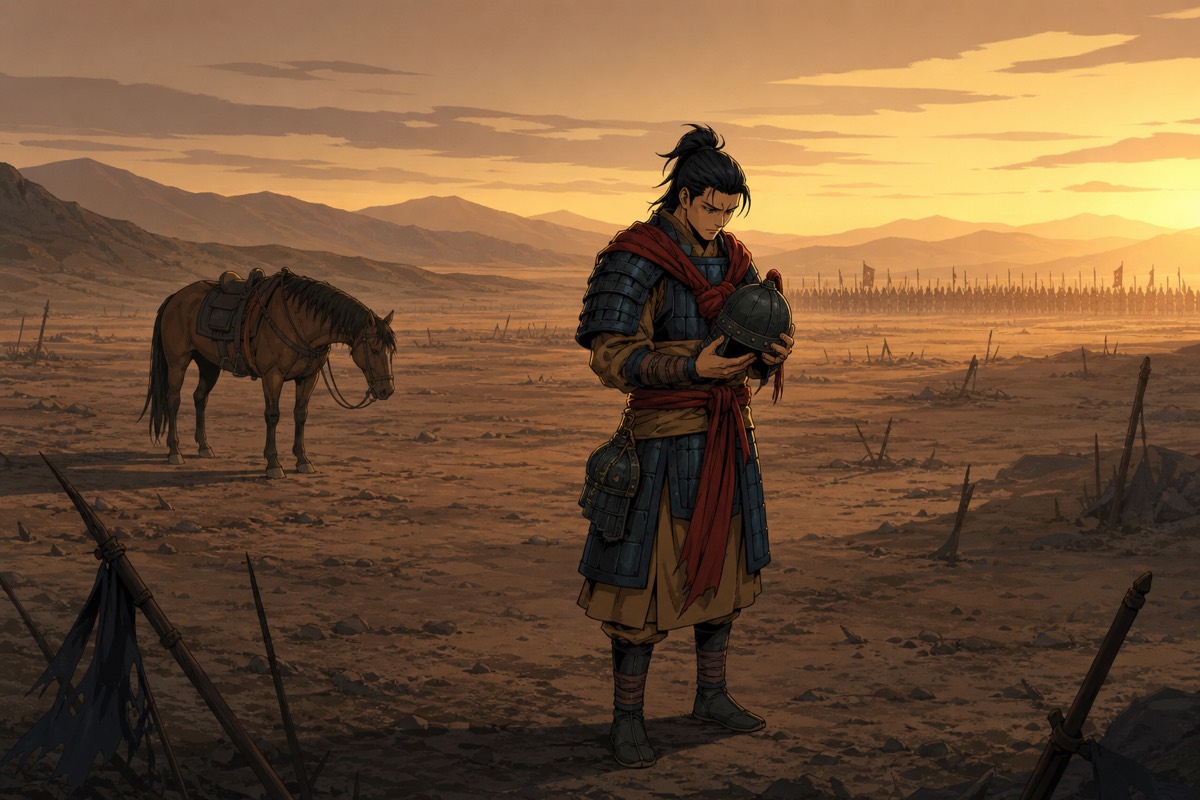
looks at the higher stakes for a long time. Somewhere up there is counting too. That is the worst part of this morning. The counting.
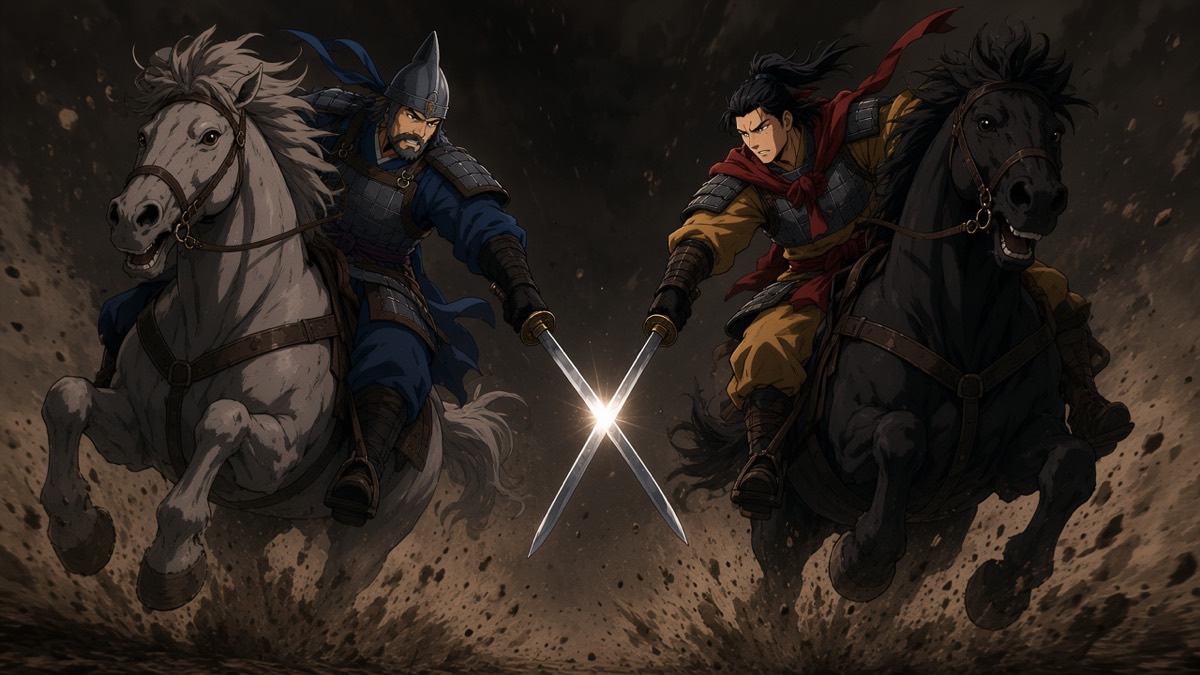
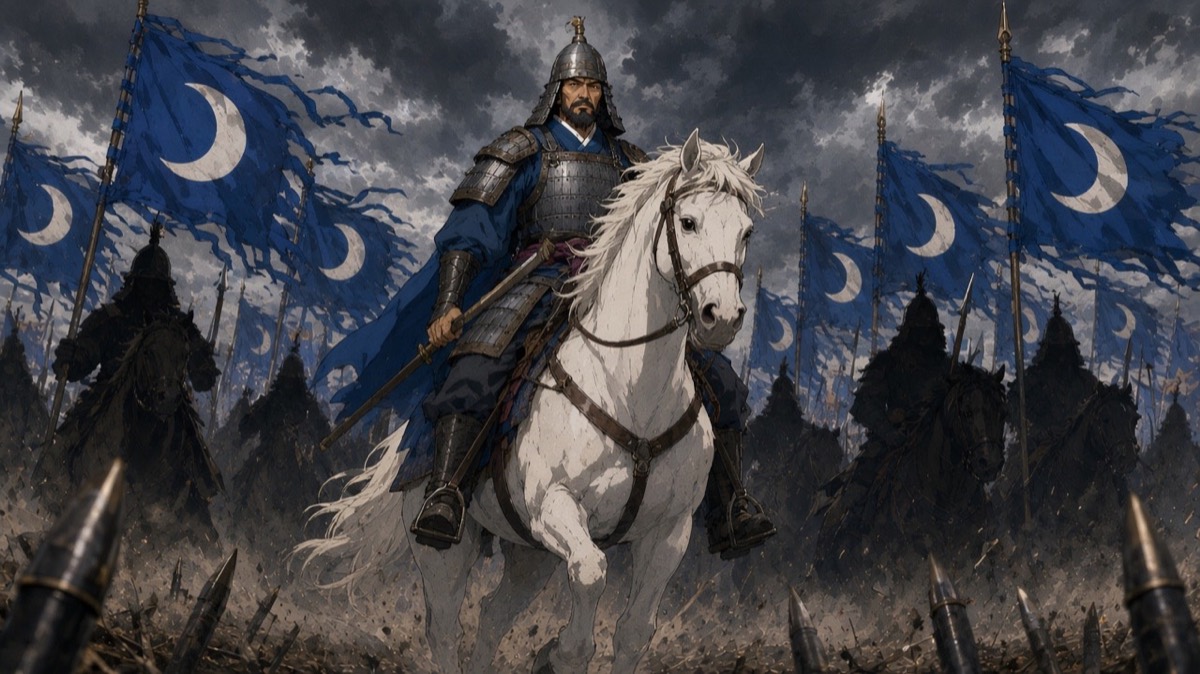
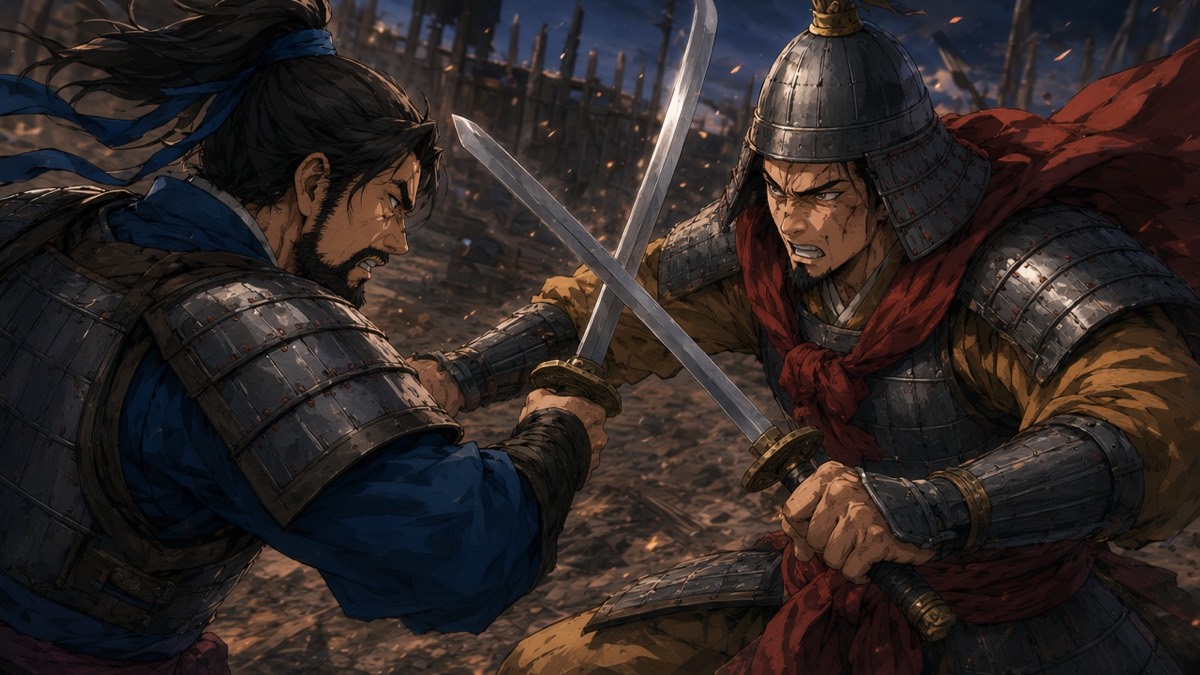
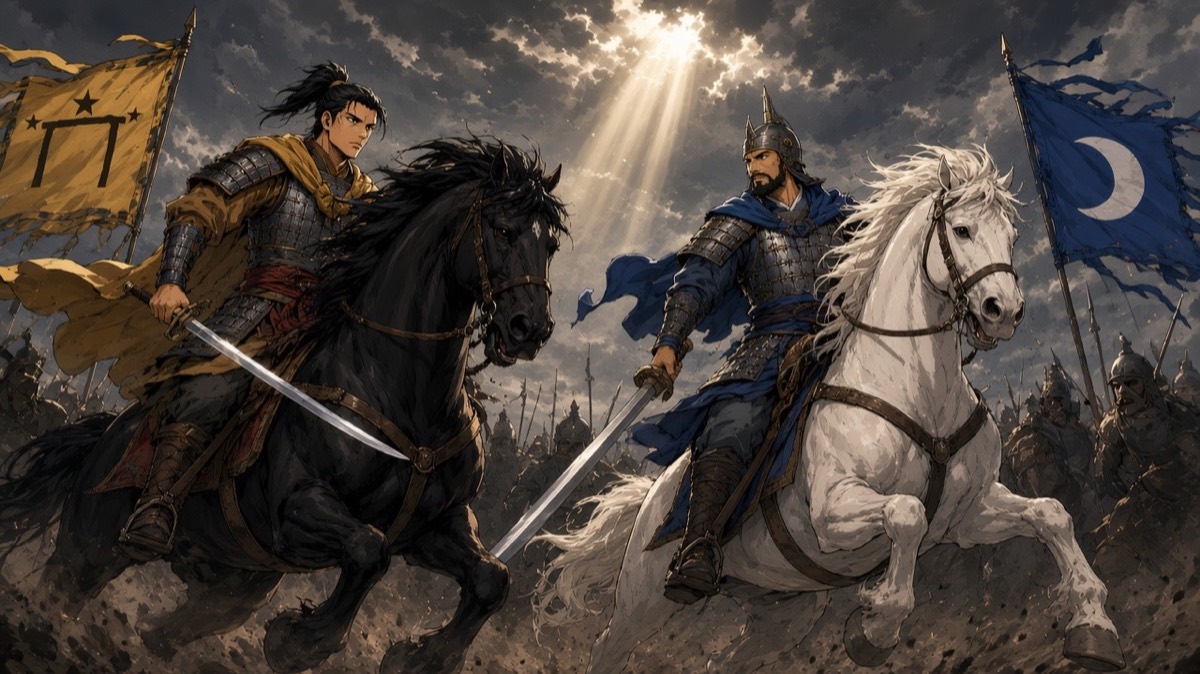
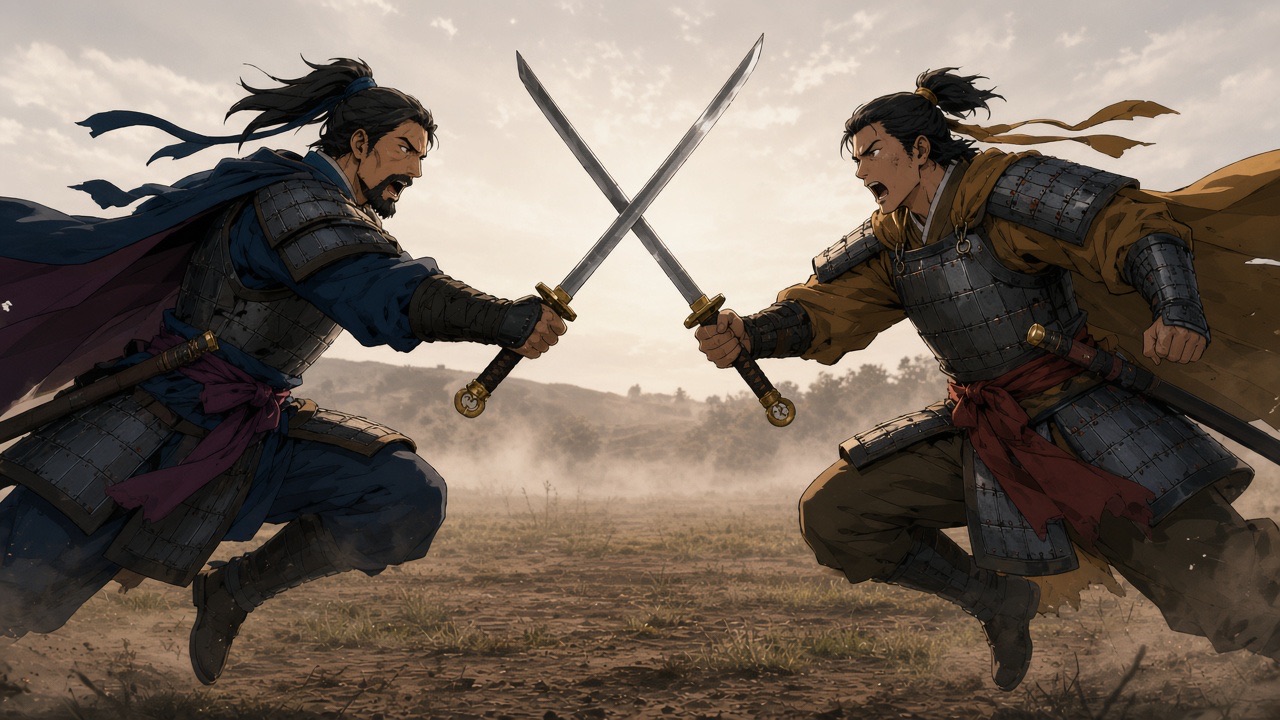
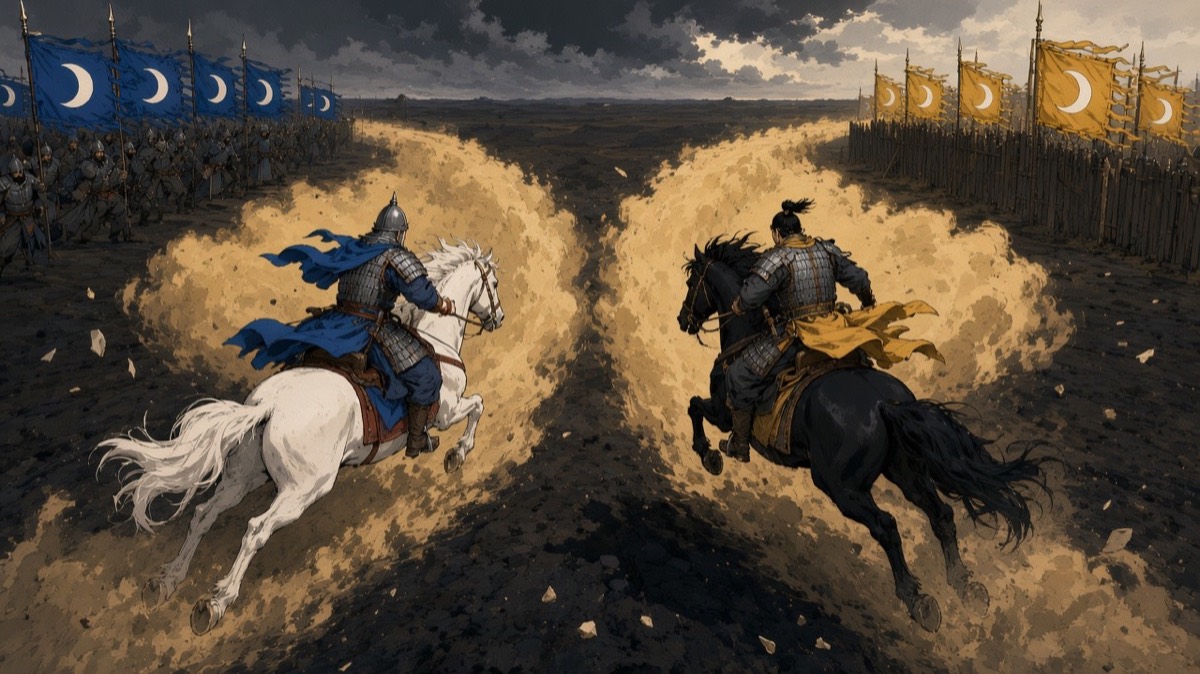
The fourth time rides at the head of the centre himself, on the white horse, straight up the middle road toward the pass, and meets in the gap between the camps. Both armies stop to watch two men, which armies are not supposed to do.
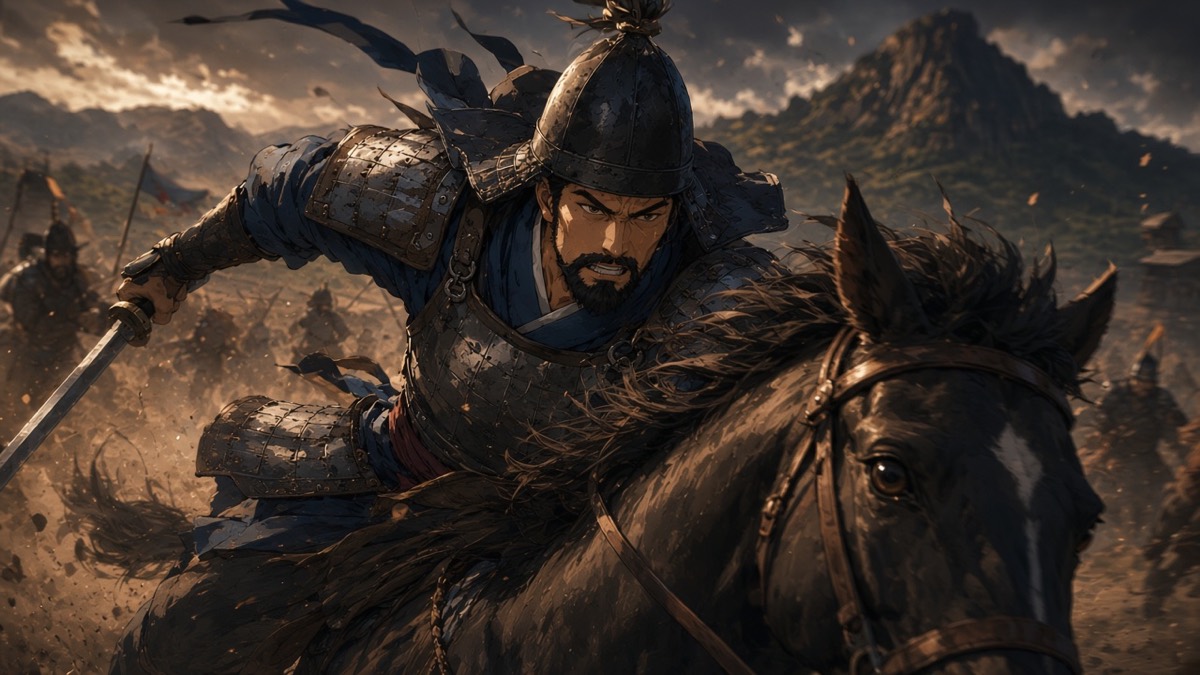
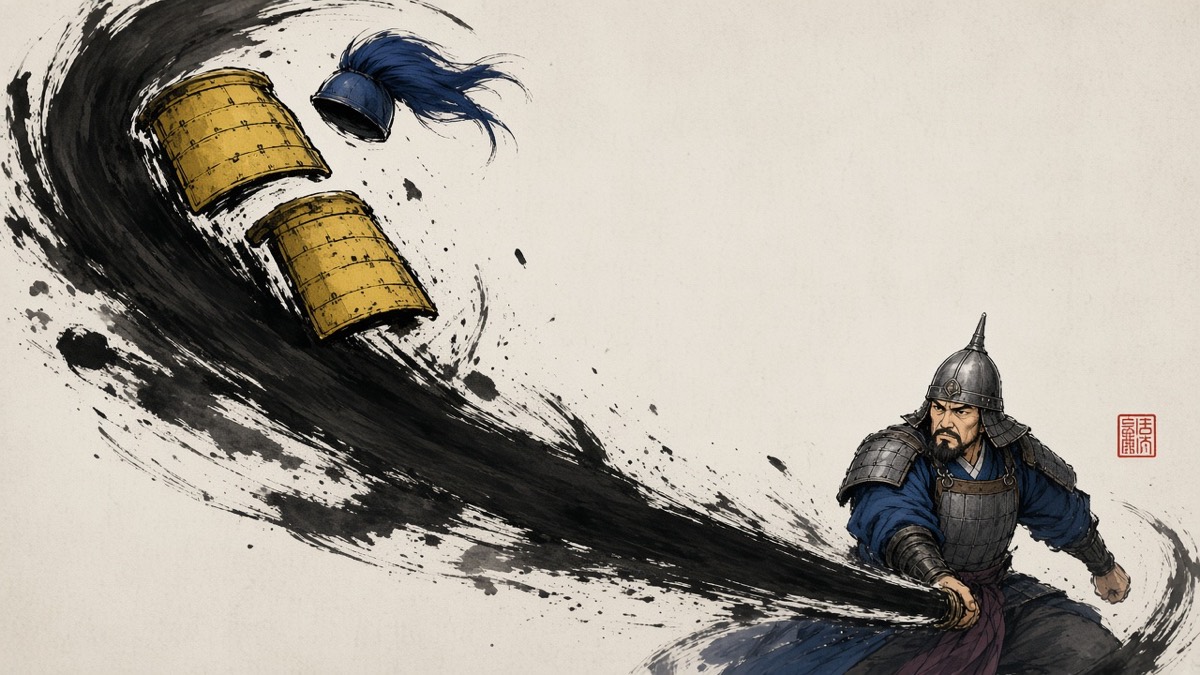
comes the way the border remembers him. at full stretch, flat along the black neck like a thrown knife. His blade lies reversed along his forearm, edge out. There is no sword in his hand to watch. That is the point.
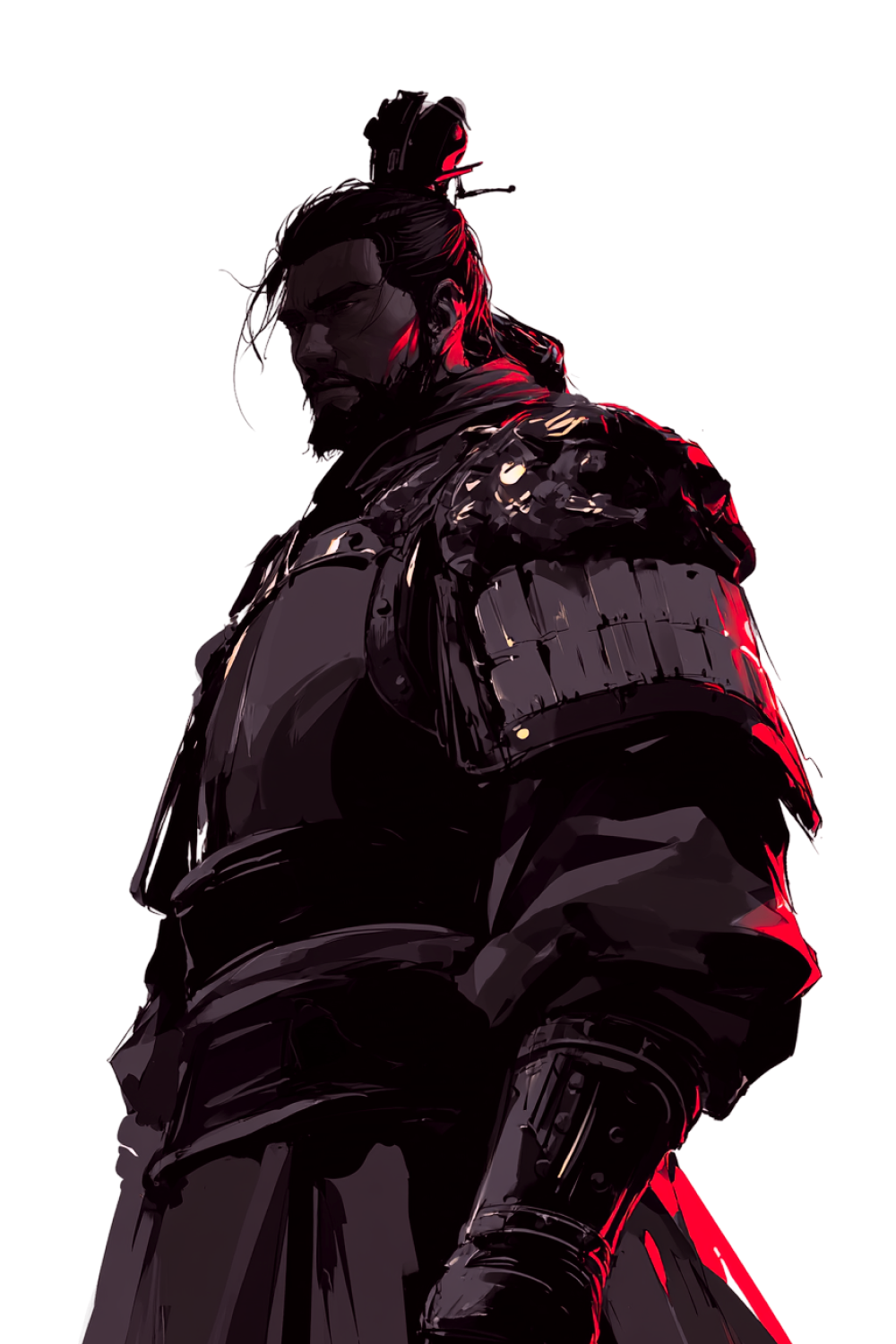
The tall helm comes in at a gallop. has heard the tavern stories. He watches the hand, the way the stories say to, and reads the reversed blade half a beat late.
They meet in the dust. Nobody hears steel. They hear the white horse scream.
Then the white horse is going back the way it came with a red line along its shoulder, and is holding his left arm against his ribs. turns in his own length and walks him home. He came for one cut. He got half of one.
On the ridge Humsun puts his hand on his son’s shoulder and leaves it there. is fifteen and has been watching his father lose all morning the way sons watch. The hand says what Humsun will say with his mouth an hour from now, at his stirrup.
Behind him the fifty thousand sit down where they stand. Four times up the same slope in the same heat — the clerks will write that the soldiers’ strength was spent, which is the polite way to say that grown men are lying in the dust of their own road and cannot be made to get up.
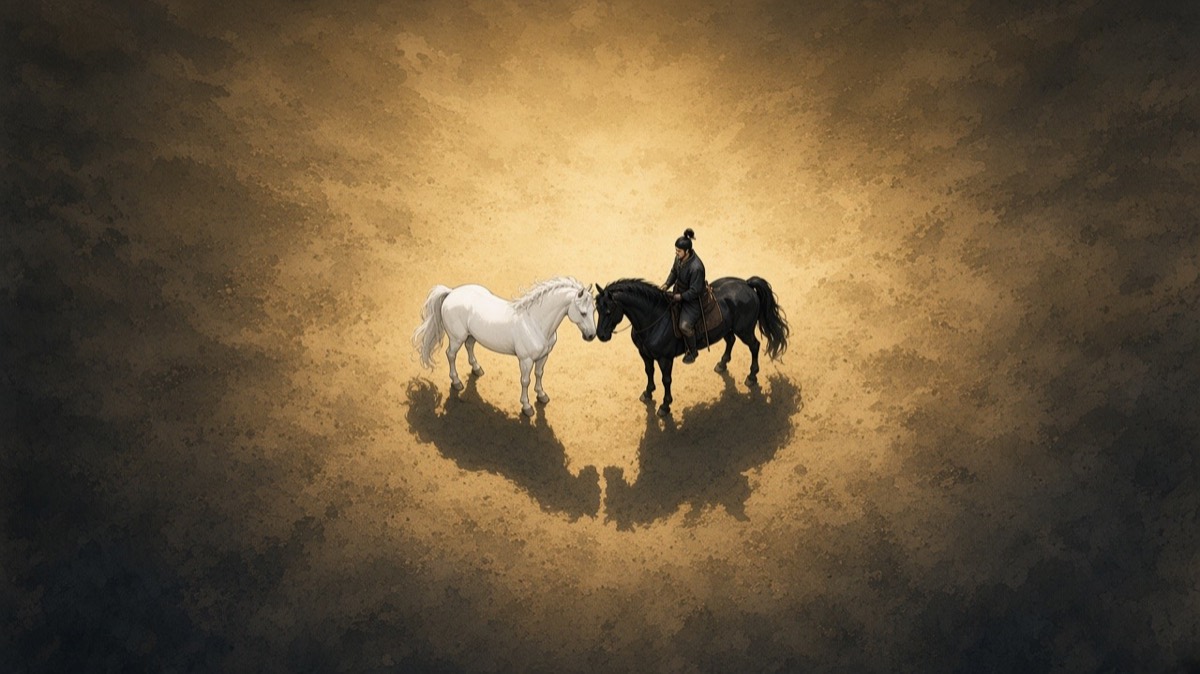
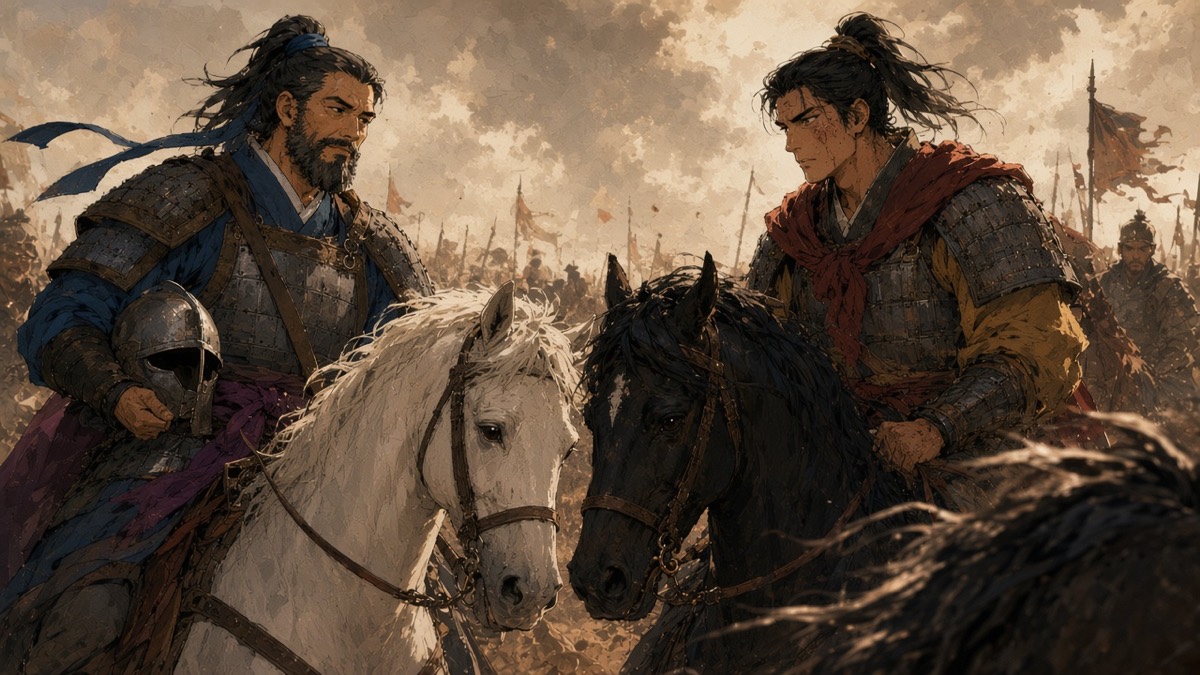
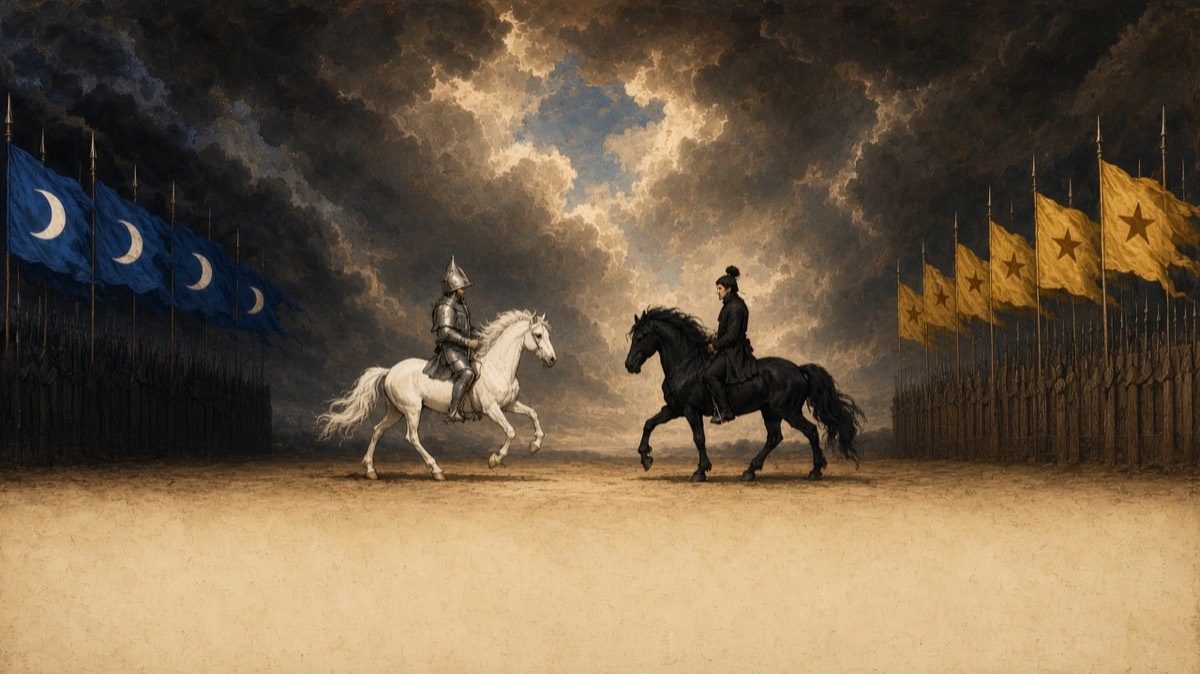
After the fourth time there is a lull, the kind both sides pretend is for water. rides out alone into the gap on the white horse, his sleeve tied off with his own sash, and stops at a distance where a bow would be bad manners. After a while the black horse comes out of the centre camp to meet him. Nobody is near enough to hear. The chronicle has it anyway, the way it has most things, from men who swore afterwards they had not been listening.
Black horse, white horse, nose to nose in the yellow dust. From either line they look like a pair of go stones someone has forgotten to play.
looks at the tied sleeve and does not say anything polite about it.
Neither of them laughs, but it is close.
They turn the horses at the same moment, black and white, as if somebody had rehearsed it, and ride back to their counts.
Humsun looks at the slope. Then, for longer, at his son.
Humsun calls his son to his stirrup. is fifteen, near enough, and ’s nephew; he comes at a run, because he has been watching his father look at him since the white horse came back.


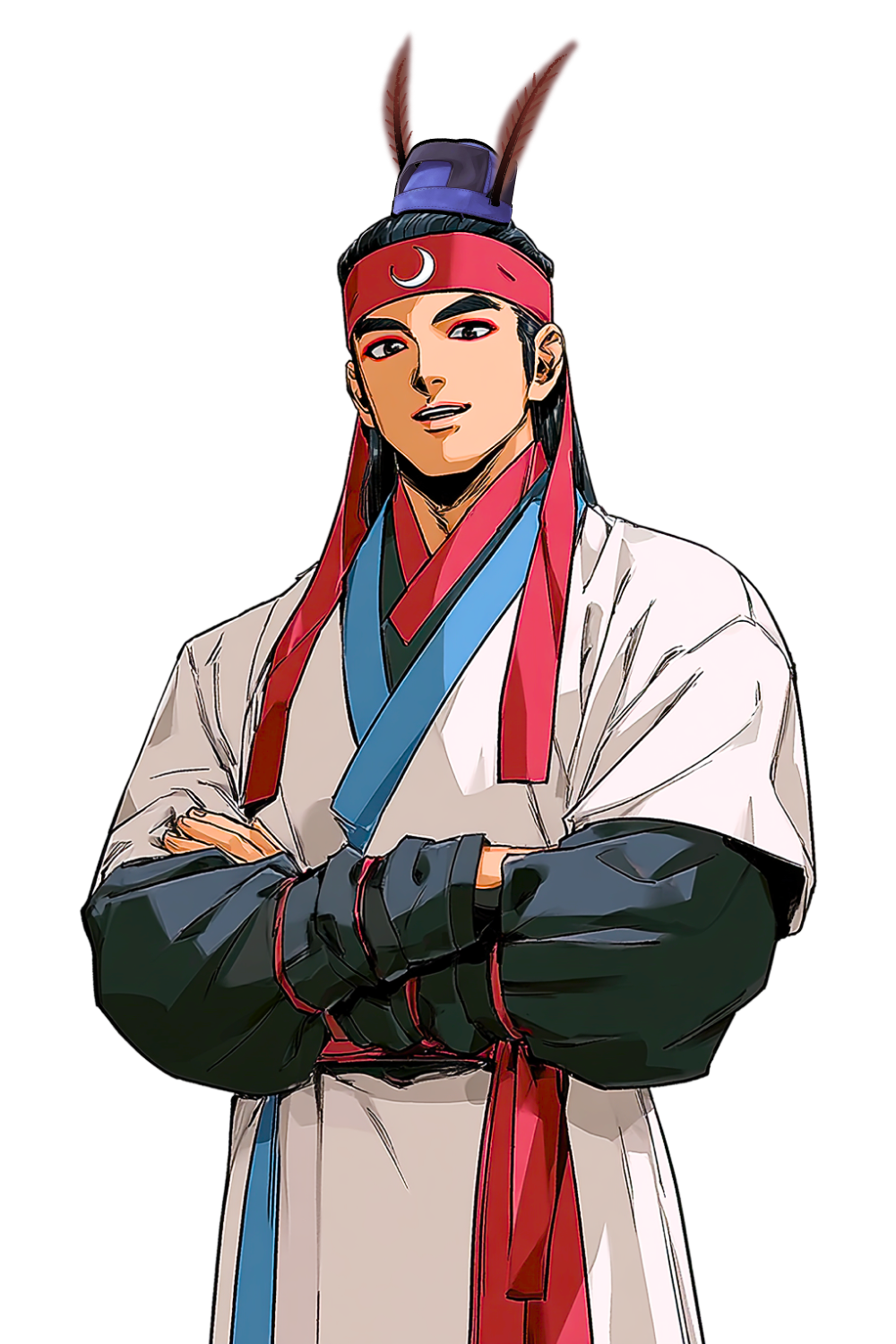
He looks at the yellow field. Four times they have gone up it. Four times they have come down.
The field goes. There is only his face.
He does not look at his father again.
rides out alone up the middle road and does not come back. He goes into the line at the pass, where it is thickest, and fights there until it closes over him, and the place where it closed is the place aims at next.
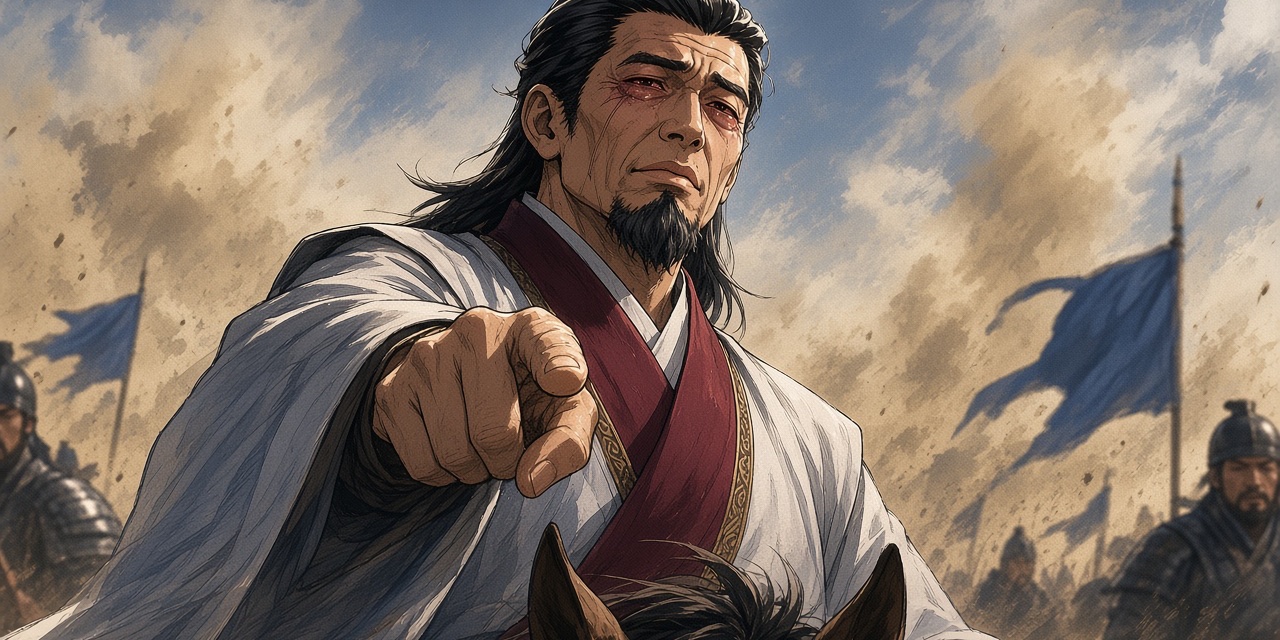
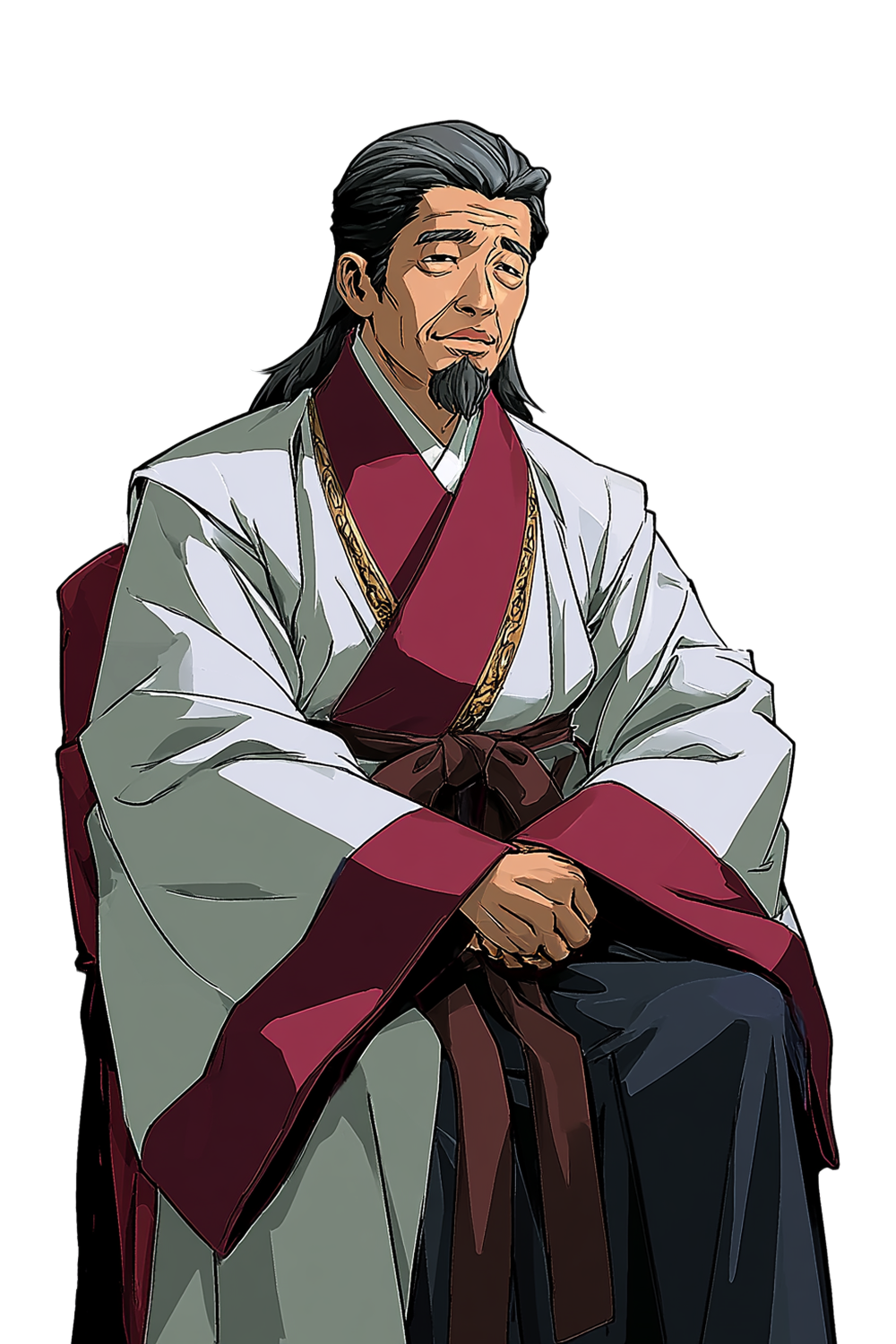
does not call his son. He has him brought to stand in front of his horse, before all the generals, and points at him the way a man points at a map.

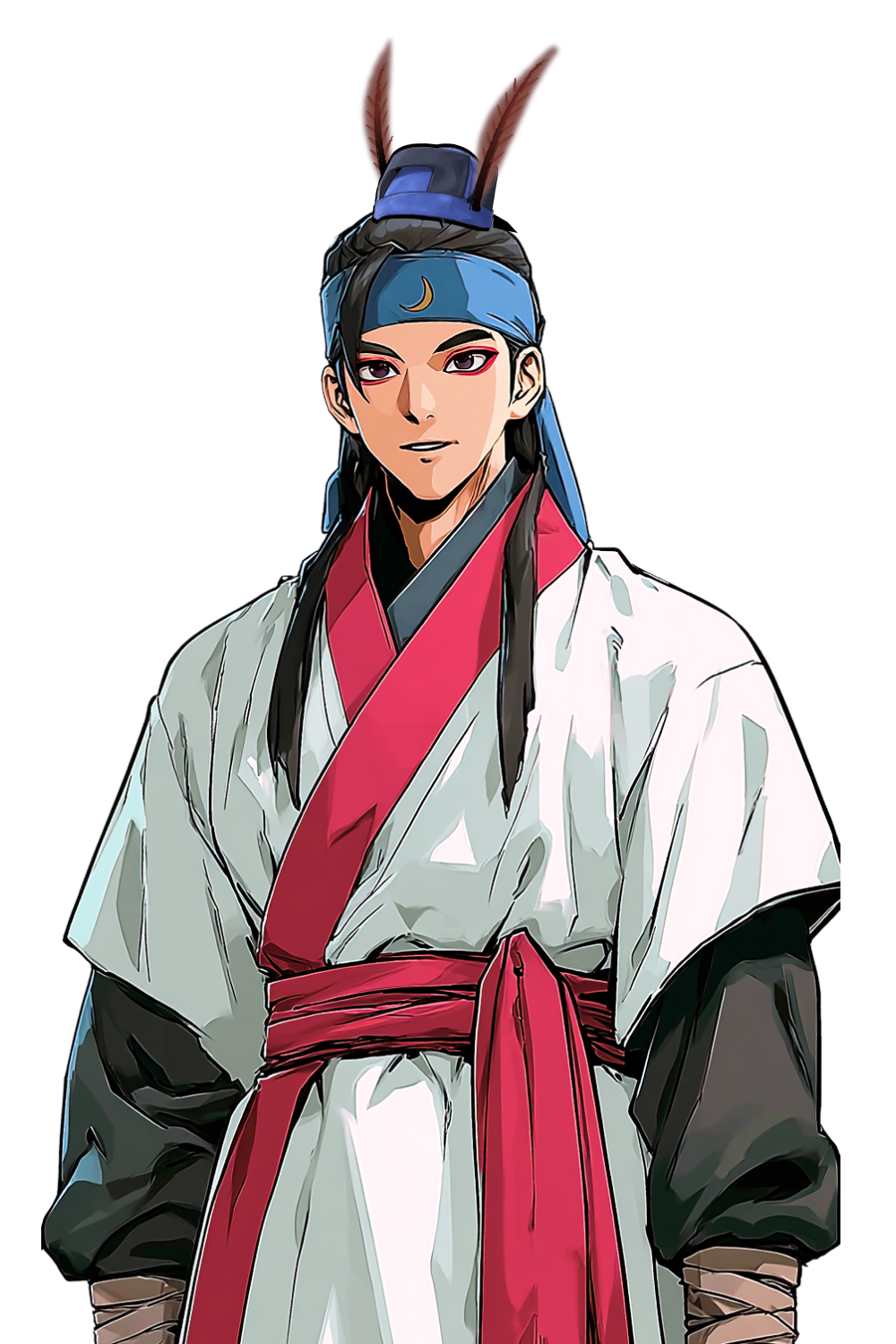
He takes an armoured horse and one spear and goes straight at the centre. He gets further than did. Then they pull him off the horse alive and bring him to .
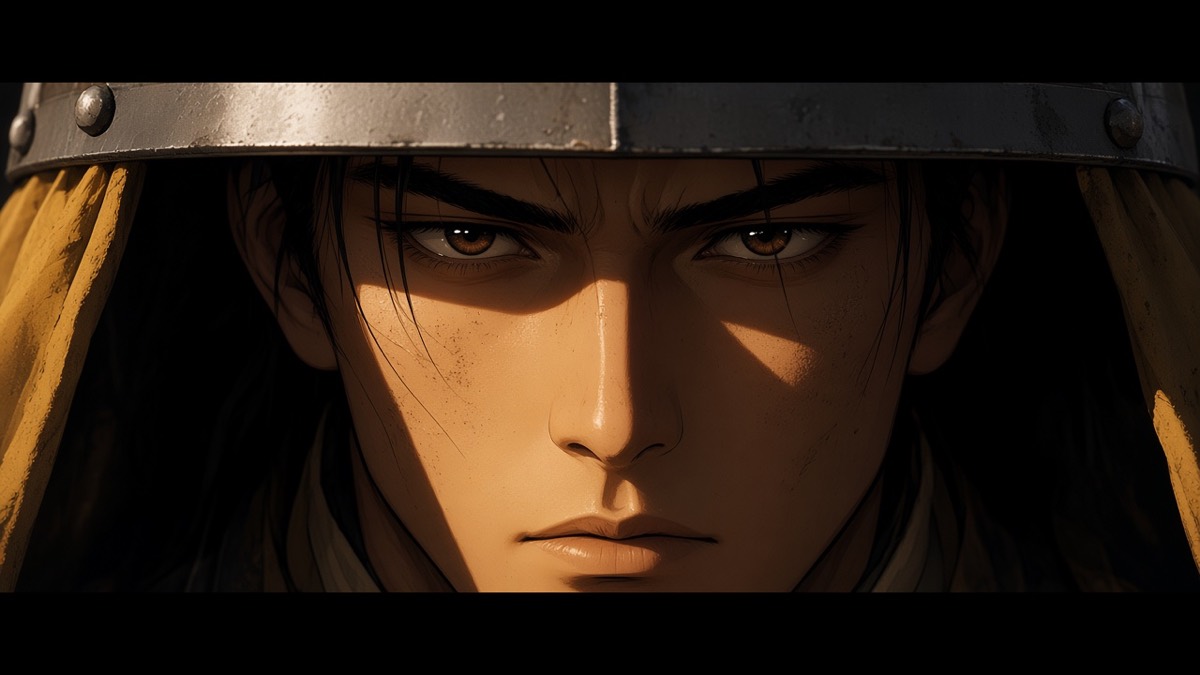
has the helmet taken off. Inside it is a boy’s face, sweat-striped, furious at being alive.
They put him back on his horse and point it at the line. At his father’s stirrup does not get down.
Behind the line there is a well, dug that morning for the horses. He scoops the water out with both hands and drinks.
The well goes. There is only his face.
He rides back the way he came. sent him home once. He comes back.
The second time, has his helmet unstrapped again, and looks at the face inside it for a while. He has looked at faces like this once already this week, in his own house, before the light was up. Then he does what he has to. He ties the head to the saddle and sends the horse back down the middle road.
holds the head up in front of the army and wipes the blood from its face with his own sleeve, so that the three armies can see whose son it is.
Nobody gives an order. The drums start on their own, one column and then the next, and fifty thousand men who could not be made to get up an hour ago are on their feet and shouting.
The line, which has failed four times that morning, comes up all three roads at once and does not stop. A father’s wet sleeve is worth more than a fourth failure. The left camp on the northern road goes under first — not broken so much as used up. The right camp holds the southern road one more breath, then folds north toward the centre like a hinge that has decided to finish.
On the side, nobody says five.
By the fifth charge the left camp is a rumour of men. Spears shorten. Names stop answering. Sukdal stops somewhere between one tally and the next. calls the name twice, then says the next number himself.
, who has been hanging in the day like unfinished weather, comes down to speaking distance.
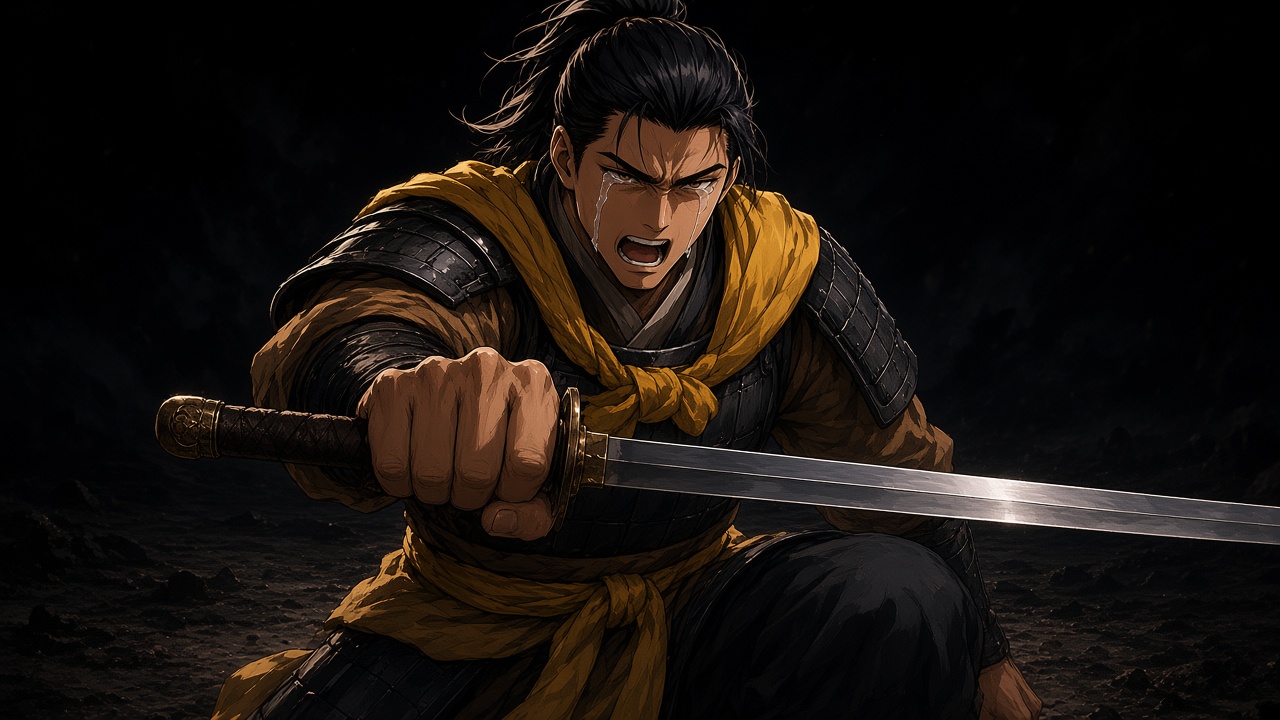
He reads the general's name three times across the field — . . . — though five thousand throats have already answered.
turns his head toward the river road, toward , where nobody is coming.
The field returns.
He says it in exactly the same words, the way you set a stone back where it was. closes the distance.

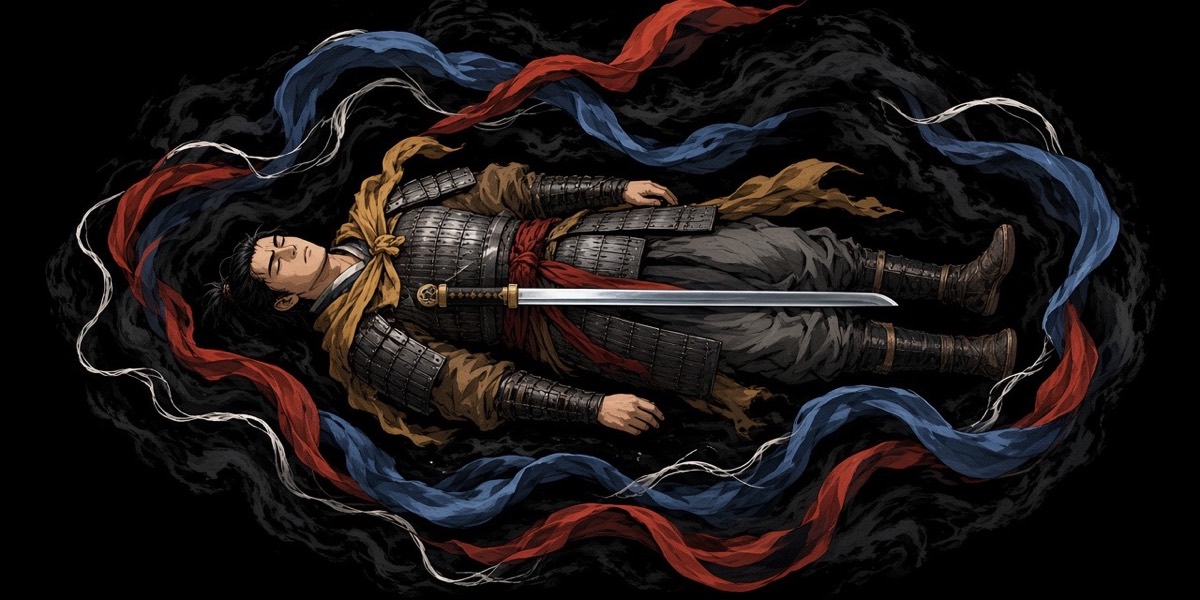
The clerks count too. Twenty-odd taken alive, two ministers among them. Nobody writes down how many of the five thousand were left to take.
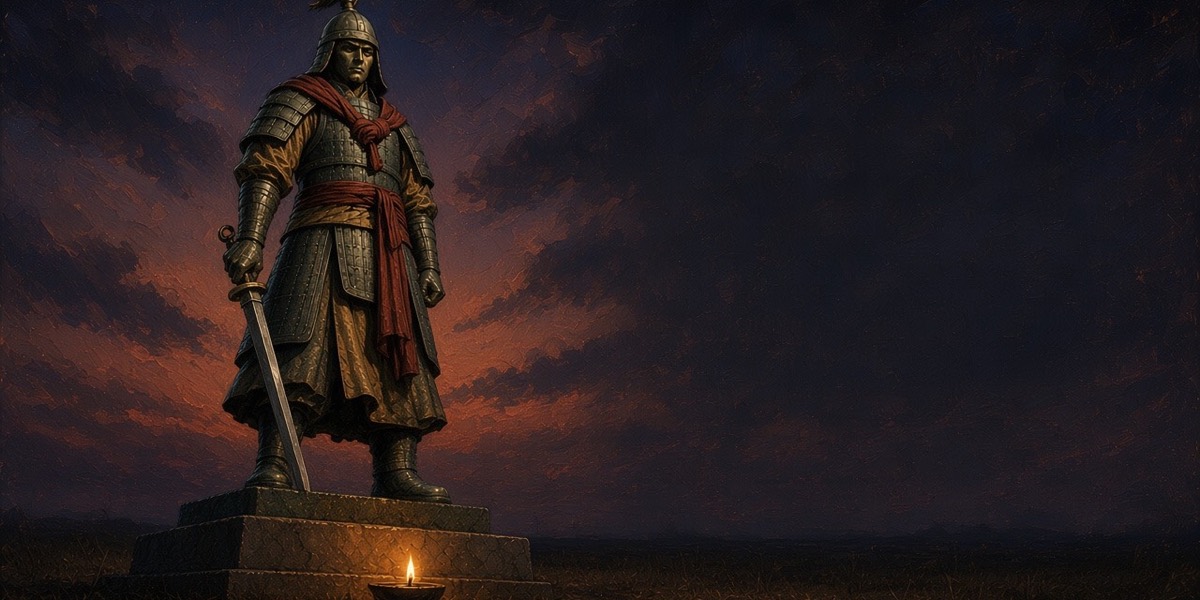
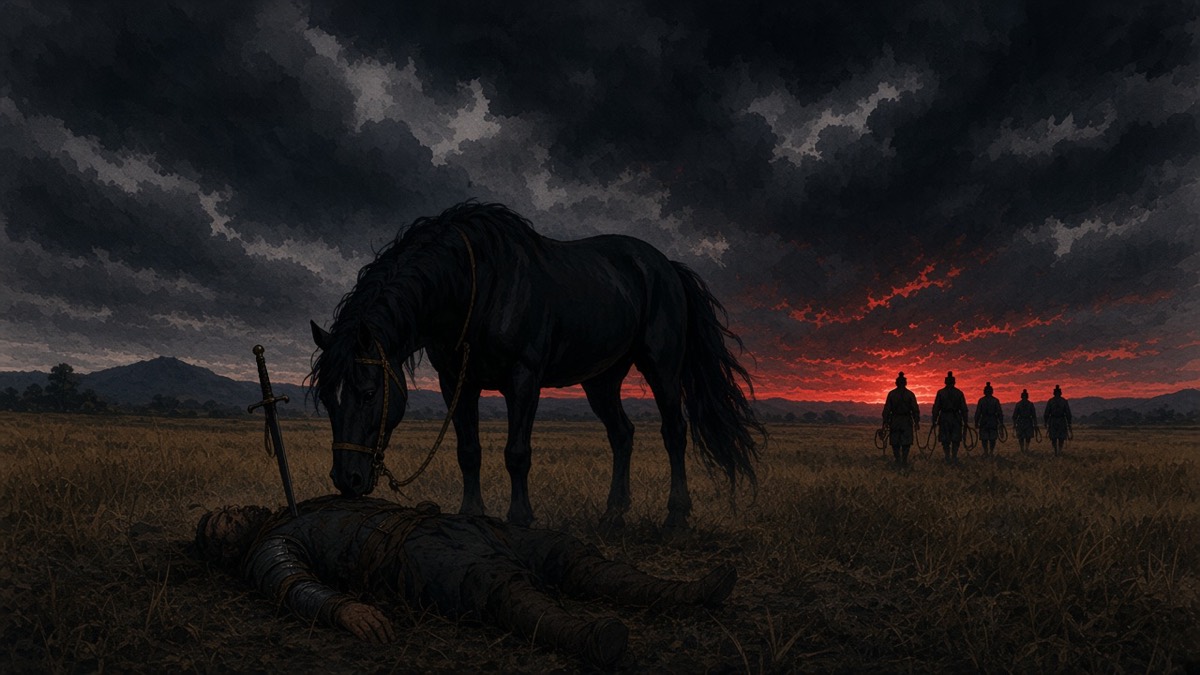
Nobody can lead the black horse off the field. It stands over the place where he went down until the grooms come at dusk with ropes, and it takes six of them, and in the night it breaks the line and goes south toward the ferry it was named for. Nobody on either side ever reports seeing it again.
Gyebek gets there first and takes the high ground: one camp on each road into the field, the centre on the pass to Sabi. Fifty thousand come down out of the eastern hills, and they have a date to keep.
- Baekje 5,000
- Silla 50,000
- = 1,000 men
Sources: Samguk Sagi 47, Biography of Gyebek · Samguk Sagi 47, Biography of Gwanchang · Samguk Sagi 5, Annals of Silla, Muyeol year 7 · Samguk Sagi 28, Annals of Baekje, Uija year 20
has spent the battle forty li behind it, at Gumdol, being told things. Tonight he is told the best news a king of has heard in a hundred years. Then he does something with it nobody in the tent expects.
The first chair of the has stood empty since old died at New Year. Everyone in the tent has been counting who should have it. Most of them have been counting themselves.
The tent goes very quiet. A comes from the table: he sits at it for years, waits, outlives better men. has never sat at it for a single vote. He is , the bottom rung of . Nobody has ever gone from no seat to the first one in a night.
Nobody does. They have watched the Secretariat eat the Council’s seals one by one. They know which way a room votes when the king has already written the minutes.
Six sleeves go up. Two of them go up slowly. In the morning the clerks write a name at the head of the Council for the first time, and spell it very carefully.
The pass is open. The river is open. And in , a runner is climbing the palace steps with one word…!
