















Chapter 17

Momal



AI Summary
- The Landing A neighbour’s landing on the south shore.
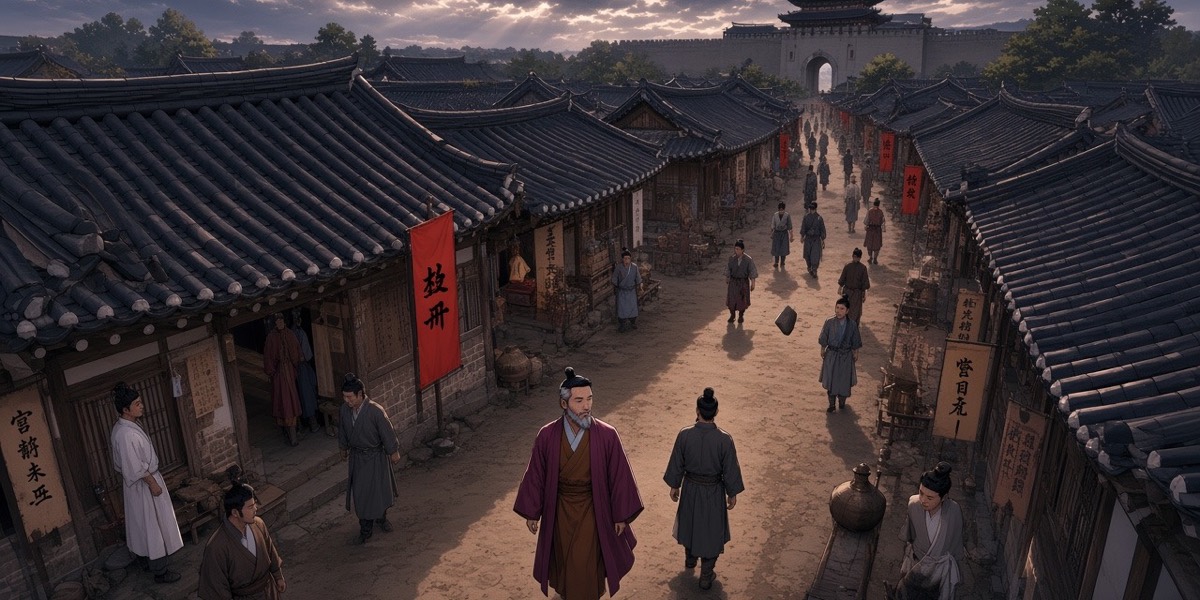
- The Streets Seventeen winters after the horsemen came down like weather, Surabol still sings like a city that lost.
- The Boot Silla asked.
- The Brothers The king is still in the dirt.
- The Empty Hall Nulji hears it from the window he is not supposed to open.
- The Tent The Harmony Council meets in a tent because the good hall leaks, and the timber that would fix it went north as rent.
- The Ask The hall is full.
- The Thin Hour They announce him.
- The Gate
- The Northern Hall They announce him.
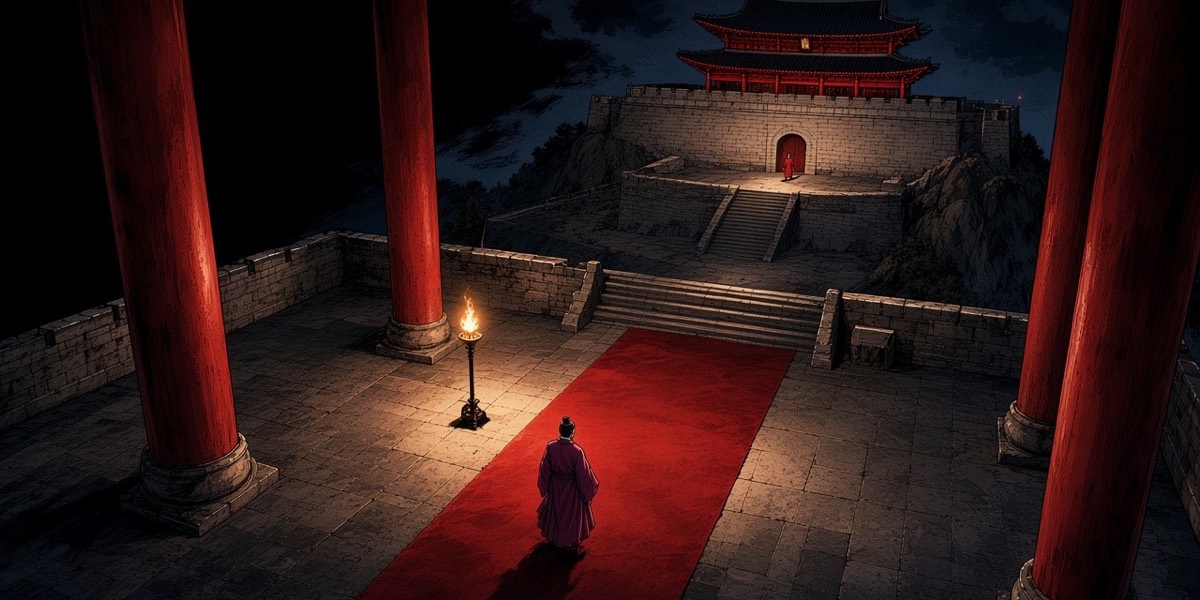
- The Red Gate The seongmun is still open.
- The East Ford They ride southeast.
- Characters
Episode· 625
Momal
The hall said Jesang. The boats were Momal. He did not come home between the two jobs.
- Park Momal
- Nulji Isagum
- Lady Chisul
- Bohae
- Nintoku
- King Jangsu
- Mihae
- King Gwanggeto
- Katsuragi no Sotsuhiko
1 still without a cue
The Park house is . The boy is a problem.
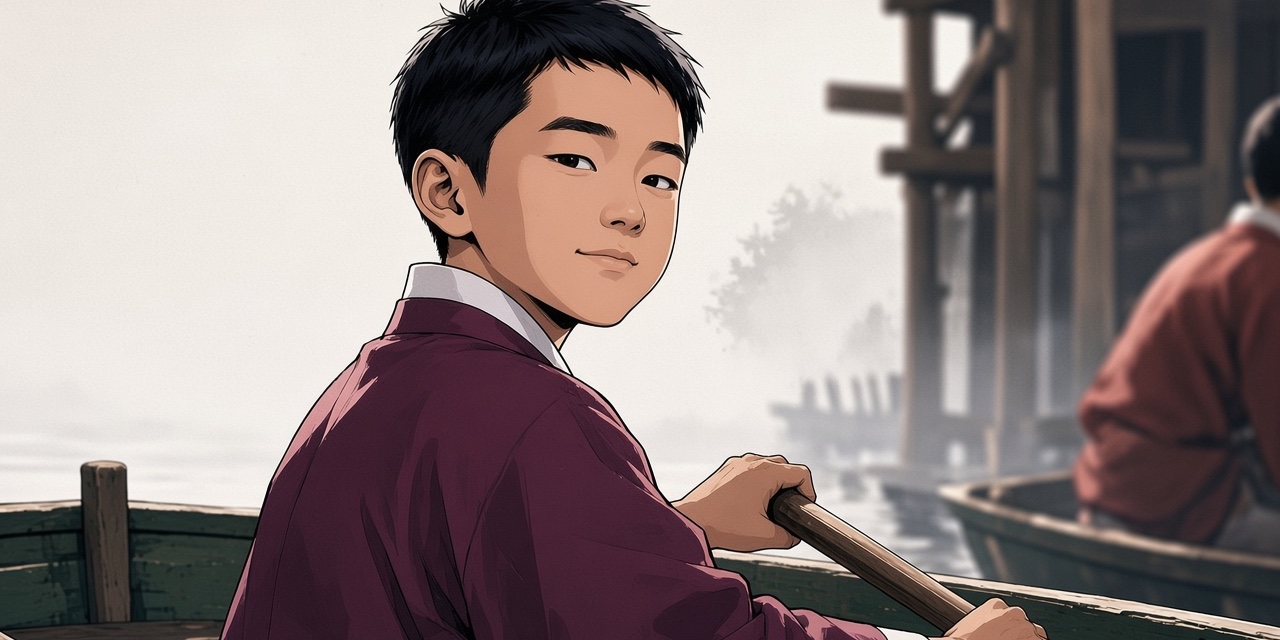
A neighbour’s landing on the south shore. Fresh caulk. A green boat that still smells of pine.

The servant looks at the silk. silk. He lets go of the rope.
does not run. He rows like a boy who was asked. That is the trick.


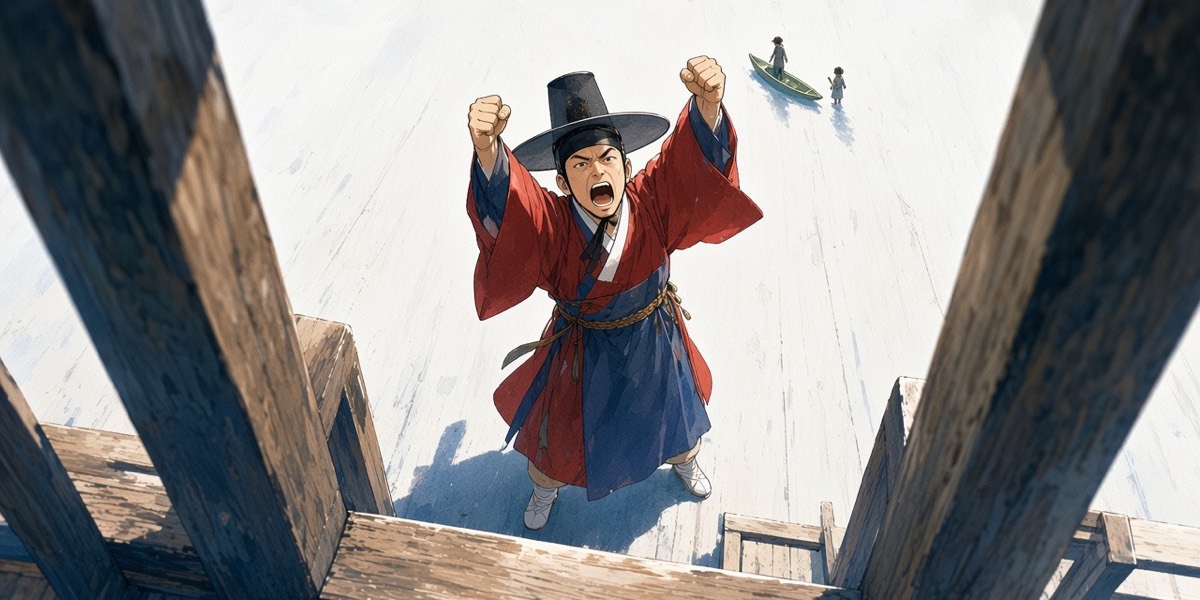
A man comes out in his indoor socks. Looks at the empty water. Looks at the sky. Both fists.
You’ve heard it. Last month a gate. The month before, a saddle. Always the sky. Always that name. As if heaven might toss the thing back.
They do not shake on it. A shake would make it a vow. It is already worse than a vow.
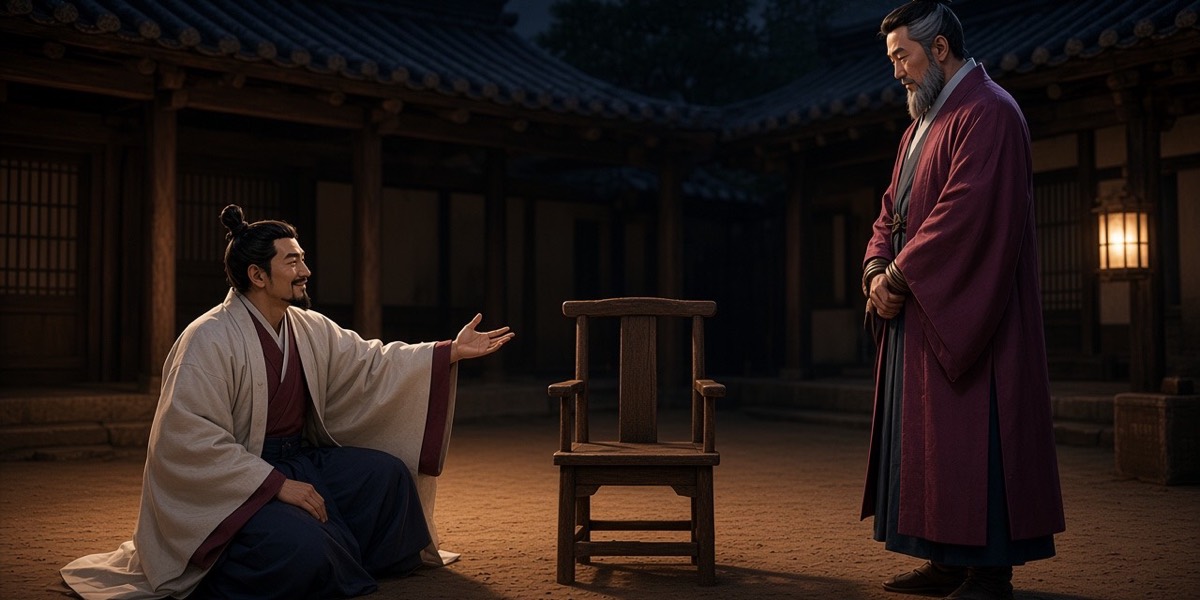
His own roof is the sort that gets invited to sacrifices. A Park name older than the hall. The boy is what they apologize for at other people’s gates.
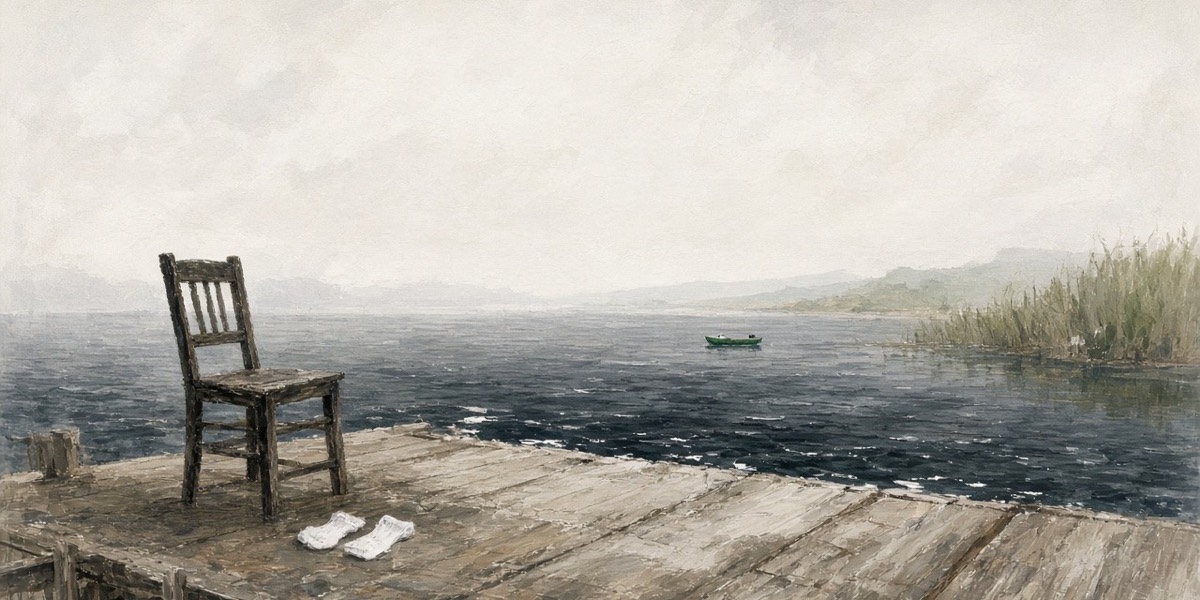
The chair is already empty. The green boat is already a dot.
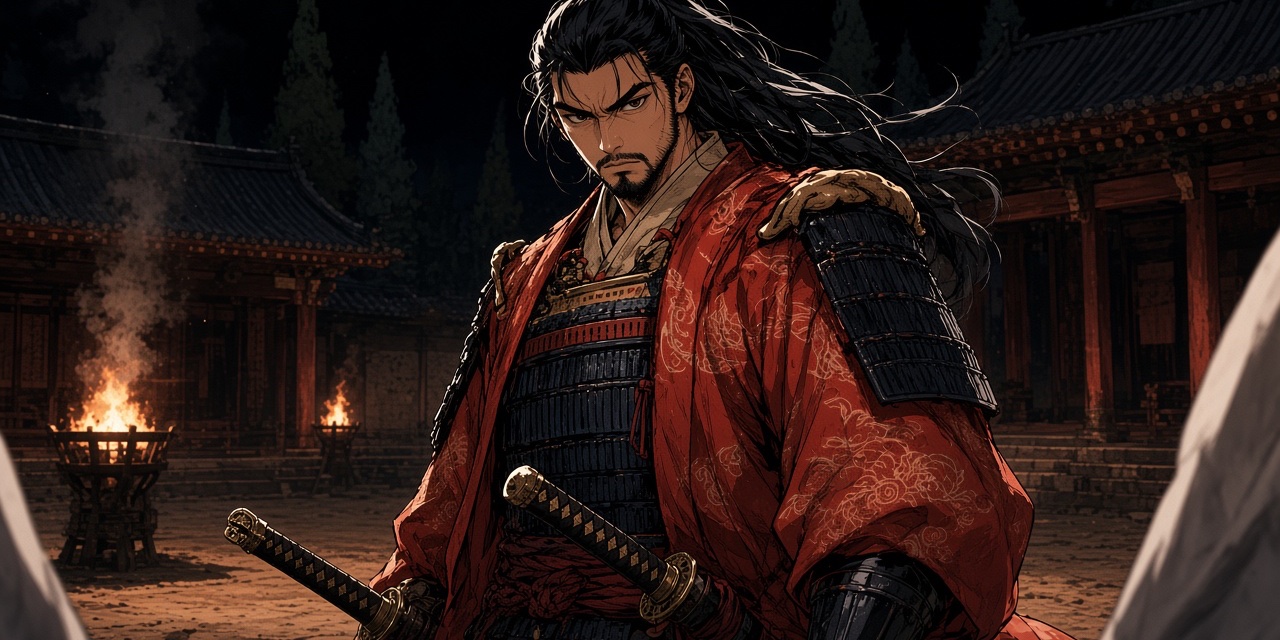
Seventeen winters after the horsemen came down like weather, still sings like a city that lost.
The red banners never quite went home. They saved the capital. Then they stayed. Then they took the king’s brothers and called it rent.
He is not making it up. It is a song. The market has three tunes for it, and they all rhyme, and none of them are kind.
A stone hits the palace wall and does not mean to. A woman pulls her son back by the collar. Nobody picks the stone up.
Further down, a stall has one fish and three buyers. The fish is yesterday. Nobody argues. Arguing costs breath.
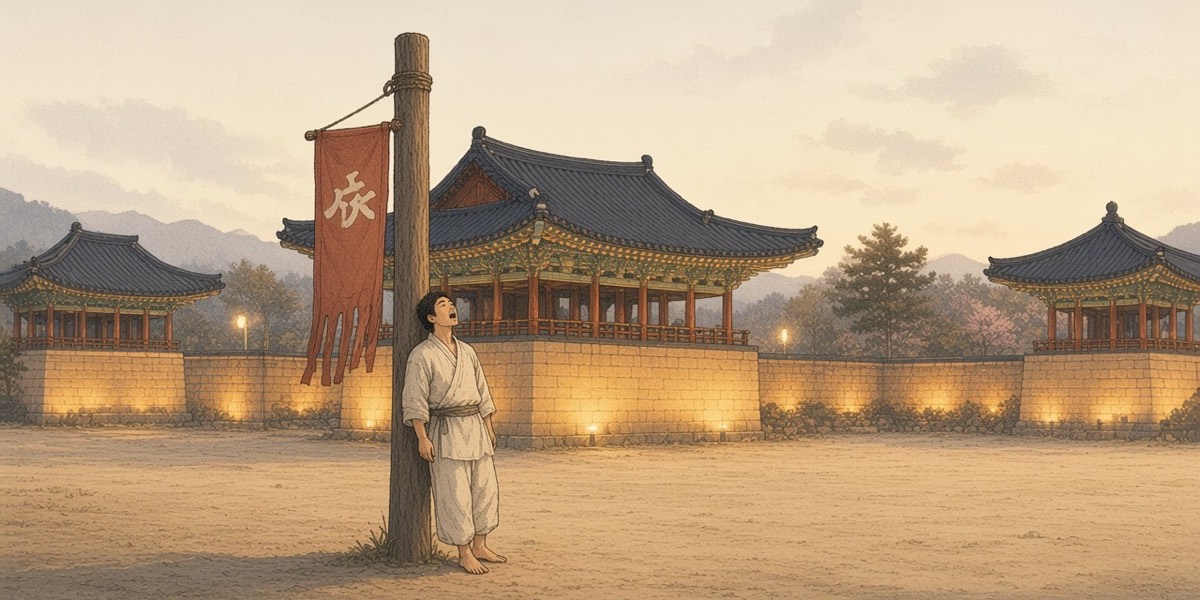
A peasant sits in the packed earth with his back to a post. White hemp. Bare feet. He is counting nothing. His mouth moves with the song anyway.
The red banner over the lane is faded at the fold. It has been there long enough to learn the wind. It does not leave.
Nobody shouts anymore. They have a worse name for the sky.
asked. That is the part the songs skip. The horsemen came down like weather, and then they did not leave.
The king comes down from his own wall. He has already written the word. Now he has to wear it.
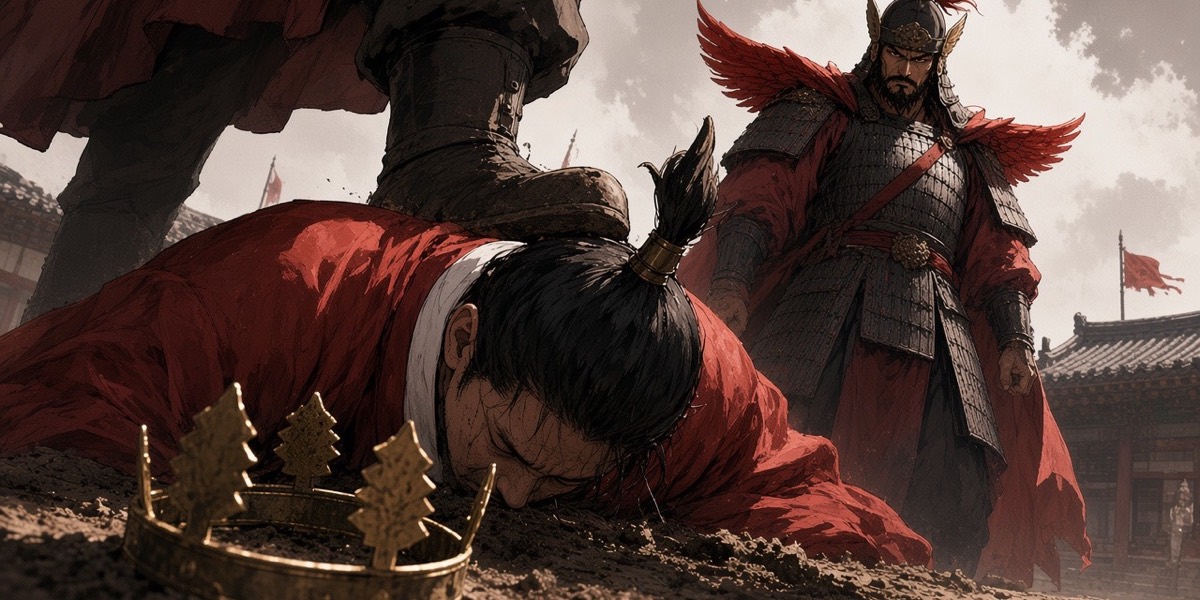
He kneels in the packed earth of his own yard. The Great King does not get off the horse at first. Then he does. He puts his boot on the head.


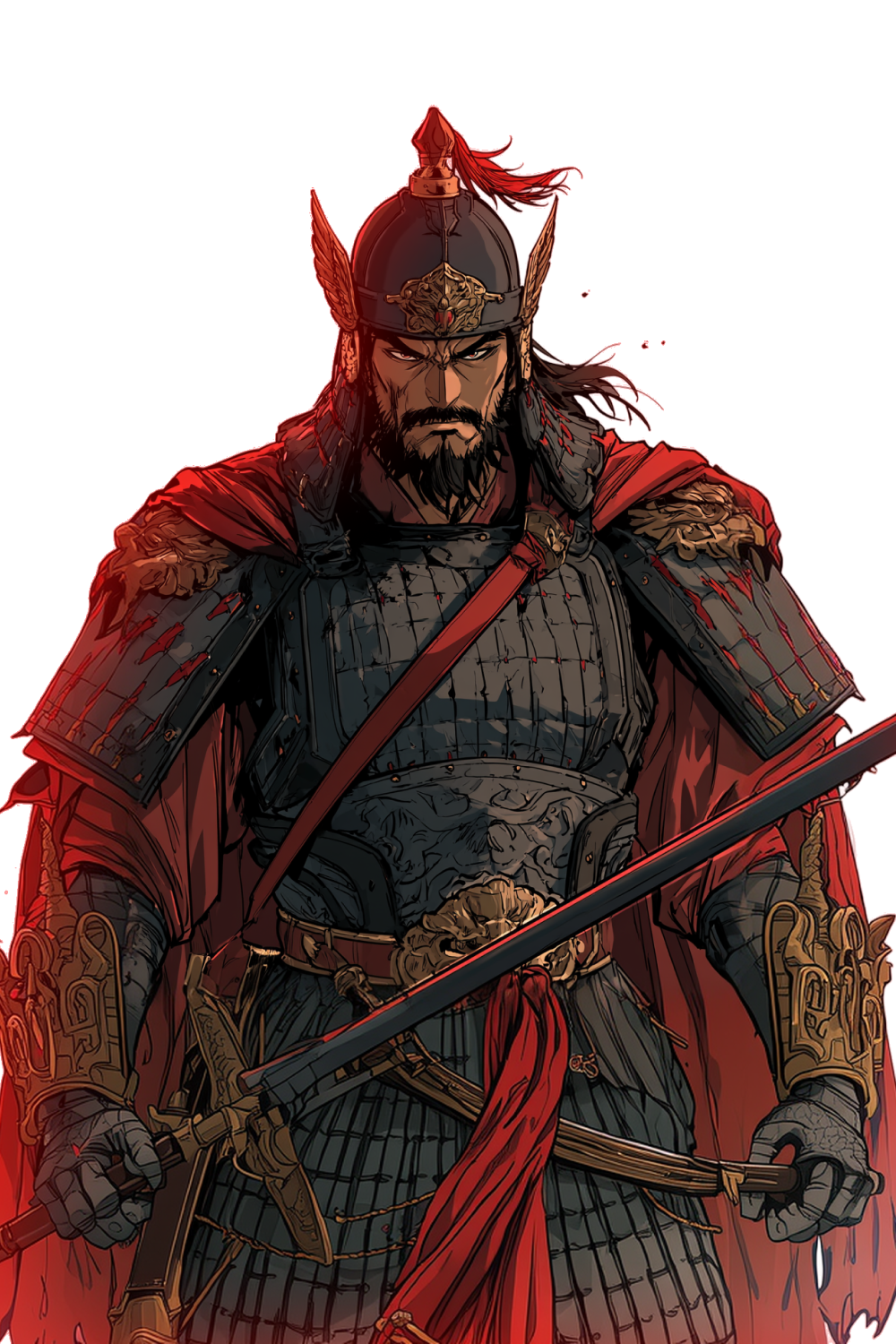
The yard is very quiet. A thin country learns, in the dirt, what asking costs.
The king is still in the dirt. Three boys were made to watch. That was the lesson.
The oldest has his fists in his sleeves. The middle one looks at the boot. The small one looks at his brothers.
He points with the same boot. Not at the oldest.
Nobody waits. Hands already on the middle boy’s arms. The small one is lifted. His feet leave the packed earth.
He gets one sleeve. Then he gets none. The oldest is left in the yard with a boot-print and two empty places.
learns a new shout. It is not funny.
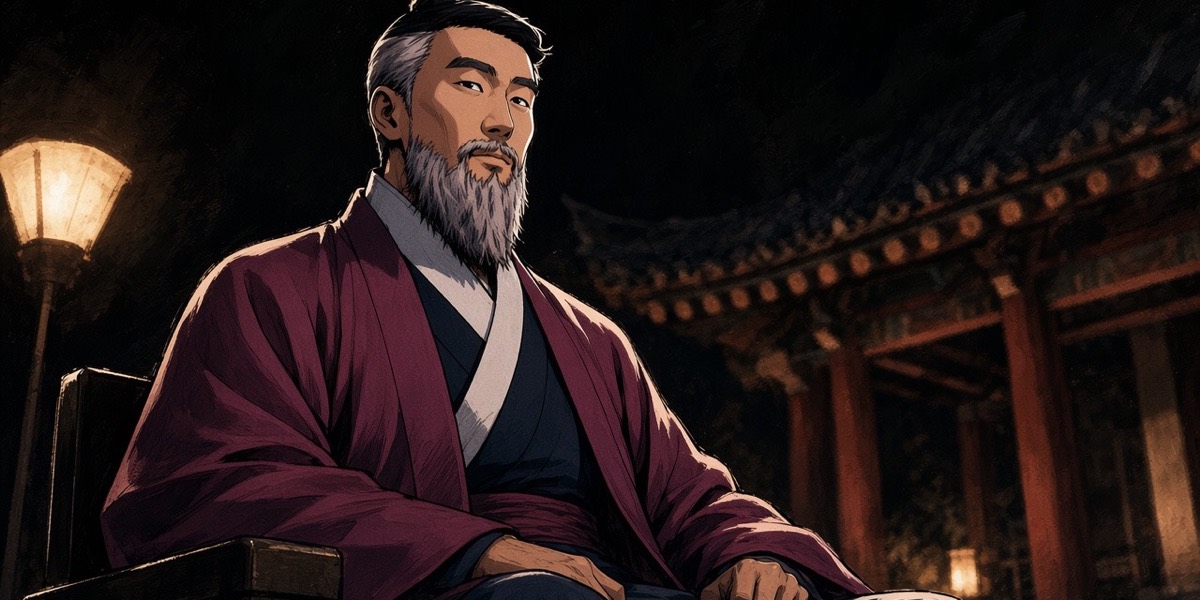
hears it from the window he is not supposed to open. He opens it anyway. He has been king long enough to know the songs get to the chair first.
He has a list. He does not write it. Writing it would make it a country, and he is not sure he still has one.
in the north. over the water. A hall that fills only when he asks who talks. A people who sing him empty. banners that learned the lanes. No army he can send without asking the man who put a boot on his father’s head.
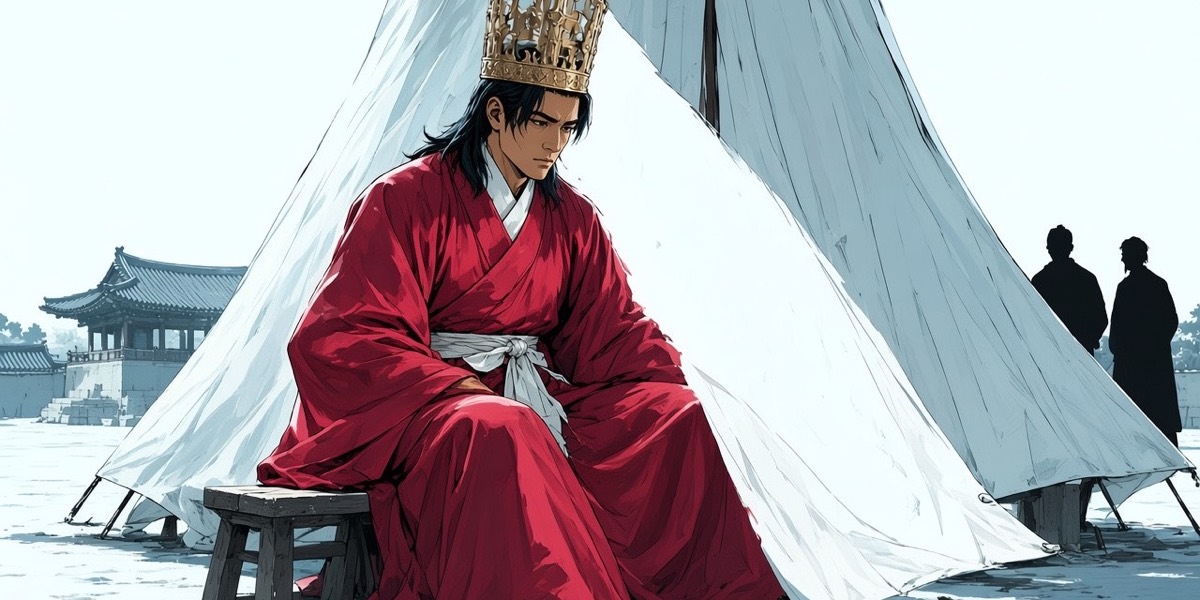
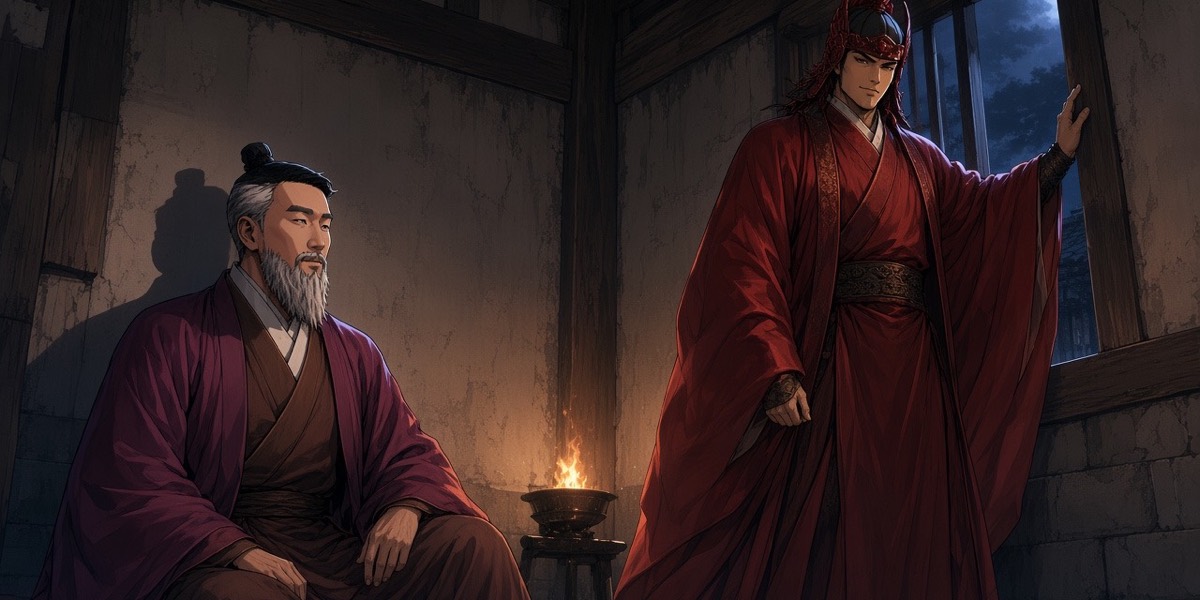
meets in a tent because the good hall leaks, and the timber that would fix it went north as rent.
Half the canvas is ripped. Wind comes through like a councillor who was not invited. Someone has tied the tear with a sash that used to be white.
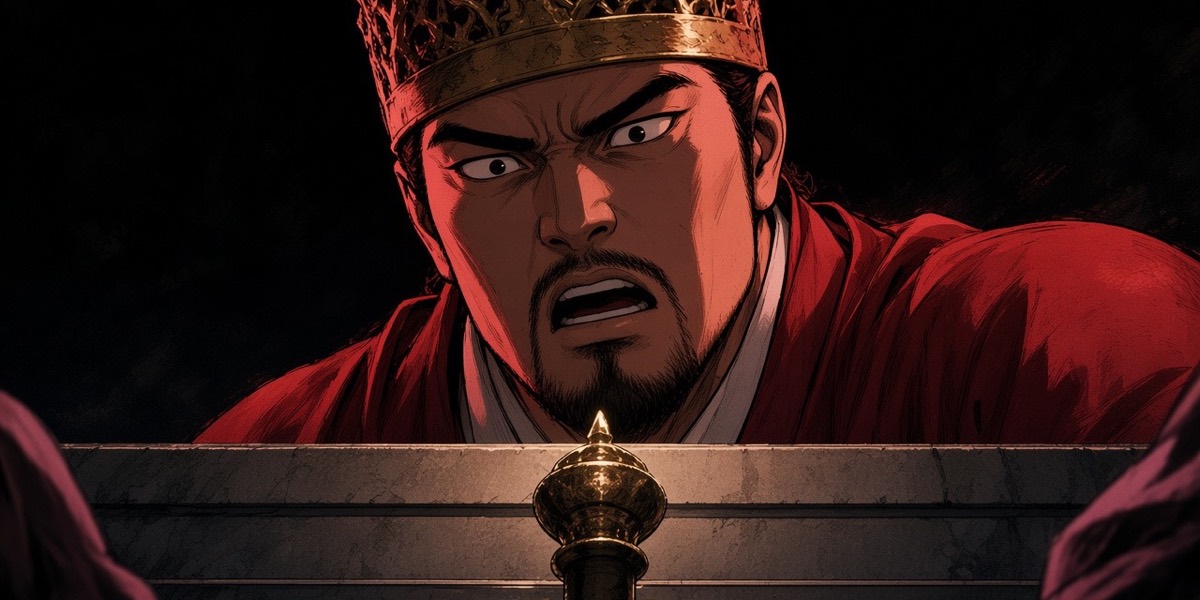
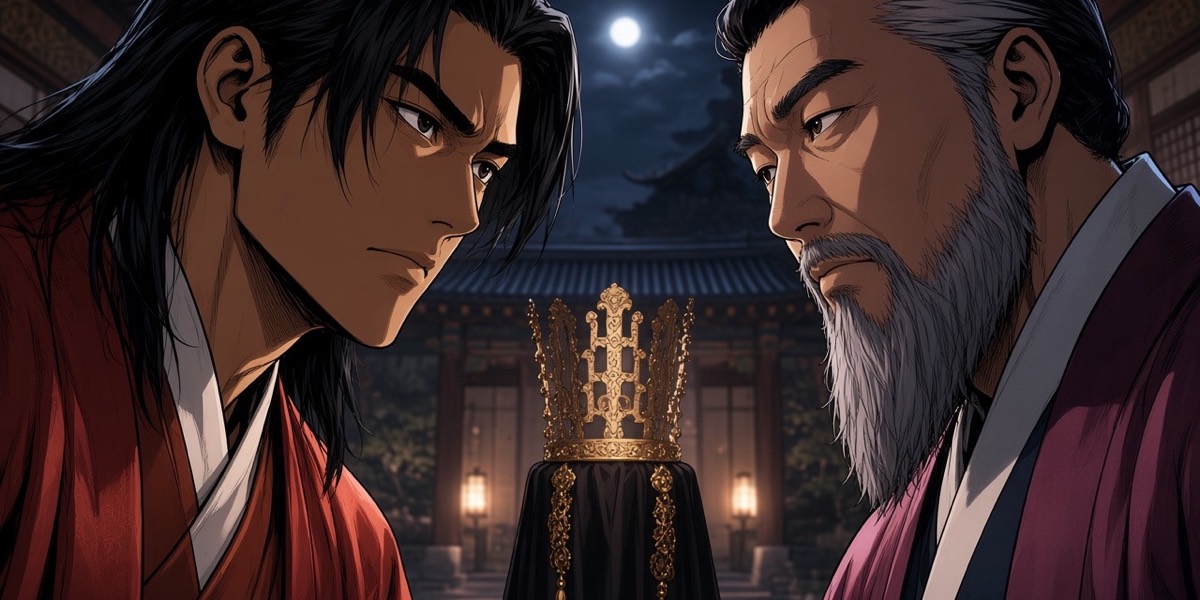
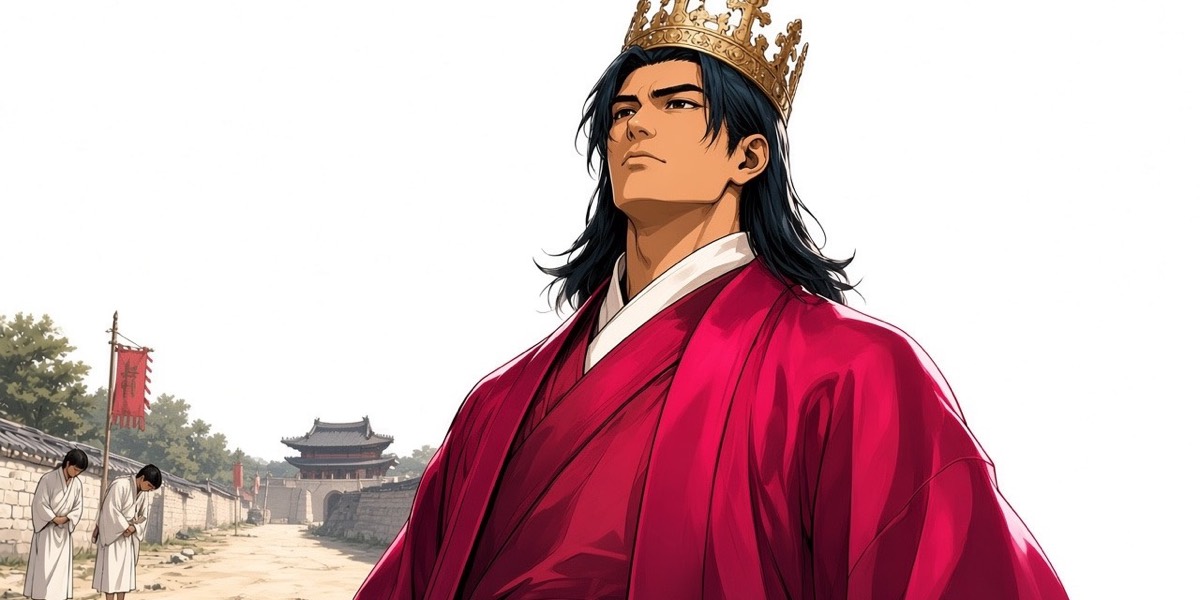
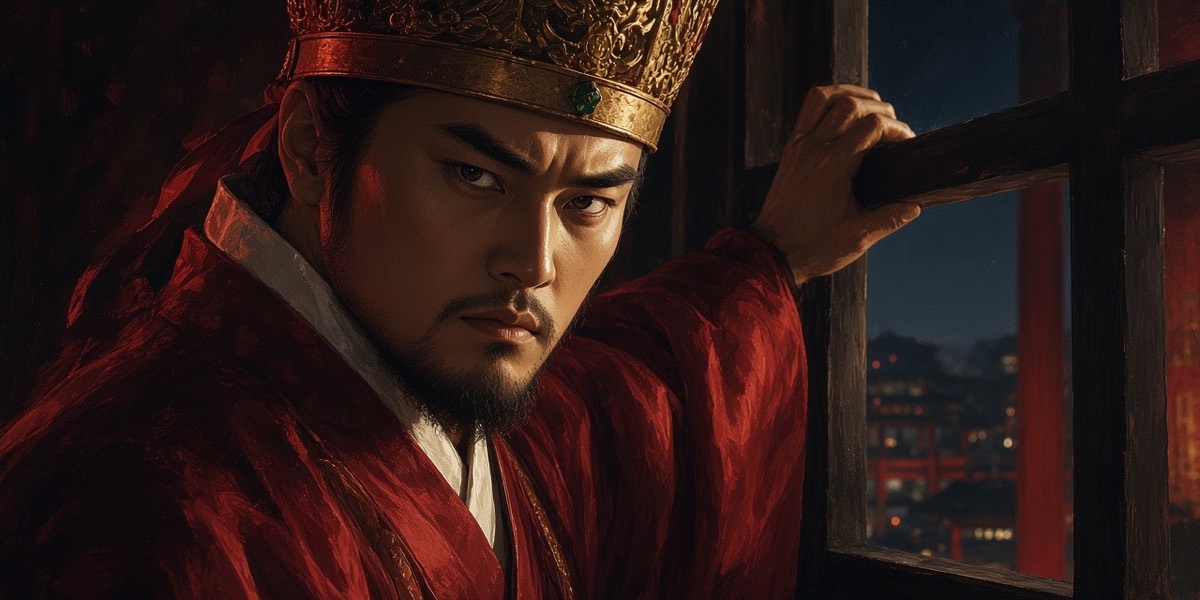
sits on a low stool that is not a throne. The crown is on. It does not help. He looks at the rip. He looks at the men. He does not look like a king who has an answer.
Nobody answers in the tent. They are used to not answering. He stands anyway. The sash on the rip comes loose and nobody ties it back.
The hall is full. For once. He does not ask for an army. He asks for a mouth.
There was only one man the king could send. They had decided that as boys. The tent has not caught up.
They send. The streets still want a funeral. The hall wants a talker.

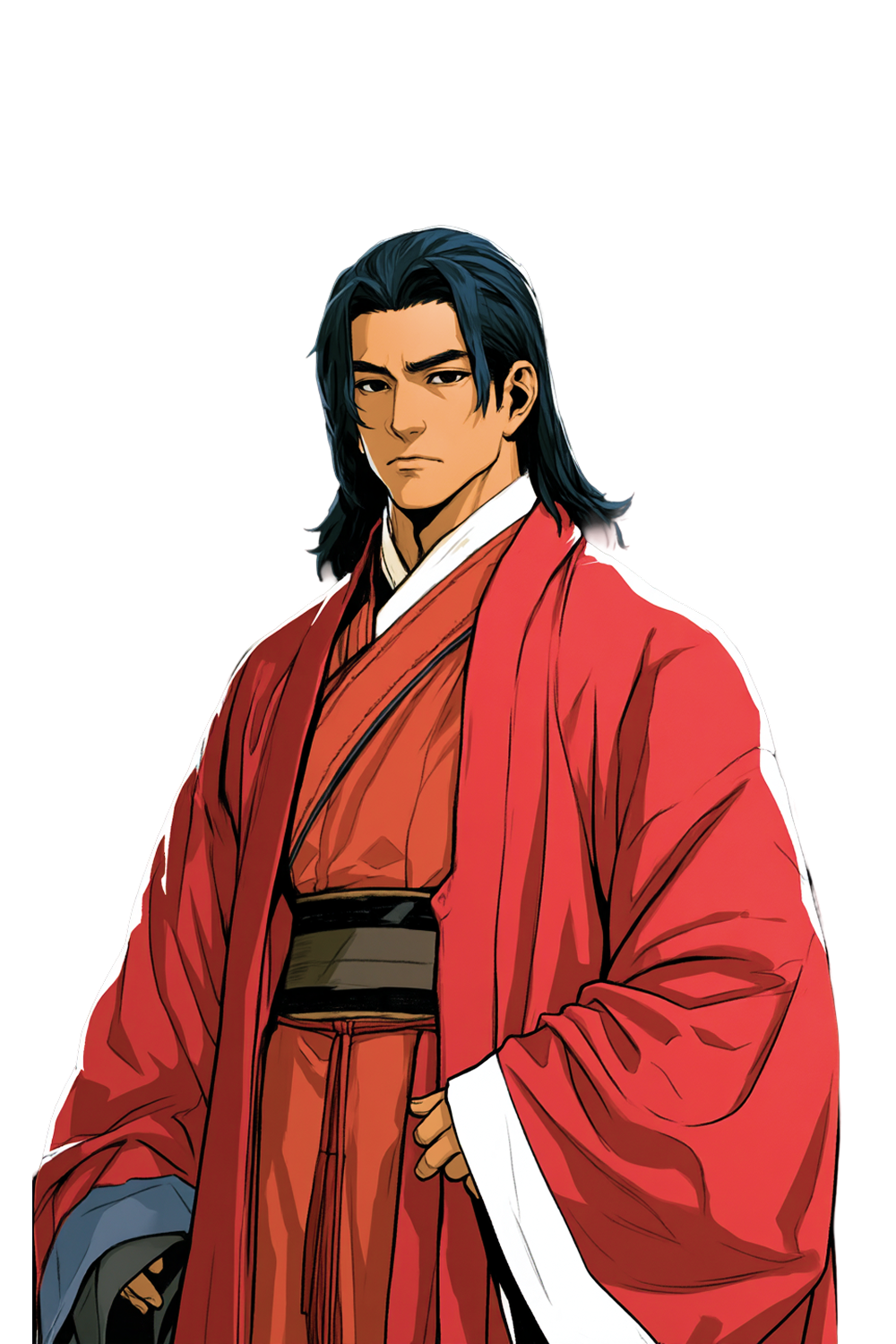
They announce him. The hall uses the formal name.
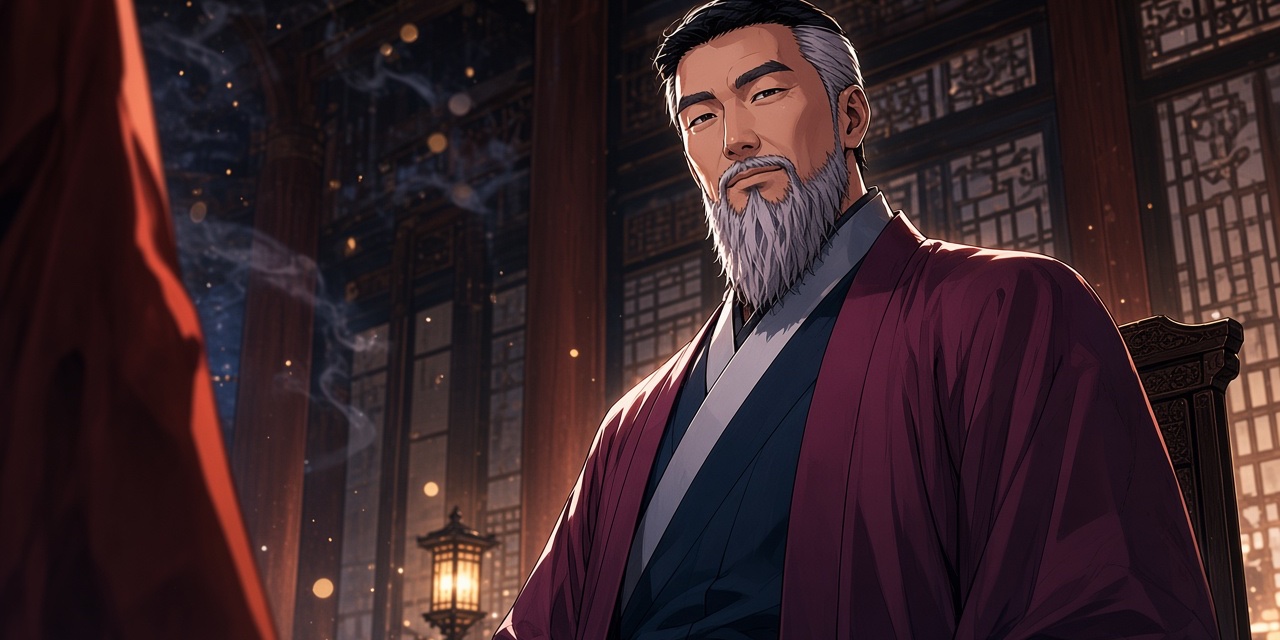
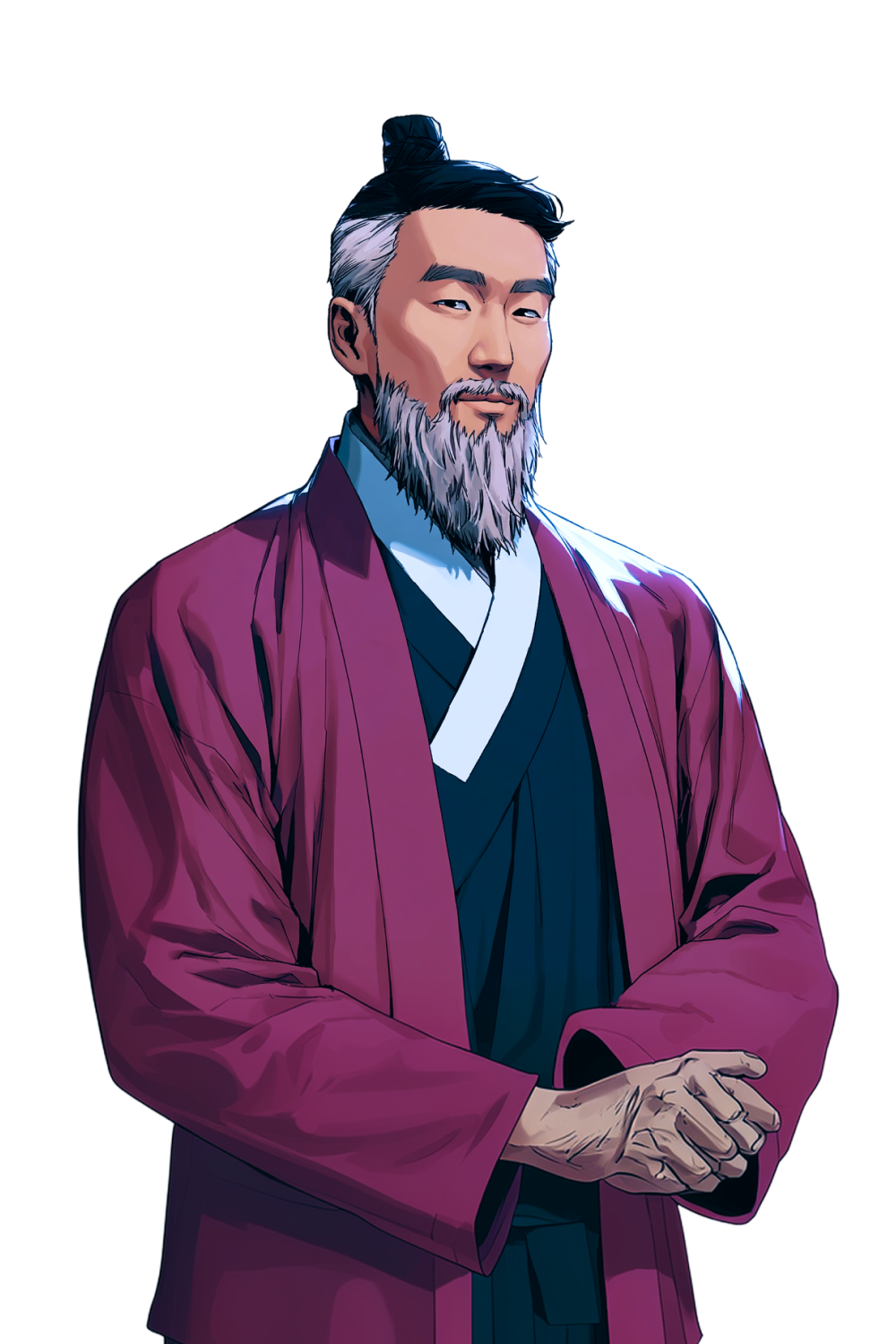
The song followed him into the hall. He lets it. He has been walking since the lamps went.
is a Korean name. The hall needed characters. is what they put down.
Only the house and this chair still use the old one. He took when the seat got high. The tricks stayed .
Though I am foolish and of no account, how dare I not receive the command with care?
신이 비록 어리석고 못났으나 감히 명을 삼가 받들지 않을 수 있겠습니까?
He does not say if. He says after. That is the old sentence, grown up.
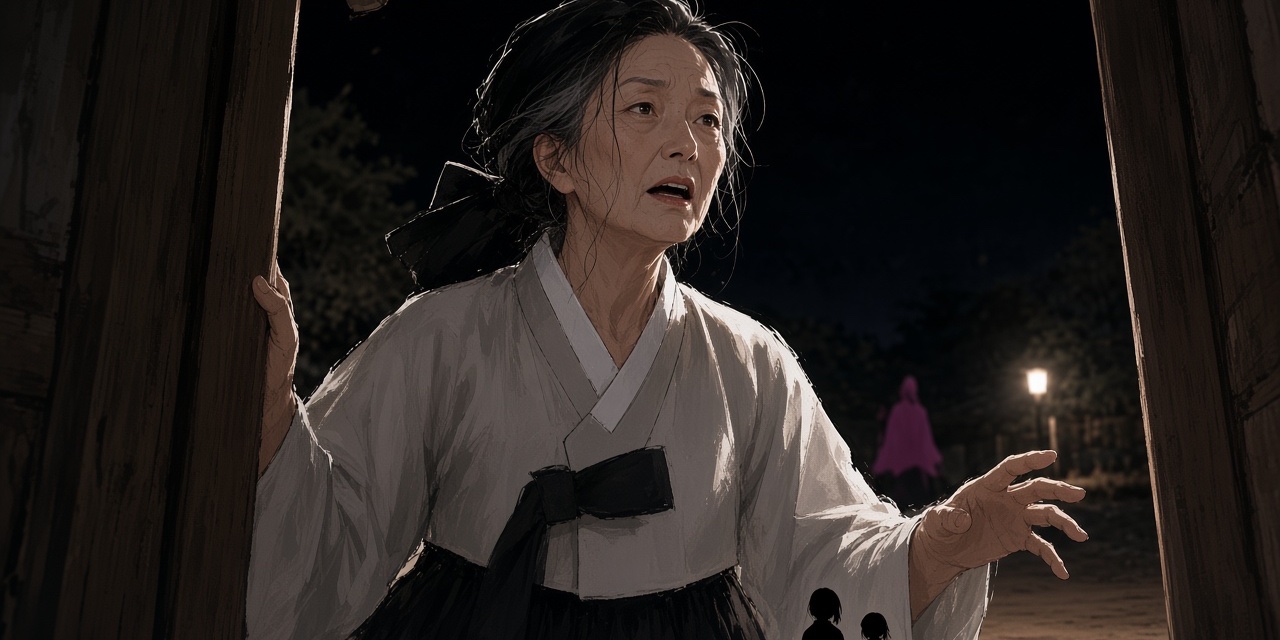
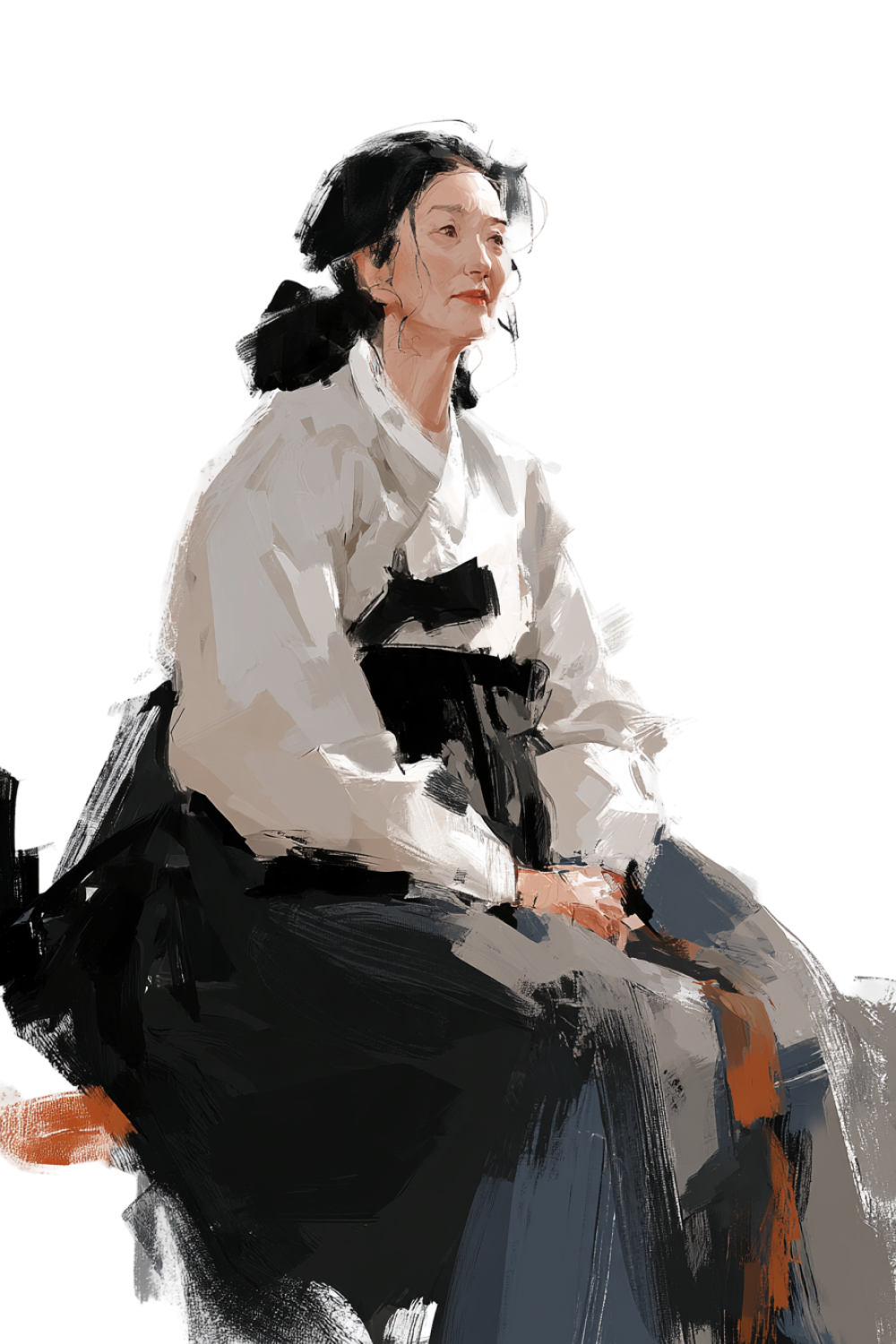
She does not finish the next sentence. He is already on the road. The door stays open a long time, which does not help.
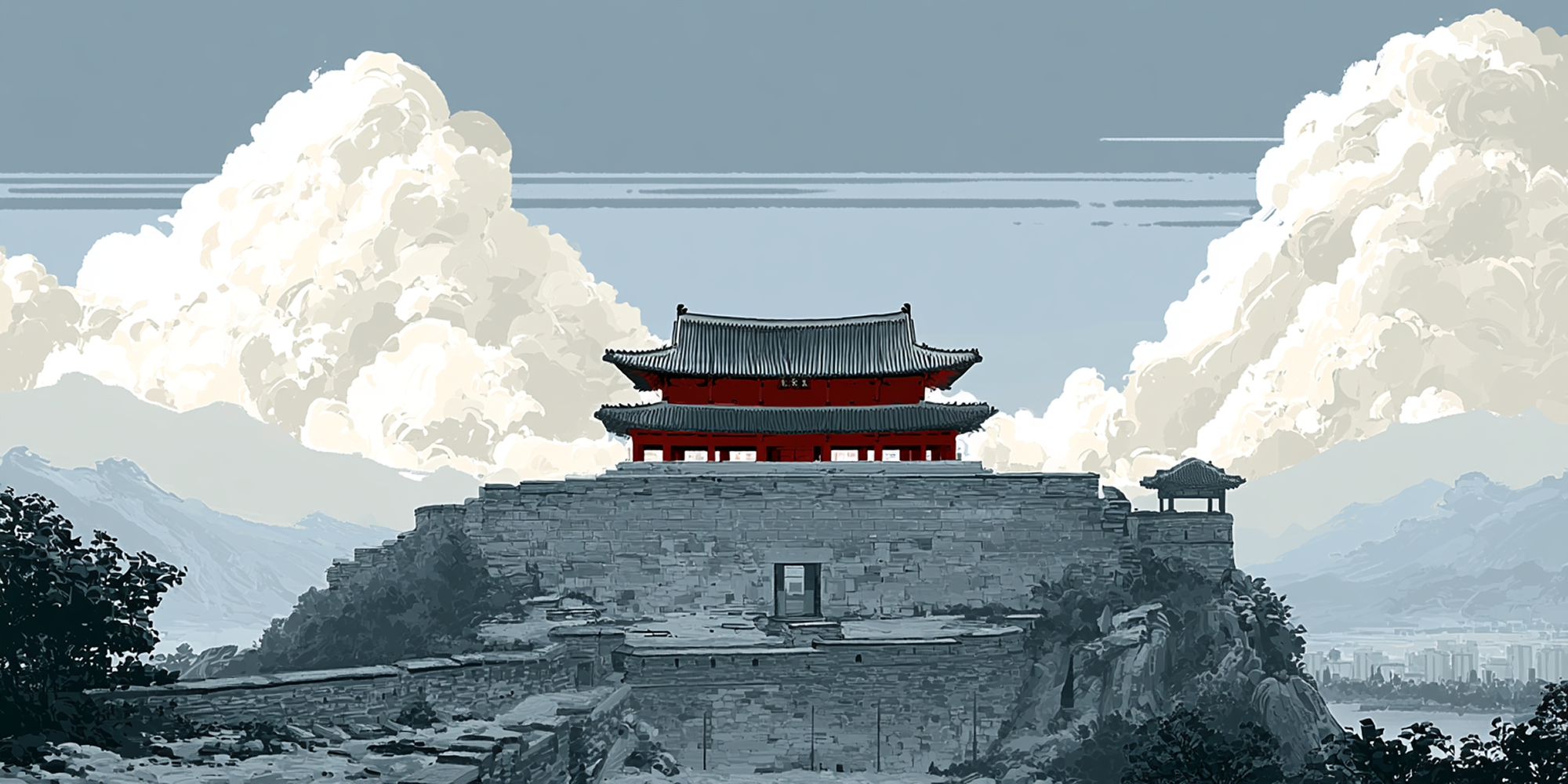
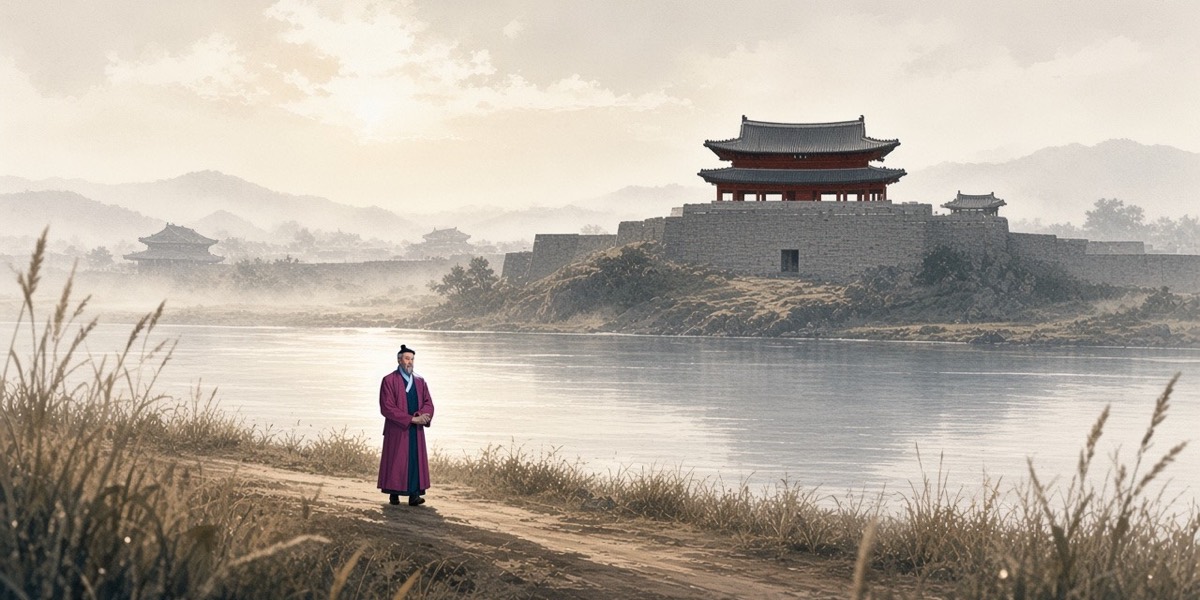
sits on the river like a red roof that learned to be a capital. walks in as a guest. Guests, in this hall, are a kind of weather.

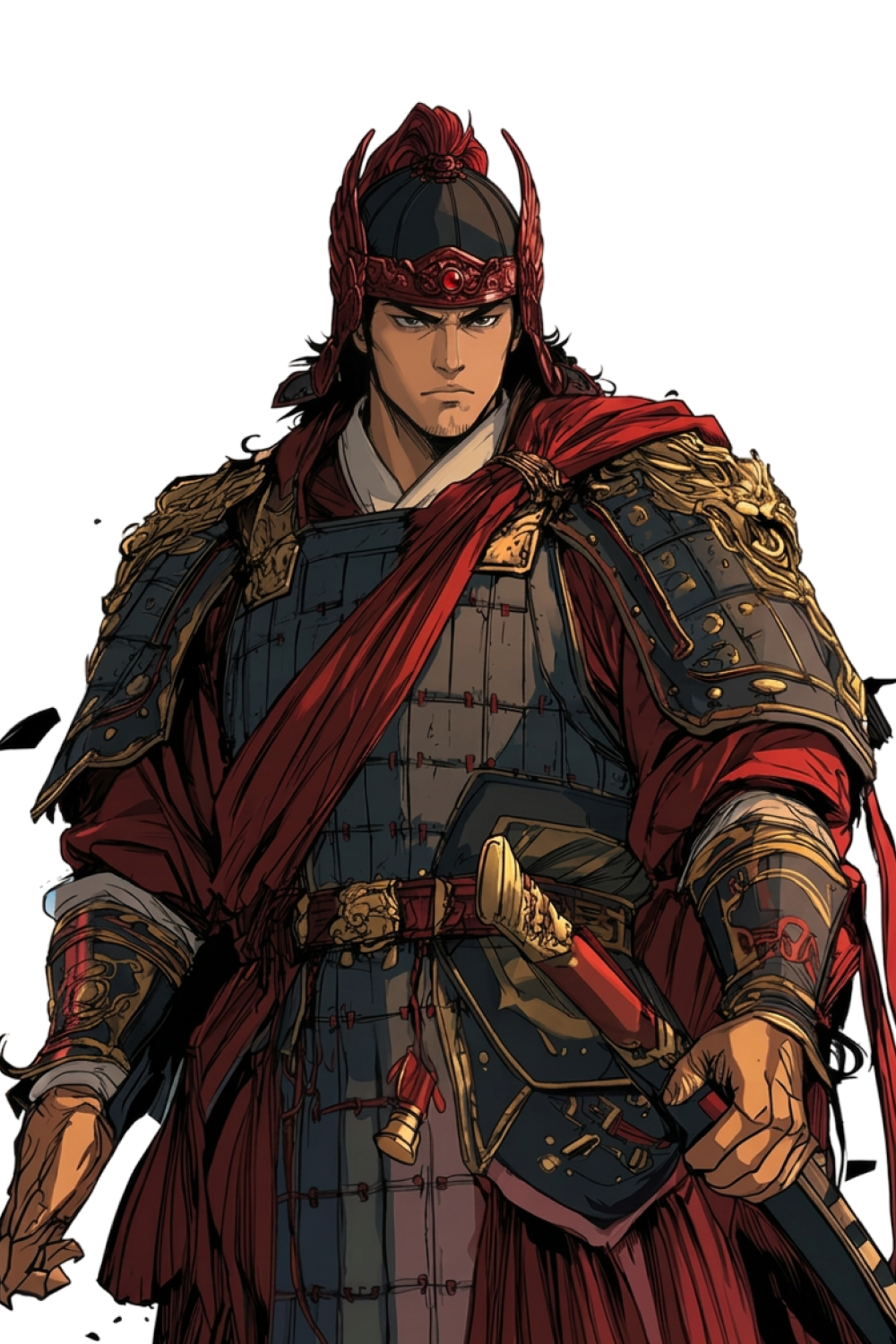
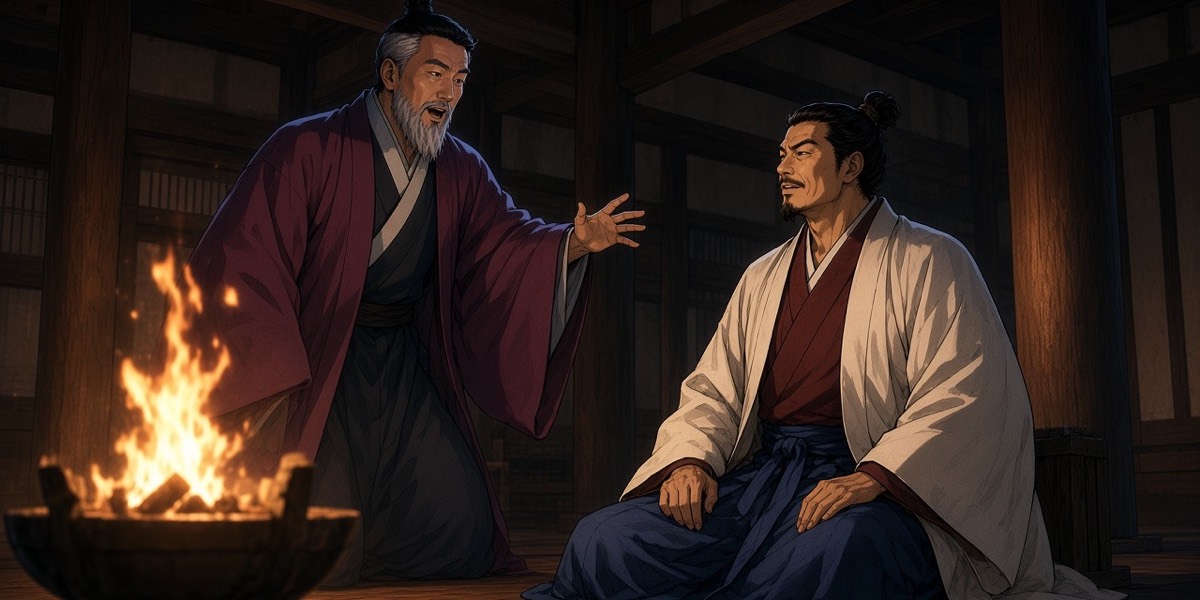
They announce him. The hall uses the formal name. does not stand.
does not kneel first. He sits the way a man sits when he has already decided the ending.
’s mouth moves. Not a smile. The start of one. The hall feels it, the way a hall feels a weather change.
The king said, “Good,” and permitted them to go home together.
왕이 말하기를, “좋다”라고 말하고, 함께 돌아가는 것을 허락하였다.
They go down the stairs before the hall can change its mind. is in a side court, already on a horse that is not his.
They are already on the stairs when the officer finds his voice. does not look back.
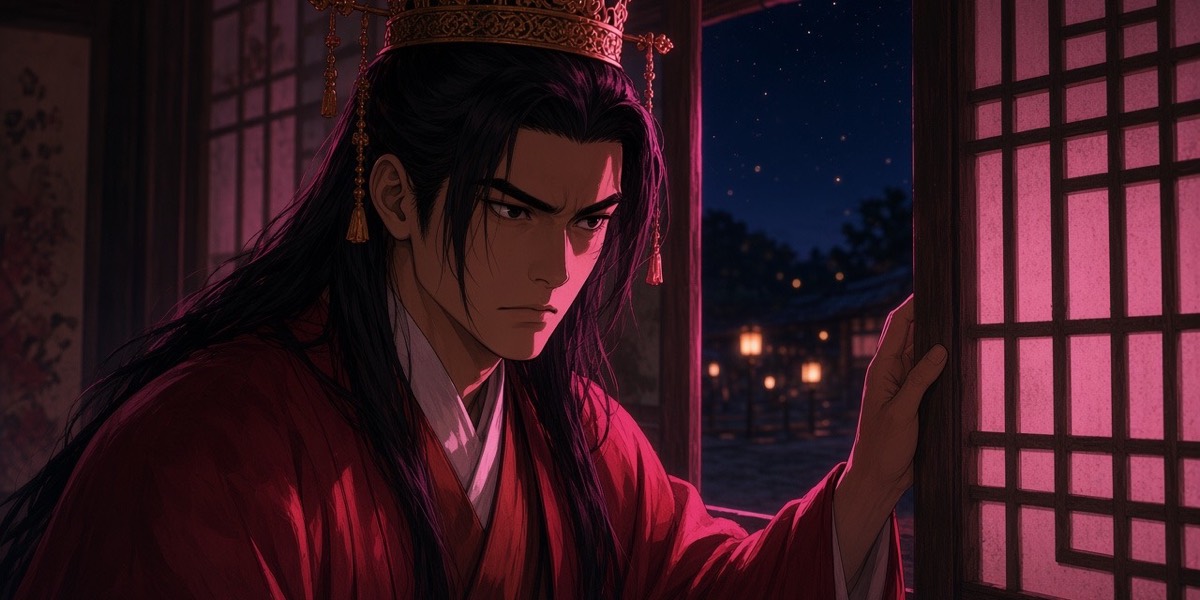
’s hand is on the window-frame. The start of the smile is gone. He has been generous in his own hall, and the generosity just turned around and bit him.
He does not go himself. He lifts two fingers. The yard below the window fills with horses.
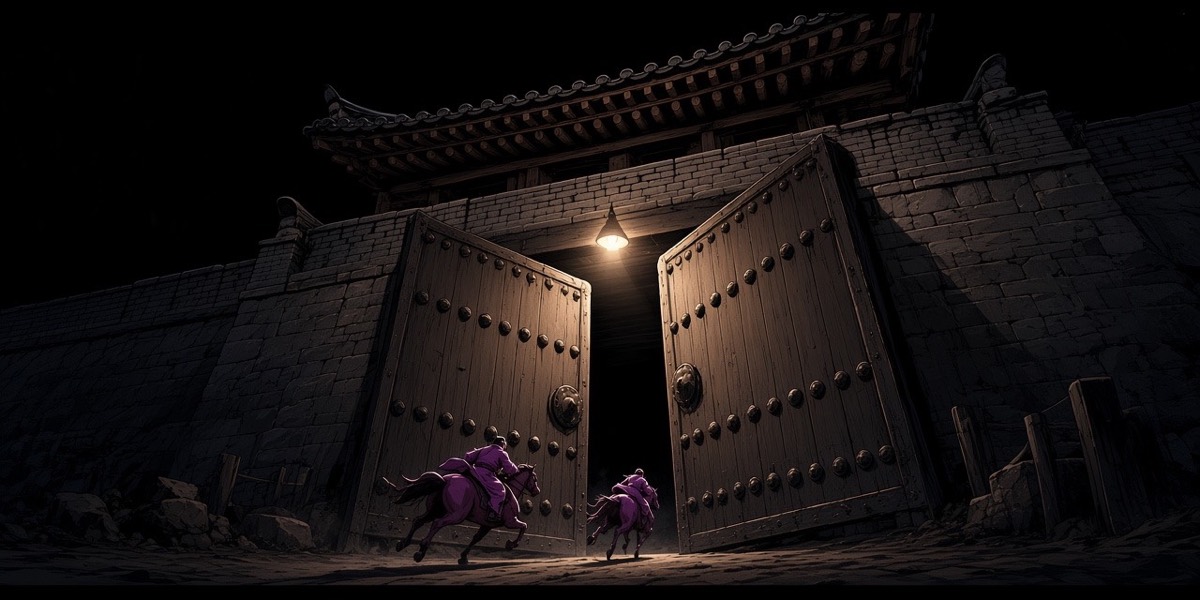
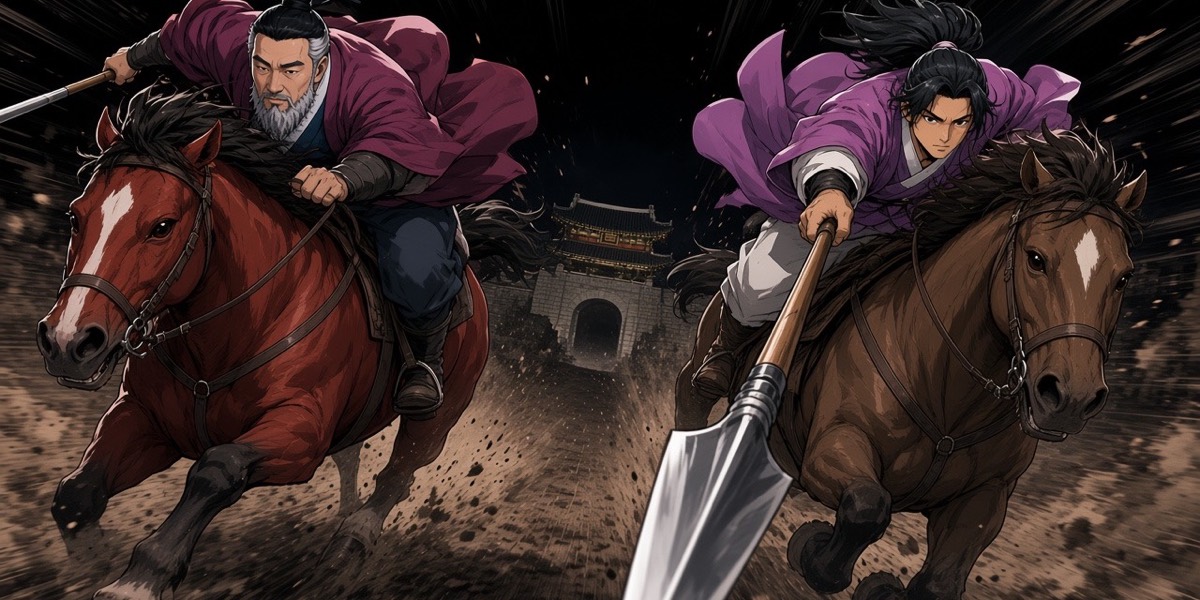
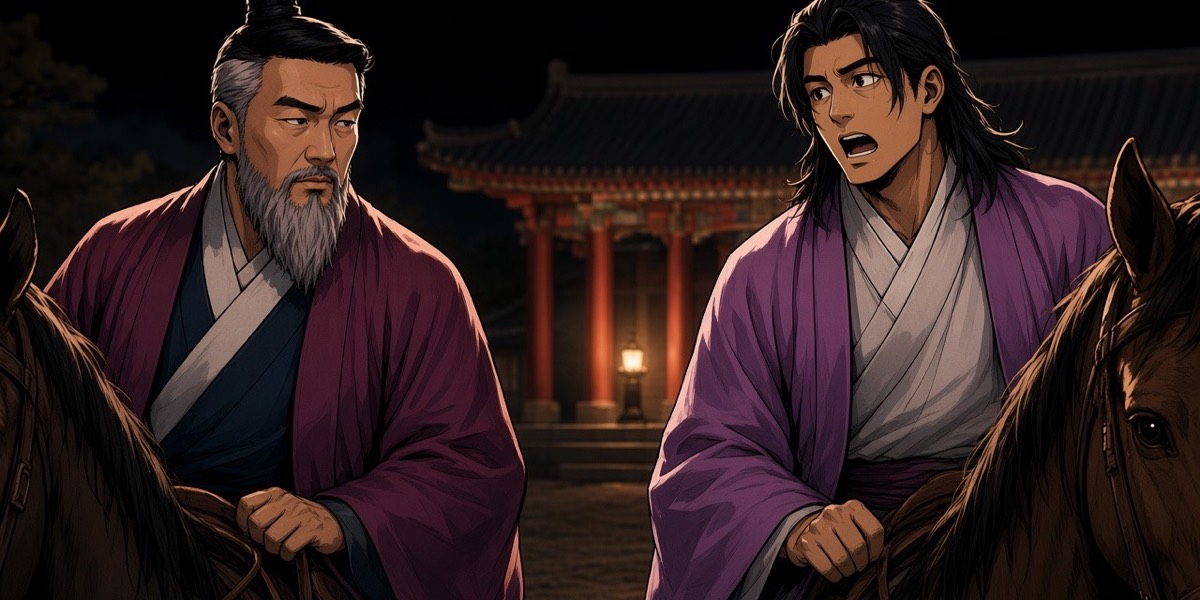
The seongmun is still open. Two horses. Magenta and lilac. The packed earth of the yard is a short road if you do not stop.
Then the timber leaves begin to move. Iron bosses catch the lamp. The gap is a mouth closing.
They put the horses at the gap. A guard steps into the road with a spear. does not slow. The shoulder of the horse is the answer.
One rider does come down. Spear first. turns the horse into the man’s shoulder and the grass takes him.
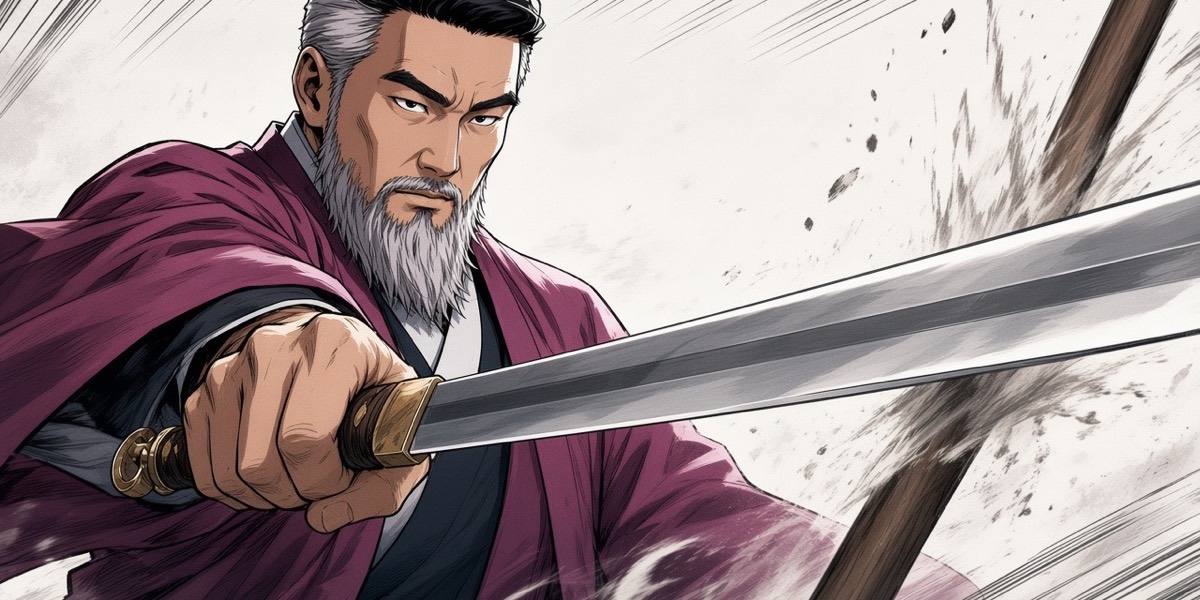
A second tries the other flank. The ring-pommel comes out only long enough to knock the spear aside. He does not stay to finish.
’s horse hits a man who will not move. The man moves. The gap is a slit. They go through it the way a stolen boat goes through a rope.
The leaves meet behind them. The sound is a hall changing its mind.
They ride southeast. Not south. South-west is someone else’s argument.
They keep on the right until the east ford. is the other bank of a different story. They do not take that road.
For one ridge the hall still means it.
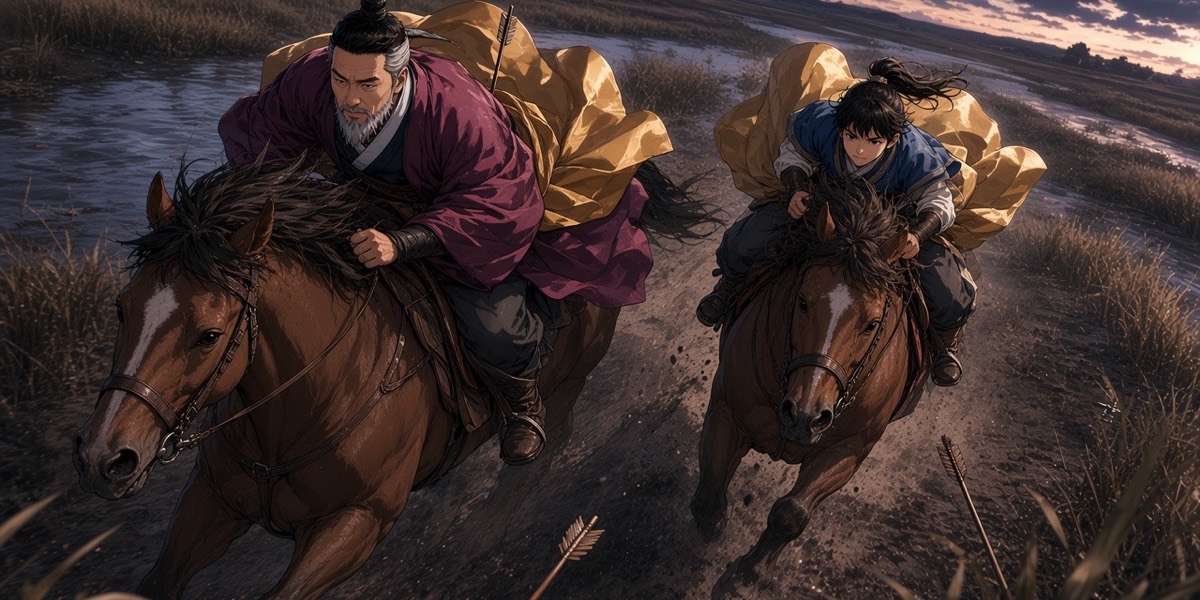
Then the dust behind them is not weather. It is horses. A lot of horses. does not swear. He shortens the reins.

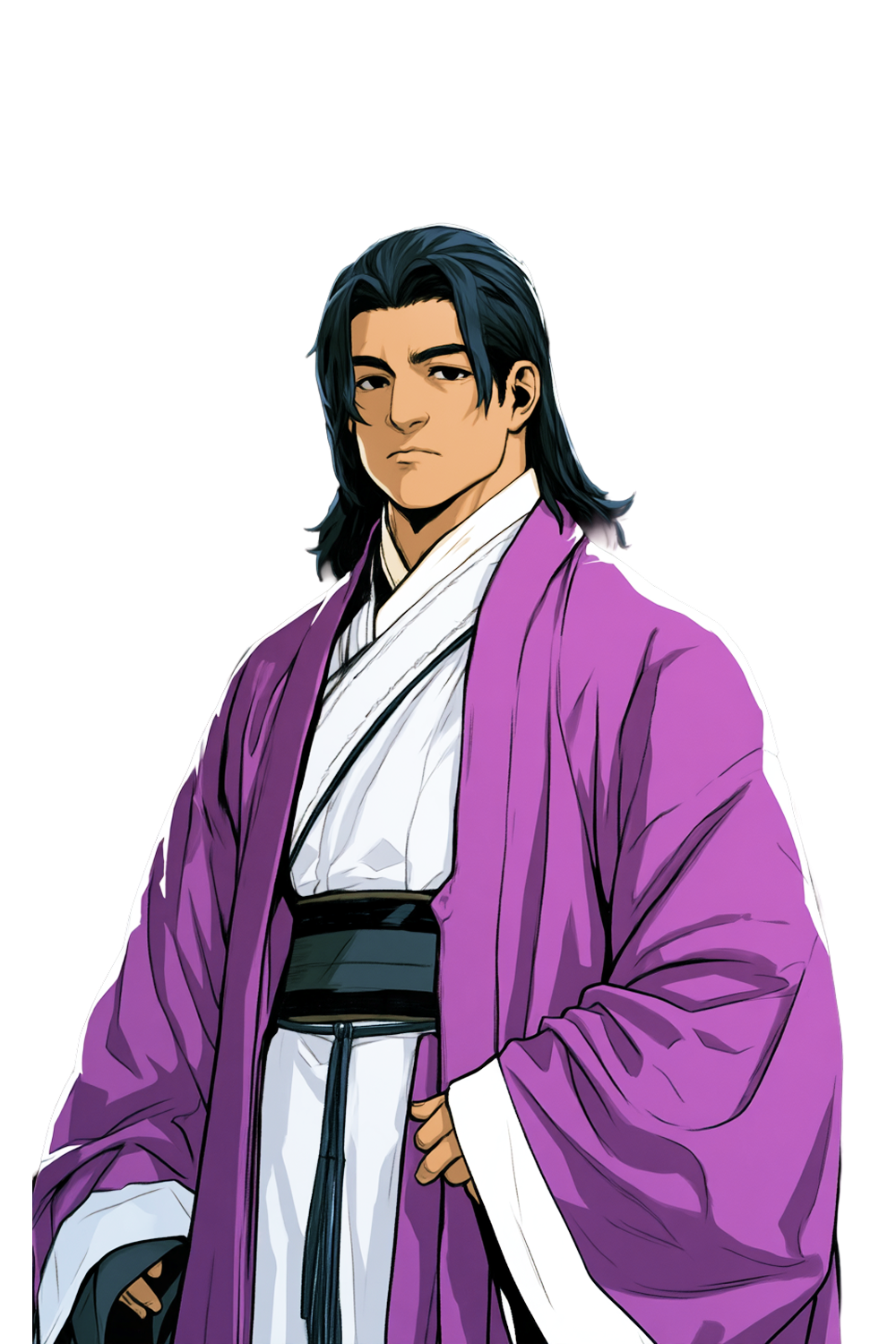
The first arrows come at the river-bend. One hits ’s saddle and stands there, quivering, like a question.
Another shaft slaps the horse’s neck and falls in the grass. Wood. Just wood. A third kisses ’s sleeve and drops.
On the ridge the line is still shooting. Nobody aims at the horses’ legs. Nobody rides down to finish it. These men used to steal the boy’s rice.
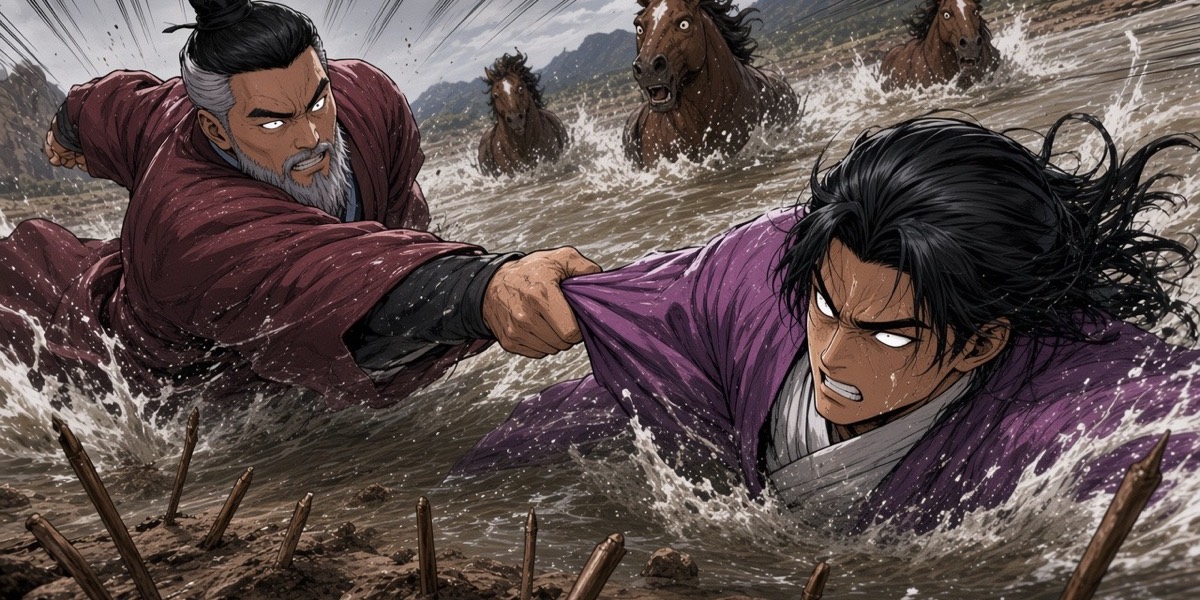
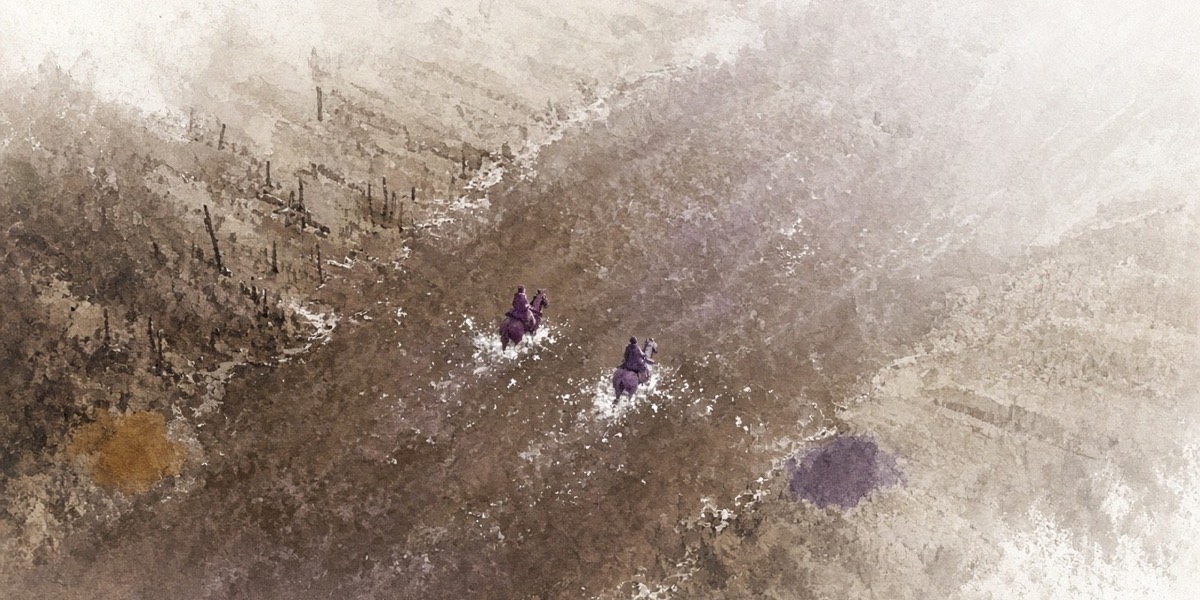
The is brown and wide. No bridge. No ferry that will wait. The east current is the road.
They hit the water so hard the horses scream. Arrows stitch the near bank, still blunt, still enough to kill if one finds an eye.
On the side a royal rider is already waiting. He did not come to congratulate them. He came with the next sentence.
looks at his own gate, which is close enough to smell. looks at . The rider looks at neither of them.
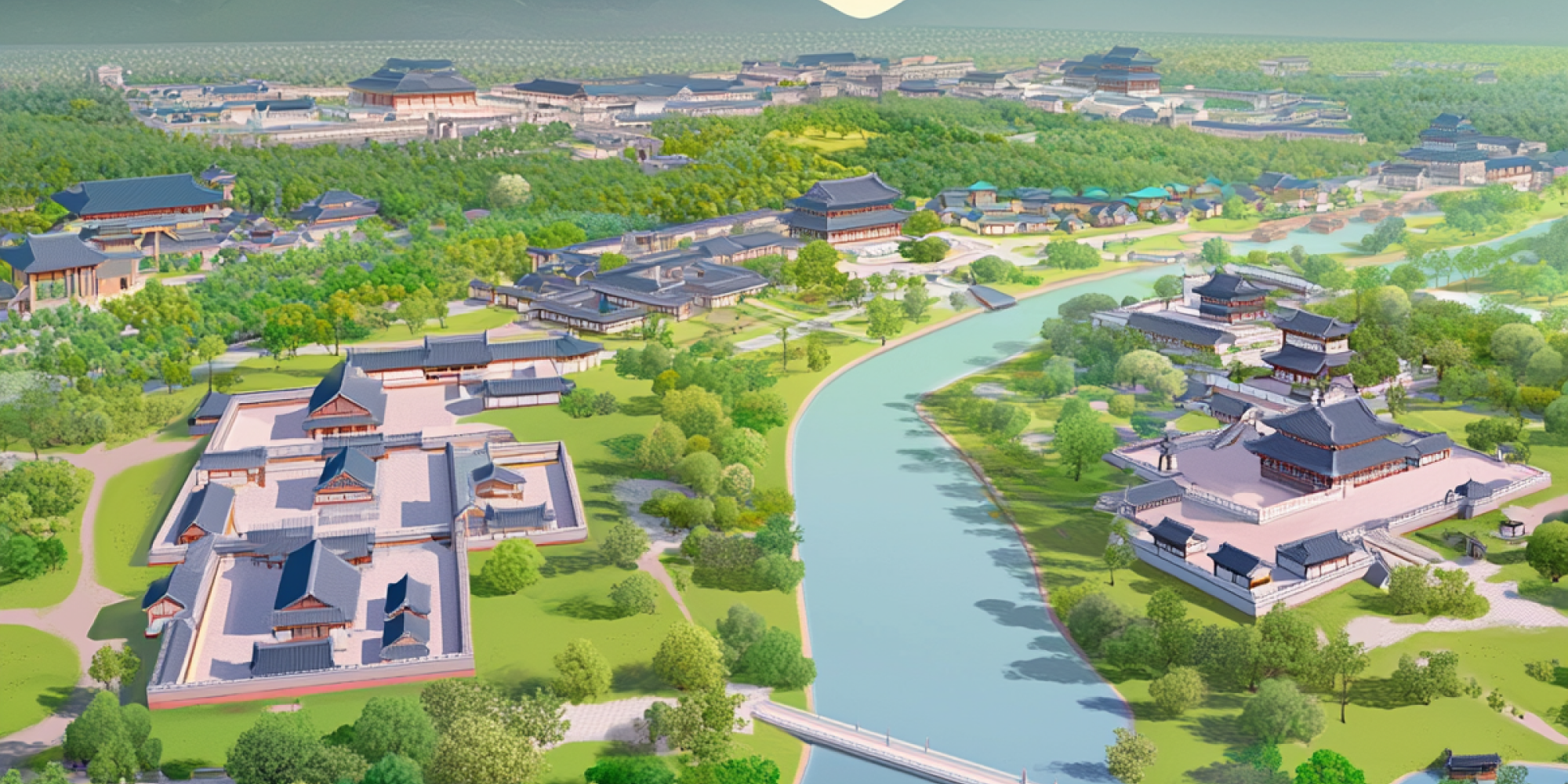
The is a timber hall that thinks it is a country. One lamp. Two brothers back, if you count the one still on an island. has not slept.
comes in first. The king stands up, which is the first honest thing he has done all week, and it is not enough. comes in behind with the river still on his sleeve.
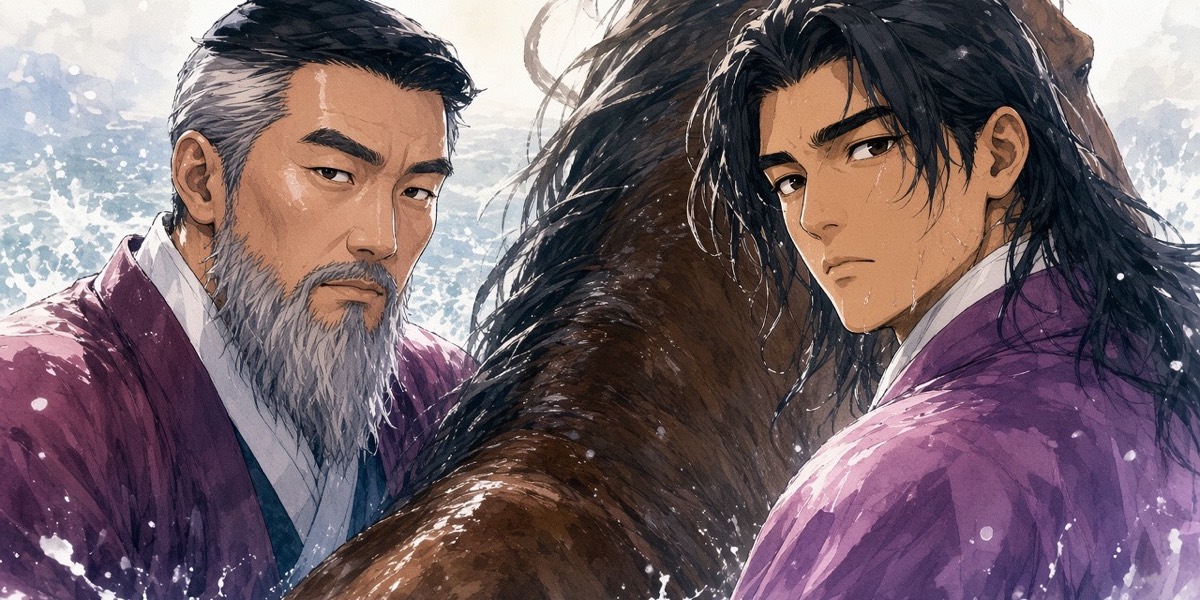
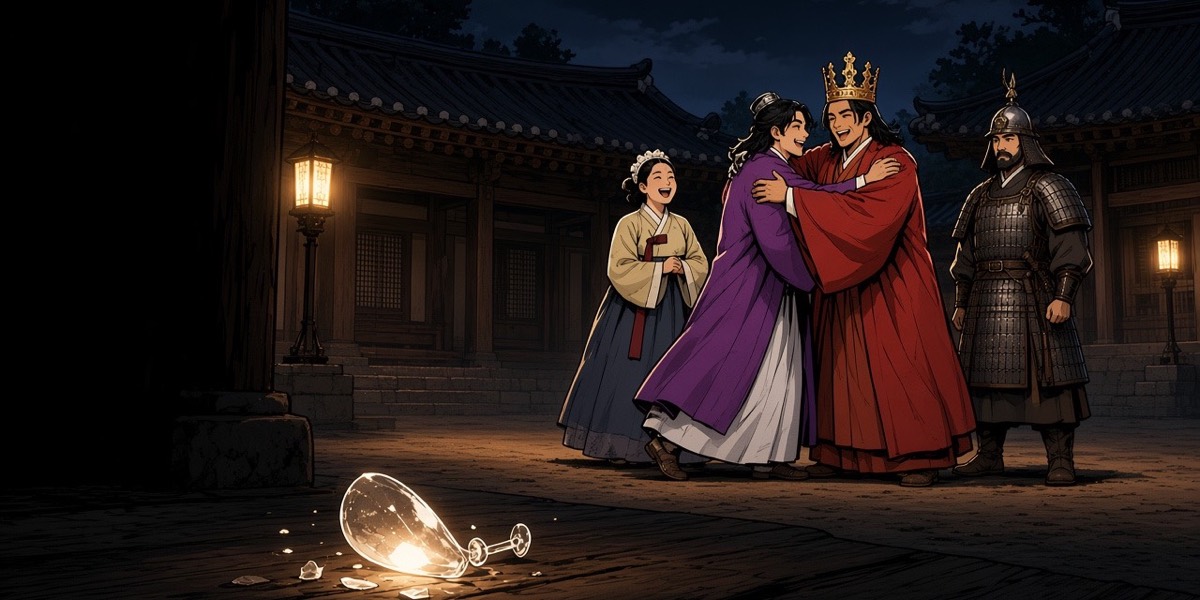
does not speak first. He takes his brother by the back of the neck and holds him. ’s purple silk is still wet from . The king’s mouth is in his brother’s hair.
They stay like that longer than a court allows. A maid looks away. waits by the lamp and does not cough.
Then the yard remembers it is allowed to be loud. A maid drops a cup and laughs at the mess. An officer shouts a name that used to be a hostage. Wine finds bowls that were empty last week.
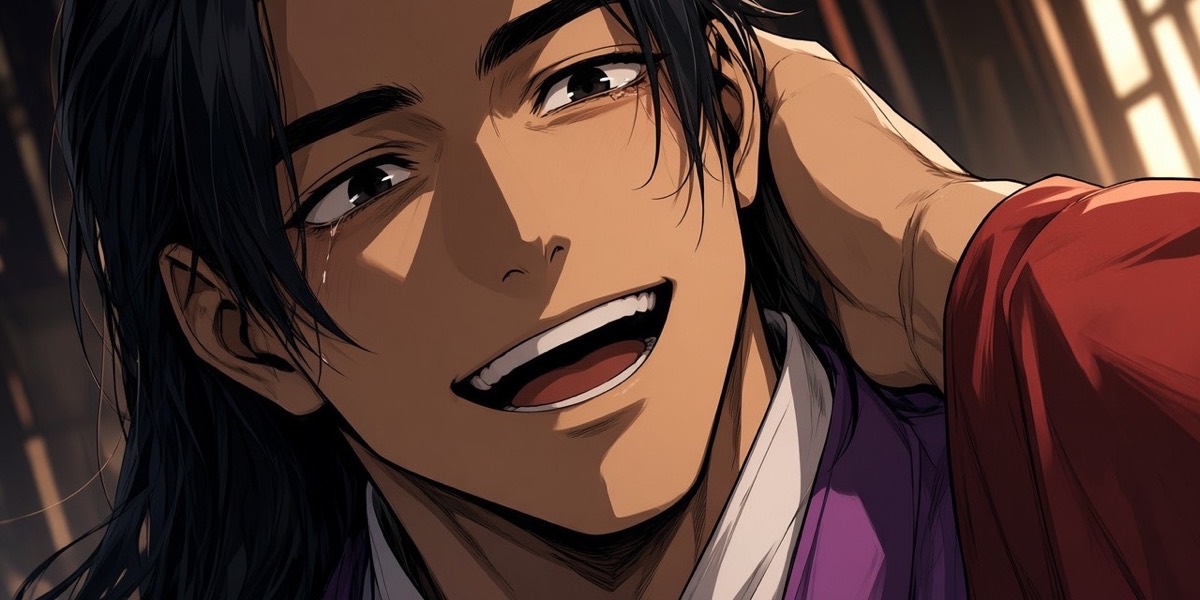
laughs once, surprised at his own mouth. still has a hand on the back of his neck. For a whole cup, the hall is a country again.
Then ’s mouth finds a line the books already wrote. He says it like a man who has just understood what he is still missing.
I think of my two brothers as my left and right arms. Now I have only one arm. What am I to do?
내 두 아우를 생각함이 좌우의 팔과 같은데, 이제 한 팔만 얻었으니 어찌하랴.
The cup in the maid’s hand stops. The officer looks at the south-shore man. does not sit down.
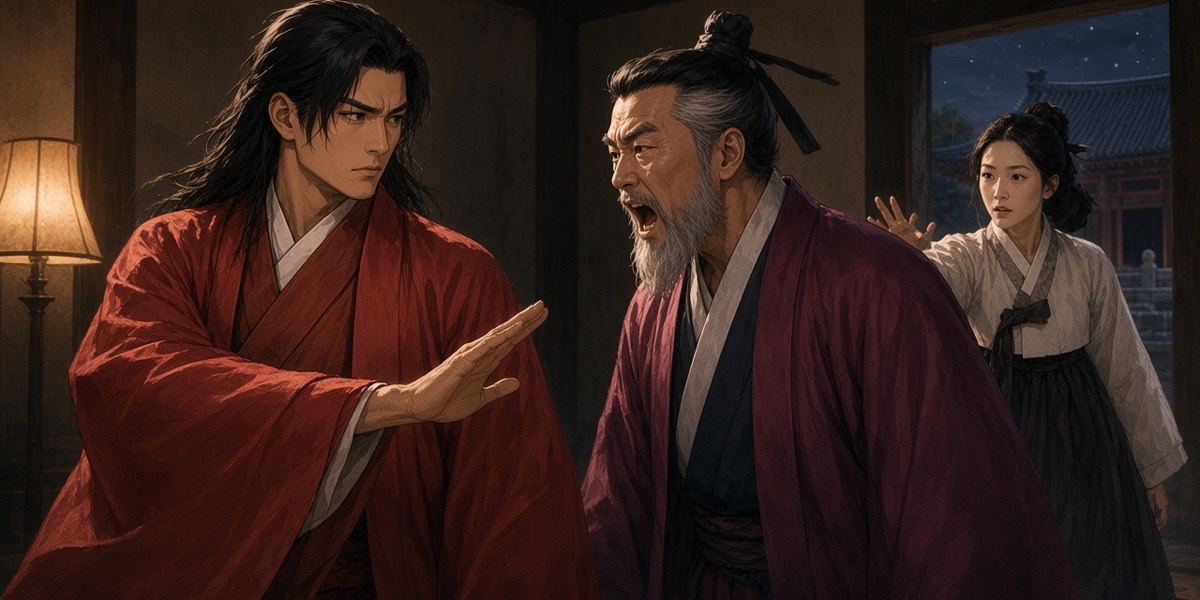
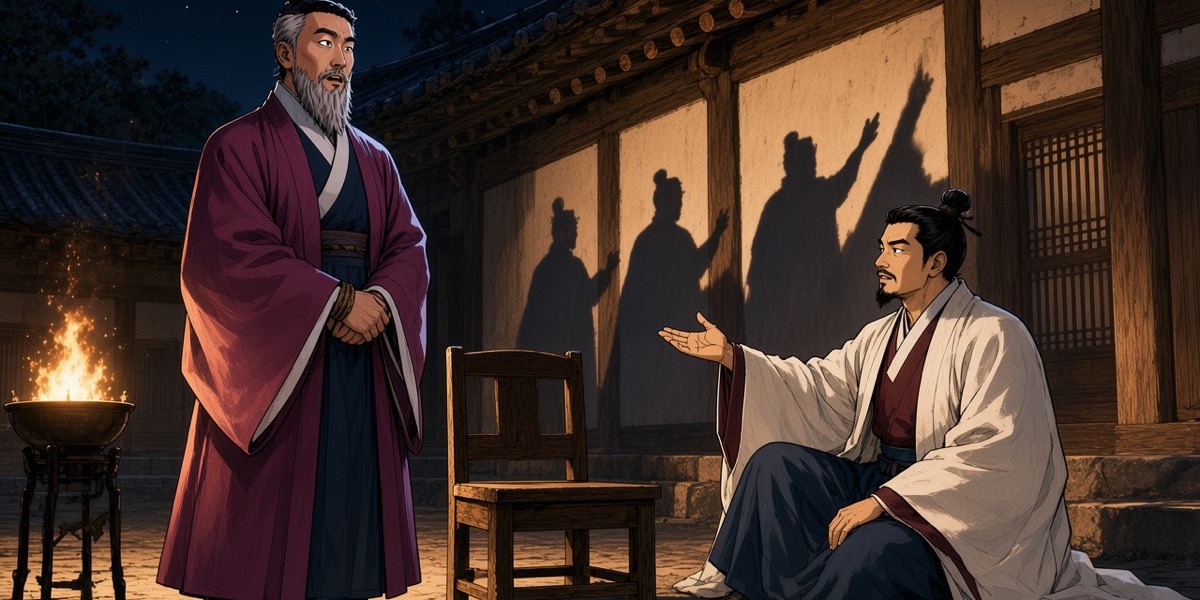
is a great country, and the king a wise ruler, so I could move him with one word. The cannot be persuaded by tongue. We must use a ruse to bring the prince home.
고구려는 대국이고 왕 또한 어진 임금이라, 신은 말 한 마디로 깨우칠 수 있었다. 왜인은 혀로 타이르지 못한다. 속임수로 왕자를 돌아오게 해야 한다.
When I go among them, charge me with turning against the country, and let them hear of it.
신이 저곳에 가거든, 나라를 배반하였다는 죄로 논하여 저들이 듣게 하소서.
They do not lower their voices. The yard has ears. A maid stops with a bucket. An officer stops with a spear he is not using.
She is already at the door. She heard he was back. She came the way a person comes when one night is all she is asking for.
The yard hears that. The maid puts the bucket down. The officer finds a use for the spear.
Royal troops come through the yard gate. Not a polite escort. Spears. Hands. The king’s own men.
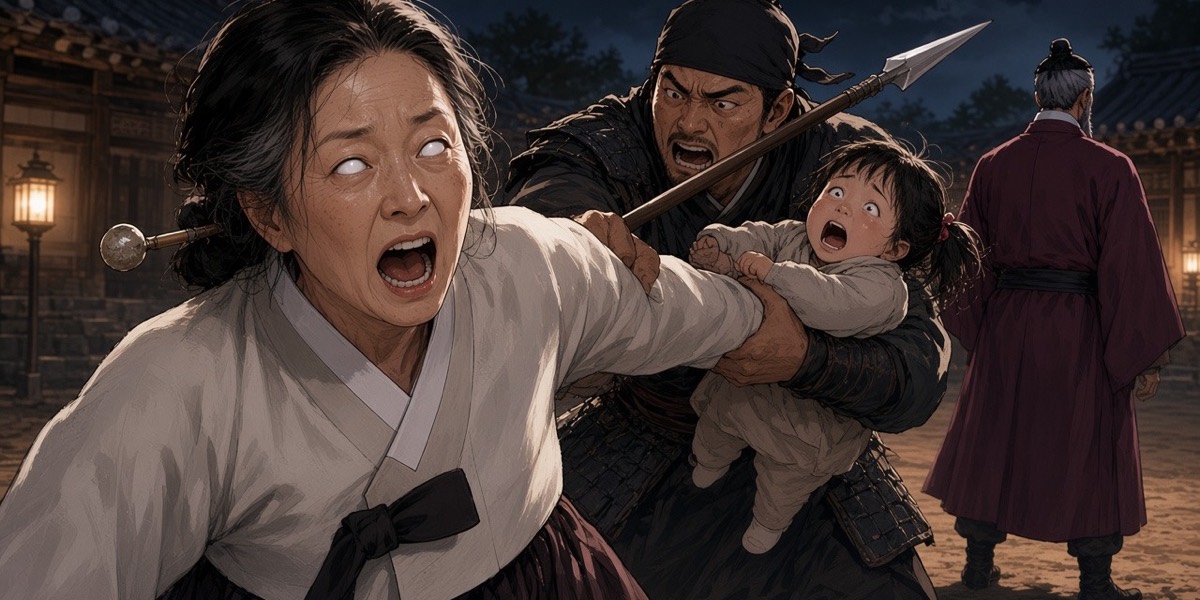
They take her in the packed earth of the yard. A soldier grabs her arm. Another lifts a daughter off the ground. She kicks. She will not stand. They drag her.
Later they name that dirt. They call it — the place she would not stand.
He looks at the king. Not at her. Looking at her would make the rest of it optional.
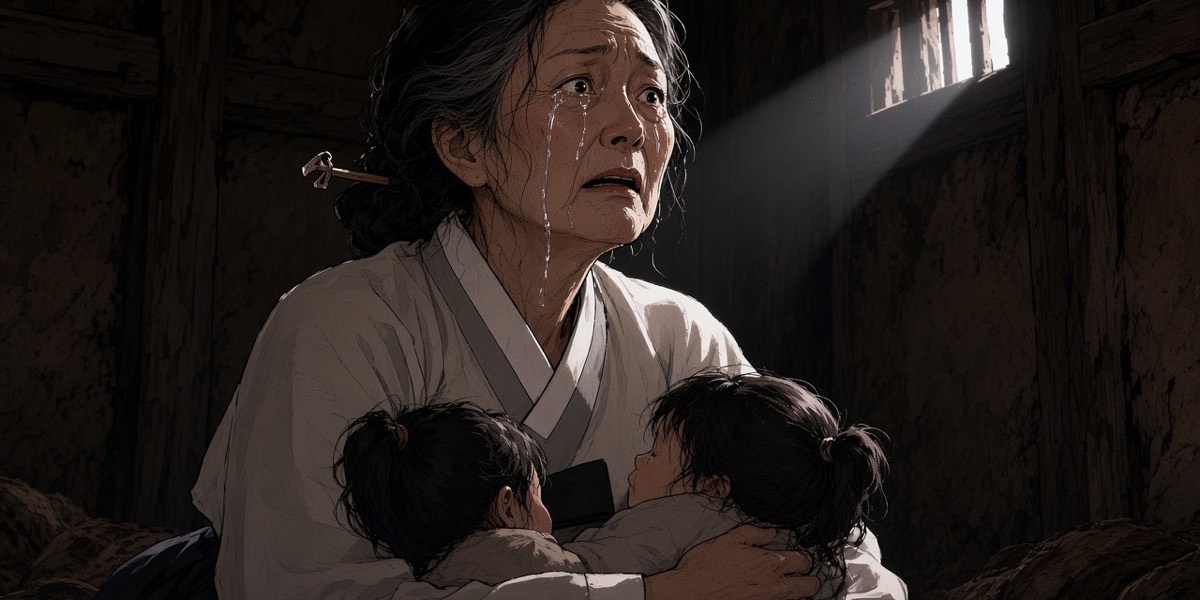
A spear-butt finds her shoulder. She goes down in the dirt and they haul her anyway. The girls scream. The yard does not help.
They put her in a room with no window that faces the sea. The girls sit on the floor and do not ask which king did this. They already know.
names him in the yard, loud, the way you name a man you want the water to hear.
The maid picks the bucket up. The officer looks at the man in magenta silk as if the silk had changed colour. does not argue. Arguing would make it a play they were in together, and the yard is not allowed to know that yet.
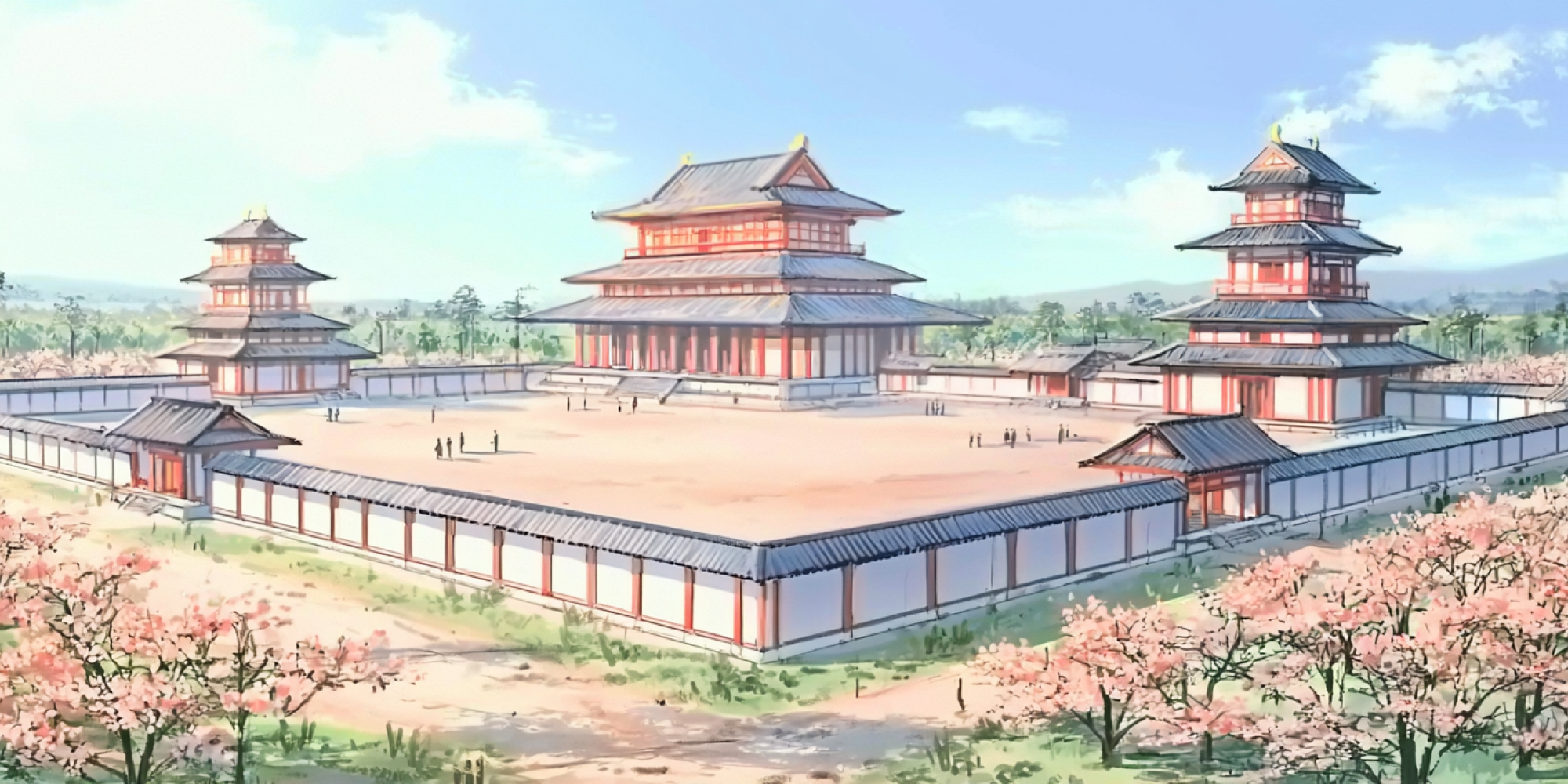
The East’s court sits on packed earth and raised floors. Cypress. A gravel yard that has never heard a song.
does not bow. The magenta silk is still wet from a different crossing. His face is not a guest’s face. It is a man who watched his house taken.


’s mouth moves. Not a smile. The start of one. He likes a man who arrives already ruined, and this one arrives already hunting.

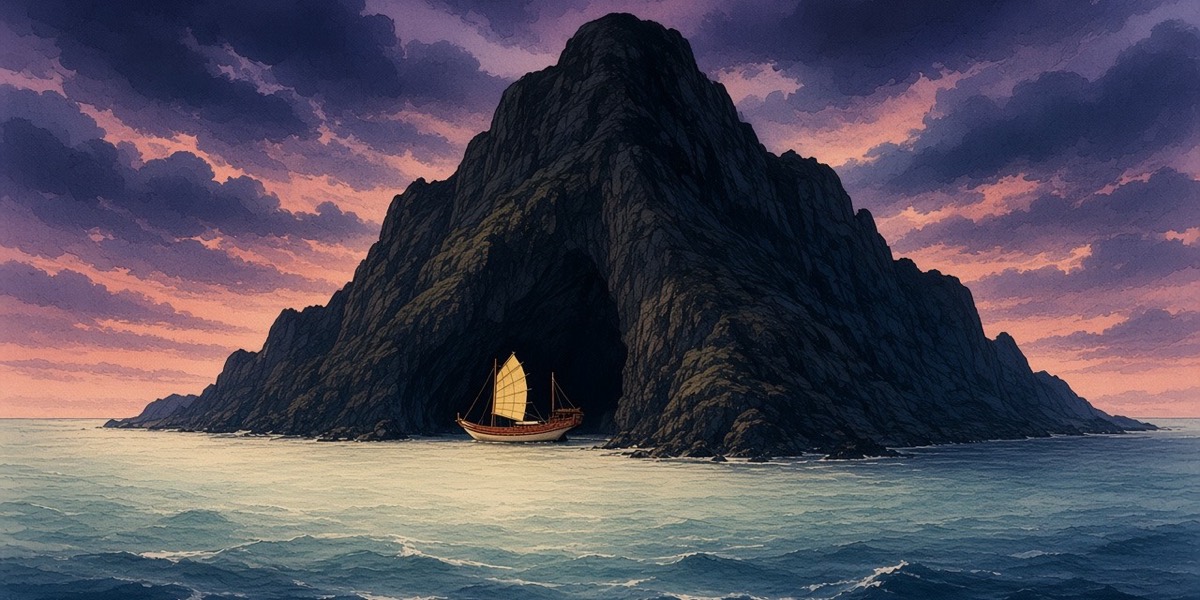
The island is a mountain in the water.
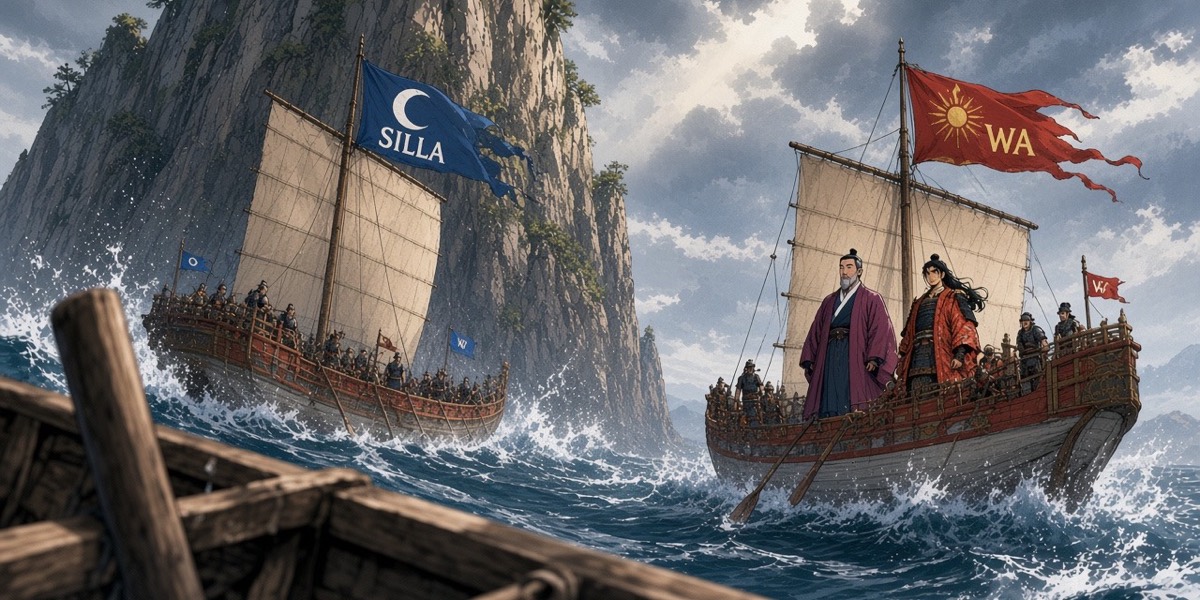
hulls fill the open side. In the lee, under the cliff, a smaller ship sits with cream sails and a blue pennant, as if the rock had grown a roof.
The younger prince is on the deck, because a hostage who guides an attack is still a hostage, just closer to home.
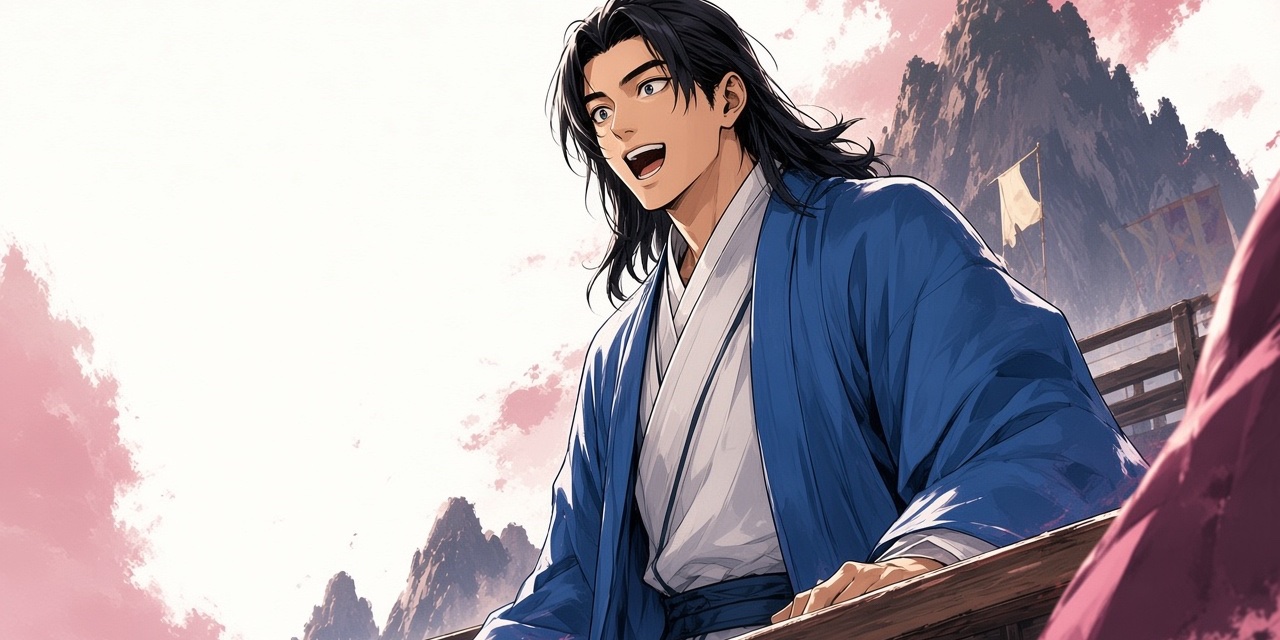
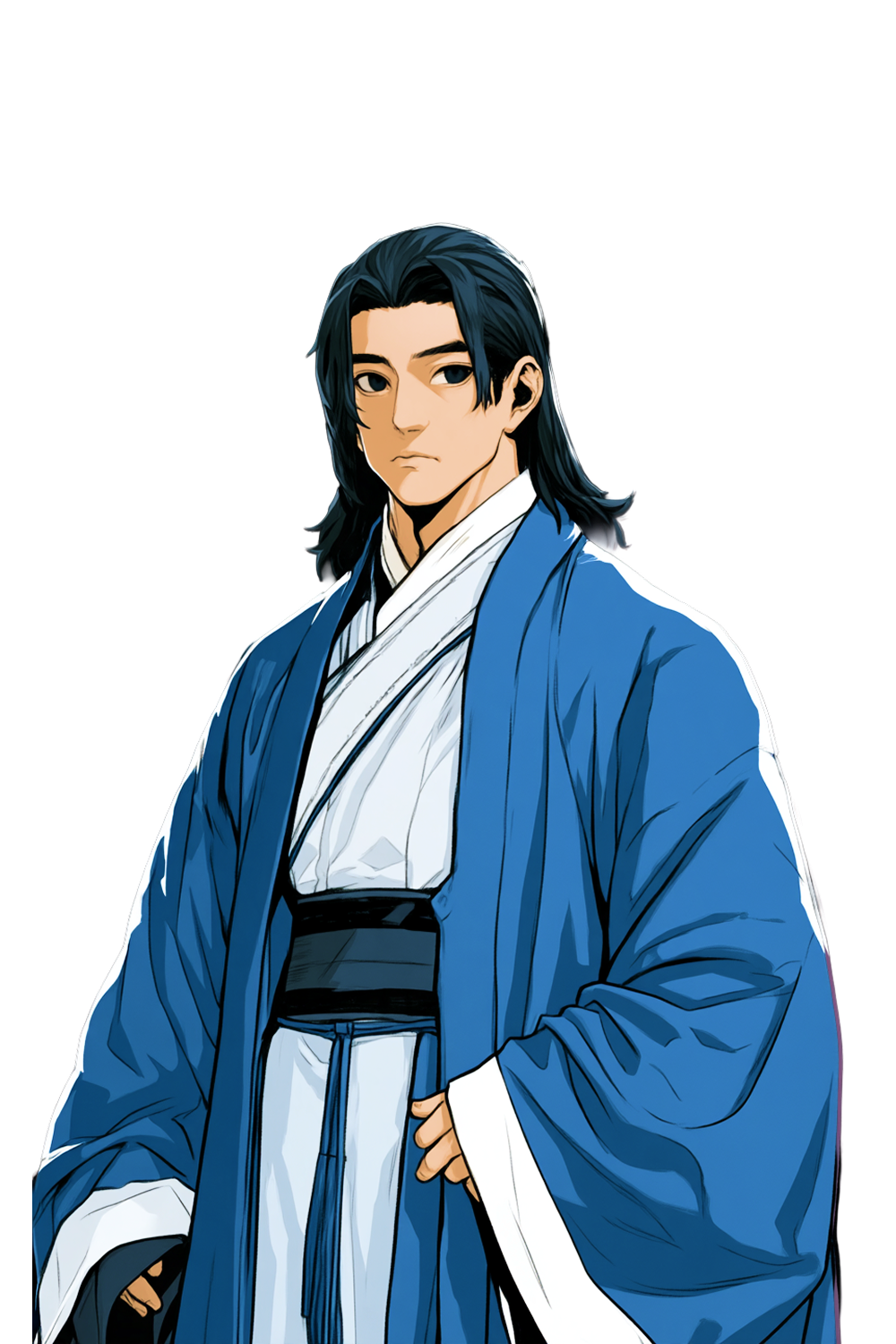
On the deck the prince has not heard any of that. He has heard a fleet. He has heard . He wants to stay with the man who came for him.
looks. The cream sail. The blue pennant. A roof under a cliff.
has been a hostage since he was small enough to lift. He has nothing to say to this. His eyes go first.
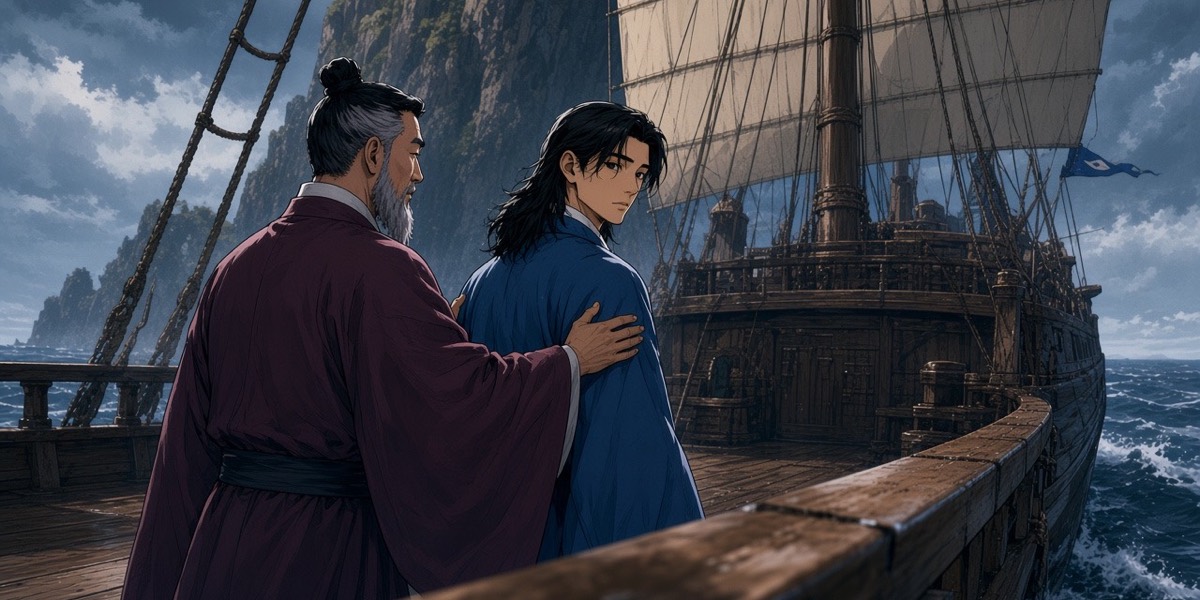
puts him on the ship himself. A hand on the rail. A hand on the boy’s back. The cream sail takes the wind as if it had been waiting for exactly this hour.
does not run. Running would make it a chase, and he is already where he meant to be.
They take him back to the hall. brings the man, not the capital. Late is still too soon for him.
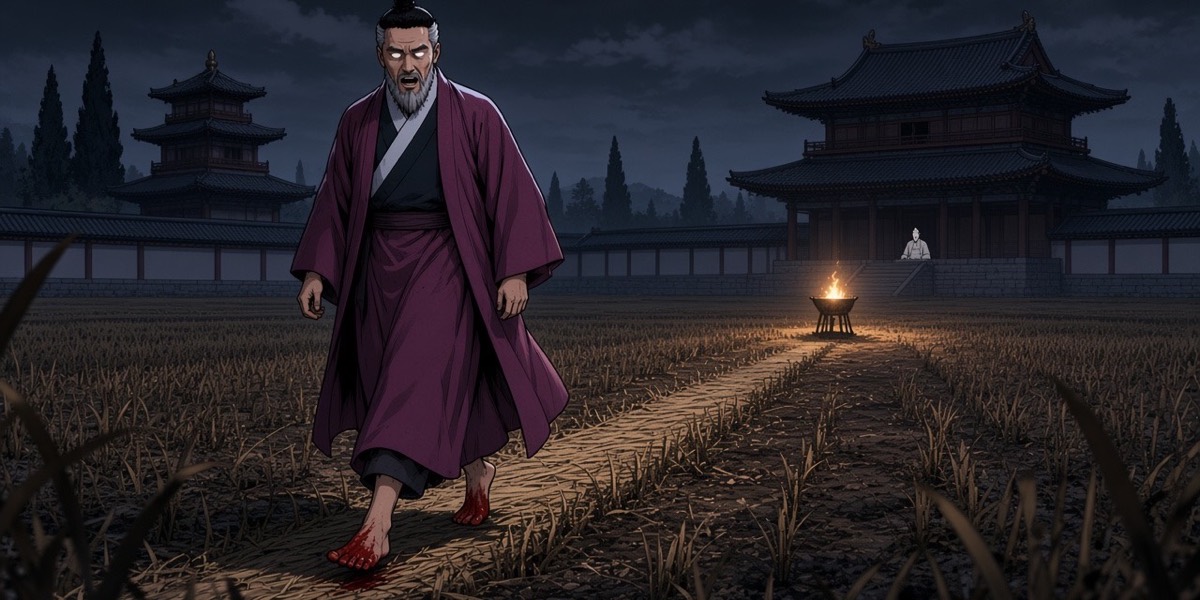
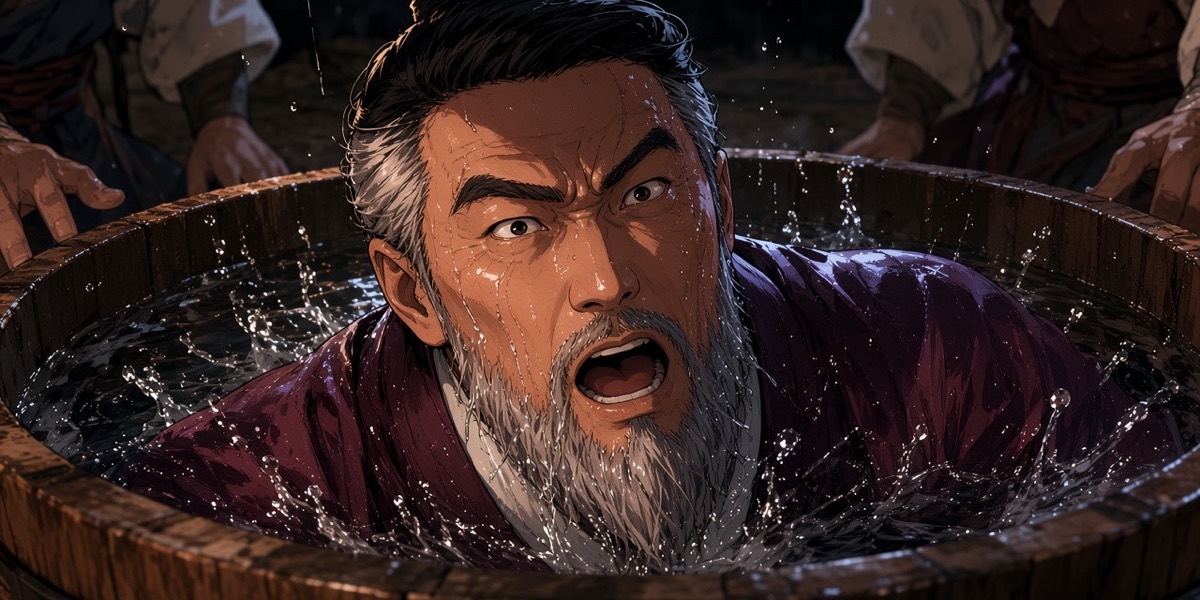
They take the skin off his soles. He does not sit for that either.
They cut the reeds short. He walks. Every step opens.
They still cut those reeds on that island. They say the red is his.
They heat a plate until it is a color. They stand him on it.
The later book kept the feet and the iron. The official one only kept , and the head after.
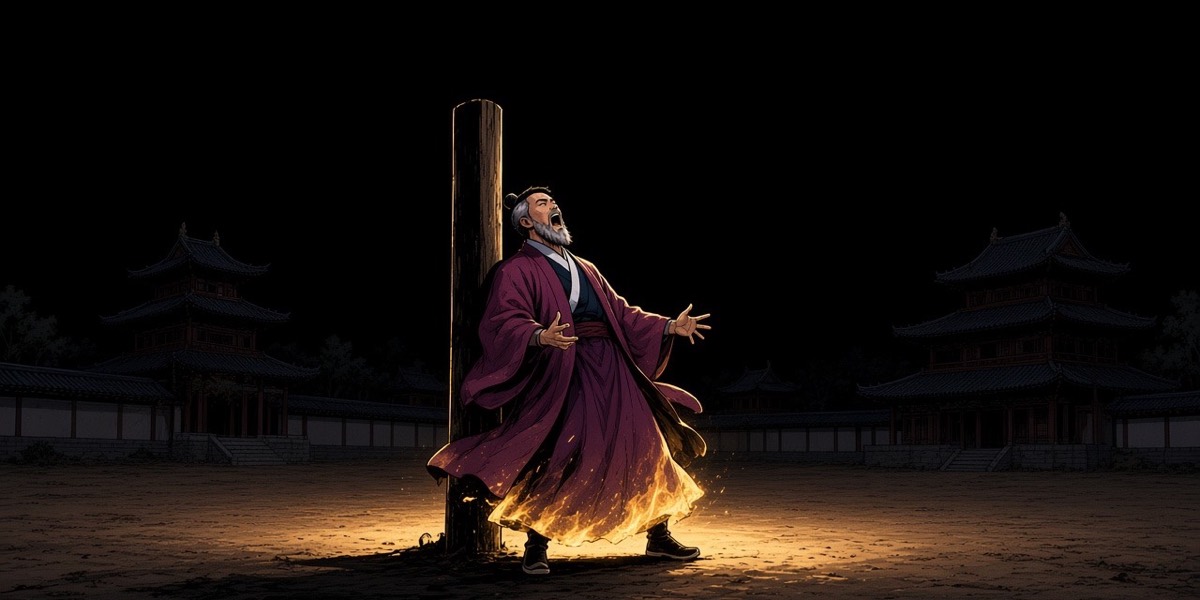
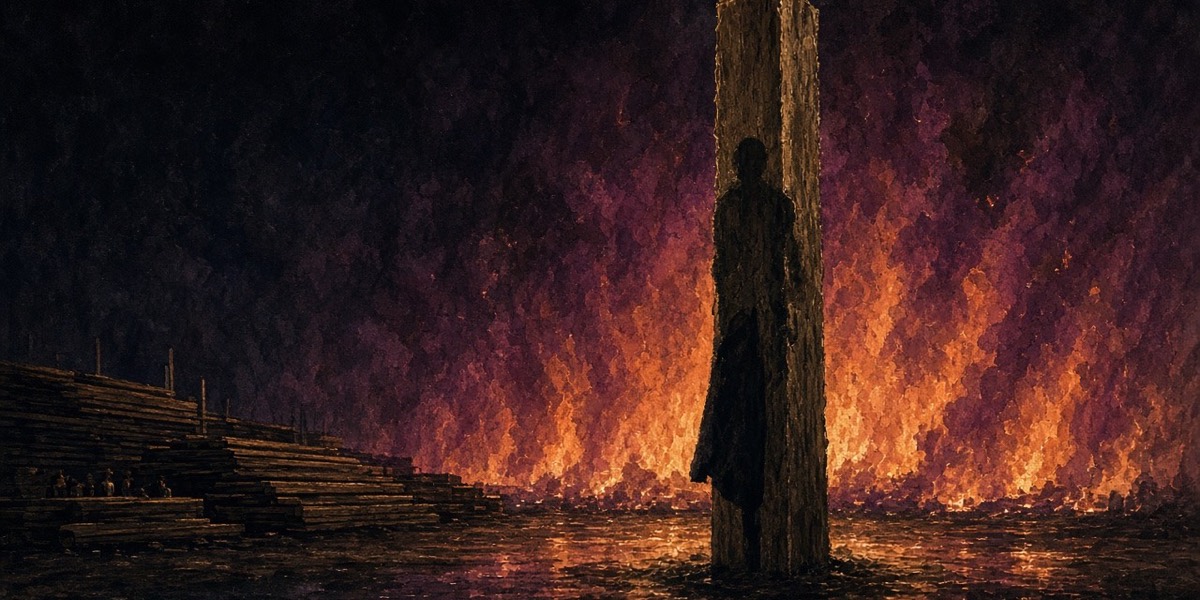
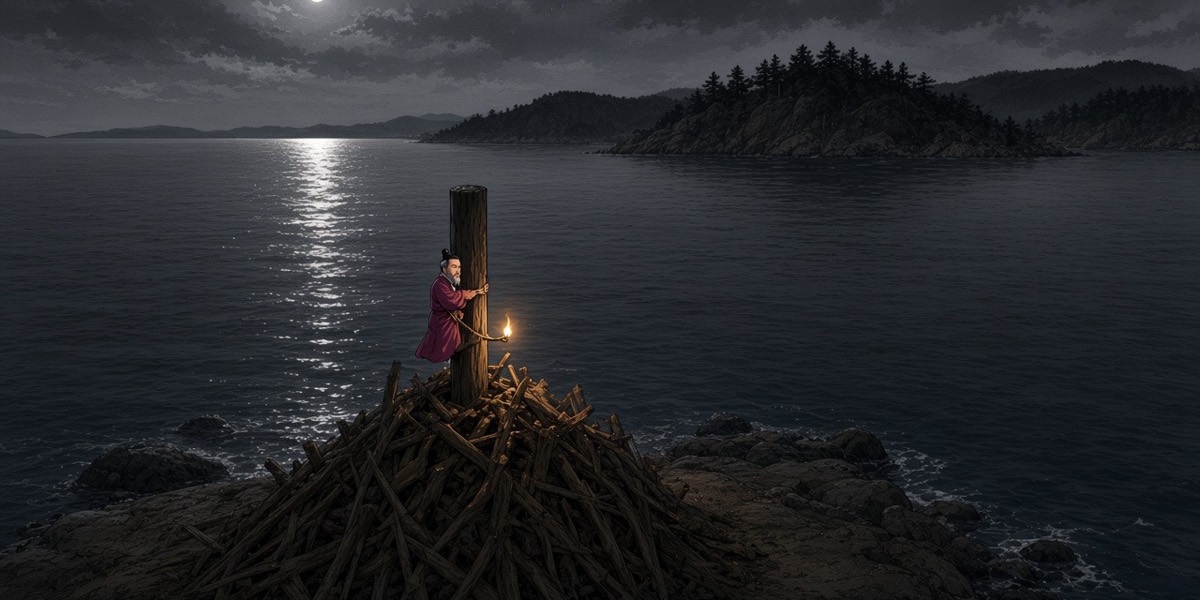
The record names it . They pile the wood. A stake in packed earth. Rope. He does not sit.
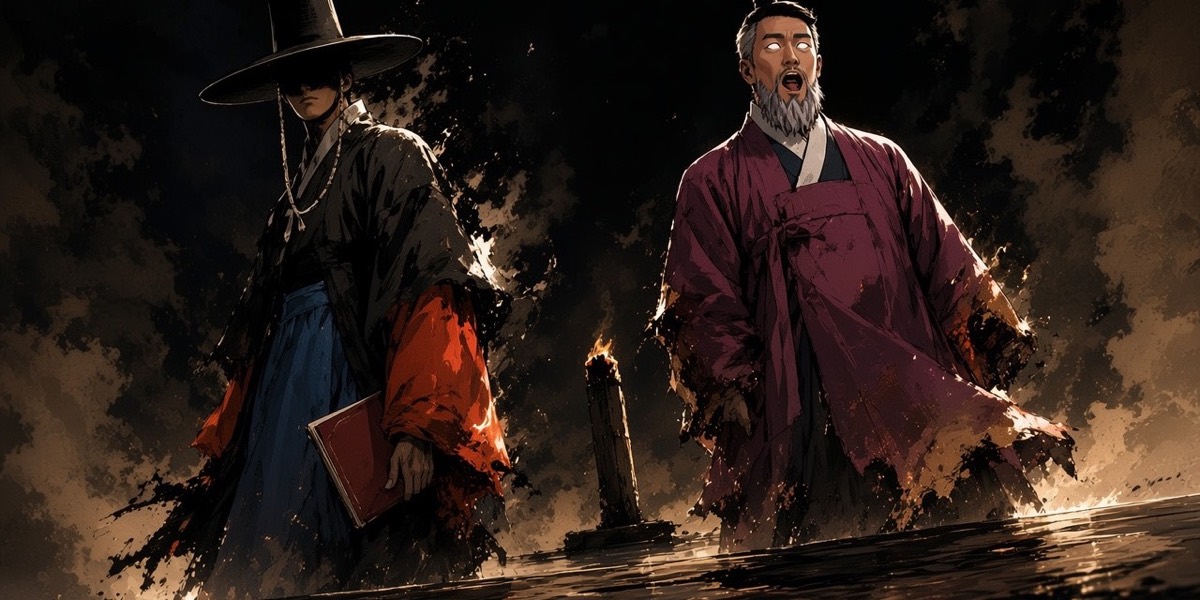
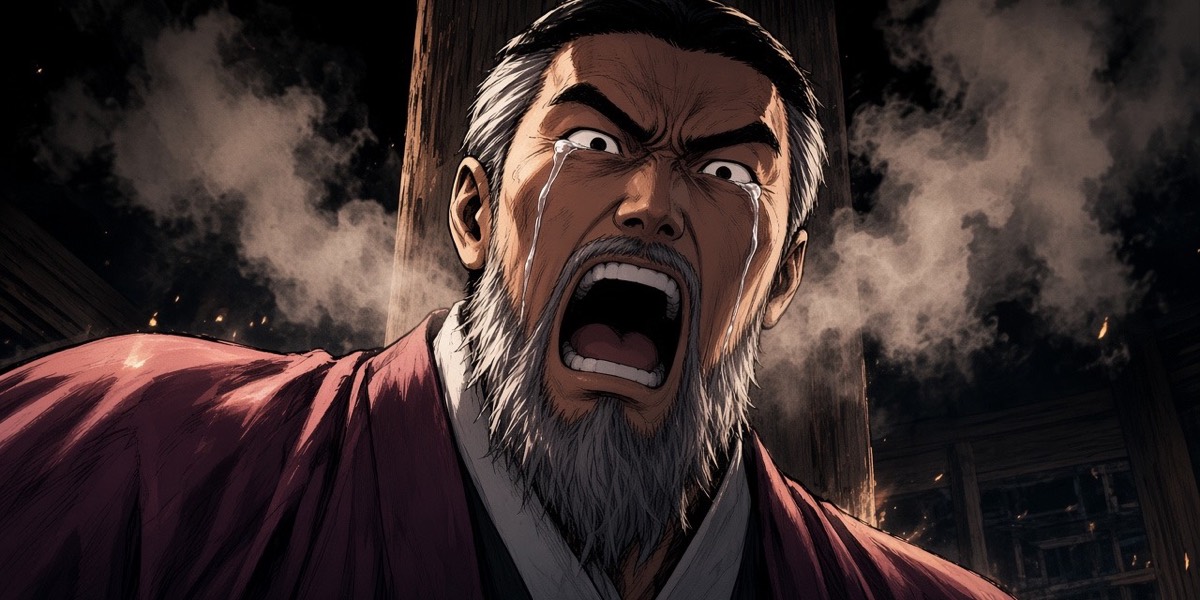
They tie him to the post. The fire takes the hem first. Then takes the skirt. He looks up.
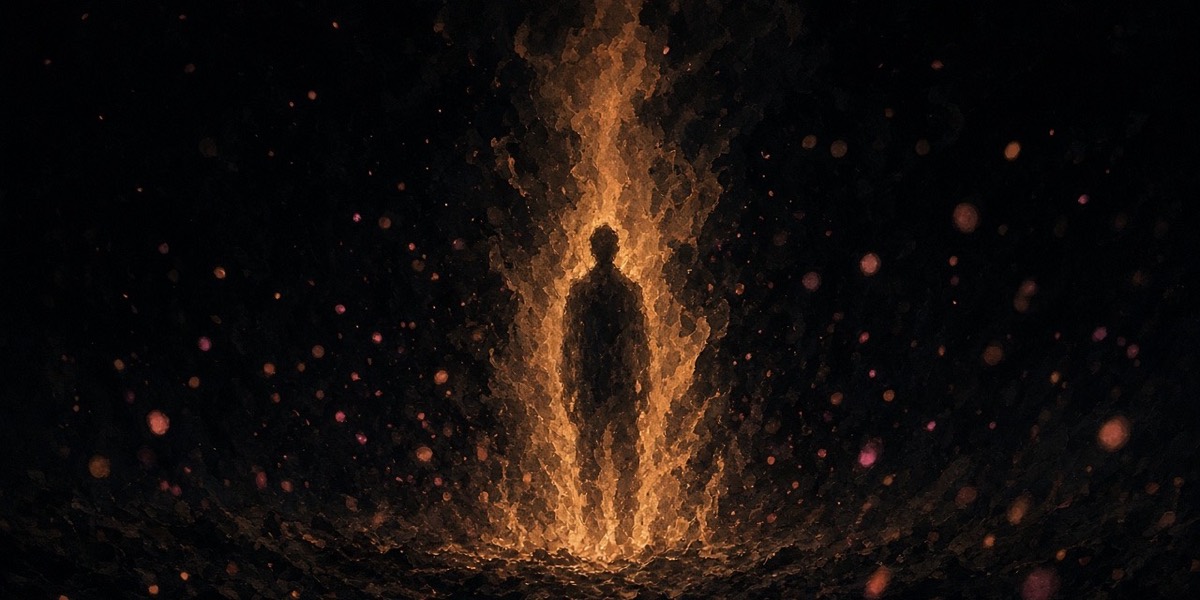
The flames go up. Not a hearth. A column. Magenta silk becomes a dark shape inside it. From the road you would see a man-shaped hole in a sheet of fire.
The fire is orange first, the way a kitchen is orange. Then it goes blue. The color of the water he put the boy on. The hottest part.
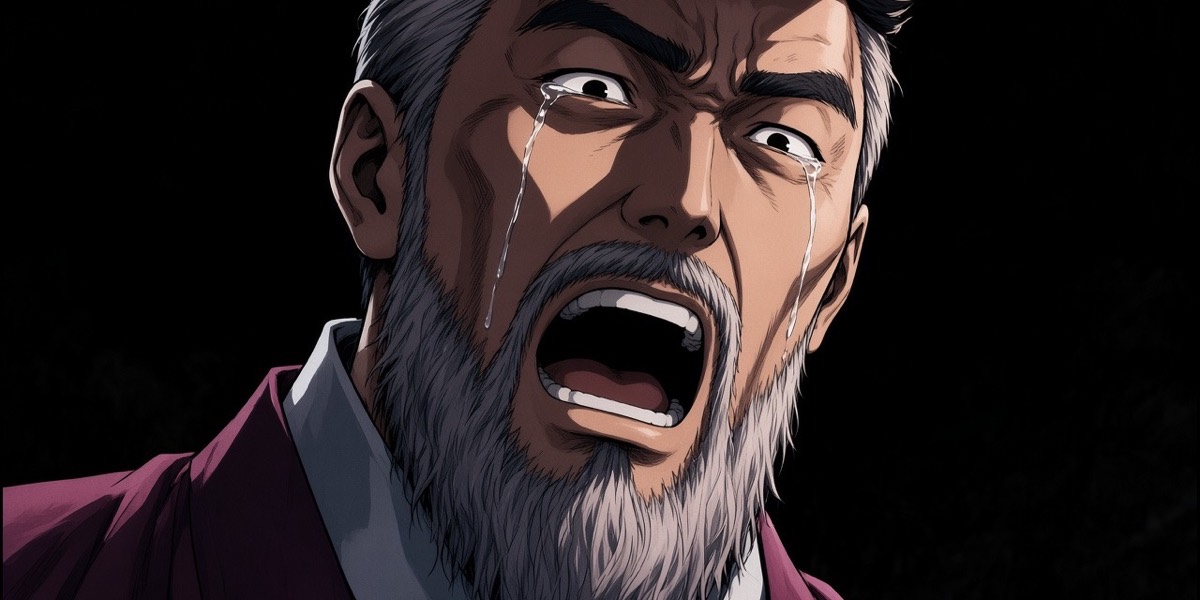
He is still saying it when the color changes. The same sentence. Louder each time, until there is no more air in him, only the words, and a blue column into the sky.
When there is no more man, they take the head. The official book is particular about that.
The sky does not answer. It does not have to. The island heard him.

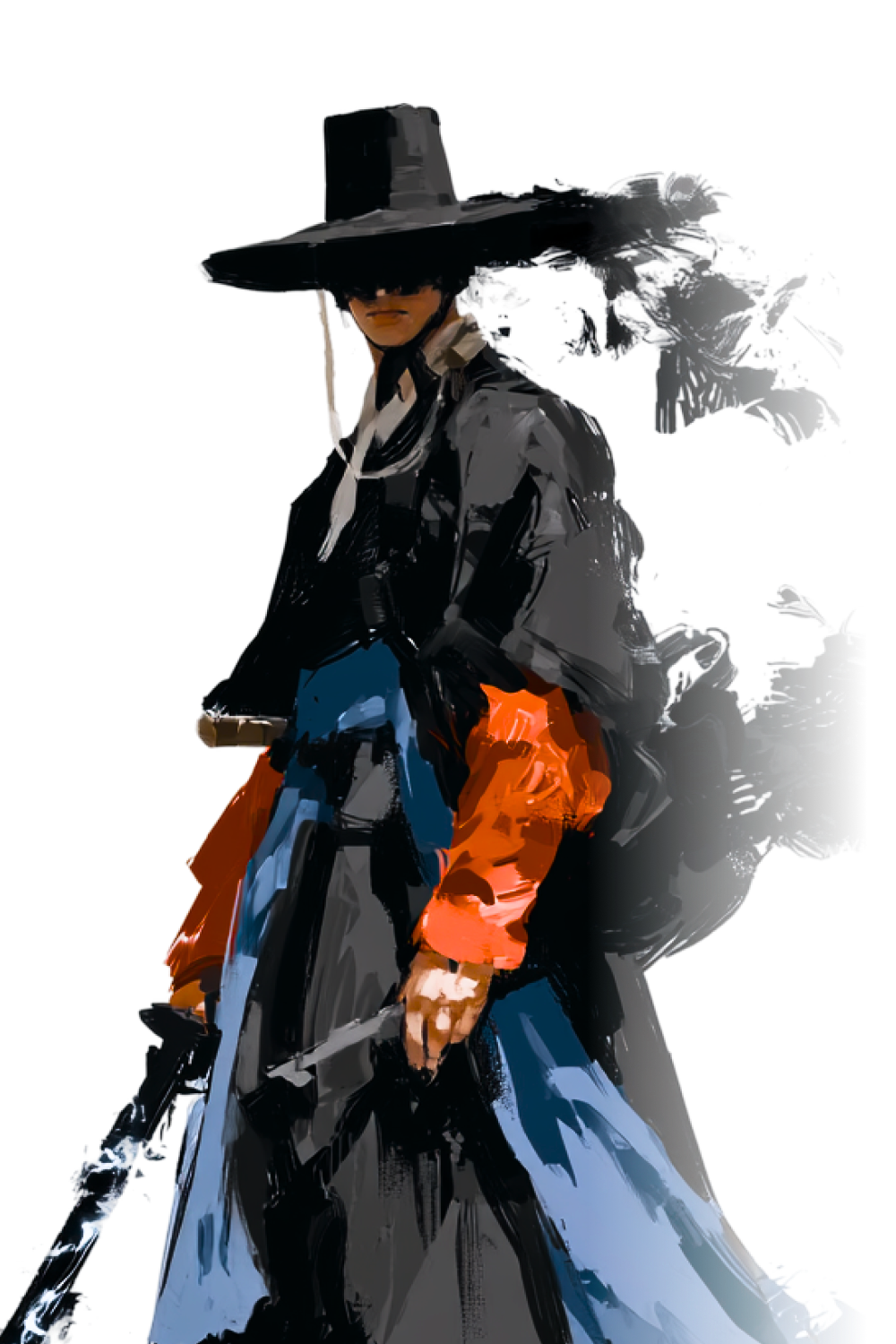
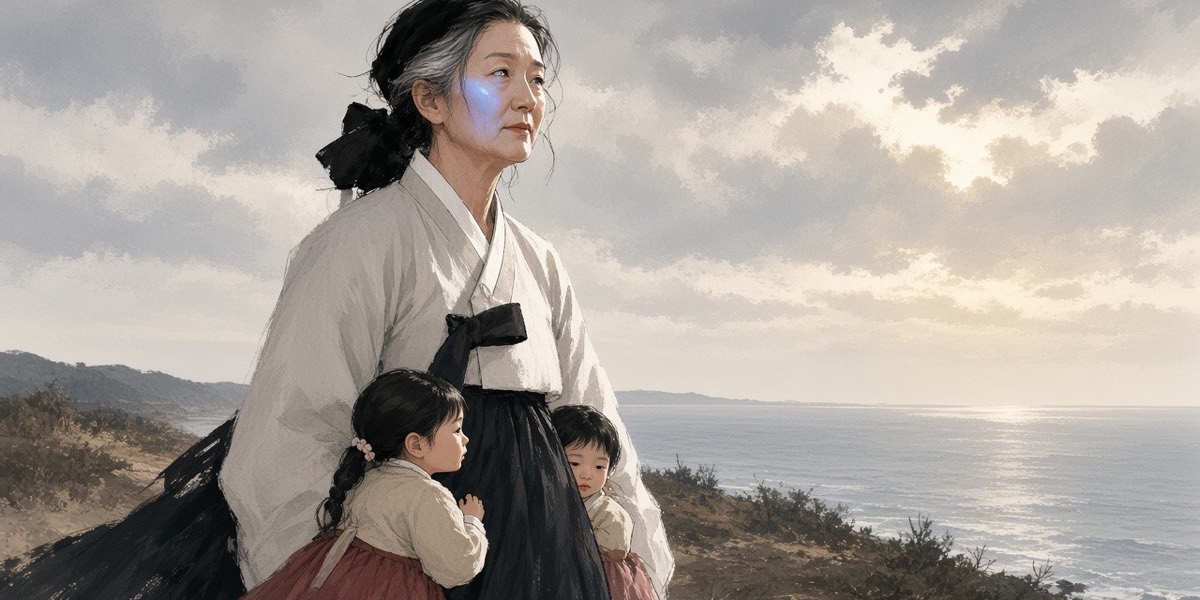
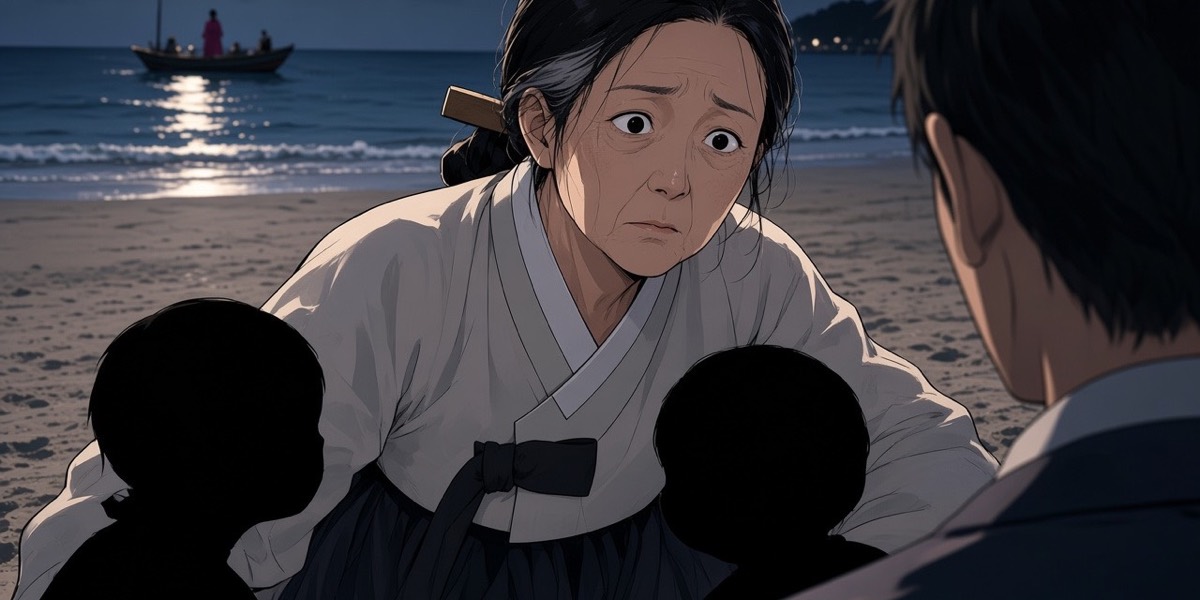
She looks east until looking is all that’s left. The girls look because she looks.
Come home safely.
잘 돌아오너라.
The ridge keeps her. Weather comes. Weather goes. She does not.
Later they will say stone. The body stops answering. The looking does not. A stone on the ridge with a woman’s patience.
Later than that, a bird. The daughters wait until there is nothing left to wait with, and then they go down without her.
comes home on the ship. The yard fills. Not a court. The street. The well-woman. The boy. The drunk.
is already in the packed earth when the cream sail shows. He does not wait for the speech. He takes the way he took — both arms, no crown between them, the blue silk crushed against vermilion.
’s hand is on the back of the boy’s head. He lets him finish the sentence into his shoulder. The yard can wait.
Three brothers stand in the packed earth. . . . The songs stop in the middle of a verse.
He took him by the hand, poured wine, and composed the Song of Eased Sorrow to comfort him.
손을 잡고 술을 따르며, 우식곡을 지어 위로하였다.
They start to believe. Not a country yet. The start of one.
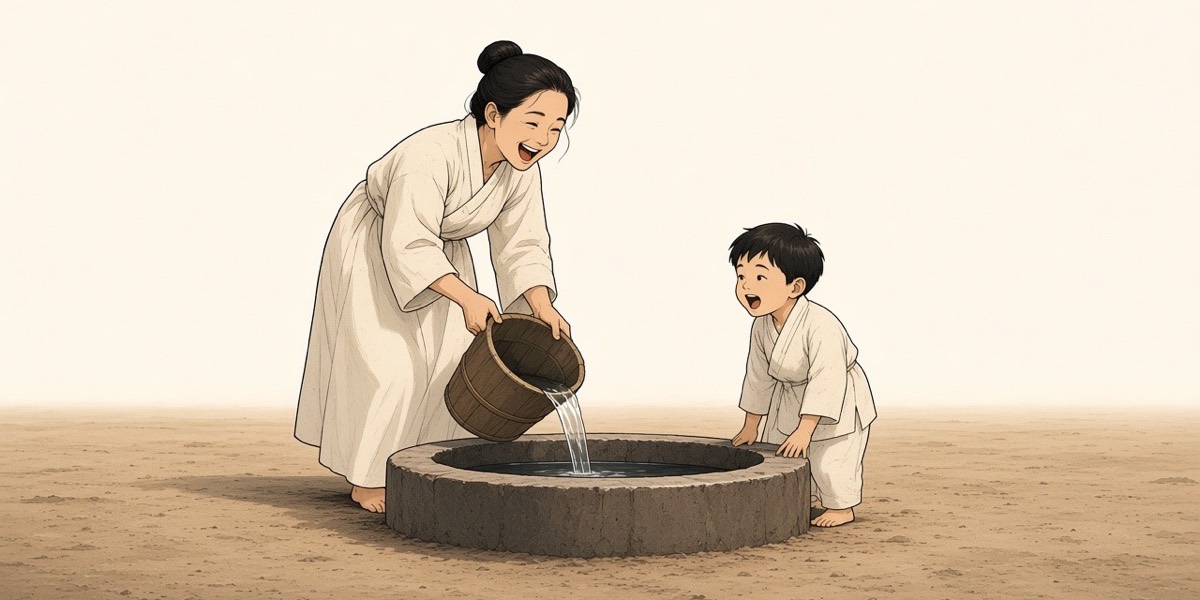
The well-woman puts the bucket down and does not pick up a stone. The boy starts a different song and gets the words wrong, and nobody hits him for it.
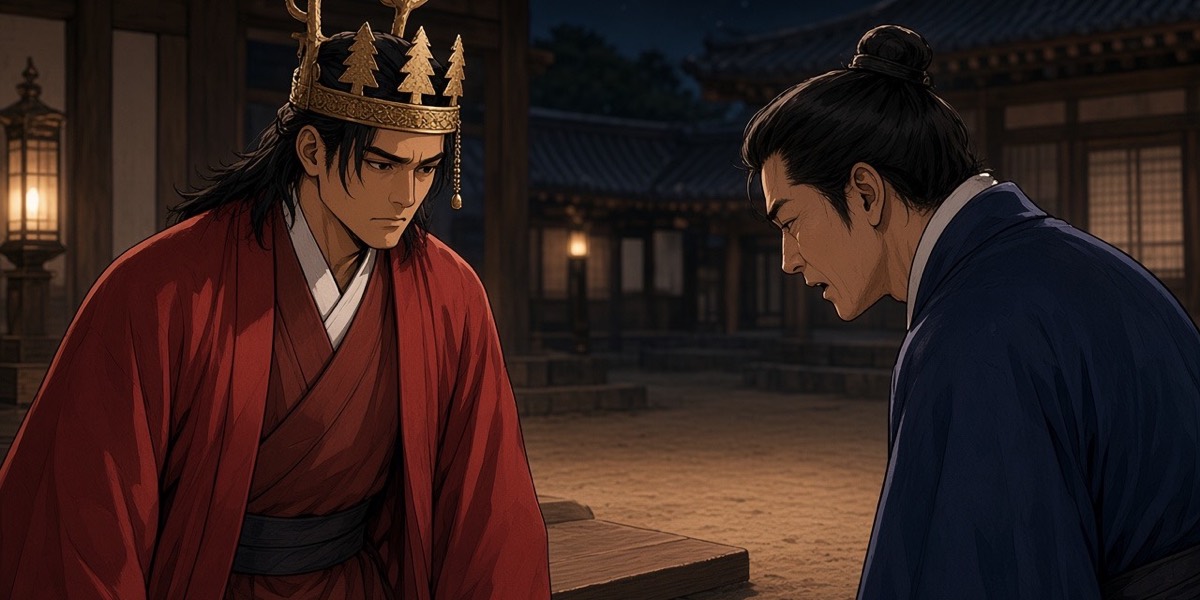
comes out of the gate. Not a funeral walk. The crown is on and he does not hide it. People stand. Someone shouts the name they used to sing empty. It comes out full.
He walks the lane the red banner used to own. The banner is still there. It looks smaller. A peasant in white hemp bows and then, because nobody stops him, he smiles.
looks at the sky. Not at the crowd. The name he promised is already doing the work.
He names the dead man Deachan. He marries to ’s second daughter.
The prince who oiled a rusty hinge now sits where his father sat…!
