












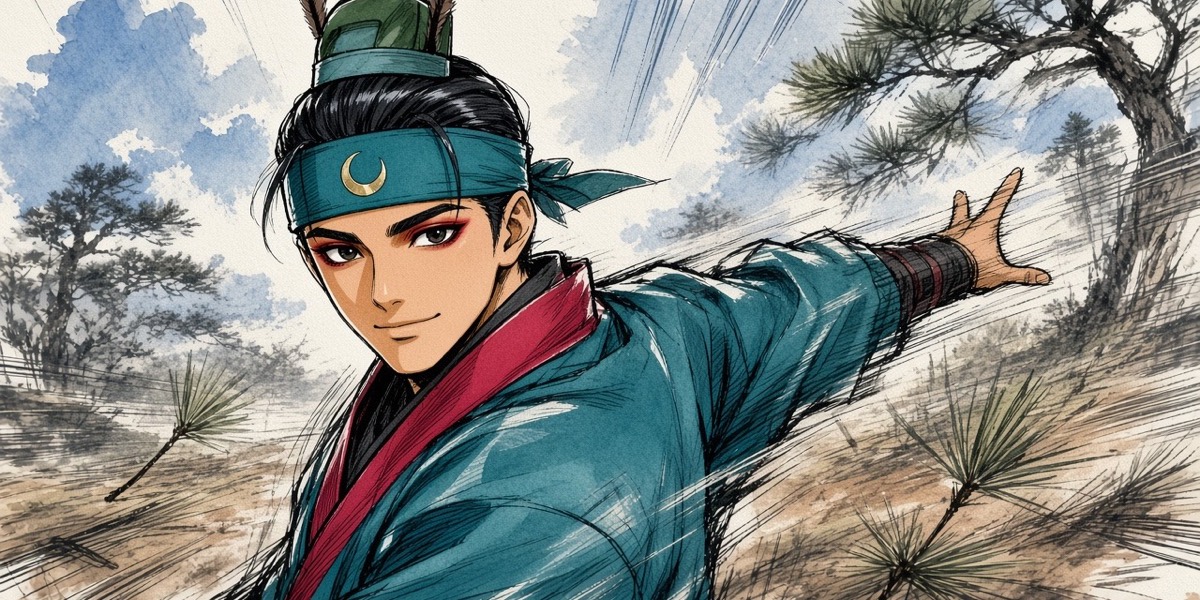
Chapter 16
Munhee
AI Summary
- How They Met
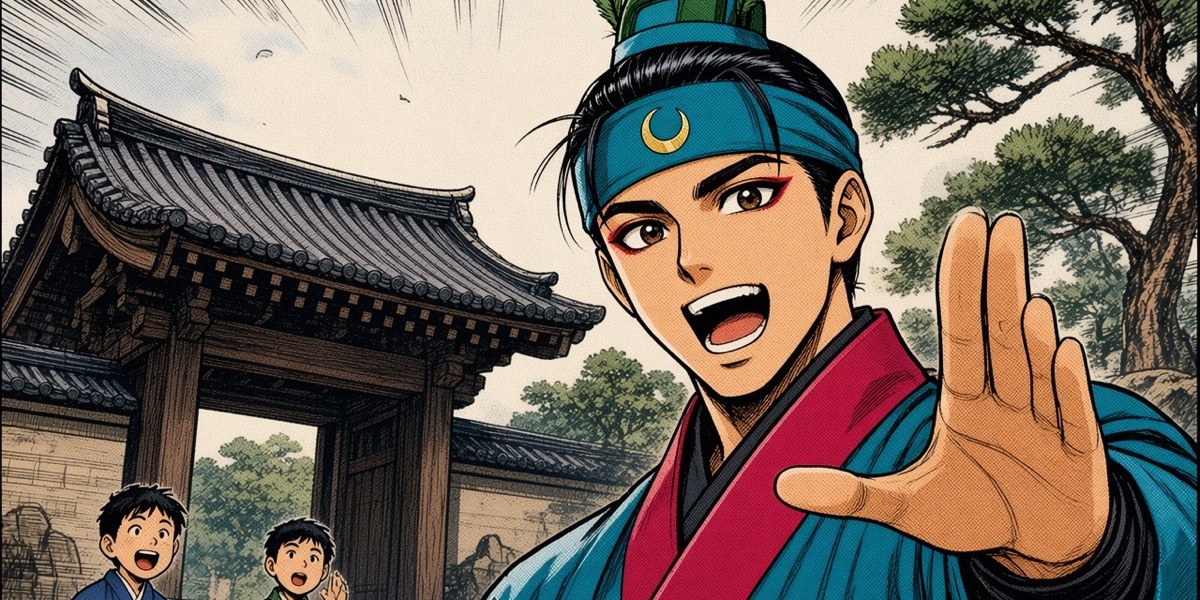
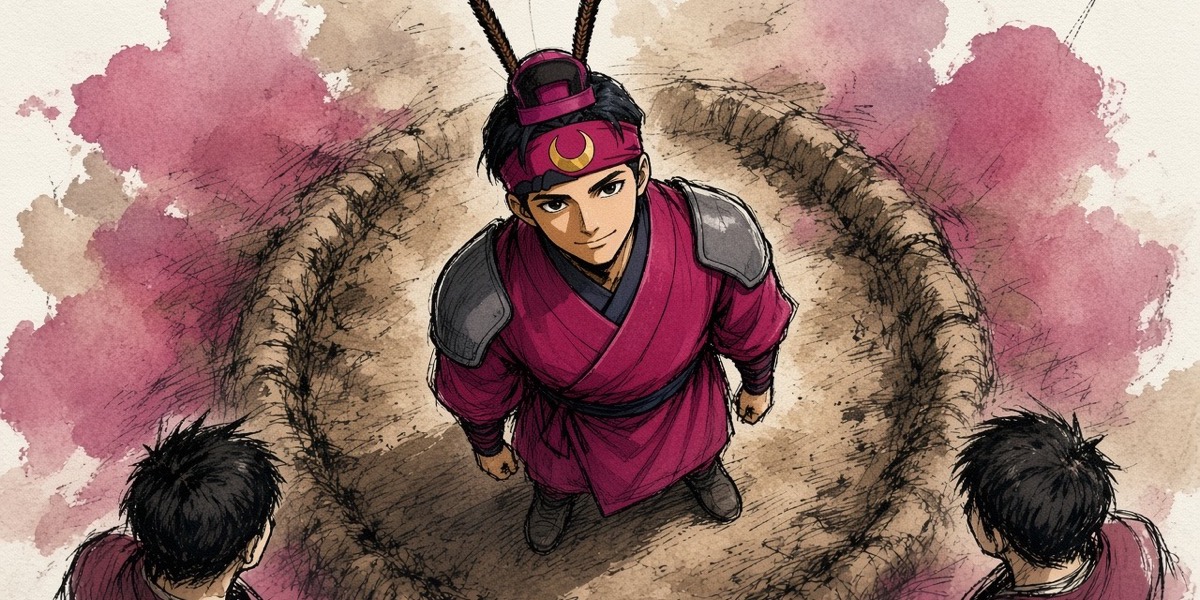
- Hwarang Yard Chunchu is fifteen, and has asked his father three times not to walk him to the gate.
- Roll Call The roll clerk reads each name with its bone.
- Drain End His mat is moved to the drain end of the hall.
- The Line Alchun stands them in a line and does not raise his voice.
- The pines Pines.
- Last Through Last through the gate: a magenta sleeve, and a deer still walking.
- Marshal's Question The yard still belongs, some mornings, to Alchun.
- Short Rice In the second month the class’s rice runs short.
- Hill Beacons In the third month the yard puts four unlit practice beacons on the hill — iron baskets of kindling, the kind a ridge uses to talk to the next ridge — and tells each hwa…
- Autumn Verse At the autumn moon-viewing every class must give a verse.
- Council Review In spring the Harmony Council comes to look at the new class, as it does every year, the way a man walks his own orchard.
- Characters
Episode· 625
Munhee
It starts with a dream, and the dream is sold.
- Kim Chunchu
- Munhee
- Alchun
- Kim Yushin
- Princess Dukman
- Kim Seohyun
- Bihyung
- Bupmin
- Bohee
3 stills without a cue
To get to the coat, you have to start with the shoes.
Every yard needs somebody to laugh at. Class 59 found theirs before roll call.

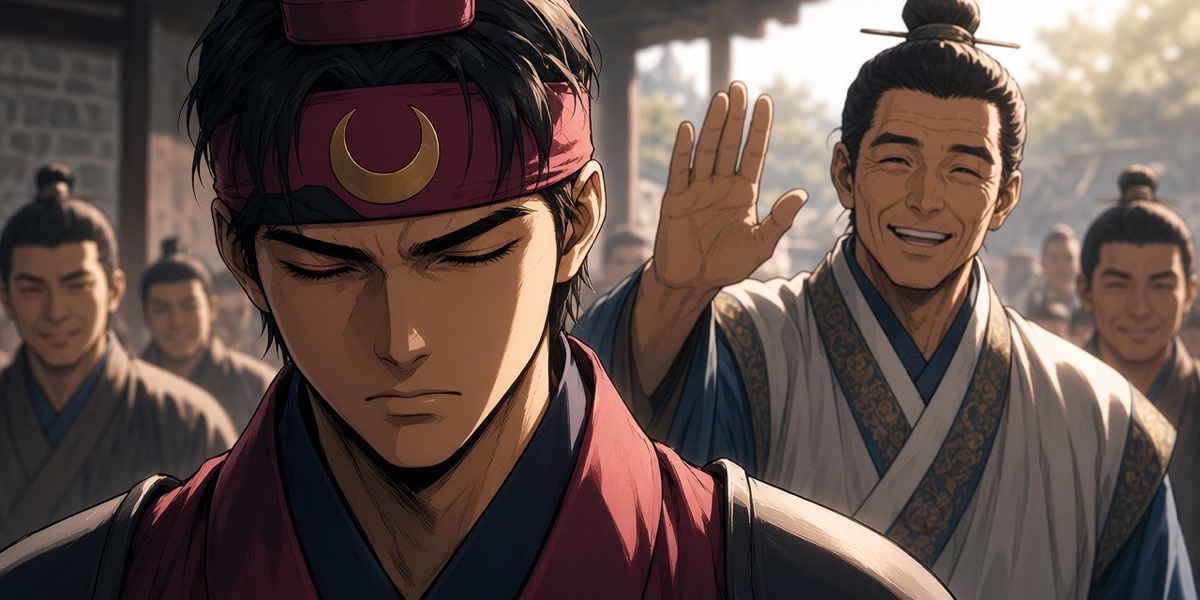
is fifteen, and has asked his father three times not to walk him to the gate. His father walks him to the gate.
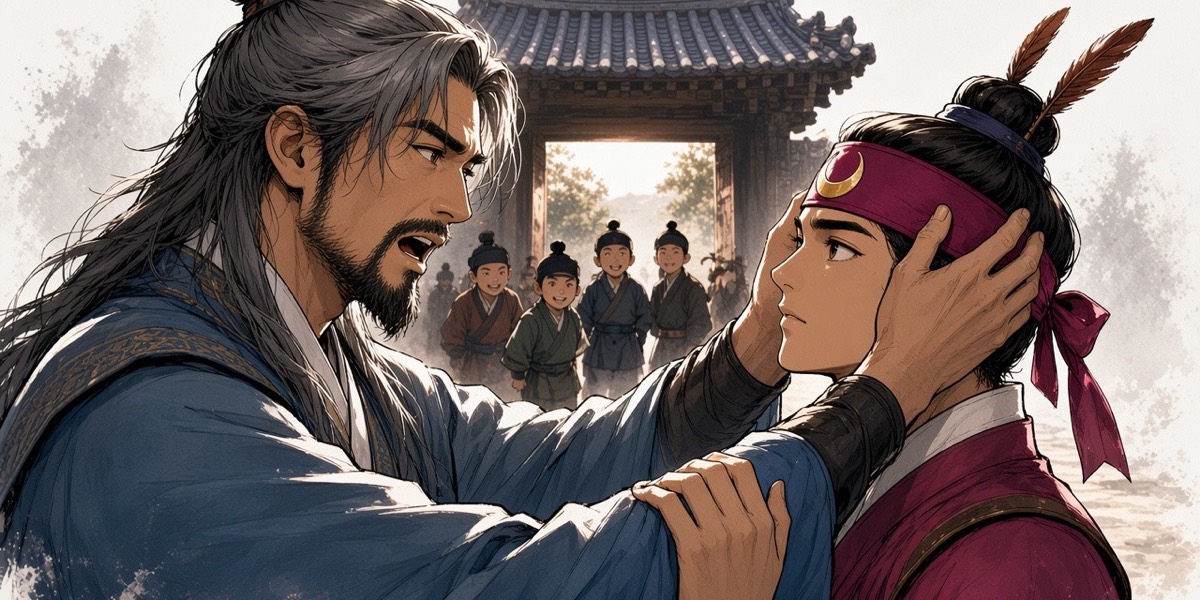
Other fathers stop at the gate, clap a shoulder and leave. stops at the gate, clears his throat, and turns to his son as if he had been asked to address the court.
Then he turns to the gatepost, which nobody has introduced him to, and asks it whether he has forgotten anything. He waits for the answer. He seems satisfied with it.
Forty boys in the yard have heard every word. doesn’t watch him go. He watches the yard watch him go.
The roll clerk reads each name with its bone. Kim this, . Park that, . Then he gets to and stops, and runs his finger back along the line, as if the ink might have moved.

The yard laughs. Nobody in knows for certain who ’s father was. A dead king, the song says, by way of a ghost. A ghost is a poor thing to inherit a bone from.
That gets the laugh, and it isn’t his. He doesn’t mention his father again. He doesn’t have to. The yard does it for him.
His mat is moved to the drain end of the hall. Somebody paints a goblin on his shield in lamp-black. At meals the bench fills up just before he reaches it. And on the third night his shoes go in the pond.
His father was right about the shoes. He lets them. Every night he wades in, fishes them out and leaves them by his mat to dry, and every morning they are wet again, and nobody can work out why it isn’t working.
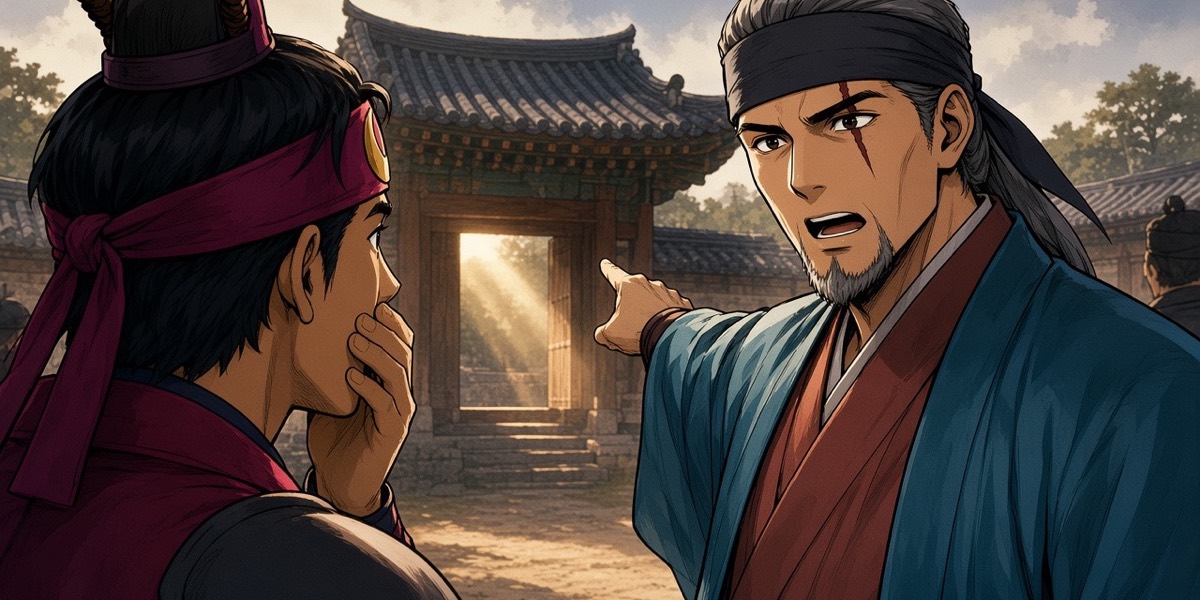
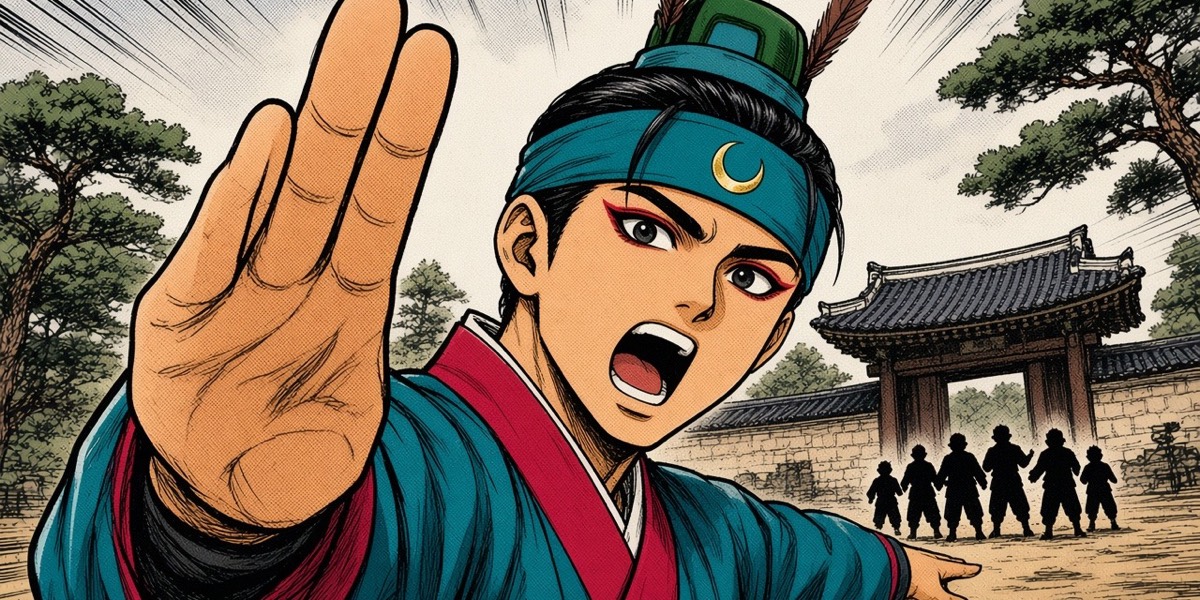
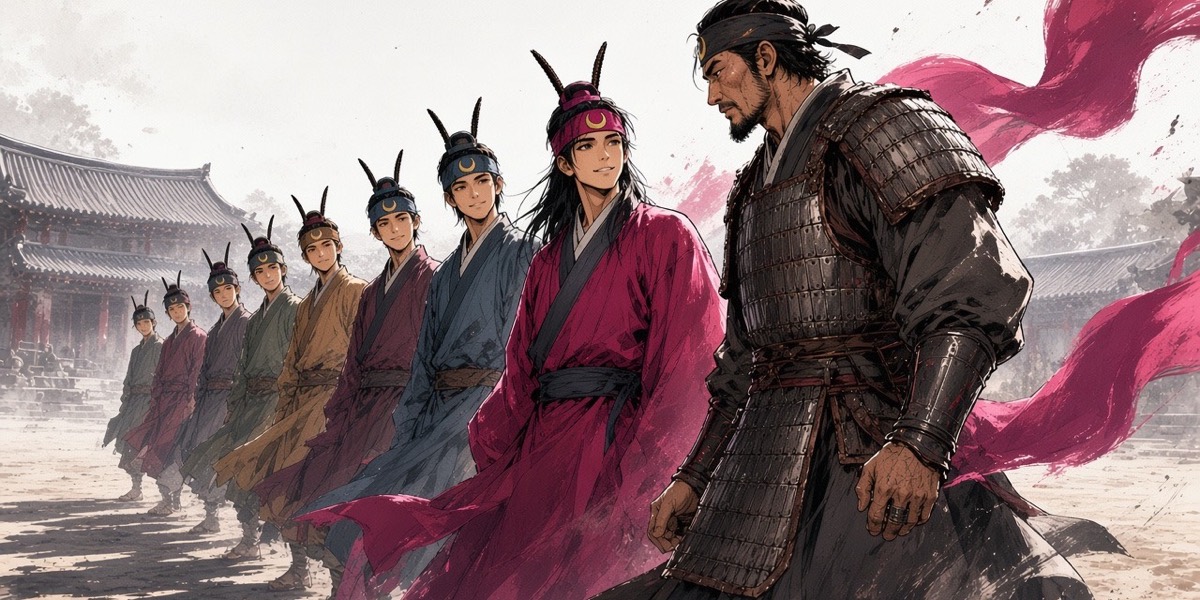
stands them in a line and does not raise his voice. He never does.
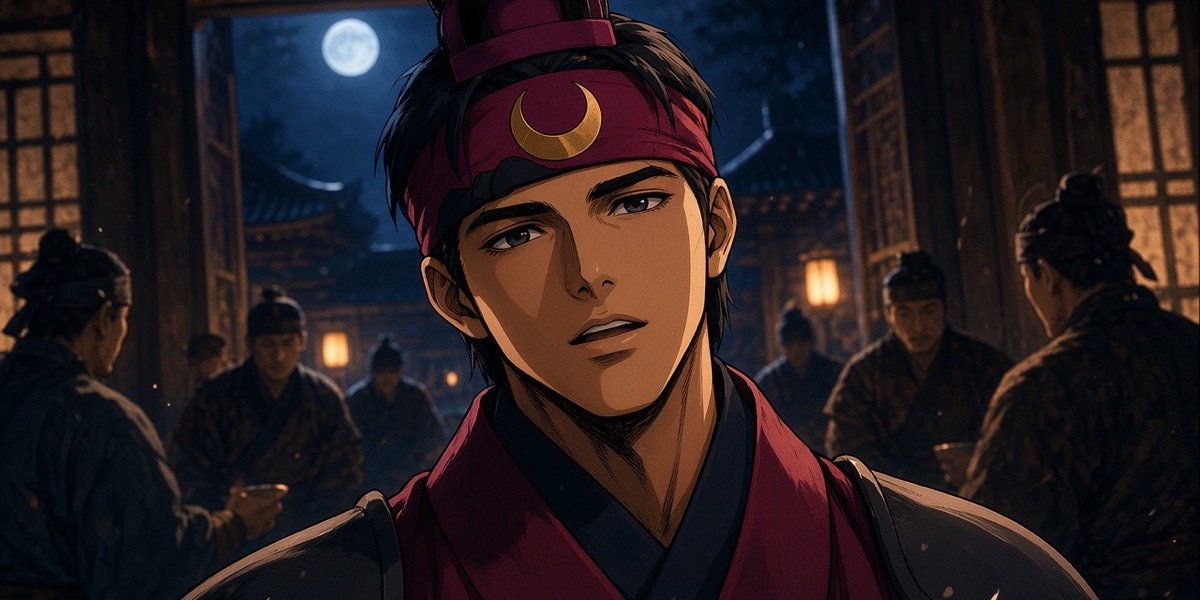
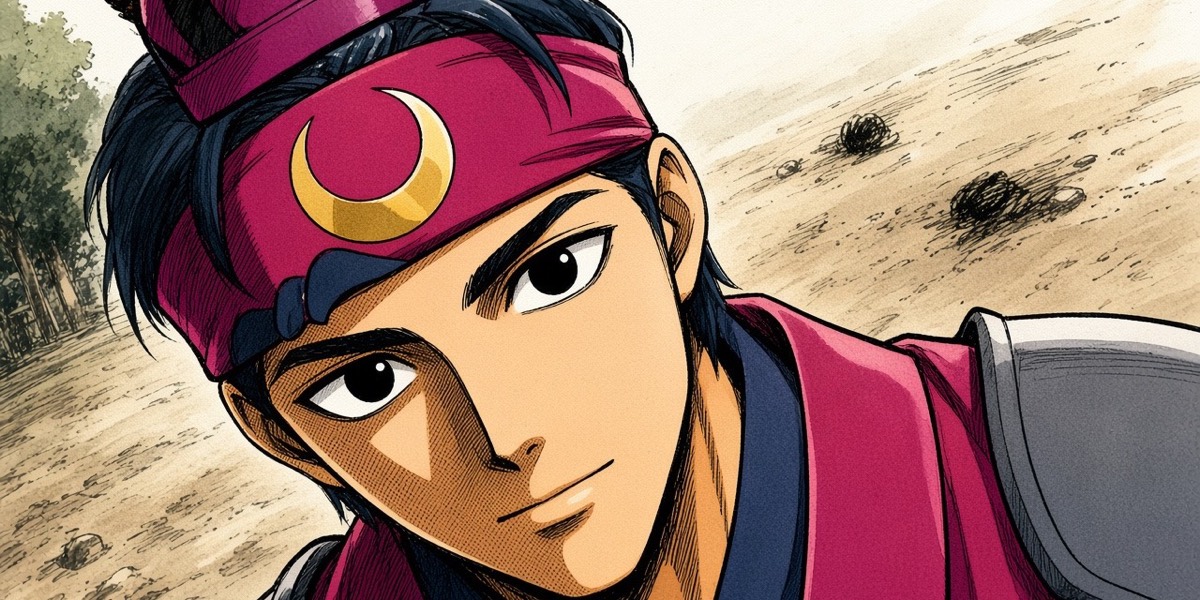
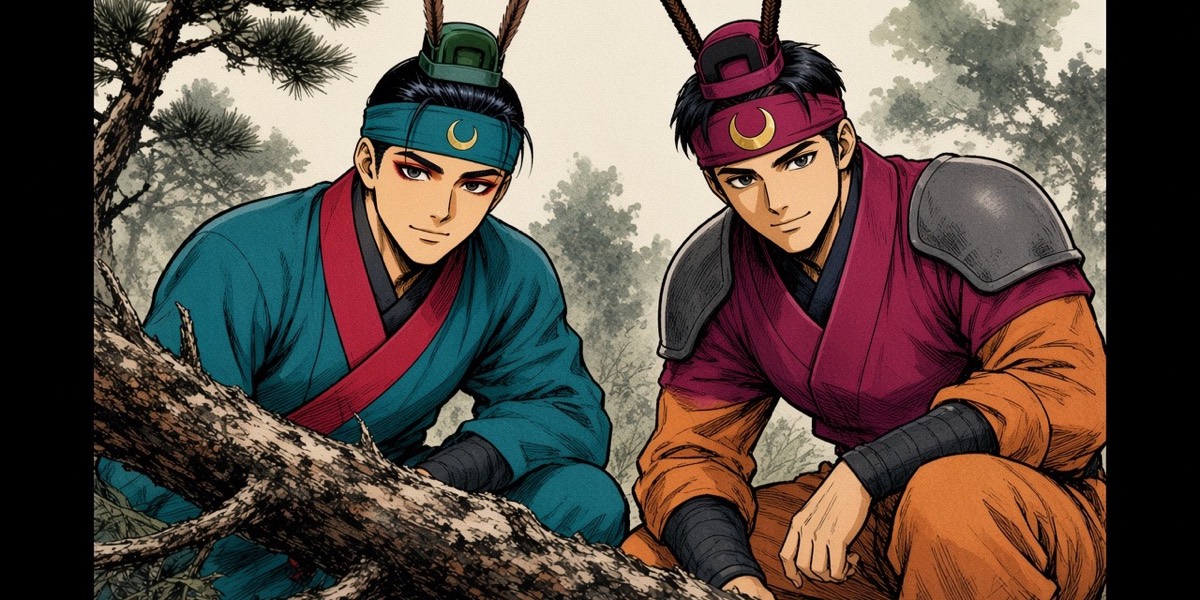
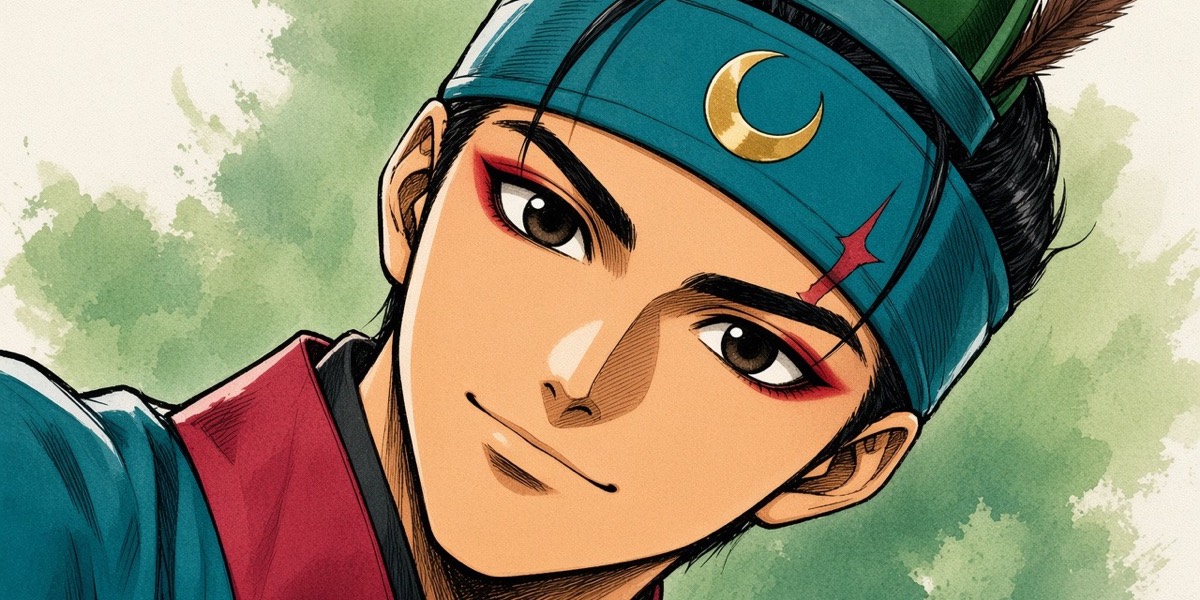
Twenty-two. Teal over rust. A red scar cutting the left temple. Crescent still on him. The boys call him senior. The yard calls him . He doesn’t have to shout.
The bands form the way they always form. Heum takes six. Somebody takes five. Nobody wants the ghost boy in their Order.
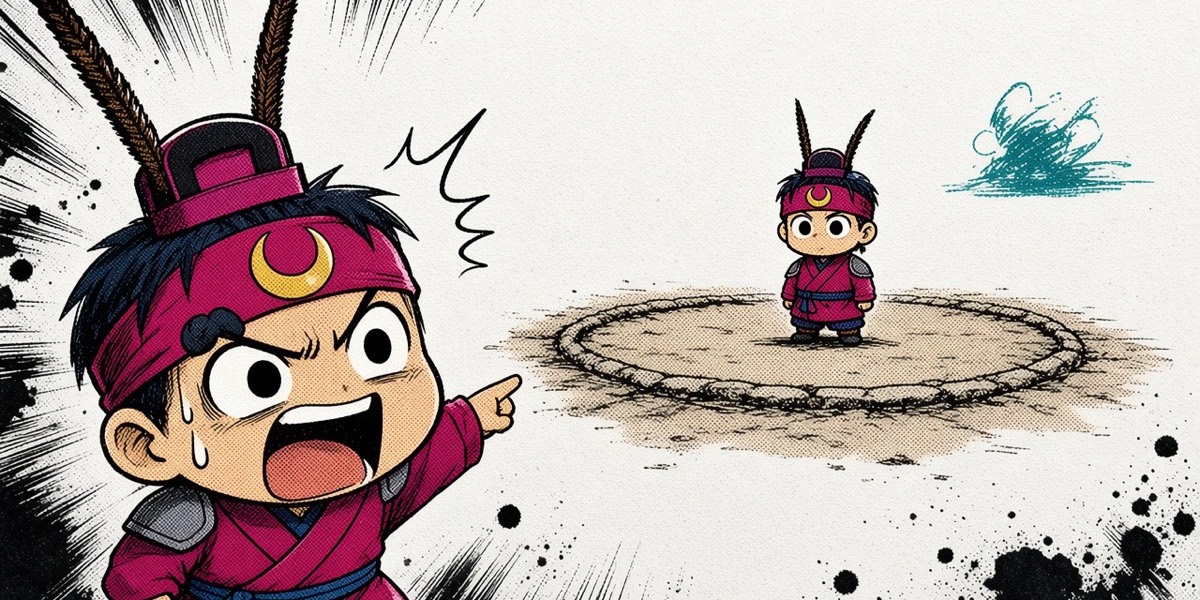
The space around stays a space. He has known it would, since the shoes in the pond. He stands in it anyway, as if the line might change its mind.
Nobody answers. does not usually walk out with a group. He looks at the empty ring the way he looks at a crooked stance.
He was the skinny one once. He remembers the laugh. Then he walks into it.
looks at , and then at the gate, and does not ask why. Asking why is how you lose a thing like this.
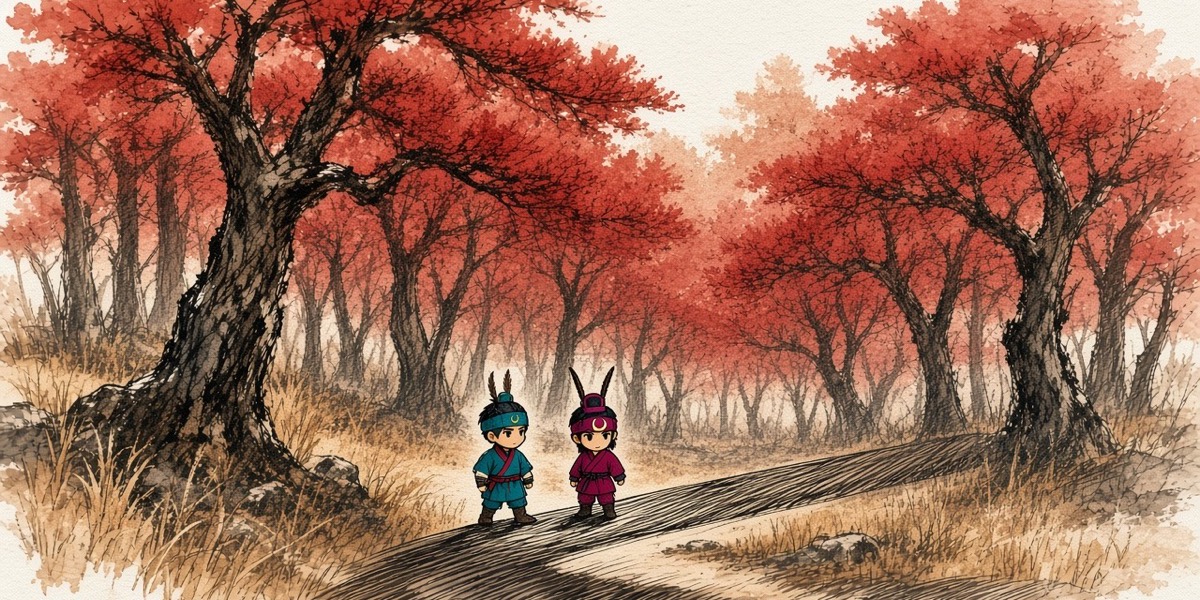
Pines. Afternoon. A path deer use, if you believe the droppings. is already mid-throw when the thing is gone.
The deer is there and then it is not. ’s arm is still out.
does not run. He tilts his head, the way he tilts it at a go board when the other person has just played the obvious stone.
He sits. He carves. takes a root and watches him the way you watch a boy who might still be stupid.
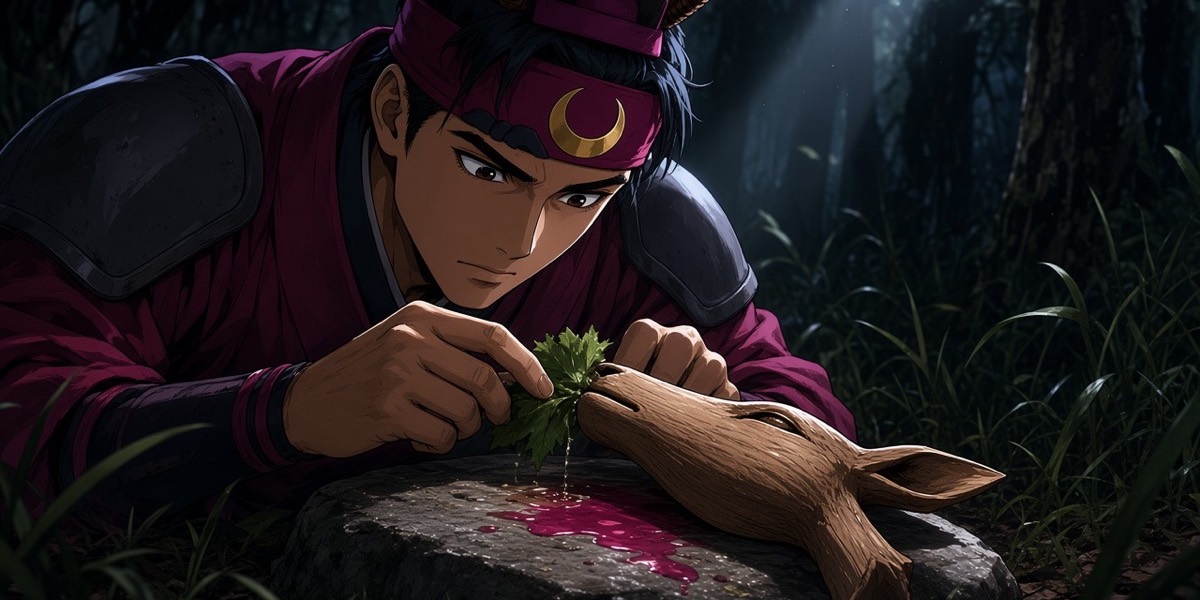
A wooden doe with a coat of moss. The first ears are too long. swears under his breath, which also pretends not to hear, and cuts them back.
He picks leaves does not know the name of and crushes them against a stone until the smell goes sweet and wrong. He paints the wooden mouth. His hands are steady. ’s are not, quite.
They set the doe on the path. They sit downwind. ’s fingers drum once on his knee and stop.
Nothing happens for long enough that a lesser boy would have started explaining. does not explain.
The deer comes. It noses the wooden mouth.
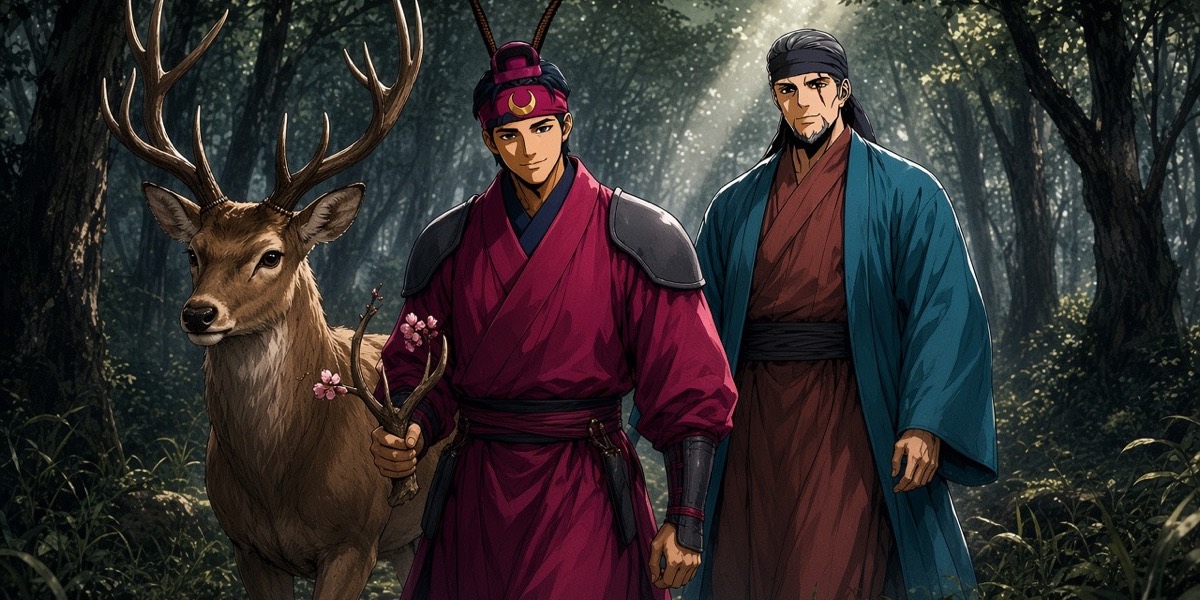
The deer that comes is huge. Shoulder as high as the boy’s chest. It folds anyway.
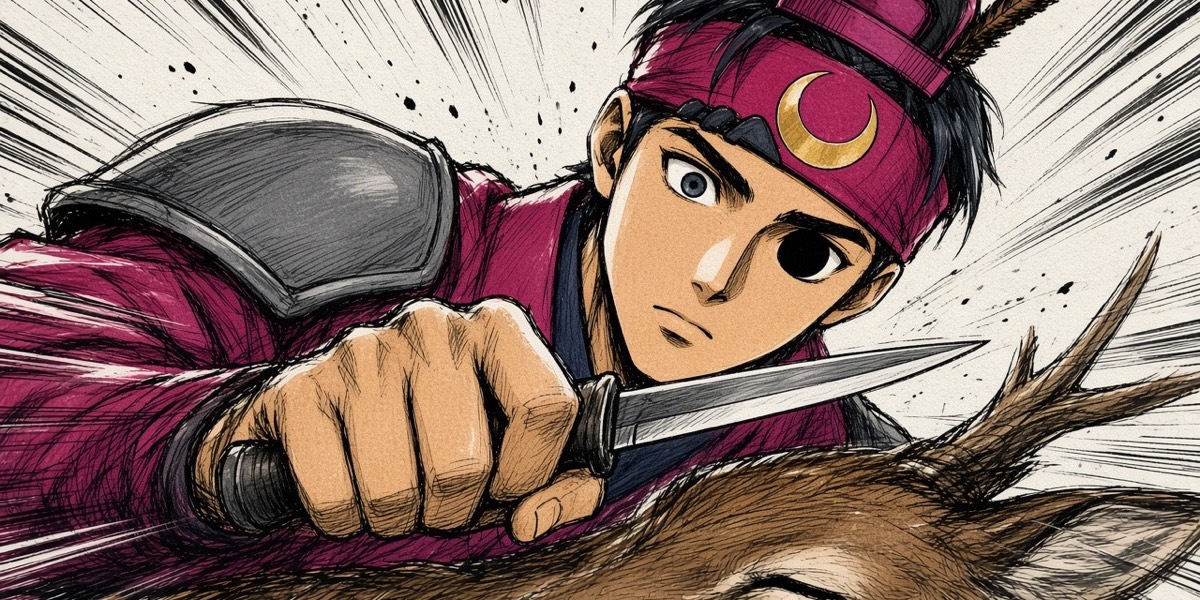
The knife is in ’s hand before he has decided to pick it up. does not take it from him.
The pines go. There is only his face. Then he lets the knife hang, and looks at the sleeping animal, and laughs once, very quietly, at himself.
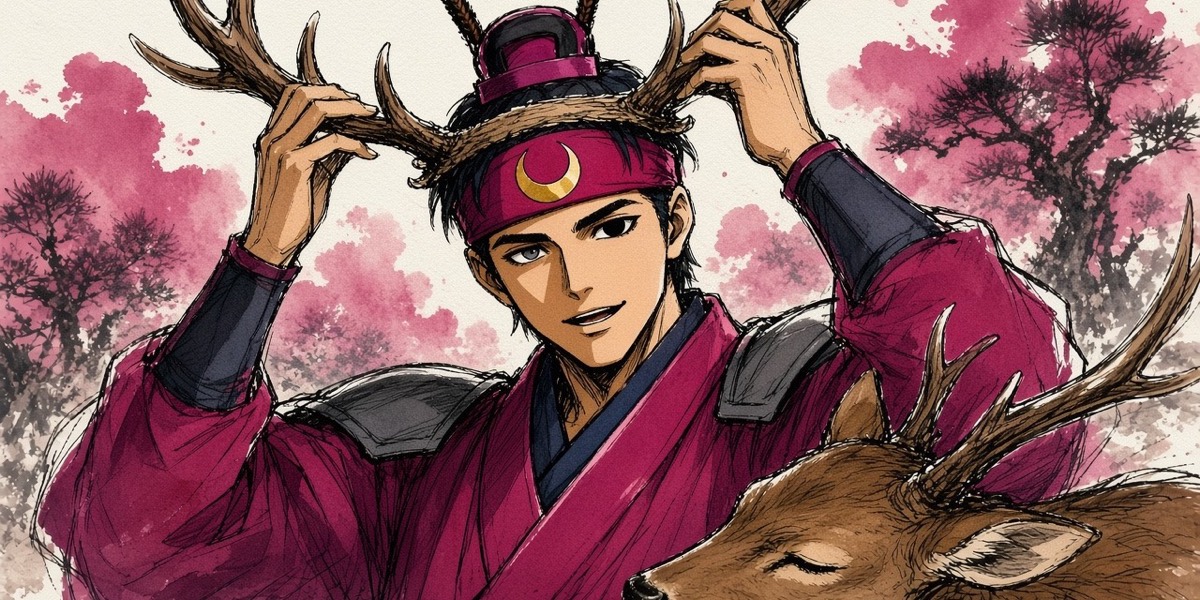
The antlers come off like a hat.
He ties a plum blossom on the cut because his hands are shaking now and a flower is something to hold.
The deer wakes. It startles. It looks at him. It walks.
Last through the gate: a magenta sleeve, and a deer still walking.
Heum has a fawn on the line and a joke half out. The joke dies. The fawn looks embarrassed to be dead. is beside , empty hands, as if he had planned this, which he had not.
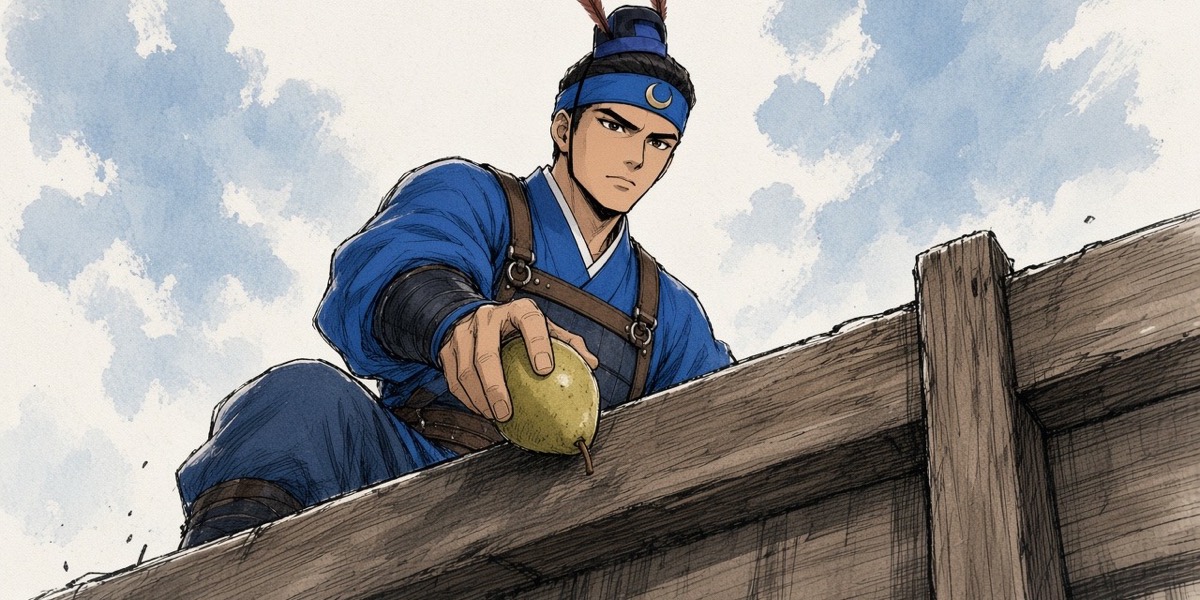
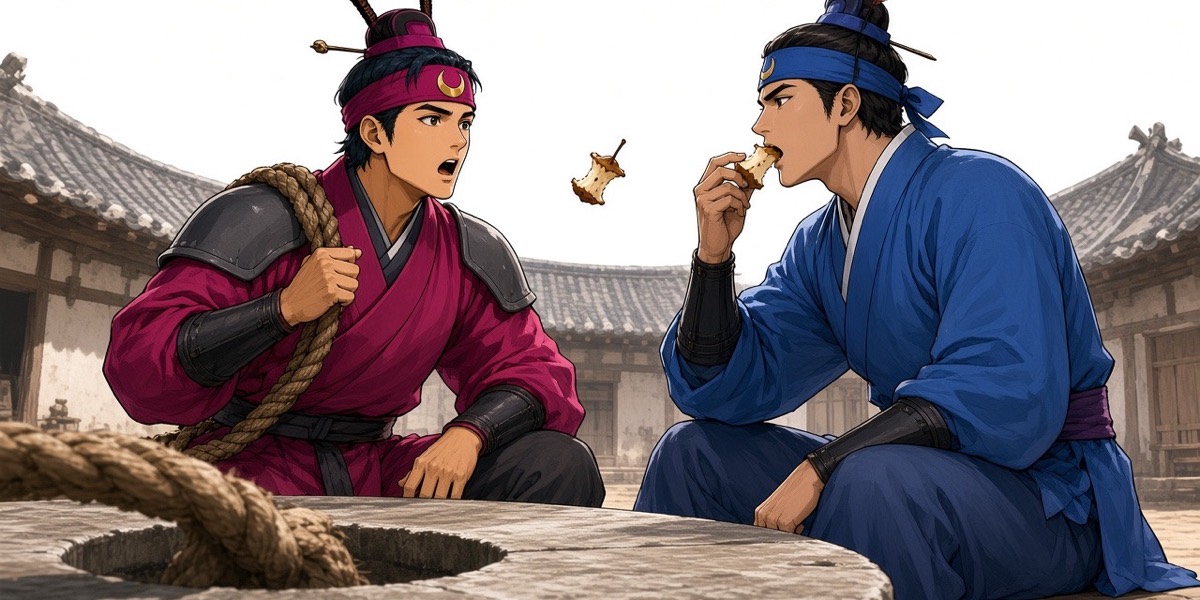
The judges shout. On the wall, a young hwarang in blue is eating a pear. He is not the one who walked out. Class 51 still owns the wall. He has been watching the rope, not the horn. He puts the pear down.
The deer eats the blossom off its own horn. Somebody starts to laugh and cannot finish it.
After that they start saying the magenta one is clever, which is a different kind of laugh, and stands in it as if he had expected that too.
The yard still belongs, some mornings, to . Grey, scarred, eating something, asking every new boy the same question as if it were a drill.
“For the king!” “For !” “For my house, sir!” He grunts at each one and moves on. Then he gets to the goblin’s boy and stops, because the line has gone quiet to listen.
Somebody in the line snorts. Somebody else does. The Marshal’s face doesn’t move at all.
Now the whole line laughs. The Marshal waits for it to stop.
The stone is the one the yard keeps for this: an old millstone with a rope through the hole. Boys twice his size have quit on the second circuit. does one, then two. On the fourth he falls and splits his lip. On the seventh he catches himself talking to the stone under his breath, the way his father talks to things, and he is so angry about it that he does the eighth out of spite.
On the ninth, the same young hwarang in blue is on the wall again. He sits for one pear, the way he sat for the deer.
He tosses the core without looking. ’s hands are on the rope. It hits him square. Second time this month the man on the wall has found him.
stands there with the rope on his shoulder and blood on his chin and considers this. Then he sits down on the stone, because there is nowhere else.
Everyone in the yard knows the name. Class 51 left years ago, and the yard still runs drills under his name. The instructors already call him General, half as a joke. The joke gets thinner every year.
looks at him. Then, for the first time in Class 59’s memory, the man on the wall laughs.
In the second month the class’s rice runs short. The quartermaster blames the boys. The Yard Marshal blames the one he already dislikes.
The bag holds a spare robe and a book of Odes. The tally takes him as long as it takes to read it once.
opens his mouth to say the steward. He hears himself not say it.
Nobody laughs. Heum looks as if he would like to, and then doesn’t. The rice comes back, and so does the large scoop. Forty hungry boys learn that the goblin’s boy can count, and boys will forgive almost anything for rice.
In the third month the yard puts four unlit practice beacons on the hill — iron baskets of kindling, the kind a ridge uses to talk to the next ridge — and tells each hwarang to light his own and keep it lit. You may kick another band’s fire out. Each hwarang takes his disciples. The Marshal looks at , who has none, and at five boys nobody else called, and solves both problems at once.
The other bands take the front path in a beautiful, stupid crowd. ’s five come back with two beacons still burning and a third they weren’t supposed to be able to light. He didn’t climb. He sat on a rock and counted.
That night the five leftover boys move their mats. Not to the drain end. Next to it. Close enough to ask him what to do tomorrow.
At the autumn moon-viewing every class must give a verse. Class 59 has nothing. One by one they look at the boy at the drain end of the hall.
The instructors laugh. Then the class laughs, with him for once. Even the Yard Marshal makes a noise that might, in a better light, be one. By winter the bench makes room. By spring the boys who threw his shoes in the pond are asking him to write their letters home. He writes them beautifully, charges nothing, and remembers every name.
His father told him to count the boys who smiled at him. He counts them again in a month. The number has gone up.
In spring the comes to look at the new class, as it does every year, the way a man walks his own orchard. Six sleeves pass down the line of boys. They are the fathers of half of them.
The stops in front of . He doesn’t look at the boy’s face. He looks at his shoulder, where a bone rank would be if you wore it on the outside. Behind him, half a step back, the councillor is smiling at nobody in particular.
He bows so well that two of the six look pleased. The moves on. stays bent until the sixth sleeve has passed, counting them.
doesn’t laugh this time. He sits on the wall beside the boy until the watch changes and says nothing, which from him is a great deal. Some of the faces on that list will live long enough to bow to . Not all of them.
Every great love story in has a committee behind it. This one has two members and no minutes.
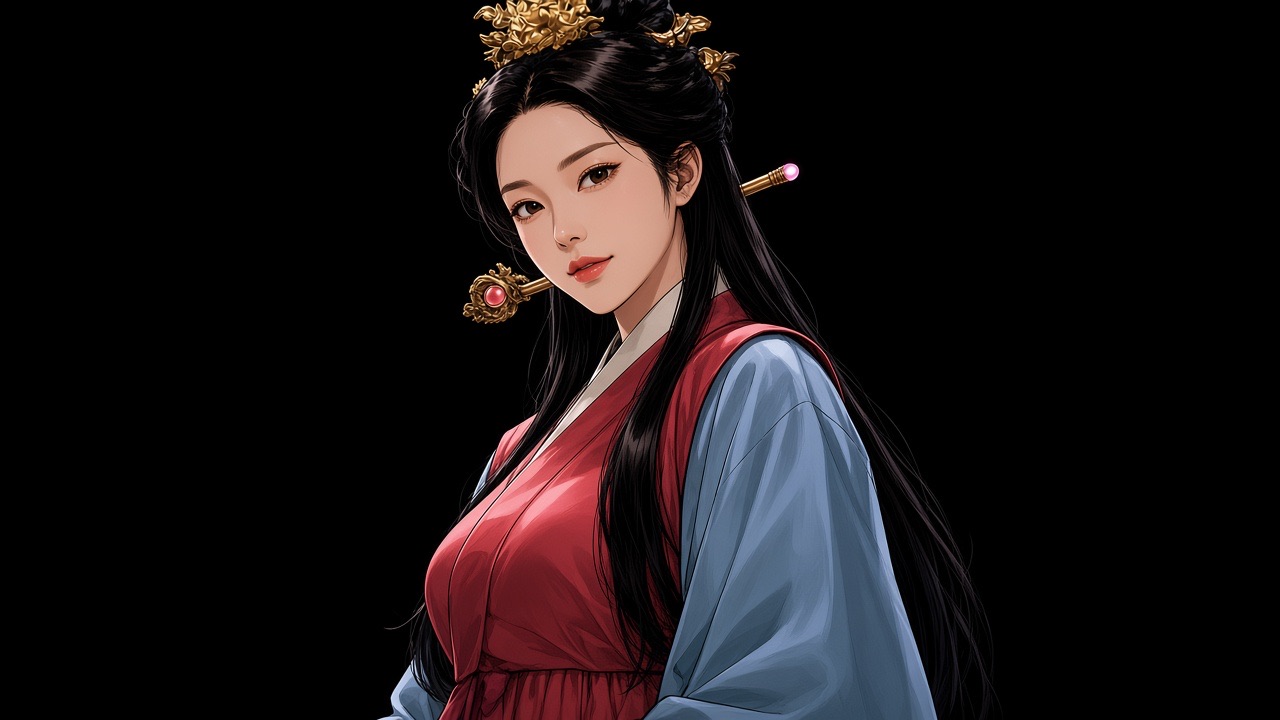
The princess has a father with no sons, and a court that can count. When the day comes she will need the best swords in on her side. Swords are loyal to family.
The best sword in is walking beside her, collecting her arrows. His family has a rank. It would like a cousin.
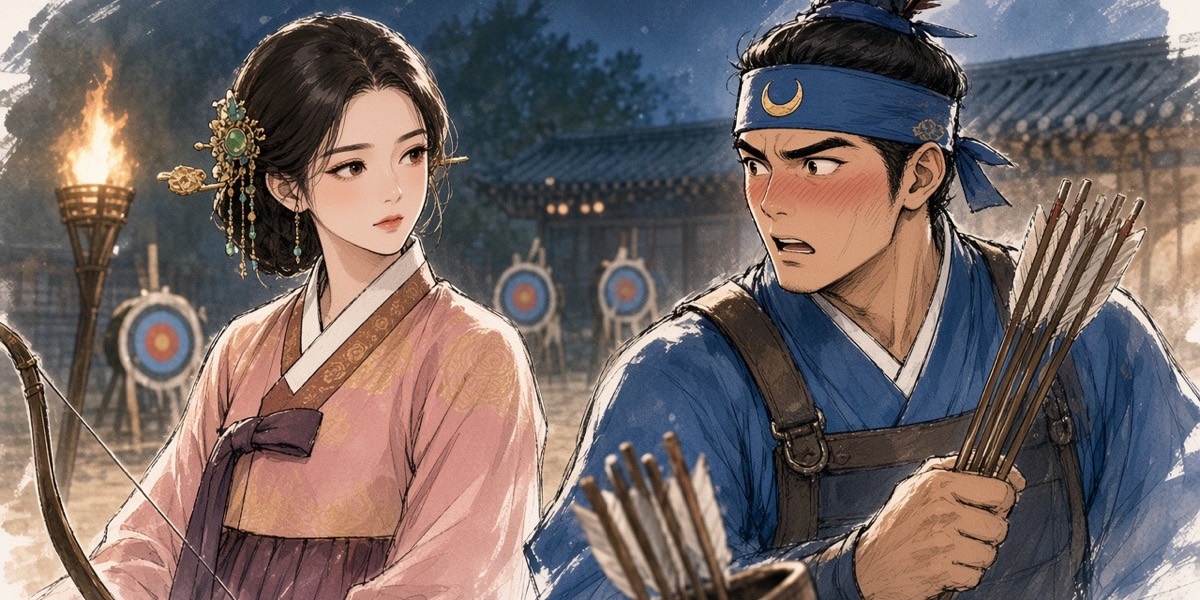
swallows the wrong way. The arrows in his hand rattle.
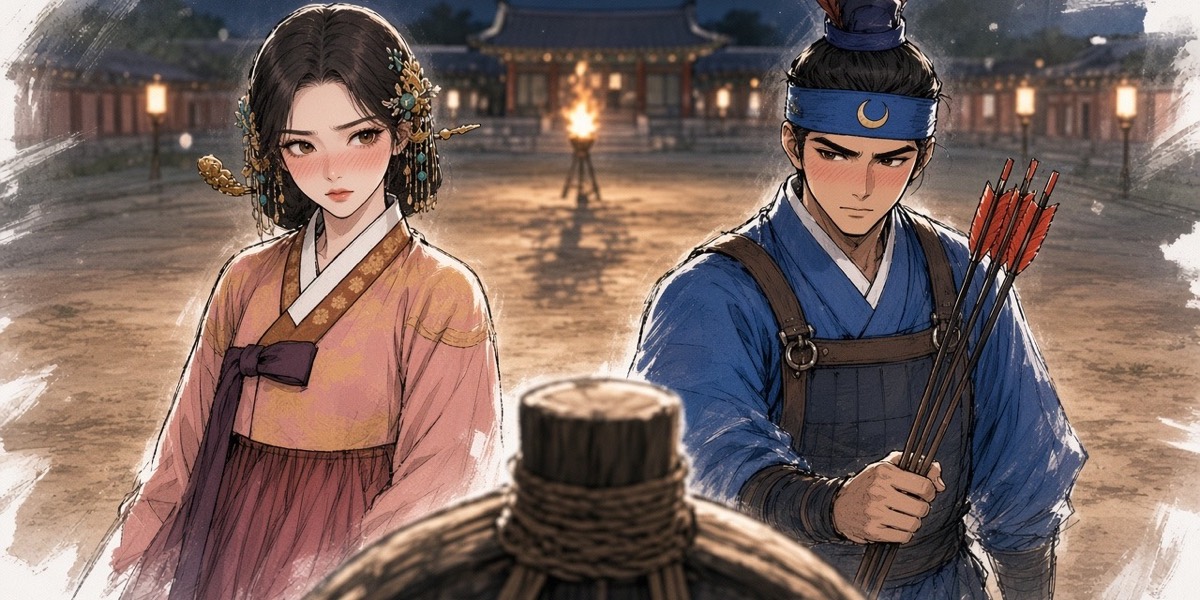
They walk on to the butts. Neither of them says the obvious thing, which is that there is a shorter way to put blood into the royal house, and it is standing on this range. A princess does not marry a general. Both of them have checked the rule. Separately. More than once.
She looks at the target. He looks at the arrows. It is dark enough on the range that nobody can see either of them go red, which is lucky, because both of them do.
The same week, in the house, a dream is sold.
takes the skirt. It is the single worst trade in ’s thousand years, and the two of them will both live long enough to know it.
Five days later, on the gyuku field. Seven years on, they still play every fifth day. still wins. still loses, and keeps a different score in his head.
knows. That’s the plan. He has been told to step on something.
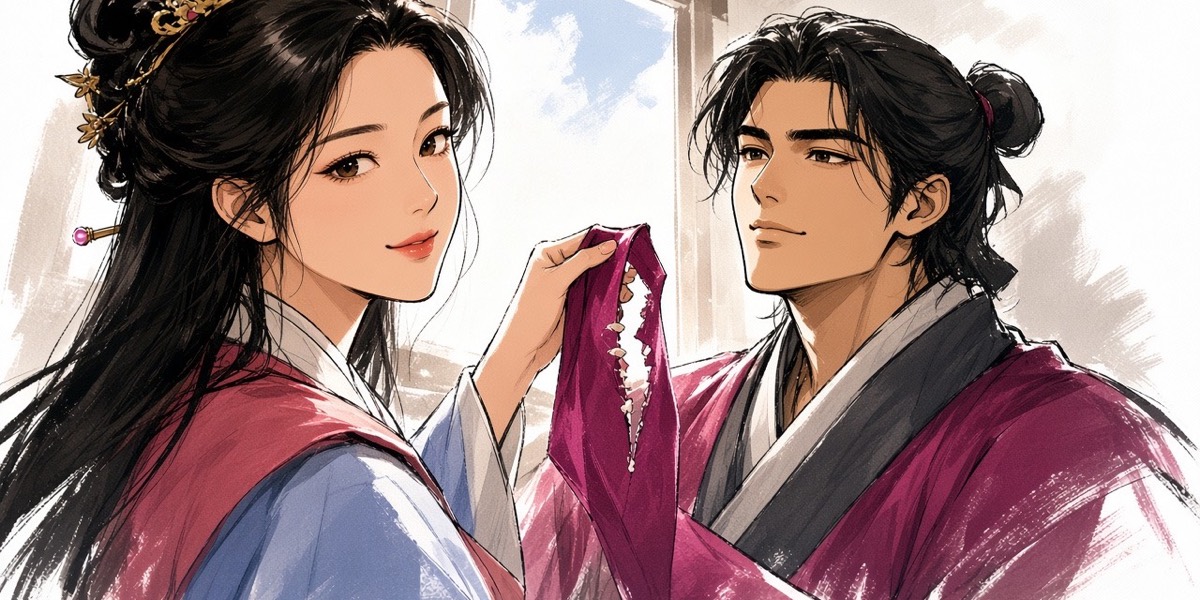
brings him home from the field — still dusty, still arguing about the foul — and on the yard, mid-demonstration of a “proper grip,” steps on the hem of his coat on purpose. The tie comes away.
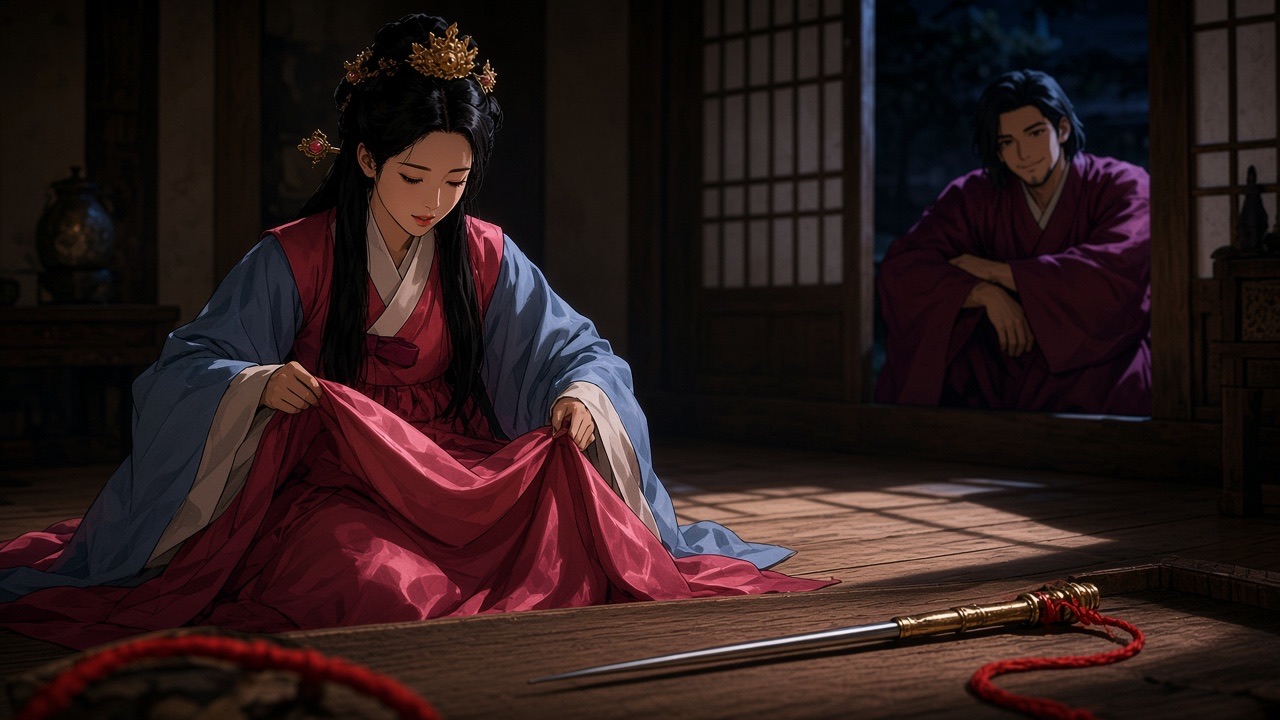
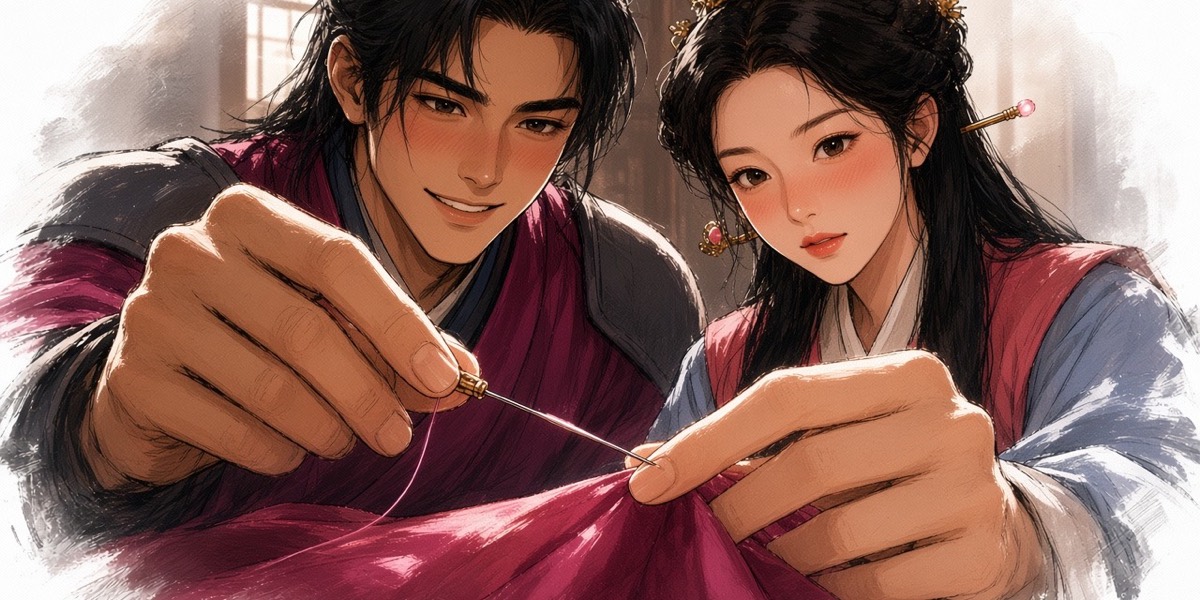
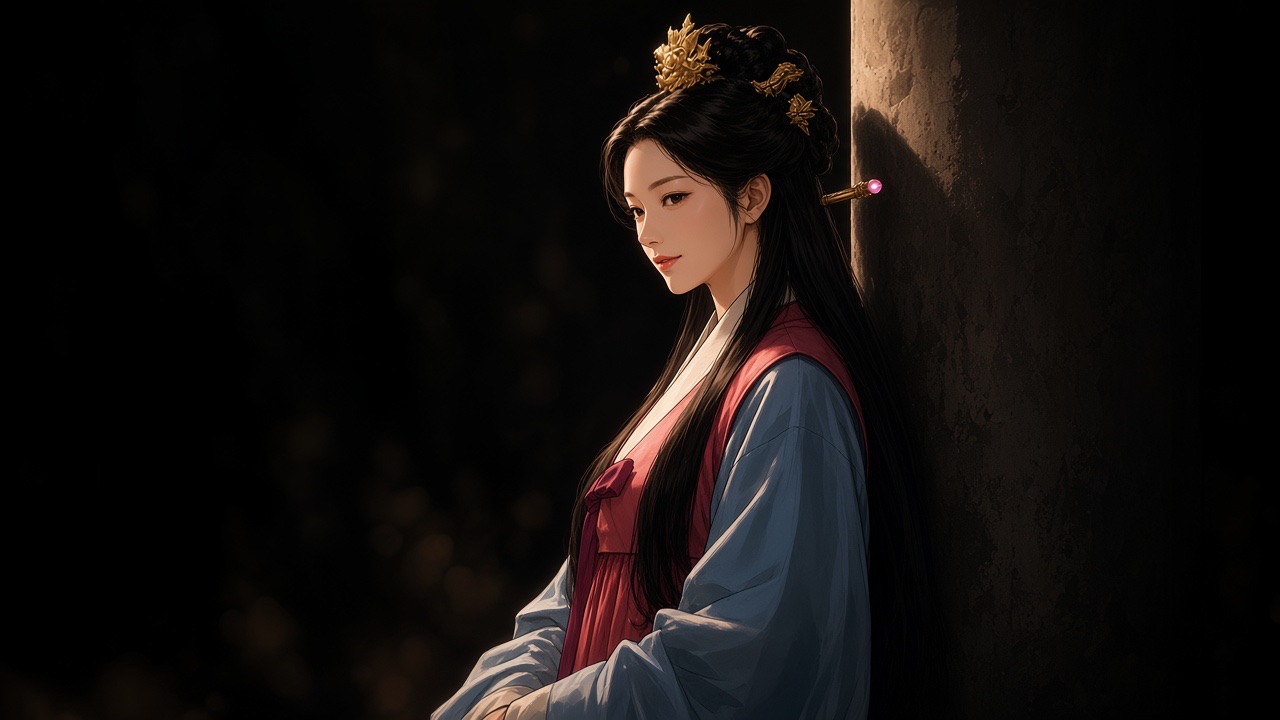
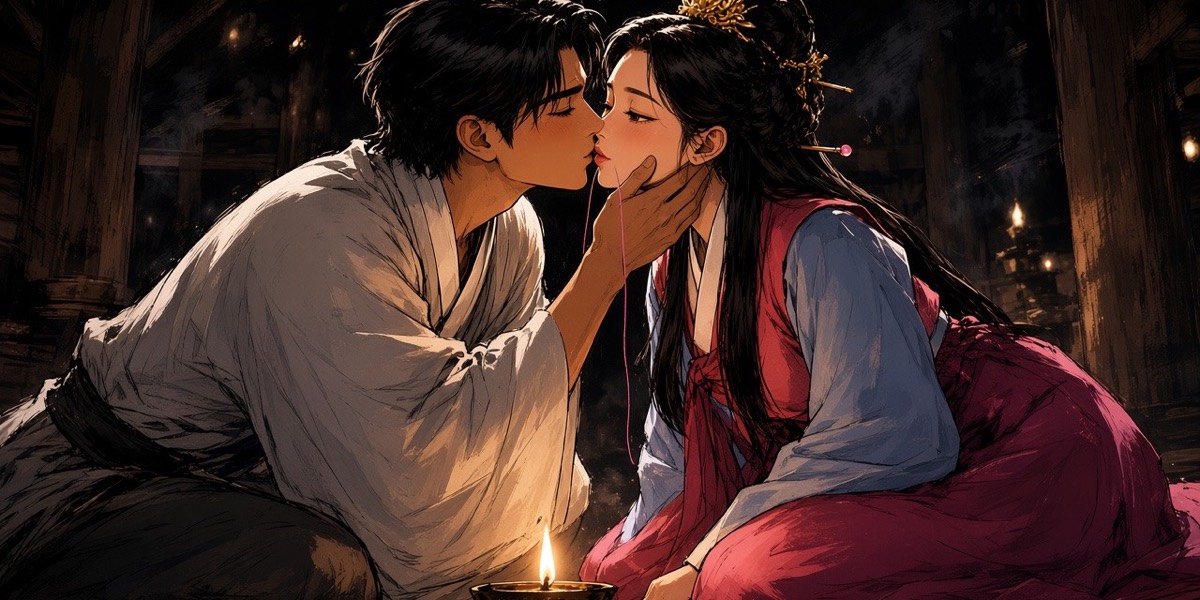
He has to take the coat off for her to mend it. Magenta silk leaves his shoulders. He sits disrobed in her brother’s hall with a ’s embarrassment and nowhere to put his hands. She knits the tear standing close enough to feel the heat off his skin — and that is all, the first time. Needle. Breath. The slow fact of a man without his coat.
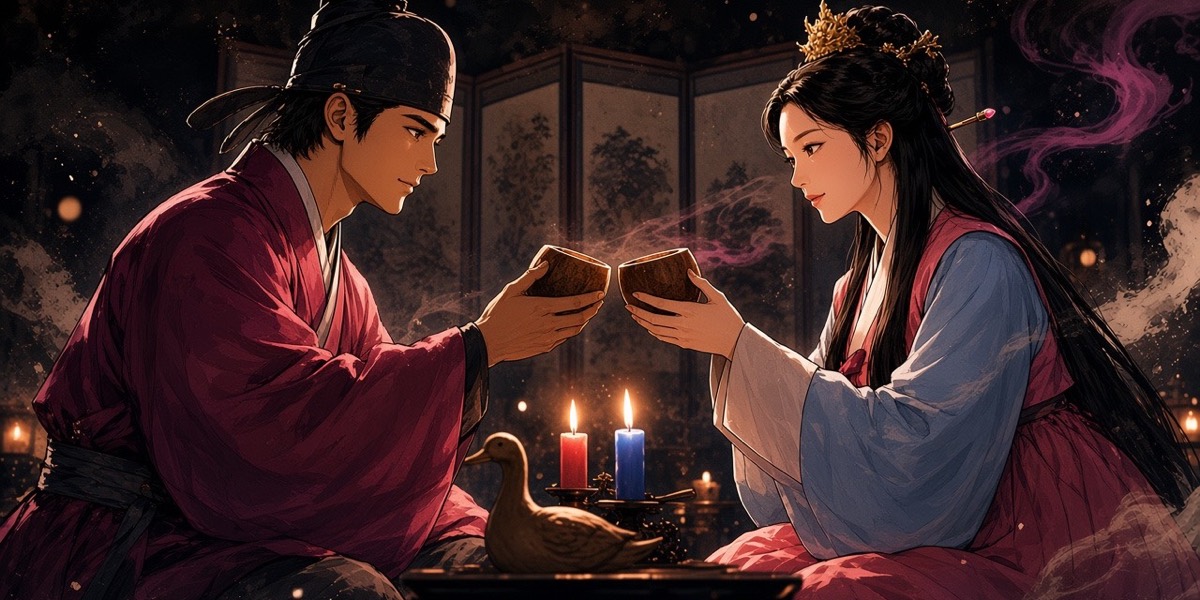
The elder sister had some reason not to come forward, so the younger came and sewed it. Light make-up, light clothes, and a radiance that lit up the room. saw her and was delighted…
그 언니는 일이 있어 나오지 않고, 그 아우가 앞으로 나와 꿰매었다. 옅은 화장에 가벼운 옷차림이었으나 빛나는 고움이 사람을 비추었다. 춘추가 보고 기뻐하였다……
He comes back the next day, needing nothing sewn, and again the day after that. Each visit she finds a new place on the garment — and they sit closer. The needle slows. His breath learns the back of her hand. They do not leap. They accumulate.
The second visit, she measures his shoulders with her hands. The string stays in her sleeve. He goes red to the ears and lets her.
The third, their fingers meet on the needle. Neither of them lets go first.
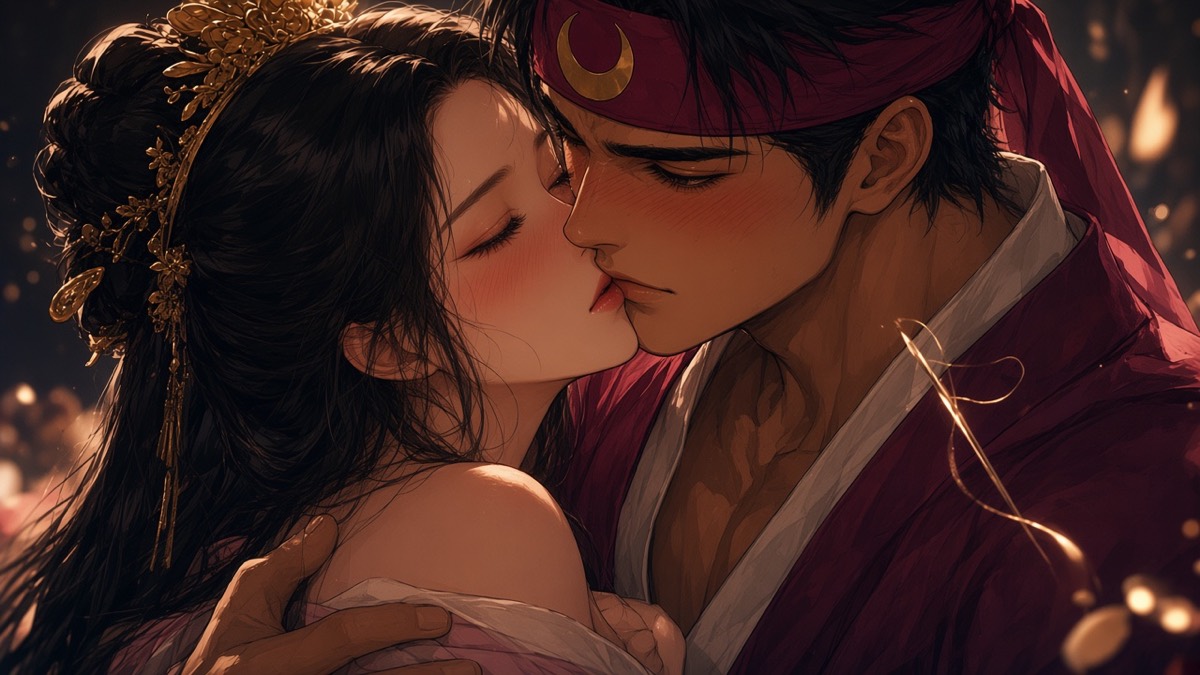
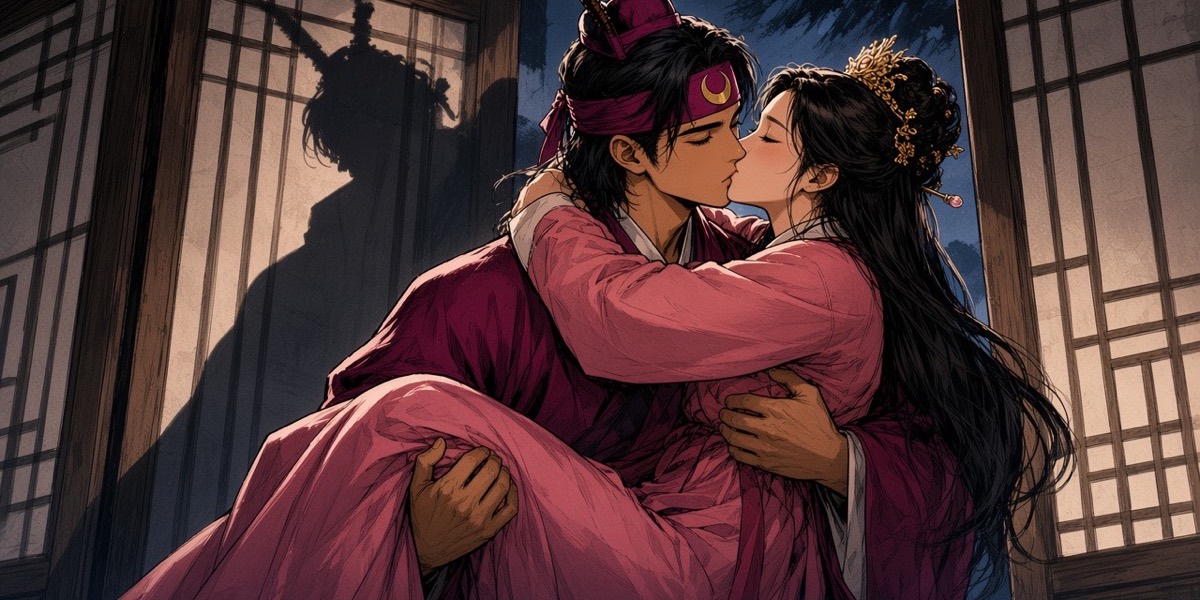
The fifth, she bites off the thread. He kisses her before she can put it down.
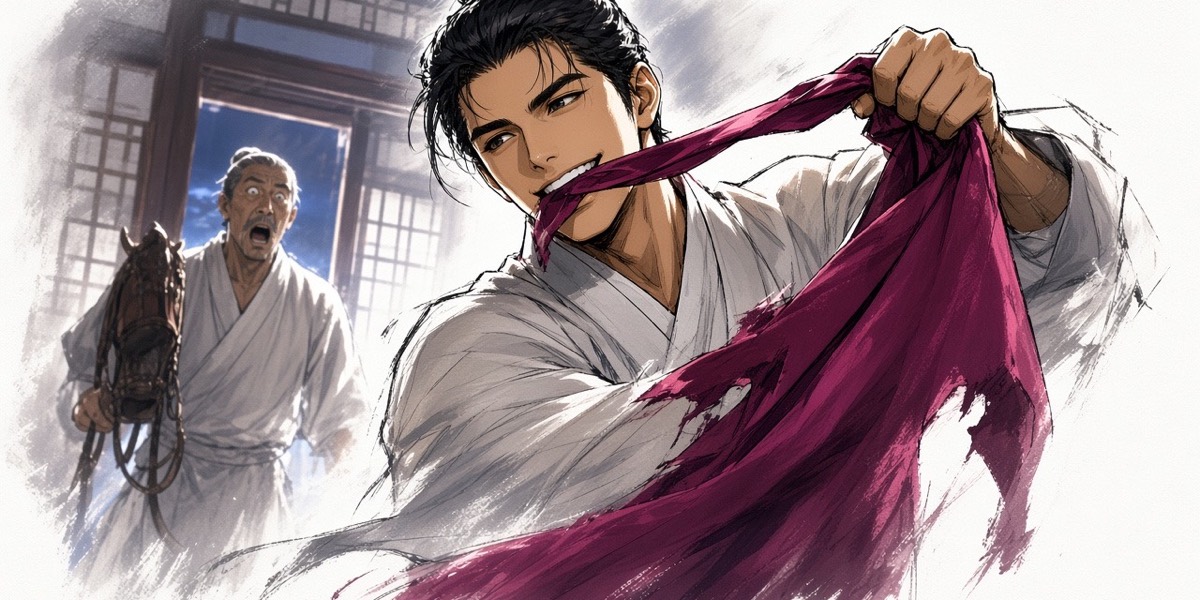
Across the city, in a house with too many servants, a young stands in his underrobe and rips the tie off his own coat with his teeth. He looks at the hem. He rips that too. Then he calls for his horse.
At the house holds the tie up to the light. There are teeth marks on it.
On the fourth afternoon the house gets a visitor nobody planned for. The girls’ father is in the capital for three days, to tell the palace about a granary on the border. He comes in from the gate in his riding boots and stops in his own doorway.
A young nobleman is sitting on his floor in an underrobe. His younger daughter is standing behind him with a needle. His son is studying the rafters with great interest.
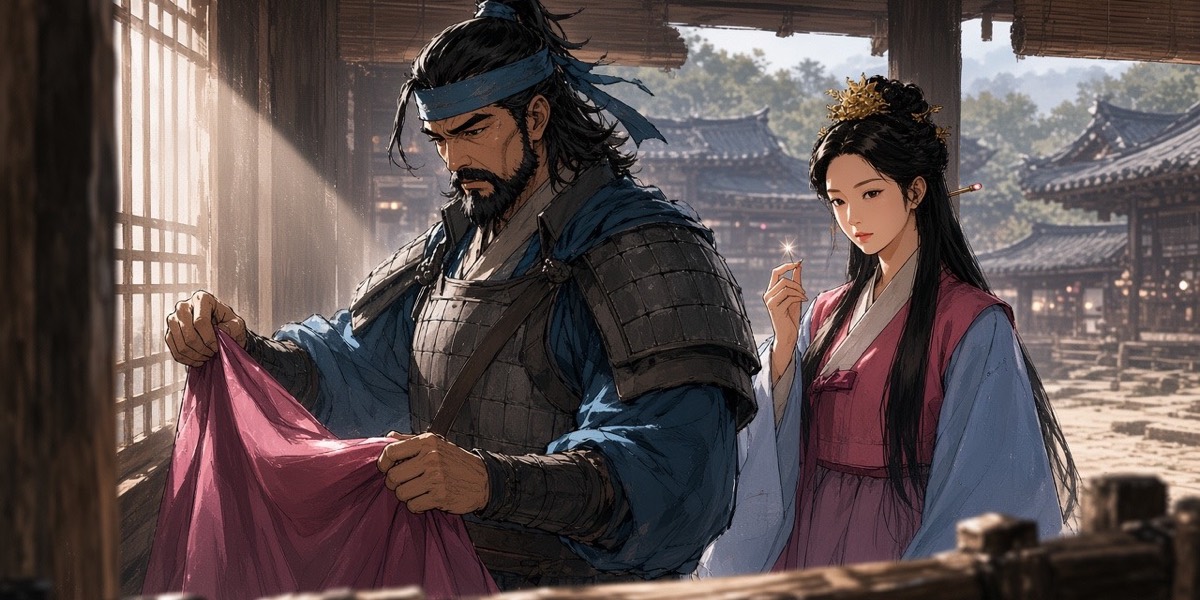
He crosses the hall and takes the coat off her arm. He holds the hem up to the window. It has not torn. Somebody has unpicked it along the seam, stitch by stitch, very neatly. He gives it back to her.
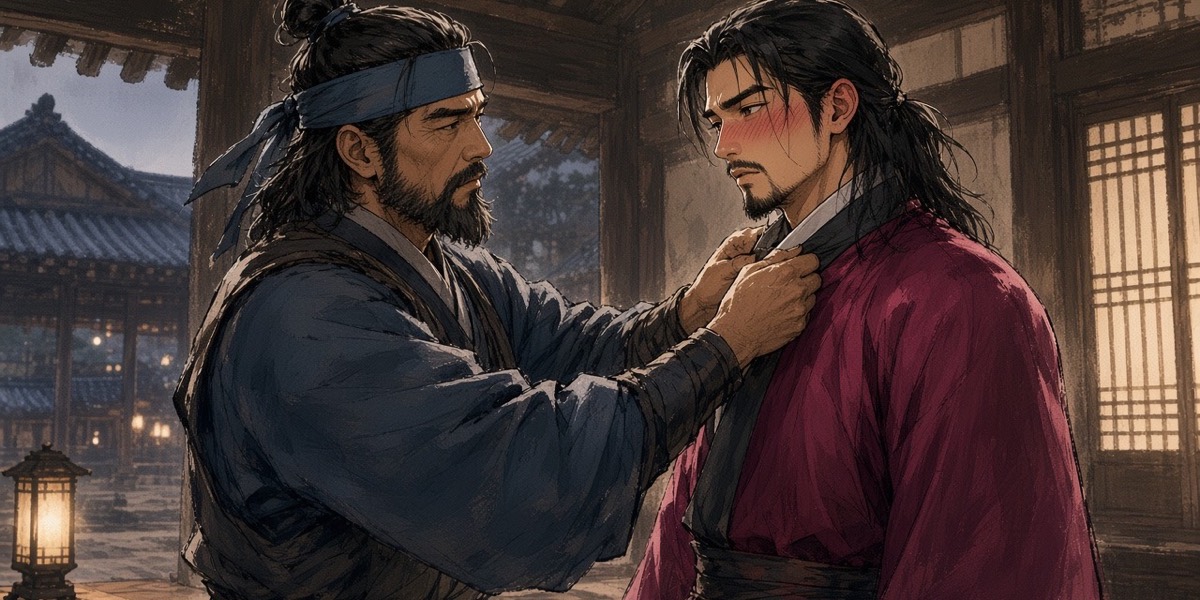
Nobody in that hall has ever sewn so slowly. When the coat is back on, the old man reaches over and fixes the gentleman’s collar with both hands, the way he has fixed every collar in this house, and steps back.
He goes out to see to his horse, which does not need seeing to. waits until his boots have crossed the yard. Through the side door, her sister has heard every word.
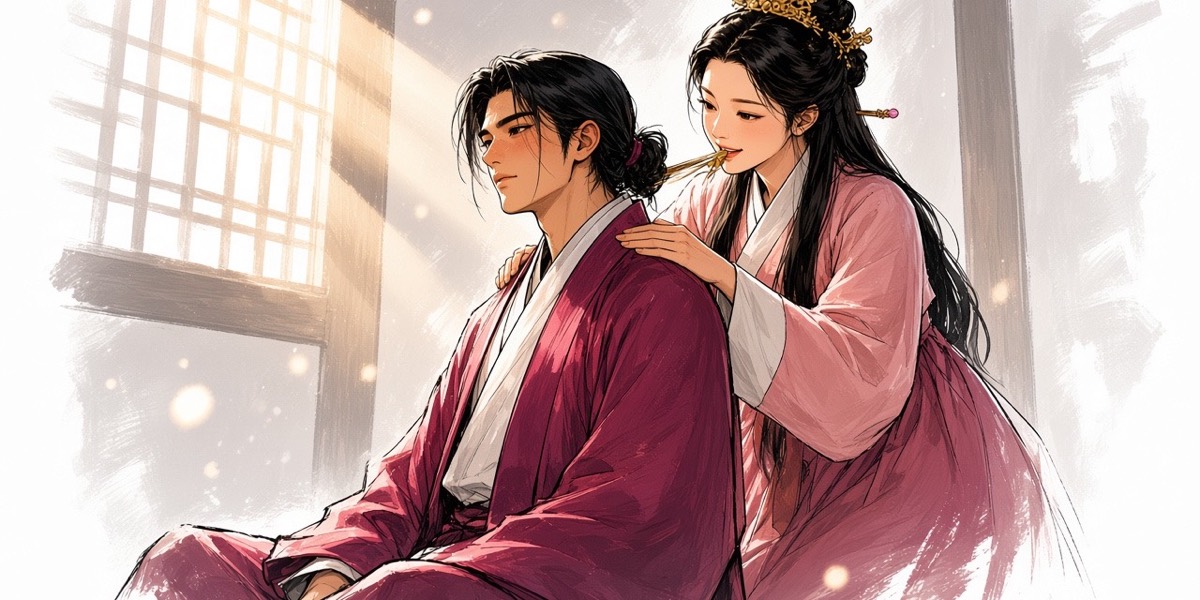
On a later visit the coat is off again. She stands behind him, needle forgotten, staring at the breadth of his shoulders as if the knitting were only an excuse to keep looking. Magenta silk has slipped. She does not tell him to cover it. When the needle pauses it is because her mouth has found the place above his pulse — and is careful to be looking somewhere else the entire time.
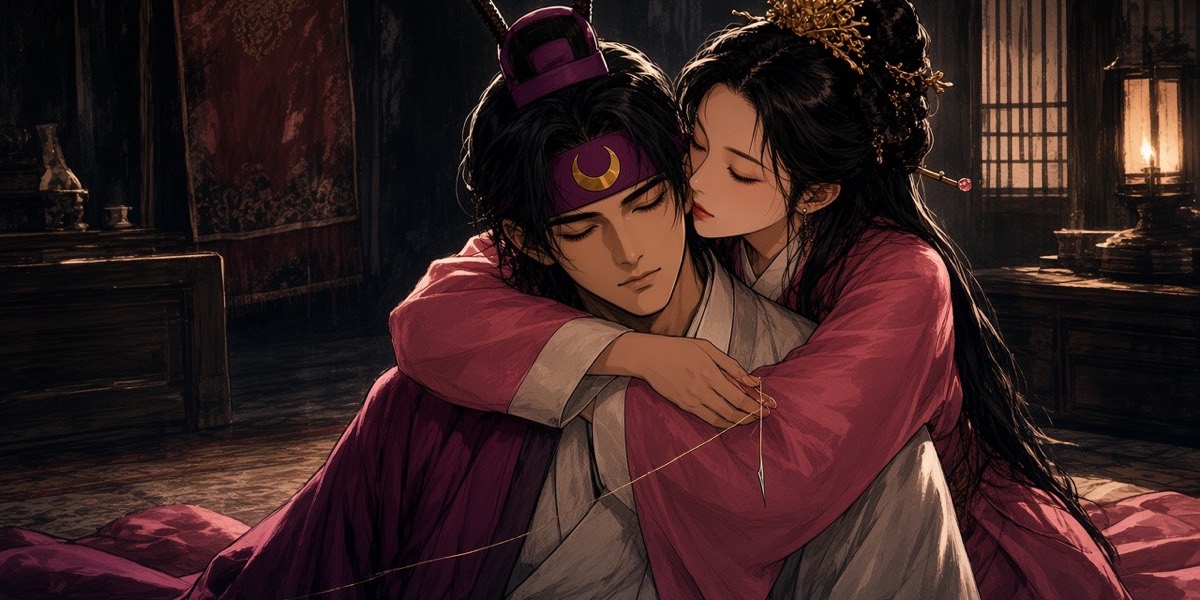
He stays. The household learns the sound of a door that is not meant to open until dawn.
By midsummer the household staff have stopped announcing him.
Ask about the next part and she still blushes.
By autumn is showing. still hasn't proposed.
builds the pyre in the yard where they played gyuku, which is not lost on anyone, and sets green wood on it so that it smokes instead of burning. stands beside it with her hands folded over the child. Nobody has tied her. Nobody has needed to.
The smoke goes straight up. It is visible from Namsan. It is visible from the terrace where a princess happens to be standing with the young nobleman who has gone the colour of paper.
Then is running. A does not run in front of a princess. He runs the whole way: down the terrace stairs, through two gates, into the smoke.
The princess watches him go. Then she looks at the sun, the way a woman checks a candle clock. Noon, more or less. Higher up, on the palace’s own terrace, an old king watches the same smoke and asks who it is. He is told. He laughs, for the first time that winter, and says the boy’s grandfather would have run too.
He says it to the yard, to the princess on the terrace, and to half of on its rooftops. closes her eyes. She had hoped for a quieter proposal. She will take this one.
kicks the green wood apart. It was never going to catch.
Then he looks up, across half the city, at the terrace. She is already looking somewhere else. So is he, a moment later. It is a long way between a yard and a terrace, and both of them still manage to blush across it.
and are married. The green-wood rumour becomes a wedding, and the wedding becomes a household that is openly fond of itself.
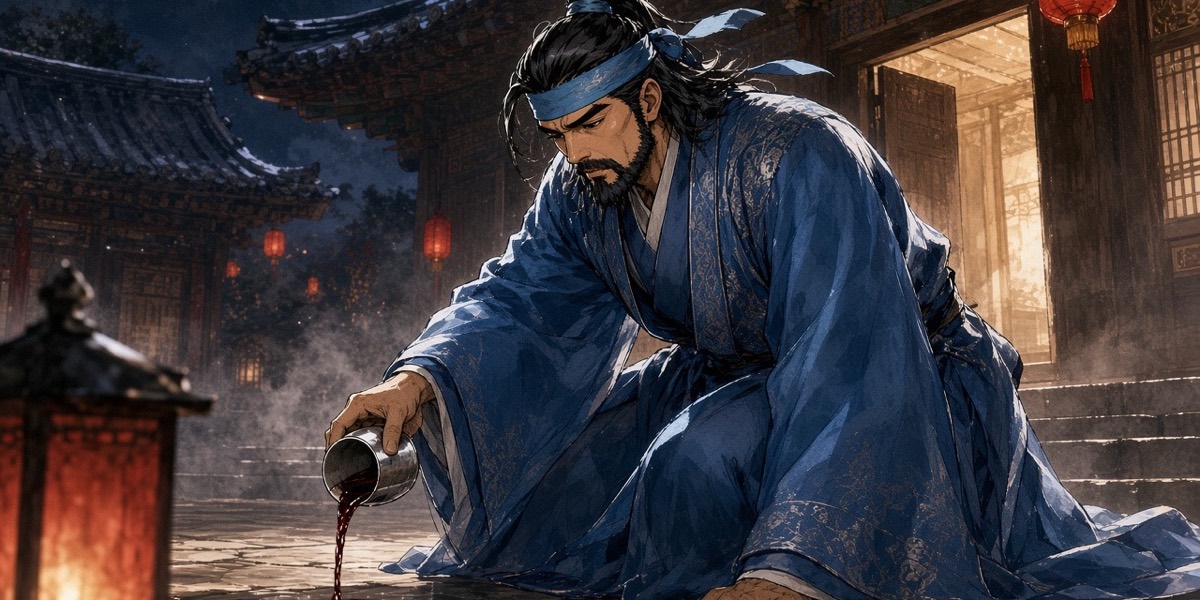
The bride’s father sits near the dais with royal Kims on every side and says almost nothing all night. Halfway through, a steward brings him a cup from a very old man across the hall. He drinks half of it. The other half goes on the step, and nobody asks him why. By the door, the groom’s father is the only guest who doesn’t look surprised.
You already know most of the room. The princess who will be queen sits with her sister — the groom’s mother — and does not try the chair. Across from the old man, a woman in silk watches her husband pour half a cup on the step. The marshal stands where he always stands: not quite at the table. By the door, the groom’s father does not look surprised.
At the feast the two of them end up where they always end up: outside, on the steps, sharing one cup.
Neither of them says the word. It sits between them anyway, the way it always has: . His grandfather bought the family a rank. Ranks are not the same as blood.
The wedding itself is quiet. Magenta silk and pink silk share a cup. What the court will later call a clever match is, in the room, simply two adults who have already learned each other’s breath.
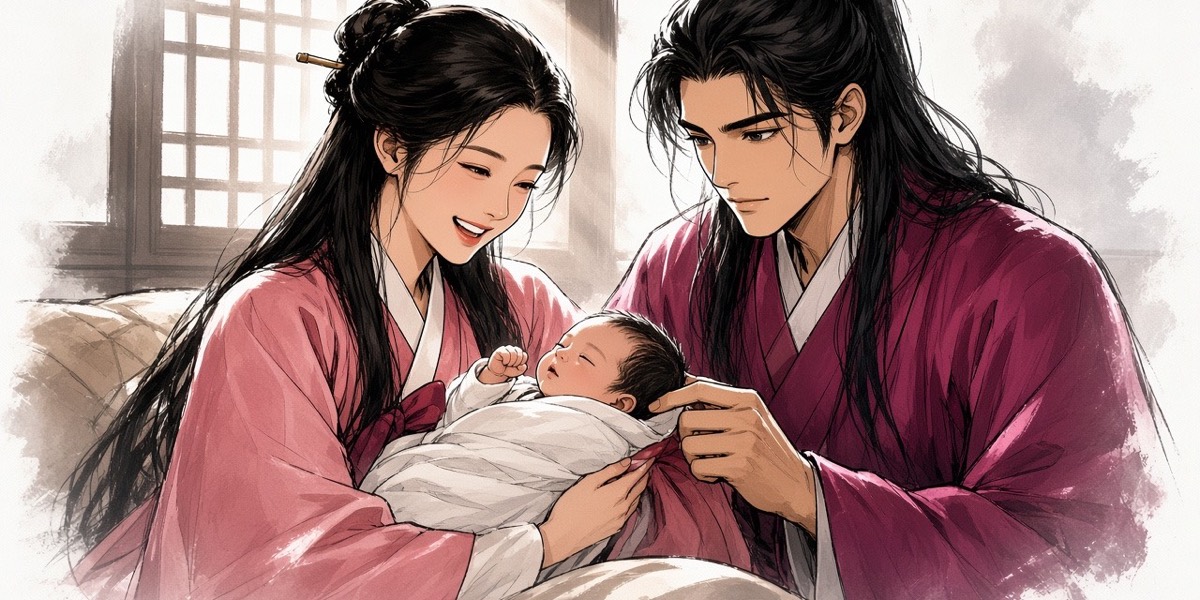
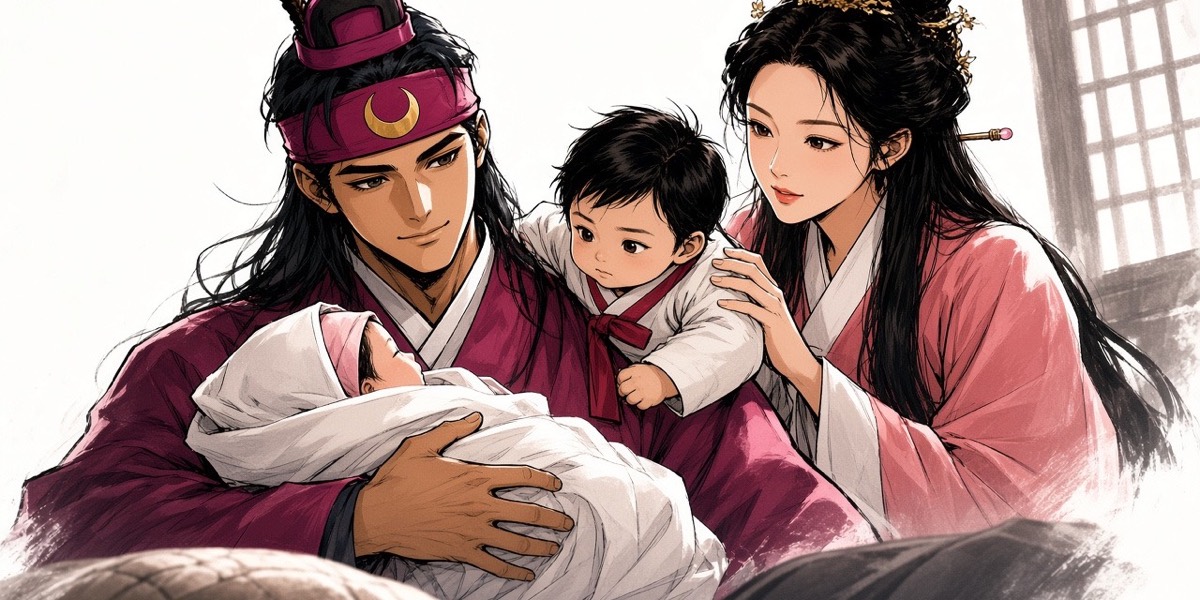
comes the way she always comes when a breath starts: in white, with nobody else in the room. The first child is a boy who walks before he talks. They call him . A year later comes a girl who talks early and never stops. They call her . sits where a husband sits when he has not yet learned what children will steal from him.
For a few years, stops going to the hill.
Back at the gate, the dust from the road has settled. has not let go of his arm.
Once, at ’s thinnest hour, there was only one man the king could send. The hall called him …!
