









Chapter 14

Sadaham
AI Summary
- Hwarang Yard Mugwan has decided to be unimpressed by the hwarang.
- Best Sword Mugwan is the best sword in his family.
- Isabu's Order General Isabu takes First Class into the trees because the king asked who would keep forty noble sons from dying stupid, and Isabu said he would try.
- Hwang Ford The second autumn, the yard sends twenty boys to ride the border with a real patrol.
- Danseok Winter Winter is for mountains.
- King's Hall Two summers on, the little stone has worn a hole in Sadaham’s sleeve, and Great Gaya stops paying.
- Great Gaya The ninth month.
- The Square Afterward the king pays him the way kings pay: in people.
- Cut Ropes That night the freed captives sleep in the Silla camp, because they have nowhere else to sleep.
- Home Yard They ride home to a yard that has grown while they were gone.
- The Road Home Morning.
- The Cough That winter the snoring turns into a cough Mugwan cannot put down.
- Characters
Episode· 641
Sadaham
Every yard has its ghosts. This one has two, and they have never missed roll call.
- Sadaham
- Mugwan
- Gaya Prince
- Dharma Cloud
- Isabu
1 still without a cue
Every yard has its ghosts. This one has two, and they have never missed roll call.
has decided to be unimpressed by the hwarang. His father told him to keep his head down, his sword clean and his mouth shut, and he means to do all three.
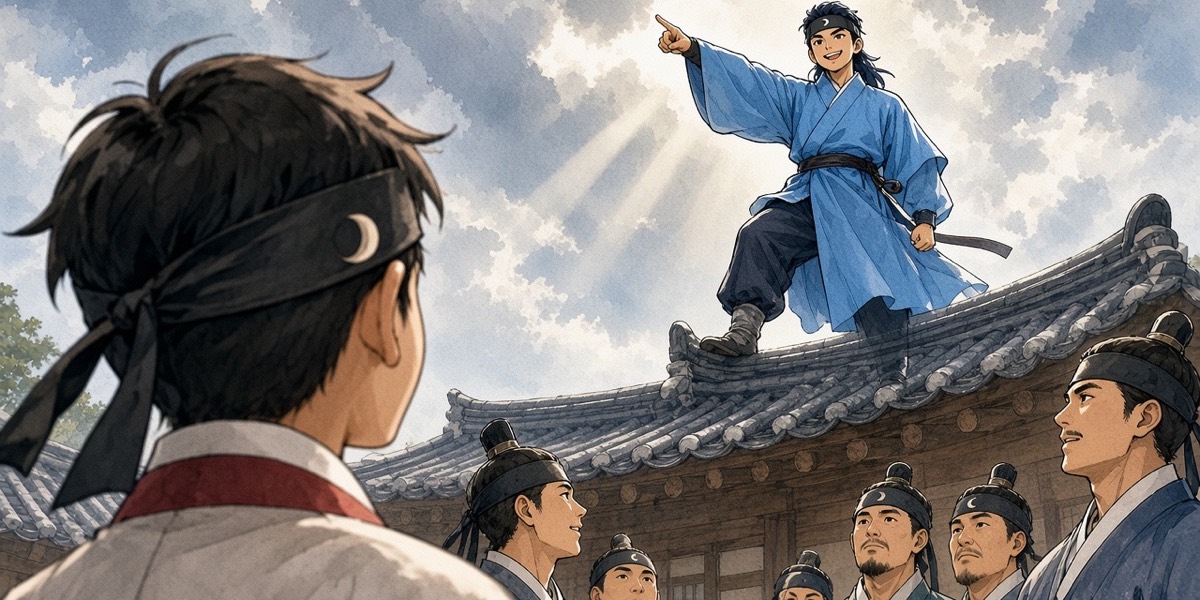
The yard is new this year, and so is the idea. A hundred noble sons stand in rows in powder and silk, trying to look like they meant to come. One of them is not in a row. He is on the roof.

You cannot see the sea from anywhere in . knows this. Everyone knows this. A hundred boys look up anyway, and , who has decided to be unimpressed, looks up with them.
The boy on the roof jumps. He lands in the dirt a step from , rolls, and comes up grinning, as if the ground had been in on it.

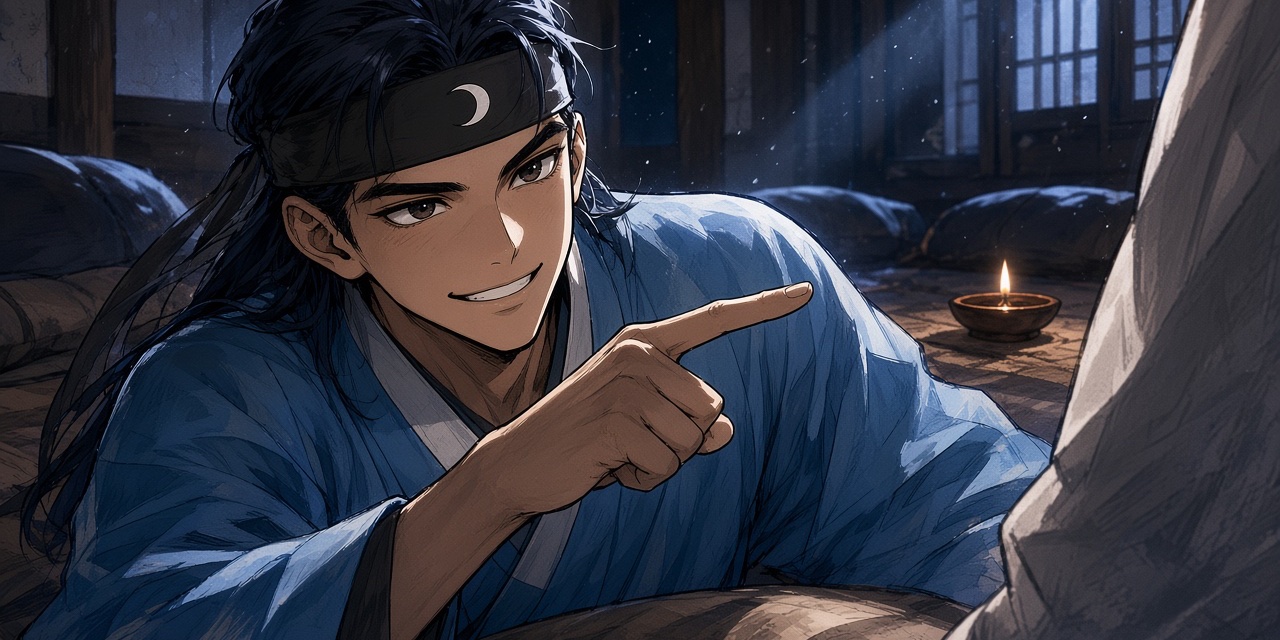
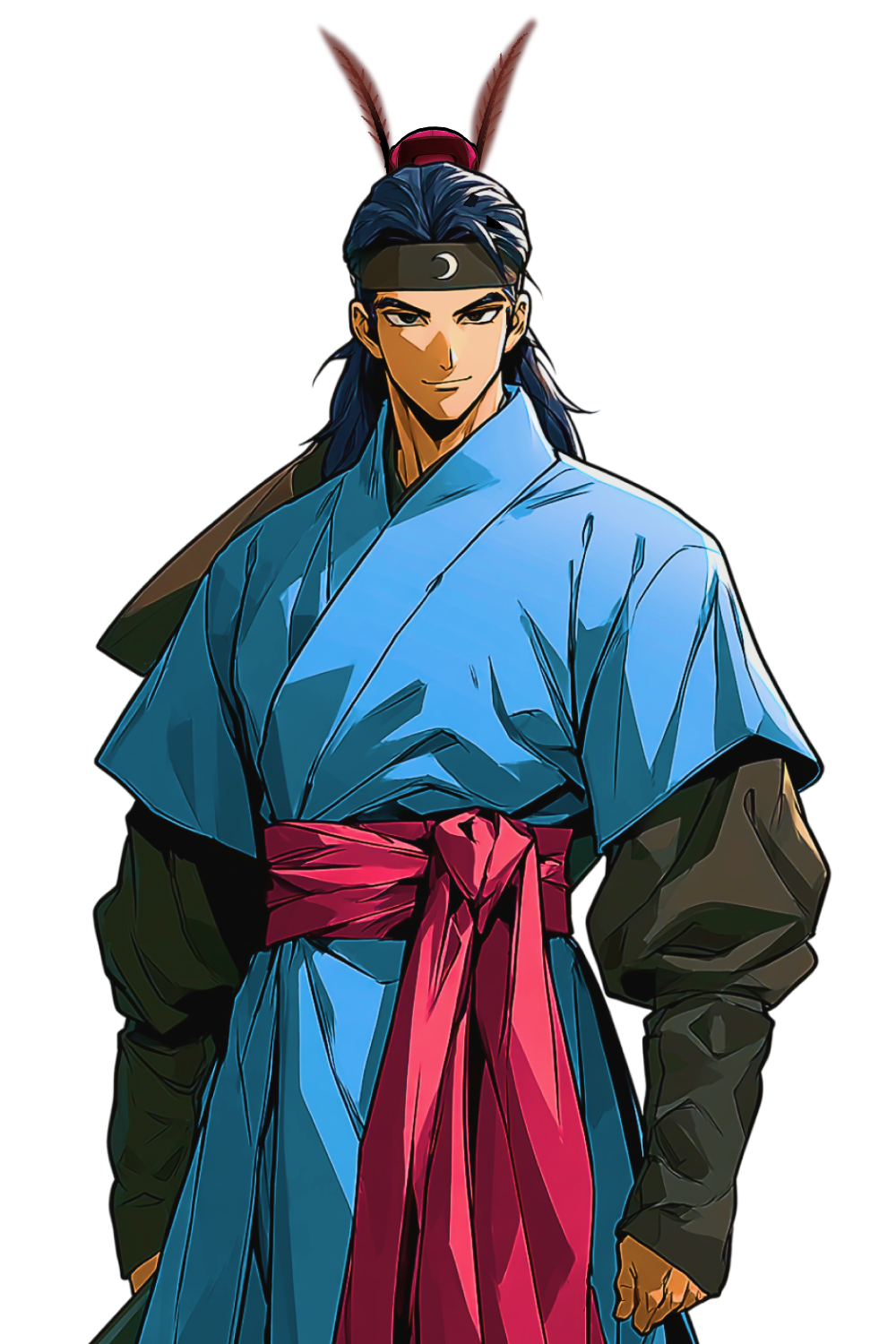
is thirteen and talks like a dare. is thirteen too, and says less than his horse. The hall has one gap, so they share it. They argue for a month about who snores.
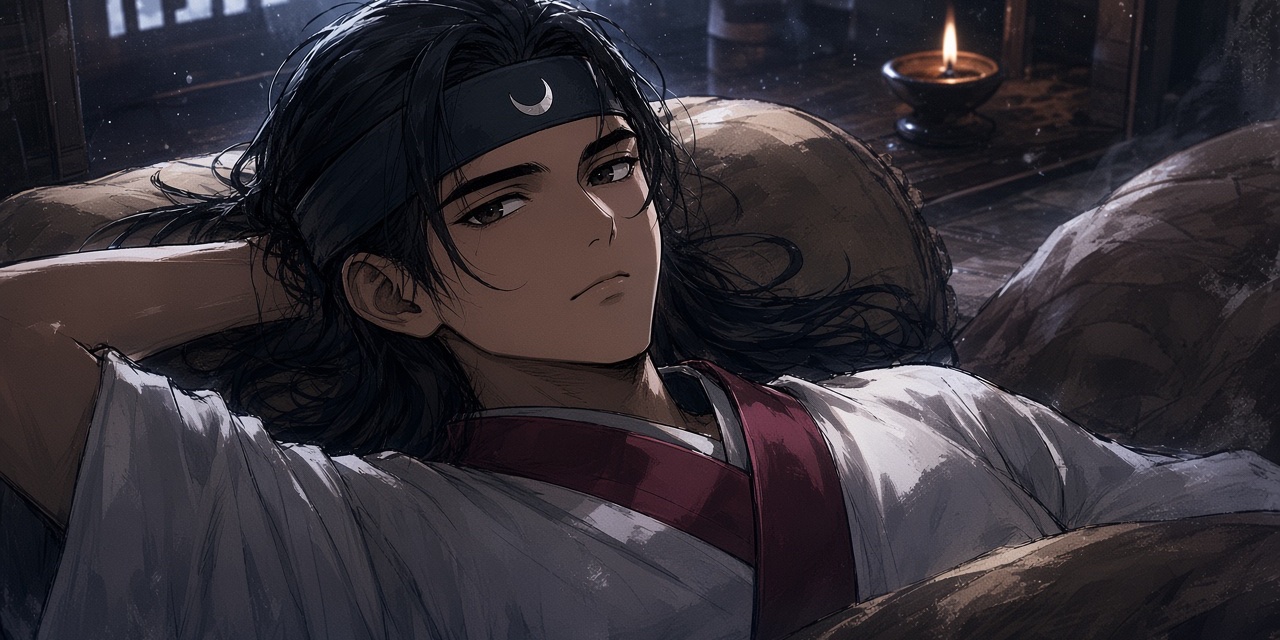
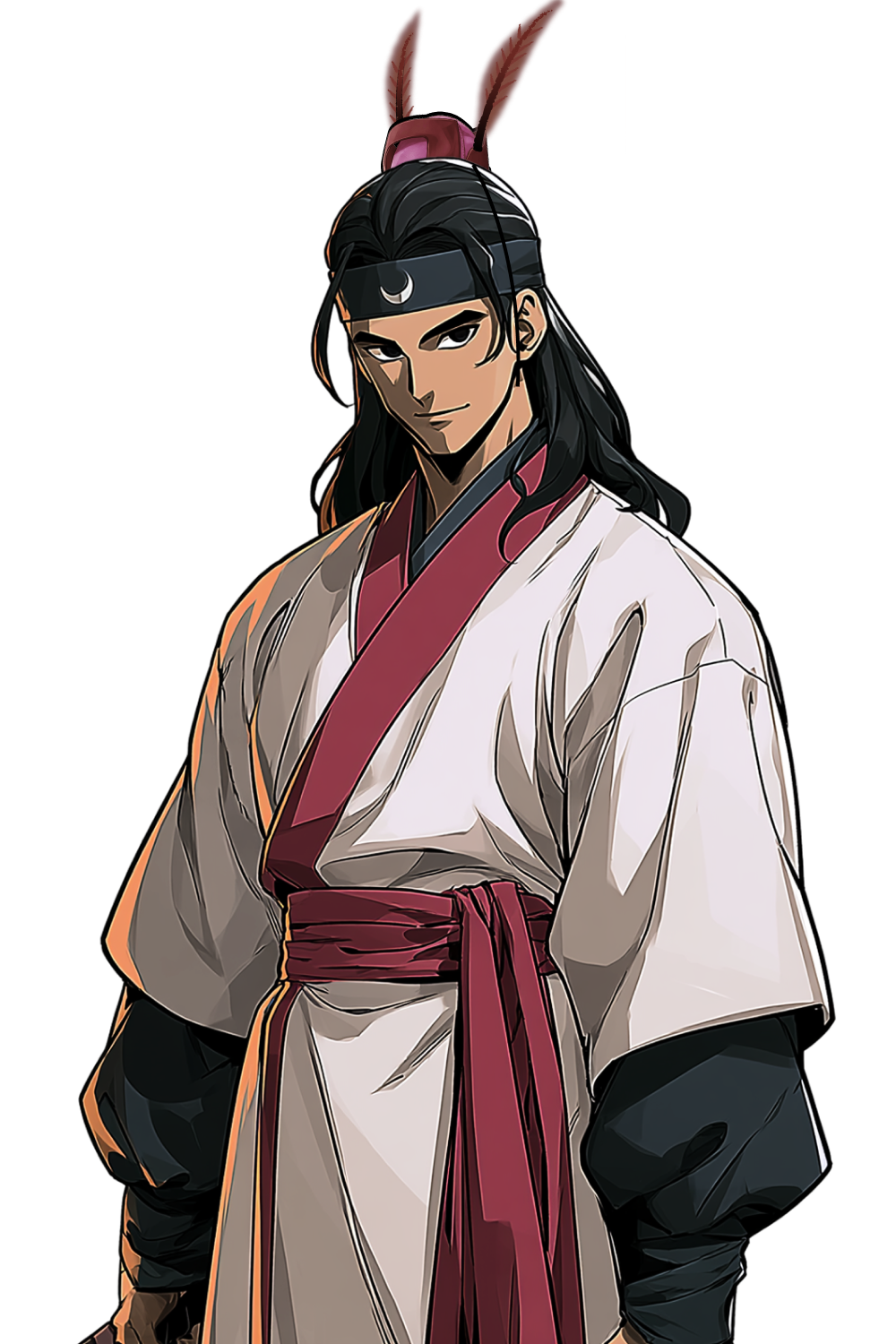
stays up. It is the first of a great many nights he will stay up for , and the only one either of them will find funny.
is the best sword in his family. On the third morning he finds out that is not the same as the best sword in the yard. A bigger boy puts on his back twice, and laughs so loudly the yard master comes out to see who is dying.
Then he turns to , who has been standing there trying not to look impressed, and puts the wooden blade in his hands.
On the fourth, hits him. sits down hard in the dust and laughs so loudly the yard master comes out to see who is dying.
The bigger boy comes. Two more come to watch him lose and stay for the road. counts them, because someone has to. Three. Then seven. Then he stops counting where they sleep and starts counting who turns around when says wait. It goes on like that all spring. rides at night because the road is empty. He sings in the bath, badly, and makes the boys at the bottom of the list sing with him until they forget they are at the bottom. He gives his rice away, is hungry by noon, and doesn’t seem to mind. keeps waiting for him to run out. He doesn’t.
He says no eleven times that spring. He goes all eleven.
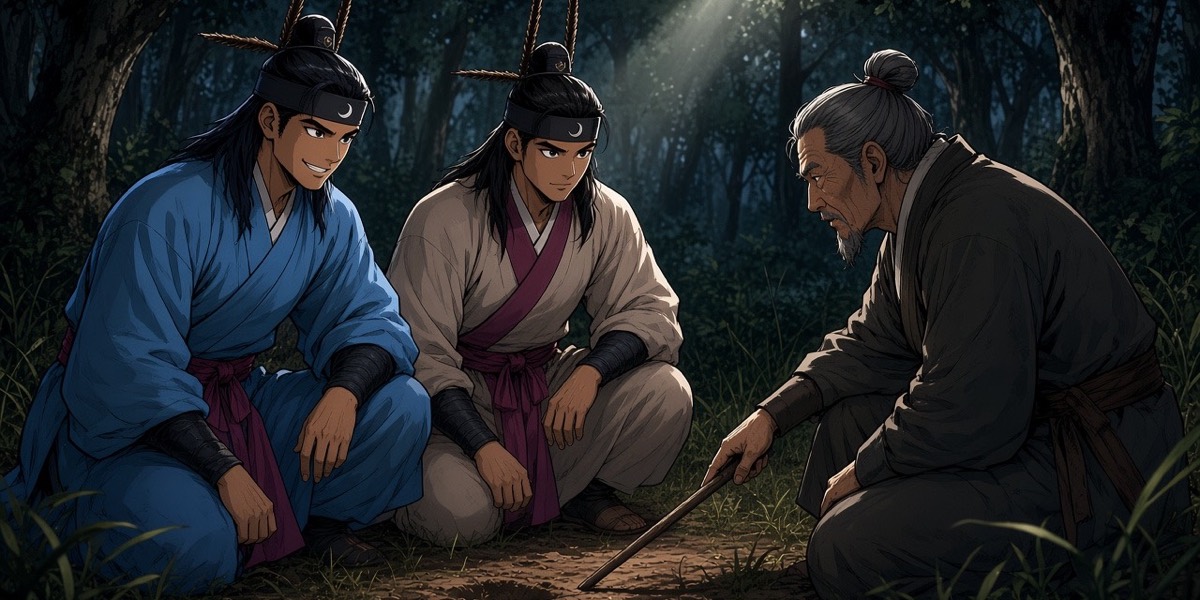
General takes First Class into the trees because the king asked who would keep forty noble sons from dying stupid, and said he would try. He draws the plan in dirt. Wind. Drive it. Do not meet it. is on a stump, swinging his legs, and has not looked at the dirt once.
’s hand finds the sleeve. Holds it. looks at the hand as if it had asked to dance and he was going to say yes anyway. lets go.
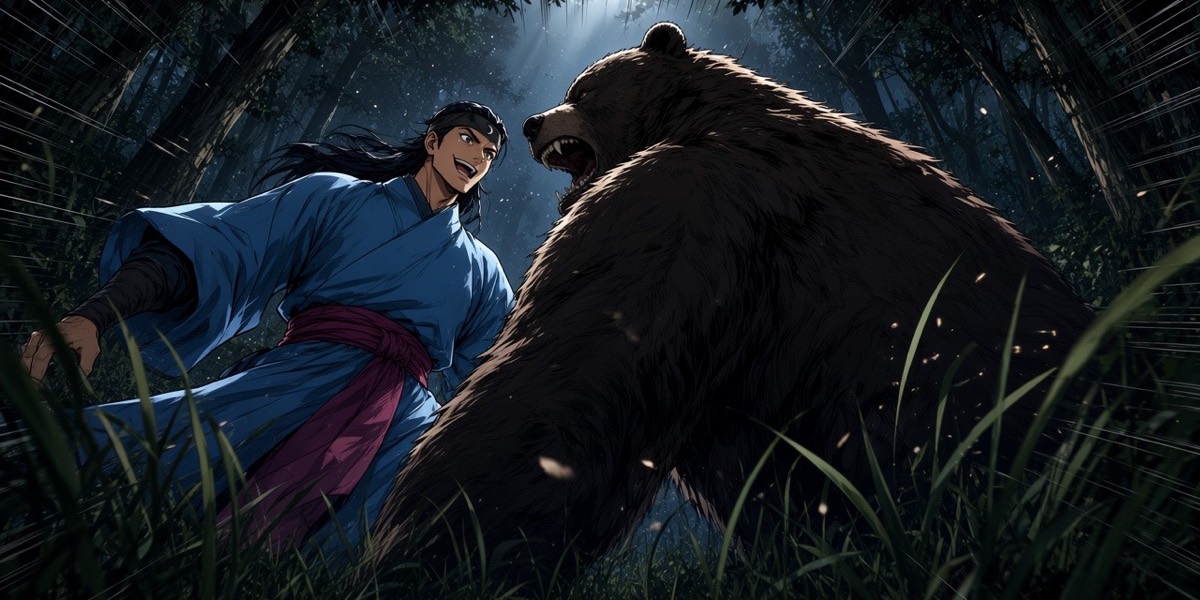
does not wait. He goes in grinning, the way he jumped off the roof, as if the ground owed him a soft landing and had not paid yet. swears. does not. has seen this kind of boy before. He has not seen this kind of boy get back up as often.
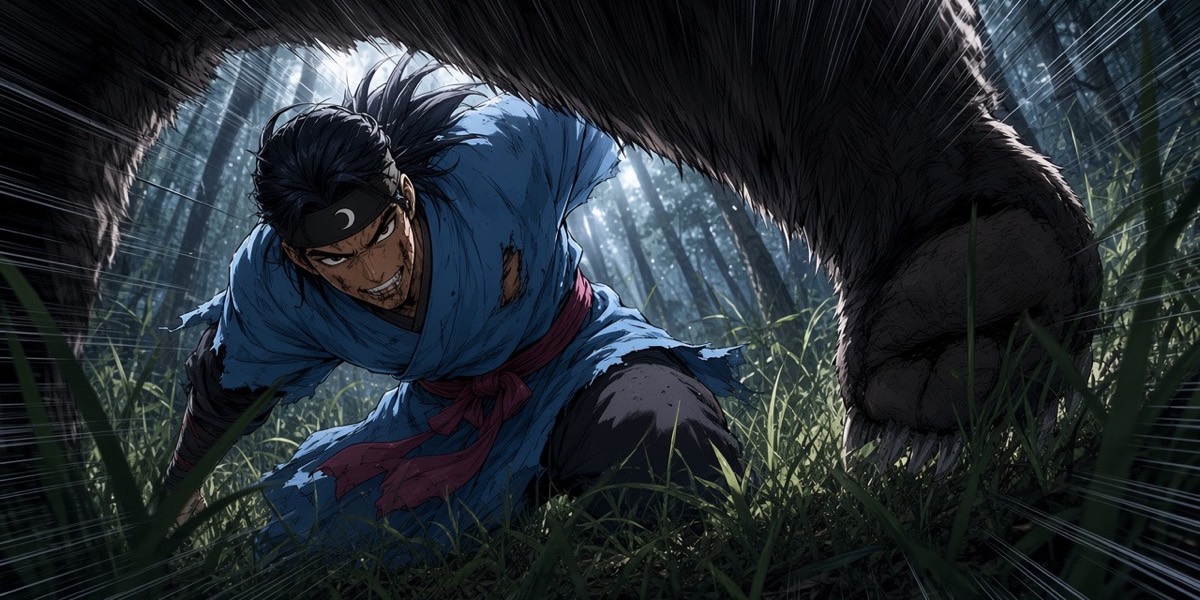
The bear hits him and the world turns over. He gets up laughing with dirt in his teeth. It hits him again. He spits blood and bows, as if the bear had asked him to dance and he was being polite about it.
’s hand finds ’s sleeve this time. Does not pull. Just holds it, the way he held the other one. looks at him. does not look back. He is watching the boy on the ground get up.
The bear knocks him down a third time. could shout. could shout. Neither of them does. The boy on the ground is still getting up.
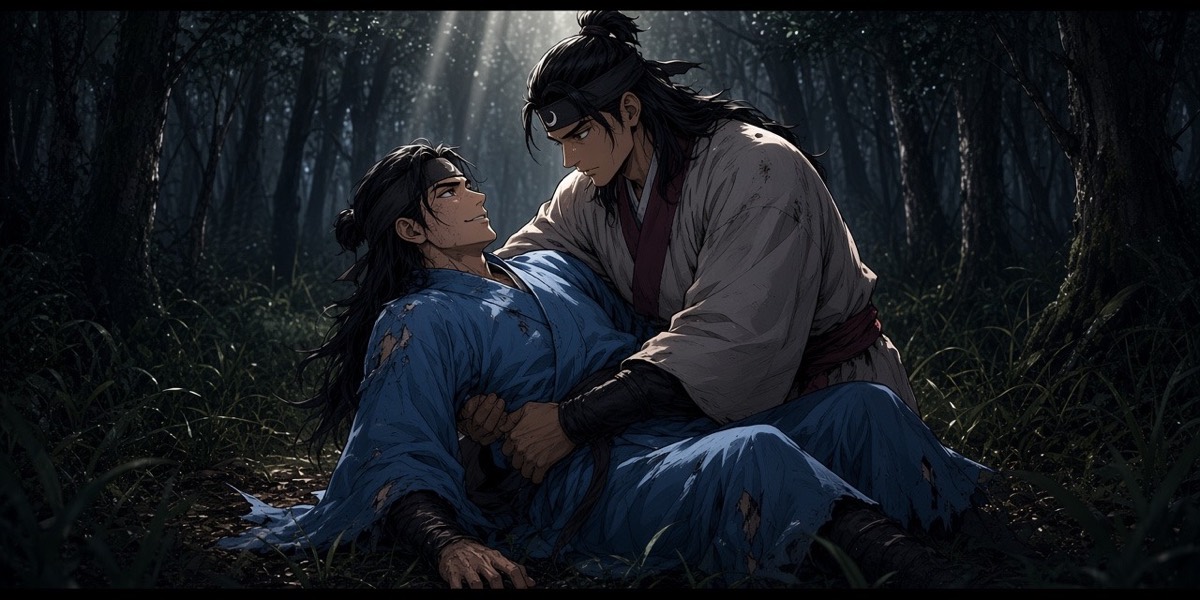
He wins the way a storm wins a roof. There is no skill in it that will write down. There is only a boy who would not stay down, and a bear that finally did. Then he does not get up. He is still smiling. catches him before the dirt does.
looks at the bear. The bear is not getting up either. He hates that this counts.
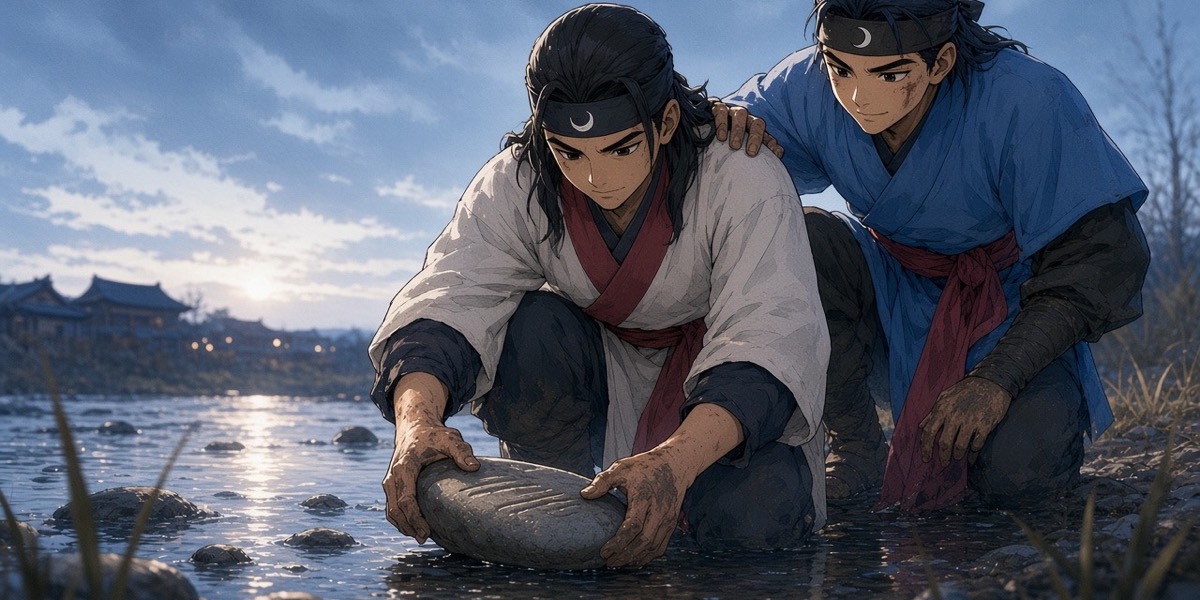
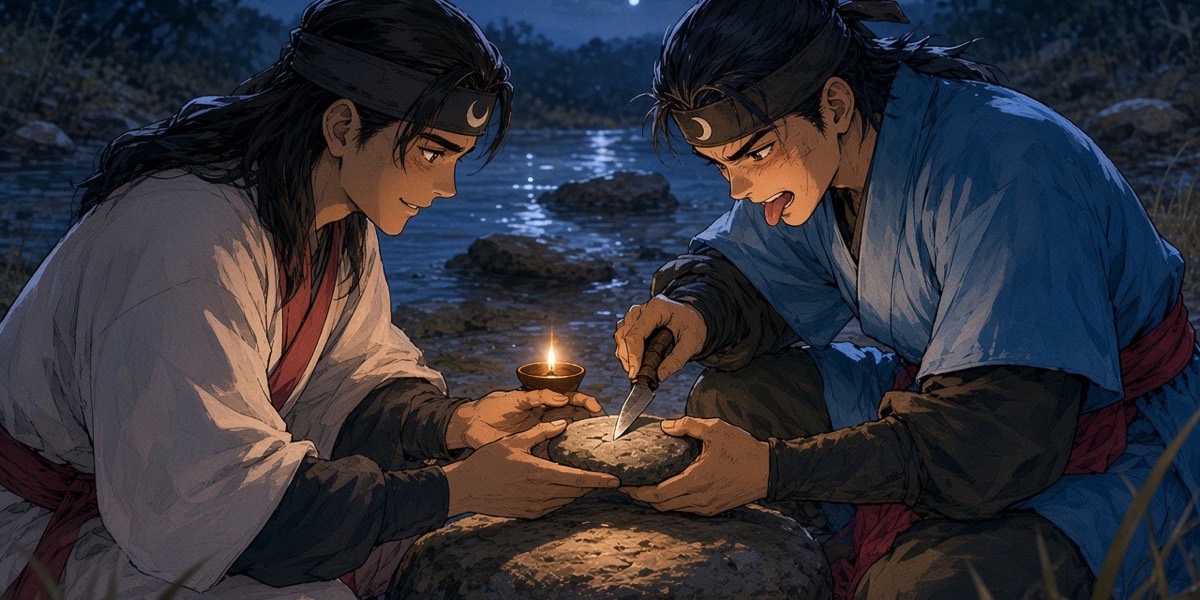
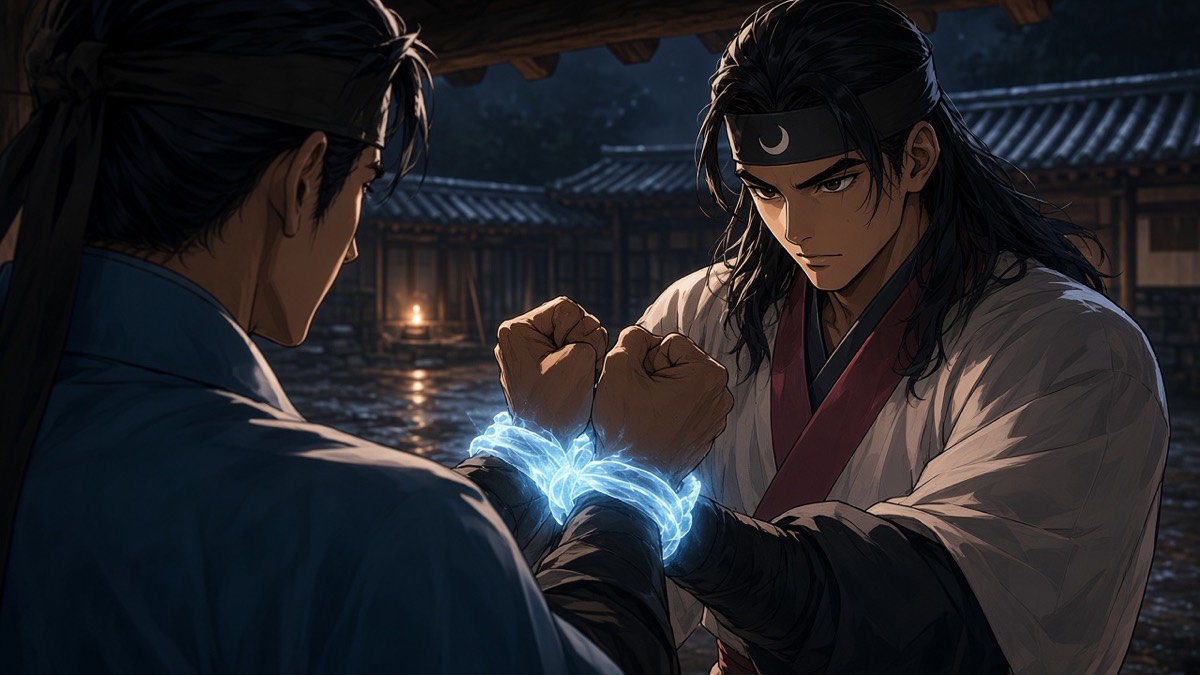
Their first spring, the yard sends them down to the river for stones. turns one over and goes very still. Somebody has cut writing into it.
Year imsin, sixth month, sixteenth day. The two of us swear together and write it down. We swear before : from today, for three years, we will hold fast to the way of loyalty and commit no fault. If we break this, we swear it is a great sin against . If the country is not at peace and the world falls into great disorder*, we swear we will go and do it. And apart from this: before, on the twenty-second day of the seventh month of the year sinmi, we swore a great oath, to master in turn the Odes, the Documents, the Rites and the Tradition† within three years.
- * The stone’s character here is worn. The database prints 舐; nearly every editor reads it as 亂, “disorder”.
- † The Tradition (傳) is usually taken as the Zuo commentary on the Spring and Autumn Annals.
No names. Two boys, before the yard even had a name, promised three years of books, and a war if the country wanted one. What became of them, the stone doesn’t say. Stones rarely do.
He finds a smaller stone, flat and grey, and scratches at it until the light goes. His characters are terrible. He leaves out the books entirely. What’s left fits in a closed hand.
takes the knife. Under the bad characters he cuts one more, small and neat: friend. Then he puts the old stone back exactly where they found it, face down, as if they had never been there.
A museum in Gyungju keeps the first stone now. Nobody has ever found the second. Good.
The second autumn, the yard sends twenty boys to ride the border with a real patrol. Nobody expects anything. The border has other ideas.
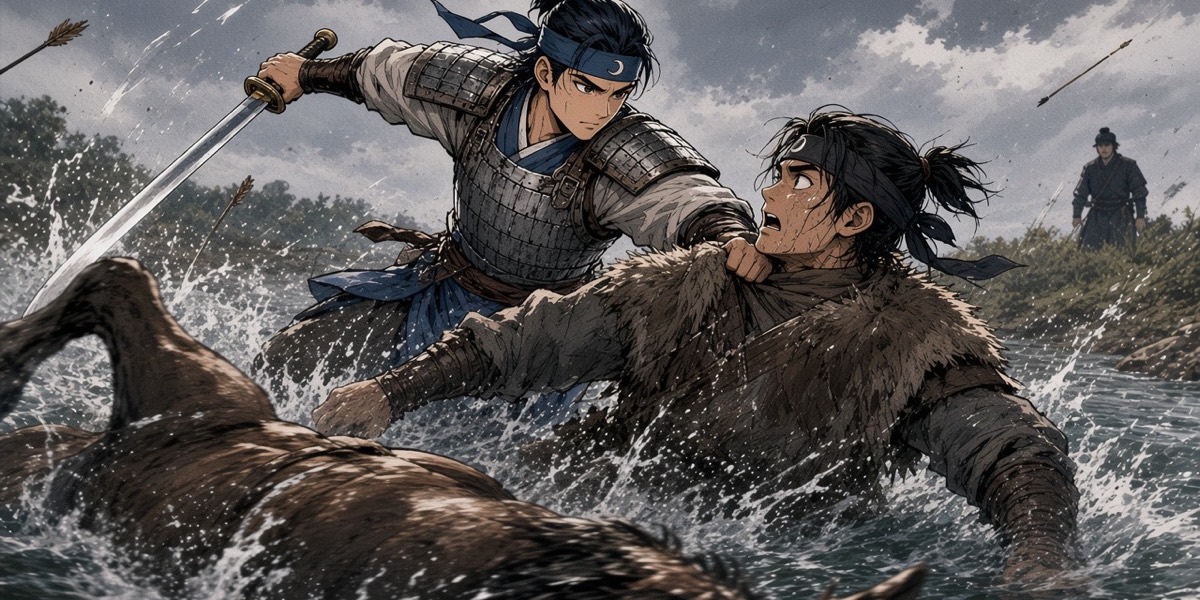
Halfway across the ford ’s horse takes an arrow in the shoulder and goes down sideways into the river, and goes with it. The water is cold and full of hooves. He cannot find which way is up.
A hand finds his collar and drags him up into the air and the noise. It belongs to the one boy who was told to go to the back and turned round instead. rides down the first man and cuts down the second, and he never lets go of .
The raiders break when the patrol reaches the bank. The sergeant, who has done this for twenty years, rides over to shout at the boy and finds he has nothing to say. That night cannot stop shaking. sits beside him and talks about horses until he stops.
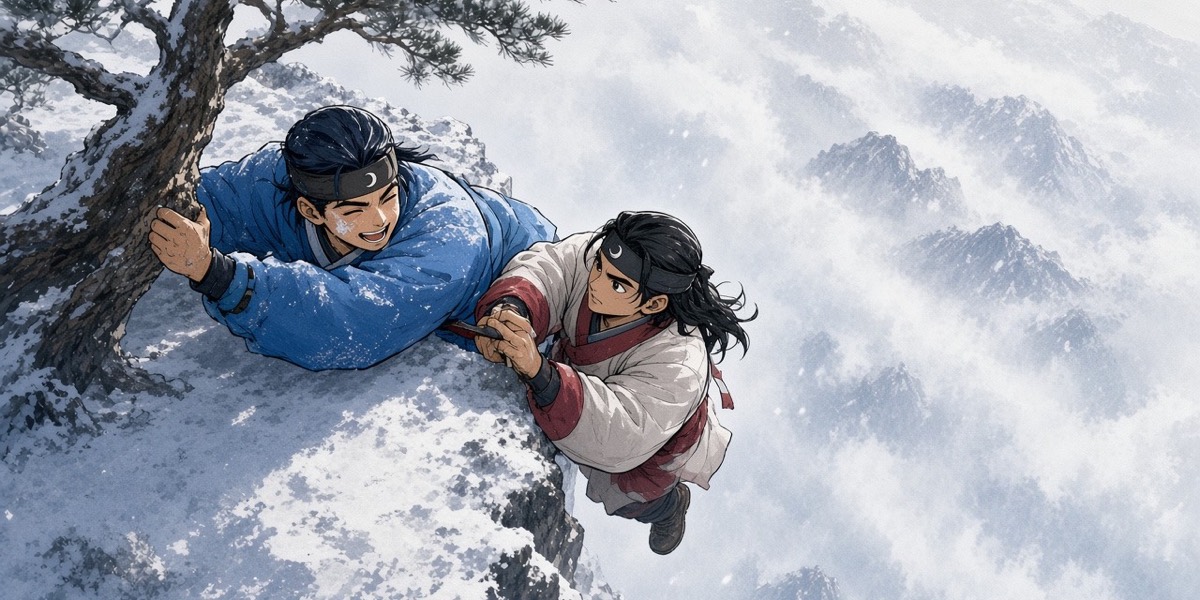
Winter is for mountains. The hwarang climb them, sleep on them, and sing at the top as if the mountain had asked. On the third day the snow gives way under on a ledge, and for one long breath there is nothing beneath him at all.
Then there is a fist in his belt. is flat on the ice, one arm round a pine root and the other holding his friend over the drop. He is laughing again, the idiot, because his face is full of snow.
Afterward, by , watches him sleep, which is the only time is ever still. has met plenty of boys who are sure of things. This is the first one who makes him sure too. He doesn’t know yet what of. He thinks it might be everything.
By the next spring the boys who eat his rice are a dozen. By the time he asks the king for they are forty, and they wait in the yard while he is on his knee in the hall, and the word for them is disciples. It only means the ones who went.
Two summers on, the little stone has worn a hole in ’s sleeve, and stops paying. The king calls the war in his hall, and the hall fills up with men old enough to have opinions. Among them is the king’s younger brother, , twenty-seven, who talks about the way you talk about a dog that has started to bite. Under the table the king’s second son, , seven, has fallen asleep on a cushion with a rice cake in his fist. He will be king one day. Briefly.
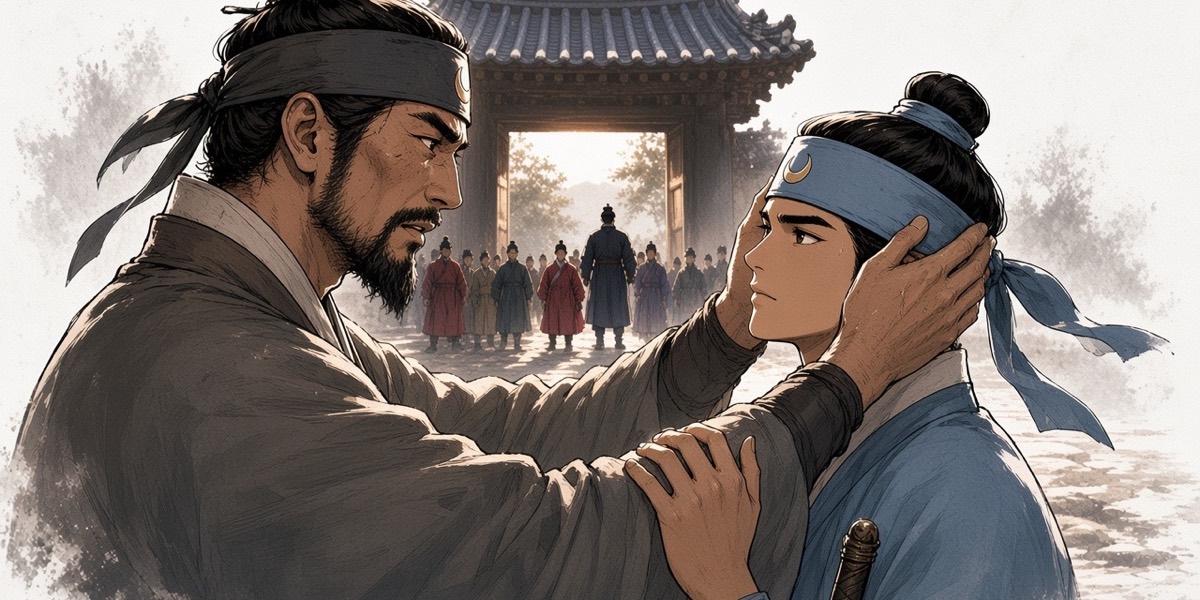
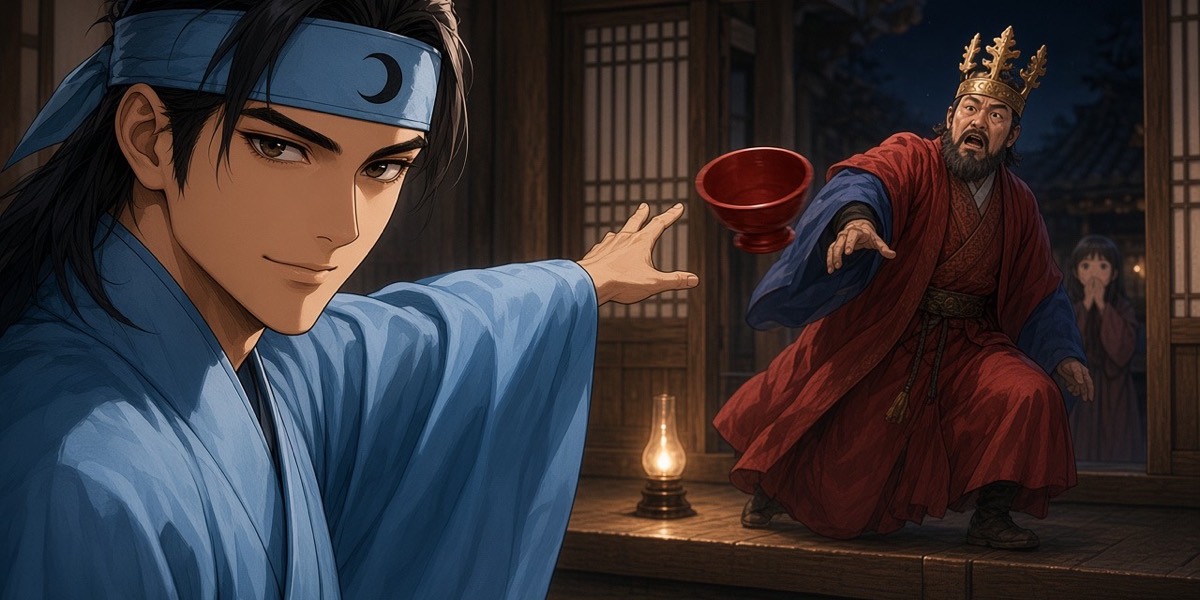
is fifteen when he asks to ride against . He asks on his knees, in front of everyone. It is the only way a boy can ask a king for anything and not be sent outside.
The king throws a cup at his head. is still on one knee. He does not mean to duck. The cup hits the headband, goes back, and sits down on his own step as if someone had pulled a chair out.
On the porch a Park girl laughs once and covers her mouth. He will ask her name on the way out. . She is a year younger than he is, and she is still laughing when he looks back.
Outside, forty disciples are already holding the reins. did not tell them to. They just heard the word going.
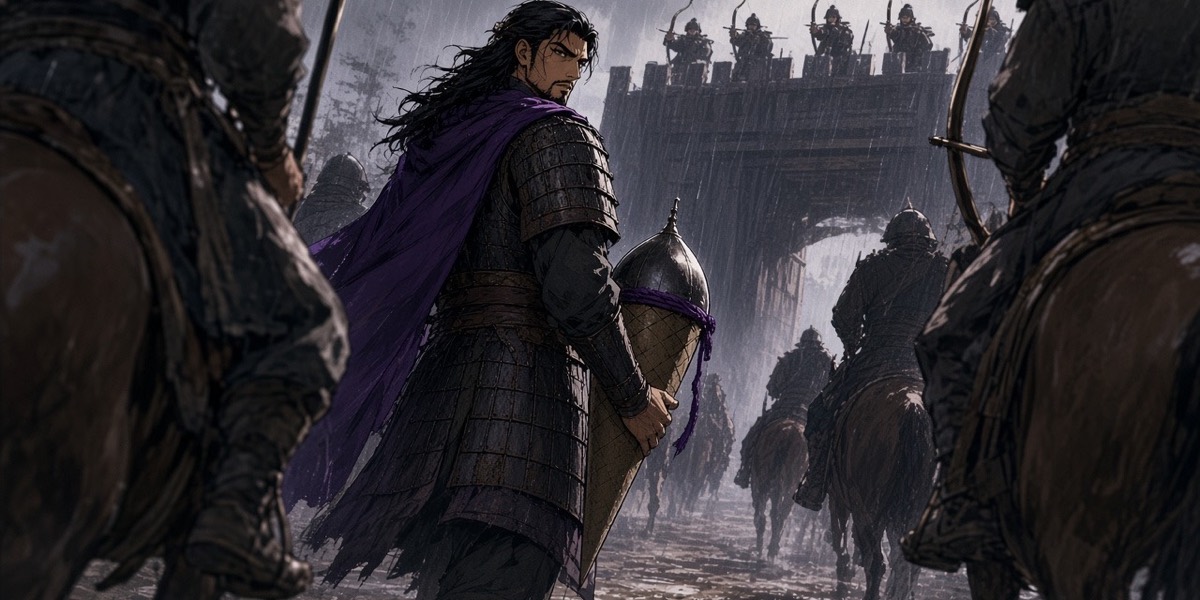
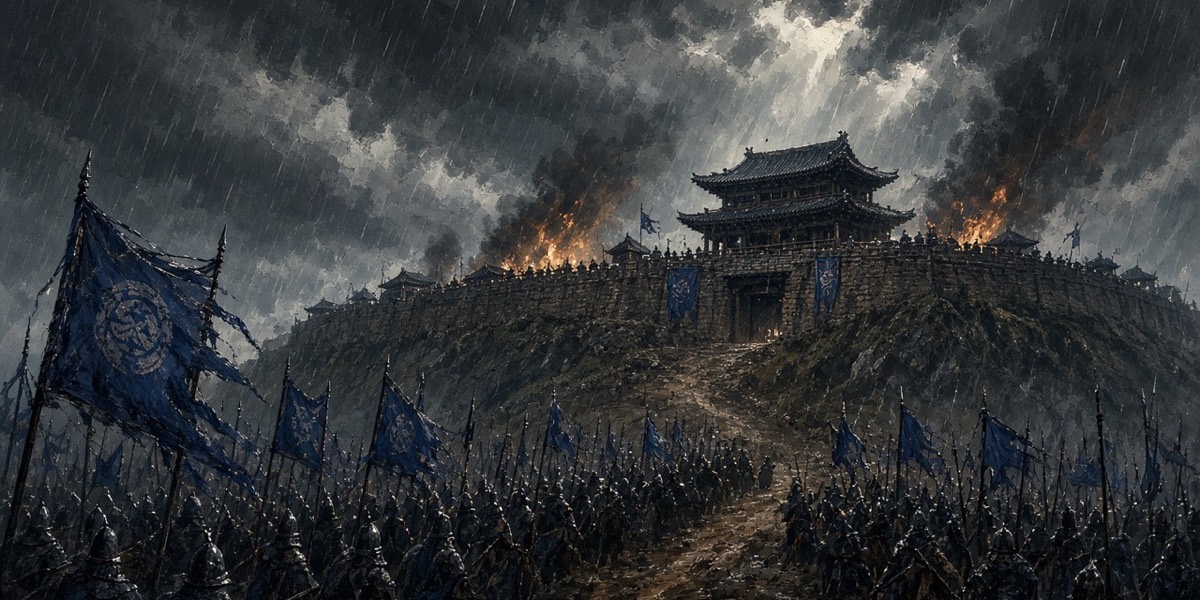
The ninth month. Rain on the hill road, smoke on the hill. sits on its ridge behind a timber gate, and every roof inside the wall has a bow on it.
At the head of the riders is fifteen, soaked, and grinning. Beside him a general nobody in the vanguard knows well is looking up at the gate the way you look at a relative.
The men on that gate wear the same helm he does: the tall cone with the iron plates.
He takes the helm off, tucks it under his arm, and walks up the gate road alone.
watches him go. All he gets is a grey temple and the hole the helm left. The rest of the face is the dark under the brim he just took off.
The general does not turn. If he turns, the boy will see a face, and the road will see a child.

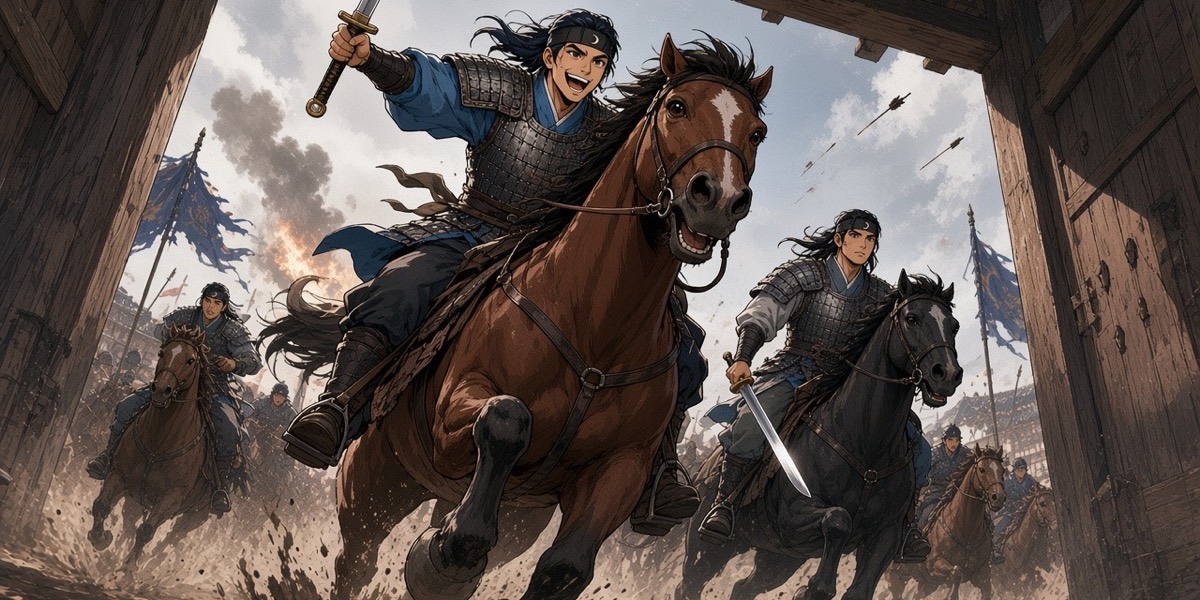
does not wait for anyone to finish a sentence. He takes five thousand horse at the Jundan gate while the men above it are still drawing, and goes through before the gate has decided whether it is open.
He is fifteen, and he fights like it: too fast, too far ahead, laughing once when a spear misses him by a hand. stays one horse behind him all the way up the street and takes the men doesn’t see.
Halfway up the street a spear takes ’s horse out from under him. He lands on his back in the mud with three men coming, and he has time to think, quite calmly, that this is how it ends: one horse behind.
It isn’t. comes back down the street against his own charge, the whole vanguard parting round him like water, and puts his horse between and the spears.
They take the gate together, two boys on one horse. plants the white banner on it, and holds the pole straight, because ’s hands are shaking and he will not admit it.
Smoke fills the street. A tall cone comes through it first, then a mouth, then nothing. The general’s face stays in the helm-shadow even with the helm under his arm. laughs anyway.

The ninth month. Rain on the hill road, smoke on the hill. Every roof inside the wall has a bow on it. The Silla vanguard comes up the mud ahead of its own army.
- Great Gaya ?
- Silla 5,000+ ?
- = 1,000 men
- = size not recorded
Sources: Samguk Sagi 4, Annals of Silla, Jinheung year 23 · Samguk Sagi 44, Biography of Sadaham
Ninth month. rebelled. The king ordered to punish it, with as his second. rode ahead with five thousand horse, went in through the Jundan Gate and planted a white banner. The people in the city were terrified and did not know what to do. When brought up his troops, they surrendered all at once.
9월, 가야가 배반하니 왕이 이사부에게 명하여 치게 하고, 사다함을 부장으로 삼았다. 사다함이 기병 5천을 거느리고 앞서 달려 전단문으로 들어가 흰 깃발을 세우니, 성안 사람들이 두려워 어찌할 바를 몰랐다. 이사부가 군사를 이끌고 다다르자 한꺼번에 모두 항복하였다.
Across the sea, has been taking rent off the ports for a long time. It takes the news personally.
is a petty villain of the western barbarians. It defies and knows no decency. It has betrayed our kindness and destroyed our miyake. It poisons our people and butchers our districts.
신라는 서쪽 오랑캐의 보잘것없는 무리로, 하늘을 거스르고 무도하다. 우리의 은혜를 저버리고 우리의 관가를 깨뜨렸으며, 우리 백성을 해치고 우리 군현을 짓밟았다.
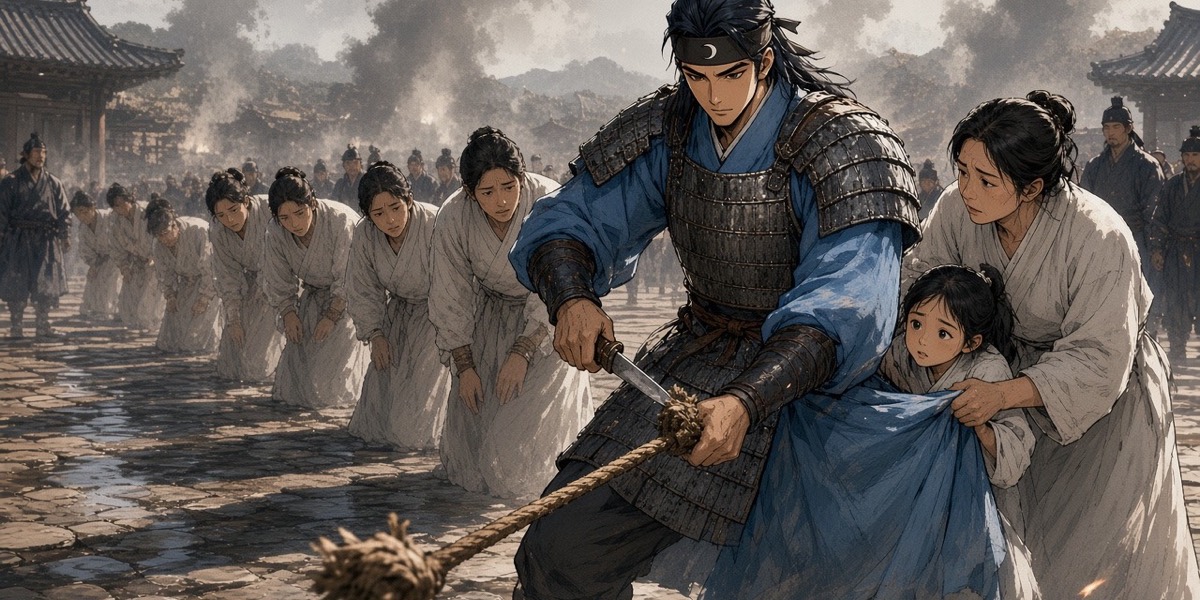
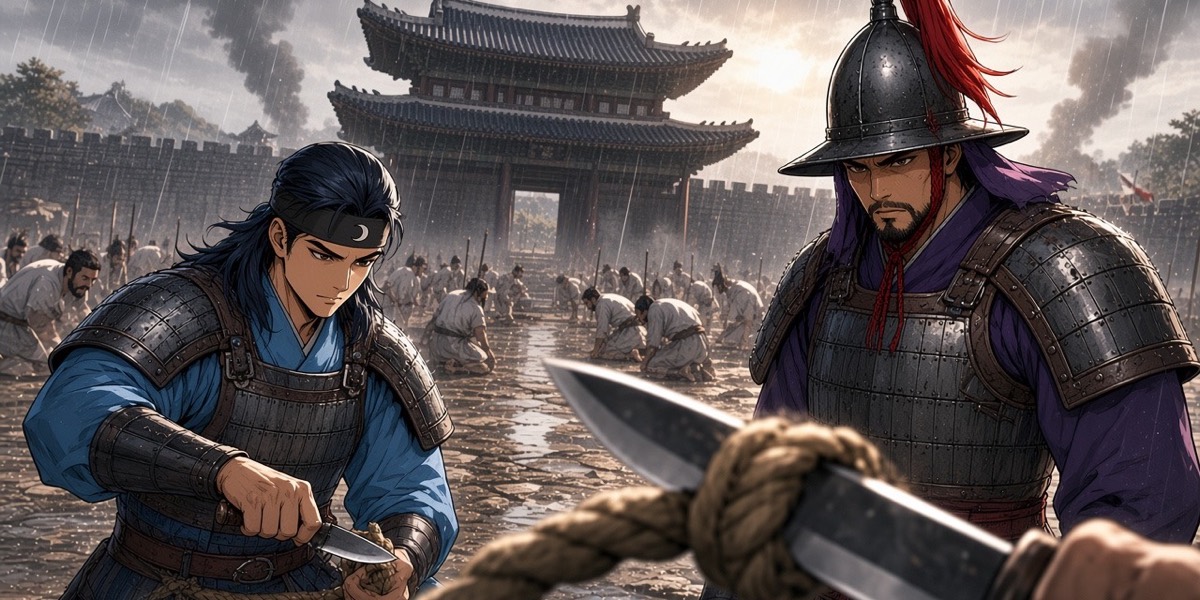
Afterward the king pays him the way kings pay: in people. Three hundred captives, roped in a line, his to keep. walks down the line once. Then he starts cutting rope.
At the edge of the square, the general who walked up the gate road bareheaded has the helm back on. He watches the boy work down the line for a while. Then he gets down off his horse.
He says it the way boys say things they have never had to test. Then he goes back to the knot.
The general doesn’t answer. He stays where he is, long enough to look like a man guarding prisoners, which is what everyone in the square assumes he is.
The last rope comes off near sunset.
The general is still sitting in the mud when he says it. He does not get up to say it. That is the first thing likes about him.
looks at him then, properly, and still does not get a face. The cone is back on. The brim cuts the eyes out. Three hundred sit in the mud behind the cut rope, rubbing their wrists, not thanking anyone yet.
The land they give him instead is a strip of stones by the that nobody wanted. The chronicle calls this virtue. calls it typical, and holds the knot.
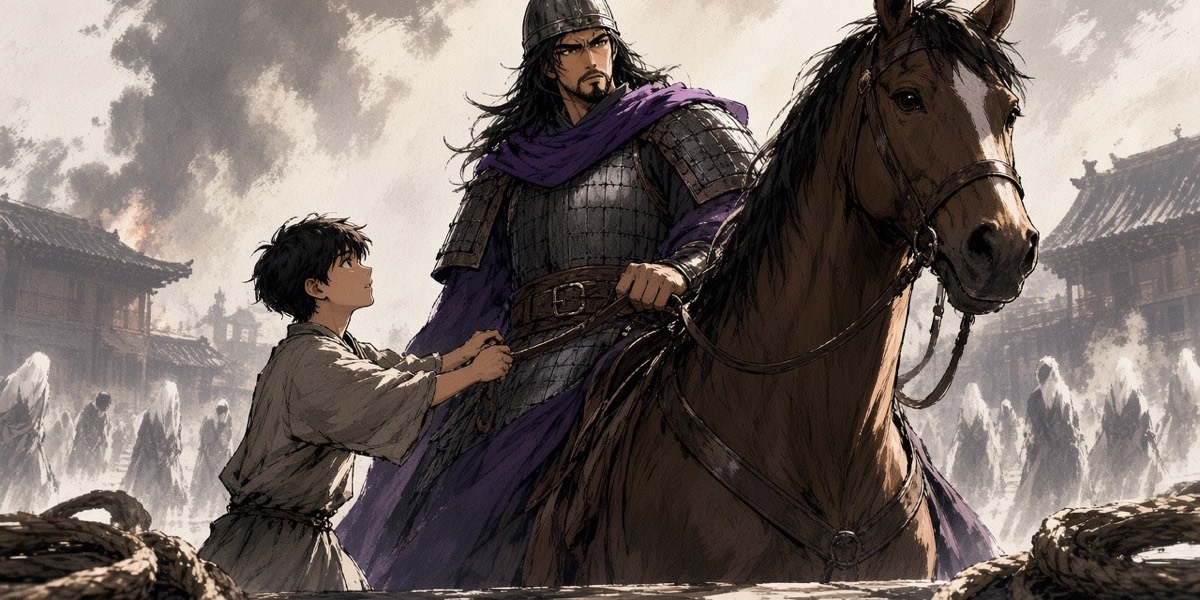
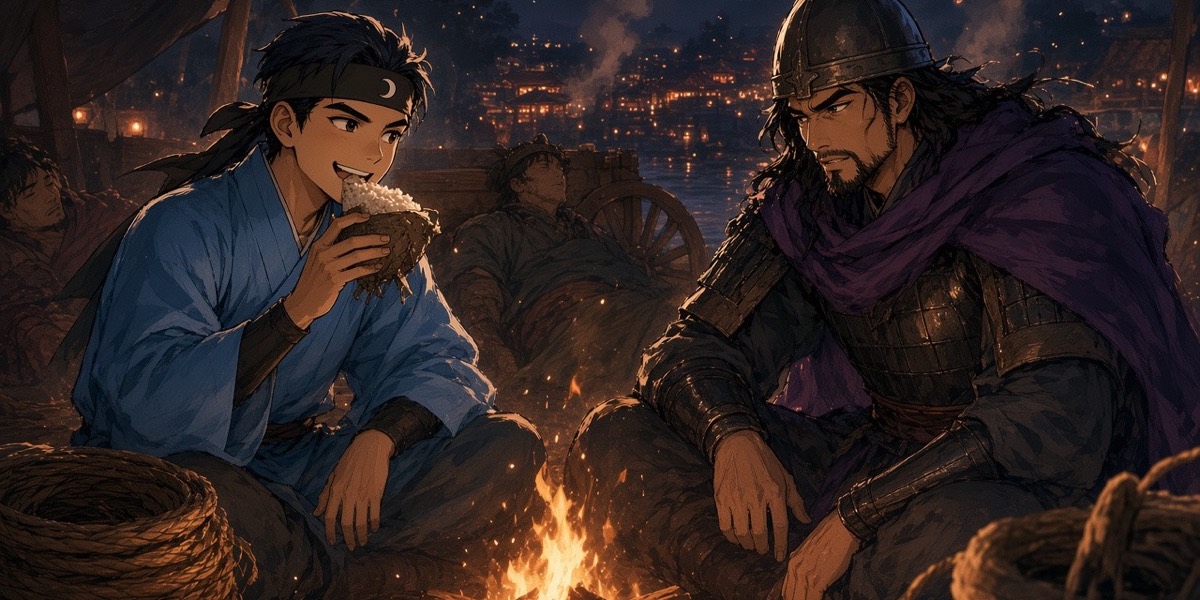
That night the freed captives sleep in the camp, because they have nowhere else to sleep. sits on a coil of the rope he cut, eating rice out of his helmet. Out of the dark comes the general from the square, on foot.
He sits down on the rope beside the boy without being asked. hands him the helmet. It is the politest thing the boy does all year.
laughs with his mouth full, which is a mistake, and spends a while coughing rice into .
He is. It never reaches his mouth, but it gets as far as his eyes, which on that face is a long way.
doesn’t answer. He tips his chin at the cart wheel, where has fallen asleep sitting up, snoring loud enough to bother the horses.
The general looks across the river, where ’s roofs are still smoking, for longer than a man needs to look at roofs. , for once in his short life, does not say anything at all.
He gets up slowly, the way older men get up after a day on a horse, and walks back to the horse lines alone.
Neither of them knows how short a year can be.
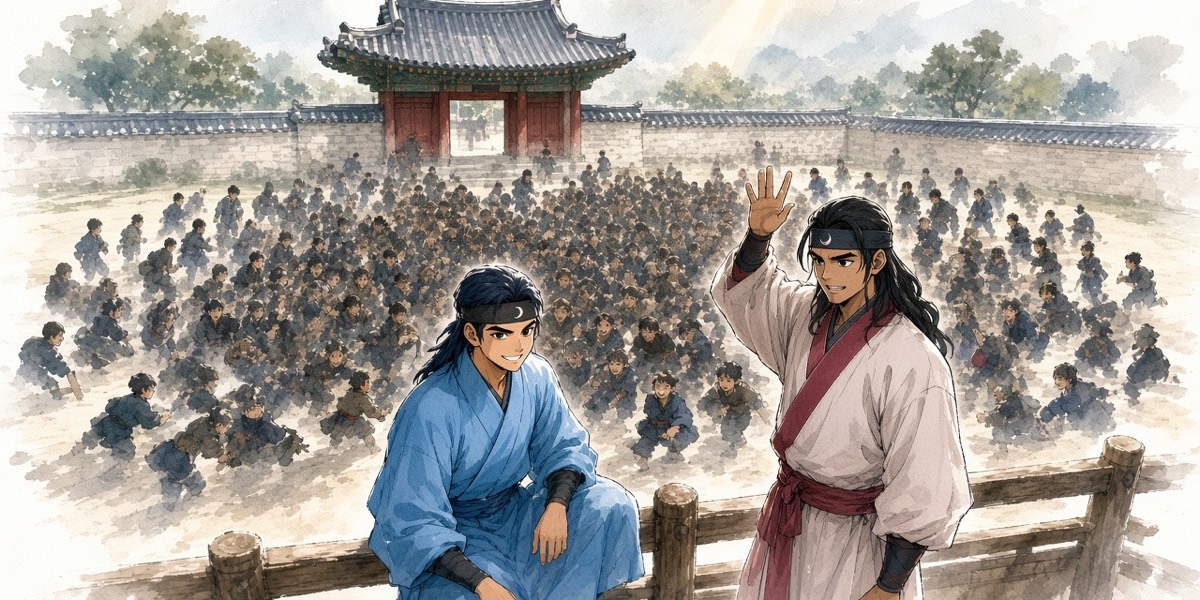
They ride home to a yard that has grown while they were gone. Boys who were not there in autumn are there now. They have come for the boy who went through a gate, and they will not leave.
tries to count them and gives up past two hundred. The yard has never held an Order this large. The boys name it themselves, because will not: 금화향도. The Golden Blossom Order.
He says it like a joke. writes the number down anyway, because someone has to, and because a year is shorter than it looks.
Morning. The three hundred walk out of camp in no line at all. The child who asked about the rope yesterday holds her mother’s sleeve and does not look back.
wakes on the coil. The helmet is empty. The general is already gone. The cone is a notch on the far ridge, and then it is not.
never asks the general’s name. You will want it. Not yet.
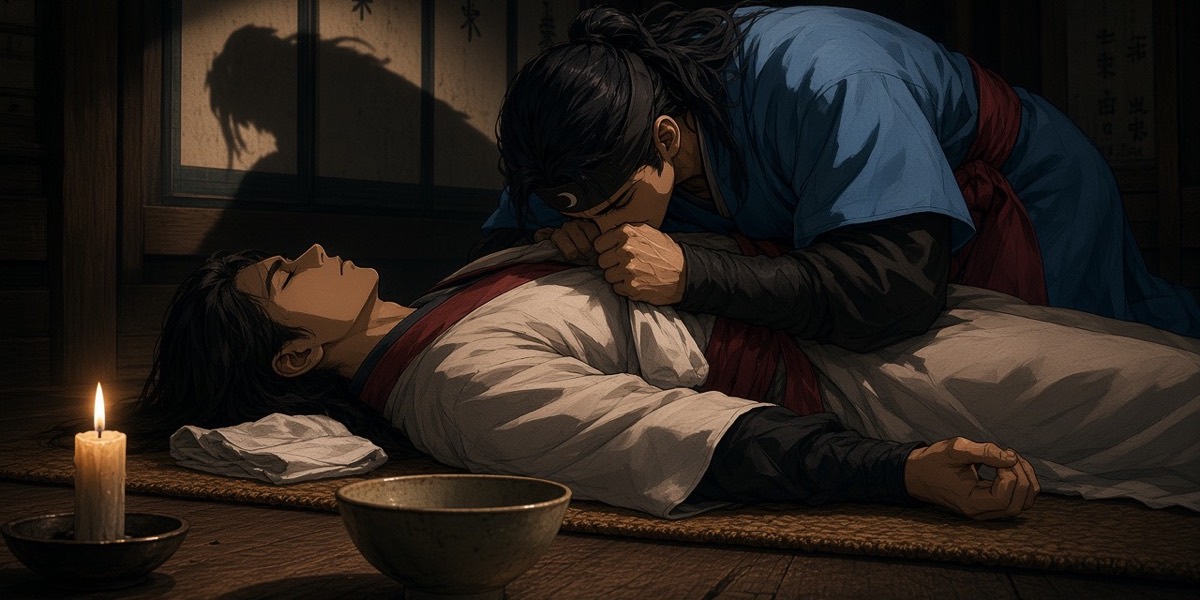
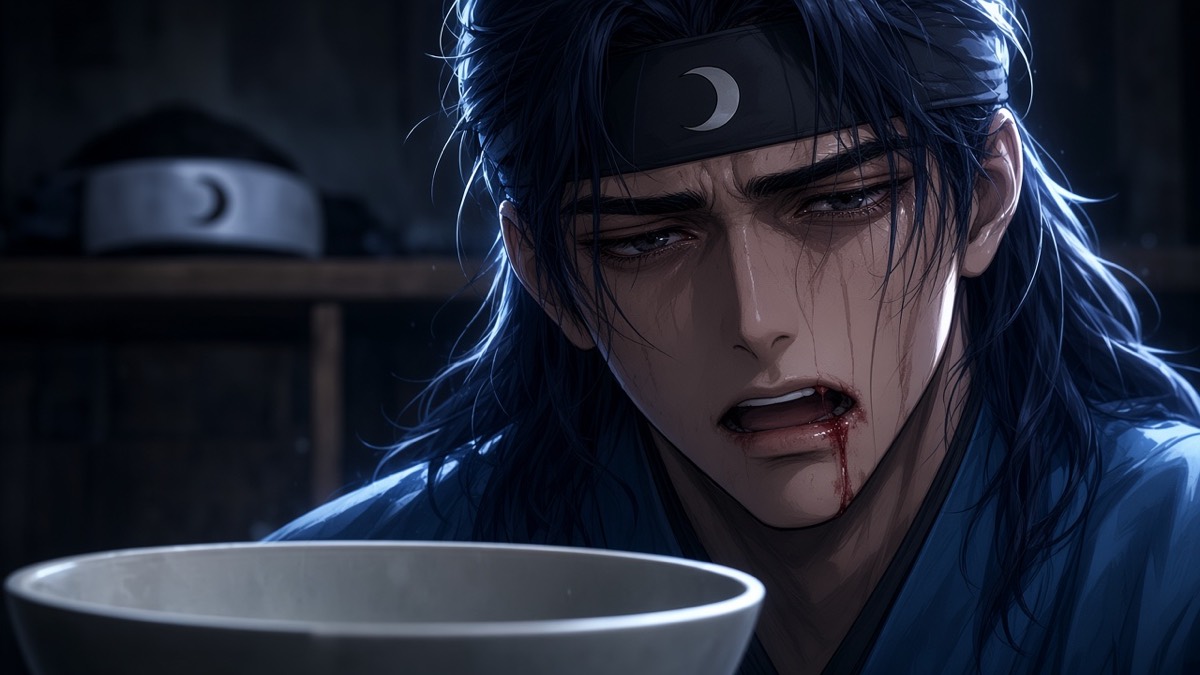
That winter the snoring turns into a cough cannot put down. sits by the mat and counts his breathing, the way they used to count snores.
The little grey stone sits on the sill. Neither of them looks at it. Both of them know exactly where it is.
pushes the stone across the mat with two fingers. It is the last thing he does on purpose.
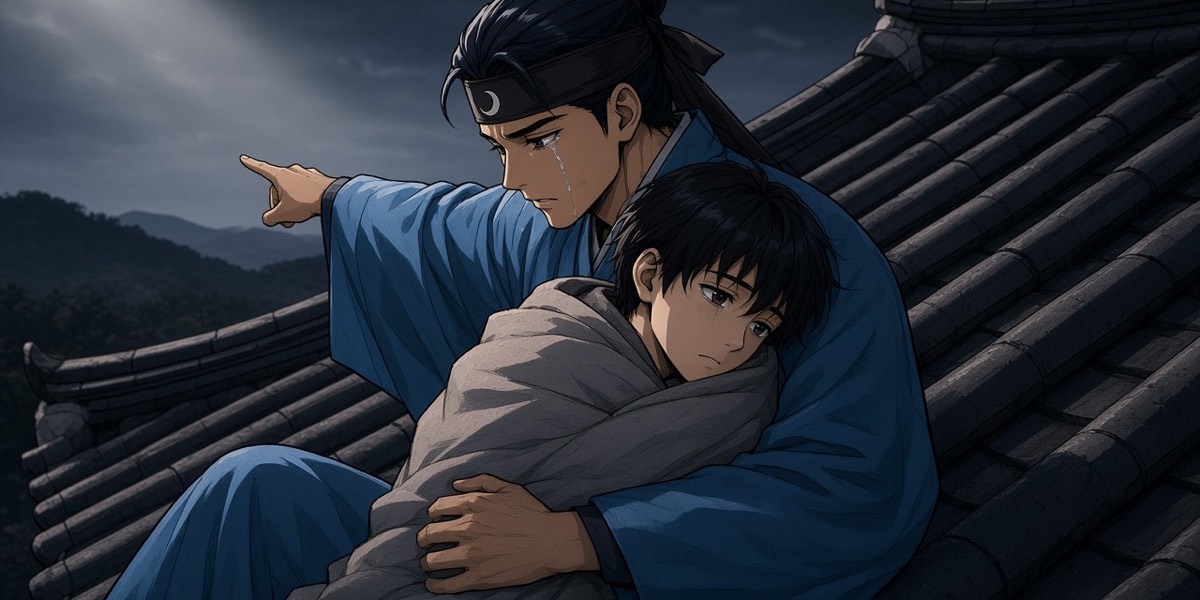
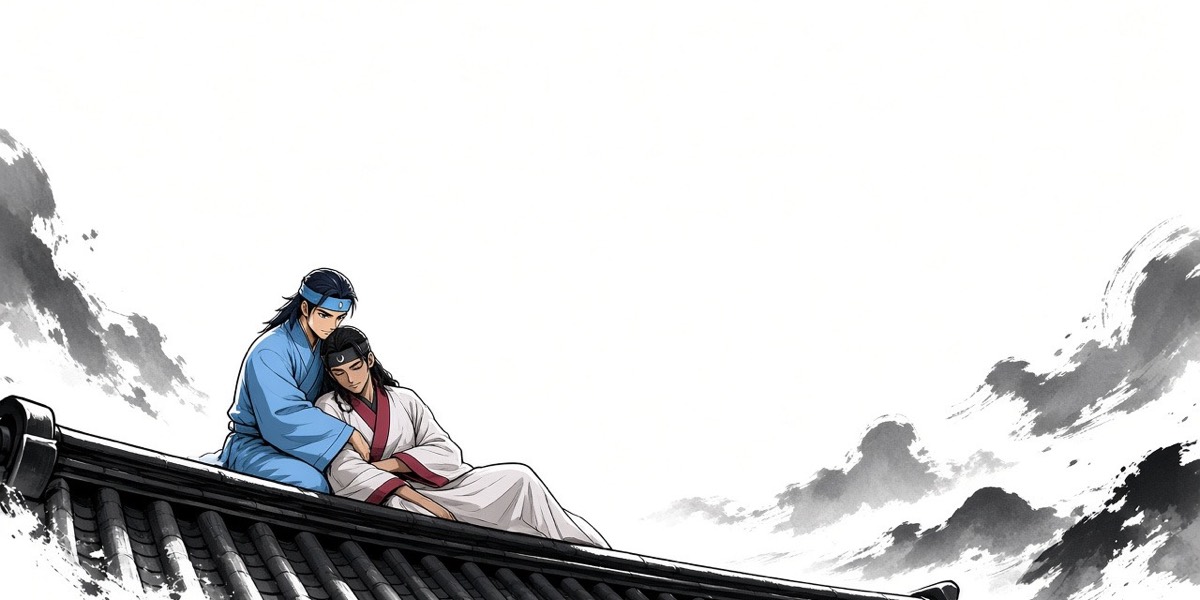
Near the end he asks to be carried outside. carries him up the ladder onto the roof of the hall, the same roof, because asks for it by name.
There is nothing past the hills but more hills and the first grey of morning. looks for a long time anyway. He has never once been able to tell he was wrong about anything that mattered.
dies of illness not long after the campaign. He does it quietly, the way he did everything, before dawn, so as not to wake anyone.
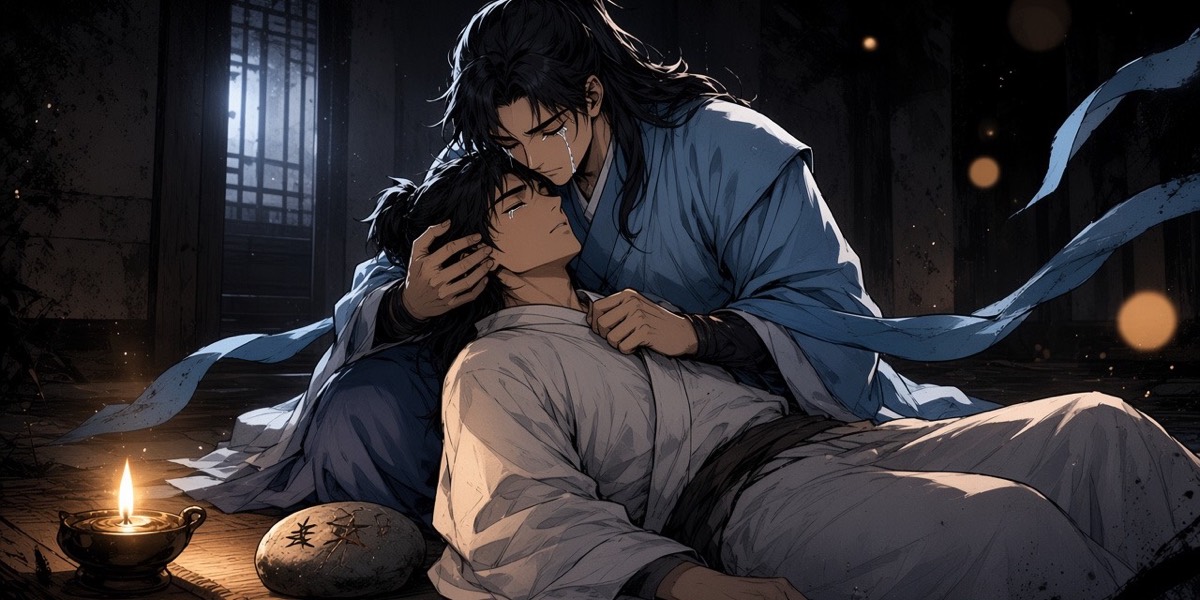
doesn’t shout. He sits on the roof with him until the sun is all the way up. Then he climbs down and tells the cooks there will be one less bowl. He says it very politely. That is how they know.
does not take food for seven days. The cooks leave bowls by his door. The order sends its oldest men to argue with him. He thanks them, and does not eat.
On the fourth day he goes down to the river where they found the stones, and the boys who follow him hear him for the first time. It is not crying, exactly. It is the sound a horse makes when it has run too far. It goes on for a long time, and nobody goes near.
On the fifth day the king comes himself.
The king stands in the doorway for a while. Then he goes, and does not send anyone else.
He keeps the stone in his fist. At night he holds it up to the lamp, as if the bad characters might have changed.
On the seventh night the bowl by the door is still full. He lies down on ’s side of the mat.
He is seventeen. The order buries two headbands beside him, and one small stone with terrible handwriting. It keeps the story, because a who outlives his vow is only a boy with a nice coat.
One more thing came down from that year, in a manuscript that may or may not be what it says it is. It gives a song, the Song of the Blue Bird. The book says he wrote it for a woman. The yard, which knew him, has always sung it for somebody else.
Blue bird, blue bird,
blue bird above the clouds,
why do you stay in my bean field?
Blue bird, blue bird,
blue bird of my bean field,
why fly back up into the clouds?
If you came, why not stay?
If you would go, why did you come?
Why make me weep for nothing,
ache and waste and die?
When I die, what ghost will I be?
When I die, I will be a guardian spirit.
파랑새야 파랑새야
저 구름 위의 파랑새야
어찌하여 나의 콩밭에 머무는가
파랑새야 파랑새야
너 나의 콩밭의 파랑새야
어찌하여 다시 날아들어 구름 위로 가는가
이미 왔으면 가지 말지
또 갈 것을 어찌하여 왔는가
부질없이 눈물짓게 하며
마음 아프고 여위어 죽게 하는가
나는 죽어 무슨 귀신 될꼬
나는 죽어 신병 되리
The yard still sings it at roll call. Two places in the front row stay empty.
When his little sister rides too fast, always pulls up first. never pulls up. Not for horses. Not for anyone…!
