




























Chapter 24

Ulbul



AI Summary
- Hot Springs They said they were sick.
- Hot Spring Feast They take a fever as far as the king’s spring outside the walls.
- Side Pool They take a quieter pool.
- Quiet Hall The hall is quieter than the spring.
- Heads in the Steam He walks back out to the steam with both heads.
- Marketplace A man walks to the market for salt.
- King Bongsang
- Father's Bed The father dies in his bed.
- Dalga Dalga comes in from the wall with dust on the boots.
- The Ledger Changjori is in the doorway with the ledger he was told not to keep.
- After Dalga He stops coming out.
- Long Night The cups do not go back to the kitchen.
- Characters
Episode· 300
Ulbul
A salt seller on the river. An old man on his knees. The first king in a cave.
- King Suchun
- Prince Ilu
- Prince Sobal
- Prince Saburu
- Dalga
- Prince Dolgo
- Ulbul
- Ummo
- Jaemo
8 stills without a cue
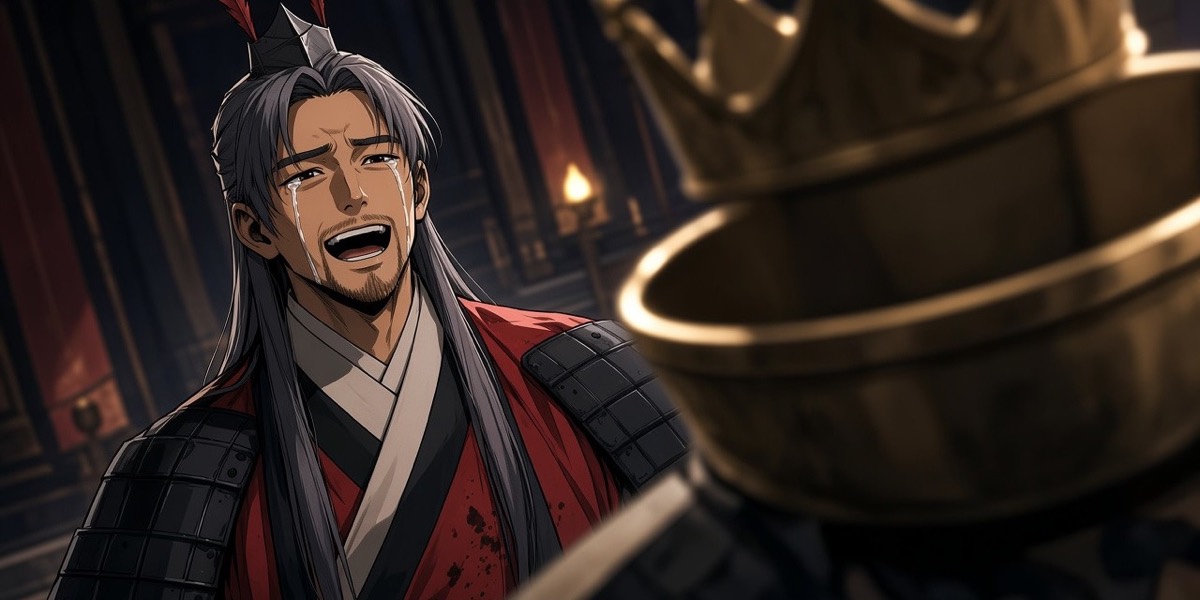
They said they were sick.
This is the house. Keep it. People will leave it.
Suchun and his brothers on one row. Only his two sons hang under him. Dolgo’s boy at the end.
Not sons. Younger brothers. The kind who still think a crown can move sideways.
Before the spring, they still eat in one room.
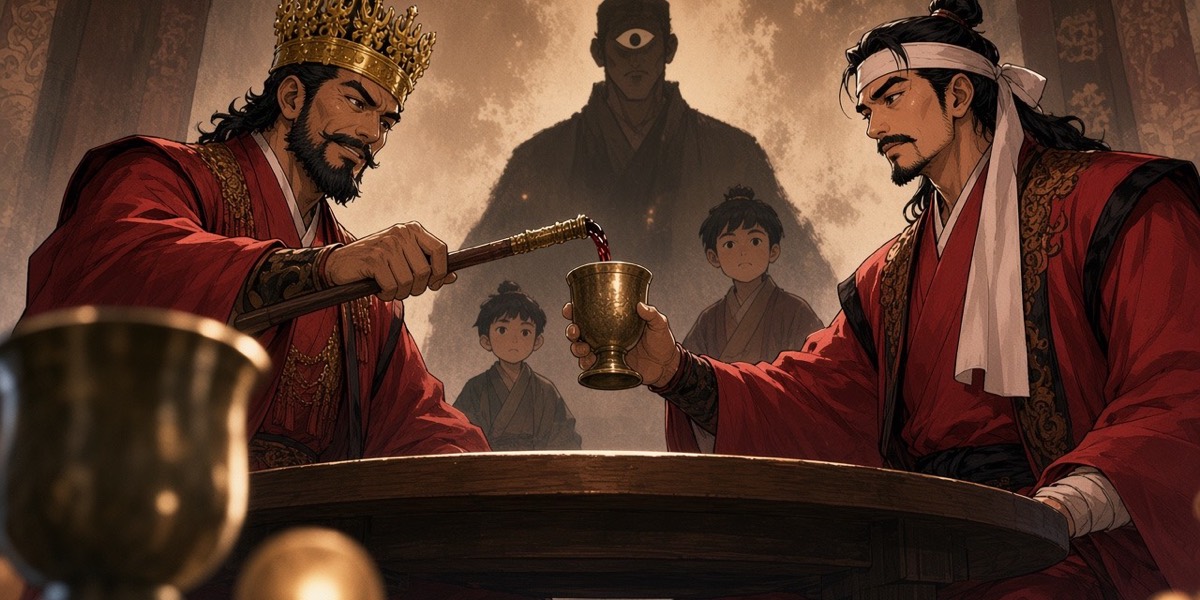
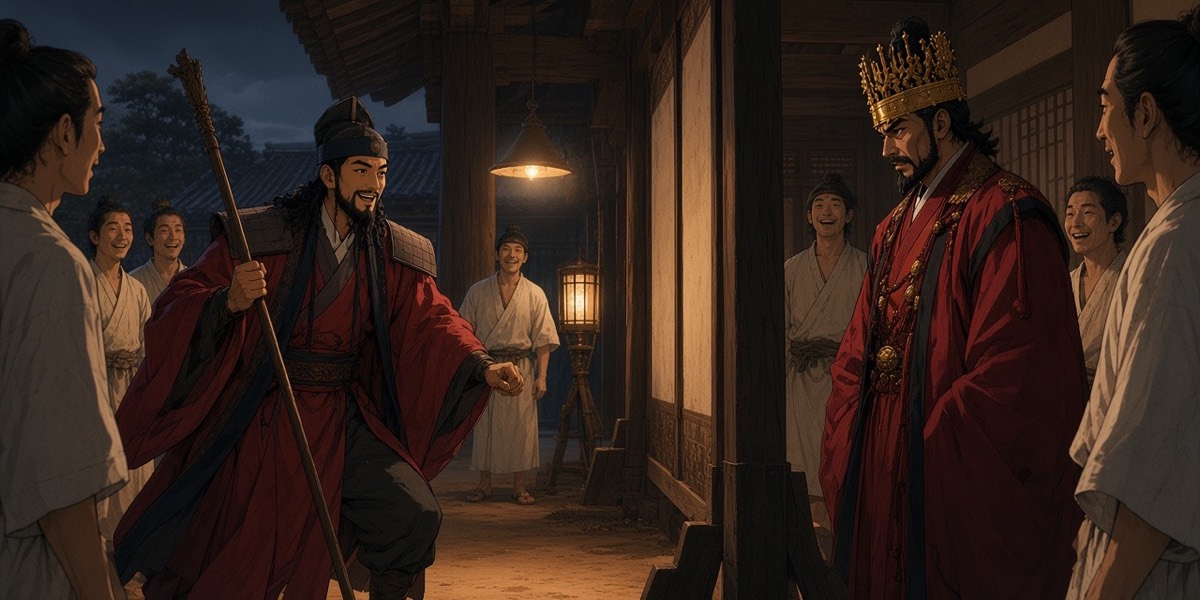
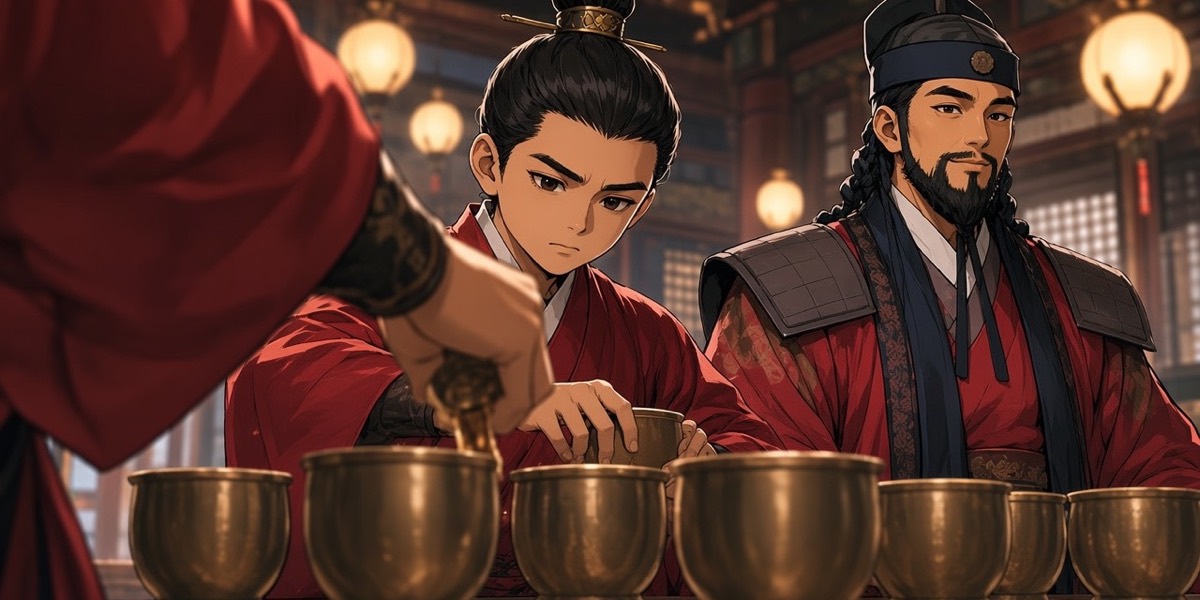
pours for . The cup is a joke until it isn’t. laughs too loud. is already standing, because sitting makes him late for a wall. The two boys sit where they can see the cups: counting, smiling at nothing.
watches the pour. He will watch every pour after this.
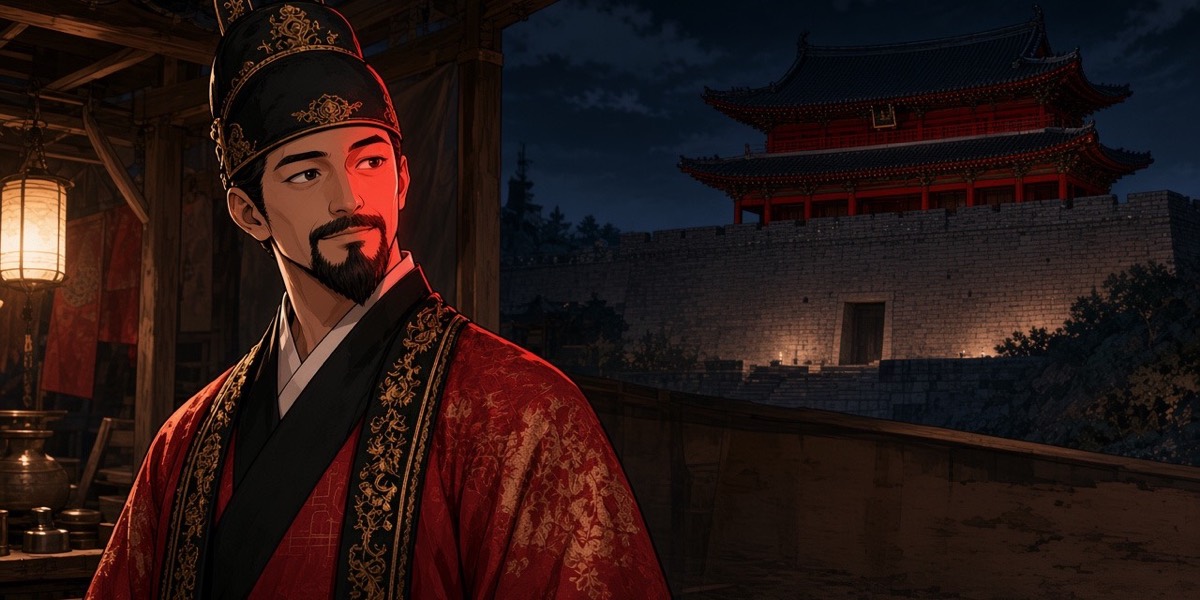
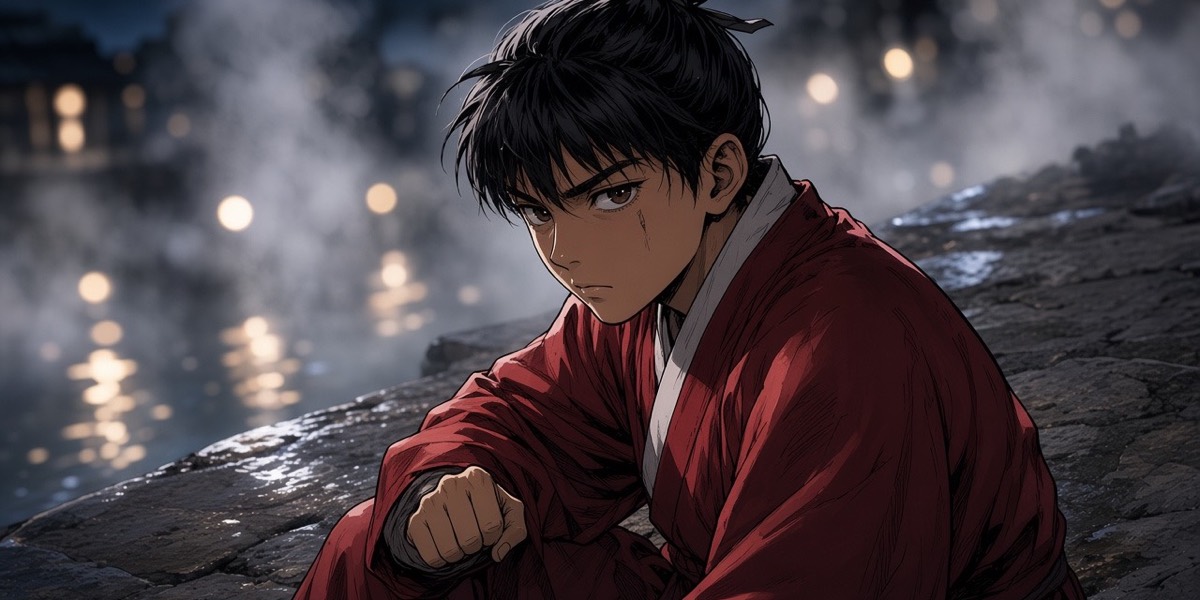
They take a fever as far as the king’s spring outside the walls. Steam. Drums. Wine that does not wait for a hall.
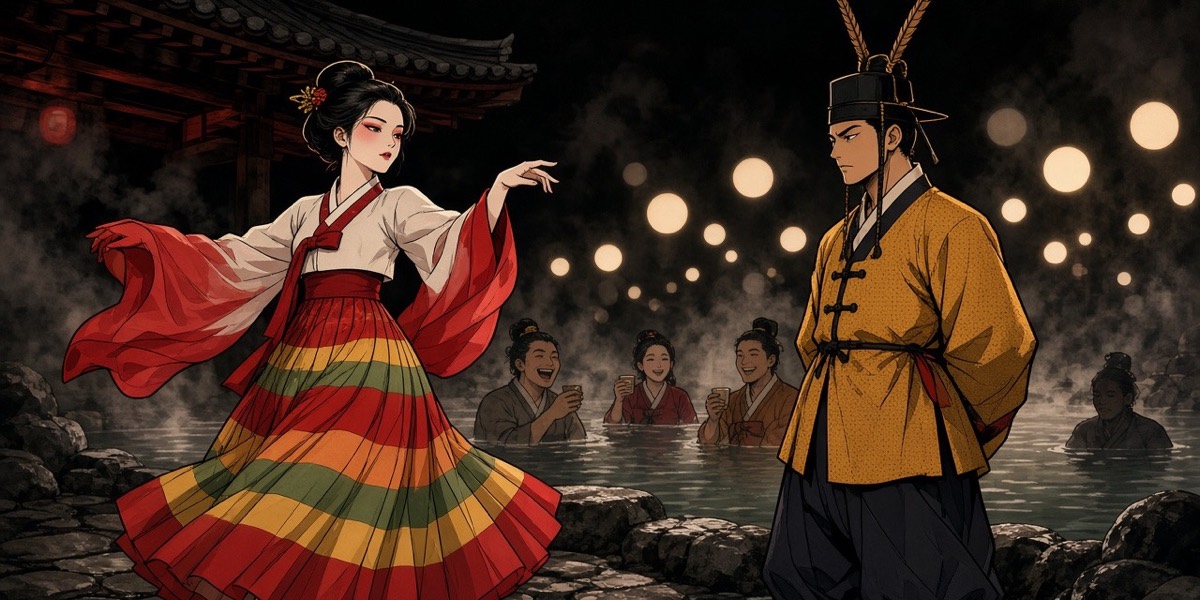
Outside the pools the party is already a country. On the bank the court is dressed: dotted ochre jackets, black-trimmed trousers, jougwan feathers ticking with the drum. In the water the silk comes off. Someone is laughing so hard he swallows steam.
Court ladies take the bank the way a mural takes a wall. White jeogori. Striped chima. Rouge on the cheek. One of them has already hiked the skirt to dance.
The long sleeves go first. dance is sleeves. They wrap a man, unwrap him, wrap him again. His feather-cap knocks her pin. Neither of them fixes it.

She kisses him the way the spring kisses: wet, laughing, not finished. A second pair has already found the steam’s edge. You can hear the song in their teeth.
pours for anyone who will sit. ’s good eye is wet from the heat. The boy is on the bank with a cup he is not old enough to finish. He came because his father said watch.


They take a quieter pool. The drums cover them. That is the point of a loud spring.
A runner comes along the wet stone. He has a hall voice, and he is trying not to look at anyone’s chest.
They come out of the steam still laughing. Silk sticks. Someone at the pool cheers them the way you cheer a wedding.
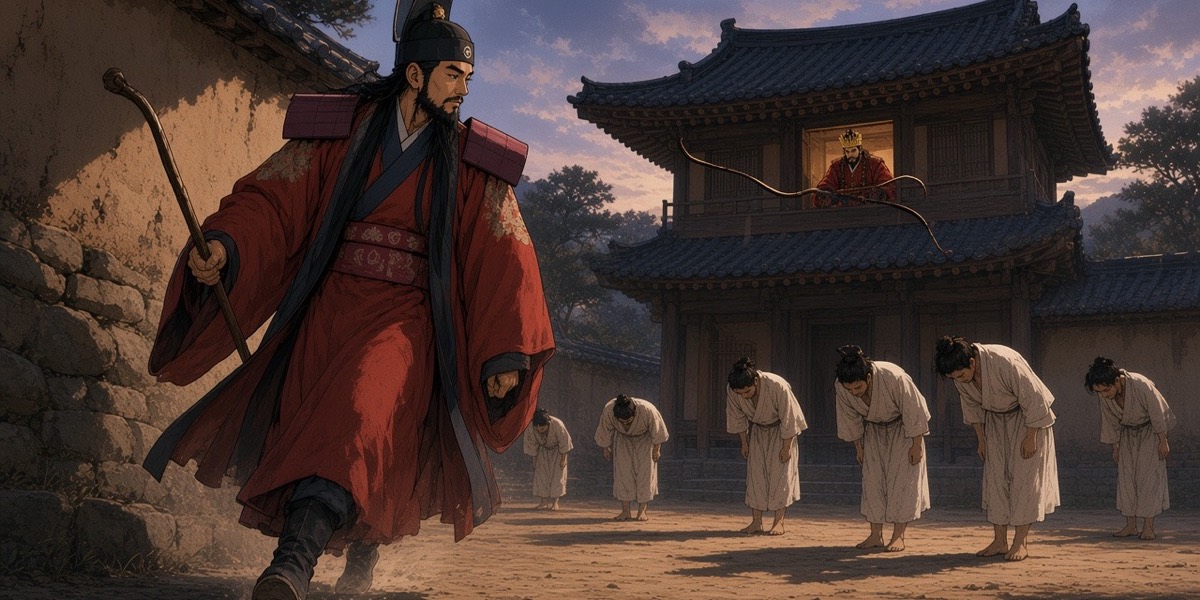
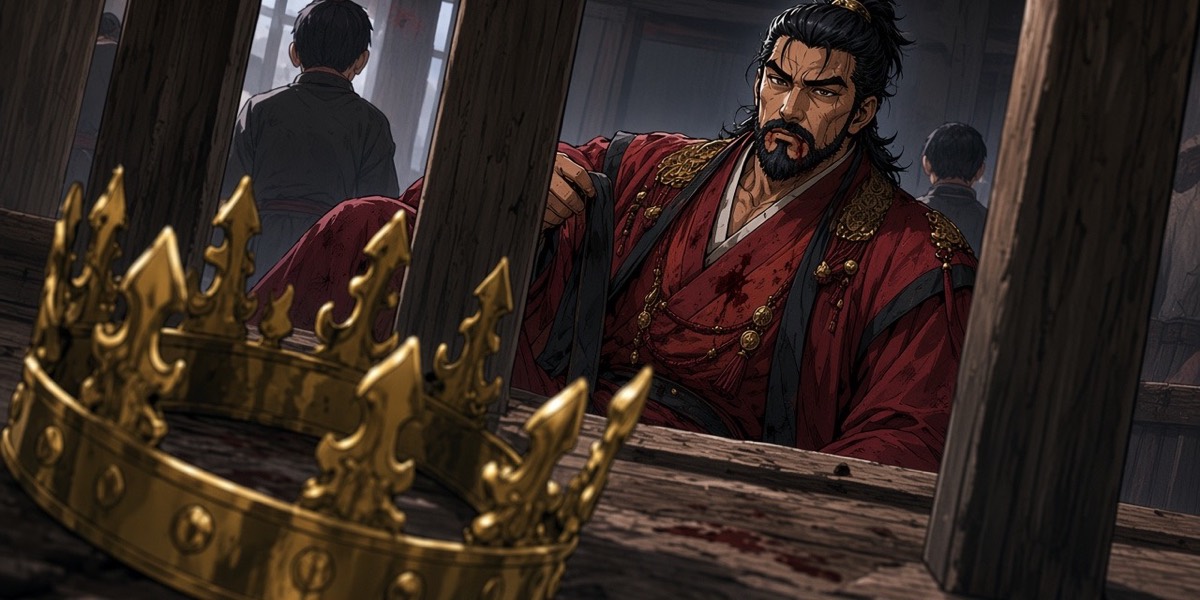
The hall is quieter than the spring. That should have been the first warning. is already standing. He does not sit for a chair he is about to take back.
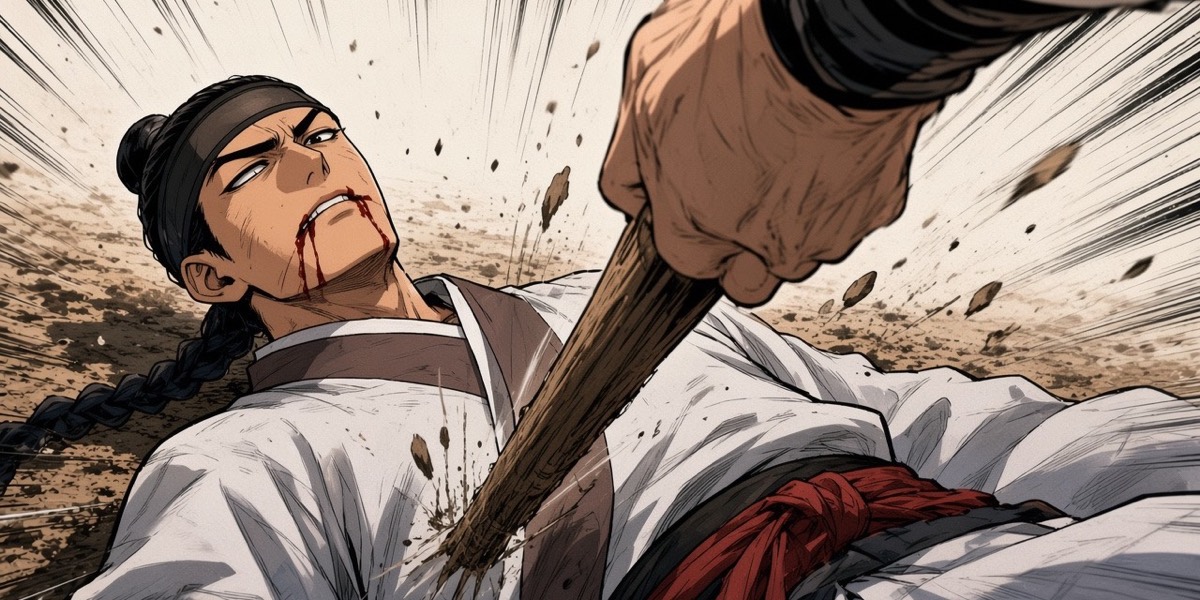
The strong men step out of the dark they were told to be. No screens. No speech. Hands, then steel.
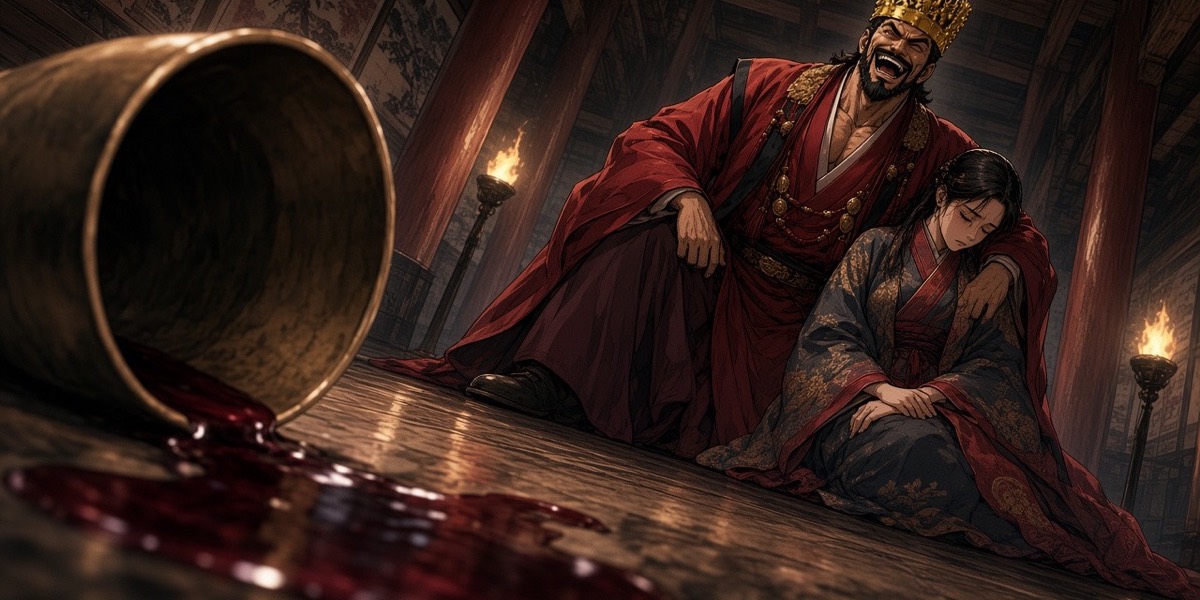
It is fast. Two brothers, two sets of hands. The floor learns a new color. Nobody in that hall is invited to be surprised.
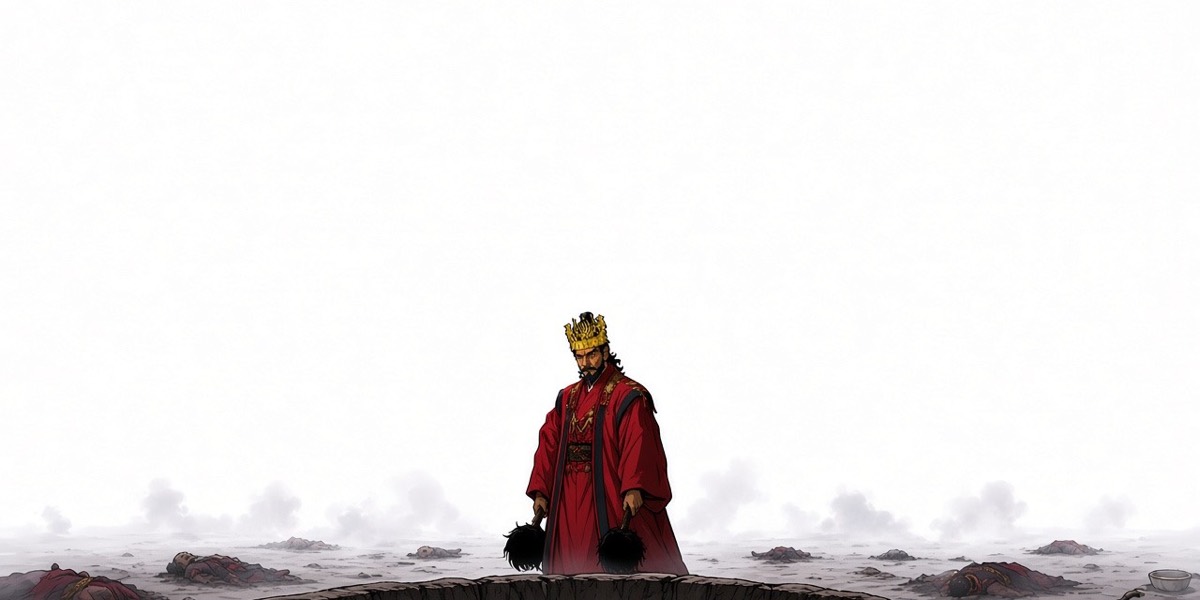
He walks back out to the steam with both heads. The drums miss a beat, then try to find it, then give up.
Men cover themselves who had not thought to. A woman laughs once, the wrong laugh, and puts her hand over her mouth. Wine keeps going into cups that nobody lifts.
The boy is still on the bank. He was told to watch. He does. He will wear the crown. He will never forget the steam, or the way a party goes quiet.
In the spring of the seventeenth year the king’s younger brothers and plotted rebellion. Feigning illness they went to the hot spring, made sport without restraint with their faction, and spoke treason. The king summoned them, falsely promising to appoint them chancellor; when they arrived he ordered strong men to seize and execute them.
十七年 봄 2월, 왕의 아우 · 두 사람이 모반하였다. 병을 핑계로 온탕에 가서 무리와 절제 없이 즐기며 패역한 말을 하였다. 왕이 불러 재상을 내린다고 속이고, 이르자 장사에게 잡아 죽이라 하였다.
Family is the first knife. A king who forgets that, dies at supper.
Suchun’s arrow. Ilu and Sobal are crossed out.
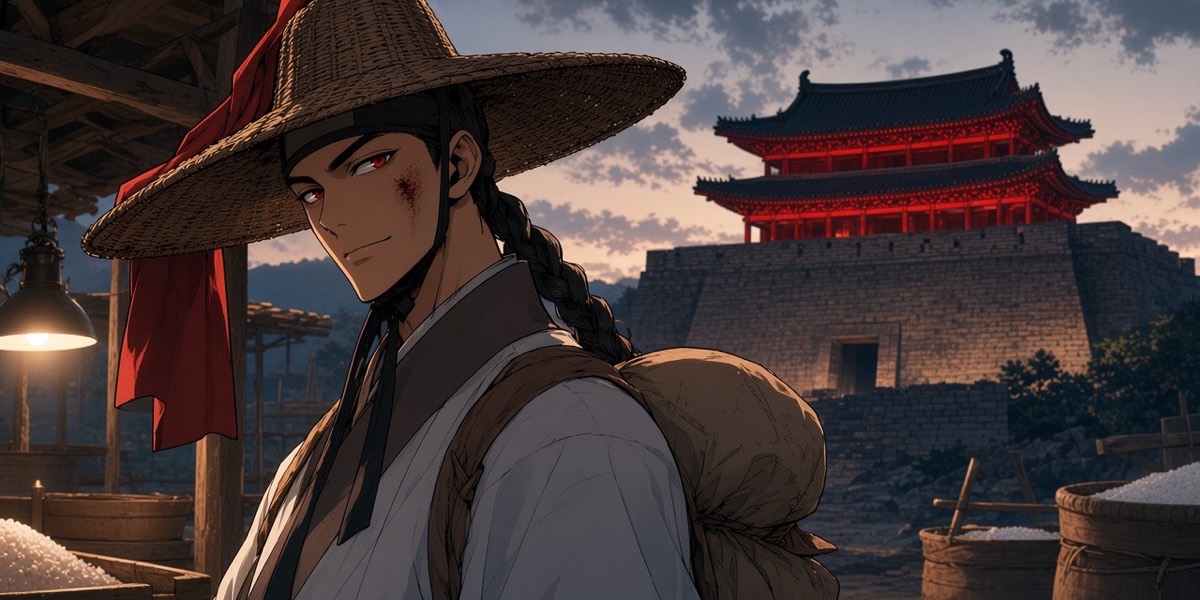
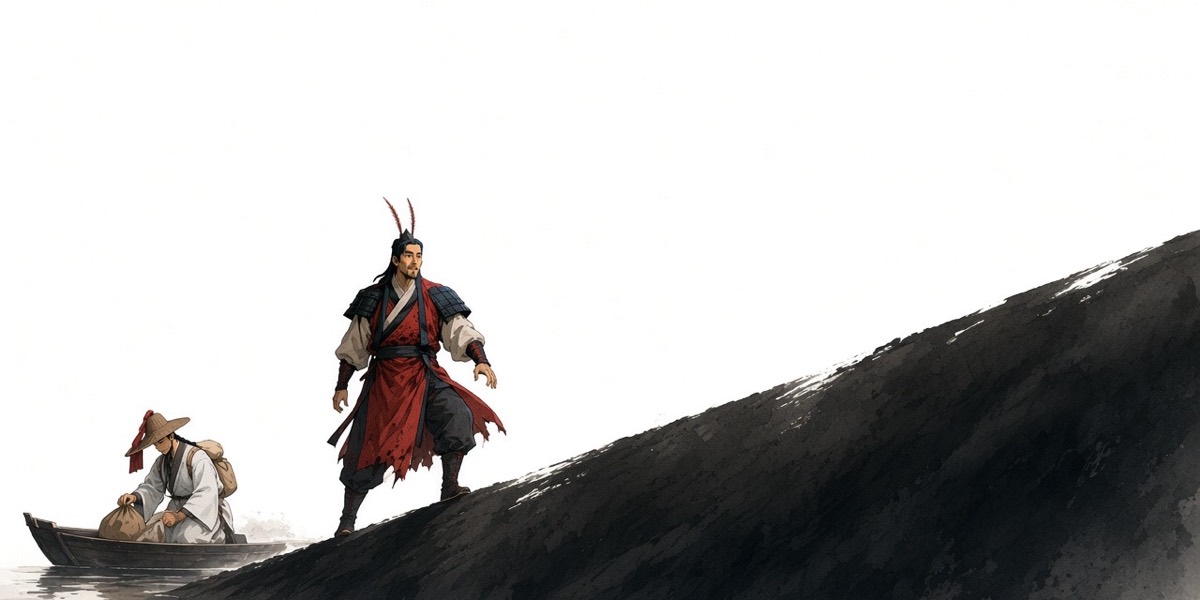
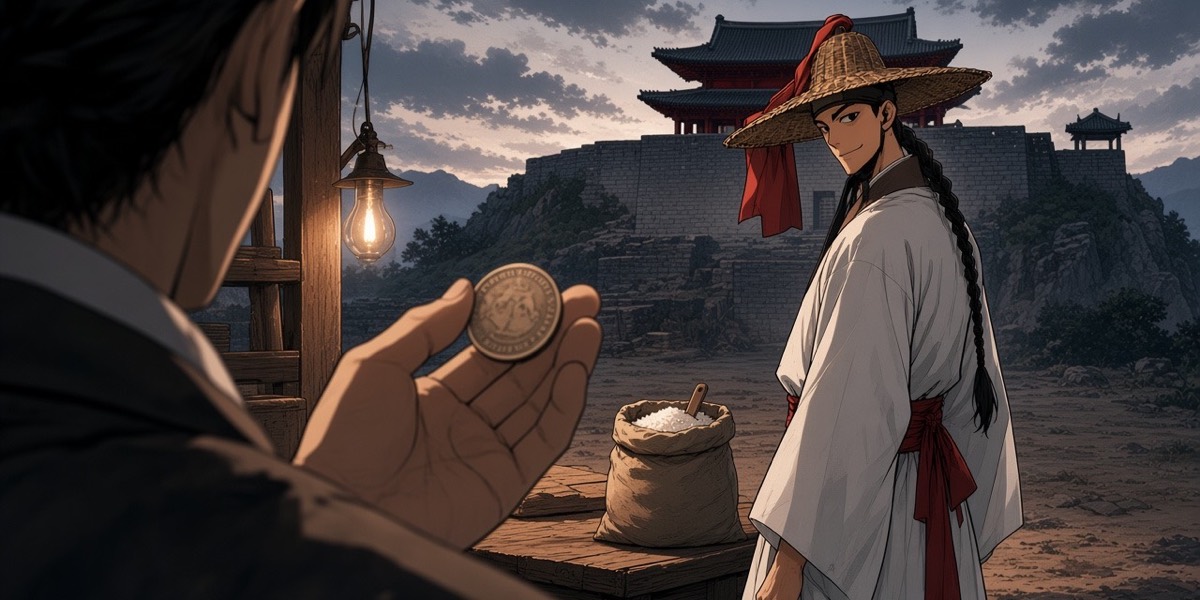
A man walks to the market for salt.
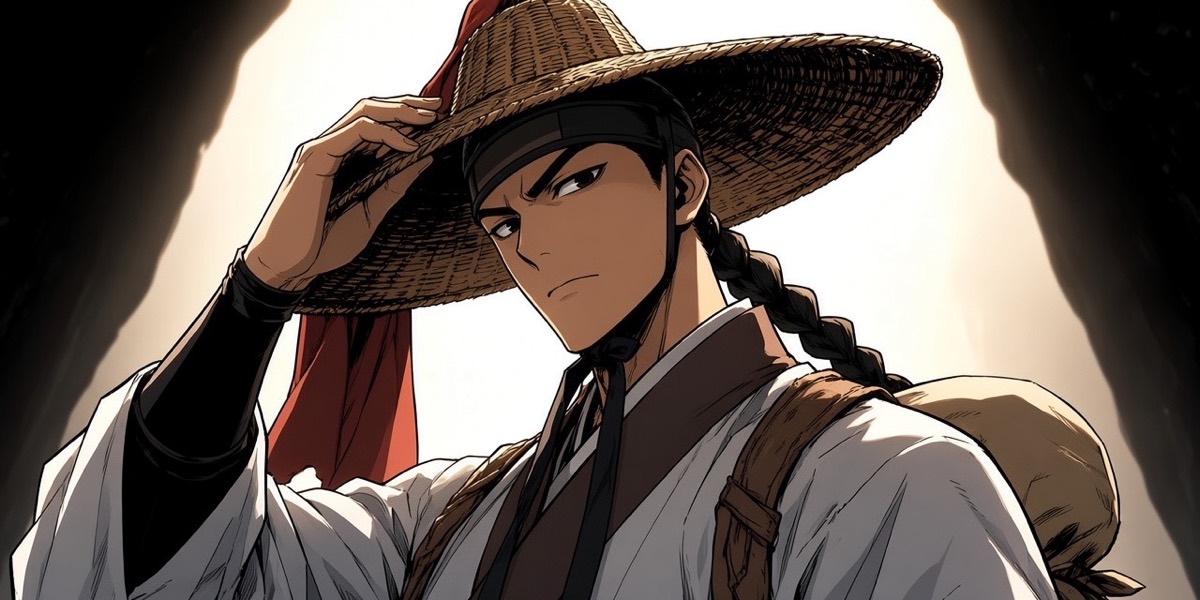
The satgat brim lifts. The face comes out slowly. Young. Burned down to the cheek. He does not look at the buyer. He looks up. At the fortress.
To understand the hat, we have to go back seven years…!
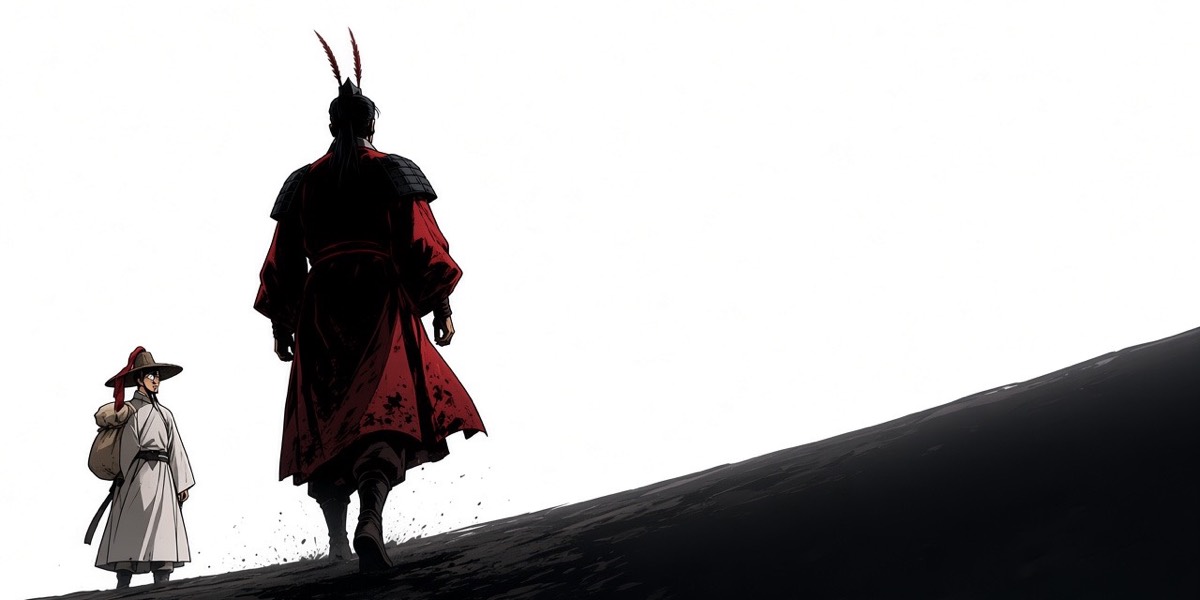
The father dies in his bed. Nobody walks a head out for that.
Suchun is crossed out. No arrow. The crown slides to the boy who watched.
They put the crown on the boy who watched.
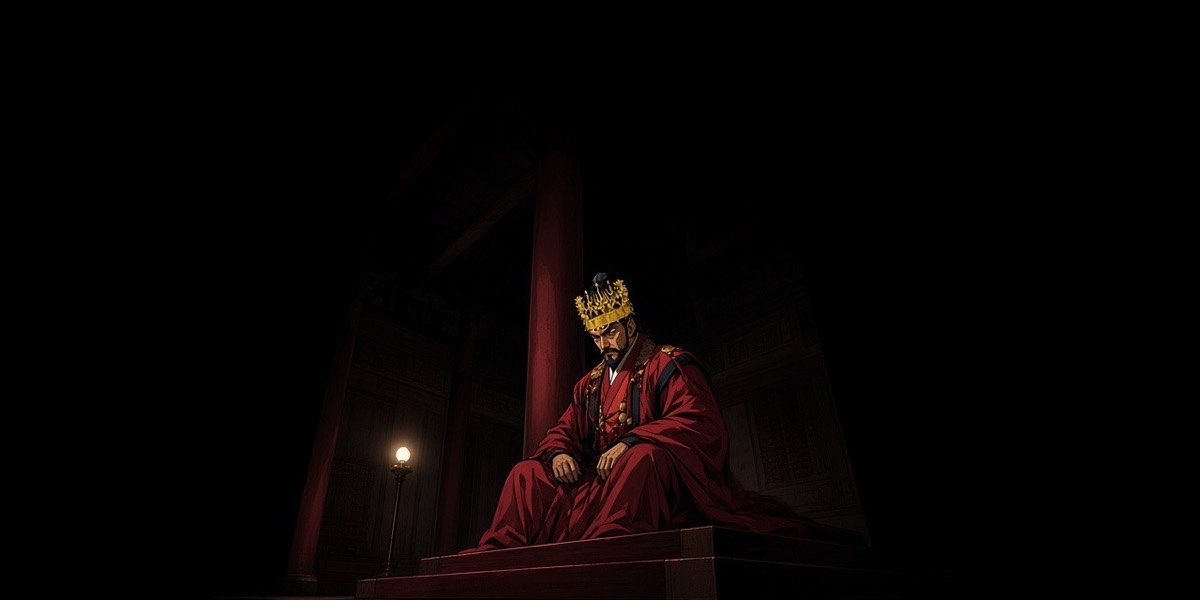
He sits. The pillar is still in the room, even if they moved the banquet. He can feel it at his back.
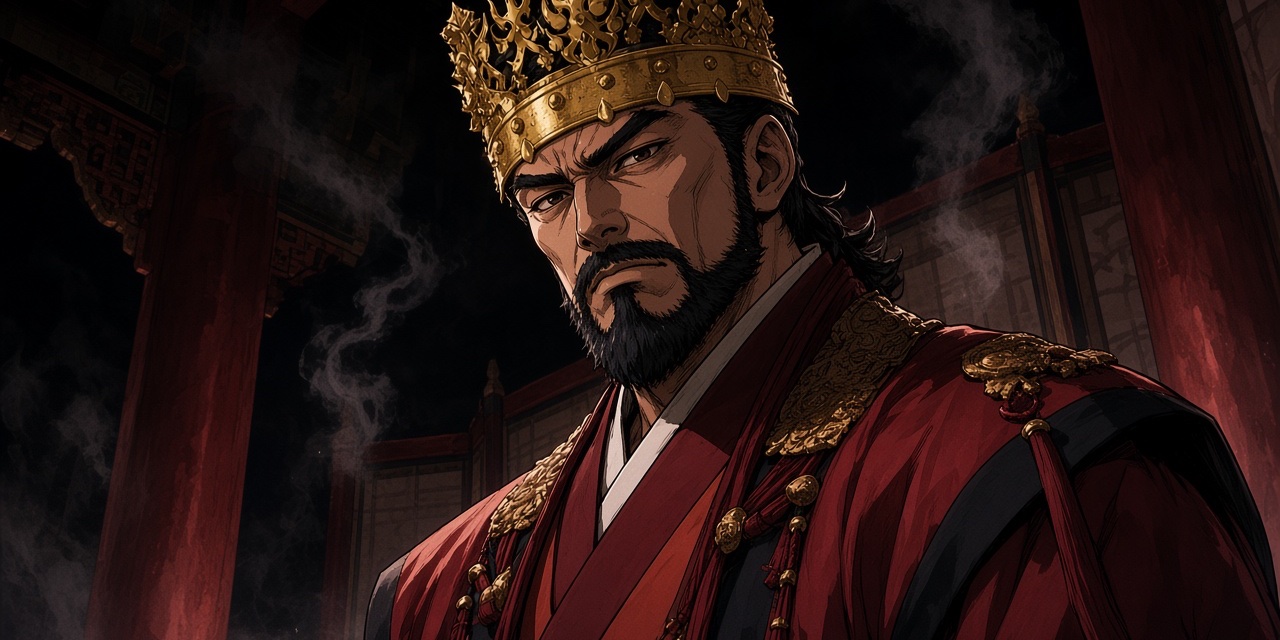
The first mornings he still comes out. Uncle on one side. Brother on the other.
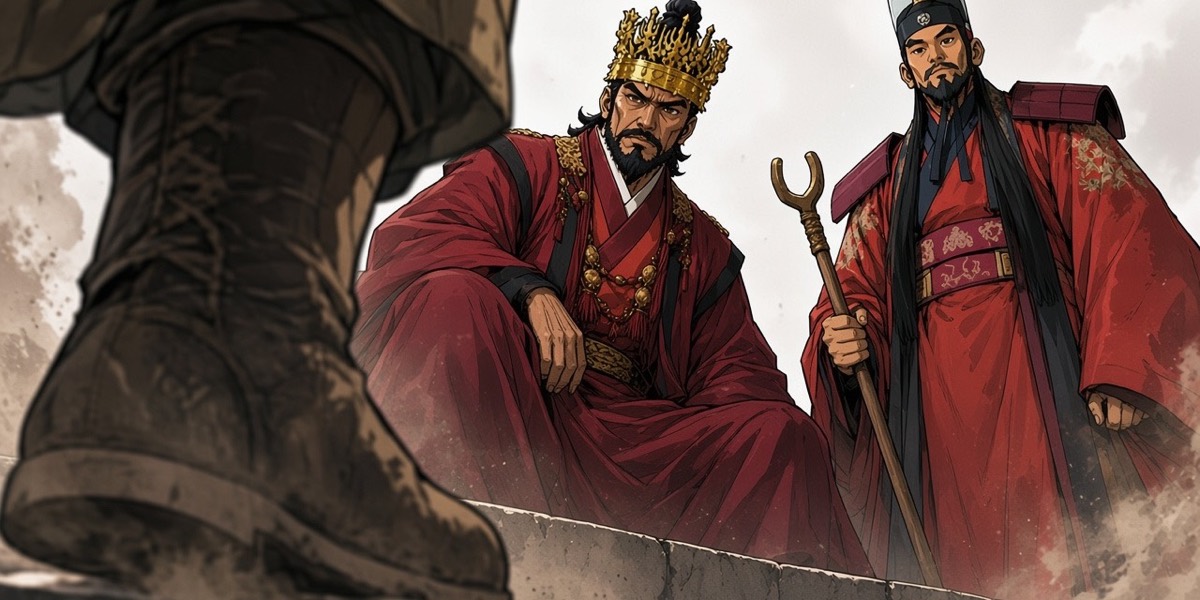
puts a dusty boot on the step and does not bow first. fills a cup and leaves it where the king can reach. For a week that is a family.
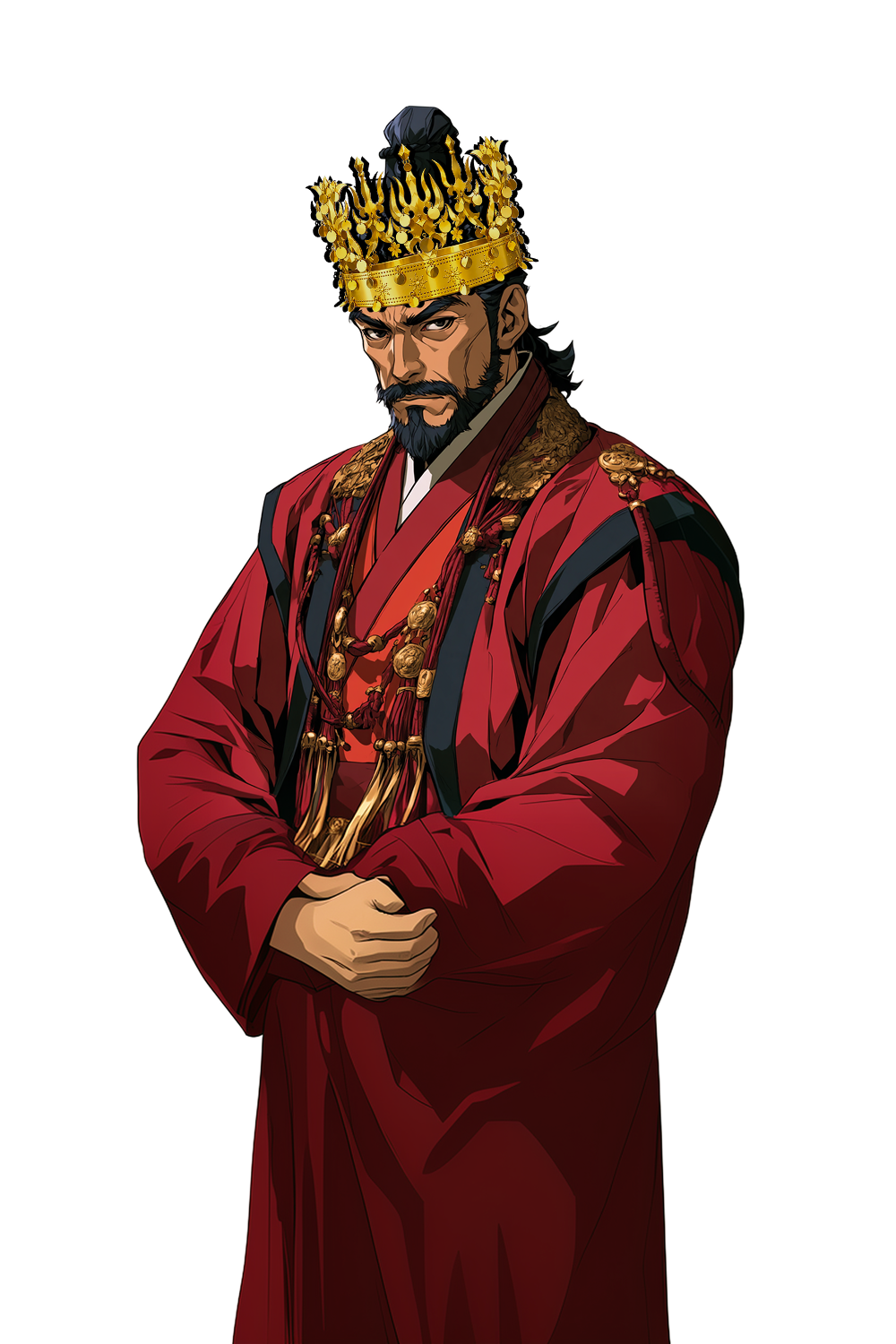
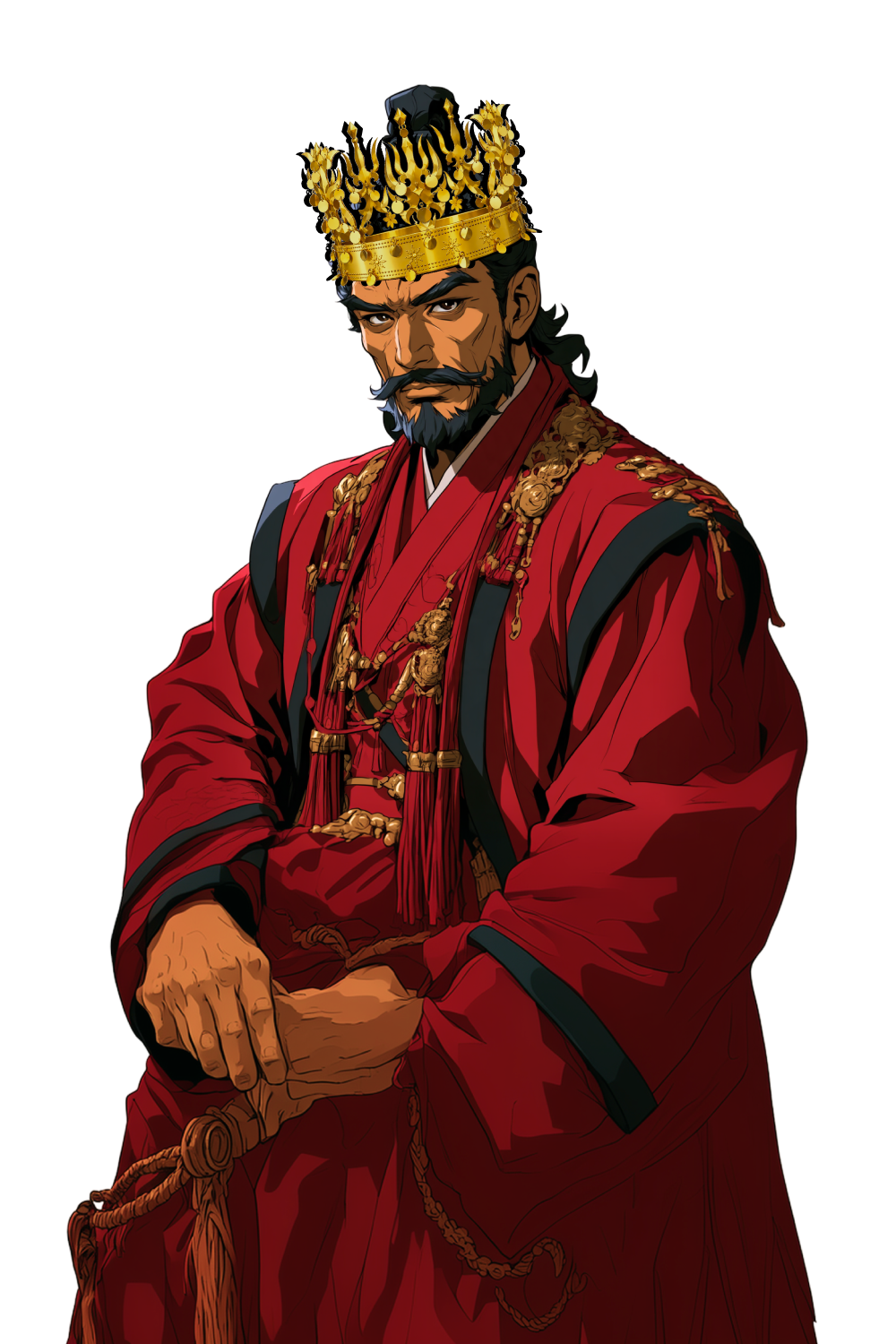
Anyone the country likes is a screen with a blade behind it. He starts with the uncle the yards still cheer.
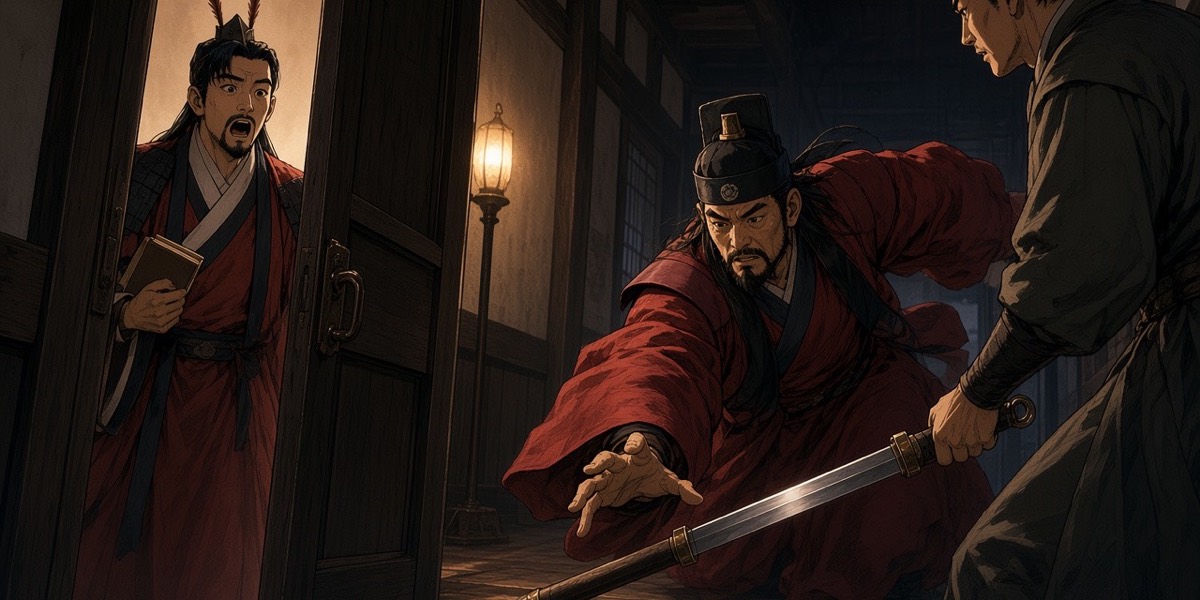
comes in from the wall with dust on the boots. People bow before they remember there is a new king.
The lower yard says his name before it remembers to bow to the chair. He took a fort last harvest. The country still talks like that is the whole government.
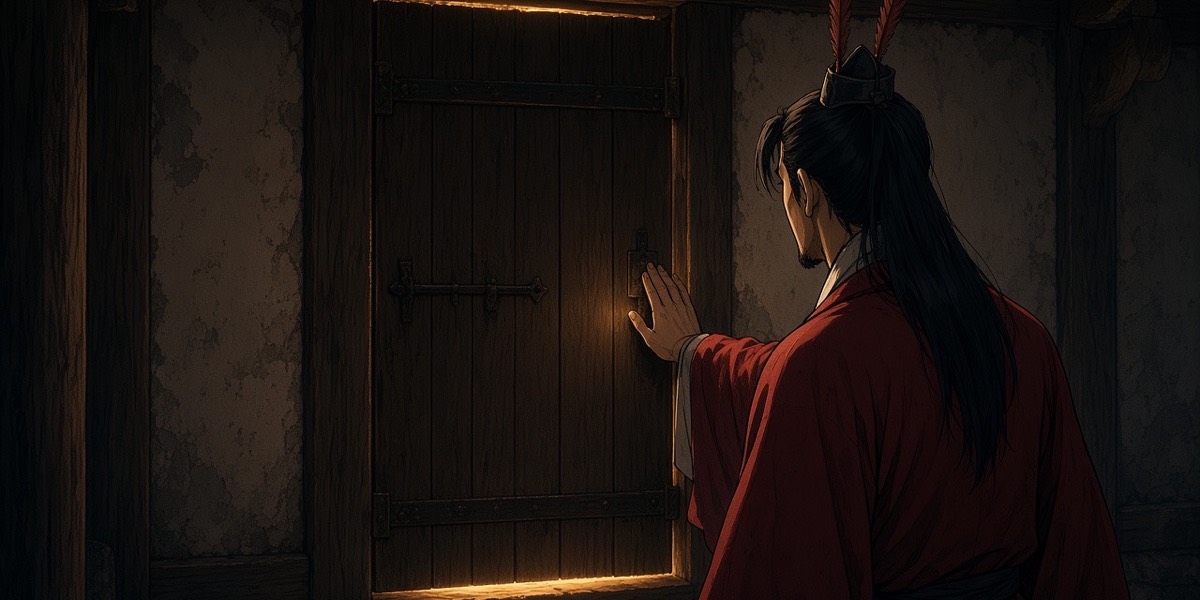
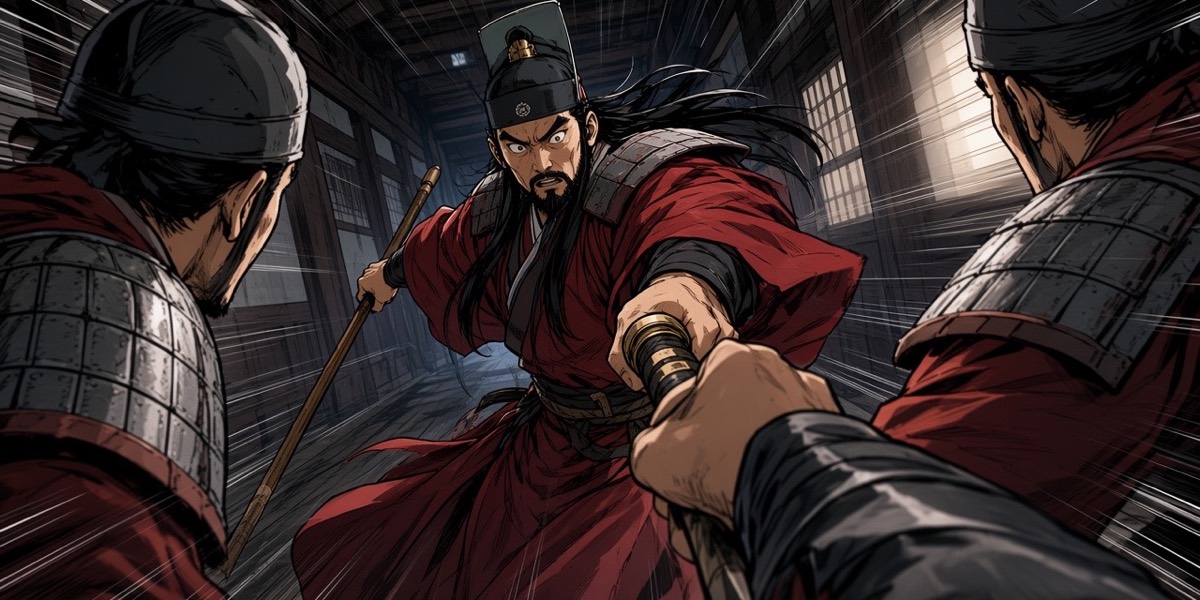
is in the doorway with the ledger he was told not to keep. Two men. A door that should have been a door. The general reaches for the staff and does not make it.
He does not open it. The staff hits the floor. He picks it up afterwards and does not know why.
That spring the country mourns a general. The king drinks. stands in a corridor with a staff that is not his.
That is the first year. A popular general, a closed door, a man in a corridor who will remember the staff.
Bongsang’s arrow. Dalga is crossed out.
He stops coming out. Wine. Women who do not get to leave until morning. Ministers wait in the outer hall and learn to like the wait.
You have seen this king before. A different hall. A different cup. The same closed door. He is not the last man in this book who will hide from a country he is supposed to feed.
The cups do not go back to the kitchen. Neither do the women. A new screen, then another, gold thread a country cannot eat.
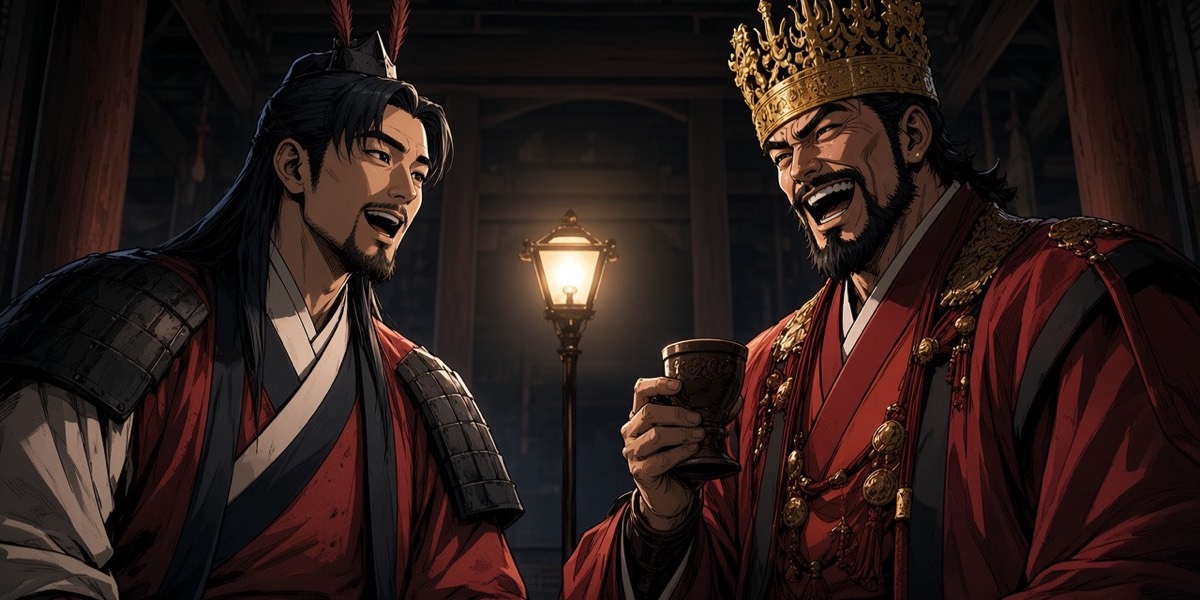
He drinks until the floor is a second table. A girl on each knee. Silk hiked. Someone is singing a song that used to be about a harvest. He has them sing it again, slower, because he likes the part where the grain is gone.
He laughs with his mouth open. Someone pours. Someone sits closer than a minister is allowed. The lamp is still going at dawn, and the roof is already a plan.
Then the brother they smile at.
People wait for the brother who still comes out. Grain. A judgment. A smile they do not give the closed door. He does not wear a crown. That is, as it turns out, the whole problem.
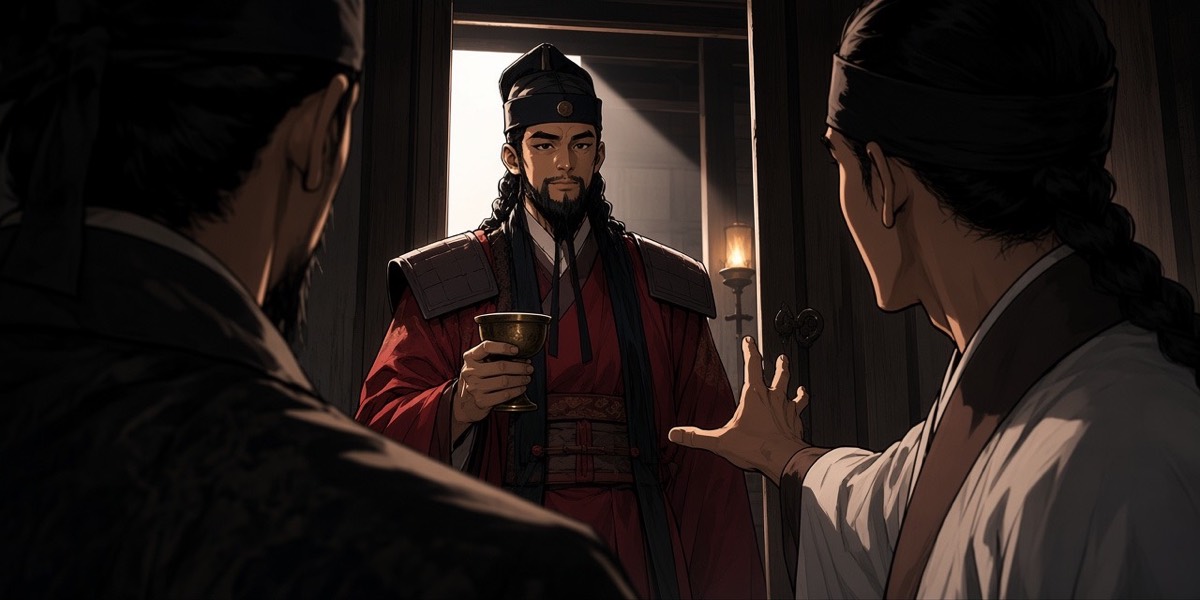
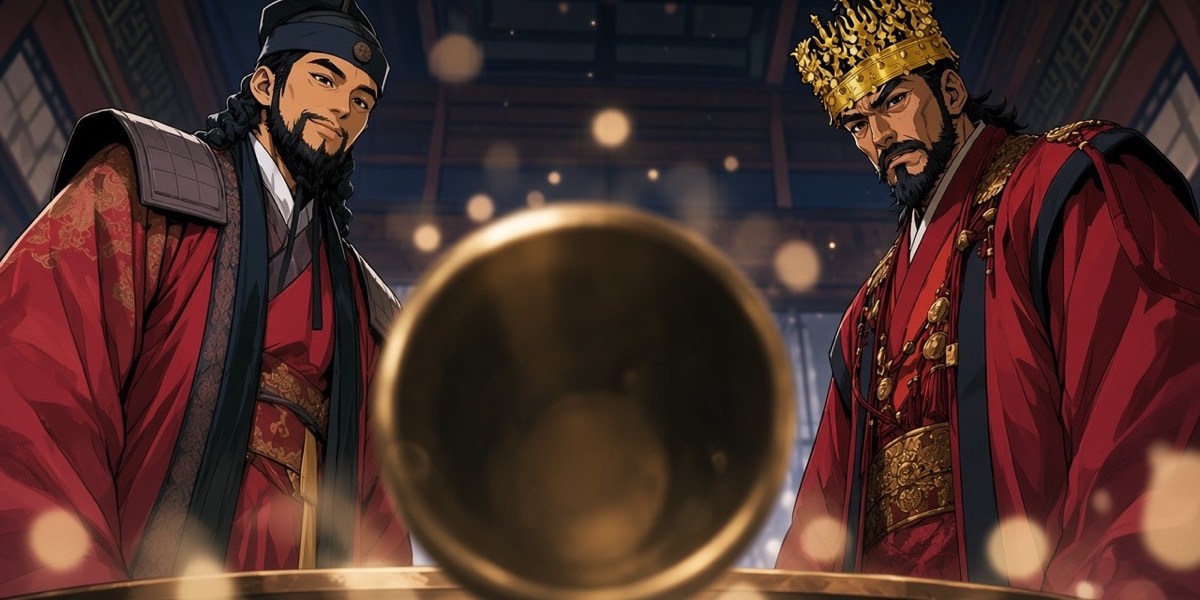
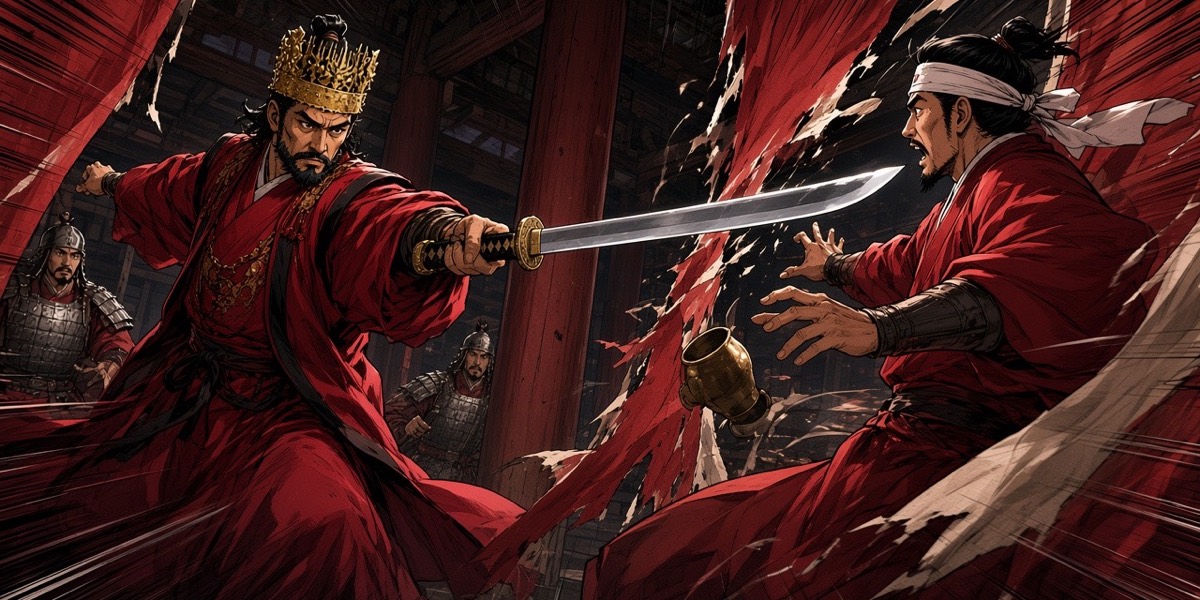
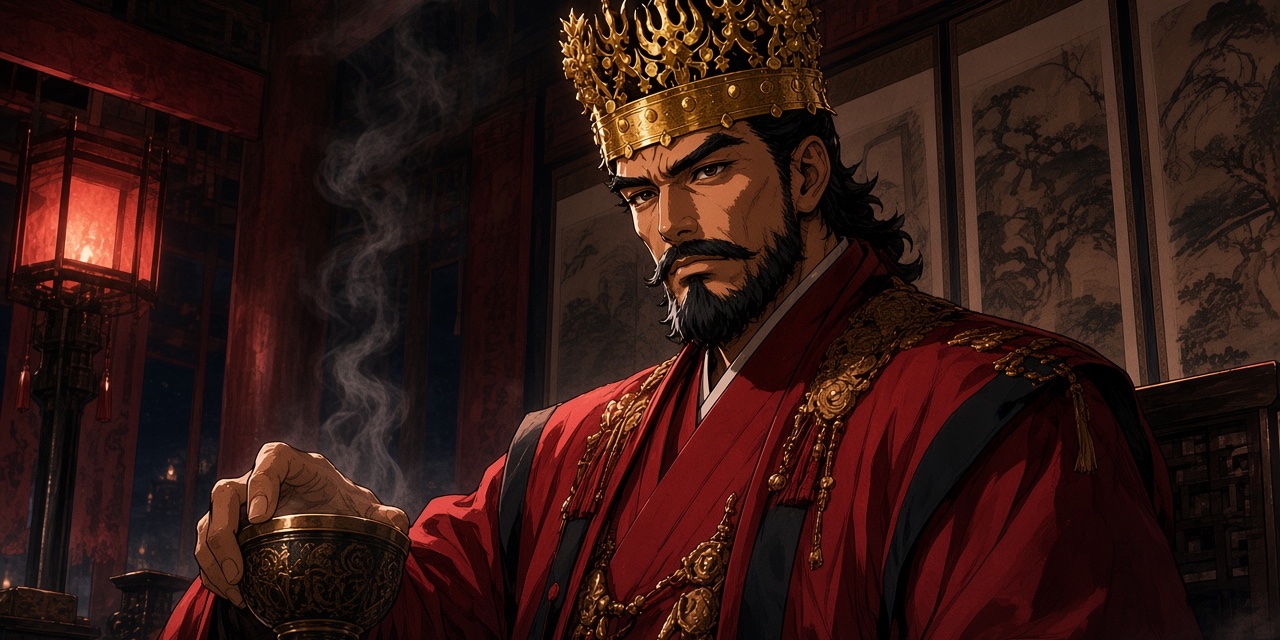
The cup is already on the table. Bronze. Too full. The whole house has been told to drink.
is told to wait. He waits. Through the timber he hears a house sit down. He hears a cup. He does not go in.
He is still a prince this morning. A man in the yard starts to go down on his knees, then sees the father, and does not finish. hates that. He also likes it. He is young enough that both things can be true.
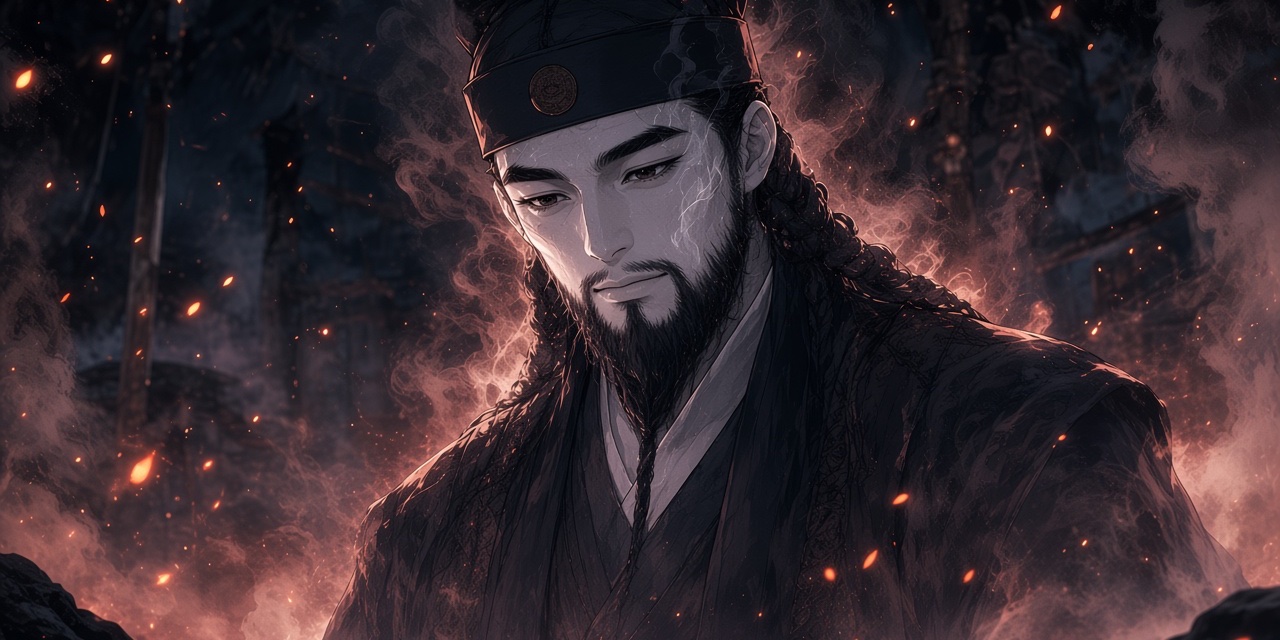
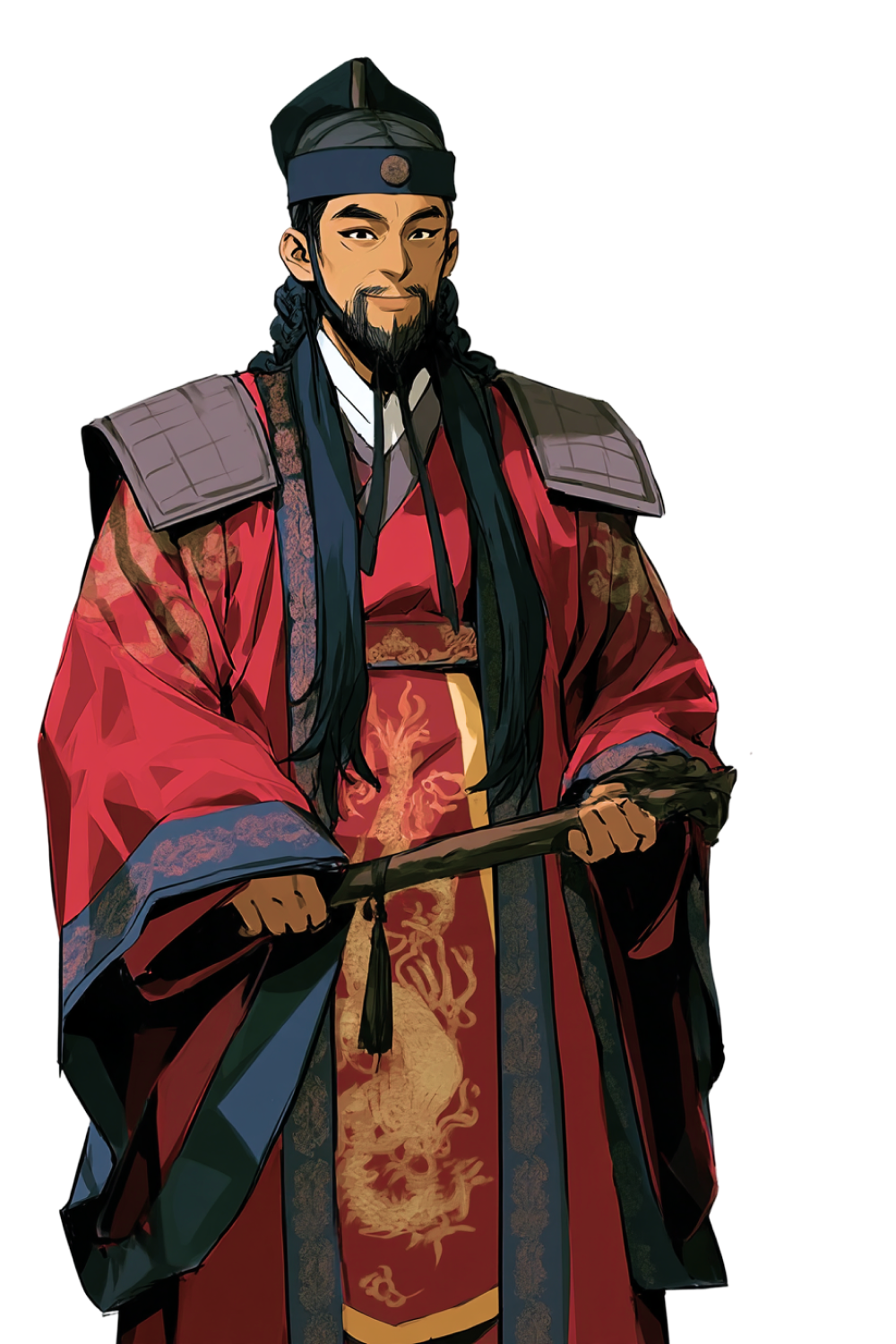
They do not talk tonight. Tonight is the doorway, and the cup.
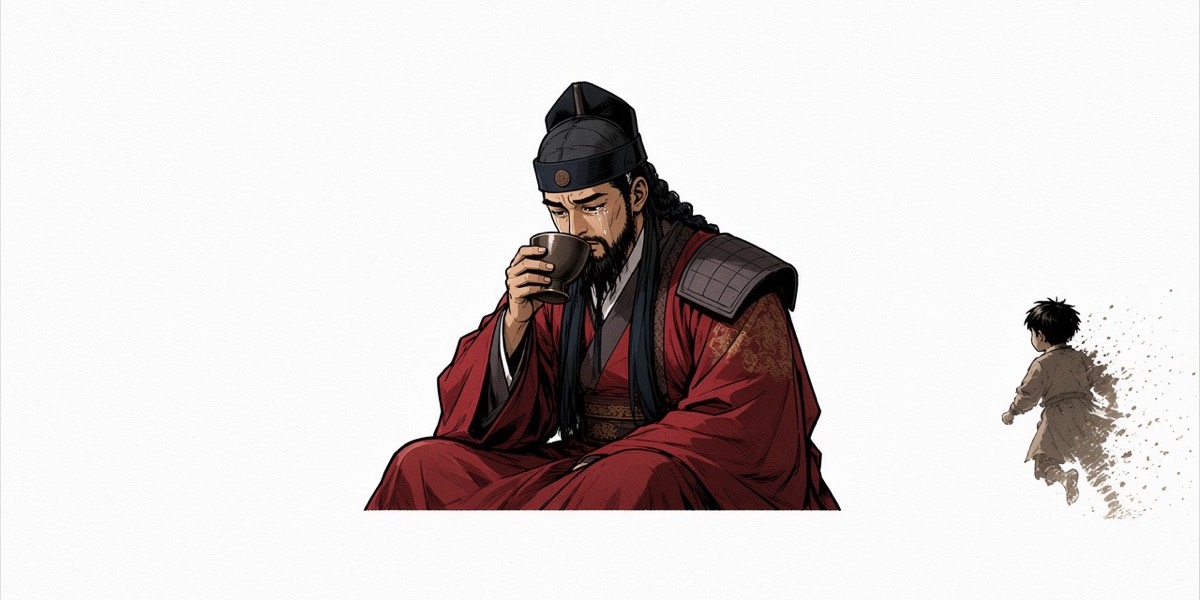
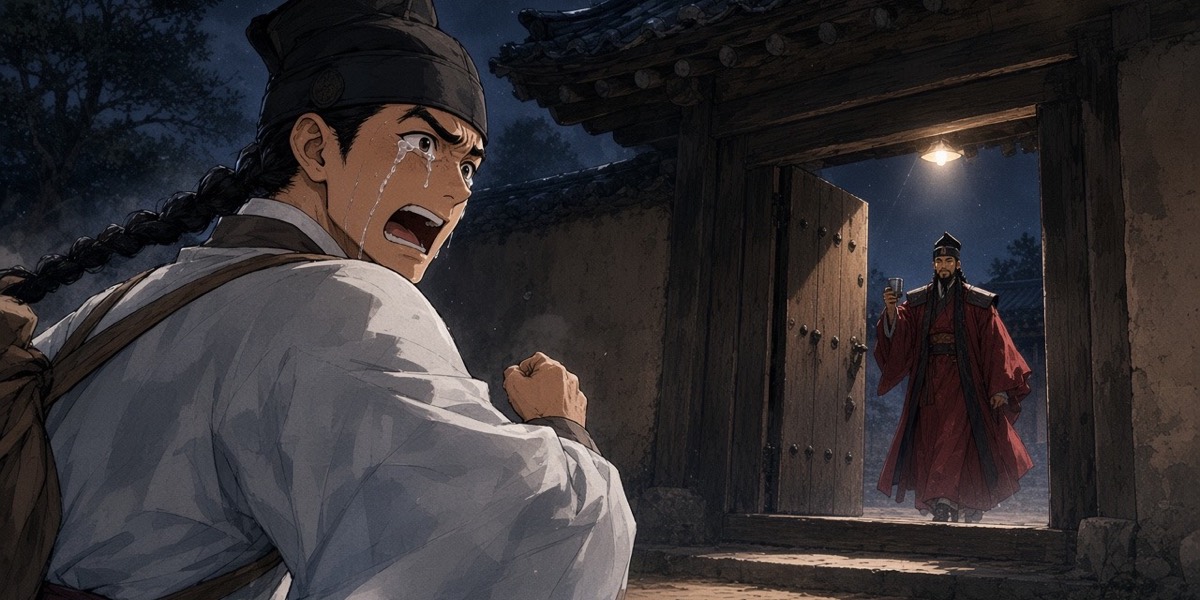
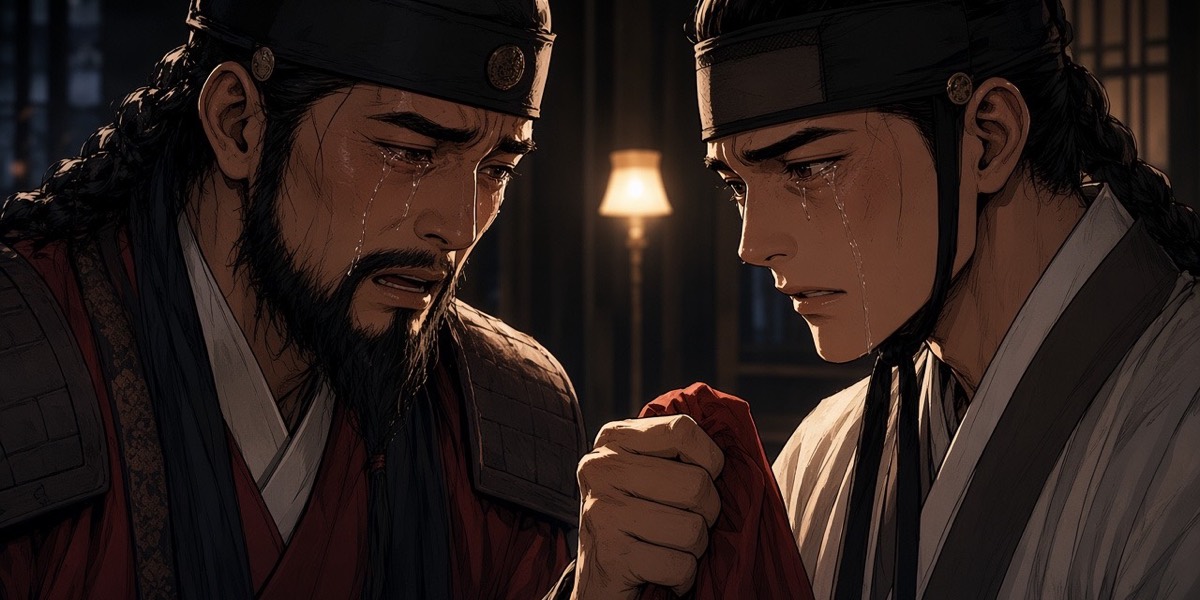
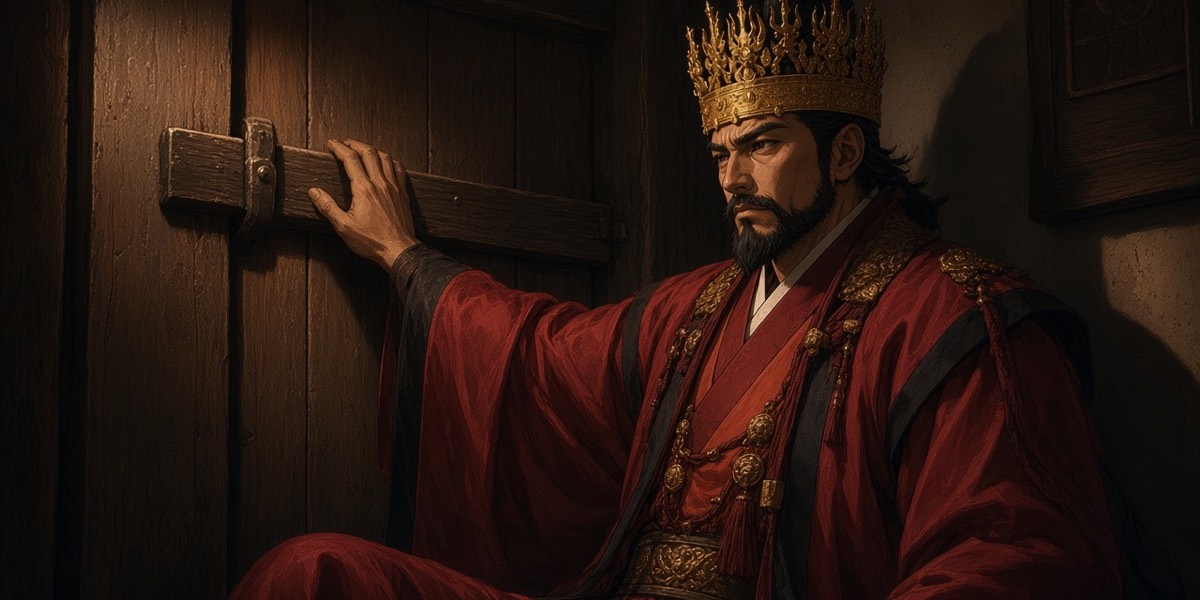
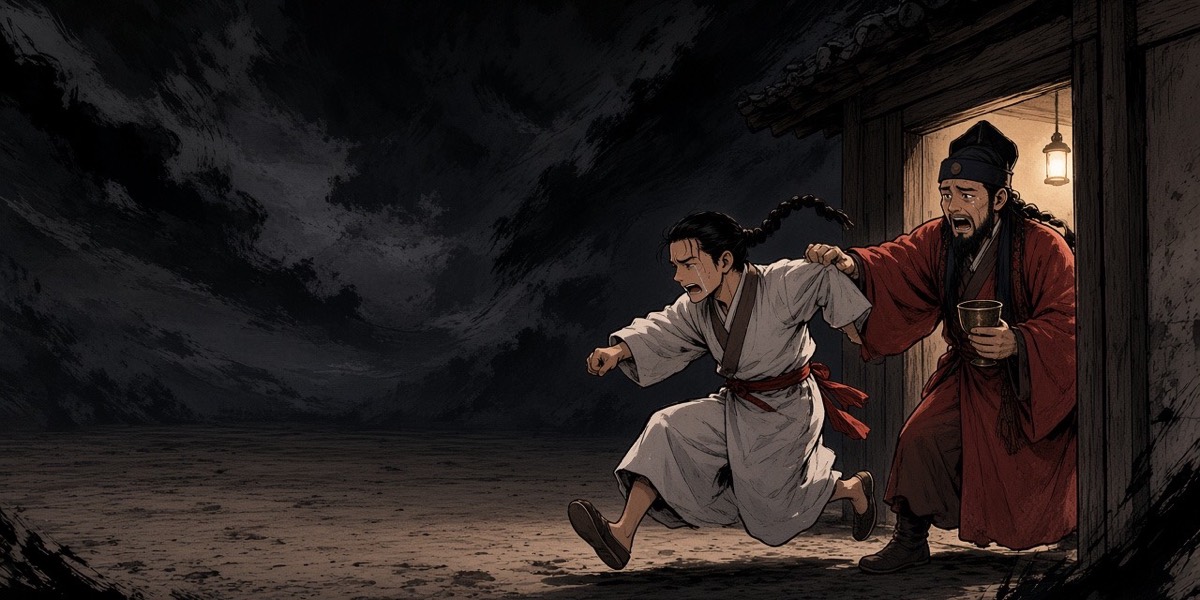
The father stands in the doorway and will not come in. The cup is in his other hand. That is how knows it is already over.
He drops the cup onto the threshold so he can hold his son with both arms. The bronze rings. Neither of them lets go on the first try. You can hear the house sitting down behind him, and he is crying into a shoulder that is still too thin for this.
He pushes him toward the back corridor. The cup is waiting where he left it. He does not pick it up until the boy’s hands are off his robe.
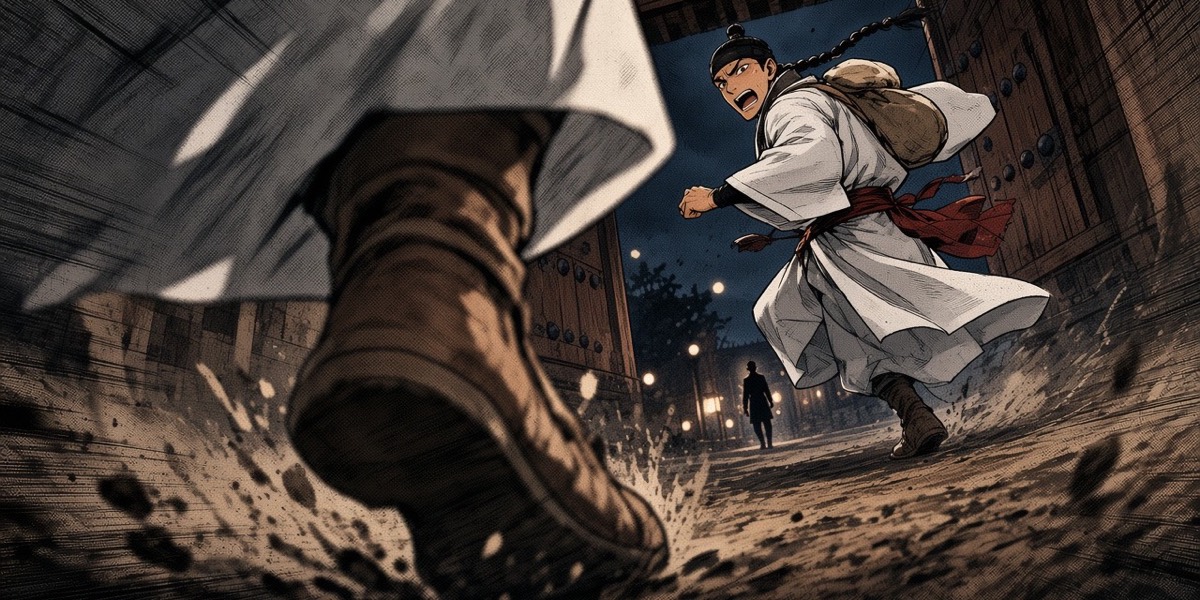
The back door of the palace is a timber leaf with iron bosses. He hits it with his shoulder because his hands will not work. Night packed earth. Giwa. One lamp still burning in the doorway he just left.
He runs. Then he looks back, which is the one thing he was not supposed to do. His father is still in that door. The cup is up again. is crying so hard he misses a step, and he knows, the way you know a lamp has gone out even before it does, that the man in the door is dying in there.
That is the last of him. After that the boy does not look back again.
The house sits down. The cup is back in his hand. The room goes white.
He drinks. He thinks of a back door, and a missed step, and a name he already said.
Bongsang’s arrow again. Dolgo is crossed out. The boy is a blank.
The first roof is not a kindness.
A landlord of a water-house village. He does not ask a name. He asks for hands.
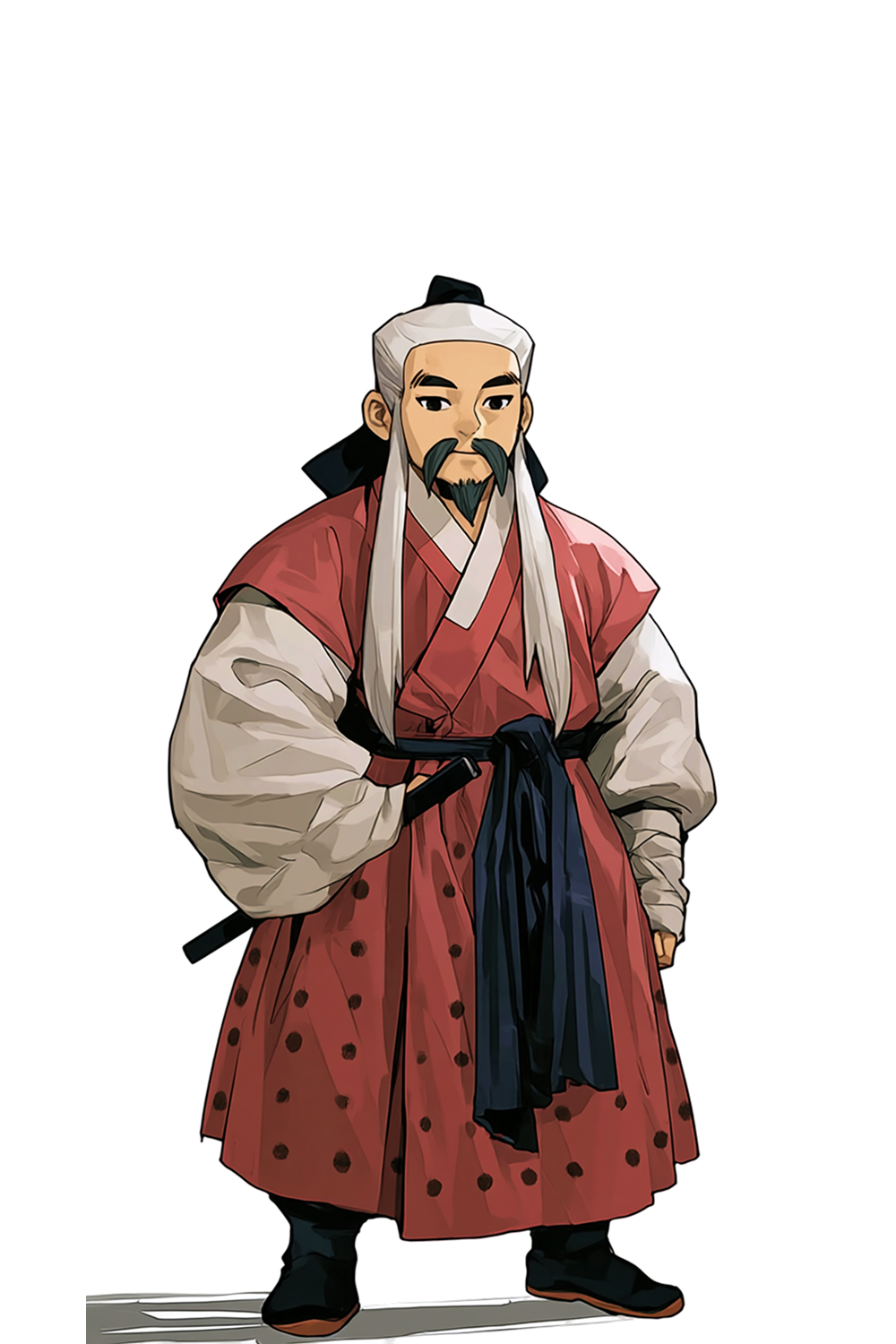
Tomorrow does not come. He is not a salt boss. He is the man who owns the pond, and the wood, and the hours.
The frogs were the problem.
The pond sits against the house. At night they start. does not throw. He sends the boy.
Tiles. Stones. Knee-deep. The prince-silk is already a joke in the water. He throws until his shoulder shakes, and the pond is never really quiet.
Day is wood. stands in the yard and counts the loads. Rest is theft. Talk is theft.
He lasts a year. That is longer than you would. Then he goes, because a year is what a body has, and this one is used up.
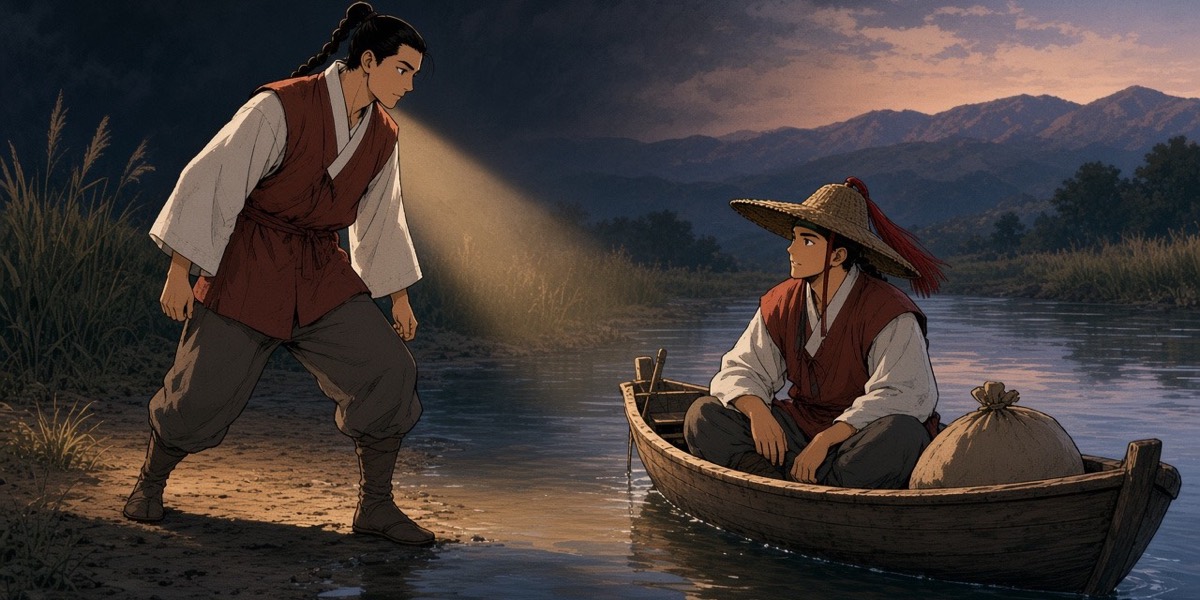
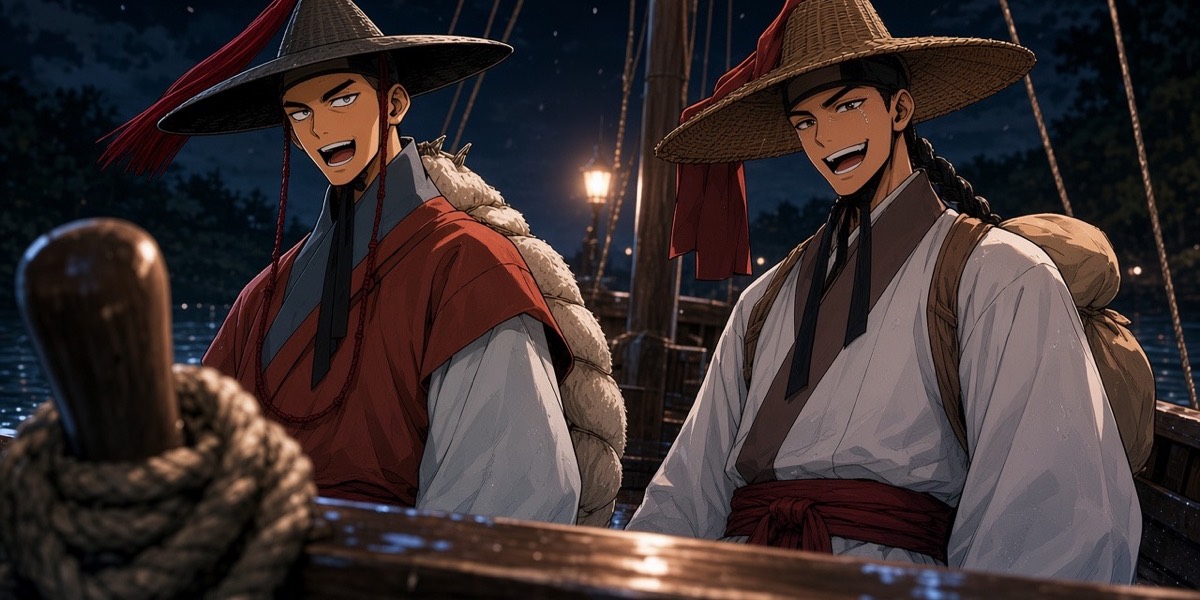
He goes down to the water. There is a boat. There is a man in it who talks before he asks.
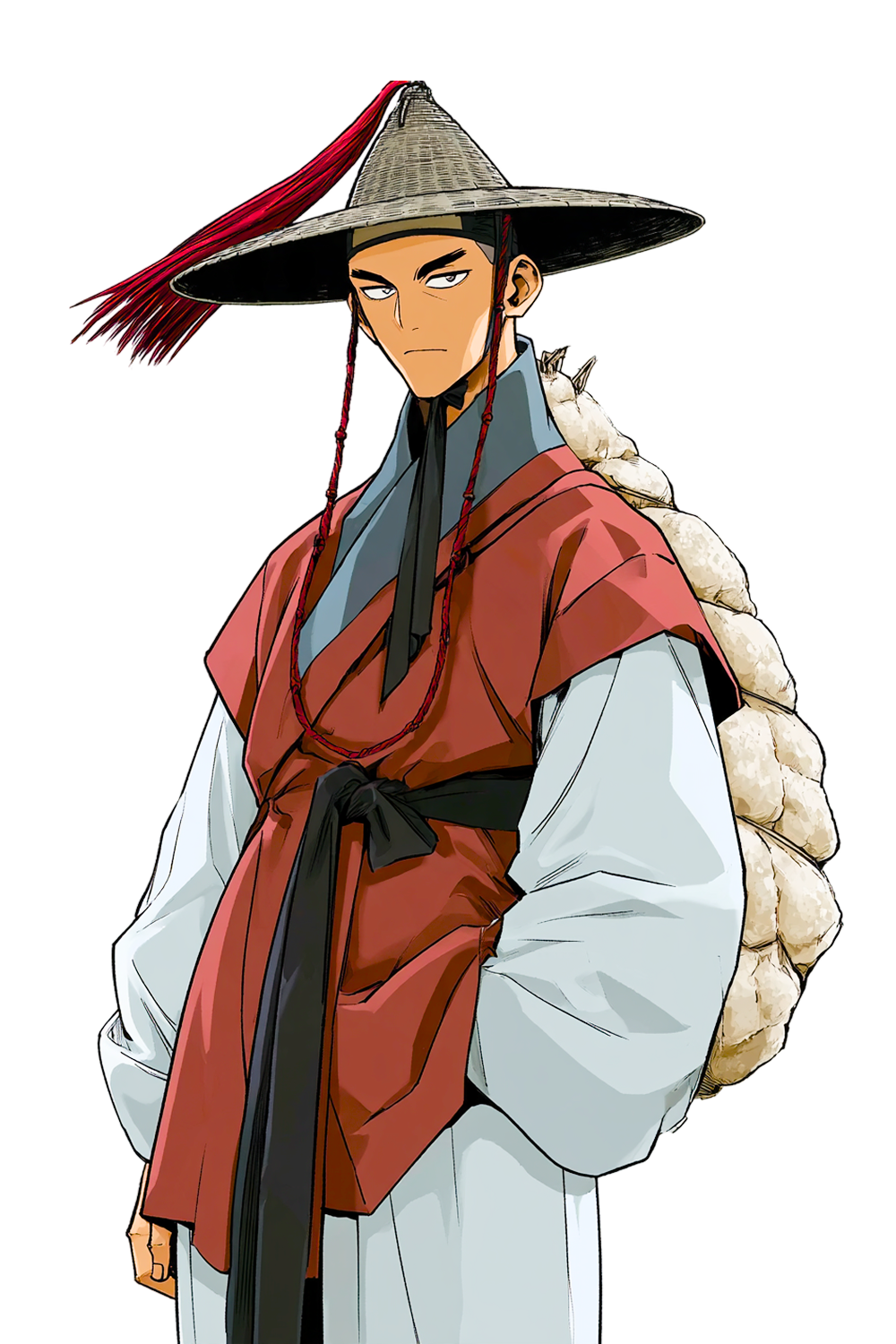
He gets in. He does not give a name. does not wait for one. That is the beginning of six years on the same boat, marketplace to marketplace, and neither of them knows it.
They eat on the boat that first night. talks until the frogs give up. almost laughs. He puts the laugh back. pretends not to see it.
Tomorrow does not come. stops asking. That is how you keep a person.
They put in on the east bank and sleep under a roof that smells of fish and old cloth. The woman who owns it looks at the sacks the way a cat looks at a hole.

She smiles with her mouth only. He sleeps with the sack under his head, because that is what you do when a roof looks at you like a hole.
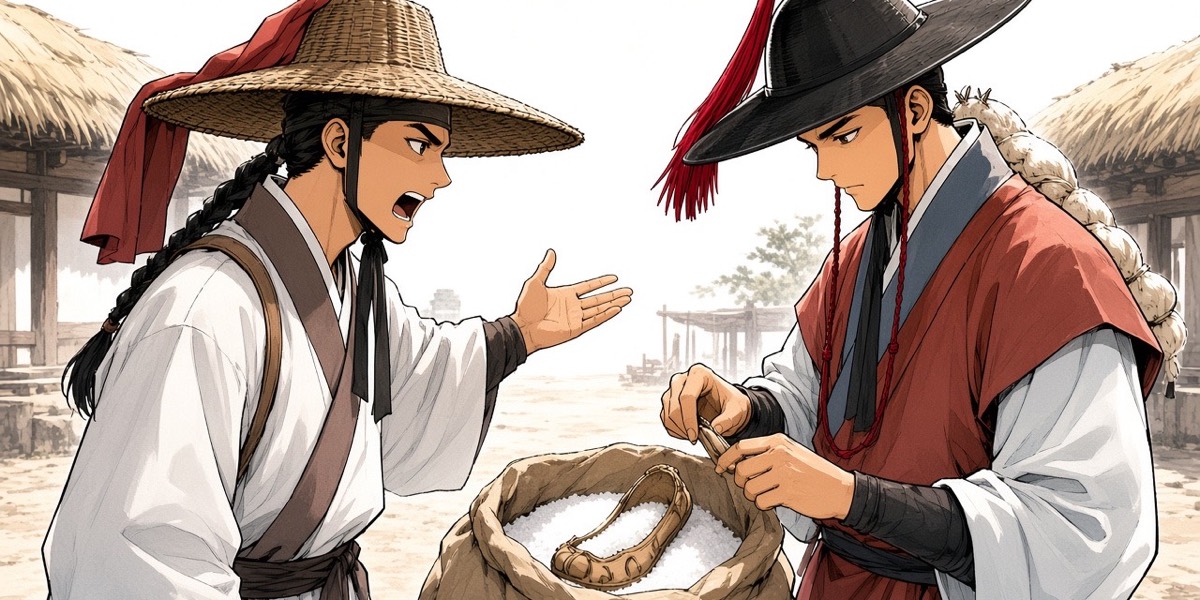
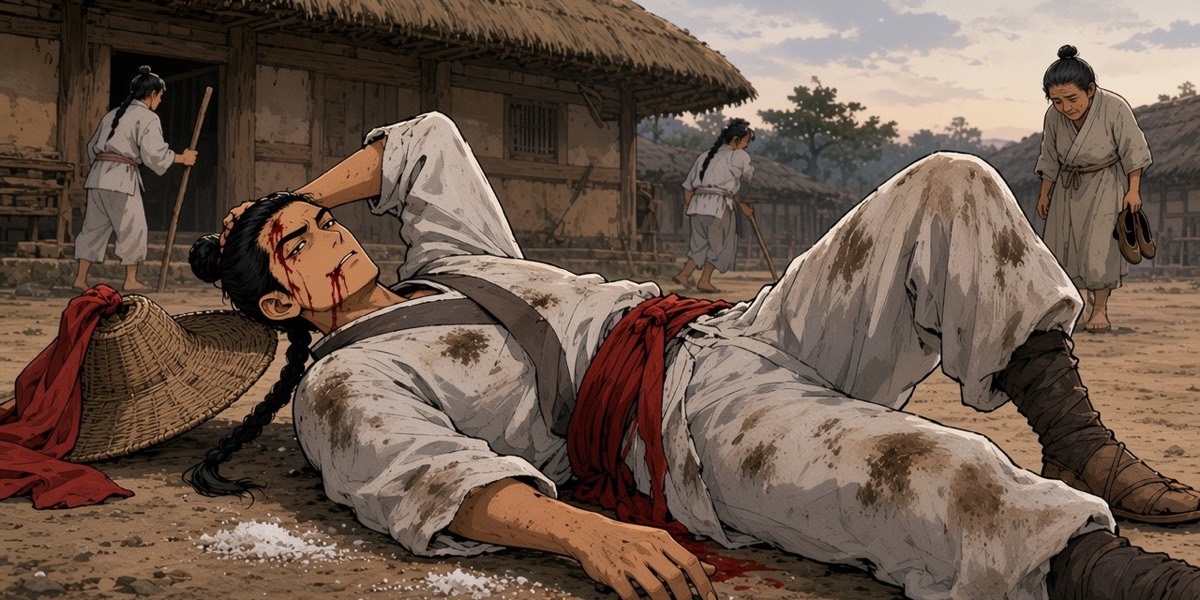
In the dark she sits up. One shoe. Dry. She works it into the salt the way you hide a stone in rice. She lies down again. She does not sleep.
He does not know. He shoulders it and walks. Behind him, a voice that has been waiting all night starts to run.
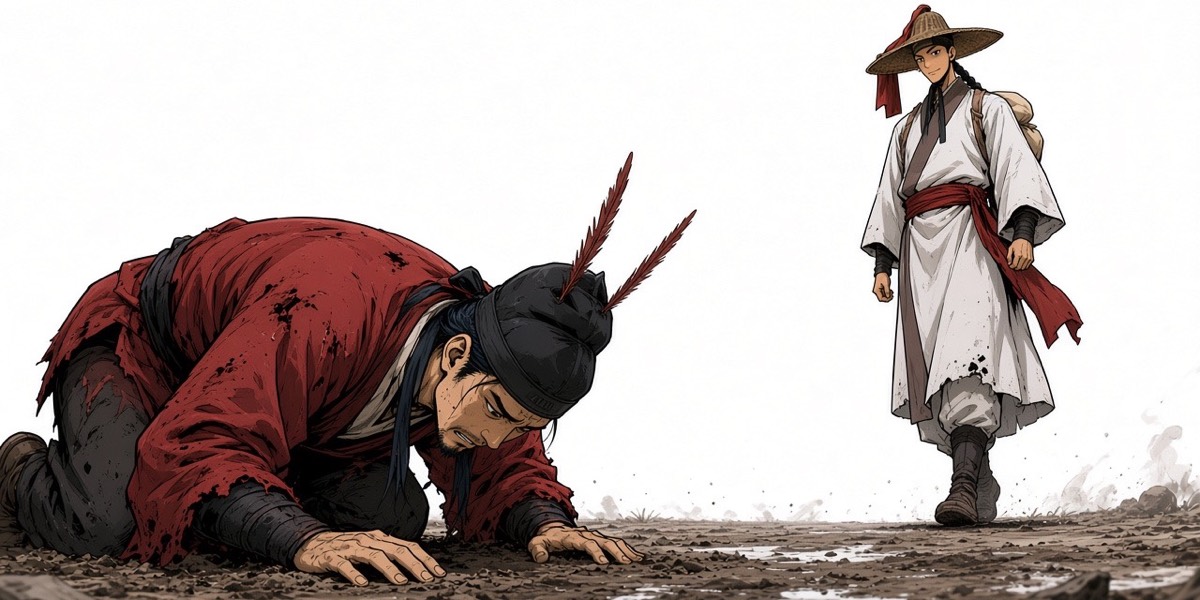
They open the sack in the yard. There it is. One shoe, dry, nested in the salt like it has always lived there. makes a sound that is not a word.

They take the salt. They take the afternoon out of his back.
does not look away. She stands with her arms folded, the shoe in one hand, and watches a prince of the house go into the dirt.
The mayor counts. When he loses count, they are done. A prince of the house, blood in the packed earth, beaten by a man who will keep grain for his friends. That is as low as this one goes.
After that the villages know his face. Not as a prince. As the boy who stole a shoe. He gets thin. The sun takes the rest.
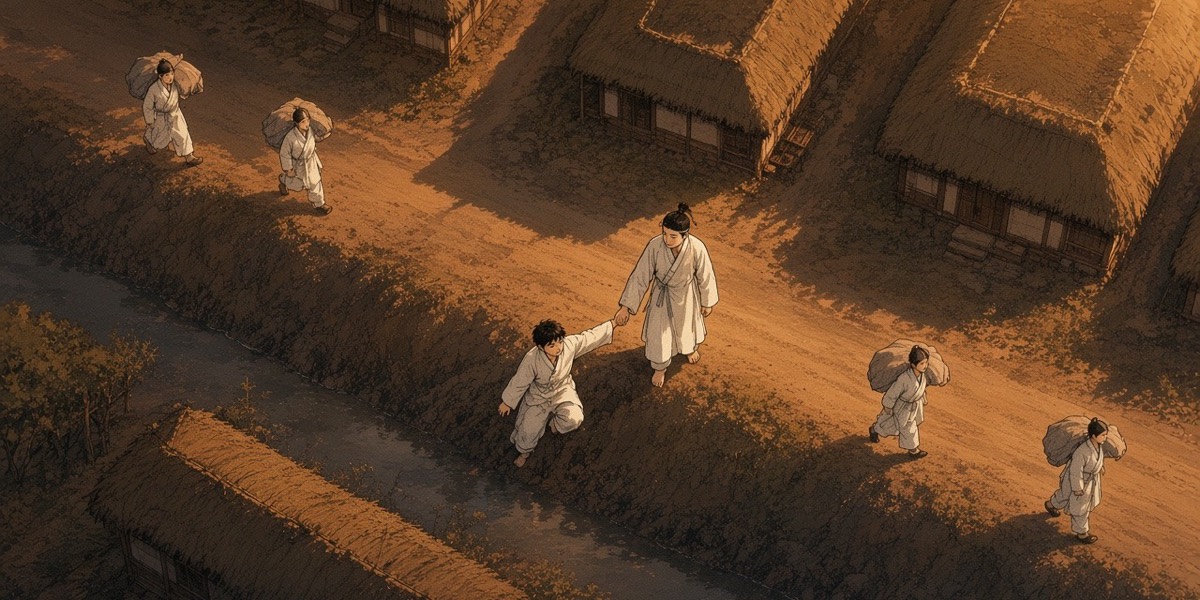
Look down. That is how you see a famine.
The roads are full of people who used to have a house. The ditches are full of people who used to have a road. A boy sits in the mud with his grandfather’s hand and does not let go, because letting go is how you lose the last warm thing.
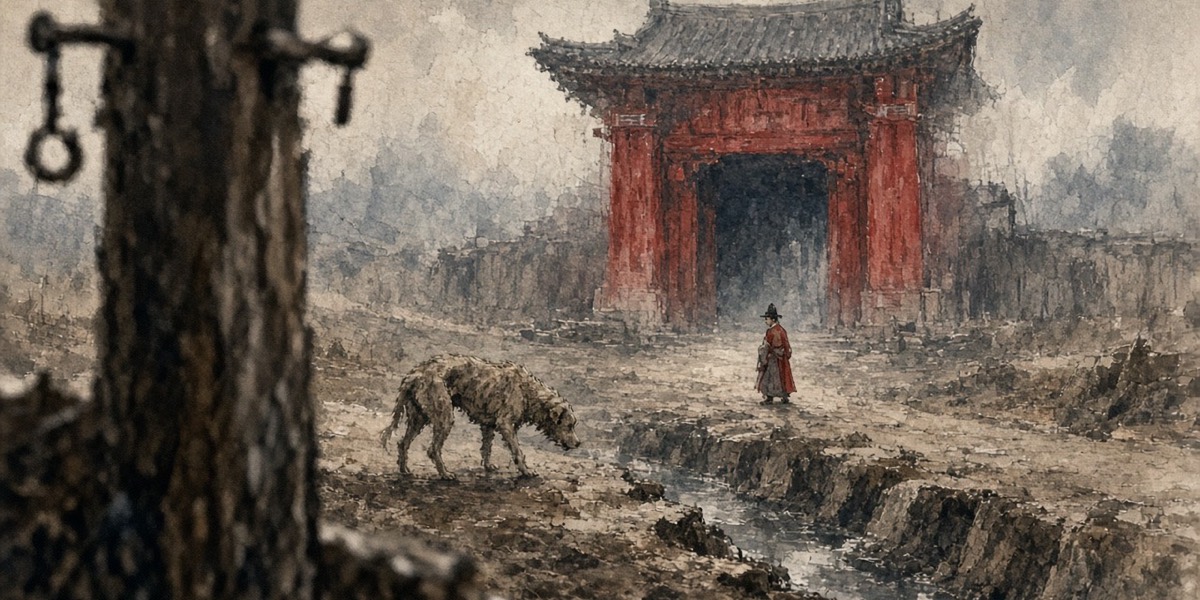
The granary door stands open. You can see the floor. That is the whole report.
Upriver they are building a roof. Every soul over fifteen. Men who have not eaten haul timber they cannot lift, because a king has decided that hunger is a kind of disloyalty.
Upriver the scaffolds go up a second time. A pavilion on a pavilion. Red pillars. A pond that was a field last year. The king wants the water where he can see it from the cup.
Downriver a woman holds a child who has stopped asking. The ditch has learned their names. The new roof has not.
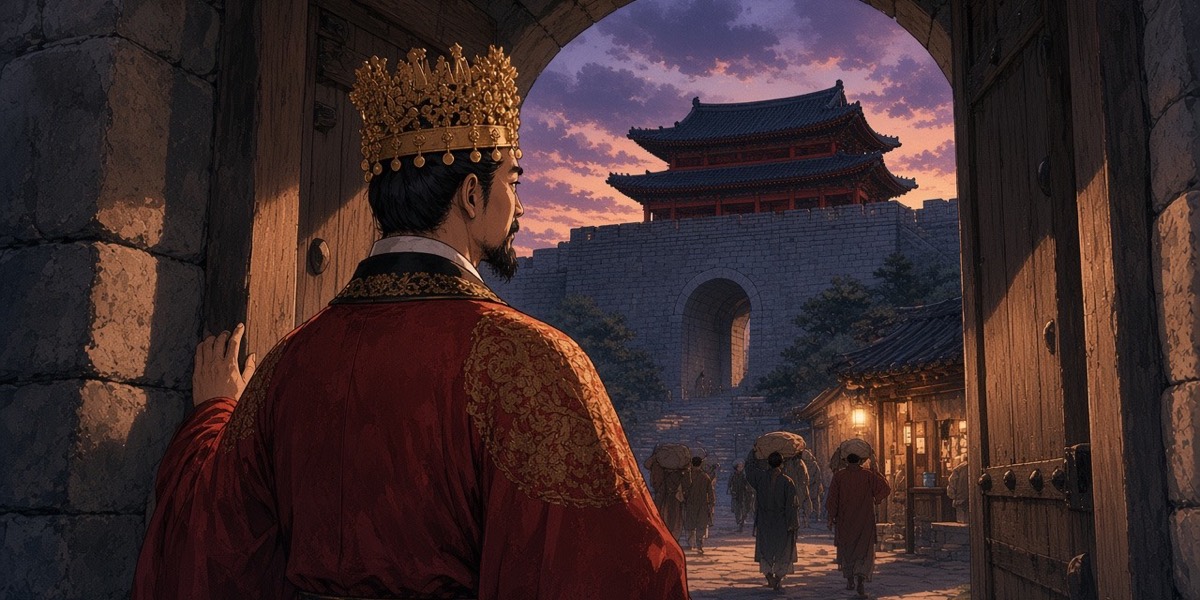
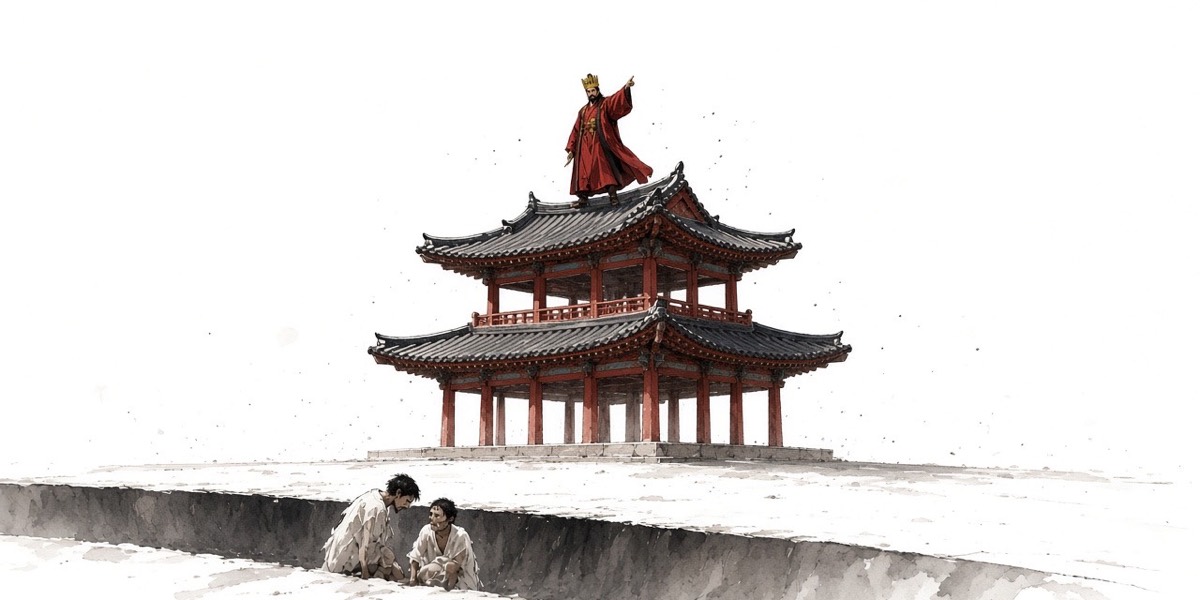
Downriver, under a fortress that is not his, a man walks to the market for salt.
From above it is a living thing. Aisles like veins. White hemp. Rust vests. A hundred roofs of cloth, and far off, almost a rumour, the Chinese munru.
The stall has two backs. One talks. One ties.
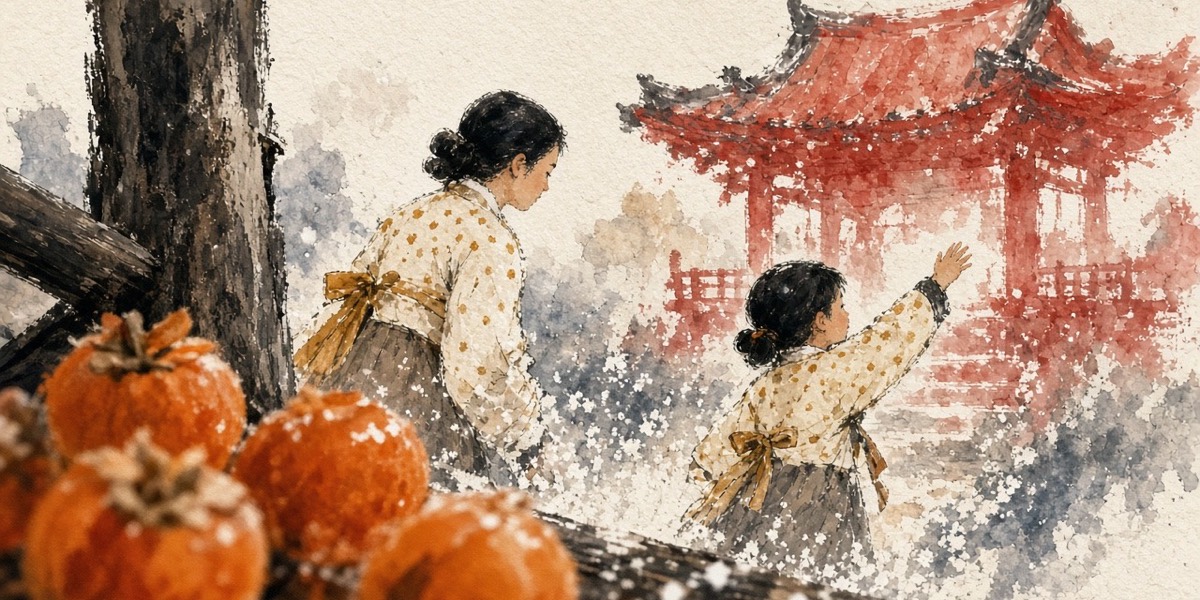
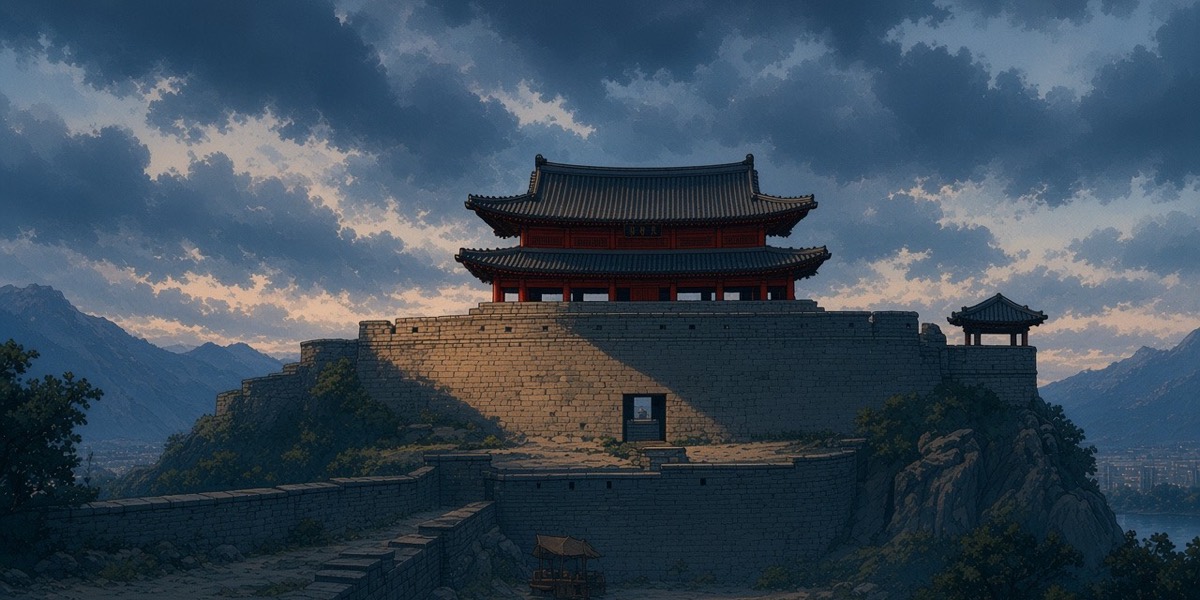
The fortress is a red stamp on the far ridge. You have to stand on a bucket to see it. Down here the market is doing what markets do. Elbows. Fish. A child stealing a persimmon and getting his ear pulled. Salt is only one smell.

The satgat brim lifts. The face comes out slowly. Young. Burned down to the cheek. A sly tired look, the kind you get from counting the same sack twice and still not being sure.
He does not look at the buyer. He looks up. At the fortress. Red pavilion on grey stone. The look of a man measuring a roof he has not been invited to climb.
The measure sits between them. A breath. Then another.
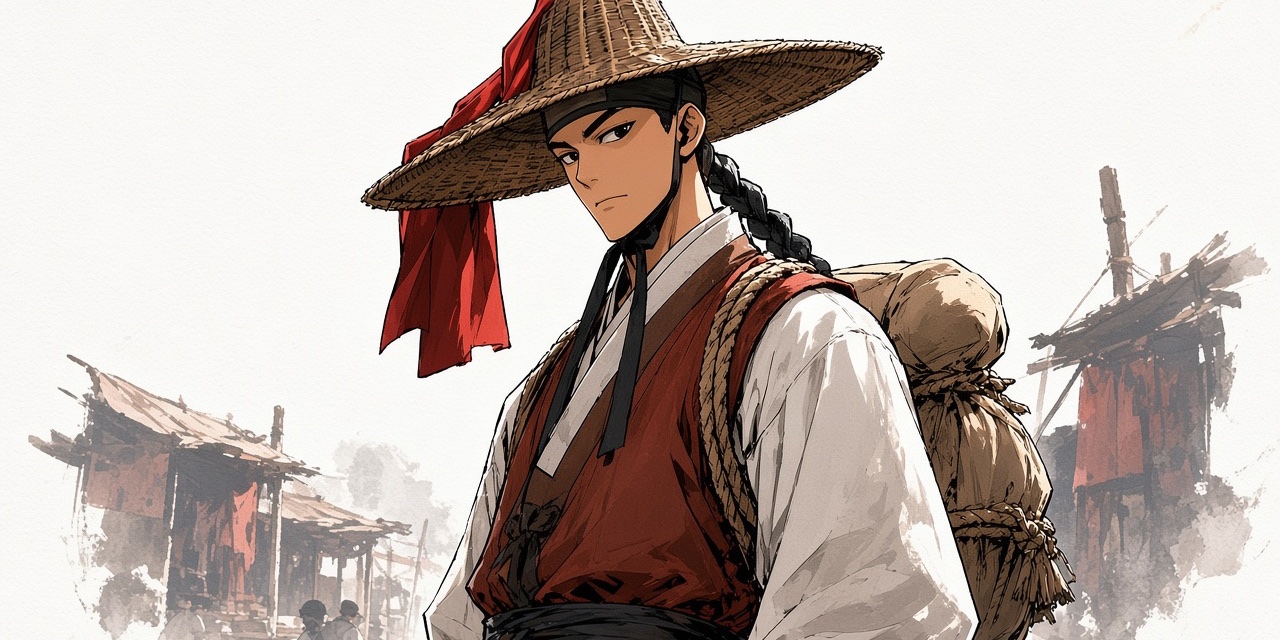

is already shouting at the next measure. is already lying about the weight. The young one ties, and does not look up again. Not today.
The buyer is still holding the measure. He does not know what he just bought. The fortress has not moved.
He ties the sack. He does not look up again. Not today.
From above, this market is a living thing. Aisles. Elbows. A child stealing a persimmon. Salt white on the boards. The red munru on the ridge watching like it always has.
Same posts. Same ridge. Same munru. The aisles are empty. A dog pulls at something in the ditch that used to be a person. The persimmon stall is a board and a fly.
walks the empty aisle with a ledger he cannot fill. He counts what is not there. That is the only arithmetic left.
has the numbers in his mouth and they will not stay there. He has counted the ditches. He has counted the scaffolds. He has counted the king’s cups.
He laughs when he says it. bows. In the corridor his hands are not steady enough to be royal about.
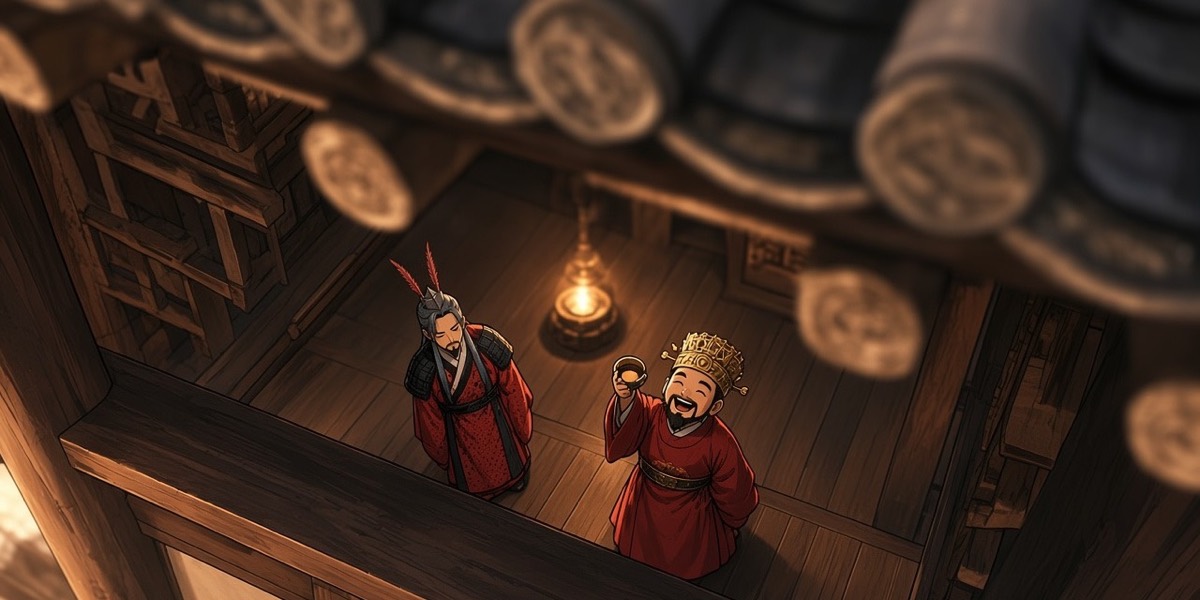
From the roof the hall is a dark rectangle and one gray head on the floor. The king is a red stamp on the dais, cup up, laughing. does not get up until the laugh is finished.
From the bank the boat is a dark stroke. Two court men. One points. The man in the boat is tying a sack and does not look up, which is how they know.
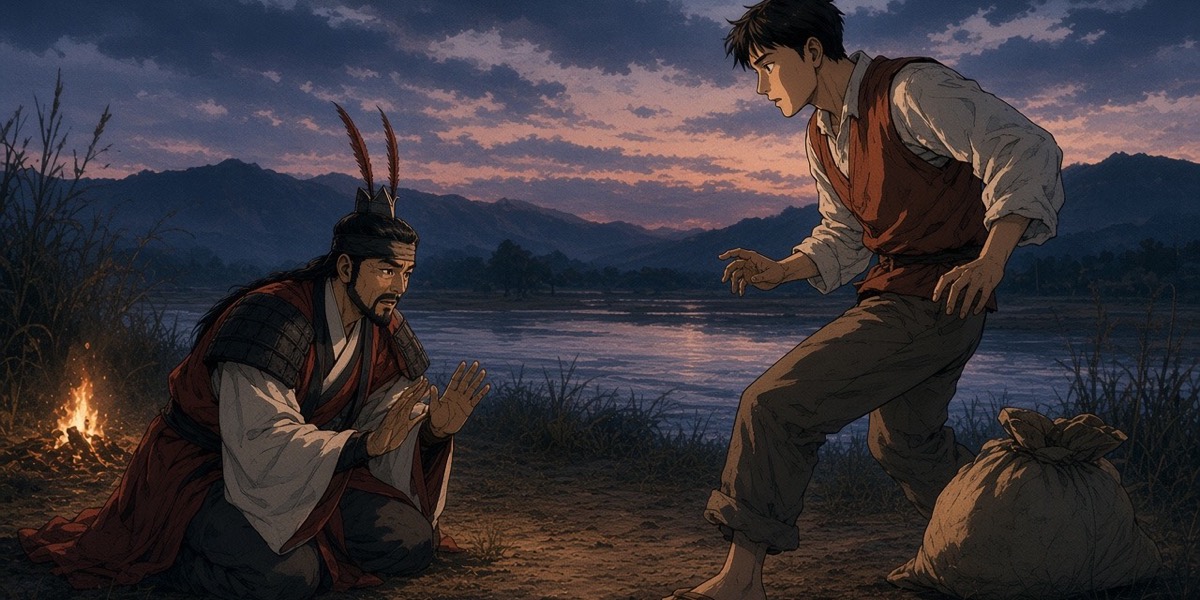
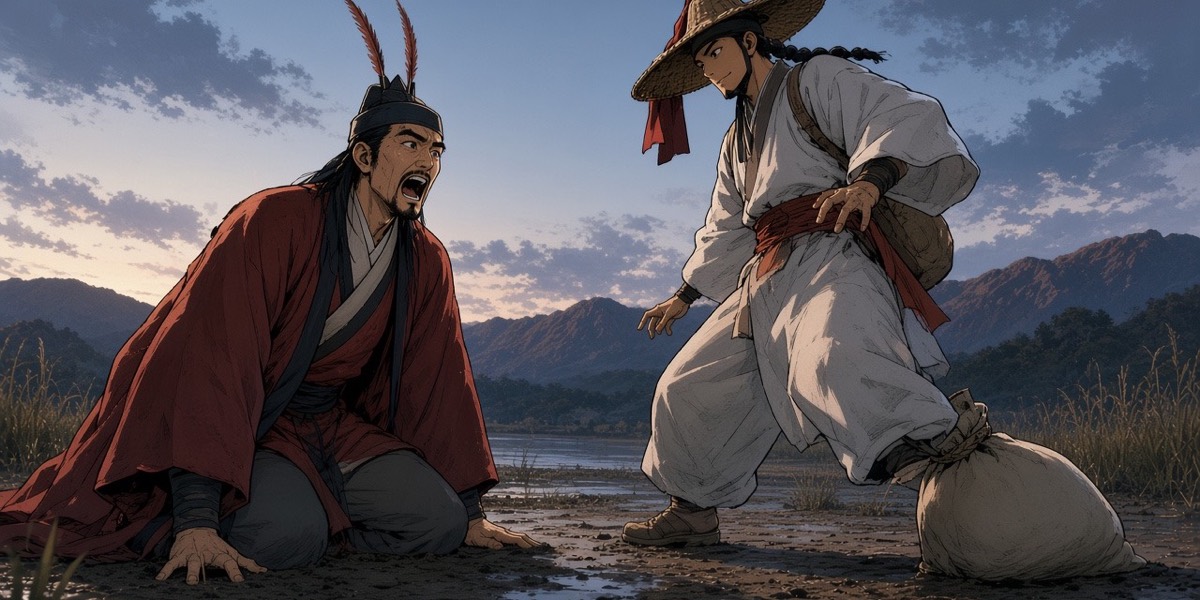
Two men stand on the bank with court shoes in the mud. The man in the boat is older than the boy they were sent to find, and burned down to the wrists. He does not look up.
That is the only sentence the book will ever let him have. He spends the rest of his life proving it wrong.
comes down the bank. They look at each other. That is all it takes. Both of them know.
The old man’s face does something a ledger is not supposed to do. ’s does not. He has practiced not doing it.
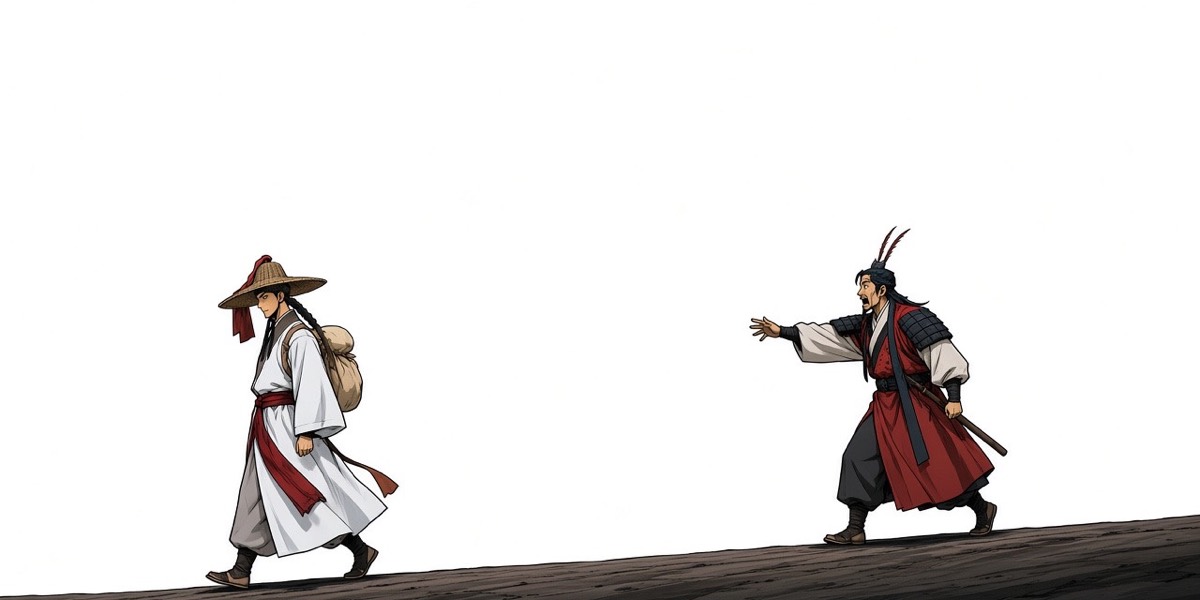
ties the sack. Walks past him. Does not stop.
He keeps walking. has to go after him, into the mud, if he wants a second look.
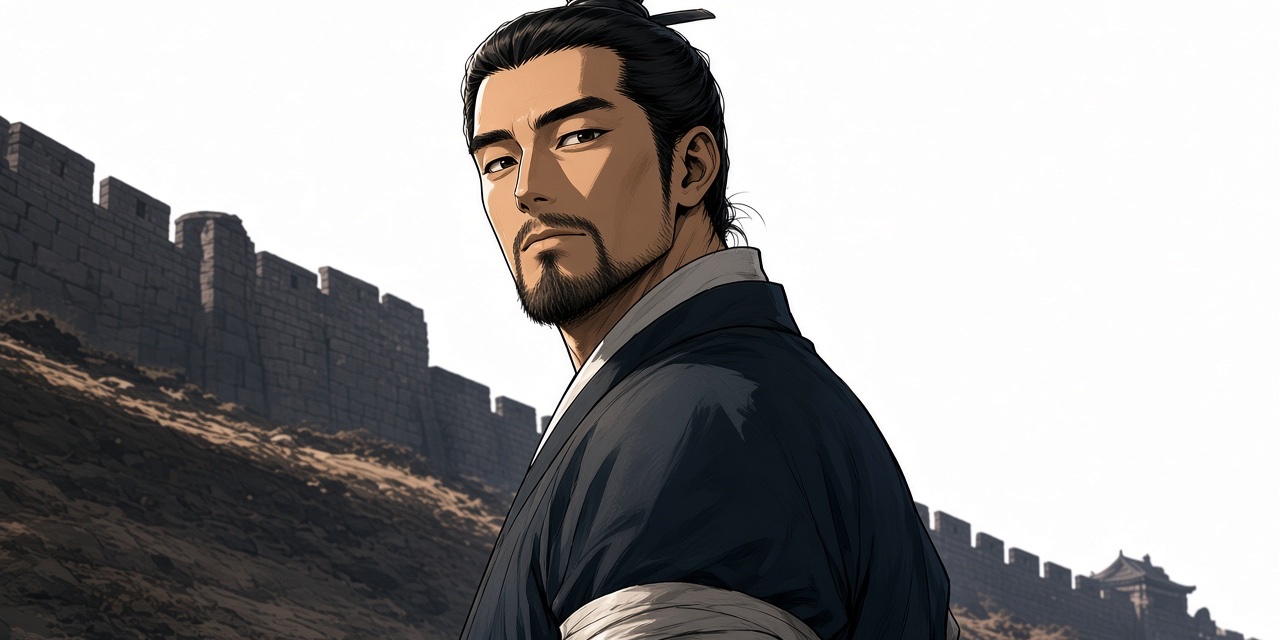
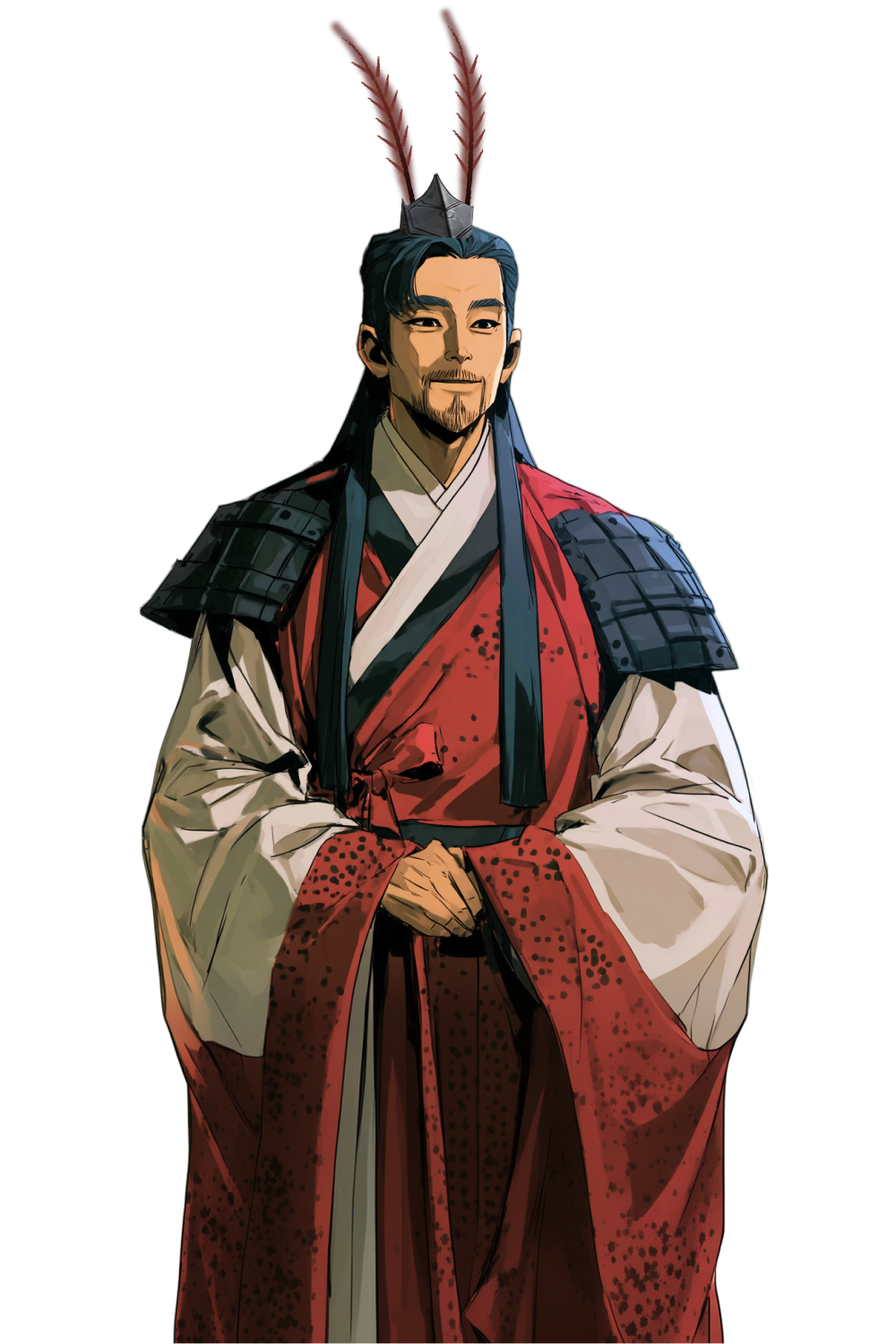
looks at the sack. Then at the silk in the mud. Then at the old man.
He does not say yes.
walks up the bank. He does not look back.
watches the empty bank until the silk is just mud again.
He goes back to the boat. ’s silk is already mud. The sacks are still sacks.
Village after village, the same ditch. A child who has stopped asking. A granary door open on the floor. He keeps tying. That is the job.
Then a yard he knows. The shoe yard. The same official cap. The same two feathers.
People are on their knees for grain. The mayor is not on his knees. He is reading a list of names that eat first.
goes for him. Not a speech. A step, a fist, the old hall coming up through the hemp.
catches the wrist. ’s mouth is open and nothing useful comes out. The mayor laughs the small laugh of a man whose list is still his list.
He lets go. His hands shake. That is as far as a sack is allowed to go, and he has gone further, and is the only reason he is still a sack.
You wanted him to stay a salt seller. Look at the yard. Look at the list.
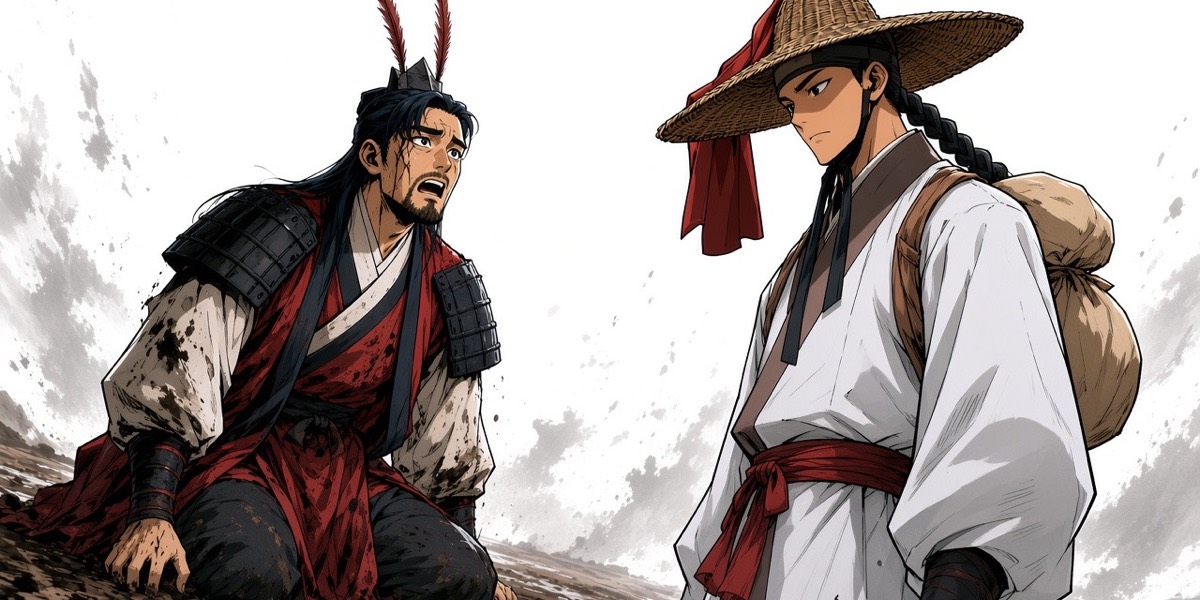
That night he walks the ditch. Then he walks south. Not to the palace. To the first village. The first village is a cave.
The first village is a cave.
People still go there when they have nothing else to ask.
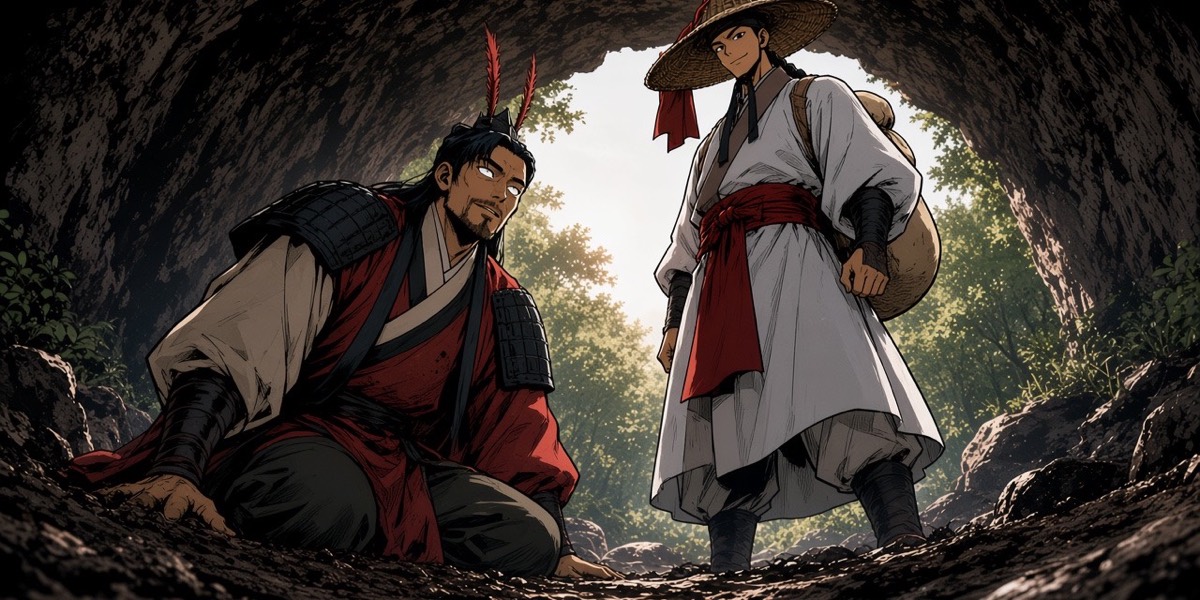
He kneels in a cave older than his name.
He does not know how kings pray. He knows how salt sellers wait.
Someone is already sitting in the dark.
The cave breathes. Steam. Not water.
Three figures in it. One close. Two farther, paler.
The closest sits like a man who has been waiting a long time.
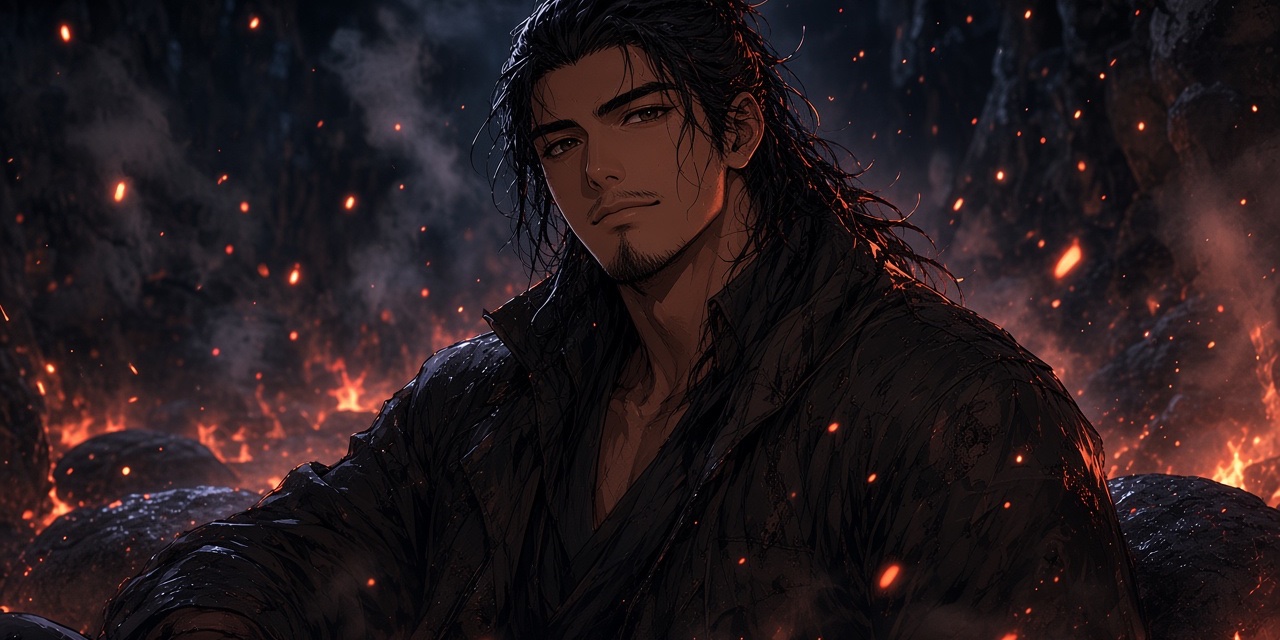
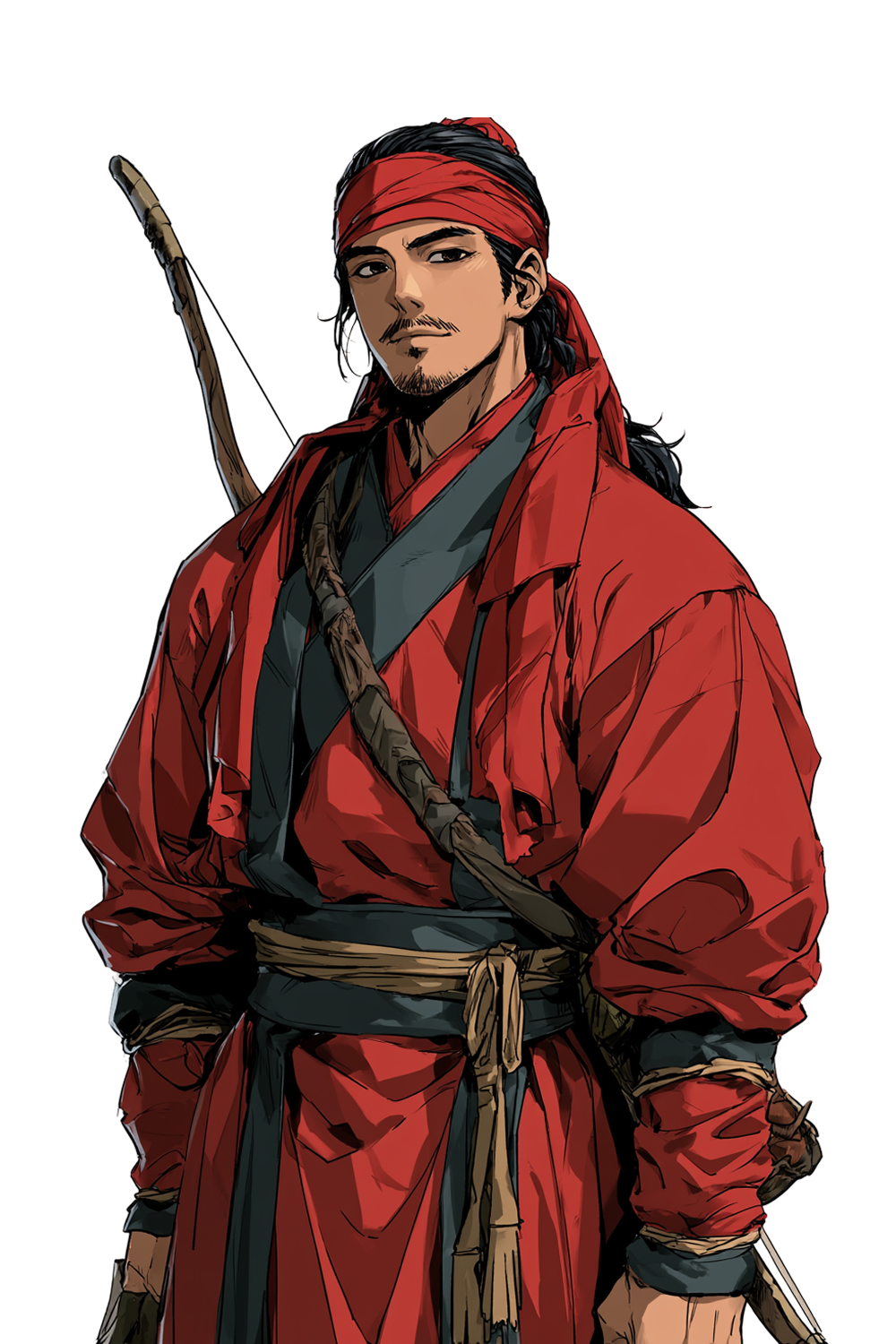
The face is a boy’s. The eyes are not.
Behind him, paler: a king in a gold crown. A father with no crown.
The far one is his father. He cannot be. He is.
You’ve heard the name. This is the first time you see him.
puts a hand on the satgat. Like handing it back. Like making it a crown for a minute.
When looks up the cave is empty. The satgat is still on his head.
Dawn. at the mouth of the cave. Mud on both knees again.
He stands. The satgat is still a hat. He puts it on like a man who has decided what the next sack is.
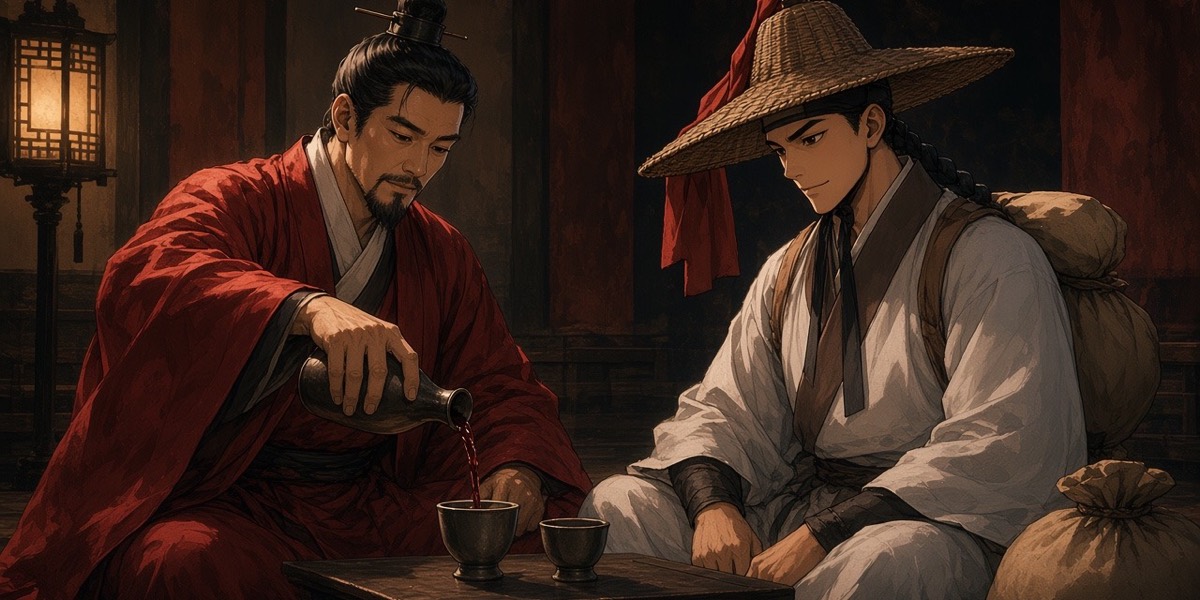
He hides in the prime minister’s house, south of the ridge, which is the first roof in seven years that is not a joke. pours wine and then does not drink it.
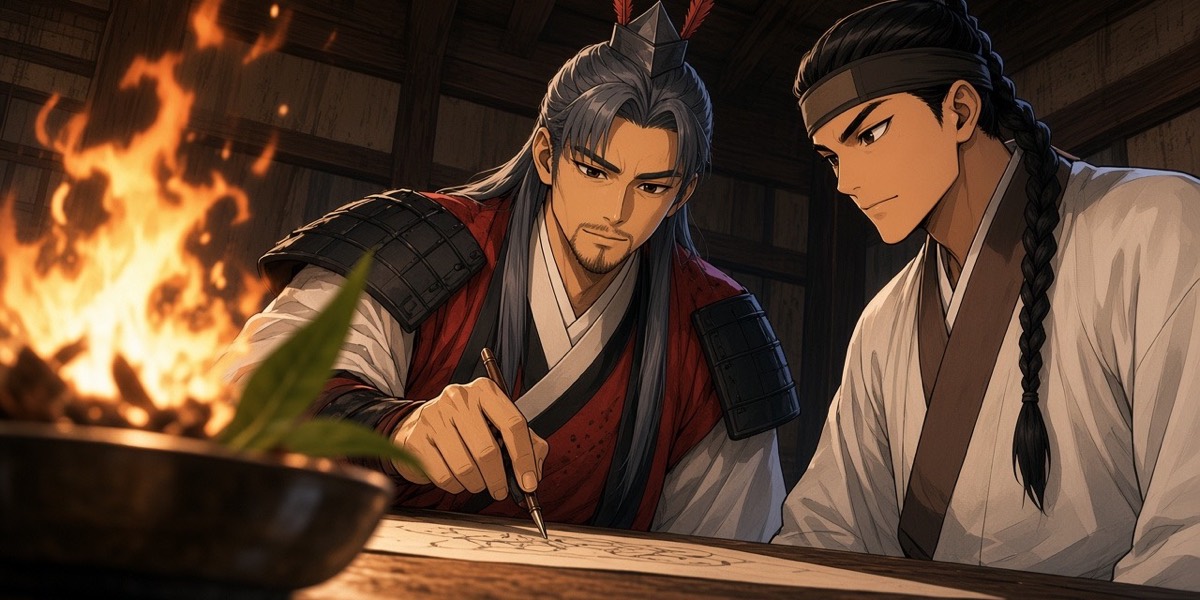
One lamp. A branch on the table, still green. draws the hunt with a wet finger. Who stands where. Who puts the reed in. Who takes the reins.
The king takes his ministers into the hills to kill something smaller than a famine. Beaters in the trees. You have seen this kind of party. Later a man in the capital will throw a banquet and drop the screens. This one uses a hat.
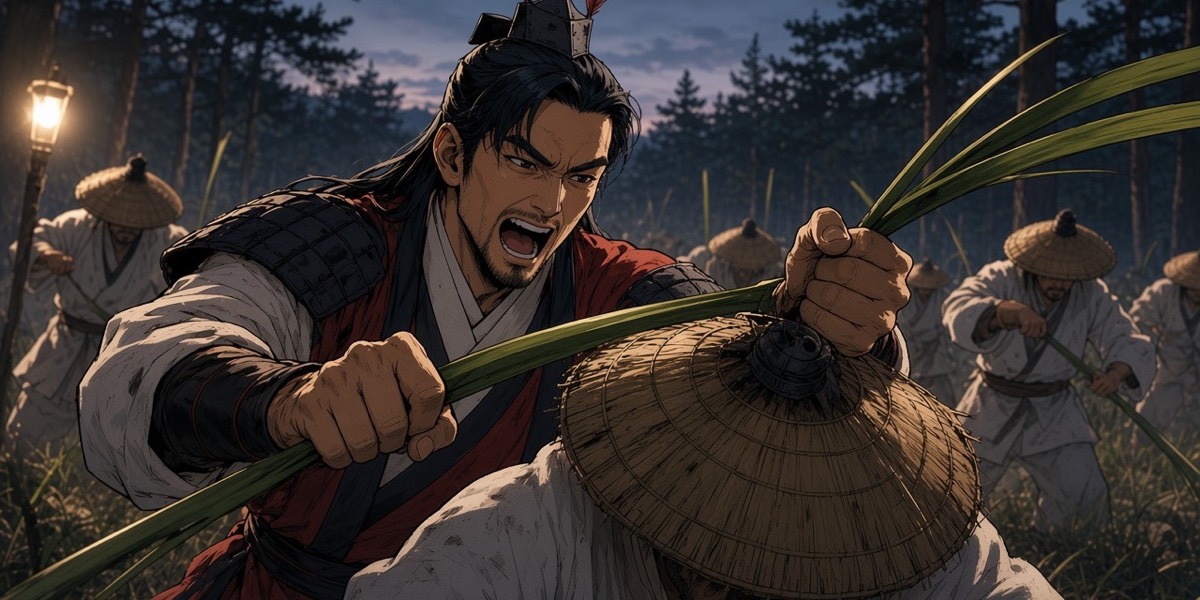
waits until a shout would sound like sport. Then he takes a green branch from his sleeve and puts it in his cap.
One green. Then another. Then the slope is a field of branches, and it is not pretty, and everyone understands it at the same time.
The horse screams first.
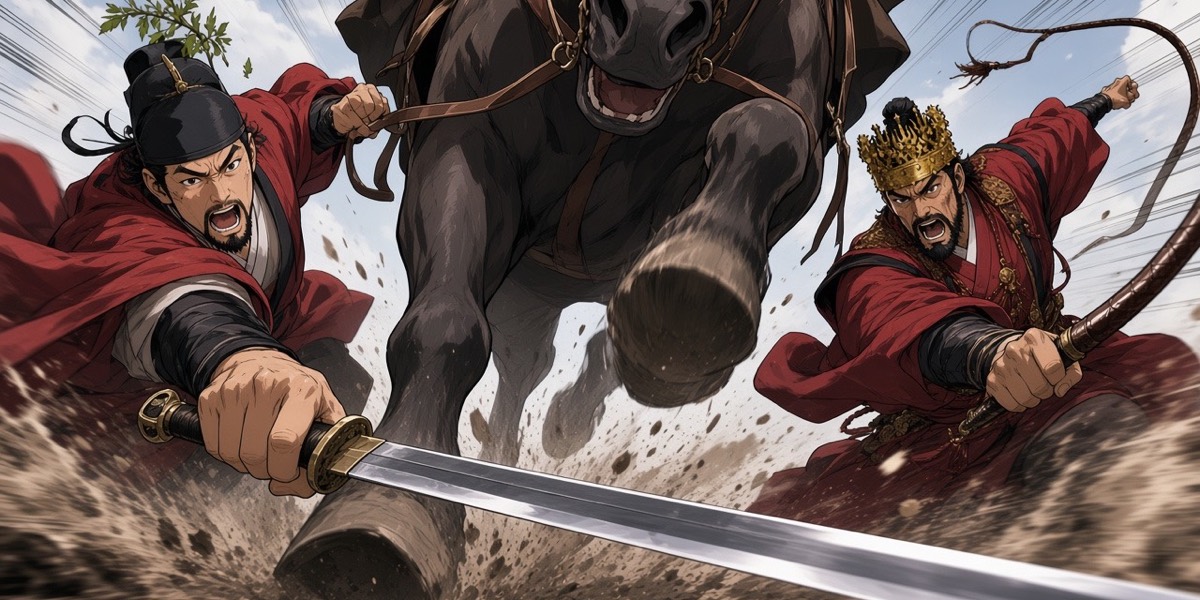
They close. Not a ring of leaves. A ring of men. Horses at the throat of the path. Mud up the shins. The king’s whip is up. A follower takes the whip out of his hand like taking a toy from a child. Another takes the reins. The horse turns whether he wants it or not.
They pull him down. He hits the packed earth on his side. Blood on the mouth from the path. The crown goes into the mud and stays there. Swords come out because a hunt is still a hunt, and this one has turned.
He laughs once, the way he laughed at , and it does not come out right. They do not wait for him to finish it. They walk him. The sons come because he said come. The side room is already a side room.
He sits in the dark with the belt and cannot remember which knot is for a horse. The blood dries on his lip. He asks the boys if the door is locked. They do not answer, because they are children, and because it is.
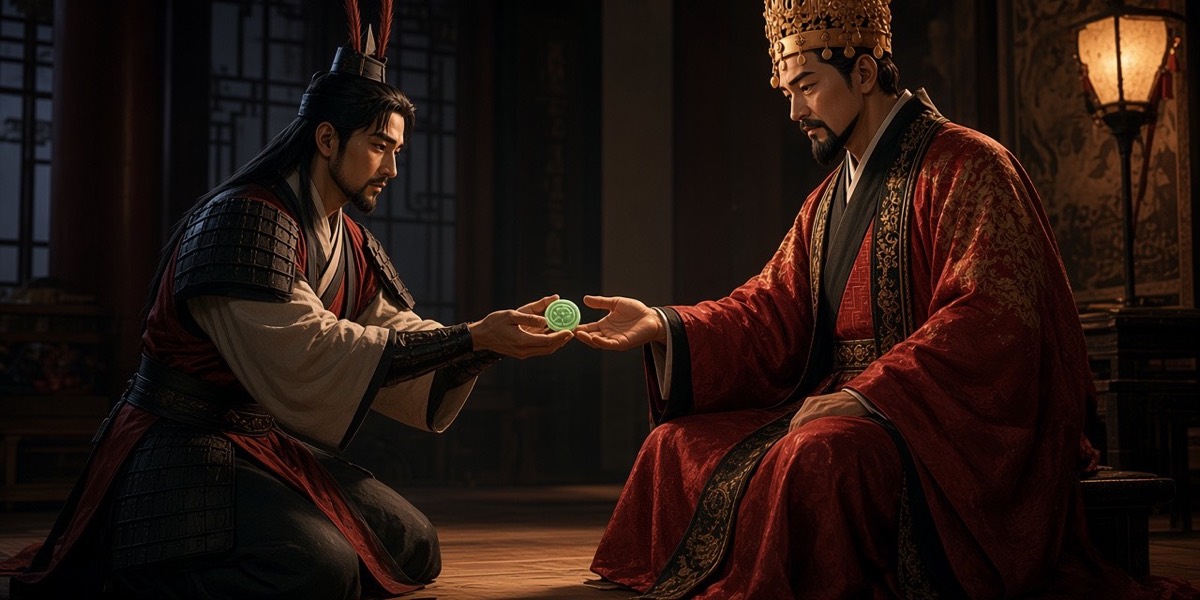
They put the seal in the salt seller’s hands before the hats are thrown away. They call him . He still turns if you say the other name softly.
Ulbul’s arrow. Bongsang is crossed out. The blank is Micheon.
is not in the hall. Halls, he has explained, are where shoes get stolen.
Four hundred years. That is how long this house has been taking the Chinese cities apart, one seal at a time. He is the one who gets to finish the last of them. He does not know that yet.
He opens the doors himself. You can see the floor. That was the whole report, once. Now it is a job.
He knows which houses cheat the measure. He has been the house with no smoke. He fills past the rim, on purpose, and writes it down this time, because a king who does not write it down is just a sack with a crown.
The roof can wait. Hunger does carry this far, if you have walked it.
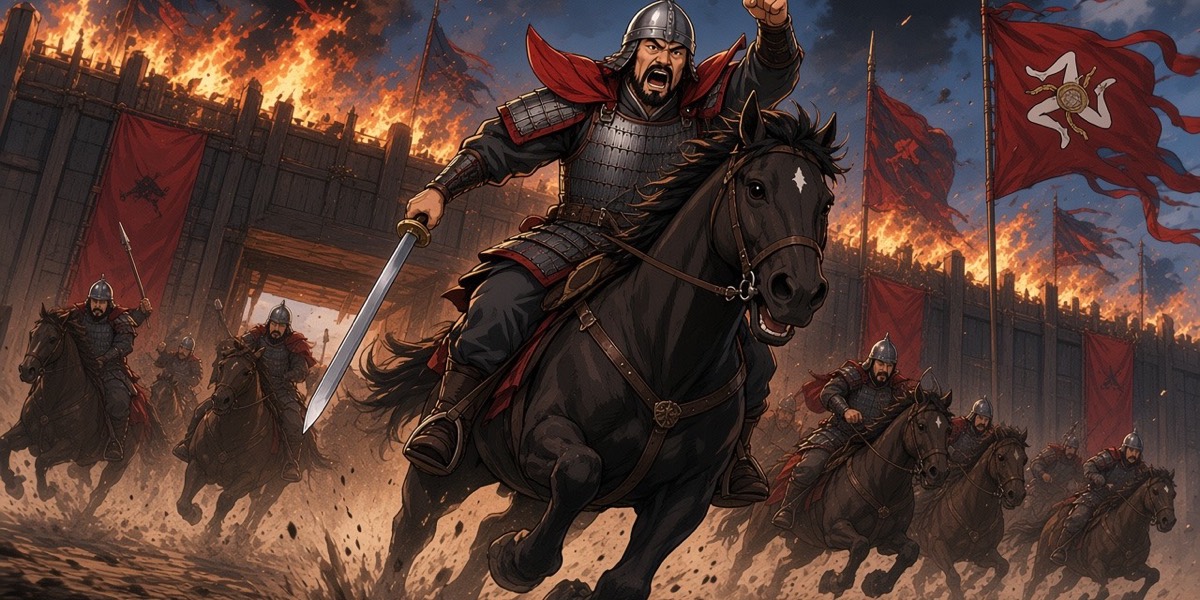
He rides north himself. A commandery on a road this house has wanted since the first king learned to hate a wall. He takes it the way he used to take a sack off a boat. Count. Lift. Do not drop it.
They bring back more captives than the stall ever held sacks. He counts them twice. The second time is right.
The next one sits on the river where the letters go home. Cut that, and a Chinese city on a bank has to shout across water. He cuts it. The letters stop.
Four hundred years of paper. Then the paper has nowhere to go.
There is a city on that river that has been Chinese longer than anyone in his house has worn a crown. Seals. Granaries. A market that buys salt and taxes the wrist that weighed it. This is the one he looked at from under a satgat, from a stall so far down you needed a bucket to see the munru.
The city waits a winter. Then another. They fight a man named until both sides are tired of being right. The emperor does not write. Nobody is coming from the other direction.
looks at the gate, not at the seal. He has stood at gates where a man with a brush decided what his back was worth.
They walk. Not all of them. The ones who want the western road go with their governor. The ones who stay open the shops, because a shop that opens is a vote.
The sister city folds the next summer. The last Chinese seal on the peninsula goes into a box nobody opens.
From above, the same living thing. Aisles. Elbows. A child stealing a persimmon. The munru is his now, and it is still far, which is how a market likes a fortress.
He is in the hemp again. Satgat. A sack on the back. A woman buying salt does not bow. She does not know which of the muddy officers used to tie these sacks.
He looks up at the fortress. This time he smiles.
After the crown, each person he encountered on the way finds a chest on the step. He does not sign them. A sack does not sign.
’s chest is gold. He was not told what happened. He assumes the boy picked a fight, or died somewhere, and left this as an apology he does not want.
He keeps selling. Short measure, on purpose. Kings can’t bear a full one. Experience.
opens his. Dead frogs. A year of nights, returned in one box. He still does not know the name. He throws the box in the pond, which is the only joke he has.
The mayor does not open his twice. The first time is enough. His townspeople, the ones the list did not feed. He sits down in the yard where he counted sticks.
sometimes still dresses as a salt merchant. When people ask who he is, he says the only sentence the book ever let him have.
In , bone decides how high a man can climb. One of them is about to find out…!
