














Chapter 72

Grim Reaper
AI Summary
- The Pond Three brothers went to a rich house to sell silk.
- The Magistrate’s Hall The magistrate was called Gimchi.
- Kangrim Before the red book, before the question, he is a living strongman.
- The Road Down The gate-god and the kitchen-god put him on the road, because his wife had kept them fed.
- Leaving the Three Hans He leaves Samhan still whole.
- The Western Empire First the Western Empire.
- The Northern Nomads North of the empire, the Bukjeok steppe.
- The Land of Air Around the Land of Air.
- The Land of Earth Around the Land of Earth.
- The Land of Fire Through the Land of Fire.
- The Land of Water Through the Land of Water.
- The Twelve Passes Past the salt, the road climbs.
- Characters
Episode· 655
Grim Reaper
A magistrate sends his strongest man down alive to arrest the judge of the dead. The judge keeps him, and a crow loses the book of everyone’s hour.
- Kangrim
- Yumla
- Mujangsung
- Hallakgungi
- Haewonmek
- Gyebek
- Yuri Dora
4 stills without a cue
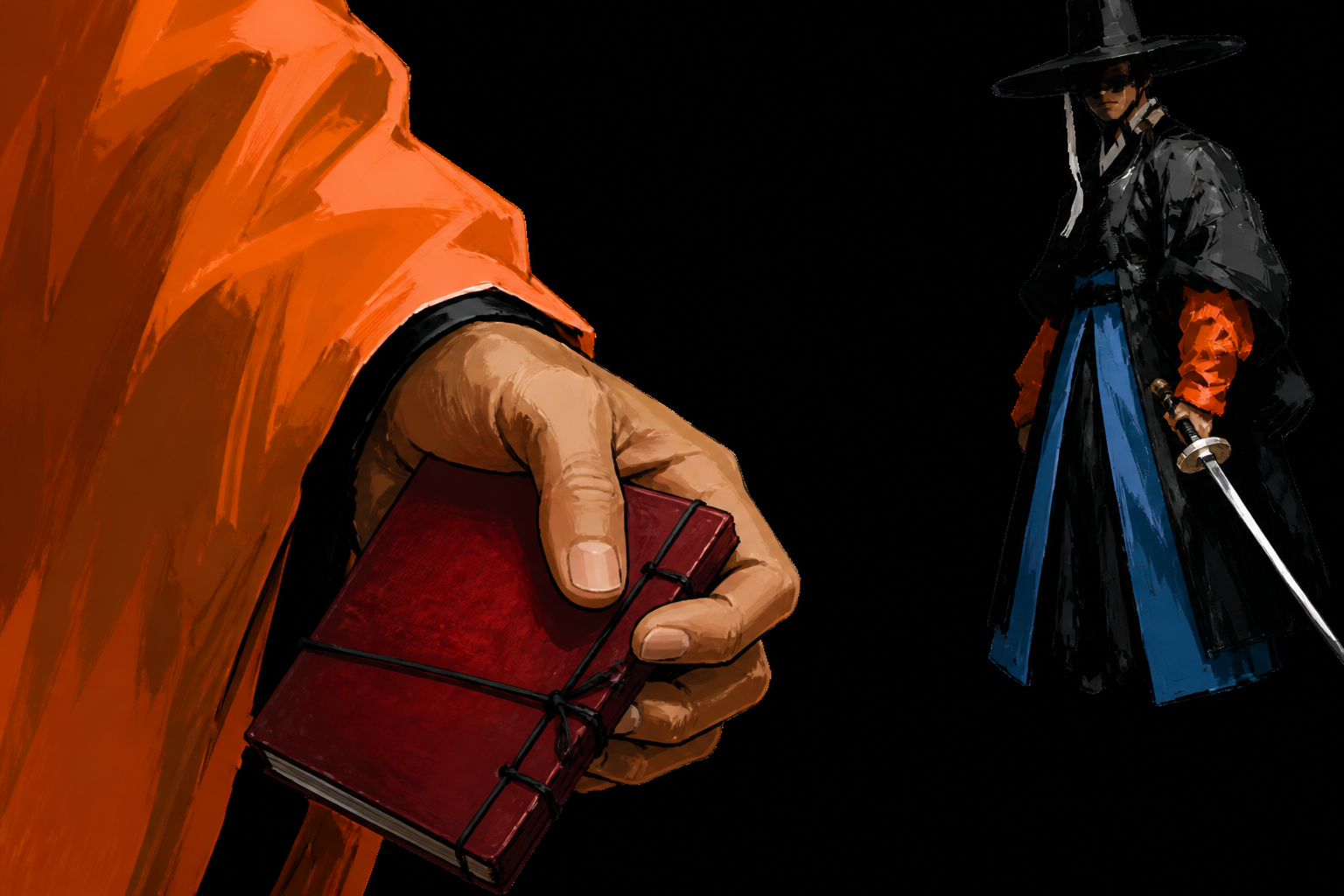
Every death you’ve watched so far has had a visitor: a man with a red book and one question. Here is where he came from.
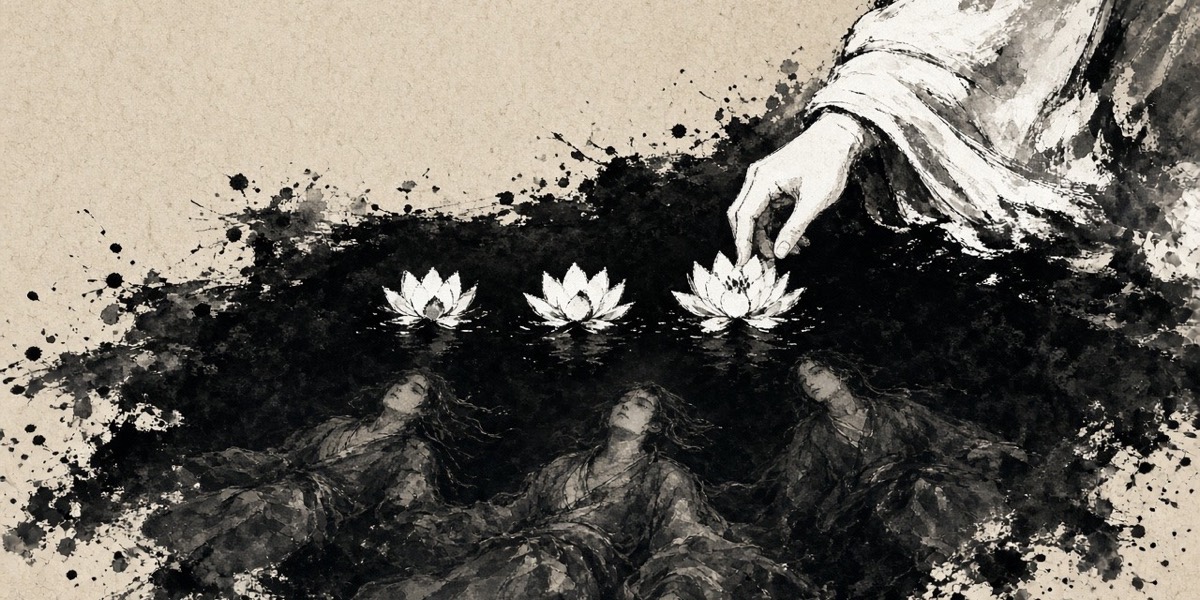
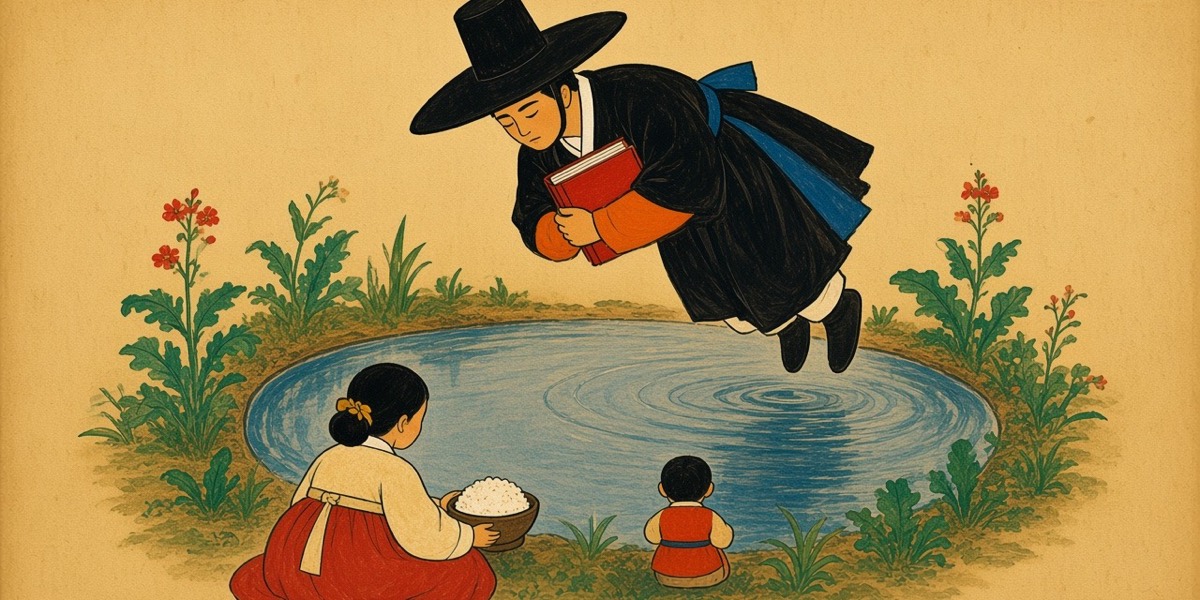
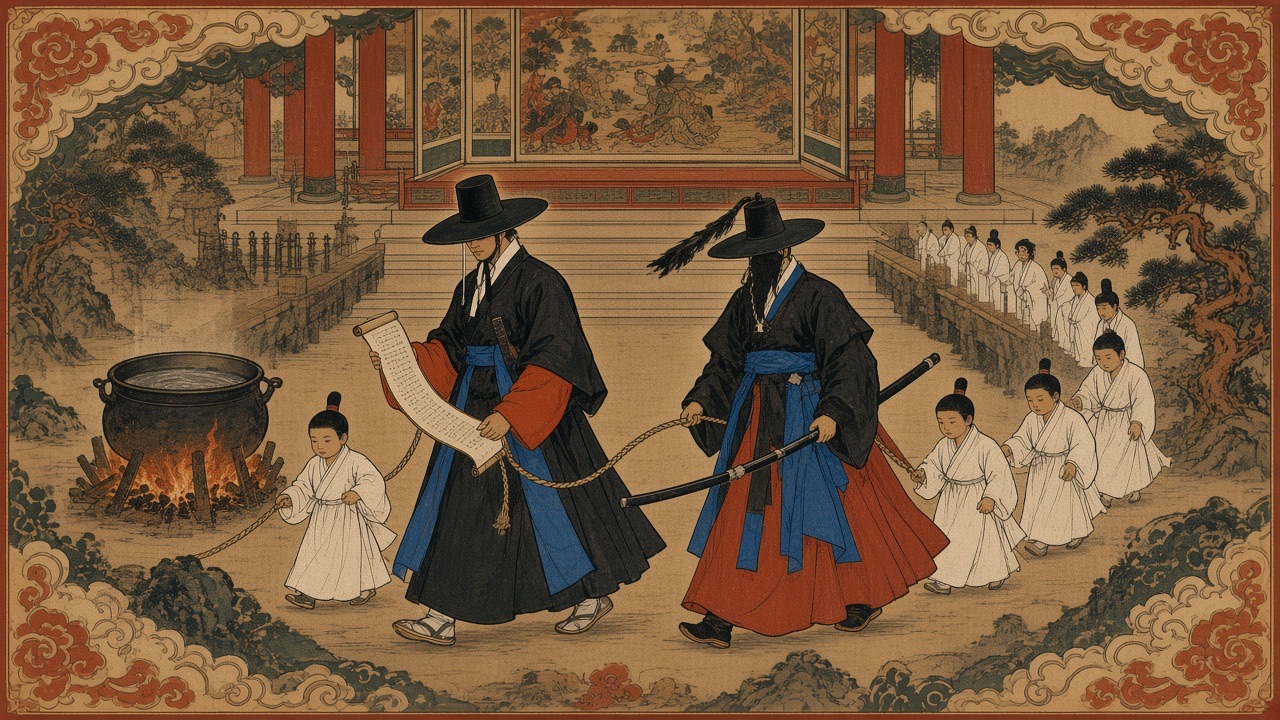
Three brothers went to a rich house to sell silk. They did not come home. The couple who bought the silk put them in a pond and kept the cloth.
Their mother walked west. You know that road now. She came back with three flowers on the water, and three beads. The brothers sat up in the yard and asked for breakfast.
The couple heard them in the yard. Silk does not stay sold if the sellers sit up.
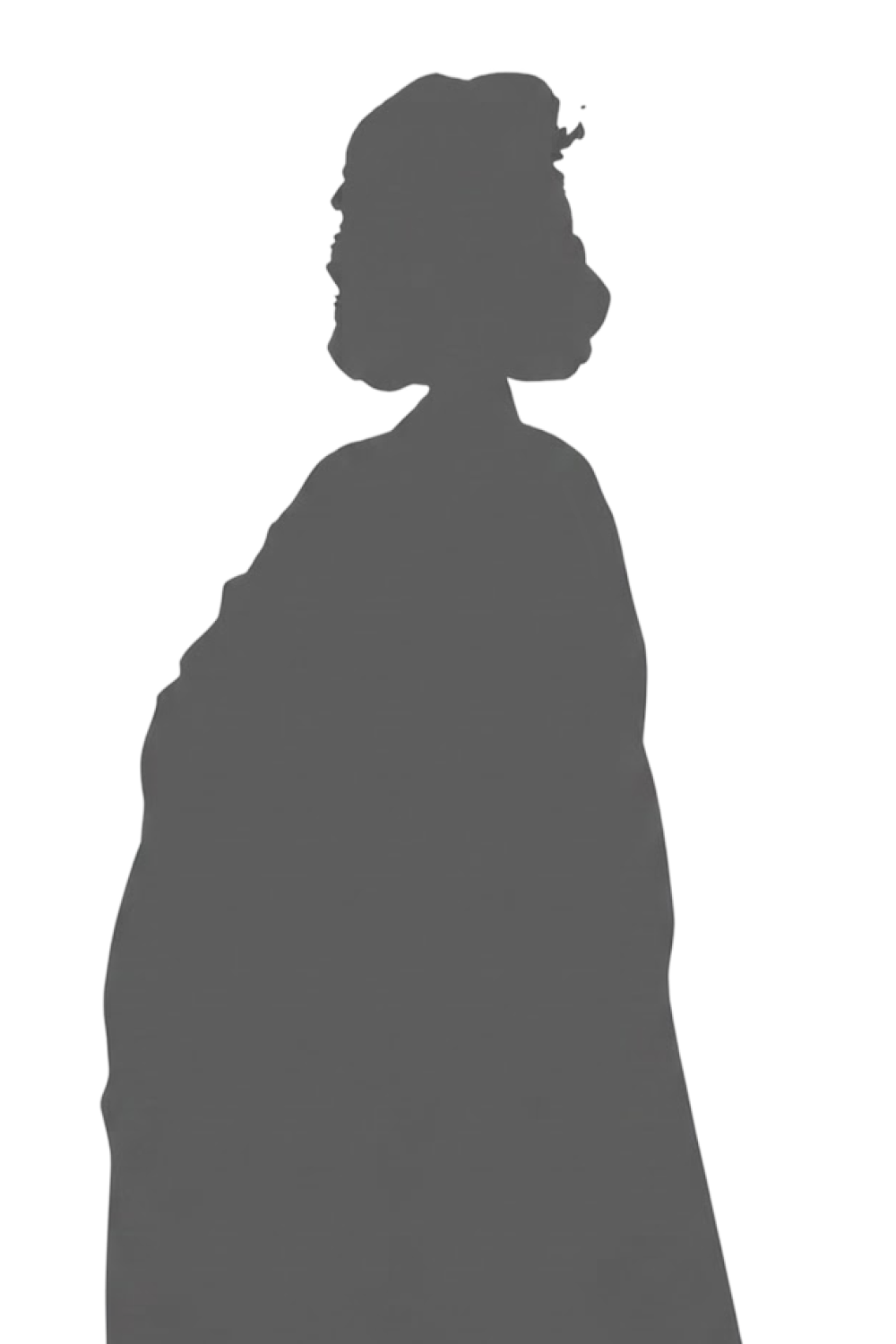
A second time is quieter. The court in town still had no file for it.
A living court can try a murder. It cannot try the same murder twice.
The magistrate was called Gimchi. He had one man he sent when the law ran out of rooms. That man had a wife who kept the gate-god and the kitchen-god fed, and a promise to be back by harvest.
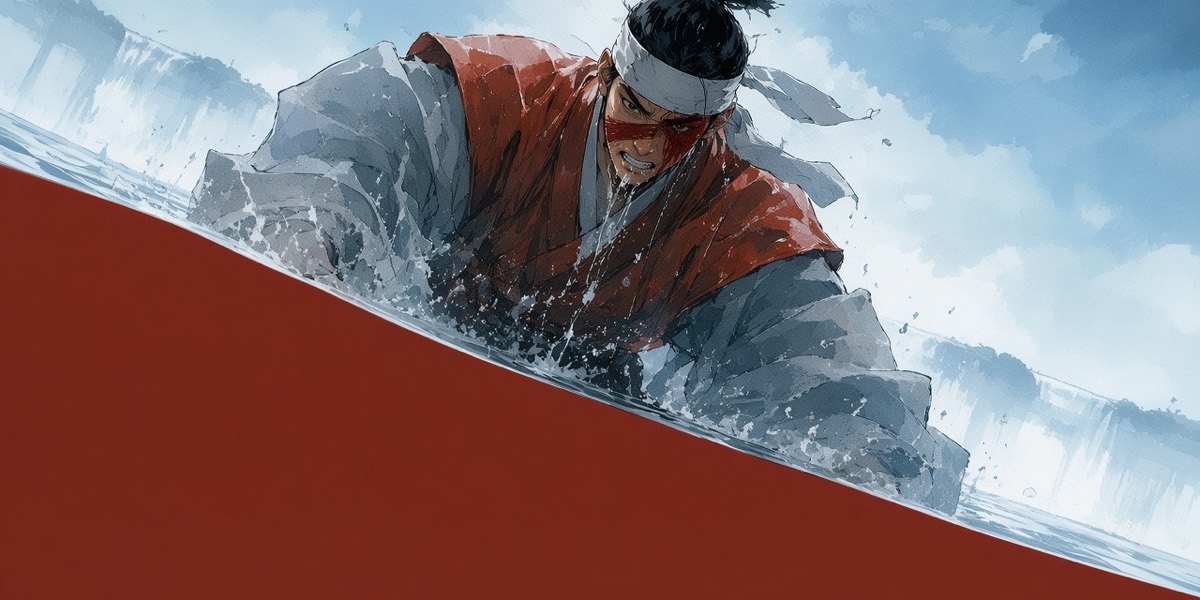
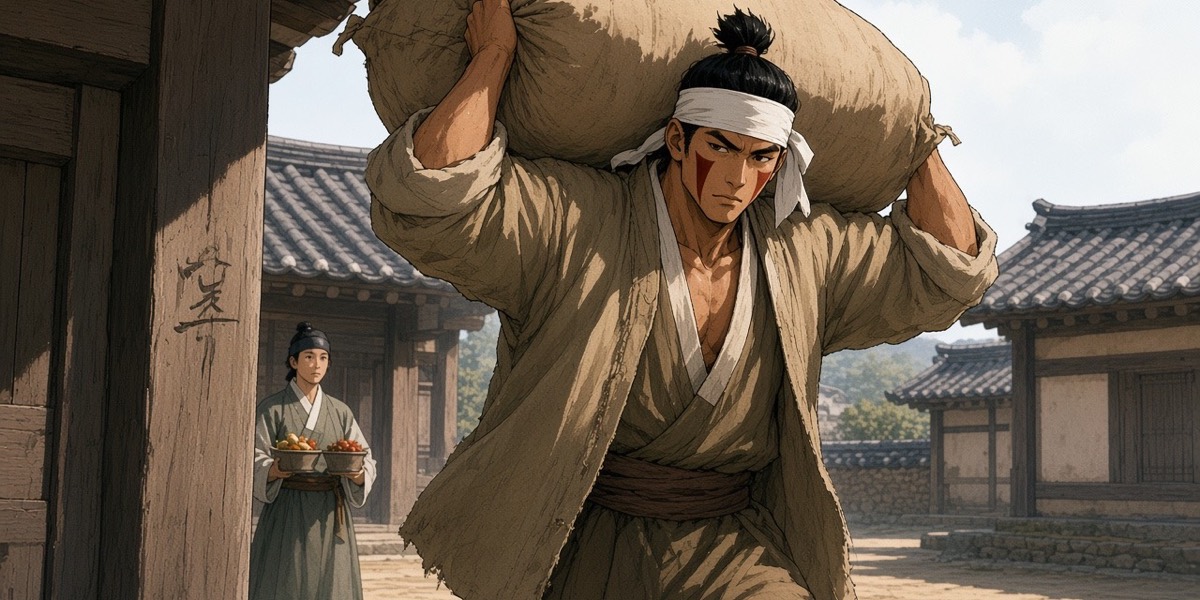
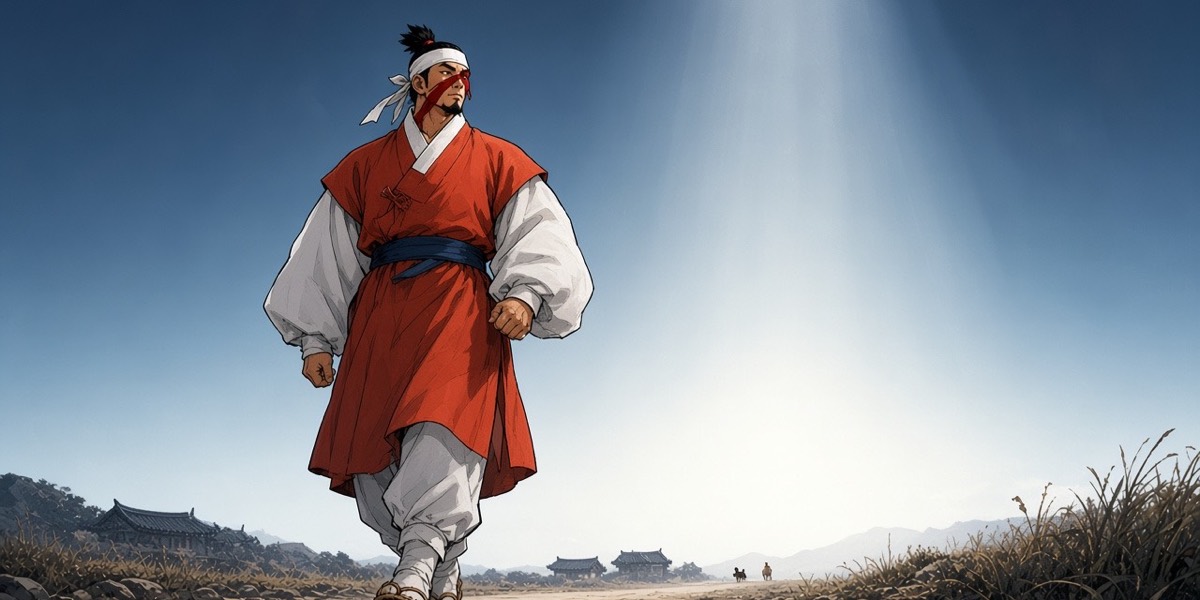
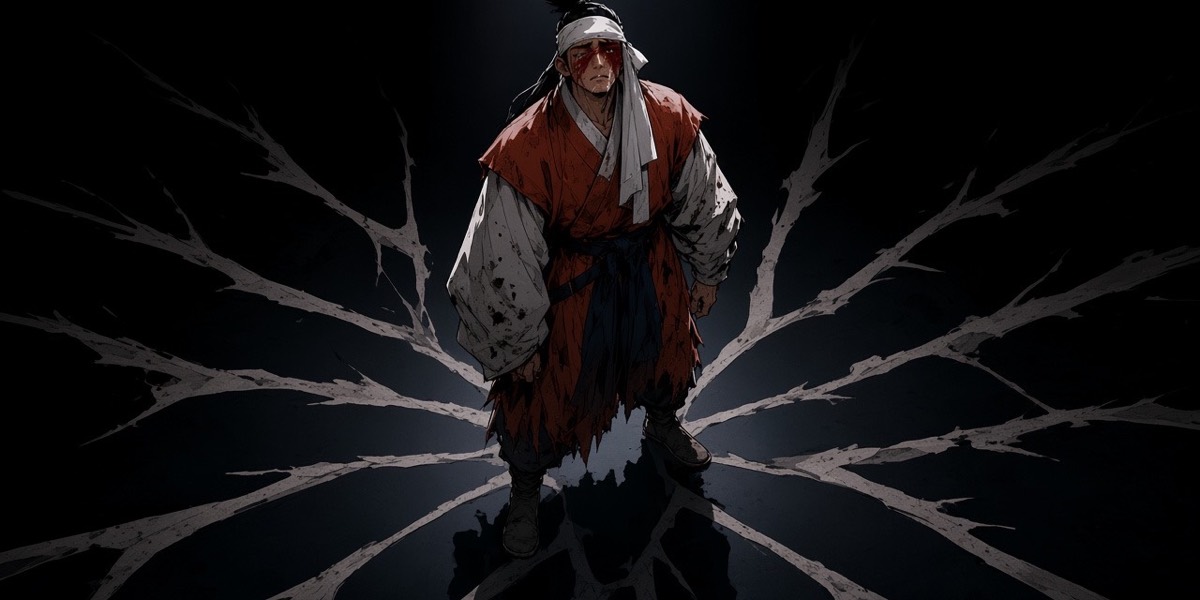
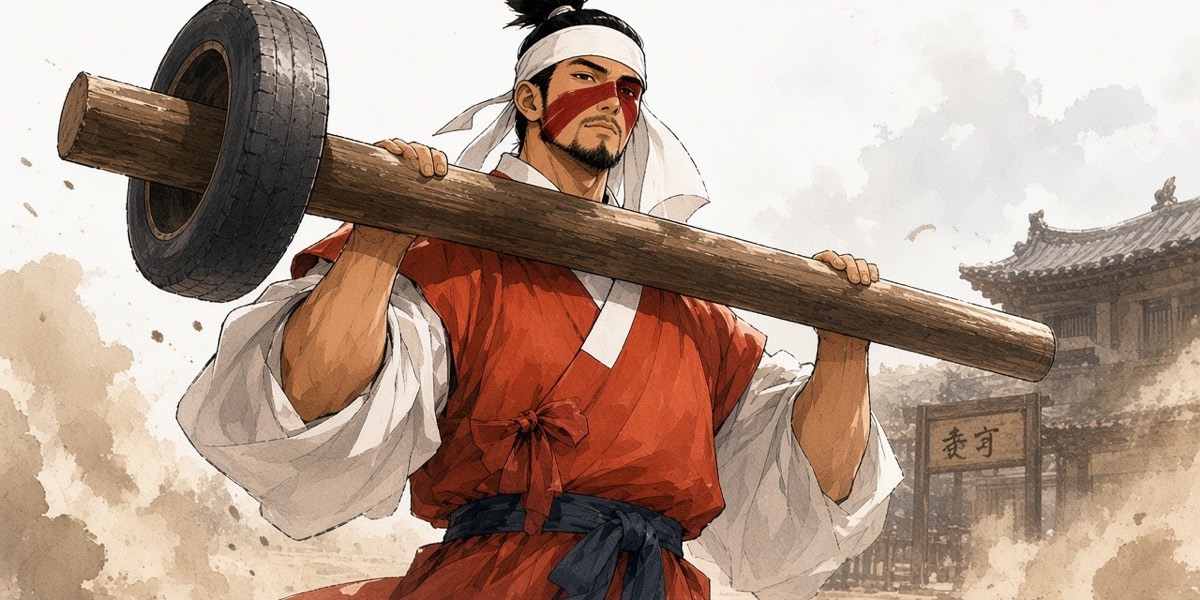
Before the red book, before the question, he is a living strongman. The village measures him by how much rice he can carry and how quietly he leaves a room when a fight is already over.
He wins at the yard. He loses at the ledger. The magistrate keeps him because the law sometimes needs a man who can open a door without opening a case.
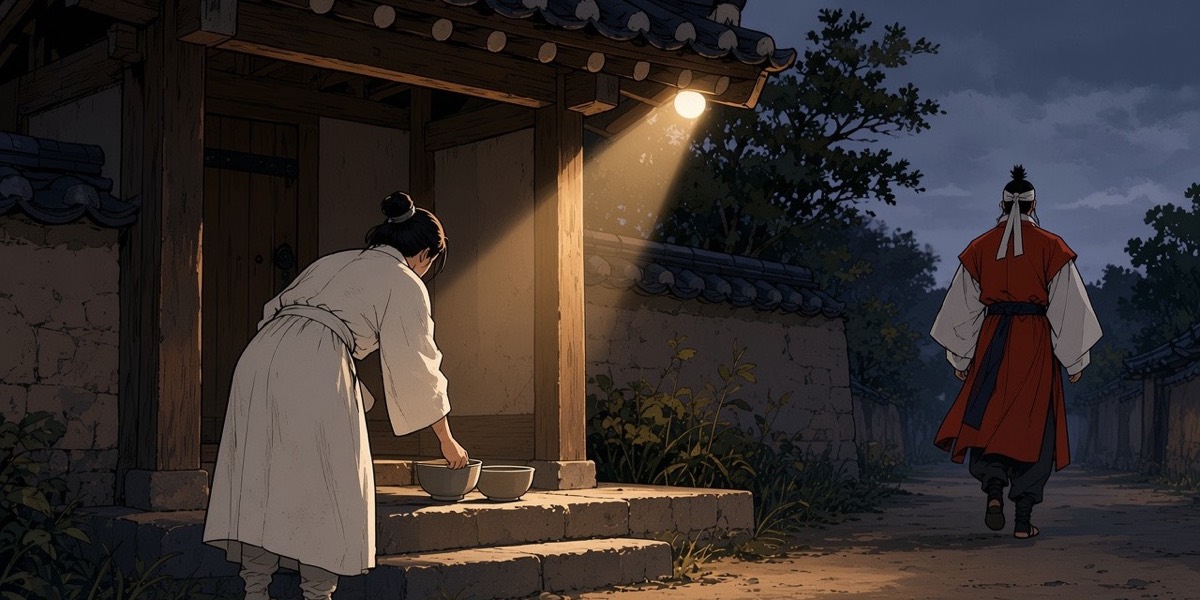
His wife keeps two bowls at the gate — one for the gate-god, one for the kitchen-god — and a calendar scratched into the post for harvest. He promised her a date. He has never broken a date she could see.
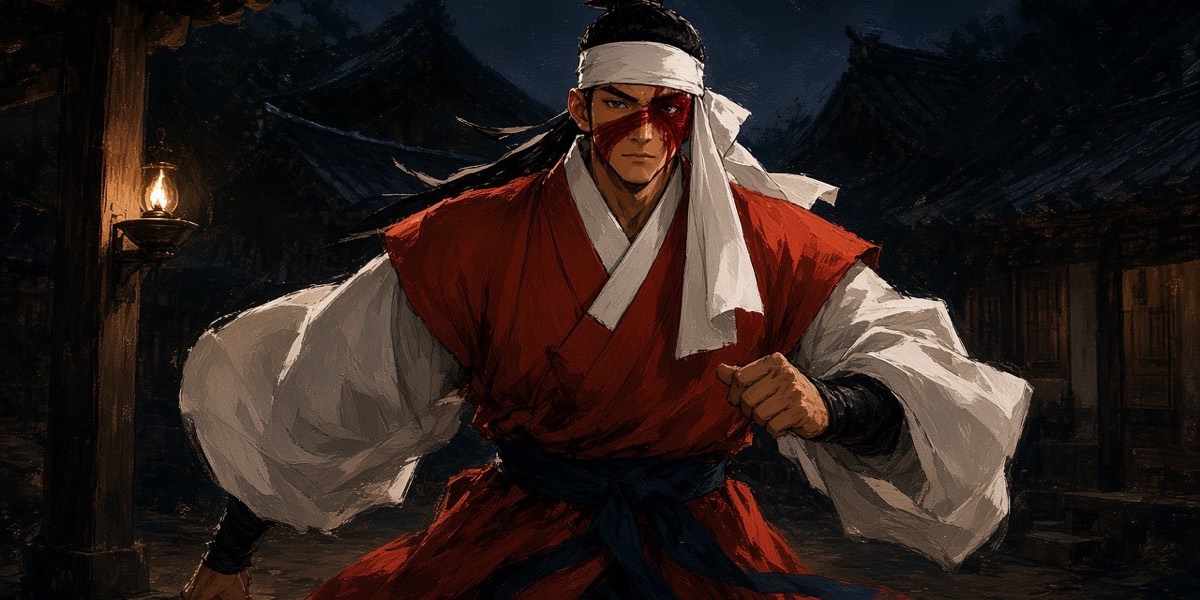

She knots a red cord through his sleeve before she lets the gate shut. Thin as a vein. Long enough for a king who will not walk.

The gate-god and the kitchen-god put him on the road, because his wife had kept them fed.
 Goguryeo
 Silla
 Baekje Tamla
 Yamato kingship
He leaves them still whole.
He leaves still whole. The Three Hans are under his feet. The air smells like the post scratched for harvest. He can still hear dogs that know his name.
’s road was hunger and beatings from the first step. ’s begins with size and manners. That will not last. Distance from the ancestral dirt is its own fever.
First the Western Empire.
First the Western Empire. . Mile-posts. Inns. A stuck axle on the road — he lifts it before anyone asks. They feed him. He leaves before dawn.
Bandits try him at a ford. He breaks two arms and does not take their coin. He is still polite. is only a few hundred li behind him. He can still taste it.
North of the empire. Felt and horses.
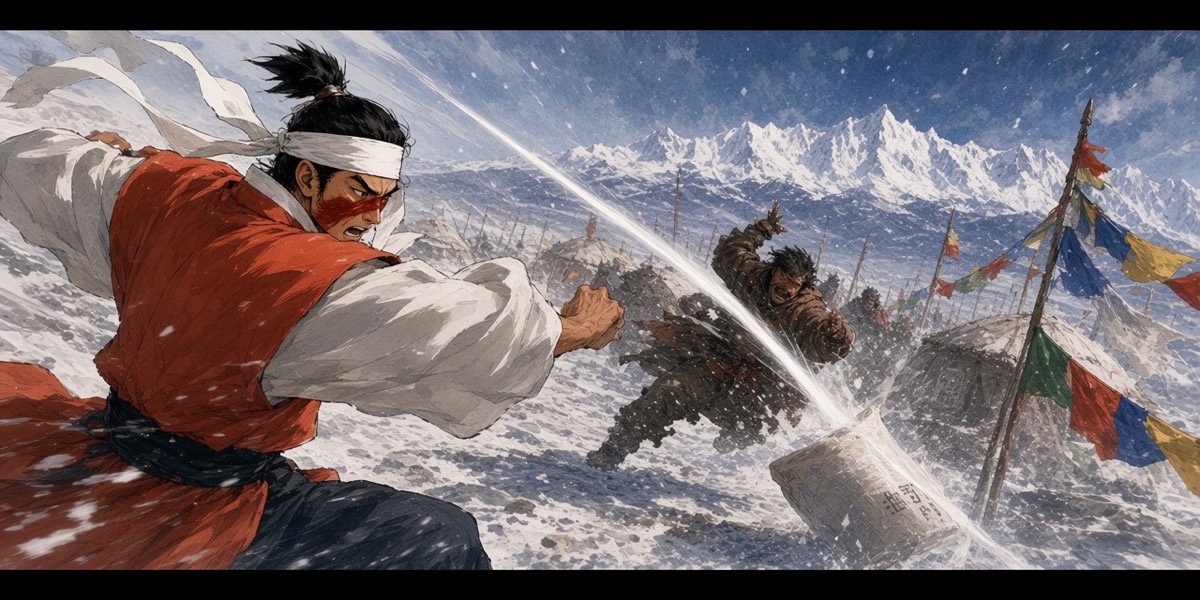
North of the empire, the Bukjeok steppe. Felt. Horses. A rider shares meat if will hold a restive stallion. He holds it. They call him brother for a night.
At dawn another band wants the horse. He fights them in the dust until they stop. He does not smile after. The steppe is farther from the scratched post than the inns were.
He goes around. He does not climb.
Around the Land of Air. ’s ice roof. He does not climb it. He goes around, as the advice said. The wind at the edge strips the fat from his face.
A caravan offers salt. He takes it. A man laughs at his Korean name — hits him once, hard enough that the laugh ends, soft enough that the man keeps his teeth. He apologises without meaning it. Something in him has started counting how far home is.
Long plains. He keeps walking.
Around the Land of Earth. ’s long plains. Monks share a joke he only half has. He laughs at the half. That night he dreams of the harvest post and wakes with his fists closed.
Road-thieves again. He does not break arms this time. He breaks the fight until nobody stands, and keeps walking before anyone can thank him. His bowl hand shakes when he eats. Distance is a fever now.
Oil, horse, and a thinner word for home.
Through the Land of Fire. . Oil. Horse. A fire-temple yard — a boy asks him to hold a rope while men raise a beam. He holds it. They feed him. He eats too fast.
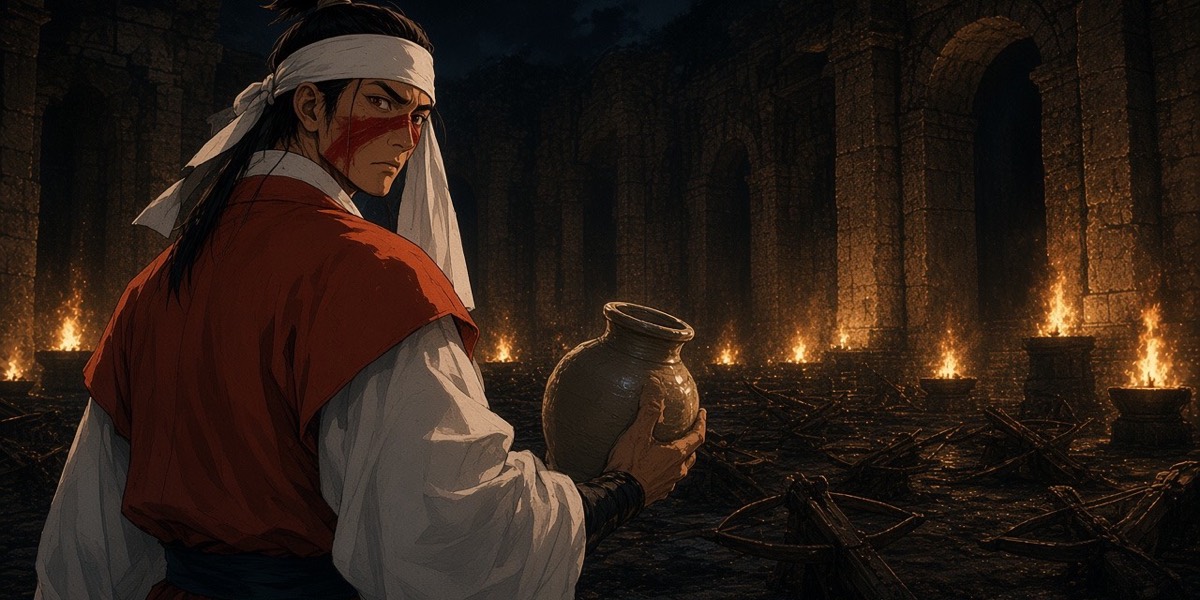
That evening a quarrel over a water jar turns into knives. should walk away. He does not. When it is over he is breathing like a dog and the jar is unbroken in his hand. He does not remember deciding to fight.
He says it to nobody. The word sounds thinner this far west.
A fisherman points west with his chin.
Through the Land of Water. . Salt coast. Glass. A fisherman points west with his chin. almost hits him for pointing. He stops his own hand an inch from the man’s face.
He is drained. The strongman the village measured by rice-sacks is a raw nerve in a large body. He sleeps badly. He dreams of dogs that no longer know his name. is east of home; he did not go there. The southern seas are south; he did not go there. West was the fever, and west is what he took.
In a harbour alley three men decide he looks rich enough. He leaves them on the stones and does not check if they breathe. Later he sits on the pier and shakes until the salt air hurts his teeth.
Twelve mouths. He is not dead.
Past the salt, the road climbs. Twelve mouths. A timber gate in each, the kind a yard builds when the dead need to walk under something. He is not dead. The gates do not care.
He counts the first three. Counting is a job, and he still wants one. After that the numbers go soft. The road keeps them.
At one mouth the dogs from home are lying in the dust. They already know him. He says his name anyway, so they will keep it.
One sniffs the cord in his sleeve and lies back down. The other will not look at him. He stays. The next mouth does not wait.
A higher gate is his own post. The harvest scratches are past the mark. His wife is on her knees with a second bowl. She does not look up.
He is. The scratches say so. He walks through her. The bowl does not spill. That is worse.
Then the pond. Three boys sit up in water that is barely there and ask for breakfast, polite, silk still in their fists. Their hands find his ankle. They do not pull. They hold him the way you hold a man who is leaving a room too clean.
He shakes them off. He does not look to see if they sat down again. He has been not-looking since the harbour. The road noticed first.
One gate is only . Only the mouth.
He goes under it with his jaw shut.
Near the top the mouths stop building rooms. They only use her voice, the one about staying large, and the one about the bowls. The cord in his sleeve pulls once. She still has the other end. She is not here.
The last gate is empty. He waits for her to be standing in it. She is not. He looks at his hands. They are still large. He does not feel large. He goes through.
White first.
Past the last harbour the living map softens into water. Three rivers. White first.
The is cold and shallow enough to shame him. A man his size wants a deeper trial. In the white the two bowls stand upright and do not spill. Her voice is close enough to share his mouth.
He fords it cursing, so he will not answer her. The cold takes the curse. On the far bank he is wet to the knee and angry at a river for being small.
The is deeper. Midstream the three boys have his ankle. Not weed. Hands. Silk still on the fingers. They do not drag him down. They hold on.
He kicks free and crawls out with mud in his mouth. The mud tastes like the pond. He sits on the bank and does not check whether the hands are still reaching. Sitting like that scares him.
The is last. He does not ford it clean. The current fights the way the harbour fought, and the jar, and every time he cannot remember choosing. He comes out looking like a man who has been in a war that only water saw.
The cord in his sleeve has gone dark. For a breath he thinks he spent it, and that the red belongs to a man he did not turn over. He did not spend it. He sits until his teeth hurt. He tells the water the date. The water has no harvest.
Right, paradise. Left, hell. The middle is Seocheon.
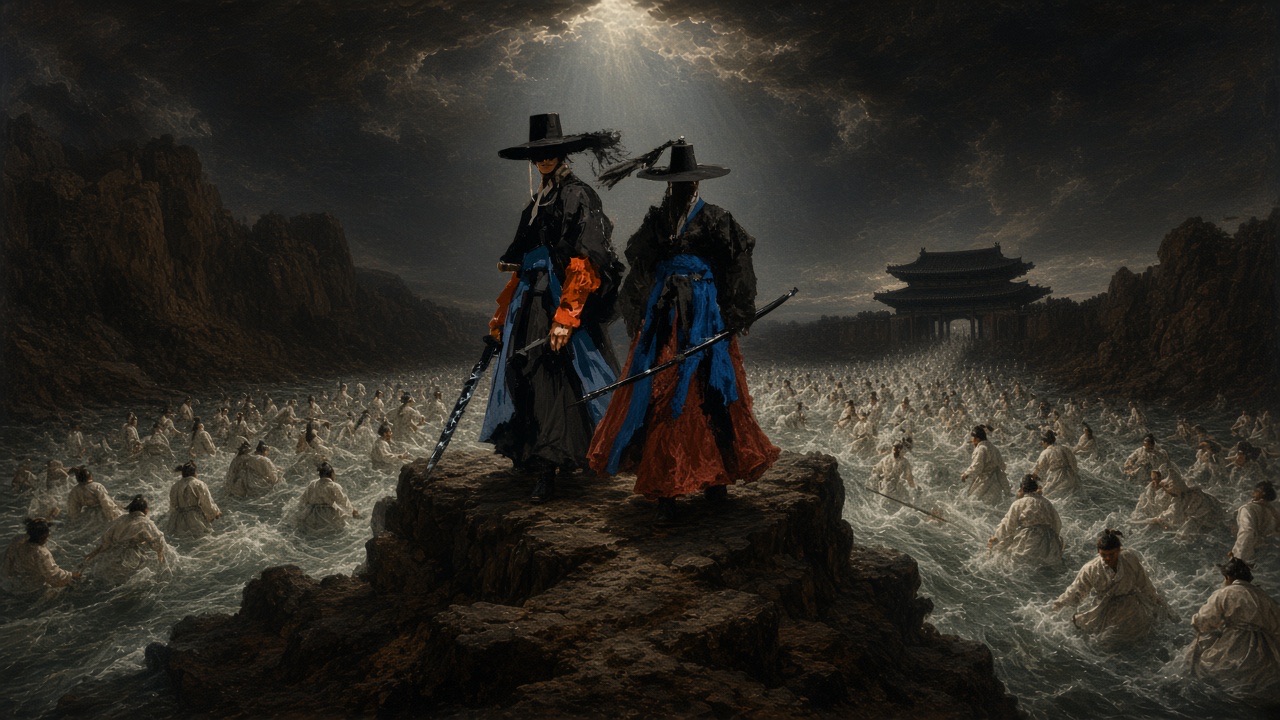
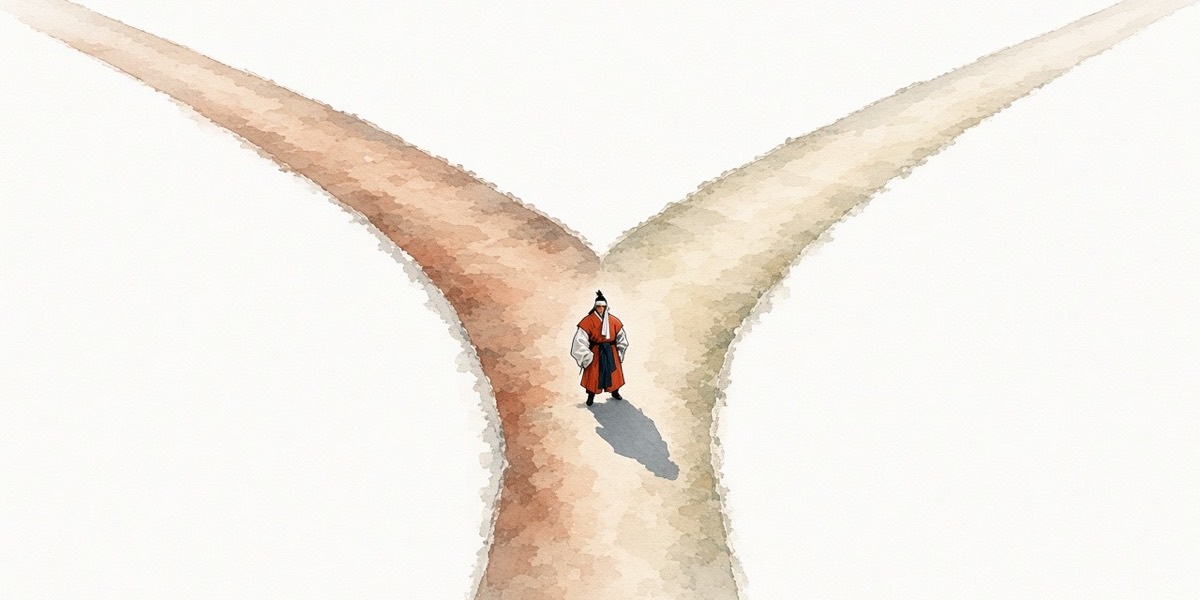
Then the road splits three ways. Right, they say, is paradise. Left is hell. The middle is — .
At a woman washing clothes does not look up.
He almost takes the left, for a second, because anger likes a short road. He does not. A man sent for a judge still has one job.
A spring, and the man with no face.
On the middle path: a spring, and an armed monk who has been waiting longer than any harvest calendar.
He is the gate.
The western heavens start at his heels.
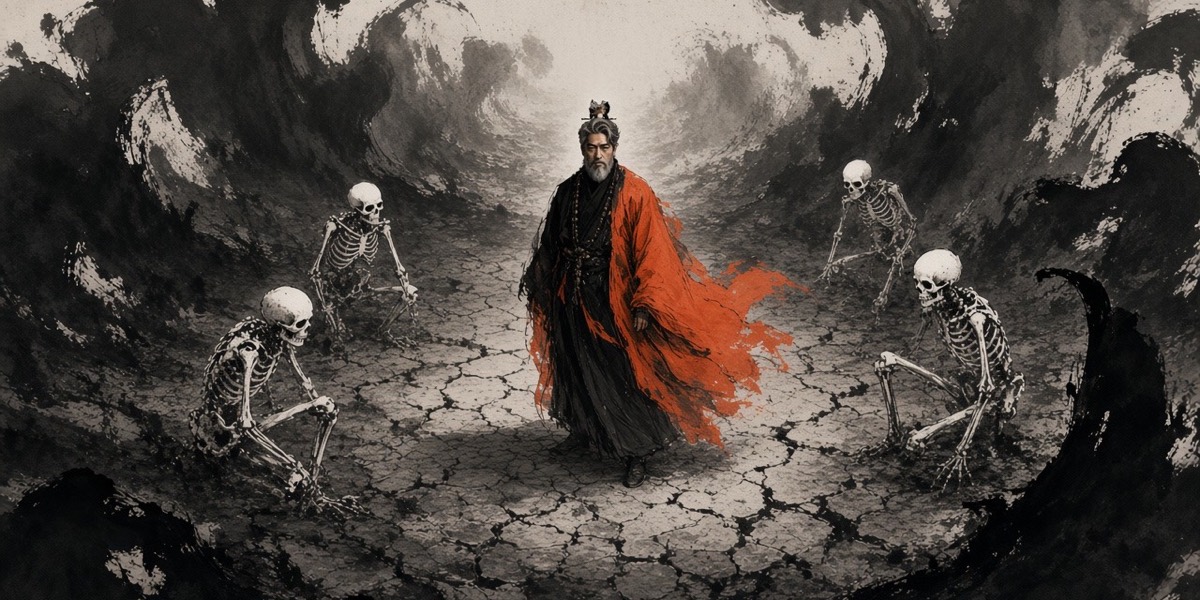
His name is .
has heard it three times. He still has no face for it. This is the man who burned nine storehouses, and the field beside them. called him then. His work was fire. The rank was taken. The next one was not said. They sat what remained on this gate.
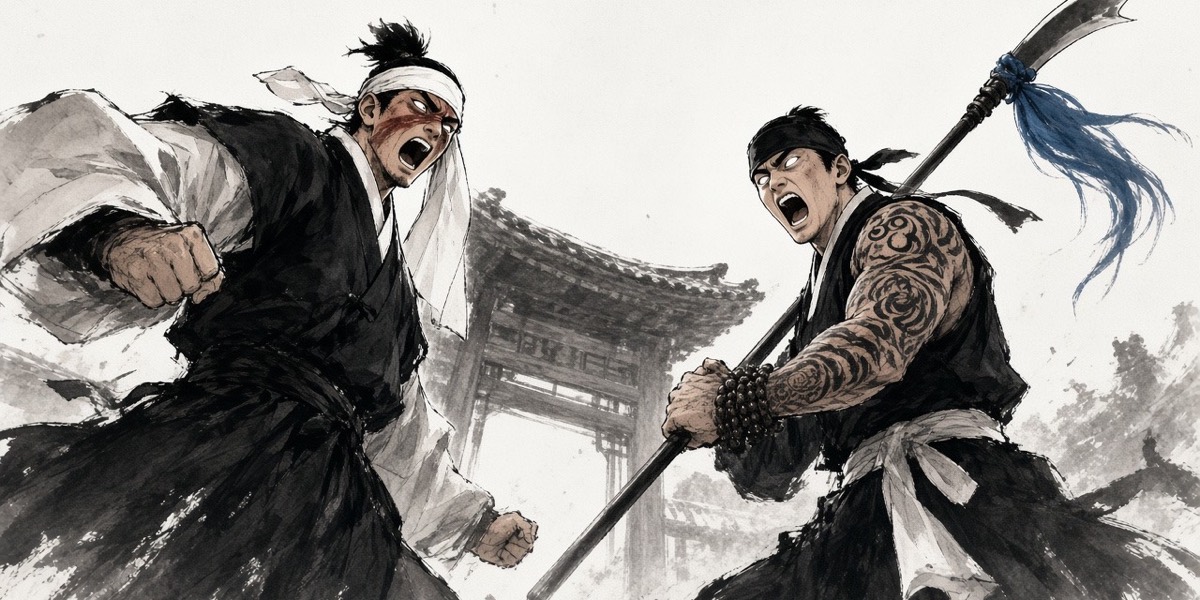
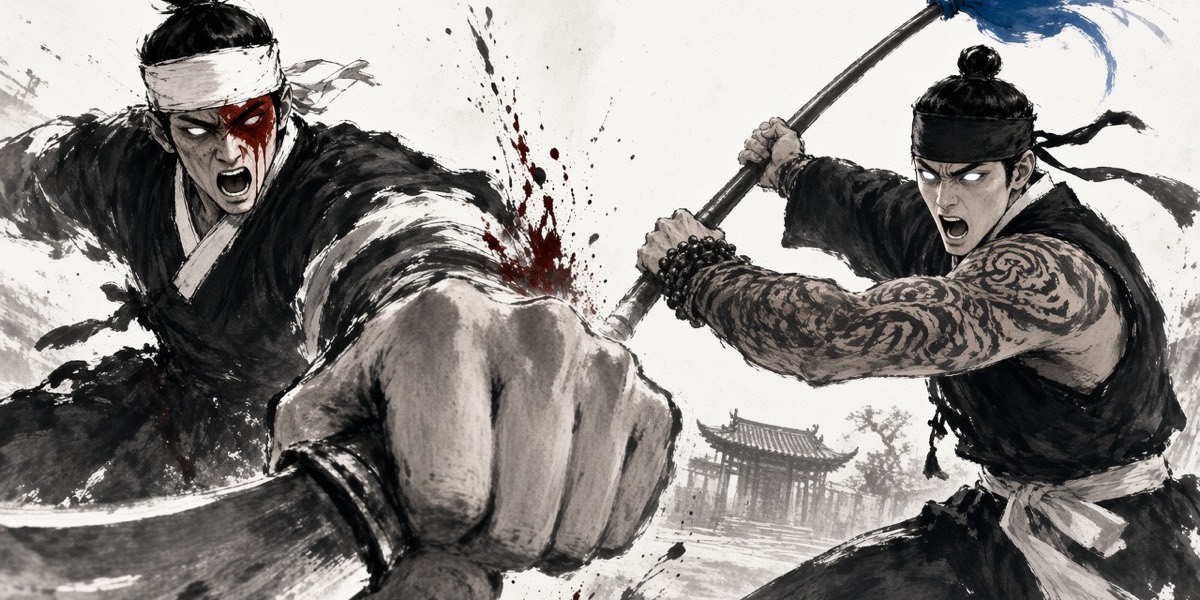
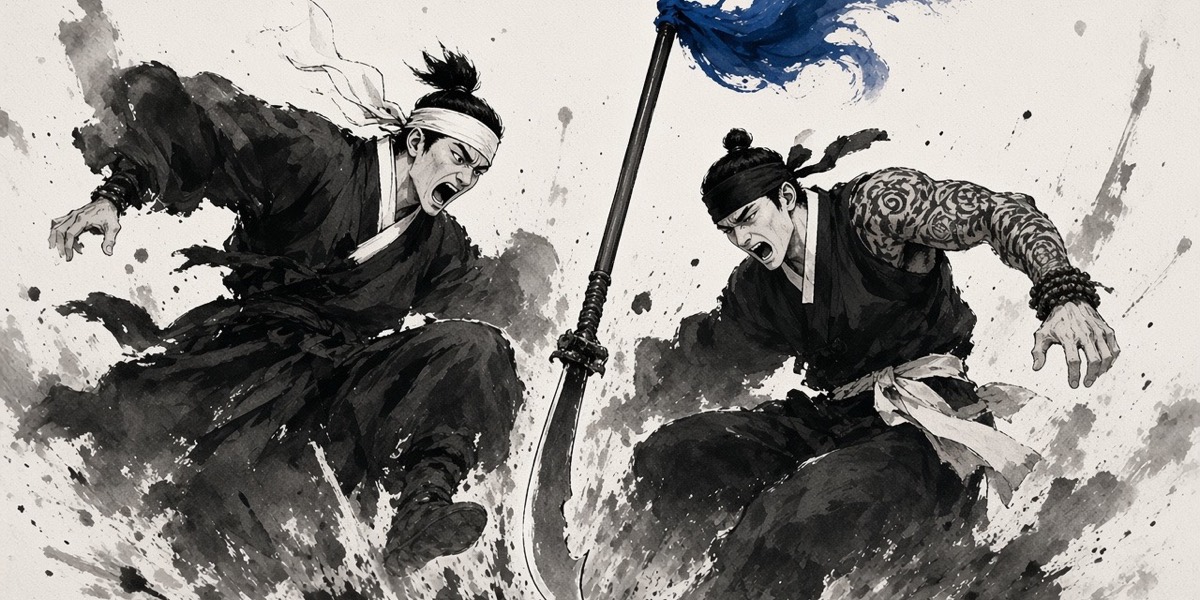
A glaive with a blue tassel bars the posts.
His eyes are white. He does not bow.
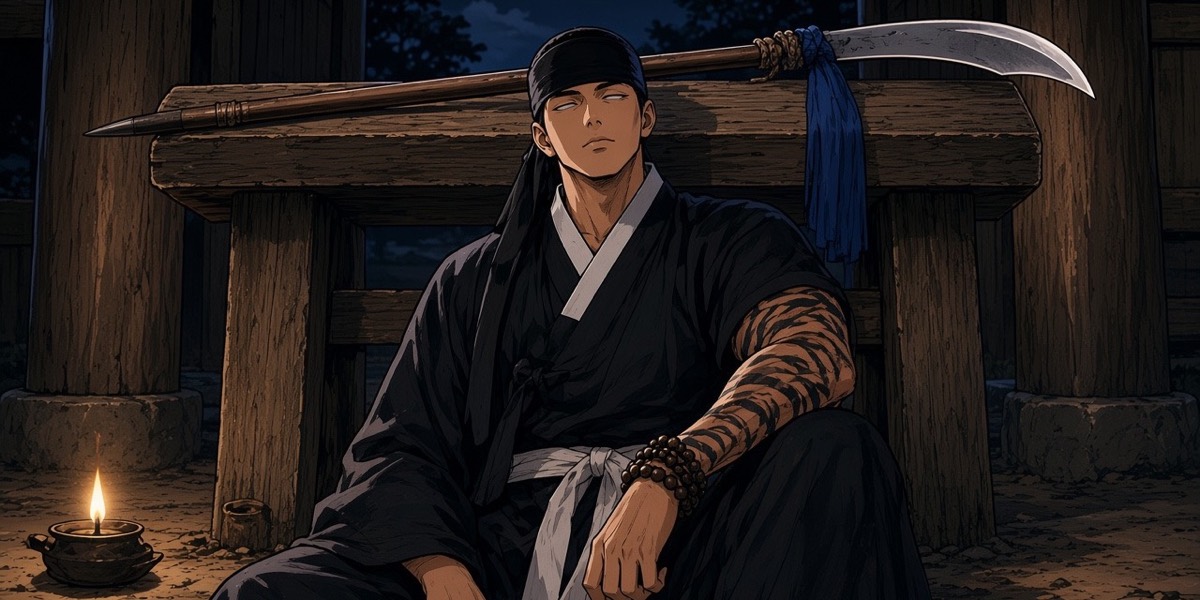
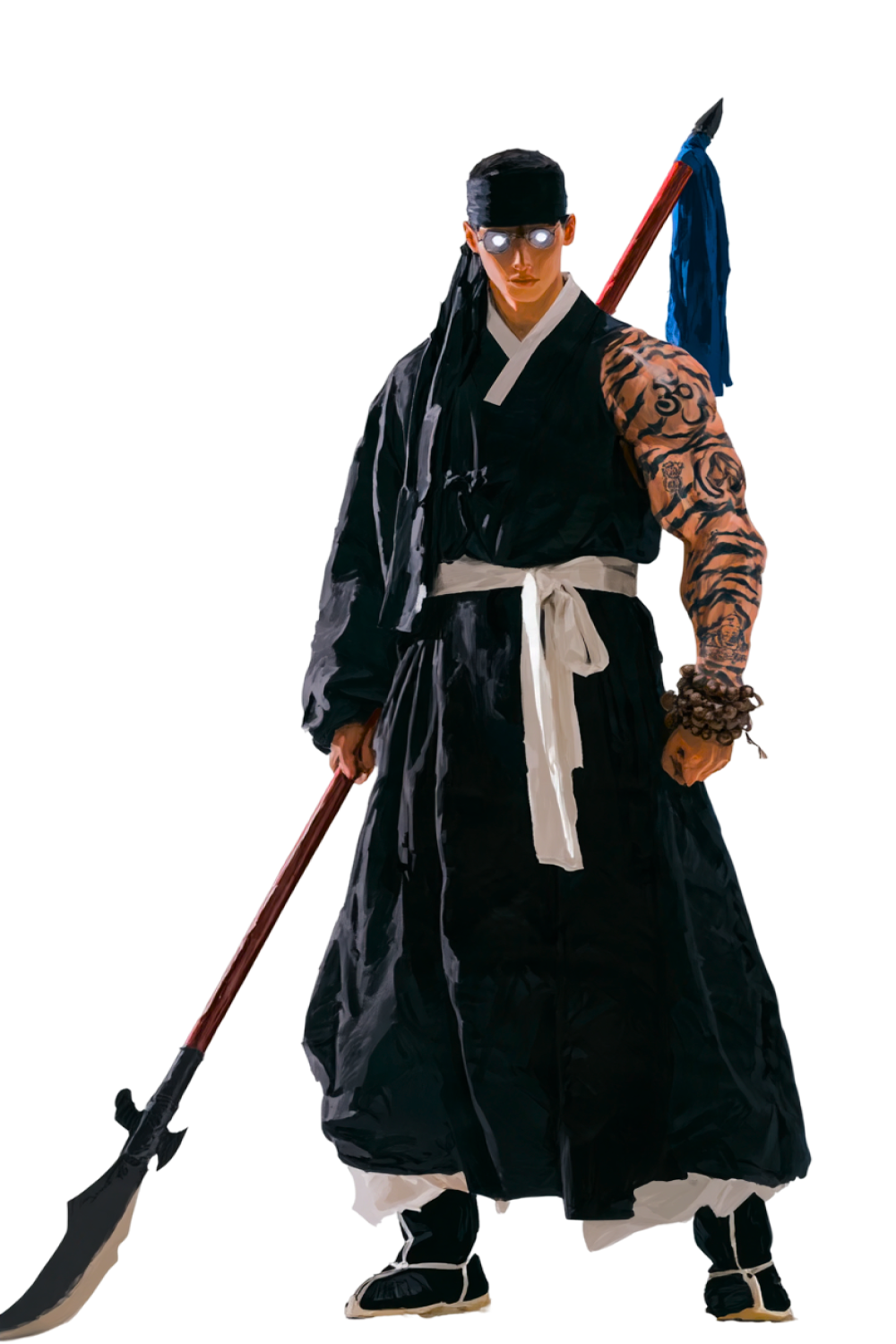
They begin while the spring is still bright.
The glaive is longer.
The fists are closer.
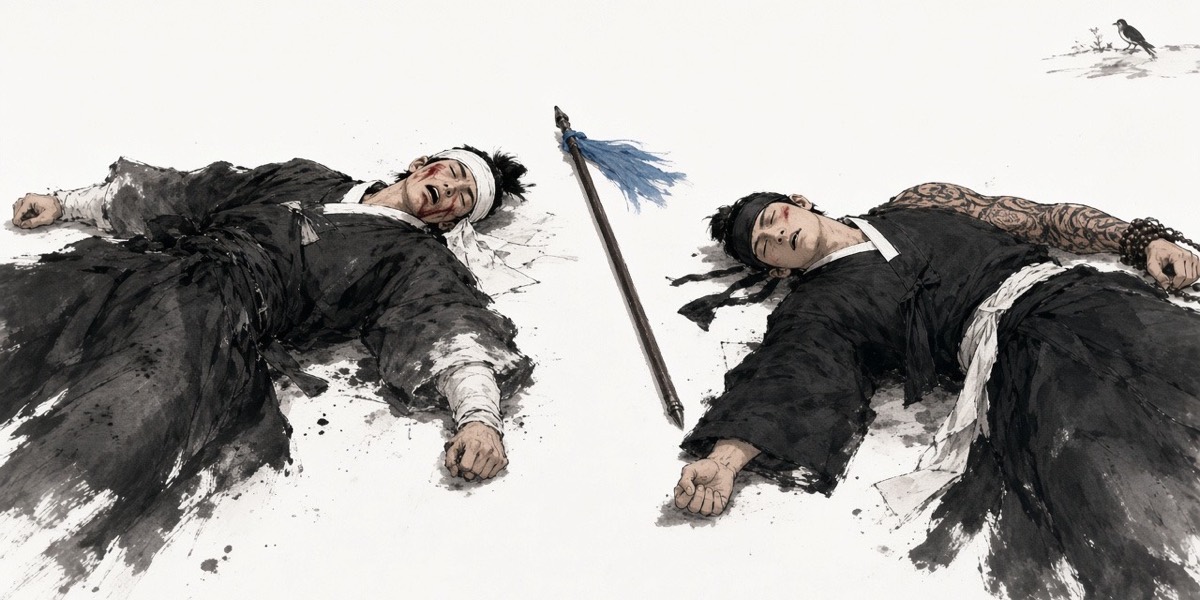
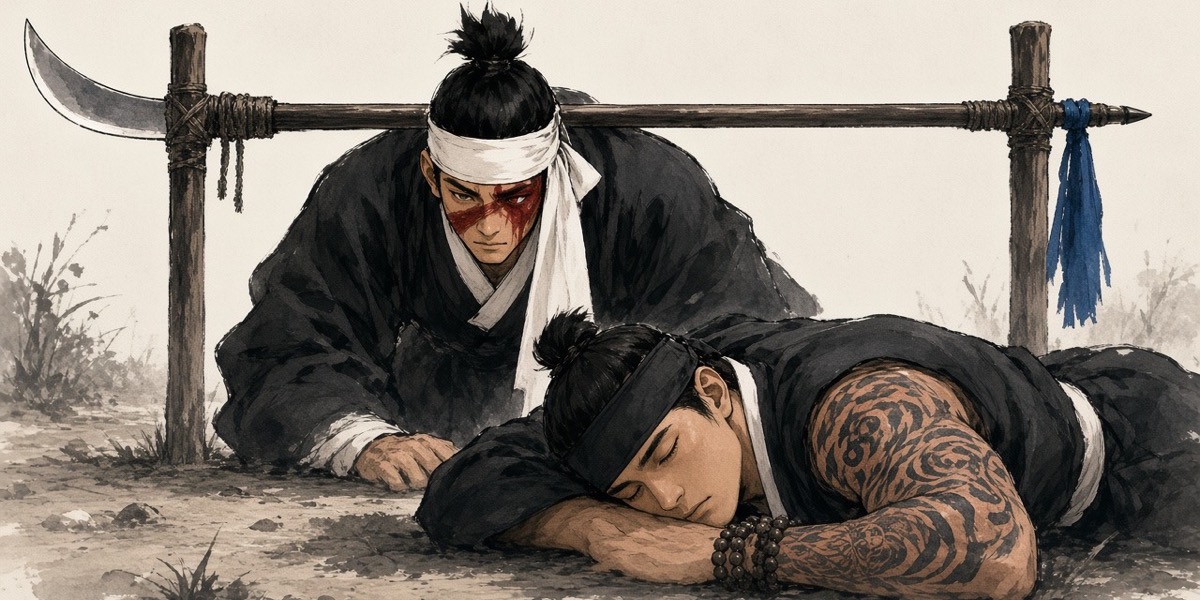
By dark both of them are down.
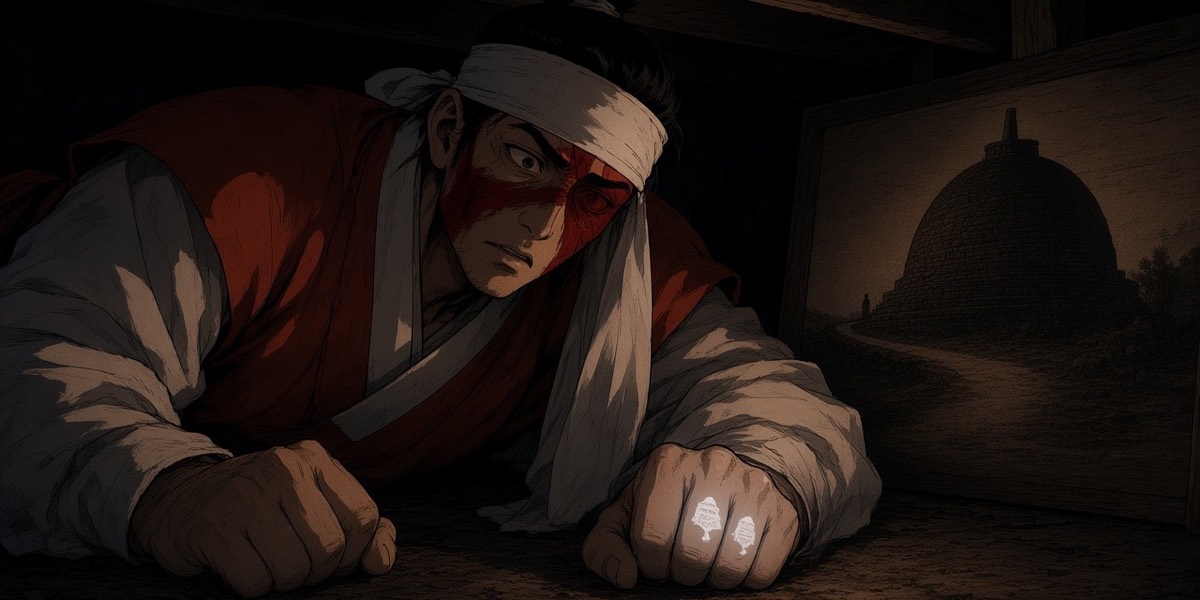
Face-up. A handspan apart.
Mouths open.
The glaive lies between them.
Neither hand can close.
Morning. They stand. It takes a while.
The second day, nobody speaks.
On the third morning the ribbon is mud.
The man's knuckles are open to the bone.
I lost the count after that.
The spring kept the hours. They did not.
Some nights the monk is on top.
Some nights the man is.
Some nights they fall in the same breath.
The village called this one the strongest of men.
The gate is his equal.
One dusk they do not get up at all.
Both bruised past the colour of bruises.
Eyes shut. Fists still closed.
A bird drinks at the spring.
Neither of them moves.
The night goes over two bodies and a glaive.
The monk wakes first.
He cannot stand.
He sets the glaive across the posts.
Then he goes back to the dirt.
The man wakes second.
One eye. He crawls.
A hand finds his ankle.
The man laughs. It costs him a tooth.
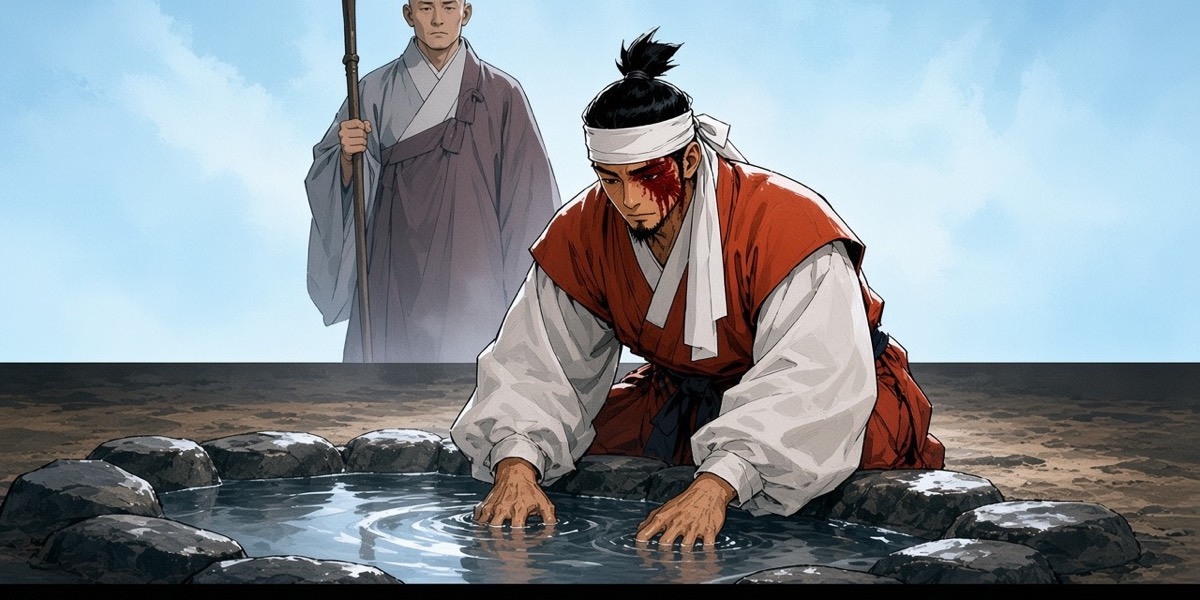
He makes the spring on his elbows.
He drinks.
He puts both hands in the water until they forget the glaive.
Then he crawls under the shaft.
To chase, the monk would have to lift the glaive.
He stays down.
The man does not look back.
He has no look left.
Three thousand li, said in one breath.
He crawls the first li.
Then he walks, because harvest is a date.
The bruises stay open.
Three thousand li is a sentence you say in one breath and a walk you do while forgetting your own face. He sleeps under wagons. He still lifts what other men cannot. Every lift opens a bruise from the gate. He also hits a man who only asked the hour.
He apologises after. The apology sounds like a foreign language. Home is so far that manners have to be translated back into his mouth.
The map runs out.
Past the counted road the world forks again — not three ways. Seventy-eight.
stands at the mouth of them and weeps the way the chasa song says a living man weeps when the map runs out of mercy. He does not know which path is ’s. He only knows none of them smell like .
He takes the road the gate-god names. He is almost empty. What is left of him is the job, and a date he can no longer picture on a post.
At the end of that path: a pond that does not belong to any empire.
He looks at it a long time. Harvest is a date. This is not.
The bruises have not closed since the gate.
He shuts his eyes and jumps. The island still says he shut his eyes and jumped.
The fall ends in flowers.
The fall does not end at a gate. It ends in flowers.
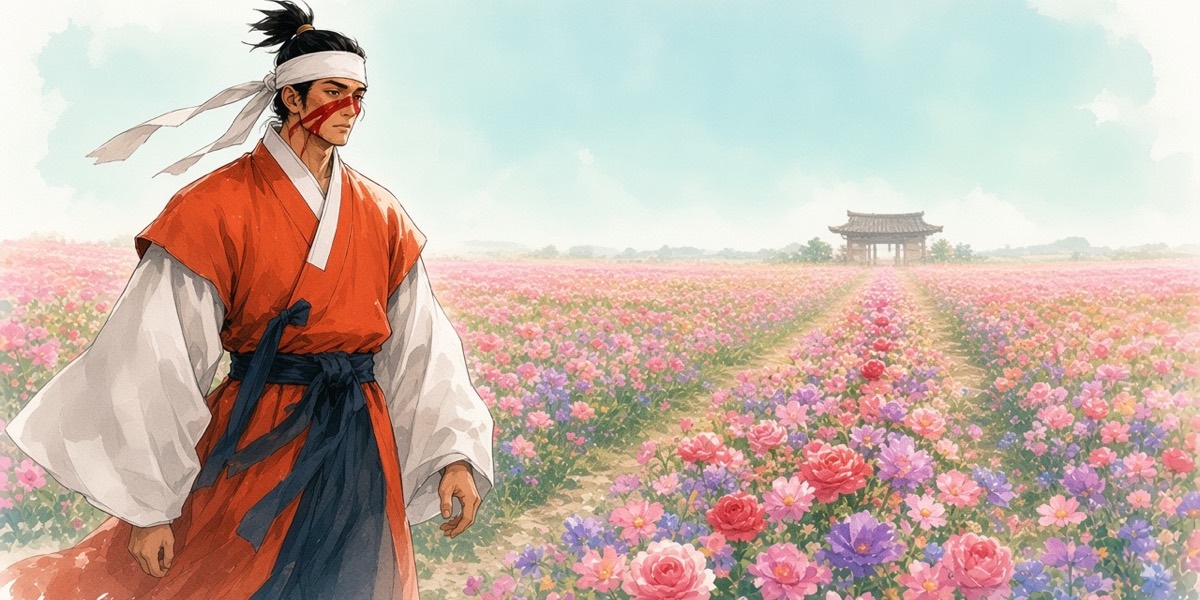
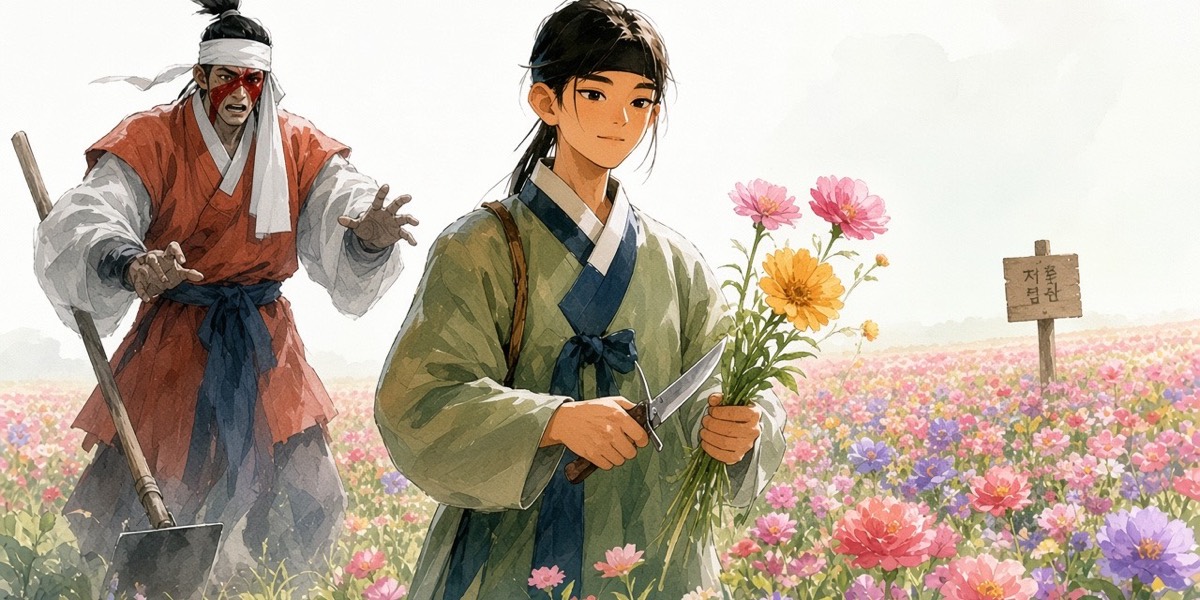
The road west is a flower field. It runs until the colour runs out.
He does not land. He stops.
Bruised past any use.
Almost not breathing.
A young man is already in the rows. He has a hoe.
He looks at what the road delivered, and puts the hoe down.
He breaks a flower against the man's mouth.
Then one on the chest.
Then one in each ruined hand.
The breath comes back rude.
He says it lightly.
The boy who keeps these rows came in crawling too.
The gardener looks at him the way you look at a fever that walked in on two feet. Then he cuts three flowers.
He puts the three in his sash. His hands are steadier holding flowers than they were holding knives.
A gate with no sun.
He stands up at a gate that does not have a sun. The island says he stood up at .
Someone is already walking that road. Younger. Night-road. He does not offer his name. He takes the belt.
They take the satba. heaves for the size he was told about. The flower is in the sash. The sash does not slip. The throw goes the other way.
hits the packed earth and stays there.
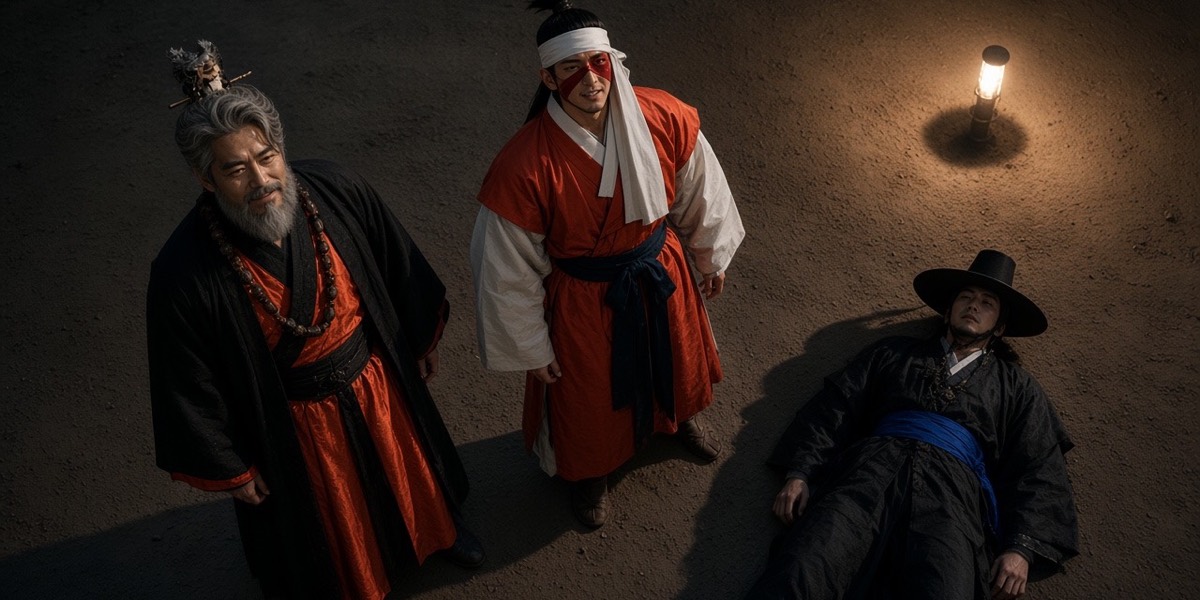
A judge has been standing in the dark the whole time. He looks almost pleased.
He speaks with court courtesy.
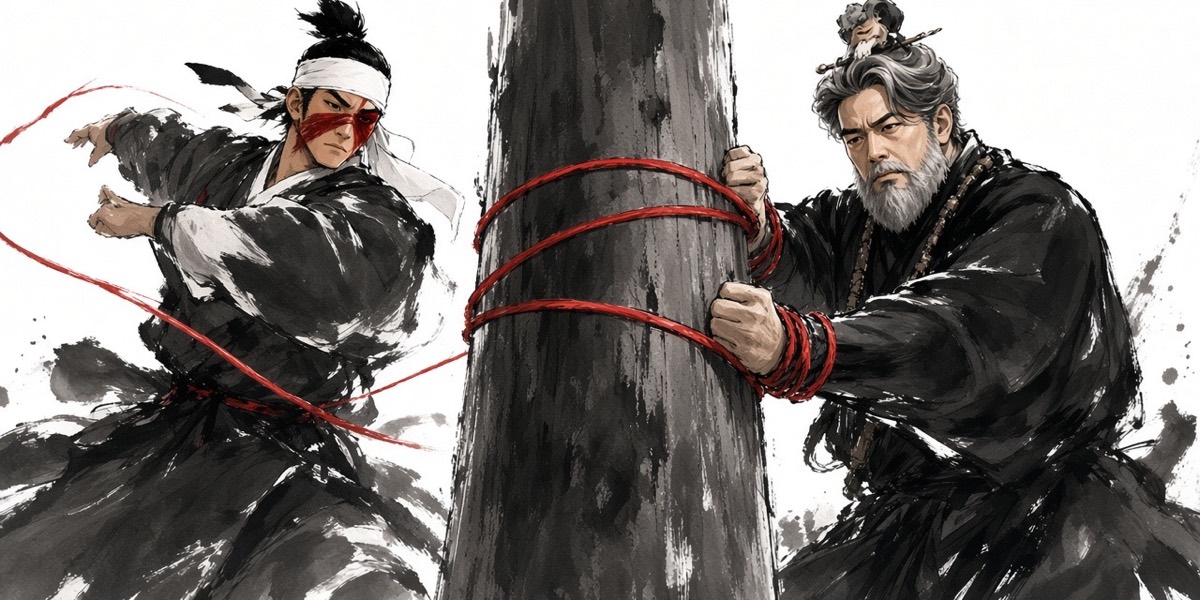
He shakes his wife's red cord out of the sleeve. Four turns. Wrists, robe, and the post. The king of the dead does not get a hand free.
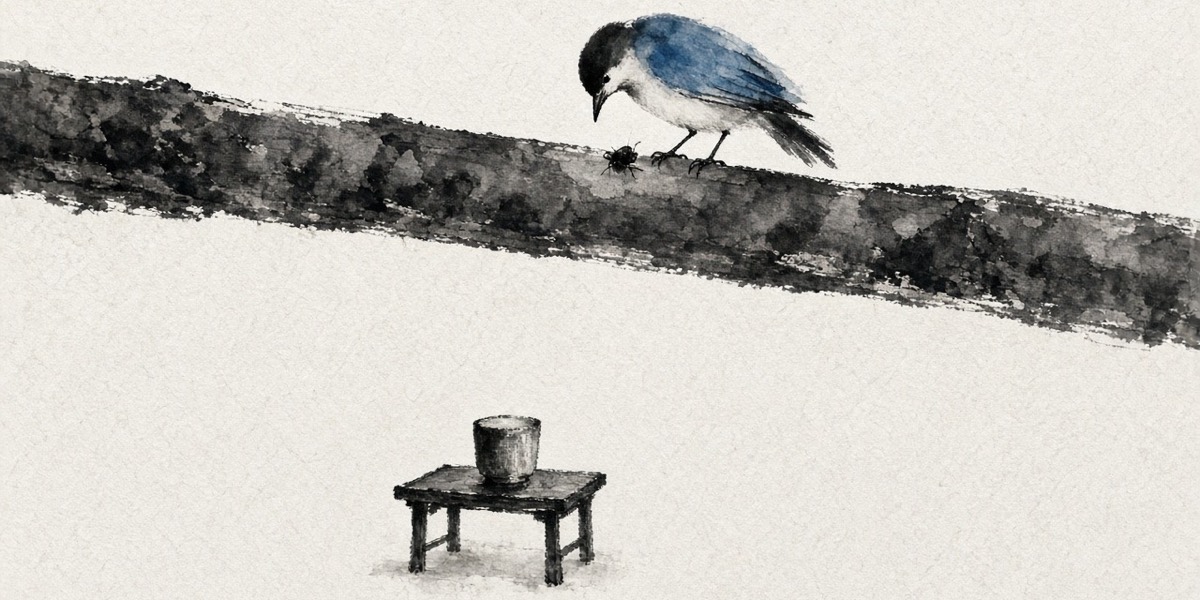
He unties the cord. A king who has been tied will always offer a cup before a road. The cup empties. The king is gone. A blue bird sits on the beam and watches.
does not jump for the beam. His arms already failed a gate. He goes still, and a fly lands on the bird's foot.
He came.
The pond dried. The bones came up.
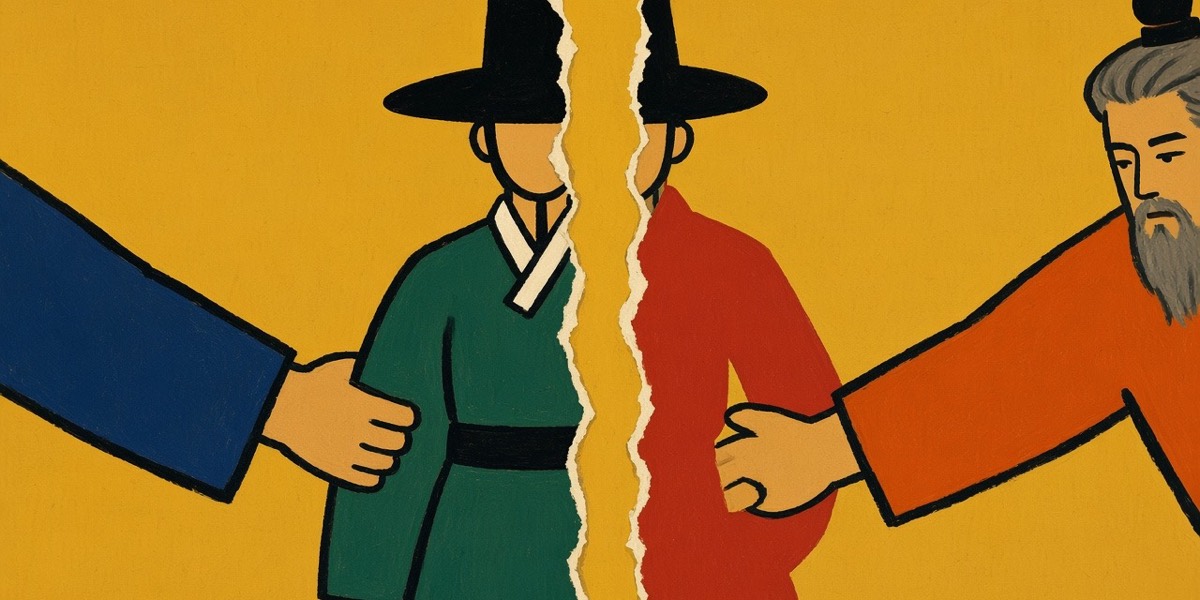
keeps the sentence. The living magistrate keeps the paperwork, and is not grateful.
had walked the living yard in a borrowed man’s height. The magistrate’s clerks bowed because the red cord made them. Gimchi did not bow. Gimchi watched the paperwork.
So they split him. The flower he would not spend holds the half can see. took the other. That is how died upstairs and woke as a fetch.
did not send him out in the clothes he arrived in. A strongman’s jacket still smells of the yard.
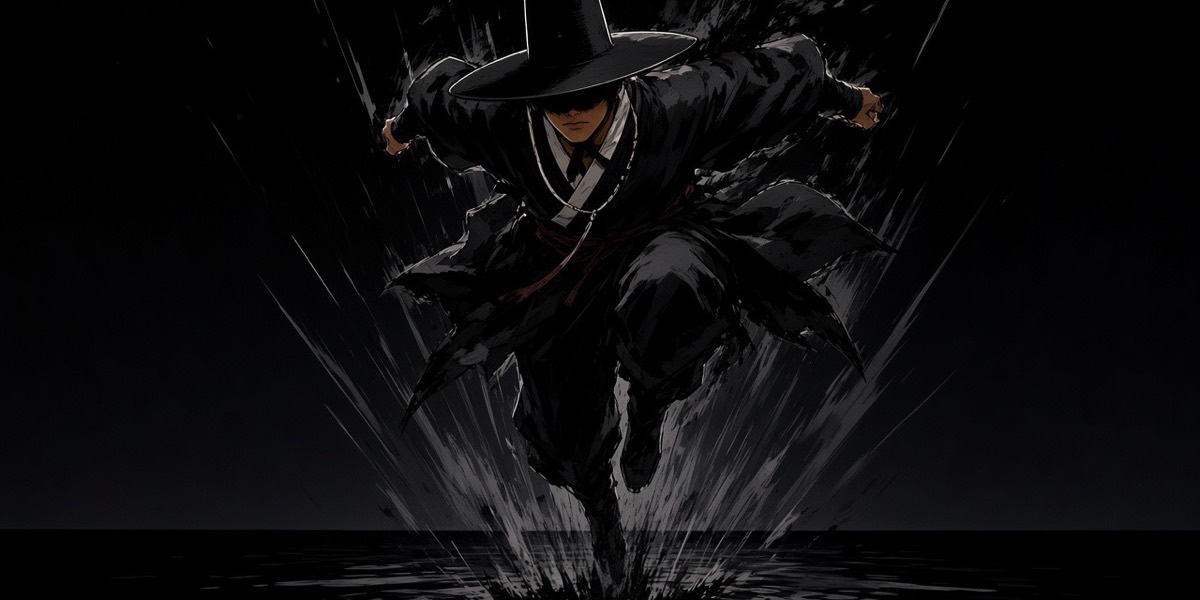
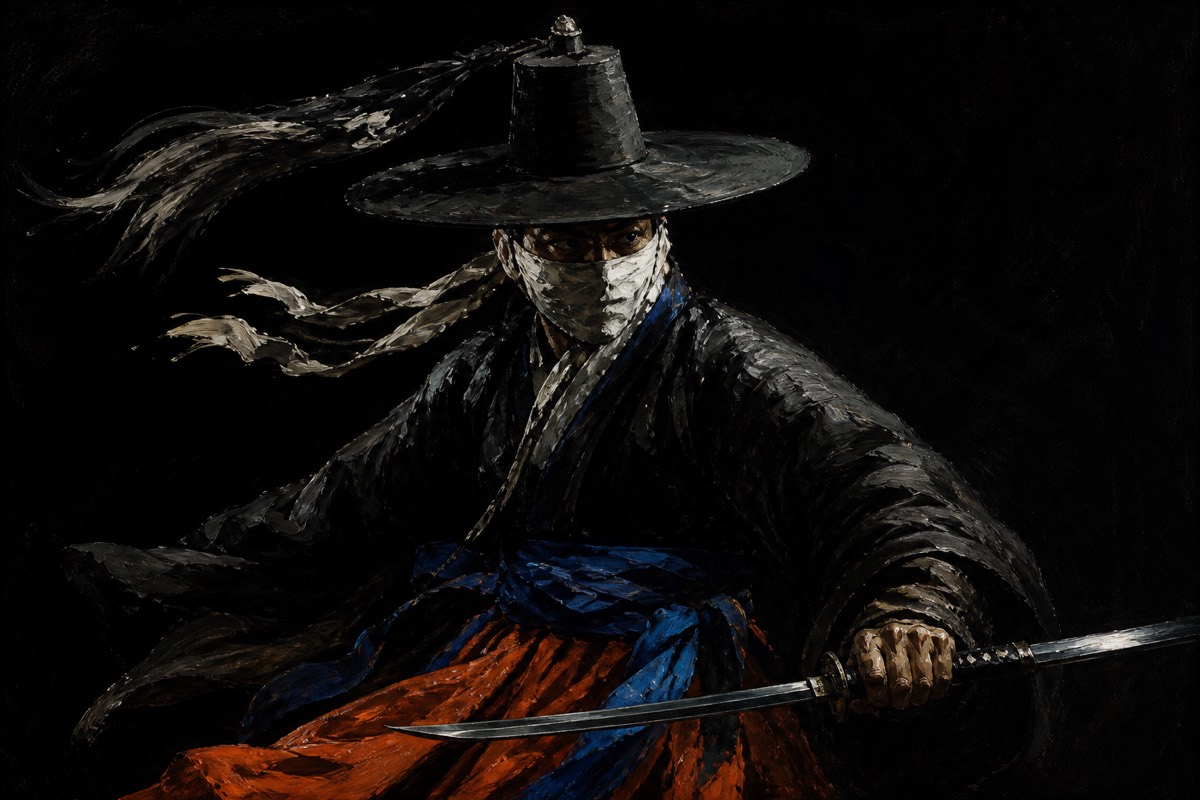
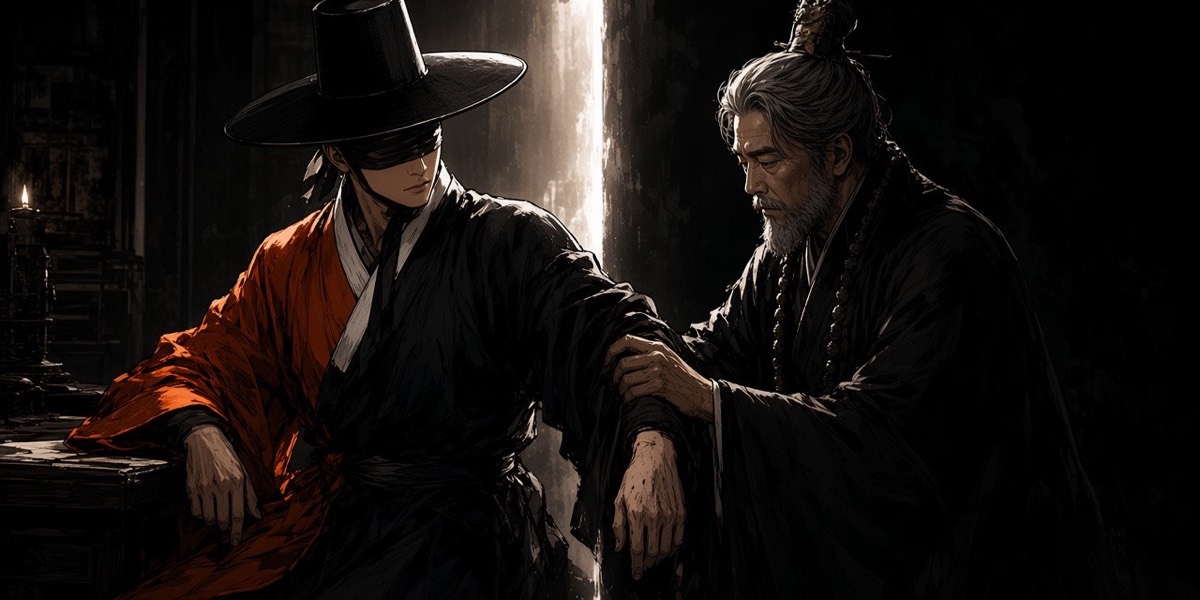
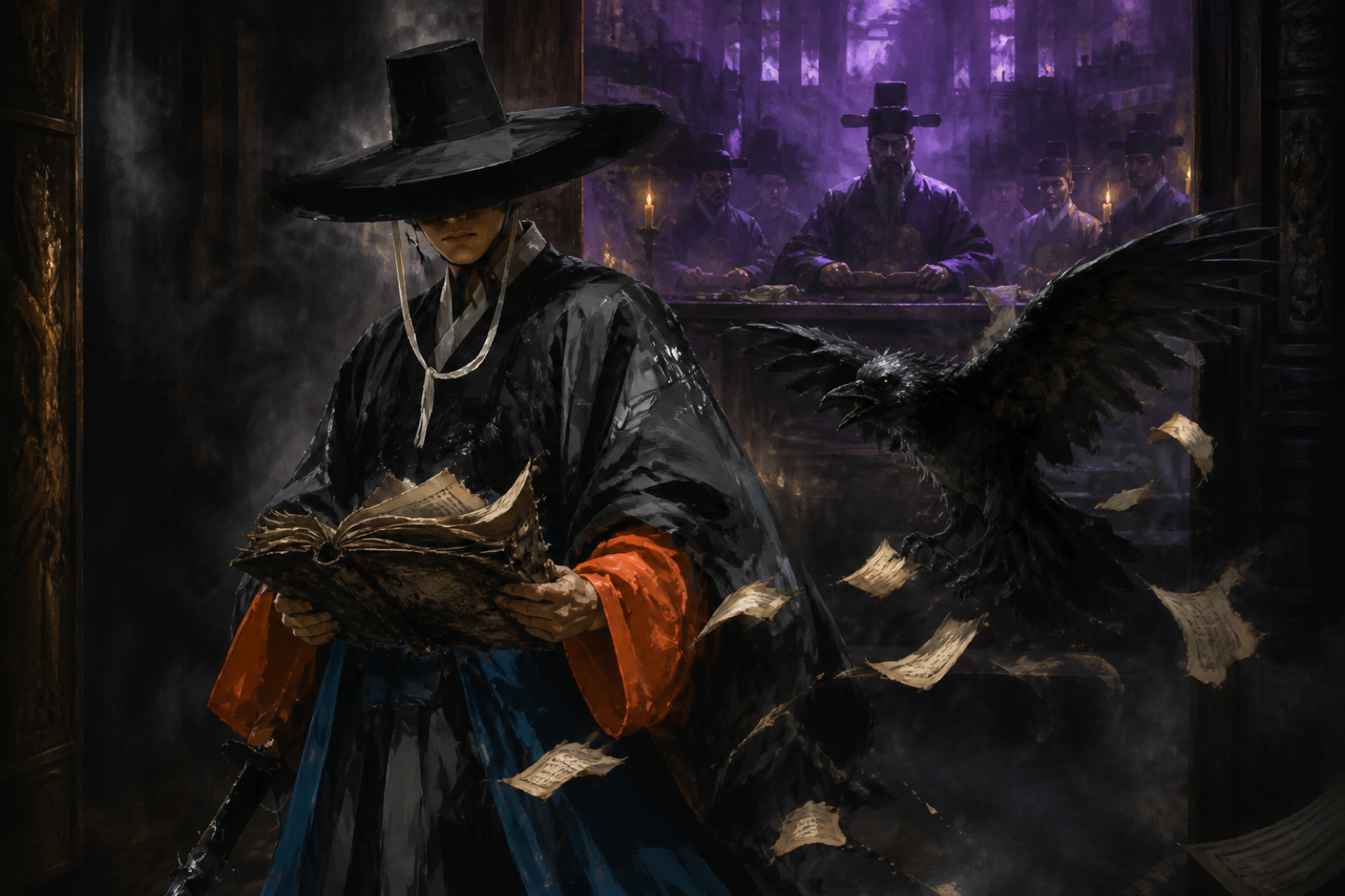
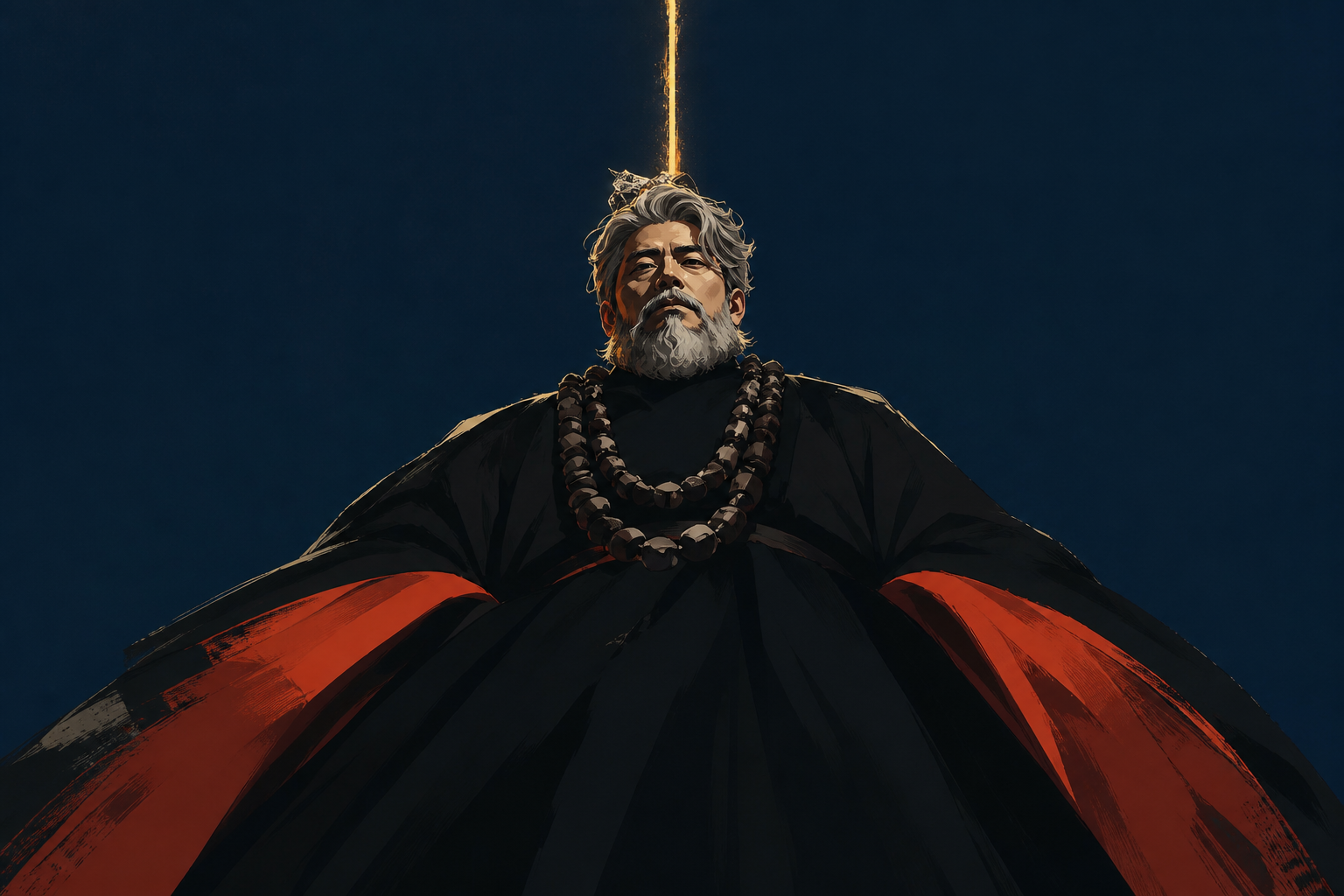
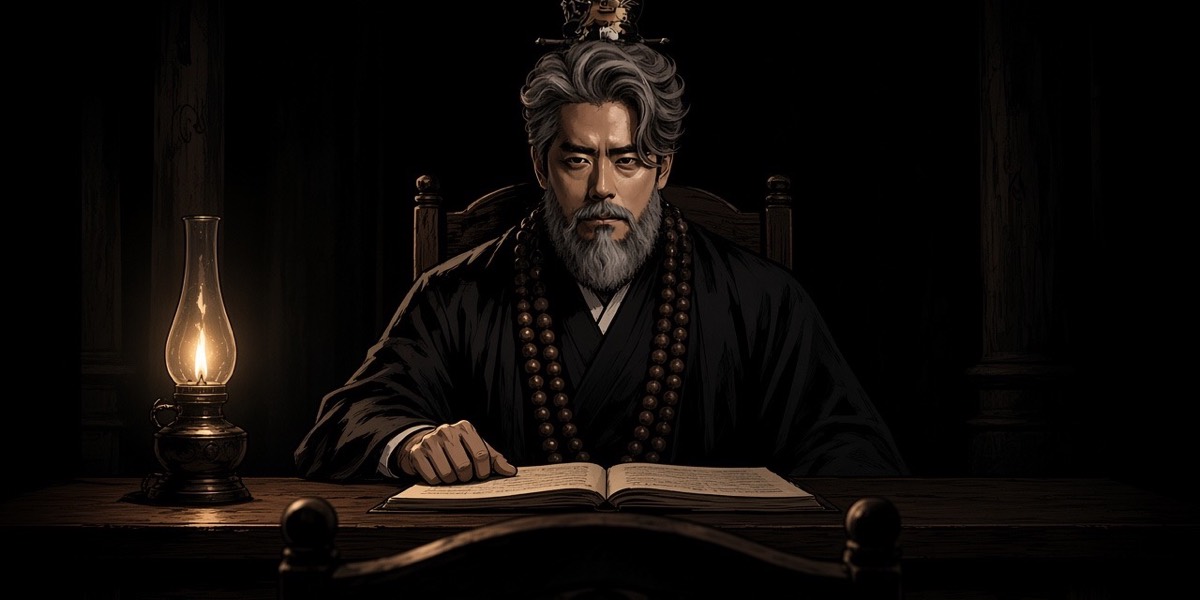
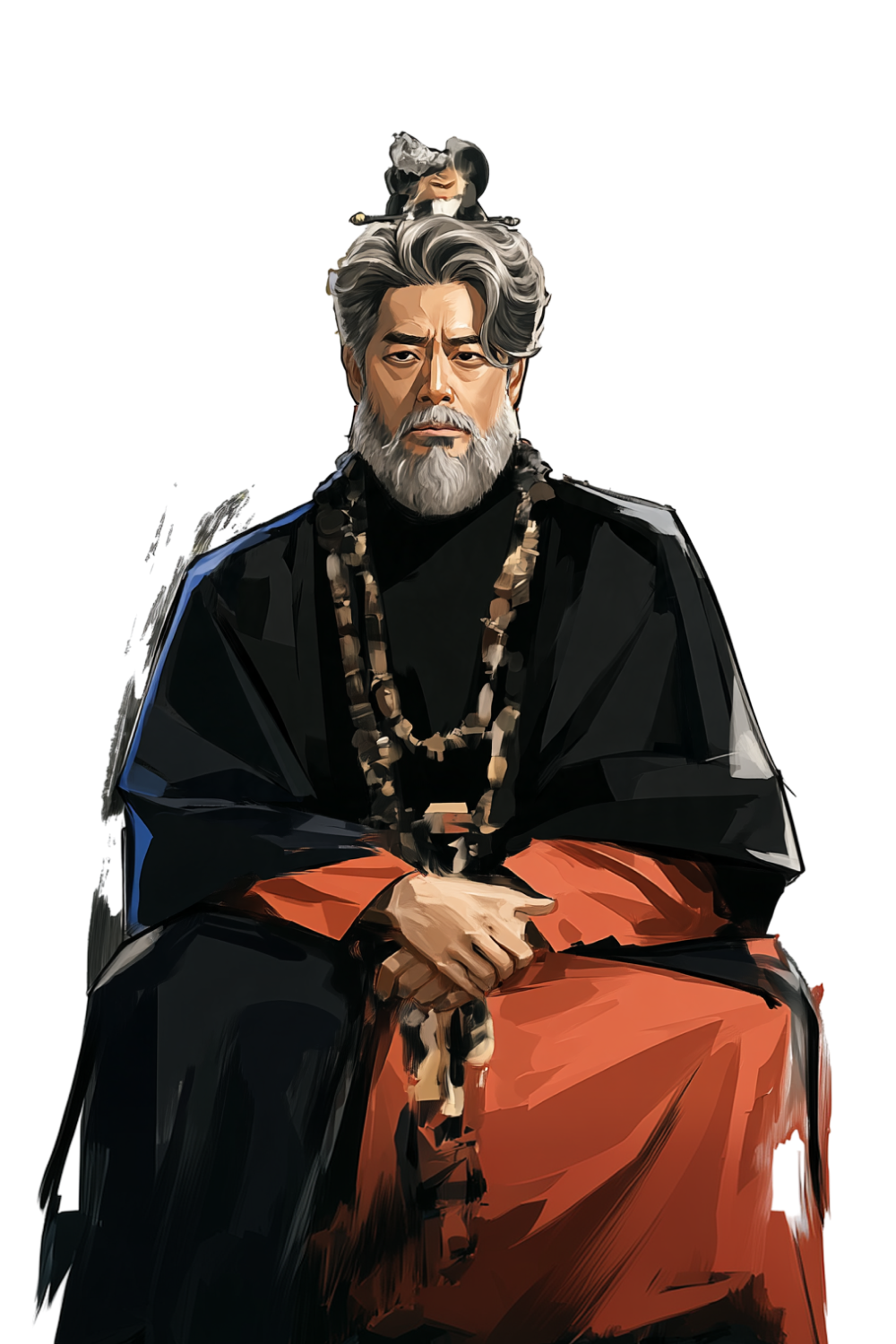
They gave him the black coat of the road. Wide sleeves. A sash that does not loosen. A hat that hides the eyes from the living who are not ready.
put the coat on. The yard went quiet the way a room goes quiet when the lamp finds the right corner.
His wife buried the body. She never learned he was still walking. The shrine got fed twice after all.
put a ledger in his hands. A ledger that told each living person their hour.
Eighty years, in order, the old before the young.
He turns the new fetch around.
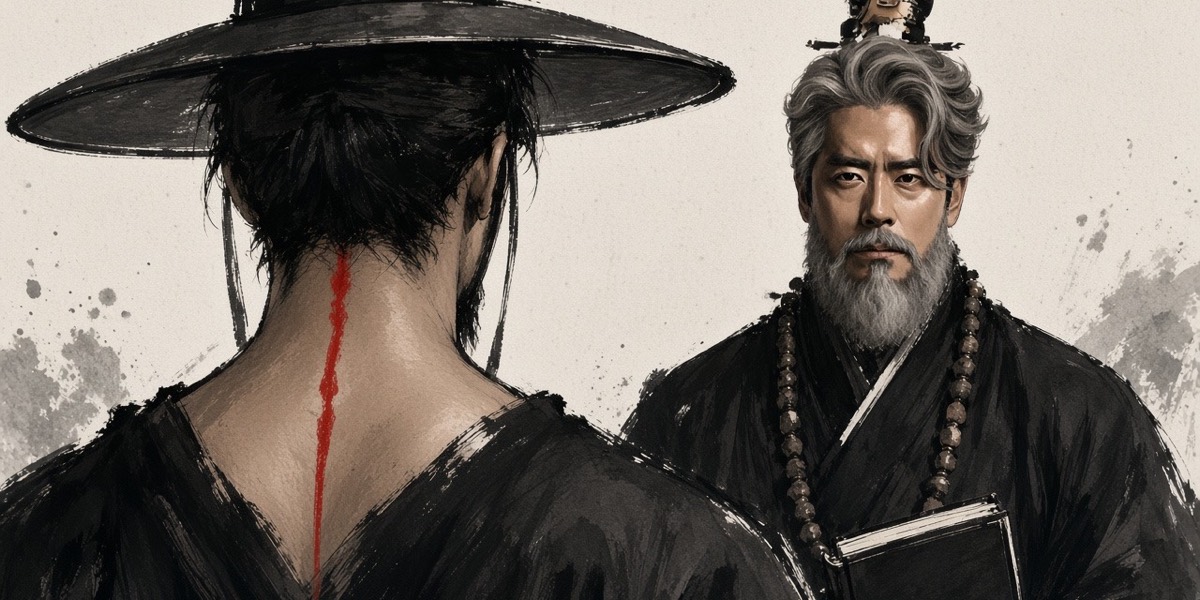
At the nape, a red cord. Thin as a vein.
Not the one from the sleeve. This one grows out of the man.
It runs out of the man and away, toward the flower rows.
On the way down, took it.
Three legs, and a red sun on the wing.
The book came apart in the beak. A snake ate the scraps.
The torn pages swapped the hours. When it is the old one's turn, the child comes. When it is the child's, the old one comes.
The hour does not come in a just order.
That is why he asks a question at the threshold. Not for mercy. The cord stays until the soul has answered.
That is why nobody knows the hour until he is already in the room. One errand was left: a man who had dodged death for three thousand years.
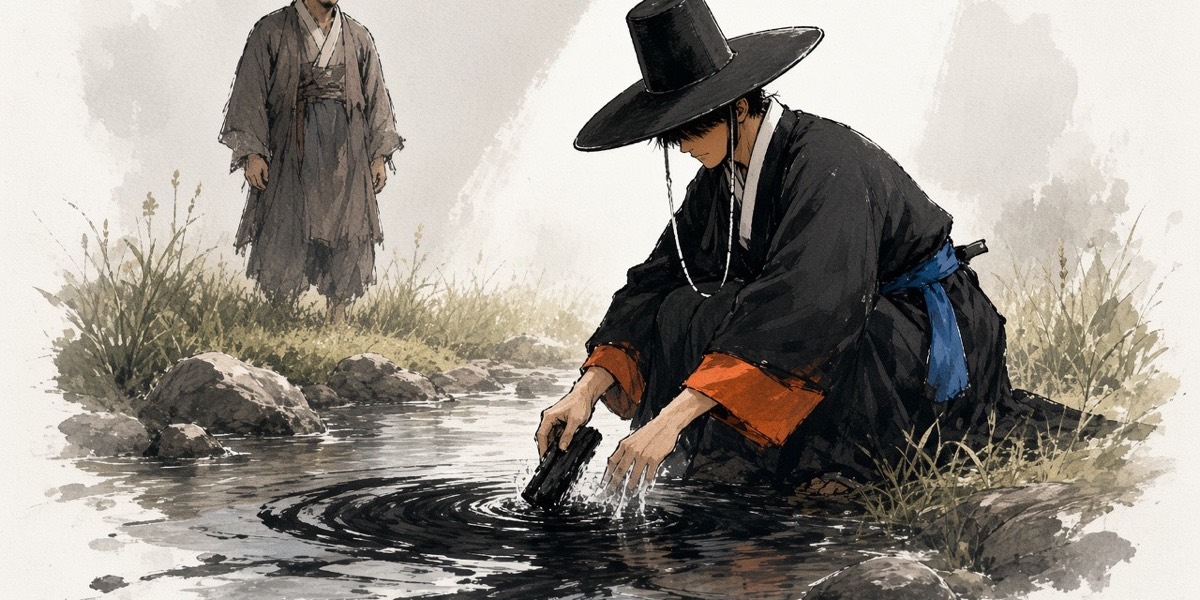
sat in a stream washing charcoal. The old man stopped to laugh at him. That was enough.
He still asks it, the question. You have heard him. You will hear him again.
Oranges are the island’s tax, and they ripen in winter. Every basket bound for is counted on the sand. For once, is the most useful man on the beach.
Another line in the ledger.
The last basket is full. The captain comes up the sand for the tally and keeps his eyes on the baskets.
The captain takes the tally stick and goes back down to the boat without a word. does not ask twice. He picks up the next basket.
Death has its man. Down on the living side, one woman makes an island, and she is enormous…!
