

















Chapter 41

Haemosu


AI Summary
- Habek's Court The copper is still warm when the river notices.
- Buyeo From the river, Buyeo’s capital is a palisade of timber teeth and a hill of grey roofs.
- The Egg Buyeo tries very hard to get rid of the egg.
- The Mark-Stake Grown, they still shoot at the princes’ mark-stake.
- The Side Room Gumwa will not take the heir’s counsel, so Deso takes the ministers into a side room.
- The Stable Yuhwa comes to the stable after the lamps are out, a river-daughter in a frog-king’s straw, and finds her son brushing the best horse in Buyeo as if he could apologise t…
- The Knife Before the next hunt, a knife comes through the dark of his room.
- The Flight They split in the pines before the river, four men and one horse between them, the one Gumwa thought was thin.
- The Crossing
- Characters
Episode· 612
Haemosu
Every day the sun crosses the sky on the same road. Today he looks down.
- Jumong
- Lady Yuhwa
- Haemosu
- Queen Buyeo
- Habek
- King Gumwa
- Deso
- Wihye
- Hwahye
58 stills without a cue
Every day the sun crosses the sky on the same road. Today he looks down.
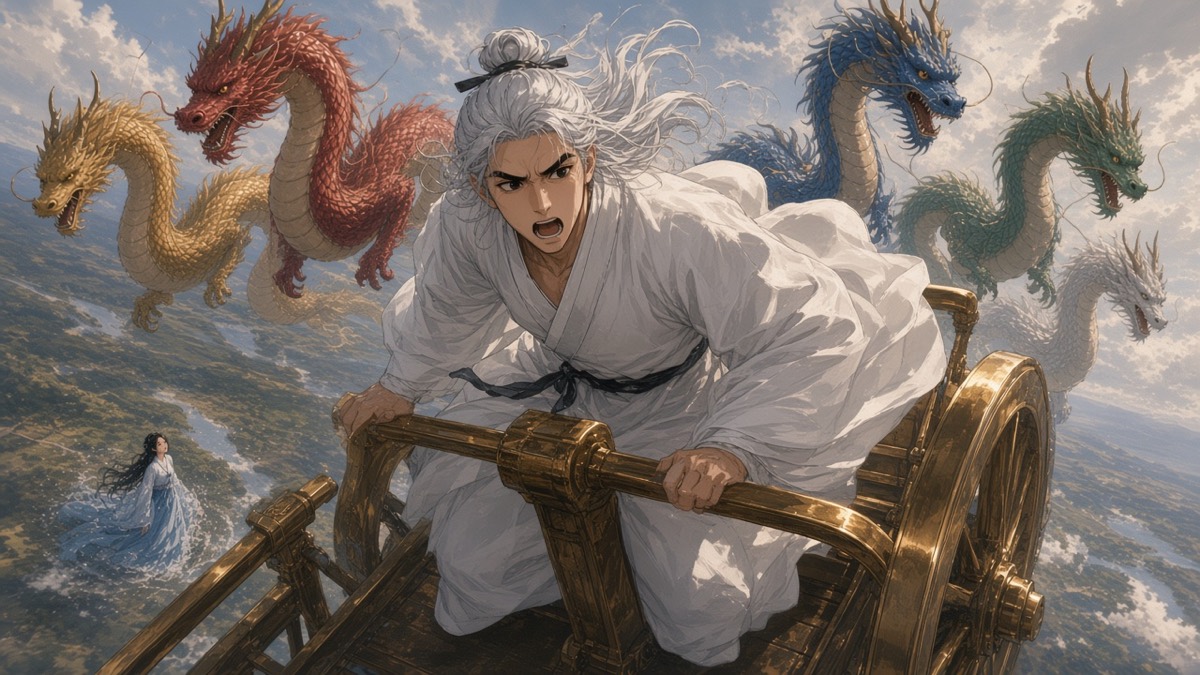
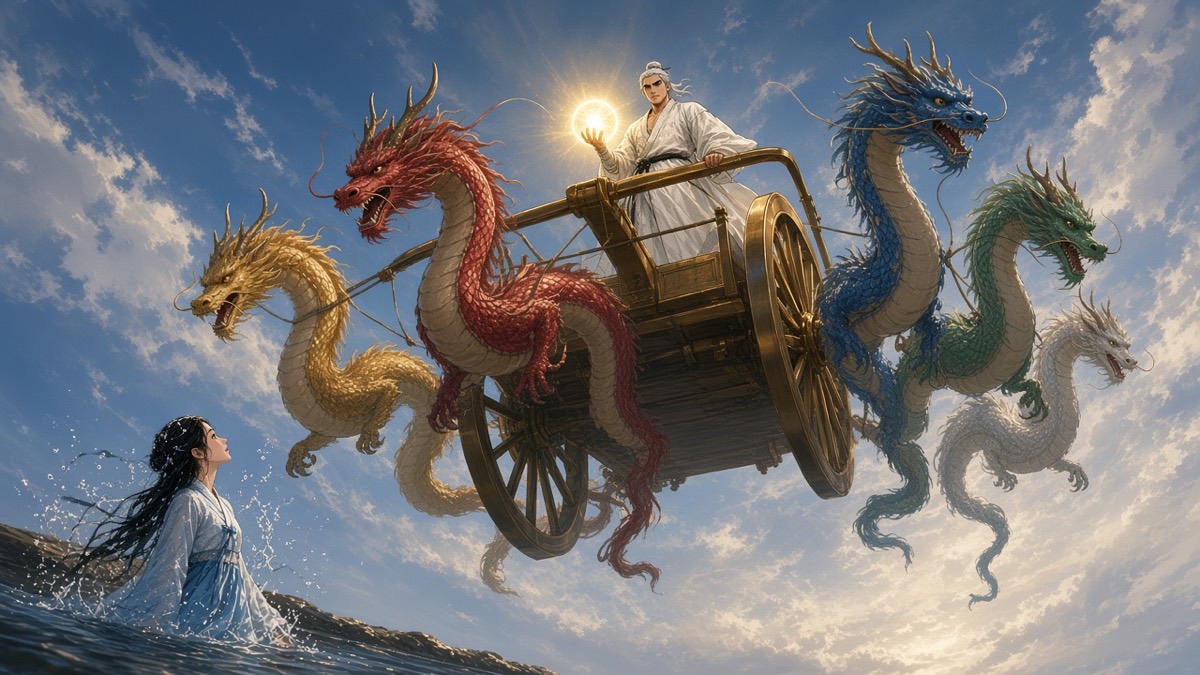
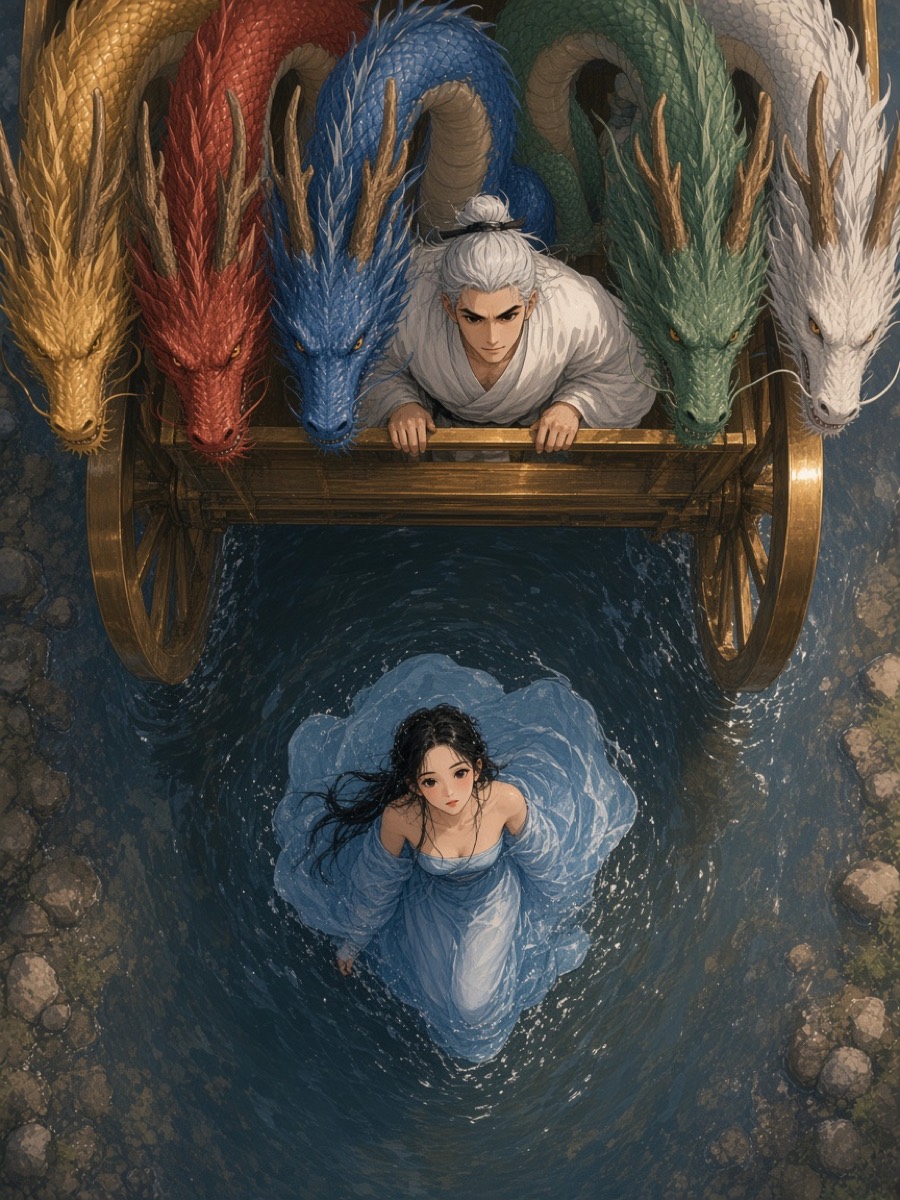
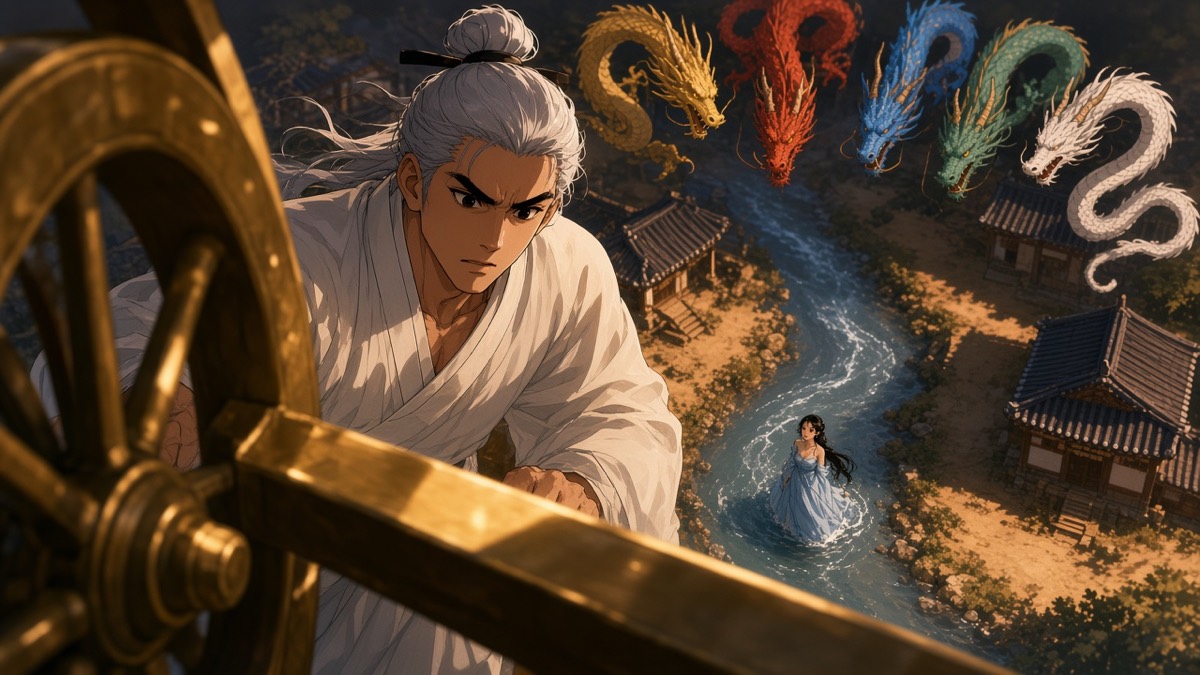
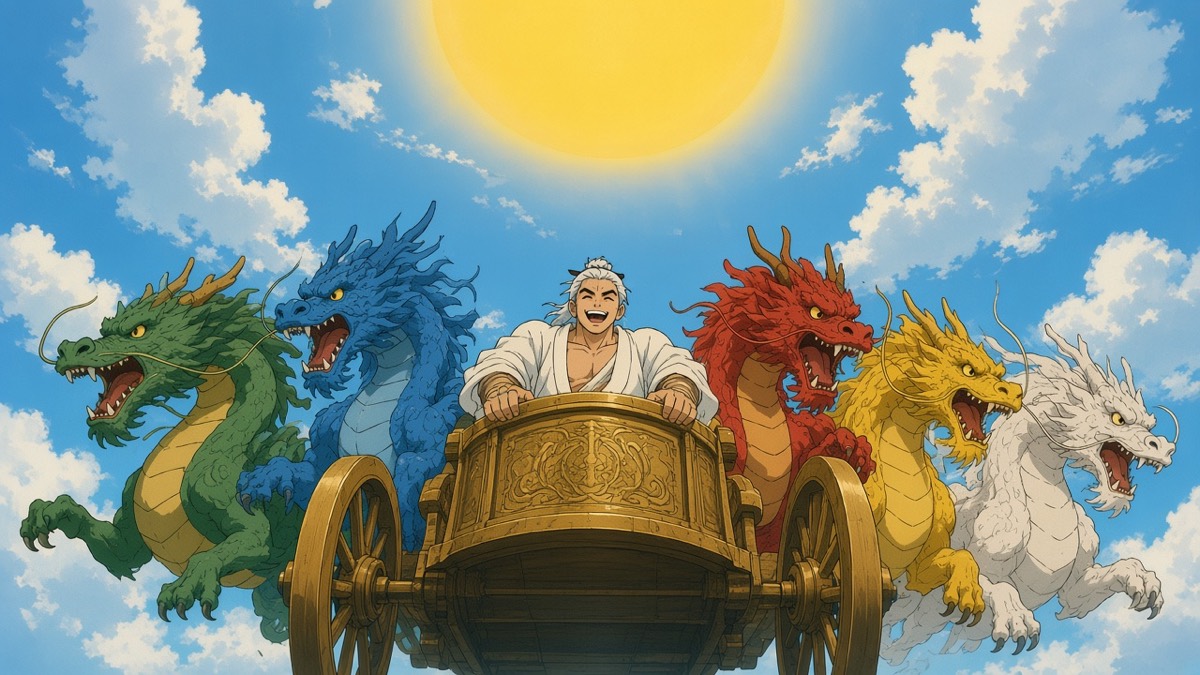
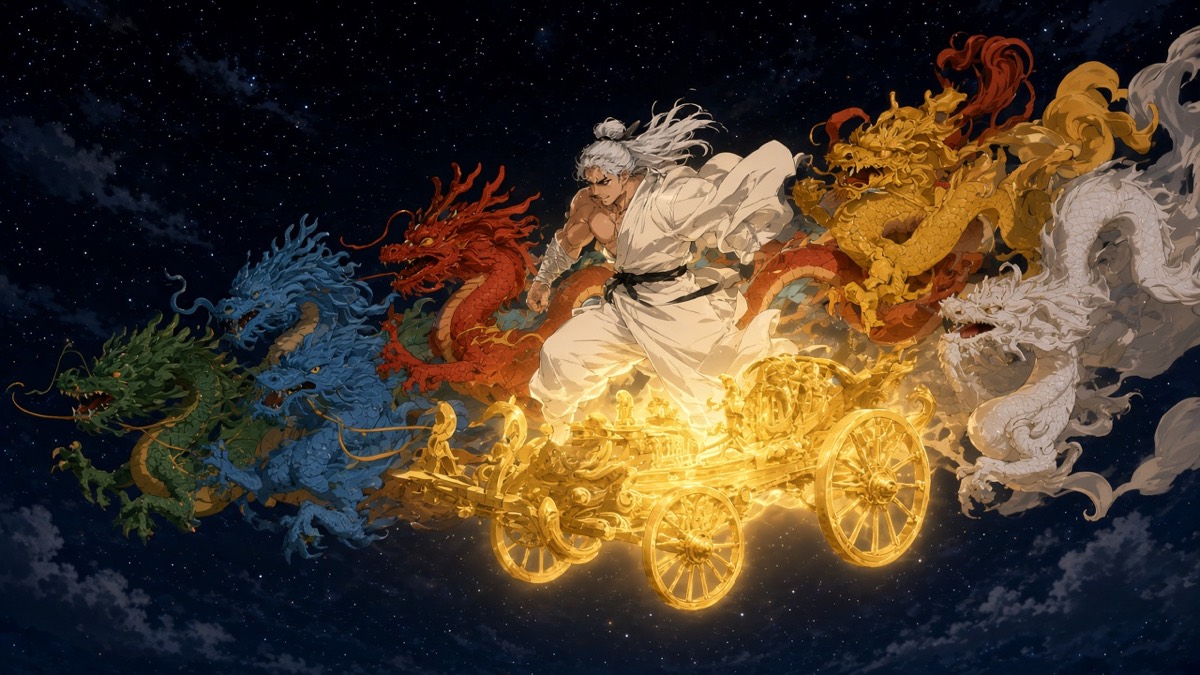
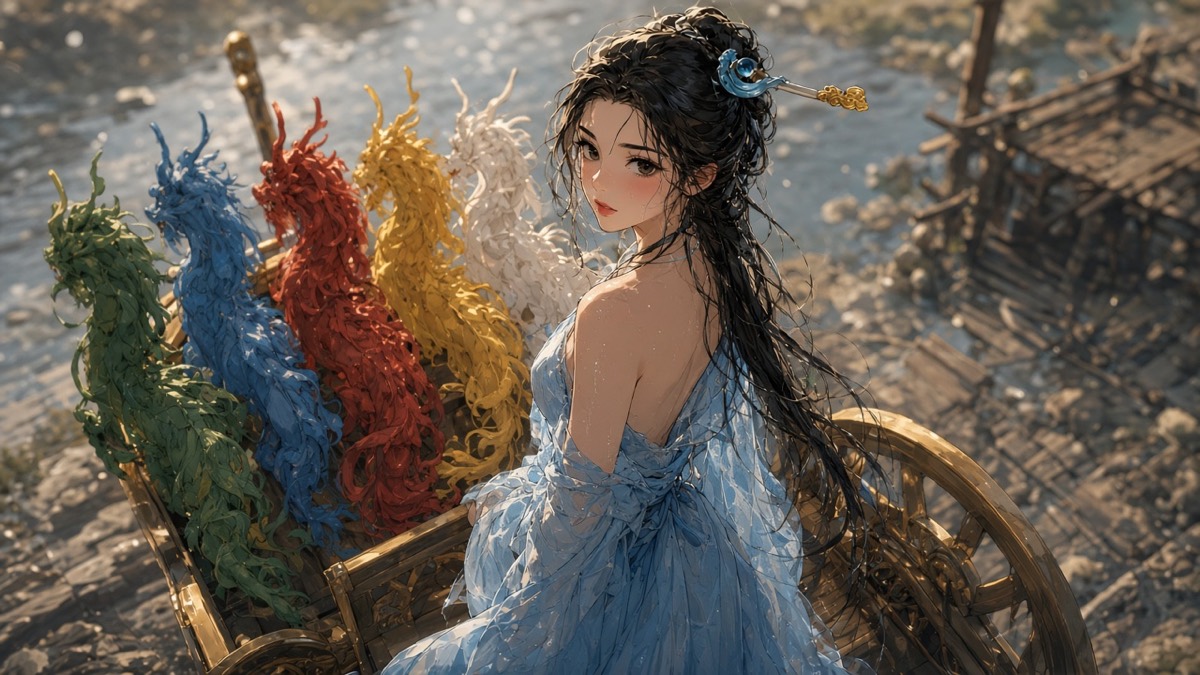
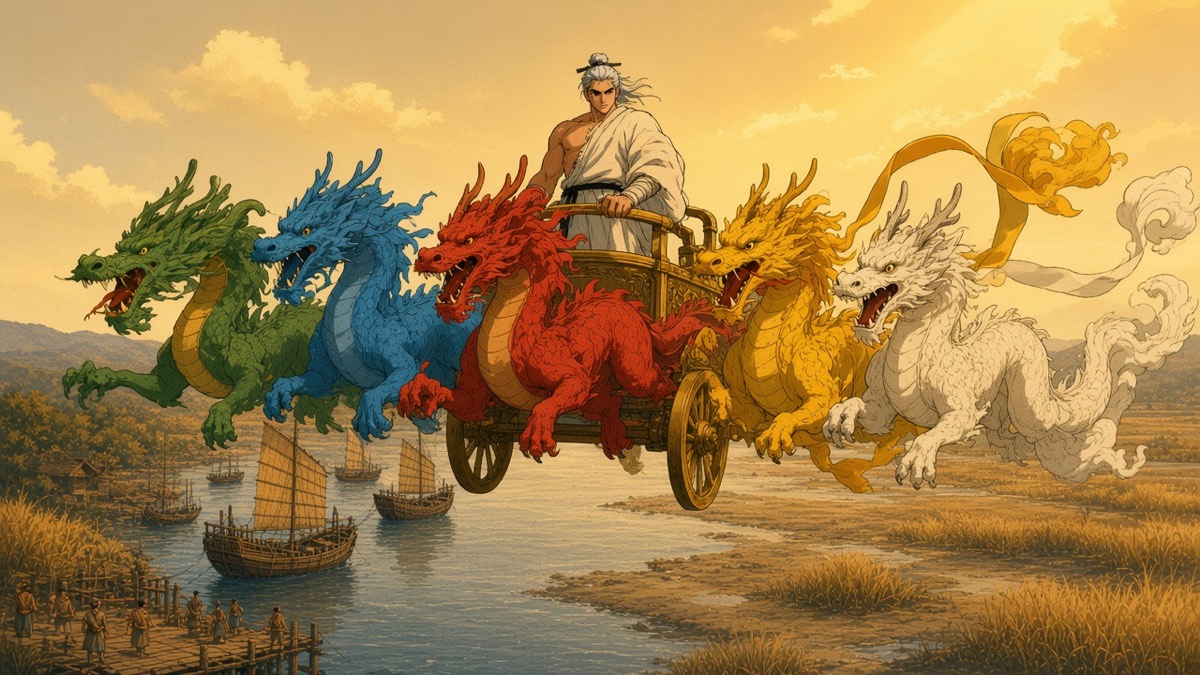
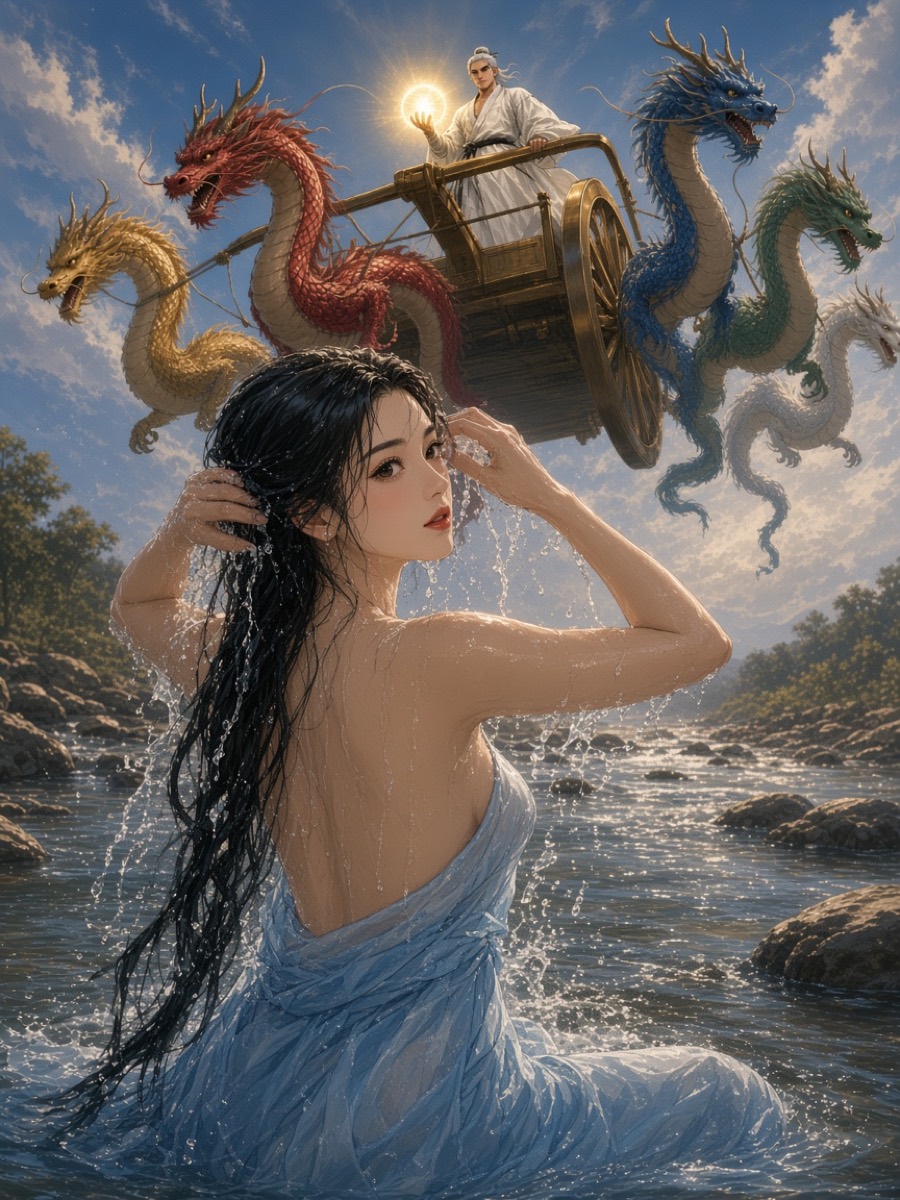
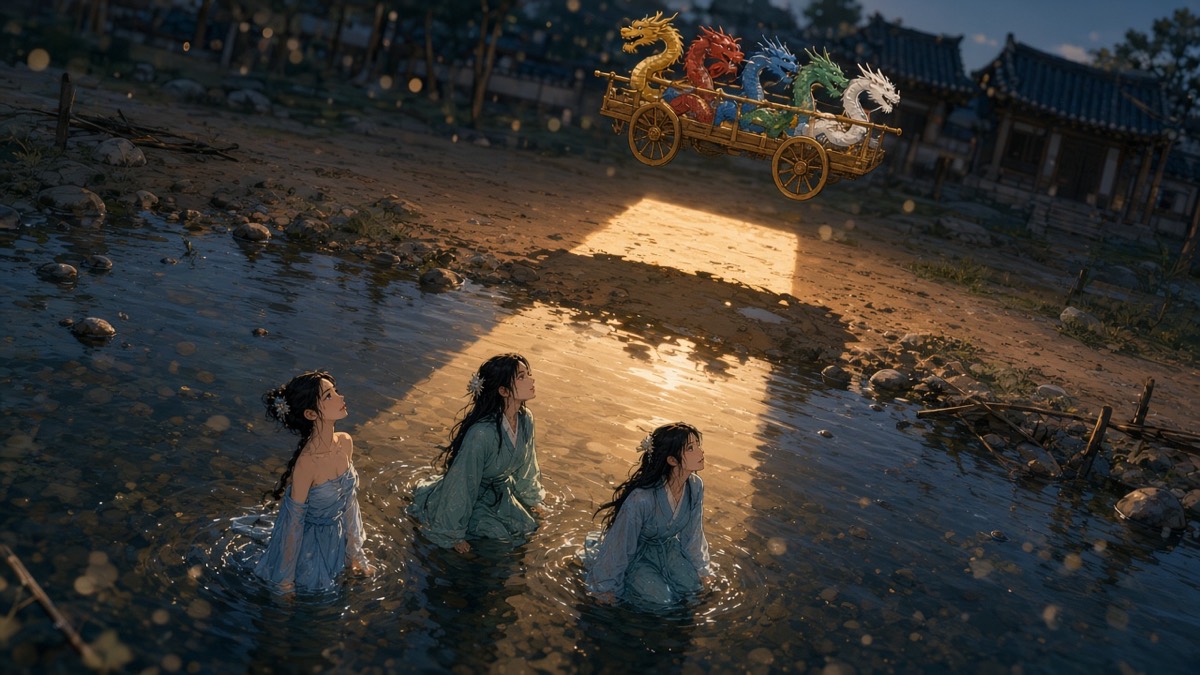
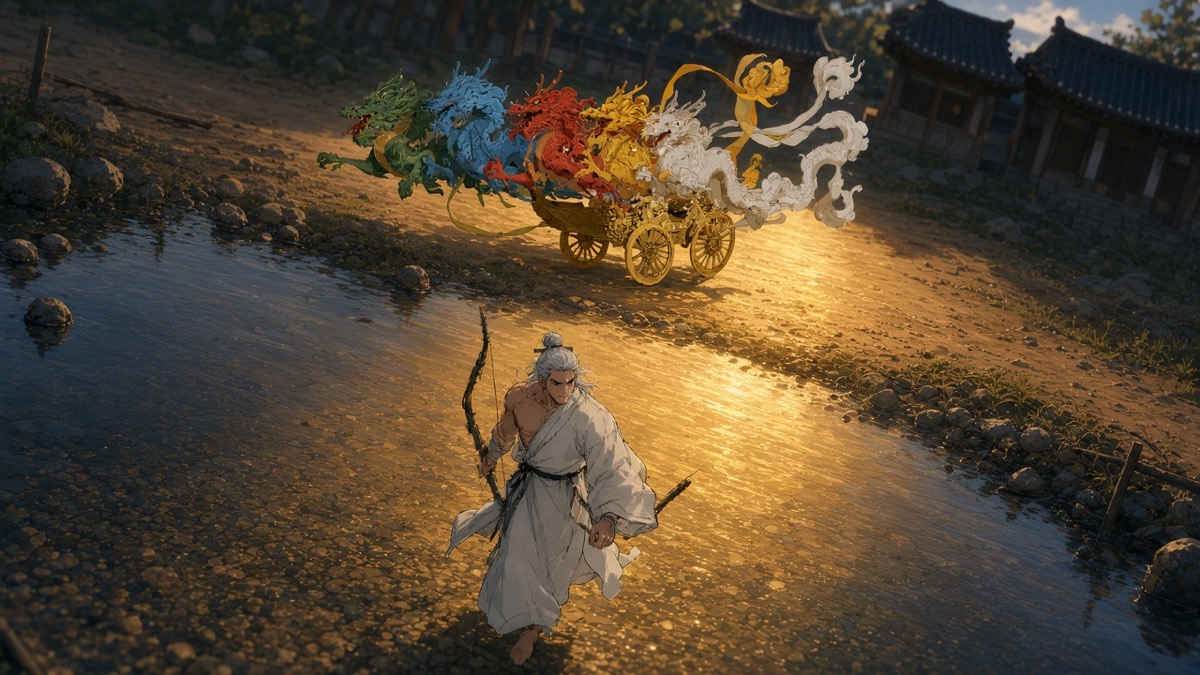
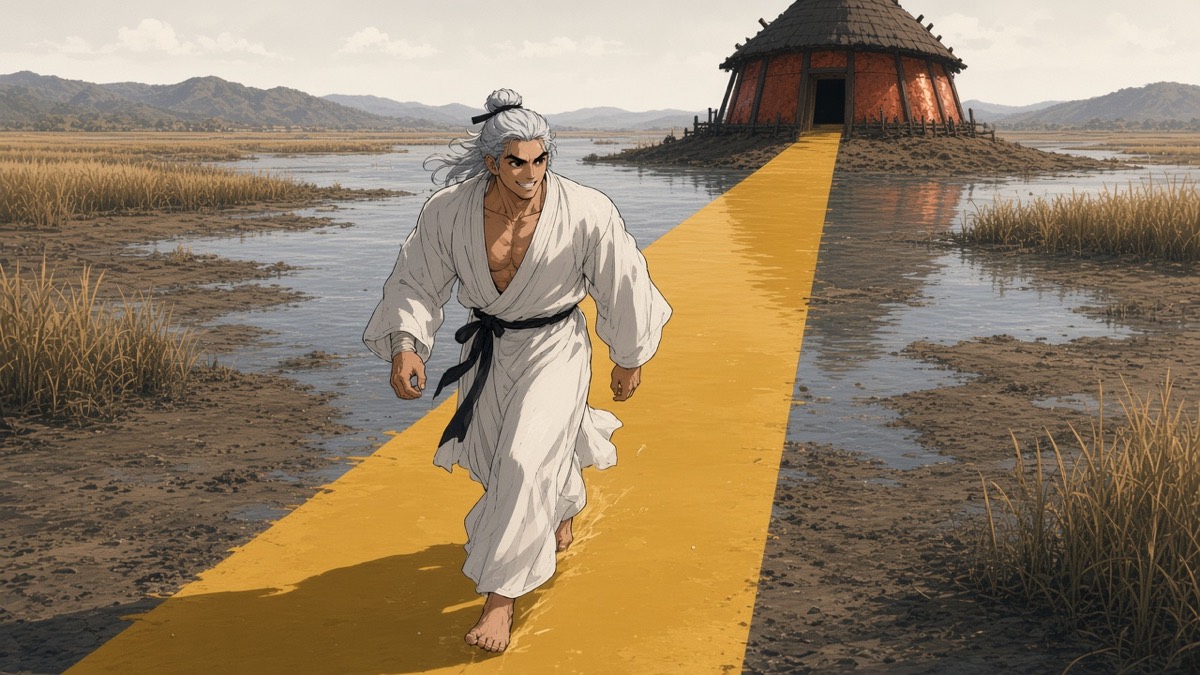
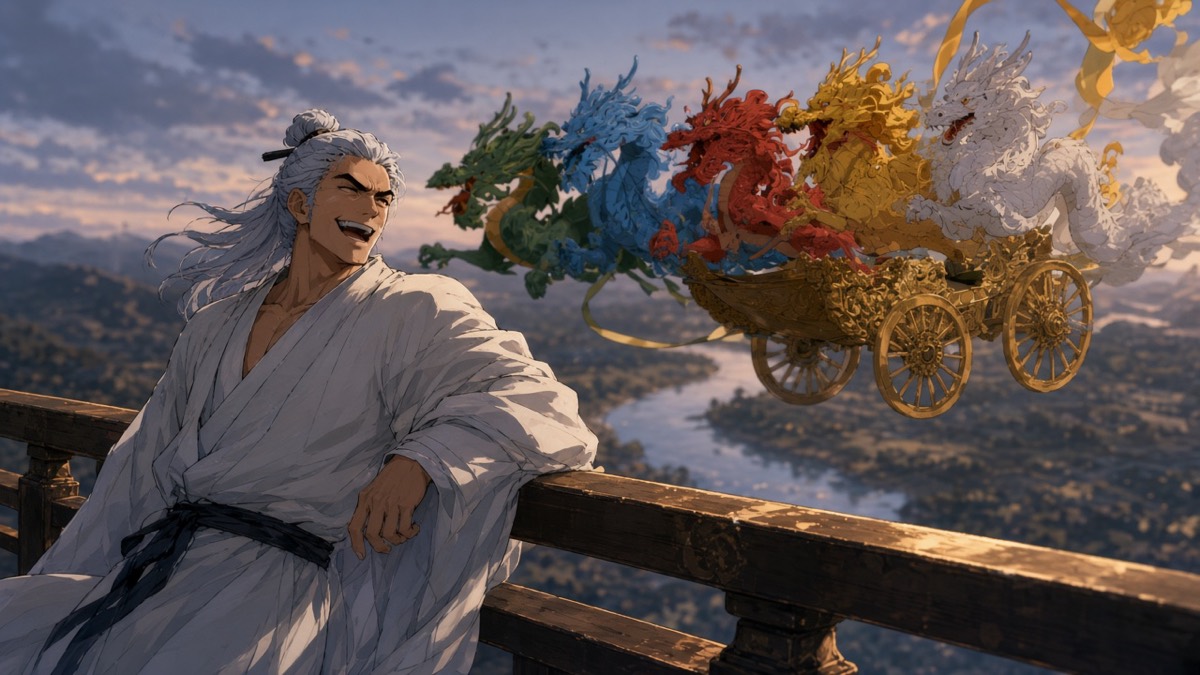
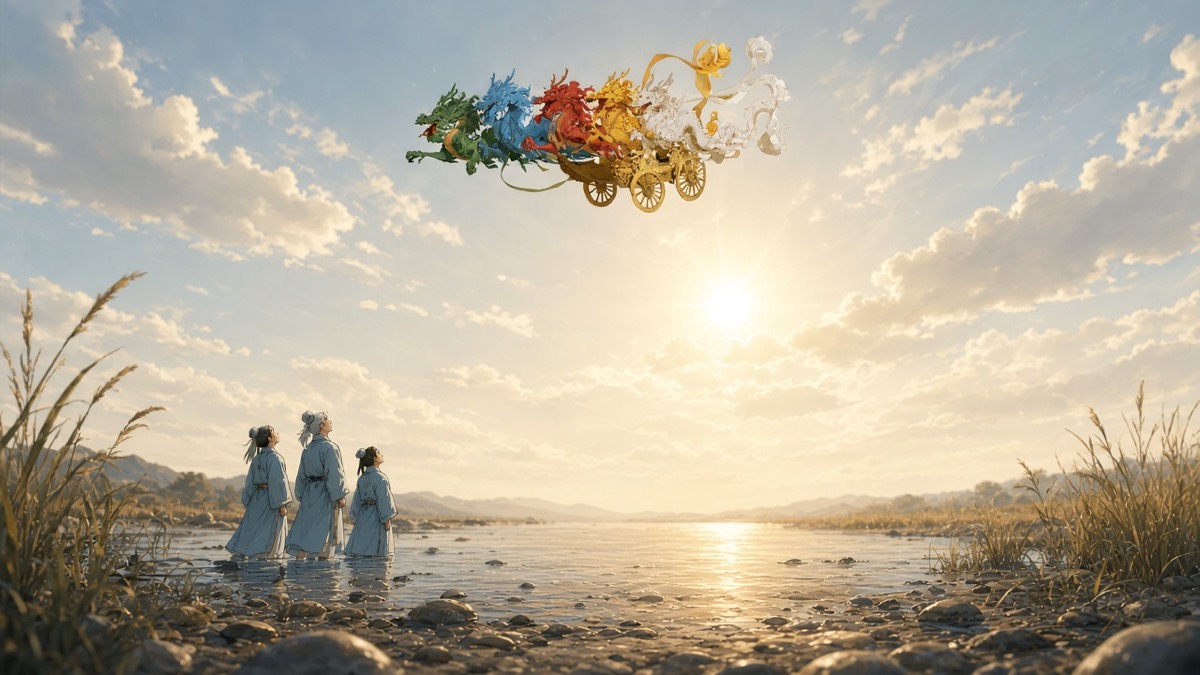
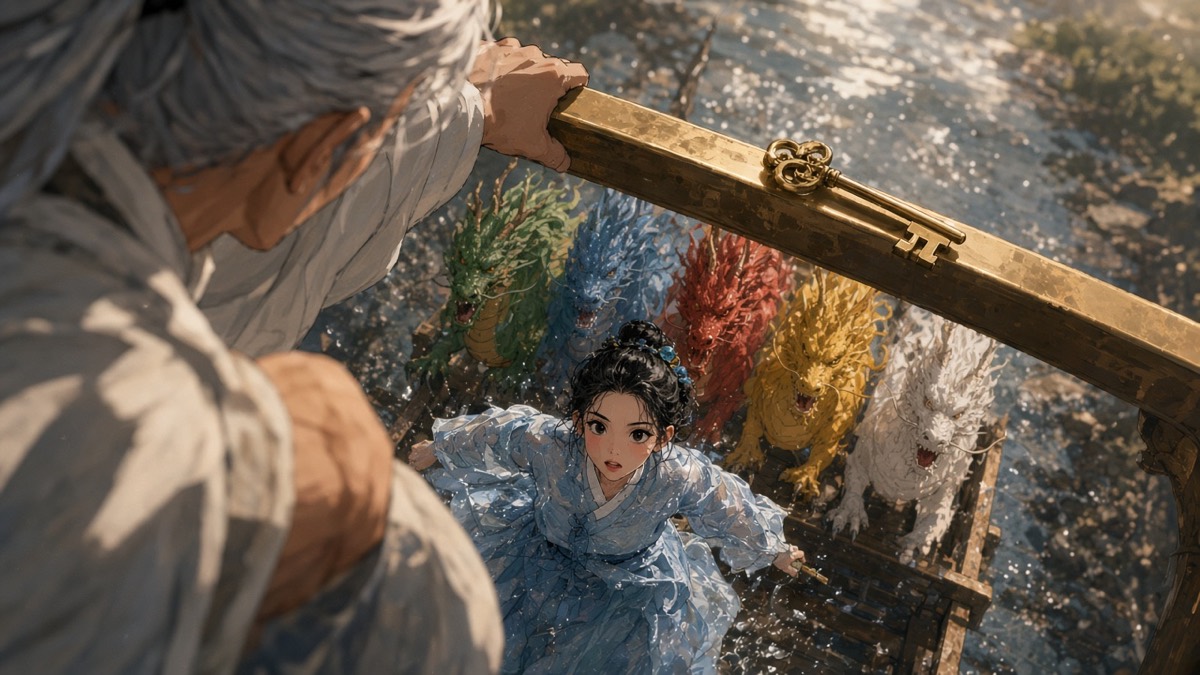
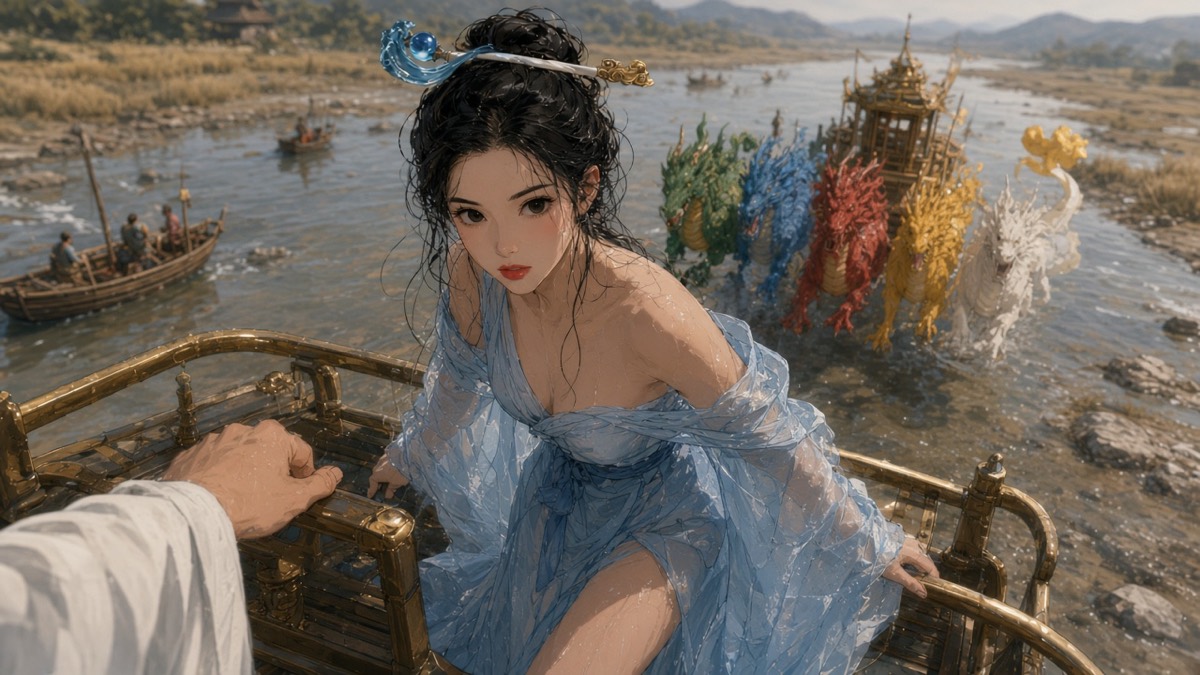
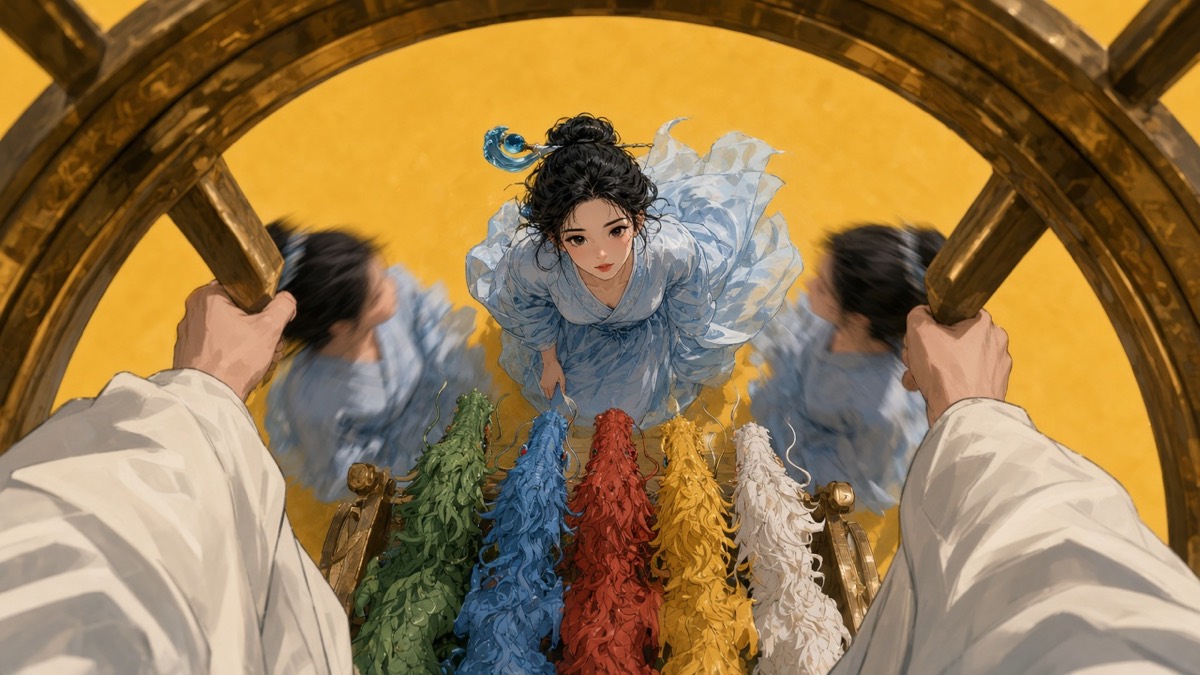
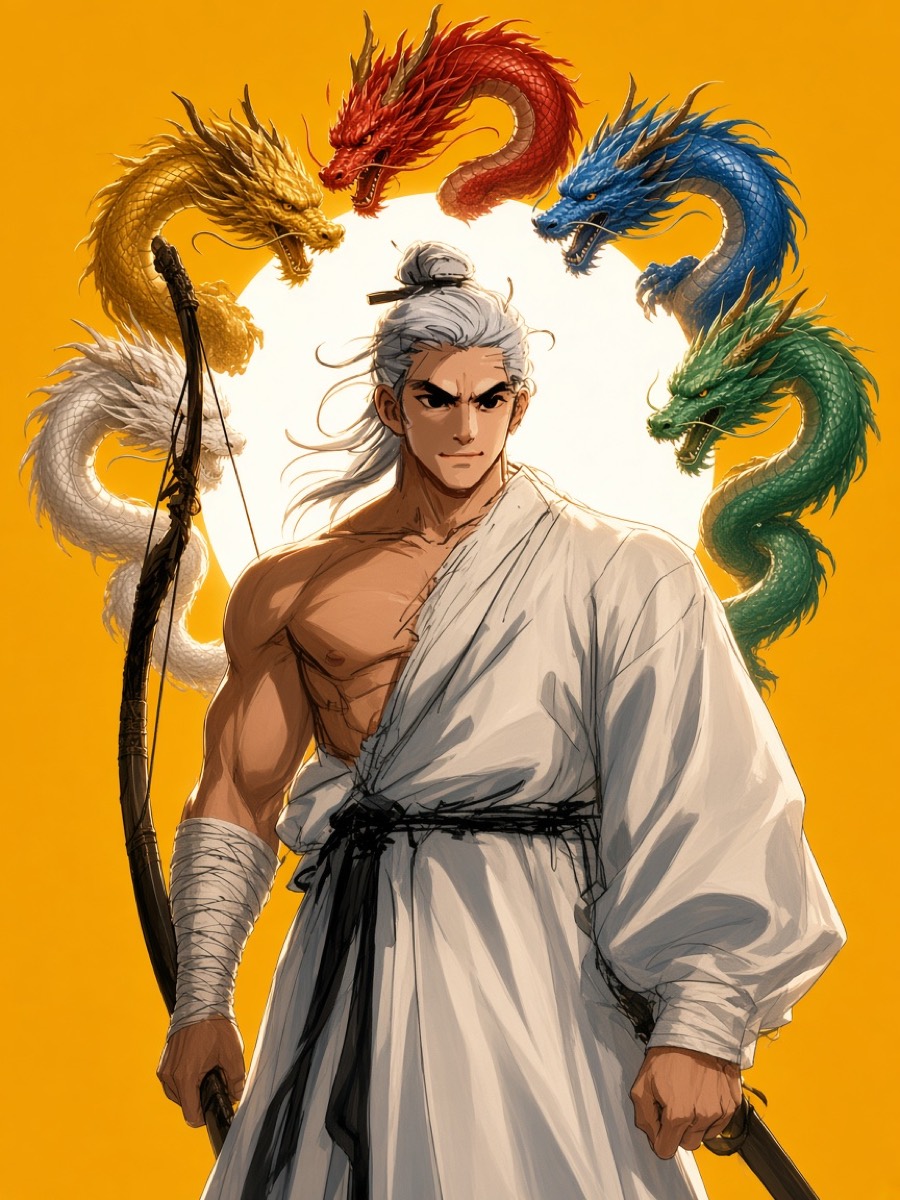
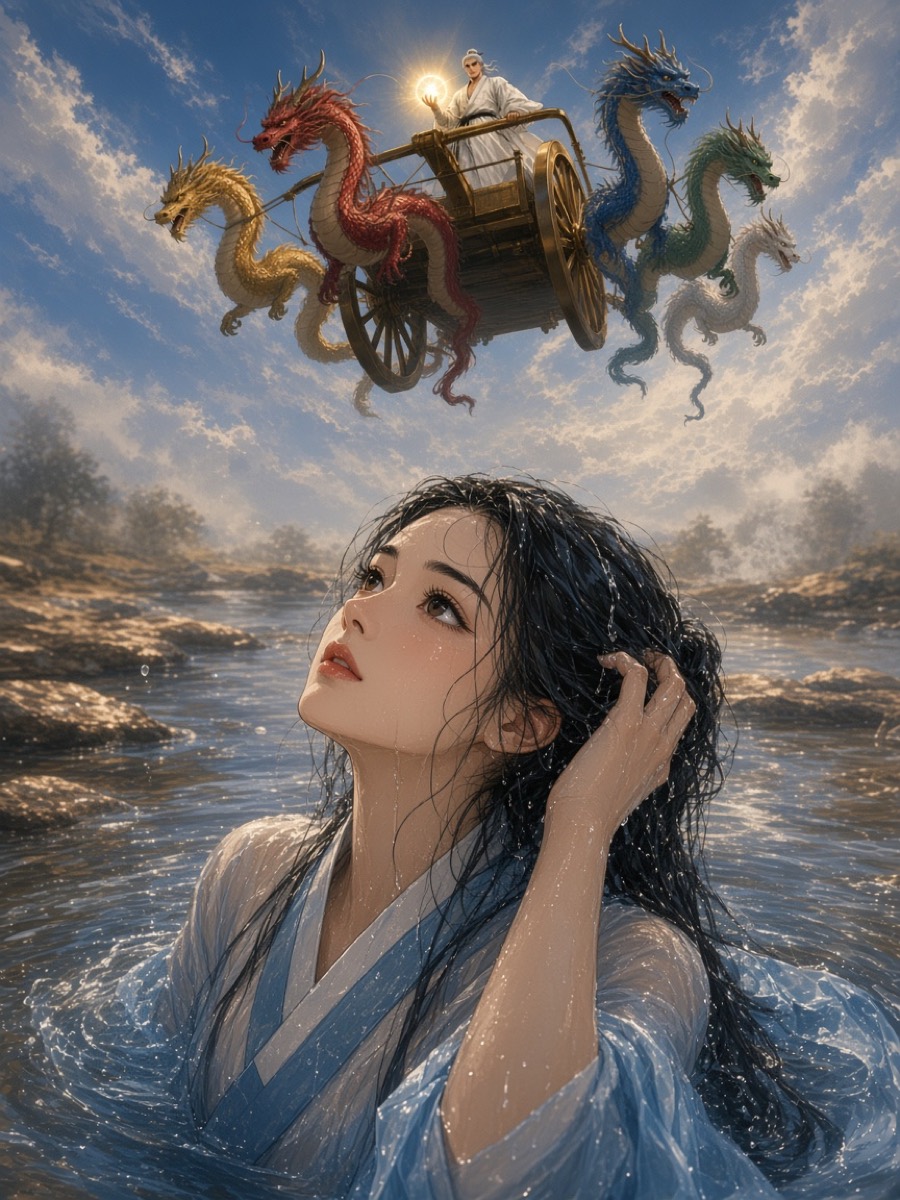
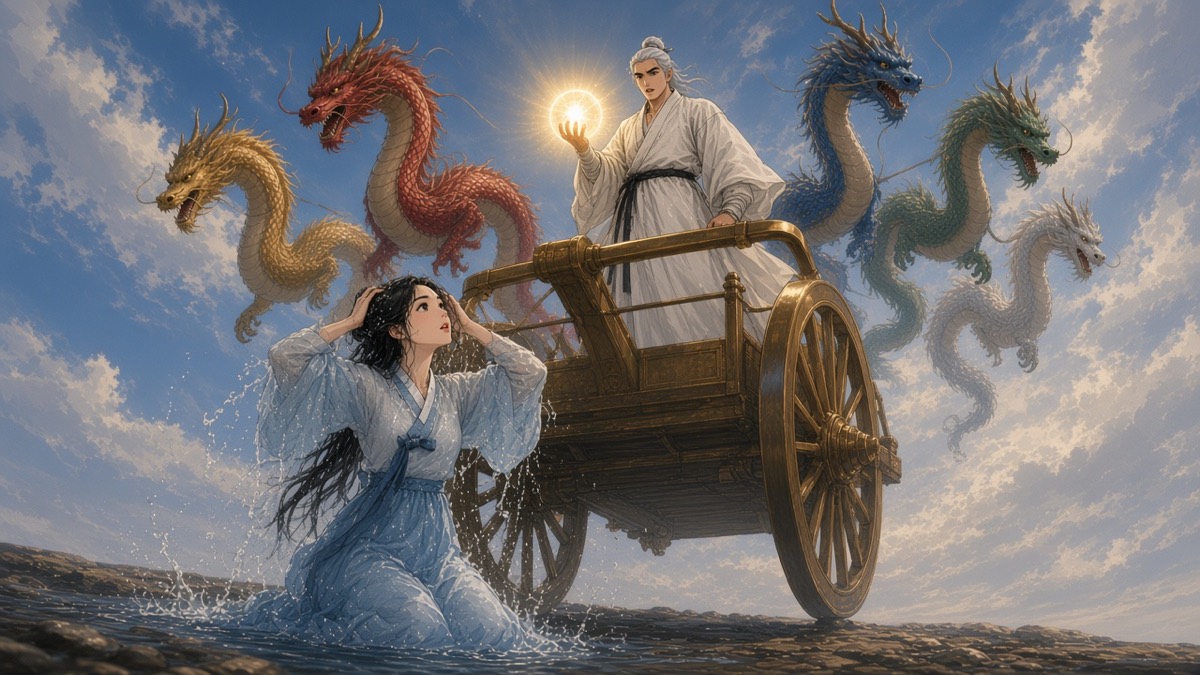
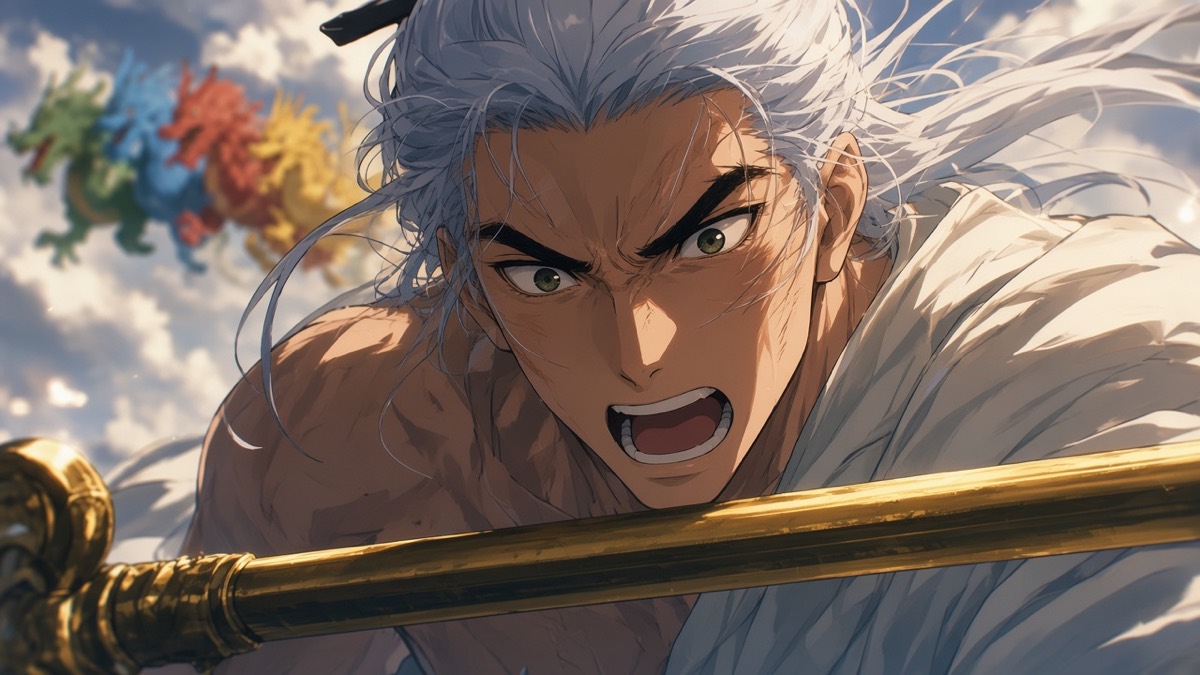
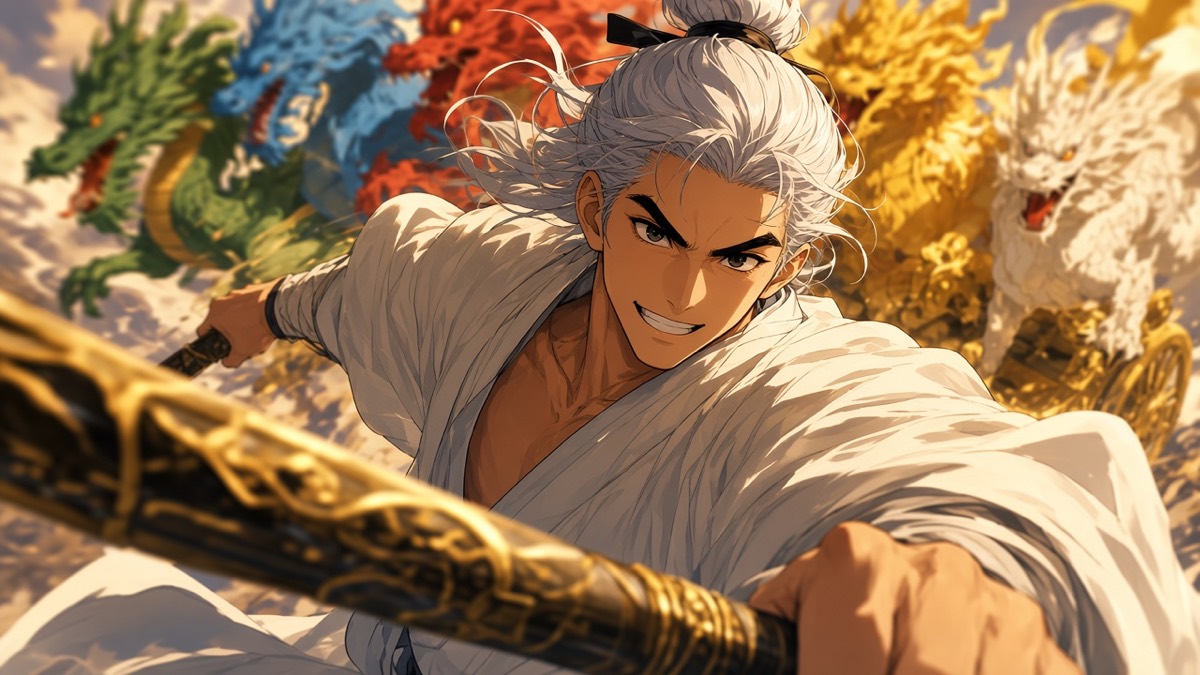
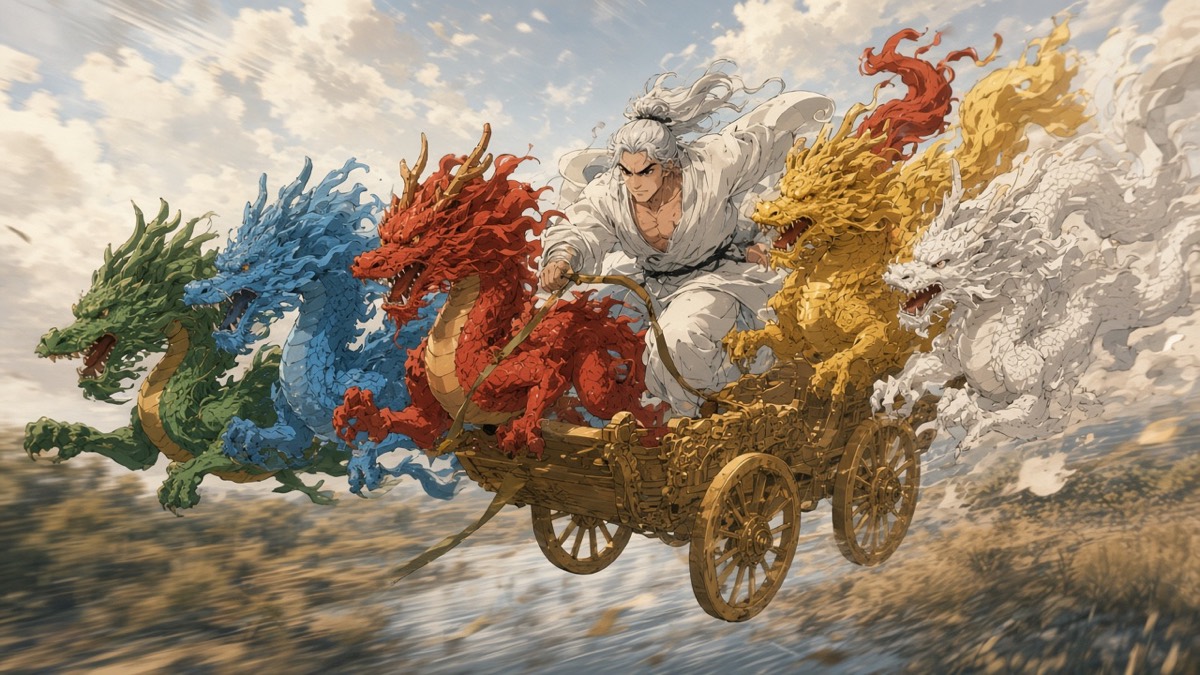
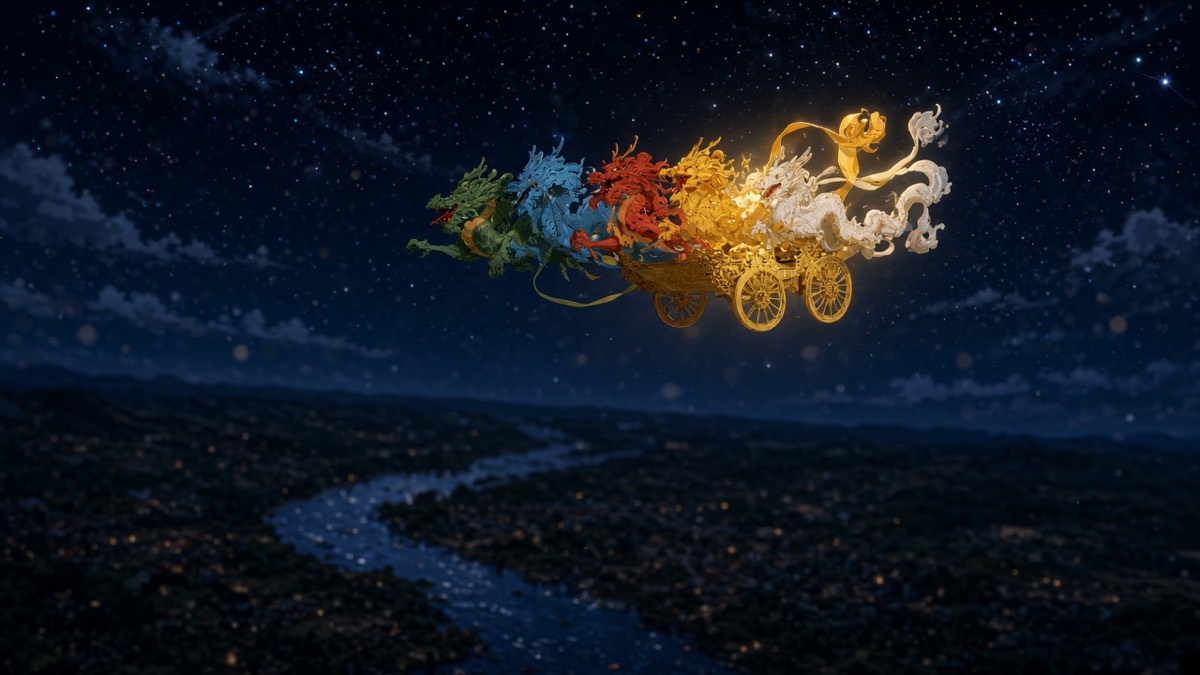
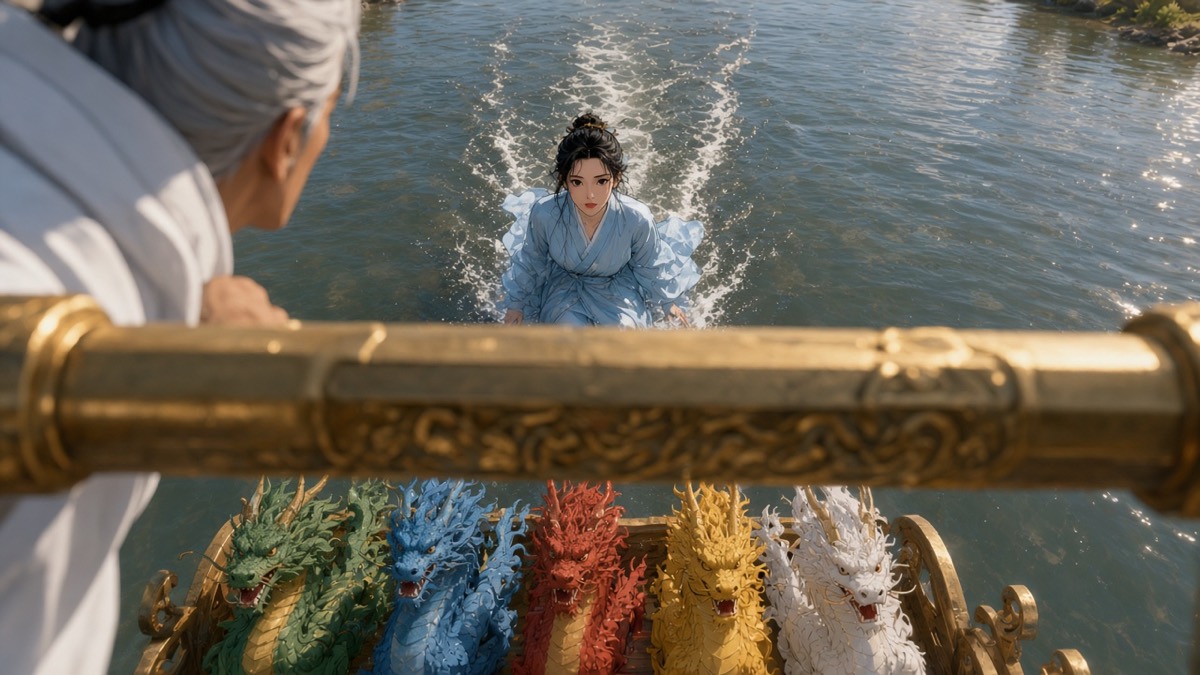
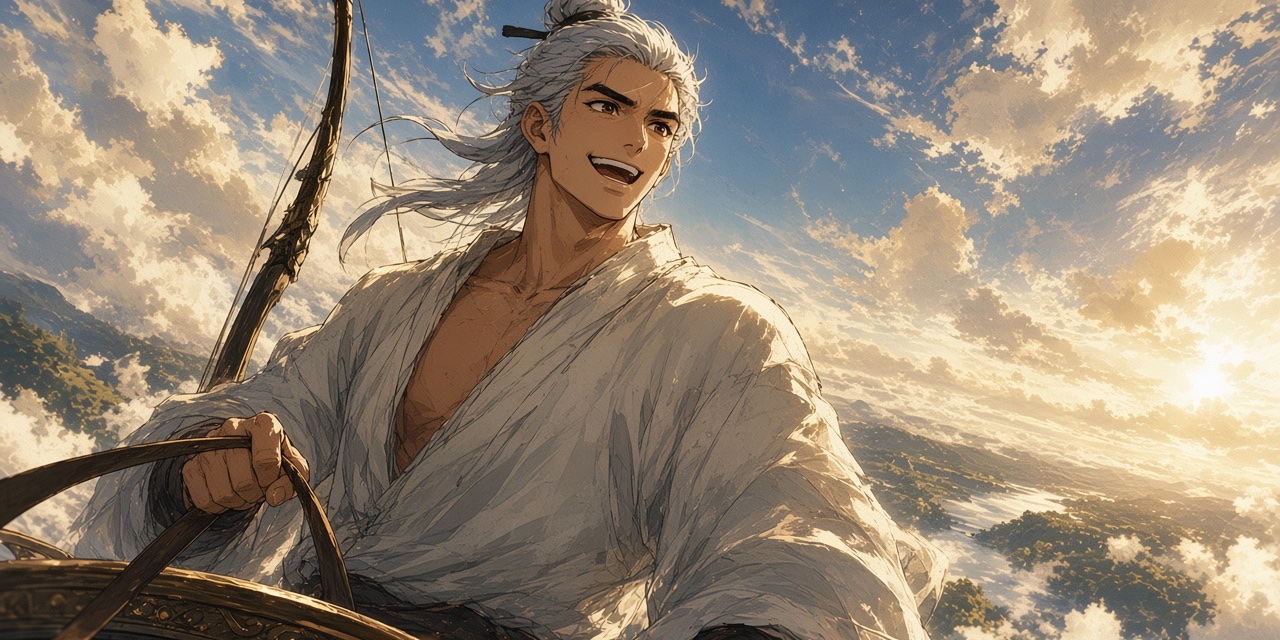
The sky is empty first. Then come five dragons in the yoke, gold, crimson, azure, jade and white, and behind them a small gold chariot cutting the noon on the run they make every day. From the ground it is a fleck and a wheel, nothing a bather could call a face. The driver stands in it the way a man stands in a doorway he owns, one palm on the rail, laughing at nothing in particular.
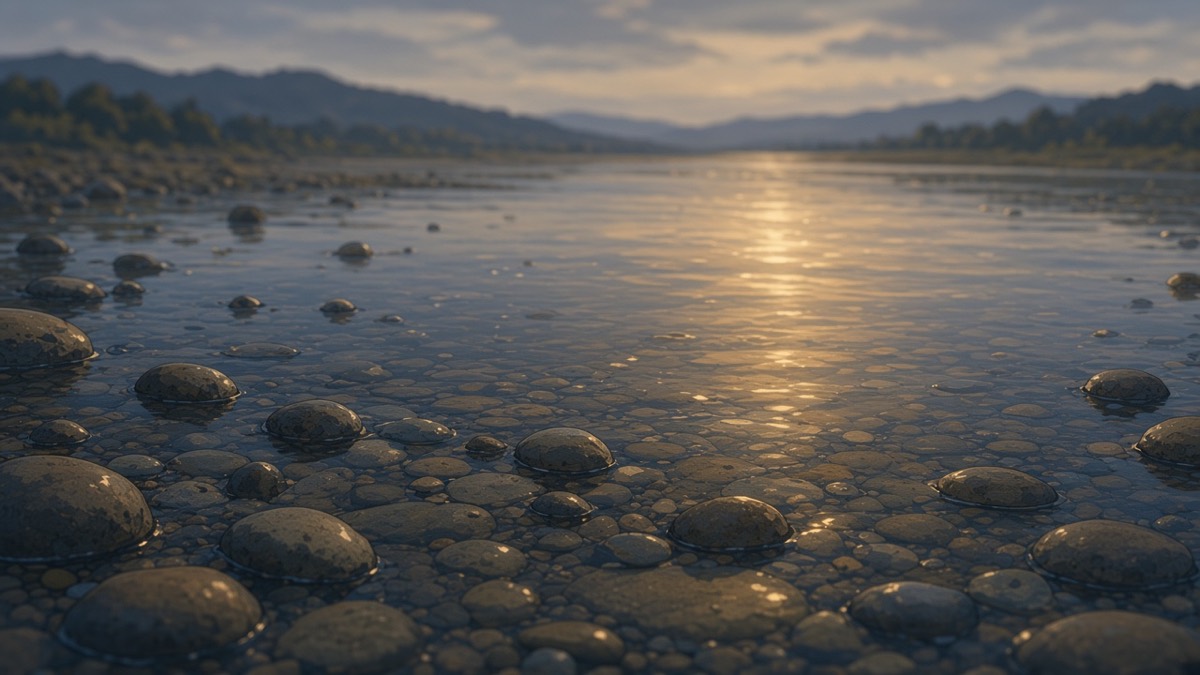
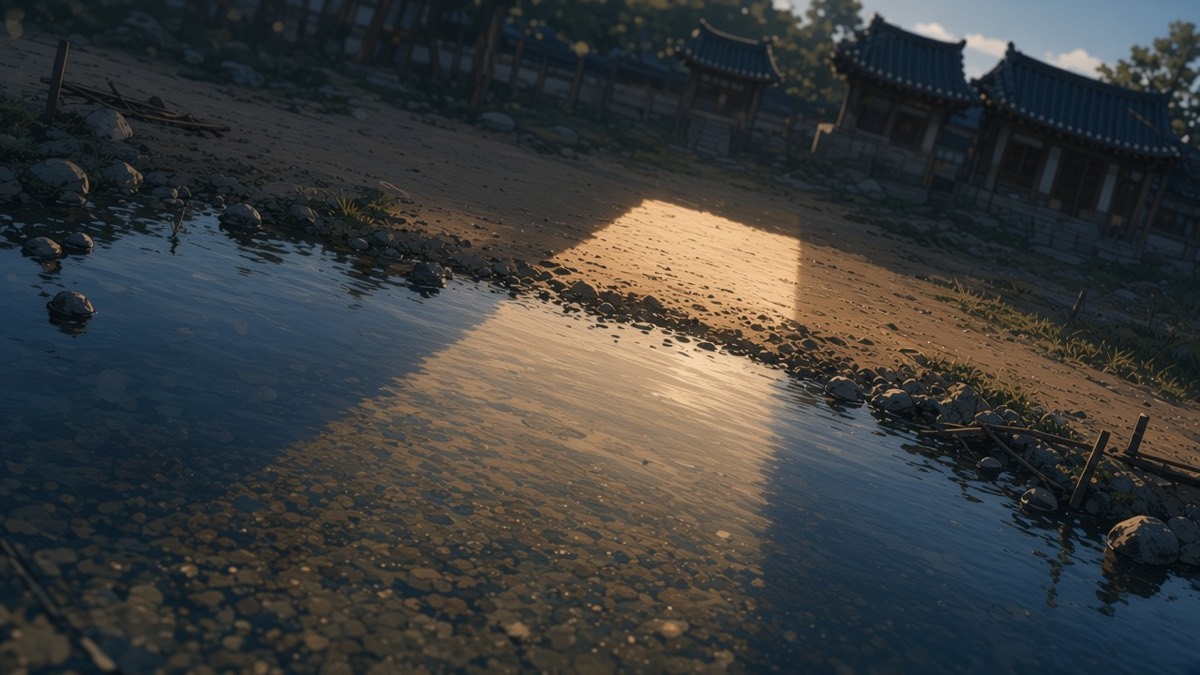
Dawn, noon, dusk, night, always the same route. Below, is a line he is not supposed to break: wet stone, morning shallows with no boat in them, rocks that are only rocks.
, god of the sun, has kept this hour since before the river had daughters. Today flashes under the wheel. He looks down, and the hour breaks.

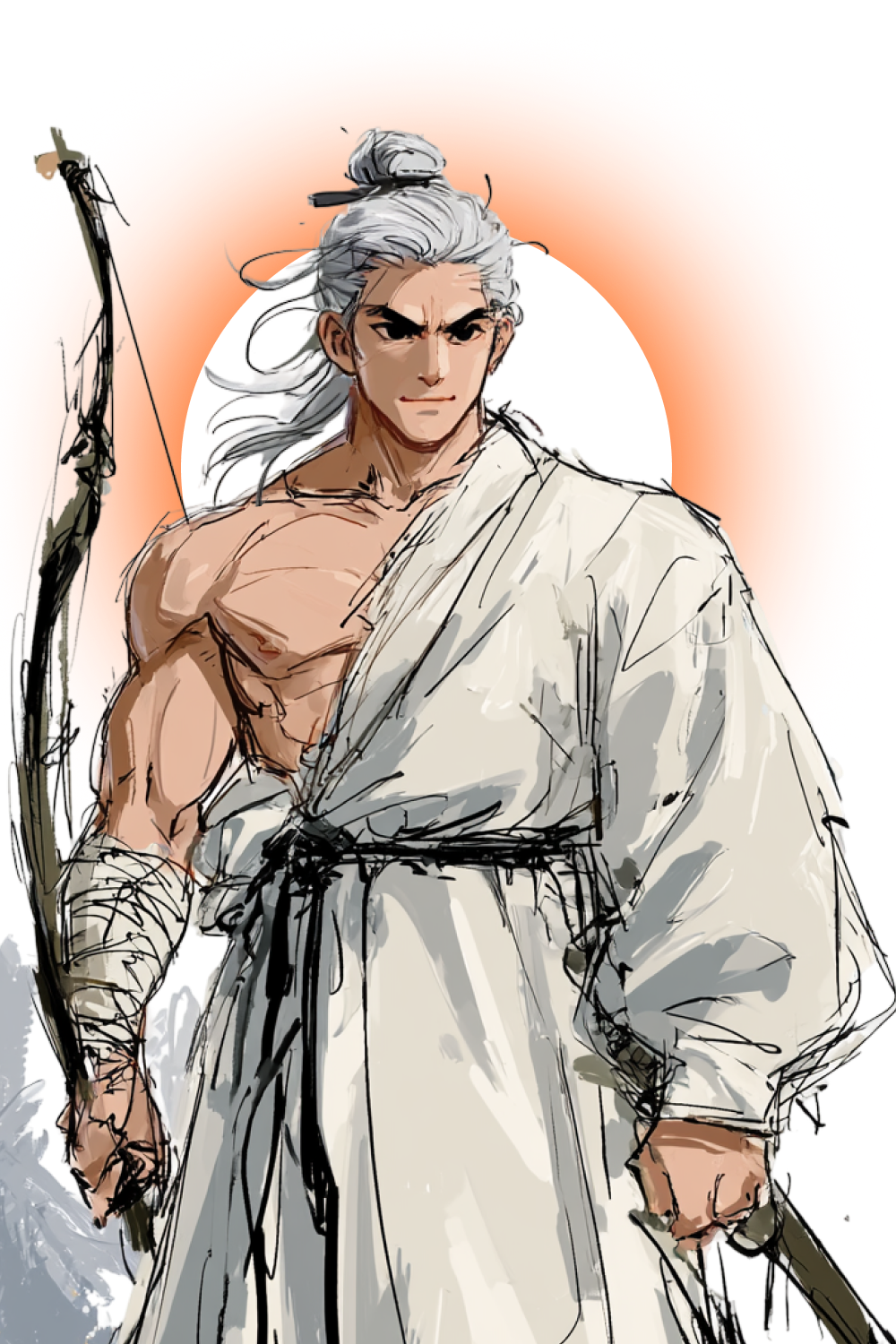
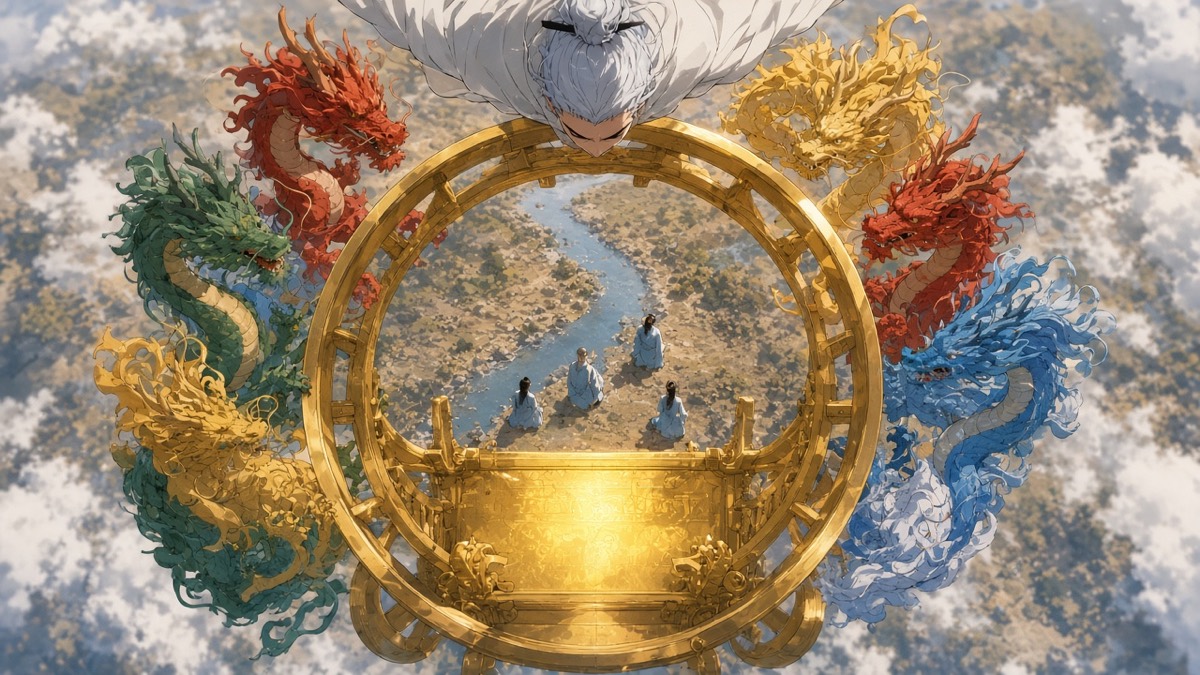
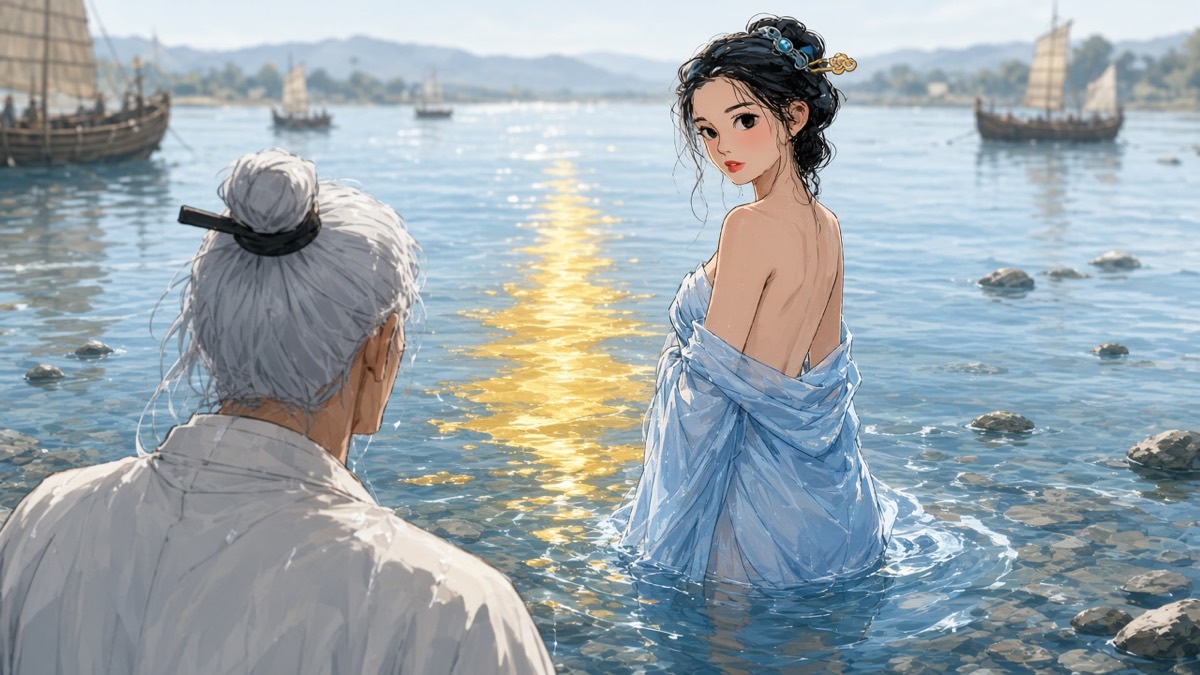
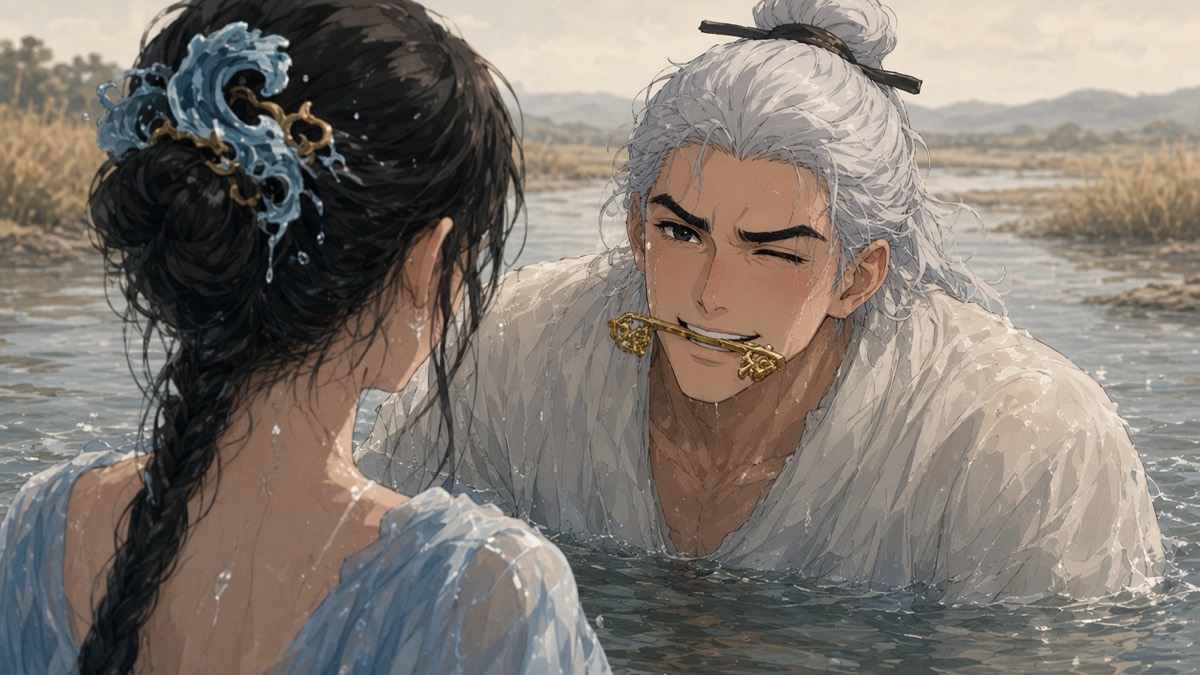
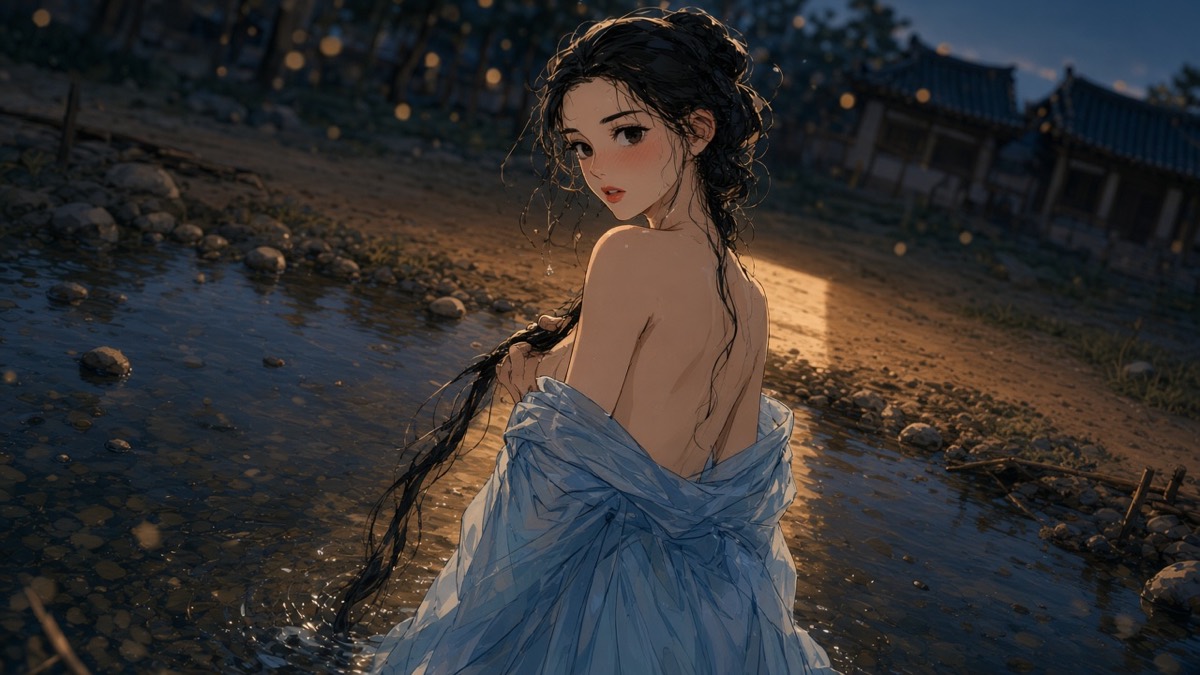
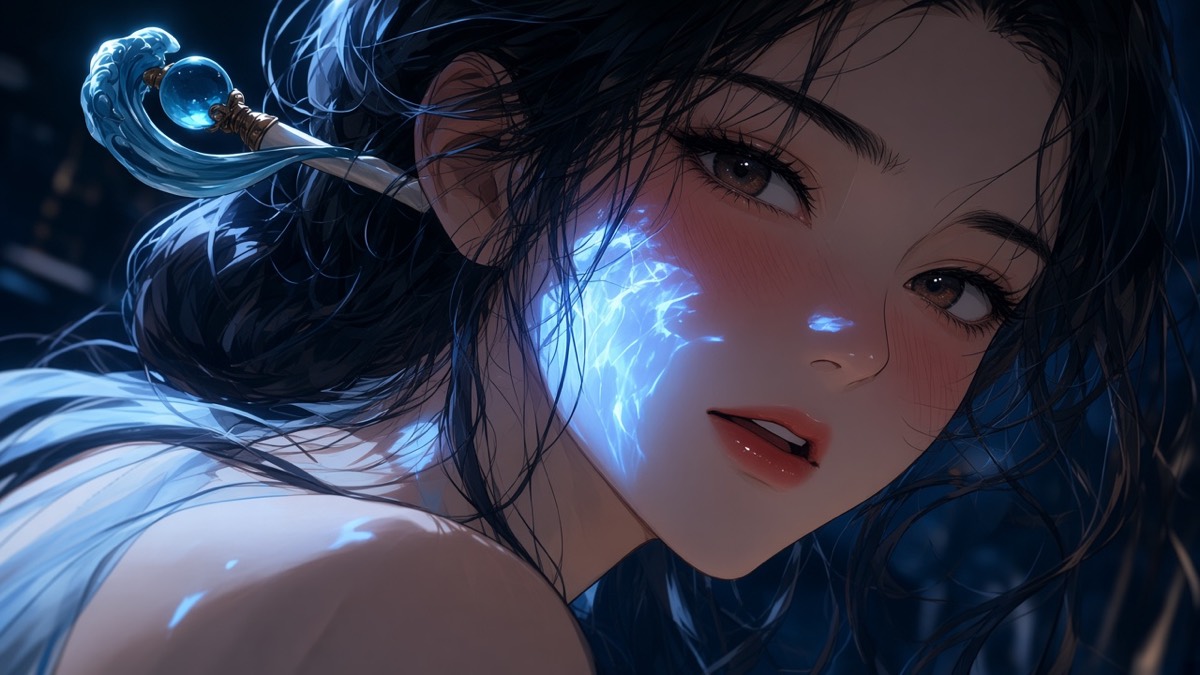
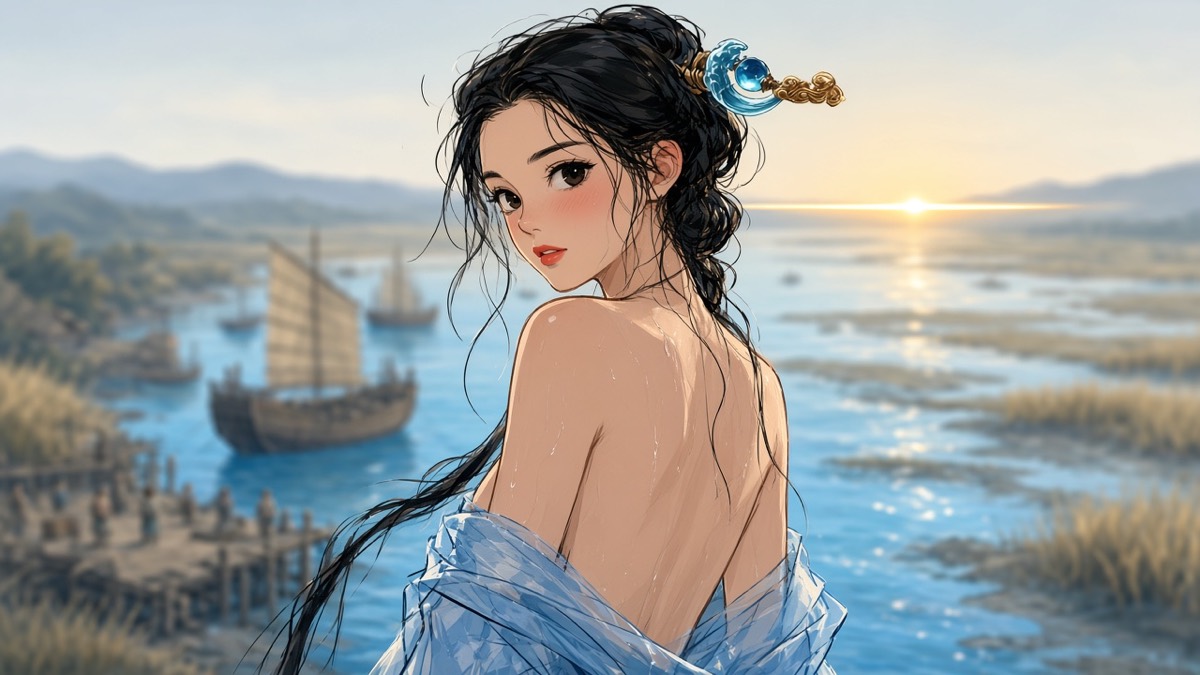
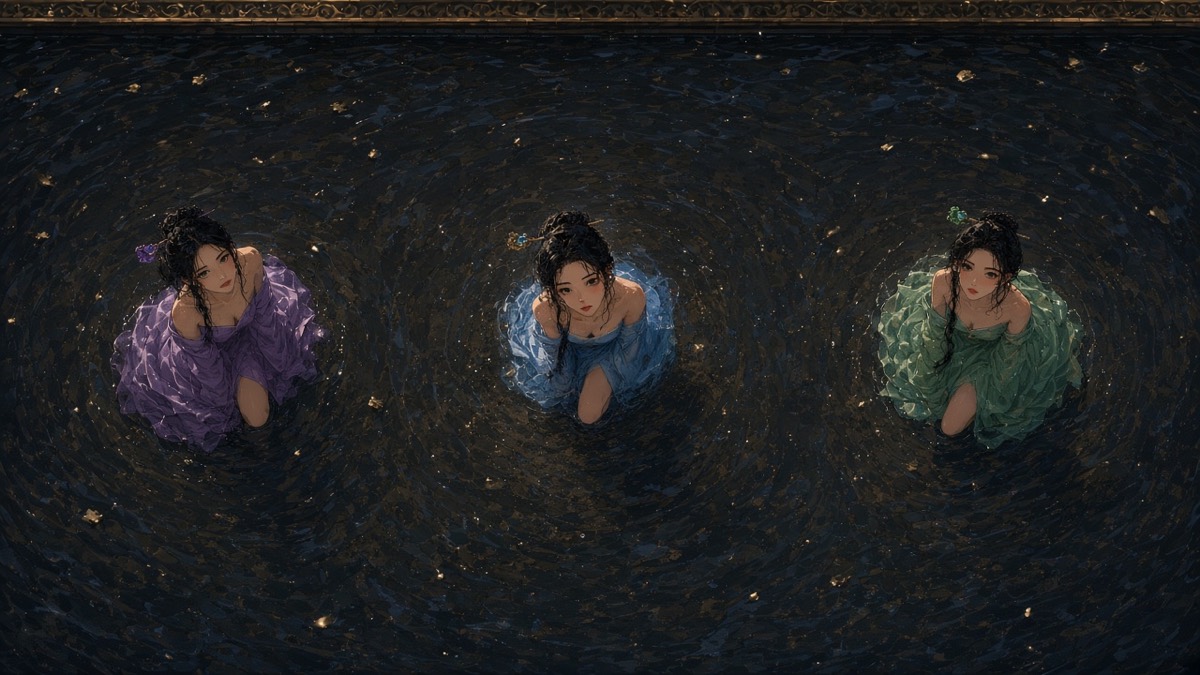
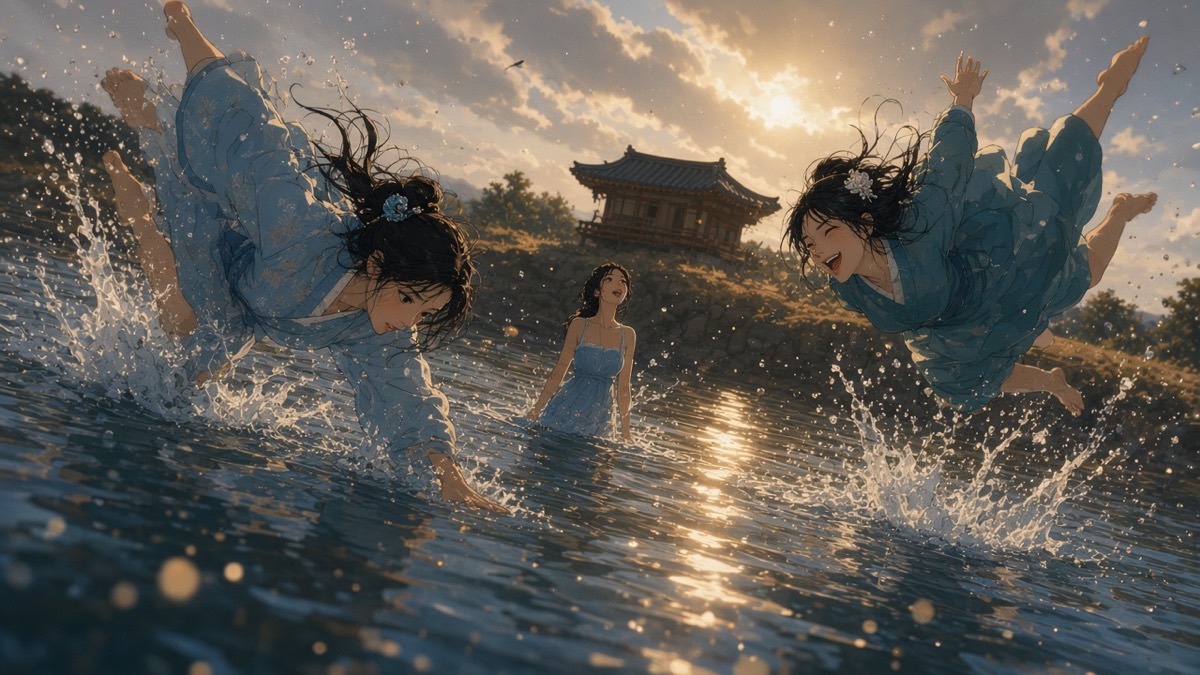
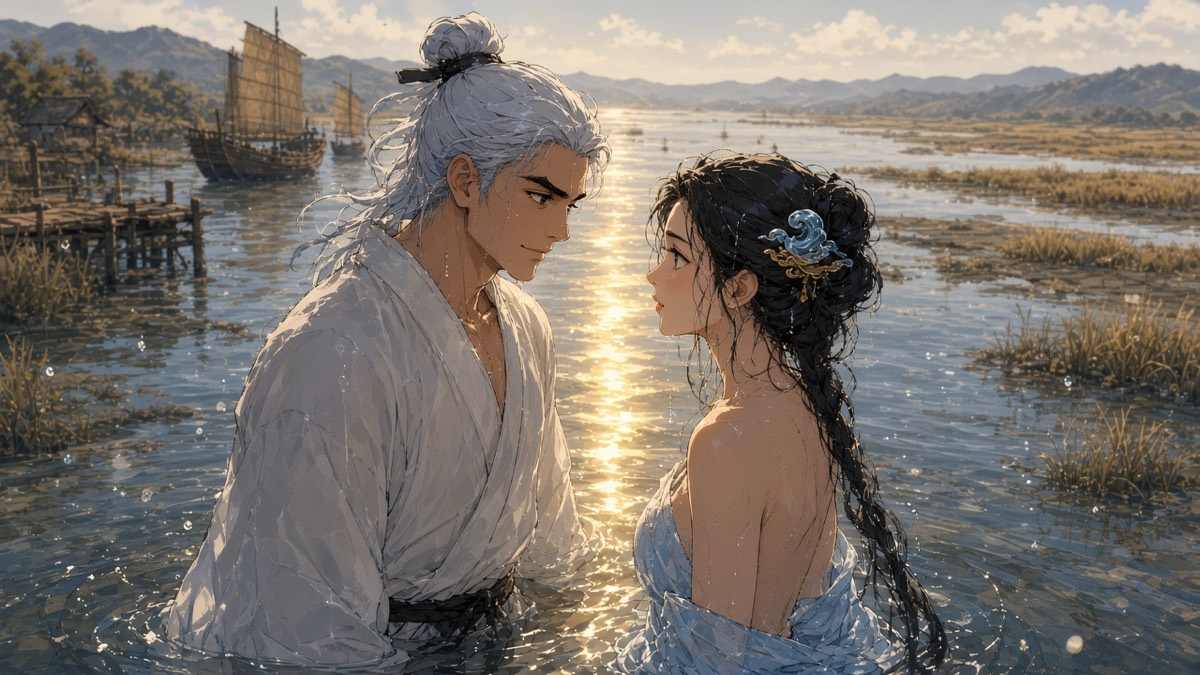
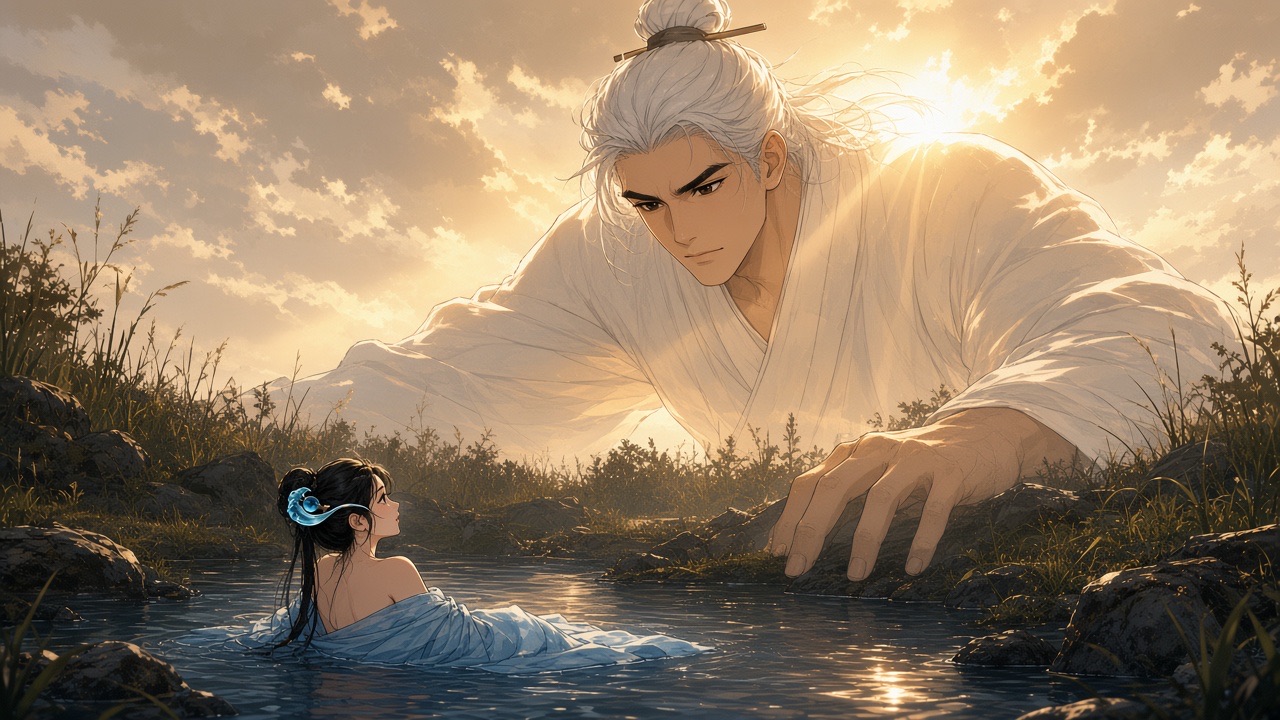
In the shallows, three river-daughters are bathing: and her two sisters. Wet hair down their backs, the river at their hips. Nobody dressed for heaven. He falls in love and in lust in the same glance.

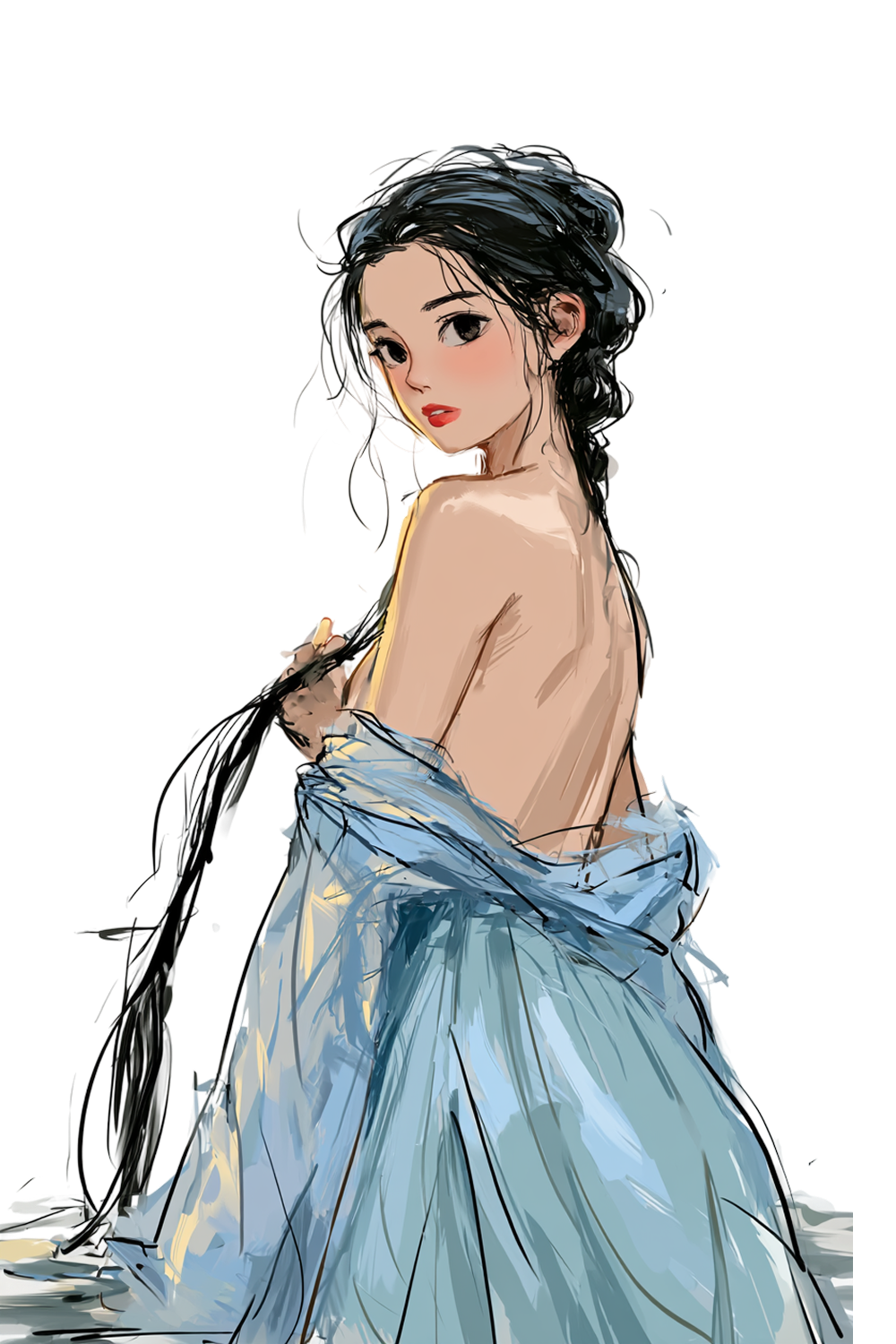
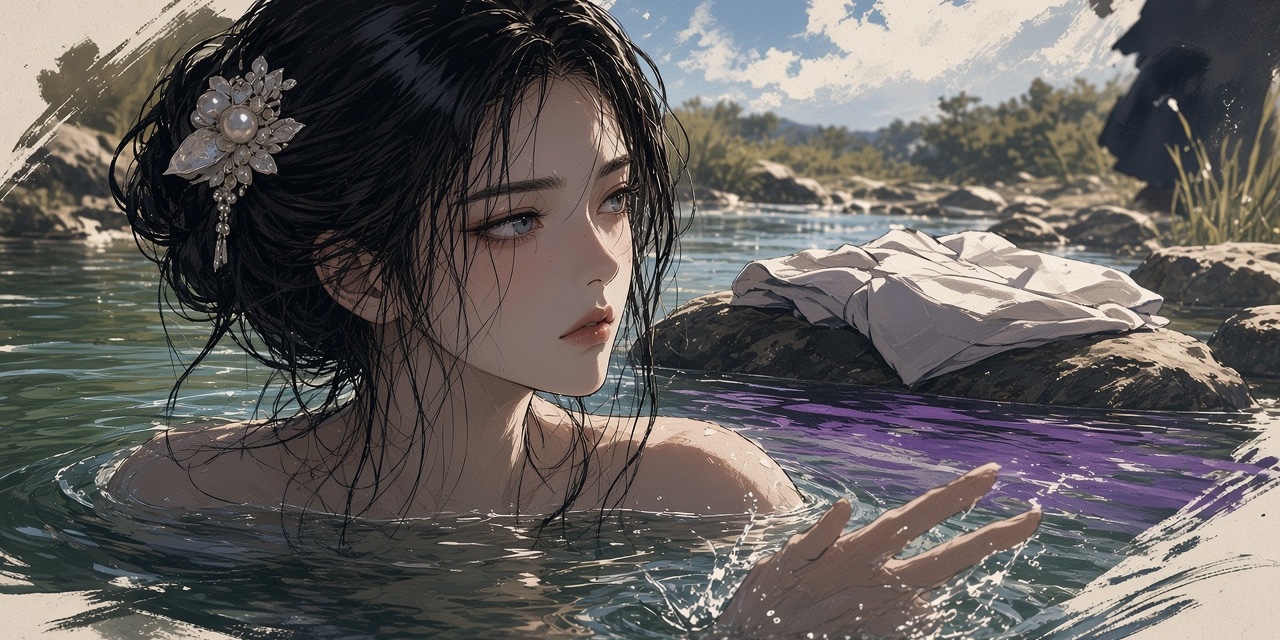

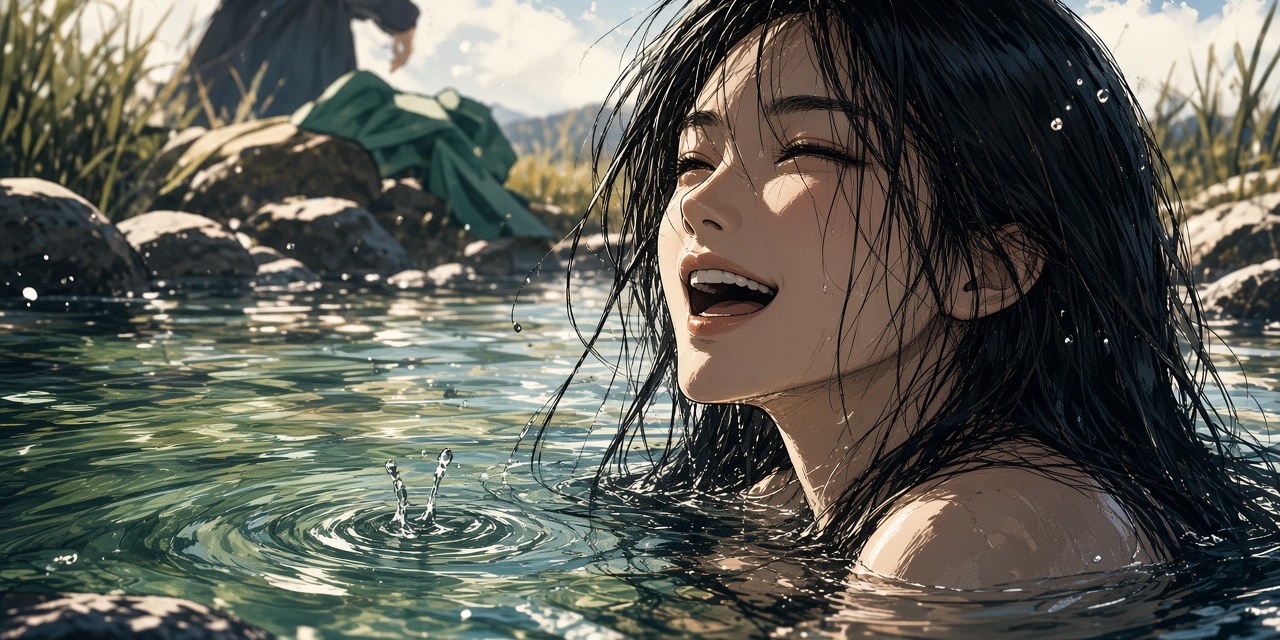

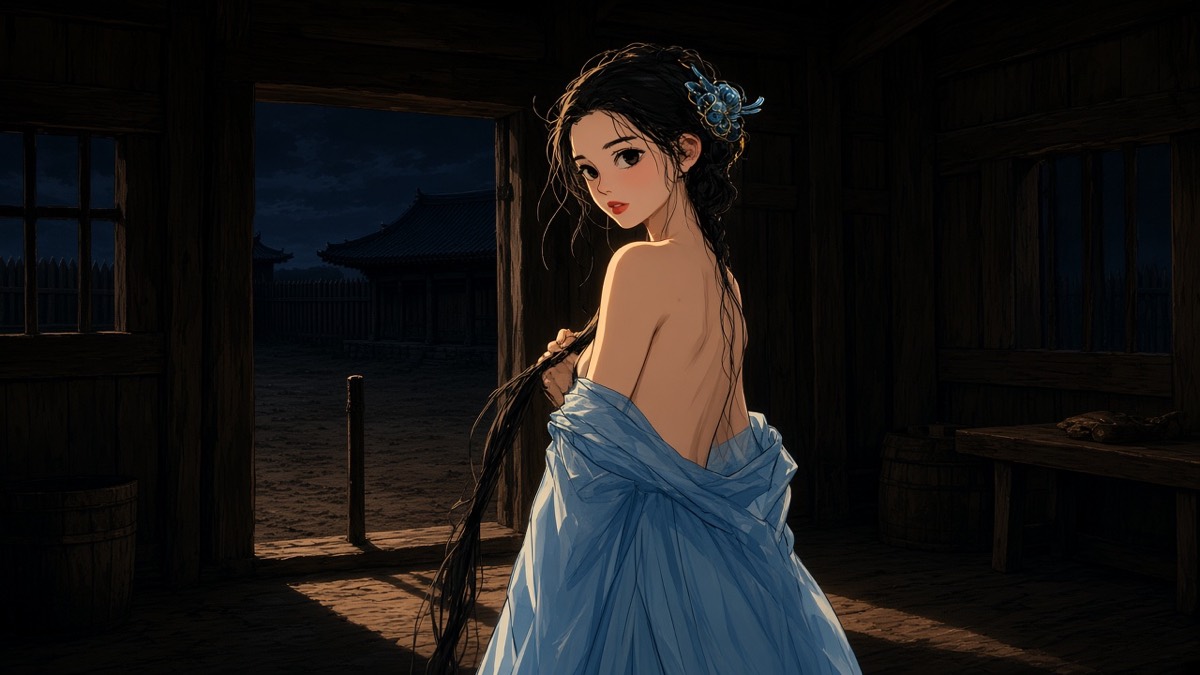
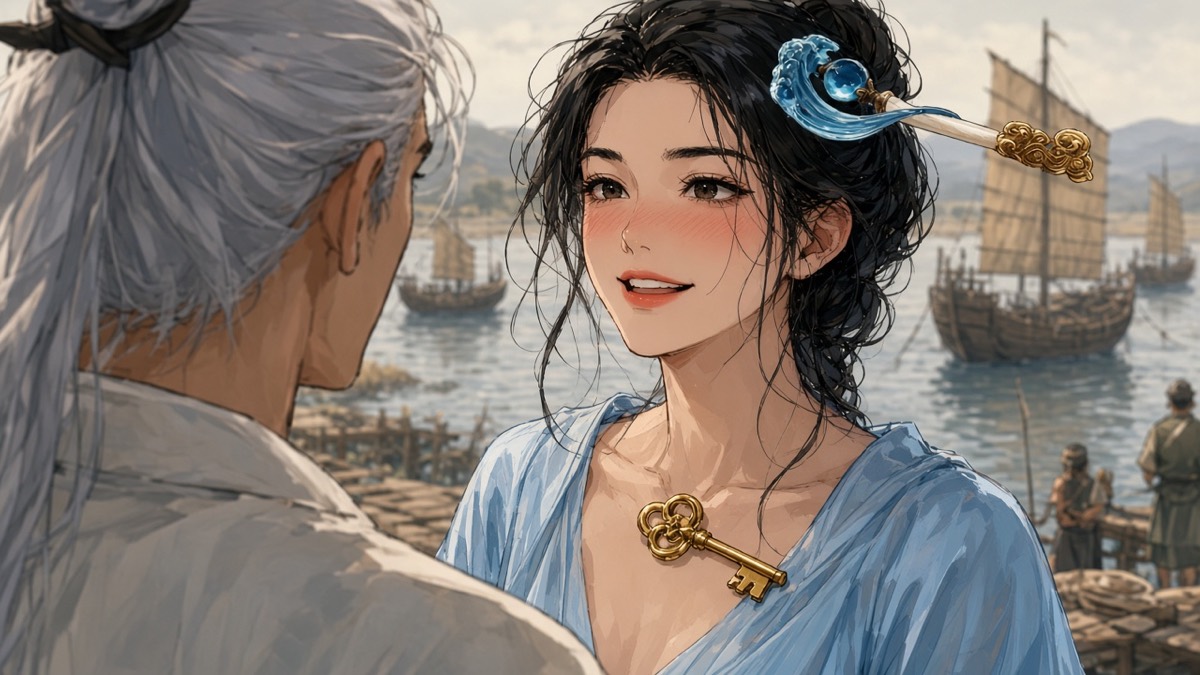
and have left their silk on the rocks. The eldest folded hers once; the middle did not bother. ’s ice-blue is still on her shoulder, wet.
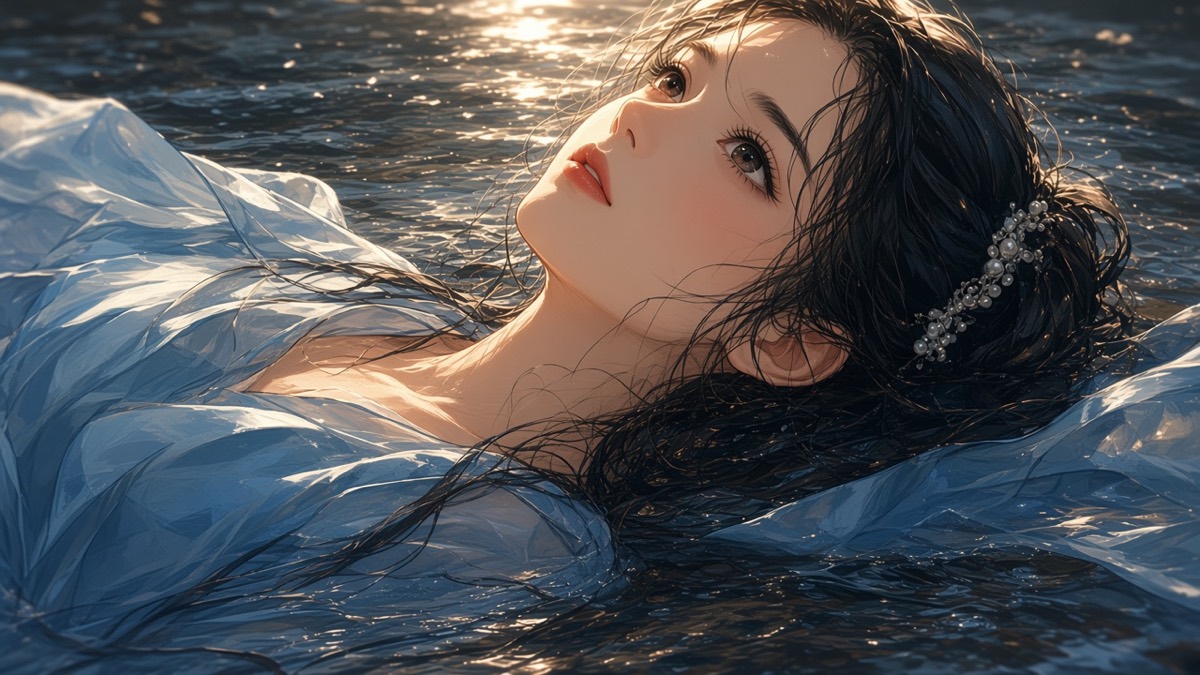
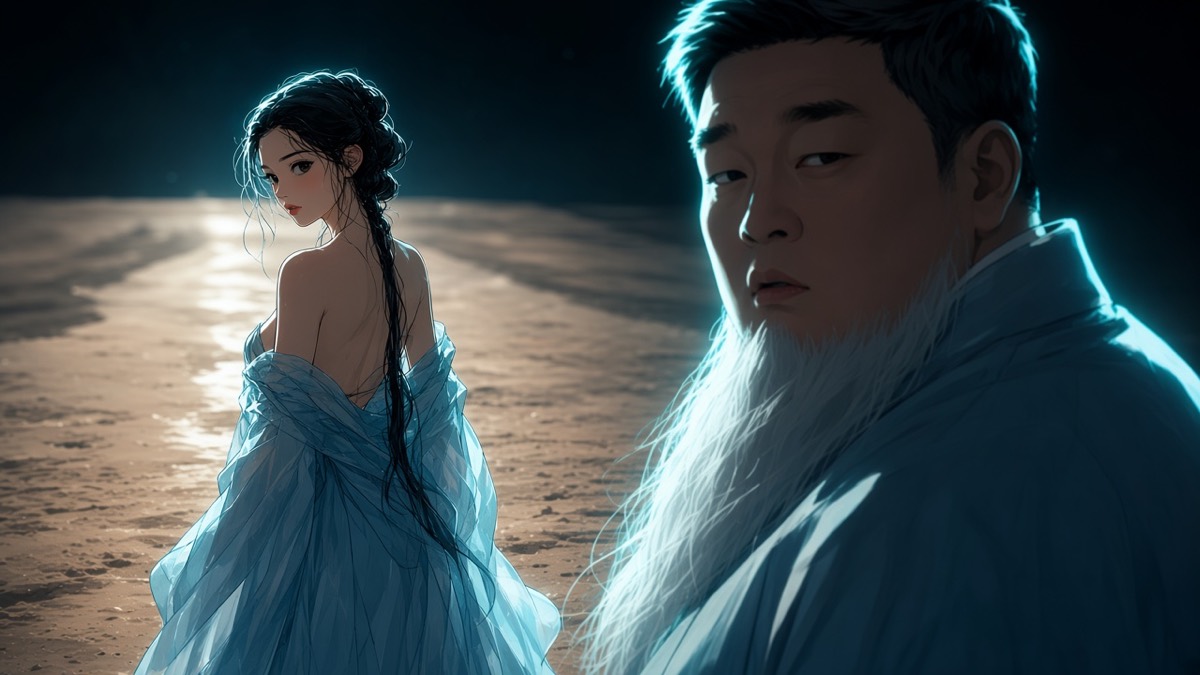
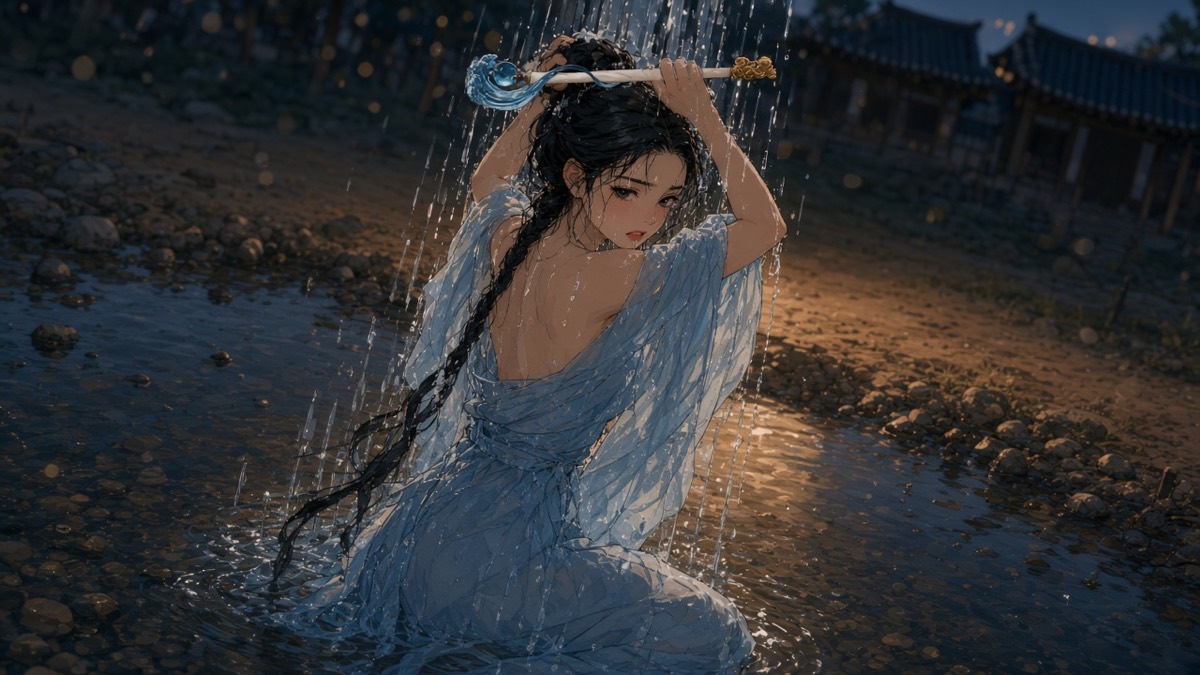
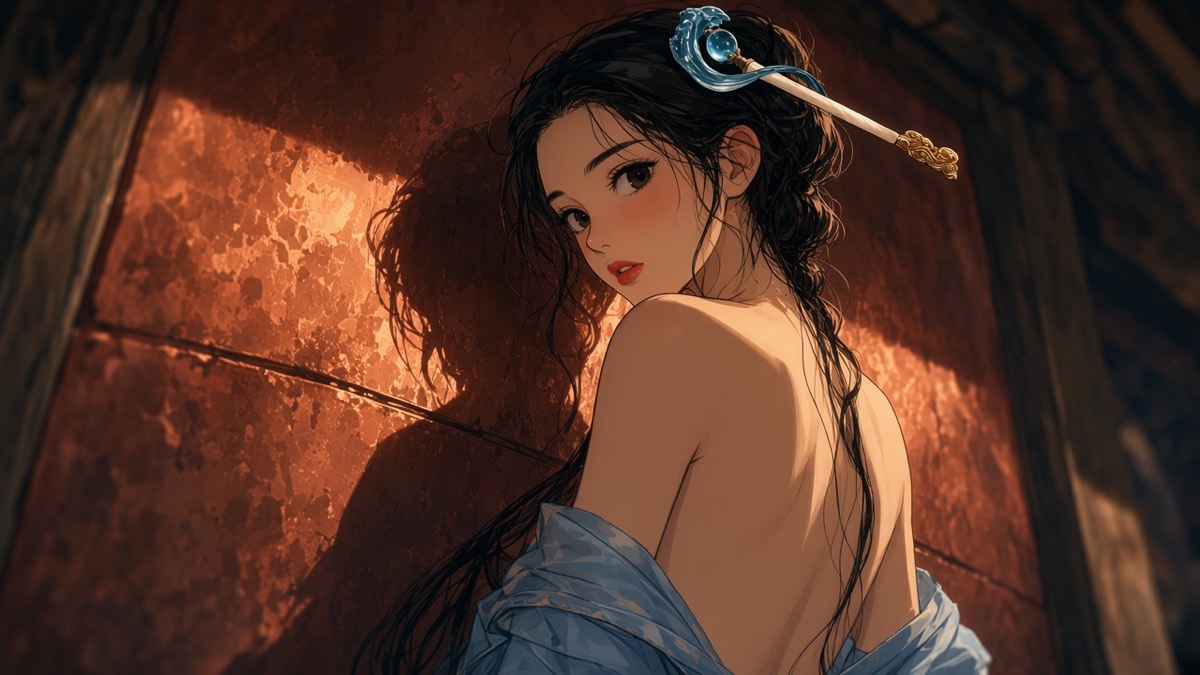
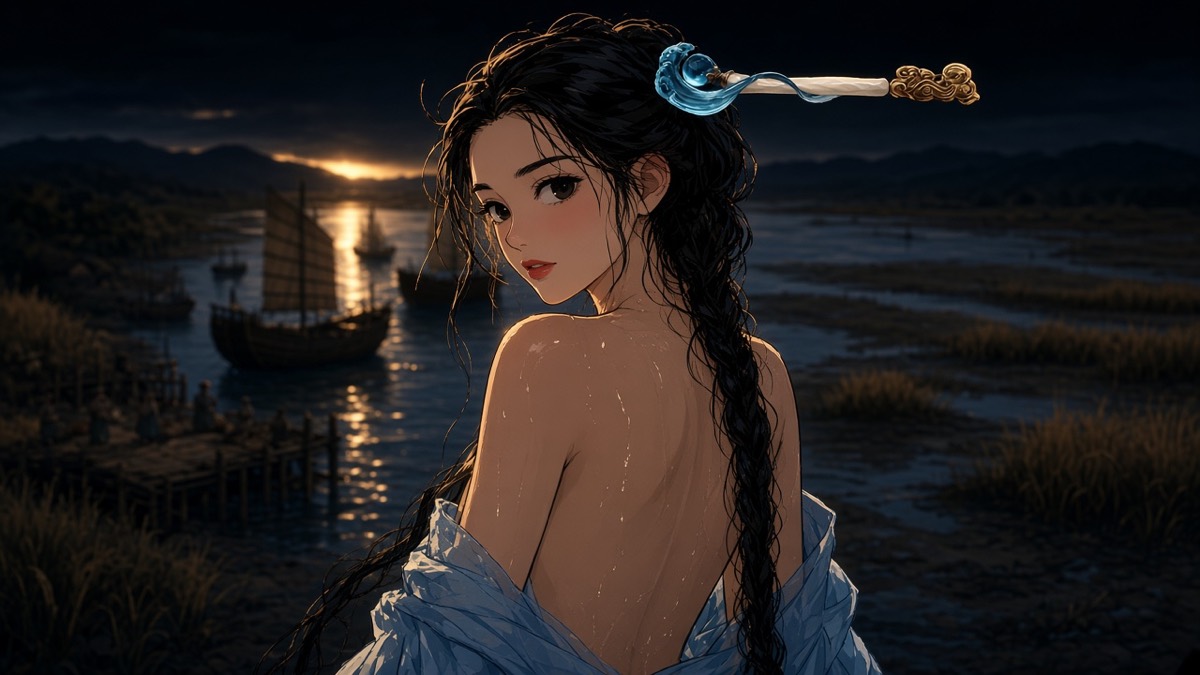
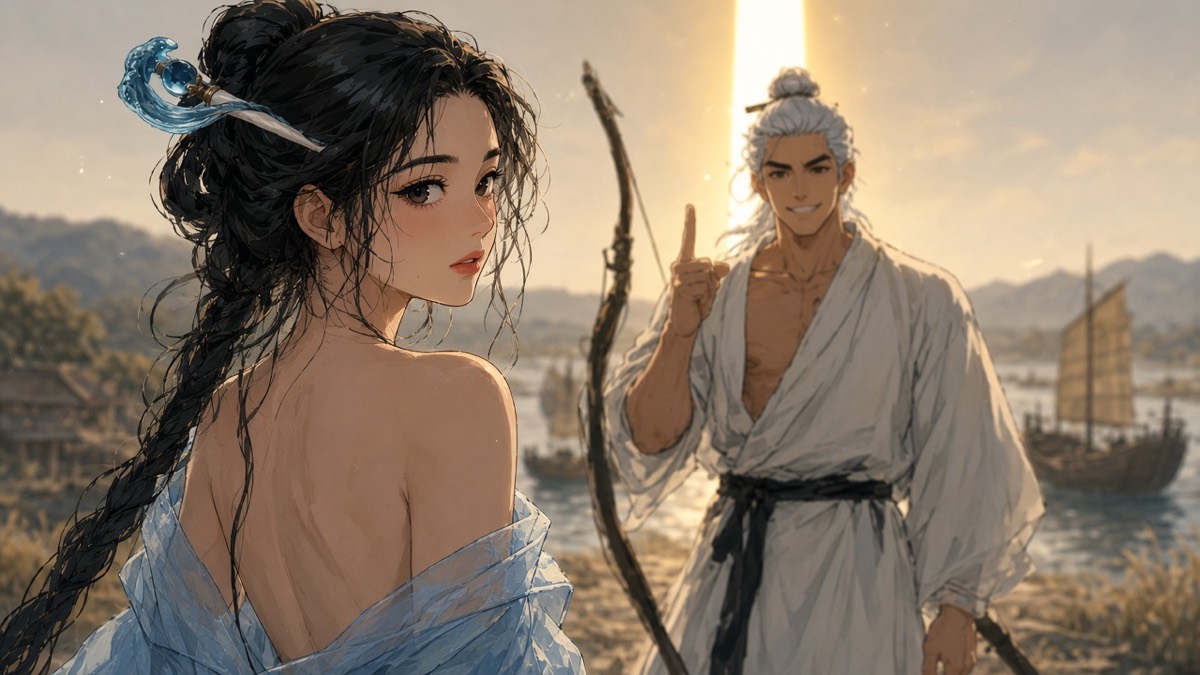
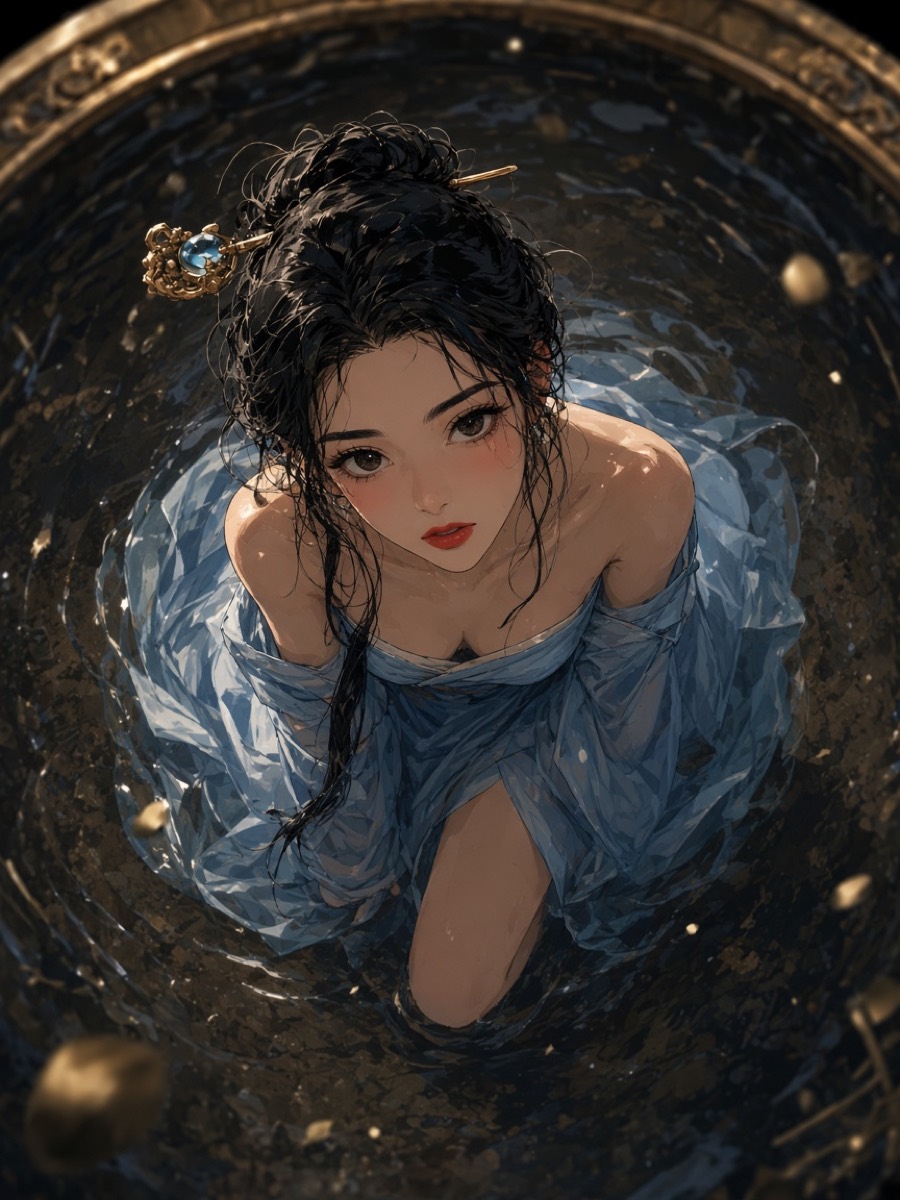
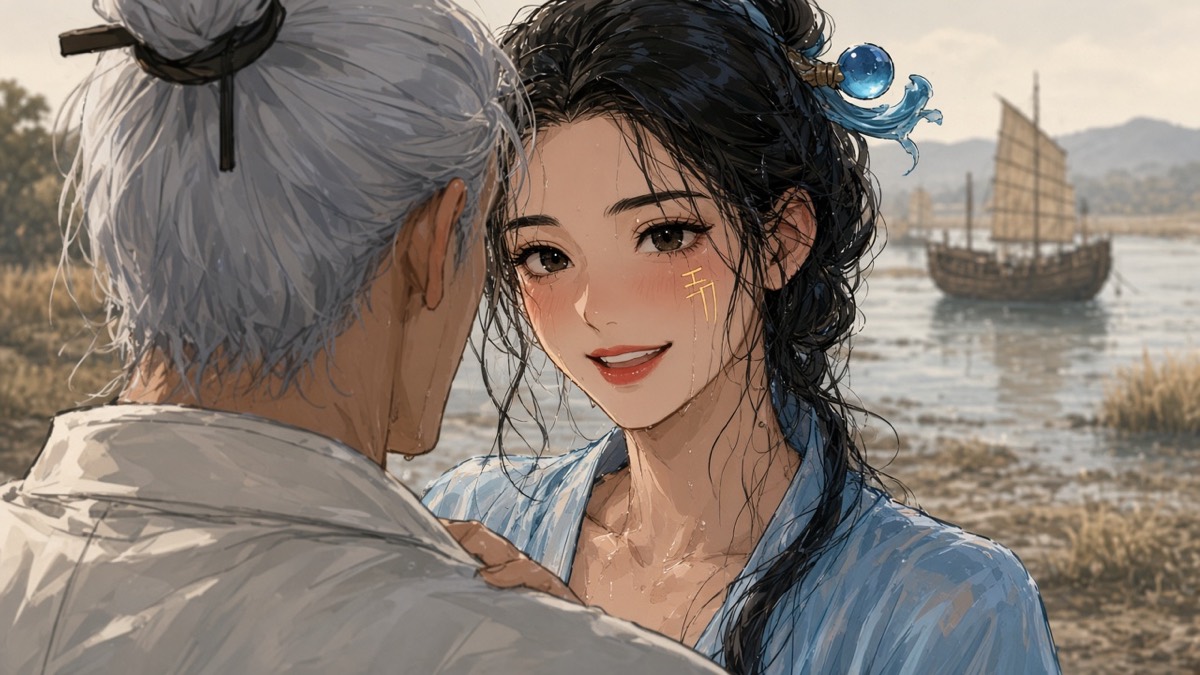
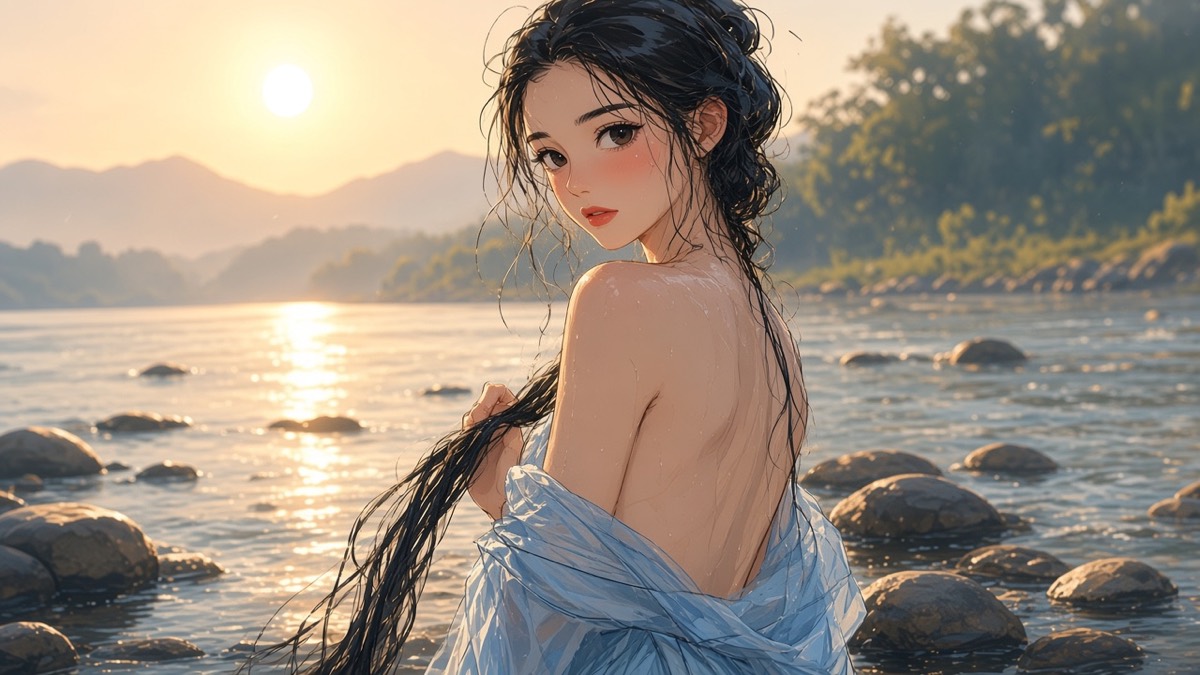
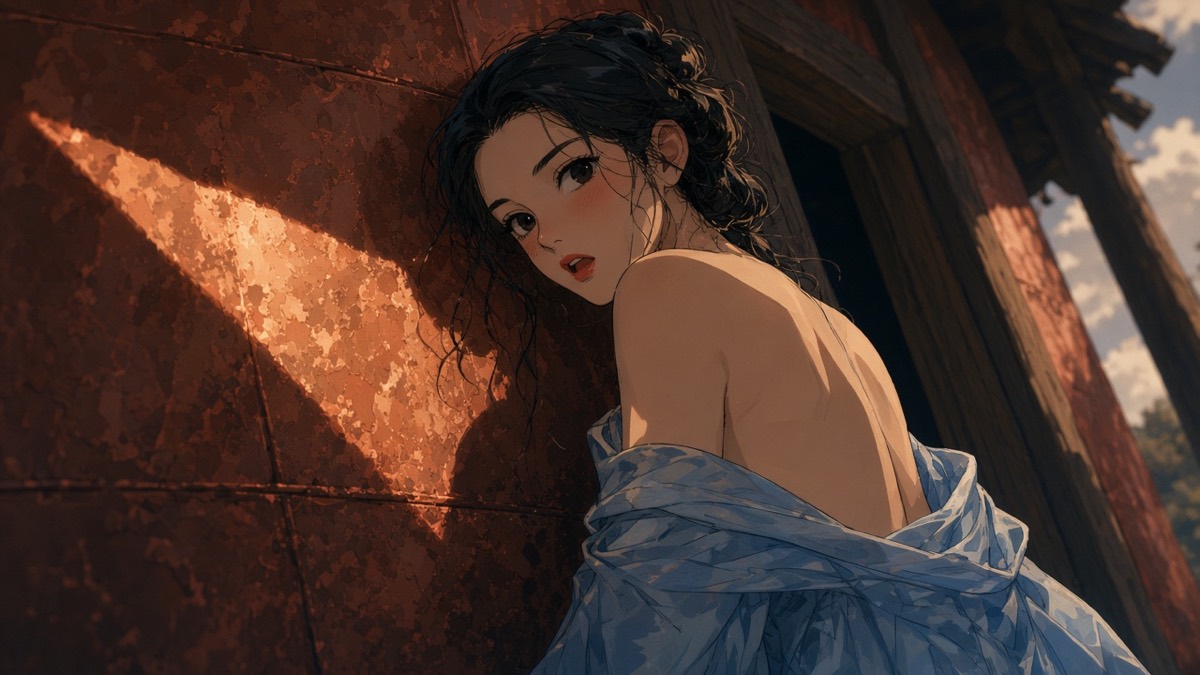
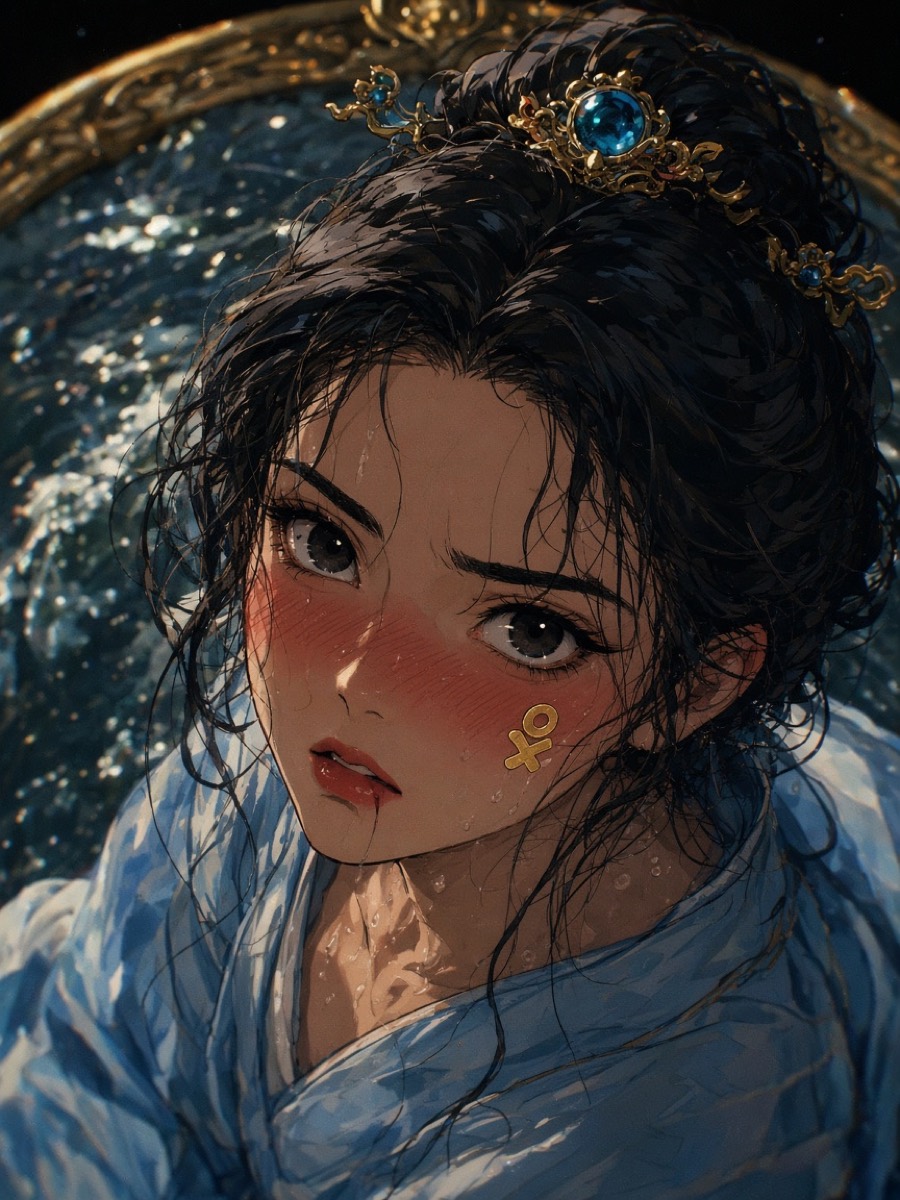
kneels in the shallows with her hair in one fist like a dark rope and rinses the river out of it without hurrying. can wait on a rinse; she has decided that without saying it. With her back to the sky she looks over her shoulder, as if someone up there had said her name.
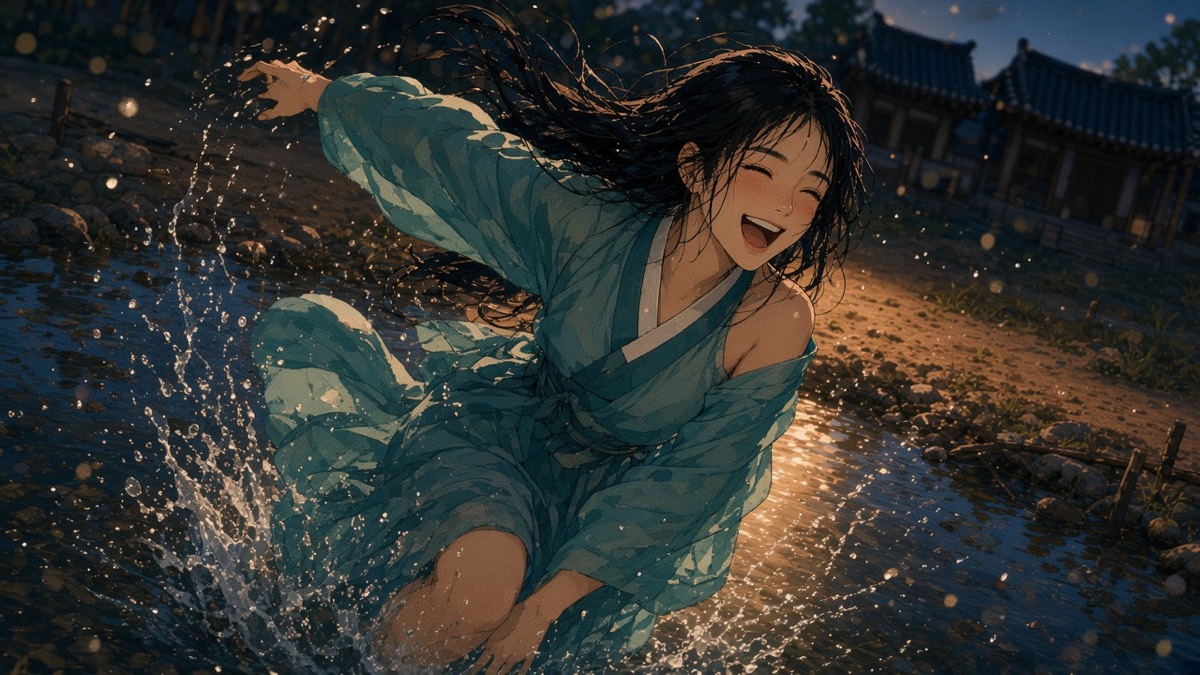
laughs and follows, a splash that is mostly amusement.
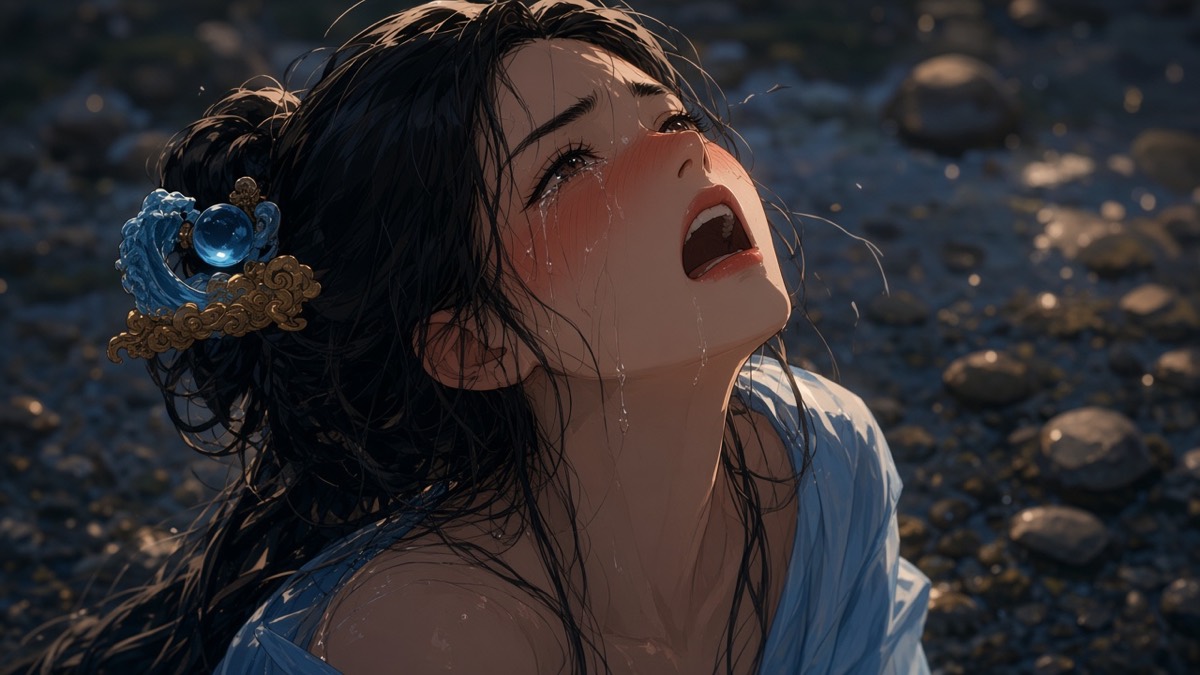
Two wakes cut the shallows and close. stays. She gets up off her knees, looks straight up as if she had been waiting for heaven to notice, and draws her wet hair over one shoulder.
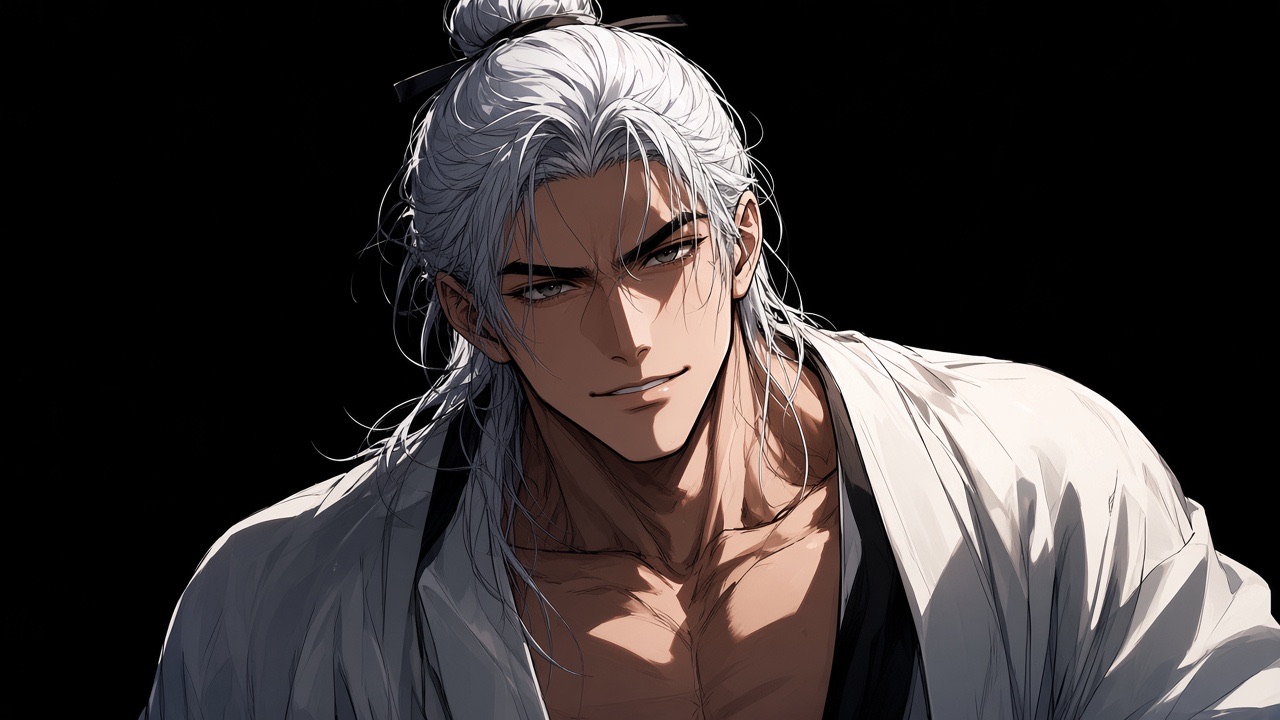
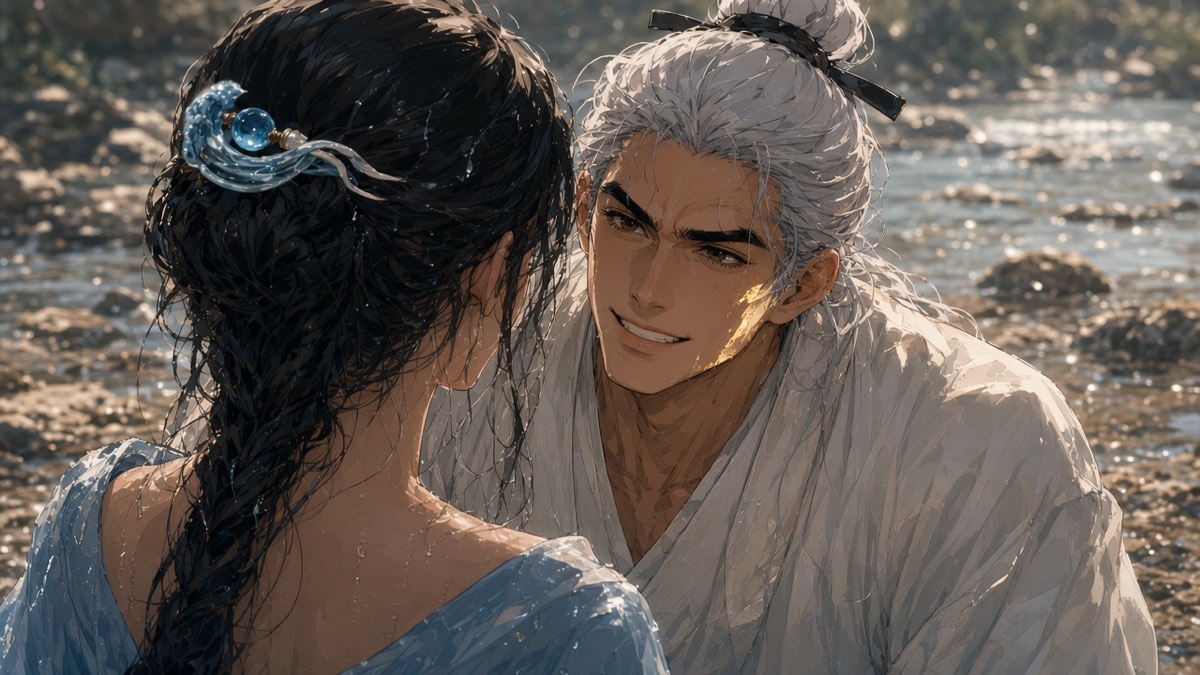
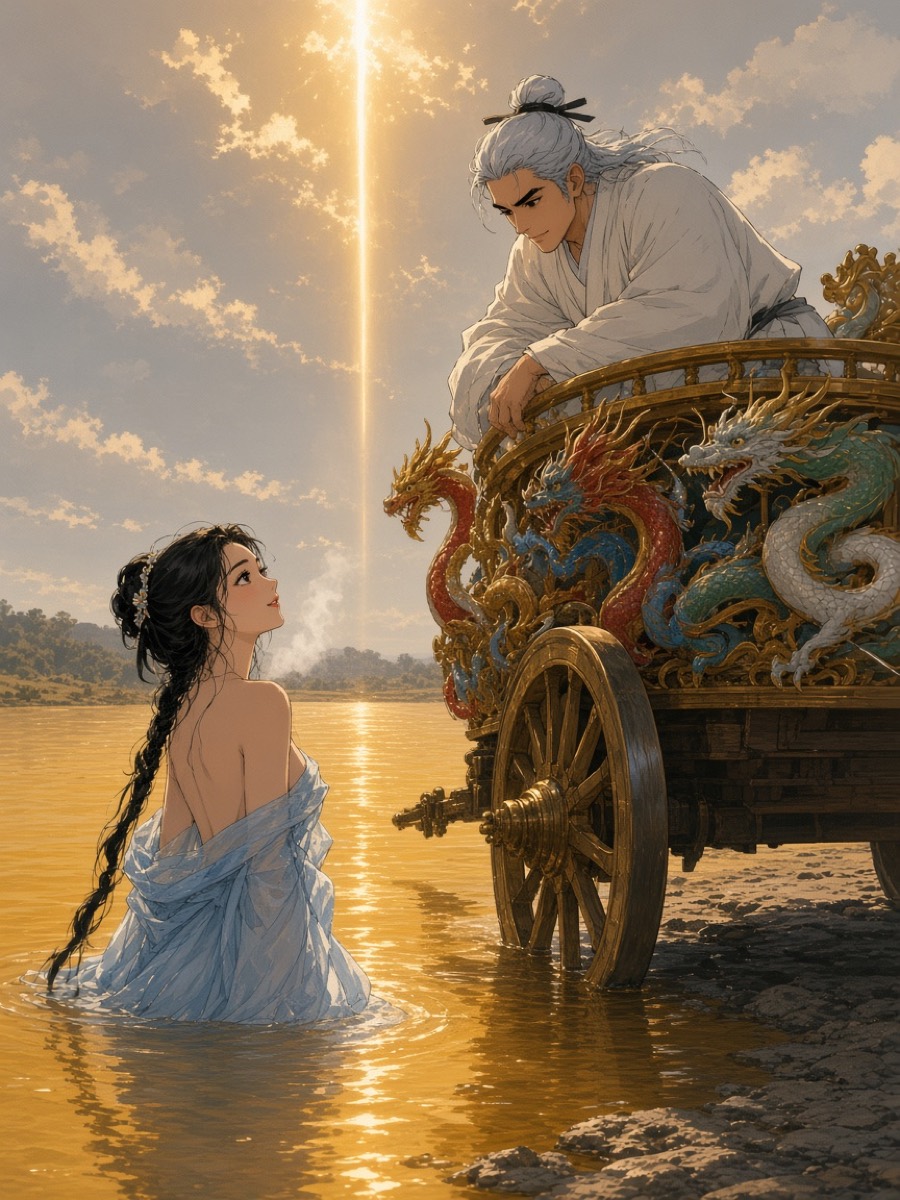
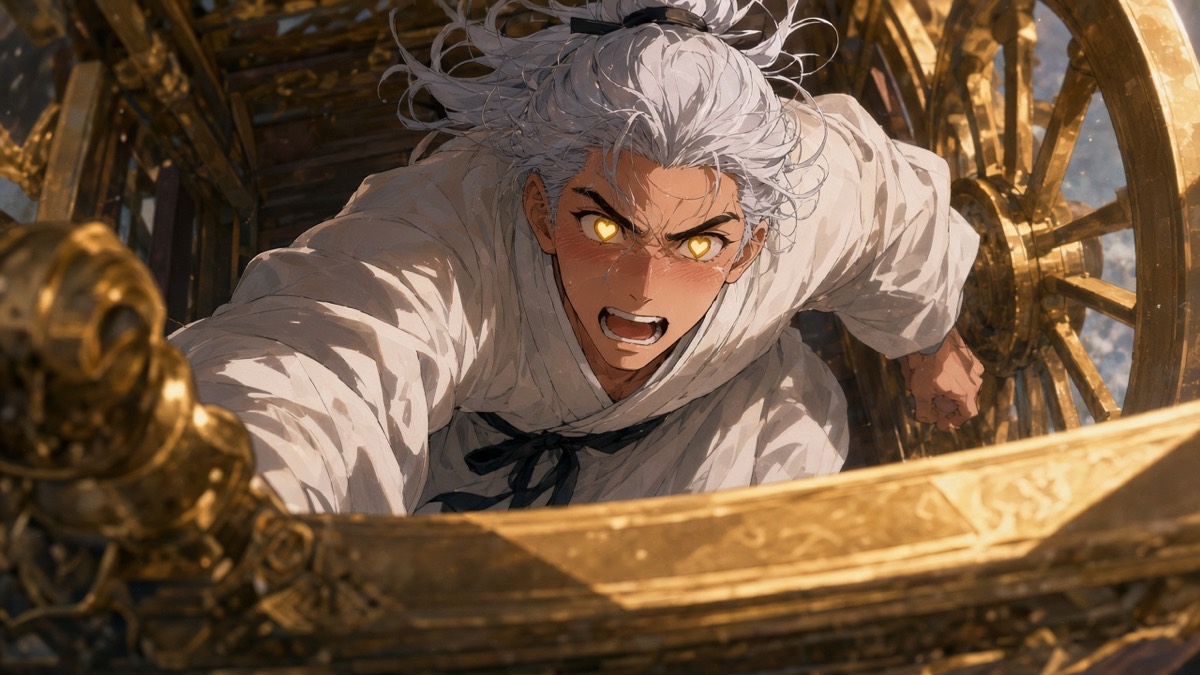
He forgets how to swallow, a god doing a mortal’s small panic. Then he grins, and the grin arrives before the plan. He leaves the rail and the hour in the same motion, the dragons keep the joke going without him, and the water takes him at the knee.
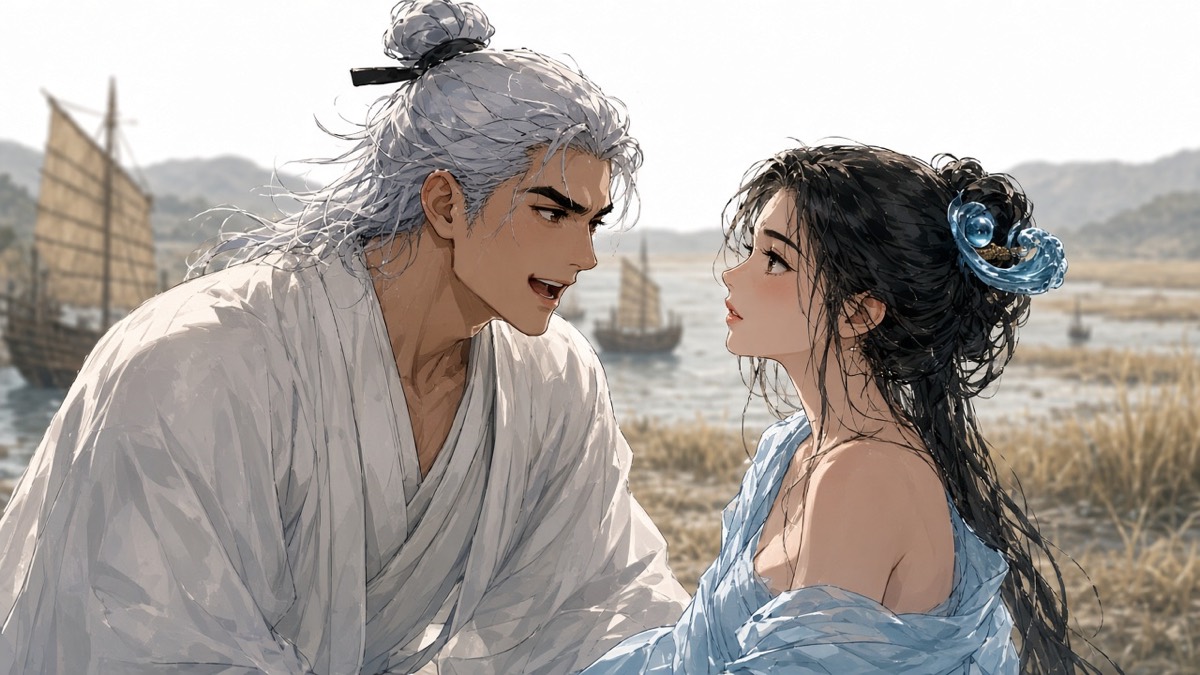
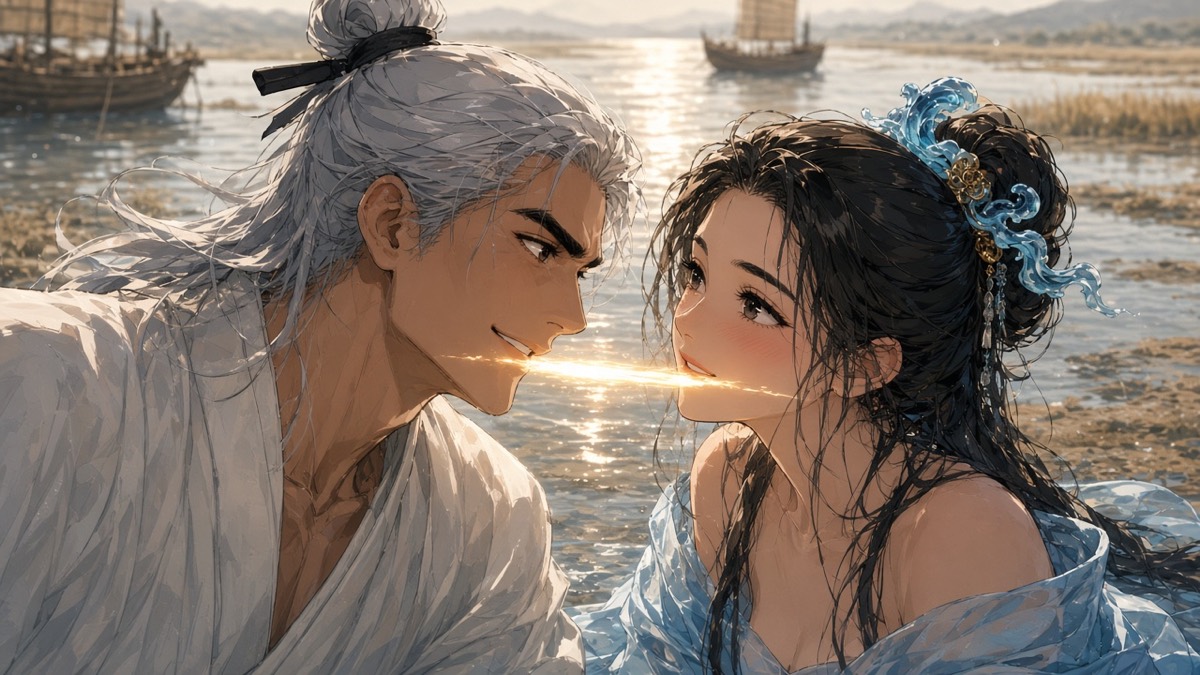
He wades close. She does not run. He stops where a stranger should stop. Then he doesn’t.
He swallows. The grin survives it. Barely.
He follows like the hour had been her idea.
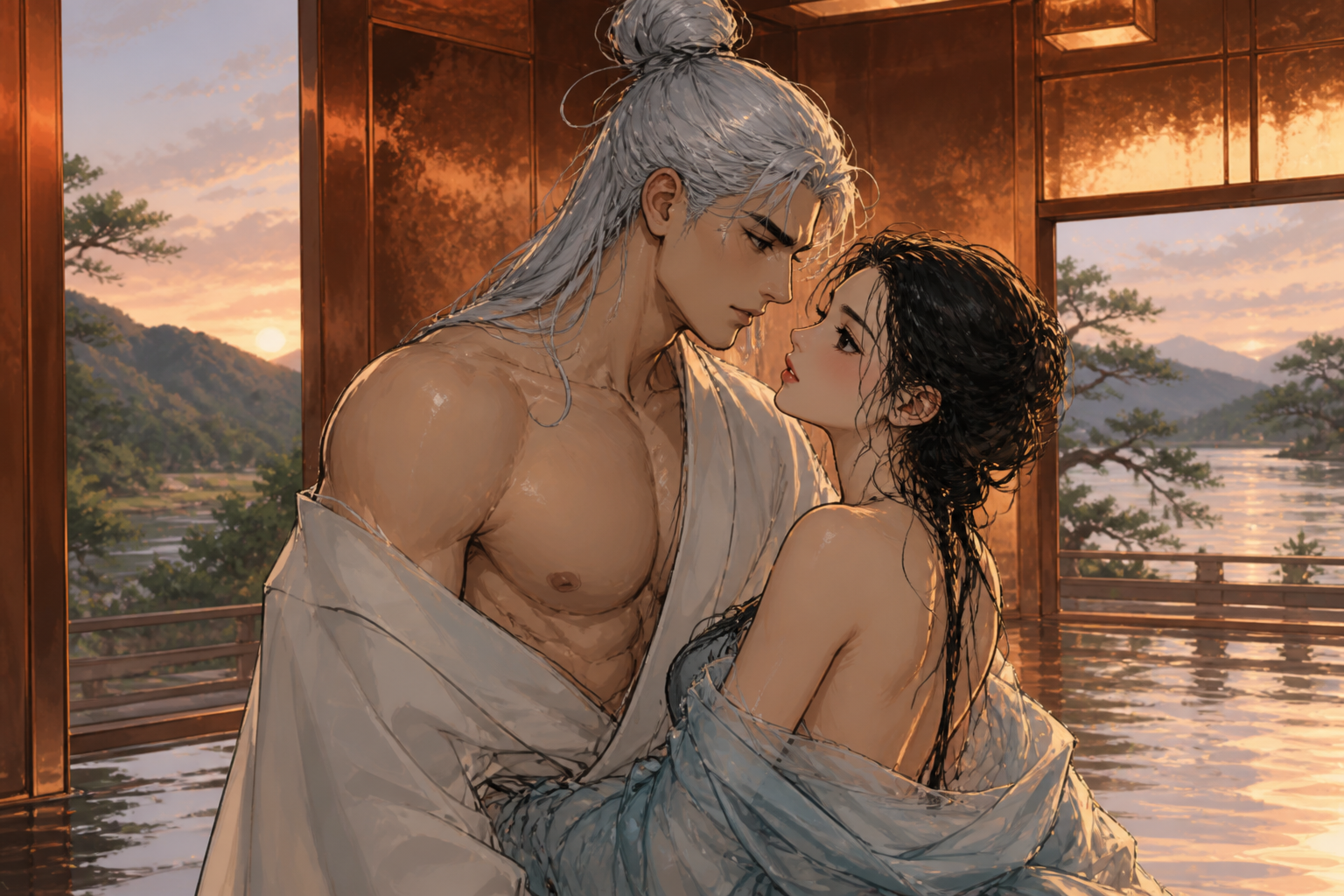
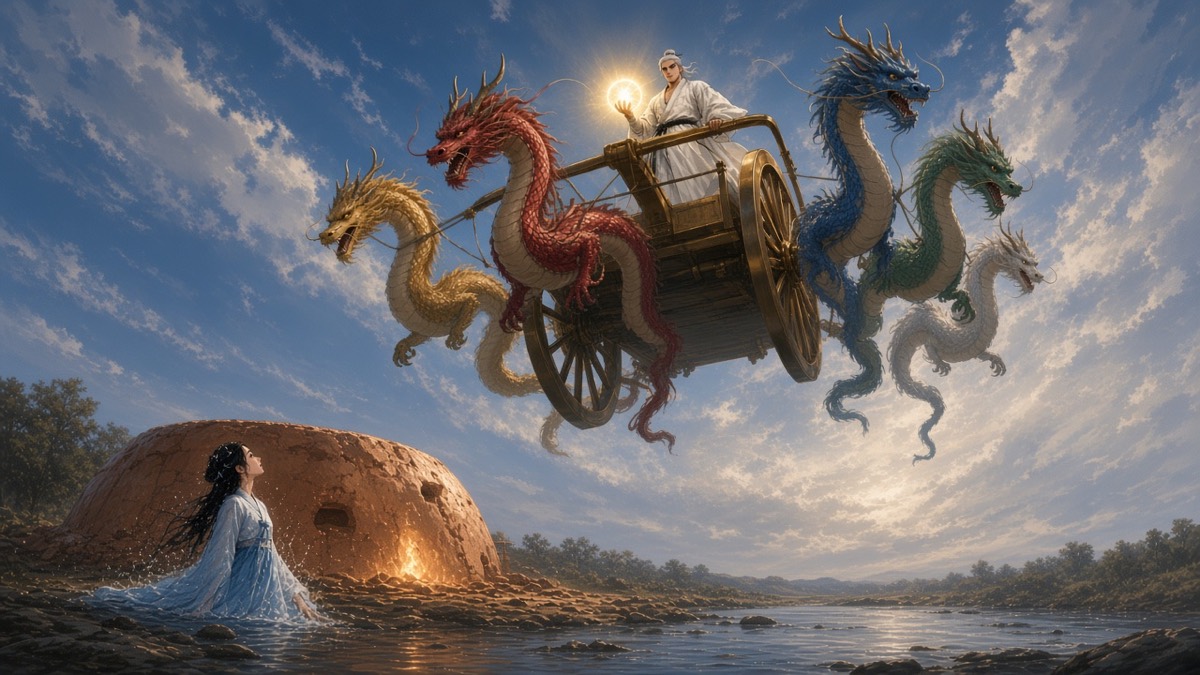
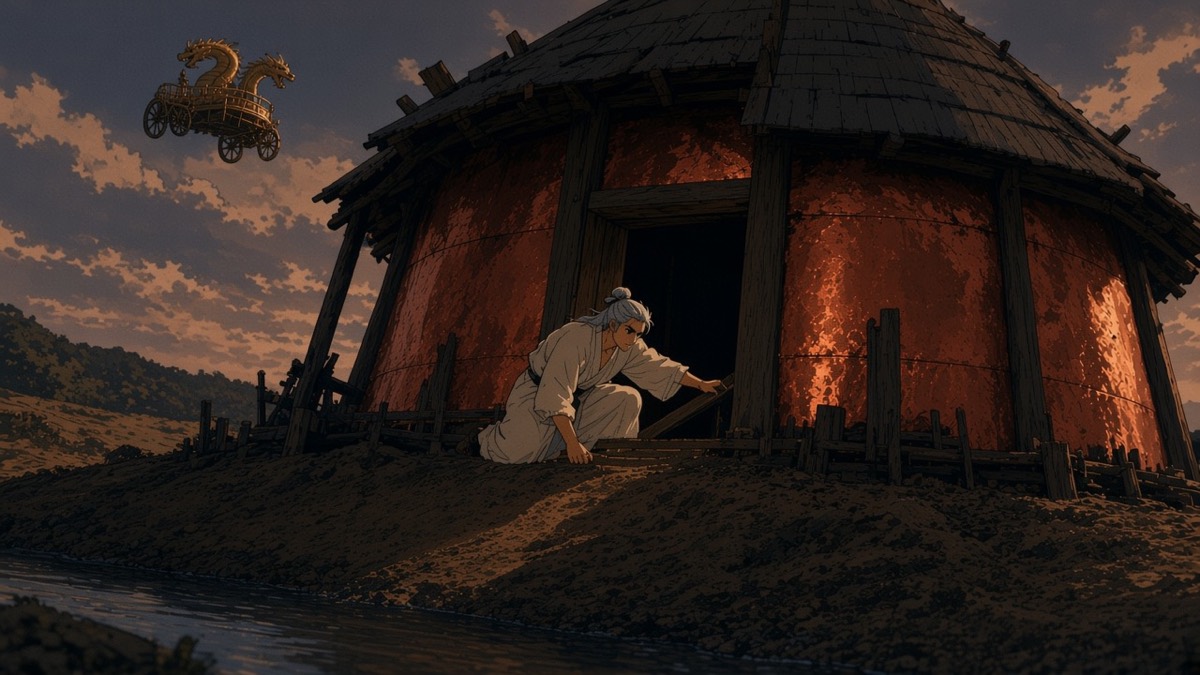
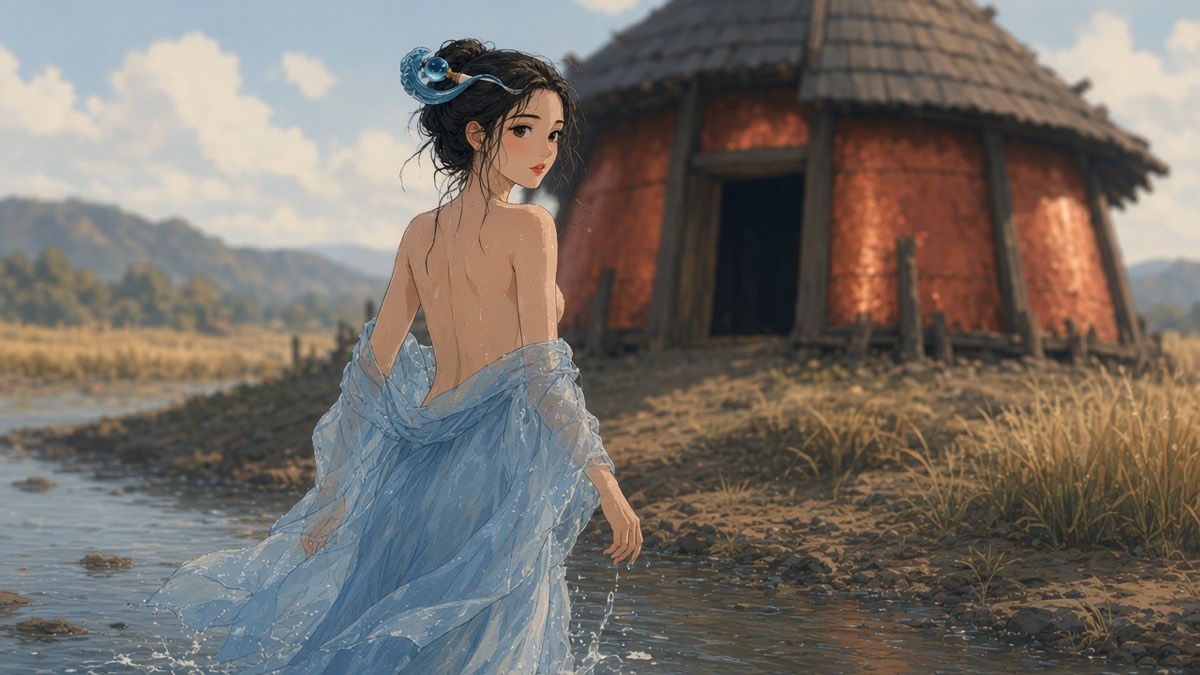
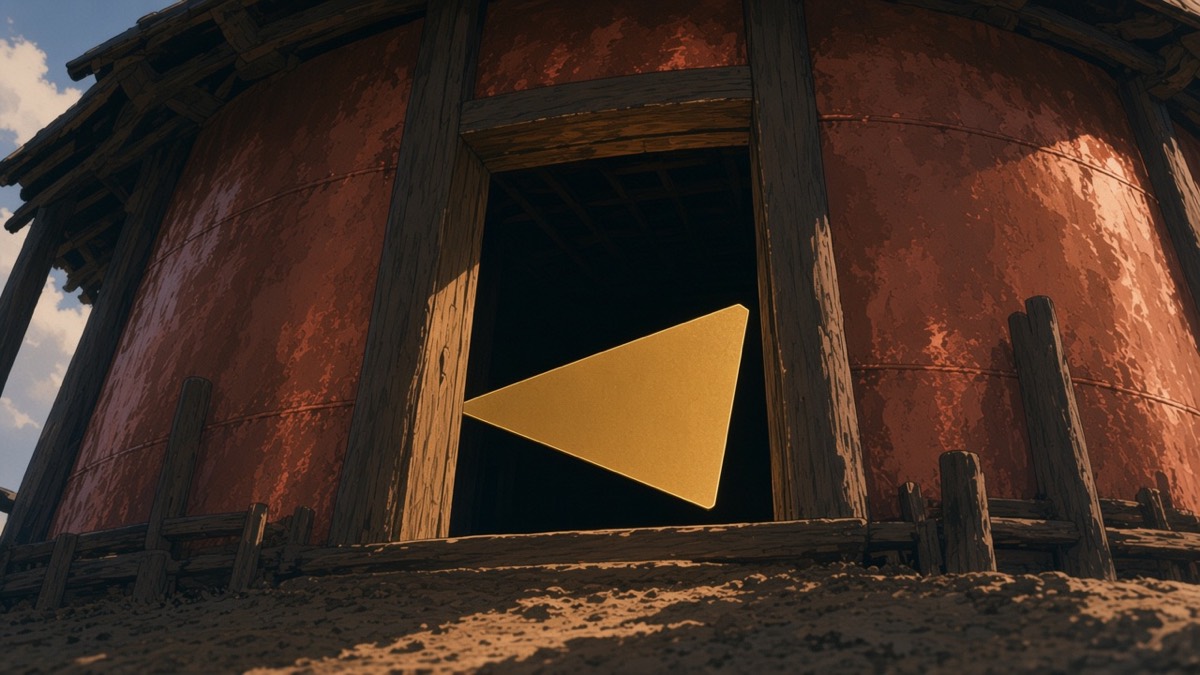
The copper room rises on the bank like a kiln. He builds it the same afternoon, because the open sky has become too many witnesses.
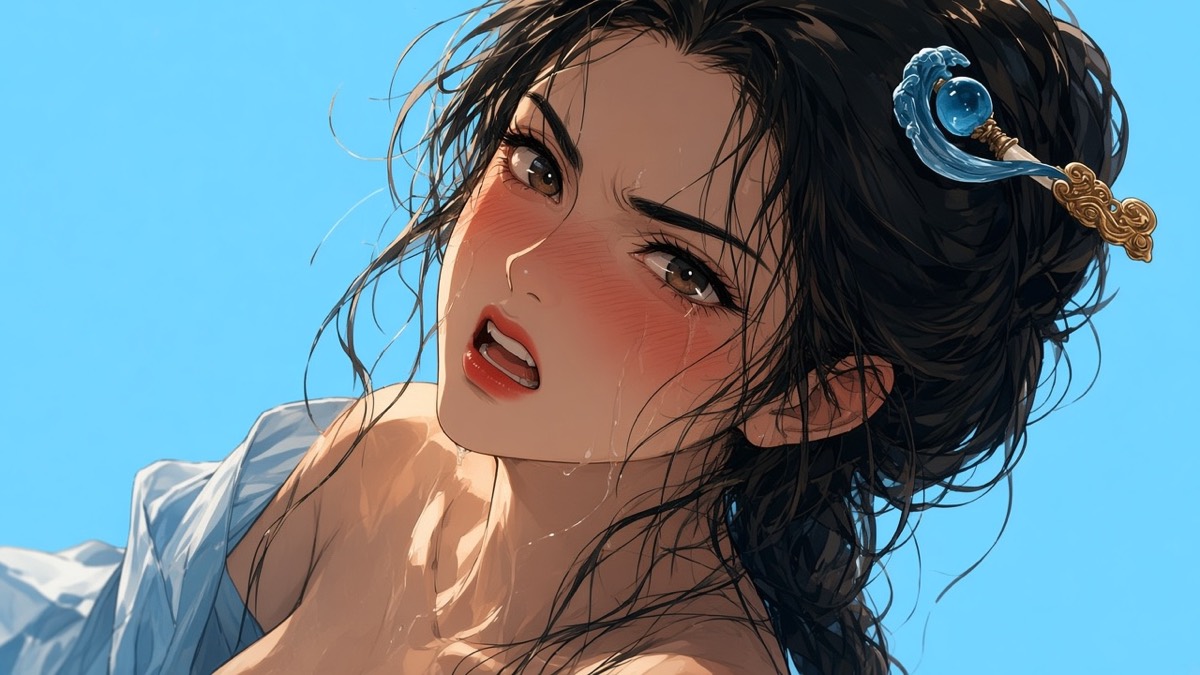
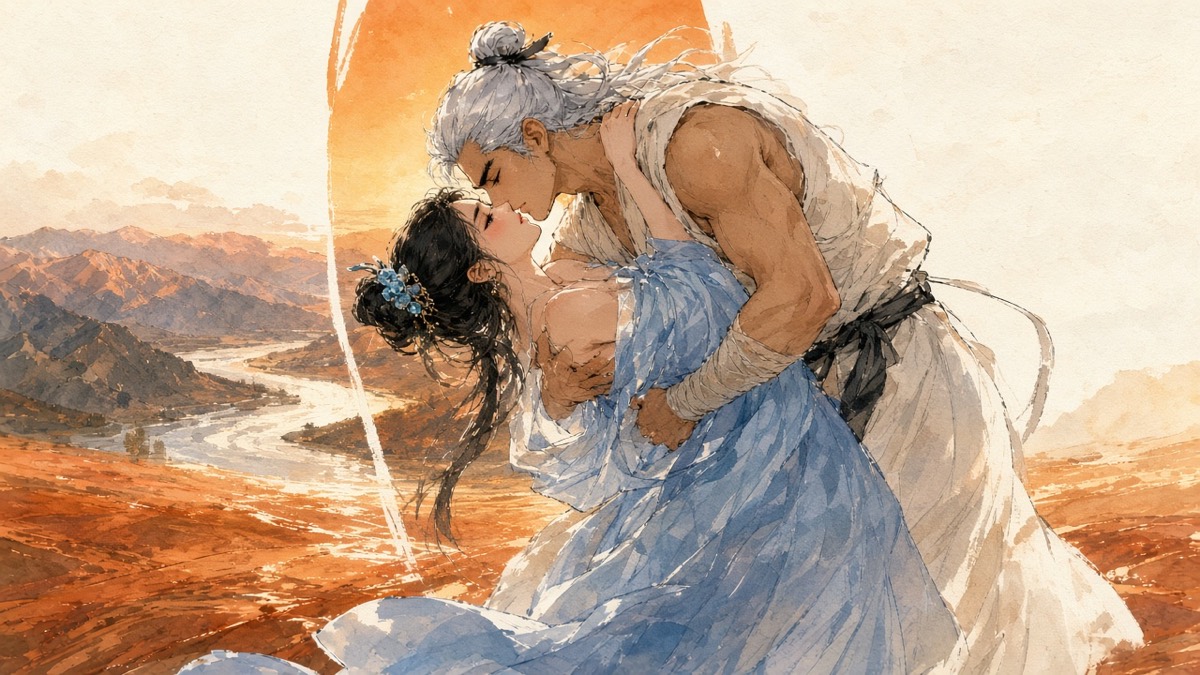
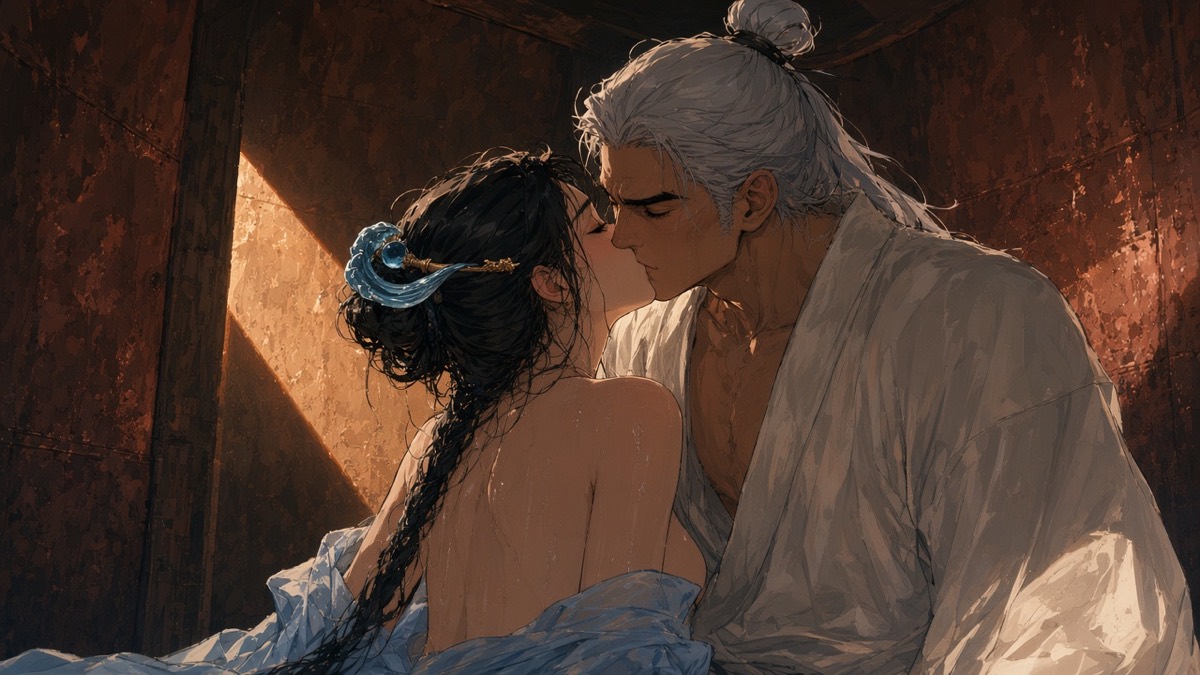
She kisses him with river still on her mouth. The kiss tastes like the shallows. He makes a sound he will deny.
The copper keeps the afternoon. Outside, the river goes on being a river.
Up on the road, the dragons have hauled an empty chariot to dusk on their own. Half the world got its evening late. noticed.
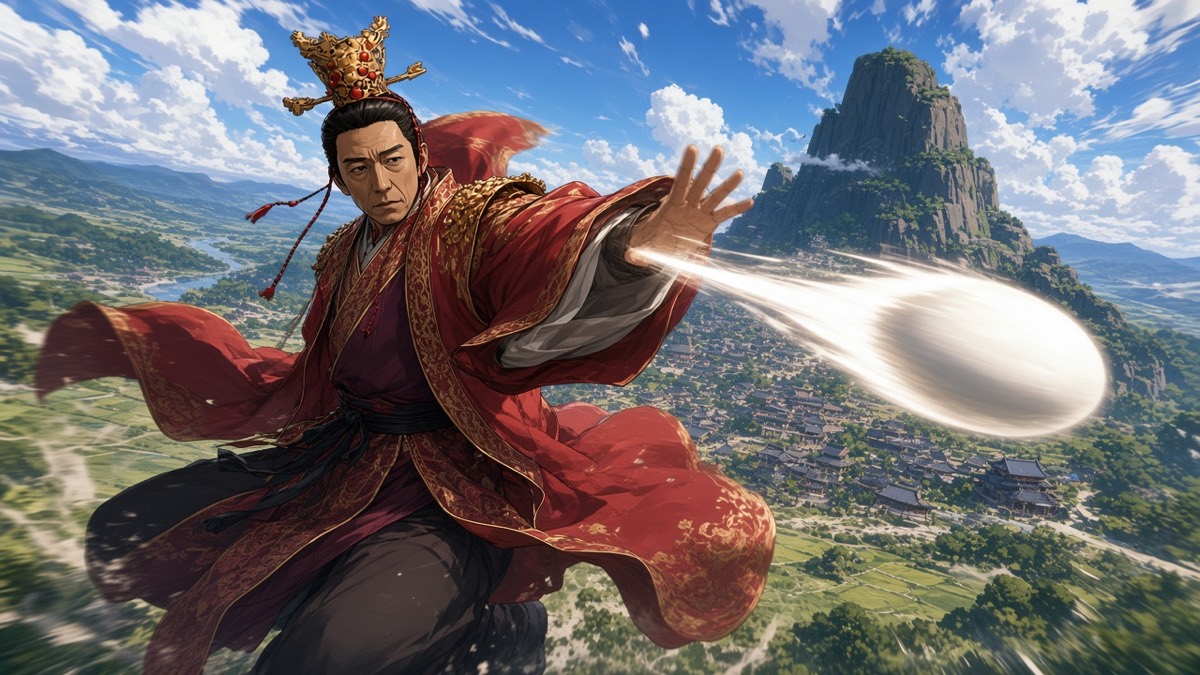
He goes up in a flash of copper. fines the sun the only way it can: while he is in the sky, he may not set foot on the earth. He may look. He may talk. That is all.
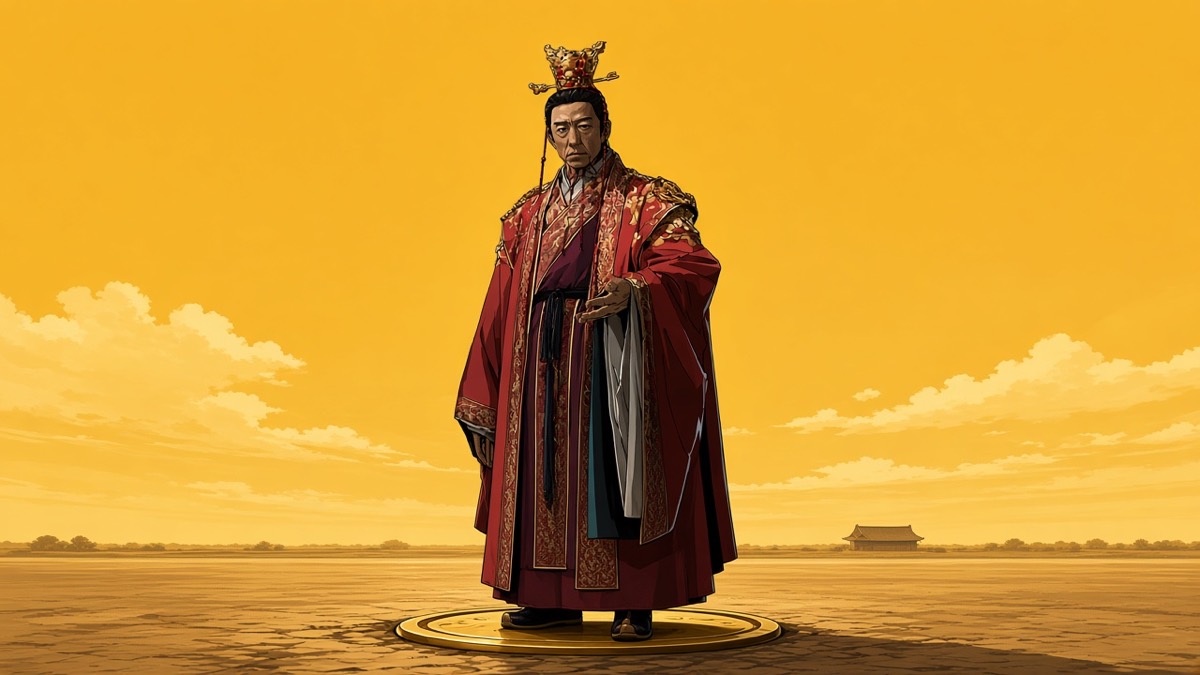
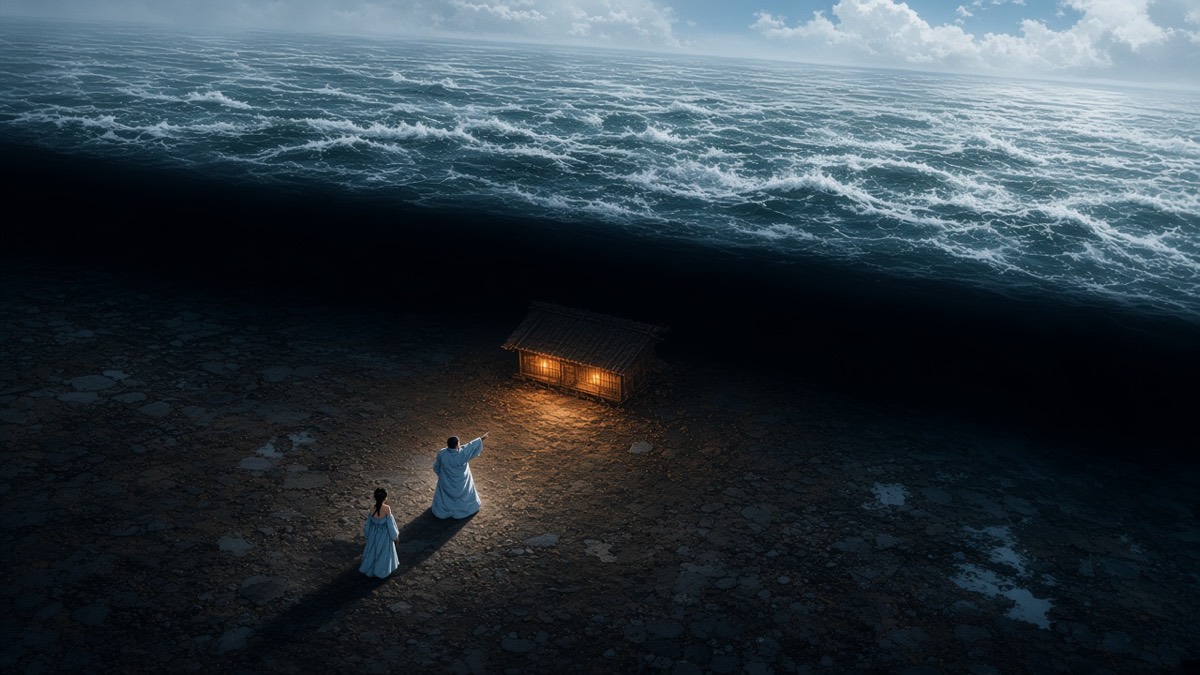
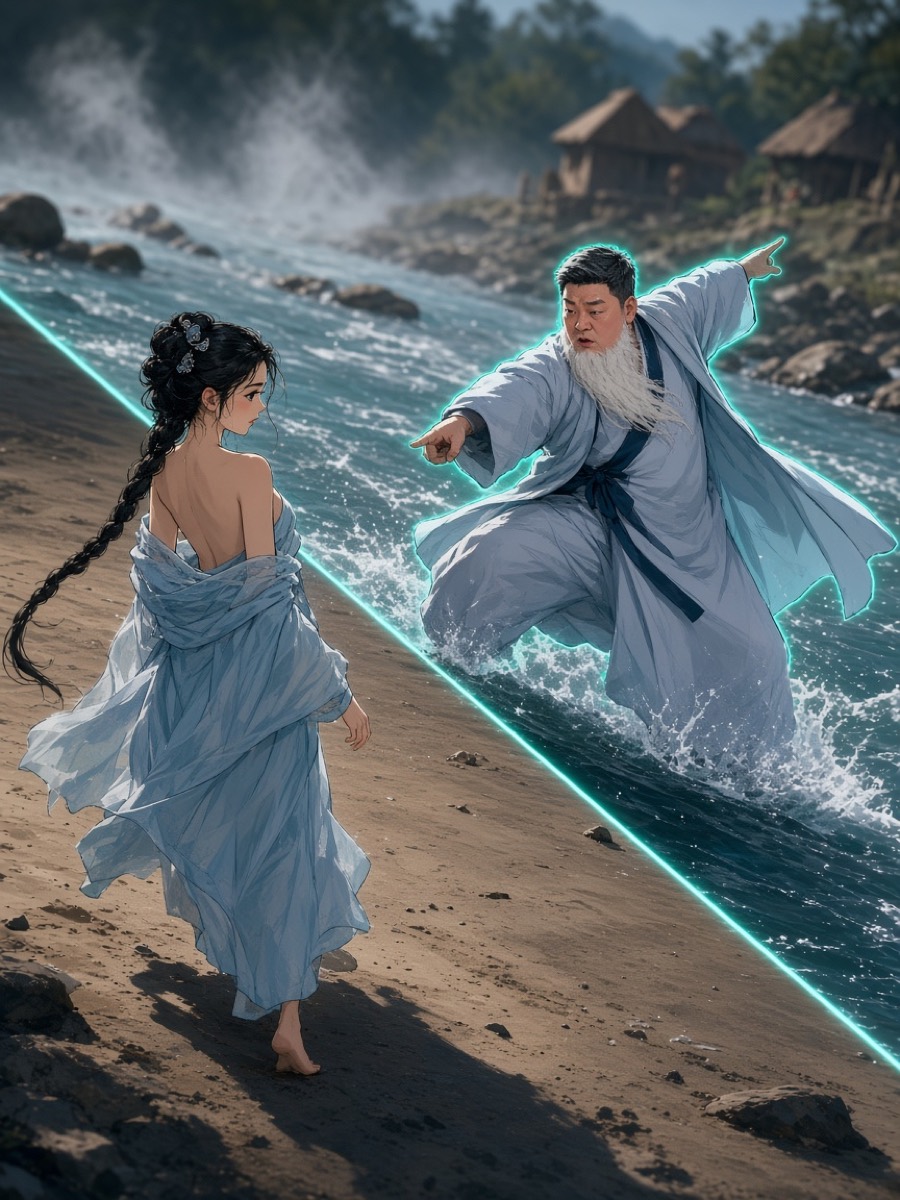
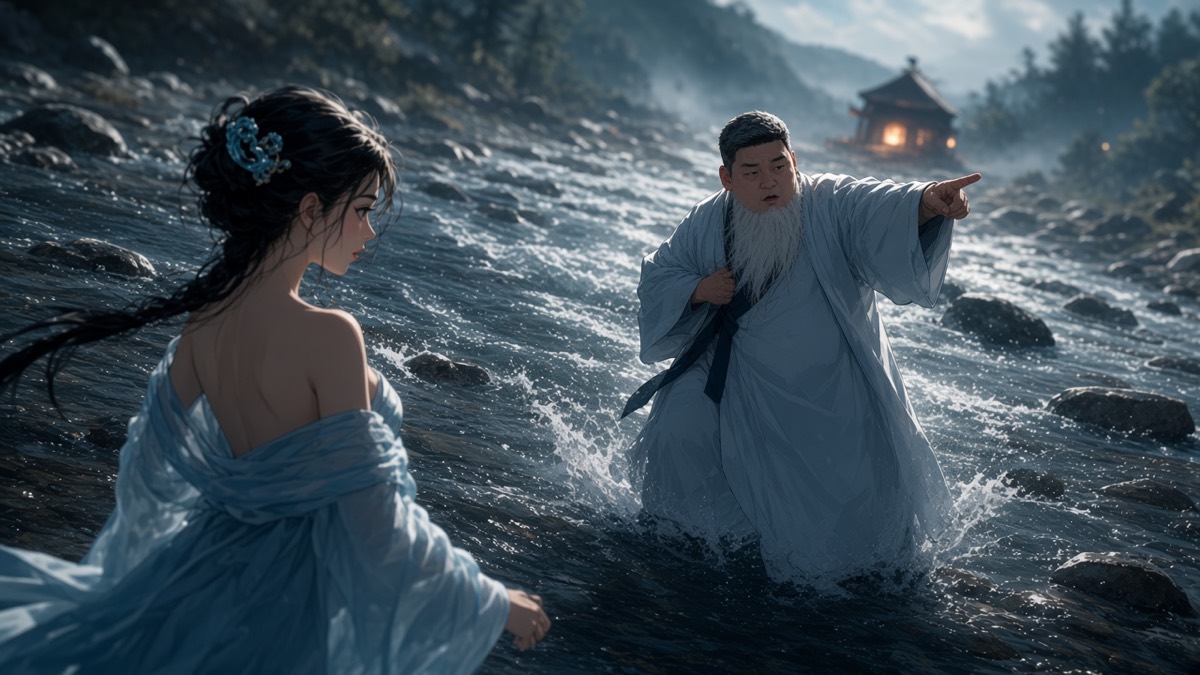
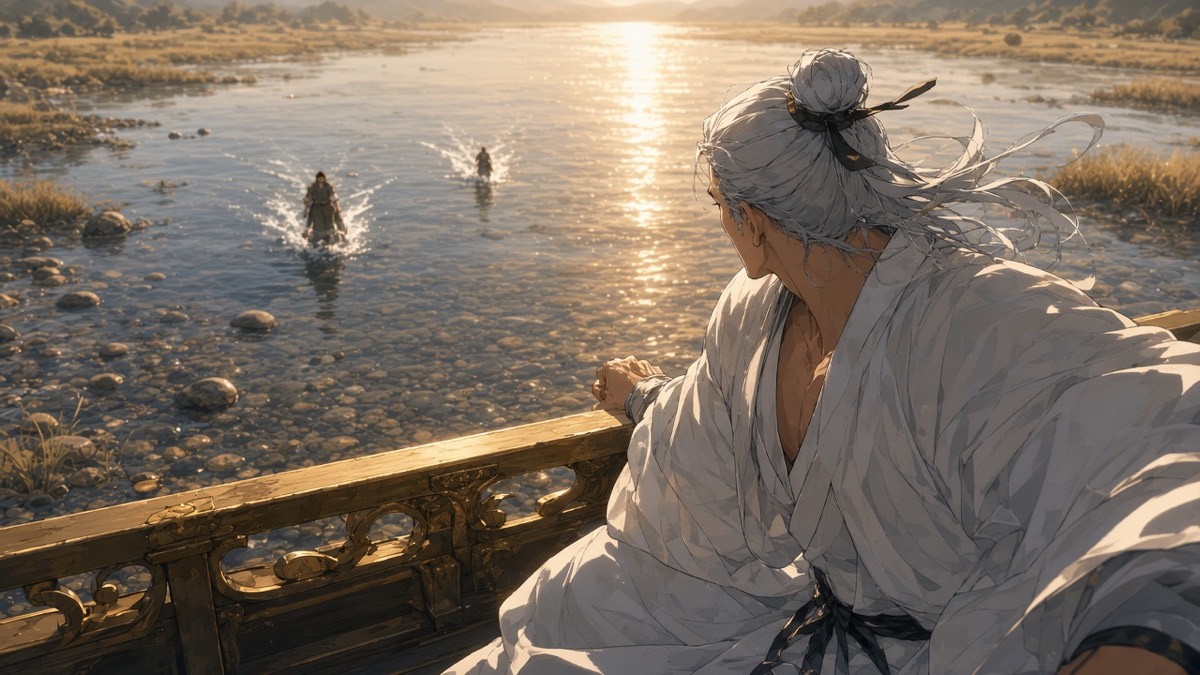
The copper is still warm when the river notices. The keeps its own court: , god of the river and father of three daughters, stands on the wet stones as if the current were a hall. Mist is the dais. He does not need a chair.
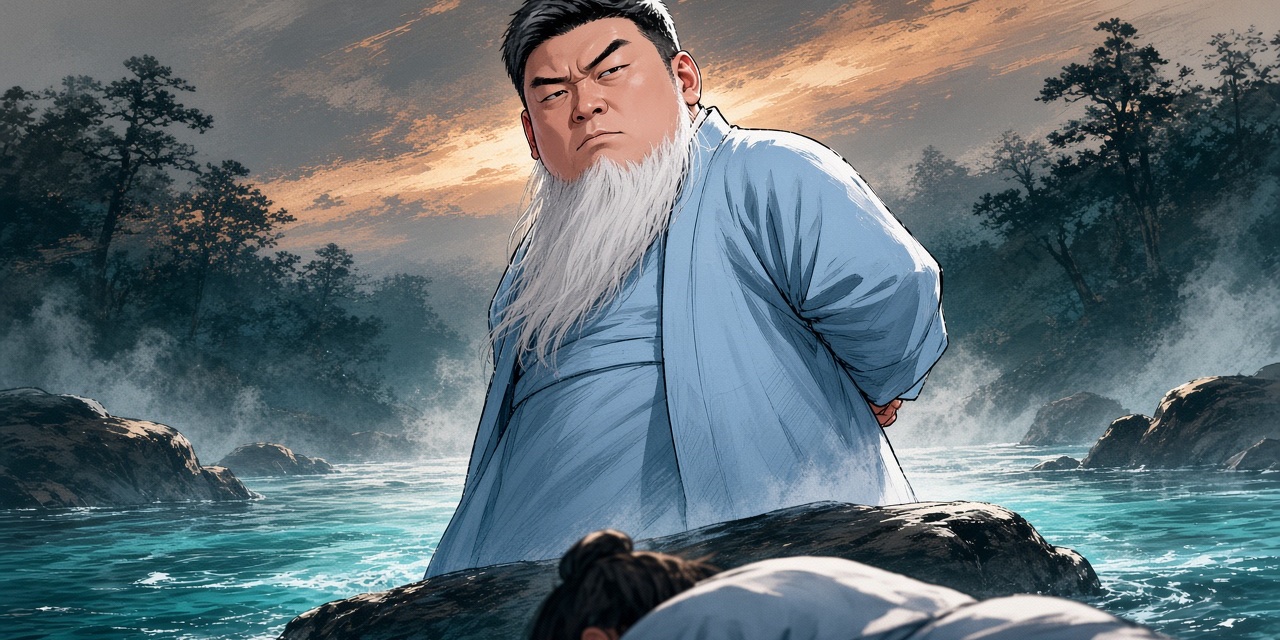
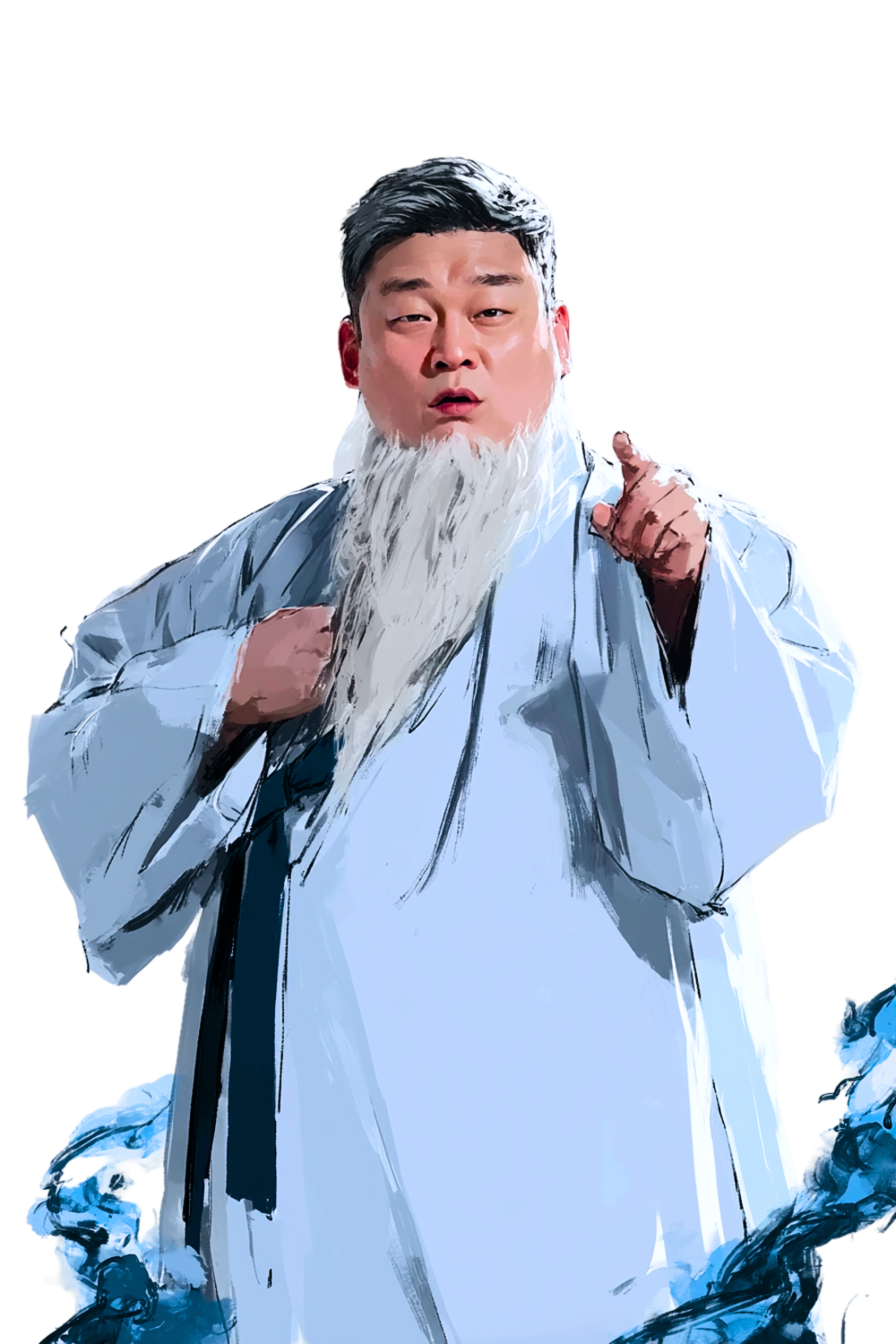
and do not argue the sentence. The eldest watches the current. The middle one watches the copper glow die. Neither looks at their father’s face.
kicks out with a look, not a foot. The bank understands.
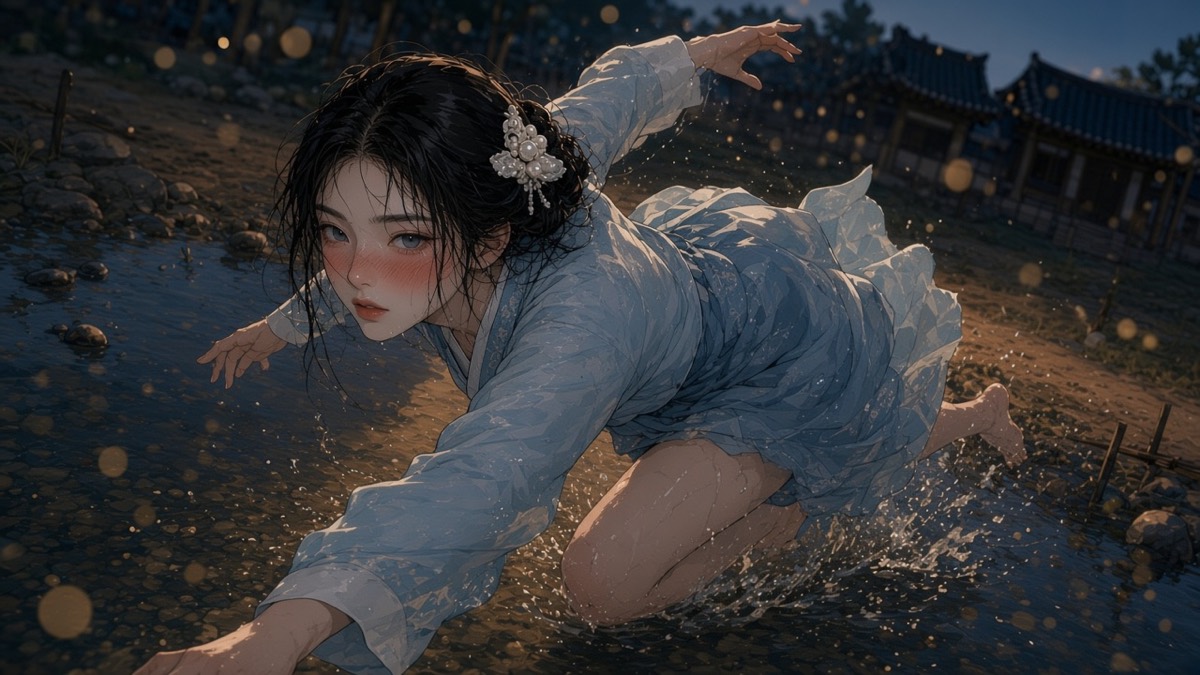
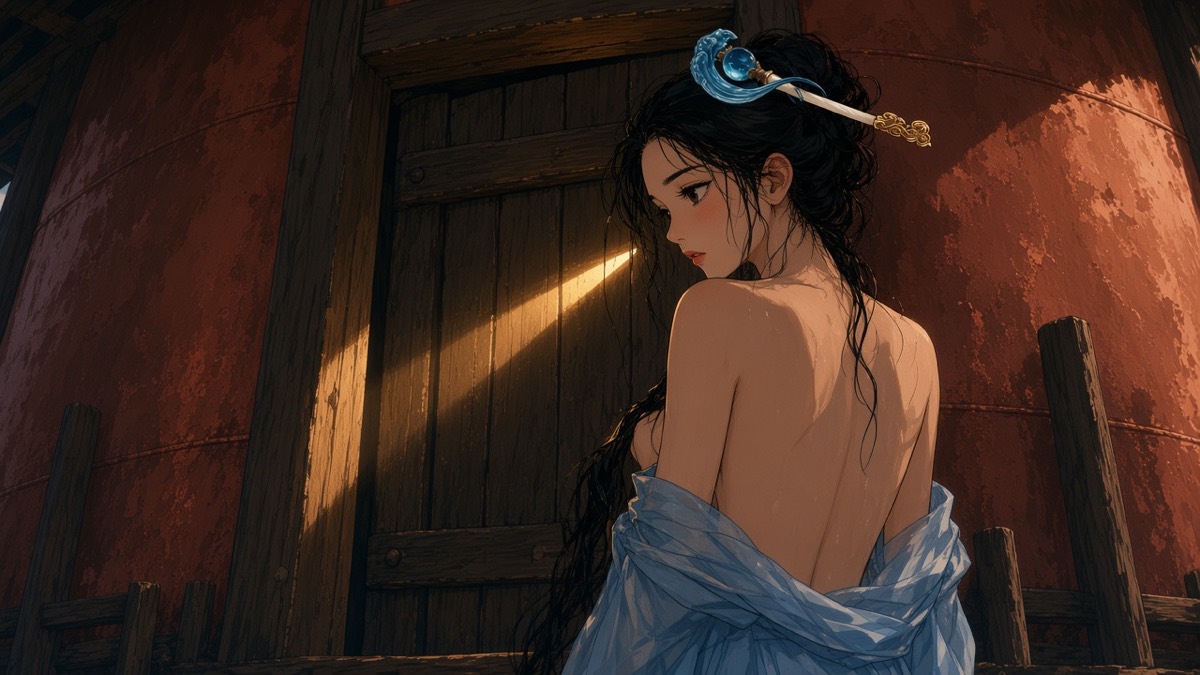
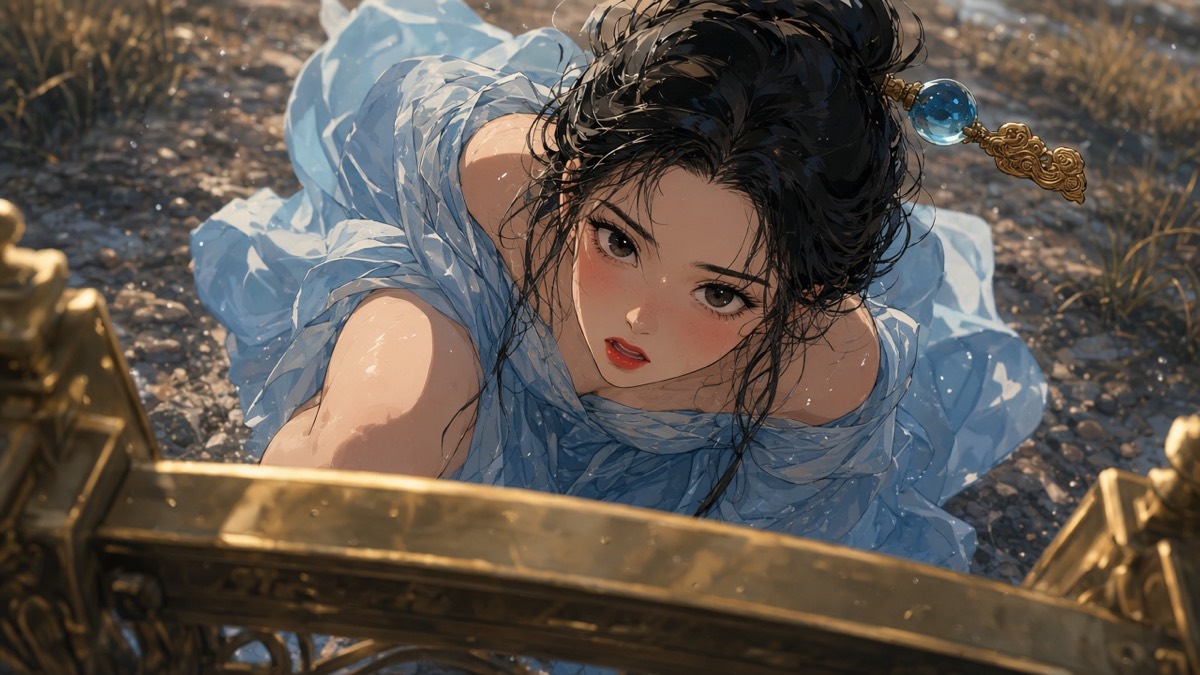
The pavilion walkway does not catch her. ’s sleeve is already the closed door. She hits packed earth with ice-blue still wet from the copper.
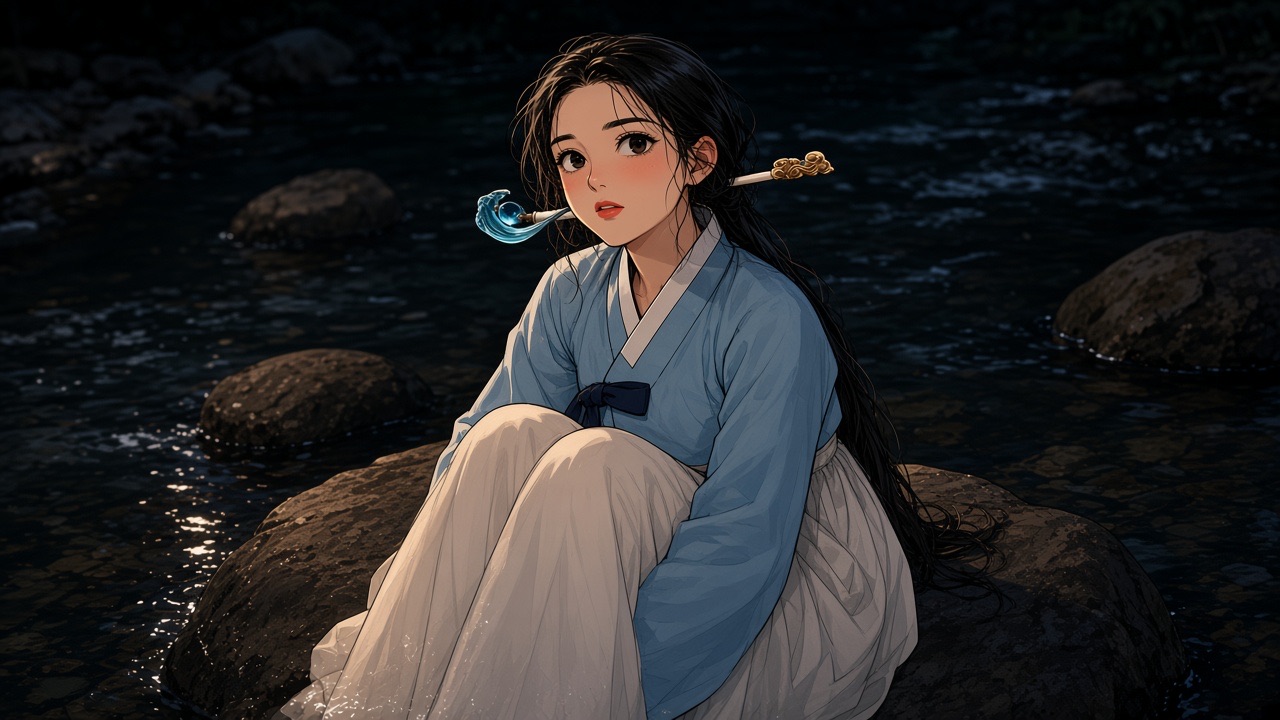
For a while nobody comes. The mist that used to be a bed is just weather. She sits where the river can see her and does not look up.
is already on the packed earth, black, three legs, a red sun on the wing, looking back once as if she might miss the joke. follows him south, barefoot, the ice-blue gone dull with dust: pine shade, a river-bend that is not , a pass of bare stone where she is smaller than the ridge. The crow does not explain the map.
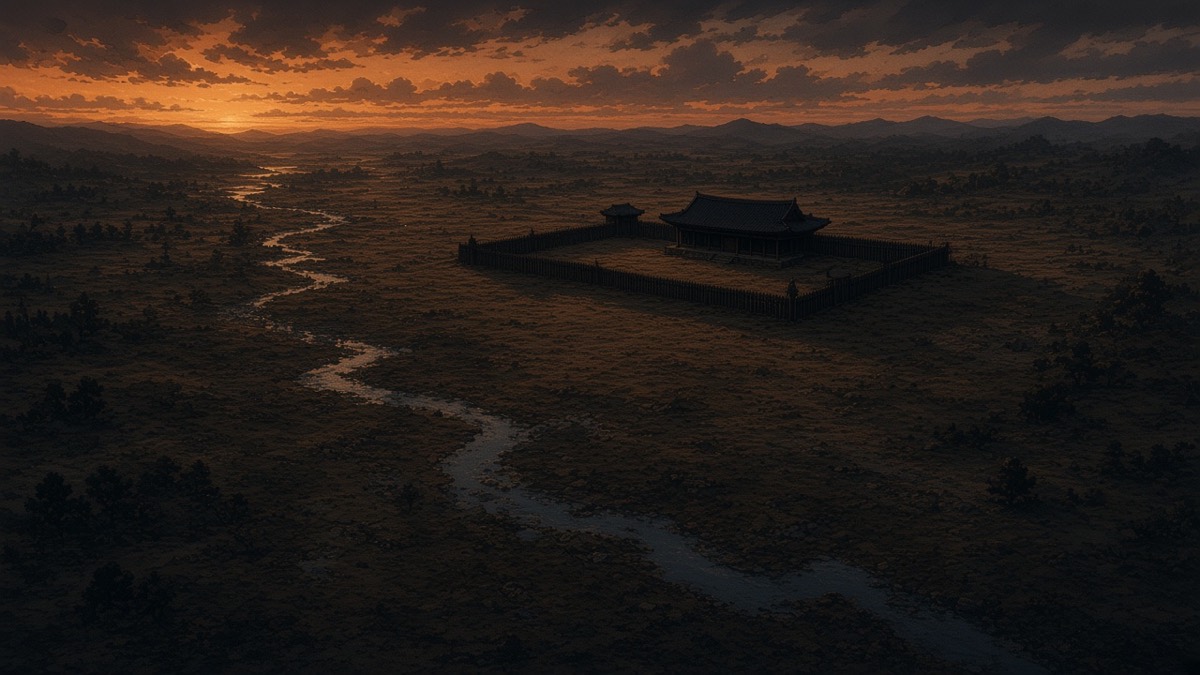
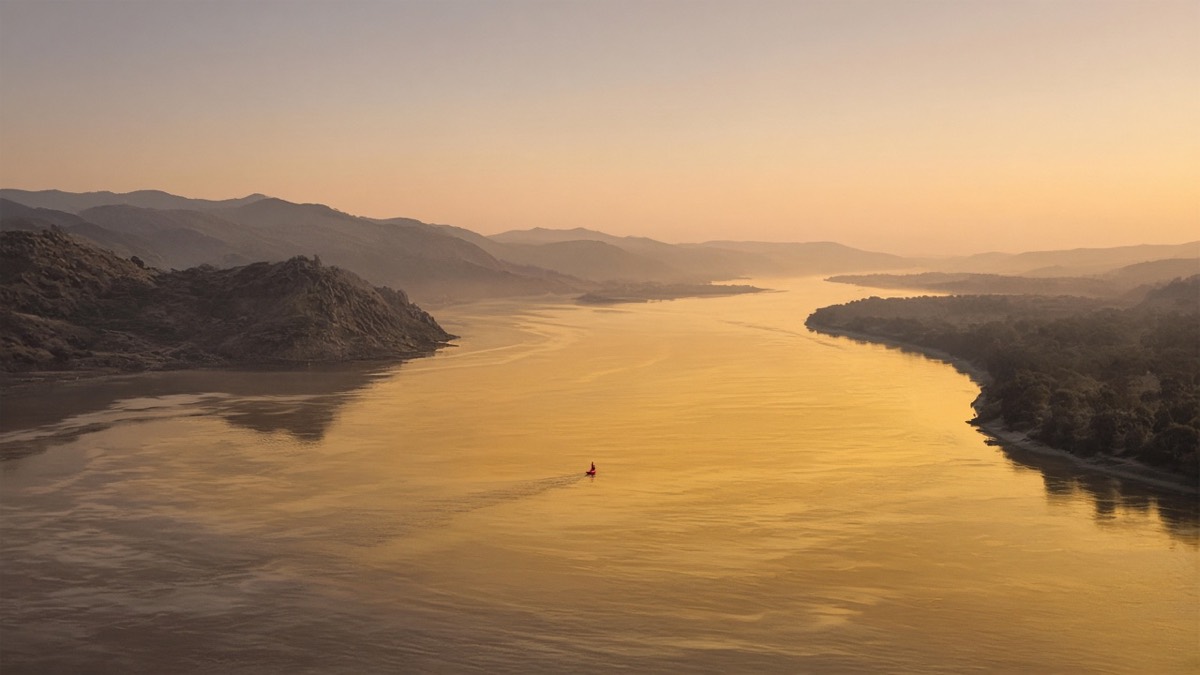
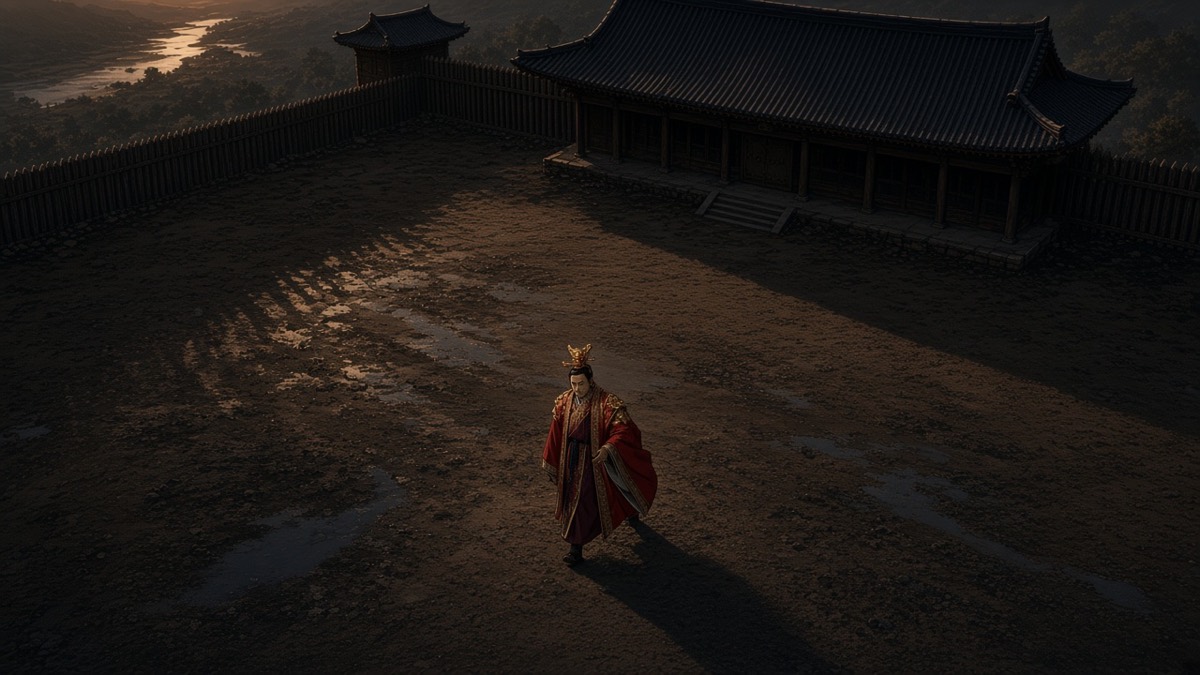
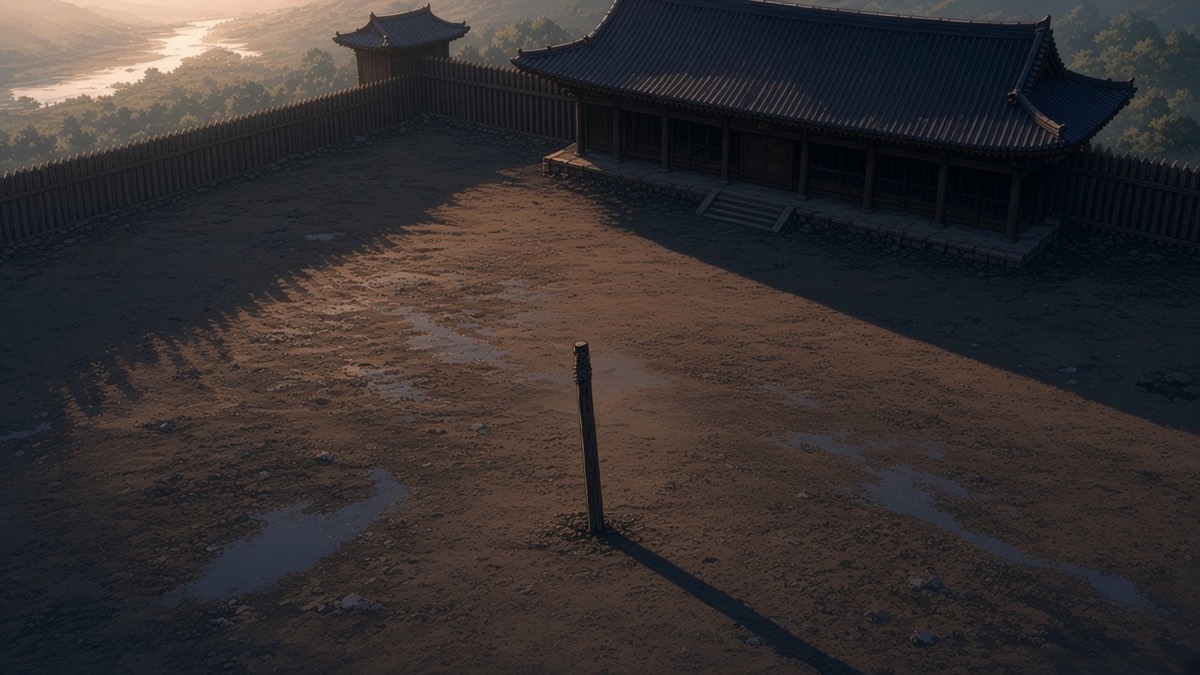
From the river, ’s capital is a palisade of timber teeth and a hill of grey roofs. The studded doors open. , the gold-frog king, comes out to the yard himself.

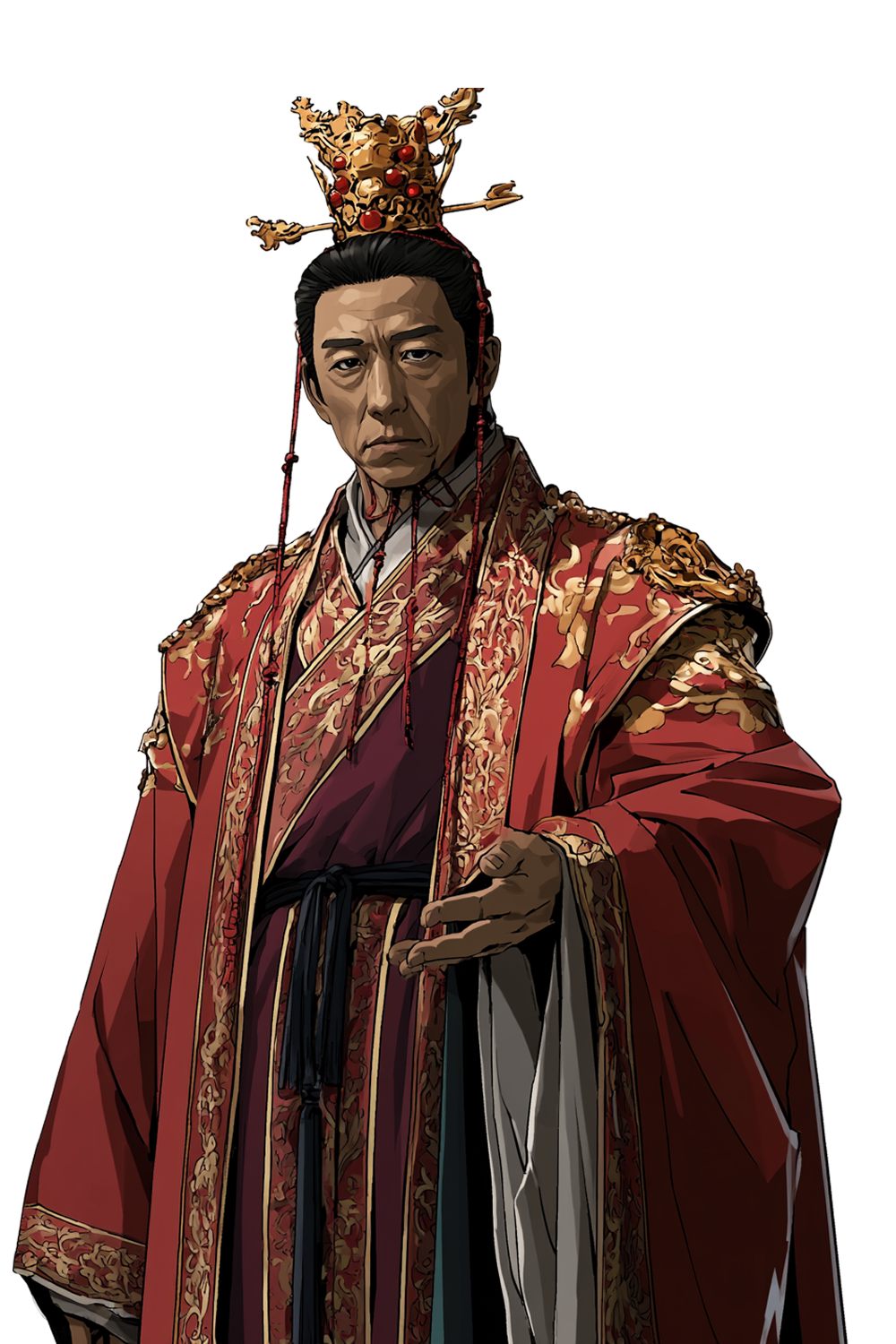

A sun-shaft finds her where she kneels to wring the river out of her sleeve. When she crosses the yard at night it moves with her, a bar of gold keeping her sleeve.
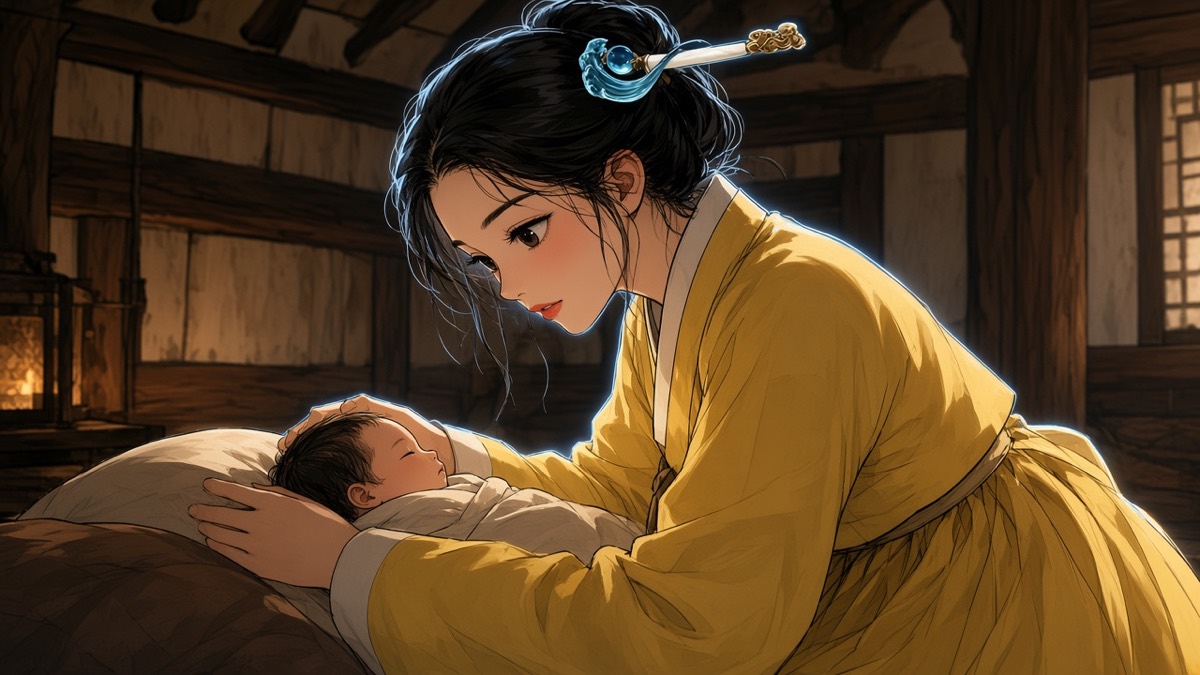
’s ice-blue sleeve is the first roof the boy will remember, though he is not a boy yet.
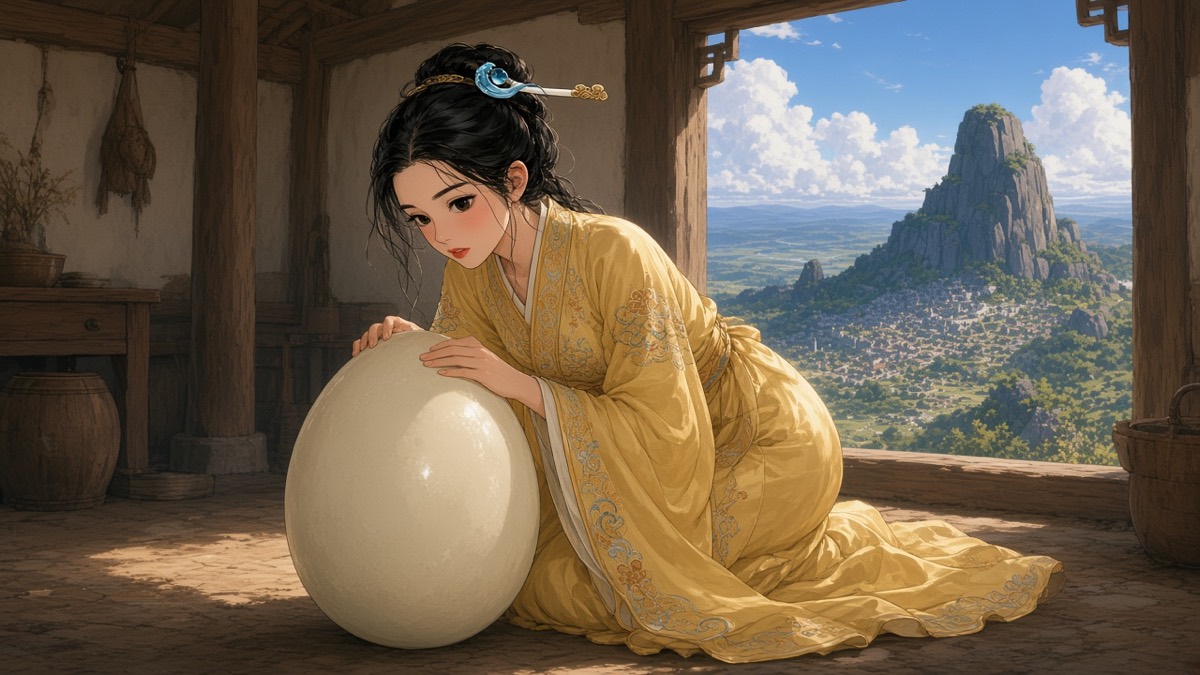
In time lays a great egg. Gumwa has the egg taken from her before the court has agreed what a river-daughter is allowed to bear.
In time lays a great egg. Gumwa’s hall tries to throw it out. The egg declines.
tries very hard to get rid of the egg. The egg declines.
Dogs and pigs will not eat it; the sty refuses the guest, and the ministers pretend that is a kind of answer. In the road, cattle and horses step around it, hooves knowing better than the hall. In the open field, birds cover it with their wings instead of pecking, and the yard goes quiet at that.
An axe is brought. The axe will not split the egg. The edge sings and the shell does not bother to crack.
Someone winds up with both arms and hurls it off the palisade. It meets the stones and stays whole.
wraps it warm in her own sleeve and takes it back upstairs, and nobody reaches for the axe again.
Then the shell gives, and out comes a baby boy, wet and furious, already trying to focus. He looks up as if the room had owed him an explanation.
They name him , the good shot, because in those days people were named for what heaven had plainly already decided. He grows up with Gumwa’s sons, and .
They are boys first, three princes at one stake in one square, before anybody is an heir on purpose. They shoot with borrowed bows, too long in the arm.
can find a fly’s wing with an arrow before the bow fits his arm.
Odd things happen around the sun’s son, and the yard learns not to mention them. Lamps lean toward him in a still room. ’s hounds leave their master for his feet. Once, at noon, his shadow points the wrong way, and the whole square looks elsewhere.
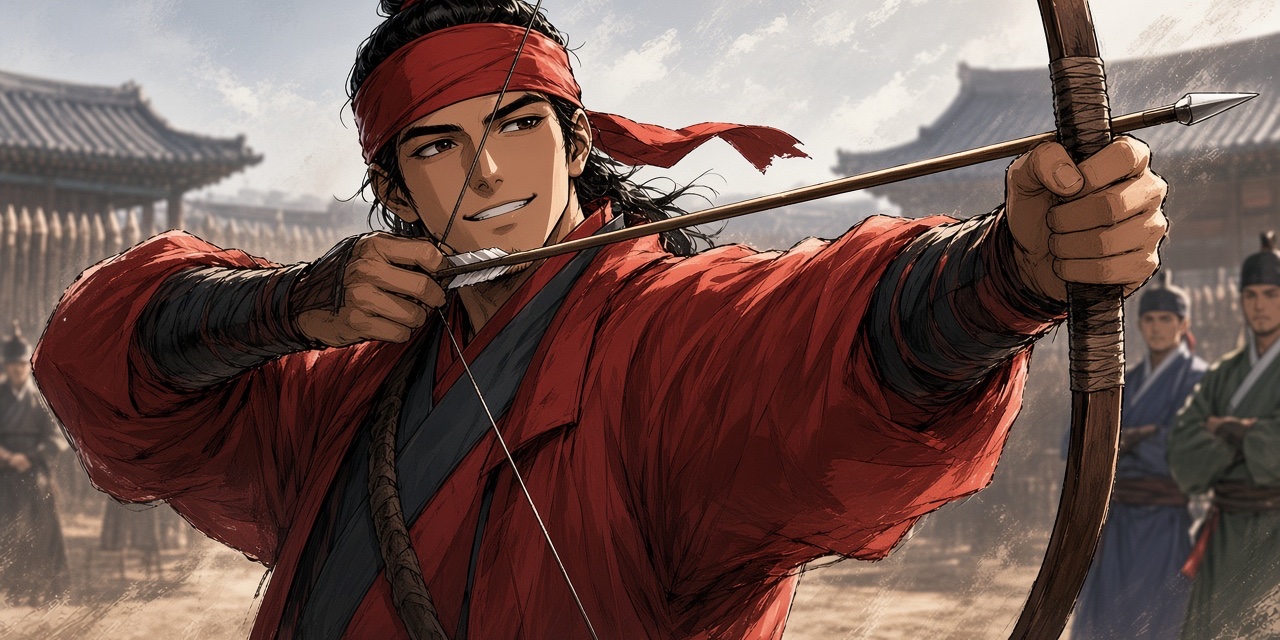
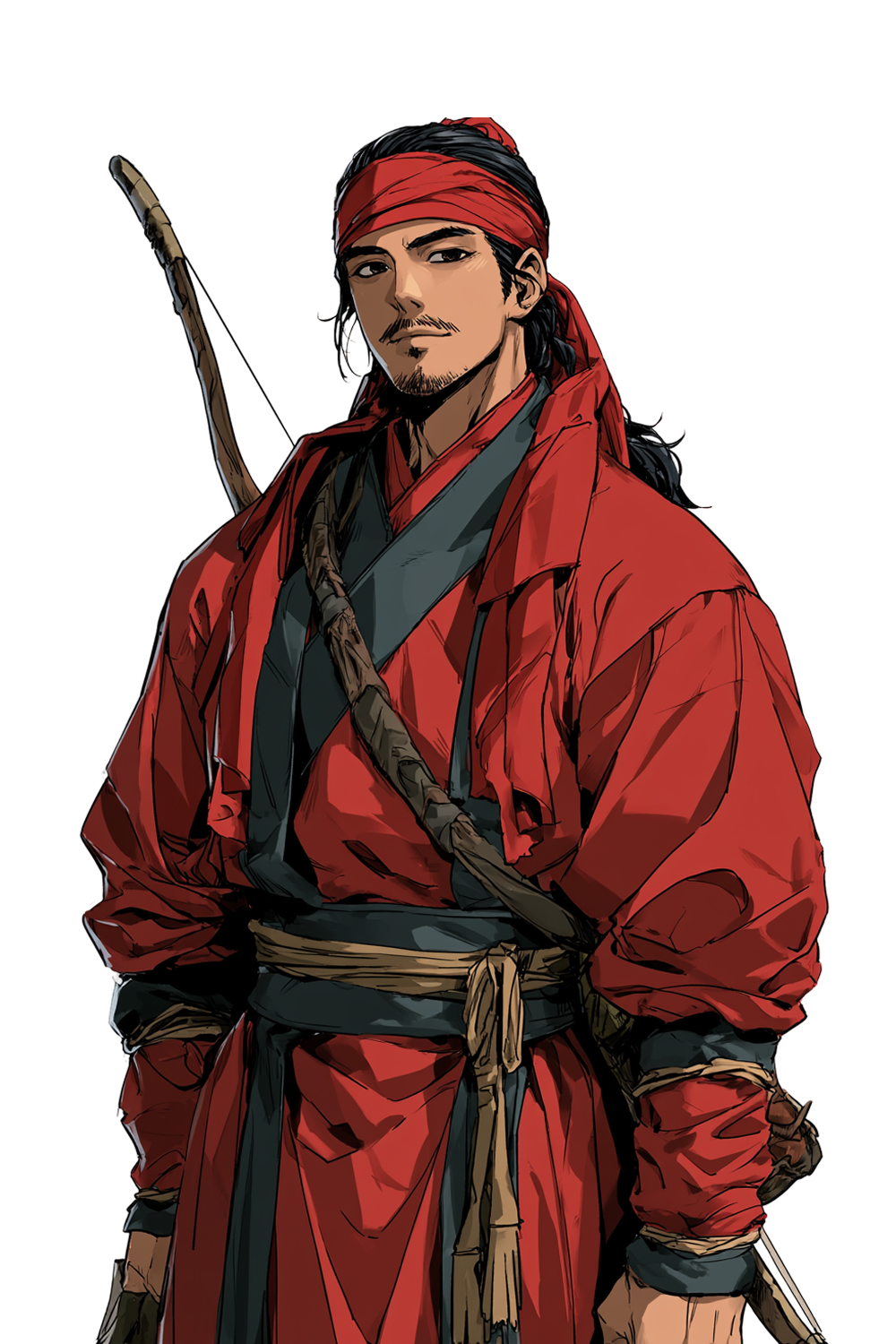
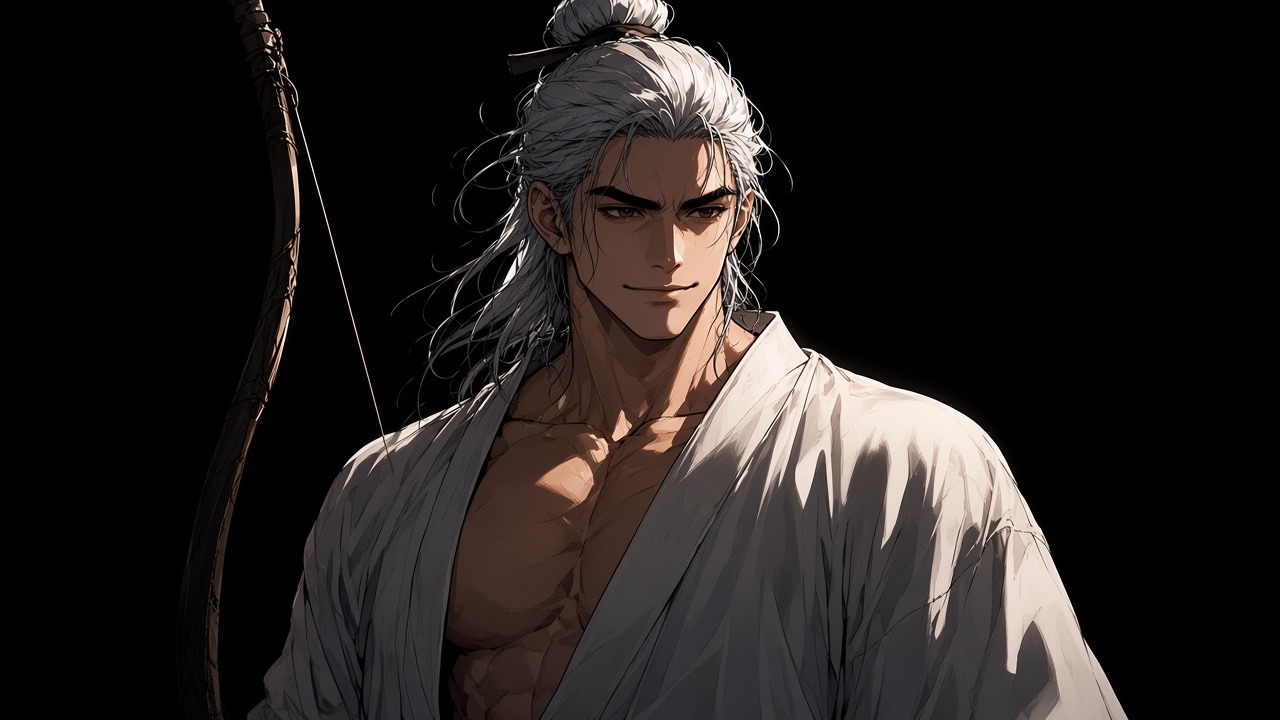
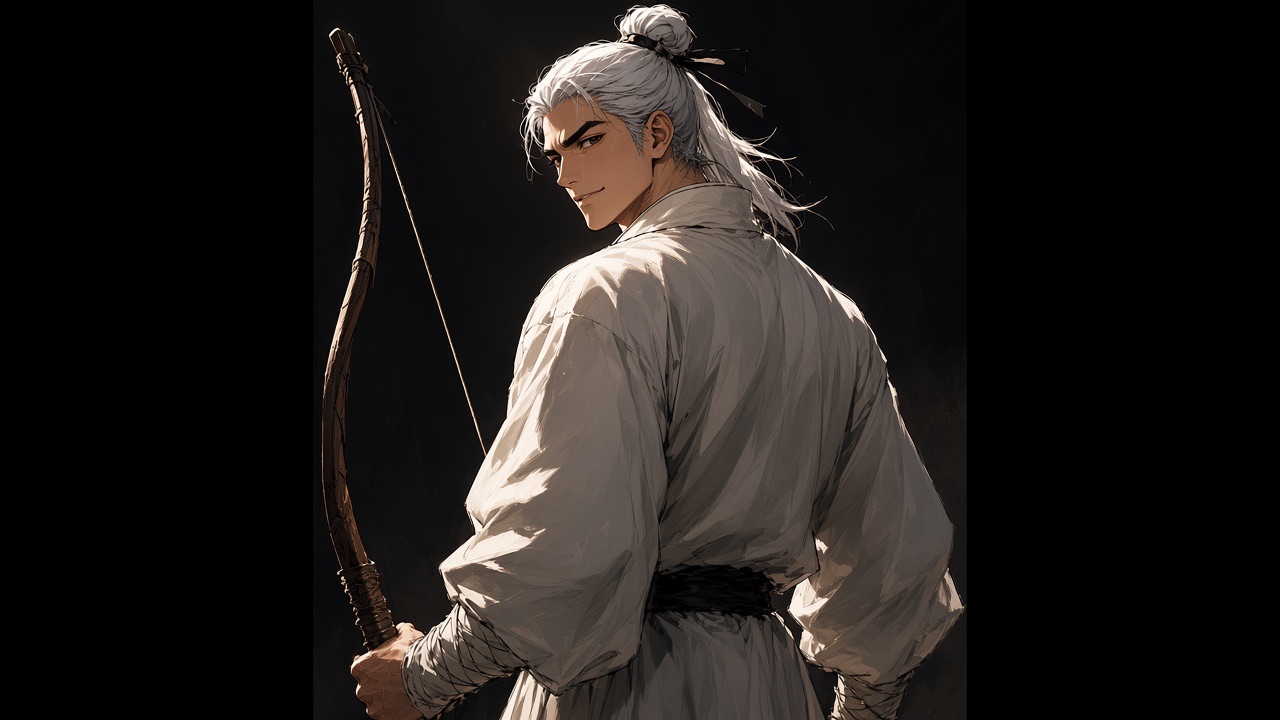
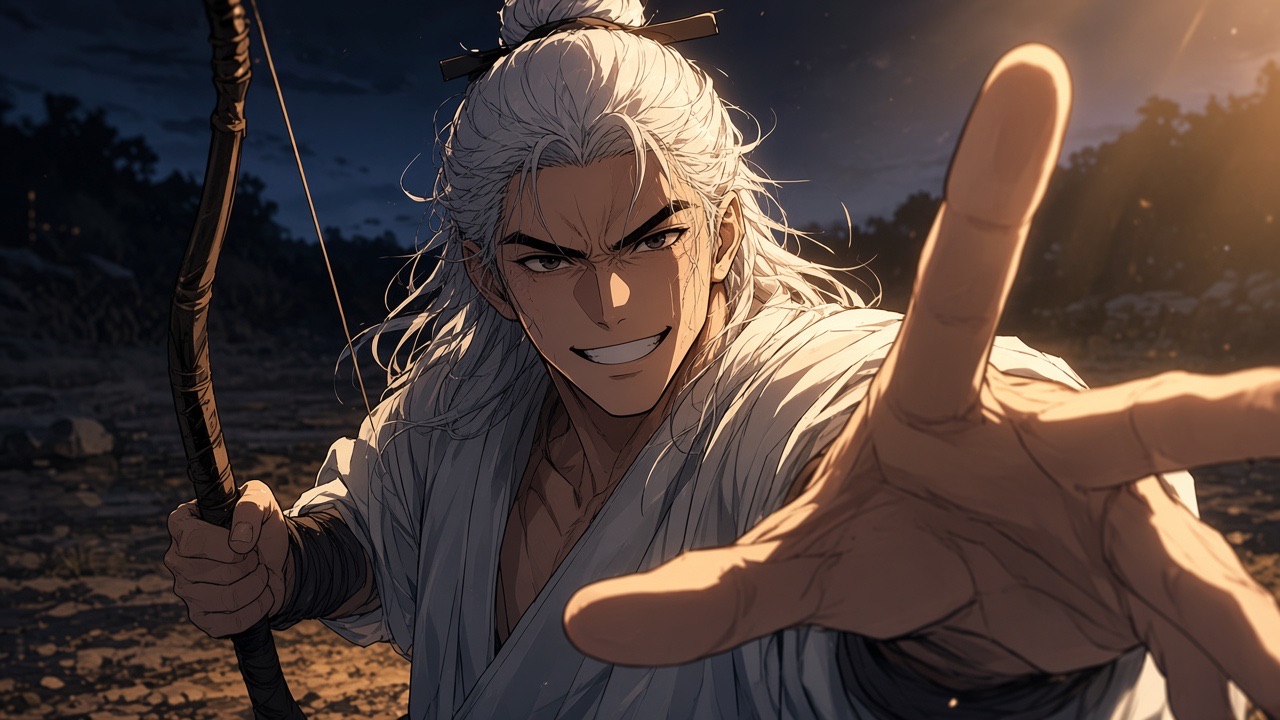
His frame and face were striking and strange. At seven he was already unlike other children; he made his own bow and arrows, and of a hundred shots, a hundred hit. In the tongue a good archer is called jumong, and so they named him.
골격과 생김새가 빼어나고 기이하였다. 나이 겨우 일곱에 의젓함이 남달랐는데, 스스로 활과 화살을 만들어 쏘면 백 번 쏘아 백 번 맞혔다. 말에 활 잘 쏘는 이를 주몽이라 하므로, 그렇게 이름 지었다고 한다.
teaches the grip, then resents the hit. The lesson ends the moment the arrow is better than the teacher.
The yard hears the wood take it, a clean tick, and the praise does not arrive. keeps his hands on his own bow as if applause were a confession. looks at the dirt instead of the hit.
They sleep in a pile like dogs under one quilt, and in the morning the quilt has taken sides. steals the last millet and grins through it, which is worse than the theft.
watches from the hall door, ice-blue sleeve on the post, not stepping into the boys’ weather.
Only two come back talking from the stake. The third has already started a country in his head.
The ministers start keeping two counts: the heir’s arrows and the foundling’s. notices, and stops inviting on the hunts that matter. The excuse is different every time. The reason never is.
Grown, they still shoot at the princes’ mark-stake. stands too close when ’s arrow lands.


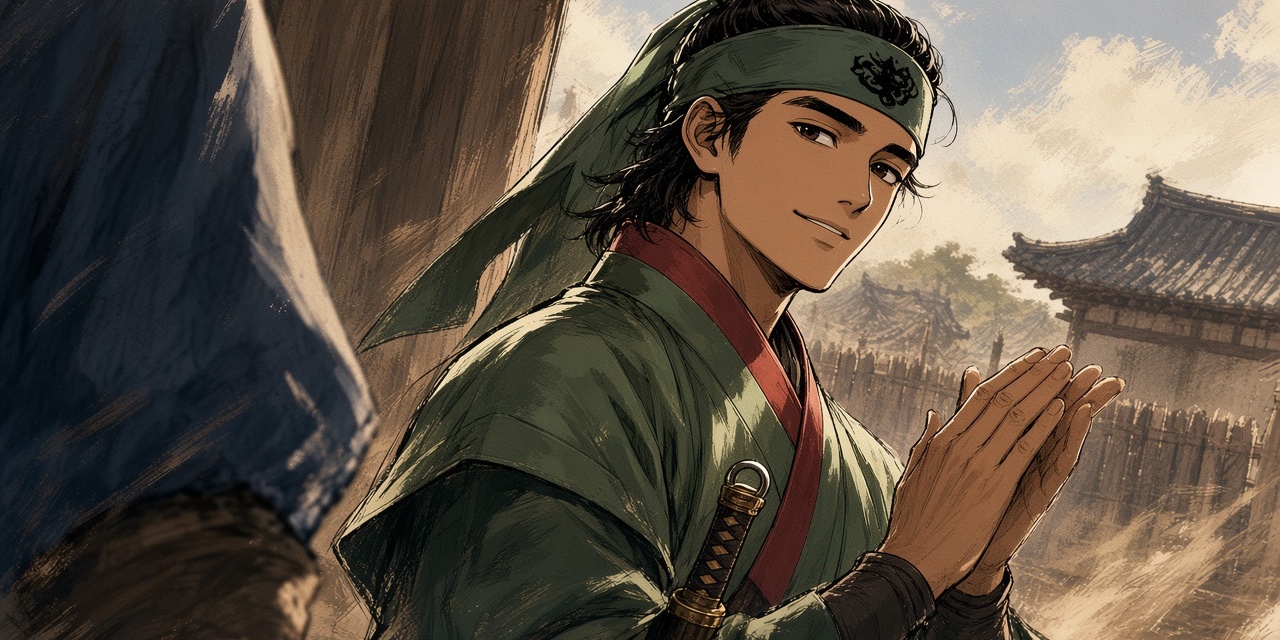

keeps the grin because grinning is cheaper than asking why, and hates the price.
starts counting things: how many of his own men laugh at ’s jokes, how many ask the foundling to judge their shots. The count goes the wrong way. That is when the side room starts filling after lamps-out.
’s arranged marriage to is a hall’s solution: a wife, a lamp, a door that still opens onto .
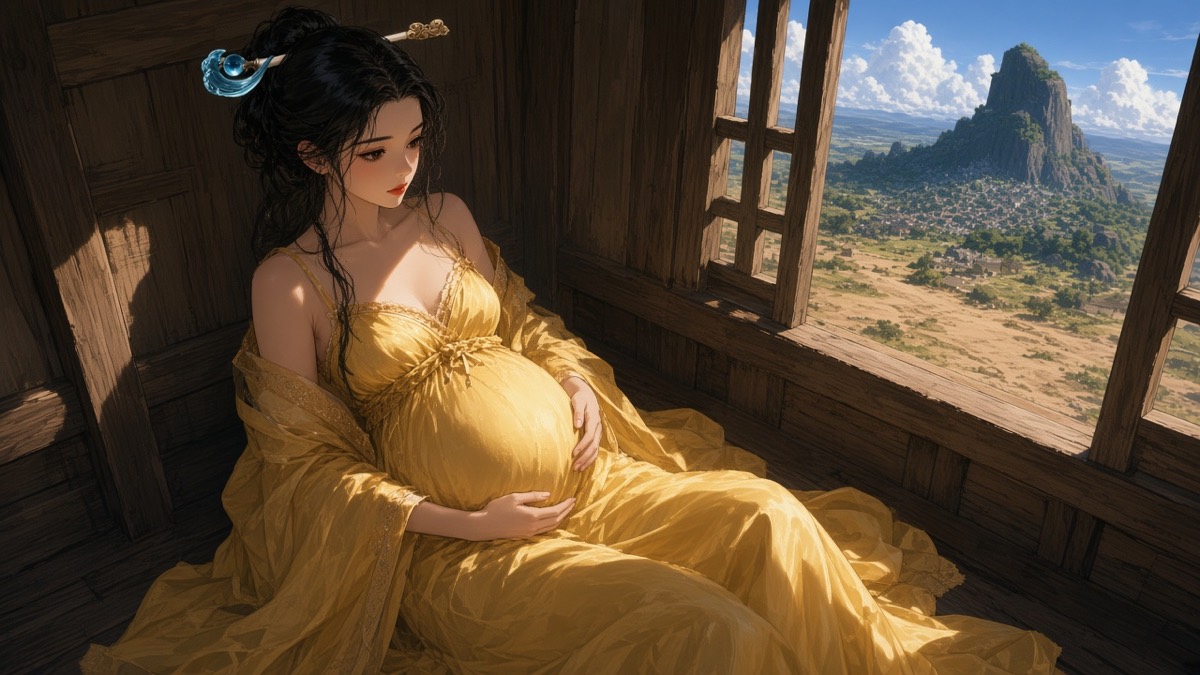
gets pregnant with their son Yuri while the yard is still pretending the foundling is a guest.
Gumwa will not take the heir’s counsel, so takes the ministers into a side room. Lamp low. If they write it down, the scandal arrives before the knife.
Gumwa answers his heir the way tired kings answer. He refuses the knife and gives the foundling a chore instead: is sent to the royal stables, which in is where a hall keeps a prince it would rather not see at dinner.
The stables come with three boys who smell worse than he does. , who is always already packing. , who asks why. , who carries the extra. By the end of the month they are his.
The month teaches them each other’s shapes. eats half his millet and puts the other half in ’s bowl without a word. asks why about everything until runs out of answers and starts inventing. cries the first night and lies about it for a year.
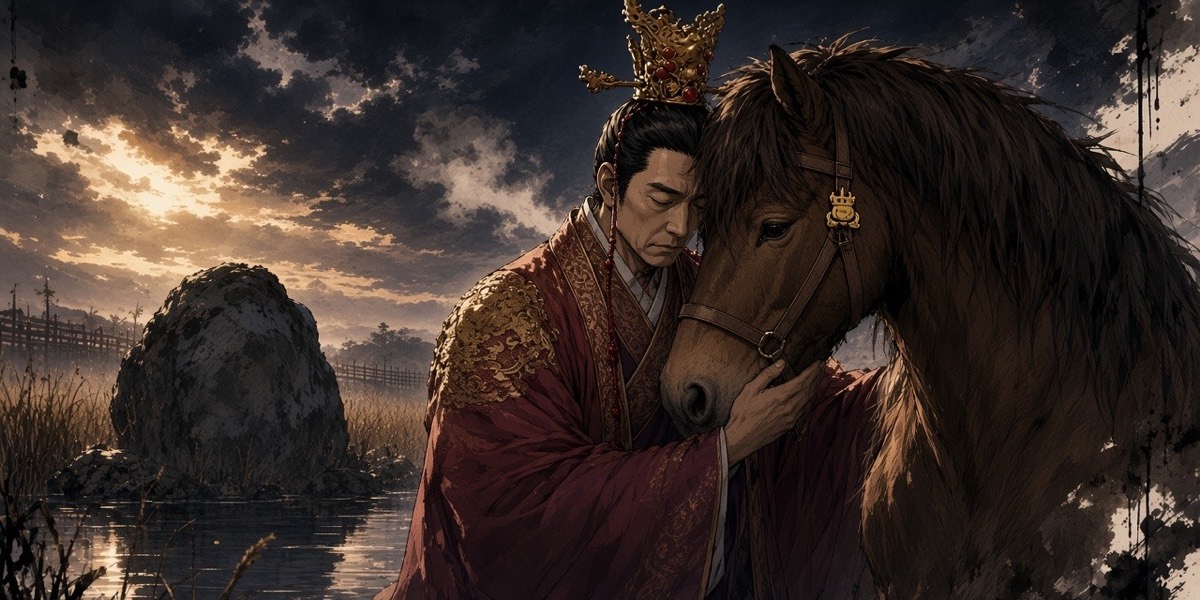
comes to the stable after the lamps are out, a river-daughter in a frog-king’s straw, and finds her son brushing the best horse in as if he could apologise to it in advance.
By the next moon the fastest horse in the yard looks like a rack of kindling with a mane, and the slow ones shine like lacquer. Gumwa walks the stalls, picks the fattest for himself, and tosses the thin one to the foundling with a joke about how well they match. laughs loudest, which is a pity, because he is the one man in who should have looked twice.
He pulls the needle out that night. The horse eats until dawn.
Before the next hunt, a knife comes through the dark of his room. ’s lamp is still lit, so the shadow moves on the wall before the man does. rolls. The blade goes into the quilt up to the hilt.
The man runs. He wears a palace sleeve, and he runs toward ’s end of the hall.
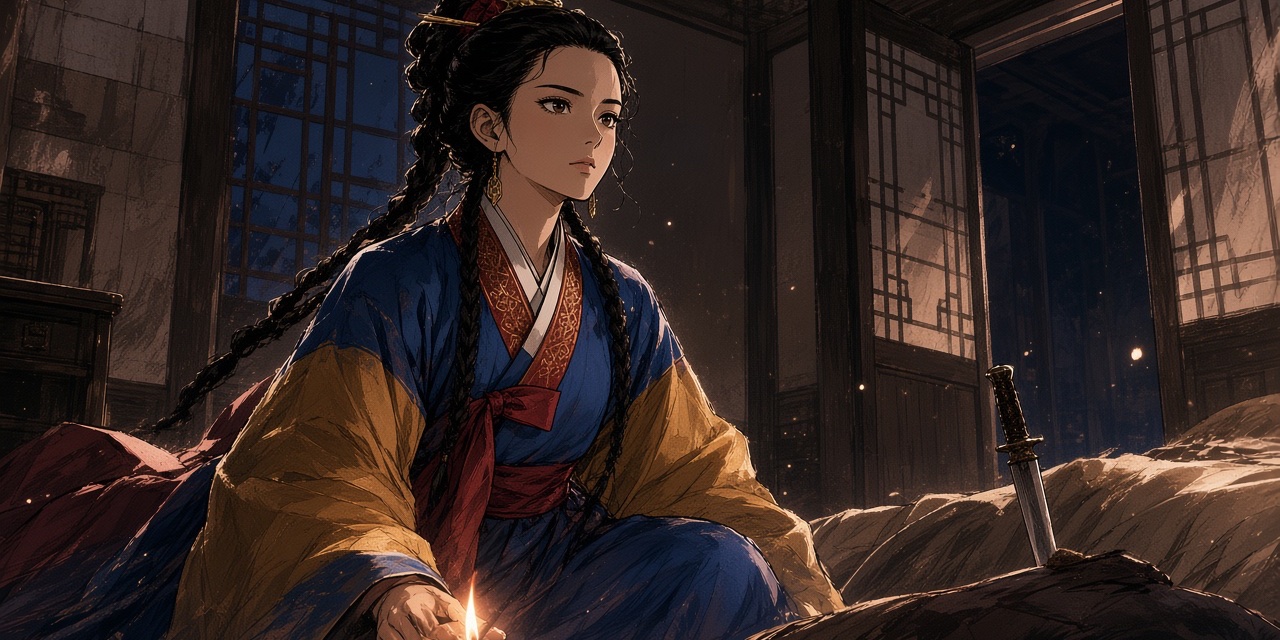

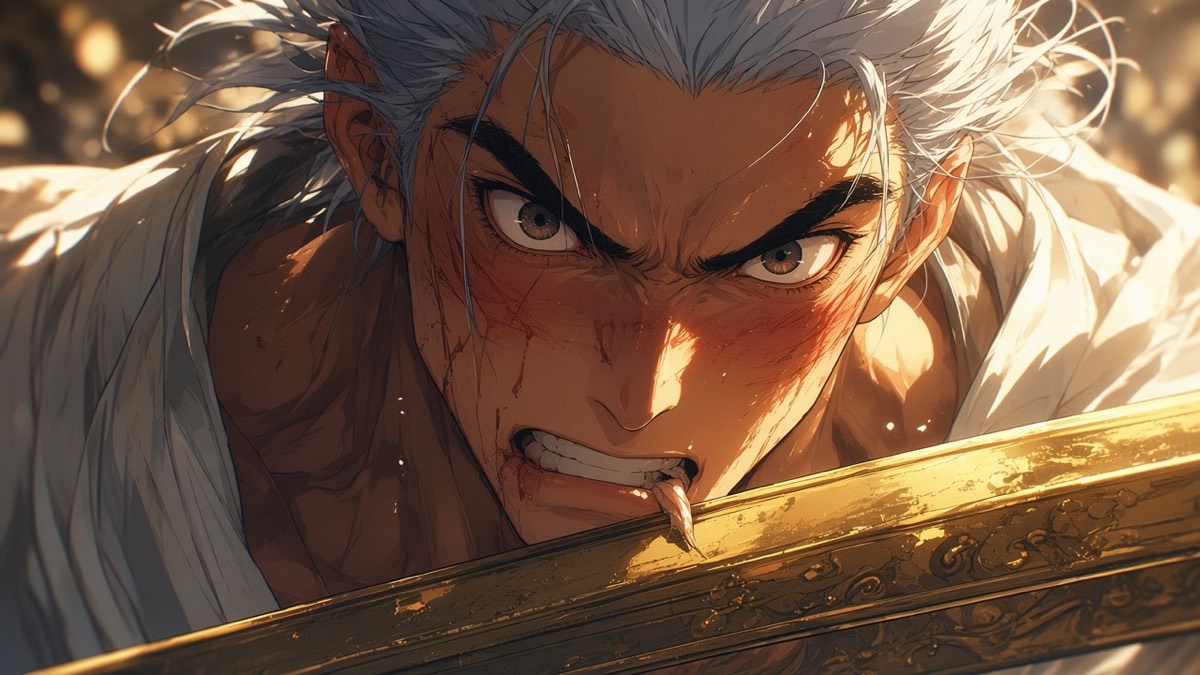
He takes his sword down from the wall and breaks it across the seven-sided stone under the pine pillar. It takes two tries. He is not a swordsman.
Night at the palisade. Iron studs, a red sleeve, and a wife who does not come out to wave.
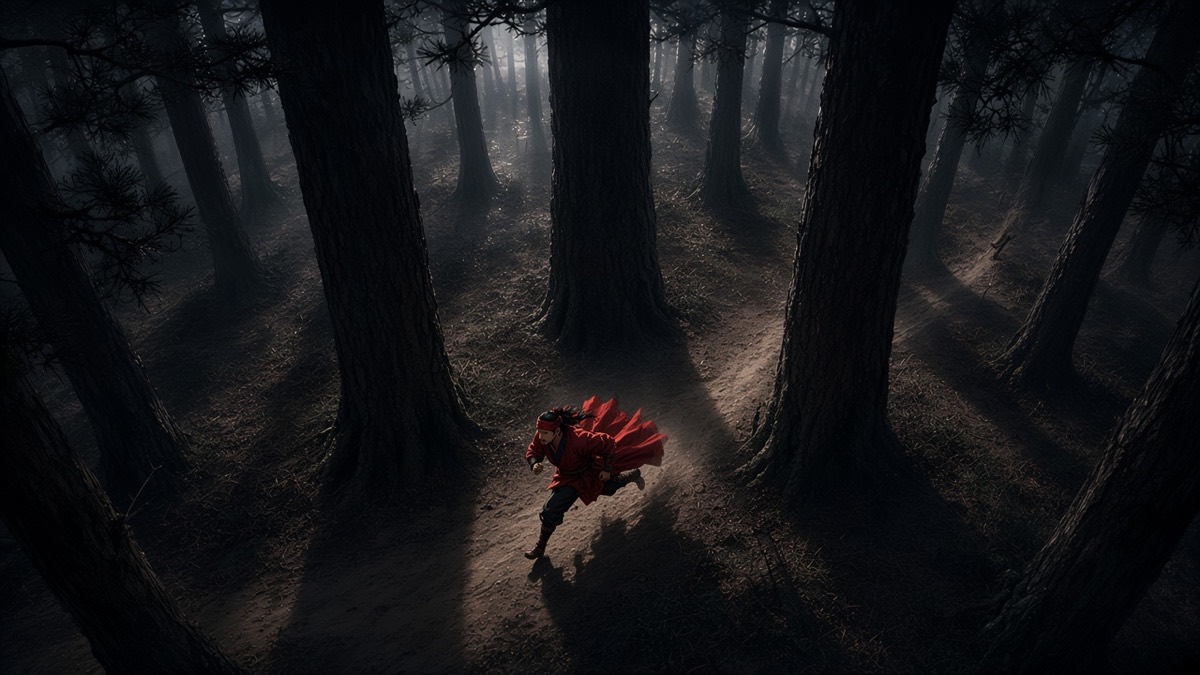
His friends , and take the hills with him. Behind them come the riders sent, less a hunt than a net, and under the pines it closes from above.
They split in the pines before the river, four men and one horse between them, the one Gumwa thought was thin.
He runs until the pines smear. Behind him the net is spears in the dark, points only, no faces he is allowed to know.
Something keeps pace with him above the trees, black on black, going from branch to branch without seeming to hurry. A crow. He is too frightened to count its legs.
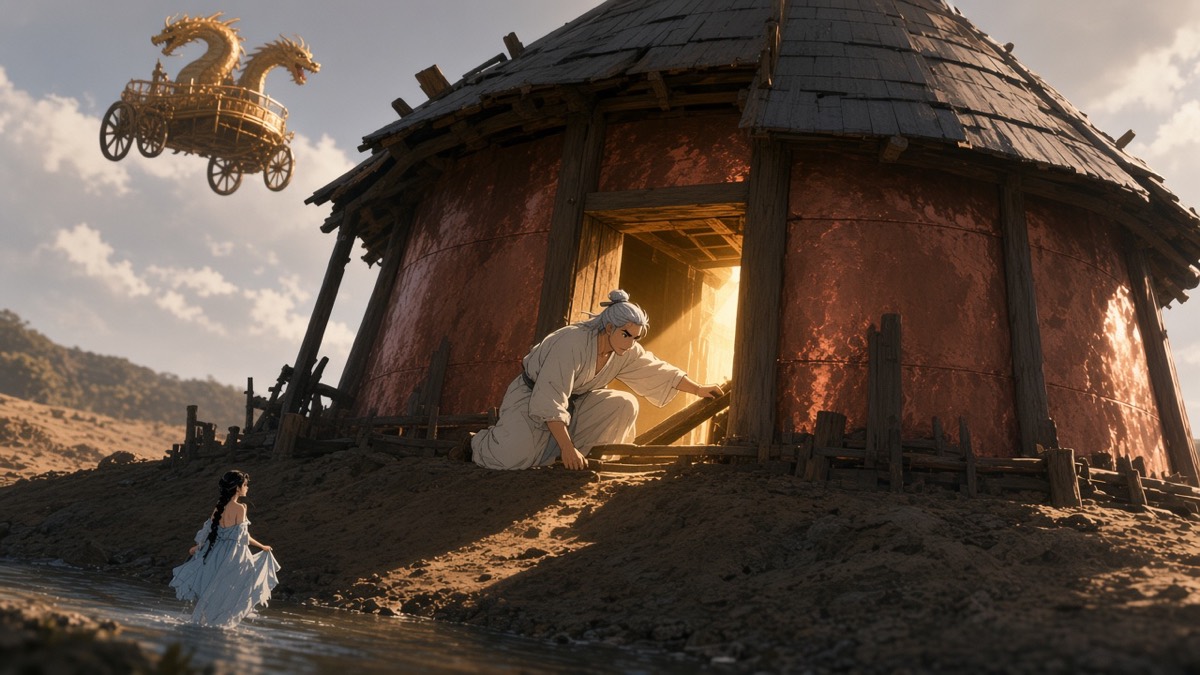
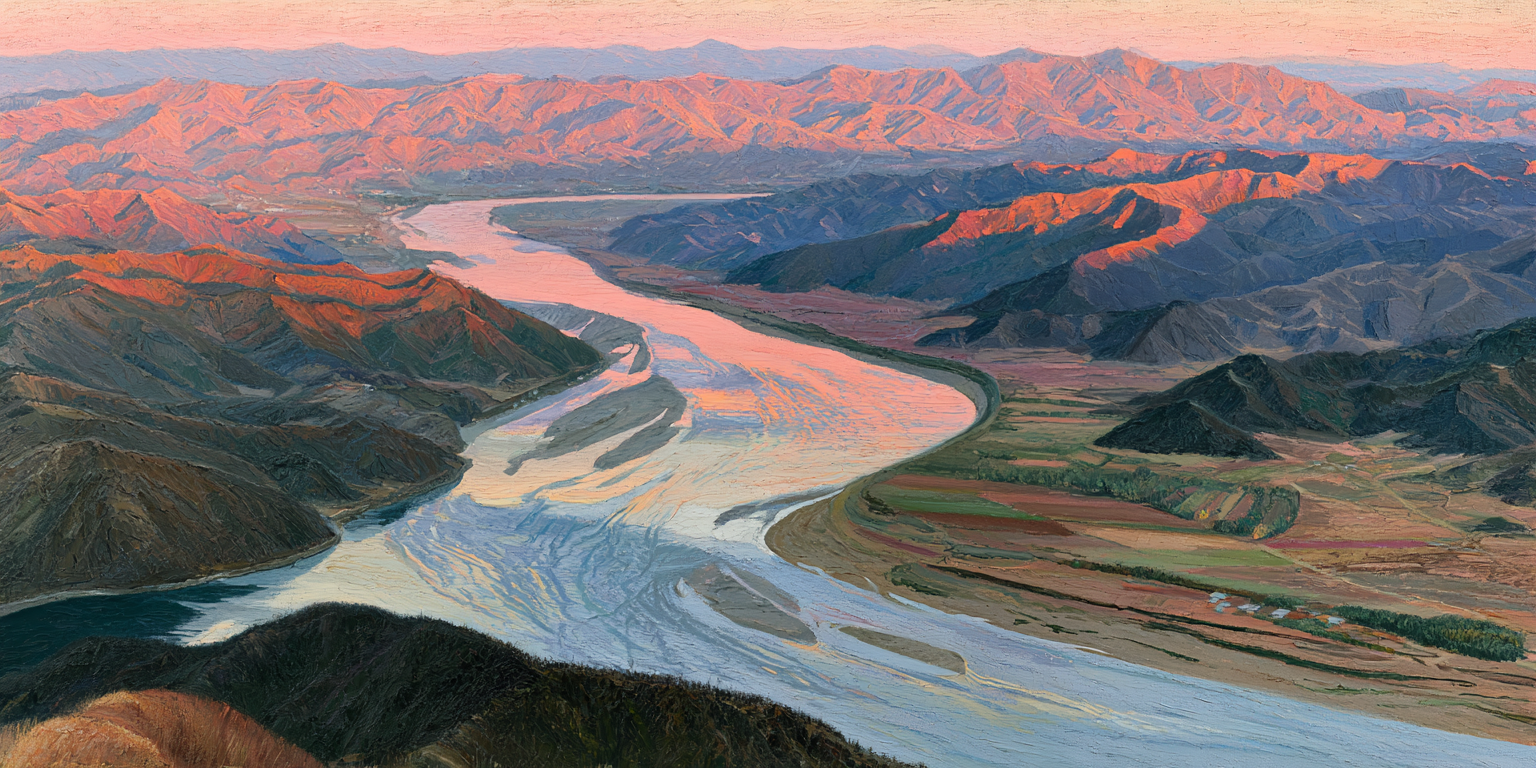
reaches the alone — ’s river, the same wet line his mother was cast out of. His death is already written for that day. No ford. No boat. On the near bank, half sunk in mud and willow, the copper room built for still stands in pieces: green-black plates, a door that no longer closes, the afternoon’s heat long gone.
, the reaper who collects each day’s dead, is already in the air. He skims the river toward him. Black hat, black silk, mouth bound shut. doesn’t see him. He’s looking at the water and the rain.
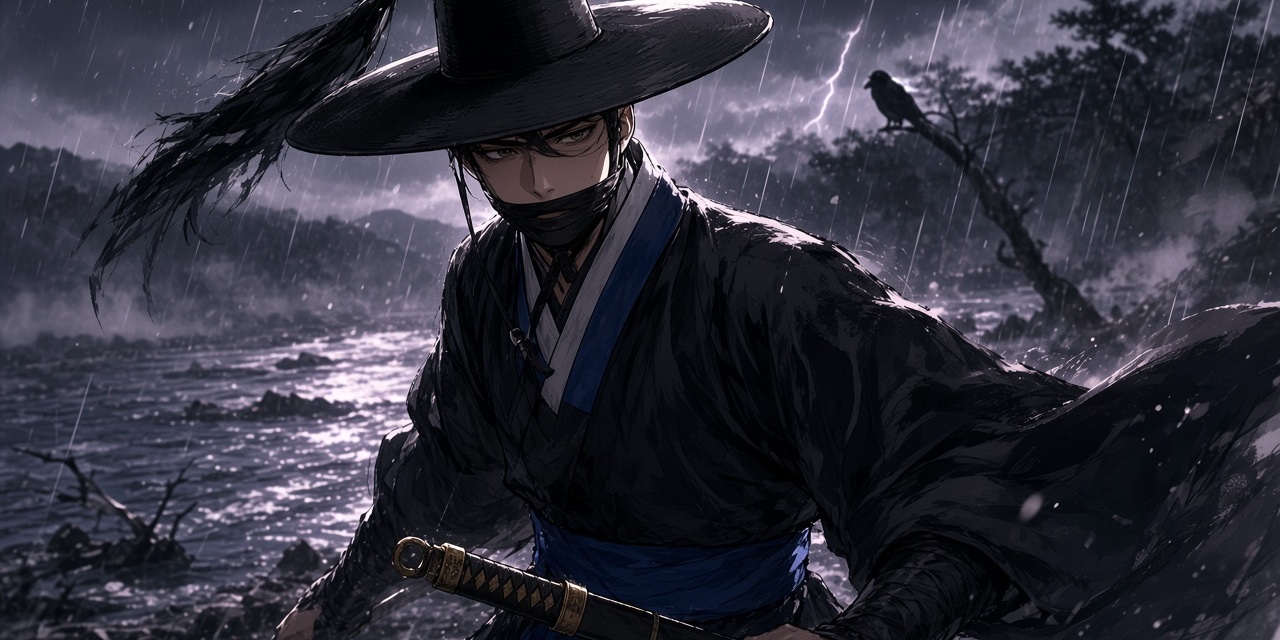
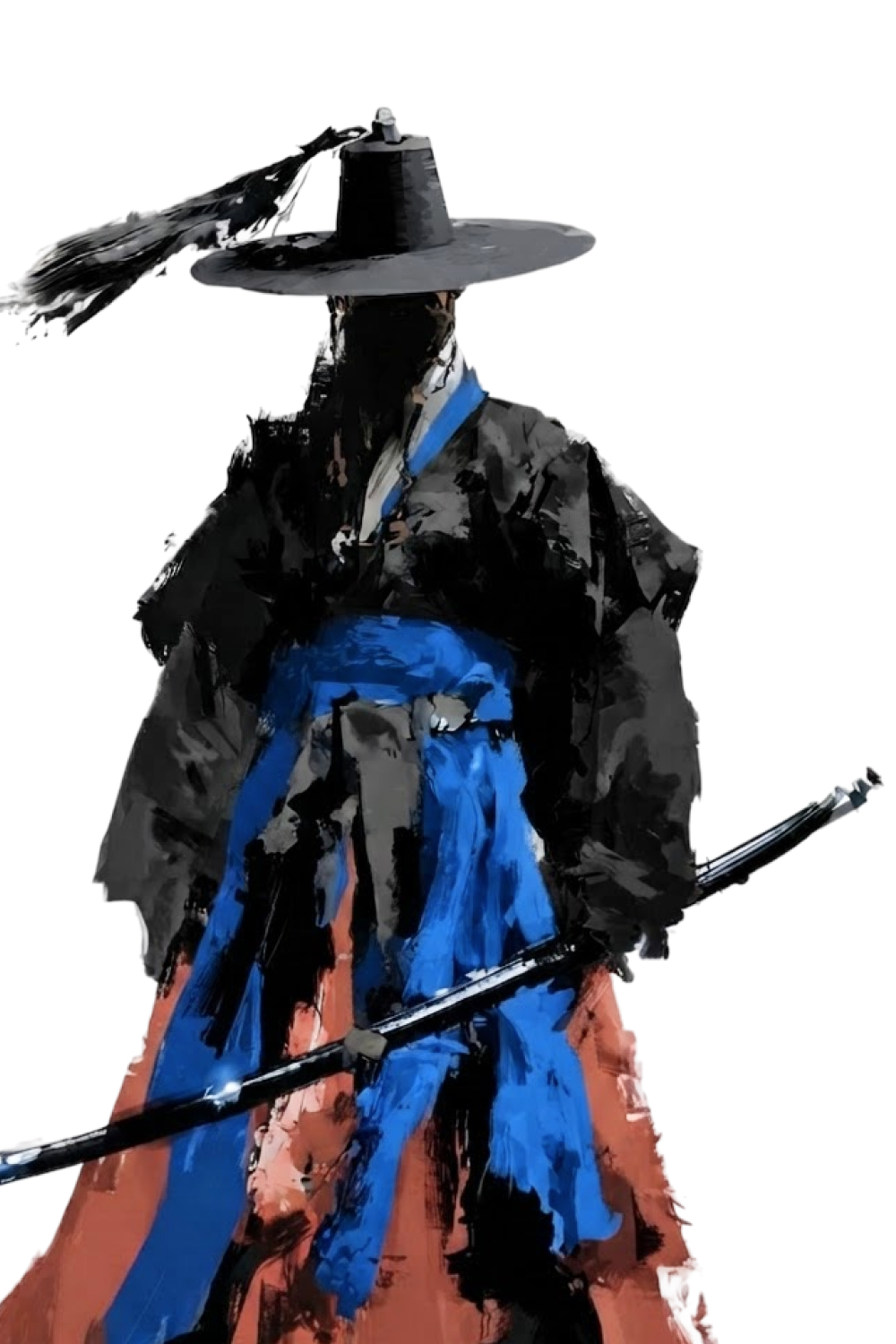
A root takes his foot. He goes down on the wet stones, pine needles in his mouth, the bow a pace off as if it had been the first thing taken. crouches over him to collect what is owed, and the blow is already coming down.
The cloak arrives before the face. Rain fills it. A hand closes on ’s wrist from behind, and the strike simply stops — the way an elder stops a sleeve that has gone too far.
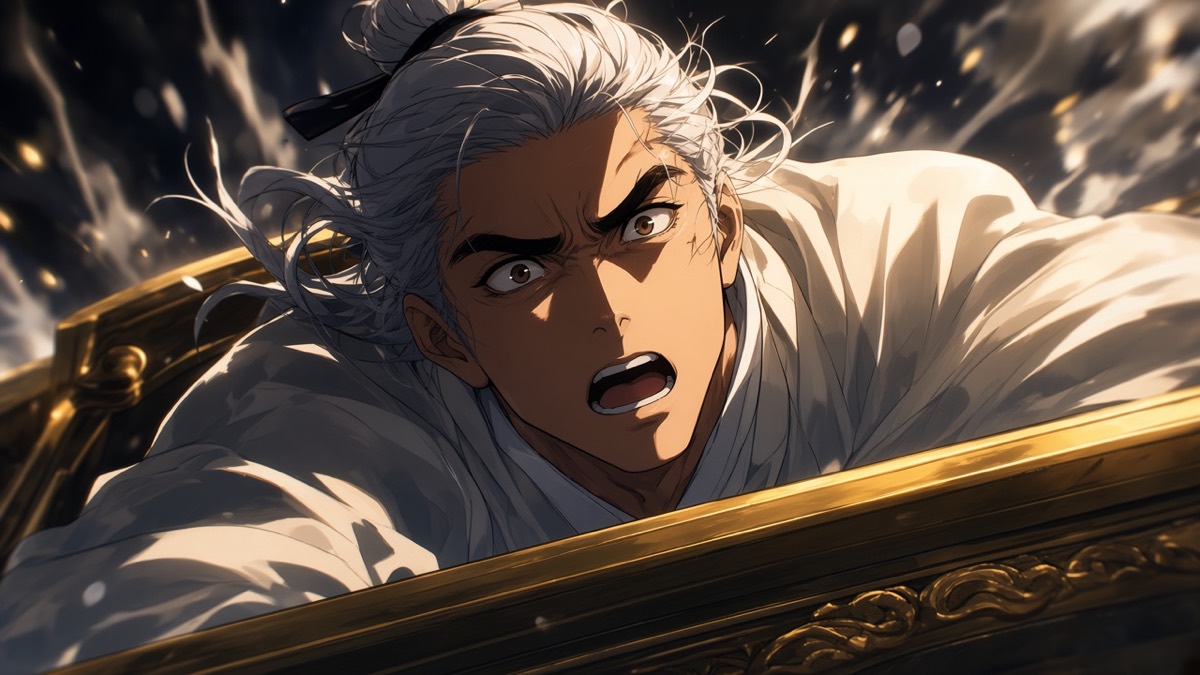
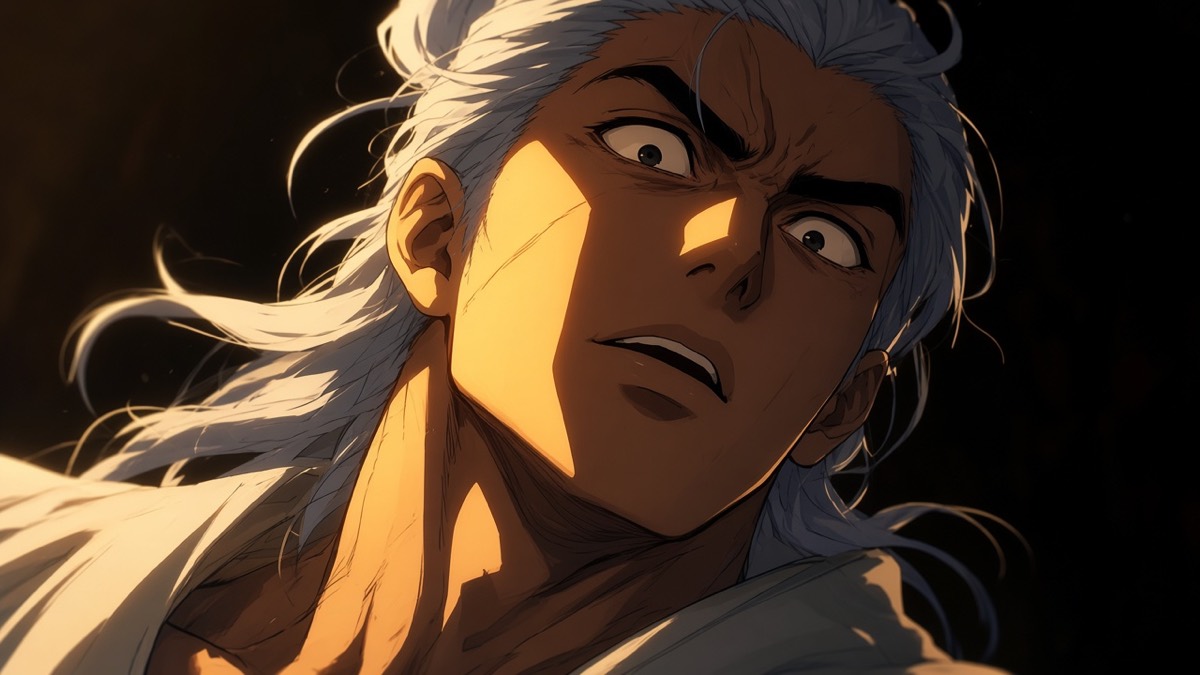
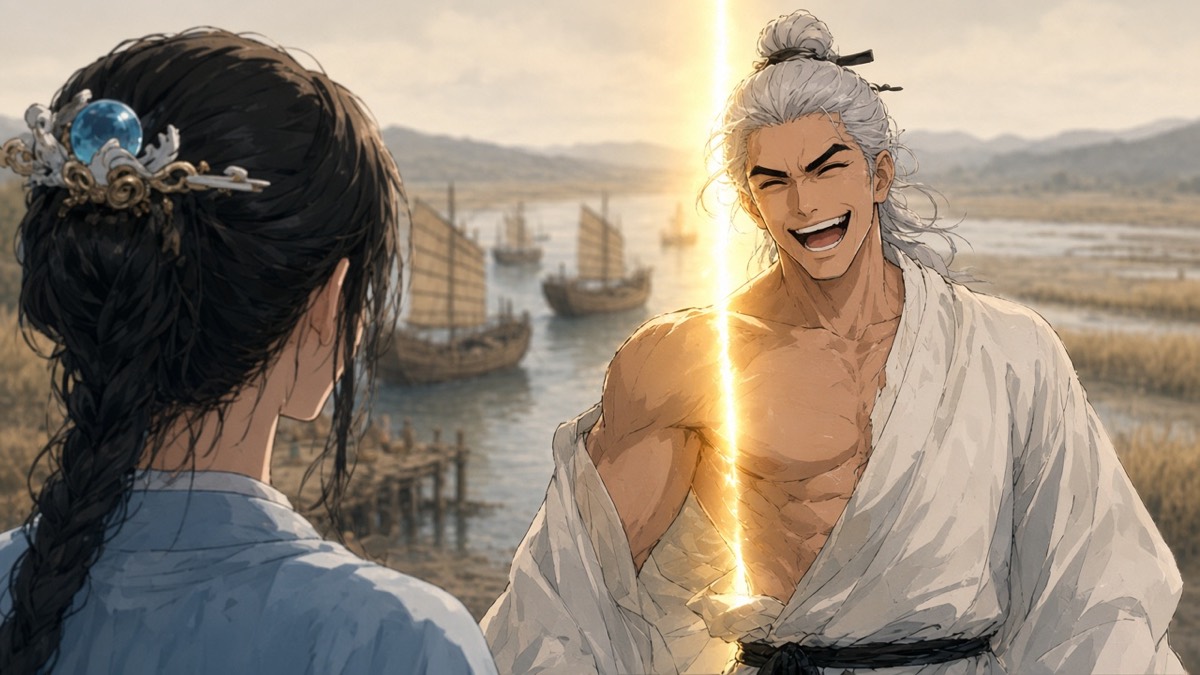
’s cheek is in the mud. looks back. Behind him, in a dark hood, the sun god is holding his wrist and laughing, as if the night had grabbed the wrong man. The night is ’s road. The joke is ’s.
He puts aside and leans to ’s ear. cannot see him, only the night, the river, a warmth that should not be there. The idea arrives as breath.
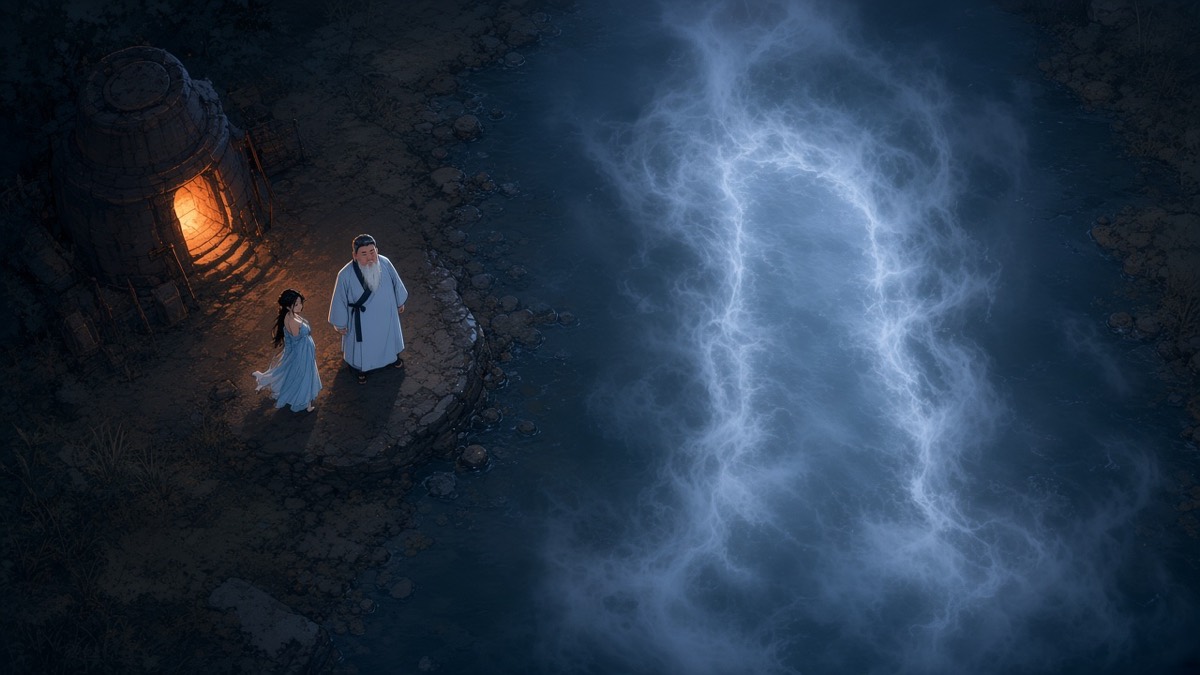
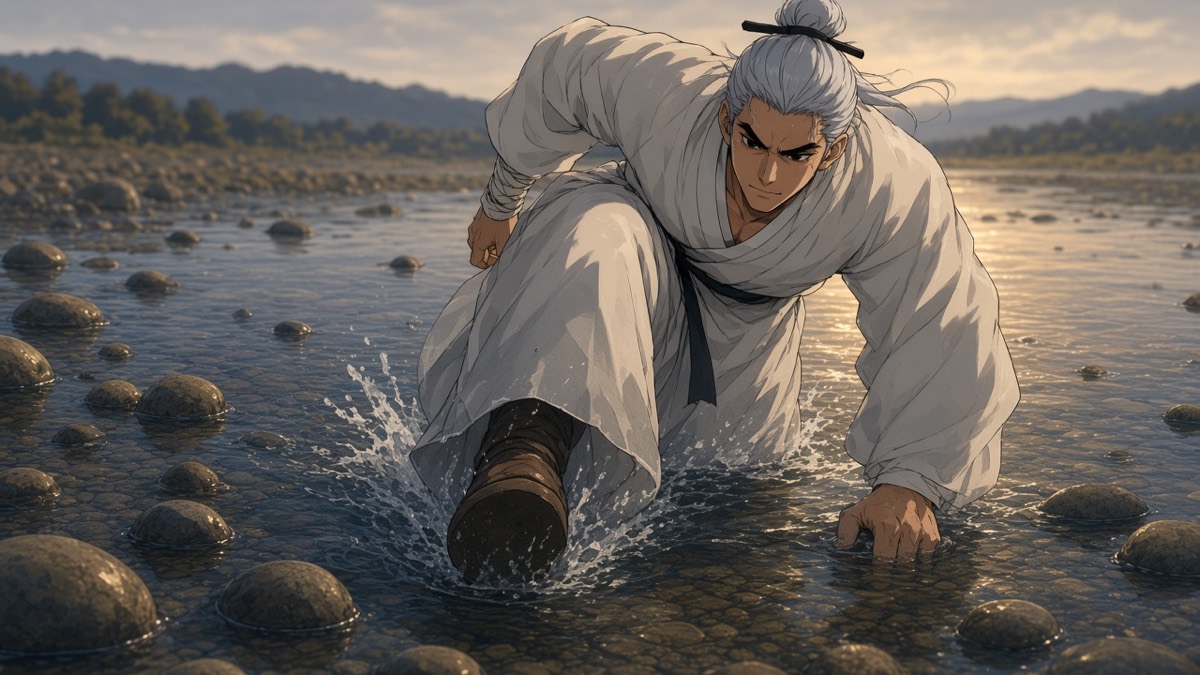
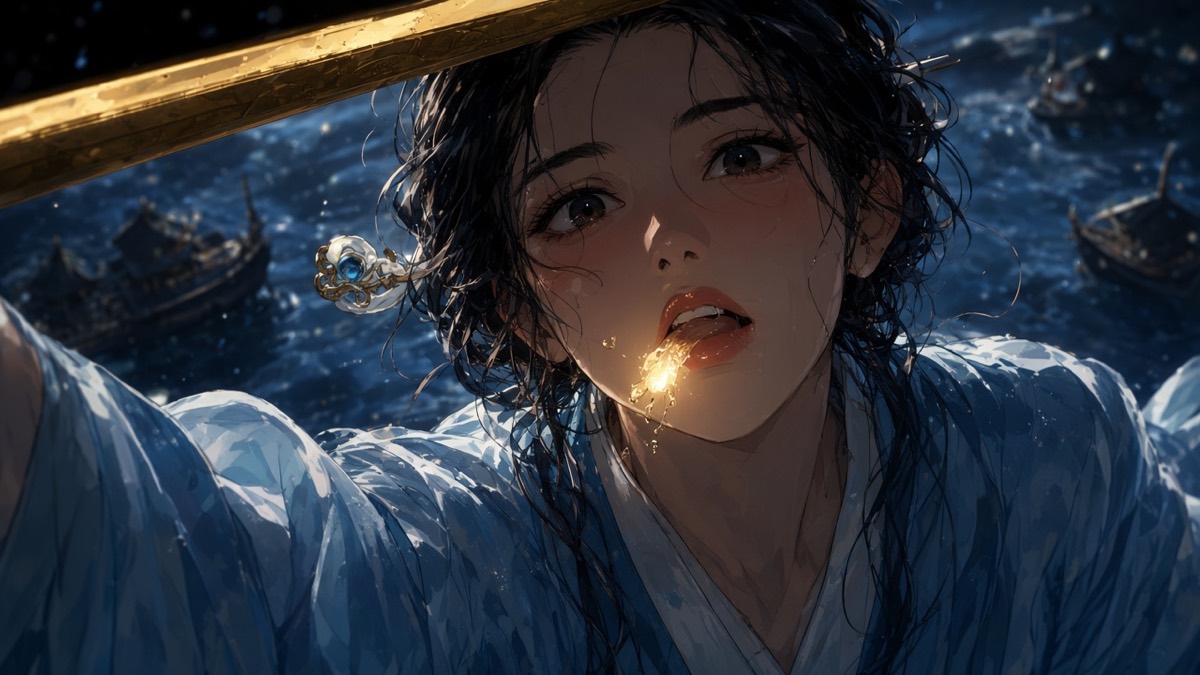
The answers. Tortoises rise and lock shell to shell in the dark, right past the ruined copper door. runs the wet backs as if they had always been a road — the son crossing where the father once stopped the sky.
Of old, the founder King Chumo laid the foundations. He came out of North , son of the Heavenly Emperor; his mother was ’s daughter; he broke the egg and came down into the world… The king came to the ford and said: “I am King Chumo, son of August , whose mother is ’s daughter. Link the reeds and float the turtles for me.” At his voice the reeds linked and the turtles floated, and so he crossed.
옛날 시조 추모왕이 나라의 터를 열었다. 북부여에서 나왔으니 천제의 아들이요, 어머니는 하백의 딸로, 알을 깨고 세상에 내려왔다… 왕이 나루에 이르러 말하였다. “나는 황천의 아들이요, 어머니는 하백의 딸인 추모왕이다. 나를 위하여 갈대를 잇고 거북을 띄워라.” 그 소리에 응하여 곧 갈대가 이어지고 거북이 떠오르니, 그제야 건넜다.
The two brothers stay on the near stones beside the copper wreck. is already a red speck on the far dark of . throws an arm across ’s shoulder and watches his son go, laughing like the job is done.
The bird that watches him is not an ordinary crow. On ’s banners it will stand on three legs under a red sun, the samjoko, the bird that can look at the day without blinking.
It is sitting on a rock on the far bank when he comes off the last shell, soaked, laughing like an idiot because he is alive. This time he counts.
The crow looks at him without blinking, which is either rude or holy, then drops off the rock, flies ten paces into the pines, lands again, and looks back.
He follows it all afternoon, uphill, through pines that stop being ’s and start being nobody’s. It keeps ten paces ahead and never once lets him catch up. At dusk it lands on a stone lip above a dark opening in the hill and stays there, folded, like a doorman whose shift is over.
Before the valley has a name for him he goes in, into stone and leaf-light and a country-shaped dark. In what will be called the cavern, he prays for a roof of his own.
South of the pine has a name. A soaked exile, a hall full of spears, and a chieftain’s daughter who won’t look at him…!
