





















Chapter 69

Heaven–Earth King
AI Summary
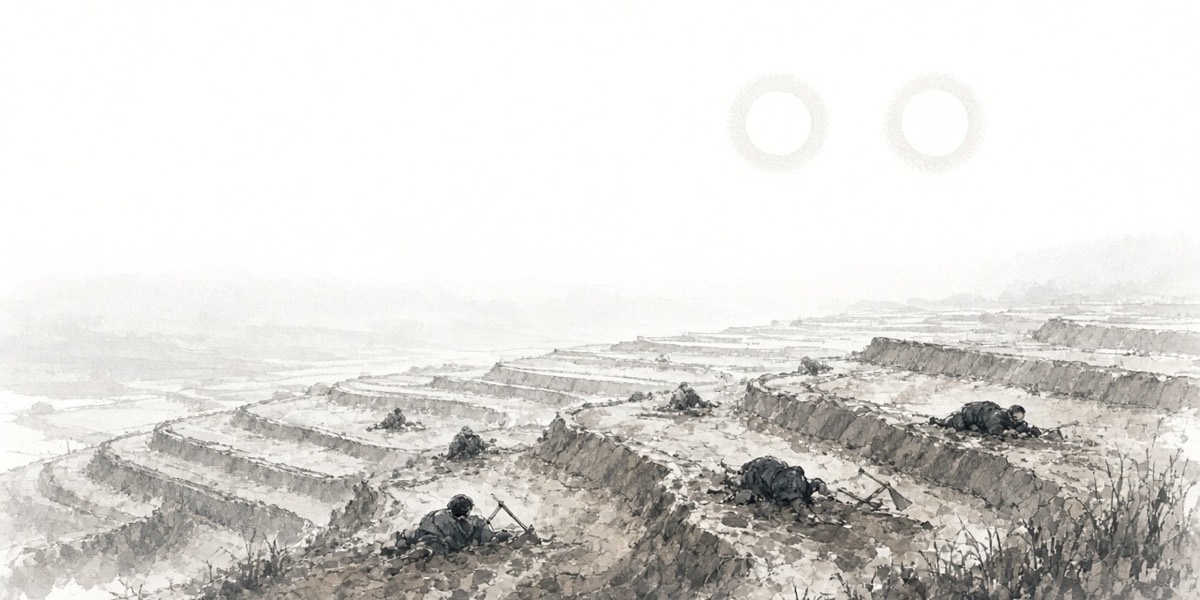
- Two Suns In the beginning there were two suns and two moons.
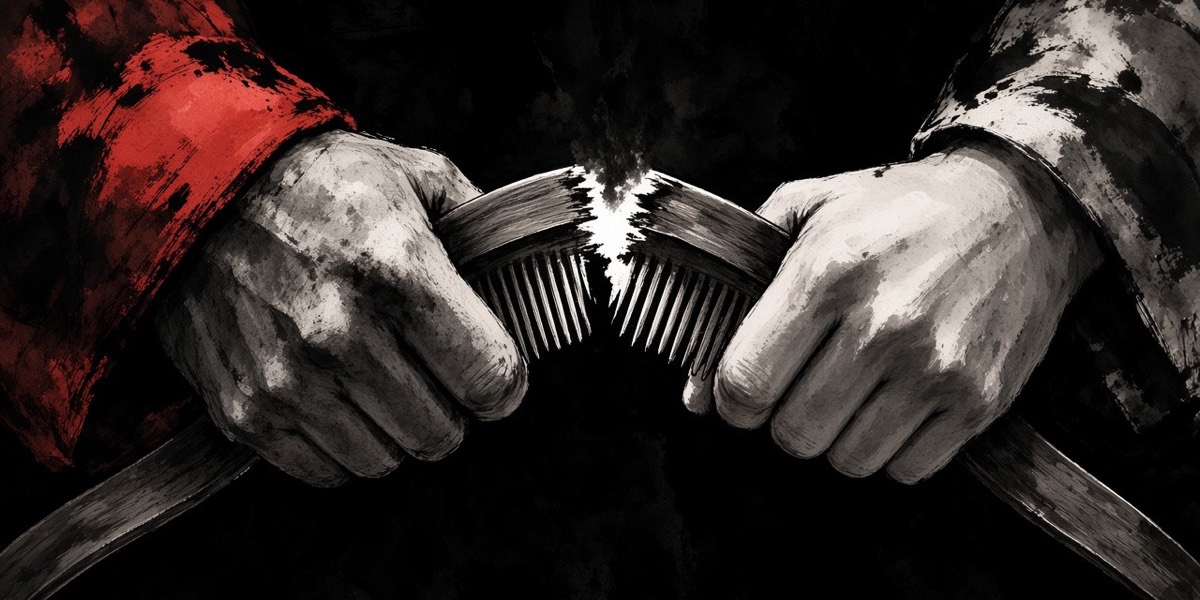
- The Gourd Vine At fifteen she puts the seeds in their hands and the half comb in the elder’s.
- The Helmet Fifteen years is a long time to leave a bad man his storehouses.
- The Contest They decide it the way brothers decide things.
- The Warm Side Sobyul walks into the heat like a man who just won a house.
- Ten Regions The living side is a mess.
- The Dark Road On the way down, Daebyul passes his mother’s house.
- The Fallen Sun A sun deity sits against a black rock, shorter-haired than the one still flying, same bones, same white robe torn at the chest.
- The Dead Side The dead side is almost empty.
- Ten Hells They do not leave the waste as they found it.
- The Field Wall Morning.
- Characters
Episode· 655
Heaven–Earth King
Two suns, two moons, and no border between the living and the dead. One man held all three realms.
- Daebyul
- Sobyul
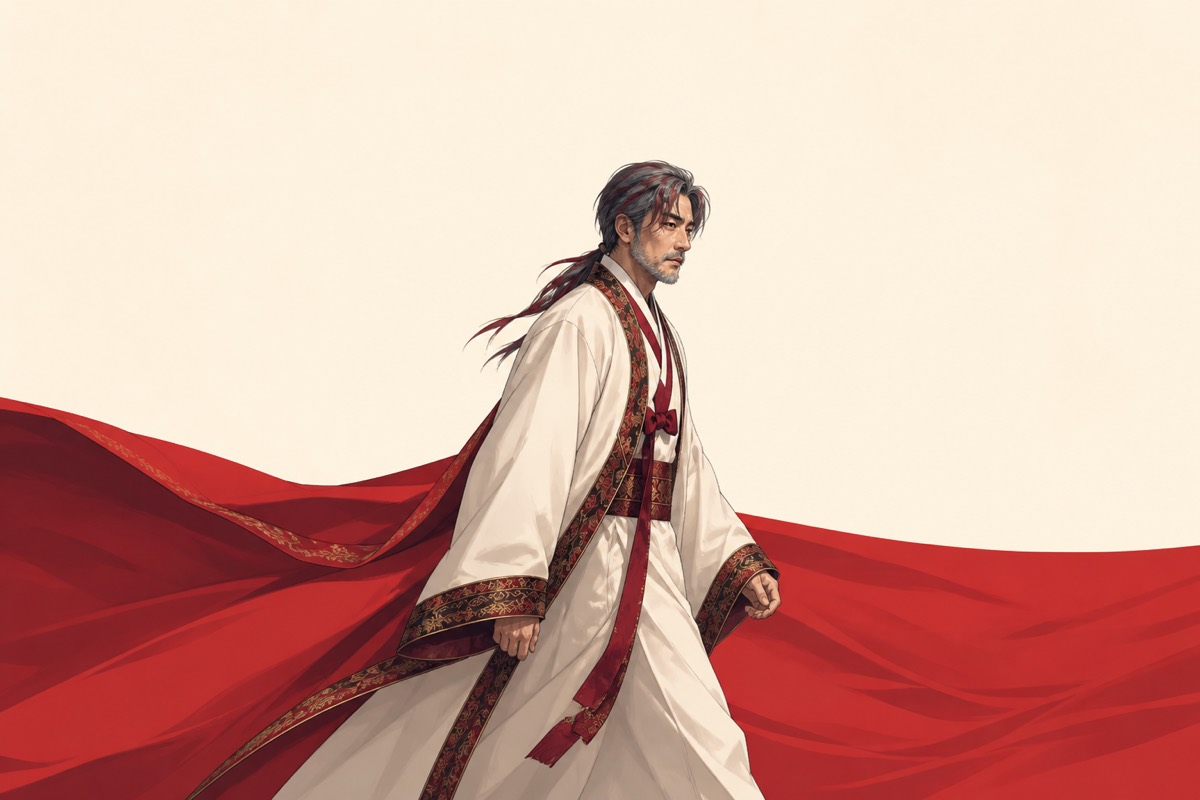
- Heaven–Earth King
- Sumyung Jangja
- Lady of Wisdom
- Haewonmek
- Bungé
- Byurak
- Hwaduk
14 stills without a cue
Every family has one relative who never comes home for dinner. In ours, it was .
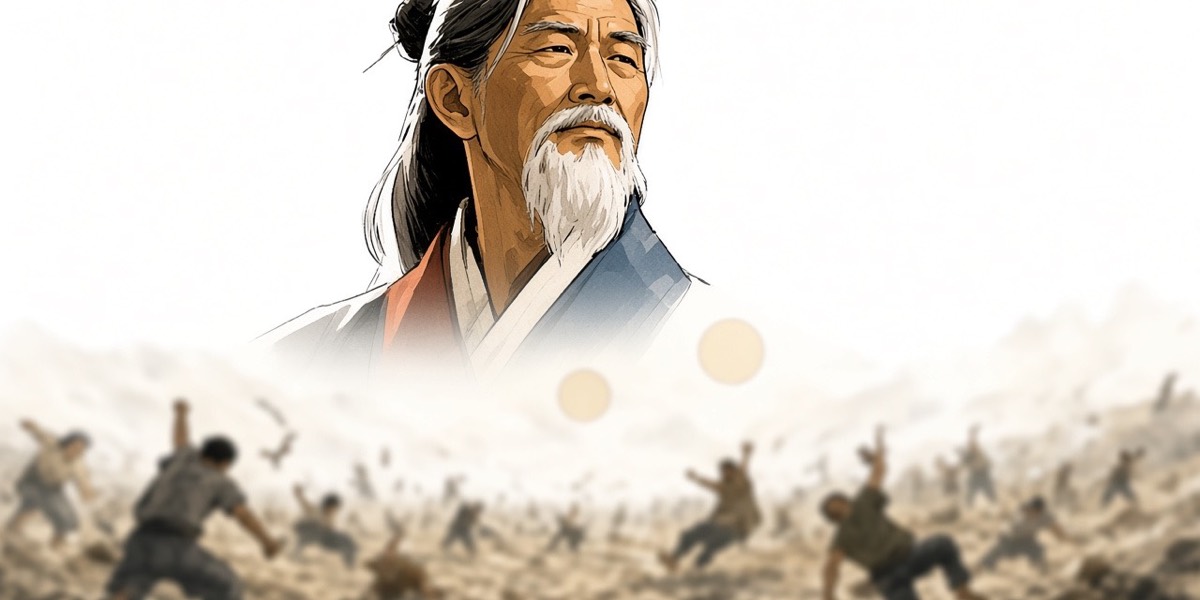
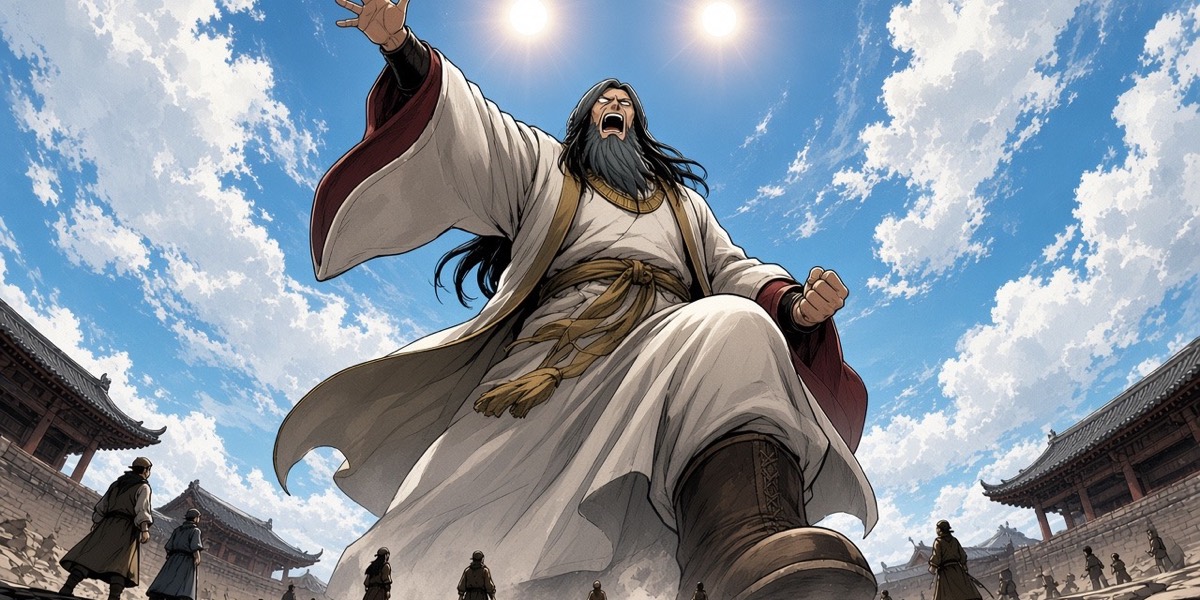
In the beginning there were two suns and two moons. By day people dropped in the fields with their hoes still in their hands; by night they froze in their own doorways. Nobody ever had a decent night’s sleep or a decent harvest, and the old died faster than anyone could bury them.
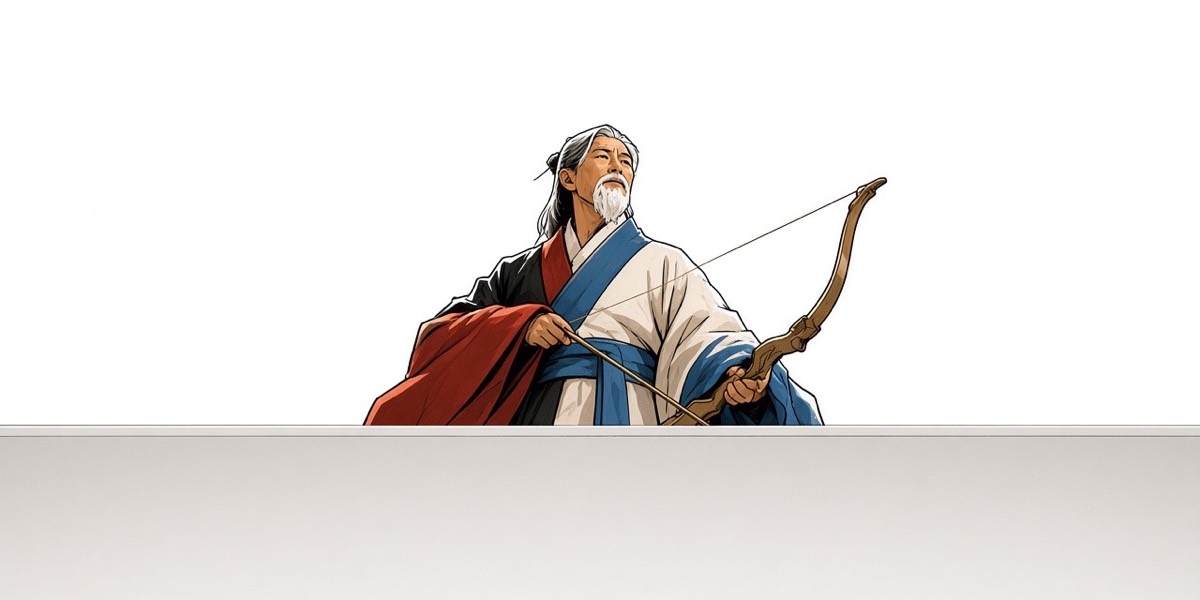
Above all of it sat .
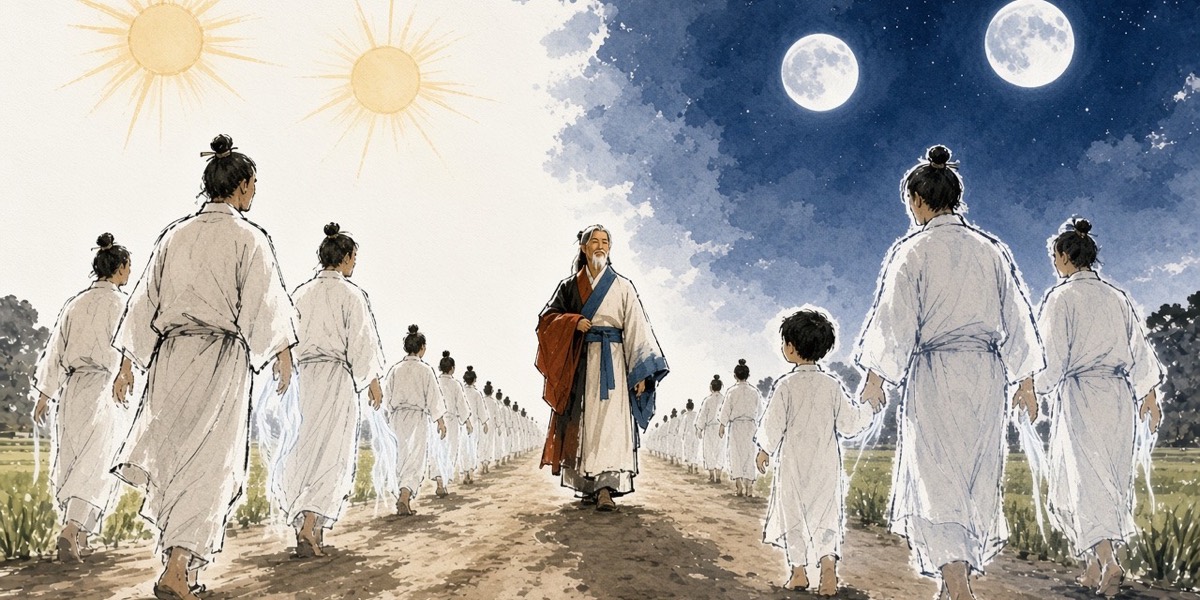
Spirits and people used the same road. The border between life and death had not been drawn.
A mother called. She could not tell which voice answered.
He held all three realms. The living. The dead. The flowers at the western end.
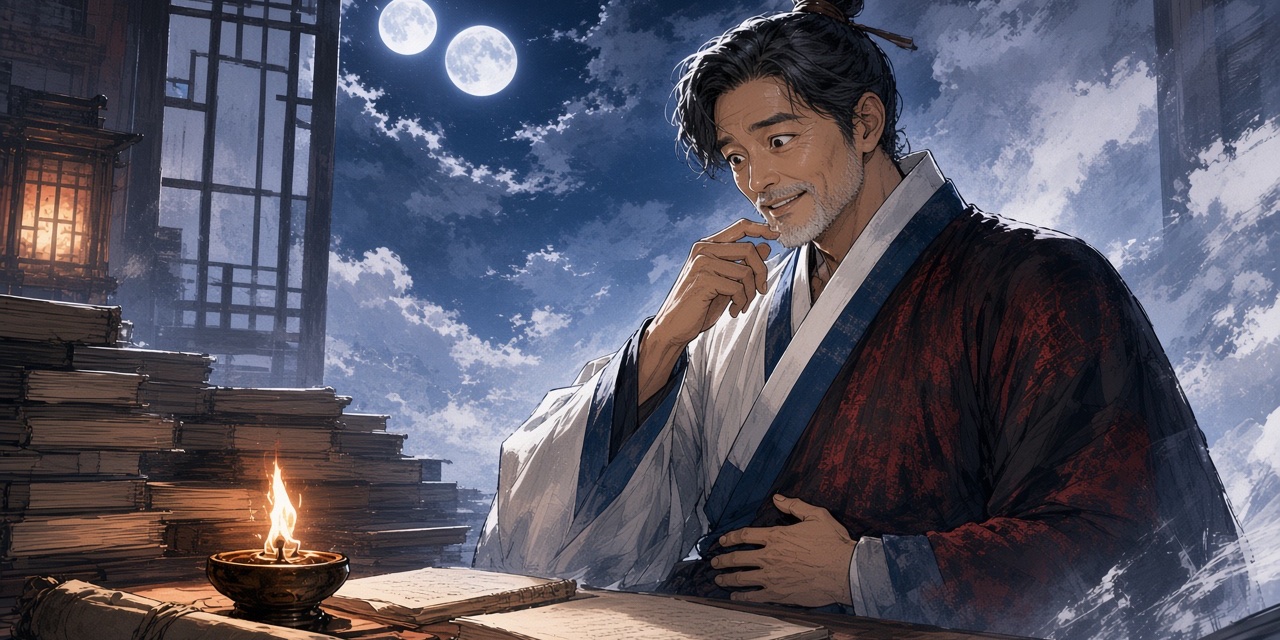
One desk. He never went home.
One night he fell asleep there anyway. He dreamed he was eating. One sun. One moon. Swallowed whole.
 Retired
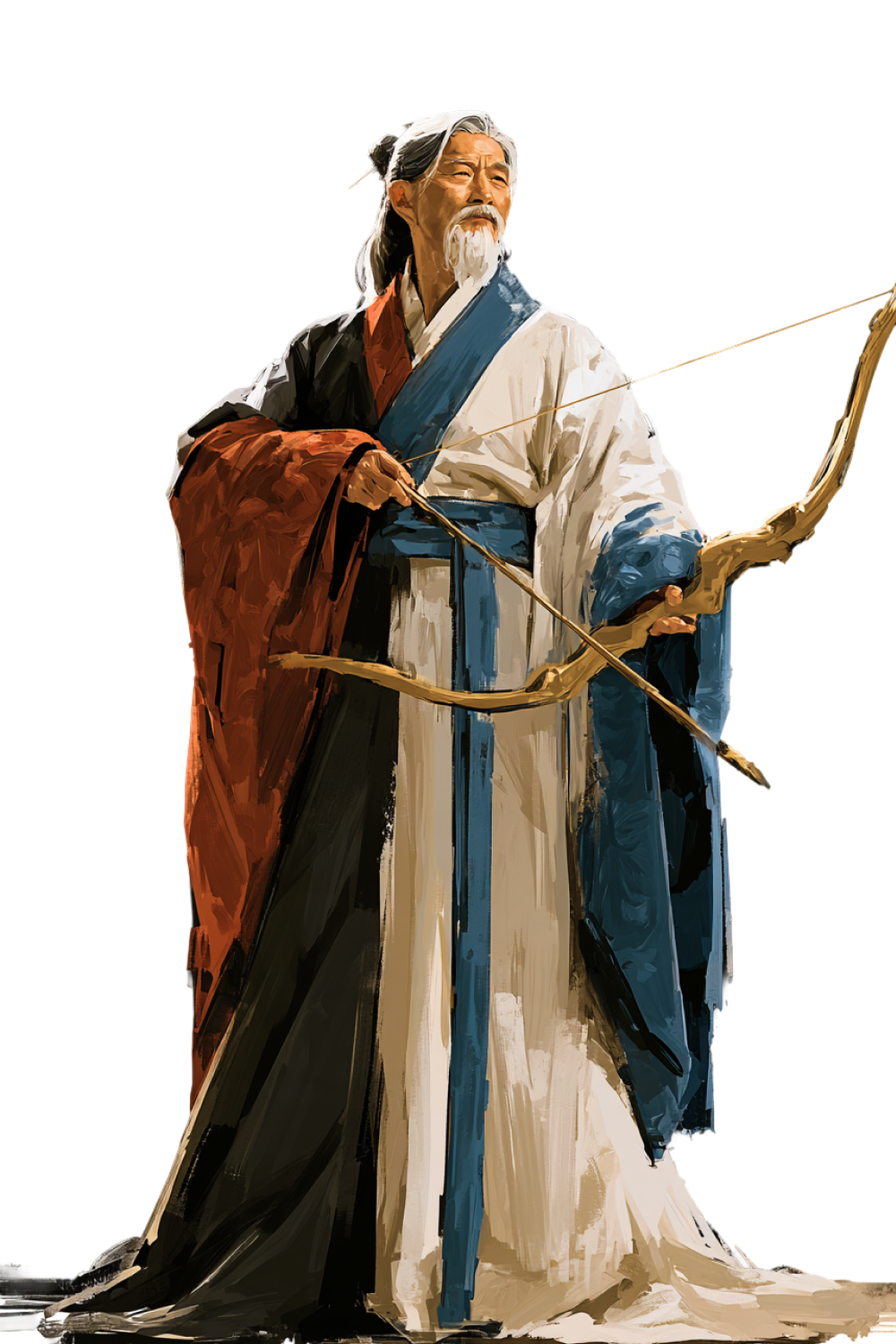
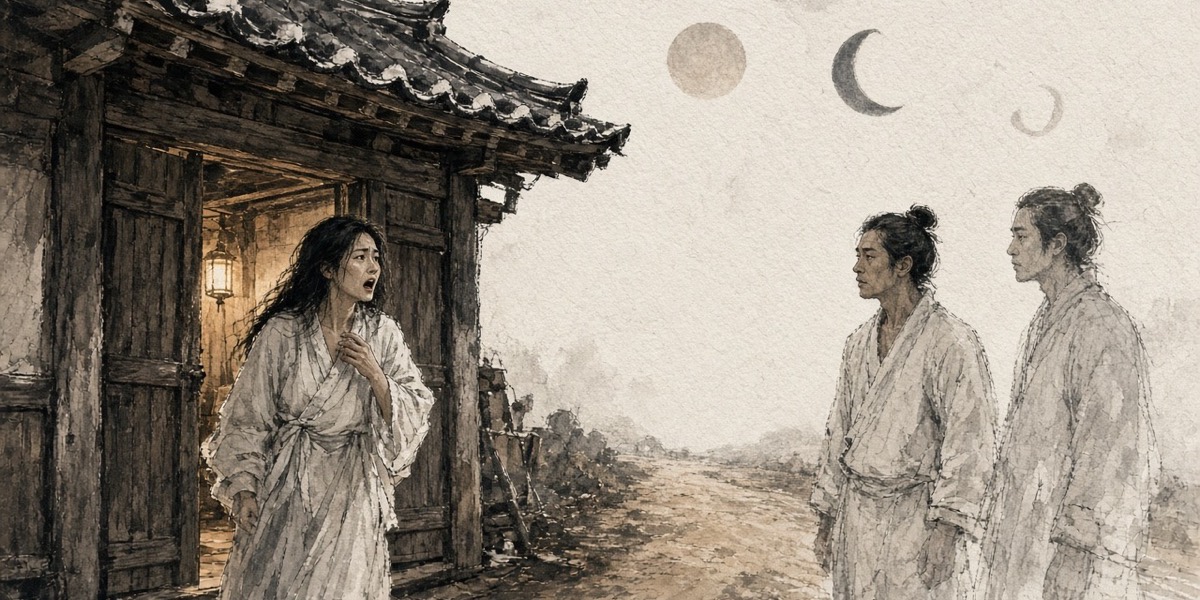
He comes down to the world to find the mother of that dream, and finds her in the poorest house on the road: a girl the village calls , a hearth with no fire in it, and a rice jar she does not open in front of guests.
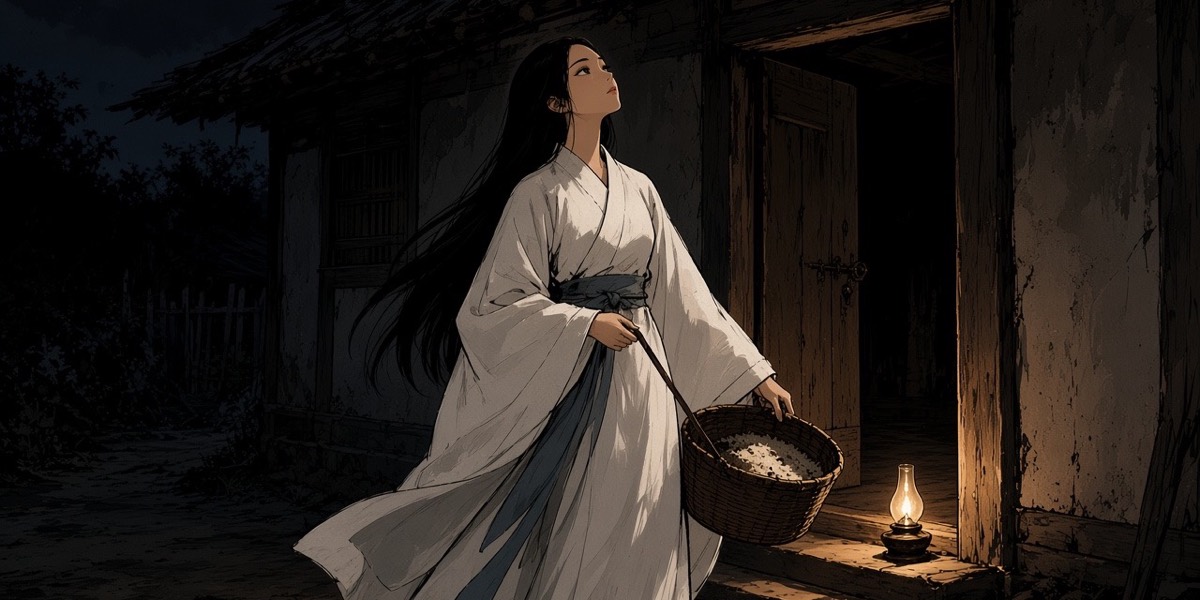
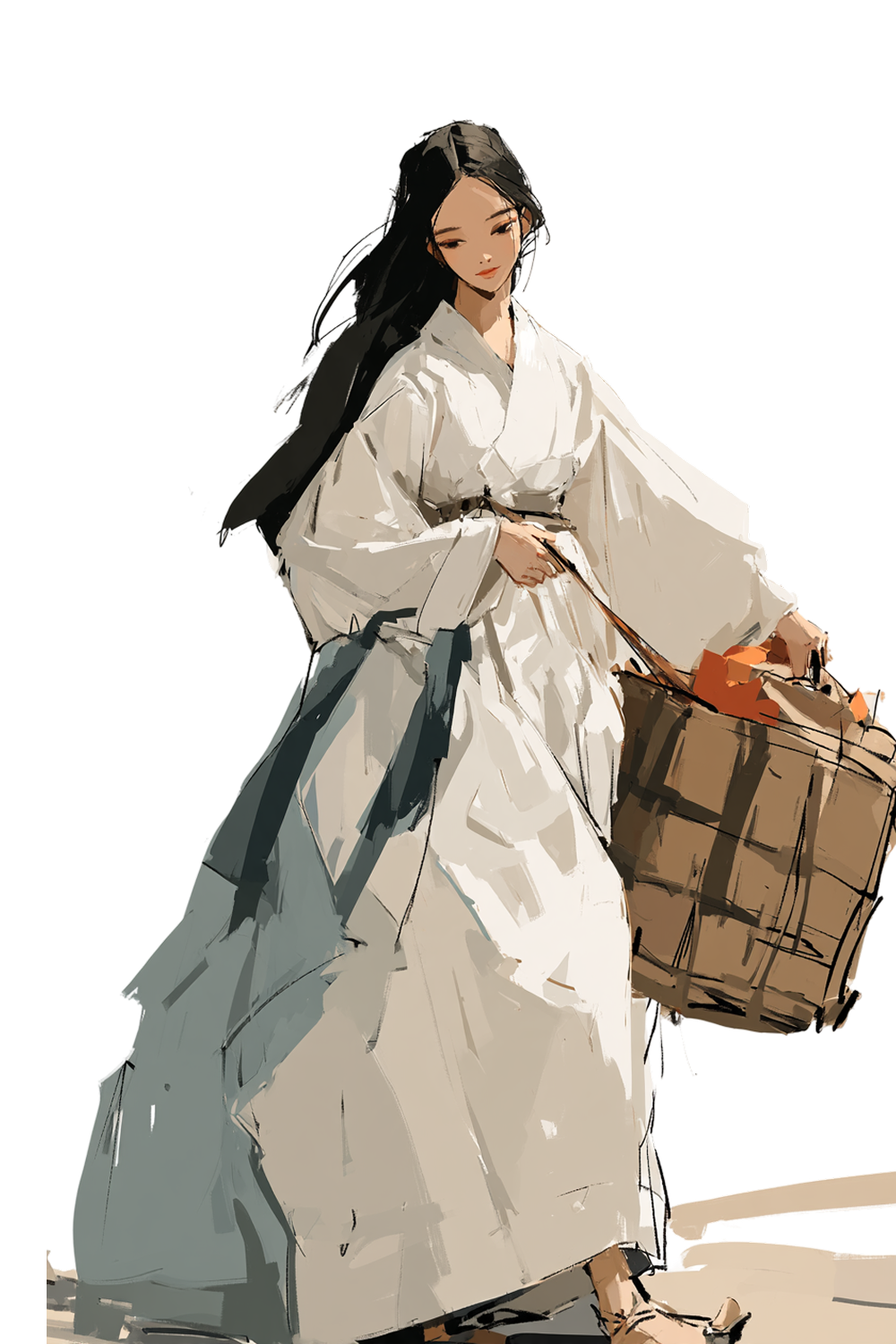
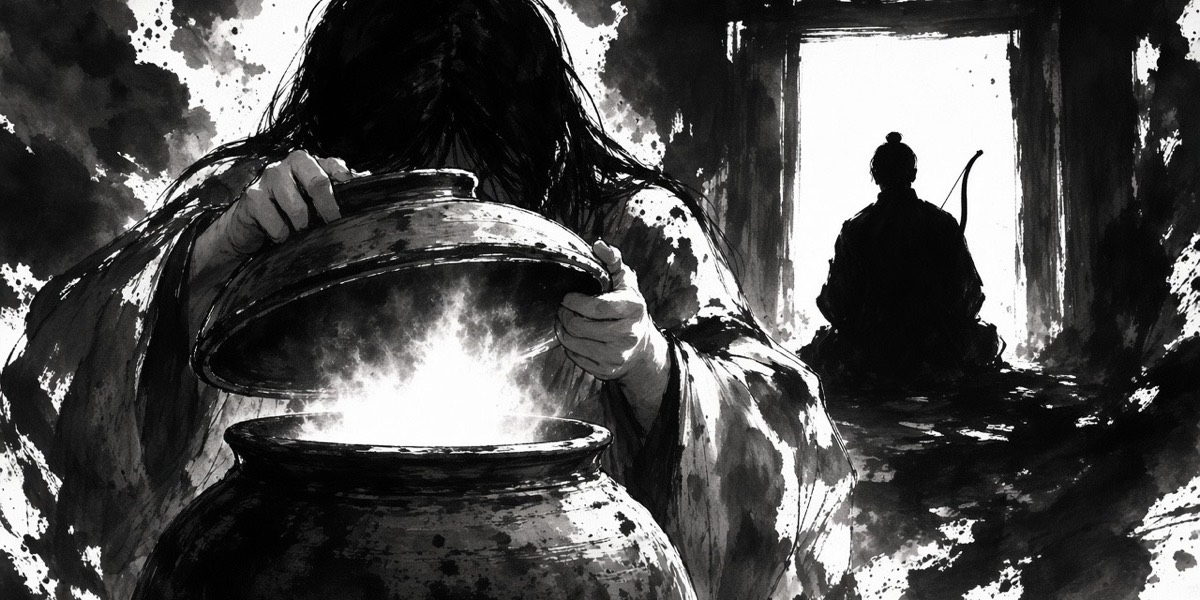
She goes round the back and lifts the lid of the jar. The bottom of it looks up at her. She puts the lid back as if that might help, ties up her hair, and walks across the road.
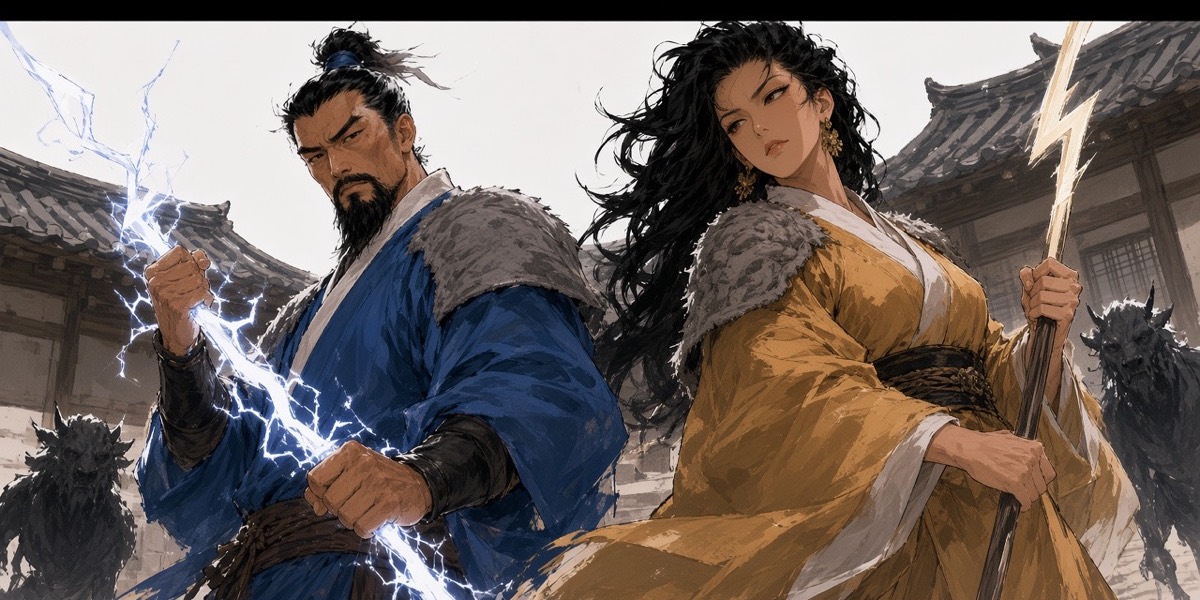
Across the road lives , who is rich the way a flood is wet. He has nine storehouses, a horse that kicks beggars, a dog that bites whatever the horse misses, and a rice measure that comes out a little smaller when he lends and a little larger when he collects. Anyone who comes for their own grain meets the dog first.
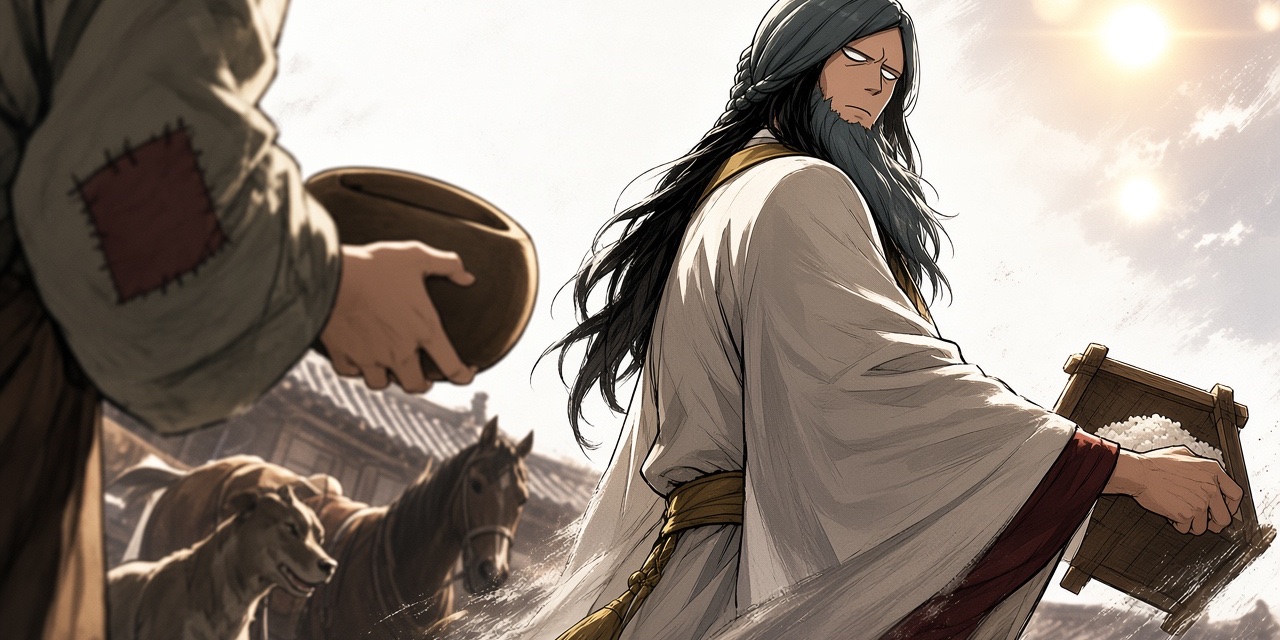
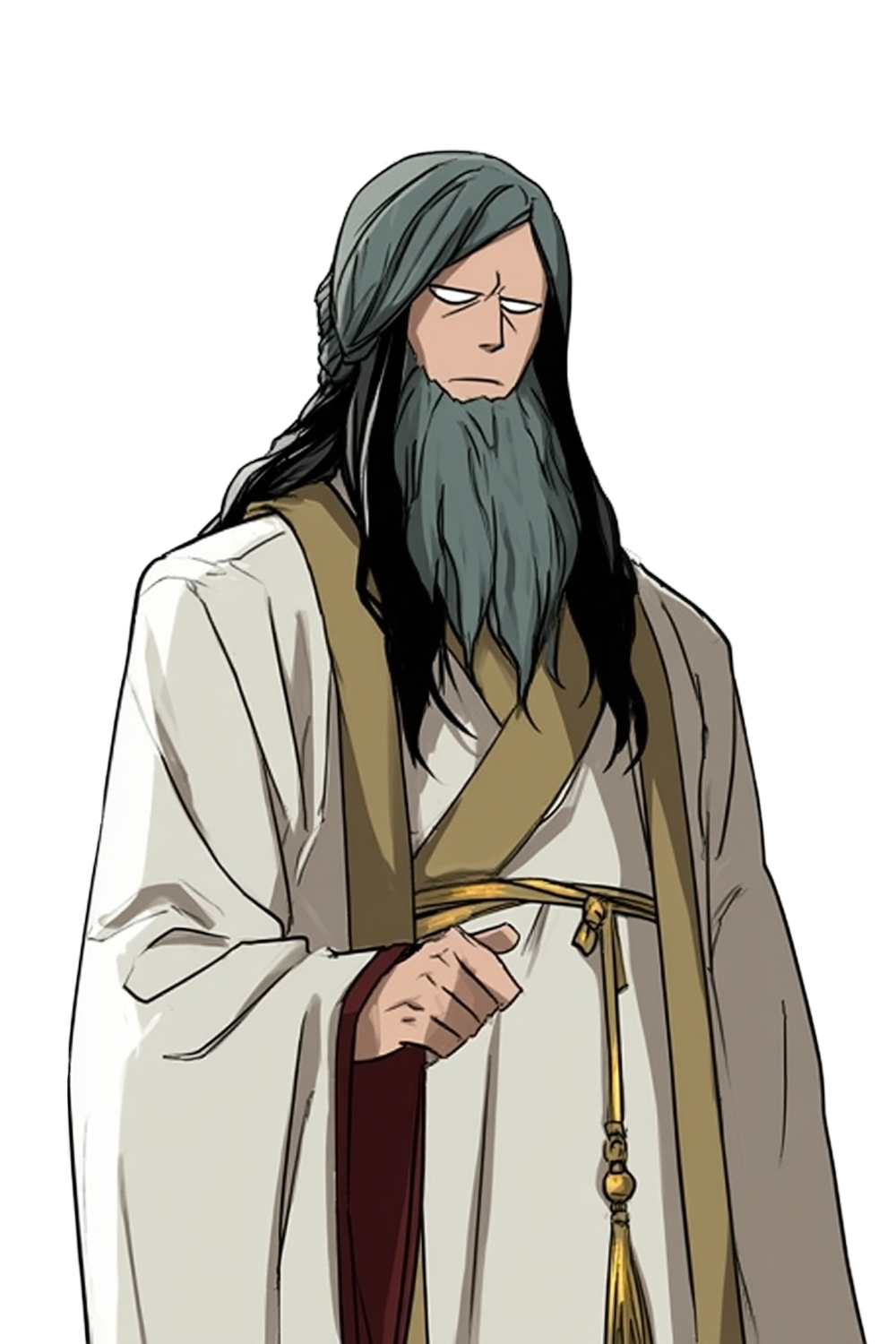
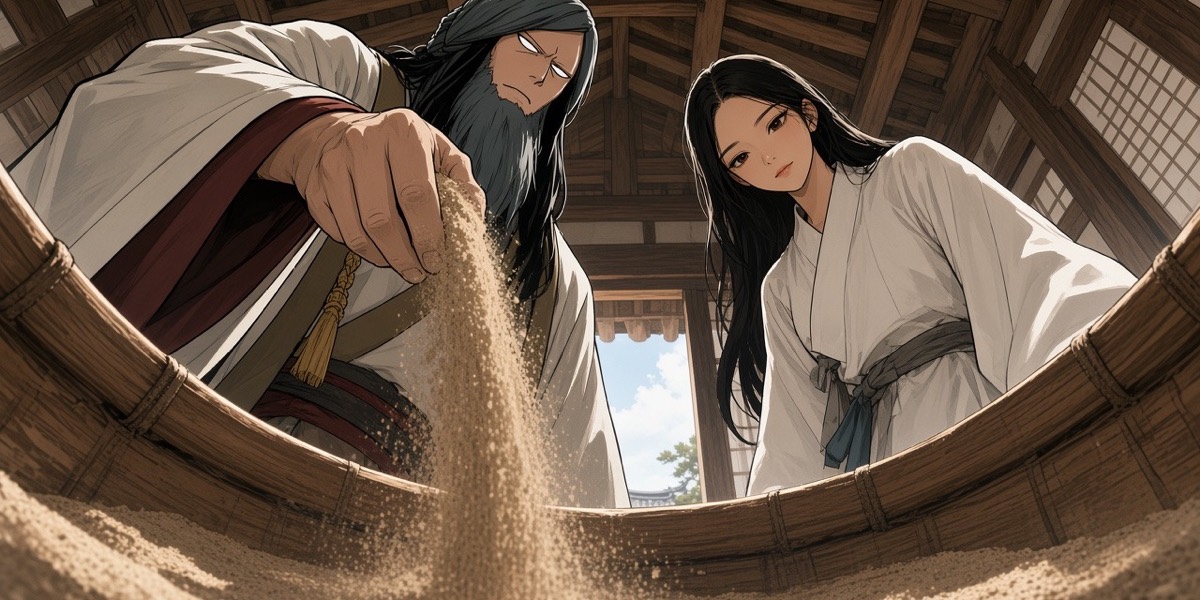
He fills the measure himself, with his back to her.
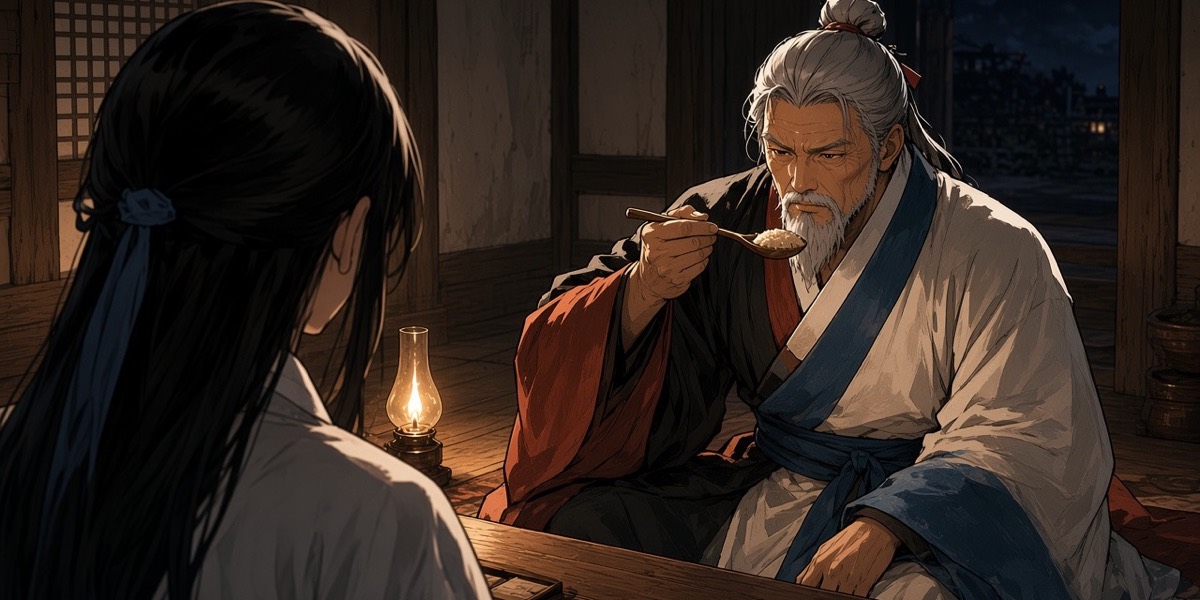
She washes it nine times at and spends the last of her firewood on it. The king takes the first spoonful. Something in his mouth grinds.
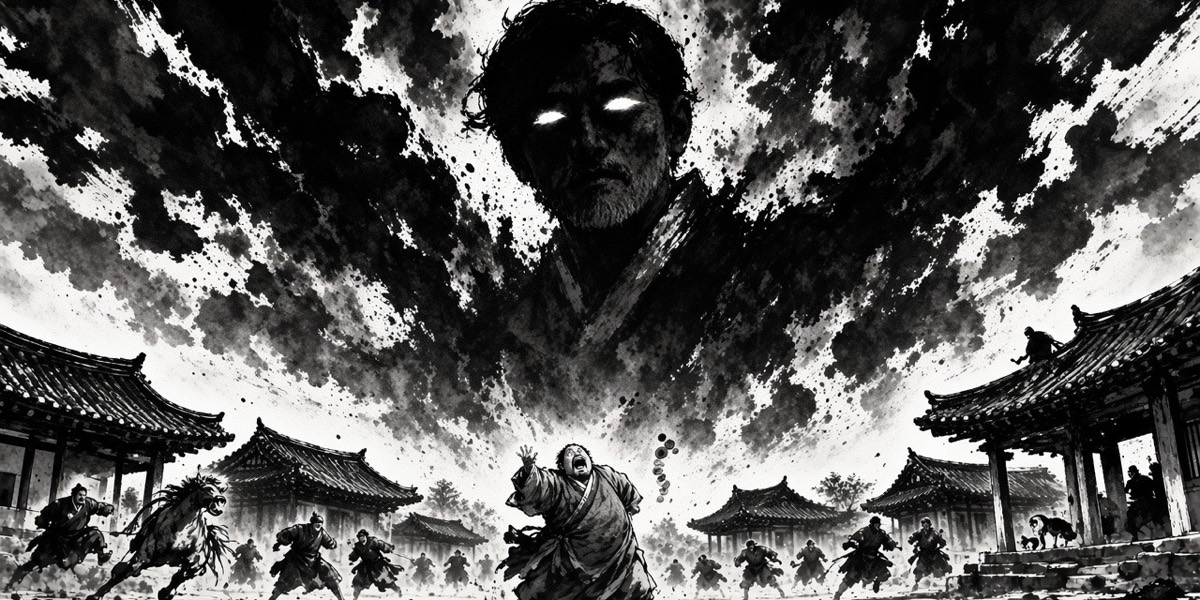
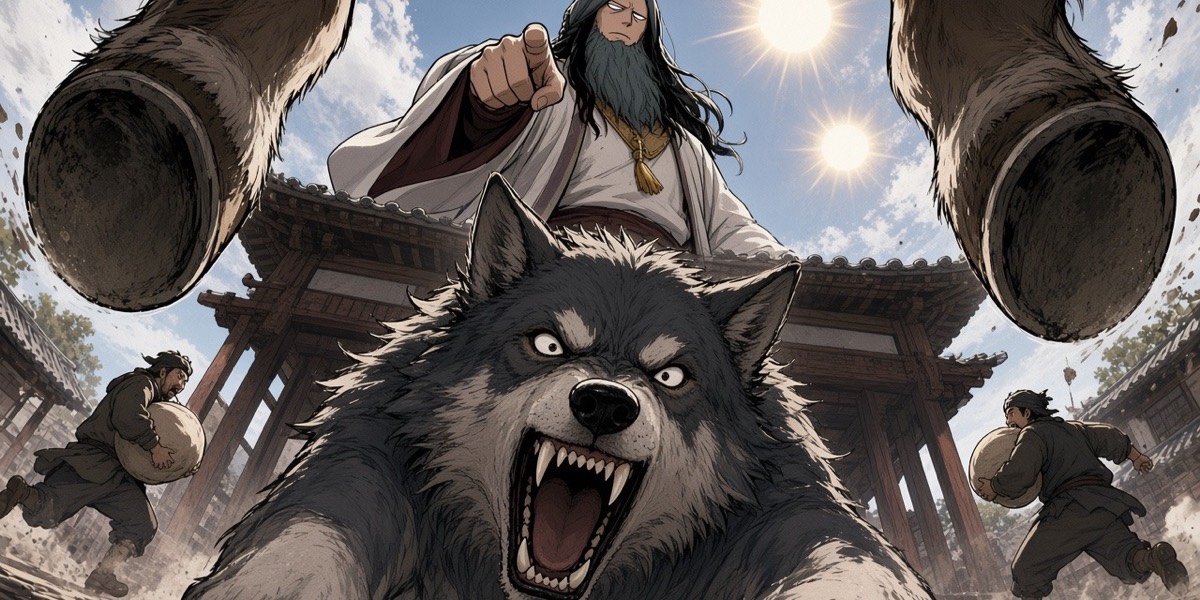
is counting his storehouses, which is how he prays, when the sky over the ninth one goes black at noon. The horse will not kick. The dog gets under the porch.
The floor of the ninth storehouse opens. The richest man in the world starts down through it. A boar, a wolf, and a thing with too many teeth come up the same hole and haul him out by the tassel. He is on his feet before the king reaches the road. Two suns are still in the sky. The king can wait.
He goes back across the road. He stays until the day the calendar allows, and the morning after, he is already tying his sleeves.
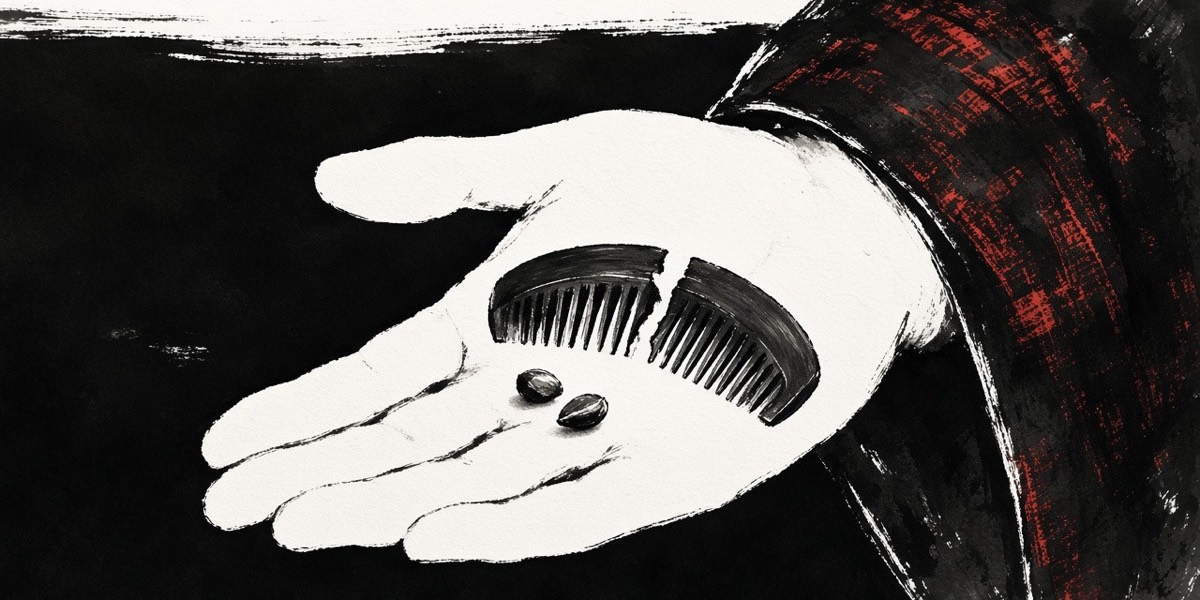
Two gourd seeds in her palm, and half of a wooden comb. The other half goes into his sleeve.
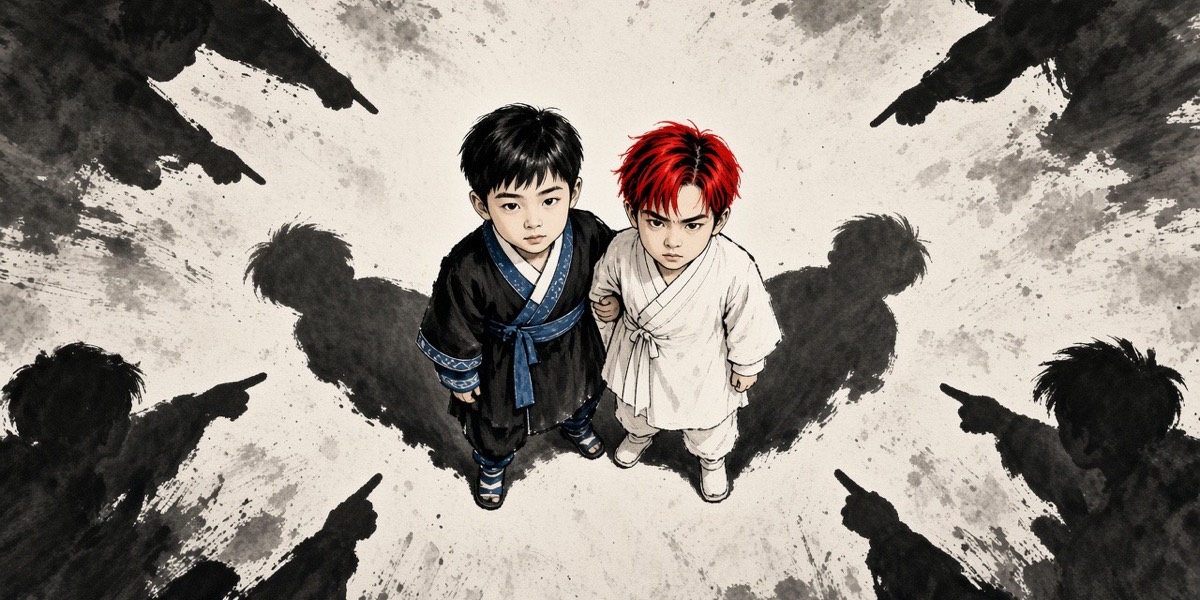
She has twins. The elder comes out quiet and looks at everything. The younger comes out already complaining. They grow up under two suns and two moons, and get asked whose sons they are in every yard in the village.
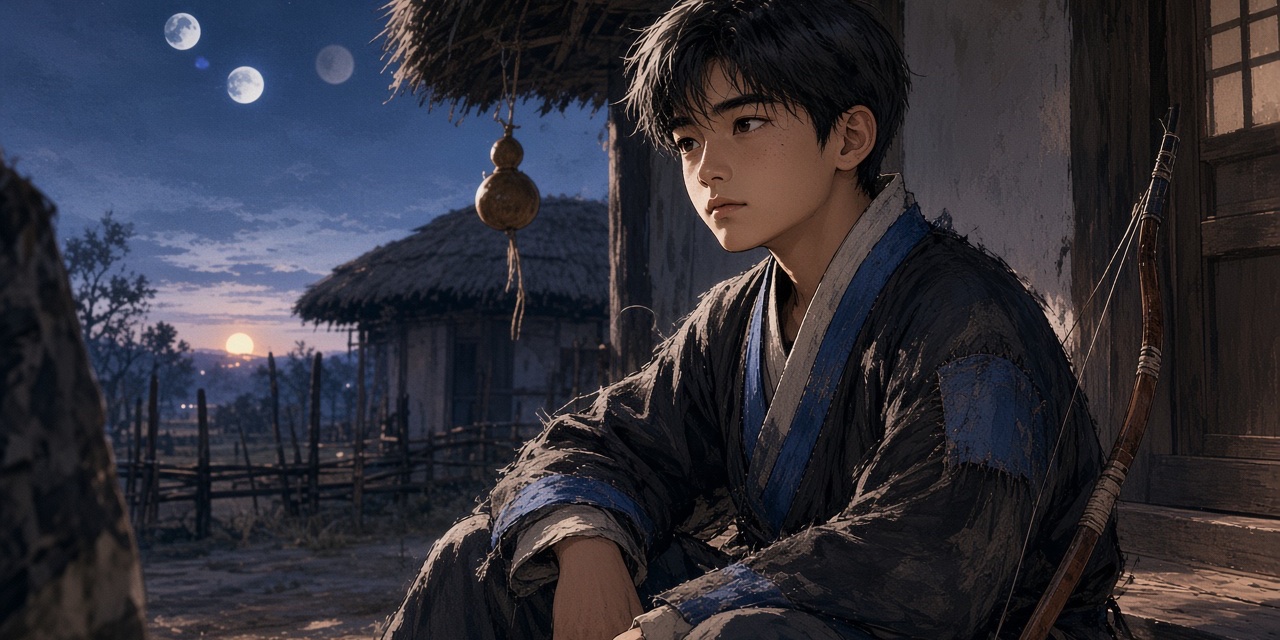
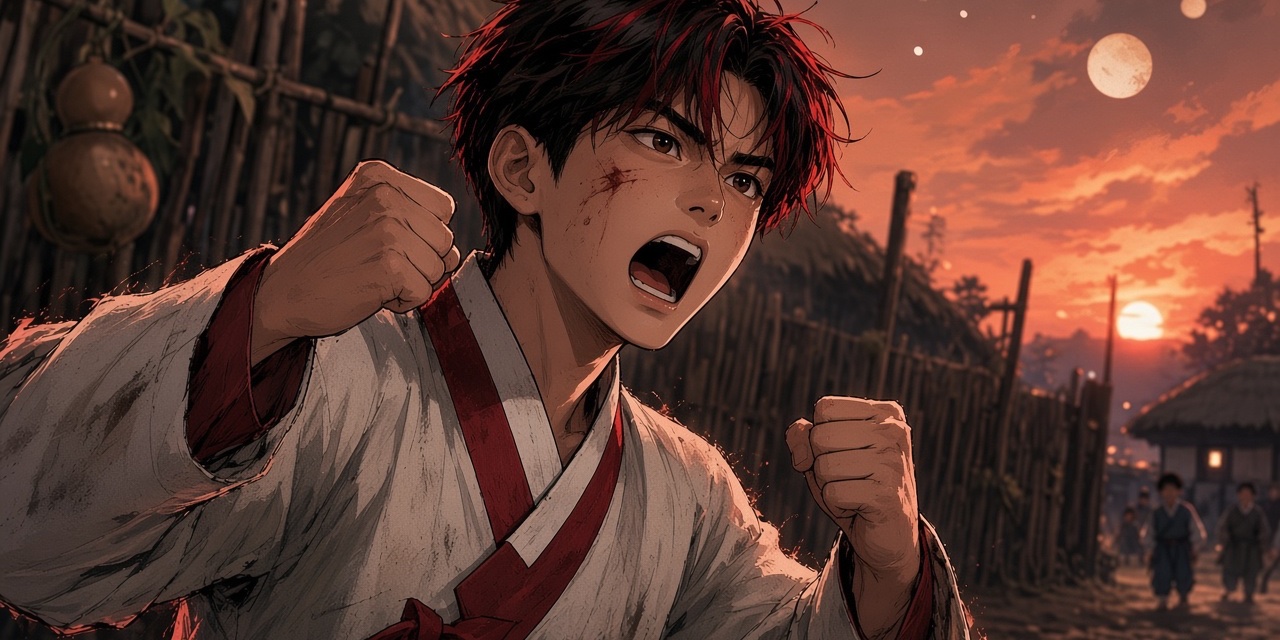
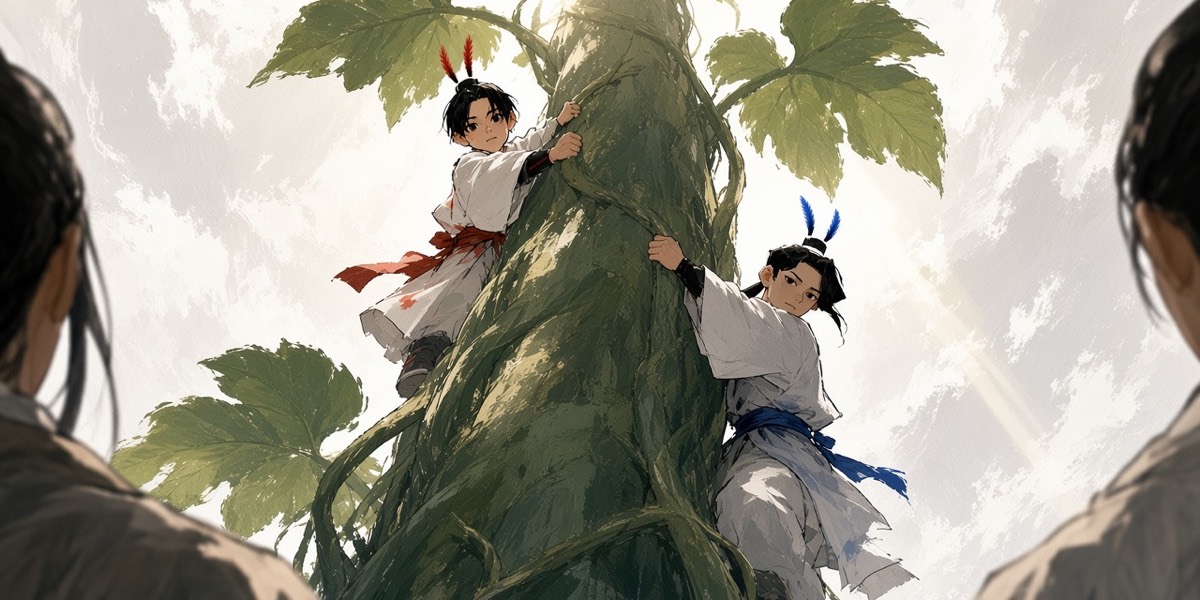
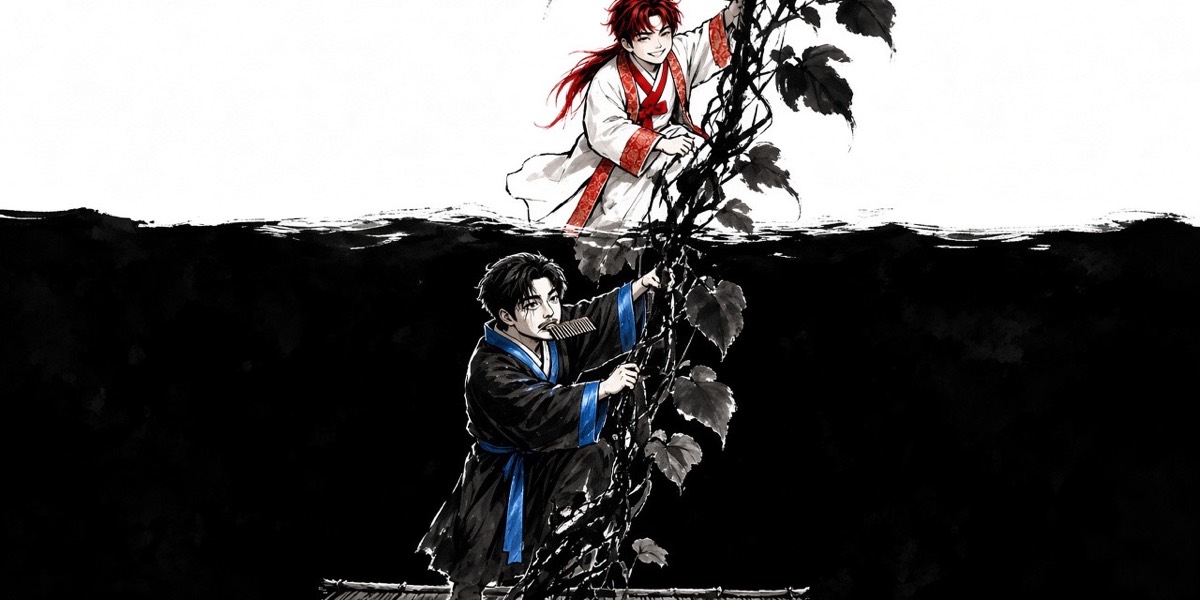
At fifteen she puts the seeds in their hands and the half comb in the elder’s. They plant them by the wall at dusk. By morning the vine has gone past the roof, past the clouds, and out of sight.
gets to the top first and pretends he wasn’t racing. The man at the top of the vine holds out his hand without getting up.
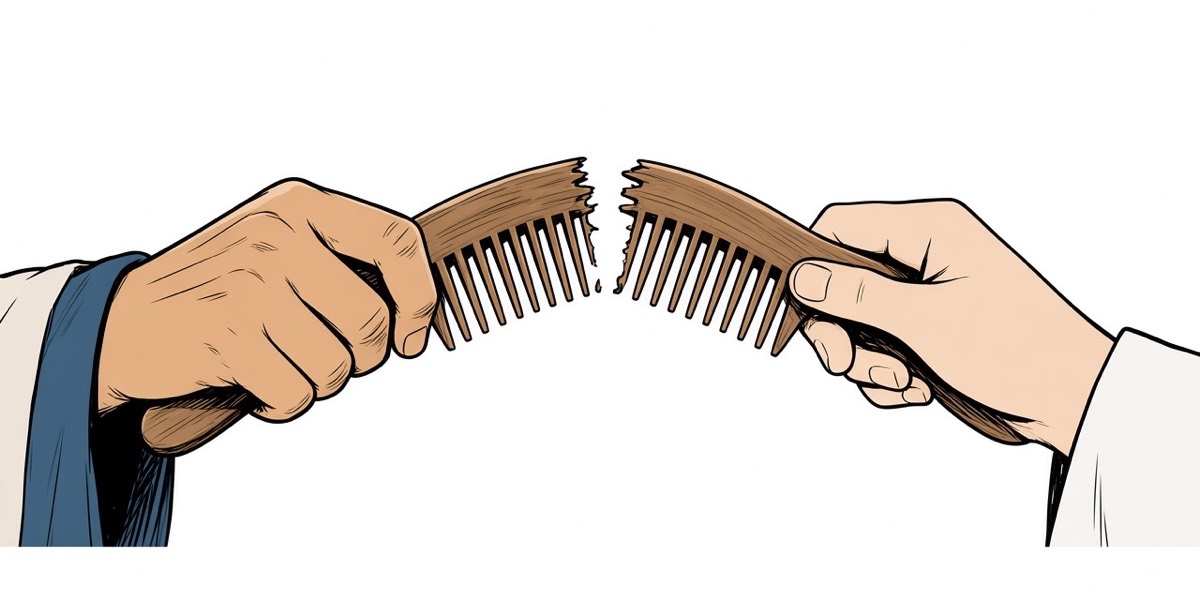
puts the half in his palm. The king takes the other half out of his sleeve, where it has been for fifteen years, and fits them. The teeth close.
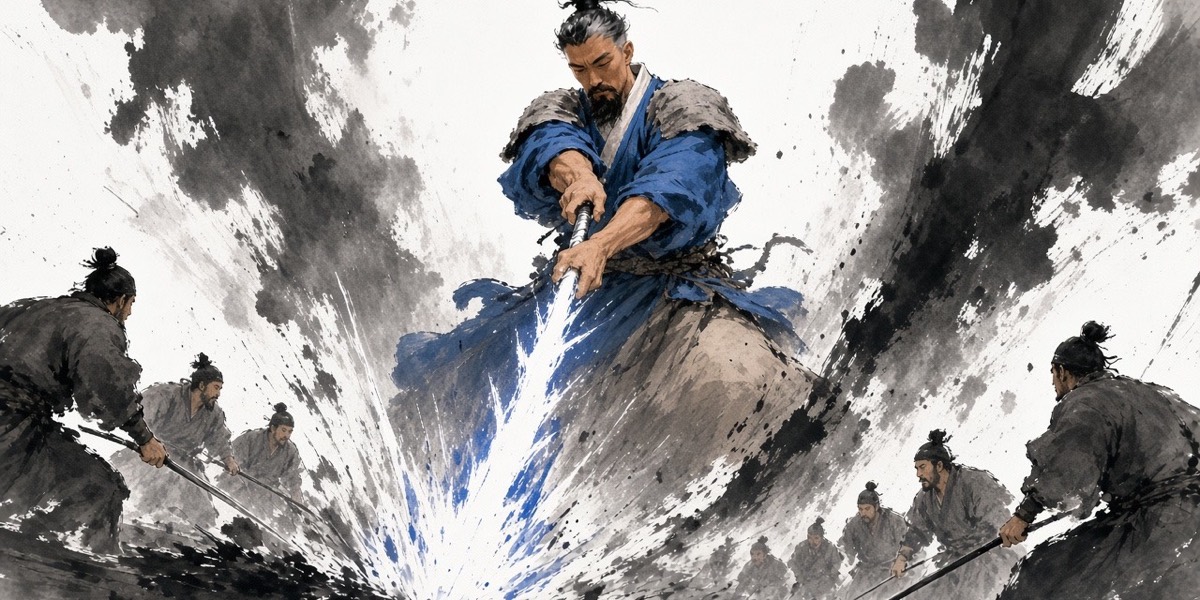
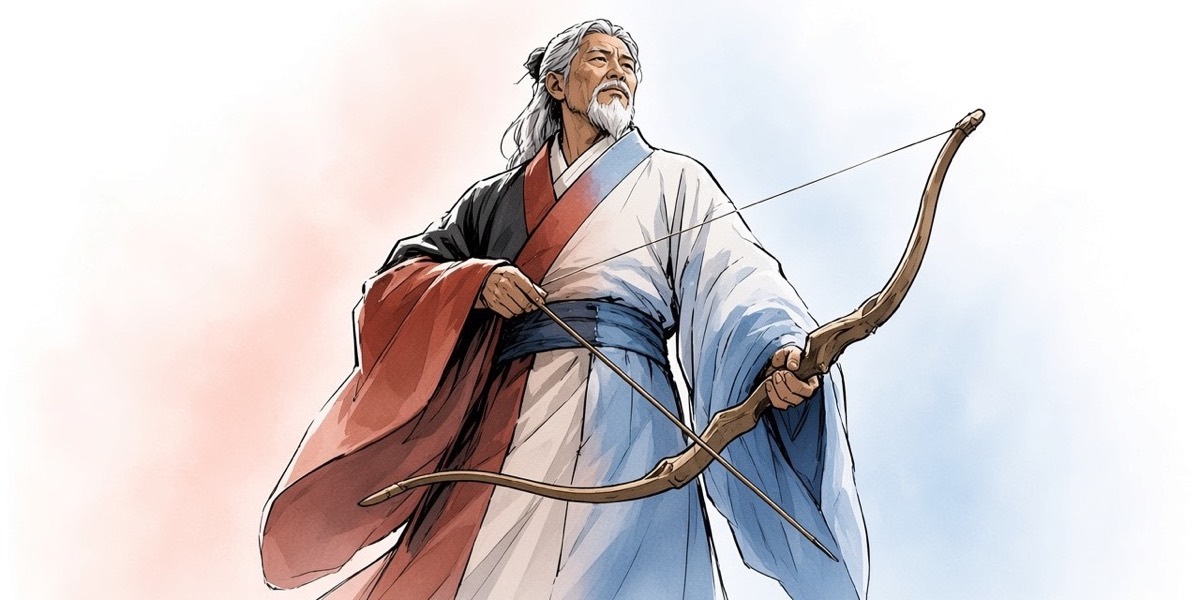
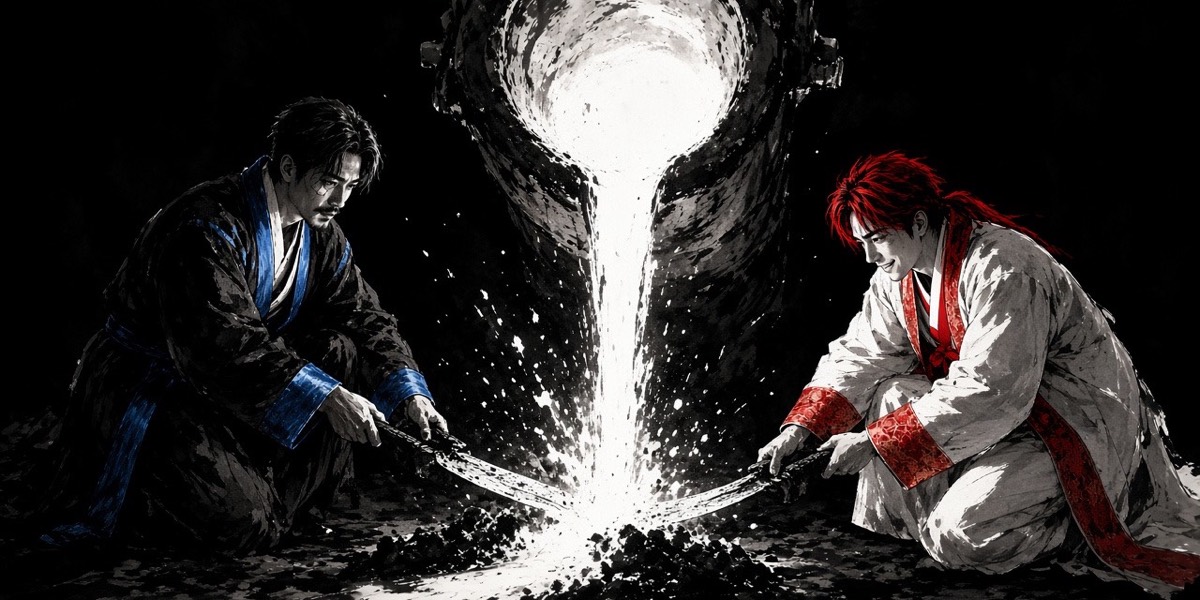
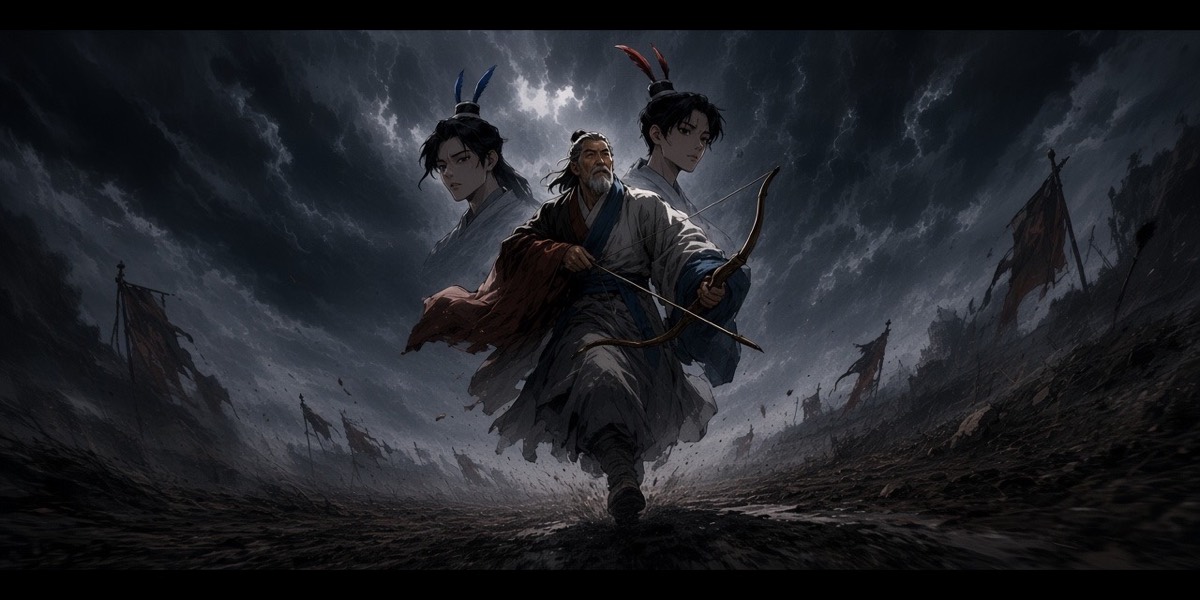
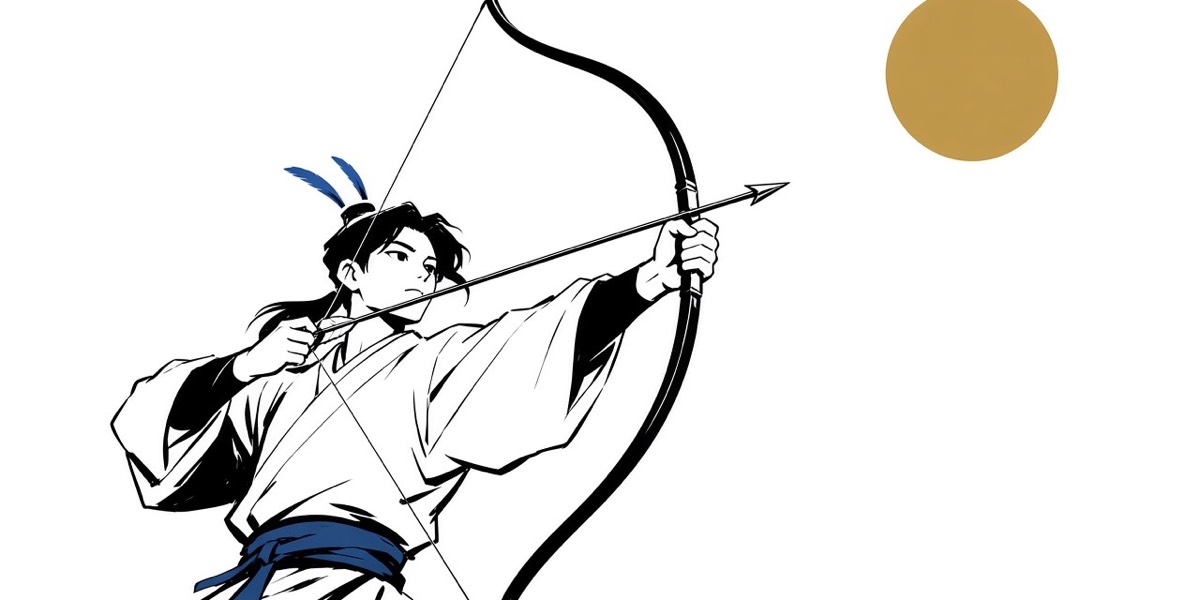
He has a thousand geun of iron melted down into two bows and two arrows, heavy enough that nobody but a son of his could draw them, and walks the boys to the edge of the sky.
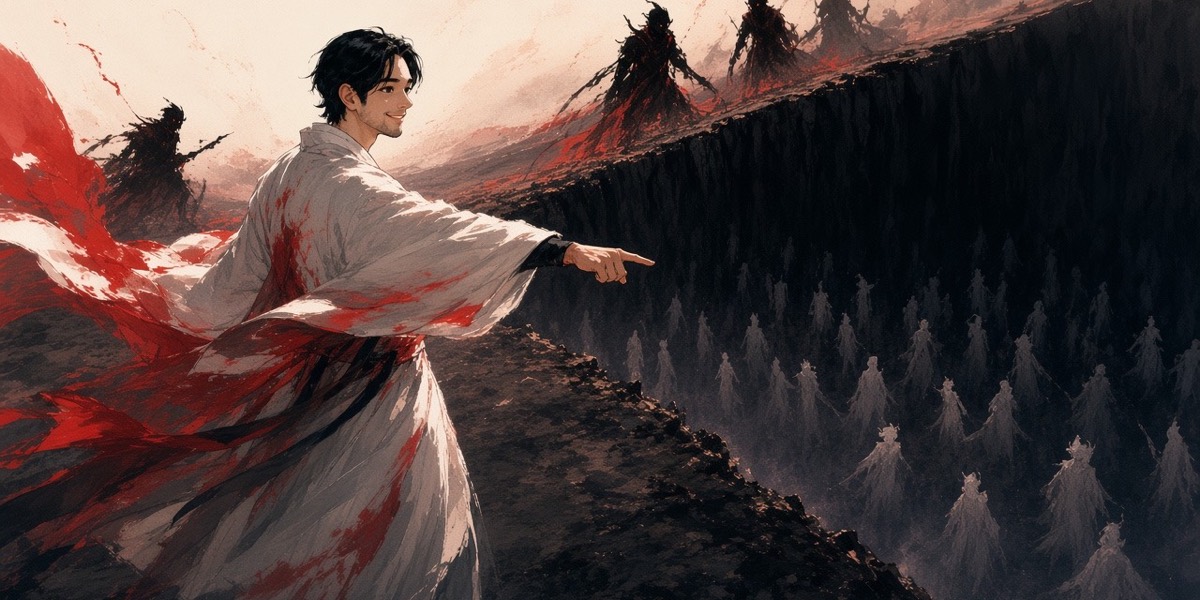
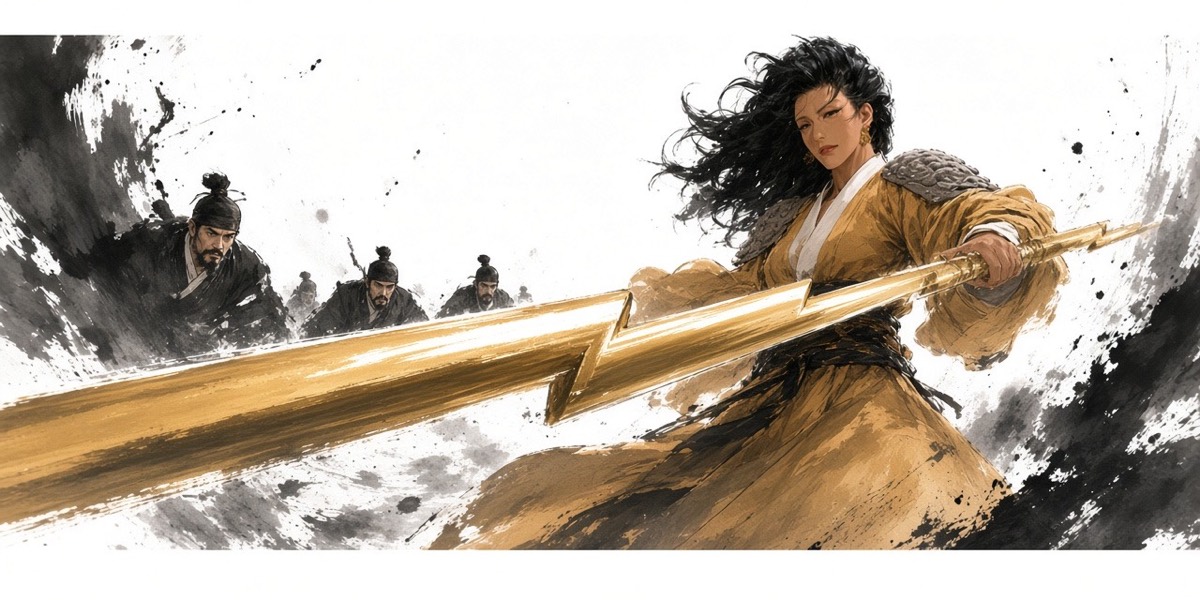
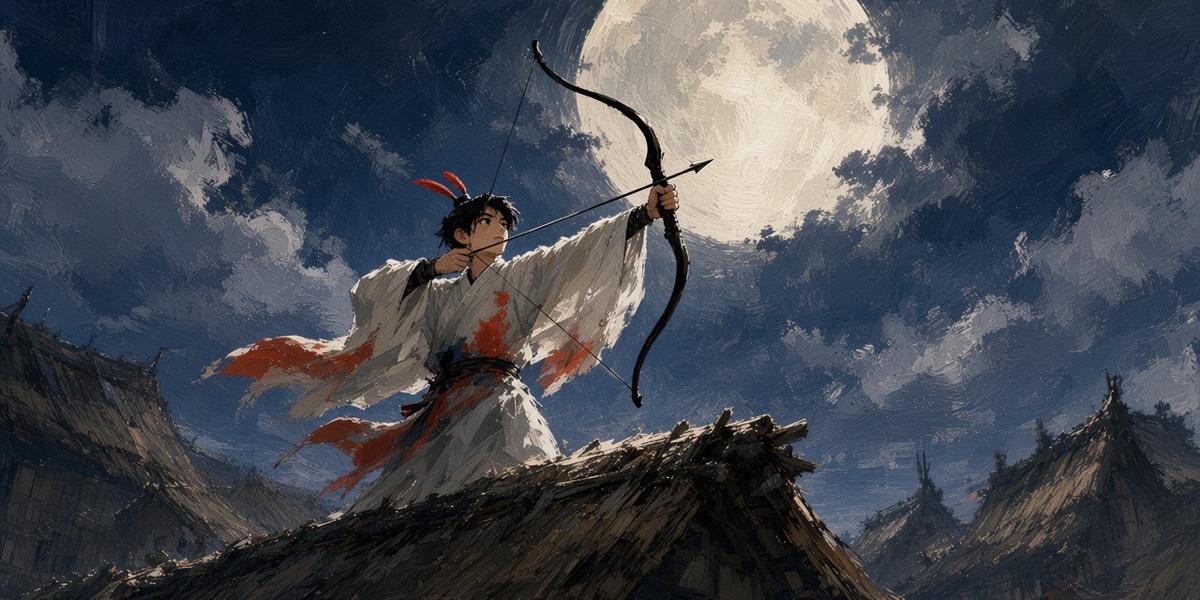
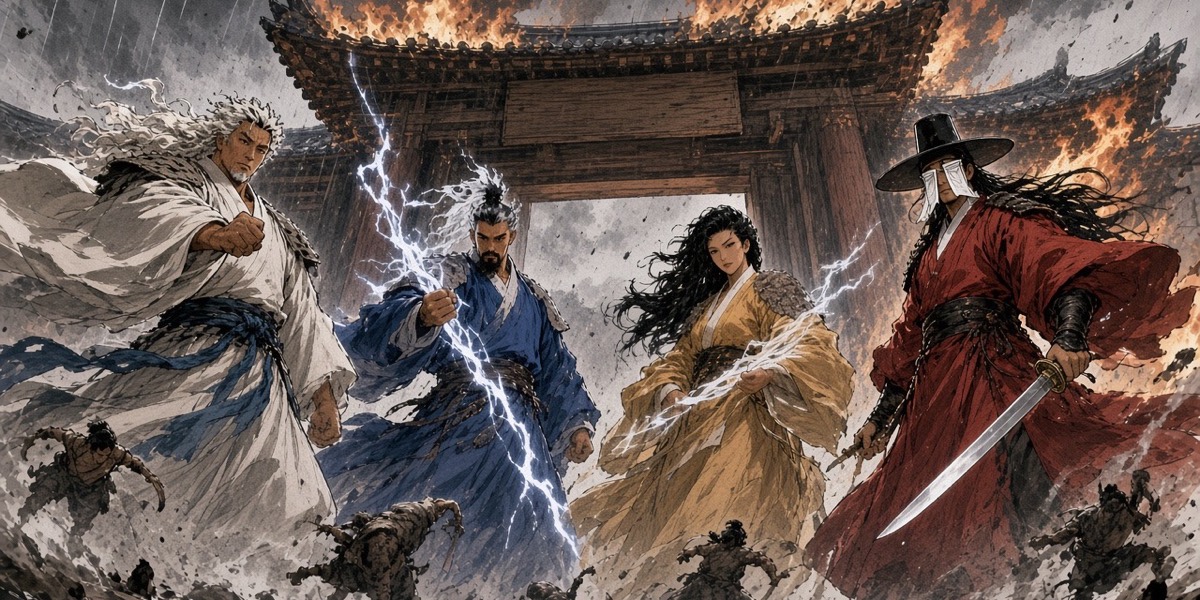
takes the sun at noon. He breathes out once and lets go, and the second sun breaks like a plate. Its pieces scatter east and stay there as stars. At midnight draws on the second moon and hits it square, and its pieces go west.
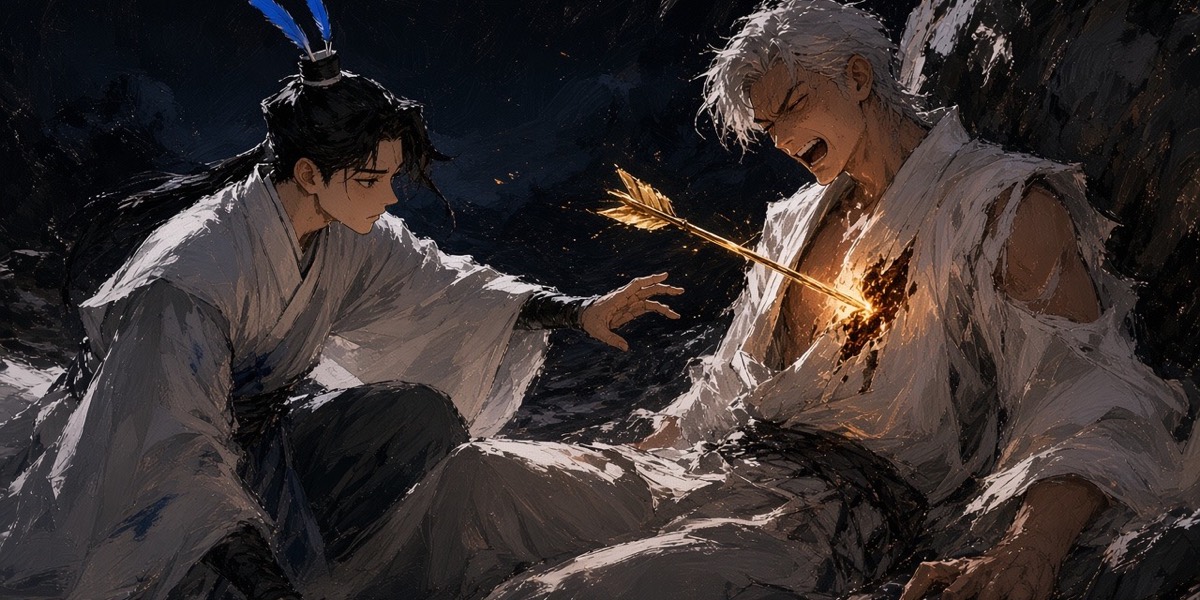
The second sun is a man with his brother's face and short silver hair. 's arrow is in his chest.
's arrow takes the second moon clean out of the sky.
In the morning people go out to the fields and do not fall down. That night they sleep. Nobody thanks anyone, because nobody knows who to thank.
Fifteen years is a long time to leave a bad man his storehouses.
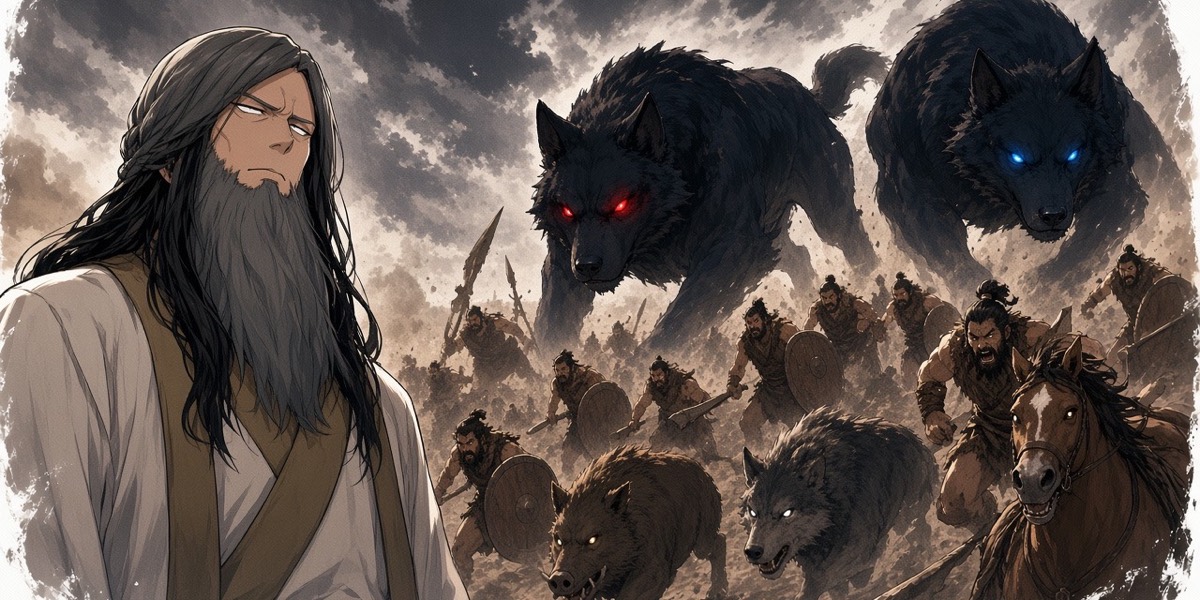
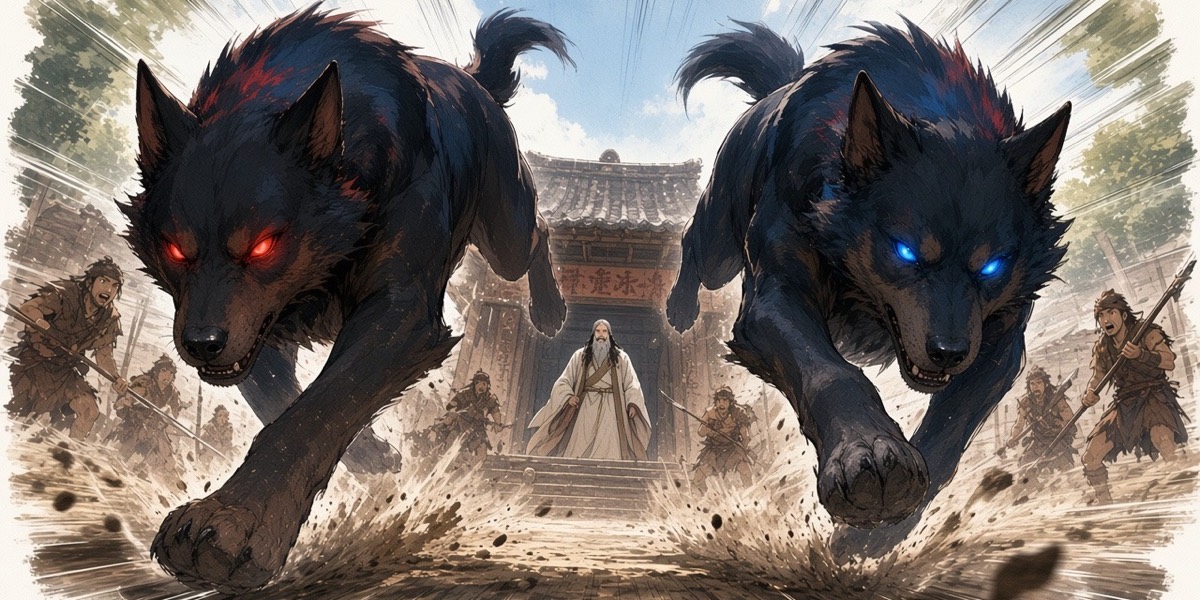
The horse still kicks. The dog still bites. He has men now, and beasts, and he pays both in meat.
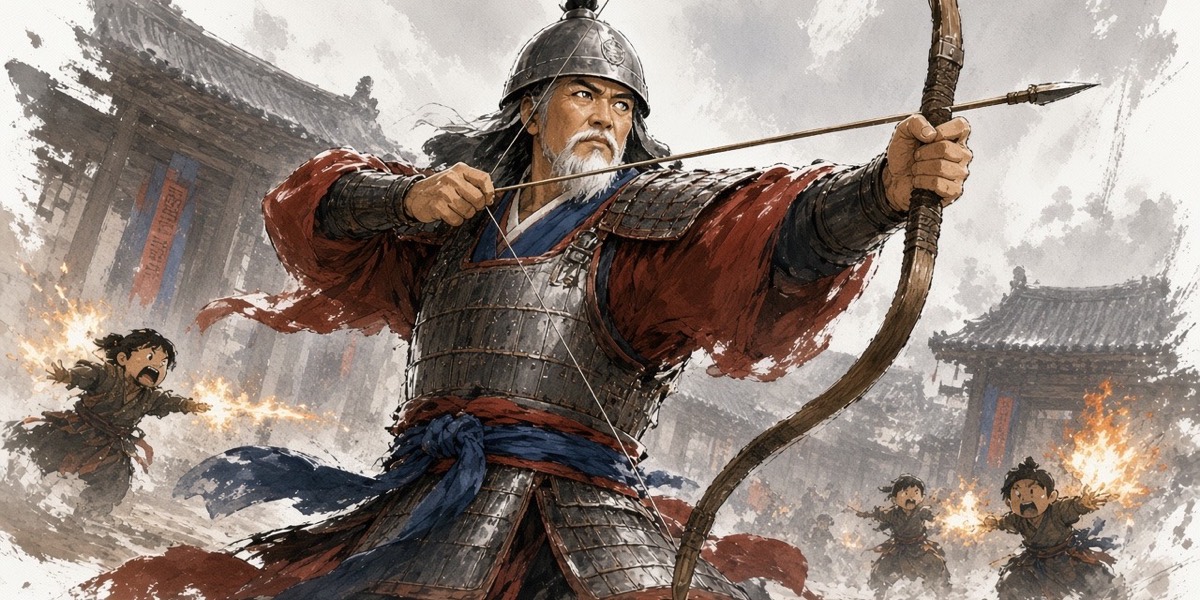
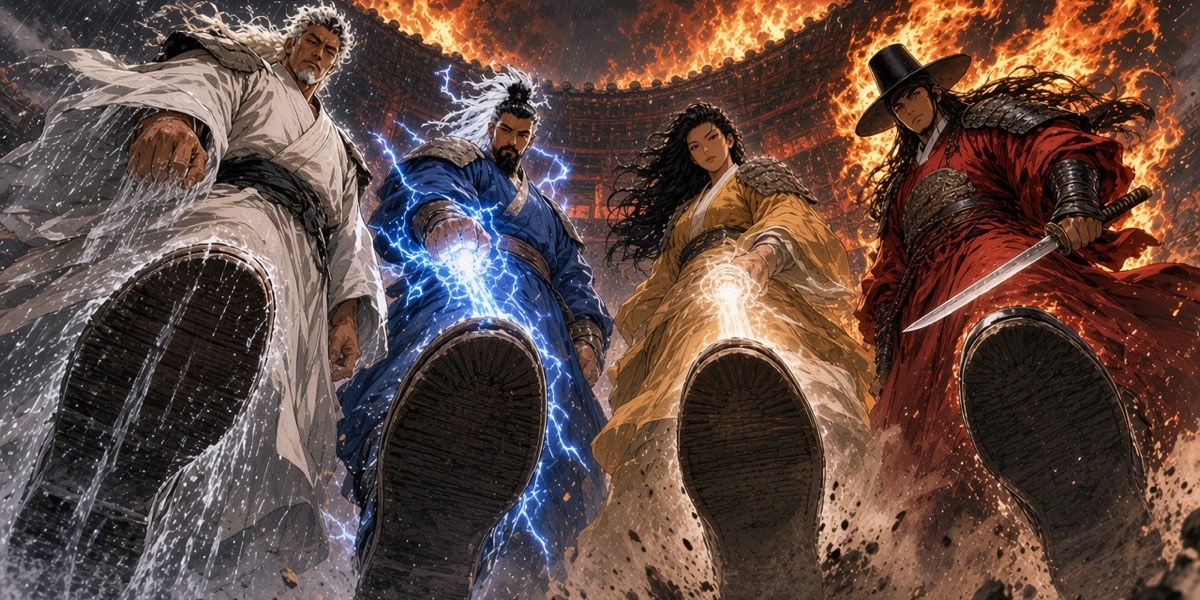
comes back with four.
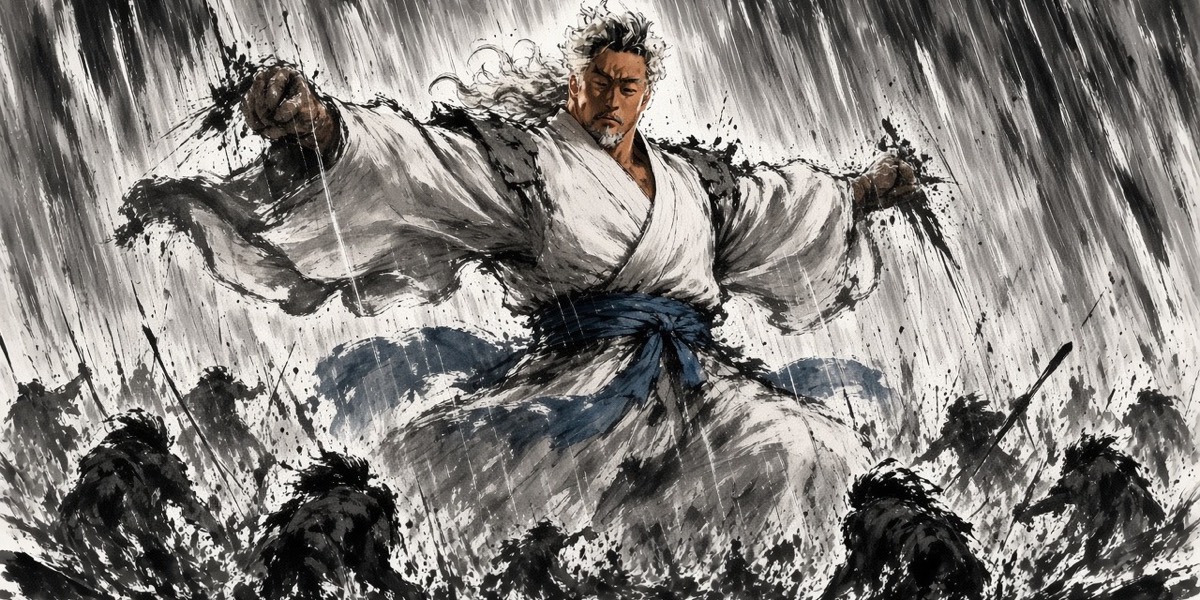

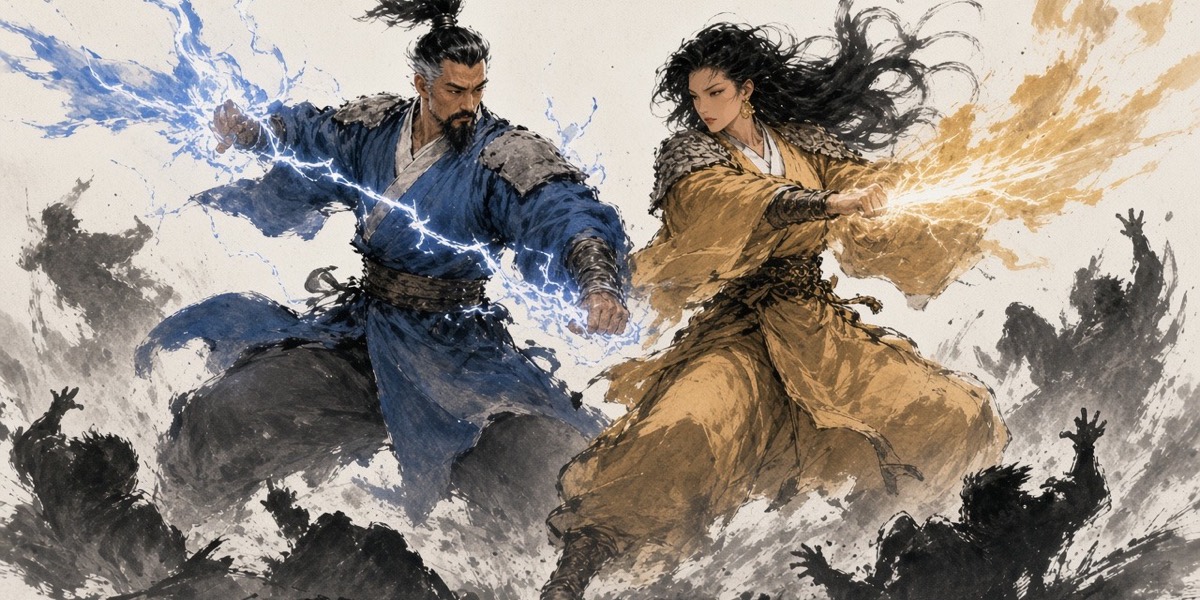


He waits until she is at his shoulder.
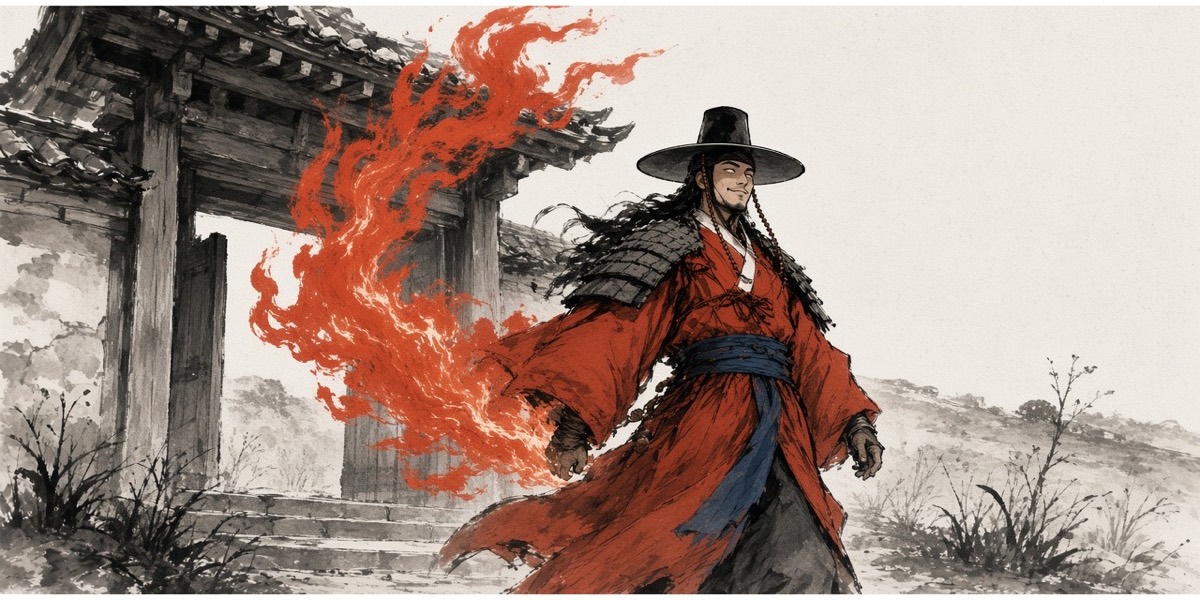
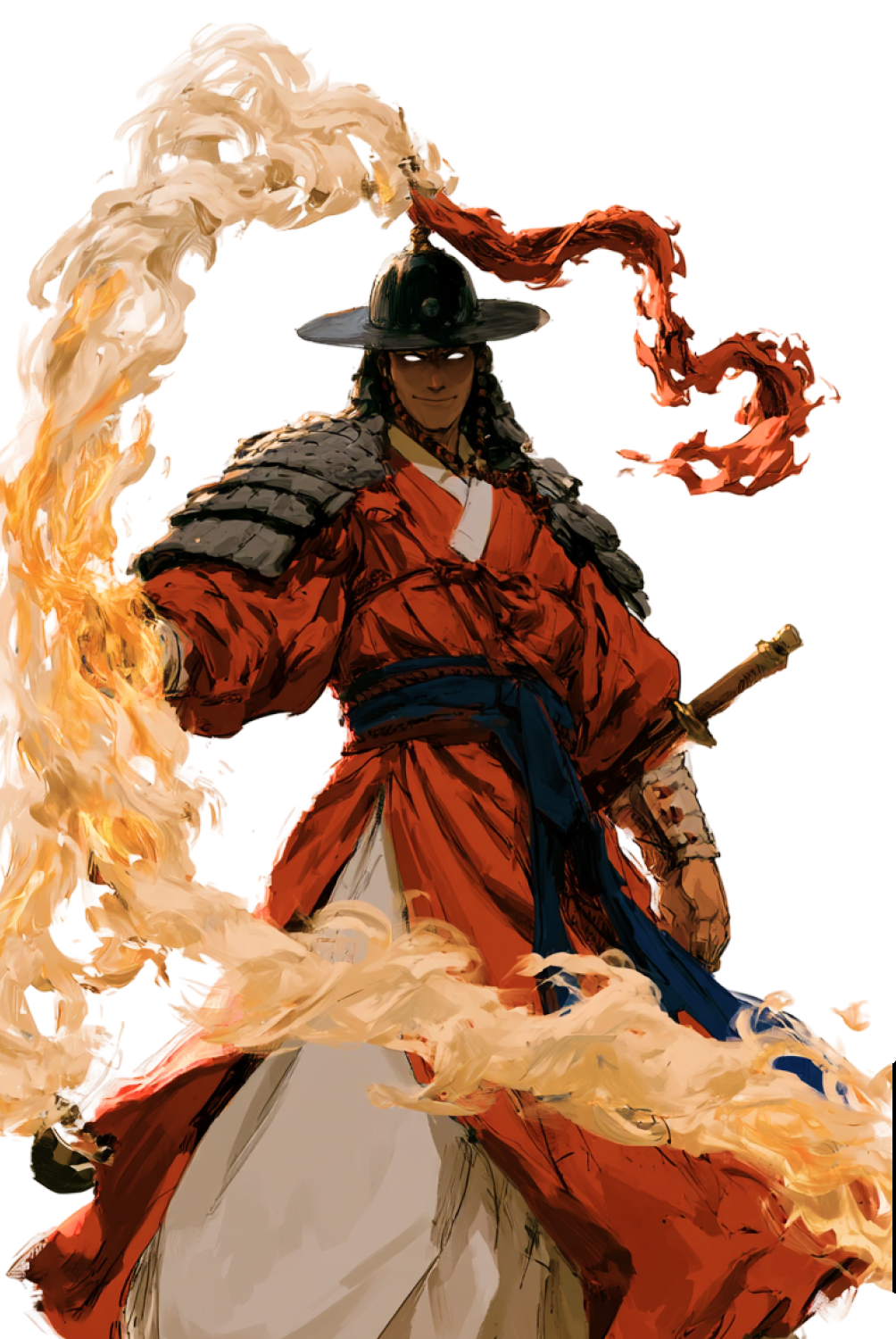
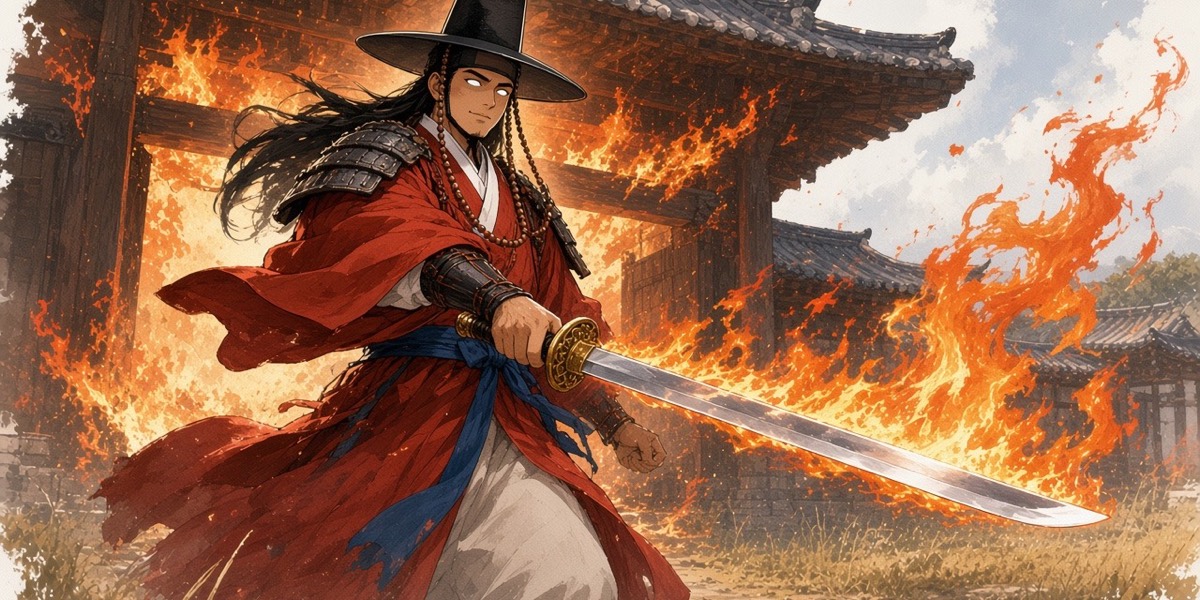
The nine roofs go up. Then a field that was not in the order. The king takes the rank back. He does not give another. The fire is simply gone from the line.
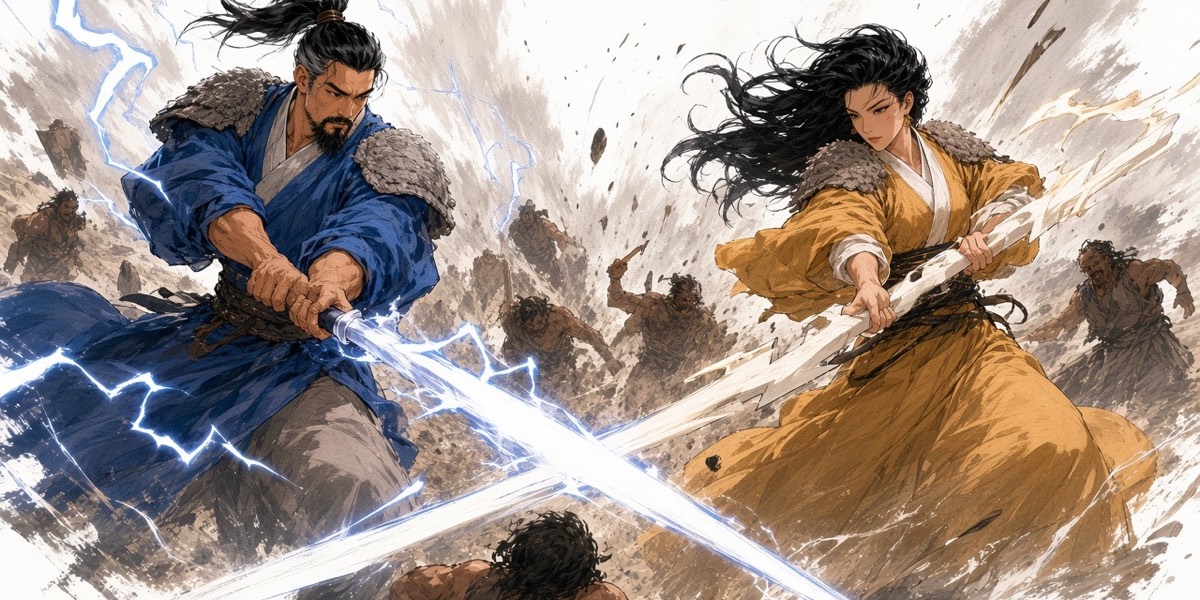
The beasts go down under the rain. The men go down under the thunder. One man is left in the yard, with a servant and an axe.
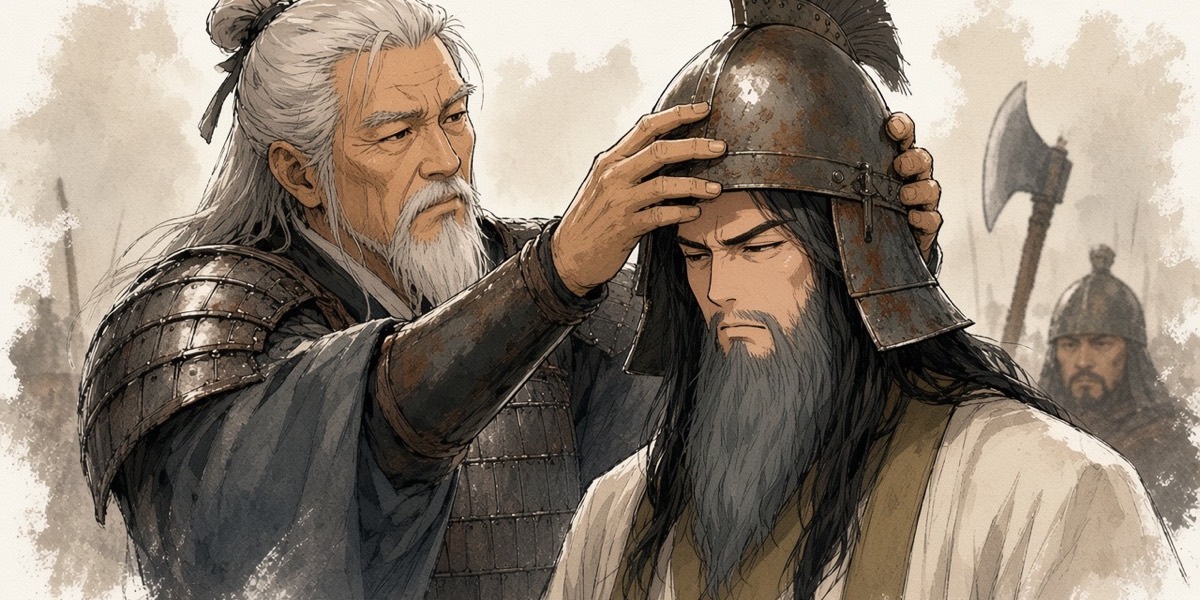
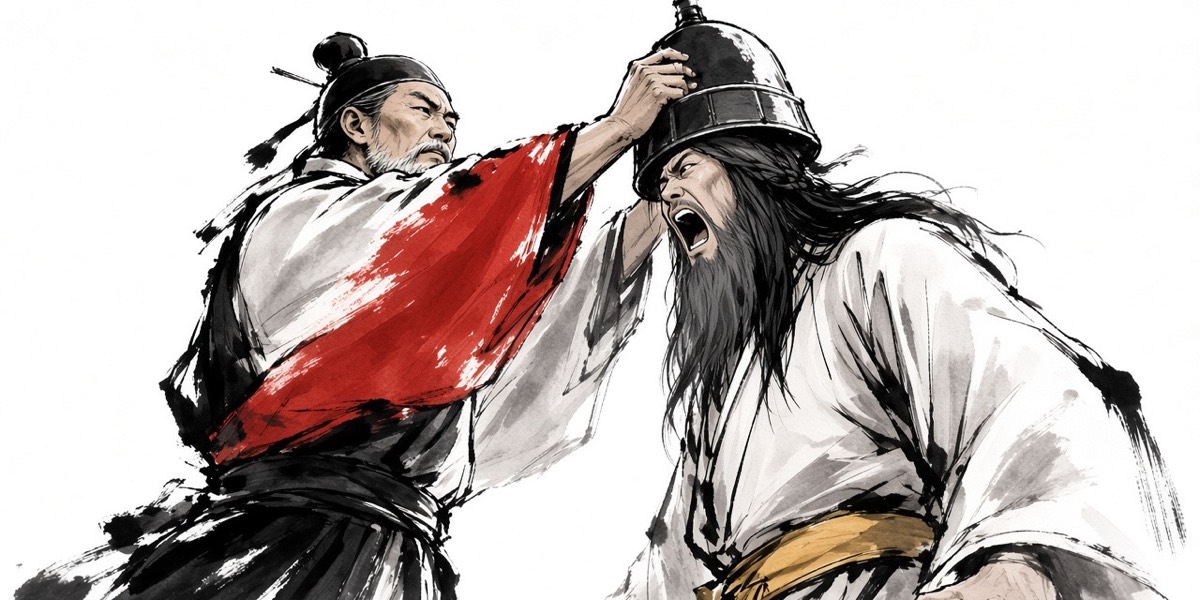
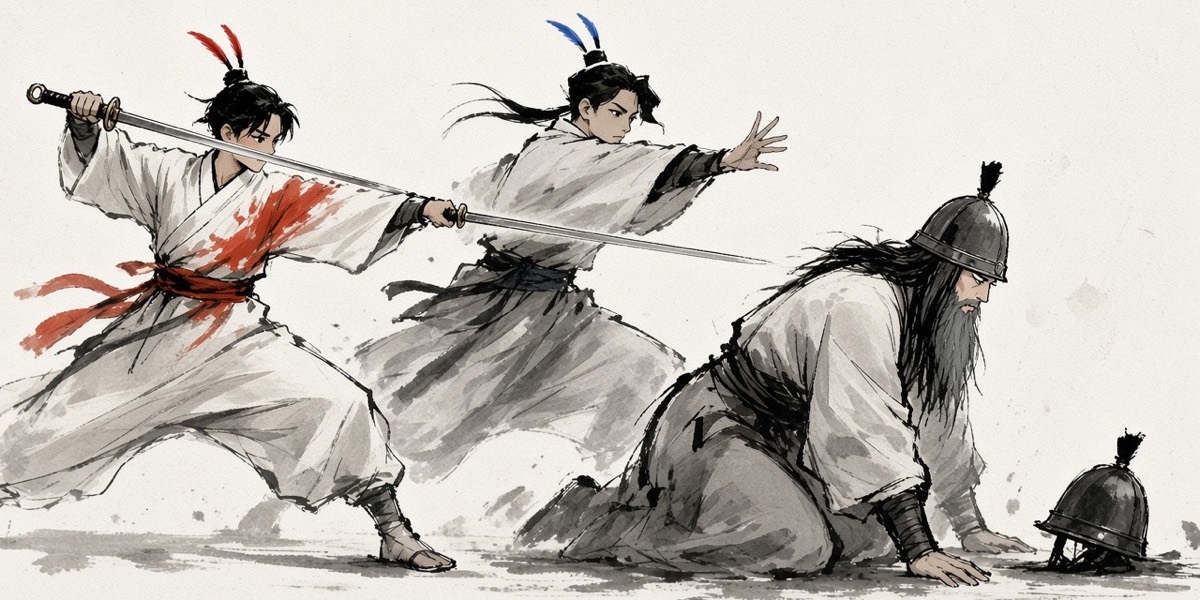
The king takes his helmet off. Iron, and heavy. He sets it on the other head and tells it to close.
It closes. The sound the man makes is not a word. He does not kneel.

takes the head anyway. One cut. He does not look at his brother.
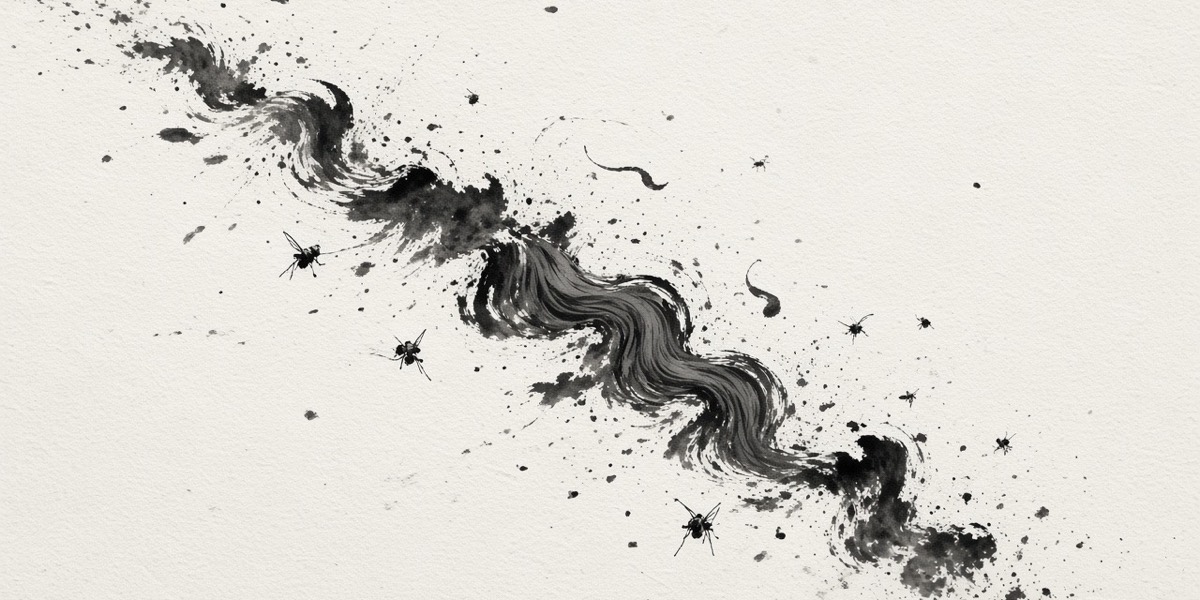
He gives what is left to the wind. The wind makes flies of it, and mosquitoes, and lice. Fleas. The white worms that follow meat. They have been hungry ever since.
The western flowers were his as well. He did not set them on the table. The boys never asked.
, the . , the . The names Father left them — and the titles the worlds still use when they are afraid to say the short ones.
They decide it the way brothers decide things. proposes riddles, which suits the one who knows the answers.
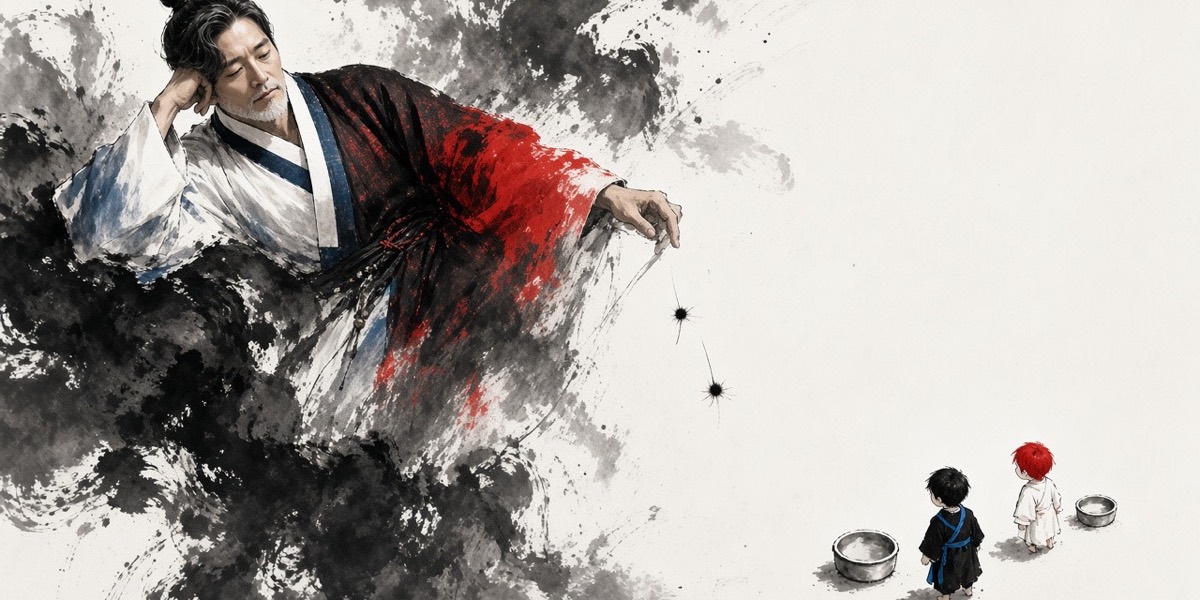
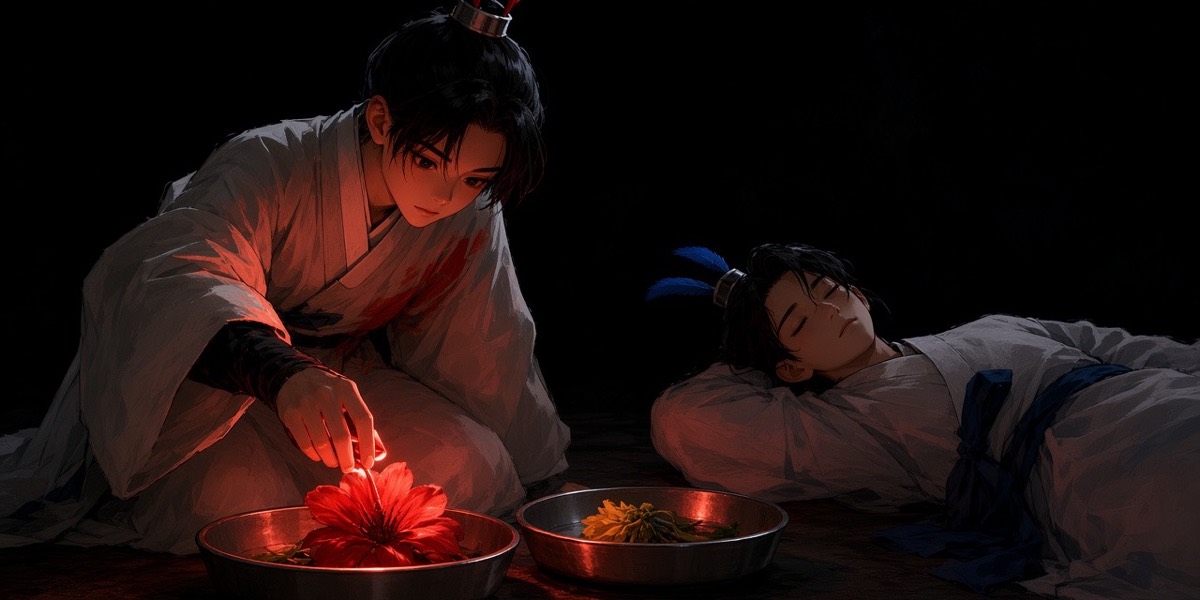
Two for two. Their father, who said he would not decide anything, leans over the edge of his rest and drops two flower seeds between them.
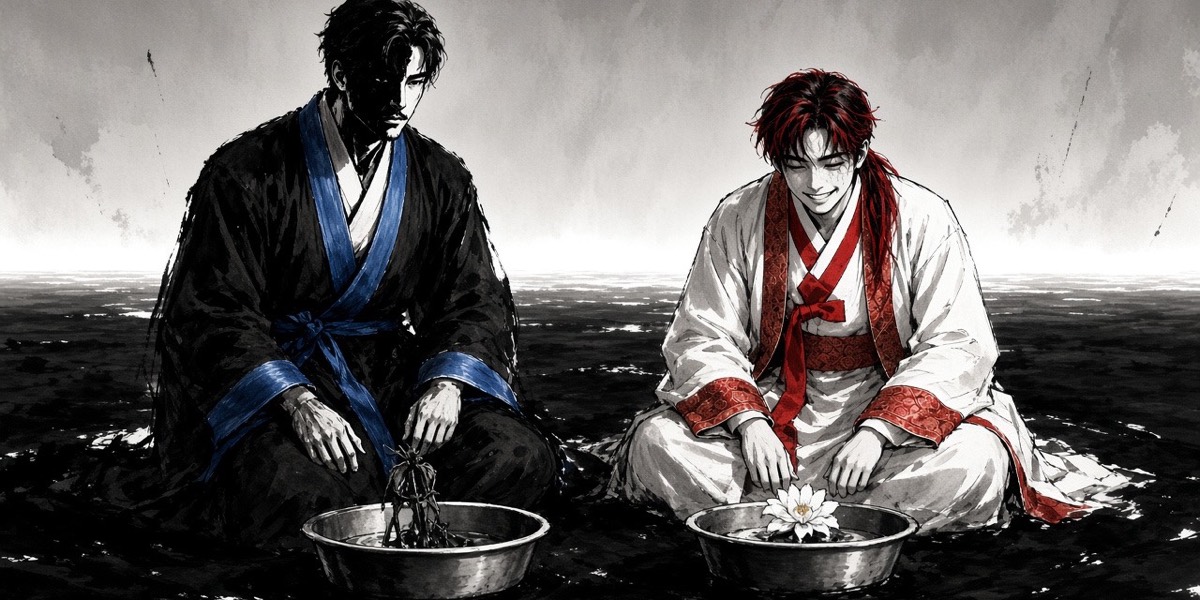
They plant them in two silver basins and sit up with them. ’s flower comes up green and keeps coming, and by the third evening it has opened. ’s comes up yellow and leans.
sleeps the way honest men sleep, all the way down. lies on his side and counts his brother’s breathing up to a hundred. Then he gets up, trades the basins, and lies down again in the same shape, so his brother will wake first.
looks at the open flower in front of his brother, the one he watered for three days. He looks at the yellow one by his own hand.
He gets up and brushes the soil off his knees.
He is already walking toward the dark edge when he says the rest, and he does not turn round.
goes down. keeps the warm side.
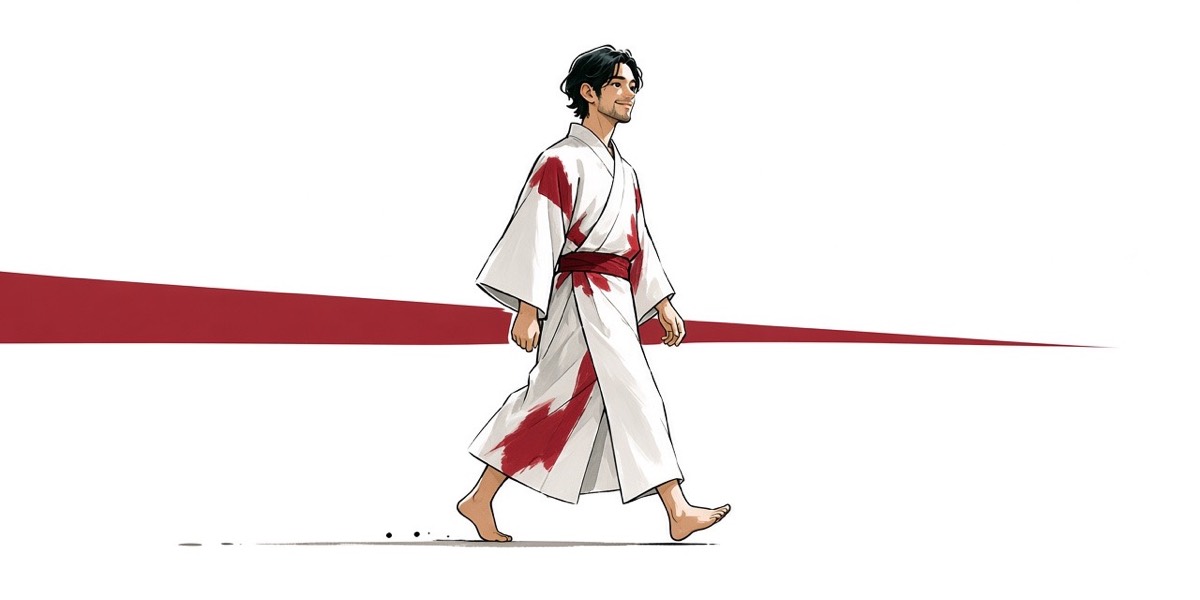
walks into the heat like a man who just won a house.
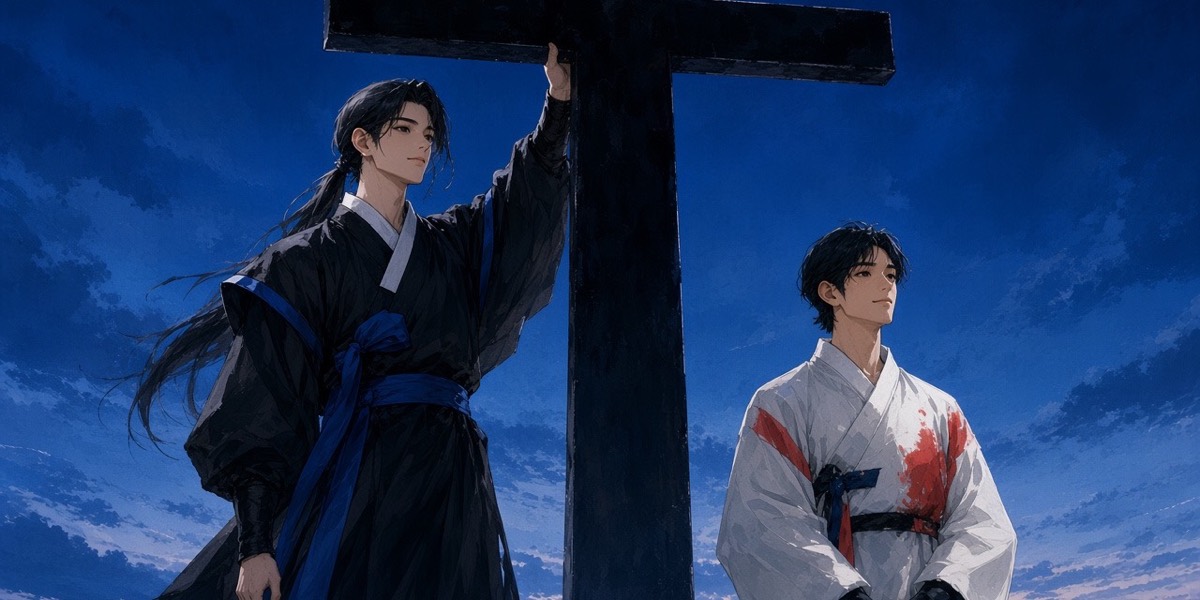
The white robe comes off. He puts on the red marks of the living.
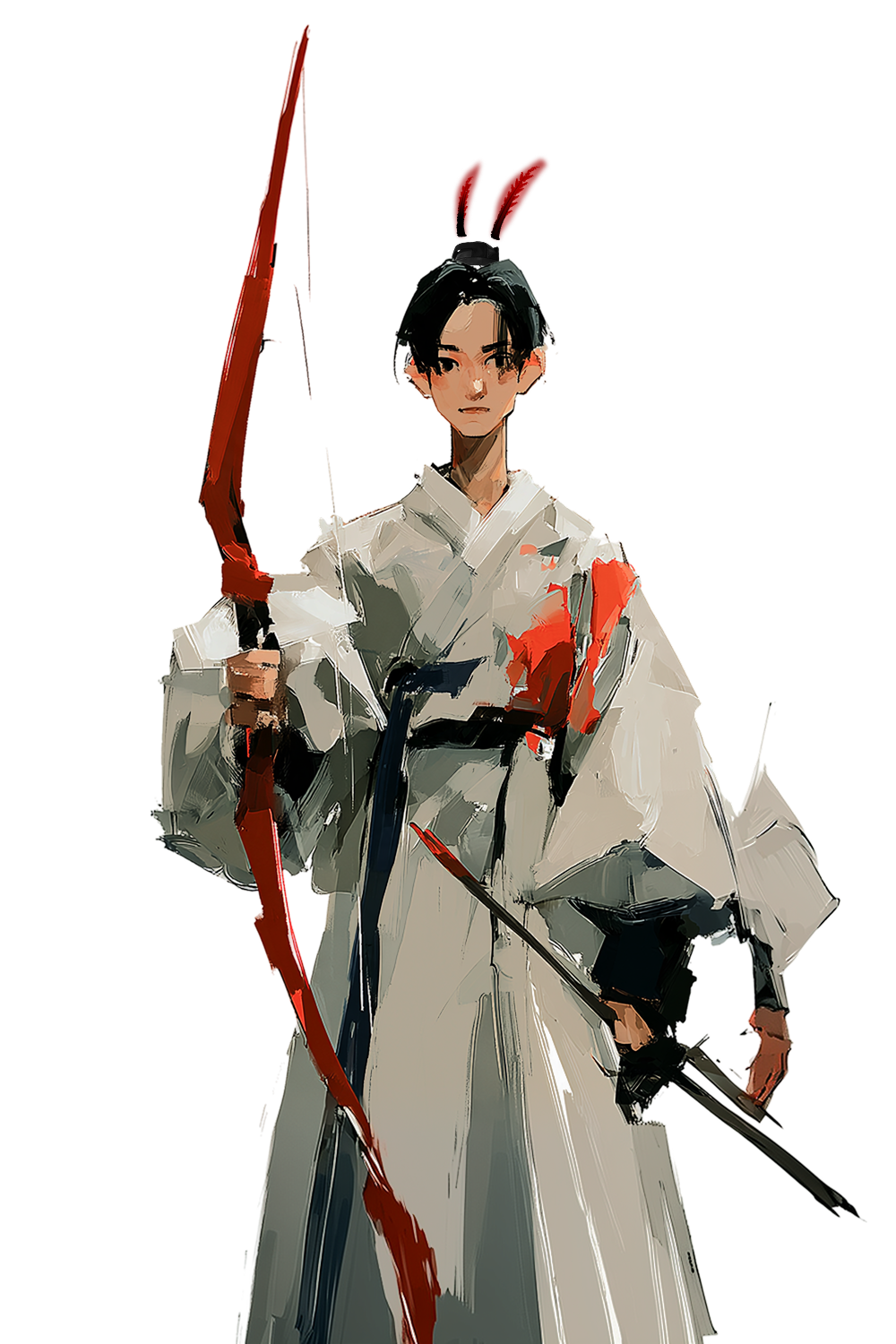
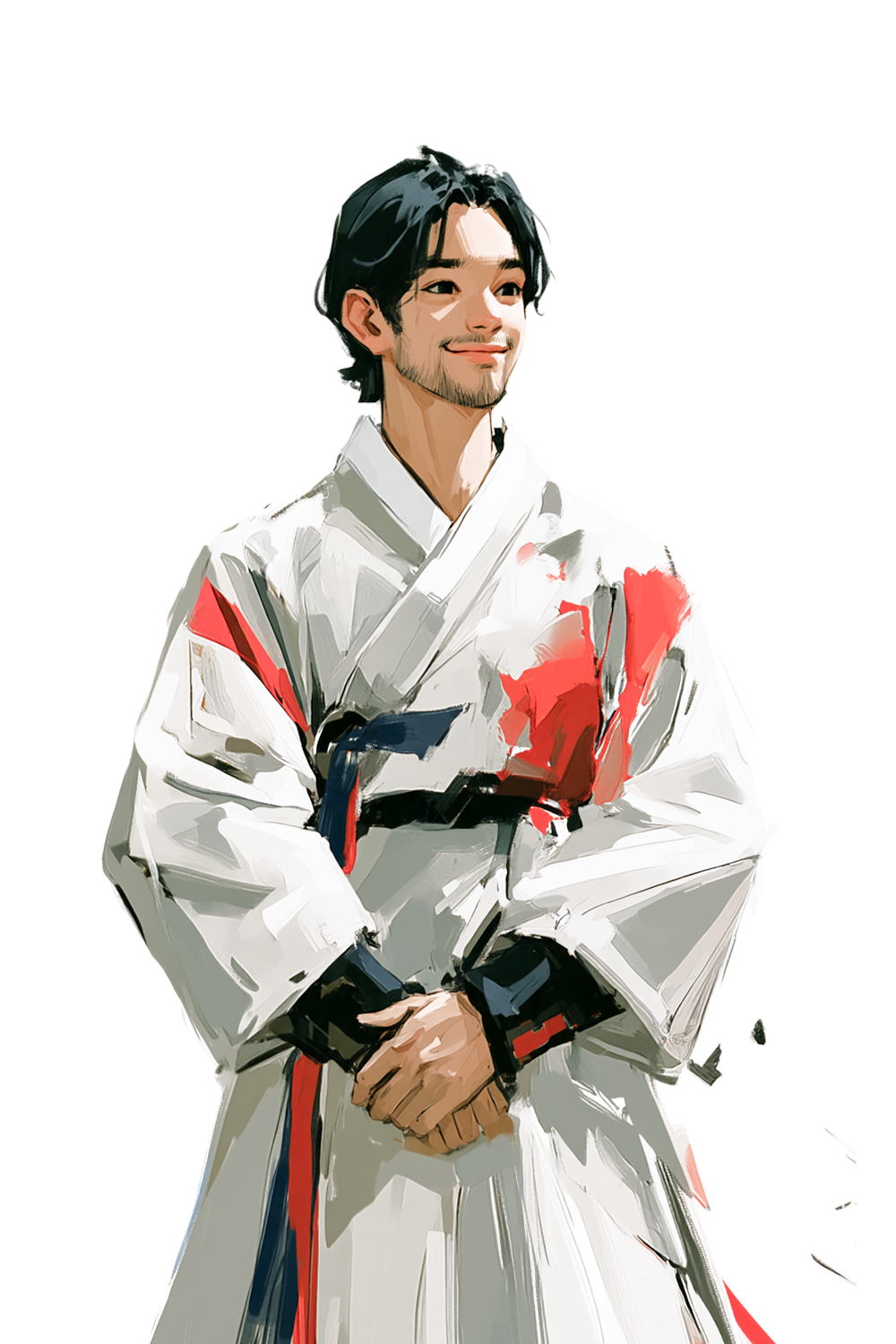 王
One sun still going. The other is a hole in the sky. He likes this better already.
He sits on a hill like a king. The hill doesn’t notice.
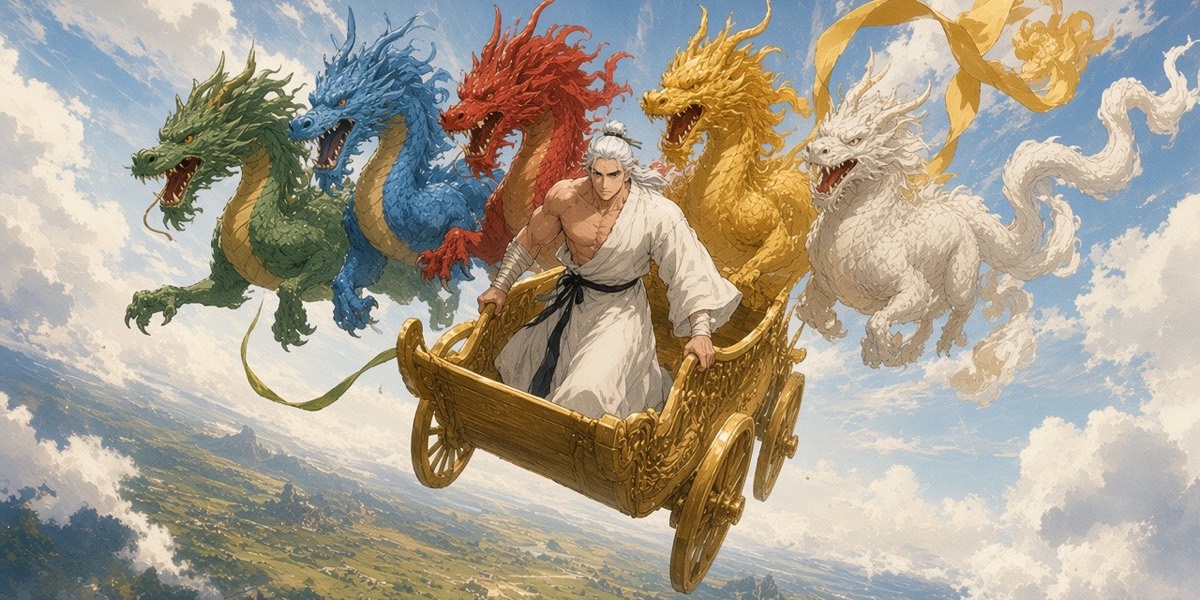
The one still flying doesn’t stop. He has a schedule. Long white hair, no interest in a new king on a hill.
holds up his father’s five-dragon chariot. Gold. Jade. Azure. Crimson. White.
takes the rail. The schedule finally has a name.
The living side is a mess. Too many peoples. Too many wars. Ghosts still walking the same road.
cuts the warm side into ten regions. One for each people.
. . . . . . . The southern seas. The northern nomads.
And . A mountain peninsula. He puts it right next to the plot where his flowers are planted.
That plot will be an island later. You already know the name. Not yet.
Then he drives the spirits out.
Every ghost that still walks the warm road is pushed down the dark edge. The most violent ones he seats at the border, so the rest think twice about crawling back.
A pine at the foot of the hill already has an opinion.
He hasn’t thought about ghosts answering a mother’s call yet. You’ll see.
On the way down, passes his mother’s house. The rice is still on. Smoke from the pot. He does not stop.
The dark edge is not a gate. It’s a road that forgets colour as it goes.
Halfway down, something is still burning.
A sun deity sits against a black rock, shorter-haired than the one still flying, same bones, same white robe torn at the chest. A golden arrow is in him. Noon’s leftover.
looks at the hole the arrow made, then at the road that still has no clerks.
The fallen sun laughs once, which hurts, and then he listens.
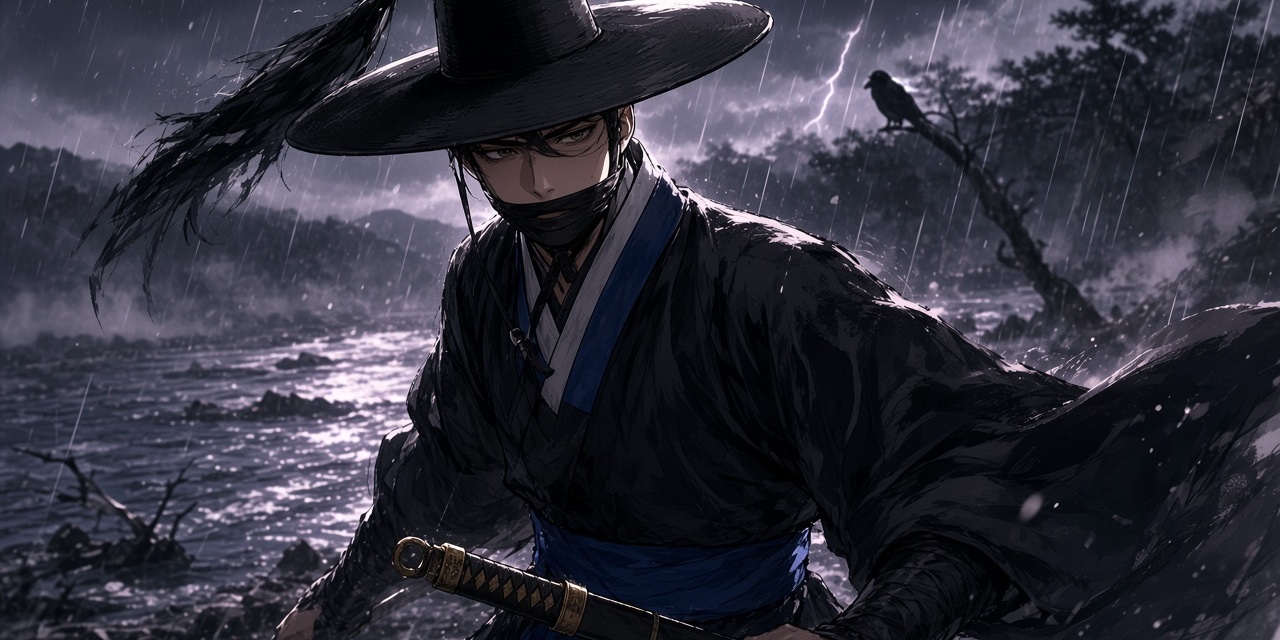
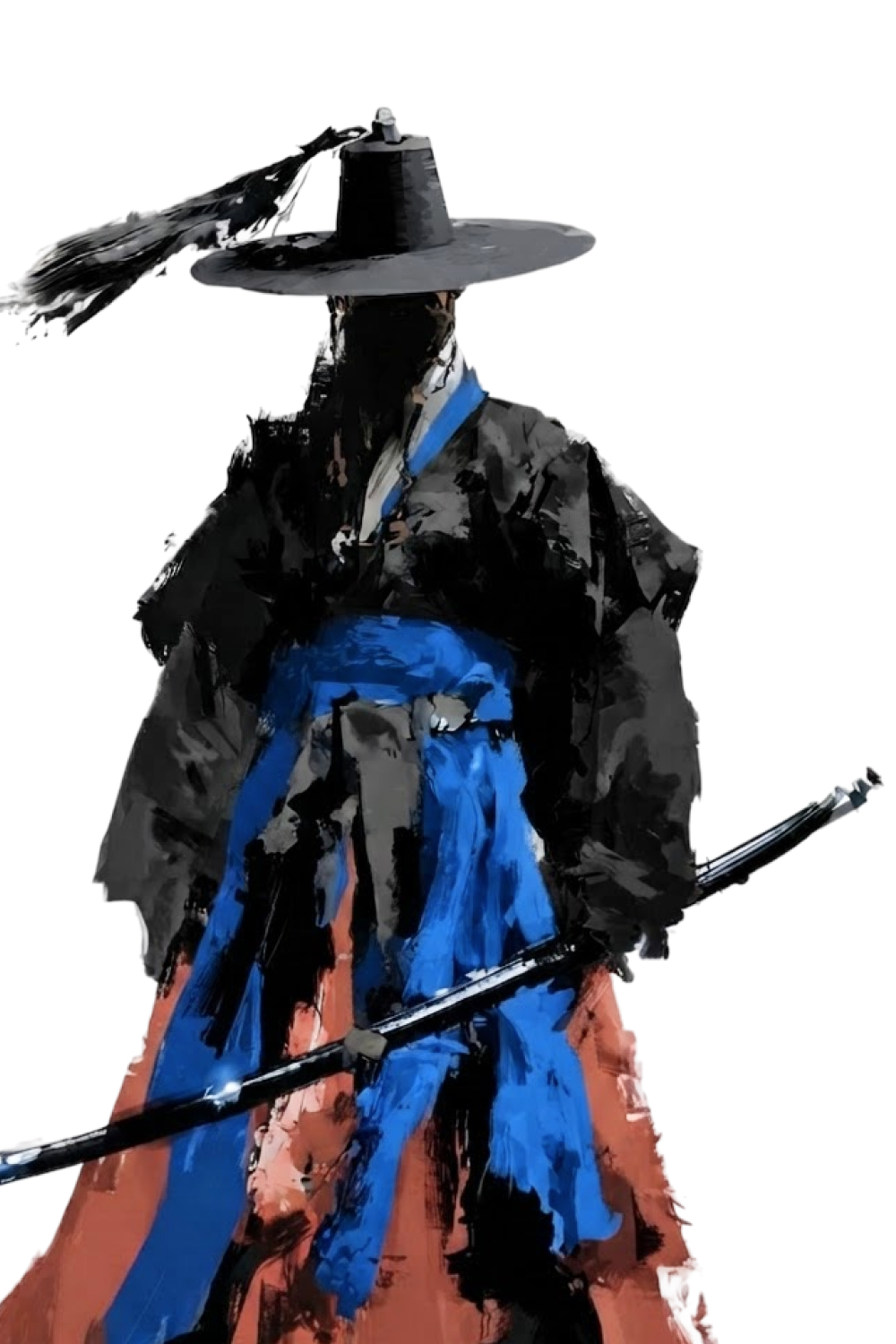
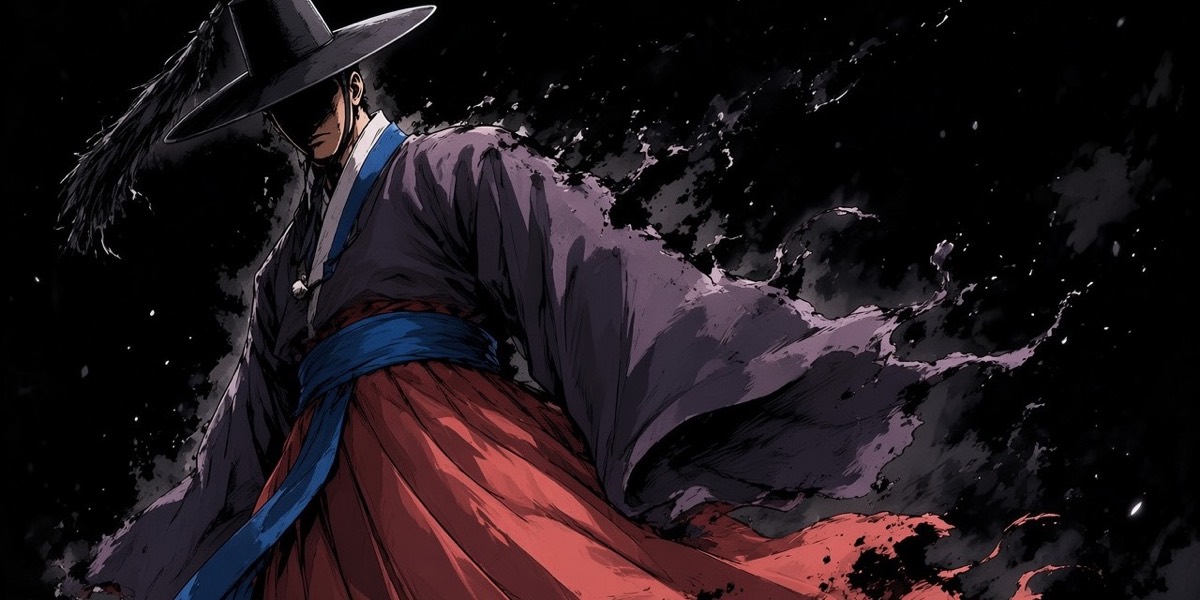
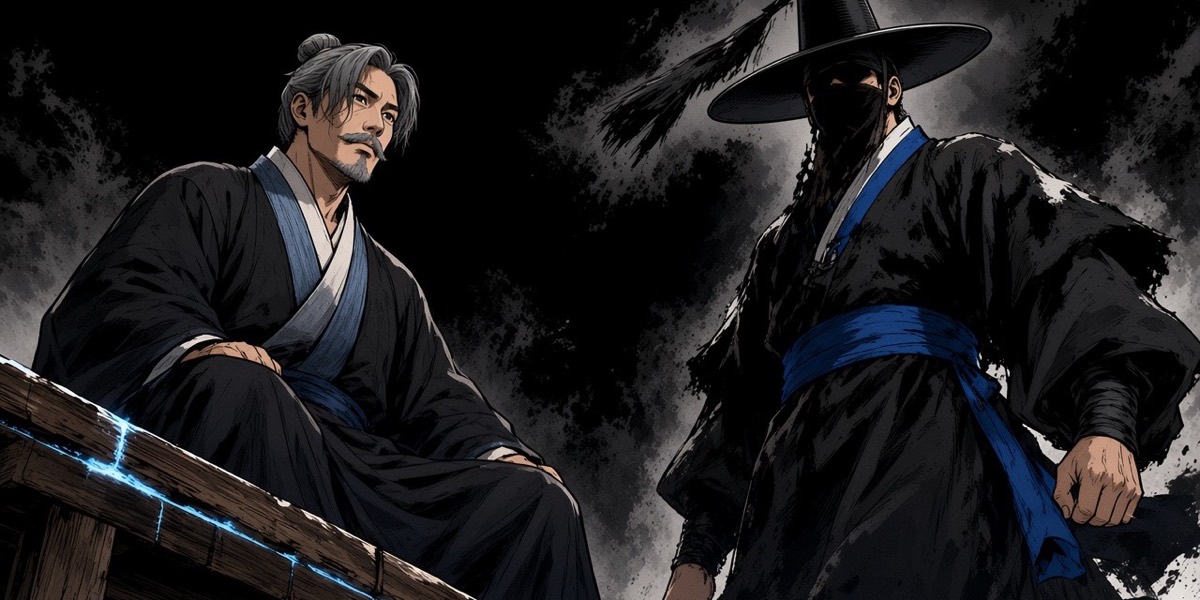
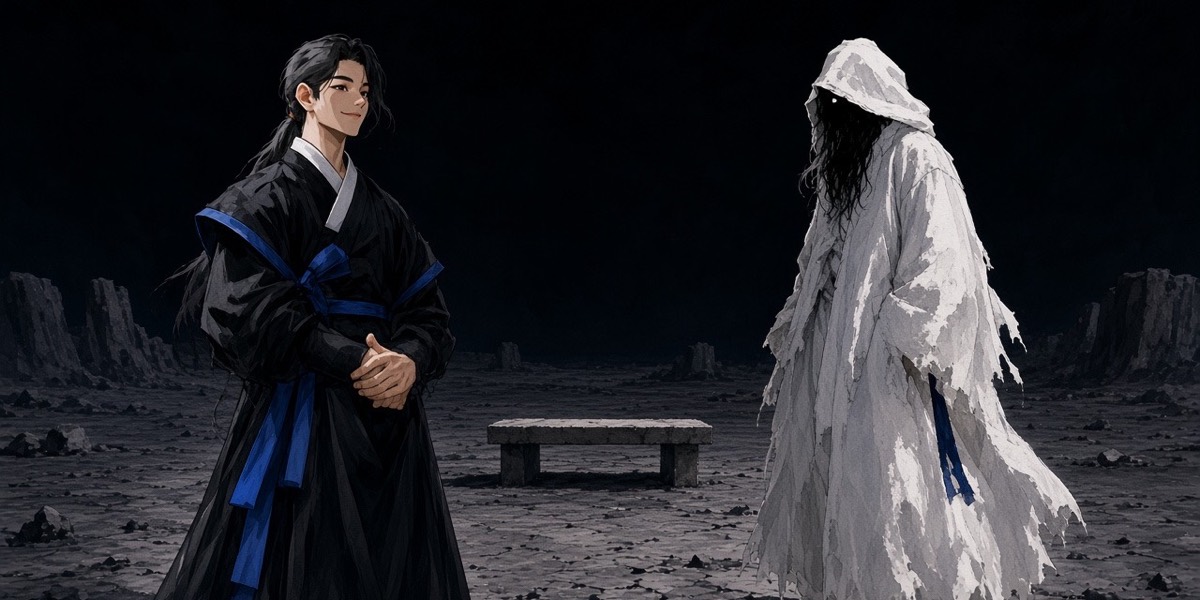
Ink takes the white robe first. Then a brim. Then the mouth, and nothing above it.
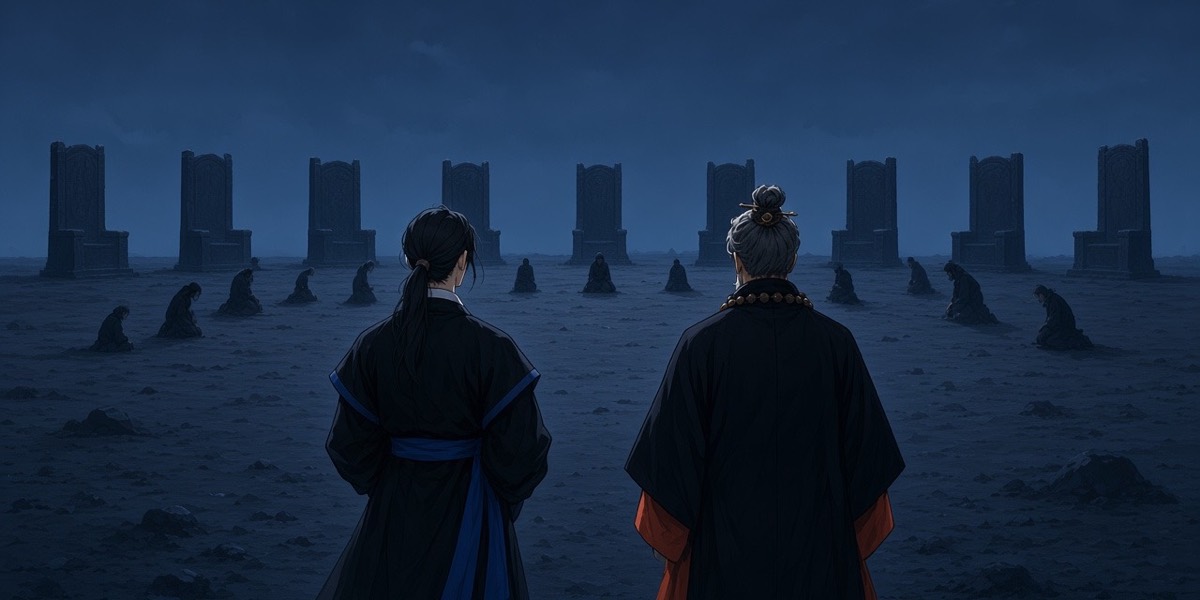
The dead side is almost empty.
A barren waste. No roofs. No roads worth the name. Every spirit that could crawl had already crawled up into the warm side. That was half the problem their father never finished.
hangs an empty bench in the dark, and sits on it once, to see if it holds.
The white of the wager years comes off. He puts on the black silk of the dead.
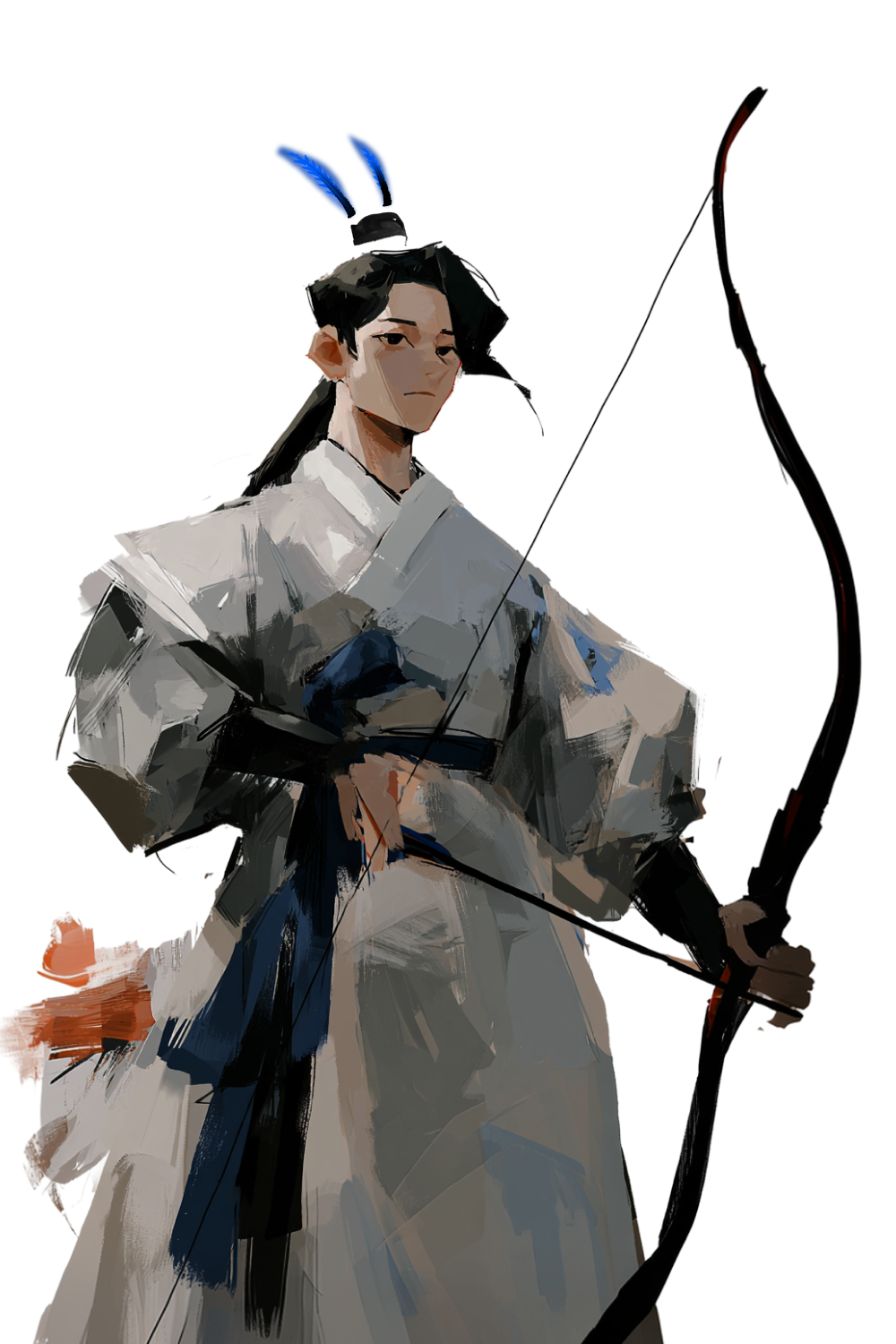
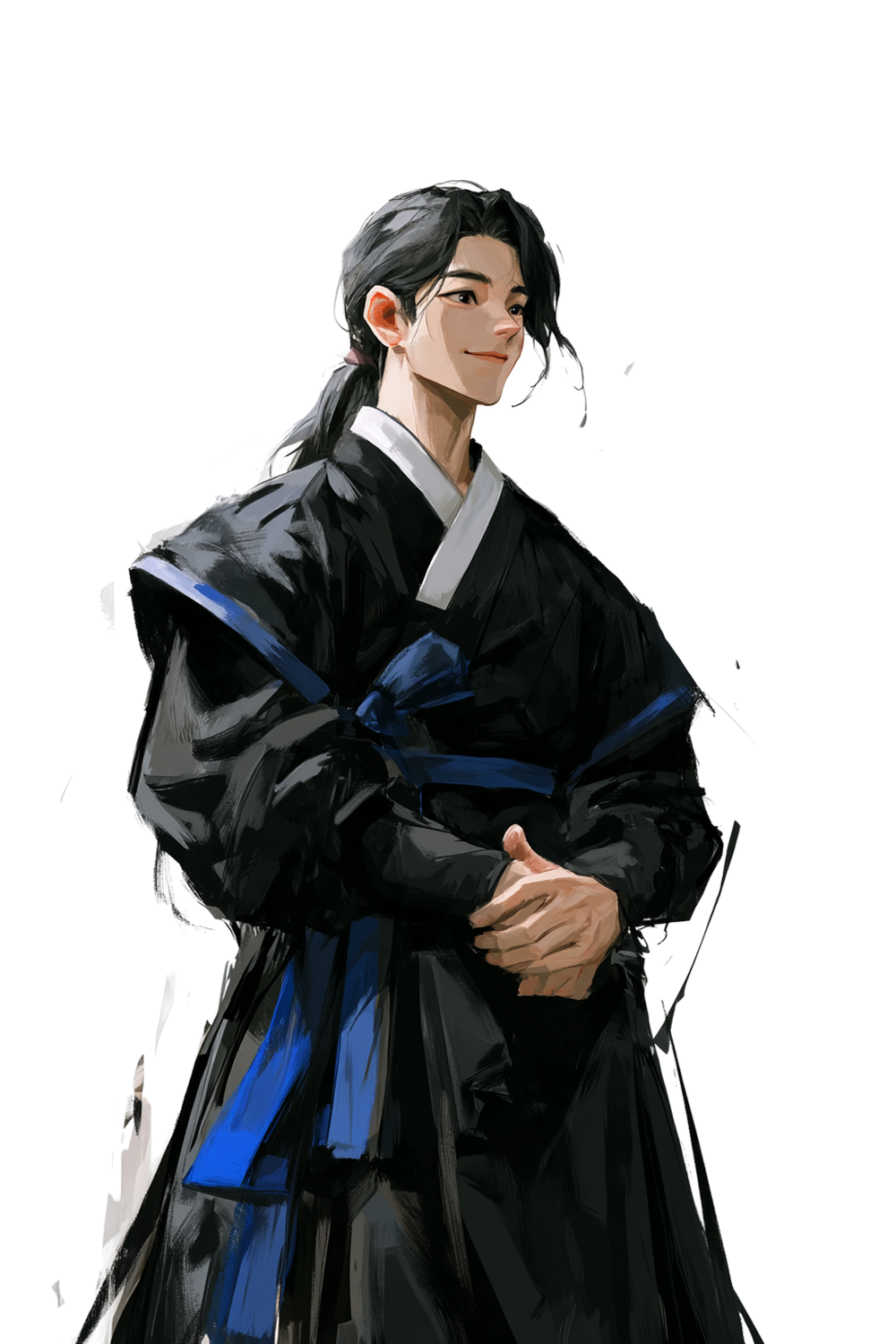 王
Then he finds one man.
The first man to die. He stayed. He did not try the warm road again.
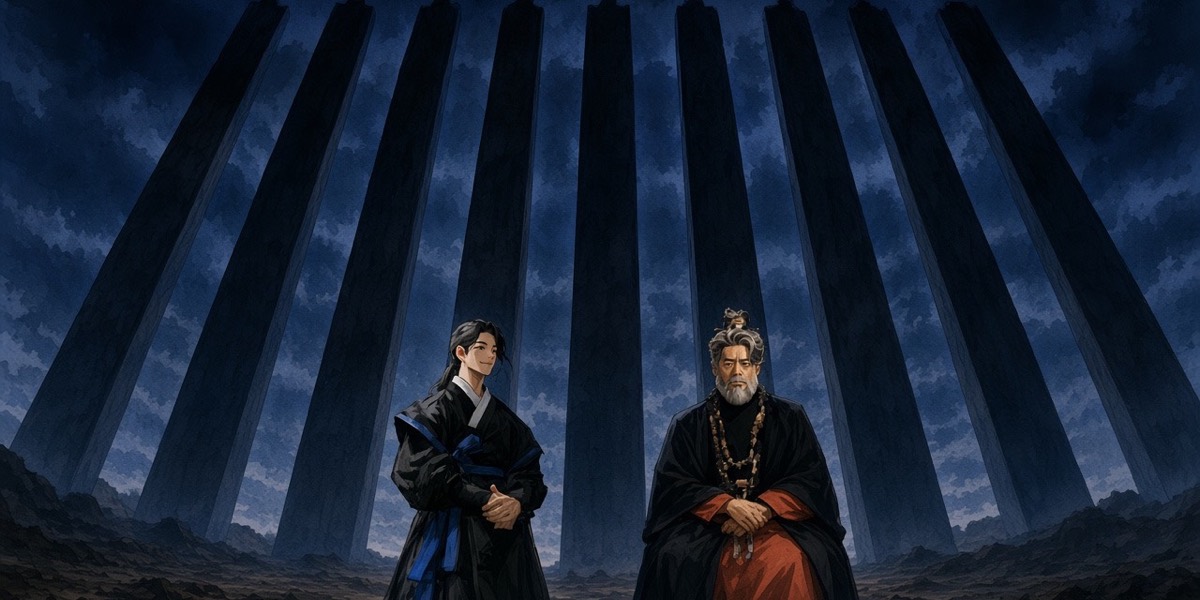
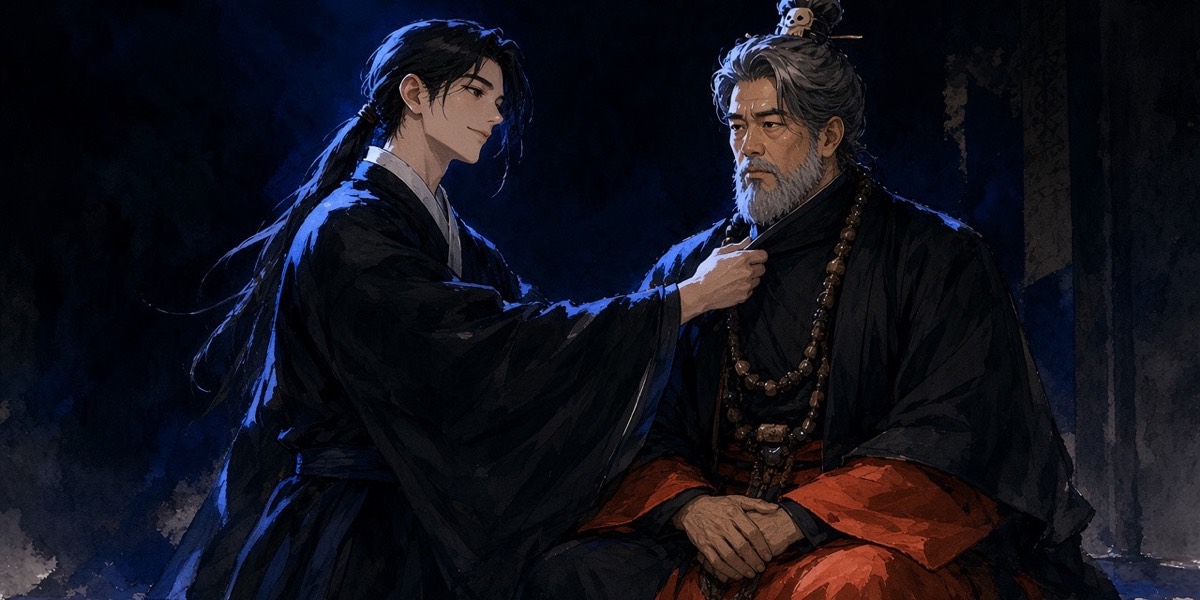
cuts his hair. Puts a black robe on him. An orange-red lower silk. A bead necklace. A small white skull at the crown.
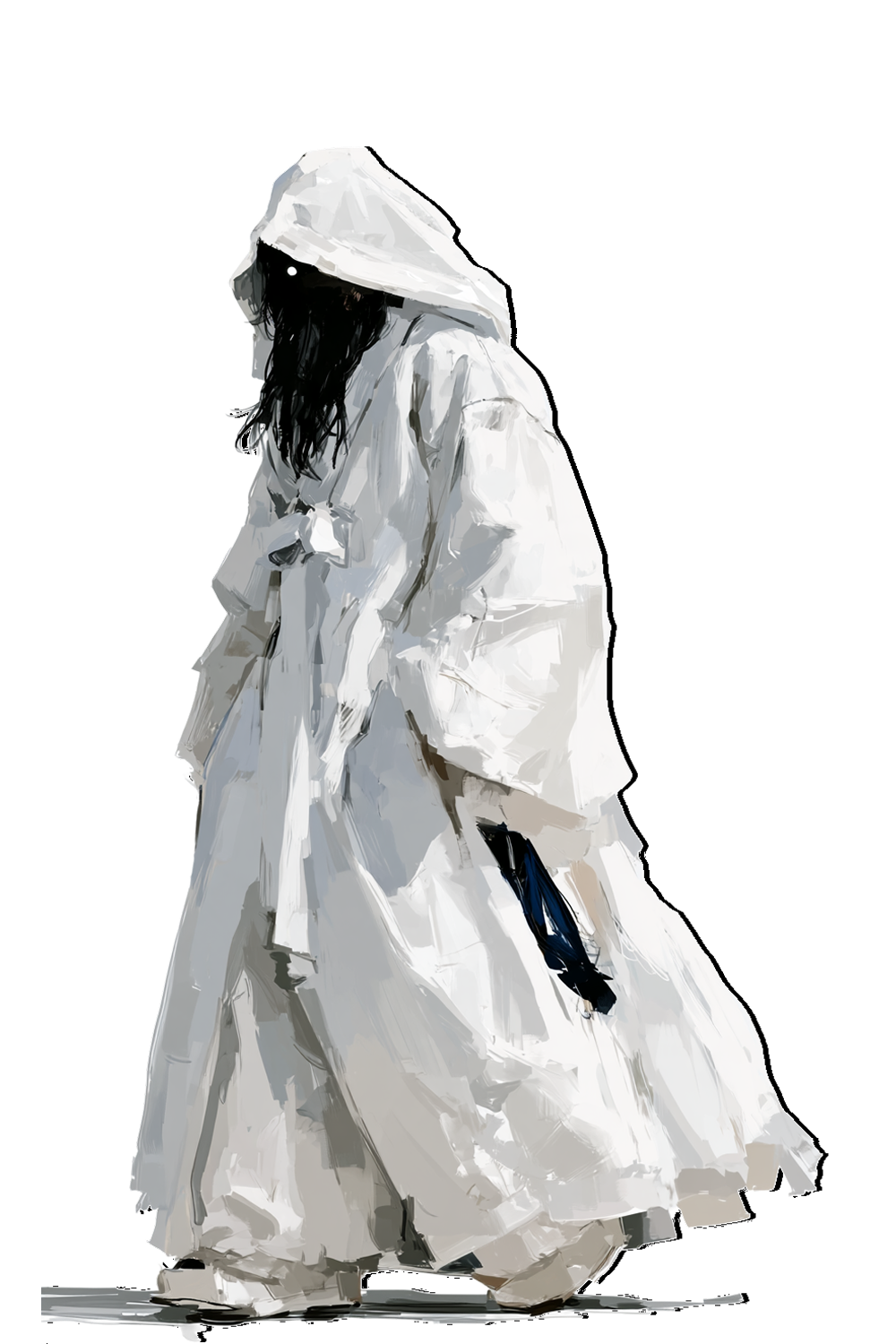
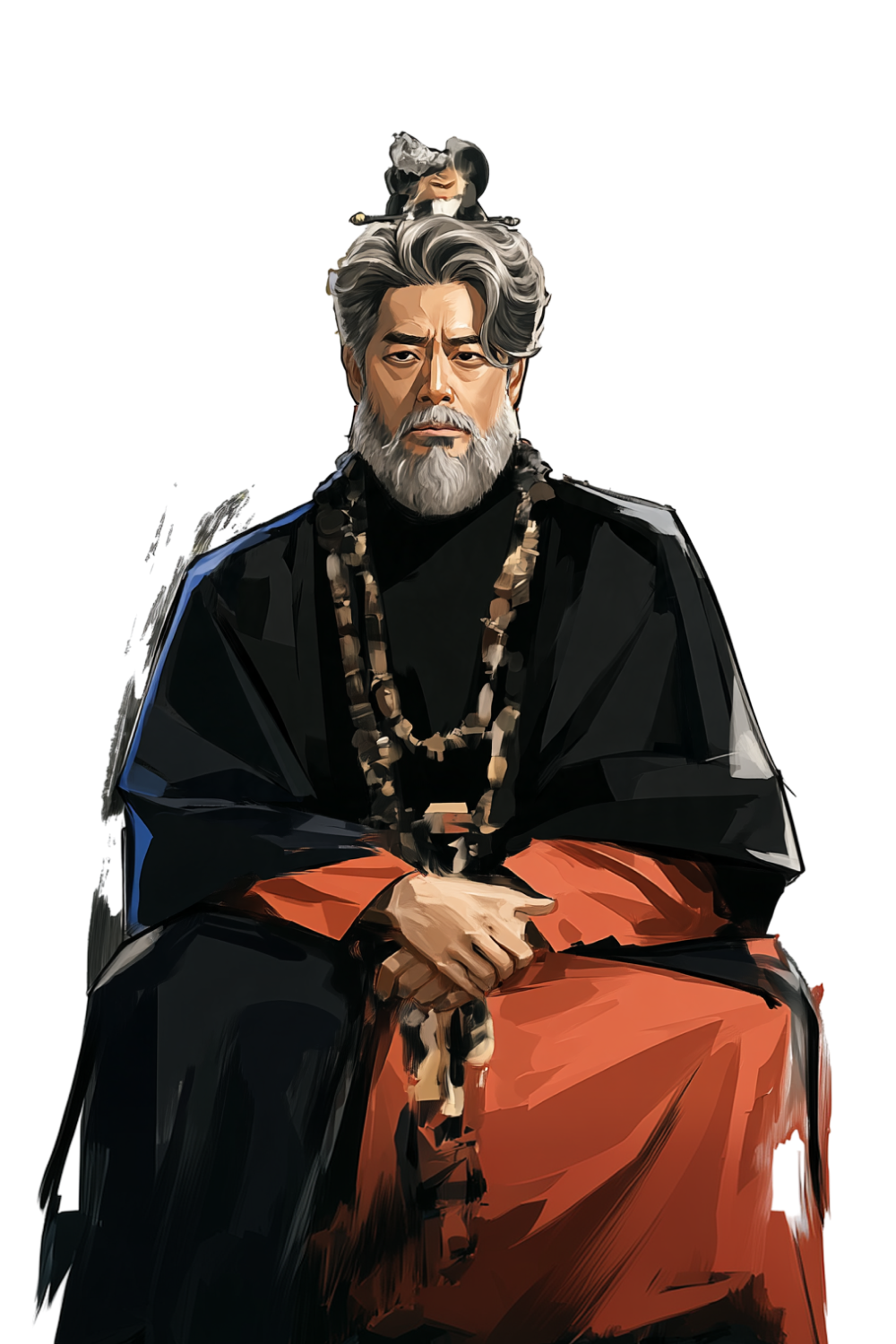 大王
They do not leave the waste as they found it.
and split into ten hells. One court for each of the ten peoples above.
They walk the quiet souls. The ones who stayed. The ones who told the truth late. Worthy enough for a seat.
Ten of them take a court. The Ten Kings. takes the fifth, the one that mirrors .
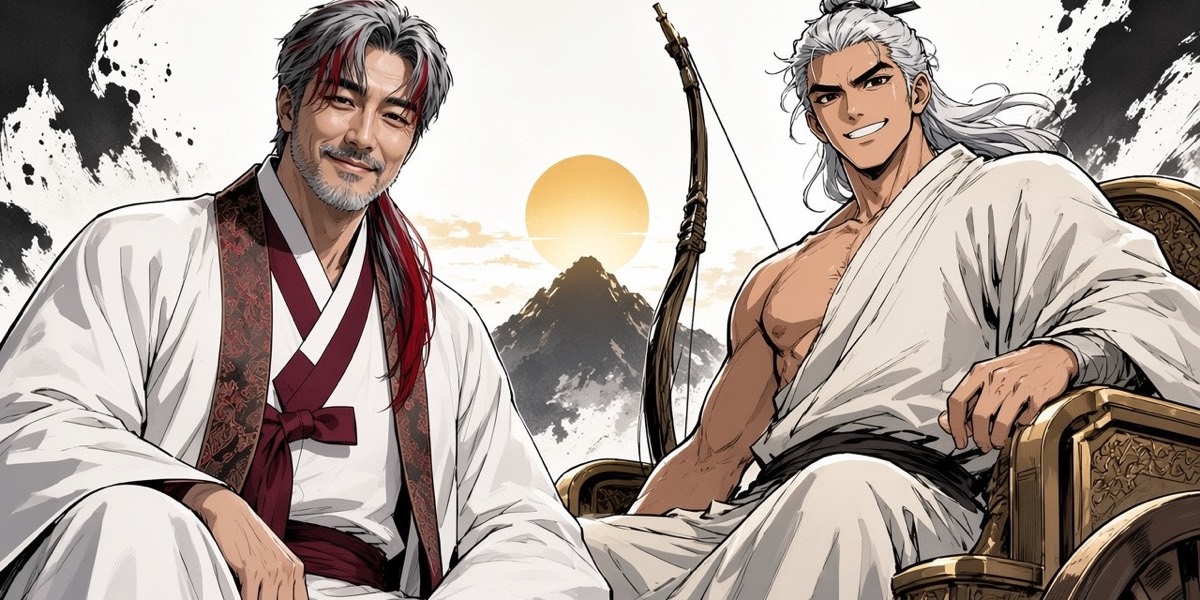
Two brothers. Two suns. A warm hill cut into ten, and a dark road cut into ten. Nobody waves.
Up there, is still arguing with a pine.
It goes the way his brother said, and worse, because had never thought about the parts he didn’t want. The trees still talk. So do the birds, the cattle and the stones, mostly about him. When a mother calls her son’s name at dusk a ghost answers too. He still cannot tell who is who.
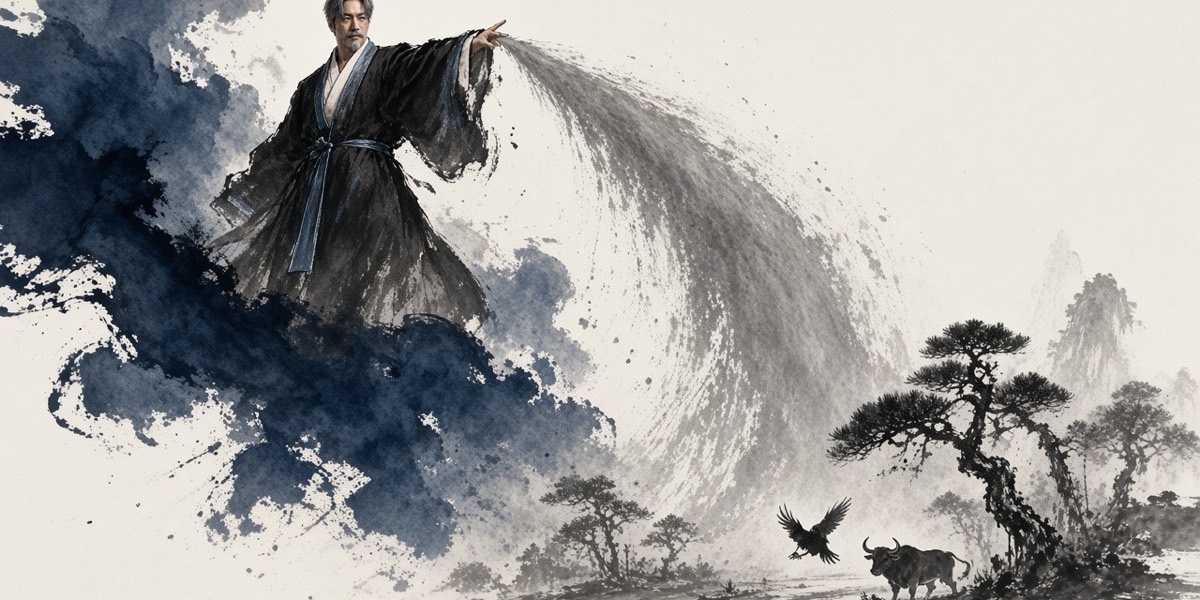
comes up. He scatters five measures of pine-bark powder over the world, and the trees and the birds and the cattle go quiet and have stayed quiet since. Then he hangs a scale from the sky.
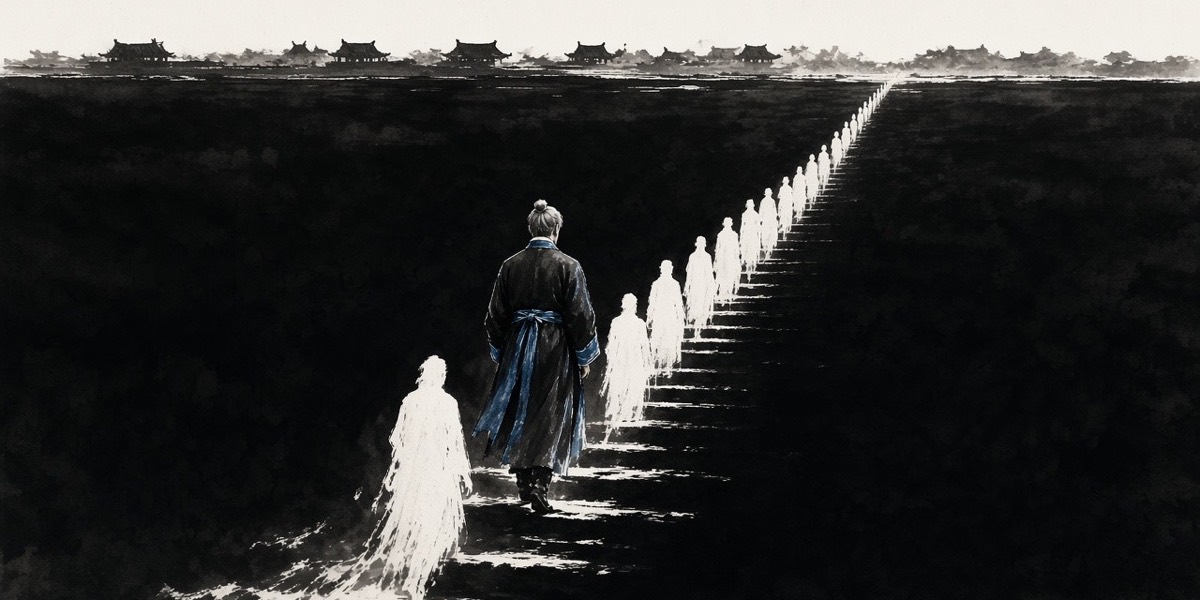
He goes back down with the light ones following him in a long quiet line. Since then the dead weigh less than the living, the law below runs clear, and the law up here belongs to . Under , judges, and the Ten Kings keep the minutes.
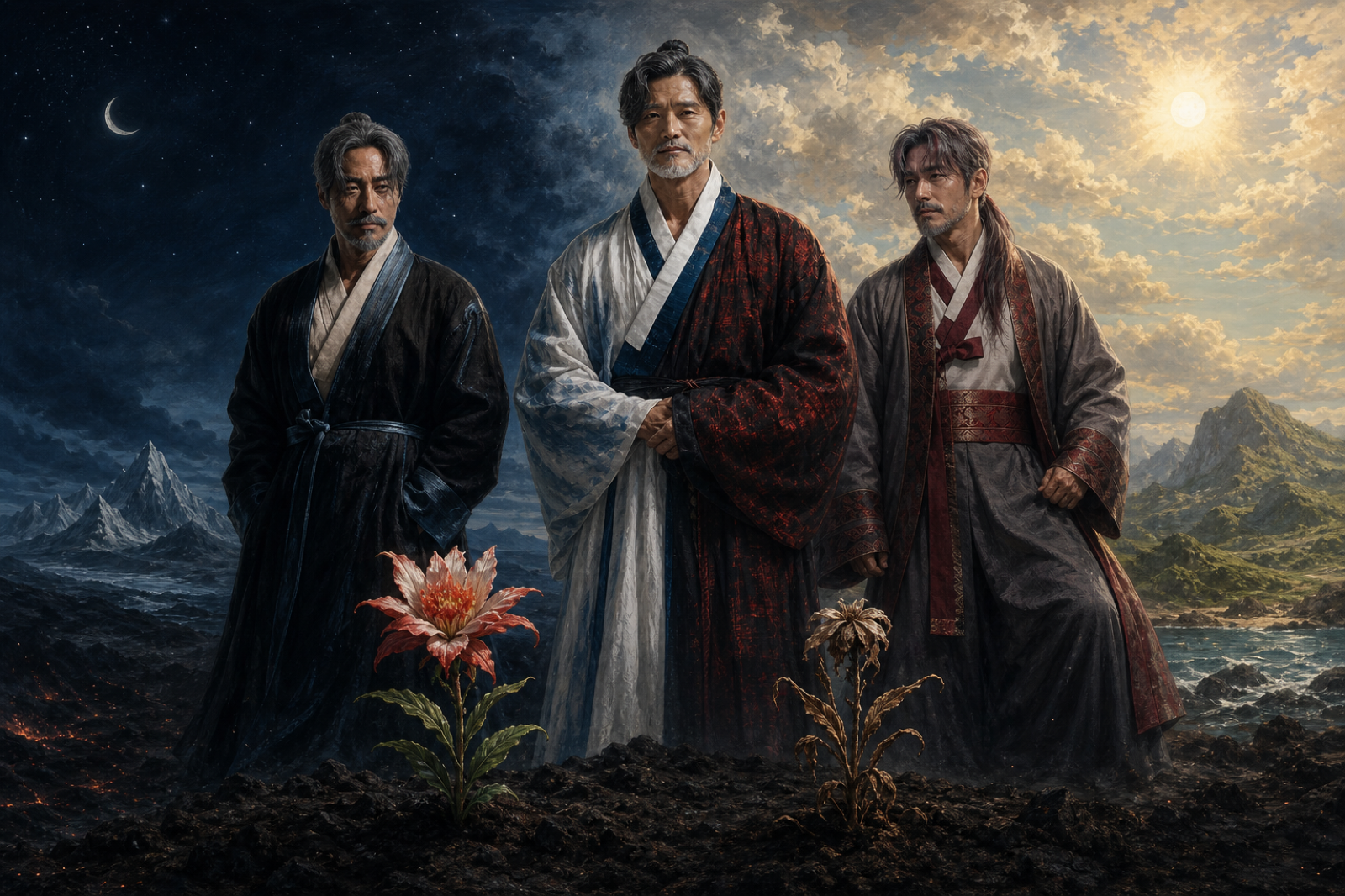
So the house was divided, and it has stayed divided. Downstairs, the dead, and a judge with honest measures. Upstairs, the living, and a king who got there with a stolen flower. Out at the far western end there is a flower field. That is a story for another night.
Above all of it sits the oldest lord of the sky. He will tell you he never interferes. He says it with a straight face. He has had a great deal of practice.
As for , she kept the rice on, the way she said she would. Nobody in this story remembers to go back down and tell her how it went. Somebody should have.
Morning. has him hauling stones before he can ask what for.
The stone here is black lava, full of holes. The island stacks it into low walls around every field, loosely, so the wind can get through. Build one tight and the wind knocks it flat.
He sets the stone. It rocks. He lifts it off, turns it, and sets it again, and this time it sits.
The seat of birth is still empty. Two women want it…!
