







Chapter 48
Jeon
AI Summary
- DAY 6 Night rain.
- DAY 7 Seven days in, nobody pours.
- Not a Kim
- He Washes This is how he washes when the hill is not watching.
- The Cellar While Bidam is still in the eastern hills, twenty of the queen’s men take Yumjong on the road below.
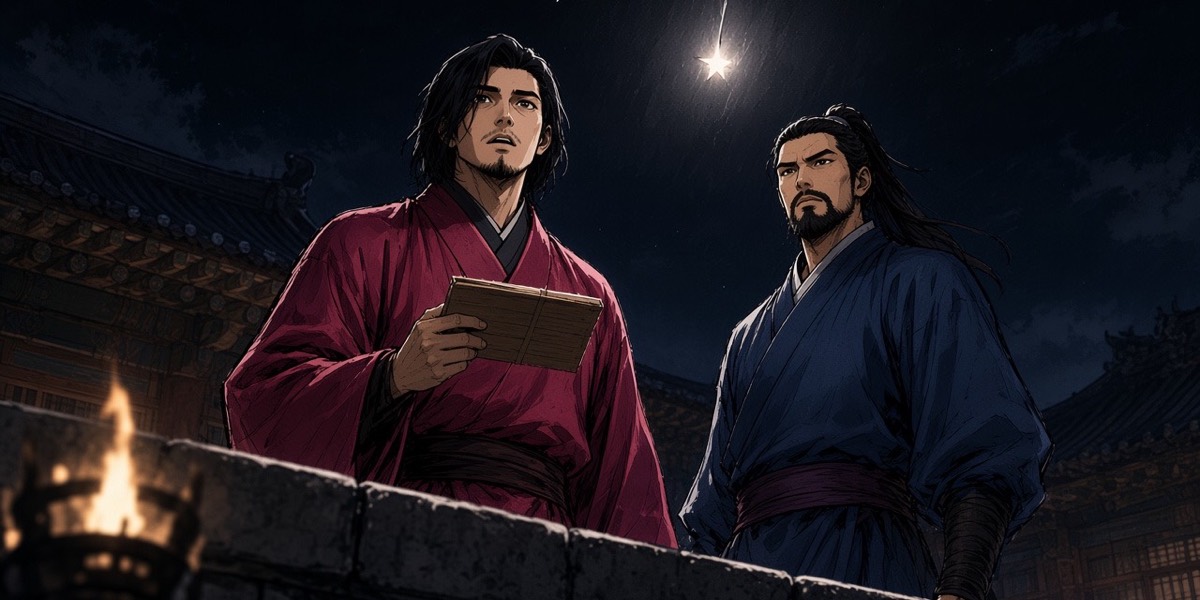
- DAY 8 On the eighth night the eastern star falls.
- The Moon Palace The rebel shout shakes the ground.
- The Stables The kite buys one night.
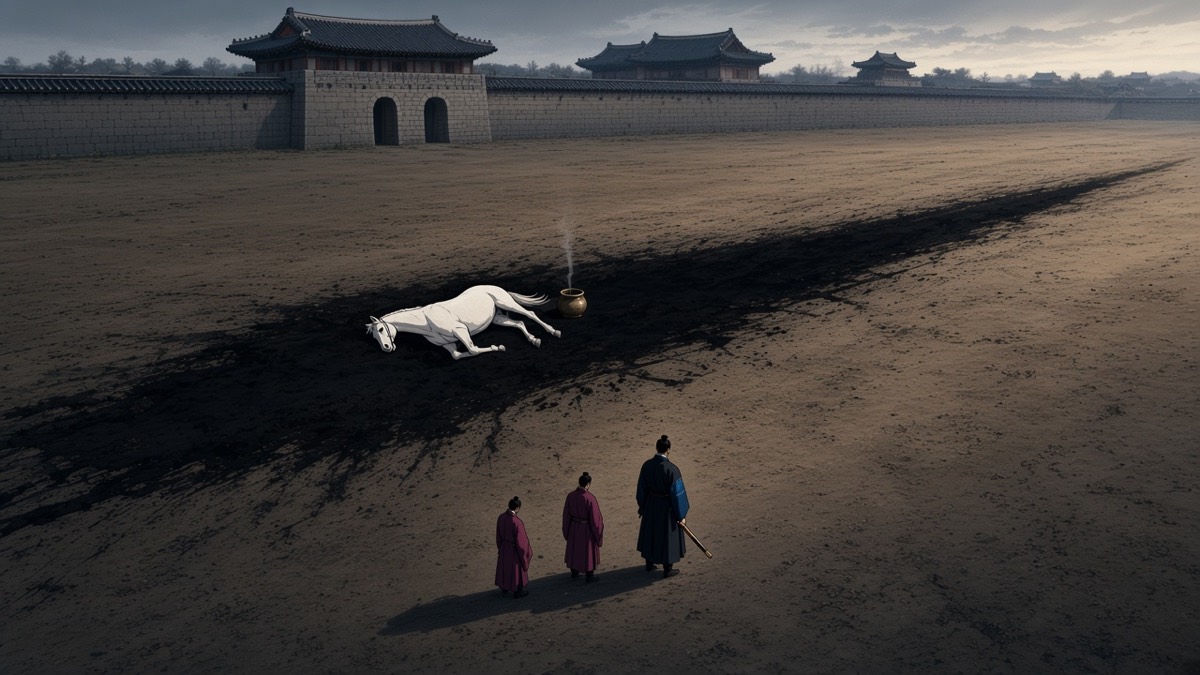
- The Scorched Ground The star came down past the Western wall of the Moon Palace, where the ground is still scorched in a long smear.
- Three Days of Rice Near midnight Chunchu comes to Yushin’s desk to say there are three days of rice left and not to tell the kitchen.
- Father's Bed The house is full of physicians who have stopped pretending.
- Outer Ditch Yushin rides back before light, because the gate is still a gate.
- Characters
Episode· 647
Jeon
The sixth night’s tea turns to insult, the cavern throws Bidam out, a white horse burns for a falling star, and Yushin leaves the gate for one night to sit by his father.
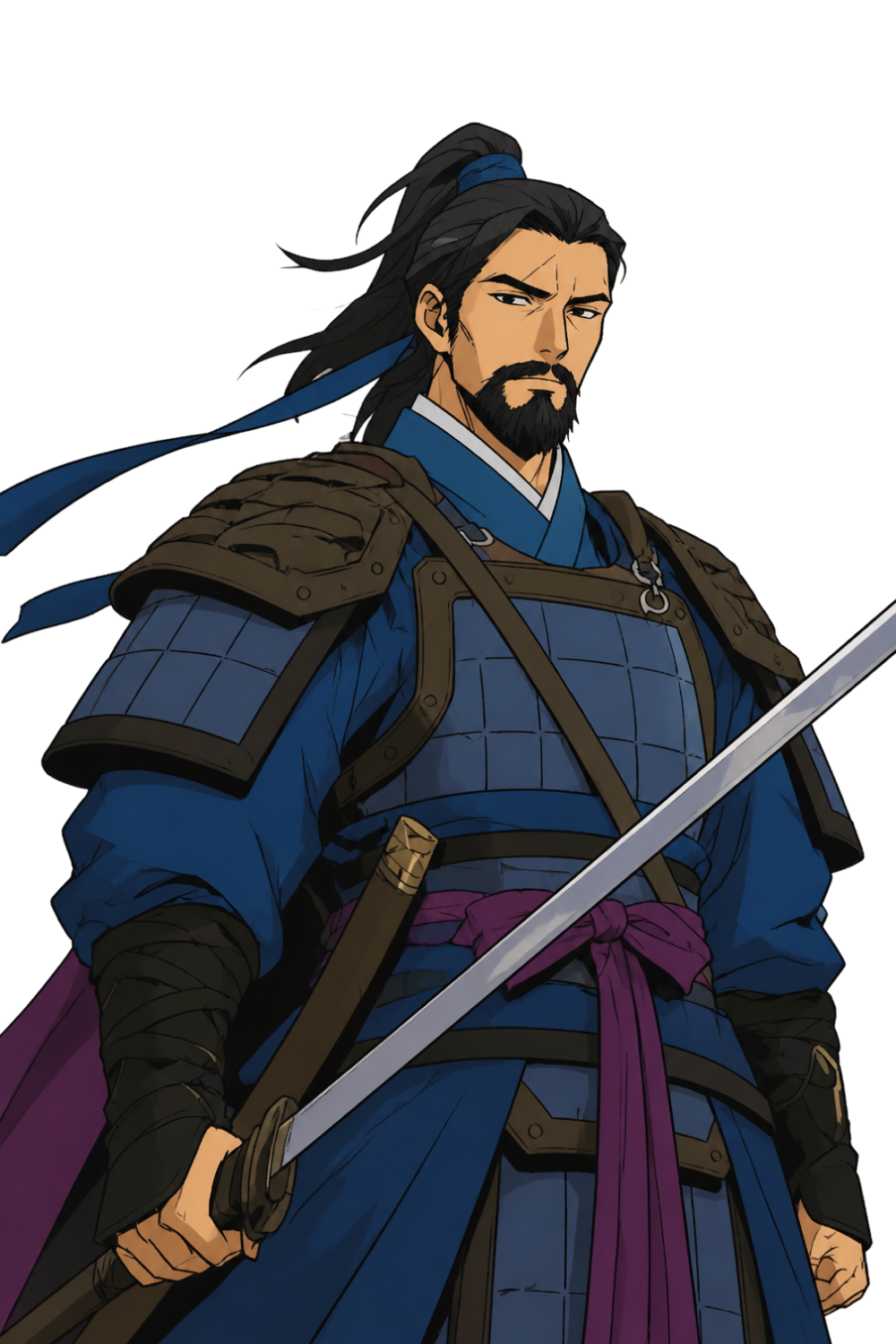
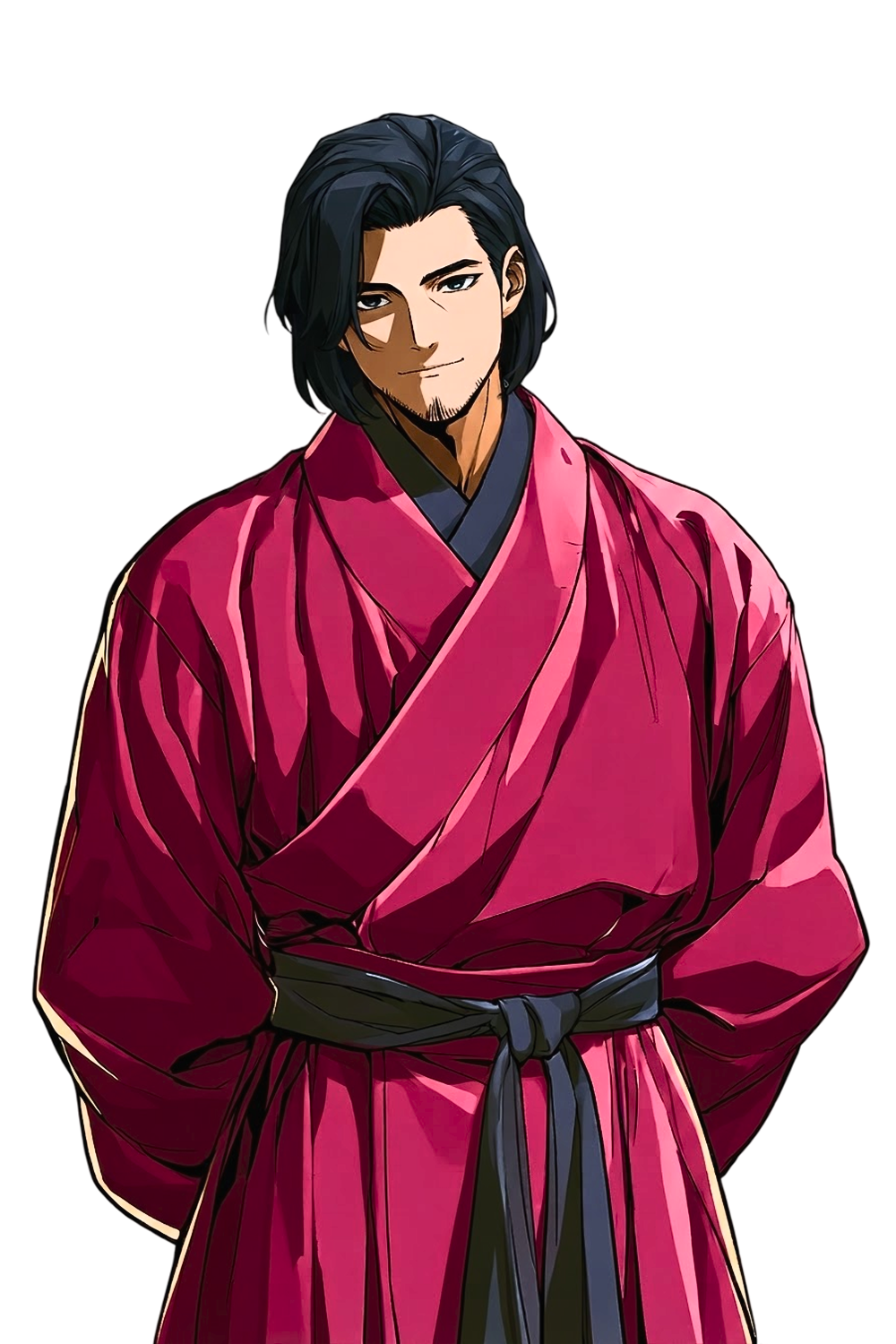
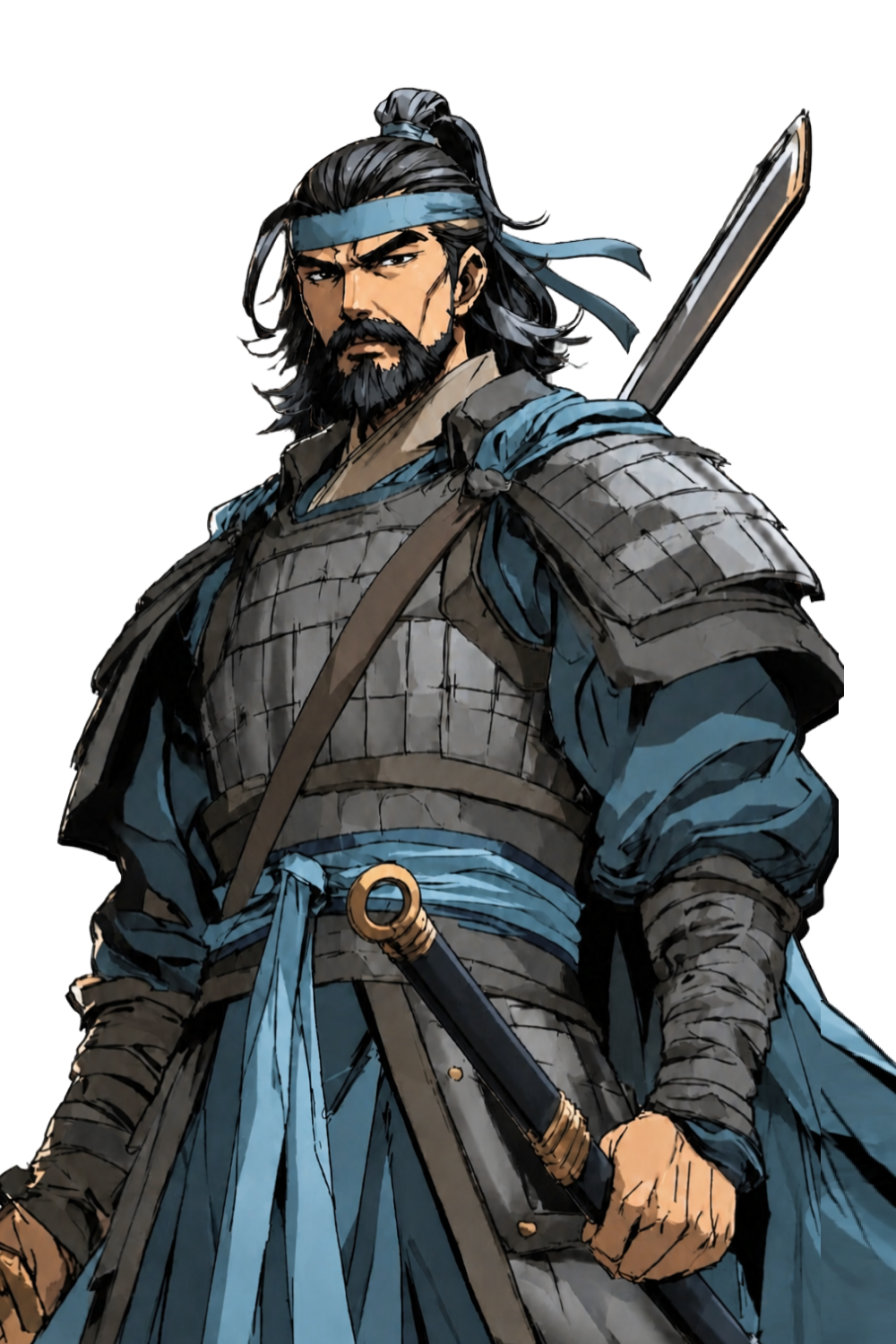
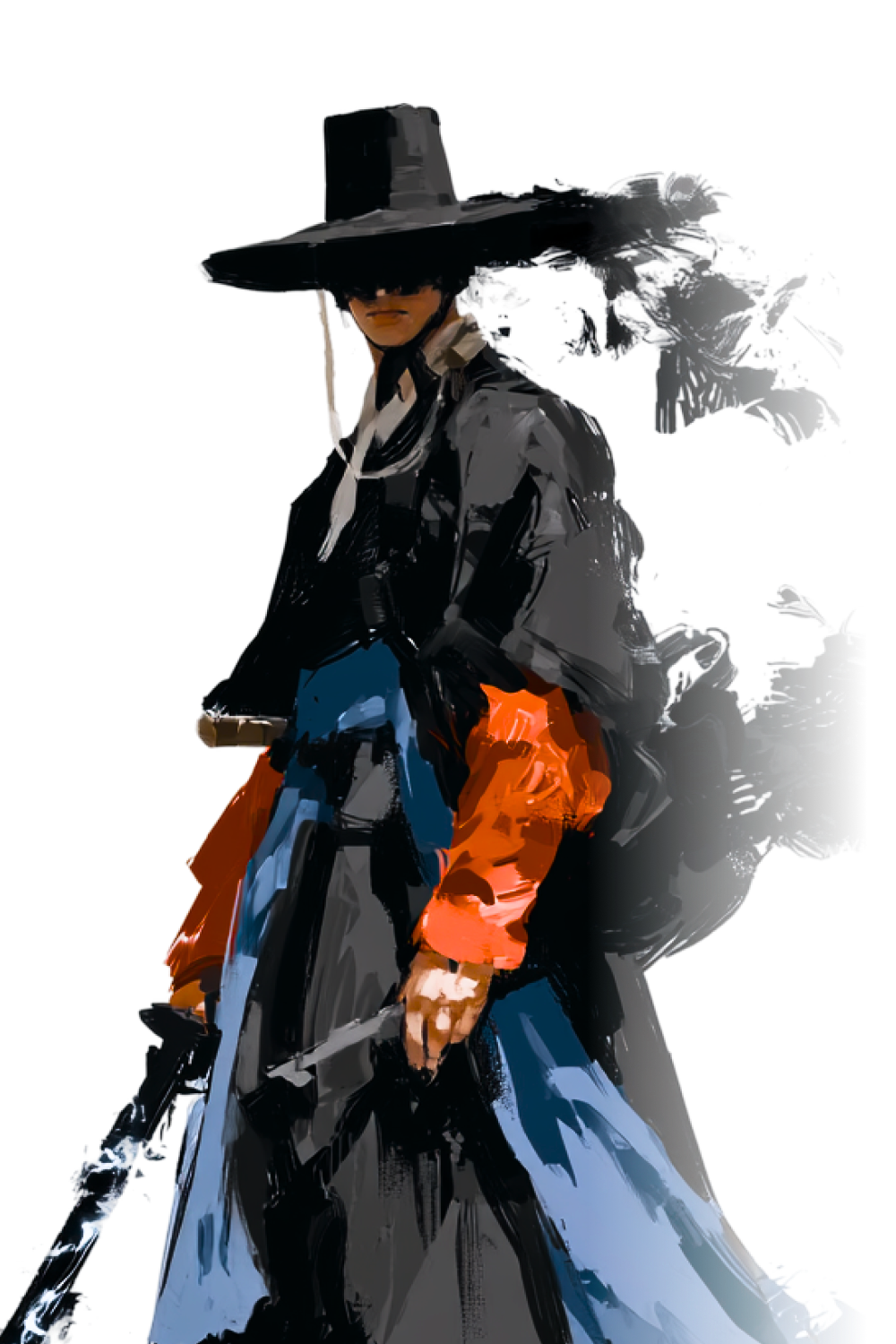
- Kim Yushin
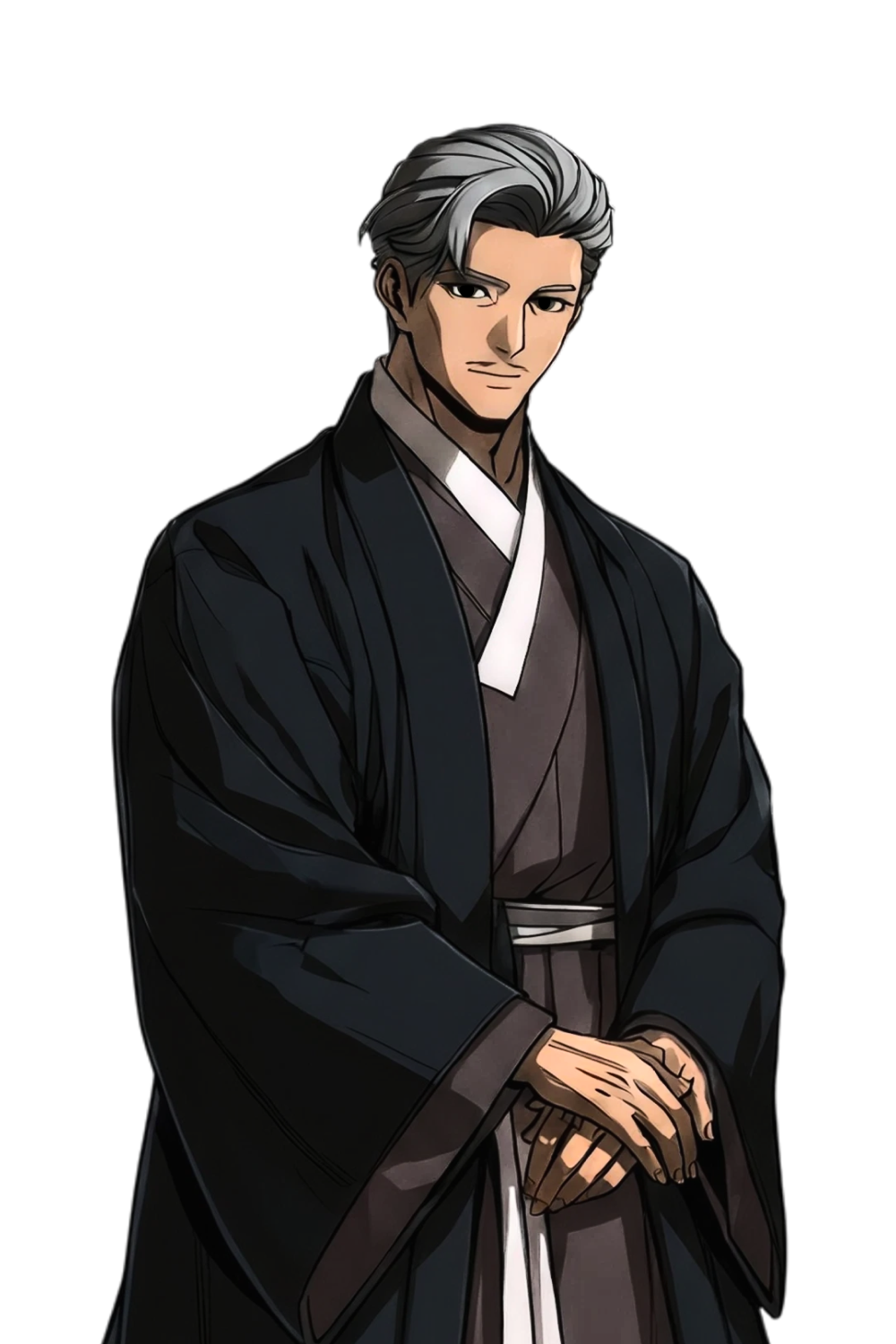
- Bidam
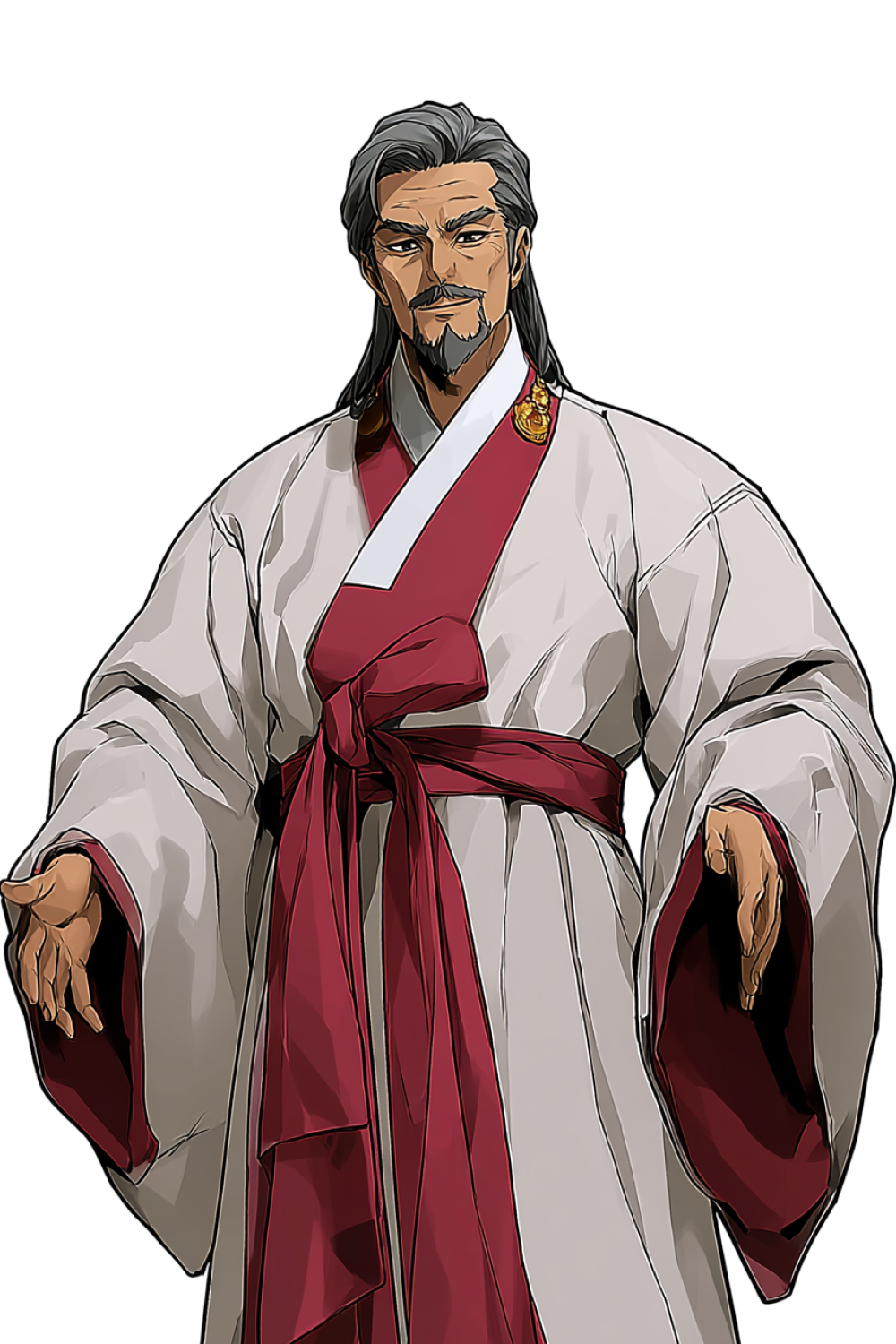
- Yumjong
- Kim Chunchu
- Kim Seohyun
- Kangrim
- Chungwan
- Queen Sunduk
- Golhwa
1 still without a cue
Night rain. Five days of grain behind the palace gate. ’s officers want a dawn assault. wants the score finished properly. He wants to come out again.
Sixth night. does not come to the pavilion. sends tea anyway — two cups poured, one left steaming.
Near midnight comes to the pavilion after all. He does not touch the cup.
Seven days in, nobody pours. Four days of grain. Last night’s two cups are still on the pavilion table, and one of them was never touched.
This is how he washes when the hill is not watching.
Shirt off. Beads. The river. He wades to the ribs and recites until the count is honest. One hundred and eight. The takes the heat out of a man if you let it. He lets it.
Nobody is on the bank. That is the point. A body built for a black robe, wet to the waist, mouth still shaping the sutra. He will try the same wash in a cave that does not want him. Not yet. Tonight the river wants him, and that is enough.
isn’t looking for it. He is riding the eastern hills alone at night to count ’s fires from behind, and his horse goes lame on a path nobody uses. He walks. The path gets warm under his boots. Then the rock breathes, and there is a cave mouth with steam coming out of it like a temple at New Year. Sword on the lip. Beads in the fist. Six nights in armour; a hot spring is a hot spring, and no sutra forbids a wash.
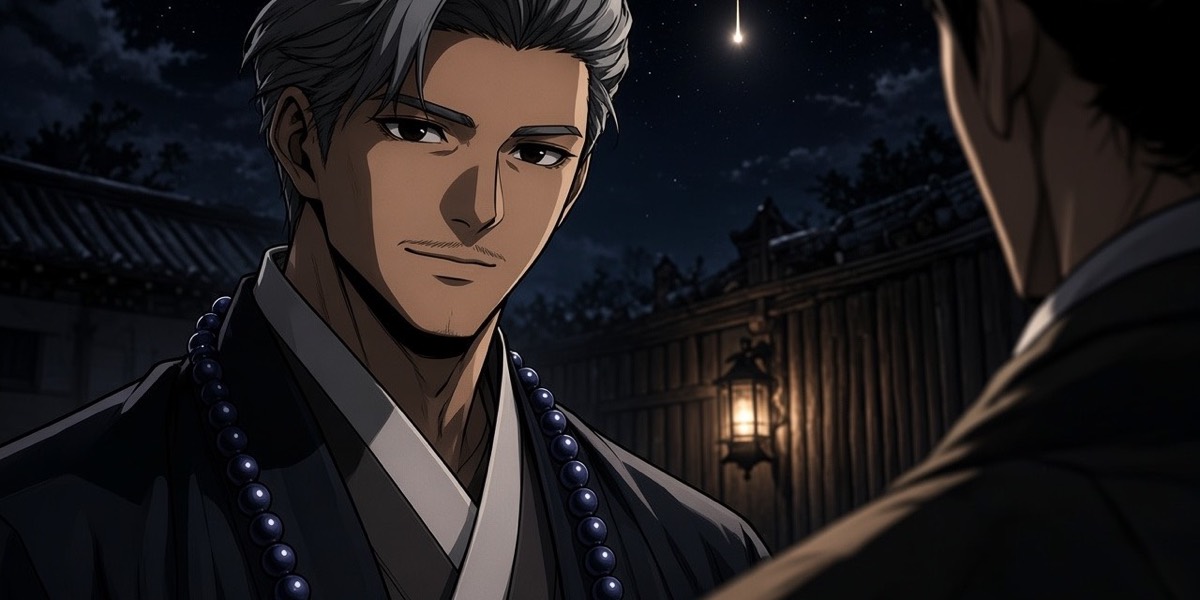
He walks into the steam with nothing on but water and one hundred and eight beads.
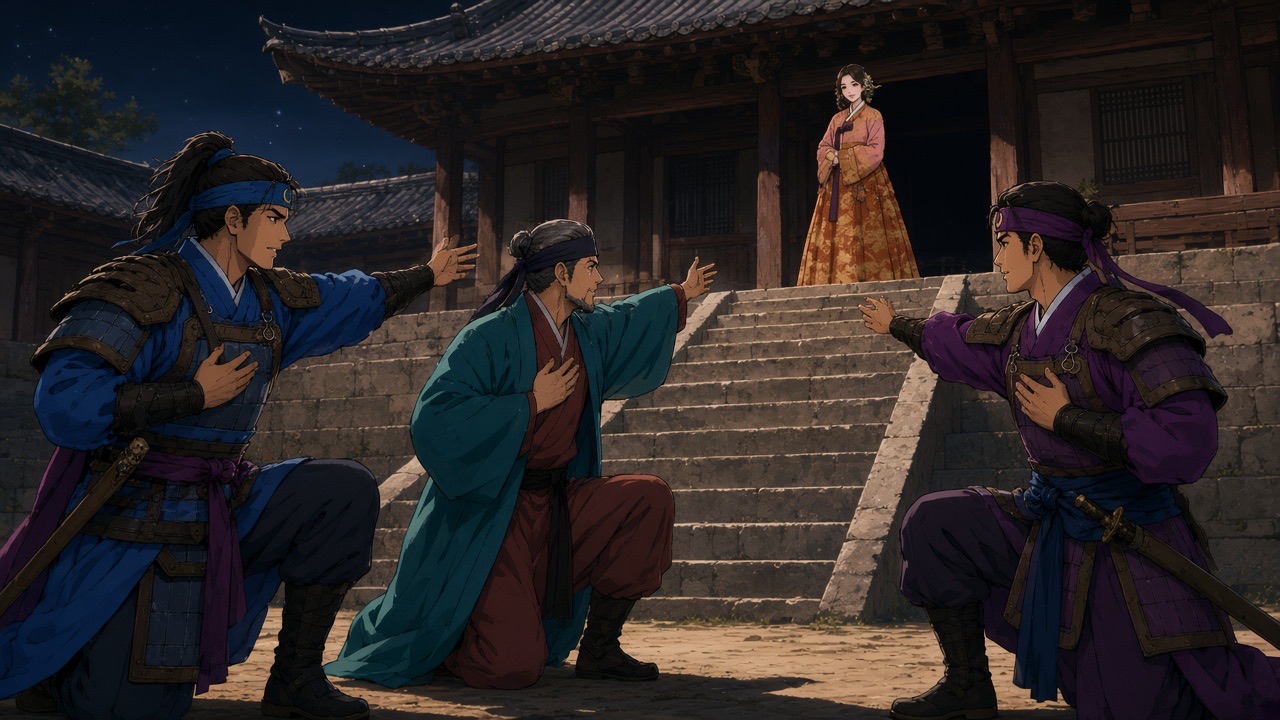
The three sisters are already on the far rock. looks at him the way an eldest looks at a door that opened wrong.
They do not stay women.
goes first — fire unfolding into a tiger the size of the rock, ember pelt, steam off the fangs. ’s silk becomes a water-serpent, long as the bowl, cyan scales. ’s elder-shape thickens into a moss-bear, leaves in the fur, the hill’s weight on four feet.
He recoils. The beads jump. The sword is a hard black line he cannot lift in time.
They kick him toward the light — tiger-shoulder, serpent-coil, bear-shove. Three beasts, one refusal. The night has him again. The lake keeps Kims. It does not keep slogans.
While is still in the eastern hills, twenty of ’s men take on the road below. He has a tally stick and no sword. They bring him to a cellar that used to keep radishes. is already there. He has not brought .
pours his own cup. There is no second cup.
nods at the guard the way a man nods at a clerk. The guard does what he was brought to do. Once. makes a sound he will be ashamed of later. watches the tea.
He sets the cup down. The guard steps back, because the cup was louder than the order.
They put him on a horse at the east road and turn its head toward Radiance. He is shaking. He does not fall off. At the wall he tells the patrol had him and let him go. He does not say the cellar. He does not say the prince. looks at his face, and decides the night has already had enough truth.
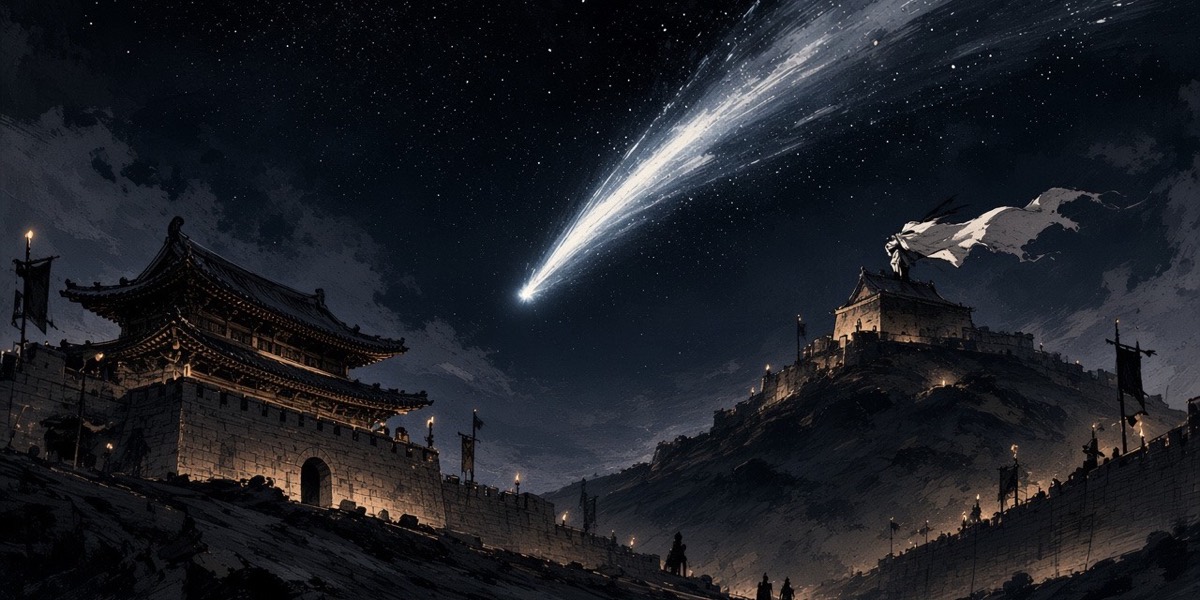
On the eighth night the eastern star falls.
Not a shooting star. Those come and go, and nobody writes them down. This is the big one, low in the east, the one two boys used to argue about on a hill. It comes loose, slides down the sky with a tail like a torn sleeve, and goes out somewhere past the west wall of the . Both camps see it. Both camps stop talking.
On the palace wall, has stopped halfway through a sentence about rice.
Across the field the Radiance wall begins to roar. does not invent the omen. He only names it in a useful direction.
I have heard that where a star falls, blood will surely be shed. This is likely an omen that the woman sovereign will be defeated.
내가 듣건대 별이 떨어지는 곳에는 반드시 피가 나리라. 이는 거의 여주가 패할 징조다.
The rebel shout shakes the ground. Inside the goes pale. asks for leave to speak — and for a kite, a torch, and enough lies to edit heaven.

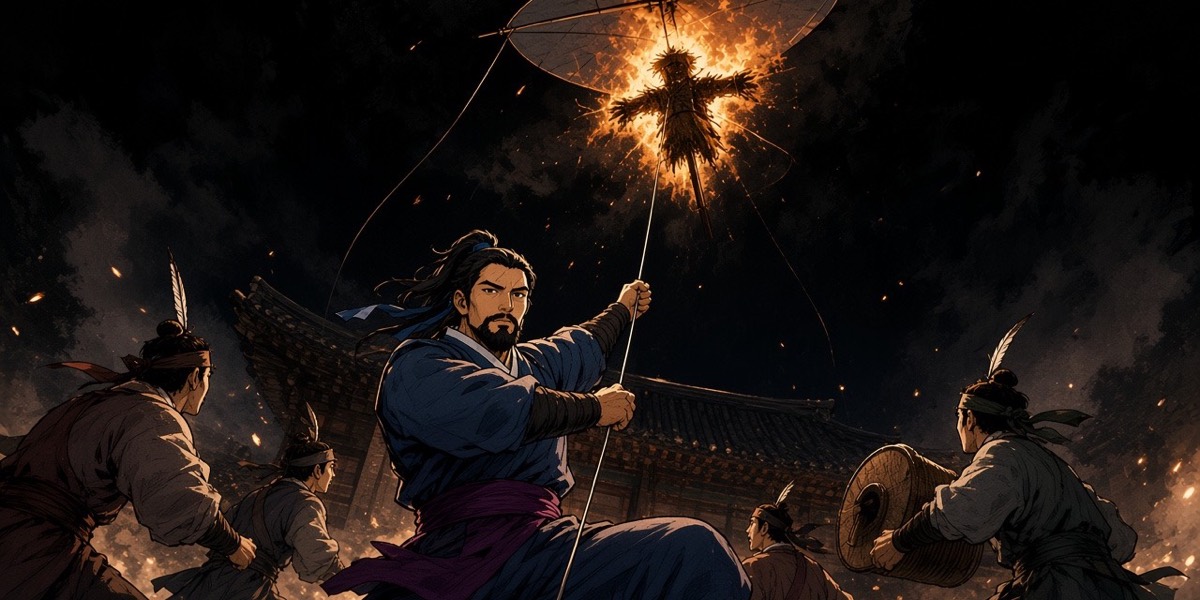
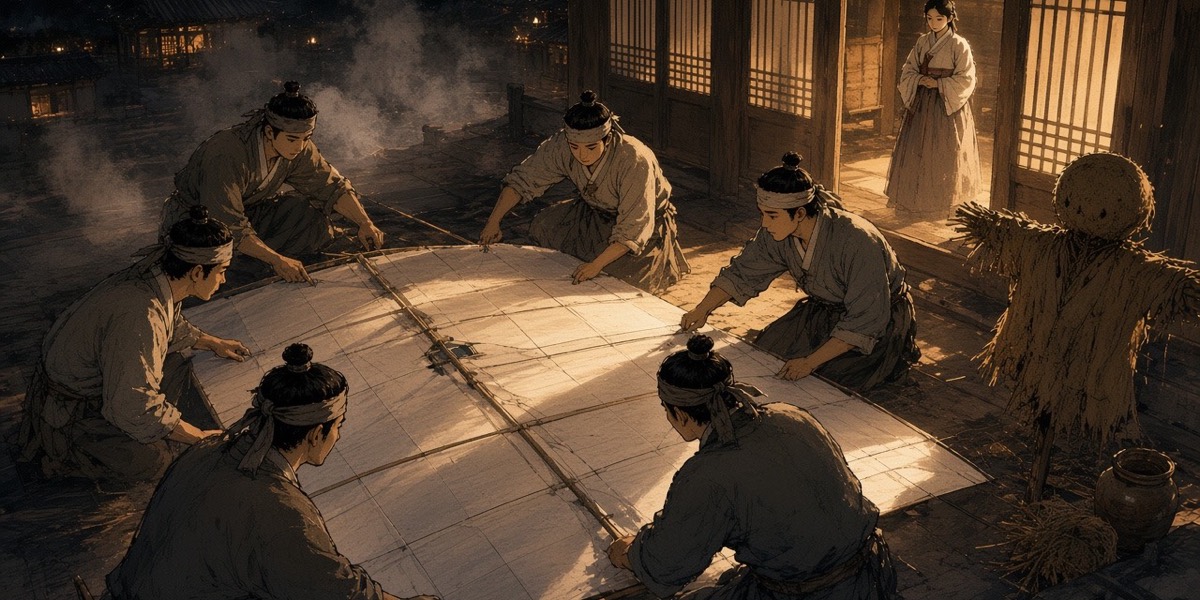
They build it in ’s own yard by torchlight, out of what a palace has: bamboo from the garden, and the oiled paper off the lattice doors of the hall where lies listening. A steward objects. A maid comes out with the answer.
The scarecrow is a guard’s spare coat stuffed with straw and soaked in lamp oil. Somebody paints a face on it. makes them wipe it off.
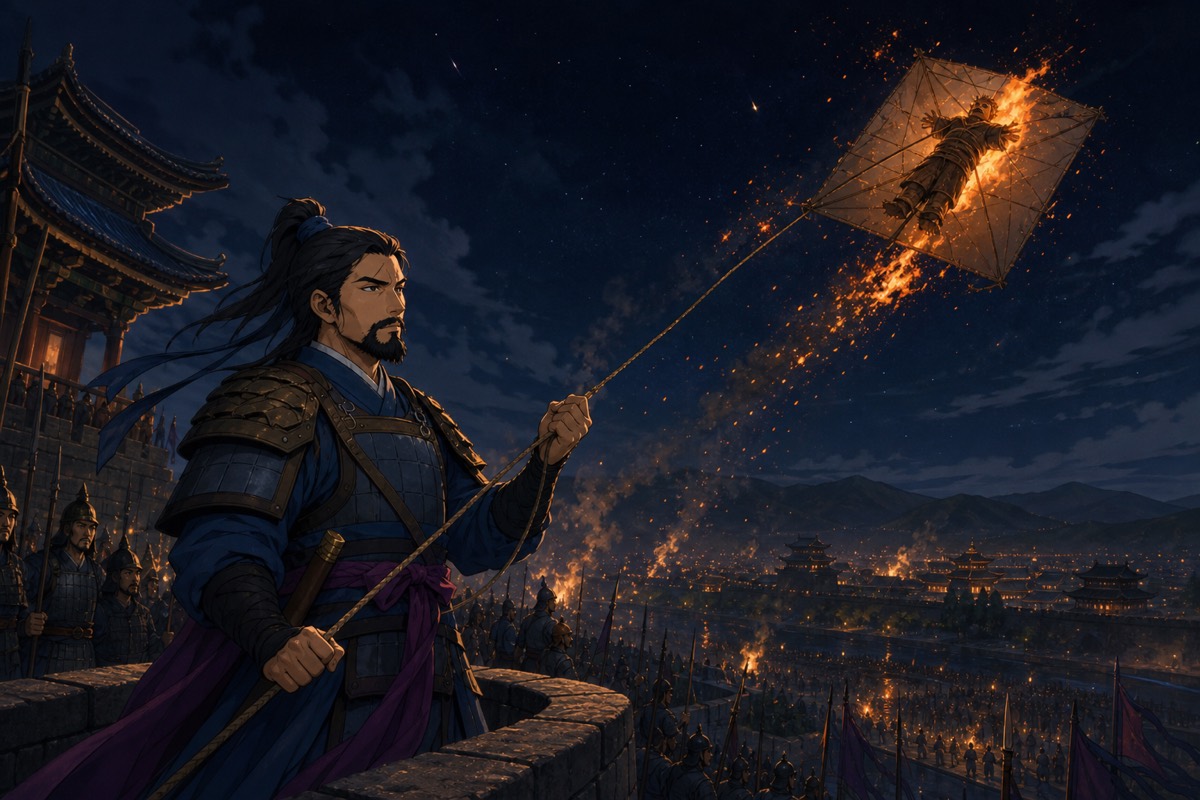
There is a west wind off the hills, the first useful thing heaven has done all week. takes the line himself. Four hold the reel. He lights the scarecrow with his own torch and lets it go.
It climbs. One spool of line runs out, then a second knotted to the first, then the fishing line off every hook in the palace kitchens. The kite goes out of sight. The paper goes, the bamboo goes, the burning coat goes, and what is left is one small hard point of fire, higher than anyone has ever put anything in the sky.
Then it stops. Low in the east. Exactly where the old star used to hang.
Nobody on either wall can say what it is. Both walls decide what it means. For one night the sky is on ’s side, and in a siege one night is a long time.
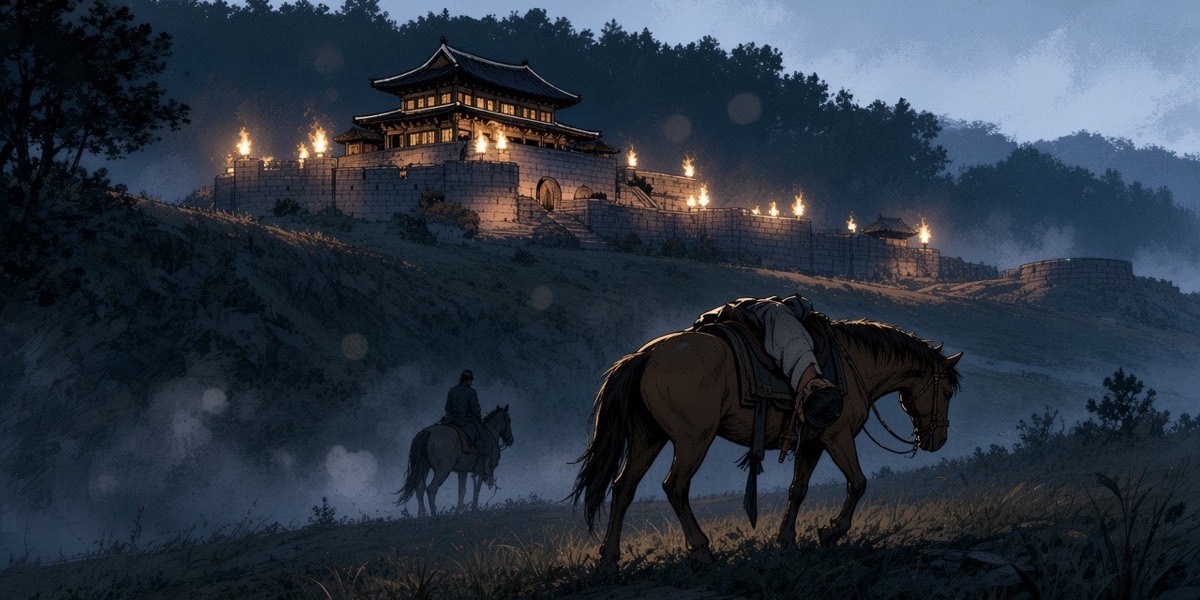
The kite buys one night. A sky can only be argued with for so long, and by midnight both camps are already arguing about what they saw. While the drums are still asleep, goes down to the palace stables alone and leads out the white horse.
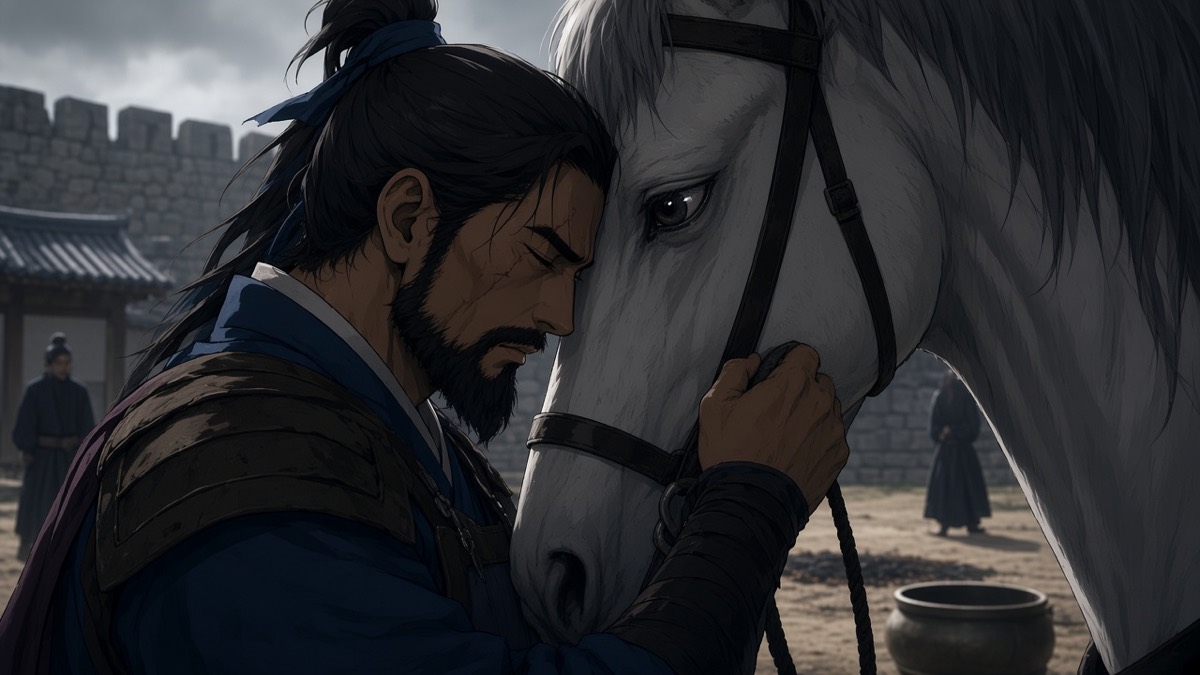
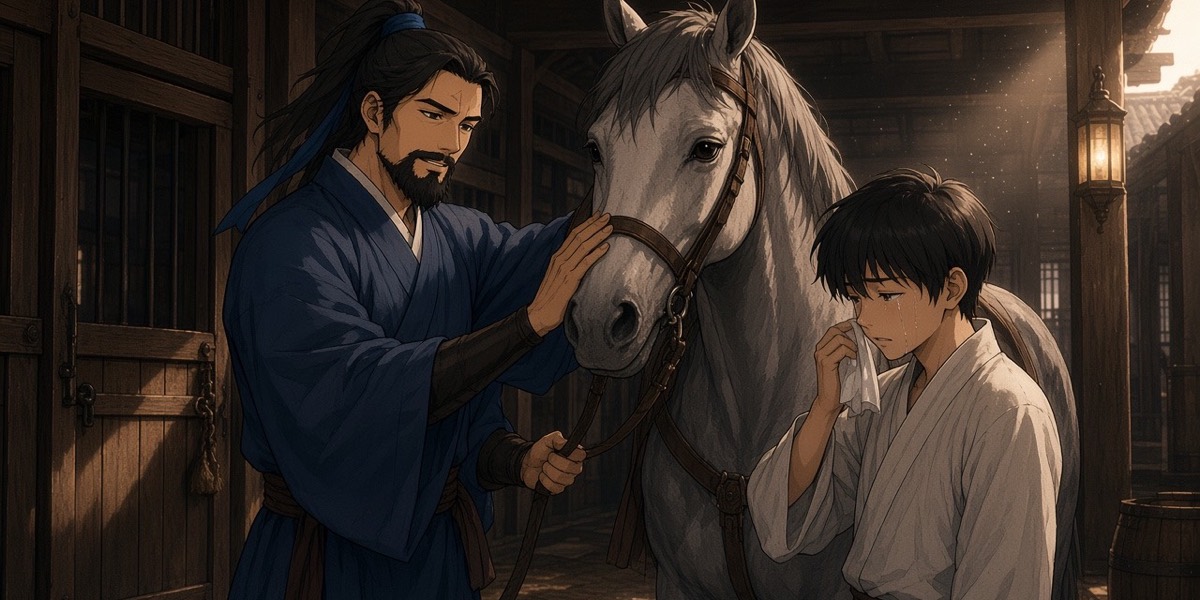
has carried him for eighteen years, since the charge at , to every border sent him to and a few he went to without asking. The groom, a boy of fourteen, works out what the rope in the marshal’s other hand is for before anyone says it, and starts to cry with his mouth shut.
The star came down past the Western wall of the , where the ground is still scorched in a long smear. walks there himself. is already waiting with two priests, a bronze basin, and a face that has decided not to argue.
He takes the halter off with his own hands. , who has been led to a great many strange places at night, puts his nose into ’s chest and waits for the reason, as he always has.
He does it the way the rite asks and faster than the rite asks, so the horse never quite finishes turning his head. White goes down into the scorched black. The priests begin the prayer, and , who has never once let another man finish a sentence for him, lets them.
He slaughtered a white horse and offered it at the place where the star had fallen, and prayed: “In the way of , yang is firm and yin is yielding; in the way of men, the sovereign is honoured and the subject humble. Should this ever be reversed, there is great disorder.”
흰 말을 잡아 별이 떨어진 곳에 제사 지내고 빌었다. “하늘의 도는 양이 굳세고 음이 부드러우며, 사람의 도는 임금이 높고 신하가 낮습니다. 만일 이를 바꾸면 곧 큰 난리가 됩니다.”
Across the field, on the Radiance wall, watches the smoke of the offering go up and asks an officer what was burned. When he is told, he puts his beads away for the first time in eight days and goes down to the lines to stand beside his own horse, , for a while, saying nothing to anybody.
Afterwards the groom leads out a young grey, too green for a marshal, the only horse left in the royal stable that nobody has been afraid of all week.
The boy shakes his head. He is still crying.
It is the last horse he names. He rides Hansul out on the tenth day, and across the fields thirteen years later, and never once lets a groom catch him brushing it longer than the others.
Near midnight comes to ’s desk to say there are three days of rice left and not to tell the kitchen. A runner from the Kim house has beaten him there by a breath.
stands up. Then he looks at the grain tally, and at the window where the Radiance fires are, and doesn’t move.
gives the gate to his captain in one sentence: shut, and shut it stays. Then he takes the young grey out by the back way. It is Hansul’s first errand, and it is this one.
On the Radiance wall an officer counts the torches leaving the palace. One. Riding south, fast.
doesn’t answer for a while. He has already put his beads away tonight, so his hands have nothing to do.
bows. He goes down off the wall, and he does not take two hundred men. He takes twenty, and the word they like shouting. A road that takes a man home also brings him back.
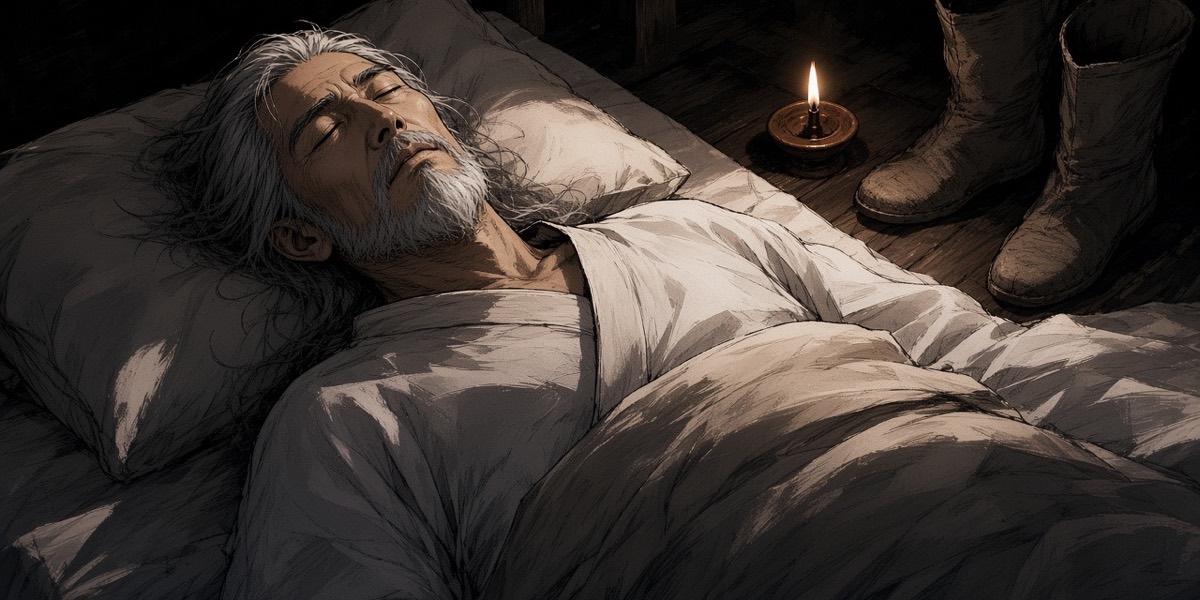
The house is full of physicians who have stopped pretending. lies under two quilts with his riding boots beside the bed. He asked for them, and nobody has had the heart to ask where he thinks he’s going.
Tonight edited heaven with a kite and a lie and never blinked. He finds he can’t tell this man about the white horse.
Somewhere in that sentence his vowels go south. When was seven, this man sat him down and made him say the capital’s vowels until he cried. He never once let his own slip in front of anyone. Tonight they have gone home without asking.
He smiles about that for a while. Then he stops smiling and takes hold of his son’s sleeve, the one with the stone in it, hard enough to hurt.
The rest of it doesn’t come. waits for it with his ear at his father’s mouth for a long time after there is nothing there to wait for.
is already in the doorway with the red ledger open. He reads the name three times — . . . — and makes the small cut.
looks at his son, still bent over the bed with his ear at a mouth that has stopped.

rides back before light, because the gate is still a gate. He hasn’t said a word since the house. Hansul doesn’t know the road yet, and lets him find it. Low in the east his star is still burning, a little smaller now.
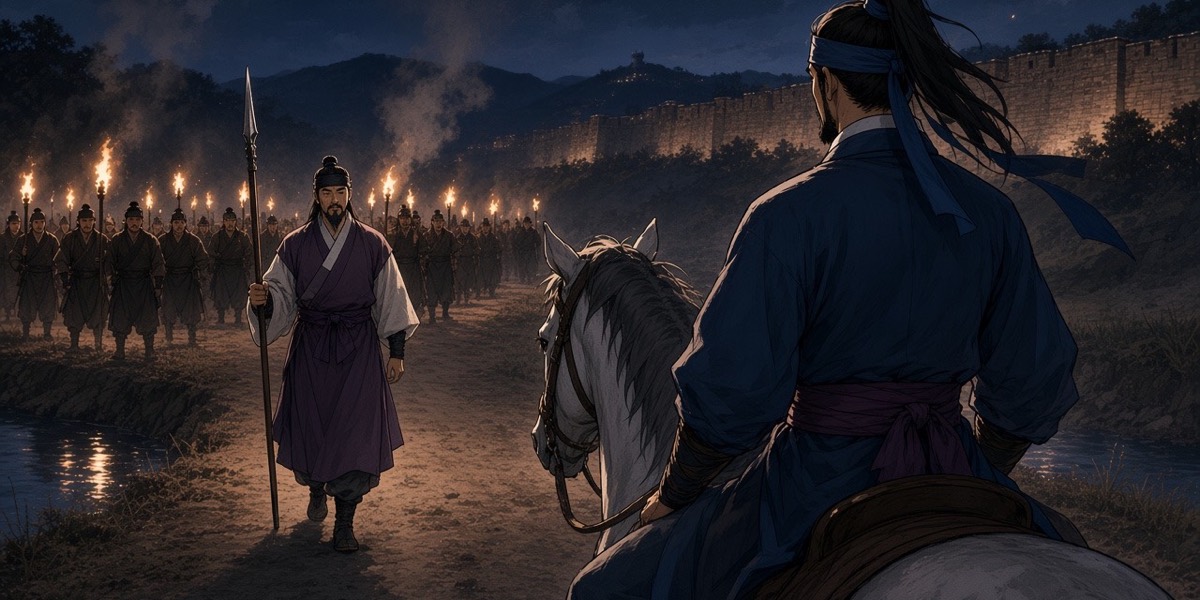
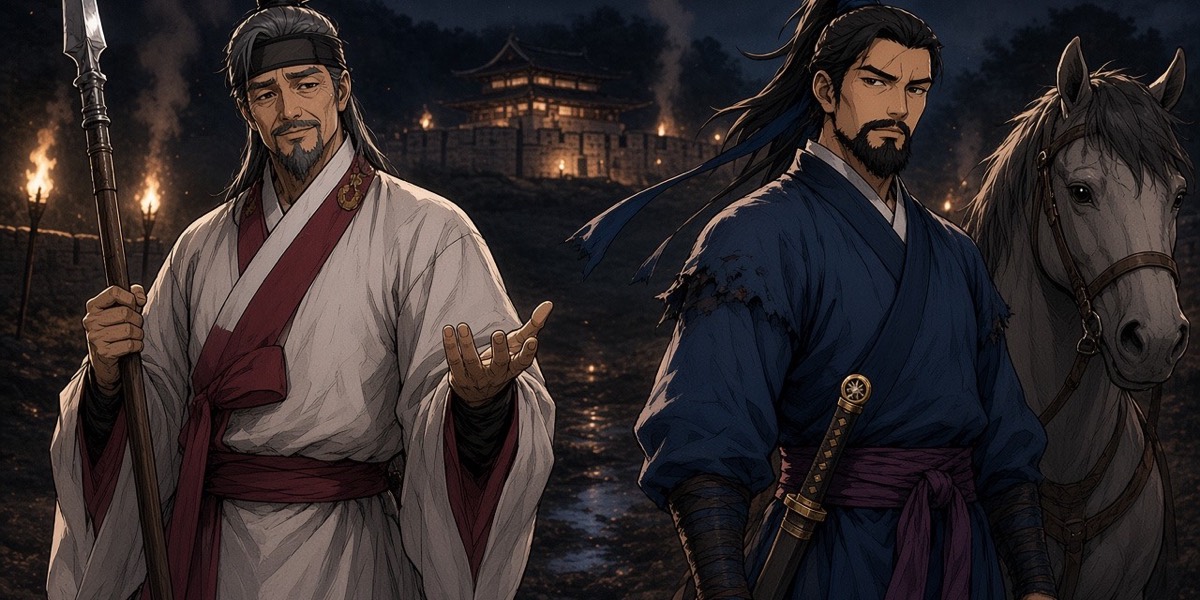
Where the south road crosses the outer ditch, there are torches across it. Twenty black headbands, and in the middle a mild man on foot, leaning on a spear like a walking stick.
gets down. He leaves the rein on the saddle, and the grey stands where it is left, as if it already knows this is not a night for wandering.
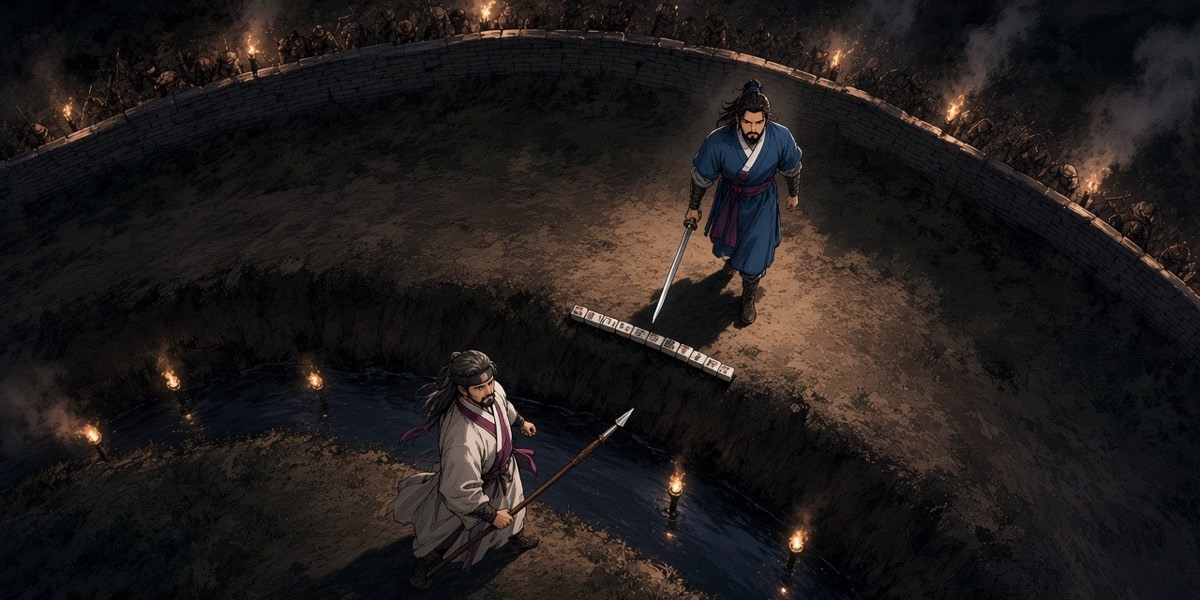
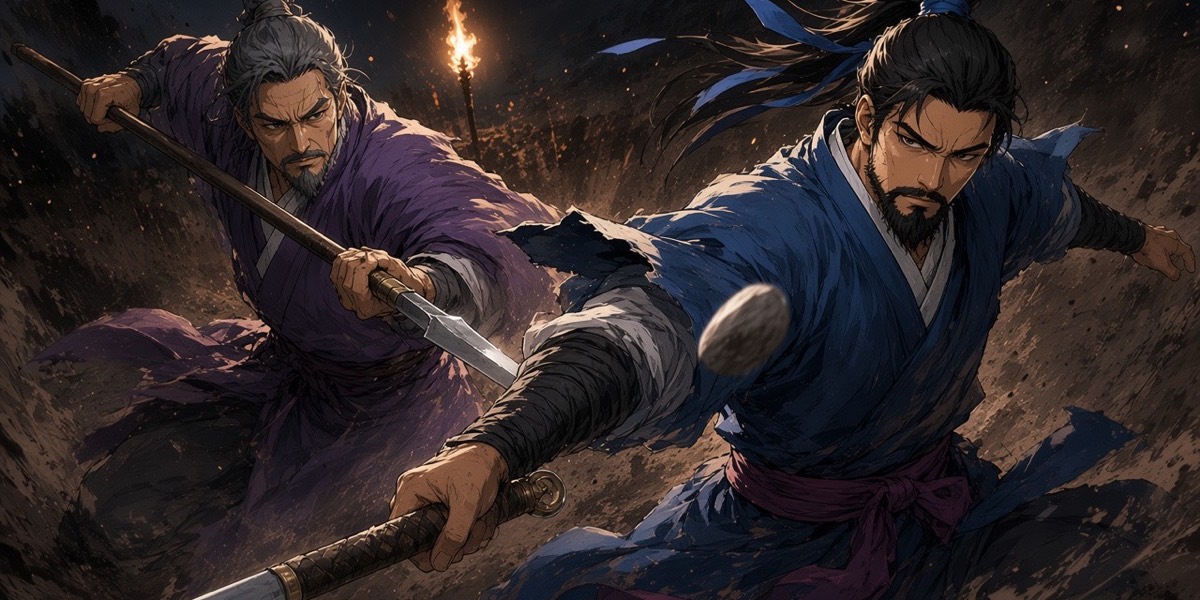
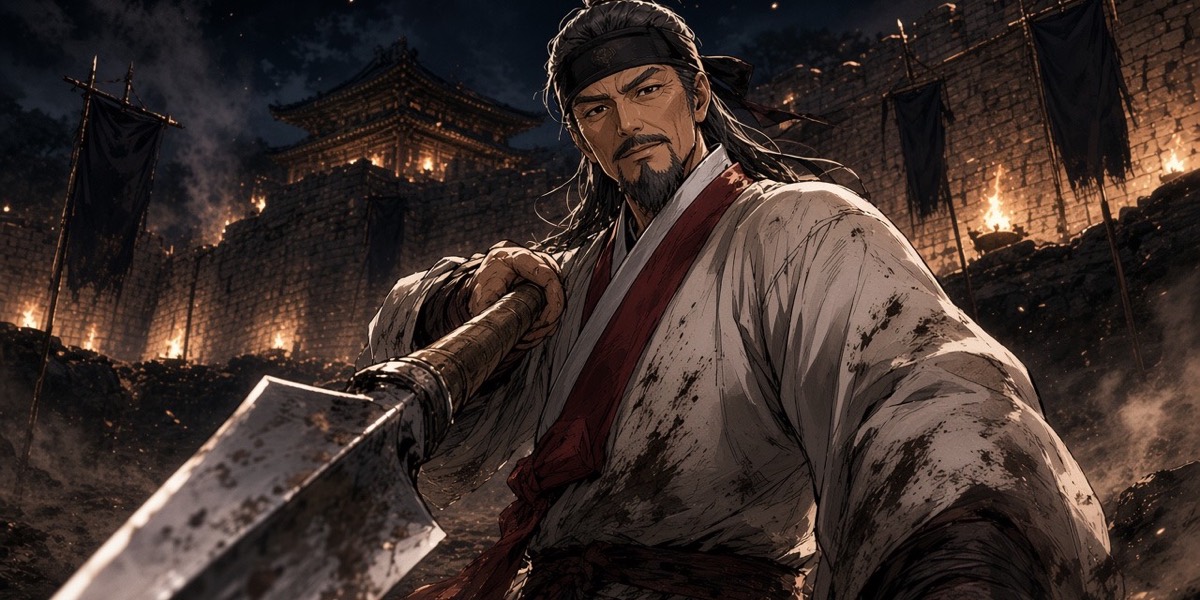
Nobody has ever noticed . It turns out he has spent thirty years of mornings with a spear where nobody was looking. The first thrust is faster than it has any right to be. It opens ’s sleeve from wrist to elbow, and something small and grey drops out of it into the ditch.
doesn’t look down. Something in his face does, and the twenty see it. He comes through them the way the river comes through a weir. Torches go into the ditch and hiss. Black headbands go up the slope. In the time it takes to say it, there are no twenty. There is a mild man with a spear, and the marshal.
is brave for exactly as long as he has twenty men. Then he runs. Along the ditch, in the dark, under the Radiance wall, with the marshal behind him not running but walking, the way you walk after a horse you know will tire. The length of the ditch. Back. Once more. Up on the wall the sentries find their torches and start shouting for the Councillor.
Somewhere in the far west, a blind poet once sang this lap of a wall, with a city and a chariot in it. has never heard of him. He is about to sing it differently.
At the third turn stops. He is a . He has just remembered.
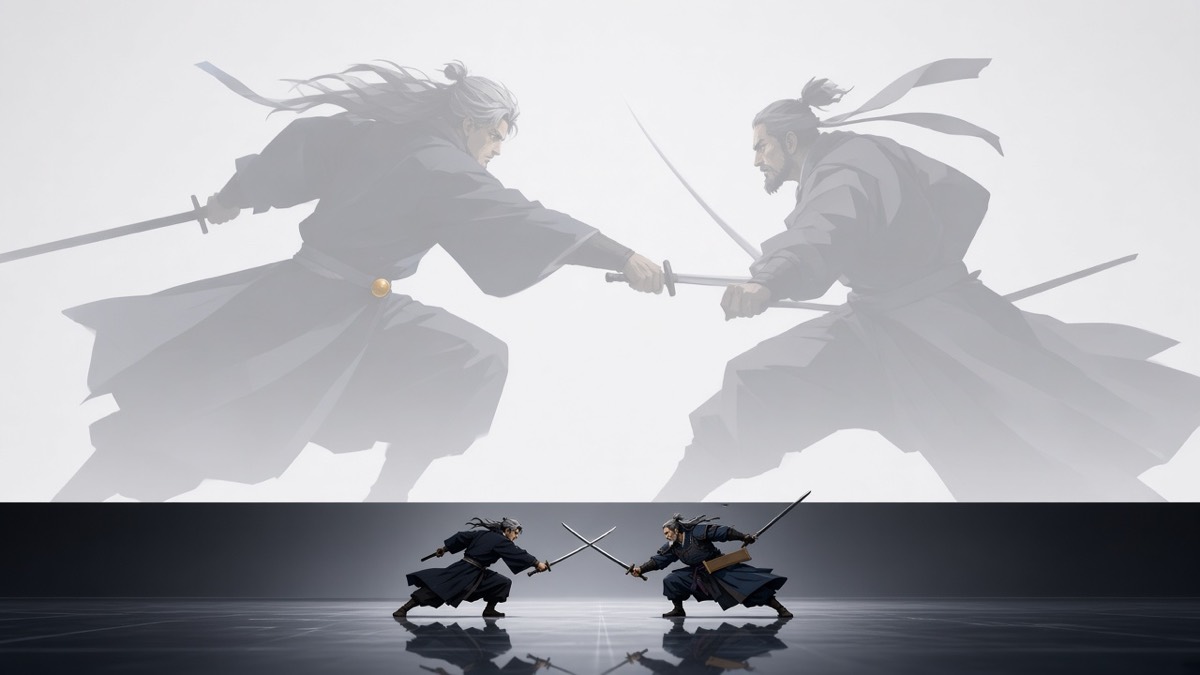
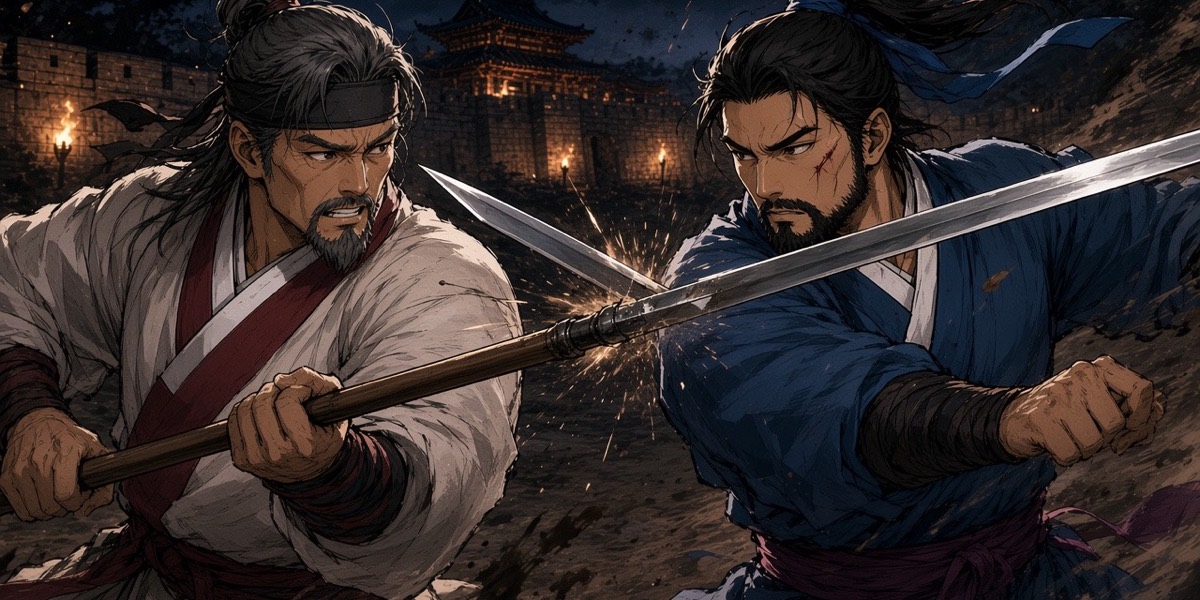
He levels the spear, and this time he is good. He takes across the cheek. He takes him again along the ribs. Spear against ring-pommel sword, in the mud, in the dark, with the whole Radiance wall leaning over to watch.
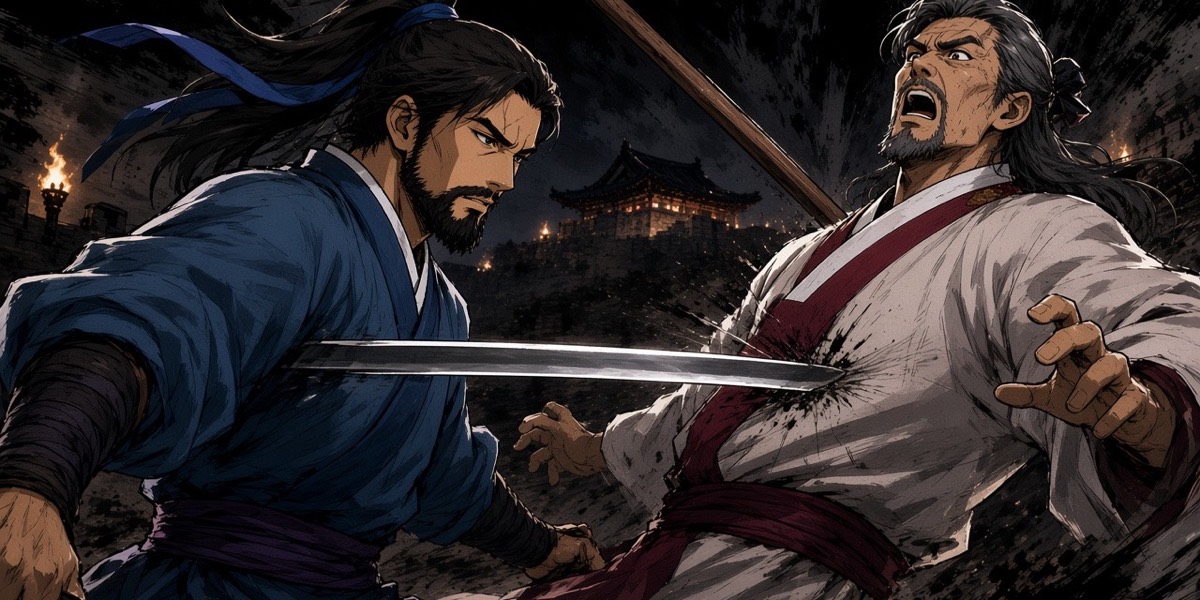
drops it. On purpose, for the first time in thirty years. The gap opens on his left like a door. goes for the door with everything he has, and steps inside the spear with the old yard step, the one two boys of Class 51 learned together in the mud, and puts the blade into his chest.
sits down in the ditch as if somebody had offered him a seat.
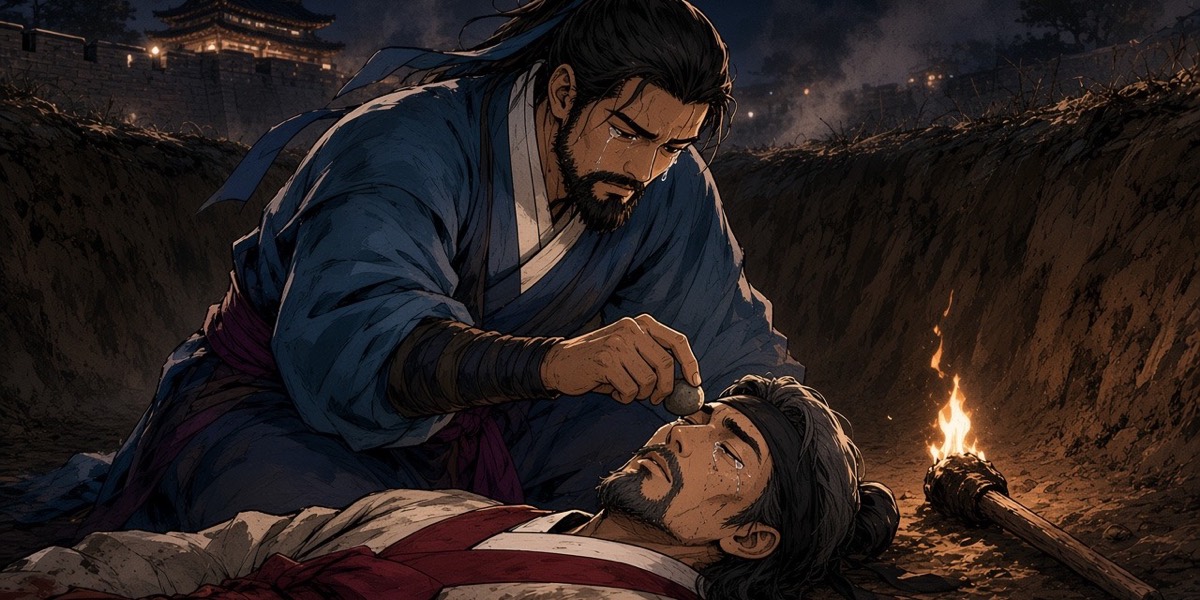
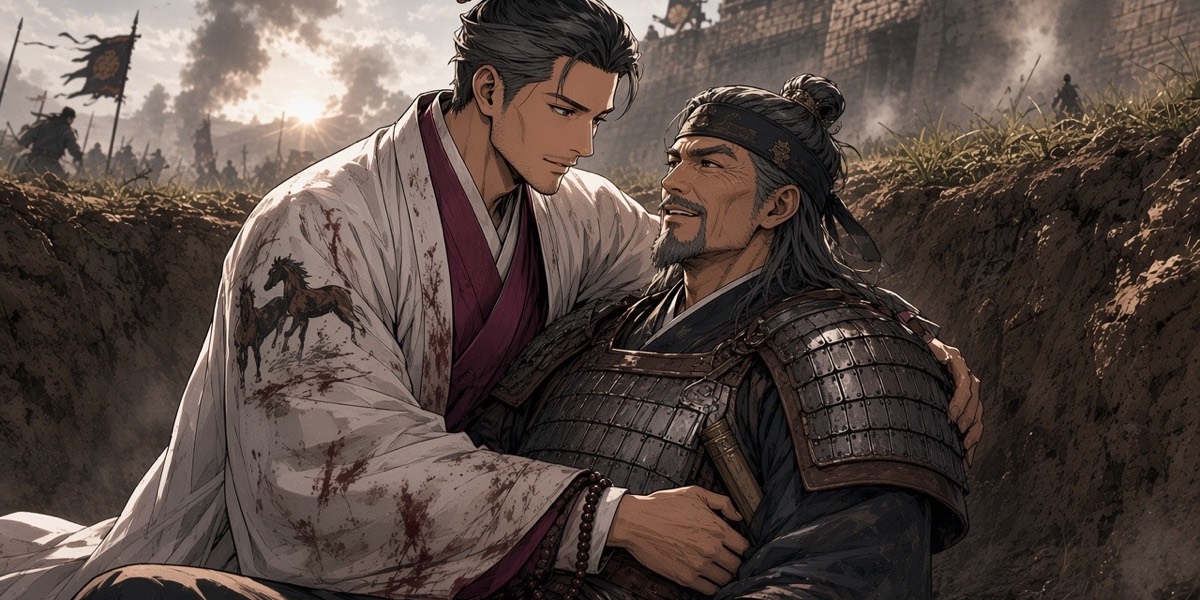
kneels in the mud beside him. First for the stone. He finds it by feel, wipes it on the torn sleeve, and closes his fist on it. Then, with the same hand, he closes ’s eyes.
One of the twenty has left a horse at the ditch. lifts the body across its saddle, ties it there with the dead man’s own sash, leaves the black headband where it is, and turns the horse’s head toward the Radiance gate. Then he slaps its rump once.
The horse walks up the slope alone, its rider folded over the saddle. On the wall the shouting stops. mounts the grey and is gone up the road before the gate opens.
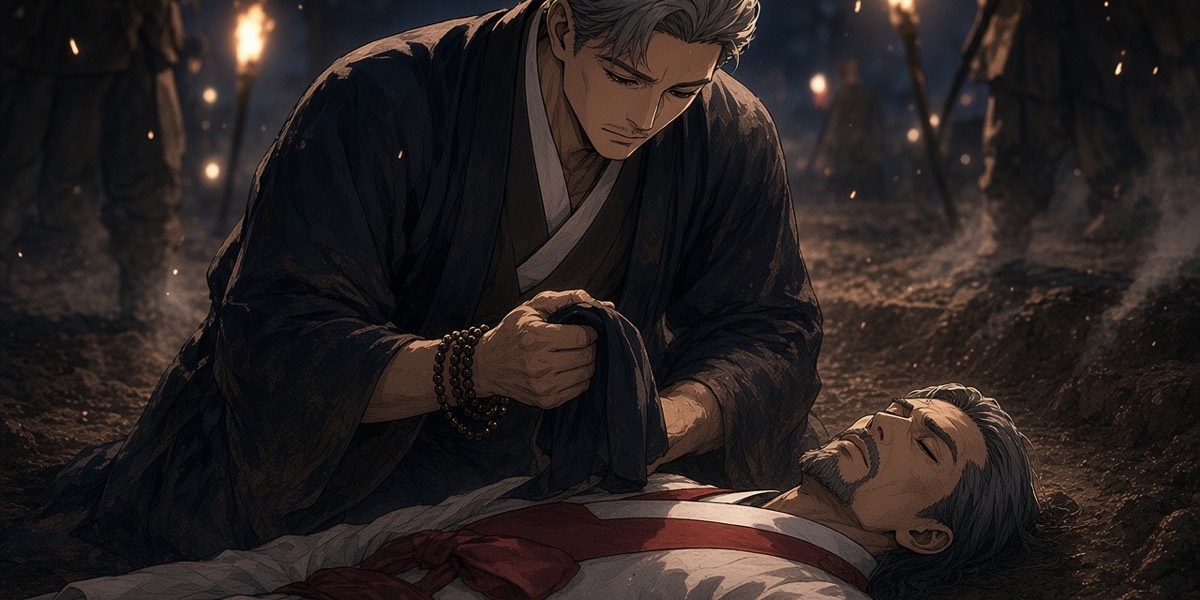
The gate opens for a horse. comes down through it with no sword, only the beads he put away at dusk, snatched up again on the way down. He lifts ’s face from the saddle with both hands.
Somebody has closed his eyes. knows whose hand it was, and that is worse. He unties the sash and takes his friend down into his arms, and kneels in the mud with him. The wound is under the left arm, where a man goes in when a door opens on his left. knows that step. He taught half of it.
The quieter name on the banner goes first. unties the black headband from ’s brow and winds it round his own wrist, under the beads, and does not let anyone see his hand.
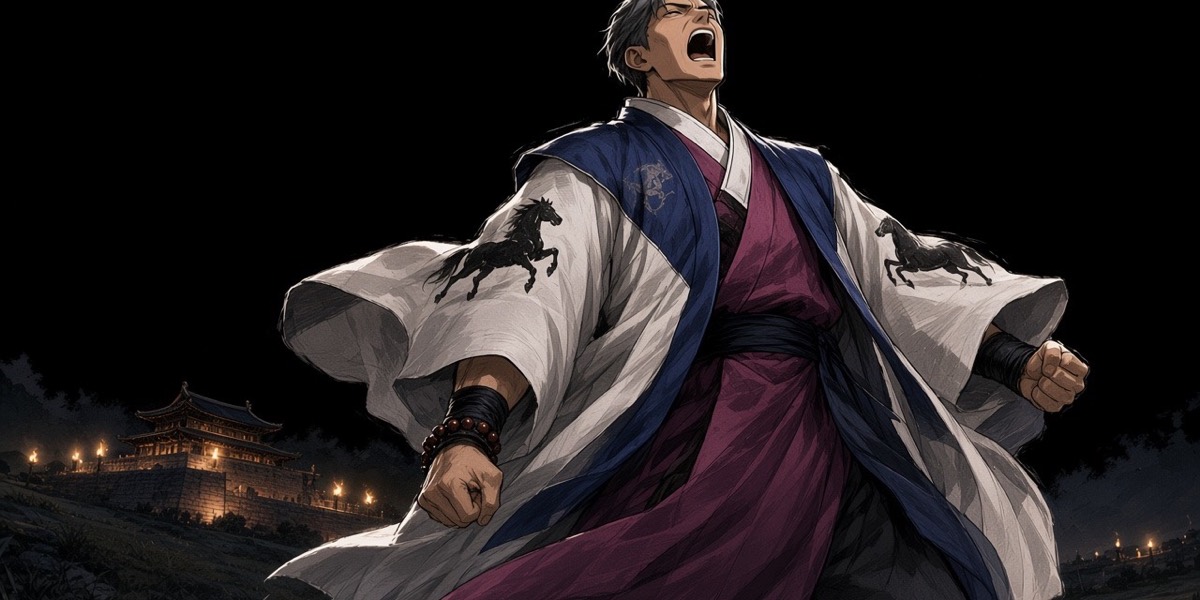
He recites for the dead, the whole sutra, slowly, while the men on the wall hold their torches and don’t know where to look. When he reaches the end he lays down, and stands, and walks out onto the open slope, and looks up.
In the east the marshal’s star has burned out. The place where it hung is empty.
Then there are no more words, only the noise a man makes at the sky when the sky has nothing to say back. The whole Radiance wall hears it. So does the palace. Nobody on either side will describe it afterwards, and nobody on either side forgets it.
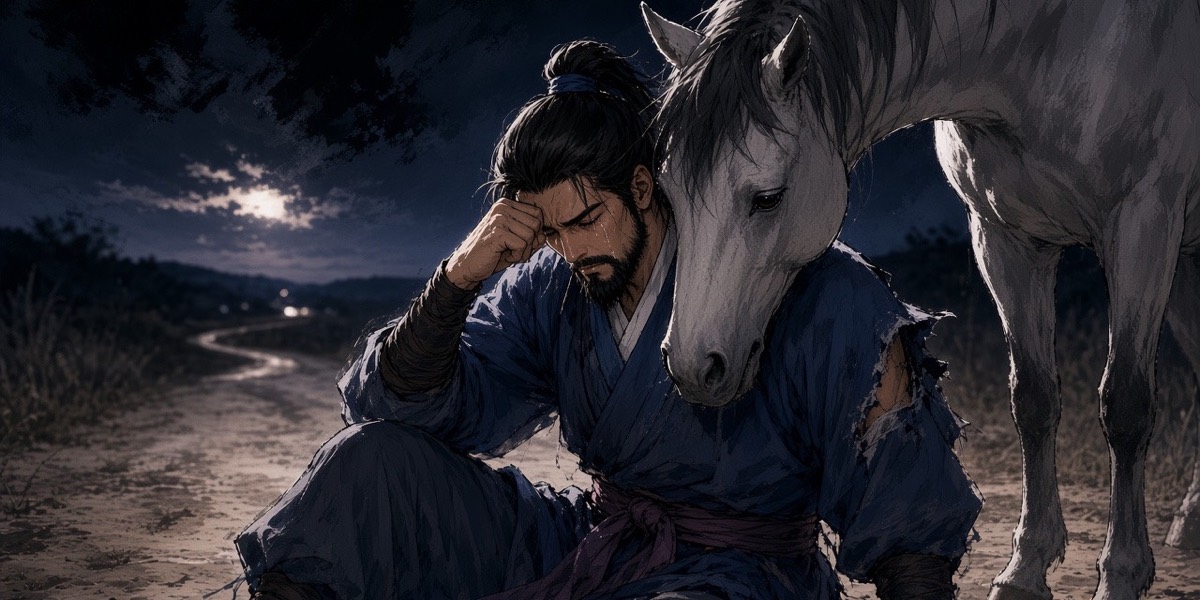
A li up the road, out of sight of both walls, gets down again. He sits in the road like a boy who has been sent out of a room.
Hansul puts his nose into his chest and waits for the reason, the way the white horse used to. That is what does it.
Then the Marshal of cries in the road, the way men cry who have held it the whole way on horseback, with the stone in his fist and the grey standing over him.
Two men grieve on the same road tonight, a li apart. Neither will ever mention it to the other.
To answer , has to go back to a road, a gate, and a young man who got lost on purpose…!
