





























Chapter 57

Kim Yongsu
AI Summary
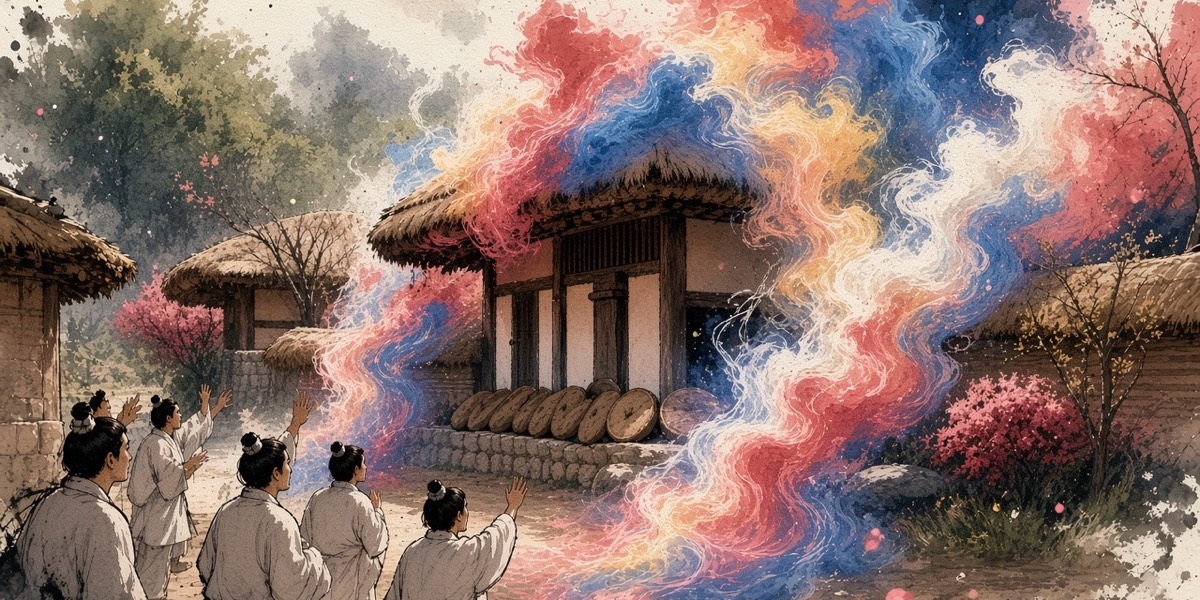
- Paper Lotuses The palace ends at the bluff.
- Age Seven He was seven.
- The bluff
- Cloud King's Night The Cloud King dies in a monk’s robe.
- The Tomb Hill They bury him under a hill a thousand men build in a month.
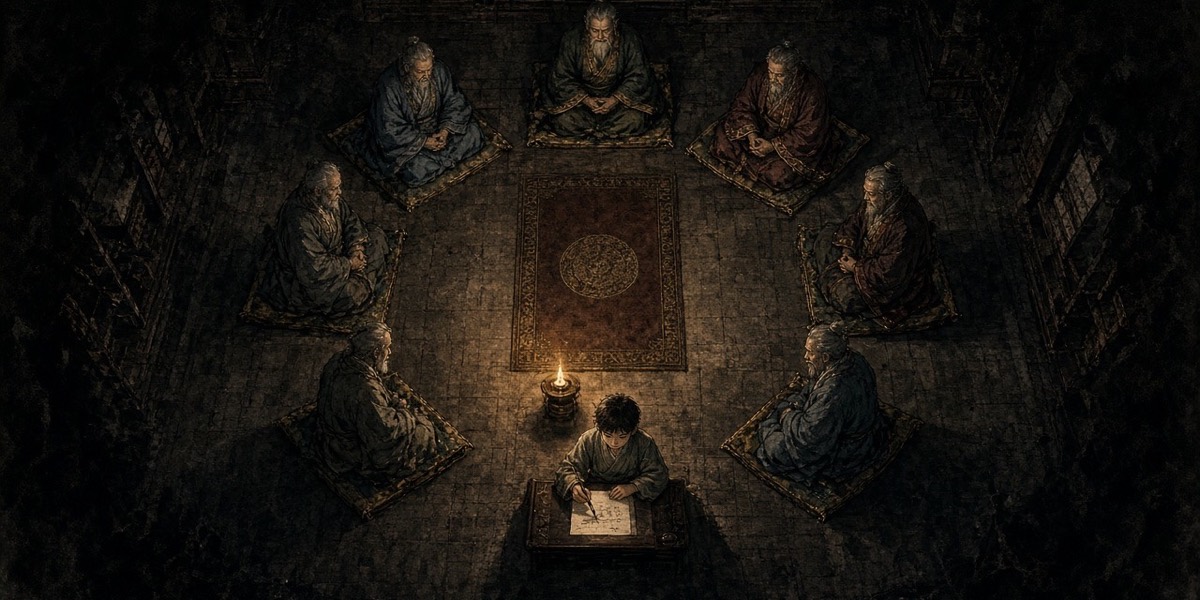
- Six Old Men Three days later six old men vote, and a boy named Eulje writes the new king’s name in the minutes.
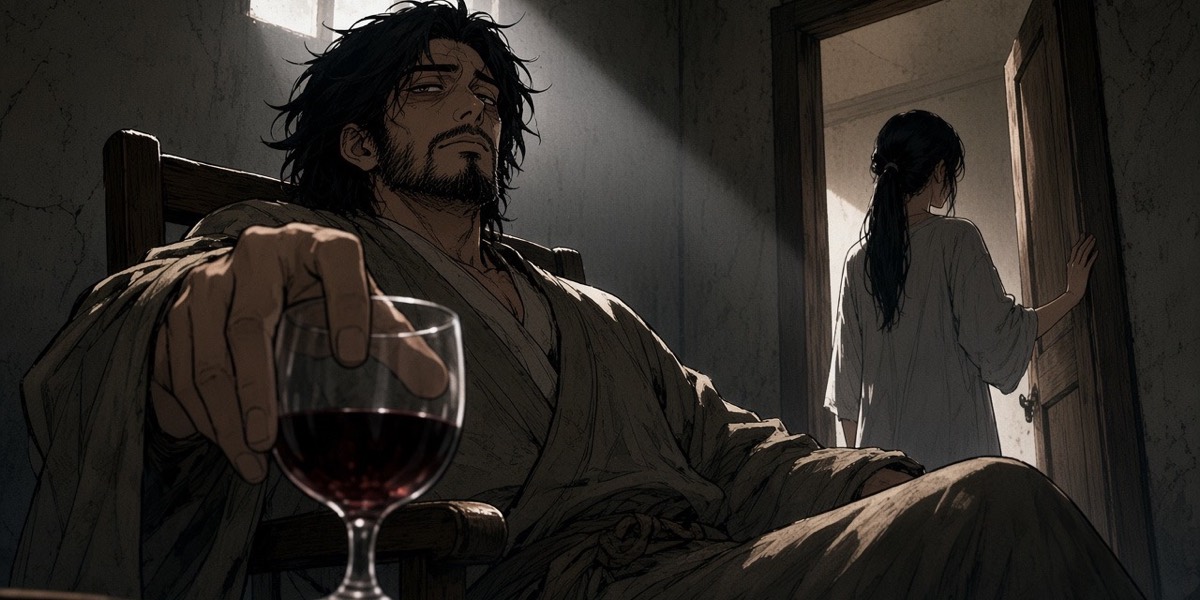
- Wine Years He tries, for one winter.
- Feast That Does Not End The lanterns are still up at noon.
- Barefoot King He comes down without the crown.
- A Match The room tries kindness, which in this room means a marriage.
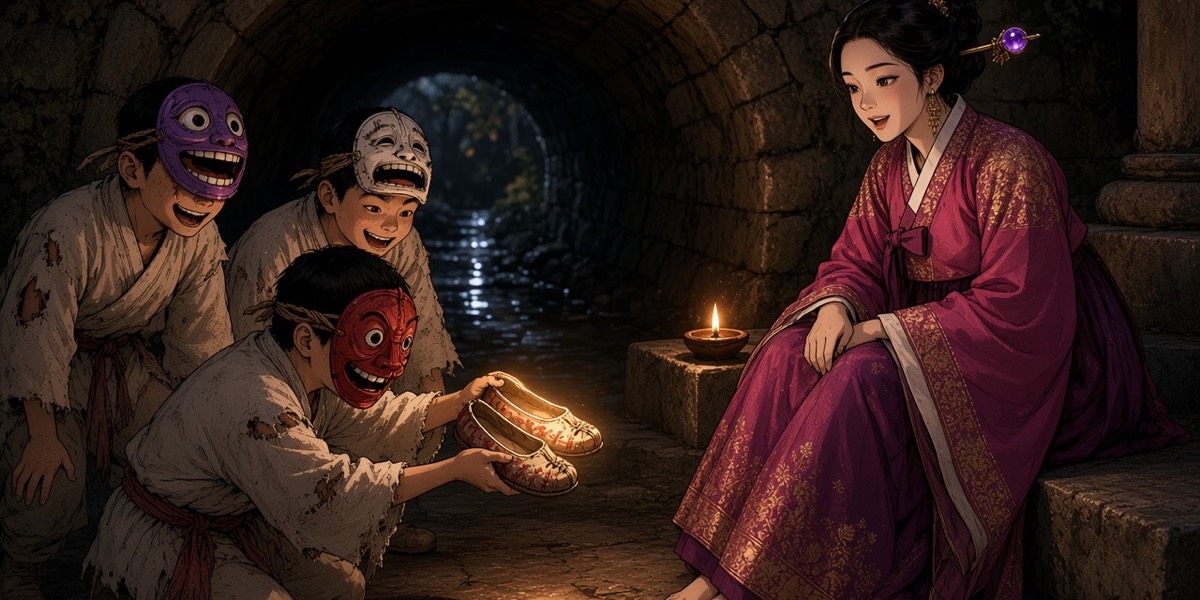
- Side Well The well at the side gate is for servants.
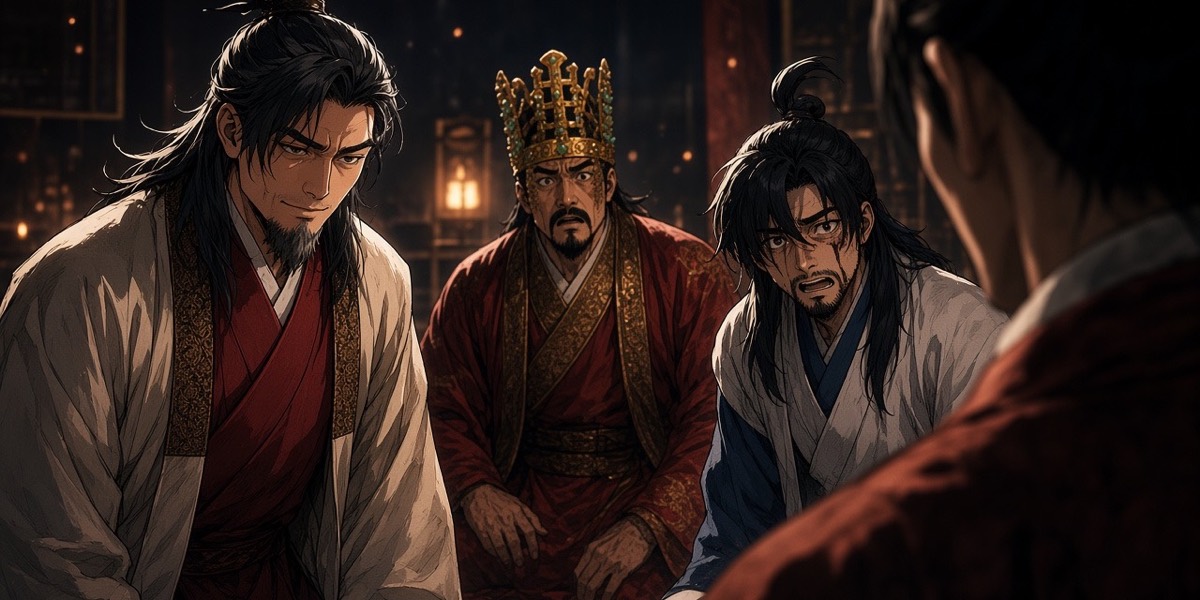
- Boy on the Throne One night after midnight the drunk king lifts his ten-year-old nephew onto the throne, and the musicians stop.
- Characters
Episode· 651
Kim Yongsu
Nobody kills the strange boy.
- Kim Yongsu
- King Jinpyung
- Princess Chunmyung
- Gildal
- King Jinji
- Queen Sunduk
- Biryun
- Kim Chunchu
- Prince Suulbu
Nobody kills the strange boy.
His mother told him that when he was eight. She was right for seventy years, which is longer than most mothers get to be right about anything.
You’ve heard the song. Now here is the same story with the lamps turned up. Same people. Same bridge. Same fox. It just has fewer ghosts in it, and more men.
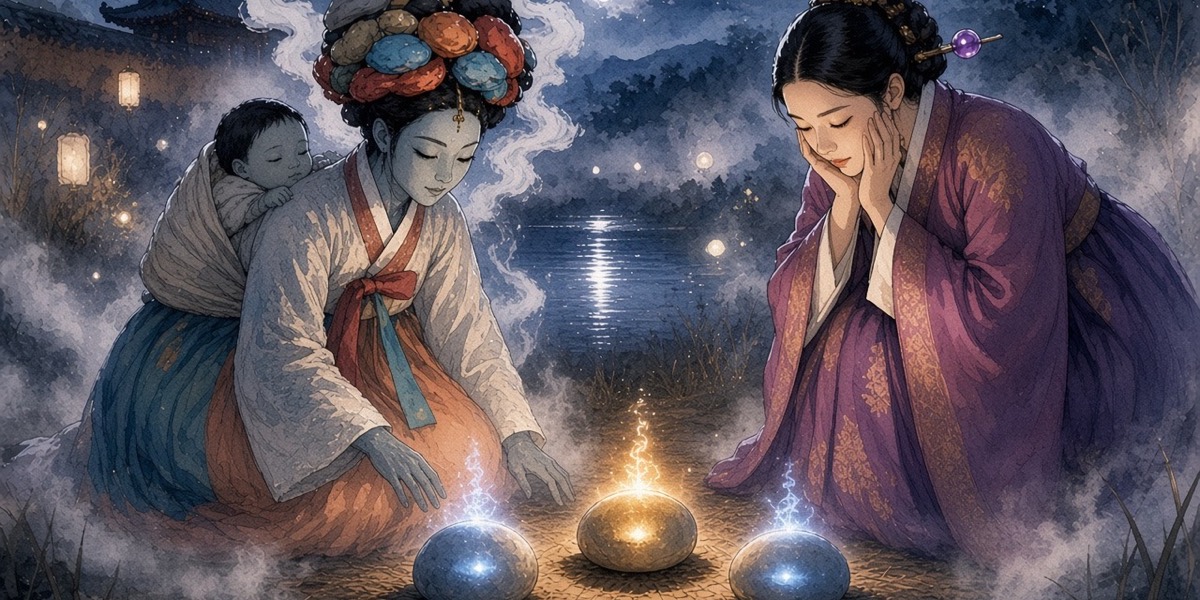
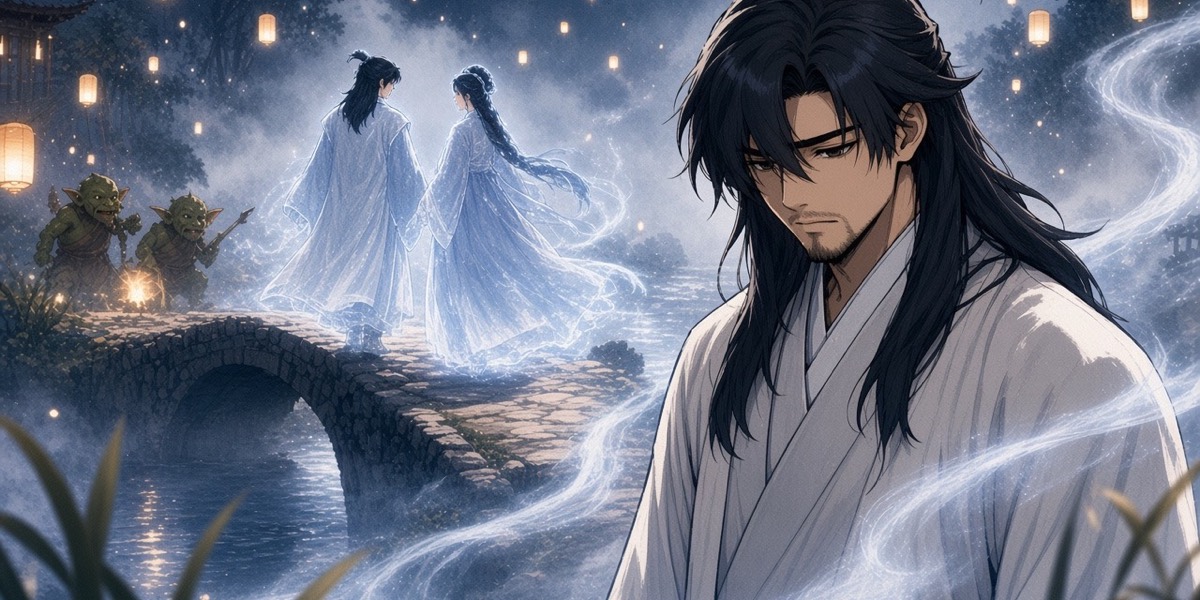
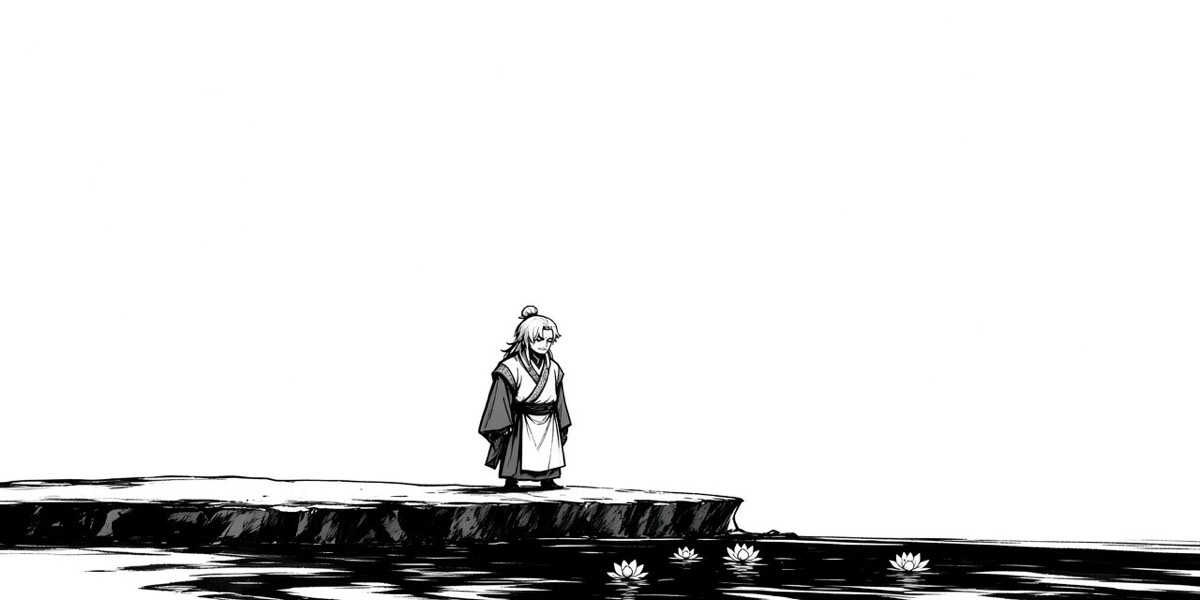
The palace ends at the bluff. Below it the river is black, and the paper lotuses go by one at a time, very small, on their way to the sea.
He looks down at the water for a long time, and his lips move. has watched him talk to rivers all his life and has never once been close enough to hear. He is close enough now. His father is counting.
laughs, because what else do you do. His father doesn’t.
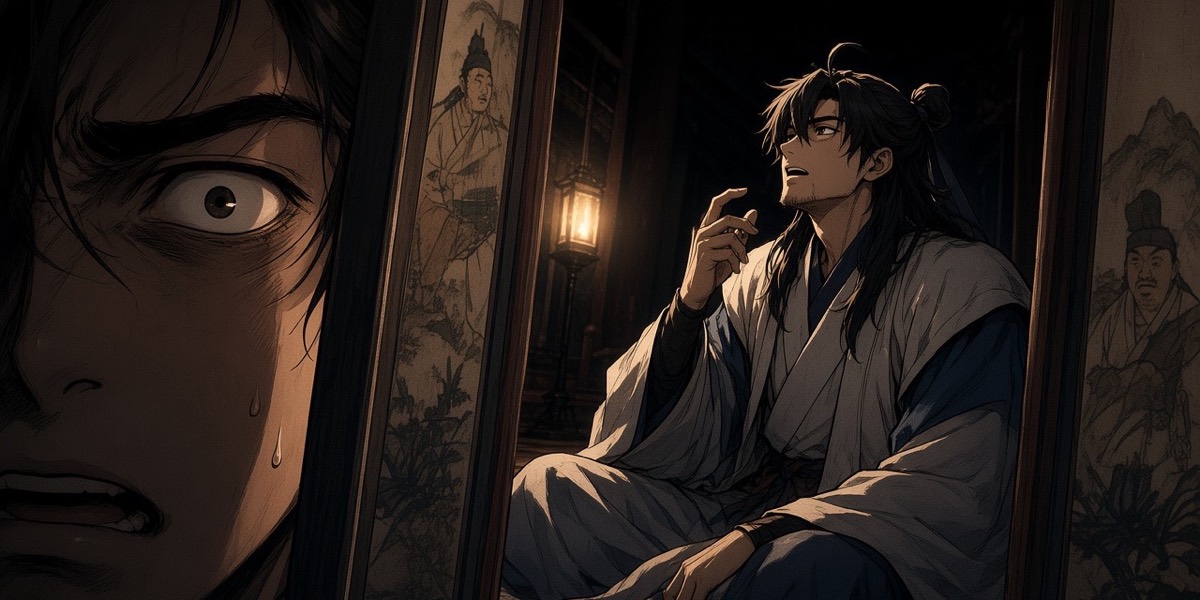
He was seven. He woke in the dark and needed the privy, and stopped at his parents’ door because there was a voice behind it he didn’t know.
It was quick and plain and a little dry. It was adding grain against riders against roads, faster than his tutor could. His mother said something, and the voice laughed exactly on the beat.
In the morning his father was talking to the rafters again. decided he had dreamed it. You can decide that at seven. It holds for about thirty years.
Then he tells it, for the first time in his life, and badly, the way people tell the true things. I’ll tell it properly. I was there for most of it.
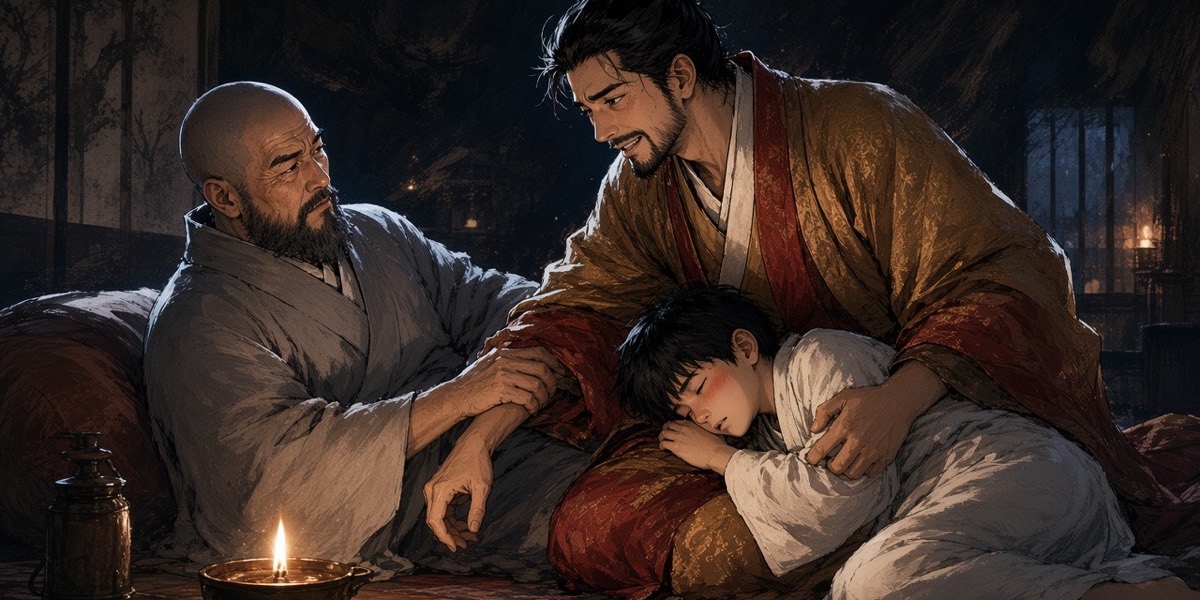
dies in a monk’s robe. His second son kneels by the bed smelling of plum wine, with his dead brother’s boy Baekjung asleep across his knees.
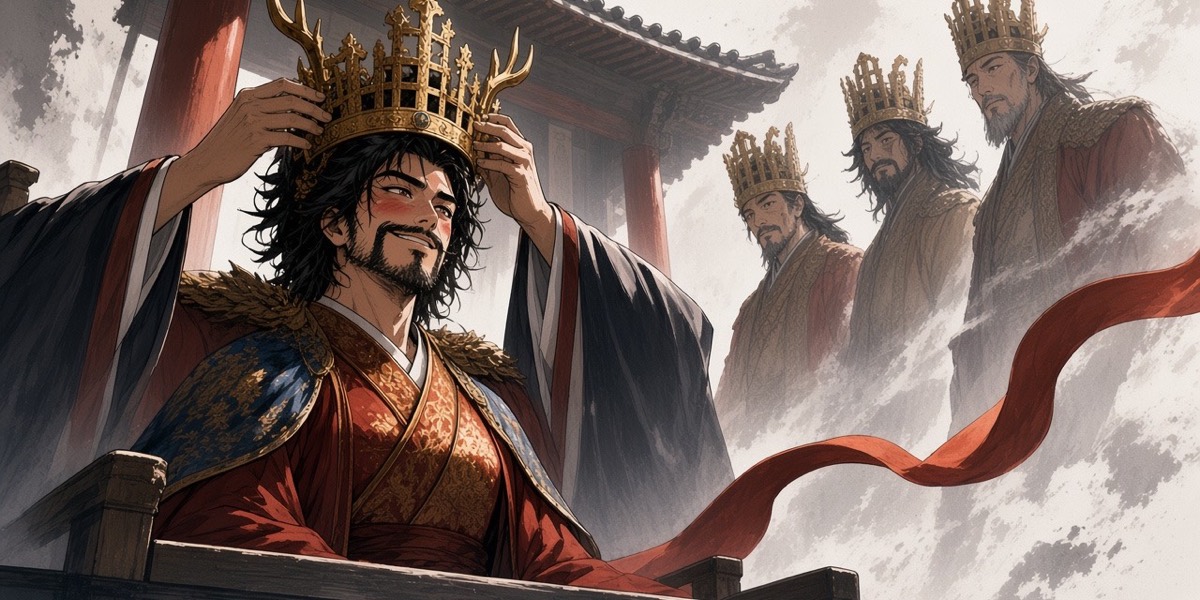
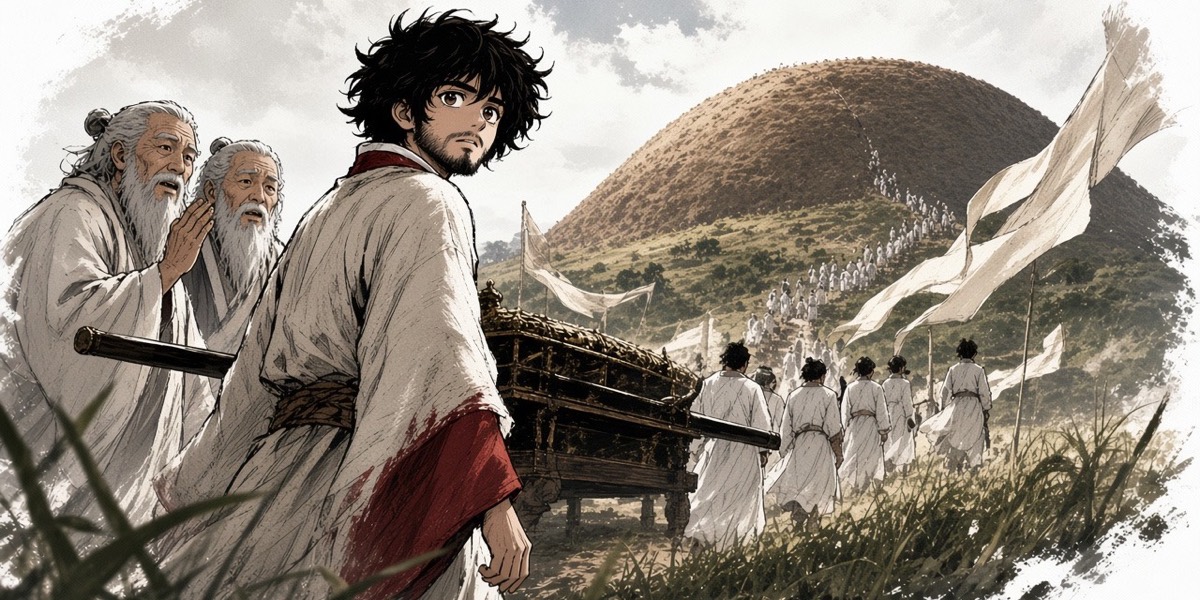
They bury him under a hill a thousand men build in a month. At the top the new king turns, looks at all of it, and asks for a cup.
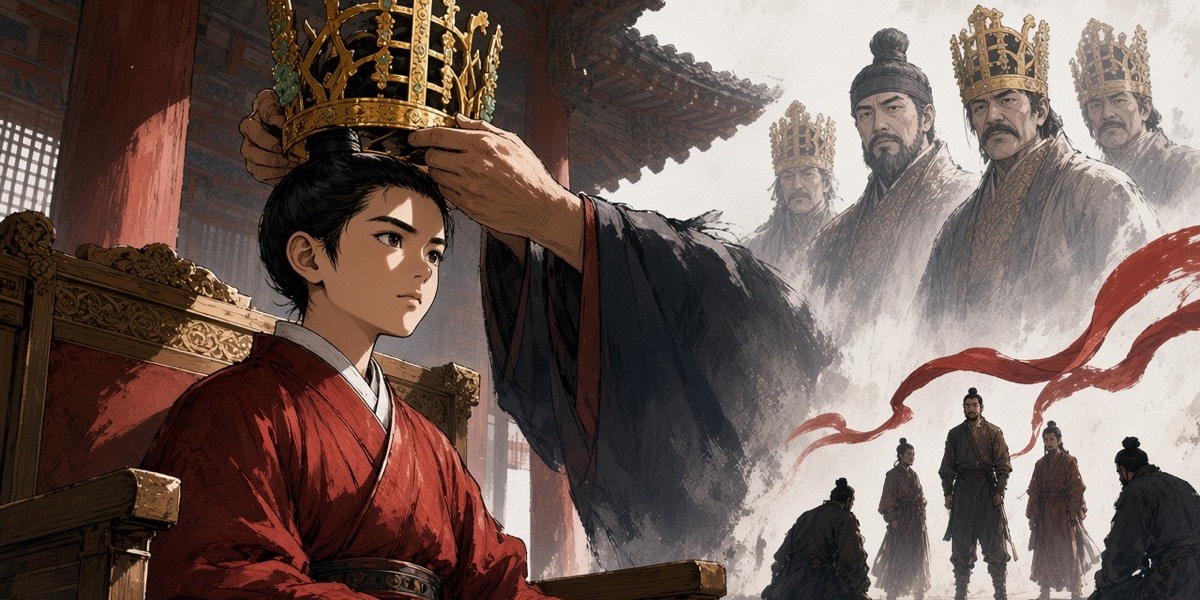
Three days later six old men vote, and a boy named writes the new king’s name in the minutes. is crowned . Remember the boy’s face.
He tries, for one winter. Then the forts start falling, the fills with lantern boats and dancers, and the Council’s reports wait outside a shut door.
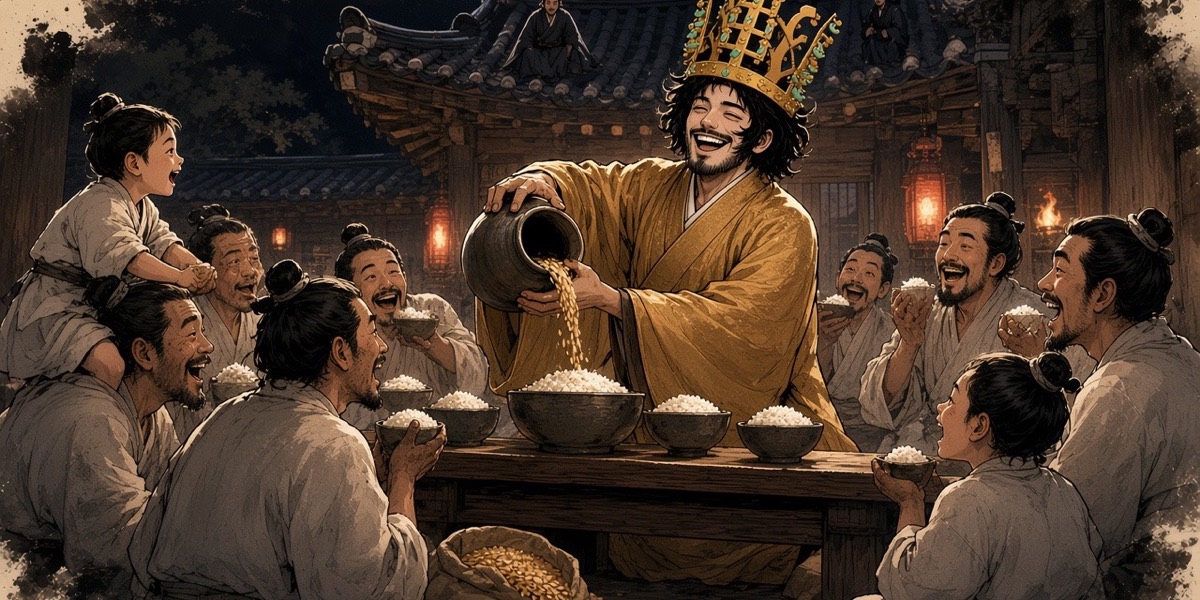
The parties don’t stay inside the palace. Twice a month he opens the gate and feeds the city: rice, wine, a pig on a spit, Saryang ward eating off silver it will never see again.
The rice is the Council’s, more or less. One feast night he climbs onto a table and announces a new levy on estates, one sack in ten, for the city. He hasn’t asked anyone. The applause is enormous.
He is a bad king and a generous drunk, and a city can love both. Saryang ward loves him. Saryang ward also writes the songs.
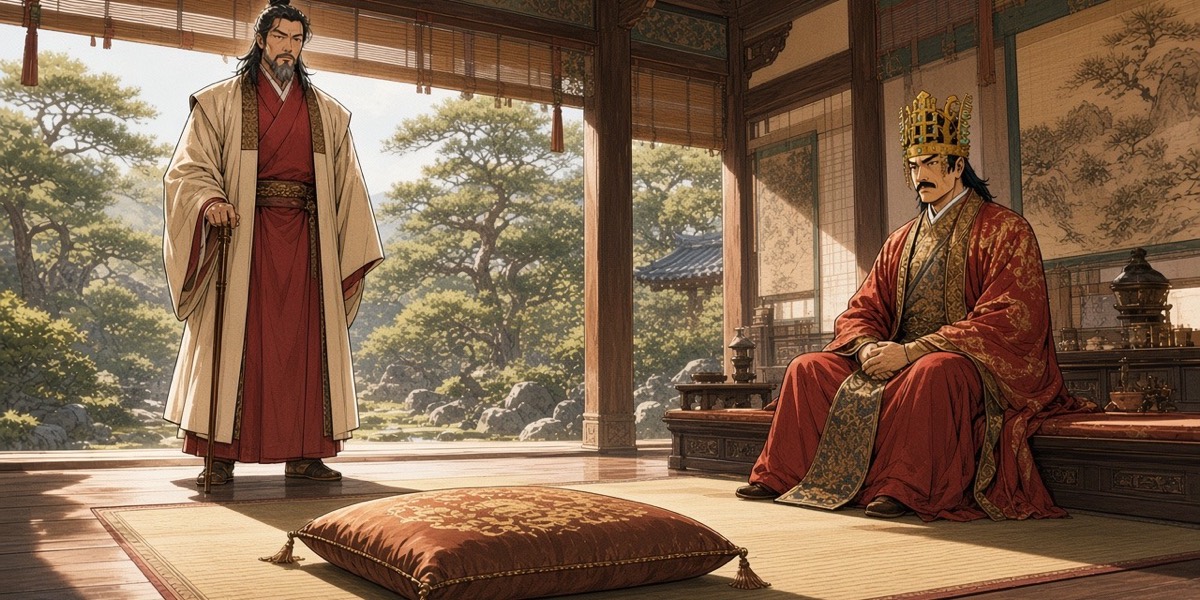
The lanterns are still up at noon. A councillor’s wife is asleep across two cushions. Dice click in a crown that is not supposed to leave the hall. The king is on the floor, sleeves rolled, teaching a stable boy a song the stable boy already knows.
His brother has been standing in the doorway long enough for the wine to go flat. The king sees him. Waves. Pours.
does not sit. The king goes back to the song. The doorway stays empty a long time after the brother has gone.
He comes down without the crown. Barefoot. A gate-guard who drank the king’s wine all night will not make it home, so the king puts the man over his shoulder and walks him there, arguing with the man’s wife about porridge.
He sits on -rim with the charcoal men and eats out of the same pot. A child climbs into his lap because the lap is there. He lets her steal the last of the rice. This is the king Saryang ward will write songs about. The other one, the one on the floor with the dice, they leave out of the verses, mostly.
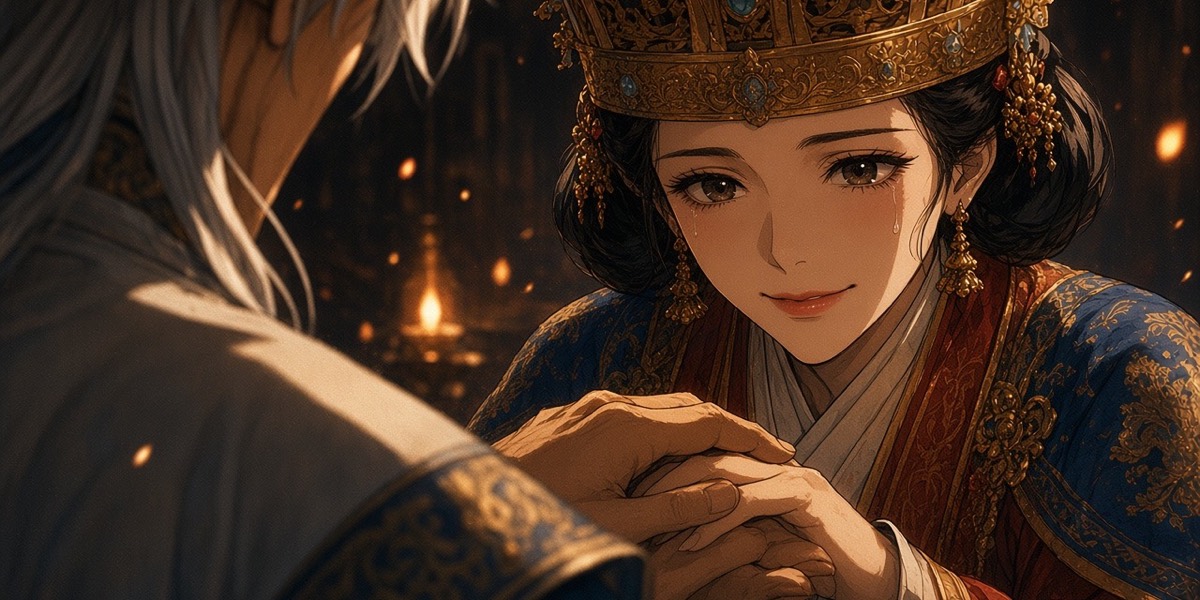
The room tries kindness, which in this room means a marriage. has had the brazier turned. has a name ready. The name has been in ’s rooms, and in this king’s, and the room would like that made official before the songs get worse.
is already in the hall. She has been in halls like this longer than the king has been king. She does not look at him. She looks at the brazier, which is doing its job.
Somebody’s cup hits a saucer. The king laughs, because he always does, and then he has to fill the laugh with something.
He salutes her with the cup, delighted, and the match dies in the minutes. The room will remember the word type. She will remember that he said it in front of the brazier, where everyone could see her face.
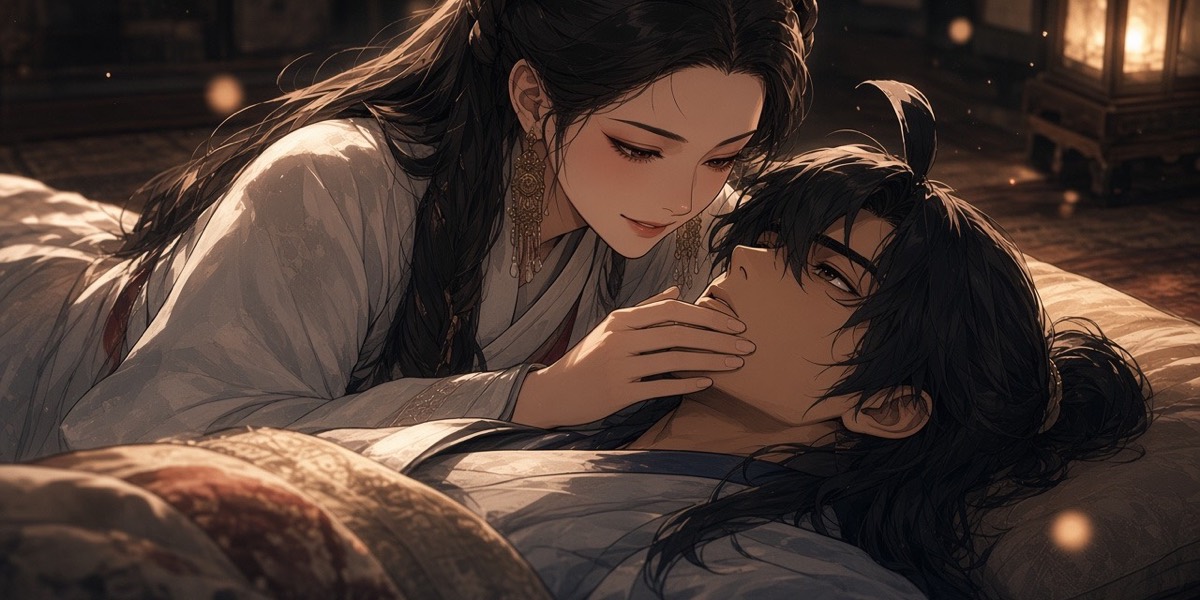
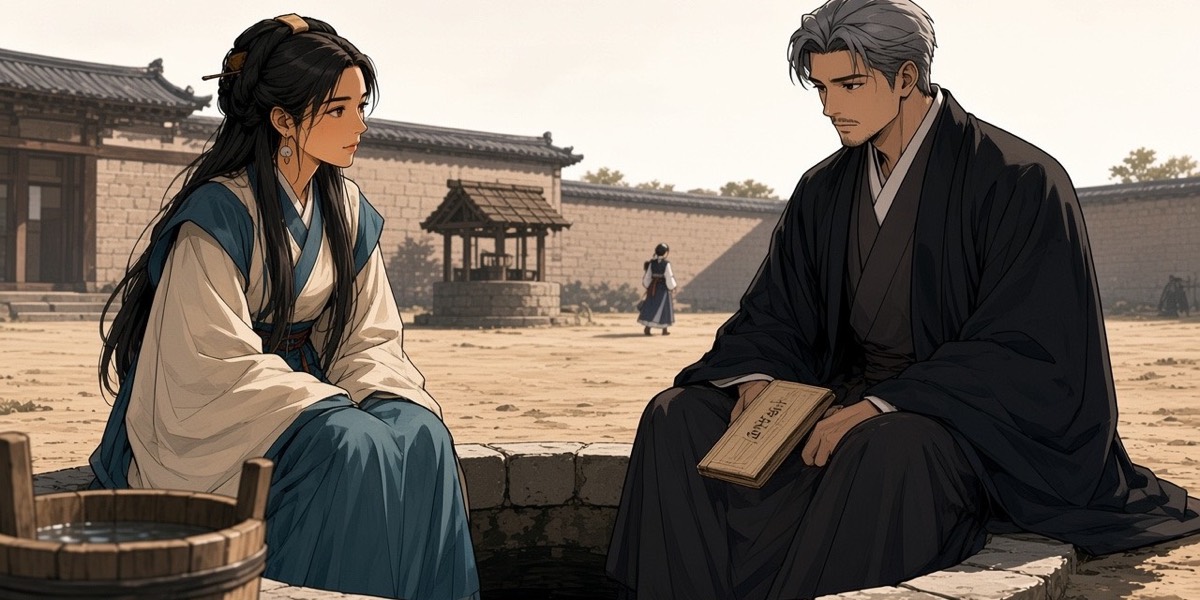
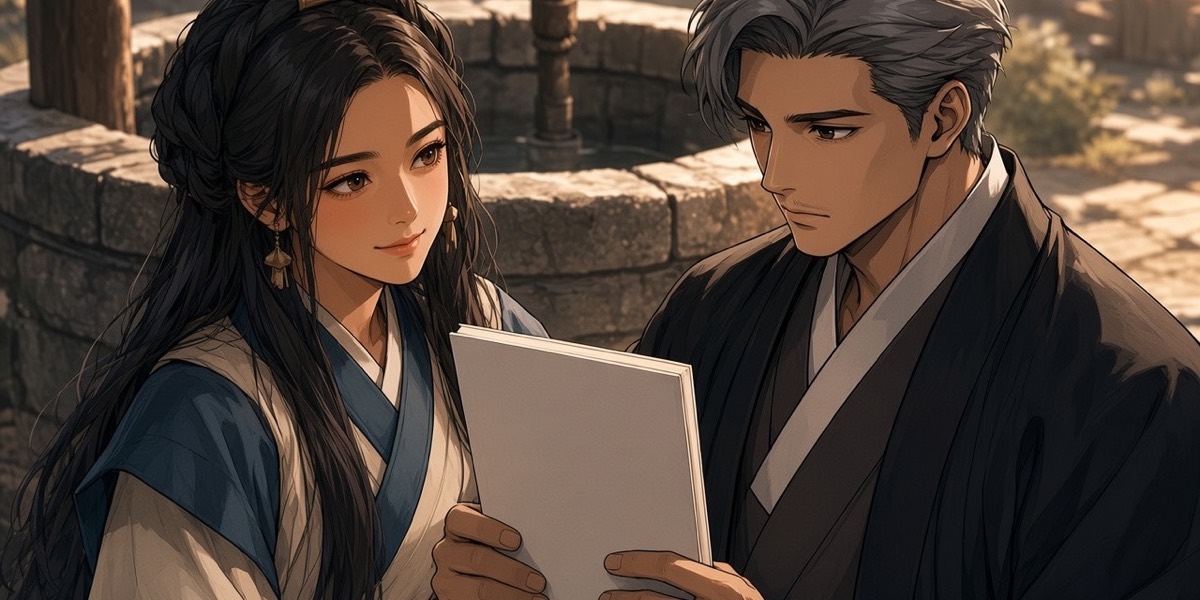
The well at the side gate is for servants. After the hall, two people who are not servants sit on the stone anyway. She has her hands in her sleeves. He has a sutra he is not reading.
A maid comes for water, sees them, and goes the long way round. The well is very loud, suddenly, just water on stone.
They sit until the shadow of the wall reaches their feet. They will sit like this again, years later, in a hall that has waited too long for a child. Not yet. Today it is only two people the king will not hear.
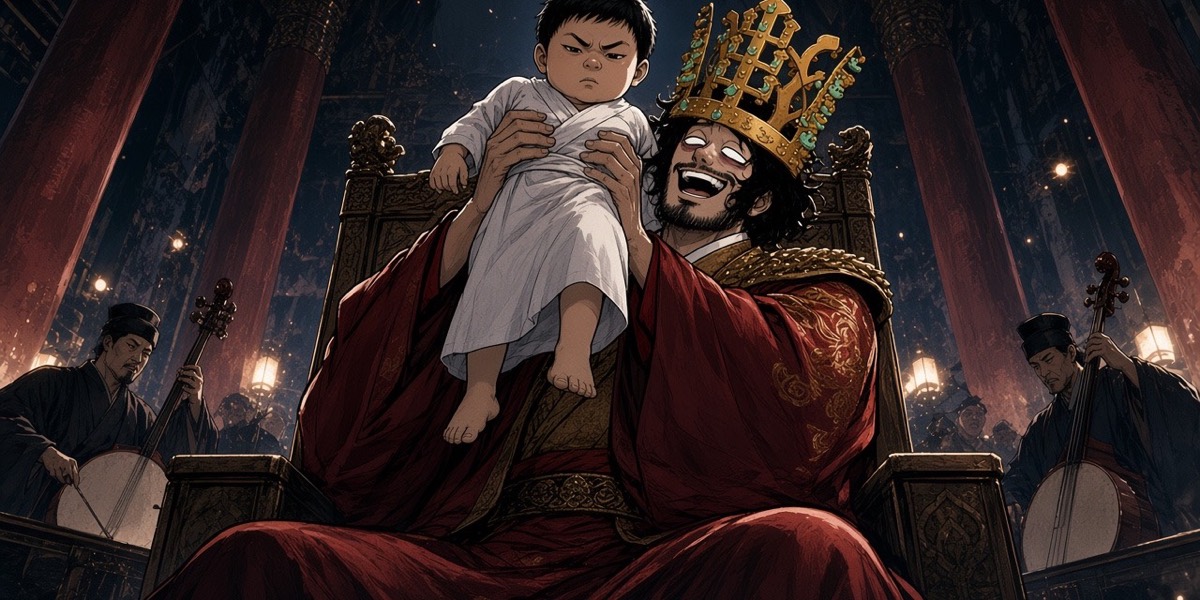
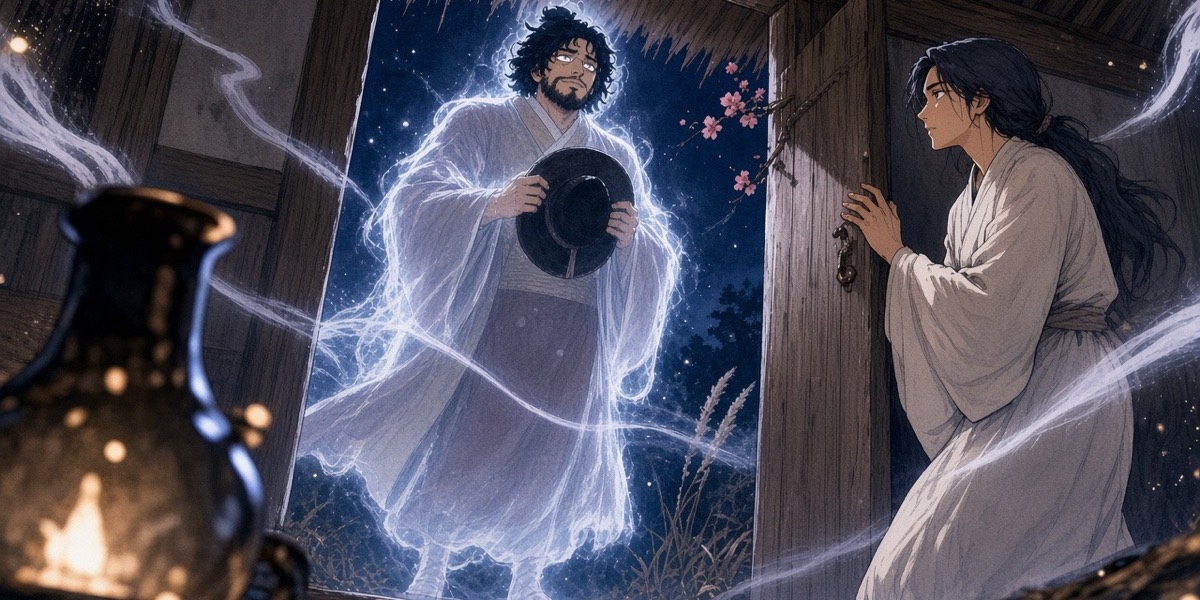
One night after midnight the drunk king lifts his ten-year-old nephew onto the throne, and the musicians stop. Then he carries the boy back to bed and ties back his sleeves so he won’t trip. Remember the sleeves.
In Saryang ward there is a woman so lovely the neighbours call her . Her name is . She is married to a man who sells charcoal, and she likes him.
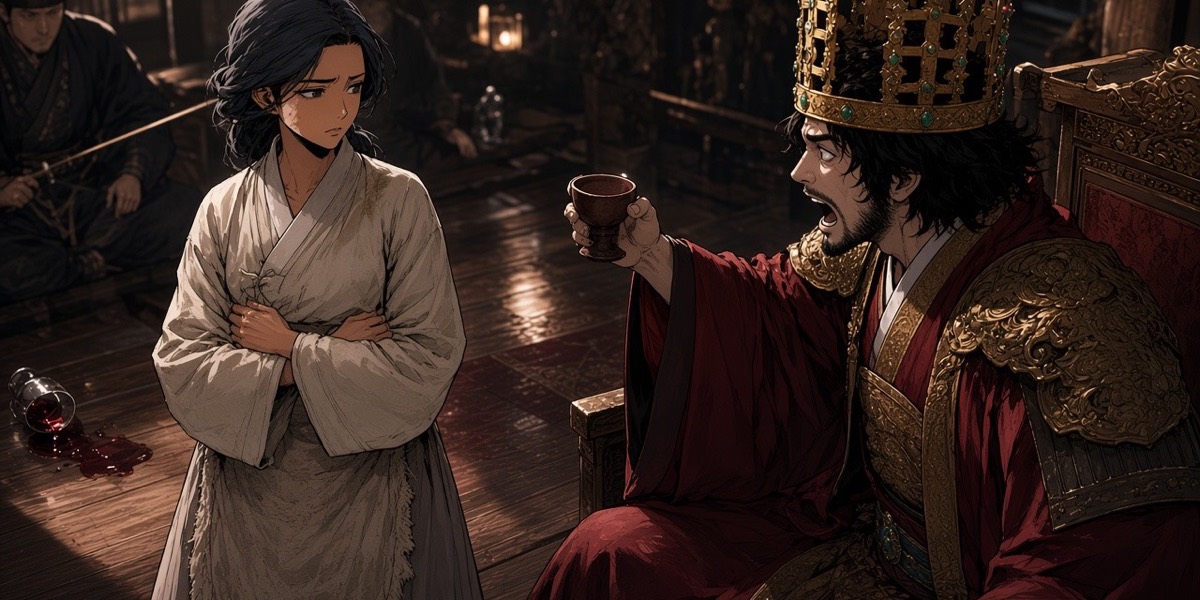
The king hears about her the way kings hear about everything. By evening she is standing in his hall, still in her apron.
The hall goes very quiet. The musicians look at the floor. Somebody’s cup tips and nobody rights it.
He laughs, really laughs, for the first time in a year. The song keeps that part, and so far the song is right.
A steward gives her a room off the back corridor, with one lamp and a lock that only works from outside. She doesn’t notice the lock. She is too busy being alive.
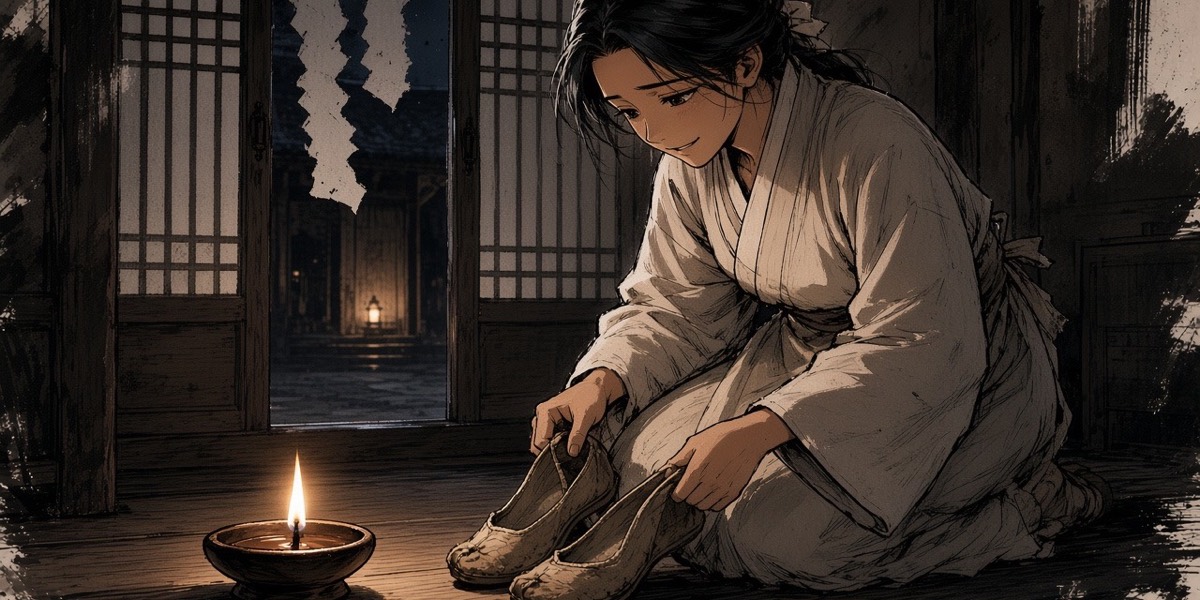
She folds her apron and wraps her shoes in it, because the road home is mud. She is laughing a little, the way you do after a fall you didn’t take. By breakfast she’ll be home, telling her husband, and he won’t believe a word.
Some time after midnight, the lamp in the corridor moves.
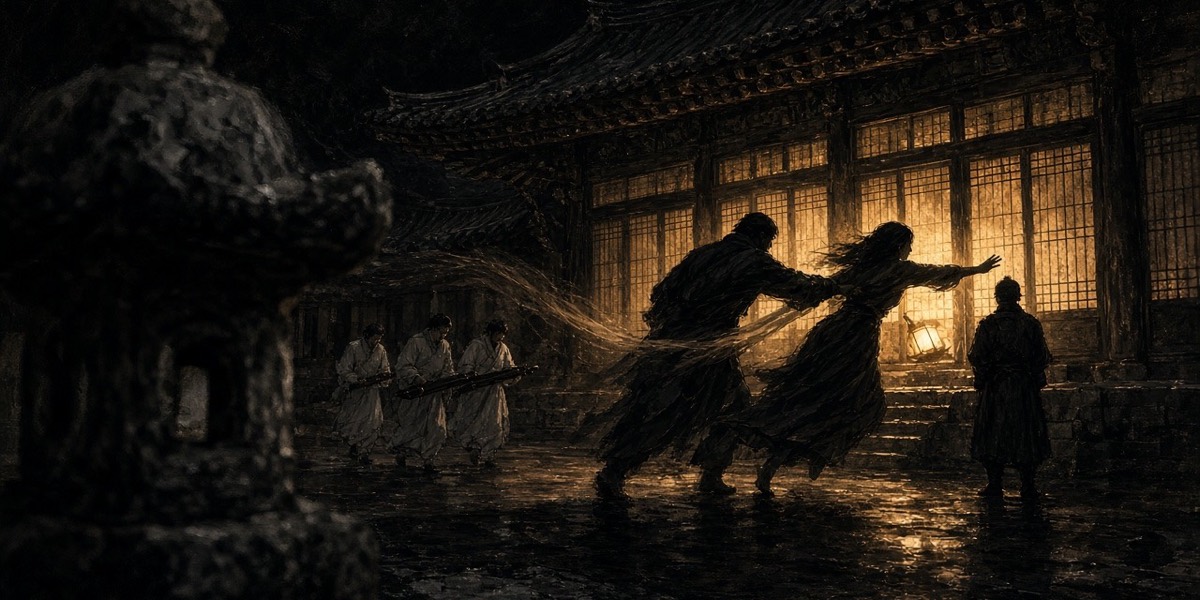
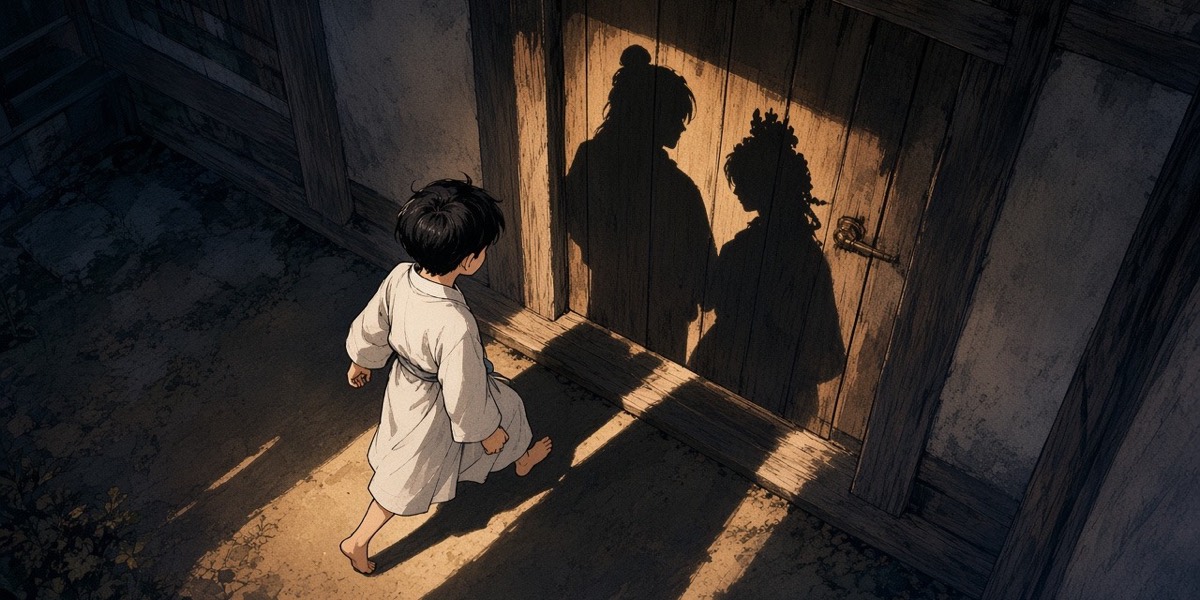
From the yard you can see the paper door. Two shadows on it. One of them is trying to get to the door. The other one is bigger.
Nobody in the yard goes in. He is still the king.
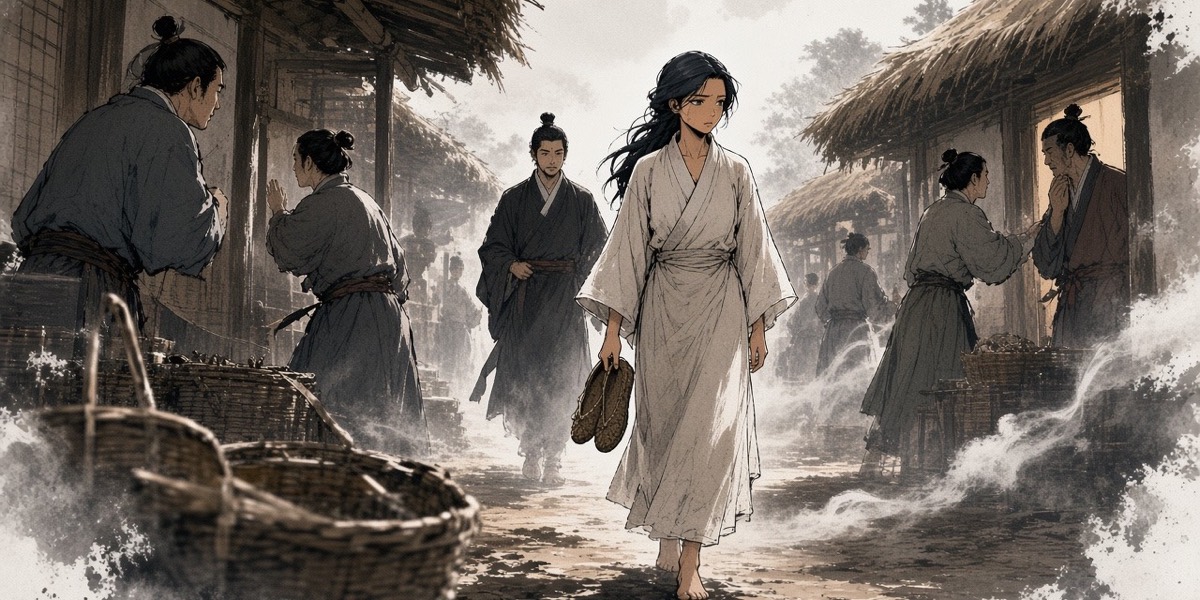
At first light they let her go home, as promised. Not by the gate she came in. A steward walks her out through the market gate, on foot, the long way, while the stalls are opening. She carries her shoes in her hand the whole way, her apron tied on wrong, and all of Saryang ward watches come home from the palace and decides what it means.
The song says he let her go home. He did. The song was written by people who liked him.
He stops. The river goes by.
That is all he says about it, and all he will ever say. is thirty-nine and has lived in palaces all his life. He doesn’t ask.
The drum on the palace wall is for fires and invasions. At midnight it beats for neither.
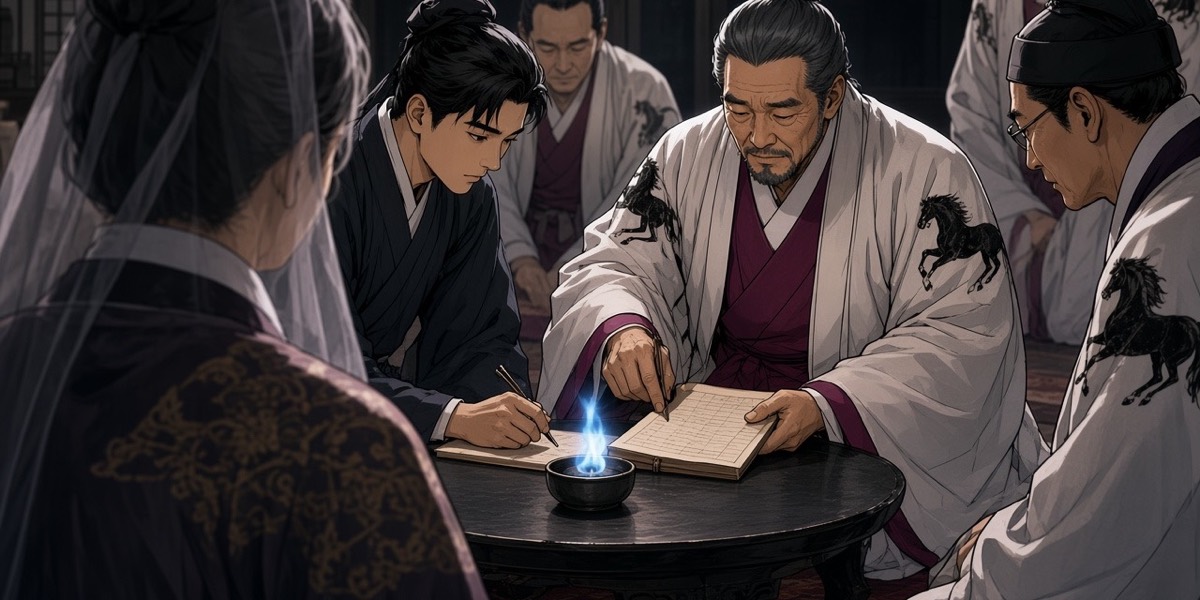
The councillors come through the dark in whatever they were sleeping in. One of them is carried. has been dying since spring. He insists on a litter, and coughs into a cloth all the way, because he was in the room that crowned this king and means to be in the one that uncrowns him.
The summons came from mother. Nobody says that out loud either.

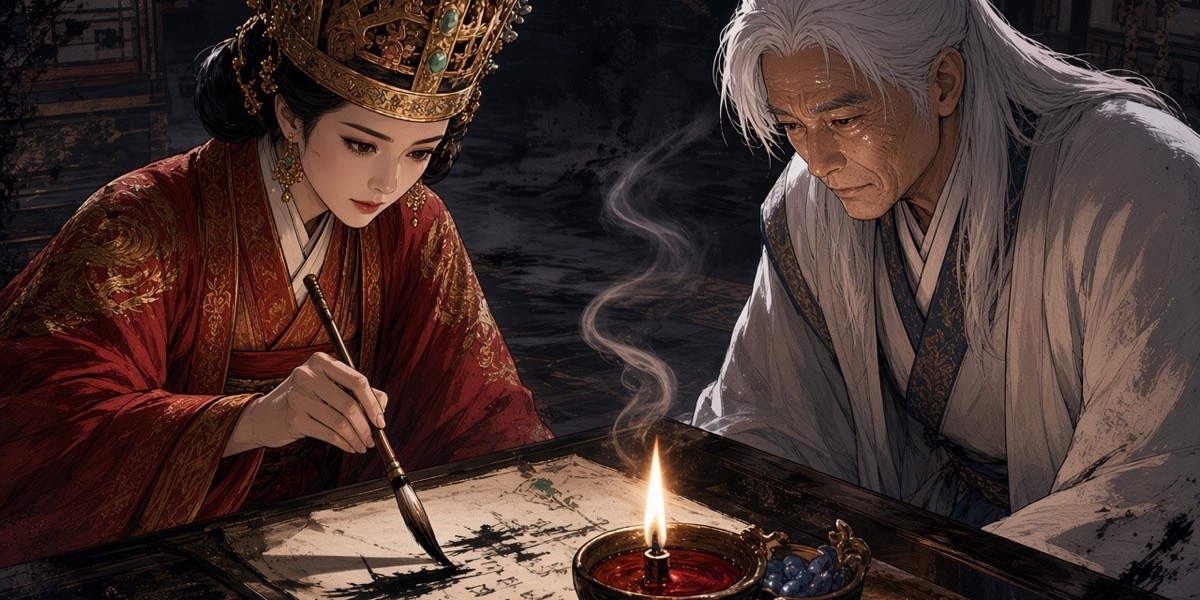
is twenty-four. He kneels and blows on the coals until the flame turns, and when he picks up his brush his hand is already shaking. You have seen this room count. At midnight it counts faster.
The song will say they deposed him for wine and women. Both are in the charge. Neither is what the room argues about.
The queen mother says nothing to that. She raised a son who never listened, and she has already done the sum.
The old councillor holds his piece a long time. In this room one holdout is enough to save a king. He puts it with the others.
Before the first count is cold, the door bangs open. The king has come from his party. He still has a cup in his hand and a dancer’s hairpin caught in his collar.
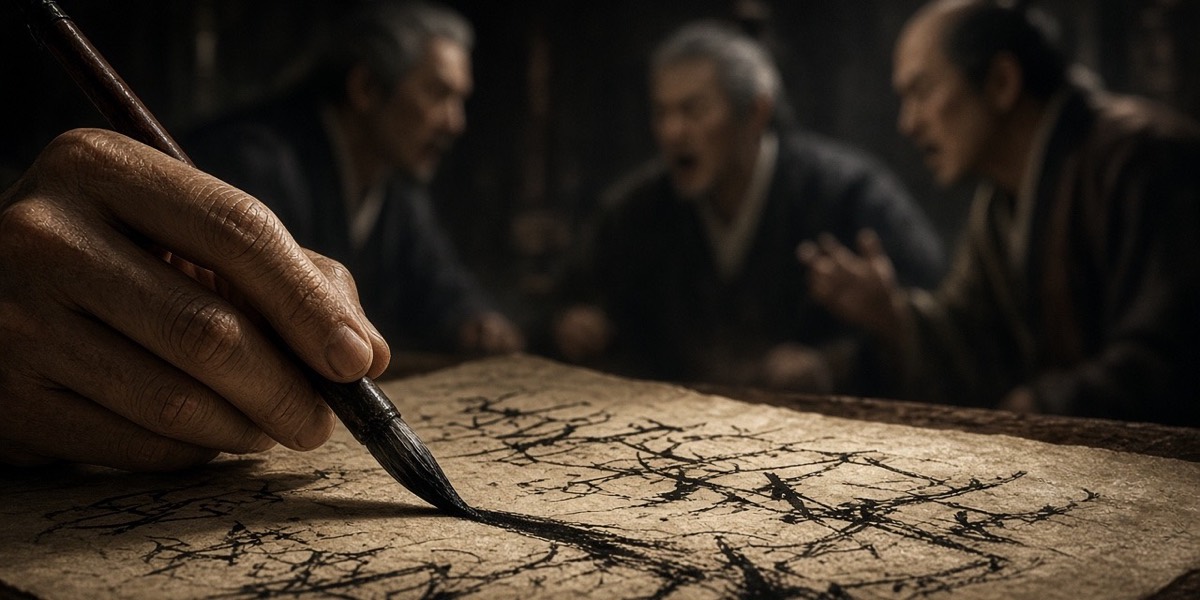
writes down the wives. Of everything said that night, it is the only word that makes it into the record.
He stays for the rest of it, swaying, because leaving would be agreeing. Six pieces go to the no side. reads the count aloud, the last thing he ever does in that room. He will be dead before the leaves turn.
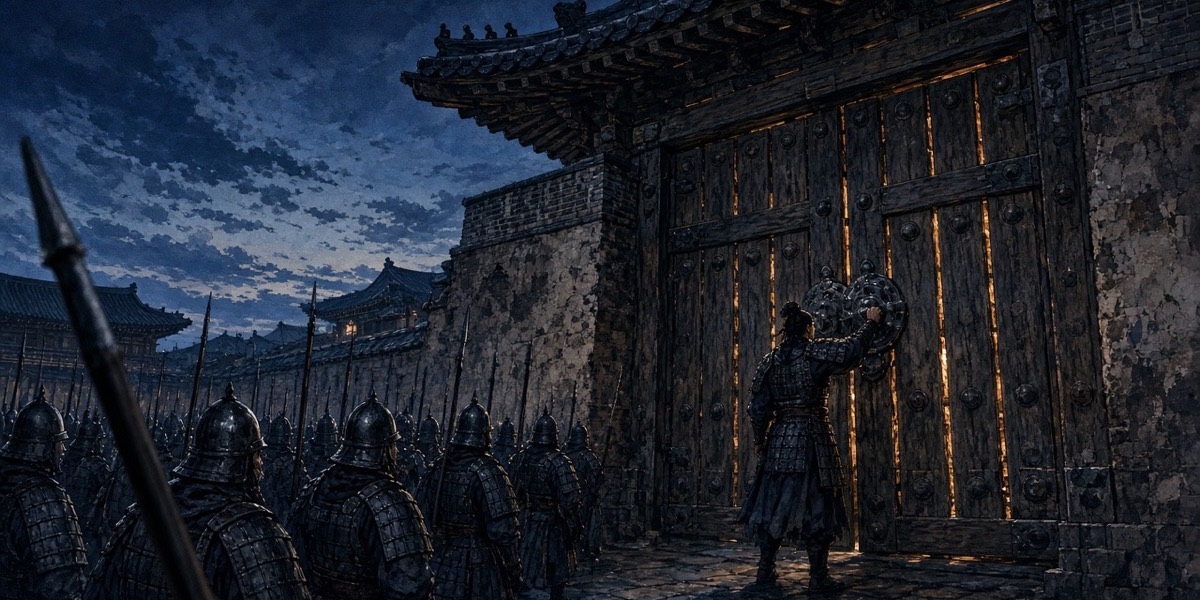
Before dawn forty guards knock three times on a barred door. The party is still going when they come in.
Three days later they bring him back to watch his nephew crowned in a robe hemmed in a hurry. For a moment, across the hall, it is only a boy and his uncle.
His mother comes once. He dies before the first frost, and his house drops a bone, from Sacred to True.
Jinhung’s grandsons part here. Jinpyung’s line keeps the Sacred Bone. Jinji’s boy and Biryun’s late son drop to True Bone, and so does everyone after them.
골품 · Bone Rank 성골 · Sacred Bone
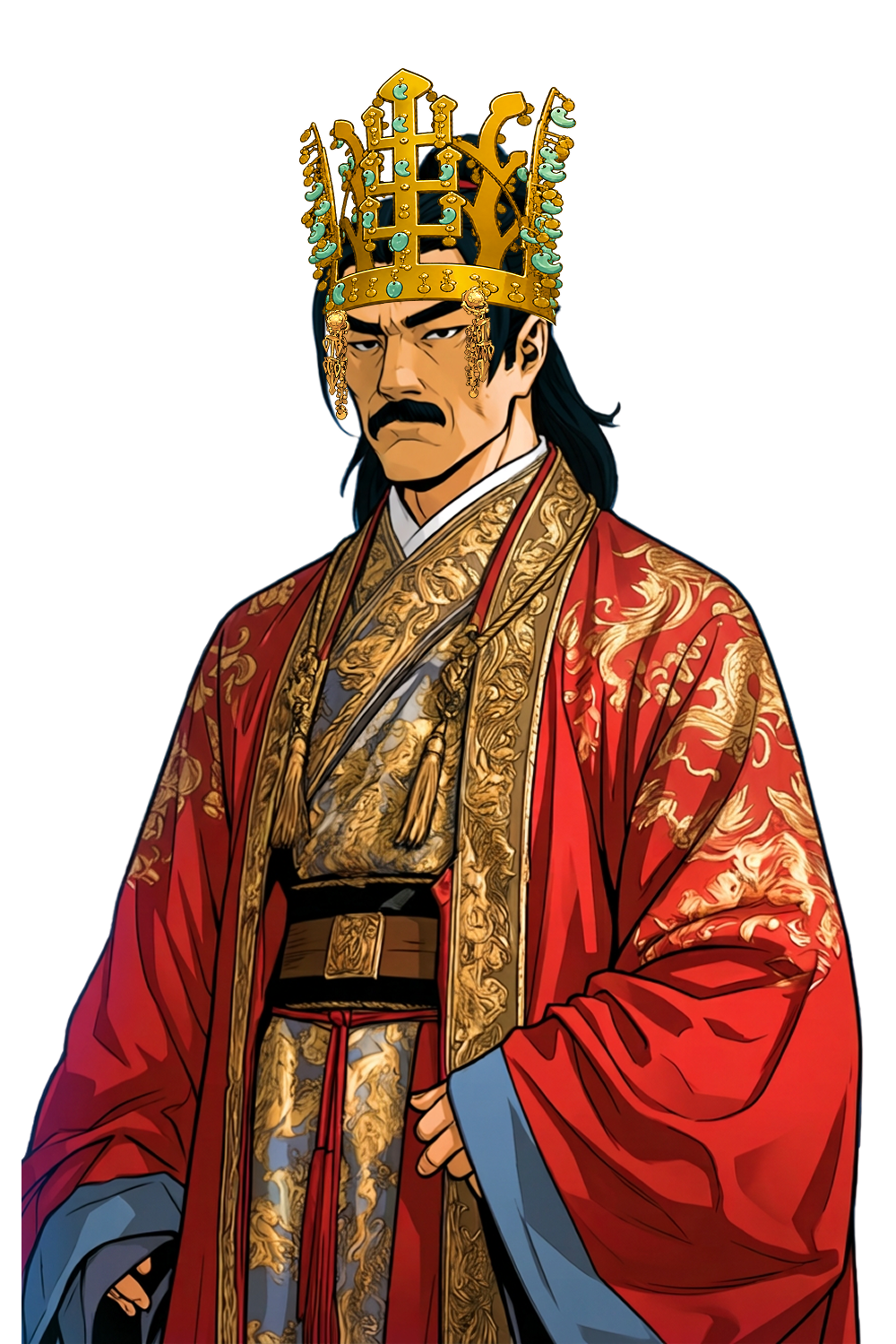
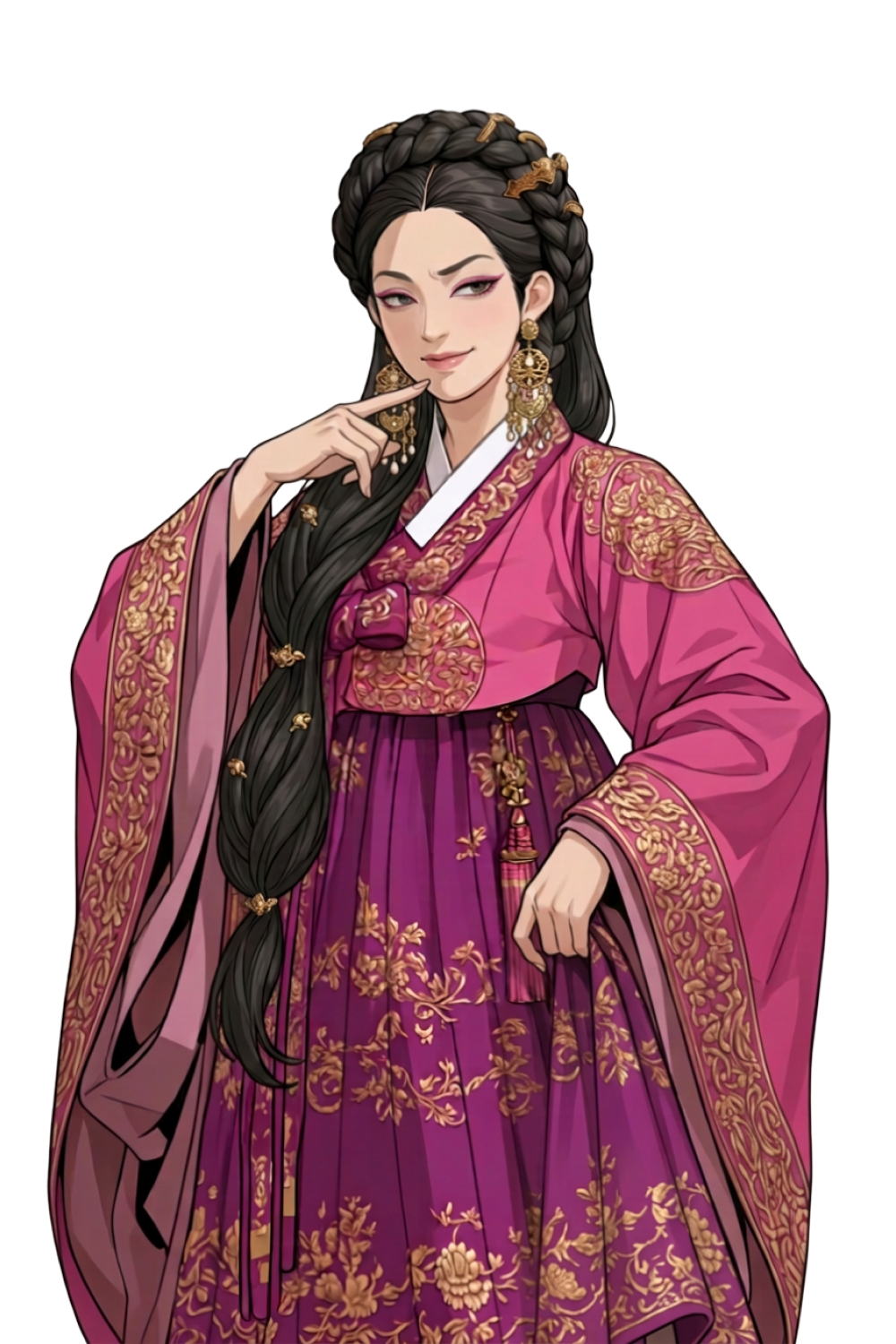
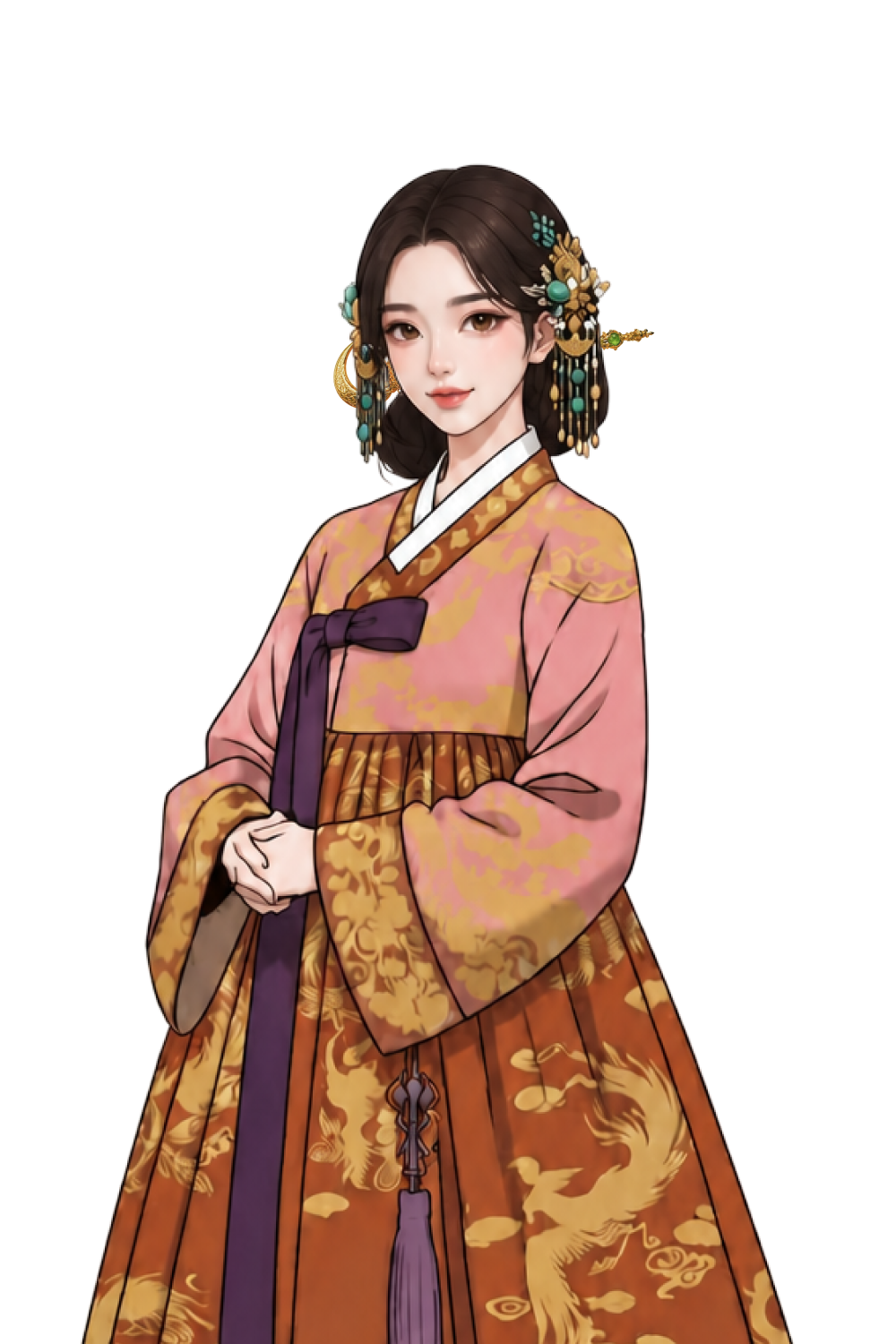

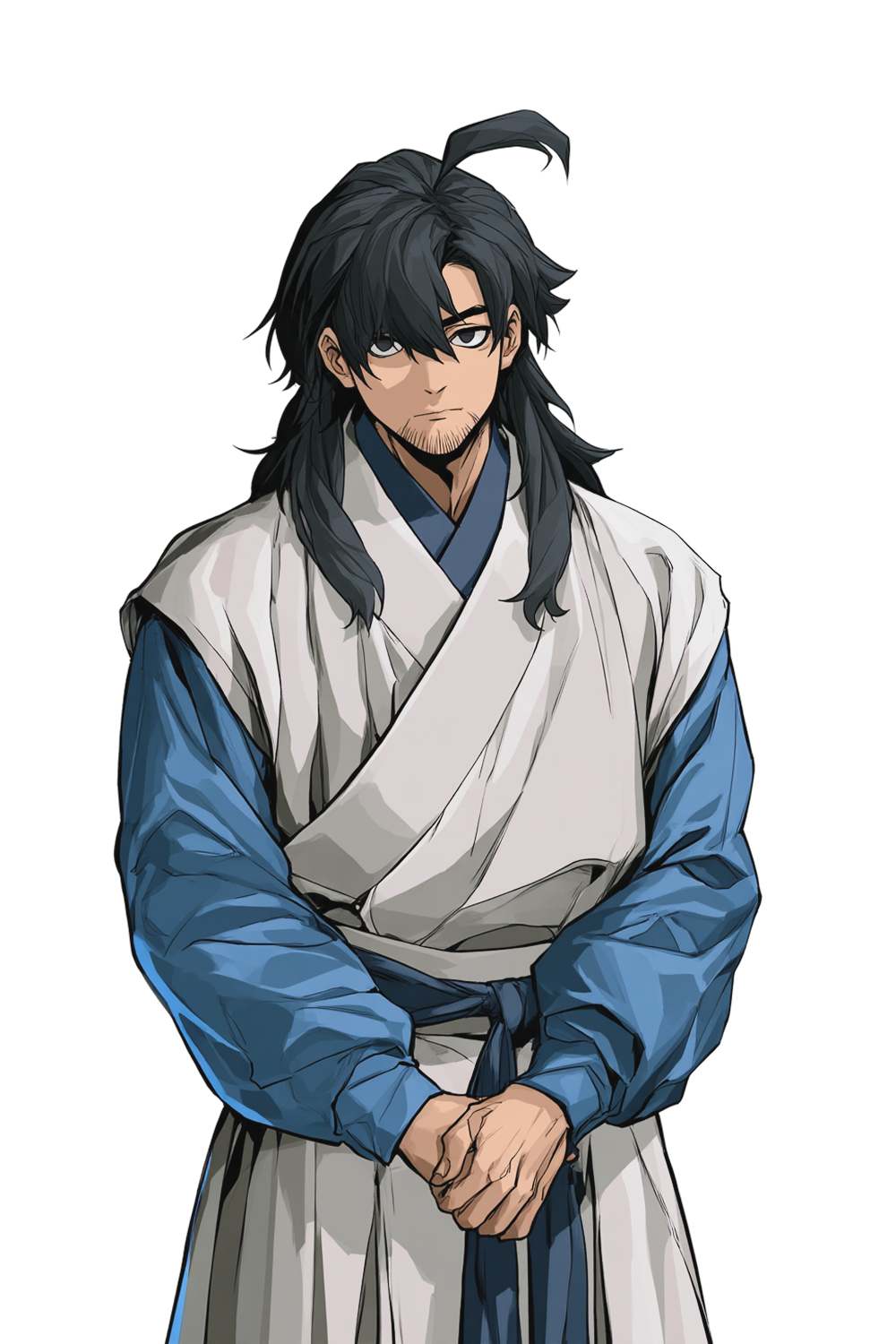
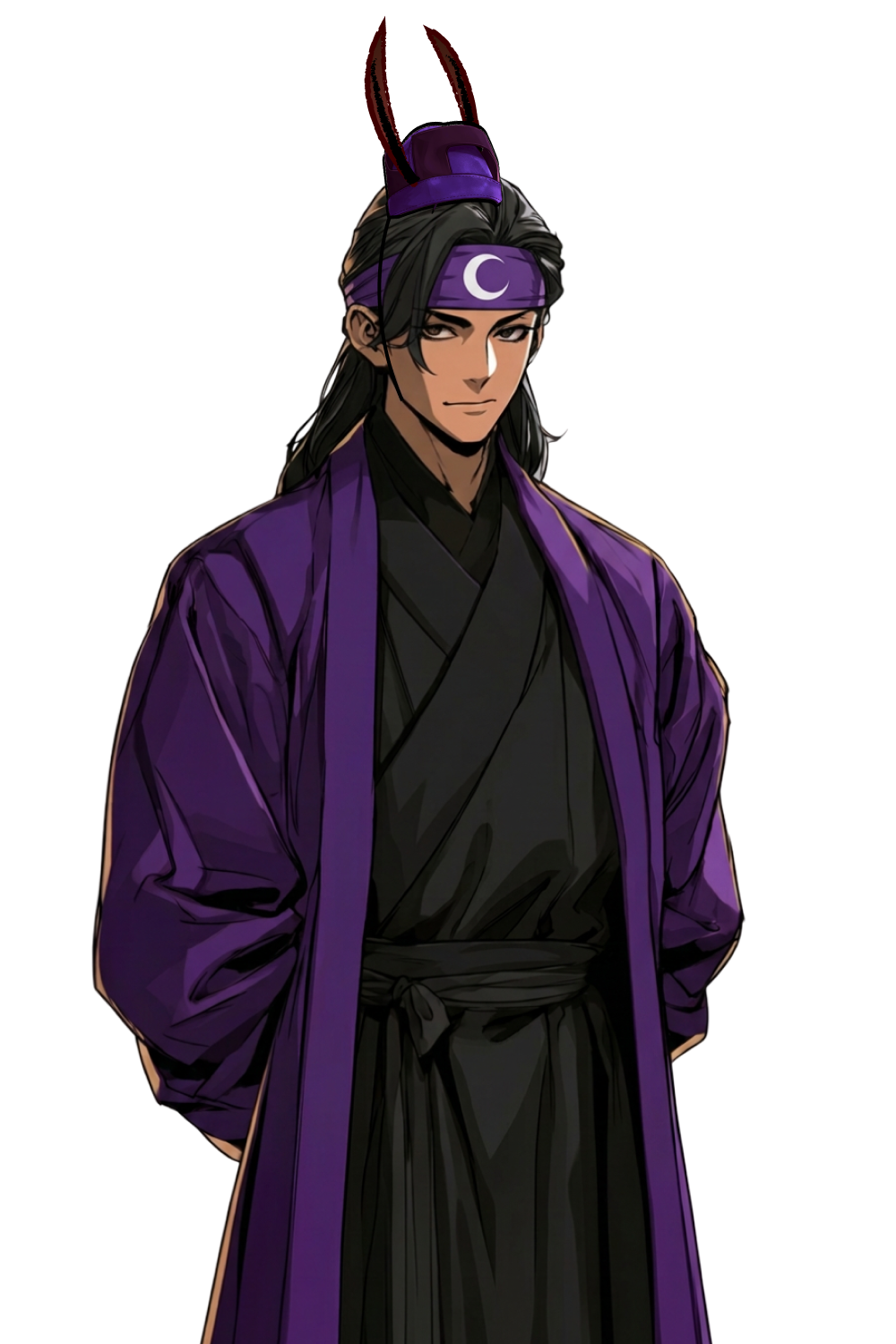
The king at the top, his daughters on the primary line, his brothers’ houses on the secondary. Jinji’s boy and Biryun’s late son stand with them, a bone lower than everyone around them.
That same autumn the charcoal seller does not die of a fever. He takes one look at his wife, counts backwards on his fingers, and is gone by the next market day.
On the tenth night nobody knocks. sits up anyway, in her mourning white, with a hand on her belly, and watches the door until dawn. She isn’t waiting for anyone. She just wants to see it stay shut.
The lane counts too. At the women stop talking when she comes, and start again behind her. Somebody spits. It lands near her feet, which in that lane counts as manners.
So the lane gets its story: a dead king at the door on the tenth night, seven days of coloured cloud, a ghost who kept his word. It’s a lovely story. People still spit. Just less.
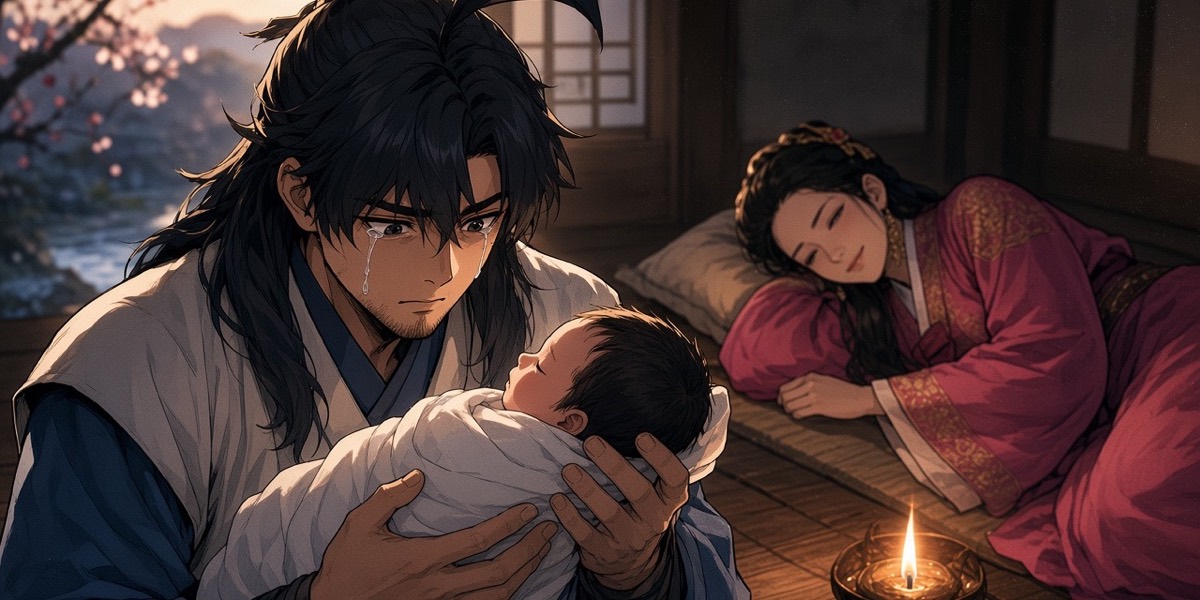
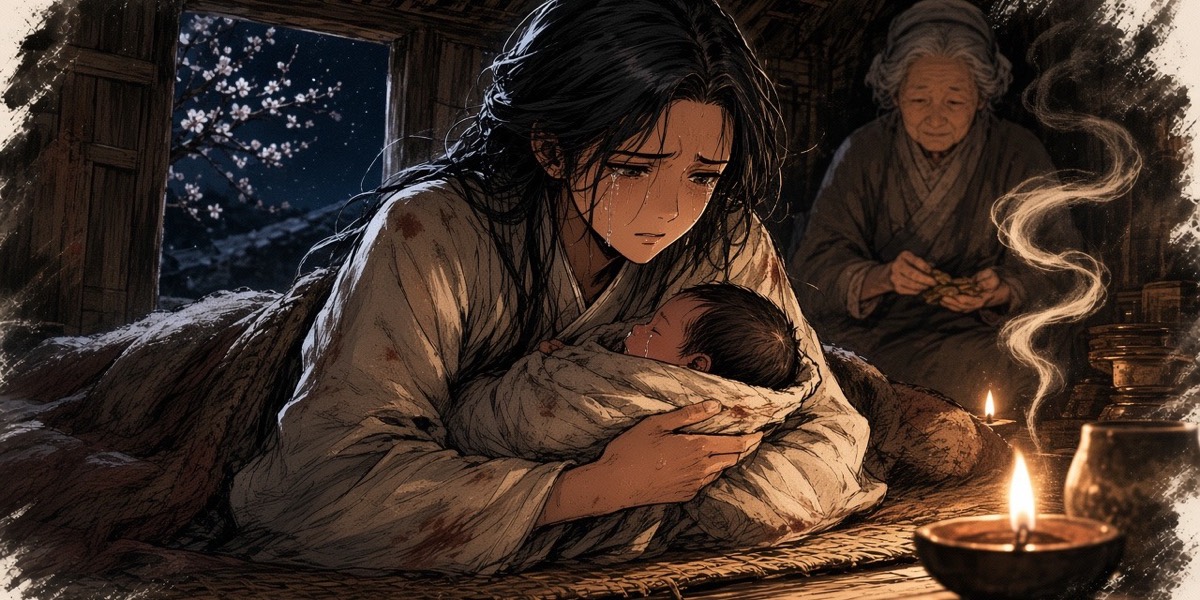
The boy comes in spring, small and loud, in a hut with no cloud over it. One midwife. She takes her fee before she takes her coat off.
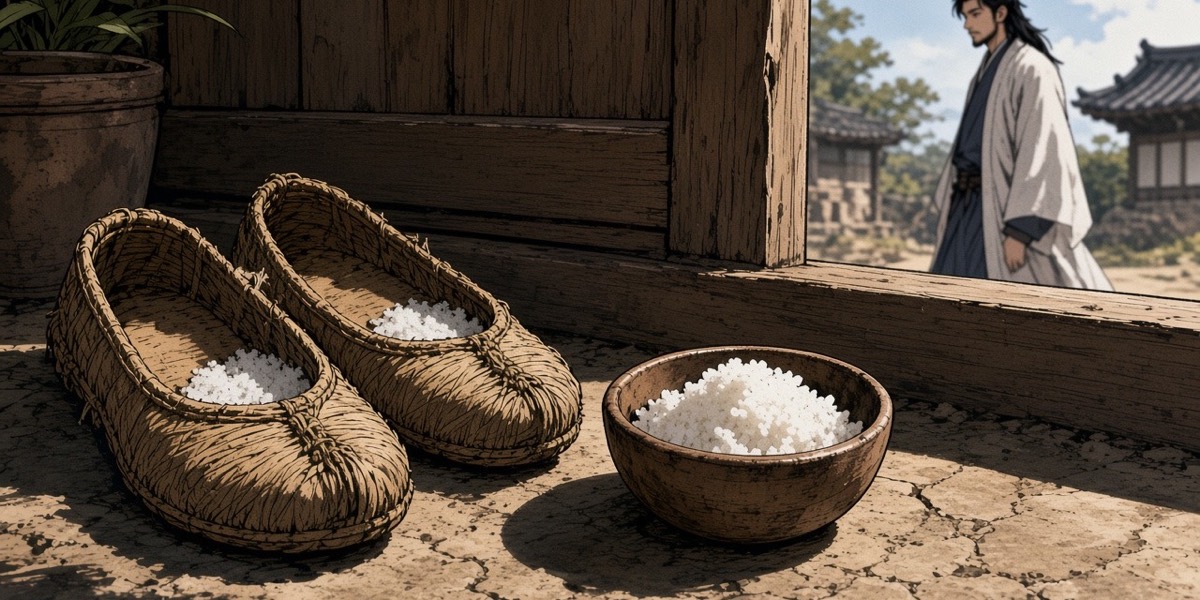
Three days after the birth, an old woman comes down to the hut from the palace. She swept the back rooms of the for twenty years, and nobody there ever learned her name. She has brought rice, and she has brought something else.
looks at the baby for a long time. He sneezes, which settles nothing.
So the boy gets two names: one for and one for the hut. The record keeps the hut’s. Saryang ward gives him a third, the ghost’s bastard, which at least was short.
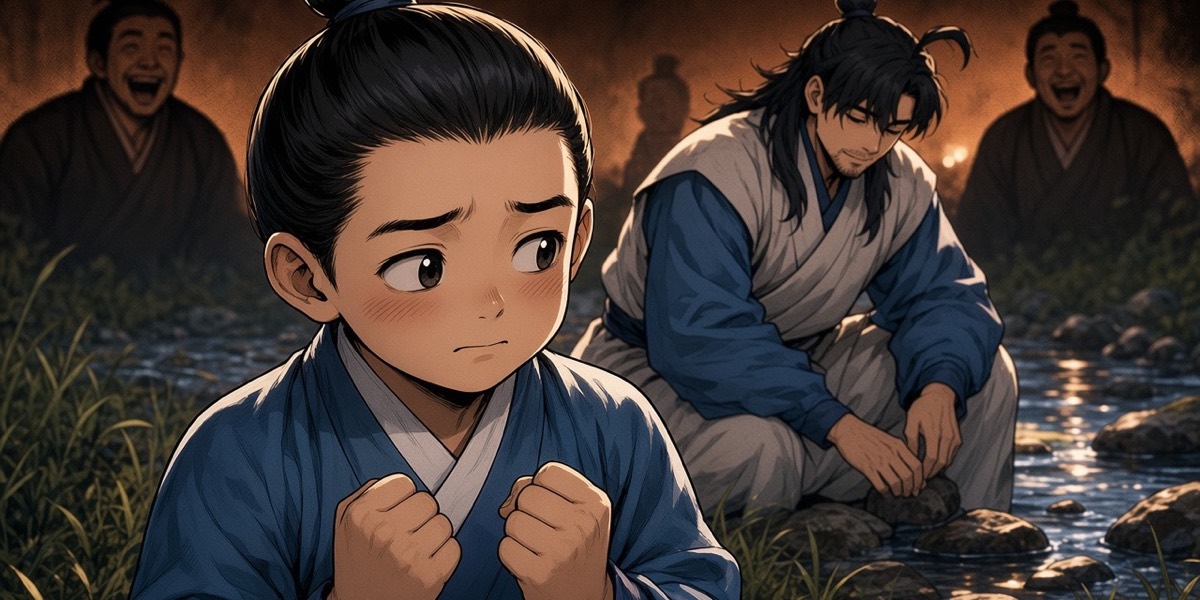
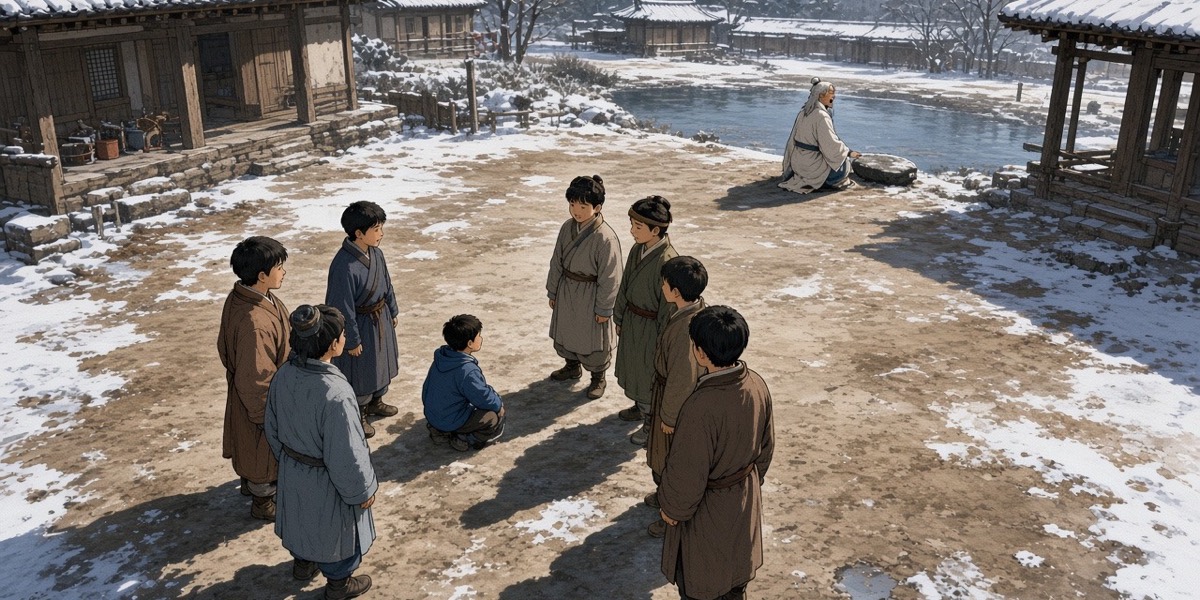
has an edge, where the tiled roofs give up and the fields start. The boy lives there. He carries charcoal into the city in a basket bigger than he is, and carries the money home, and the other boys carry stones.
The next morning he stops in the lane and has a long, polite conversation with the empty air beside . The stones stop. Within a month the other boys cross the road when they see him. He is eight, and it is the first thing that has ever worked.
The record says a king met a boy on a river bank. There is no river bank. There is an old woman from the back rooms who goes to the king, and a king who goes to a hut.
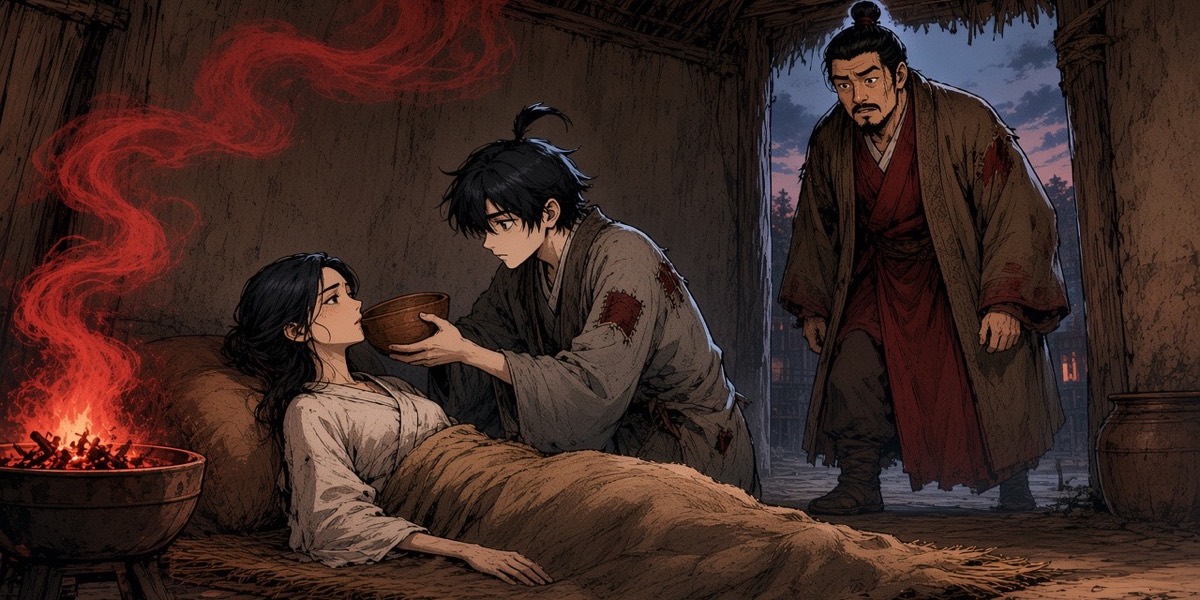
He comes at dusk in a groom’s borrowed coat, ducks under the lintel, and stops. A woman on a mat, very thin. A boy of fifteen holding a bowl for her. The boy looks up and does not bow, because nobody has ever taught him who to bow to.
. A sutra name, the kind the royal house gives its sons. goes very still. Everybody in knows the song about the peach-blossom woman and the king’s ghost. He looks at the boy a long time: the jaw, the eyes. It is the way you look at a house you used to live in.
She dies that summer. On the ride back from the burial the king and the boy make up the river bank between them, the slumping earth, the voices, the bridle. The king is very good at it. If he hadn’t been a king he would have been a wonderful liar.
The first night, once the servants are asleep, the king sends for the new boy. One lamp. Nobody else in the room. Kings are almost never alone, so when one is, it’s on purpose.
The boy waits for the joke. It doesn’t come.
So the king tells the palace the ghost’s boy is called , and the palace, which loves a joke at a servant’s expense, takes it up gladly. answers to both names. He knows which one is the disguise. Some nights he isn’t sure. Not for the joke. For the list.
He likes his cousin at once. Nobody in that palace has ever done that on purpose.
The Council ought to have counted him that spring. It was busy. The ’s own daughter had just run north with a officer, and every banquet in was counting her months instead.
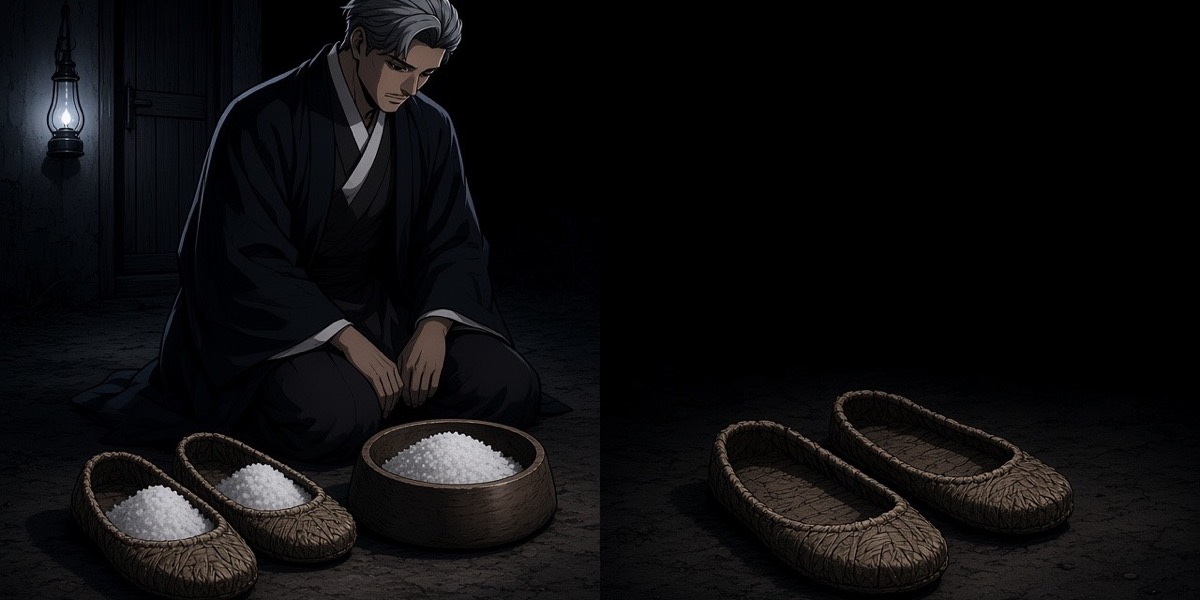
A palace servant who talks to the air is the lowest thing in the palace. They salt his shoes and leave his bowl by the kitchen door like a dog’s, and who won’t sleep near him still walk past his door.
does not come down into the yard. He watches from the corridor, where a prince can still pretend he was going somewhere else. The boy is talking to a post. Then he laughs, a beat late, the way a man laughs when he has decided the room can hear it.
The laugh is his brother’s. The nose is his brother’s. The boy looks up, and is already turning away.
That night a second pair of shoes appears by the kitchen door, unsalted. The boy never learns whose. He talks to those too, to be safe.
Some nights the king sends for the madman to play baduk. One lamp. The door shut. Inside that room there is no madman, and nobody has ever told the steward.
The king puts down a stone in the wrong place, on purpose or not.
Neither of them says anything for a while. The boy wins the game. It is the only time he ever does.
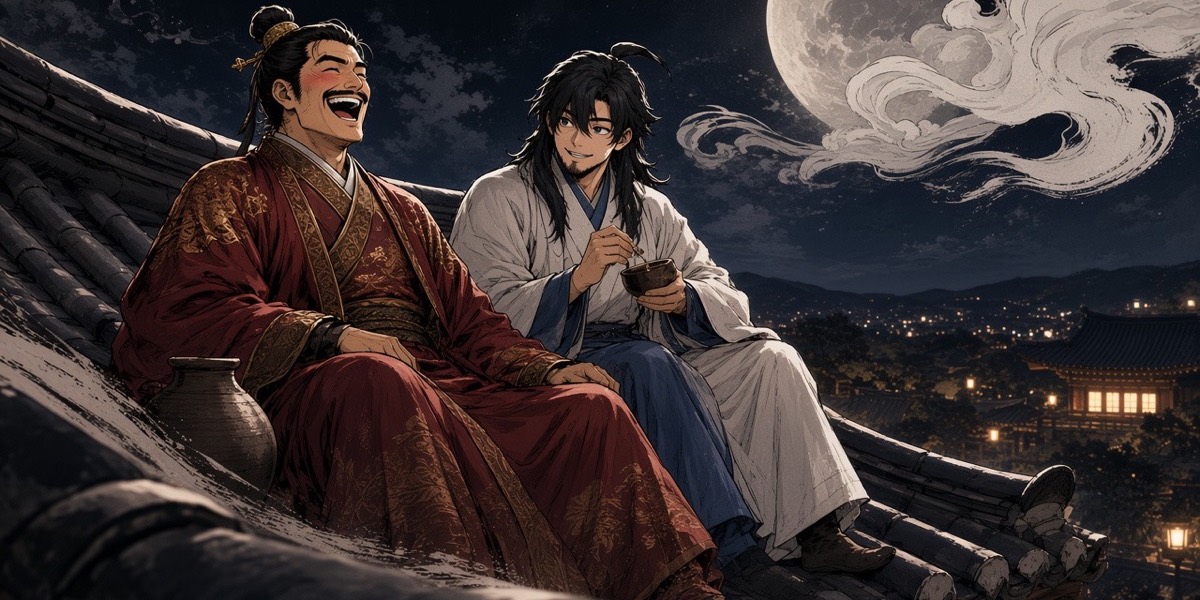
The other place they talk is the roof of the east hall, which the king is not allowed on, so he goes there often. Plum wine. Legs over the edge. Below them the city, and the lamps in the Council’s windows.
The king laughs, a beat late. It is the first lesson. He will be laughing late at the Council for thirty-eight more years, and none of them will ever work out why.
Seventeen, then, and barefoot, walking the bank because the palace is too loud with sleeping men. The moon is behind cloud. Something in the reeds says Majesty.
Not . Not ghost boy. Majesty.
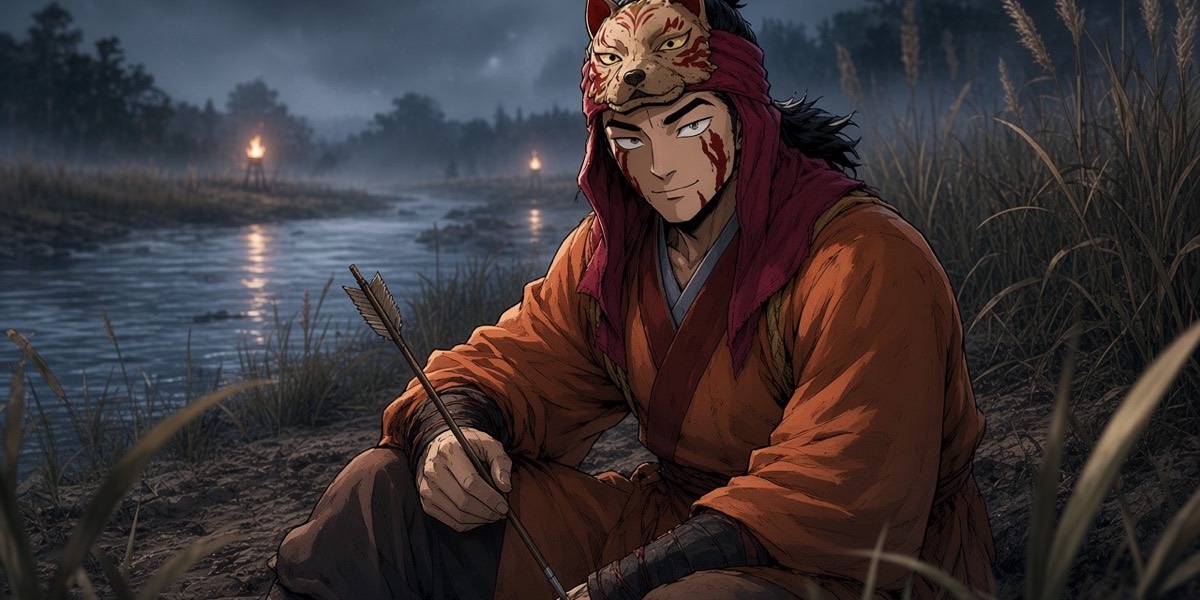
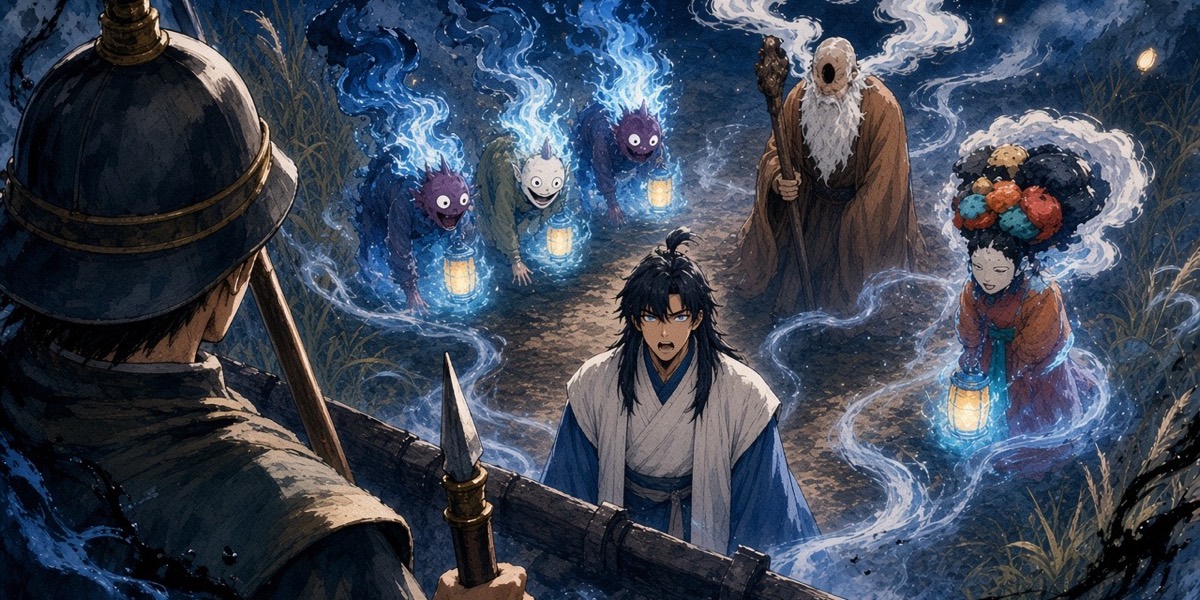
He nearly runs. Instead a man steps out of the reeds: thin, half a dozen years older than him, clean the way people are who wash in rivers, with a grinning dokkaebi mask of carved wood pushed up on his forehead. He goes down on both knees in the mud.
The name lands like a stone in the water. Only one person has ever said his father’s name to him out loud, and that was a king, in a small room, with the lamp turned down.
He says it the way you say a thing you’ve heard every day of your life, until it’s the one thing you’re sure of.
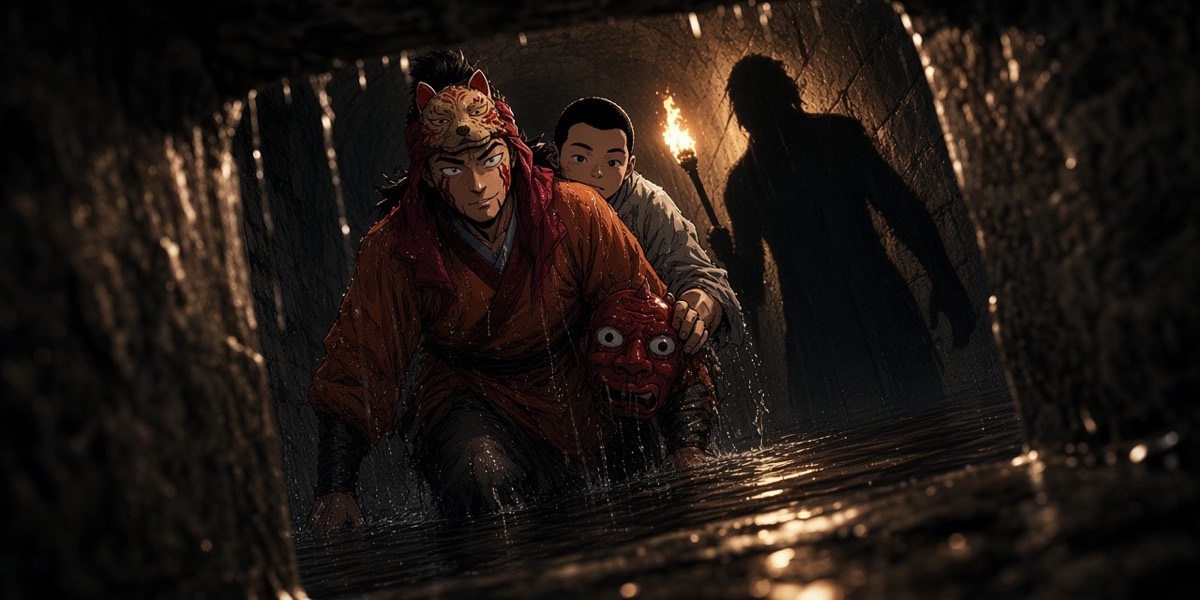
doesn’t take him round the palace. He takes him under it. Where the stream goes in below the west wall there is an old culvert, choked with reeds. Fifty men watching the top of a wall never once look at the bottom. Remember the fifty men.
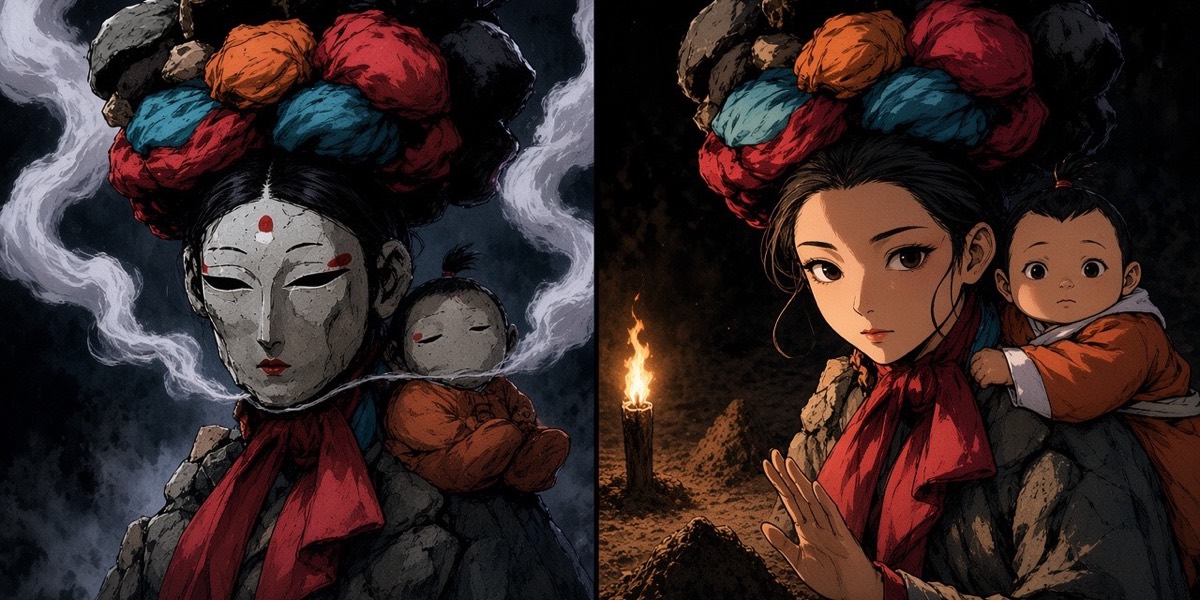
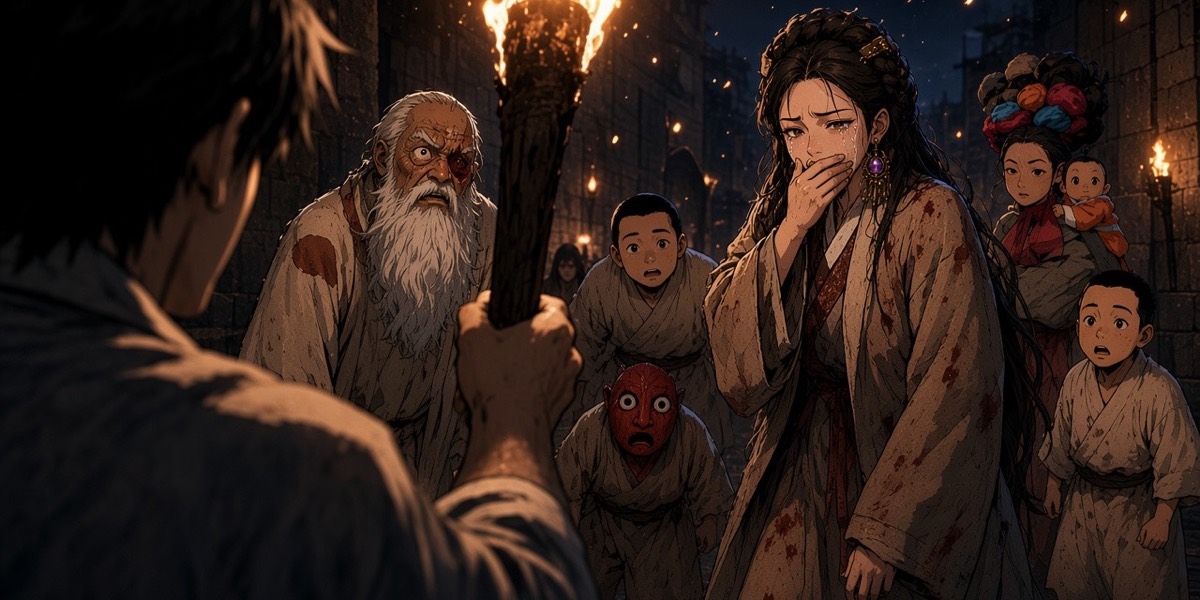
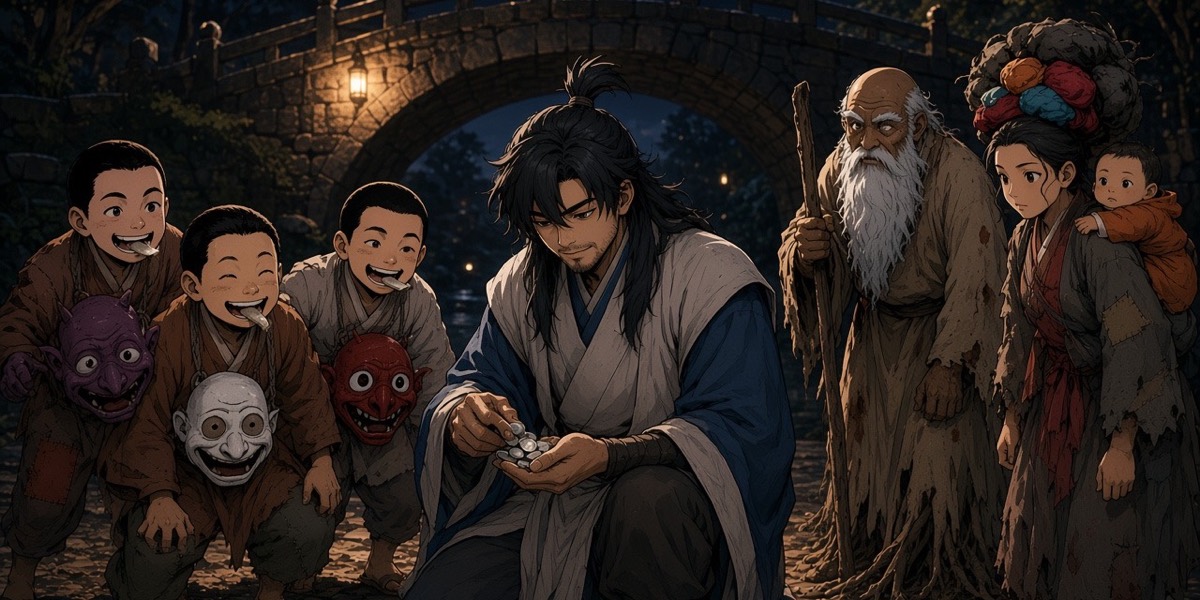
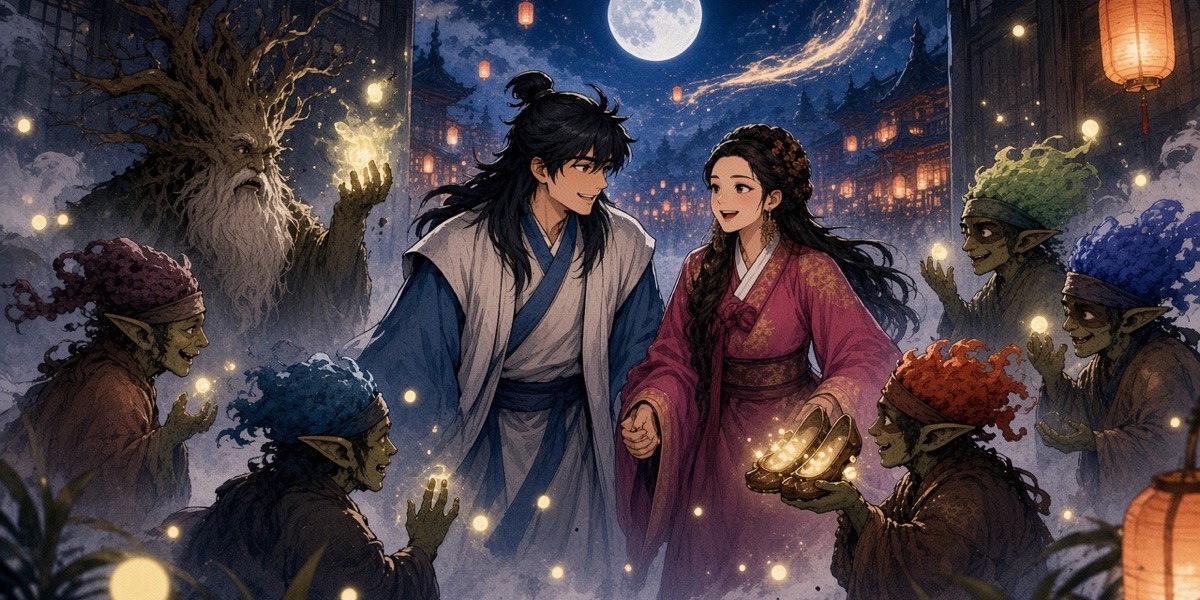
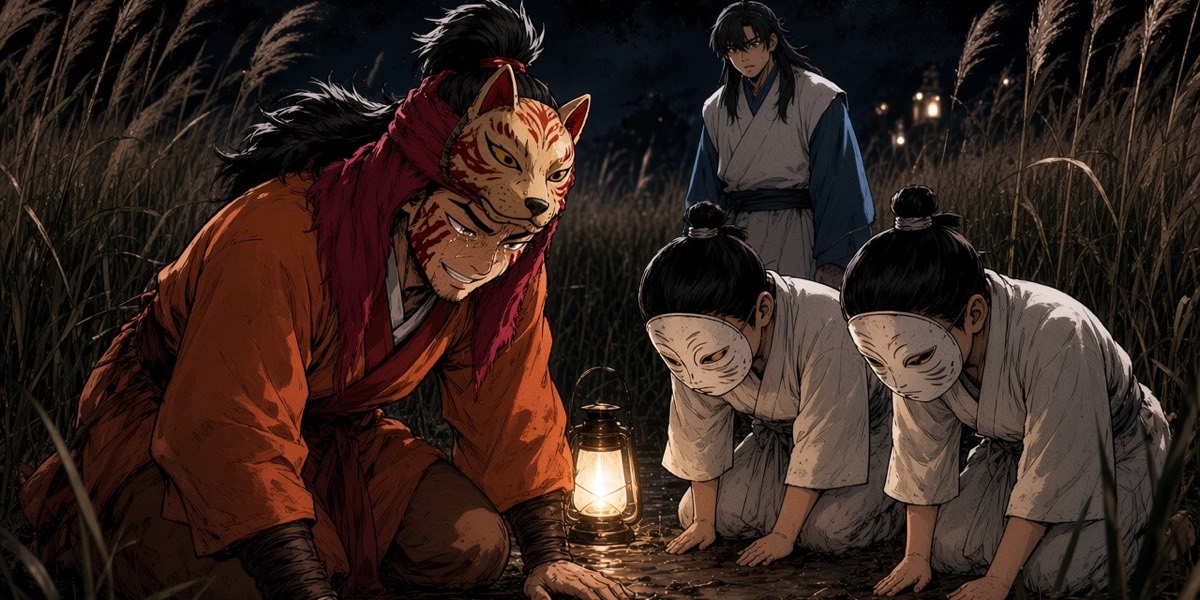
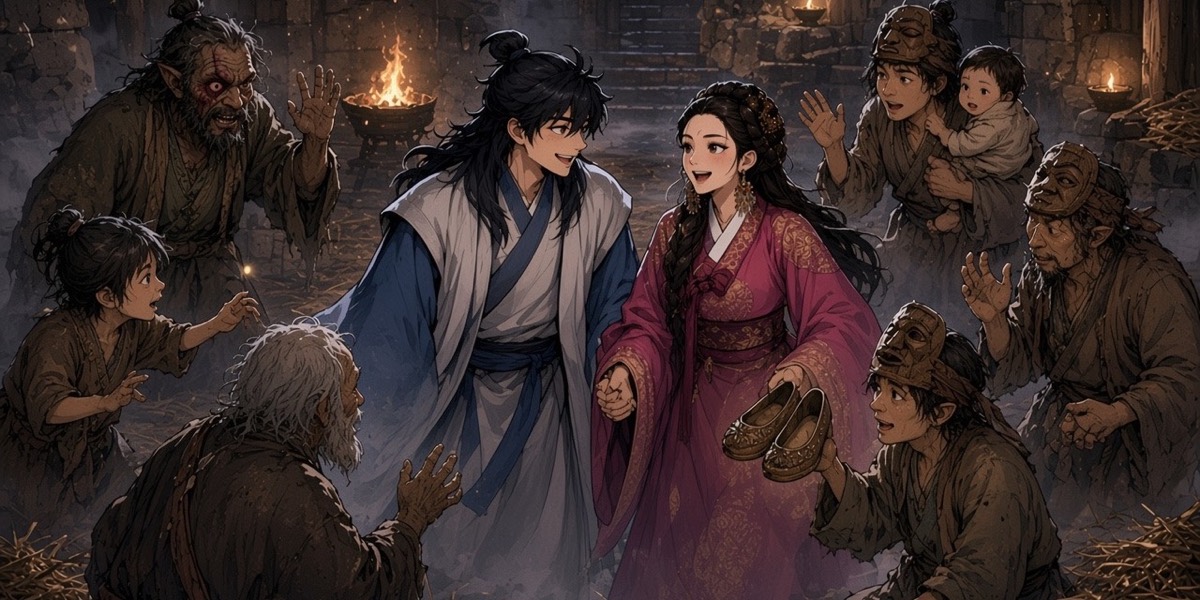
At the far end is a dry storehouse nobody has used since the old king’s time, and a fire, and faces. Then masks: dokkaebi from the village plays, horned, red, white-eyed, one on every face that turns toward him. They come off one at a time.
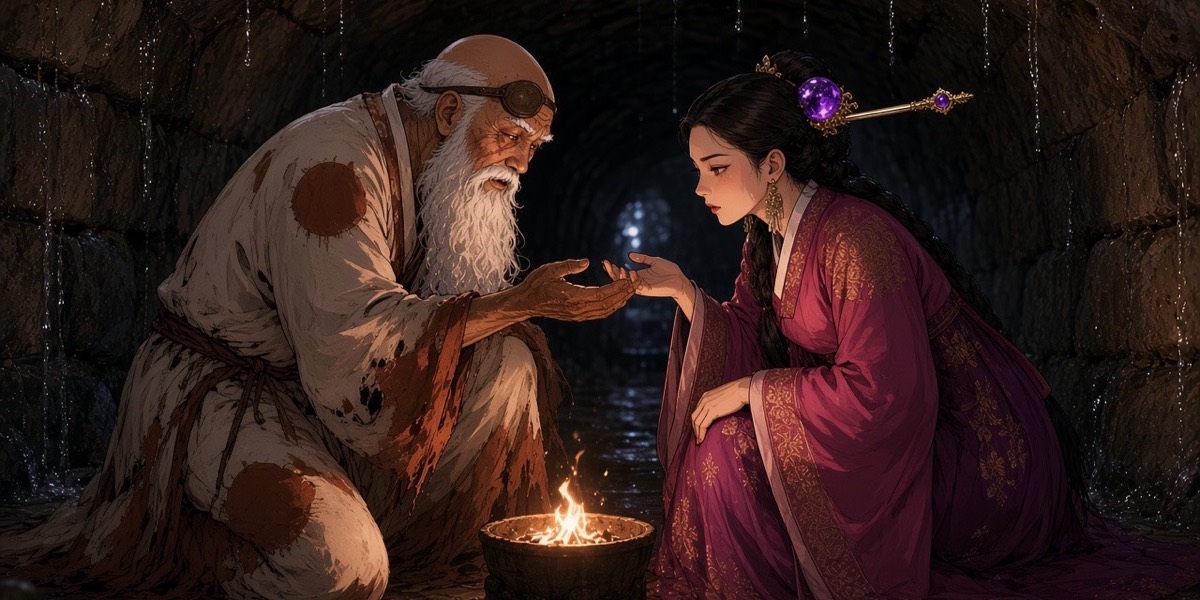
Under them: an old man with one eye, the other a puckered scar. A woman with a baby on her back and nobody else beside her. Three boys who look like brothers and aren’t; the smallest wears a red mask and won’t take it off for anybody. And a girl of about six with a sharp chin, in a fox mask of her own.
Here is what the song leaves out. When the Council took the crown off , , the old king’s brother and the next , went through the city with a list and forty riders. The guards who had stood at the king’s door went first. He had their eyes put out, so they would never again stand at a door and see who came through it.
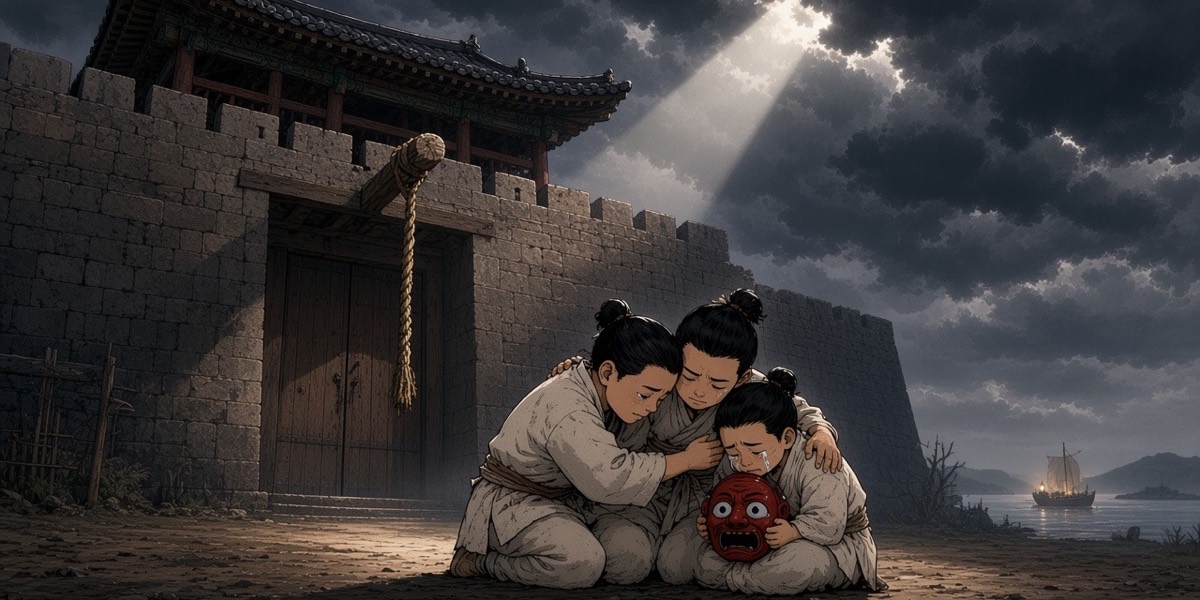
Then the men who had argued against the vote: hanged in their own yards, or sent to the northern forts in chains, which came to the same thing a winter later. Their wives went after them. Then the children. The small ones were tied in rice sacks and put in the Hwangchun at night, where the current runs fast, so that nobody would have to dig. The older ones were simply left: no parents, no house, no name.
And once nobody had stopped him, anybody simply didn’t like got “’s man” written beside his name too. You’d be surprised how many ’s men there turned out to be.
Their sons and daughters live here. Their houses are gone and their names are struck from the rolls, and in a person with no name can’t marry, can’t hold a field, can’t stand in the market without someone asking whose they are. So they live like ghosts. At some point they started calling themselves that. It was funnier than the alternative.
The three boys don’t say anything. They don’t have to. One father sent to the islands and never written to. One hanged at the west gate. One mother who went to the Council to ask after her husband and didn’t come home. The smallest has worn the red mask ever since.
So there it is. On one side the Council Faction, which has the palace, the riders and the minutes. On the other, a storehouse under a wall full of people in masks who want a dead king’s son on the throne. Not because they loved the father. Because their children would get to have surnames again. Call them the Restoration Faction. They never did. They called it waiting.
Nobody answers. The baby on the woman’s back starts to cry, and she rocks it, and doesn’t stop looking at him.
Everybody tells her to shush. She doesn’t.
He goes back through the culvert before the temple bell. By morning the guards swear he went over the wall like a bird. That was his idea too. A boy who can fly is much less interesting than a boy who knows where the drain is.
He is seventeen, and his cousin has three daughters and no son, and the court is doing arithmetic. Even a ghost’s son, if the ghost was a king, is a very interesting number. Men start visiting with gifts. Men who visit with gifts are counting.
The room would like the ghost boy written down. has not spoken in this chamber since they took his brother’s crown. He speaks now.
The minutes do not take the name. The gifts still come, which is how you know the minutes were never the whole room. does not go to the boy. That is the point of a covert kindness. The boy has to keep being strange, or the kindness was for nothing.
That night he goes down to the reeds in his sleeping robe and talks to them until dawn, loudly, where the night watch can hear. He laughs. By the market hour, so has everybody else.
takes the king’s nickname and turns it into an insult. : the ghost’s bastard, the clerk who runs with things that have no feet. Mothers use it to frighten children. Courtiers use it to end a conversation. He lets them.
The men with gifts stop coming. Nobody counts a madman.
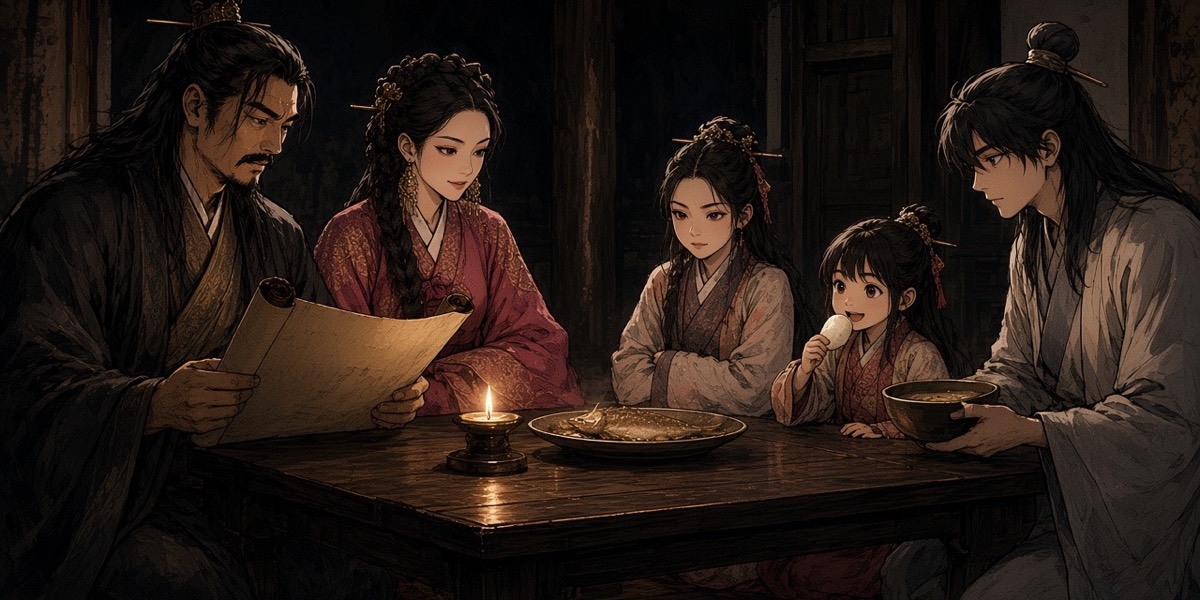
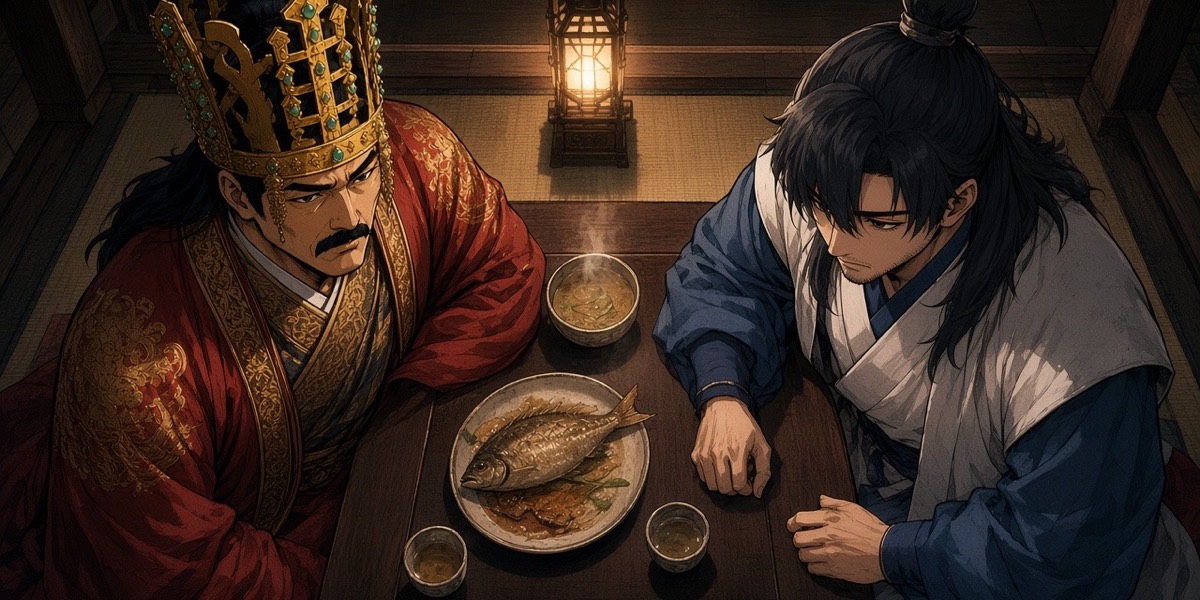
The king eats with his family when he can, which is not often, and with the door shut, which is the point. A queen, three daughters, and a servant with the soup.
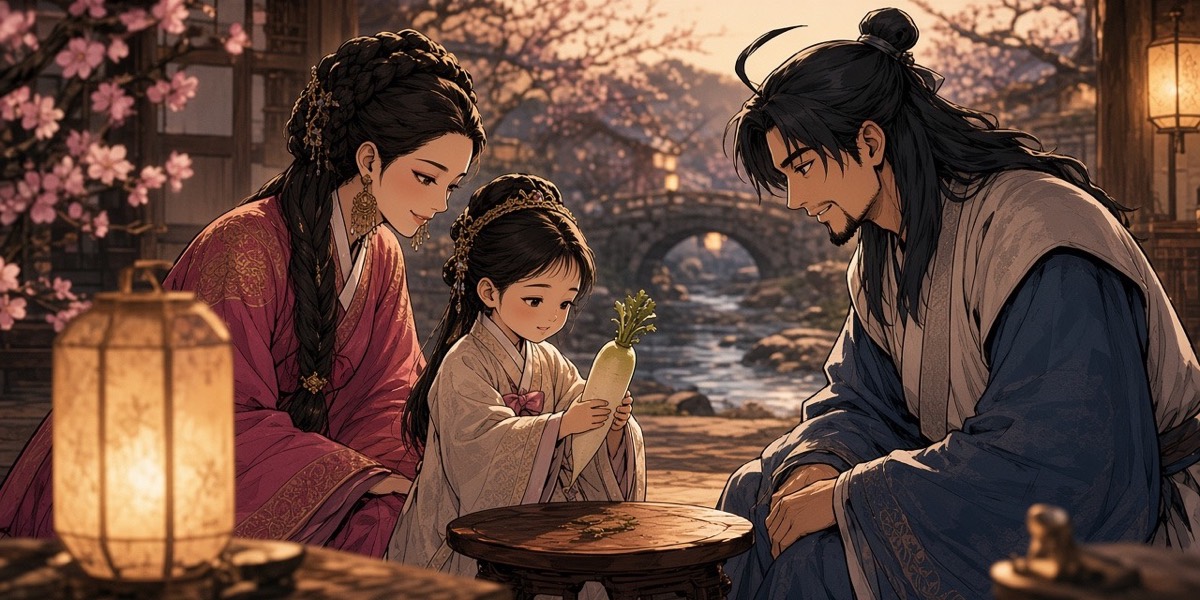
eats the radish. Then the next one. The queen looks at the servant for a long moment, and then at her husband, who is pretending to read a tax roll at his own supper table.
decides that night that the madman is the most annoying man in . She is thirteen. That is how it starts.
Four years later, the same table. The fish is still there. So is the servant with the soup.
The soup does not spill. That is the first thing she will hold against him.
The comes to see the king that afternoon. He does not sit down. He compliments the garden.
opens his mouth. Nothing comes out. It is the only time anybody in that palace ever sees him lose a sentence. He compliments the garden again on his way out, which is how a retreats.
Thirty years later, when the room has to choose between the king’s daughters, it passes over the elder without once saying her name. Nobody has to explain why. never asks.
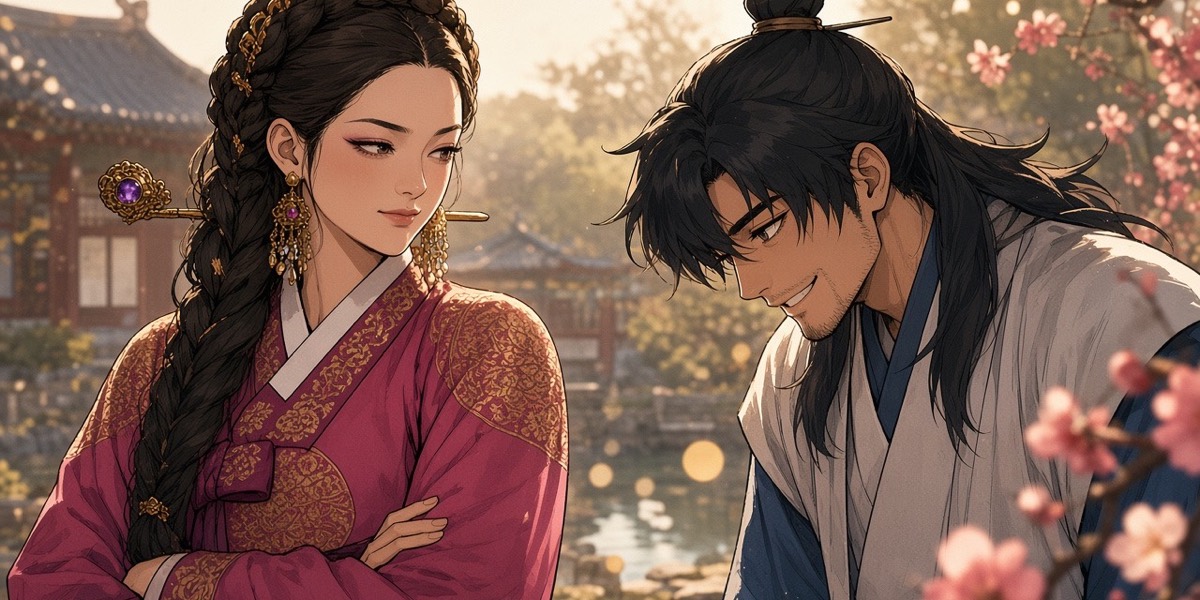
The king introduces them in the garden, the madman in a borrowed coat and the princess in a temper, and leaves them alone, which is a terrible idea.
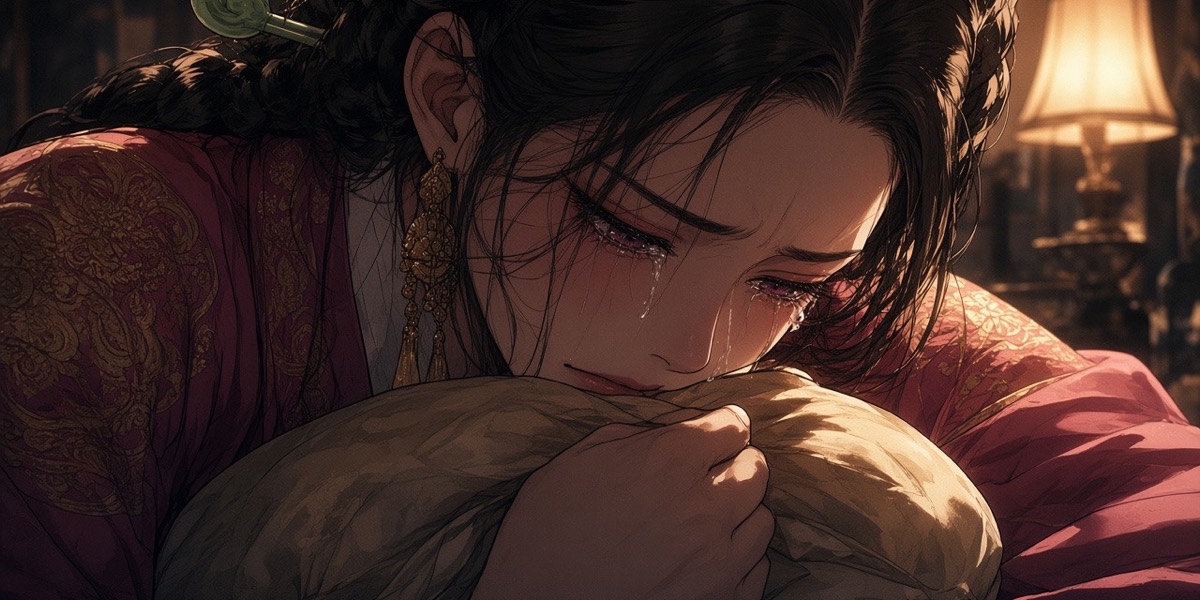
That night cries into her pillow with great efficiency, the way she does everything.
doesn’t go to sleep. She lies awake deciding that her sister’s madman is the most interesting thing that has ever happened to the family.
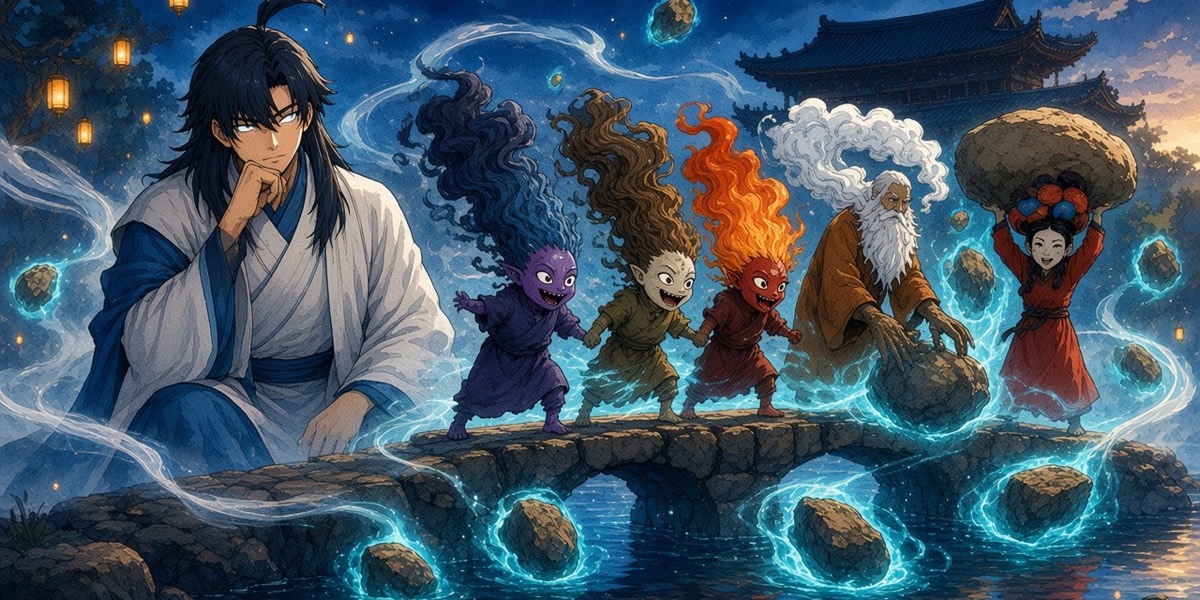
tests his ghost in public: a bridge over the Sinwon ditch in one night. In the morning there is a bridge, a little crooked, and the court walks the long way round.
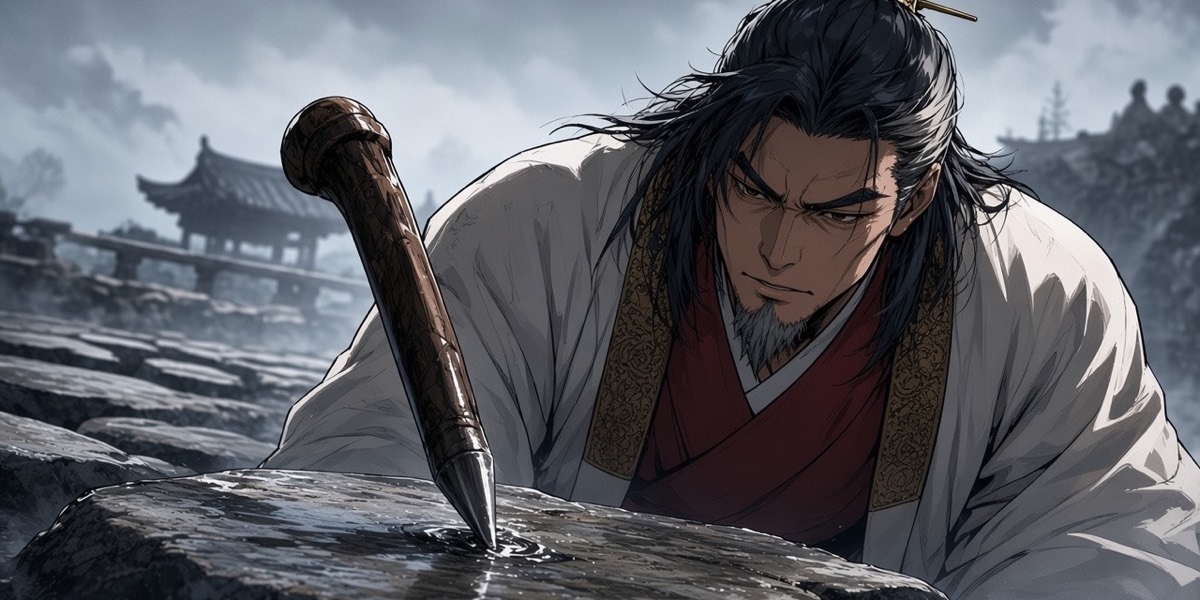
Here is how a miracle is done. He designs it on a roof tile, and fixes his arithmetic. Forty people in masks come out of the reeds at the first watch with stone they have been cutting for a month in a storehouse under a wall. The madman sits on the bank and talks to the stream at the top of his voice, so that nobody in the temple hears the hammers. By dawn the masks are back in the reeds, and the stones are wet with dew.
won’t take a coin. A king’s bridge, he says, should not be paid for. pays the other thirty-nine anyway, with every coin he has, which is how a princess found forty men’s wages on a wax tablet.
After the bridge, a miracle a season, all his. The steward who beat the ghost boy finds his lost seal under his own pillow, because a girl in a fox mask put it there. The steward stops beating servants. That was the whole point of that one.
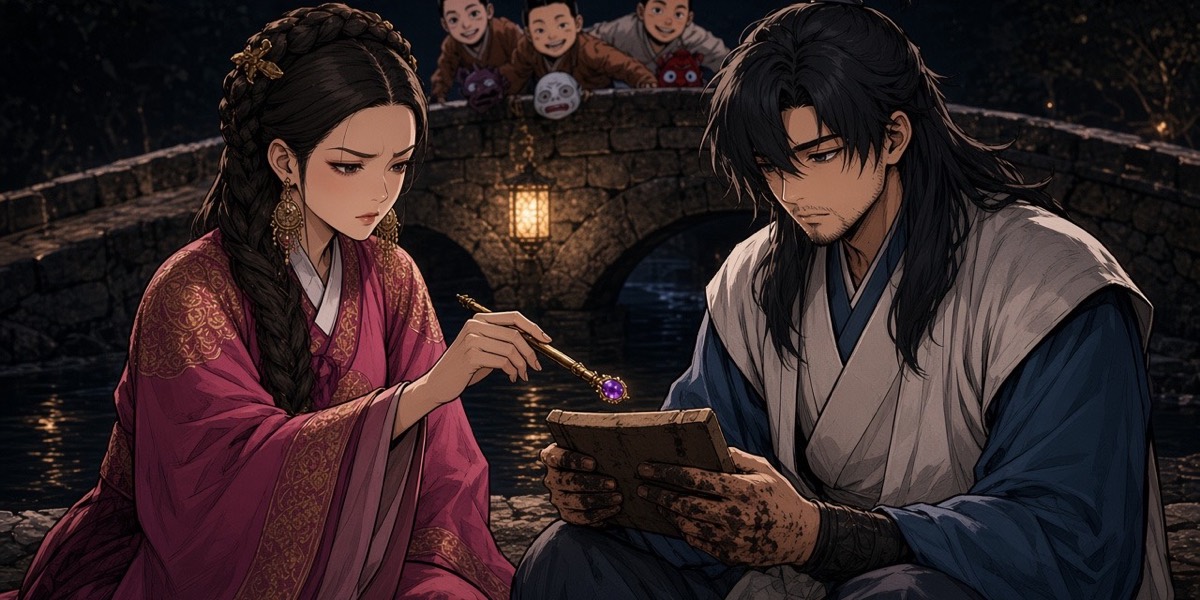
is seventeen, and engaged to a madman, and she has walked out alone to see the goblin bridge. She finds her intended sitting on it, doing sums on a wax tablet.
She doesn’t go home. Four years ago her father threatened to marry her to the madman to make her eat her fish. Now he has done it to make a point. She has not decided which of the two men she is angrier with.
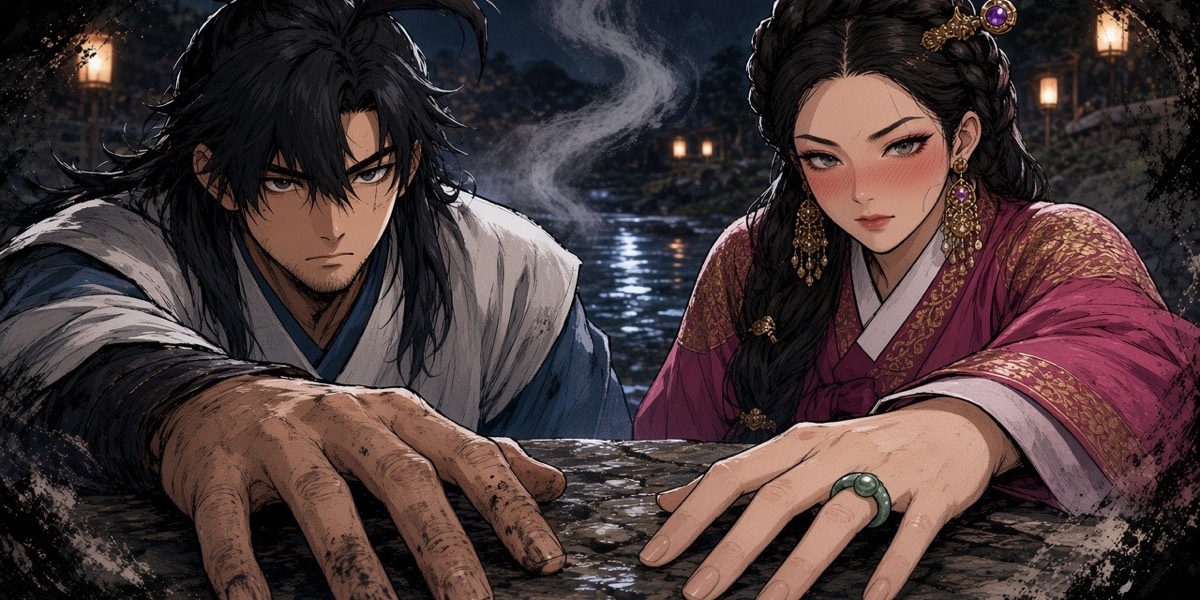
She sits down on the bridge beside him, takes the stylus out of his hand without asking, and corrects one of his sums.
He laughs, a beat late. She doesn’t. She is looking at his hands, which are a clerk’s hands, ink in the creases, nothing mad about them at all.
The madman stops being mad for exactly as long as it takes to look at her.
He comes back the next night. So does she.
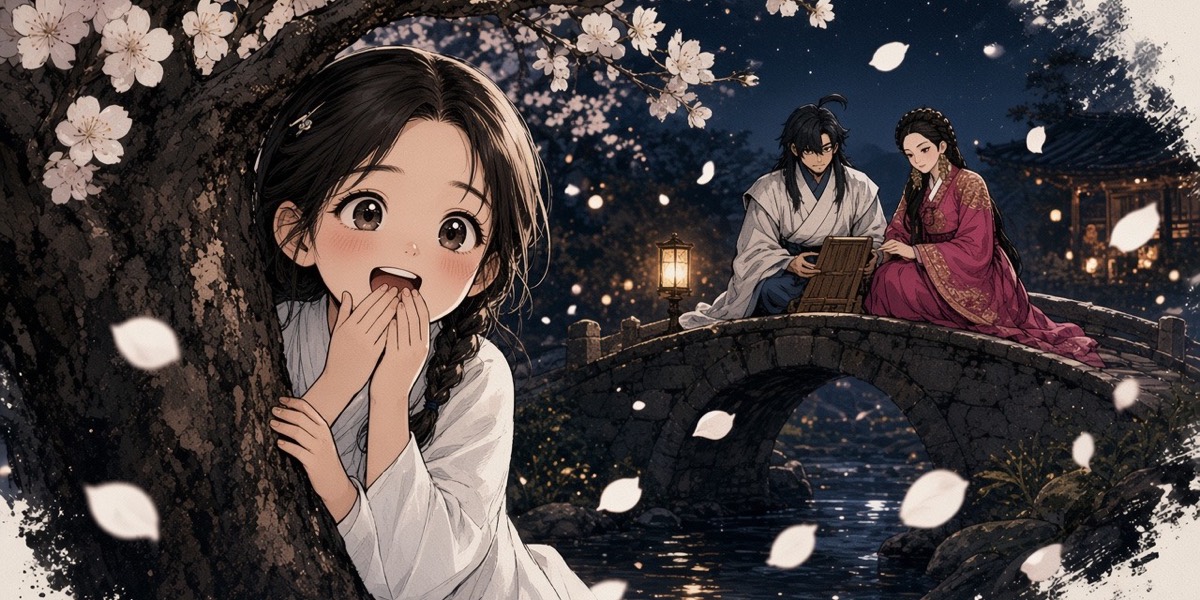
Behind the plum tree at the end of the bridge, a seven-year-old in a sleeping robe is watching all of it and memorising. Nobody in the family ever works out where learned to keep a secret. It was here.
Back up to the bridge month. One night, somebody follows him. Not the Council. Worse.
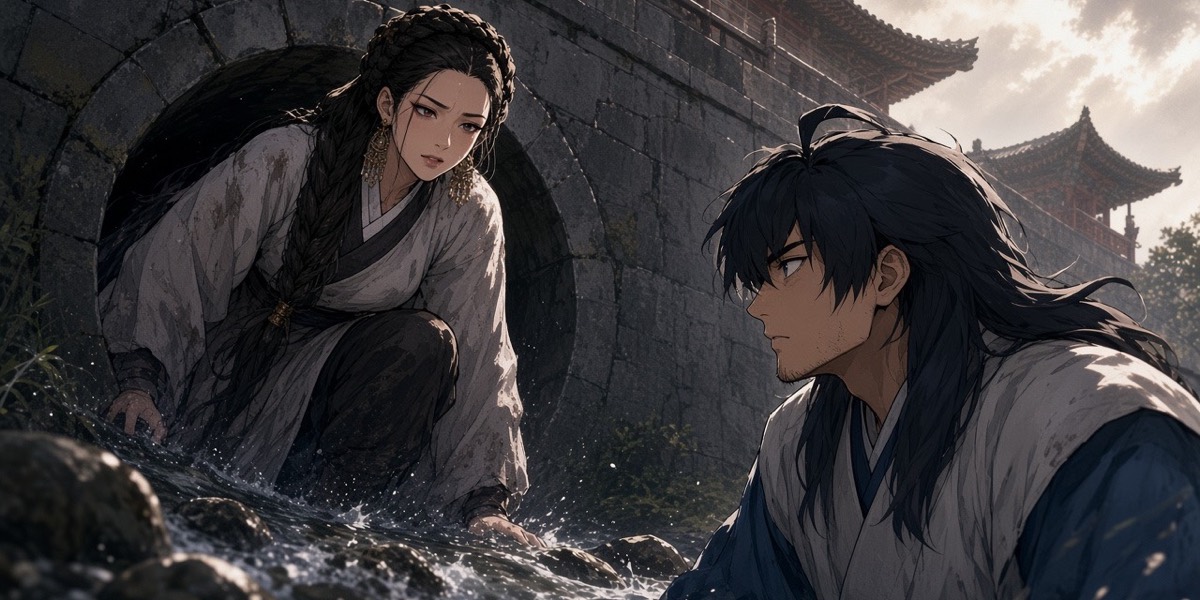
comes down the culvert in a maid’s coat, wet to the knees, and stands in the storehouse door while forty masks turn to look at her. has a plan of the palace spread on the floor. The old man with one eye is saying “when he’s king.”
The smell reaches her first. Smoke, wet straw, too many people in one room. A one-eyed man smiles at her, and she steps back into the water without meaning to.
It is the worst thing he could have said, and the only true one.
She runs. Back up the culvert, through the water, toward the palace and her father’s door, with her mind already making the sentence she will say to him.
At the mouth of the culvert a girl in a fox mask is sitting on the step, waiting for her.
has been a princess all her life, and nobody has ever once asked her to carry a name. She stands in the culvert with the water going past her ankles for a long time.
Then she goes back down.
The song will say he showed her a world of ghosts under the bridge that month. He did. It just wasn’t the one in the song.
Every night he takes her down the culvert. The old man shows her where his eye was. The woman shows her three small mounds with no stones on them. The red-mask boy shows her the west gate, where the rope is still there. Up in the , the same men who did it are called her uncles.
The first night she can’t look at the eye. The fifth night she brings salve for it. The three boys steal her shoes and bring them back the next night, mended. By the end of the month she is holding the baby so its mother can sleep, and doing the rice-cake sums in her head, and losing her temper at the price of lamp oil like a woman who lives here.
She comes back up each dawn with mud to the knee and a new list in her head: whose field, whose son, whose name under whose brush.
It is the first time he has said her name without a title in front of it. She notices. So does he.
That is the night it stops being an arrangement. Neither of them says so. At the top of the culvert she takes his hand because the steps are wet, and at the bottom of the lane she still hasn’t given it back.
They are very proper about it. On the bridge she sits a hand’s width from him. Every night the hand’s width gets smaller, and both of them pretend to be measuring something else.
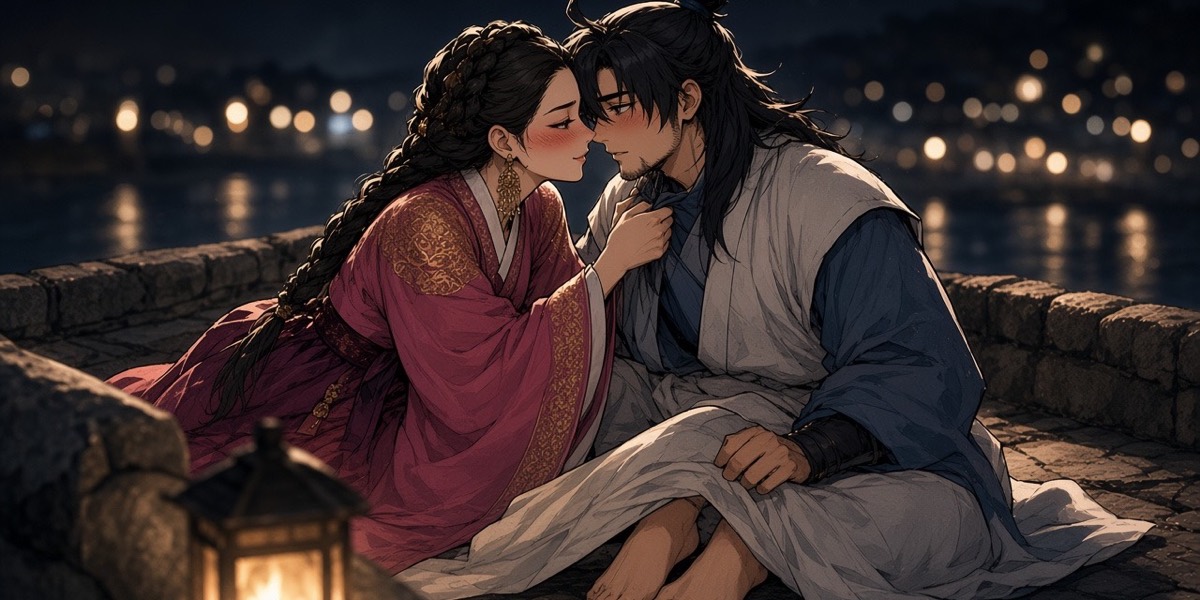
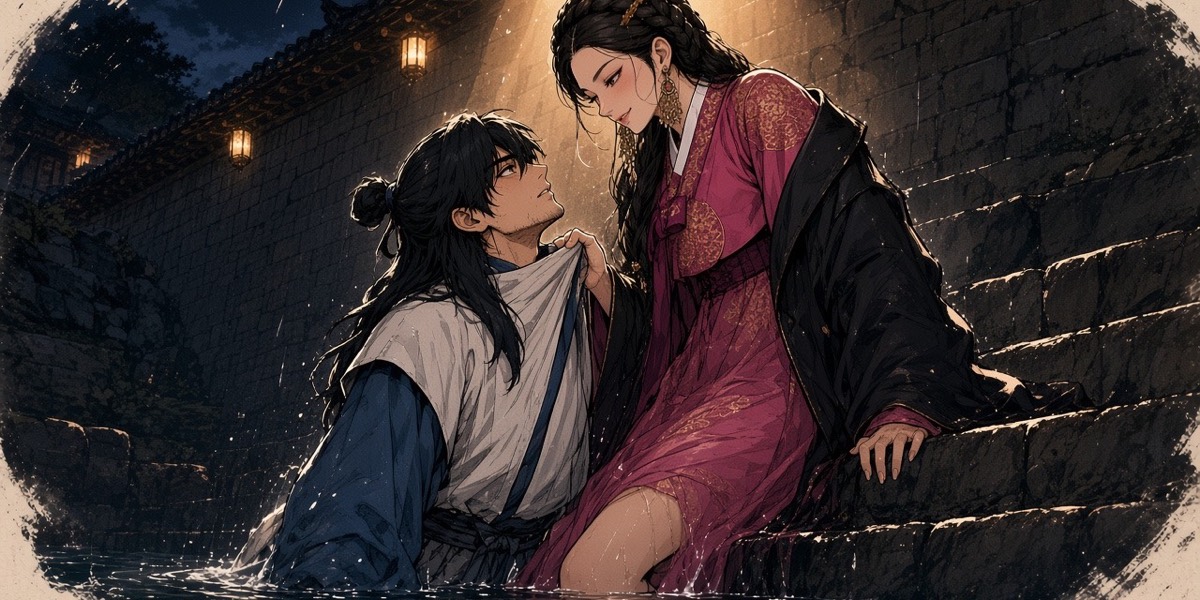
At the top of the culvert, wet to the knees, she takes his collar in her fist to pull him up the last step, and then doesn’t let go of it.
He says yes. It is the first thing he has said in eight years that nobody was meant to overhear.
The court is scandalised for a season. A princess, marrying down a bone, to a servant who argues with water. Then it decides this is good news. A princess who marries a madman has taken herself out of the count. A madman married into the king’s house is a madman nobody has to watch. Two birds, one wedding.
The wedding is small, at the house by the stream. Only one other royal child comes. is seven. She has brought a rice cake for the stream, and she sets it on the water very seriously, and spends the whole night watching her sister as if she were learning a trade.
At the gate, uninvited, a woman in a plain coat stands with a boy of seven by the hand. She is the ’s daughter, the one who ran north with a boy, and the boy has a wooden sword through his belt and is standing like a guard. ’s chair is carried past them twice. He does not look. The boy looks at everything. His name is .
The first night in the house by the stream, out of habit, he starts telling the rafters about his day. She puts her hand over his mouth.
It is the only room in where he never once performs. The neighbours, listening at the wall for goblins, are bitterly disappointed.
The boy is three. He is asleep in the next room, which is the only reason the house is quiet.
She finds him on the bank with his sleeves in the water, counting something only he can see. She ties them back. He lets her. He always lets her.
He laughs on the beat. She kisses him before he can be late about it.
They go in. The lamp is already lit. She does not let him talk to the dark.
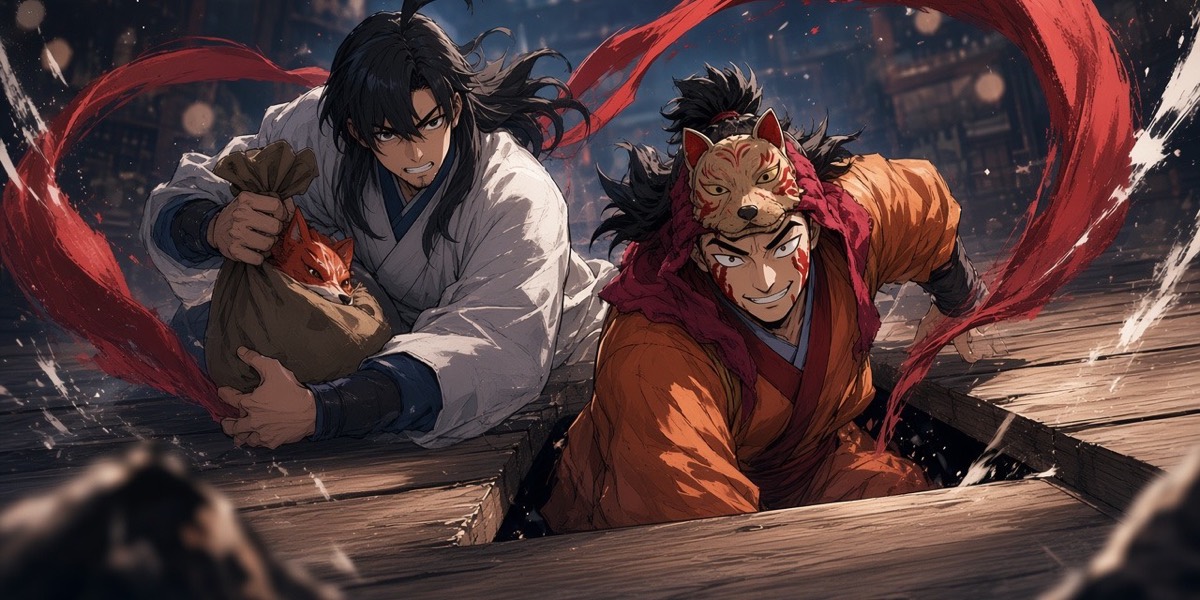
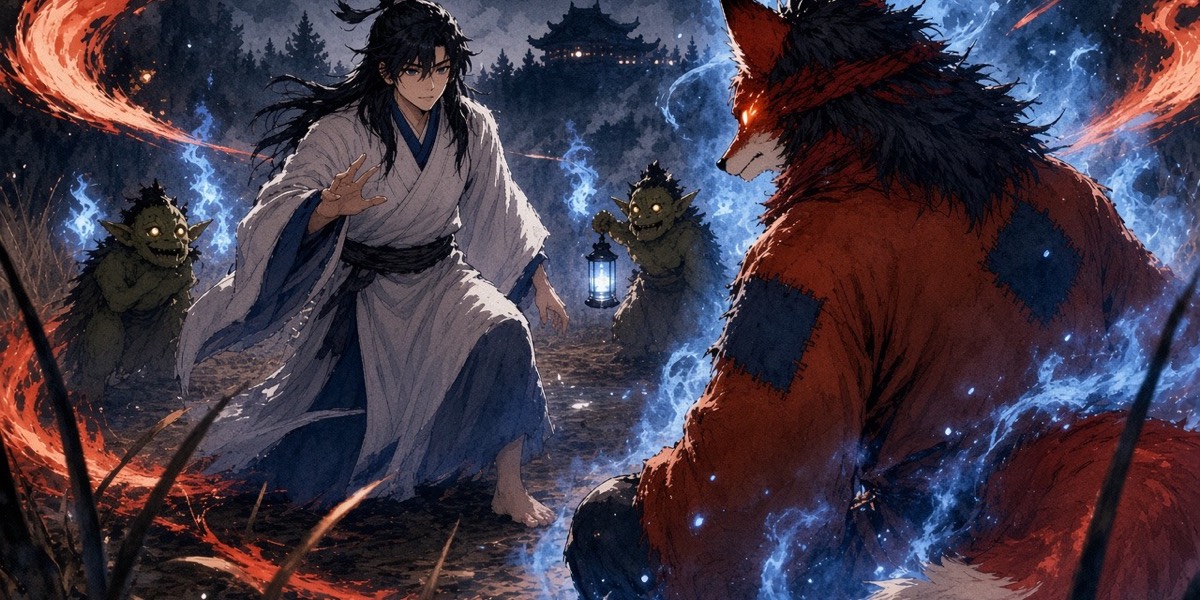
Here is how a goblin is turned into a man. A basket with a real fox in it, bought from a trapper for a week of wages. A red cloth with a slit sewn down the middle. A floorboard under the dais that loosened himself, because he is good with floors. The madman sets the fox down and throws the cloth. Under it, the fox goes into a sack in his sleeve, and comes up through the floor. It takes the time of three words.
So he does. The court is very impressed by the transformation. says nothing, which they take for goblin modesty. adopts him because the king asks nicely. builds his new father a gate and sleeps on top of it, and from the roof of that gate you can see the Council’s whole street.
One man is not impressed. has been counting the madman for years: who sells him rice cakes, why the stream talks loudest on nights the Council sits, how a servant with no office pays forty men. He doesn’t know the answer yet. He knows it adds up to something.
A month later puts a servant behind the screen in the east corridor, where the madman talks to the rafters every evening. The servant comes back white.
The next morning he asks the king, very politely, whether a palace is the right place for a man who argues with walls.
is waiting in the corridor, which he never does. The king almost walks past him.
nods, once, the way he nods at a stone he has decided not to move. goes home by the side gate, past , and does not mention the conversation even to the woman who sits there.
Then a child gets caught. That is how it always goes. Never the clever man. The child.
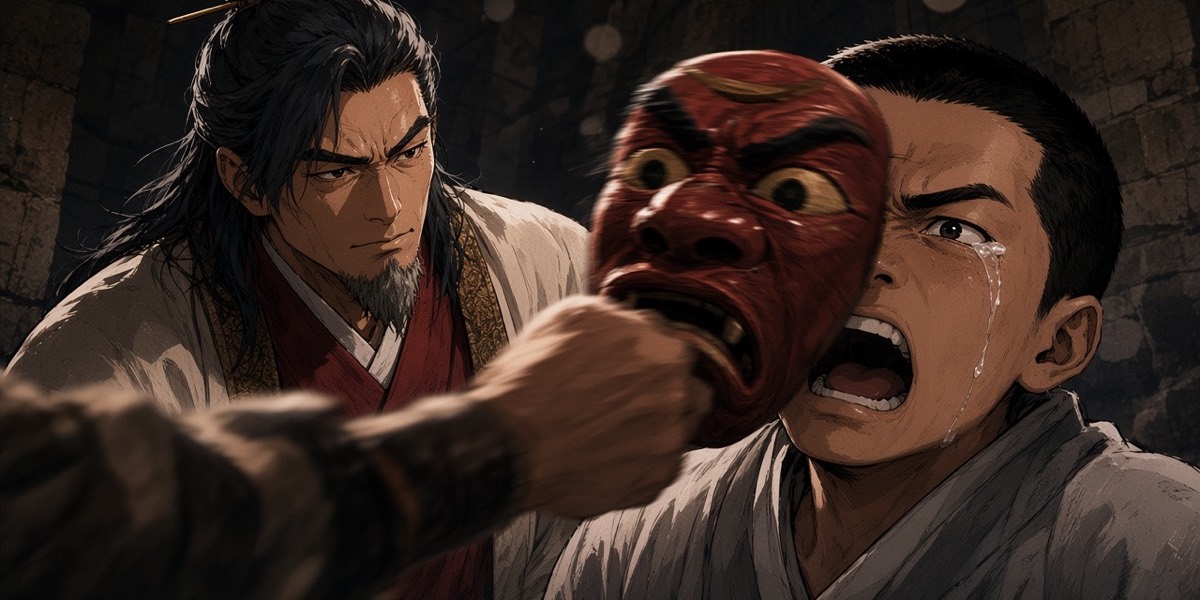
The smallest of the three boys is twelve now, and quick, and he has been running messages through the culvert for years in his red mask. One night the watch is somewhere it usually isn’t. They bring him to the Council’s cellar with the mask still on. Somebody takes it off. He is furious about that.
He doesn’t tell. She doesn’t need to. has heard “.” He has heard “when he’s king.” In this city there is exactly one man who could be he, and he talks to streams.
hears by the second watch. He has never once been late. He leaves his gate, which a fox will do, goes into the Council’s cellar by a drain only he knows, and comes out with a twelve-year-old on his back. By dawn the boy is somewhere safe. He isn’t.
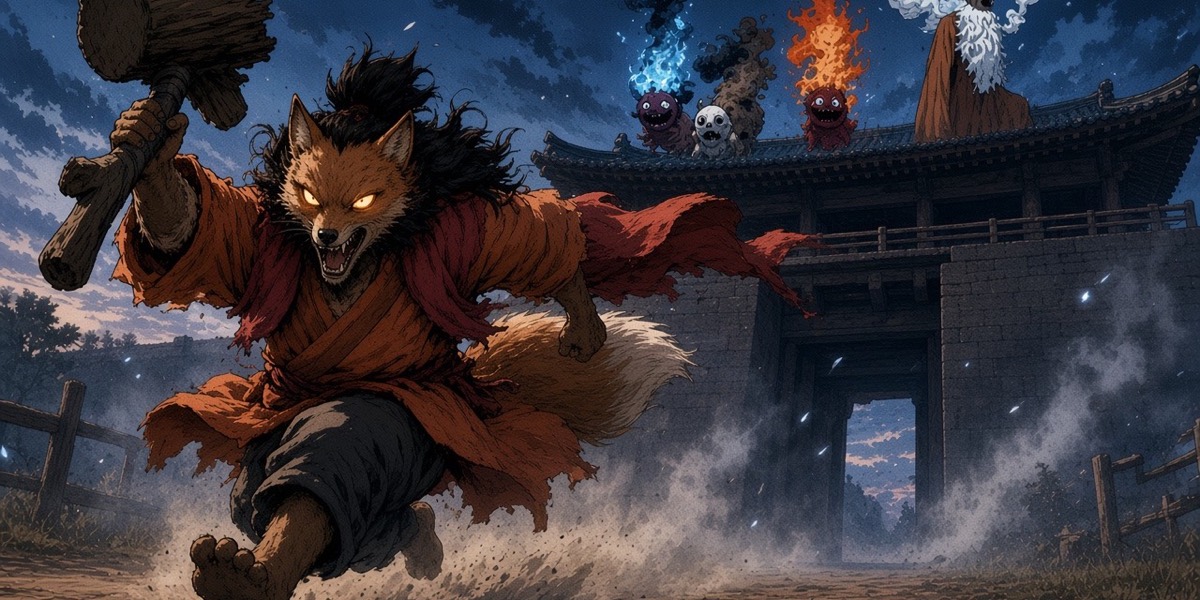
The gate is empty in the morning. writes to the Council within the hour. That is the fox running down the south road with its tail very low.
The Council doesn’t ask the king for a hanging. It asks for something cleverer.
doesn’t know. That matters. Nobody ever told him. He looks down the hall at his cousin, who is at the back in a sleeping robe, telling a pillar about the weather.
It’s true, which is the worst kind of threat. looks at his cousin. His cousin looks back with nothing in his face but trust, and that is worse.
Forty of ’s riders, and himself at the back, very upright, because a man whose adopted son has run had better be seen riding after him. At the front, the madman on a borrowed horse, singing to it.
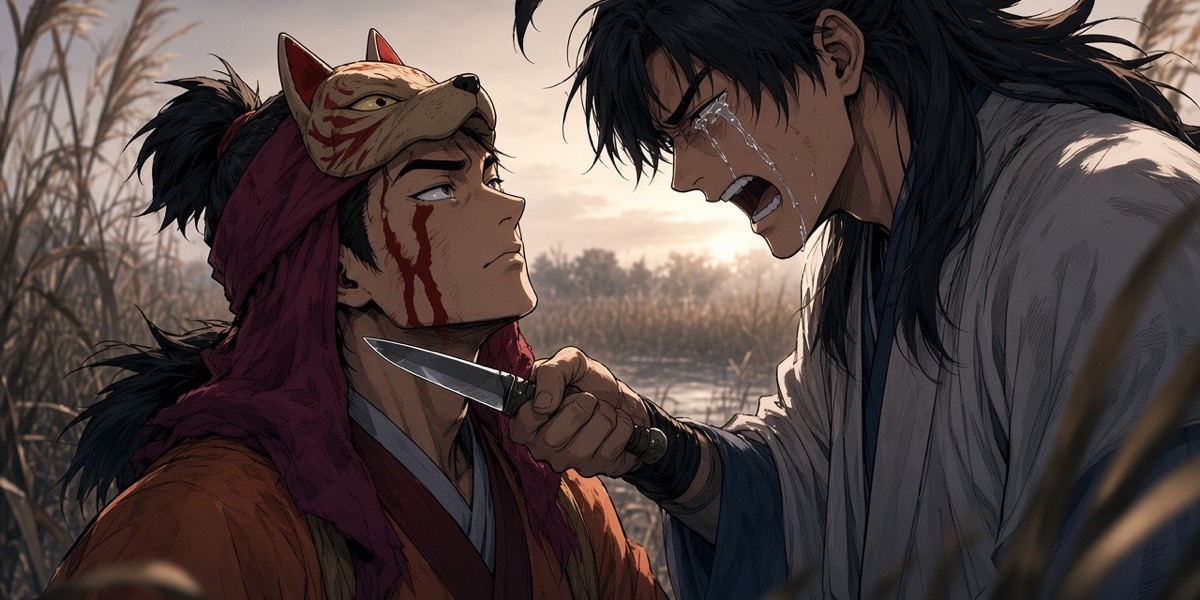
They find at dawn where the south road meets the river, sitting in the reeds with an arrow in his leg from the night before. He has been waiting. He has folded his hands.
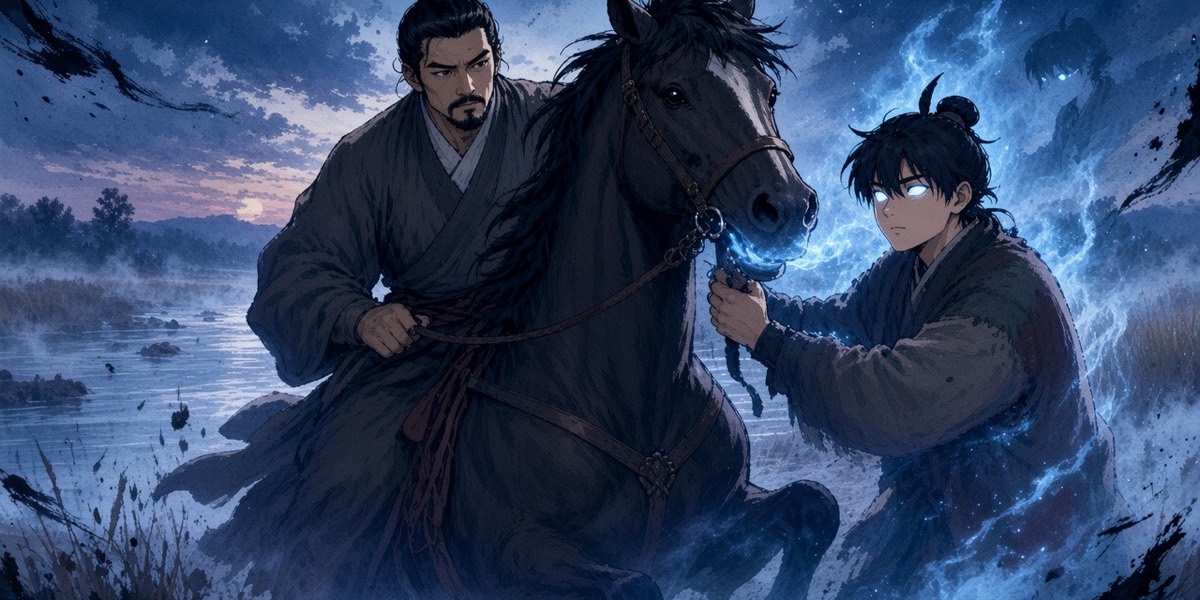
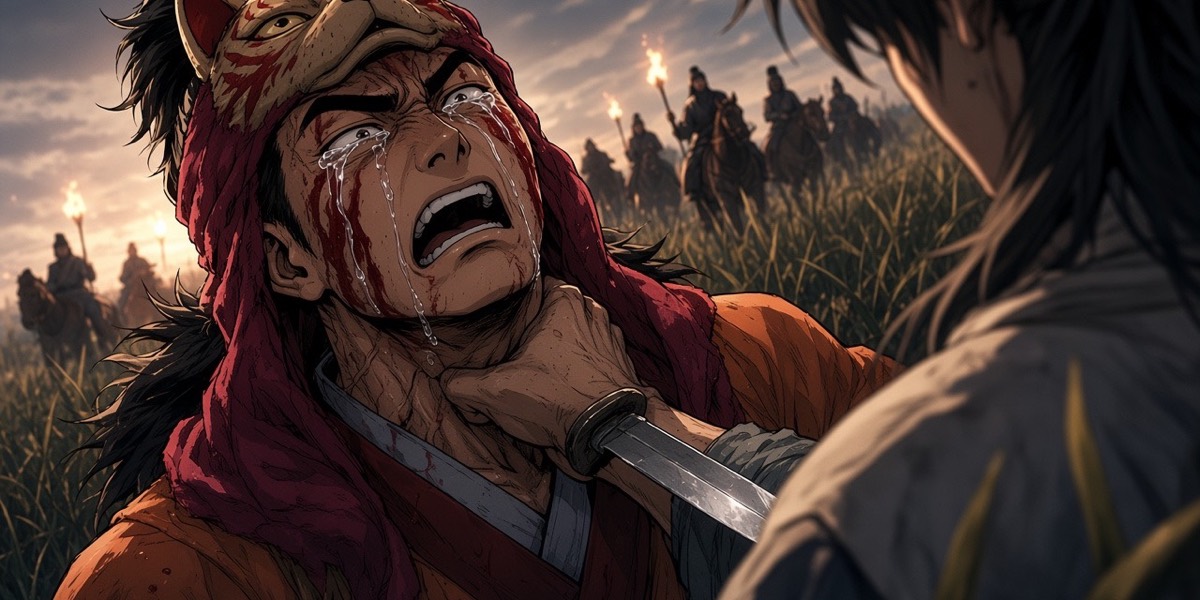
gets down. He walks out into the reeds alone with the knife the riders gave him, scolding all the way: bad fox, late fox. The riders laugh. When he reaches , he stops talking.
The knife doesn’t move. looks up at him, then at the riders, then at on his horse, and understands the whole thing before can say a word of it.
The riders are a blur of torches on the road. They can’t hear a word from here. That’s why sat in the reeds.
He is crying too. A clerk’s tears. He keeps trying to fold his hands and they will not stay folded.
has talked his way past fifty guards, a Council and a princess. He has nothing to say to this. His eyes go first.
He takes ’s wrist, very gently, the way you steady a boy’s hand on a brush, and sets the knife where it needs to go. Neither of them can hold it steady the first time. Then he looks past at the forty riders, and fills his chest with the last of his air.
The riders look at each other. ? Who’s ? One of them laughs. Somebody says it must be a goblin word.
At the back, sits very still. He has seen ’s list. There is one name near the top that was never crossed off, because nobody could ever find a boy called that. The hair stands up along his arms. He says nothing. He will say nothing for fifty years. That is how he lives so long.
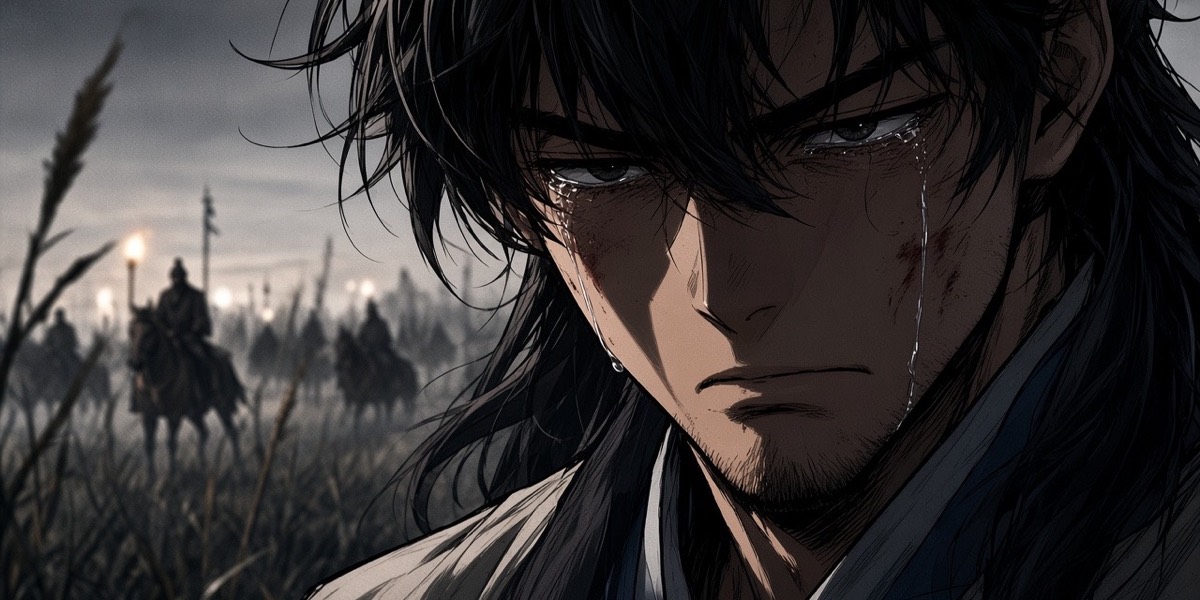
weeps without a sound, so that nobody behind him can see his shoulders move, and cuts his friend’s throat.
Then he does the strangest thing anyone in has ever seen him do, which is saying something.
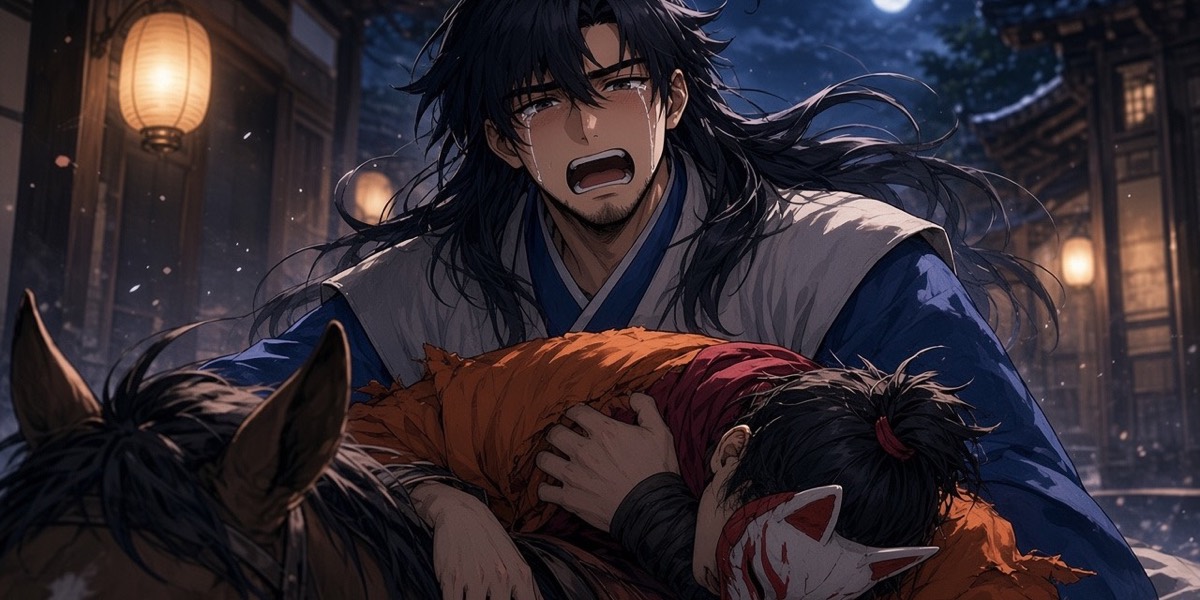
He lifts the body over his saddle himself. He won’t let the riders touch it. He climbs up behind it and turns the horse not toward the palace but into the city, and rides. Every ward. Every market. Past the temples and the wells and the Council’s street, at a gallop, all day, screaming at the top of his lungs.
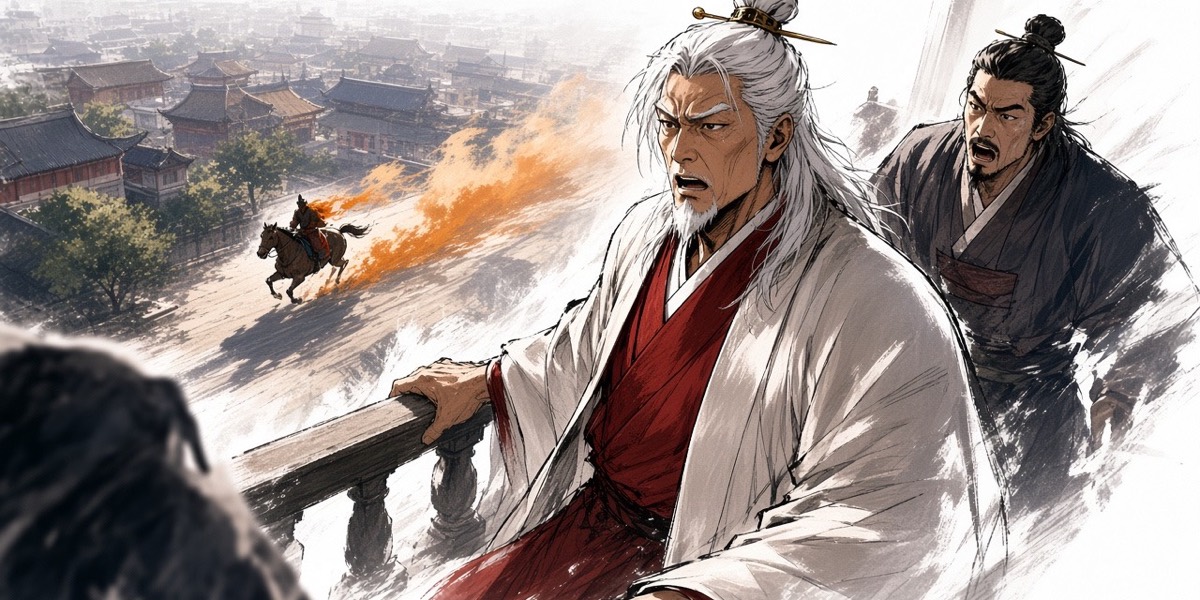
From the palace wall he is very small: one horse, one rider, something orange across the saddle, going ward by ward. Nobody up there can see his face. They can see what the ride does to the streets. Doors close. A child is pulled indoors by the collar. On the Council’s balcony stands up so fast his chair goes over, and for once in his life he looks old.
comes out to watch. Most of it decides he has finally gone all the way mad, and says so. Children throw things. An old woman spits. Behind the palace screens, hears it come round the wall for the third time and lets out a breath he has been holding since morning. His cousin was never against him. He told them so.
The Council hears it too, and enjoys it less. Their little fox told them the madman and the clerk were in it together. Well, there goes the madman, screaming the king’s name with the clerk’s blood down his leg. At the next sitting three councillors find reasons not to look at . A council keeps two ledgers. This goes in the other one.
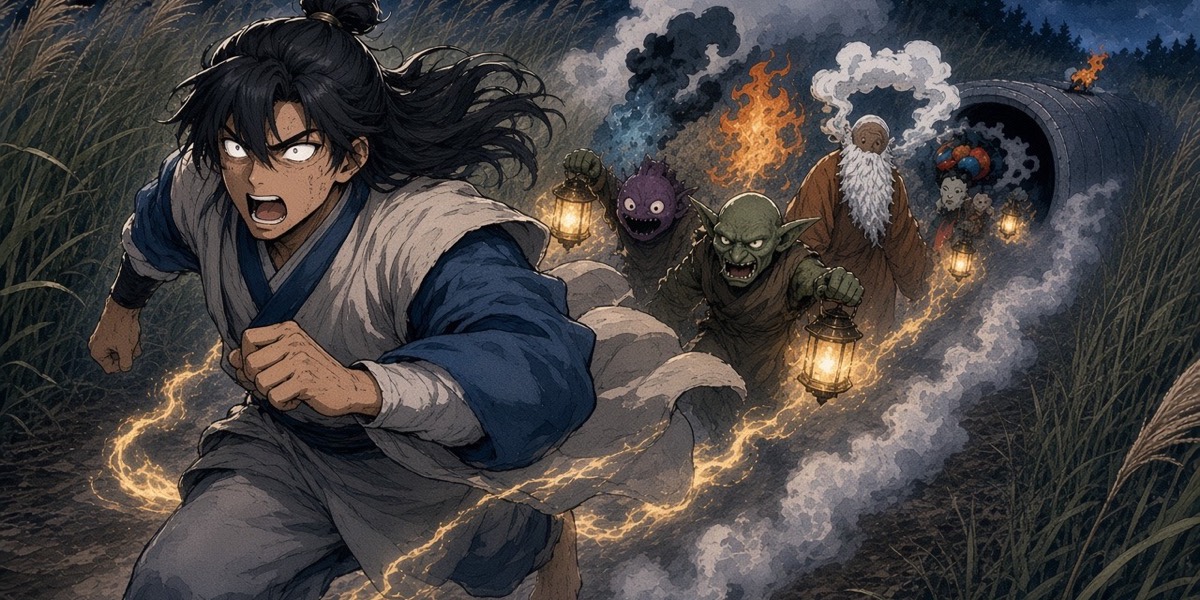
And under the bridges, in the culvert, in the reeds, people in masks hear a madman scream a king’s name across the whole city, and understand exactly what he is telling them. Don’t come for the palace. Don’t pick it back up. Stay down.
They don’t come. Not for that. The song will say the ghosts of are afraid of the name . The song is half right. They are afraid of the ride. They are not afraid of him.
He rides until the horse won’t. Nobody notices he is crying. A madman’s face is always doing something.
When he gets home puts him in the bath and sits on the floor beside it until morning. She doesn’t say a word. She is very good at that.
The next morning the king hugs him in front of the whole hall. “I told them,” he says. opens his mouth.
The door shuts. One lamp. starts anyway.
He waits until the boy’s mouth closes. Then two questions, the way he asks everything.
He never asks the other thing. never gets to say it. That one is still his to carry.
That night he stays up anyway. One lamp. A scrap of hanji. He draws the fox the way it looked across the saddle, and four lines he has been muttering since the ride.
In the morning he brings it back to the small room. The king is already there.
turns the sheet once. He does not ask who “they” are. He already knows which ledger this belongs in.
By the third night the wards are papered. The song will say the ghosts fled the name. The song will not say who painted the first sheet, or who gave the order.
Spring comes early. labours all night in the house by the water while her husband talks to the stream for nine hours, loudly, and in the morning there is a boy.
is nine and mortified. The boys in the yard call him the goblin’s whelp, and he has started to believe them.
After the fox the plot is dead. He still vanishes. Two days. Four. The watch sees him talking to a tree and writes it down. The city decides he has gone all the way mad, and says so, loudly, where a boy can hear.
grows up on that story. A father who mumbles. Who goes into the woods and comes back with wet shoes and nothing to show for it. The boy thinks he is a madman. He is supposed to.
never tells him. He wants the boy free of the whole thing. The sack in the rafters is rice and salve. The path behind the west wall is the same culvert. The people in the woods are older now, and then they have children, and he counts them the way he always did.
Tonight his father is kneeling in the stream with his sleeves tied back, laying flat stones in a line and muttering to each one before he sets it down.
decides his father is the strangest man in . He will go on thinking so for thirty years. He will be wrong for all thirty.
He was eleven, and there were five of them, and they had him down in the slush behind the stables. His father was on the stream bank thirty paces away, singing to a stone. He didn’t come. He kept singing.
That night, in the one room where his father never performed, he cleaned the cut over ’s eye without a word. Then he asked the only question.
gave him the names. His father nodded at each one, like a clerk.
He hated his father that winter more than he hated the five.

At fifteen the goblin’s whelp goes into the . His father walks him to the gate, though he has been asked three times not to. He has been practising on the stream all week. The boy looks at the yard, not at him — then at the door. On the timber leaf, a paper charm shows on a dark horse. goes pink. He has to walk under his father’s face.
watches a boy in a blue headband cross the yard and does not answer. Halfway through the rest of it — there is a rest of it, the stream heard the long version — he turns to the forty new boys and tells them the man at the gate is the family steward. He gets confused, poor thing.
The steward walks home grinning the whole way. wants to know what’s funny.
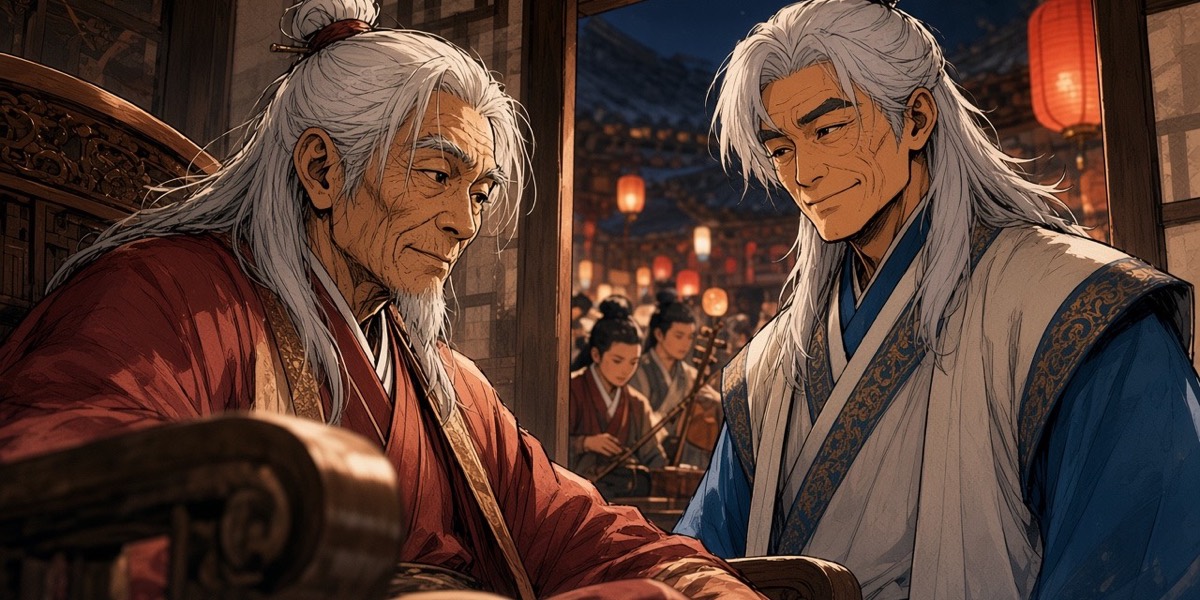
Thirteen years later the goblin’s whelp marries the sister of the strongest boy in . Across the hall, ninety-year-old sends a cup, and only the groom’s father understands it.
The little girl who asked whether the stream was invited to the wedding grows up and becomes the first queen of . The first thing she does with the crown is send for her sister. says no. So she asks again, as queen. A royal decree. cannot refuse one of those. The new queen has a habit of this. You’d think a decree was for armies.
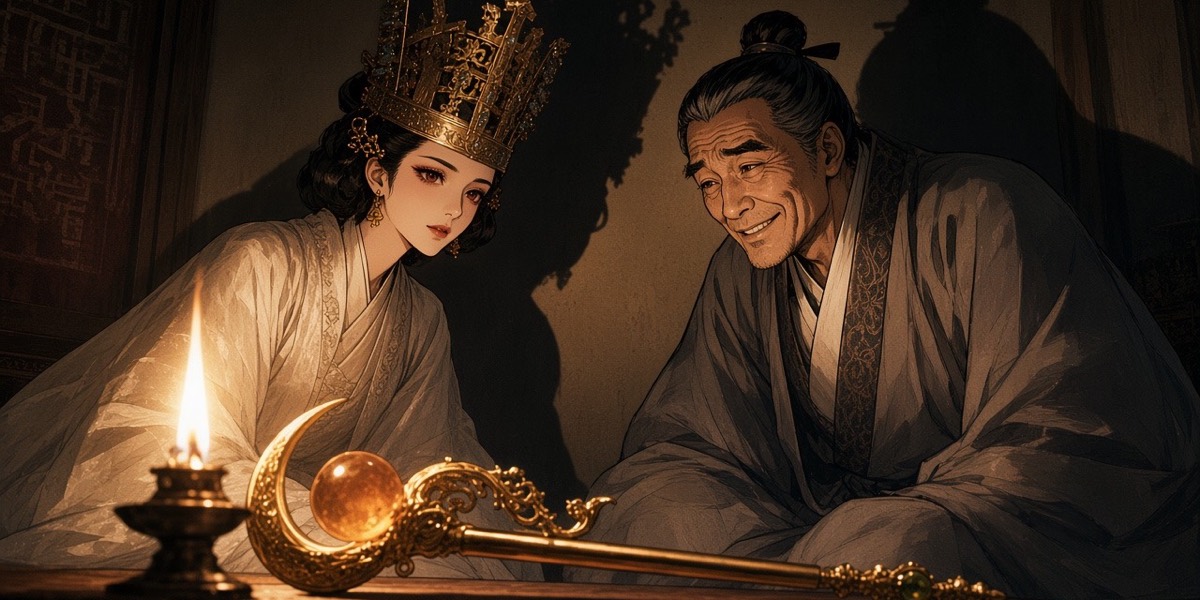
A week after the funeral she sends for her sister’s husband. Not to the hall. To the small room behind it, with one lamp, where kings keep the things they would rather the Council didn’t see.
He stops. For a while he looks at the lamp instead of her. This is her father’s overthrow. He can feel the floor under the chair.
Then she leans across the table and says the thing she sent for him to say.
He looks at the lamp until his eyes fill. He has been waiting for someone in this house to say that since he was seventeen, and he had decided nobody would.
She thinks about that for as long as it takes the lamp to gutter. Then she nods. That winter the two of them write the ghost story down properly, so that nobody will ever need to go looking for the other one.
She pours the tea herself. Everyone who comes into this room wants something, and she would rather hear it now.
He takes it out of his sleeve. It is very old, the paper soft as cloth, written in a boy’s hand in a culvert and added to for forty years.
She reads it twice. Half the names she has seen before, on the Council’s own list, crossed out. She takes up her brush and uncrosses them.
The next morning the east wing gets a new resident and a title the record will keep: Chief Architect of . He signs . The servants still cross the courtyard rather than pass his door after dark. He still talks to the rafters when anyone is listening. When nobody is, he reads the works’ books, and for the first time in years the timber starts to add up.
The first thing the restored do with their names is bury somebody properly.
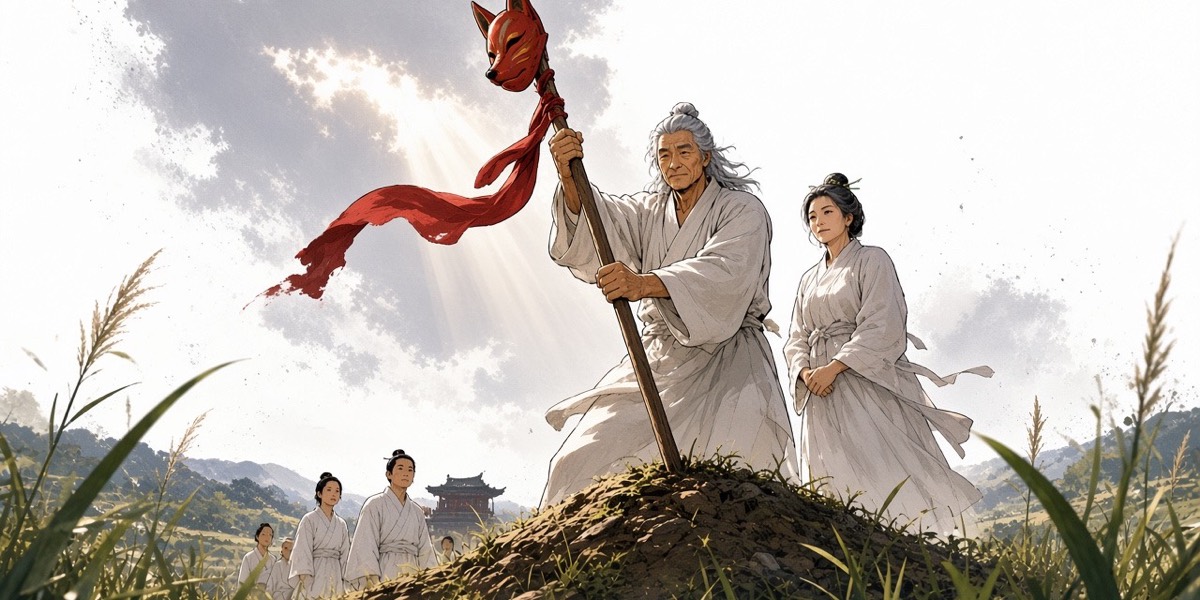
has been in the reeds for thirty years under a stone with nothing on it. They lift him in daylight and carry him up the hill, where you can hear the Heungnyun bells. No Council men. No song.
The walks in front. The three brothers who aren’t brothers carry the bier, grey at the temples now. The one who never took off his red mask has taken it off.
At the top, the girl from the culvert step, forty now, unties the fox mask she has worn since she was six and puts it in ’s hands. She doesn’t need it any more. She has a name.
He ties it to a pole himself and drives the pole into the top of the mound, so the fox looks down the south road.
Down in the valley the Heungnyun bell rings the hour. Exactly on it.
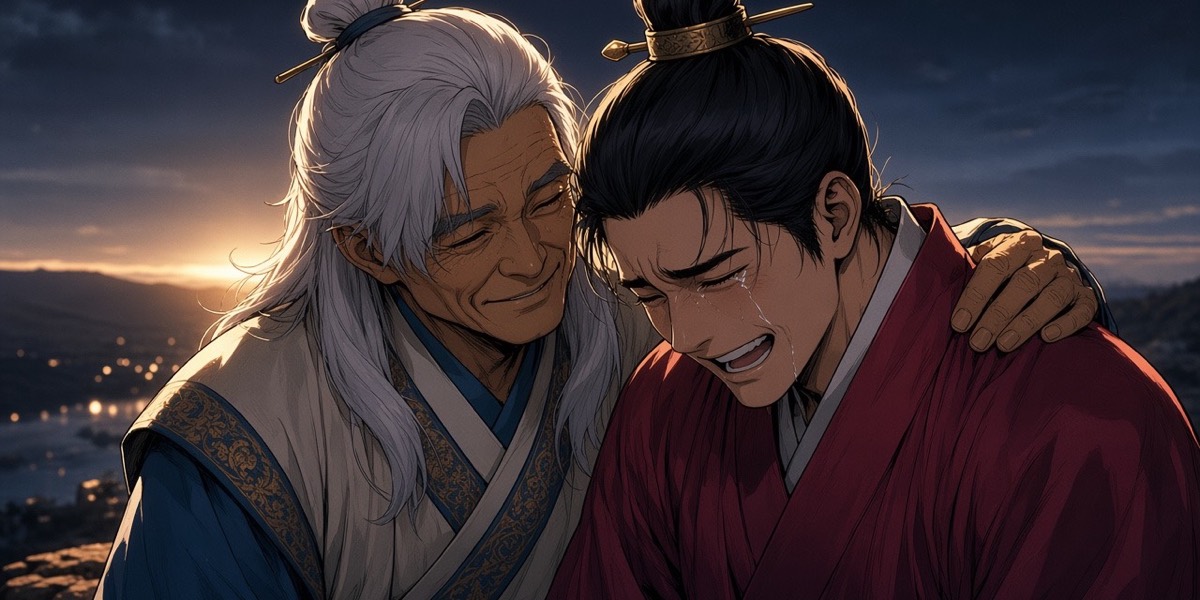
is crying. He doesn’t notice when it starts. His father doesn’t mention it.
He says it the way other men say grace. Quietly. The gentlest man in , on a bluff, with his sleeve over his son’s shoulders.
Then he takes his arm off his son’s shoulders and is, all at once, a mad old man again, peering over the edge at the water as if it had said something rude.
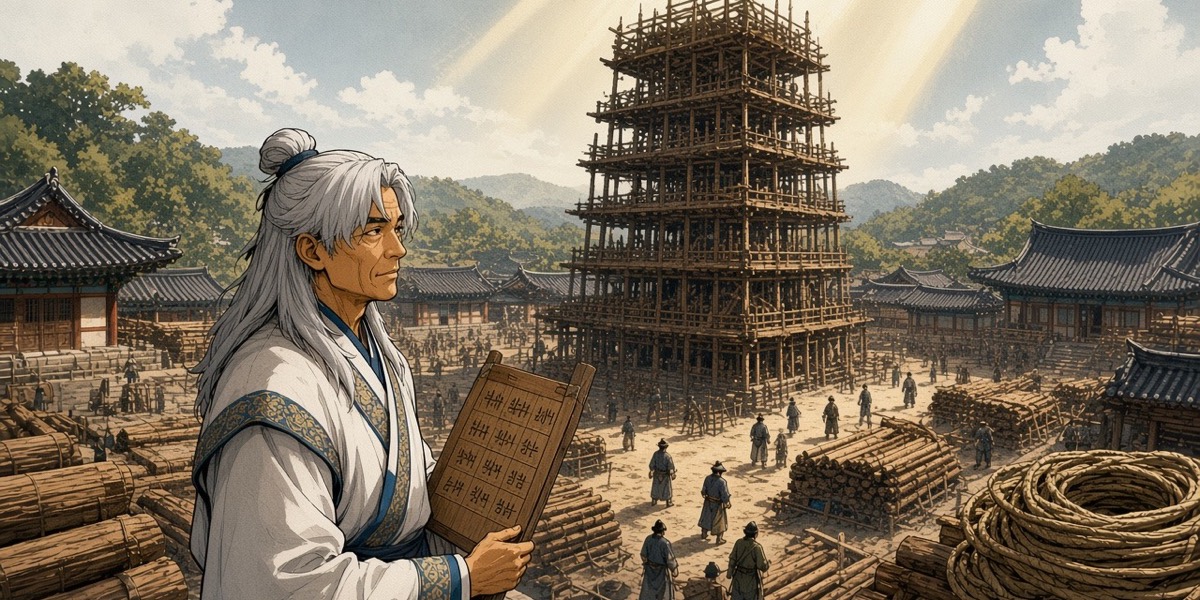
The queen wants a tower. Nine storeys of timber in the yard of Hwangnyong Temple, one for each neighbour that troubles , tall enough that all nine can see it.
Nobody in can build it. So she pays silk and treasure to , the enemy, for a master carpenter named Abiji. Somebody has to stand between one craftsman and two hundred workmen who would rather not take his orders.
The craftsman, named Abiji, came at the command and worked the timber and stone. The igan Yongchun (some say ) oversaw the work, leading two hundred lesser craftsmen.
장인의 이름은 아비지였다. 명을 받고 와서 나무와 돌을 다스렸고, 이간 용춘(용수라고도 한다)이 일을 주관하여 소장 이백 명을 거느렸다.
On the day they raise the heart pillar, the man dreams of his own country burning and puts down his tools. The yard waits. Then, says the record, an old monk and a giant walk out of the Golden Hall, set the pillar up between them, and vanish. , who has been accused of keeping that kind of company, says nothing at all. Two of the workmen that morning wore masks against the sawdust. Nobody remembers their faces.
The tower goes up within the year. From the top you can see the whole city: the palace, the river, and, if you know where to look, a small crooked bridge.
They are buried on the same day, on the hill west of the stream, in one mound, because nobody in the family could imagine digging two. The Council sends six men in good sleeves. thanks each of them by name. He has known all their names for a long time.
Afterwards he walks down to the stream alone. The is still there, a little crooked. He stands on it for a long time.
Then he says something to the water. Nobody hears what.
If you’ve been keeping both books, here they are side by side.
| The song · 노래 | The truth · 진실 | What it means · 뜻 |
|---|---|---|
| Bihyung talks to ghosts because a ghost fathered him · 귀신의 아들이라 귀신과 말한다 | The Ghost Children follow Yongsu because he is Jinji’s son, the first child of the purge · 귀자들이 용수를 따르는 건 그가 진지의 아들, 숙청의 첫 아이라서다 | The ghosts are the purged. He is the one they were waiting for. · 귀신은 숙청당한 사람들이다. 그는 그들이 기다리던 사람이다. |
| Old Man Tree has one empty eye hole · 나무 할배는 눈구멍이 하나뿐이다 | His eye was put out the night of the purge, for having stood at Jinji’s door · 진지의 문을 지켰다는 죄로 숙청하던 밤 눈을 뽑혔다 | The wound becomes the mask. · 상처가 탈이 된다. |
| The Rock Lady will not move off the bridge stone · 바위 할매는 다리 돌에서 꿈쩍도 안 한다 | A mother whose three elder children were listed as Jinji’s men and killed · 위로 셋을 “진지의 사람”으로 올려 잃은 어미 | Grief that stays put. · 자리를 뜨지 않는 슬픔. |
| Three rascal goblins steal the pages’ shoes · 꼬마 도깨비 셋이 시동들 신을 훔친다 | Three orphans whose parents were exiled or hanged; the smallest never takes off his red mask · 부모가 귀양 가거나 목 매달린 고아 셋. 제일 작은 놈은 빨간 탈을 안 벗는다 | Children with nothing left but mischief. · 장난 말고는 남은 게 없는 아이들. |
| The goblins build a bridge in one night · 도깨비들이 하룻밤에 다리를 놓는다 | Forty masked people cut stone for a month; the madman shouts at the stream to cover the hammers · 탈 쓴 마흔이 한 달 동안 돌을 깎는다. 미치광이는 망치 소리를 덮으려 냇물에 고함친다 | A miracle is work nobody is allowed to name. · 기적이란 이름을 댈 수 없는 사람들의 일이다. |
| The reeds bow to him · 갈대가 그에게 절한다 | The masked children kneel in the reeds · 탈 쓴 아이들이 갈대밭에 엎드린다 | Loyalty mistaken for magic. · 도술로 오해받은 충성. |
| A lost seal reappears under the cruel steward’s pillow · 잃어버린 인장이 못된 집사의 베개 밑에서 나온다 | A girl in a fox mask puts it there · 여우탈 쓴 계집아이가 넣어 둔다 | The weak can reach the bedroom of the strong. · 약한 자도 강한 자의 침실에 닿을 수 있다. |
| Chunmyung is won over by the wonder of the spirit world · 천명은 귀신 세상의 신비에 마음을 뺏긴다 | Chunmyung is won over by the plight of the Ghost Children and the cruelty above them · 천명은 귀자들의 처지와 그 위의 잔인함에 마음을 뺏긴다 | Love starts when she sees past the palace wall. · 사랑은 그녀가 담 너머를 볼 때 시작된다. |
| The goblin Gildal takes human shape and serves the court · 도깨비 길달이 사람이 되어 조정을 섬긴다 | A purge orphan comes out of hiding as Imjong’s clerk · 숙청의 고아가 임종의 서기로 세상에 나온다 | The hidden coming up into the light. · 숨은 자가 빛으로 올라온다. |
| Gildal turns into a fox and runs · 길달이 여우로 변해 달아난다 | Gildal leaves his gate to carry the red-mask boy out of the Council’s cellar · 길달이 빨간 탈을 화백의 지하 옥에서 꺼내려 문을 비운다 | The Council’s word for loyalty is betrayal. · 화백의 말로 충성은 배신이다. |
| Bihyung has the goblins kill the fox · 비형이 도깨비들을 시켜 여우를 죽인다 | Yongsu cuts his friend’s throat on the south road, with Gildal guiding the knife · 남쪽 길에서 용수가 벗의 목을 벤다. 칼은 길달이 잡아 준다 | The loyal man pays; the clever master weeps and accepts. · 충신은 값을 치르고, 영리한 주인은 울며 받아들인다. |
| The ghosts are afraid of Bihyung, and his name on a door keeps them out · 귀신은 비형을 무서워하고, 문에 붙인 그 이름에 못 들어온다 | He rode Gildal’s body through every ward to tell the masks the plot was over · 길달의 시신을 싣고 온 도성을 돌며 탈들에게 거사가 끝났다고 알렸다 | The charm is a warning. · 부적은 경고다. |
You’ve closed both books. One more page. It isn’t his.
The hall waited years. Then a child, at last. The woman who had three kings is holding him. The unlisted brother is already reciting.

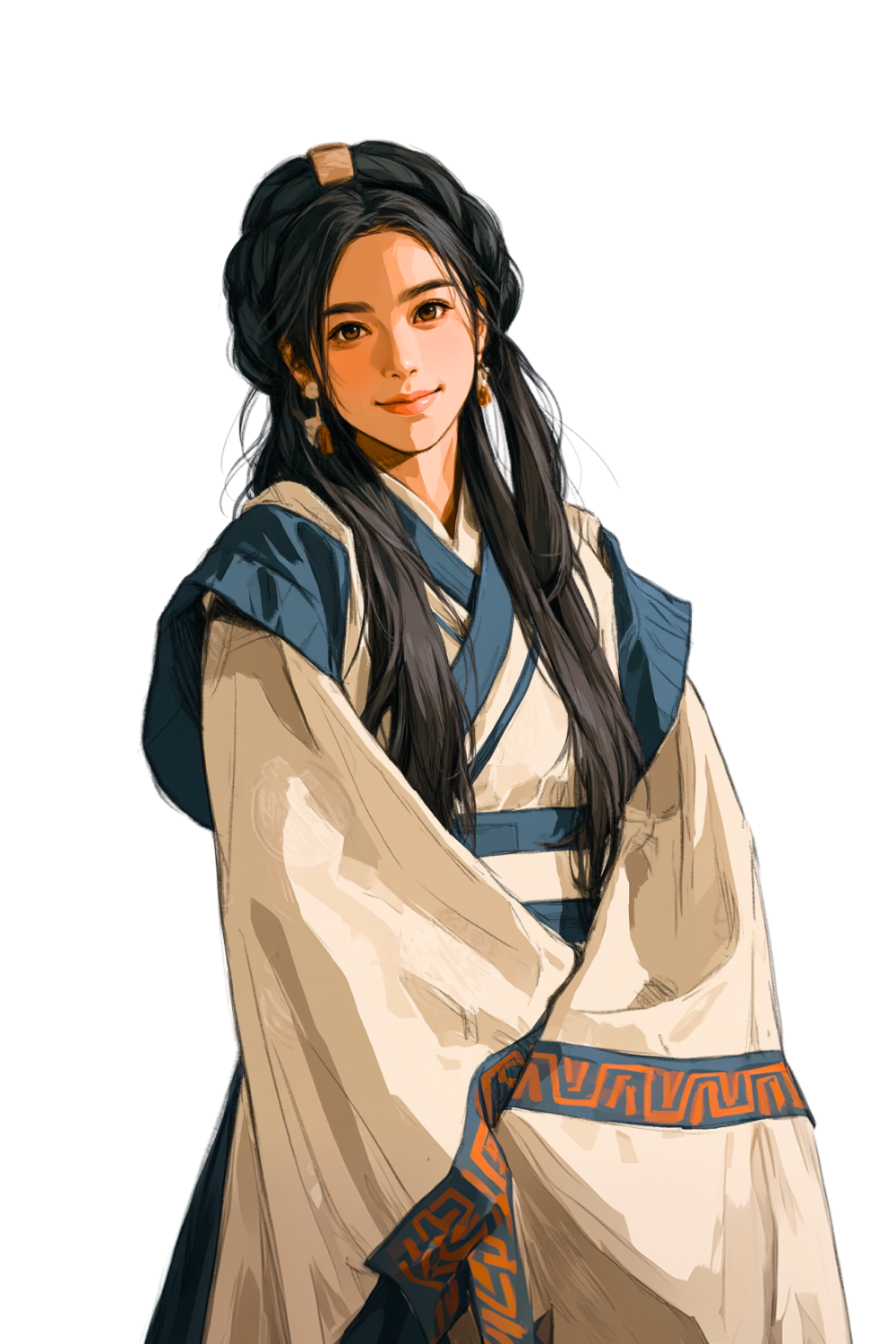
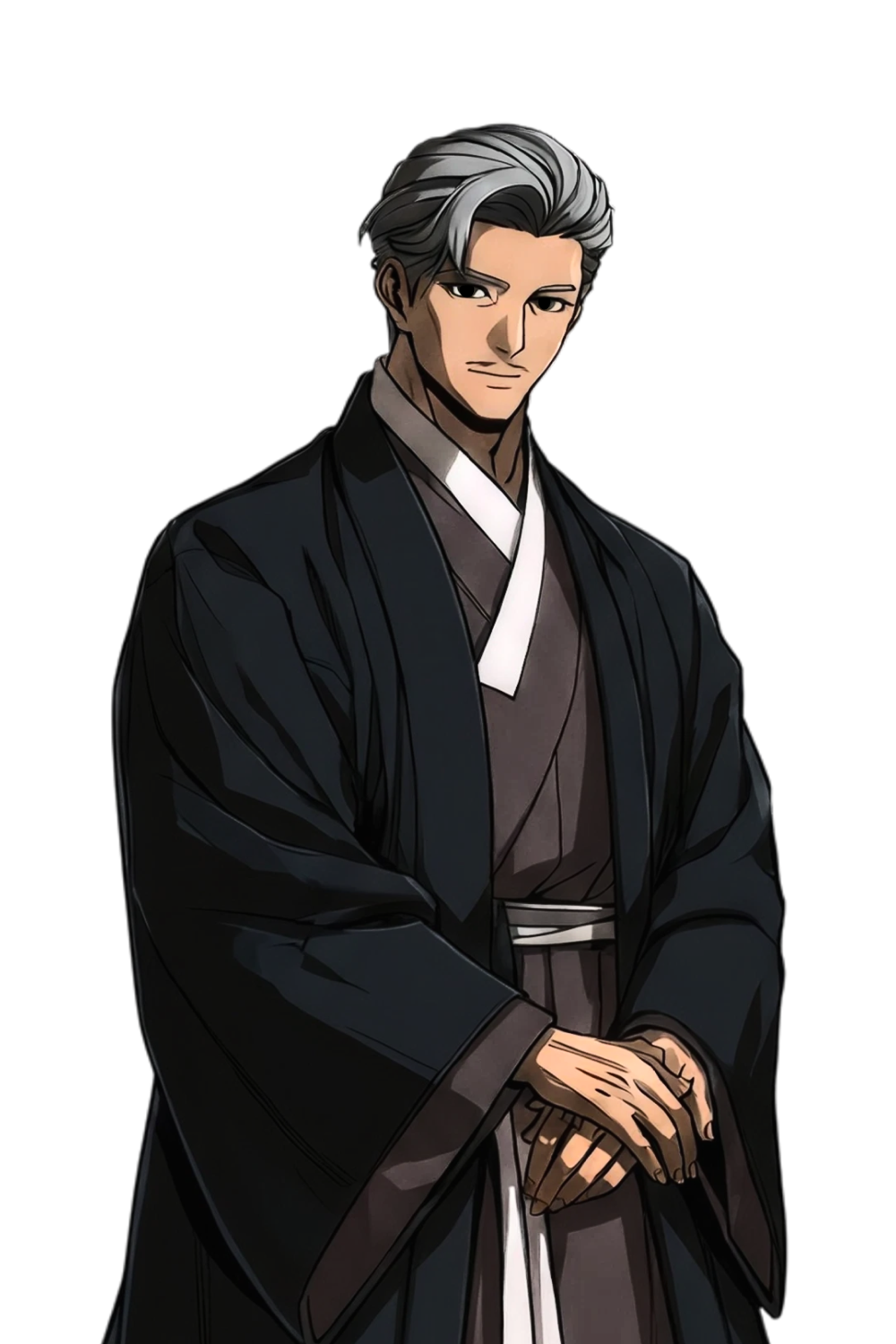
He has the house sutra open at the lamp. The next name. He will not take another.
Up in the , the last queen is counting her breaths. And the story his father told him on a cliff is finally ours to hear…!
