
Chapter 37
King Dongcheon



AI Summary
- Pine Smoke In a mountain capital that smells of pine smoke, a young king is listening to a horse trader lie, and enjoying it.
- Wei Camp The Wei camp is the first thing the king has seen that is bigger than a mountain and flatter than a lake.
- The plain tent The king stops outside the canvas.
- Twenty Li Lord Gongsun has built twenty li of earthworks along the river and is sitting behind them.
- Plain Tent In the evenings the king comes back to the plain tent wet to the thigh, and the old man has the stone board out.
- The Ramps The rain stops.
- The little river He breaks out at night through the southern lines, with his son and a few hundred riders, and turns south-east.
- After Liaodong The old man enters the city the next day and sorts it like a clerk sorting grain.
- Liao Ford The thousand go home before the first snow.
- Characters

Episode· 645
King Dongcheon
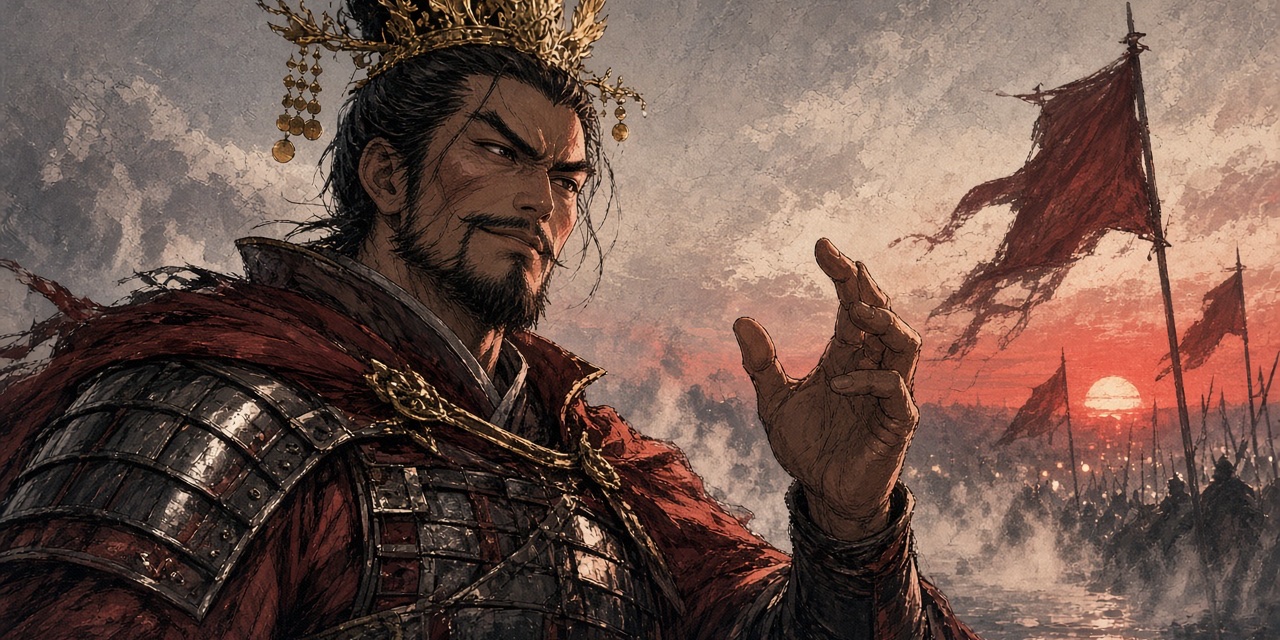
A king picks a fight over a diplomatic spat. Then he picks a battlefield he hasn’t looked at.
- The Western Chancellor
- King Dongchun
- Lord Gongsun
- Go Yunsu
- Yeon Soryu
1 still without a cue
The old officer starts with the part kings like to hear. won. Twice.

Four hundred years back, a few summers after a vow at a ford, picked a fight with Wei anyway. Wei did not send its old . It sent a general who had stood behind him at Liaodong and taken notes. met him at the Boiling River and won. Then it chased him west up a valley and won again.
So the king took five thousand horse out to win a third time, on ground he had not looked at. The Wei general formed a square on a slope that ran his way, and waited.
The square held. The horses didn’t. Eighteen thousand men died in an afternoon.
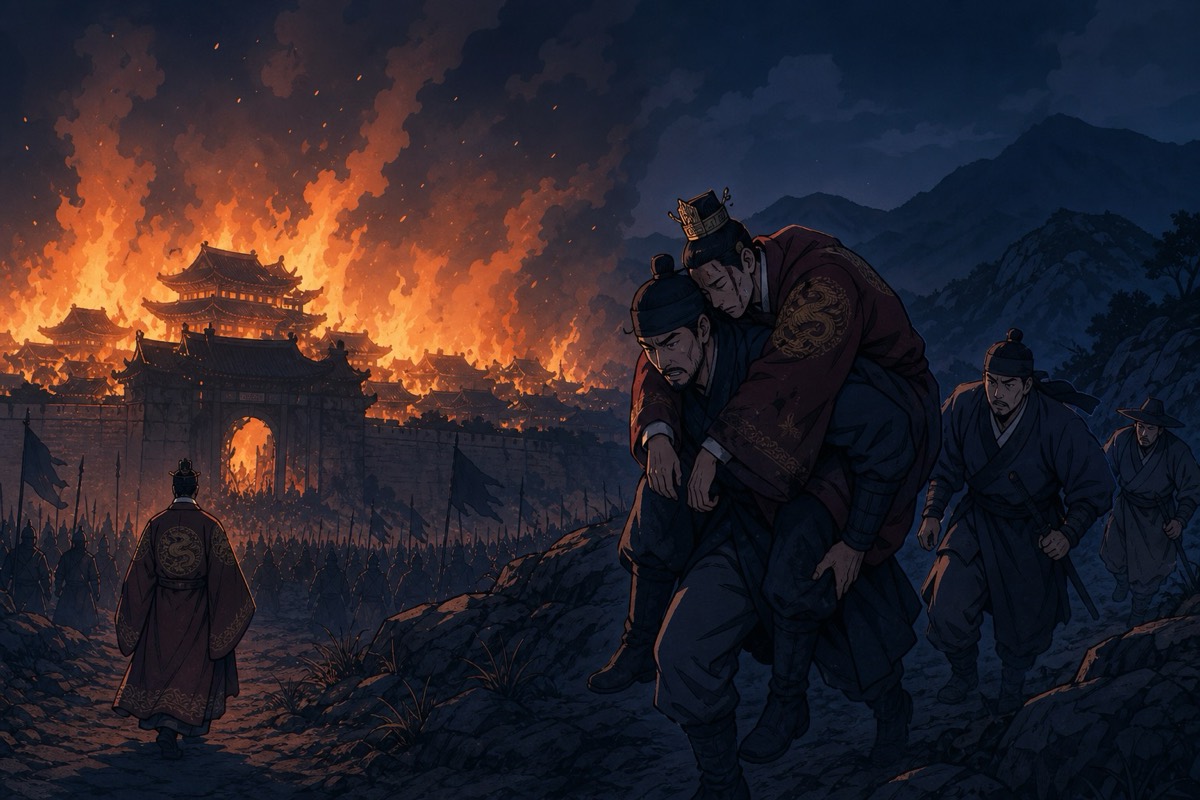
is burned. The king runs east with a handful of men, and the Wei riders are one valley behind and closing.
At a ford in the rain, the captain who asked for scouts holds out his hand.
He rides back up the valley in the king’s robe, slowly, so they can see it. They see it. Nobody on either side writes down his name.
takes forty years to be a kingdom again. It is the first time in this story that a capital burns because of one bad afternoon, and it is not the last, and every king in this record has heard about it.
On the road to , the young general hears him out politely, the way you let a grandfather finish.
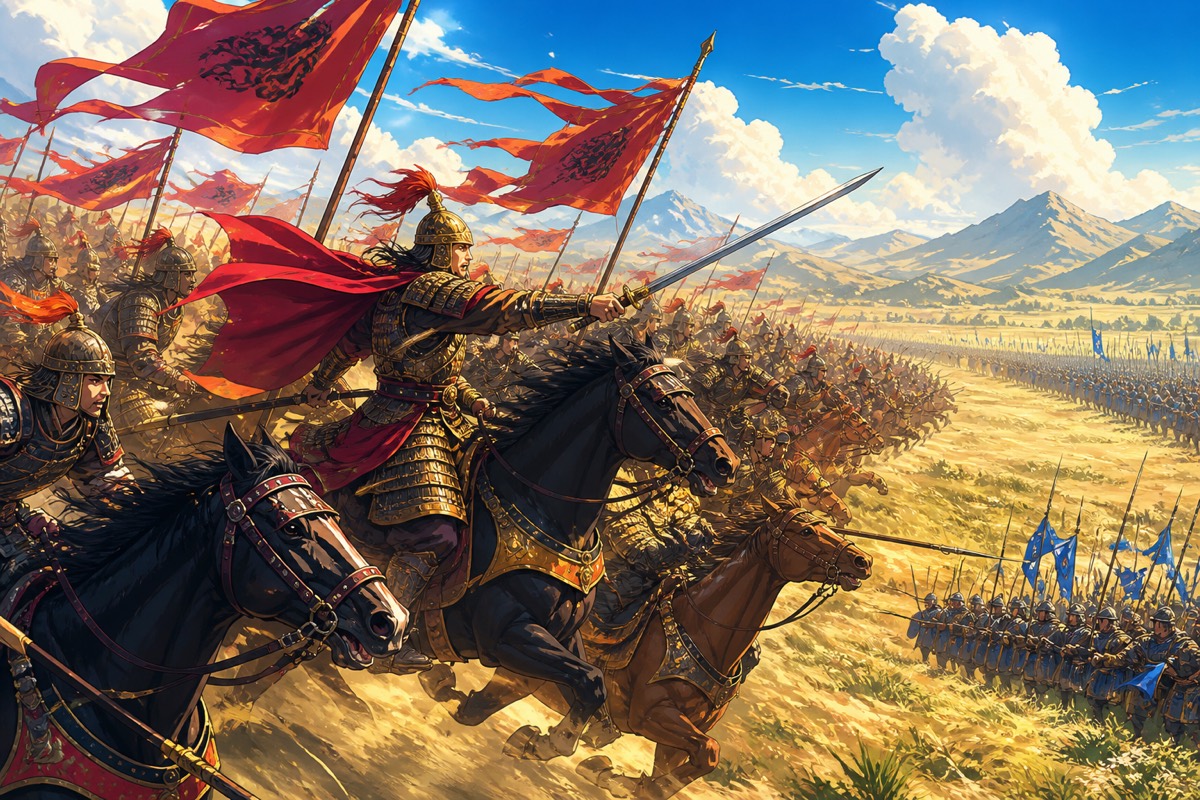
The king picked this fight. Wei answers with ten thousand men over the western hills, and he marches twenty thousand out of Hwando to meet them at the Boiling River.
- Goguryeo 20,000
- Wei 10,000
- = 1,000 men
Sources: Samguk Sagi 17, Annals of Goguryeo, Dongchun year 20 · Samguk Sagi 45, Biographies of Milu and Yu Yu · Records of the Three Kingdoms, Book of Wei 28, Biography of Guanqiu Jian · Records of the Three Kingdoms, Book of Wei 30, Treatise on the Eastern Barbarians (Goguryeo) · Guanqiu Jian's victory stele, found at Ji'an
A hundred and fifty thousand men march toward an open plain. On a hill above it, the emperor is waiting…!
Every kingdom keeps one neighbour it hates more than any empire. ’s has a family name.
Gongsun. Three Lords Gongsun in a row have sat in Liaodong, between and , like a fat man in a doorway. One of them burned a capital. Another took in a prince who wanted his brother’s throne, and fed him soldiers. The one sitting there now sends silk in spring and spies in autumn. Lately he calls himself a king.
In a mountain capital that smells of pine smoke, a young king is listening to a horse trader lie, and enjoying it.
The hall laughs. The king laughs loudest, then stops halfway, and asks the only question a king cares about.
The trader has never been within five hundred li of the man. Nobody in this hall has. That is how legends travel: on horseback, with the price going up at every stop.
Then a letter comes from . It has a seal and no name, and it turns out the legend wants something.
They find him one. A young captain who can count, ride, and keep his mouth shut, which is two more skills than the king asked for. Nobody tells the king his name. The king doesn’t ask.
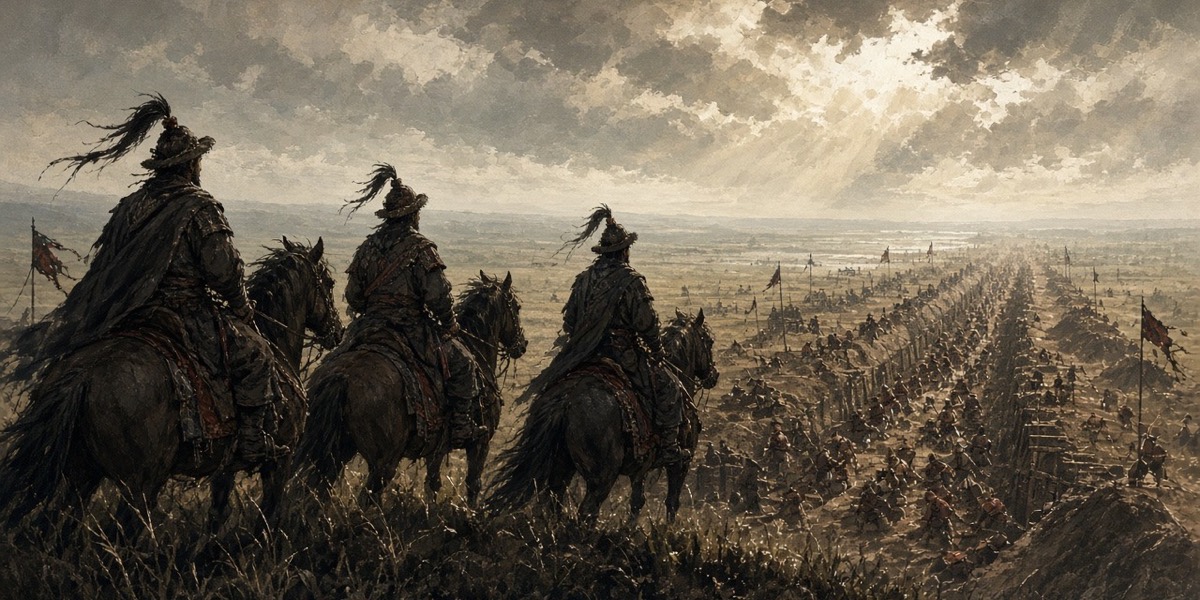
The Wei camp is the first thing the king has seen that is bigger than a mountain and flatter than a lake. Forty thousand men, and every one of them is digging.
Everywhere the thousand ride, the Western has just left. He was at the ford this morning. He was at the ditch by noon. He has looked at this hill. He did not like it.
His tent is the plain one. No banner on it, no guard worth the name, and an argument going on inside.
The king stops outside the canvas. He has more than he lets on, and tonight, for once, it is useful.
The flap opens. The eastern barbarian walks in, dusty to the knees, and does not wait to be translated.
The man on the camp stool does not stand. He is old and thin, in a plain robe with ink on one cuff. He looks the king over the way a farmer looks at a field after rain. So this is the Western . You may have guessed already. hasn’t. His name, which nobody out west says for luck, is .
The secretary, who has served the old man eleven years and never once been offered wine, goes to fetch it.
Lord Gongsun has built twenty li of earthworks along the river and is sitting behind them. The old man looks at them for one afternoon. That night he leaves his banners standing in the south, crosses in the north, and walks past the earthworks toward the city behind them. The men guarding the earthworks find they are guarding nothing. They run home.
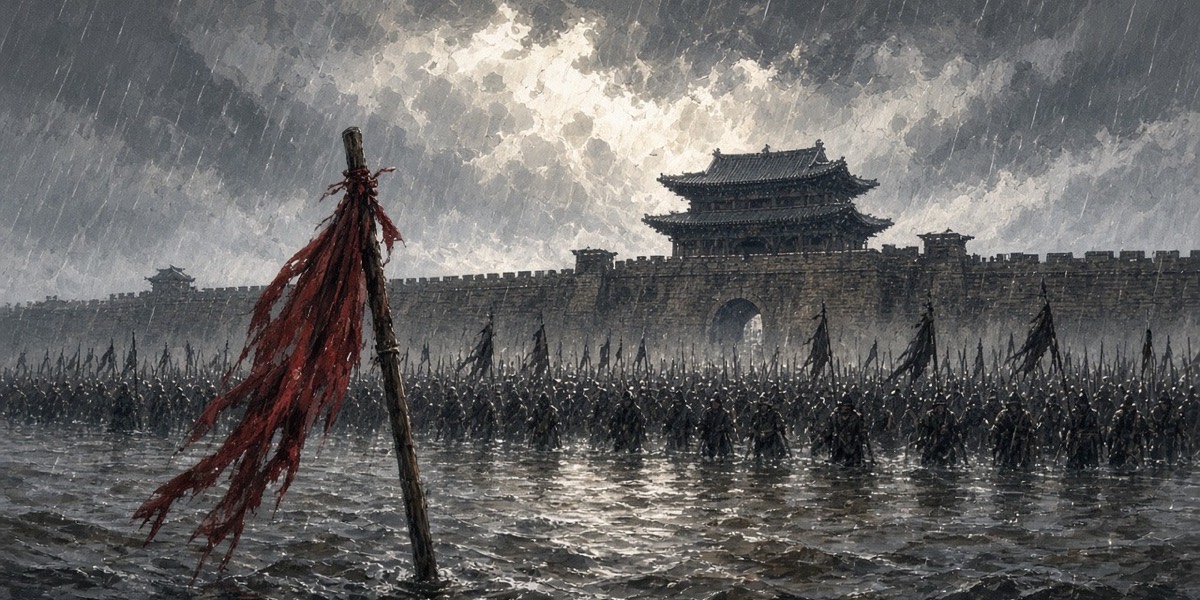
Then it rains. It rains for a month. The river comes over its banks, and forty thousand men stand in a lake a few feet deep.
Inside the walls, Lord Gongsun is delighted.
So the cattle graze in full view, and the city’s woodcutters work under the walls. The riders sit their horses in the water and watch dinner walk past.
That afternoon a Wei officer asks to move the camp to higher ground. The old man has his head taken off and put on a pole above the water. Nobody asks again.
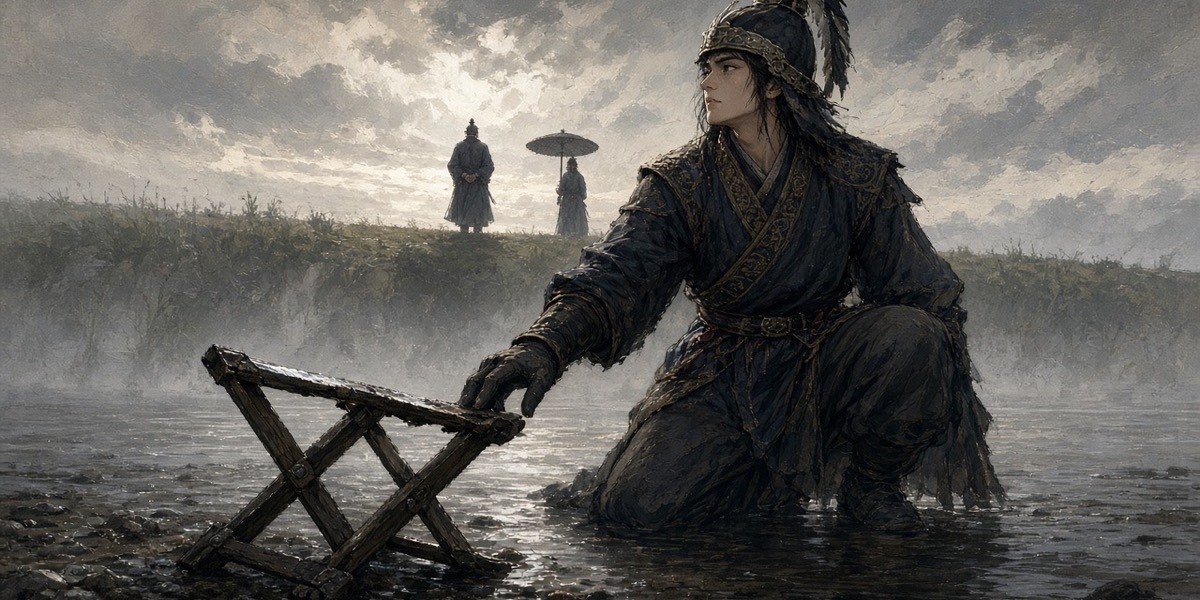
So for the rest of the rain, the King of rides around a besieged city in water to his horse’s knees. He pokes the mud with a spear butt, like a farmer deciding when to plant. His captain rides behind him with a charcoal map on a board. The south-east dries first. Under the water, a spine of gravel runs down to a little river behind the city.
In the evenings the king comes back to the plain tent wet to the thigh, and the old man has the stone board out.
The king plays the way he rides, straight at a thing until it dies. The old man plays the way it rains.
On the twentieth night of rain the king plays slowly. He takes nothing. He waits. The old man looks at the board for a long time, then at the king, and puts his stones back in the box.
Across the tent, the secretary drops a cup.
Two clever men, thirty years apart, who like each other rather more than their courts would want. History will try this pairing again in four hundred years, with different hats.
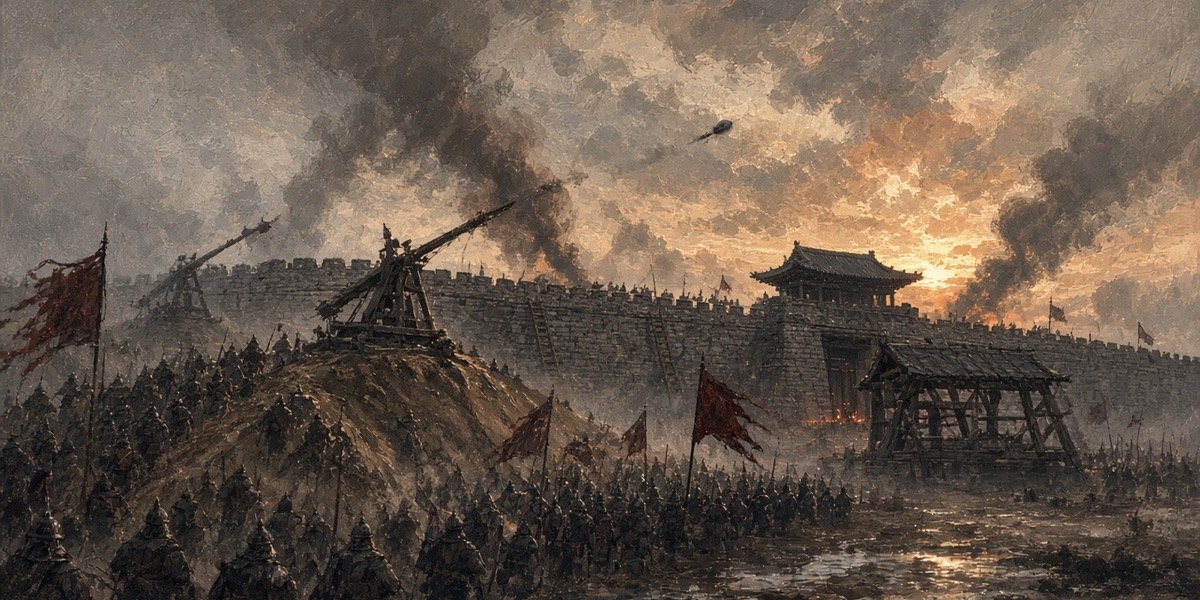
The rain stops. Within a week Wei has ramps against the walls, ladders, rams, and engines throwing stones over the parapet. Inside, the grain runs out. Then the cattle. Then people start to go missing, and nobody asks where.
One night the king and his captain are on watch on the south-east gravel when the sky does something.
A long white star with a tail like a horse’s mane crosses over the city and drops into the little river behind it. Right where the gravel runs down to the water.
Inside the walls, everyone saw it. Nobody sleeps.
In the morning old men come out under a white flag with terms, then a younger one offering a hostage. The old man sends them all back with a list.
He breaks out at night through the southern lines, with his son and a few hundred riders, and turns south-east. Of course he does.
The thousand are already sitting on it.
It isn’t much of a fight. The lord’s riders are starved, and their horses are worse. The king’s arrow takes Lord Gongsun’s horse at the water’s edge, about where the star went in. Lord Gongsun goes into the shallows on his hands and knees and comes up muddy to the eyes, still in silk.
The king’s bow stays half drawn. He looks up the gravel at the Wei banners coming down it, and the old man riding slowly under them. For one breath he does the arithmetic.
The king lets the arrow go. Three generations of Gongsun end in a little river behind a city, in silk. The Wei riders find the son a little further up the bank.
The old man enters the city the next day and sorts it like a clerk sorting grain. Every man over fifteen is walked out onto the plain. The heads go into a mound by the gate, so that anyone coming down the western road will understand.
It turns cold early that year. Some Wei soldiers come to the old man’s tent about coats.
The king stands at the mound for a long time. He has killed men. He has never seen them stacked.
The thousand go home before the first snow. The old man rides with them as far as the ford, which a Grand Commandant has no business doing. His secretary mentions this twice.
At the water the king pulls off his riding coat, cut with the fur turned in, and throws it at the old man.
The old man puts it on. It is too big in the shoulders.
They drink to it at the ford, and pour the rest into the Liao, which has heard this sort of thing before.
A word about vows between kingdoms. Two men make them on a riverbank. Courts that were not there keep them. The old man means every word. He will spend his last years very busy at court, which is a long way from any river.
The king rides home and tells everyone the Western is his friend. For a while, it is even true.
Four hundred years later, another western army reaches the same walls. This one did not bring a friend…!
