

Chapter 99
Maeso



AI Summary
- The Landing Xue Rengui comes back by sea in the ninth month — from the plateau war, not from a rest.
- Maeso Fortress So the war moves inland, to a fortress on the Imjin where the road to Surabol begins.
- The Fleet Out at sea off Chun Fortress, Xue hears it from a courier: the army at Maeso has lost its horses.
- Surabol In Surabol the number arrives a day ahead of the generals.
- Characters


Episode· 675
Maeso
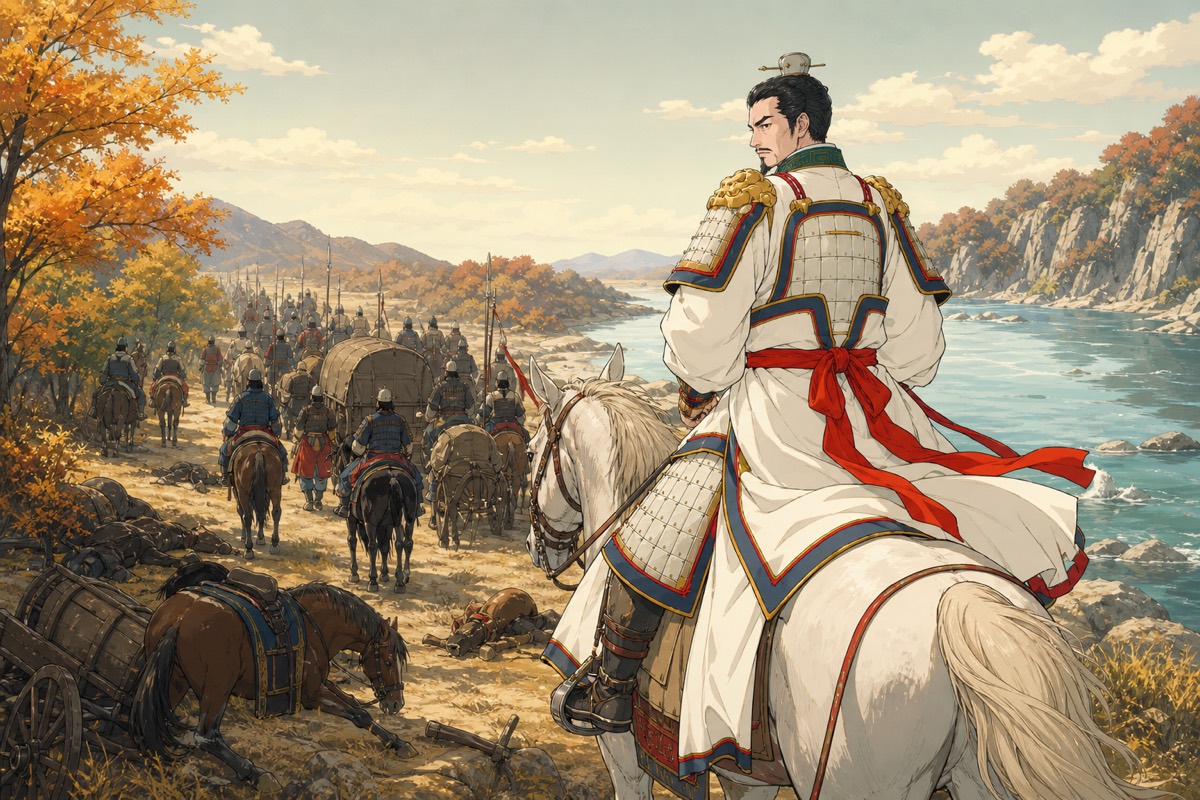
Xue Rengui comes back by sea. His guide is a Silla boy whose father the king killed.
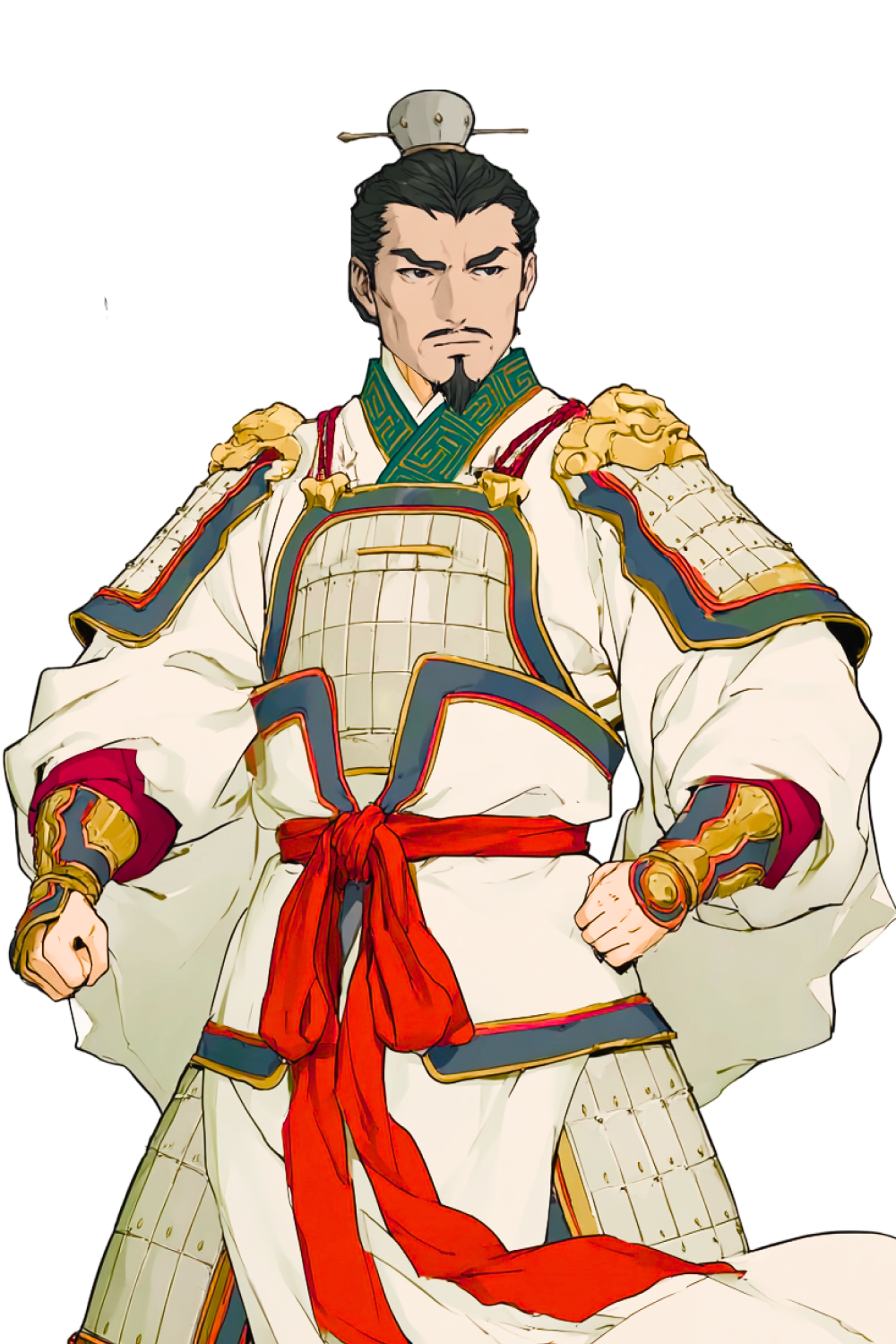
- Xue Rengui
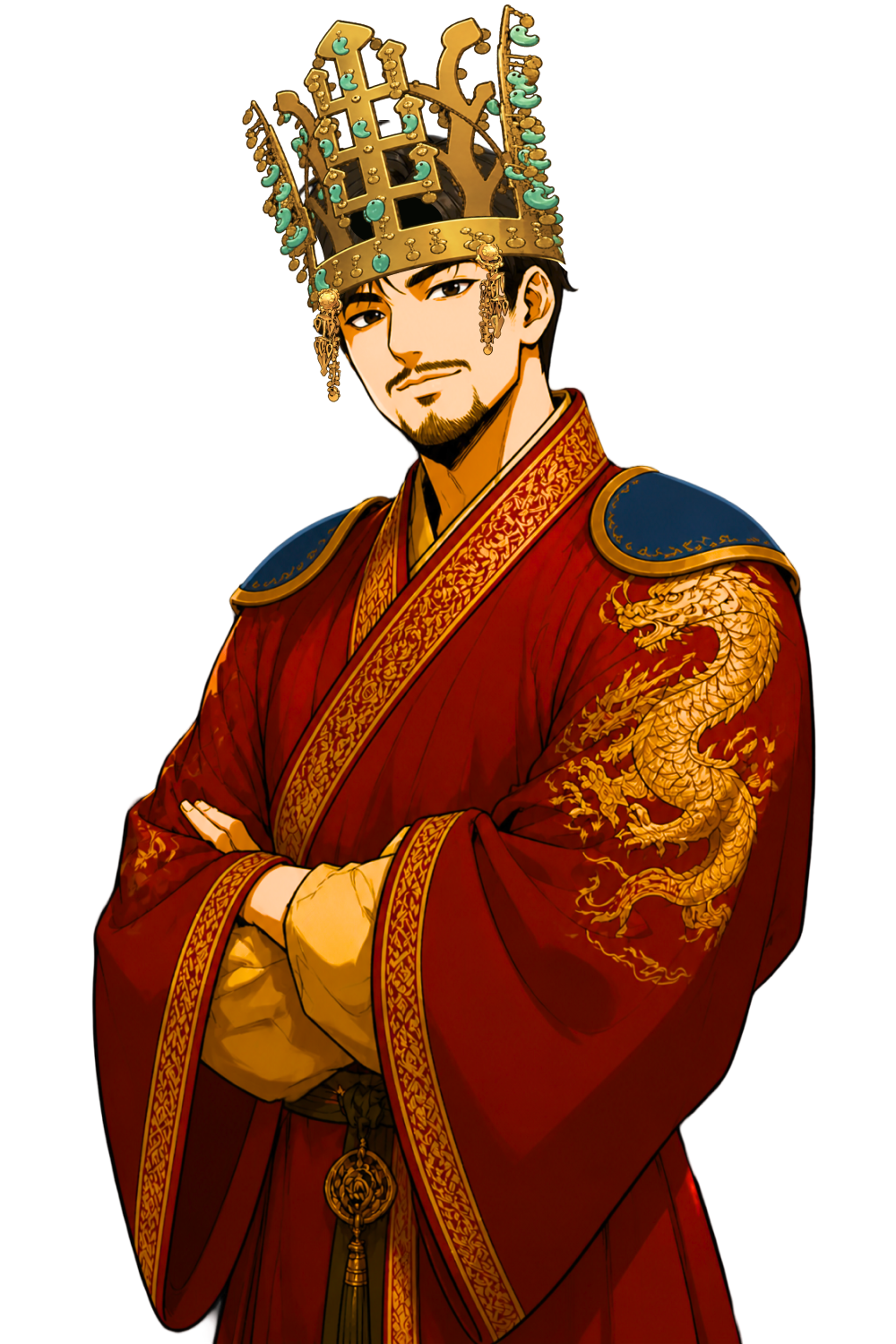
- King Munmu
- Wonsul
- Kim Punghun
comes back by sea in the ninth month — from the plateau war, not from a rest. His pilot is . killed his father. Now the son is showing the enemy the beach.
He is older now. The white coat is a reputation he can no longer take off. The West’s eastern command sits on his shoulders the way a yoke sits on an ox that still believes in the field. In a poor field at home, his ancestors are still waiting for their graves.
stands at the bow beside him. He left a boy, a hostage in the emperor’s guard. He is coming back as a guide.
looks at the beach below for a long time.
He does not curse them. He checks the ji’s bindings, the same way he once checked plough-rope, and goes ashore.
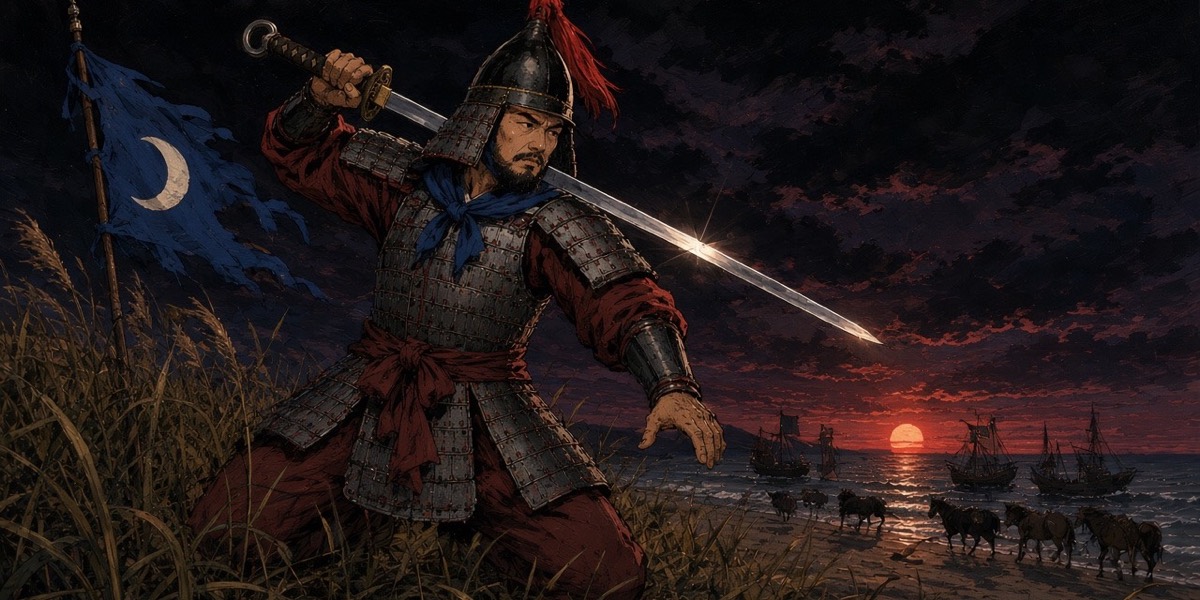
Above the beach at , a general named Munhun lies flat in the dune grass and watches the boats come in. He has been told to stop the landing. He has decided to let it happen first.
Beside him lies a ship captain named Siduk, who has commanded boats for twelve years and never once won anything.
When the last horse is off, Munhun stands up.
By evening Munhun has fourteen hundred heads, forty Western ships, and a thousand horses standing in the surf with nobody to ride them. The sea road is closed again.
Nobody ever learns whether knew about the sand. Xue does not ask him. He sends him back to on the next empty transport, and neither country writes his name down again.
So the war moves inland, to a fortress on where the road to begins.
30,380 horses were taken, and weapons to match. Historians read the 200,000 as Silla counting generously; nobody argues about the horses.
The army at is mostly , and the are mostly horse. Thirty thousand of them graze the flats east of the walls. The grass is outside. No fortress on that river was built to stable a herd.
The worst stretch of the line is under the walls, where the archers can see. A man nobody in the capital has seen for three years asks for it.
Before dawn the herd moves all at once, and not toward the fortress.
Horses are the thing. An army that has lost thirty thousand horses on is not riding to next spring, or the spring after. Li Jinxing knows it by noon. He takes what is left north across the Hantan.
Afterwards the king sends for the lieutenant to give him rank. comes in still smelling of horses.
Out at sea off , Xue hears it from a courier: the army at has lost its horses.
He withdraws without spectacle. The chronicle will remember ’s thirty thousand horses; it will remember less how quietly accepted that the east was no longer his to harvest.
In the number arrives a day ahead of the generals.
After they have lost the horses. is nearly fifty and still, occasionally, checking his father’s work against the day.
The Western history says was three Western victories, after which begged pardon. It does not mention the horses.
Two hundred thousand, by Silla's count, camp under a fortress built for a few hundred. Most are Mohe, and most of the Mohe are horses. The grass is outside the walls, and the supply fleet has just been sent home.
- Tang 100,000
- Mohe 100,000
- Silla ?
- = 1,000 men
- = size not recorded
Sources: Samguk Sagi 7, Annals of Silla, Munmu year 15 · Samguk Sagi 43, Biography of Kim Yushin (part 3), on Wonsul at Maesocheon · Zizhi Tongjian 202, Shangyuan 2 · New Book of Tang 220, Silla; 110, Biography of Li Jinxing
One last river mouth. One captain who has never won a fight. Three tries to end a war…!
