








Chapter 98
Munmu
AI Summary
- The Second Letter The day after the funeral, a letter falls out of a sleeve.
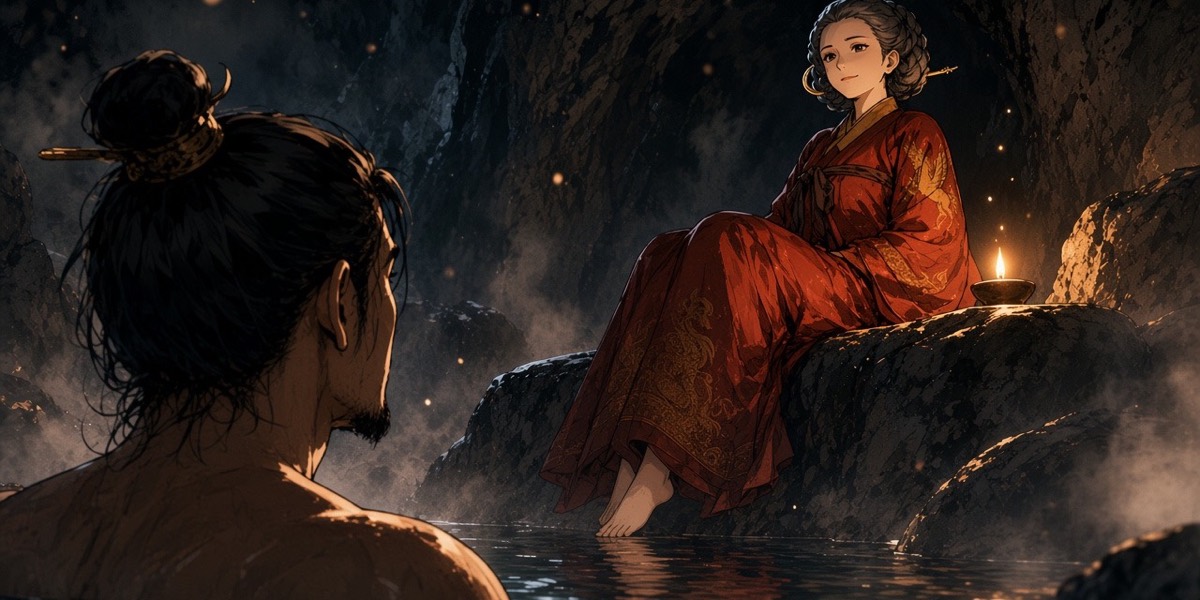
- The Steam Cavern That evening Munmu rides alone into the hills east of Surabol.
- The Queen on the Ledge She is sitting with her feet in the water, the way no queen is supposed to, looking up.
- The Other Two The steam behind the queen was never empty.
- Momal The steam at his back is not empty.
- The Marshal The water moves on the far side of the pool, the way it moves when a man who knows the bottom wades in without looking.
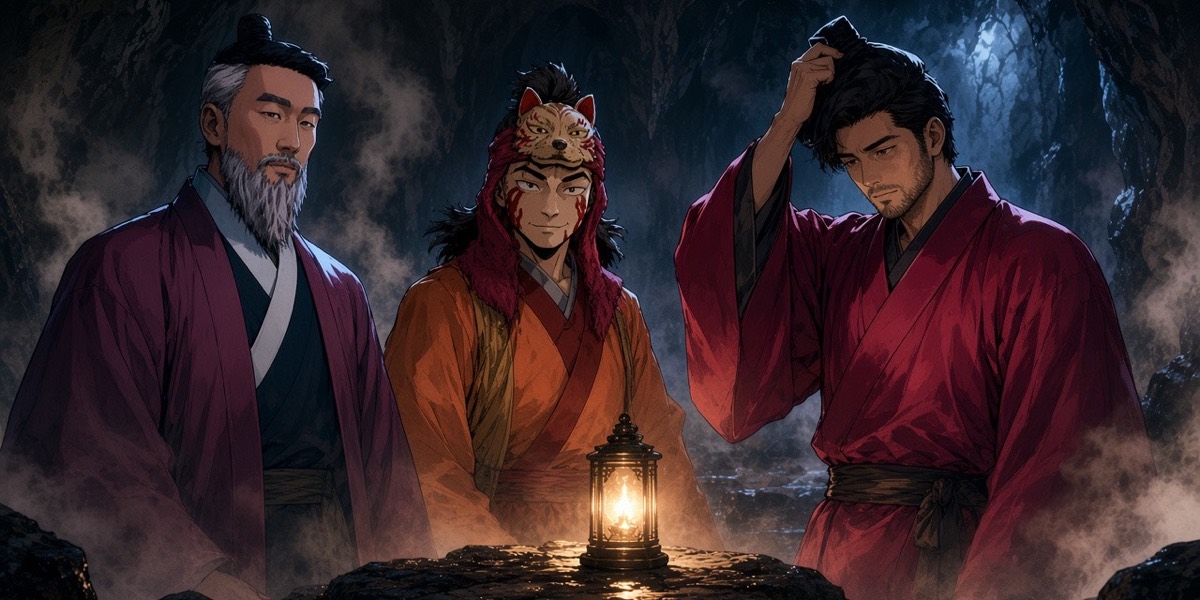
- The Three Kims Two more behind the marshal.
- The Outlet On the far side of the pool, where the water slips out through a crack in the rock, an old man is sitting on a stone with his feet in the stream.
- The Hands Then they do a thing the dead in this water do not do.
- The First Yard The steam in front of the gold will not open yet.
- The Founders On his left, a young man too beautiful to be entirely a man, with a farmer’s hands.
- The Cloud King The steam thickens into a road.
- Characters
Episode· 673
Munmu
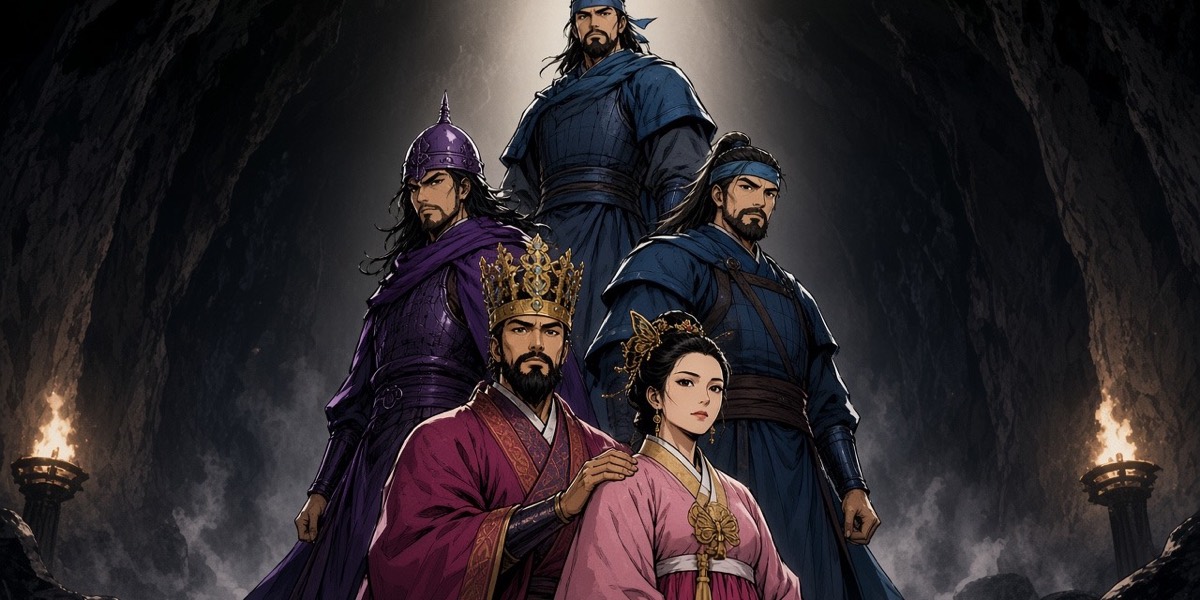
The day after his uncle’s funeral, Munmu brings one question into the steam. Fifteen generations come to answer it, and the last one only speaks in rhyme.
- Bupmin
- Dangun
- Princess Dukman
- Kim Yushin
- Kim Yongsu
- King Suro
- Gotaso
- Hyukgosé
- King Muyeol
3 stills without a cue
The day after the funeral, a letter falls out of a sleeve.
It is short. It is addressed to the Western garrison at , and it promises them a door in the wall of , the way a man at once promised a granary. The hand is very steady. The king knows that hand. It copied his letter to .
It is his own death warrant. copies it out fair, and his hand is still very steady. His wife and children are made slaves. Nobody mentions it at court.
By evening, three councillors have asked him, very politely, for one more apology to . A real one this time, with no fortress hidden behind it. The emperor, they remind him, still keeps the king’s younger brother in . A house keeps a spare key the same way.

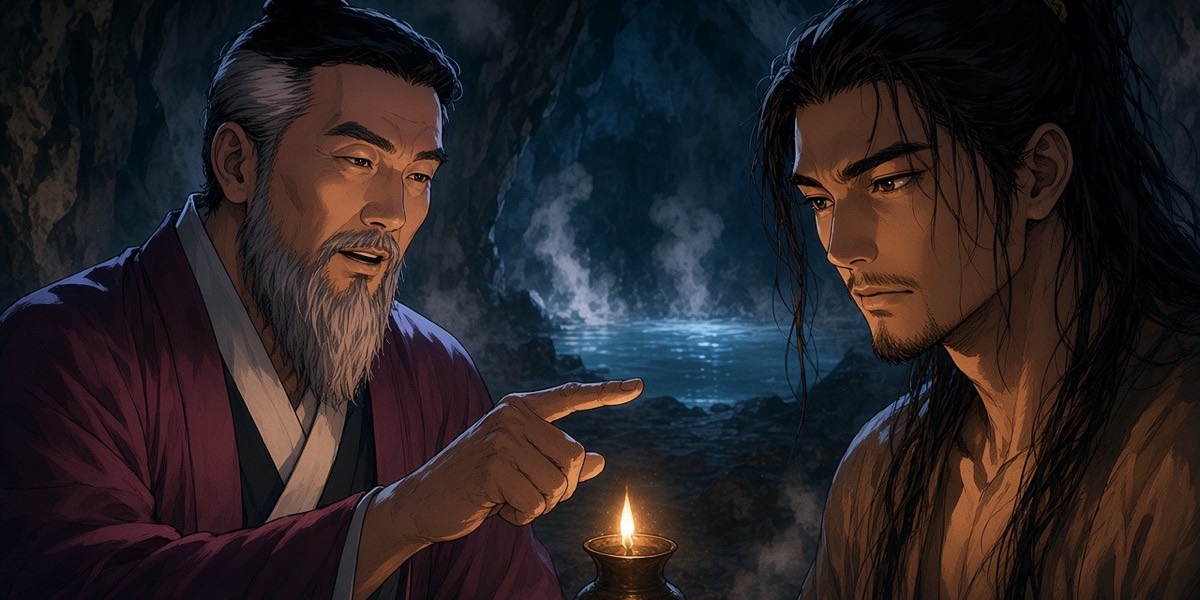
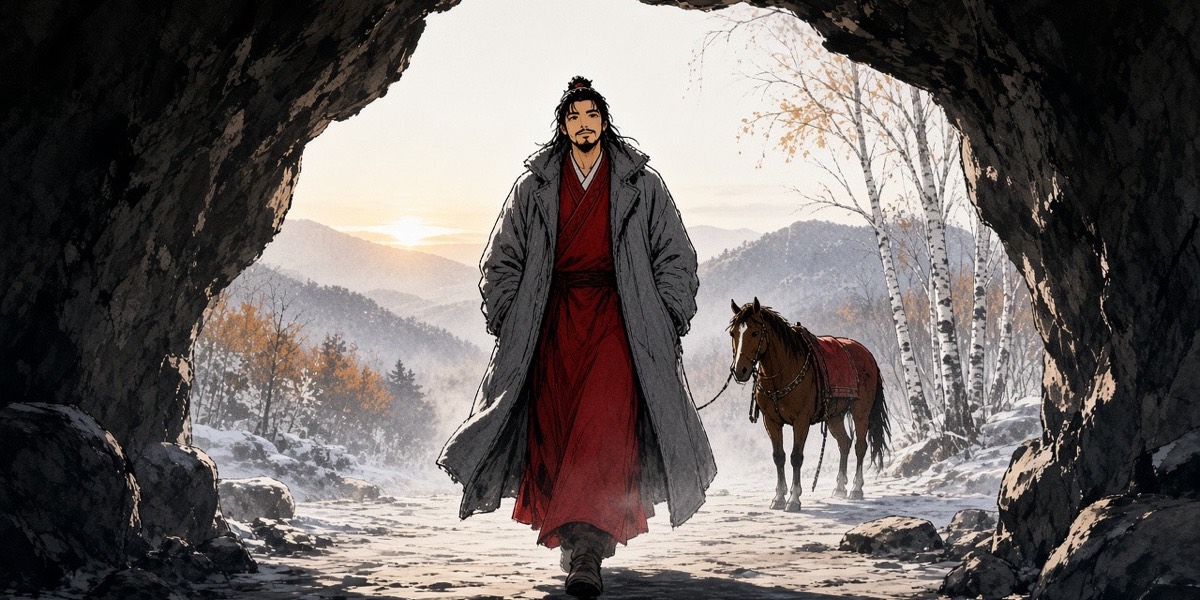
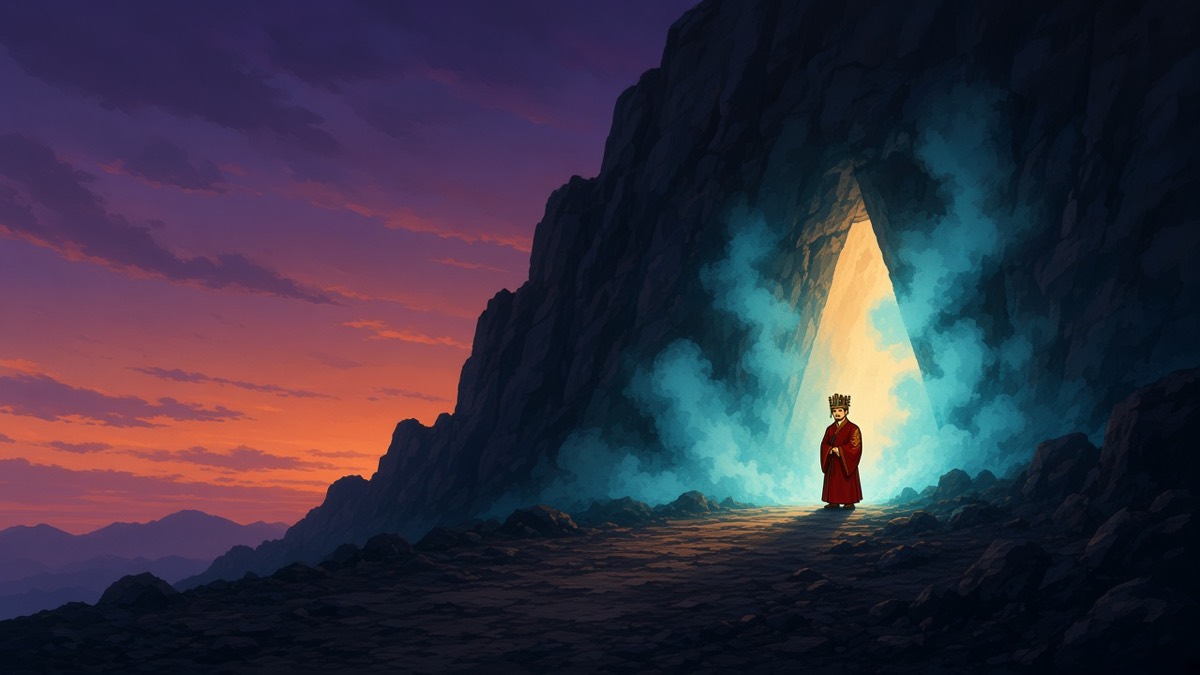
That evening rides alone into the hills east of . His uncle never showed him the path. He finds it anyway, the way sons find what uncles hid on purpose.
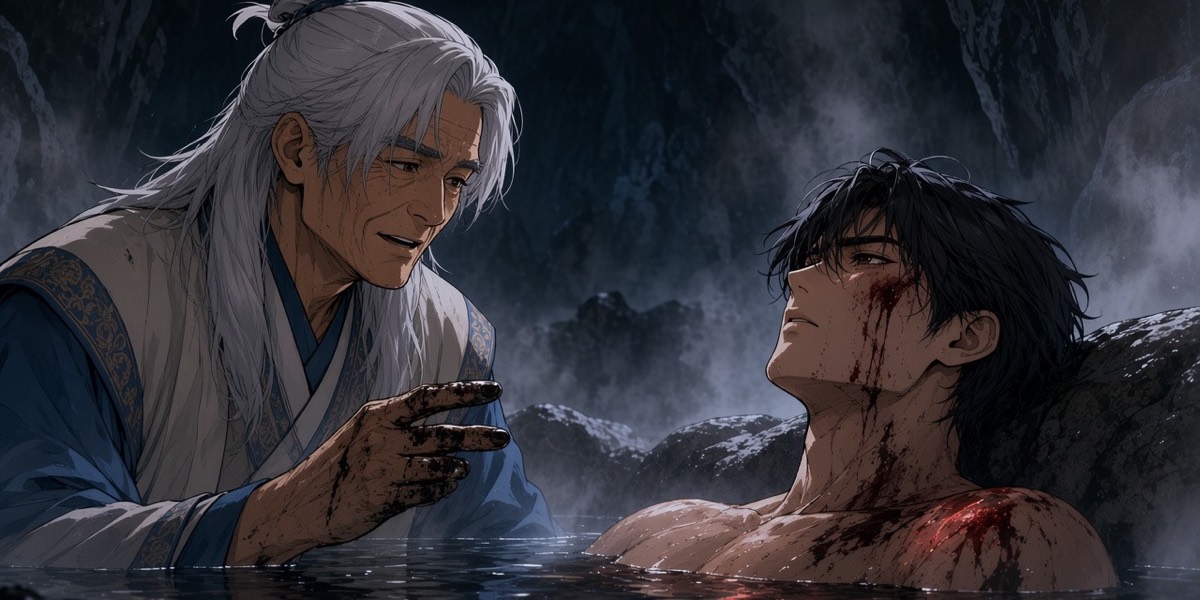
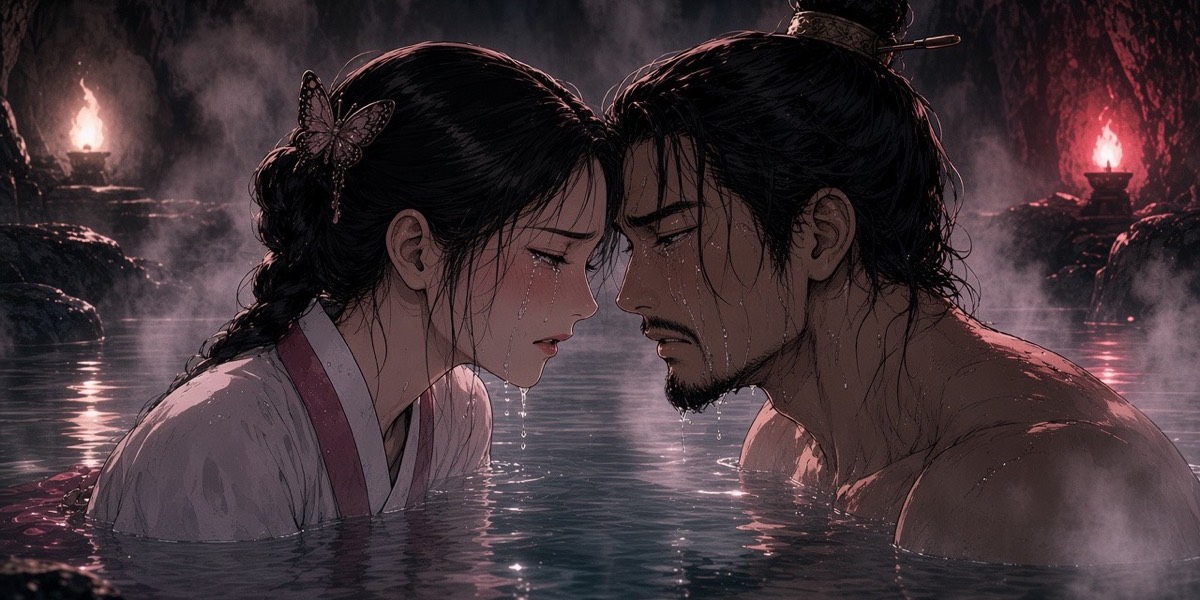
He strips at the rock lip as if obeying an order nobody ever gave him in writing, and steps into water so black it reflects nothing.
Crimson leaves his shoulders the way a soldier sheds a campaign coat. Steam takes the rest. He does not look up until the water has him.
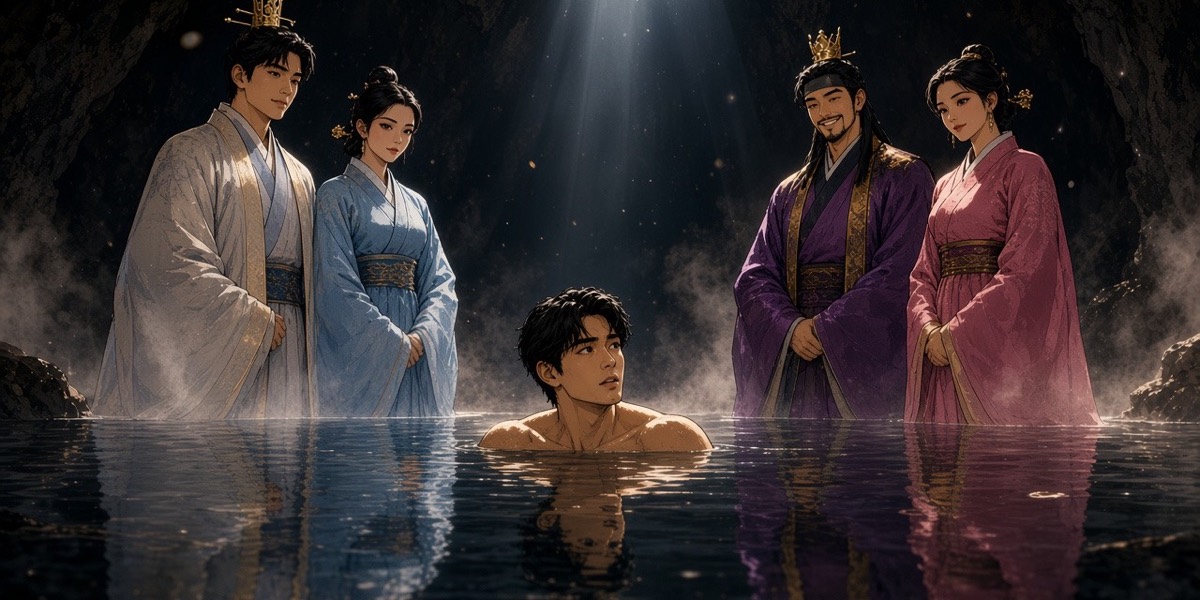
For a long time he only stands in the water. He is forty-seven, and a king, and there is nobody left alive who taught him to ride. He lets the steam have his face, so that nobody has to see it. Not even the rock.
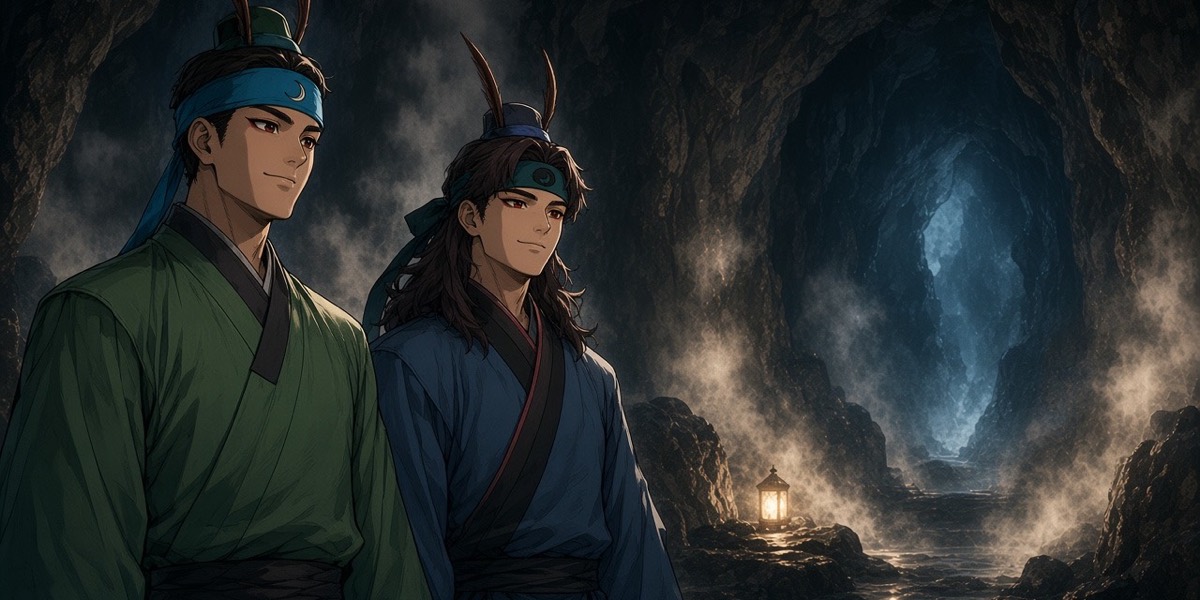
Something goes out of the cave. When they speak again the eyes are solid: green, cyan, ember.
The eyes go out. All three go quiet at once, the way birds do before weather. is looking past his shoulder at the ledge. Somebody is sitting there who was not sitting there a moment ago.
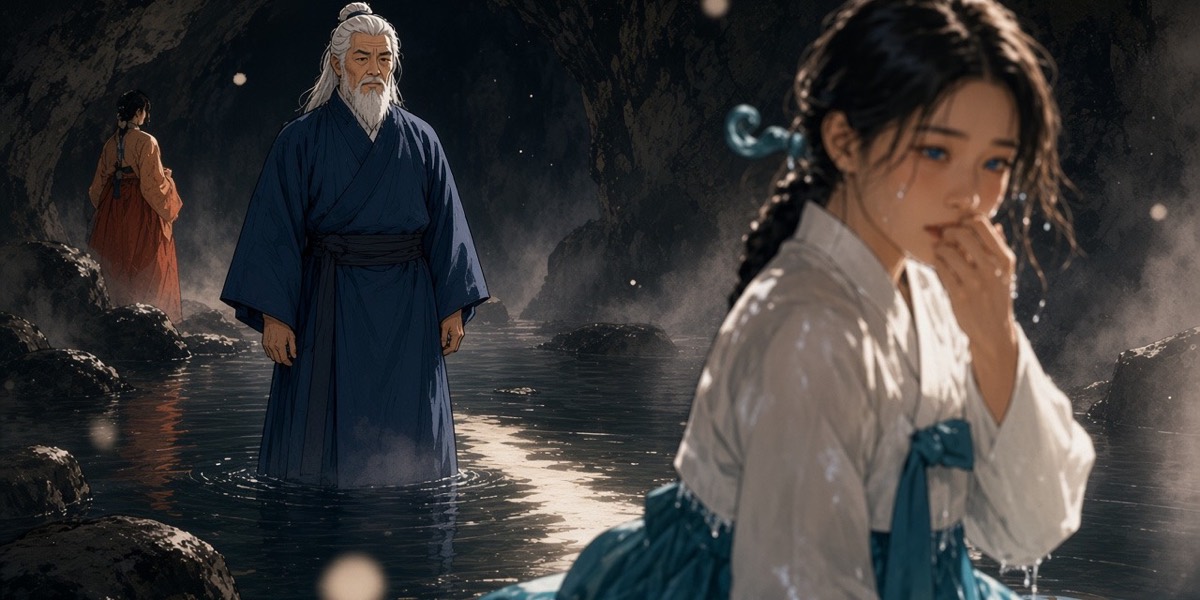
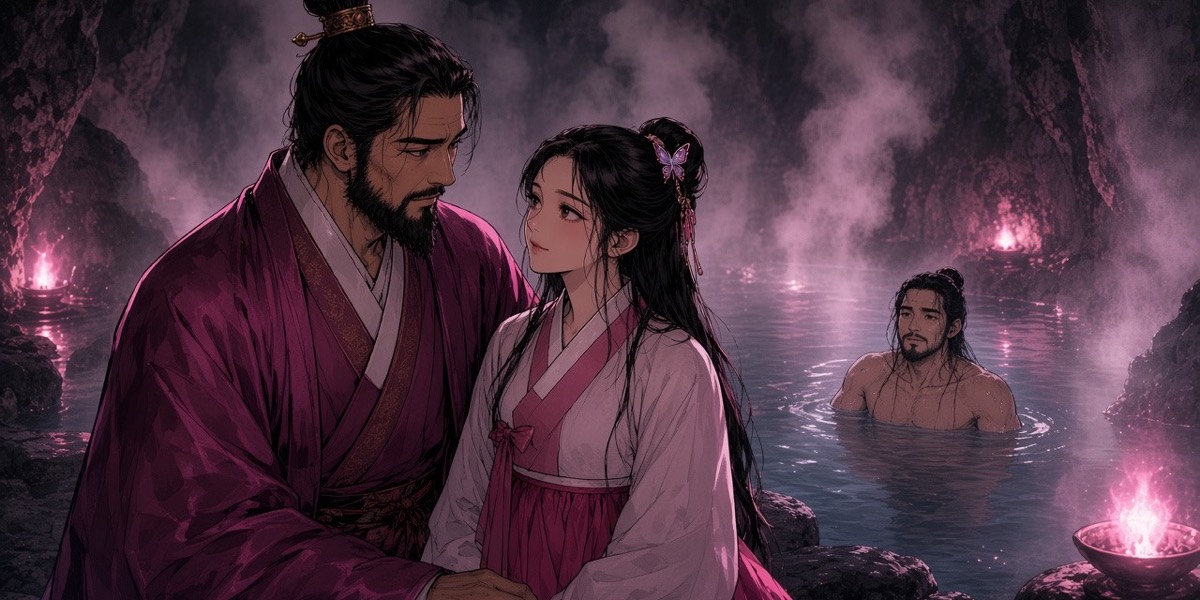
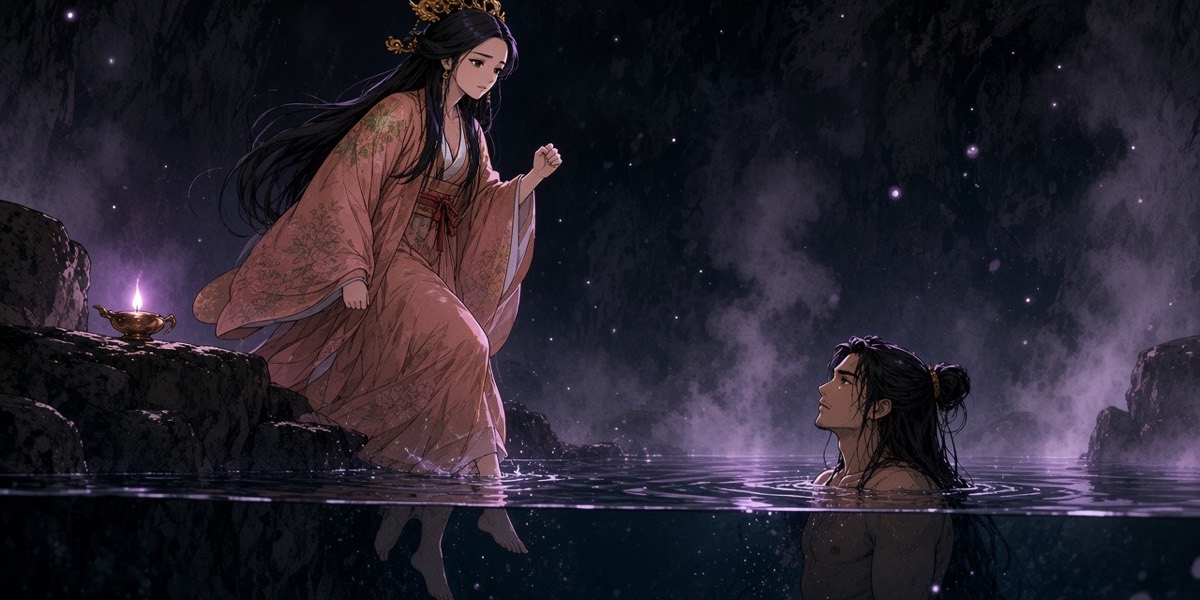
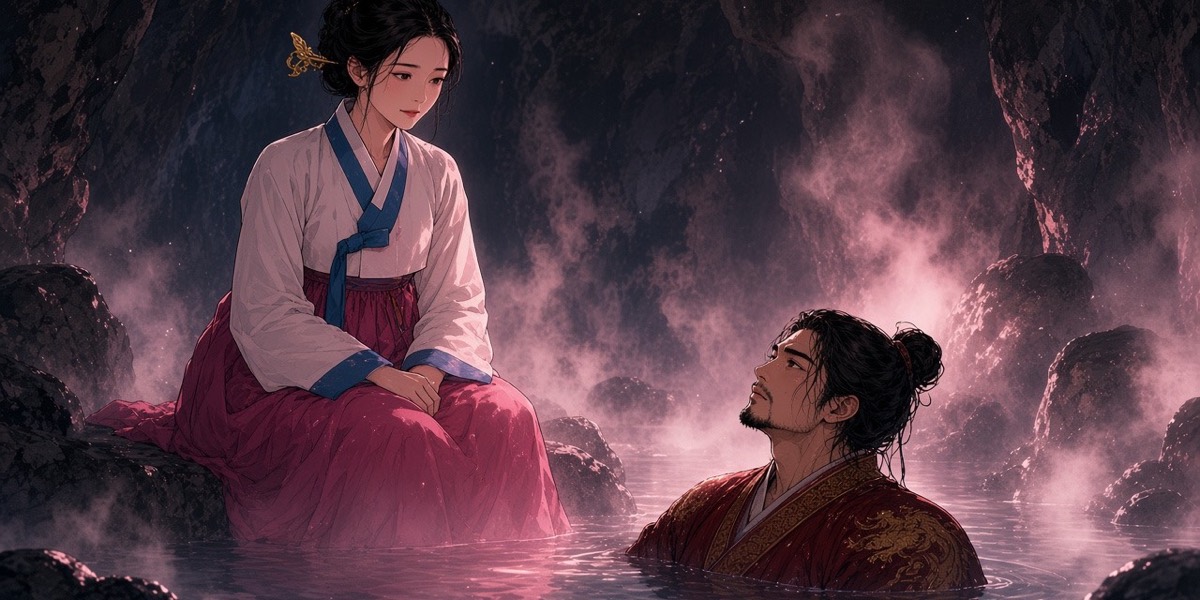
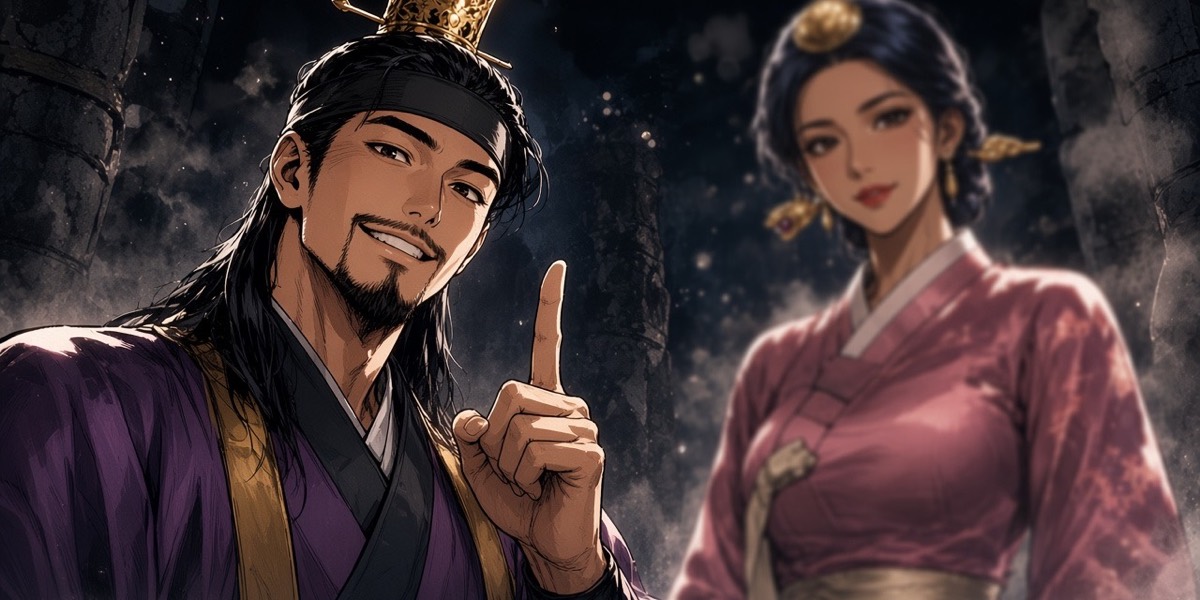
She is sitting with her feet in the water, the way no queen is supposed to, looking up. There is no sky in here. She is looking anyway. Twenty-six years dead, and she still checks the weather first.
Great-aunt. The queen who sat him down at six and did not laugh. He has known that face longer than he has known his own name in a hall.
He laughs. It comes out wrong, half a sob, and he puts it under the water before anyone can see. She sees. She lets him think she didn’t.
He does not answer. She was always very good at the question that ends the argument.
It is the plainest advice anyone has given him in years. He has heard it before. He said it himself, on a beach, at six.
Outside the cavern, that answer already has a street name. A ragged monk from beats a gourd in the markets and calls it — . widows and men without a roof hear that their mountain gods were never enemies of the Buddha, only waves of the same water. Spoils become people without another temple war.
Wonhyo’s One Mind. True suchness and birth-and-death as two gates of the same mind — water and wave. The street hears: your dead gods were never wrong, only incomplete.
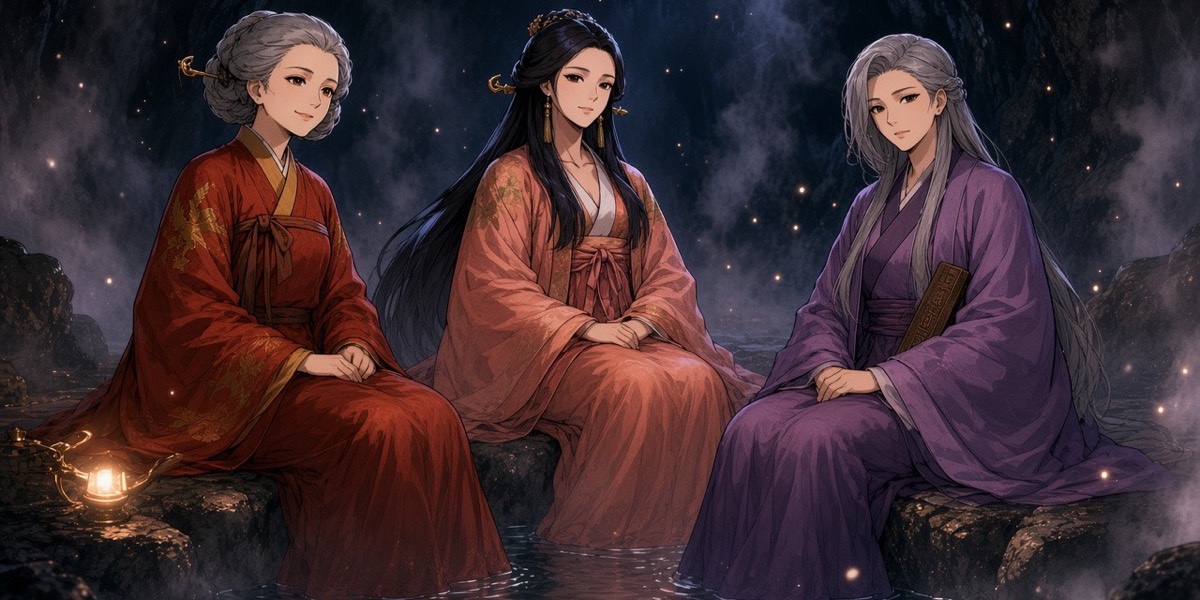
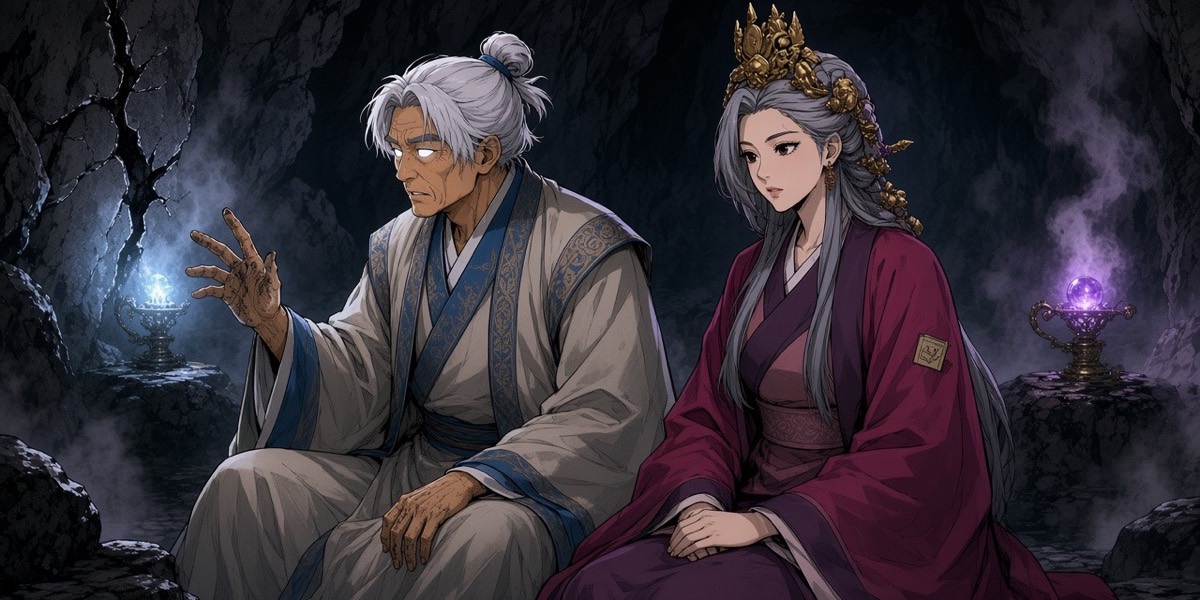
The steam behind was never empty. Two women have been sitting on the ledge the whole time. He only sees them when they decide he can.
He knows that voice. Aunt used to dry his hair in the yard. She was queen later. He still stands up when she speaks.
And Grandmother. She never asked how he was. She told him to sit.
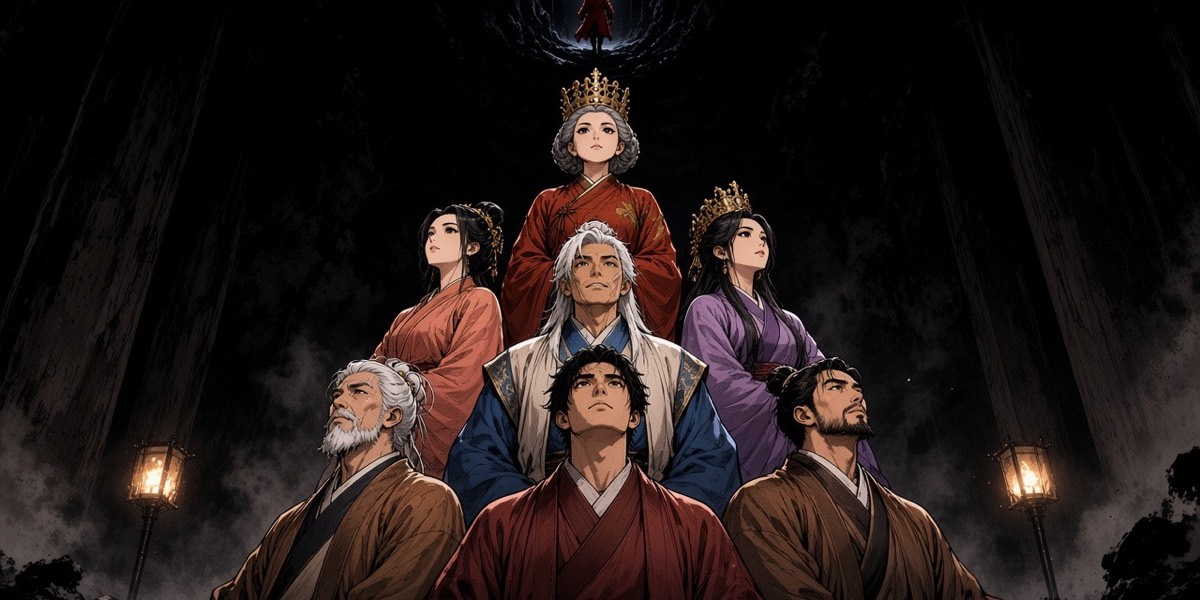
Three of ’s house, on one wet rock. The one who wore the crown. The one who gave it away. The one who kept the chair from becoming a joke.
The steam at his back is not empty. A south-shore Park with salt in one sleeve. And behind him, a king has only ever met in the songs — , ninth from his own bone, standing as if the boats were still his to order.
He knows the first from a song. Every boy in learns it before he sits a horse. The south-shore Park who stayed. Tonight the yard still calls him . The king beside him does not.
’s mouth opens. Closes. The name only and the house are allowed to say lands in the steam like a thrown rope.
puts a hand on ’s shoulder the way a king does when the work is already done and the man is still standing. feels the weight of a stay he did not ask for.
The water moves on the far side of the pool, the way it moves when a man who knows the bottom wades in without looking.
He is in the blue robe they buried him in two months ago. The hair is white. The back is straight again. He stops at the edge of the steam like a guest who has arrived early and is not sure he was invited.
makes a sound nobody in this cave has heard her make in fifty years.
Just her name. In fifty years he never wasted a word in here, and he doesn’t now. She sits down in the water as if her knees went. turns to the rock wall. tells nobody in particular that the steam is very thick tonight. It isn’t.
Forty years he loved her and never once said so where it could be heard. He still doesn’t. He only stands a little closer than a subject should, and she lets him.
laughs, and this time it comes out right.
is quiet for a long time. Then he asks the only question he has ever asked about his son.
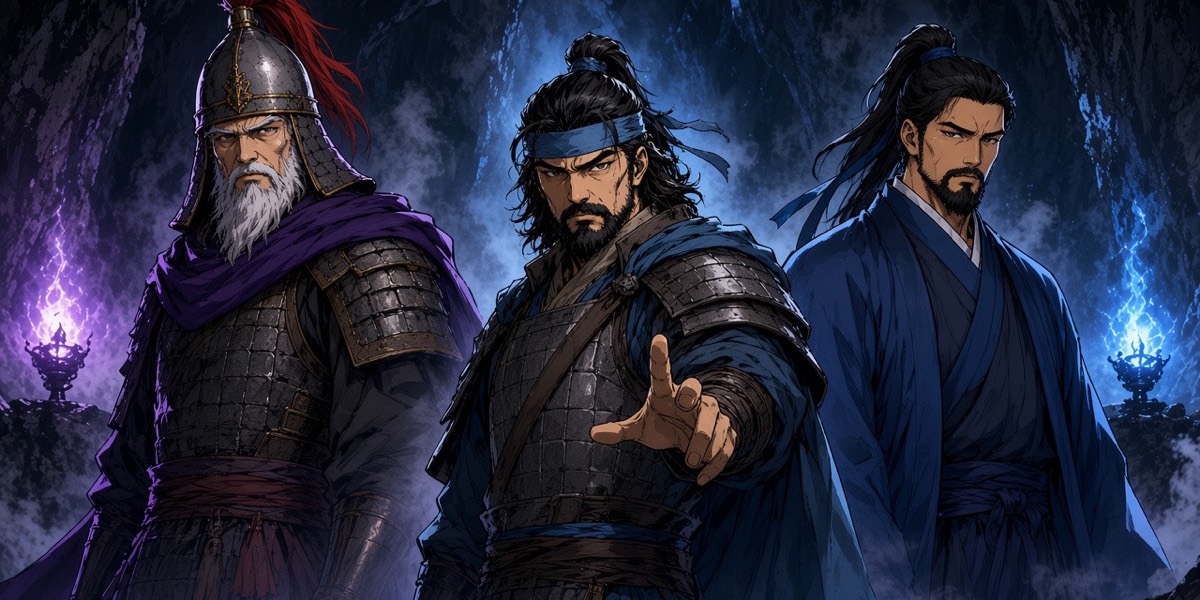
Two more behind the marshal. One still wearing a helm indoors. One who looks as if he is about to call for his horse.
Mother’s grandfather. Mother’s father. He has never seen the first. He has not seen the second since he was twenty-one.
They do not look at him first. They look at . The one they just buried. The boy held for one breath. The son named in this water.
Then they remember the living one in the water.
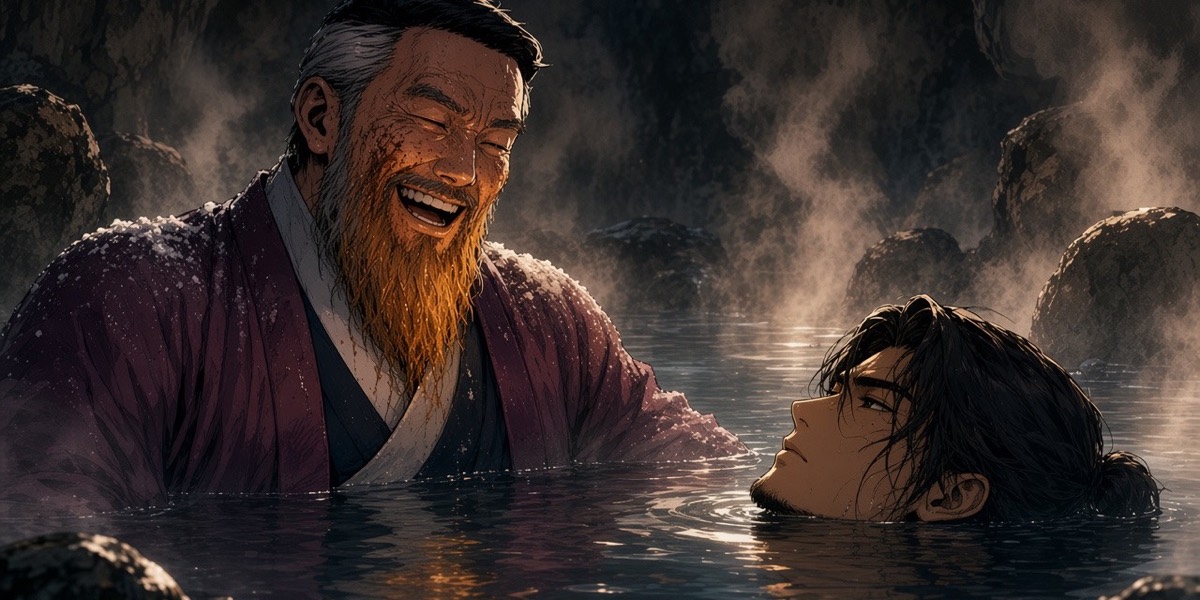
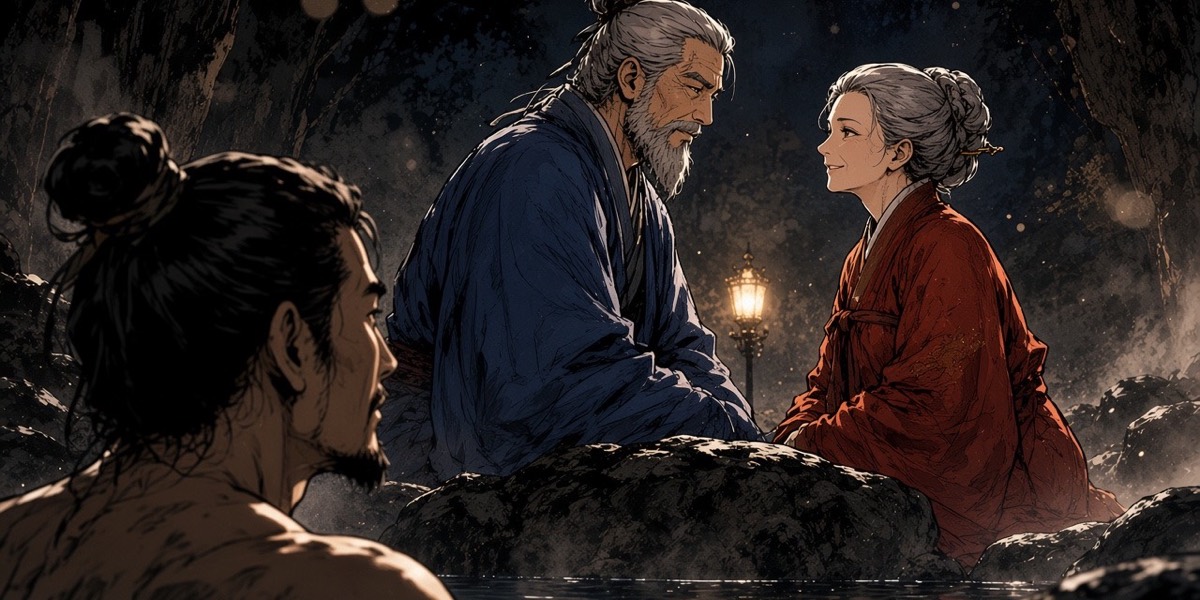
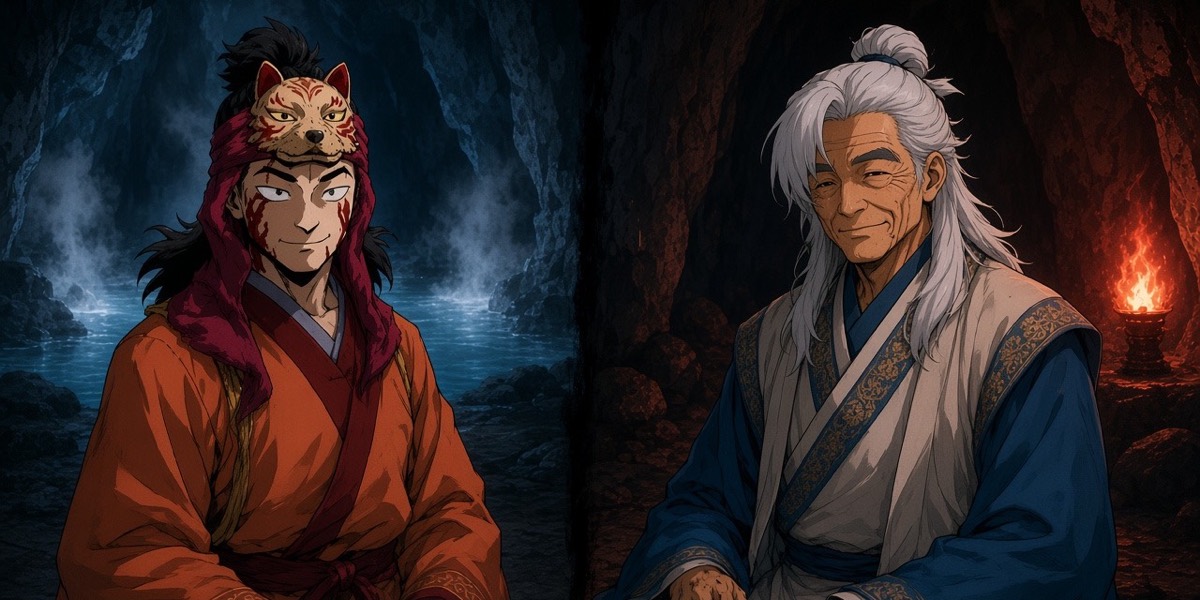
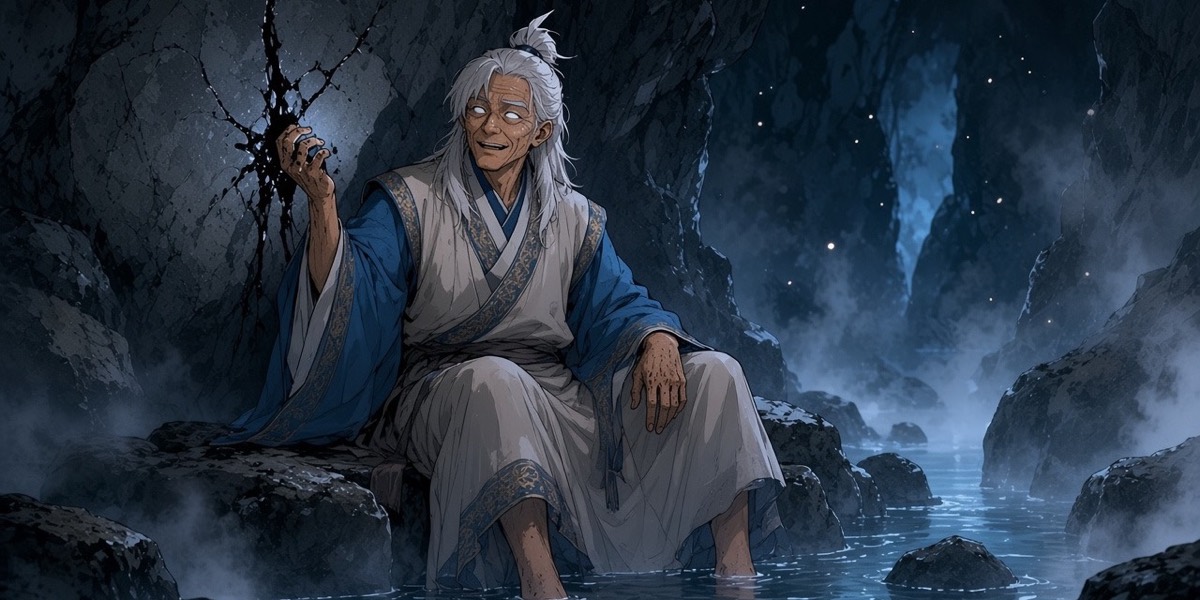
On the far side of the pool, where the water slips out through a crack in the rock, an old man is sitting on a stone with his feet in the stream. He is not talking to it. He never was. That was the show for the night watch. Tonight the show has nowhere to go.
Grey topknot, a little crooked. Plain hemp. Ink on his fingers. mutters something about goblins and moves her feet away from his.
Beside him, sitting very straight with her hands folded, is a woman with a wax tablet tucked in her sleeve. She has been there the whole time too. They died on the same night, and they have plainly not been apart since.
is already there. He does not hurry. He was never late. Fox-mask children stand in the steam behind him, the ones the yard called goblins and the house paid as masons — , grown and not, watching the grandson the way a work crew watches a finished bridge.
is quiet a long time. Then he smiles the late smile.
They do not say the south road. They do not say the knife. is standing there, and some things you do not say in front of a grandson.
looks from to the boy in the water, then to the pink of ’s sleeve somewhere deeper in the steam, and to the small masked shapes that will not come any closer.
does not correct the name. , somewhere behind the steam, does not speak. bow the way workmen bow when the keystone settles.
The old man looks at , then at the water, and does not laugh at anything that isn’t there.
Then they do a thing the dead in this water do not do.
You may remember a son in this pool reaching for his father and catching steam. The dead here can’t be held. It turns out they can choose to lean.
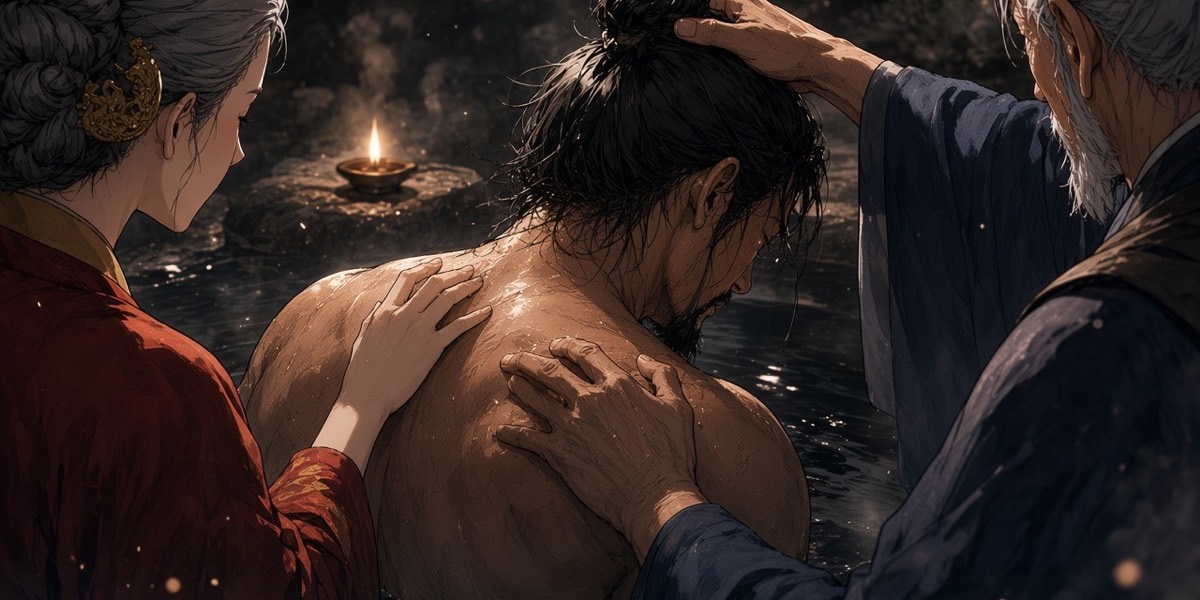
sets her hand on his left shoulder. sets his on the right. They are warm. He feels both weights arrive, a queen’s and a marshal’s, his father’s side and his mother’s, and he does not dare move.
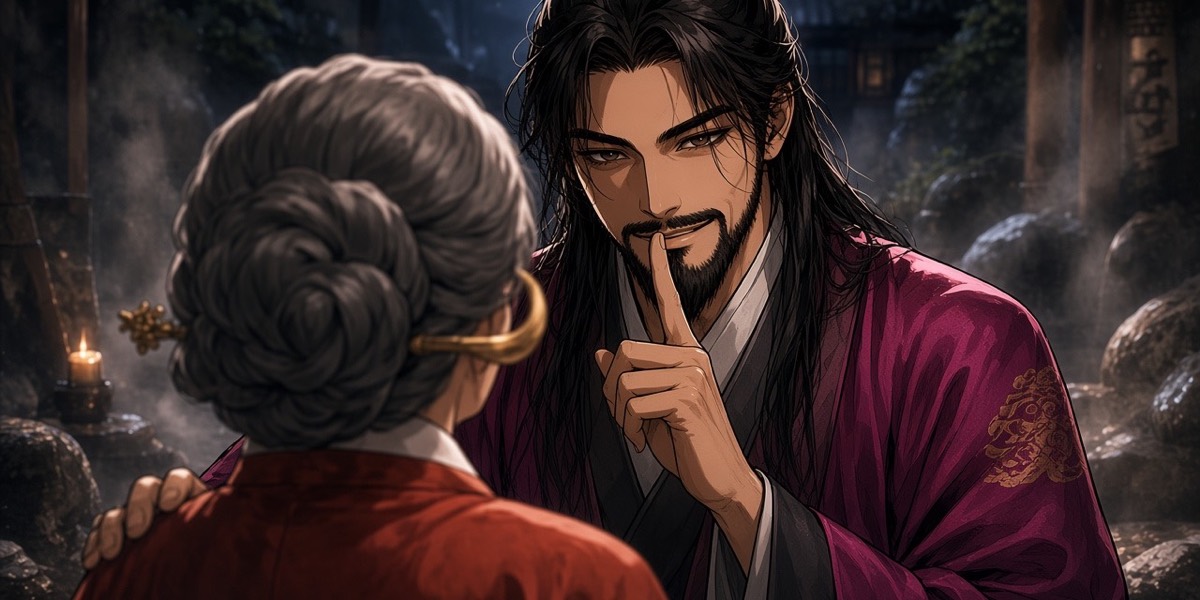
Behind , someone lays a hand on her shoulder. A magenta sleeve. A fox’s mouth, for once with nothing in it.
talked his way through three empires. Now he puts one finger to his lips, smiles, and tips his head forward: not at me. Ahead. It is the only time in his life, or after it, that he has been brief.
Behind his father, two more hands: an old man’s with ink on the fingers, and beside it a woman’s, a wax tablet in her other hand. The side branch, back on the trunk, all in a row. The old man winks.
Behind , a hand: a younger man in the night robe he died in. Behind him, a big man with a cone helm under his arm. Behind him, a king in plain clothes, the clothes of the day he handed over his country with the keys still warm.
And then it doesn’t stop.
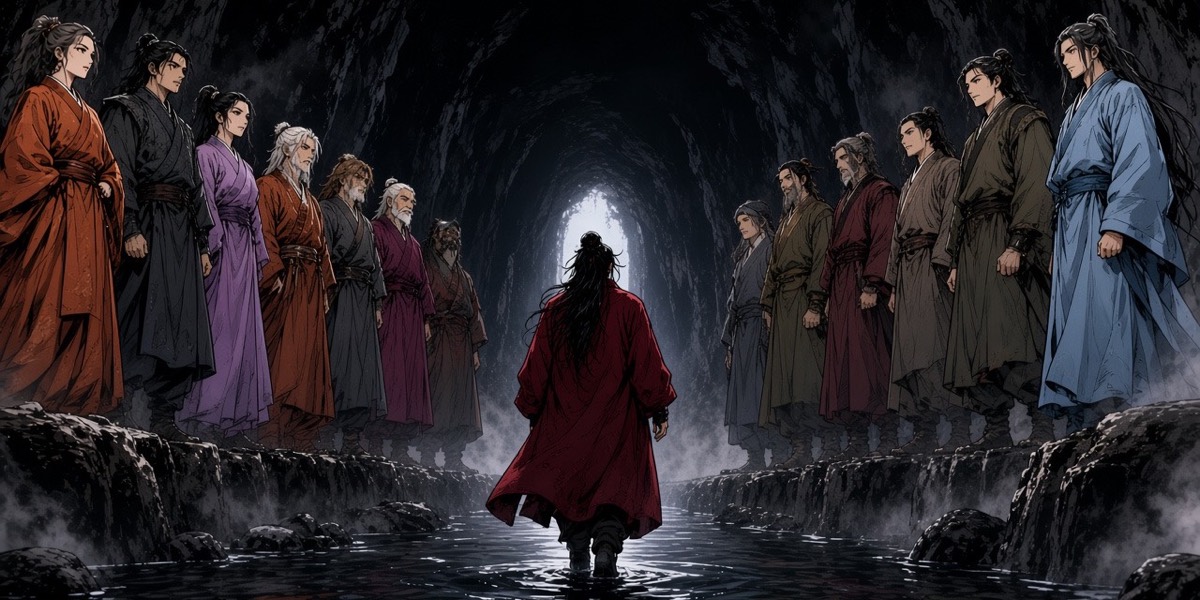
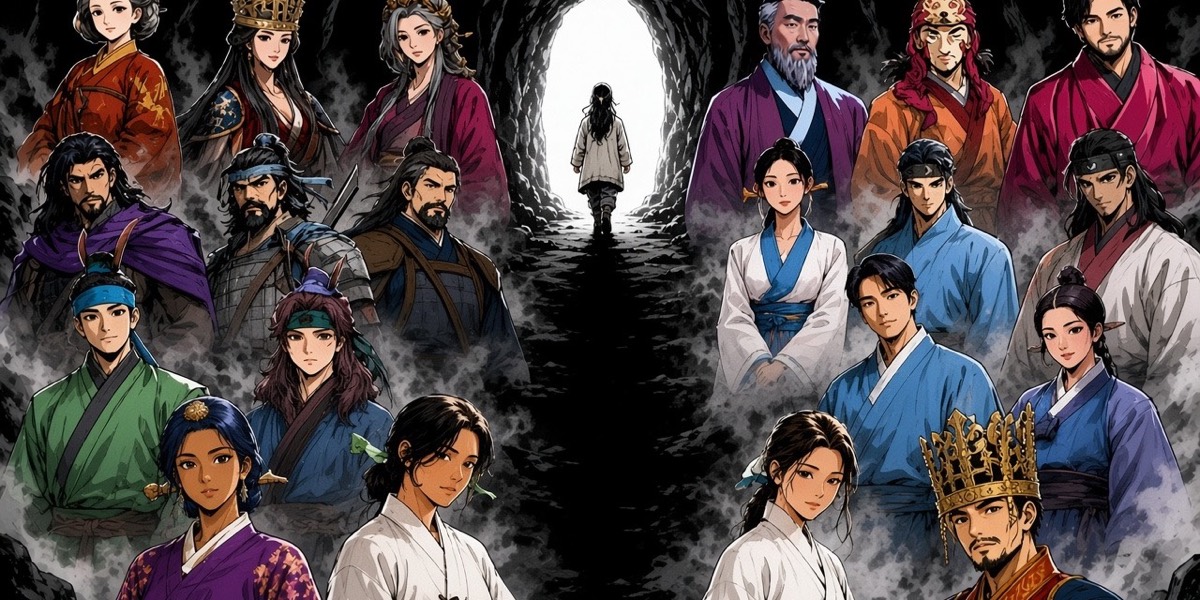
On the left the hands go back through gold. Crowns with shivering leaves, then older gold, then bronze, then topknots with no crowns at all. Kims, and before the Kims other houses, and before them the first one. Strictly, his line does not run back to that first king. The hands don’t care. The line runs through the country, not the bone.
On the right, nine kings of a kingdom that no longer exists, each with a palm on the next one’s shoulder, iron on their belts and river water in their hems. Fifteen generations. He counts them, because he can’t help it. He has his mother’s habits.
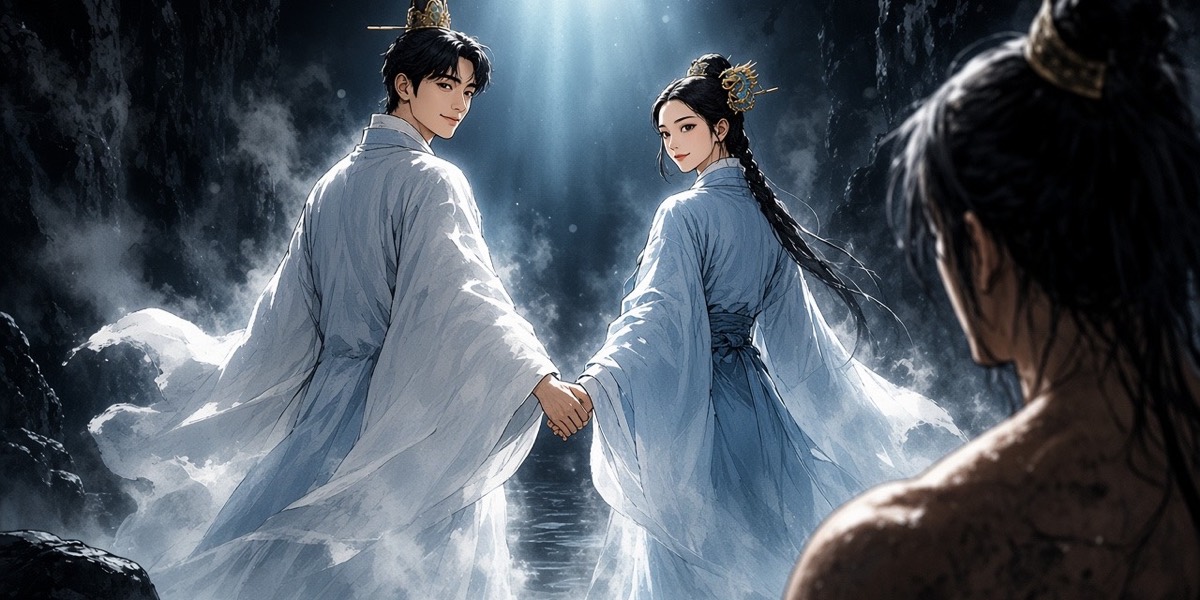
The two lines bend away into the steam like the two banks of one river. At the far end of each, where the steam goes white, a couple stands side by side.
All that weight comes down the lines, shoulder to shoulder, and lands on his. It should be unbearable. It is lighter than the crown.
Then the near ones let go, one by one, the way lamps go out down a long hall. His father nods once. The queen squeezes. The marshal doesn’t squeeze; he taps twice, like a man checking a saddle girth.
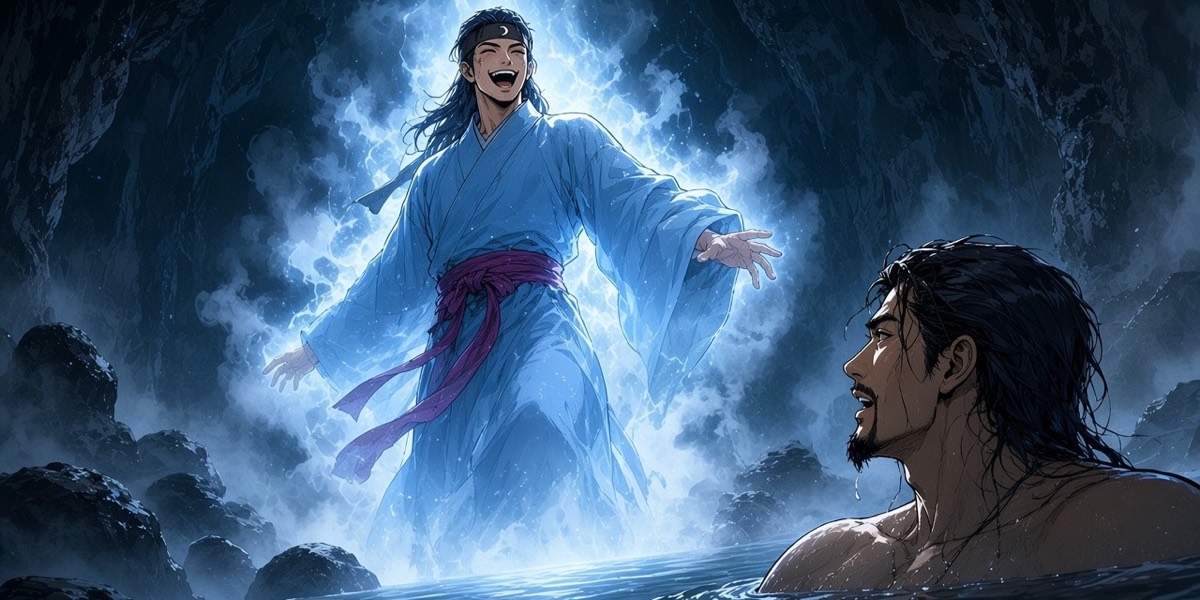
The steam in front of the gold will not open yet. A boy in ice-blue comes through it first, laughing as if he just got hit and liked it.
He knows the song. Uncle made them learn it before they sat a horse. First Class. The boy who took and died of grief.
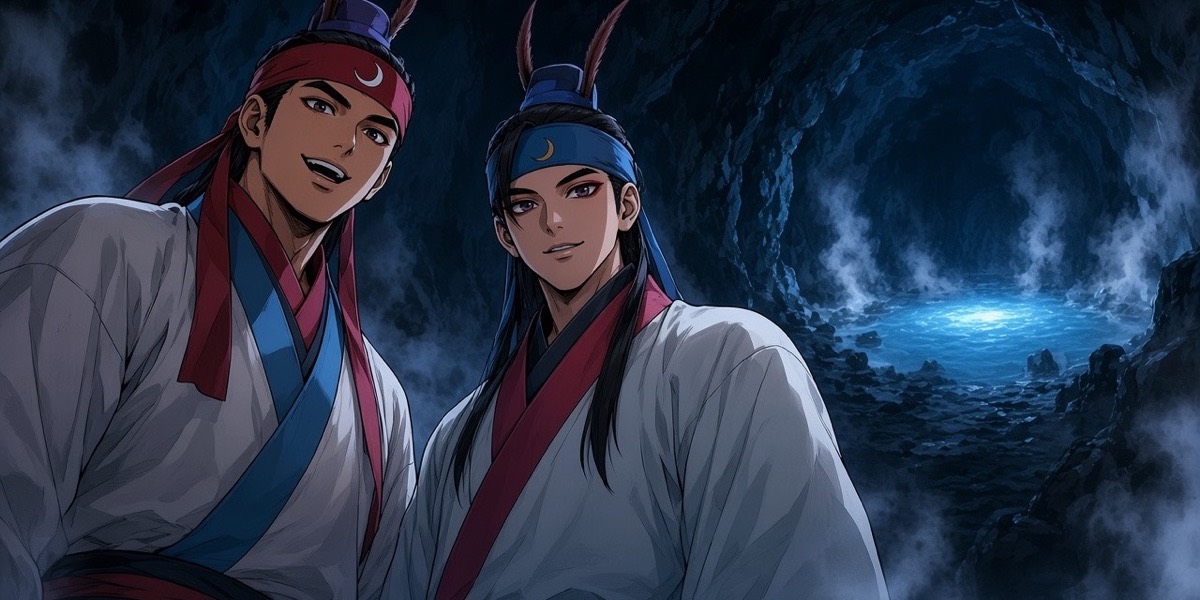
Two more behind them. Not First Class. The western hills. He knows them as the precepts. Uncle would not let them skip the fourth.
Then two boys younger than the apology. Cousin. And the other one. He was on the east slope that day. He saw them go.
Then the steam in front of him opens on gold, and the yard steps aside.
turns, ice-blue in the steam, and the yard behind him — , , , , — holds still as if a class were being counted.
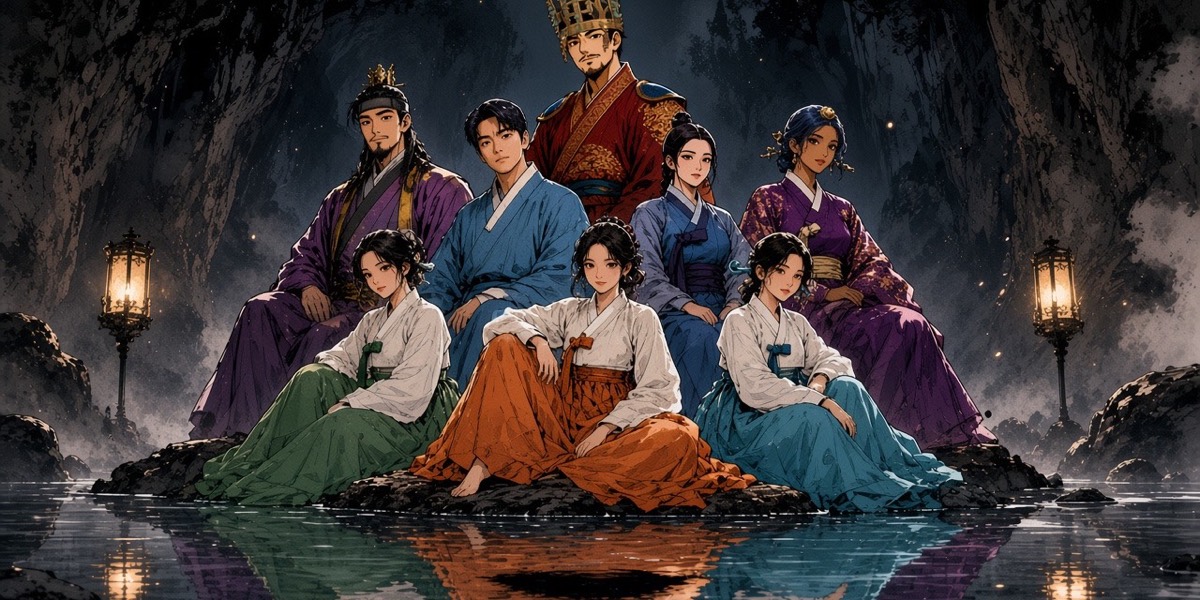
On his left, a young man too beautiful to be entirely a man, with a farmer’s hands. Beside him, a woman whose lips, the story goes, were a hen’s beak the day she was born, until somebody washed her in a stream.
On his right, purple silk and a little gold crown. If you have been here before, you have met him; he hums. Beside him, a woman from the far side of the sea, who buried her silk trousers on the beach so the sea god would know she meant to stay.
’s grin thins. Behind him the Kims stand in a single file in the steam — ’s surrender, ’s purple, ’s quiet, the line that walked into so a boy could keep a sword — and points his chin at as if counting pearls.
It is the game he played with the boy’s uncle on this same rock, over a sword. Whose iron? doesn’t know that. He only knows the question has a floor under it, and he is standing on it.
A long silence. The steam drips.
looks at his wife. looks at the ceiling. The queen from the sea looks at with interest, the way you look at a man about to step on a rake.
smiles. It is a farmer’s smile, the one for a city man who has just asked where rice comes from. He takes his wife’s hand, and the two of them are not there.
Then they are gone too, and is alone in the water, and the steam is going thin.
The steam thickens into a road. A man walks it as if conquest were still under him — , , , blue silk and the old height of . Behind him the kings of stand in a long dim file: founders, maripgans, the ones who held the chair and the ones who lost it. He looks at the way a peak looks at the last ridge.
The file of kings does not kneel. They only watch. feels every chair that came before him lean the same way, toward one name.
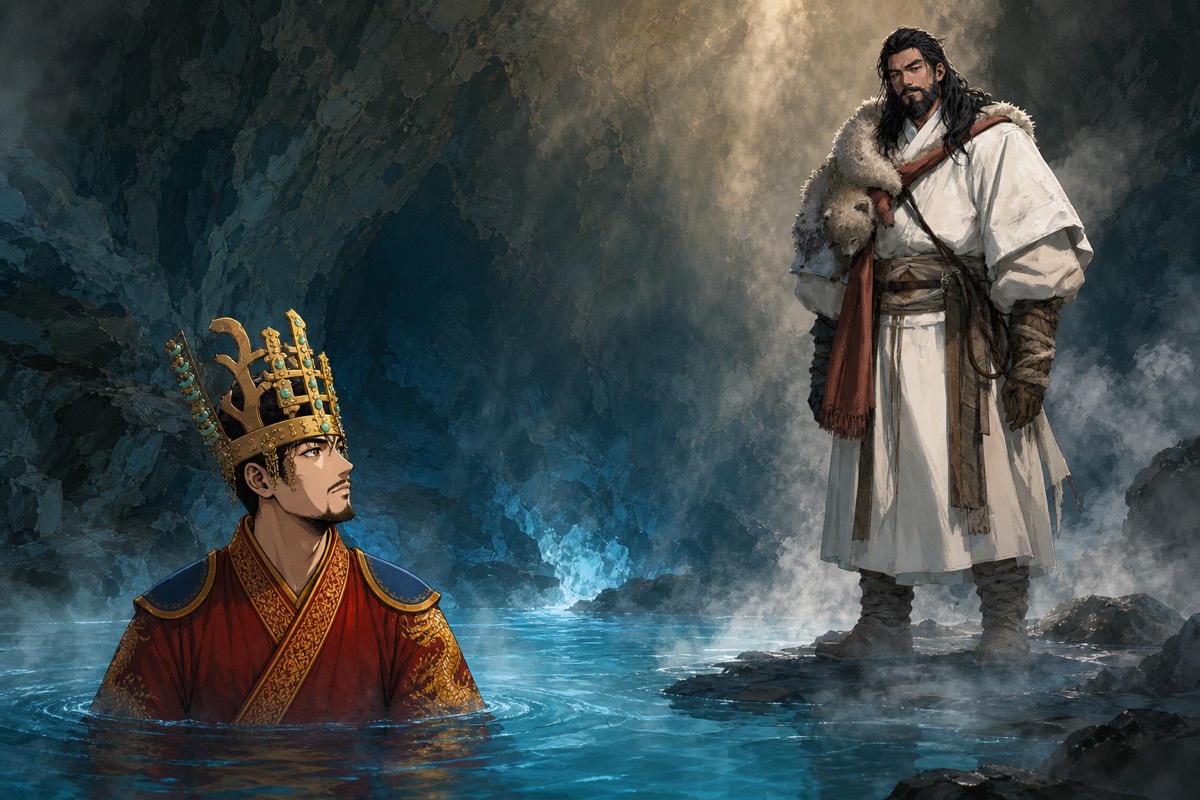
The steam goes thin enough to see through, and a man stands on the water as if the lake were a court floor. White robes. Sandalwood-coloured light. A smell of birch bark and, faintly, garlic. A face that has outlived every kingdom on the map. The three go still on the rock. This visitor is not theirs.
He looks past at the black water, as if a city were standing in it.
thinks of a steady hand copying out its own death warrant. He thinks of three polite councillors and their spare key.
The man in white looks at him the way a grandfather looks at a child who has finally said his own name out loud.
stands in the water for a long moment with nothing left to ask. Then he does a thing his father never did and his uncle never needed to. He gives up.
The man in white does not answer. He looks down. So does .
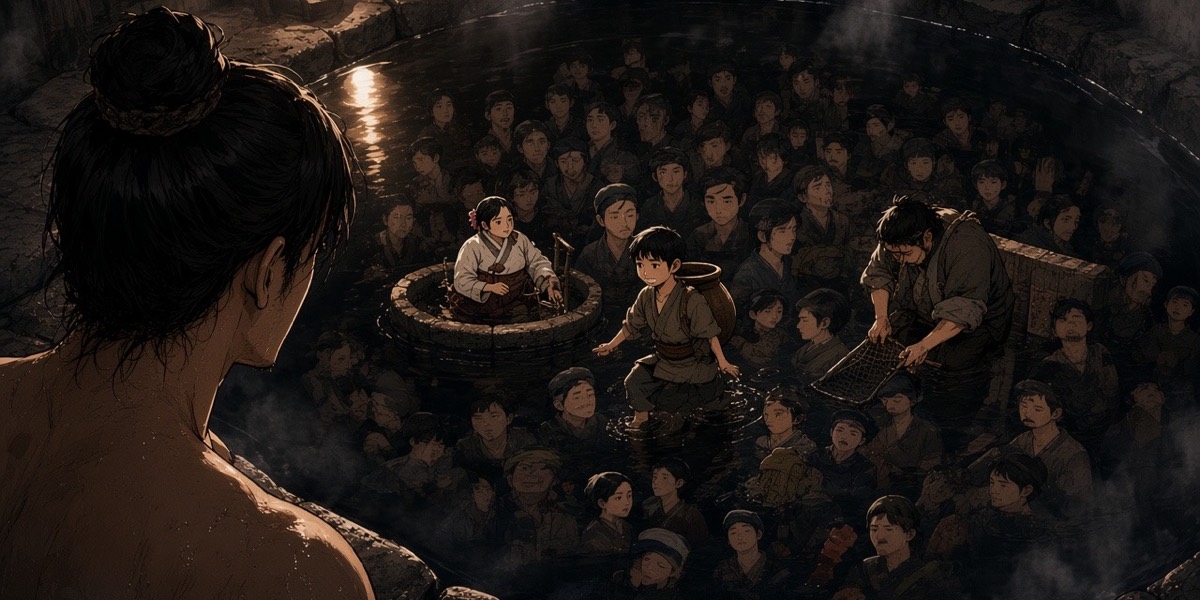
The water has gone still as lacquer. It does not show his face. It shows faces. A woman in undyed white at a well. A boy walking south with a pot on his back. A fisherman mending a net. A soldier with no rank, asleep against a wall. Thousands of them. More than there are of anyone else.
When he looks up, the man is gone, and the steam is only steam.
The steam does not empty. Magenta, and a pink he has not seen on a grown woman — and with them, the high cap that left on the small boat. . Father’s attendant. The third of the three who stayed, standing where he belongs: at ’s shoulder.
Sister. He was sixteen. The seat at supper stayed empty and nobody moved it. Father went quiet. He has been counting that year ever since.
He cannot get the next word out. She does not wait. She never waited.
Father does not put a finger to his lips this time. He lets the boy cry.
’s hand finds the boy’s wet hair. watches without rushing him, for once.
He comes out at first light with wet hair, wearing the winter coat his mother packed. Behind him the cave is full. Everyone who came. They do not follow. They watch.
The house and the three who stayed. The Kims. The first yard. The founders. The hill. All of them, their faces in the steam, watching him go.
He doesn’t ride home. He rides south-west, toward a river town that used to be a capital, and he doesn’t tell the escort why until the second day.
The record says the king sent envoys to the old capital. He did. He also went.
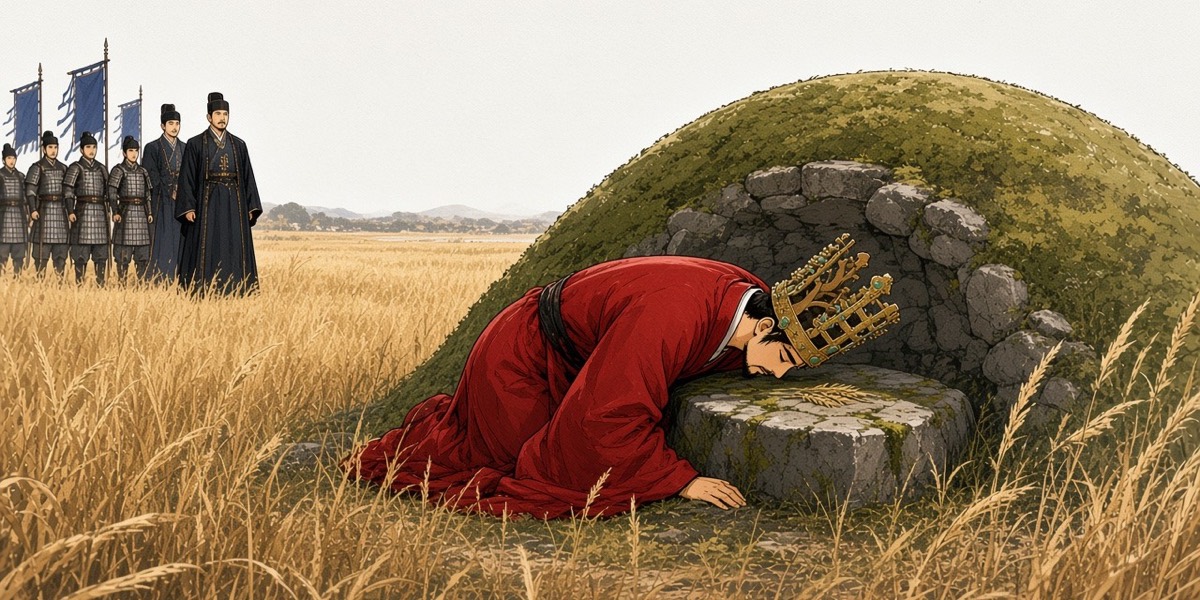
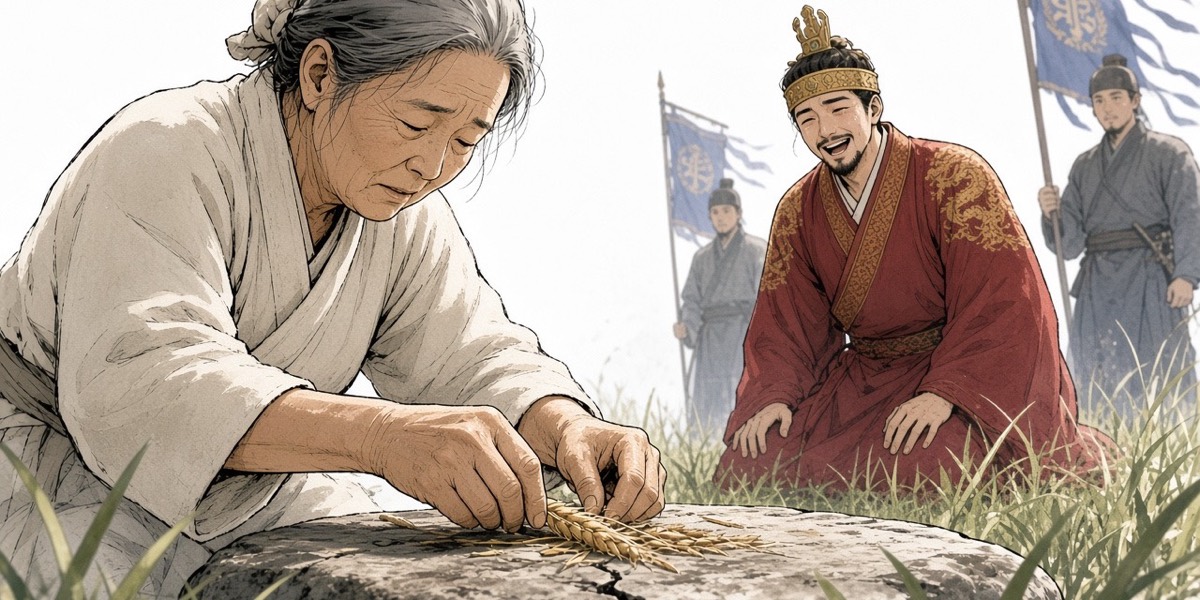
’s mound is a low green hill by the river. The grass is long. The stone table in front of it has a crack, and moss in the crack. Someone has been leaving barley on it anyway, a handful at a time, for a hundred and forty years.
kneels. In front of the whole escort, a king of puts his forehead on the grass of a grave.
, ninth in descent from the first lord of , came over to this country… and Queen Munmyeong truly bore me. So the first lord is, to this young man, a founding ancestor fifteen generations back. The kingdom he ruled has long since fallen, but the shrine where he lies still stands. Join it to the royal ancestral temple, and let its rites go on.
가야국 시조의 9대손 구형왕이 이 나라에 항복하였고…… 문명황후께서 실로 나를 낳으셨으니, 시조는 이 어린 사람에게 15대 시조가 된다. 다스리던 나라는 이미 무너졌으나 묻힌 사당은 지금도 남아 있으니, 종묘에 합하여 제사를 이어 가게 하라.
He sets aside thirty plots of the best fields beside the mound to pay for the rites, and calls them the king’s fields, so nobody can sell them later without saying out loud whose they were. The record dates all this to the first year of his reign. Records like to make a man decisive early. Most good kings decide early and get round to it late.
When the barley is laid, an old woman in undyed white starts to sing. Too low, the way you sing something you were told never to sing in front of men. A few of the escort know the words. Their grandmothers were .
So that is how the rest goes. Somewhere, a king who hums has been wondering for a very long time. laughs on his knees in front of , and does not explain.
That winter, the old ranks of are written into ’s, man for man. It is the first time a conquered lord in this country has been handed a rank instead of a chain. The houses complain at length. Nobody opens a door.
does not send another army to teach the conquered how to pray. He sends with a drum. The monk who drank from a skull and turned back from walks the roads where ’s dragons used to fly, singing that there is only under the many names — and the king who wants to be a king for all finally has a doctrine that sounds like his childhood sentence.
The drum goes past a hut nobody stops at. The knife is still on the wall. The woman in the door is not invited.
does not answer her. The drum keeps the road.
He writes its apology too, in a lovely hand that isn’t ’s. He signs it with the name the emperor gave him. He keeps the other one.
Every month a sack of rice goes up into the hills, to a man who farms badly. Nobody tells him who sends it. He knows.
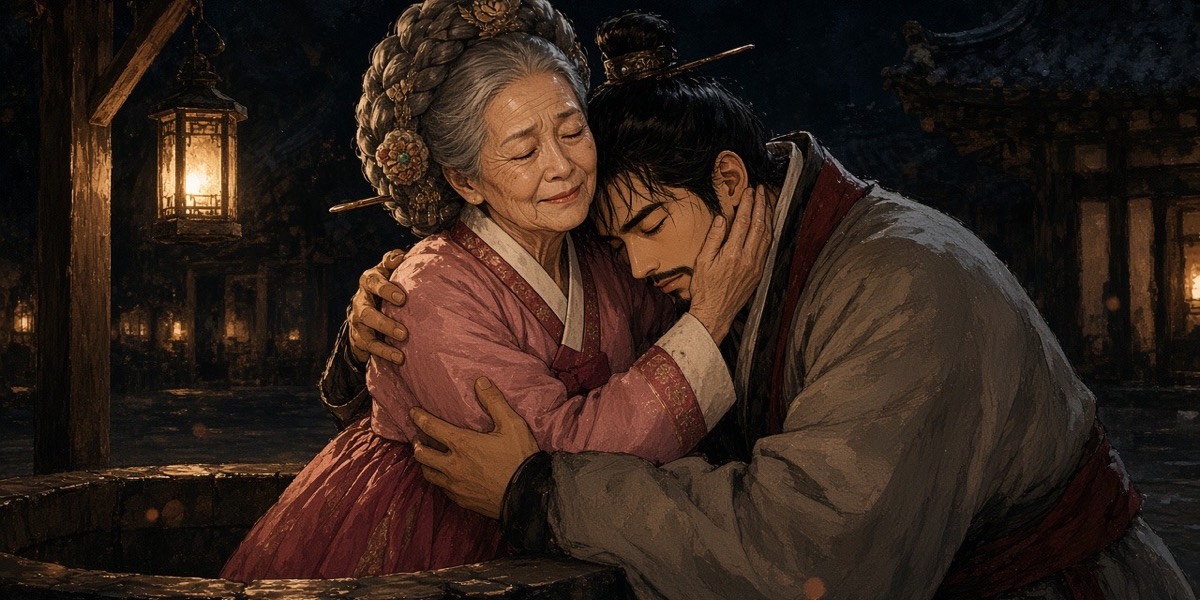
His mother is standing by when he comes home. It is where she stands now.
She waits. She has been waiting at this well since summer.
is sixty-seven, and nobody calls her little sister any more. She puts her face in her son’s wet hair and cries like one.
Nothing changes that a scribe could write down. He is still forty-seven. The West is still in the north. But for forty-seven years he has been somebody’s son and somebody’s nephew, the boy on the beach with his father’s dream in his mouth. Tonight he goes to bed with nobody’s hand on his shoulder, and he stands up straight anyway.
The dream was his father’s. The kingdom will be his. Somewhere above the weather, someone who has watched this family since before it had a name is pleased, and says nothing. The rhymes were his grandson’s idea.
said he could wait for a ship. The ship is here…!
