







Chapter 63

Onjo


AI Summary
- Buyeo In Buyeo, Lady Ye has raised Jumong’s first son alone.
- The Half Sword In the hall at Jolbon he lays the half-sword on the boards.
- The Last Night When Yuri is named crown prince, Sosuno does not fight the hall.
- The Yard at Dawn By sunrise the whole yard knows, because a yard always does.
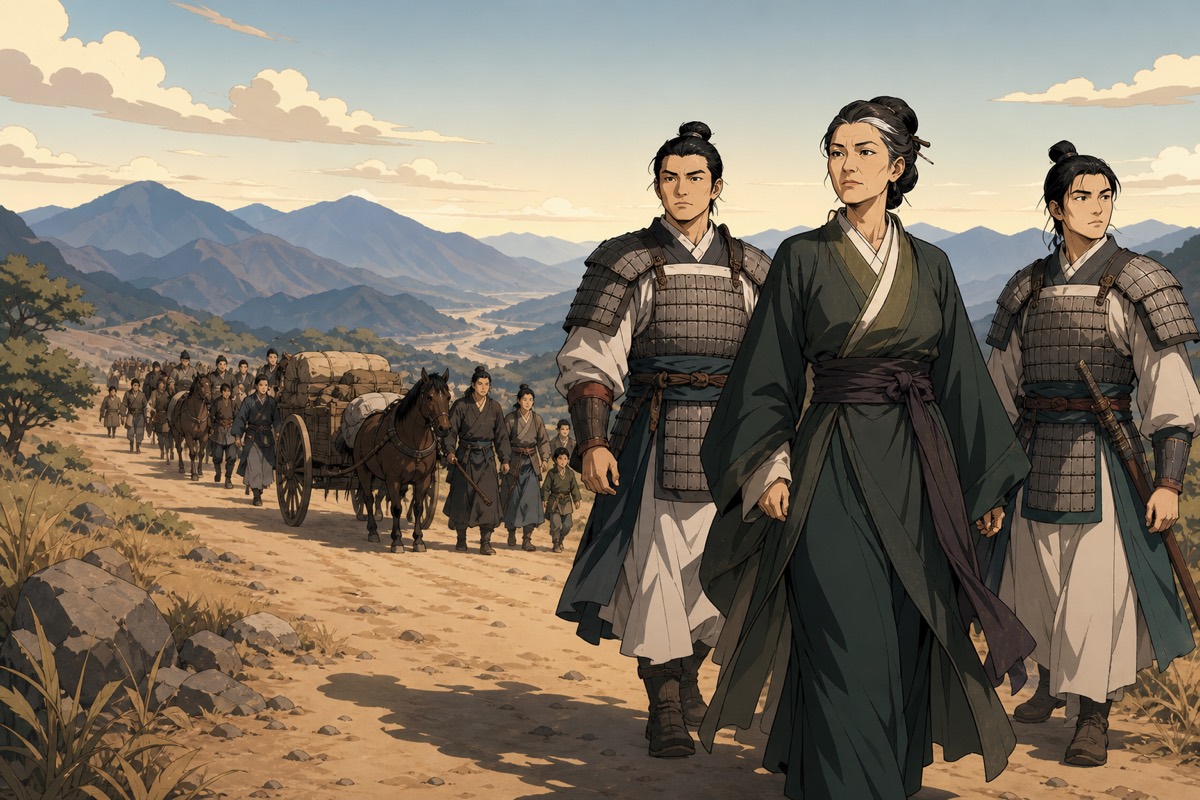
- The Road South At dawn ten carts roll out through the gate, and she looks back once, at the gate, where a man is still grinning like an idiot because she told him to.
- The Amnok The first river is the one Jumong crossed coming the other way.
- Myohyang South of the river the land stands up.
- The Taedong The next river has a city on it, and the city has a Han flag.
- The Imjin Past the Myeorak hills the ground goes soft and red, and then the Imjin cuts across it in a trench of black stone: cliffs of basalt columns standing in rows like a palac…
- A Mahan Hall South of the Imjin the villages change.
- The Han Halfway, where the Han comes down wide and brown out of the eastern mountains, on a ridge path too narrow for the cart, a stag is standing in the way.
- Mount Buak On the third day it takes them up Mount Buak, and from the top the brothers see all of it: a river looped across the plain like a belt somebody has unbuckled, high peaks…
- Characters
Episode· -18
Onjo
Nobody in their father’s hall ever mentions Buyeo. Then a boy with a sling turns up.
- Onjo
- Sosuno
- Biryu
- King Dongmyung
- Yuri
- Lady Ye
- Hogong
- Queen Buyeo
- Yeon Gesomun
Every child in can tell you this story. Most of them get the beginning wrong.
and grow up princes in their father’s hall. Nobody there ever mentions .
In , has raised ’s first son alone.
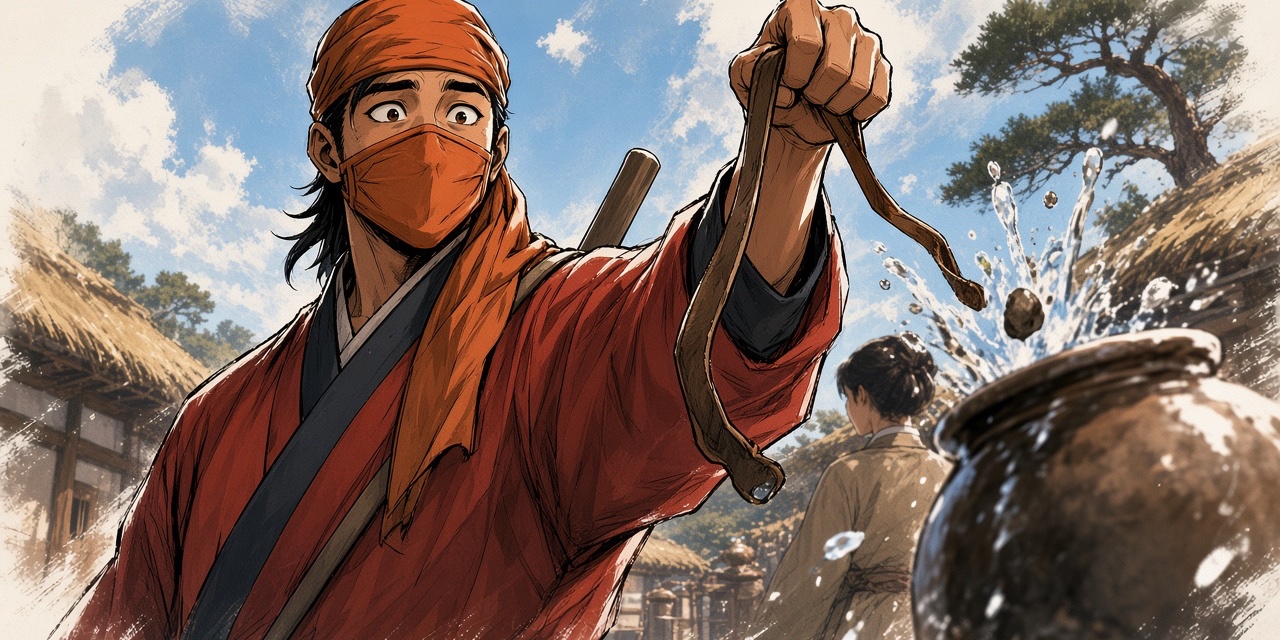
Yuri is a boy with a sling and bad aim, or good aim and bad luck. The pebble cracks a woman’s water jar on her way back from .



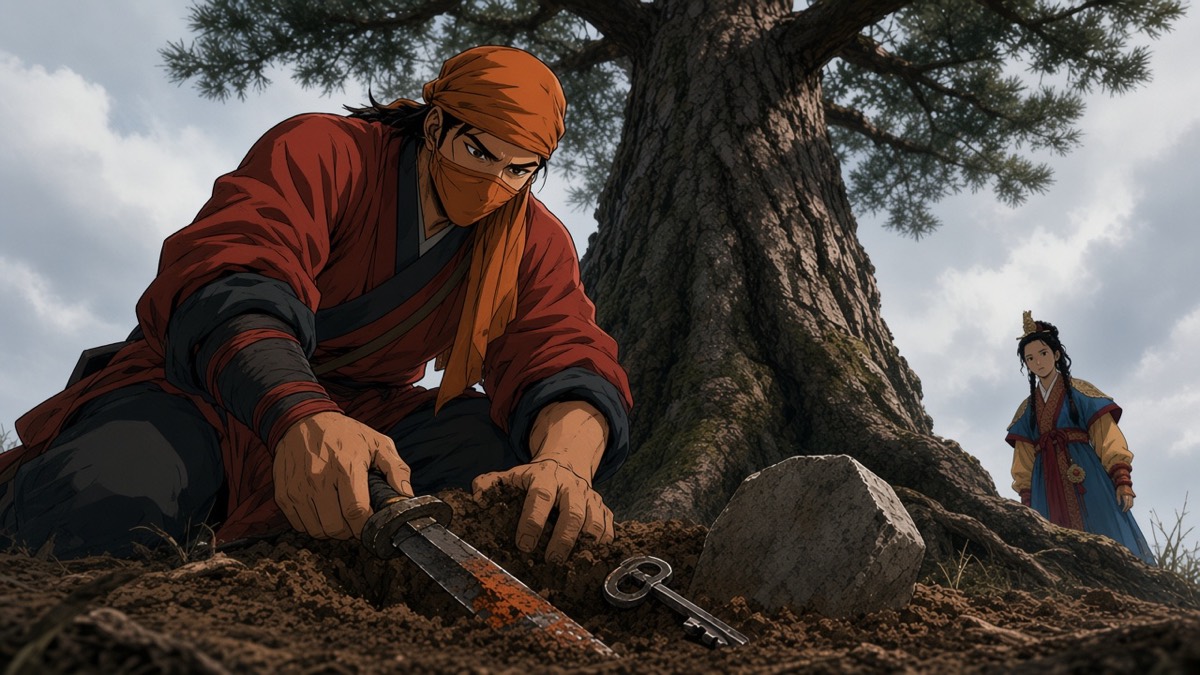
There is no pine on any hill he climbs. He finds it at home: the house’s pine pillar stands on a seven-sided foundation stone, and in the crack beneath it lies half a sword.
With his friends, three boys as stubborn as he is, he walks his father’s road backwards, south.
In the hall at he lays the half-sword on the boards. goes to a chest nobody has opened since the river, takes out the other half, and kneels. The two halves click.
and watch from the porch rail. The rail already knows what the hall will decide.
When Yuri is named crown prince, does not fight the hall. She packs her dusty-rose silk. She packs the boys. She leaves .
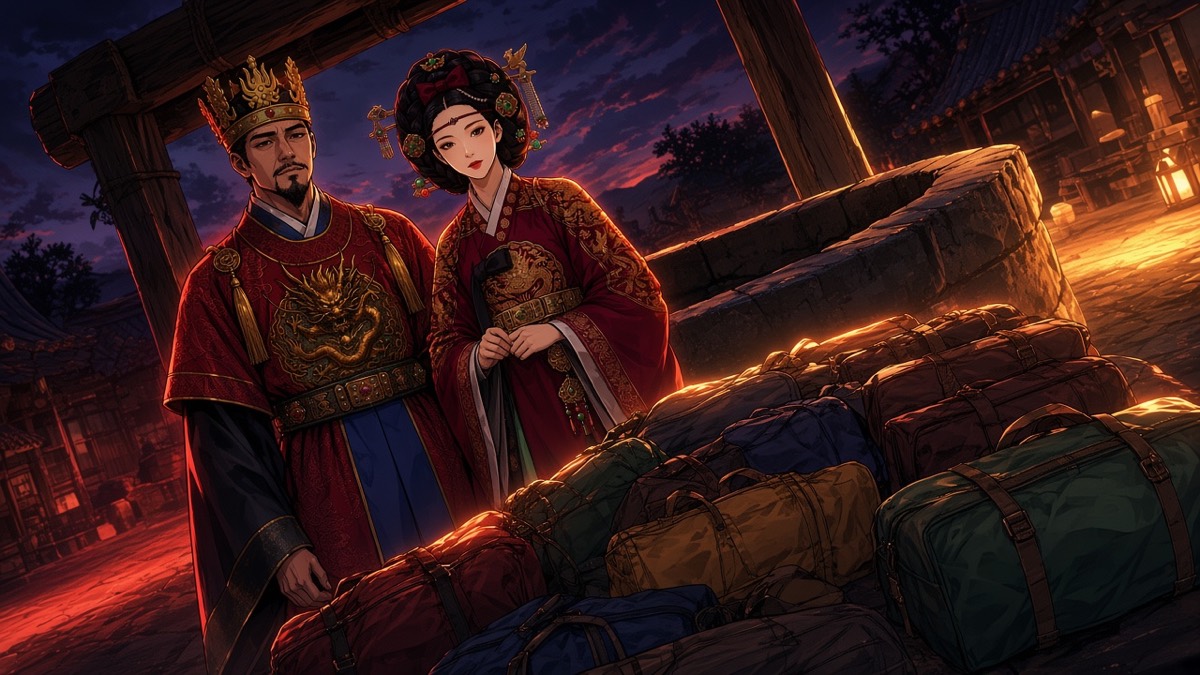
finds her at the old well, two buckets that have outlived the argument. Twenty winters in the same yard. He is still grinning. She is still pretending she came for water.
They do not make it to a feast. They make it to the grain room that has been theirs since the first night, and she kisses him before the door is shut.
Before dawn the lamp is out, and neither of them has slept.
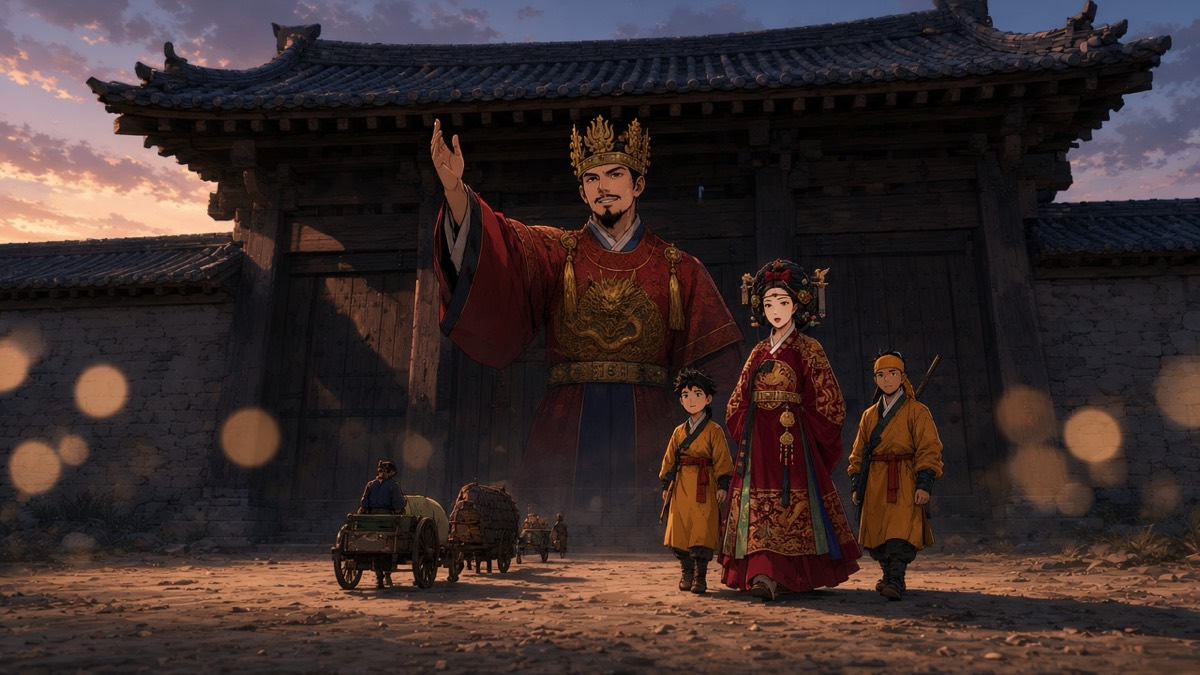
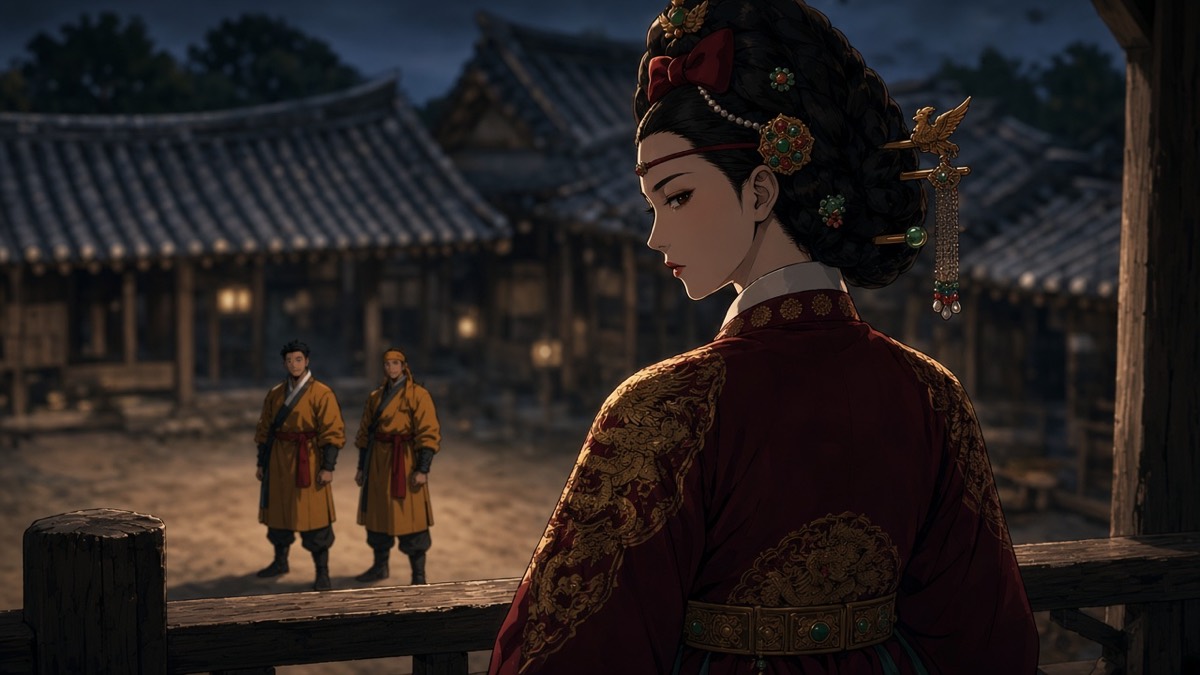
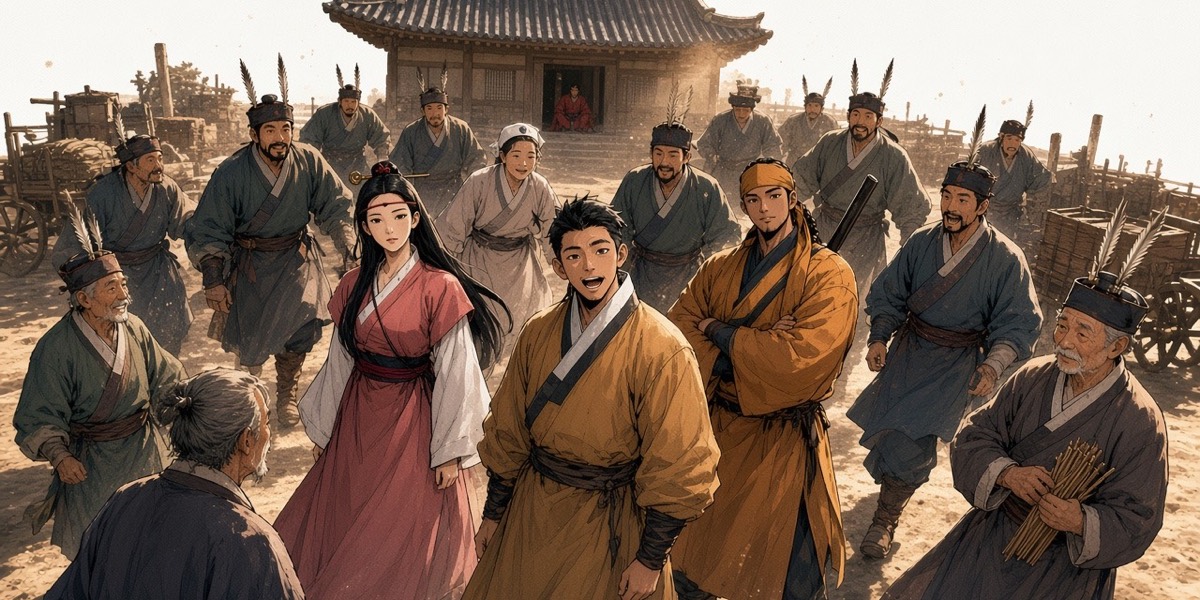
By sunrise the whole yard knows, because a yard always does. The come out in their good clothes to watch a family leave politely.
sits in the hall door. Yuri stands beside him, new to standing beside anything. steps out in front of them with a speech he has practised all night.
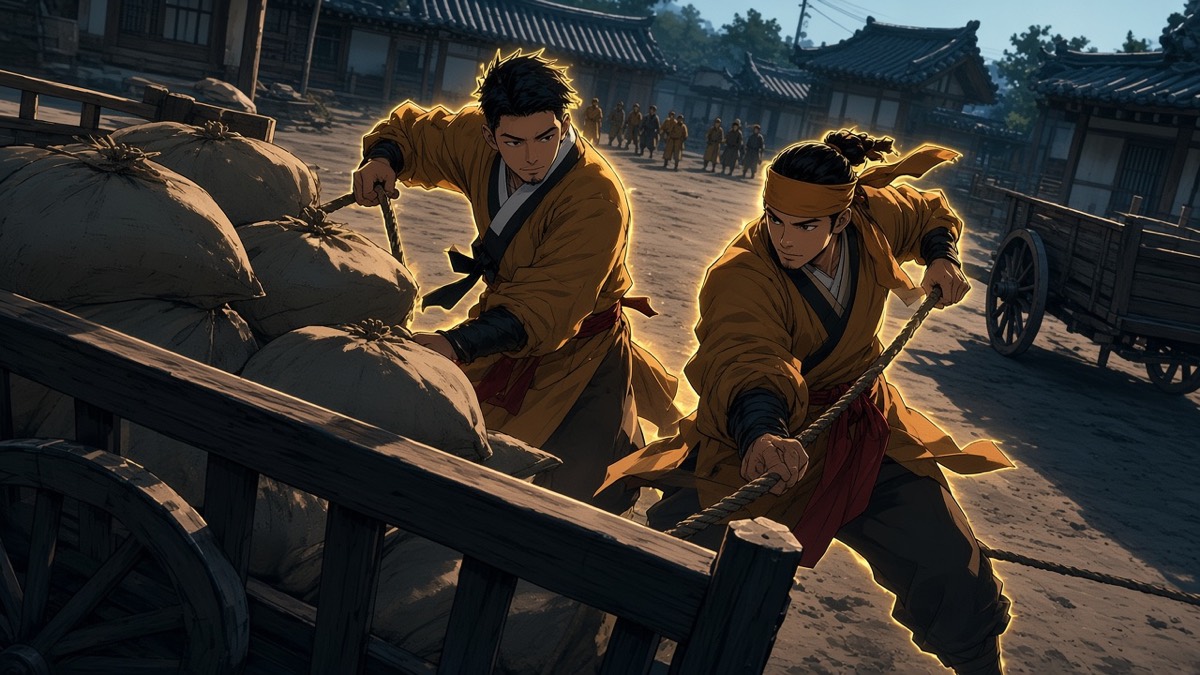
Then the yard finds out whose people are whose. stands first, because he has already counted the carts twice and hates to waste a count. stands second and says something that makes the guards laugh, which is how he volunteers for everything.
Eight more stand. The records lose them, so here they are, once. Sa Dol carries a hoe like a spear. Ga can’t swim, and says so. Jin Hoe writes everything down; Mok Hyeop writes nothing. Ru is the oldest and was born in . Sun sings. The youngest two, Ji and Mo, stand up together because neither will go first. Don’t bother with the men. Remember the surnames.
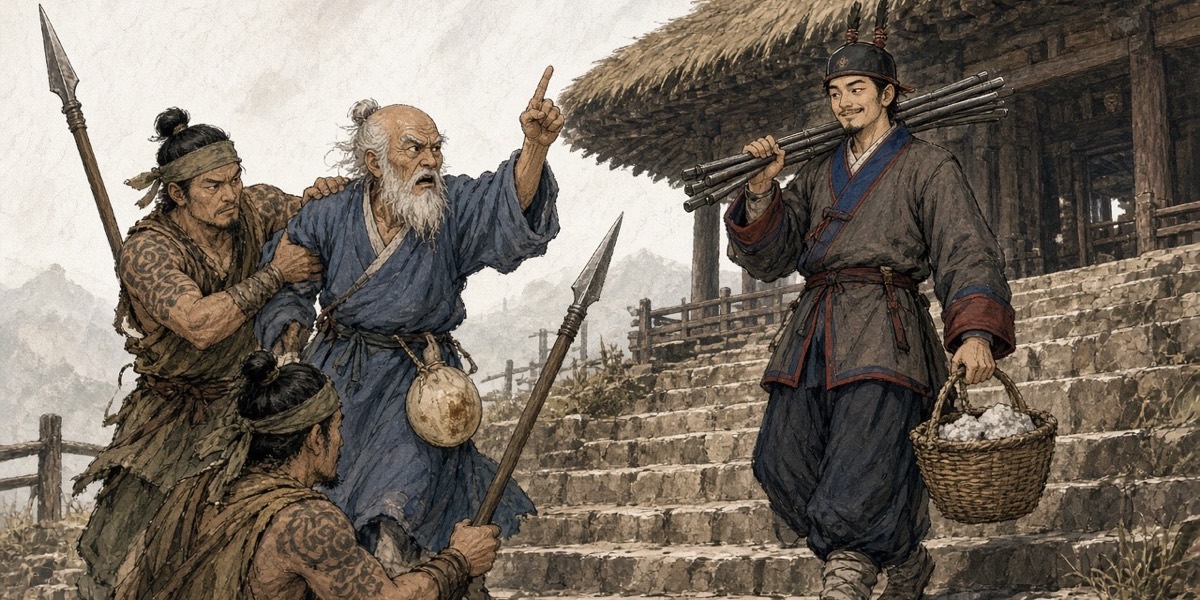
Behind the ten come the old people, the ones who remember when this yard was her father’s. Granny Boksil, who nursed her. Old Dalgu, her father’s storekeeper, with his tally-sticks in a bundle. A dozen households from the . They have put on their court clothes for it: jackets banded at the collar and cuffs in a second colour, wide trousers, and on the men who once held office, the little peaked cap with two feathers. They are dressed for a court that does not exist yet.
At the gate she does not look back. That lasts eleven steps.
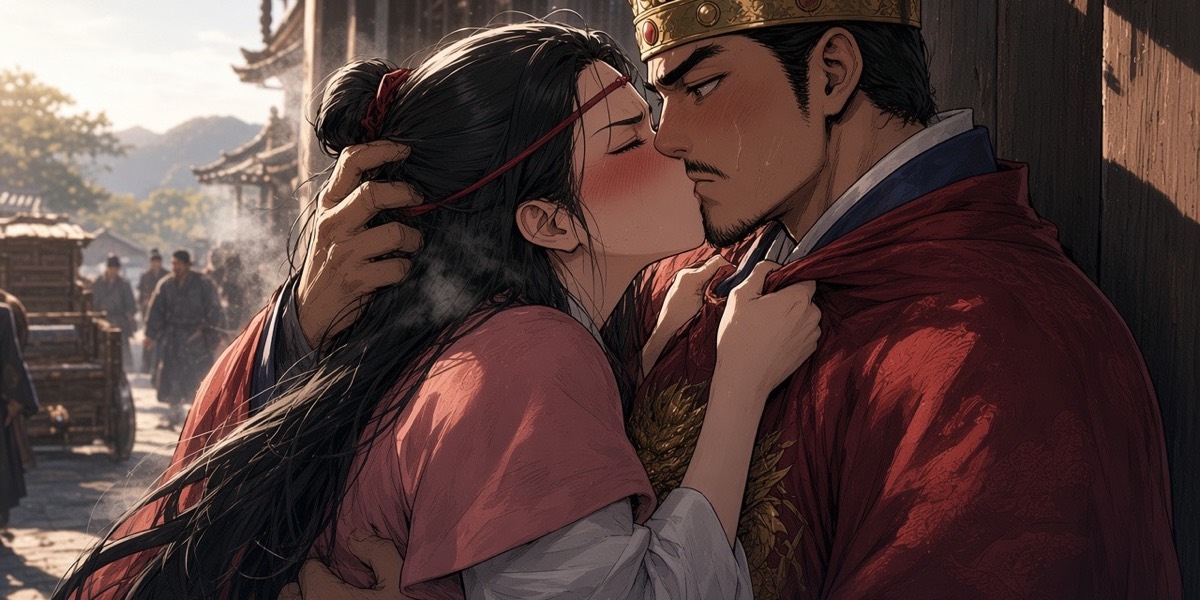
He has followed her to the gate anyway. She turns, takes him by the collar of the red silk, and kisses him in front of the whole yard: the ten, the carts, the old people in their feathers, the new crown prince. It is not a goodbye kiss. It is the kind that makes a yard look at its feet. Her fist stays in his collar. His hand goes into her hair and finds the gold pin. Yuri studies the roof. coughs. does not know where to put his face.
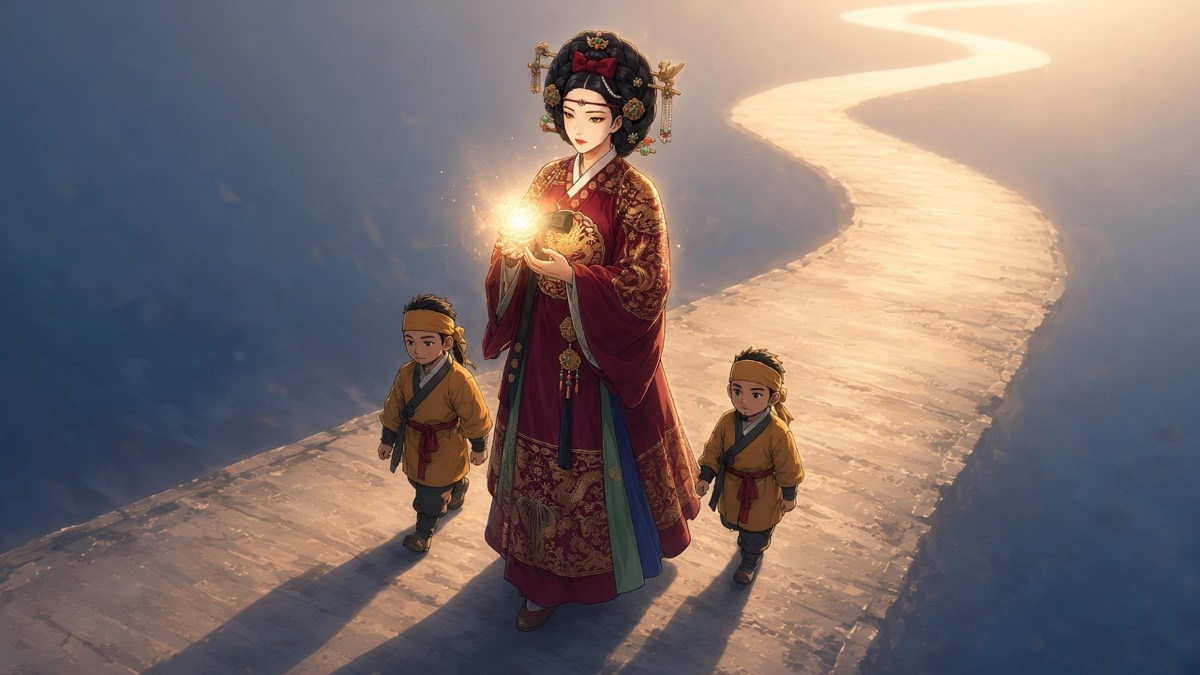
At dawn ten carts roll out through the gate, and she looks back once, at the gate, where a man is still grinning like an idiot because she told him to. and take their mother south. She walks like a woman who has been thoroughly answered and will not explain it to a deer, a son, or a chronicle.

The first river is the one crossed coming the other way. It is late spring, and is high and green with snowmelt. There are no turtles.
They build rafts. Ga, who can’t swim, crosses flat on the grain sacks with his eyes shut. Halfway over, a cormorant lands on his chest. He doesn’t open them.
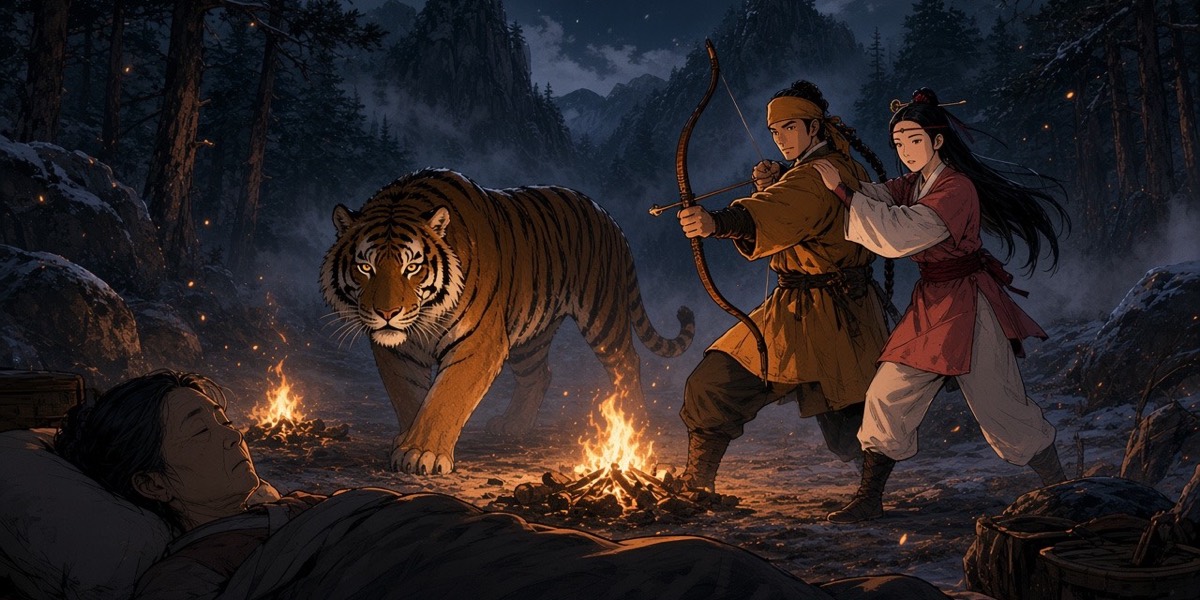
South of the river the land stands up. The Myohyang hills are fir and granite and fog. The cart paths are deer paths, and the deer paths are worse. On the ninth night something big walks past the fires and does not hurry.
Nobody talks to the tiger. In the morning its prints are in the frost round Granny Boksil’s bedroll, neat as a seal on a letter. She says it was only looking at her rice.
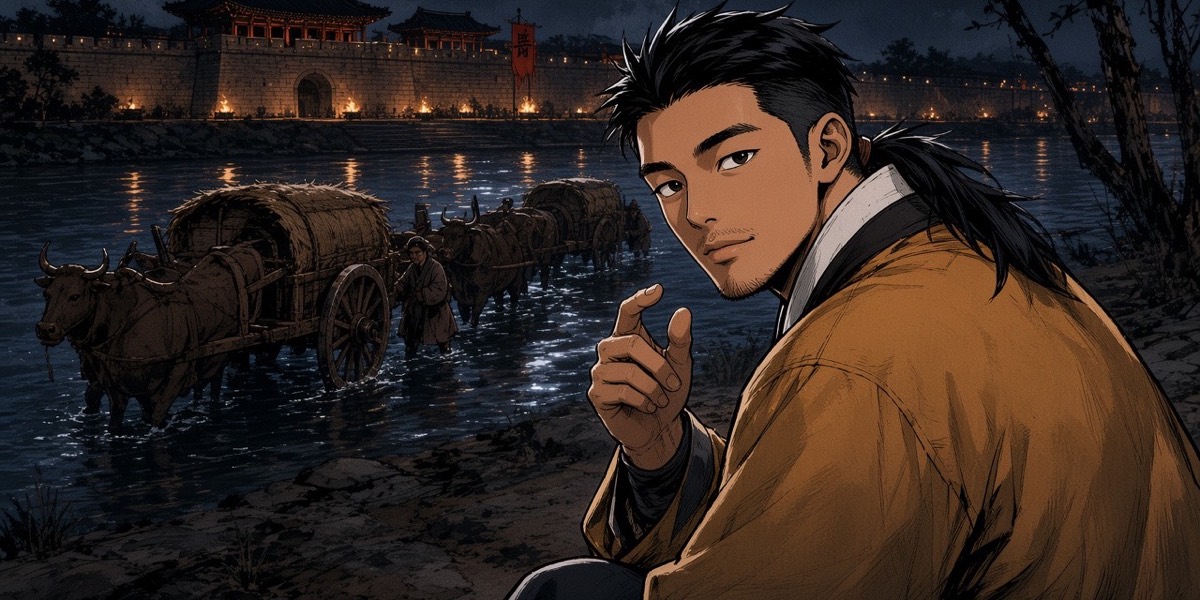
The next river has a city on it, and the city has a flag. The commandery has sat on the Taedong for a hundred years, collecting grain and names. A column of northerners with ten carts and two princes is exactly the kind of thing it writes down.
They cross upstream in the dark, wheels wrapped in rice straw, the oxen led by the nose. On the far bank looks back at the watchfires on the city wall and counts them, the way would. It is the first time he has looked at a wall and wondered how to build one.
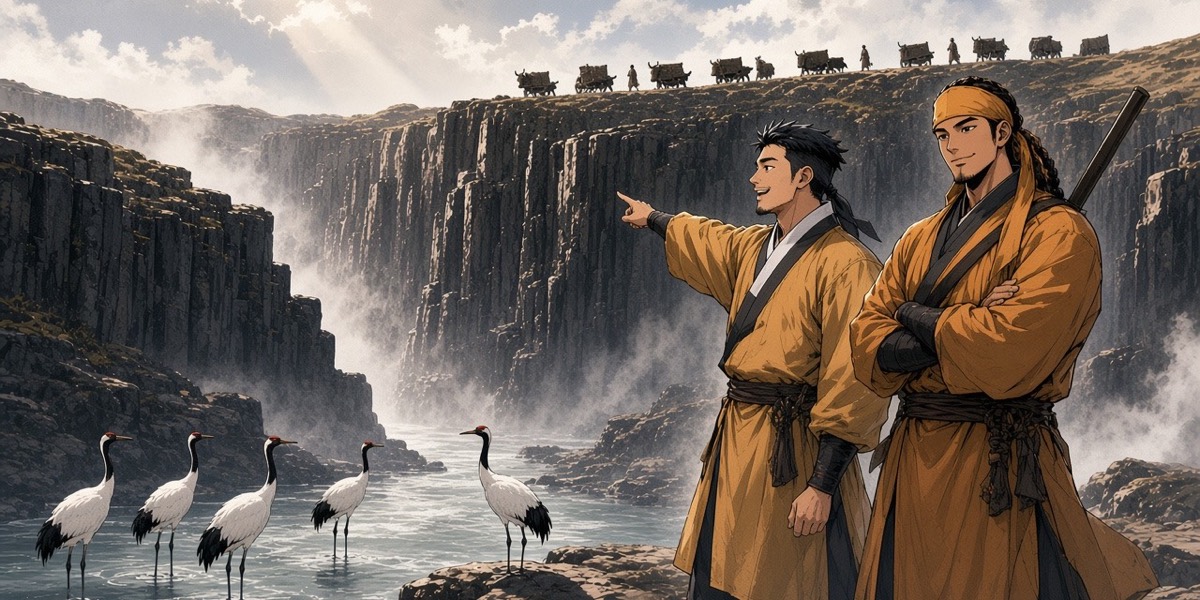
Past the Myeorak hills the ground goes soft and red, and then cuts across it in a trench of black stone: cliffs of basalt columns standing in rows like a palace nobody ordered. Cranes stand in the shallows below, red-capped and white, and watch the carts with the faces of officials.
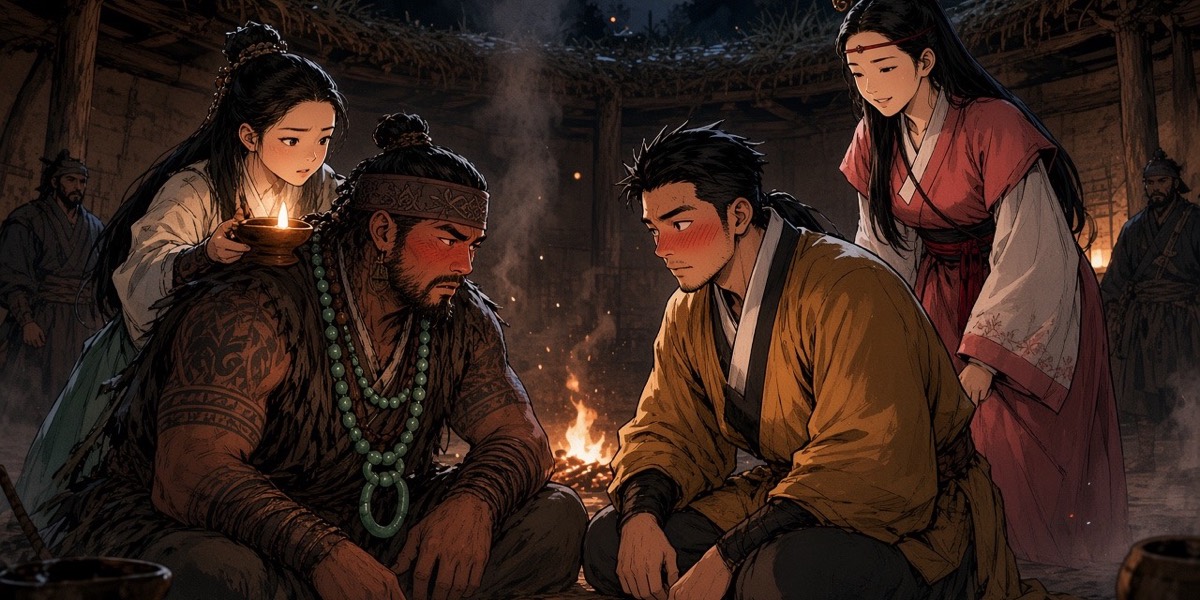
South of the villages change. Houses sit half in the ground under grass roofs, with the door in the roof. The men wear tattoos on their arms and beads instead of gold. On the third evening one village takes the column at spear-point and walks the princes into its headman’s hall, which is warm, and smoky, and has no mat for guests.
Behind her sons, makes a noise into her sleeve. It might be a cough. It is not a cough.
The headman’s daughter, who has been standing at his shoulder with a lamp, looks at very hard and then at nothing at all. goes red to the ears. The headman, who has daughters and has seen this before, sighs and sends for a mat.
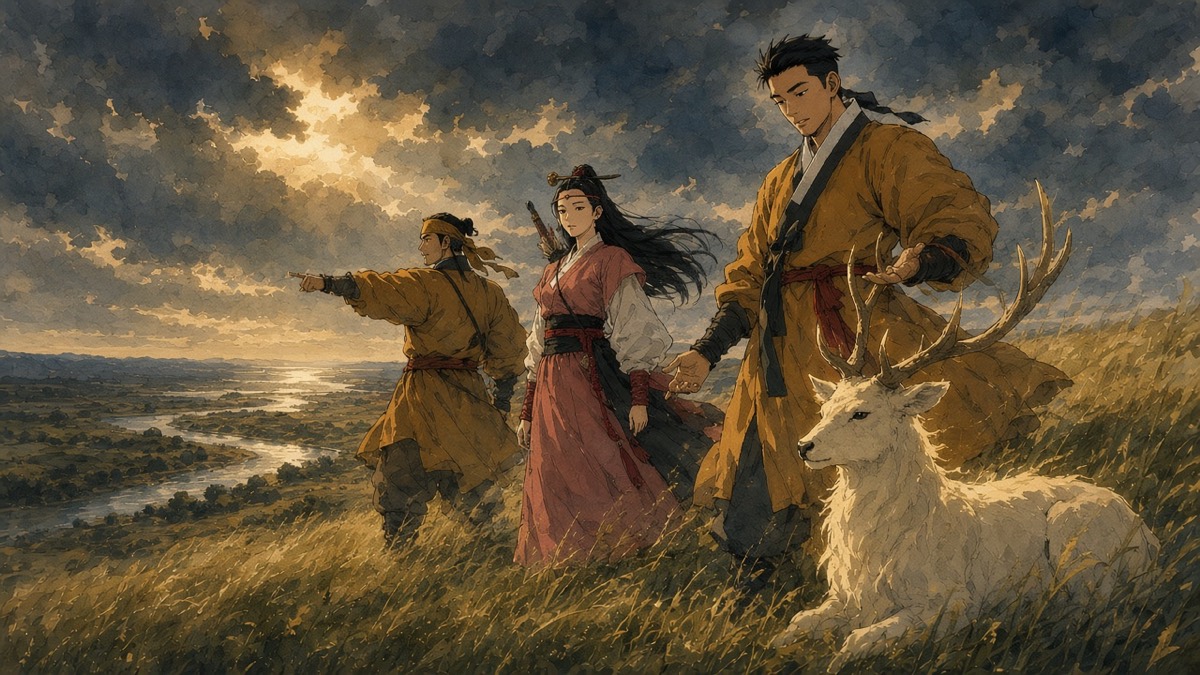
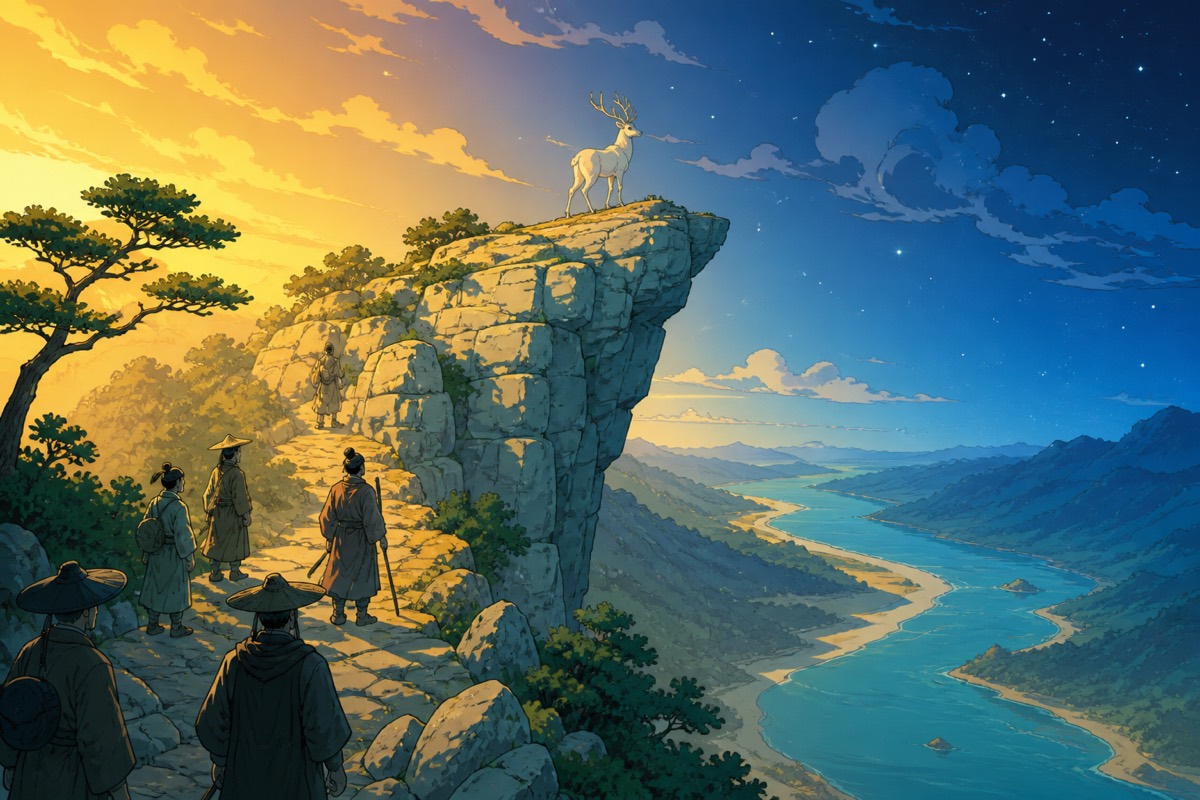
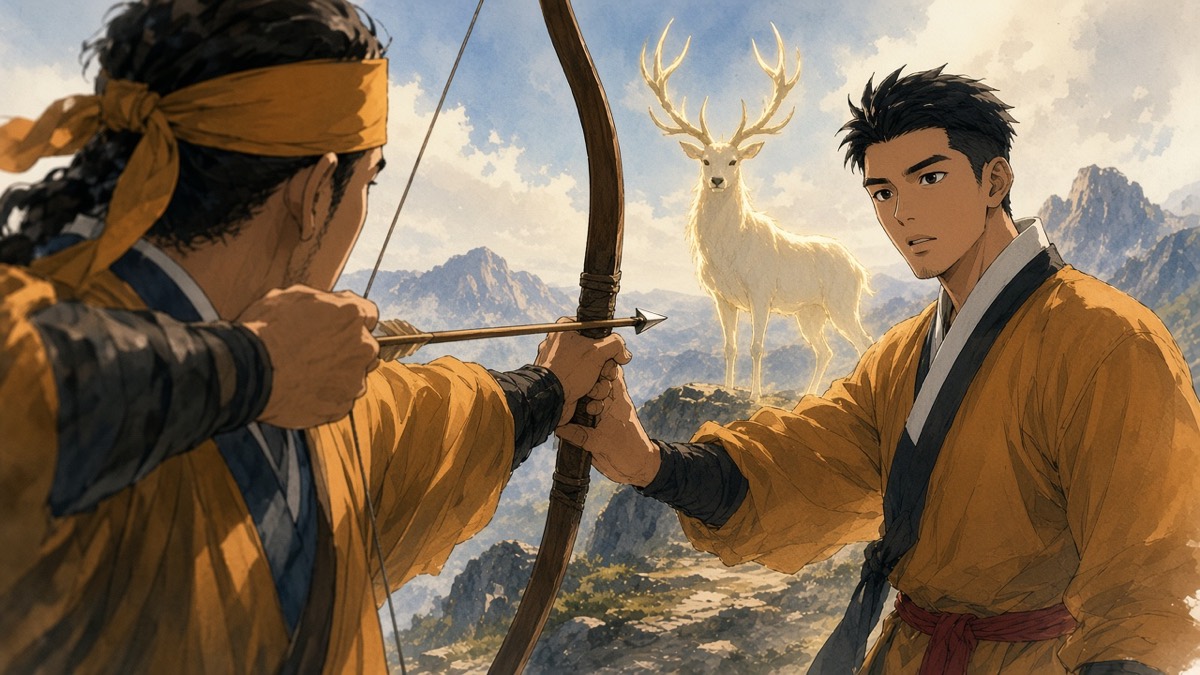
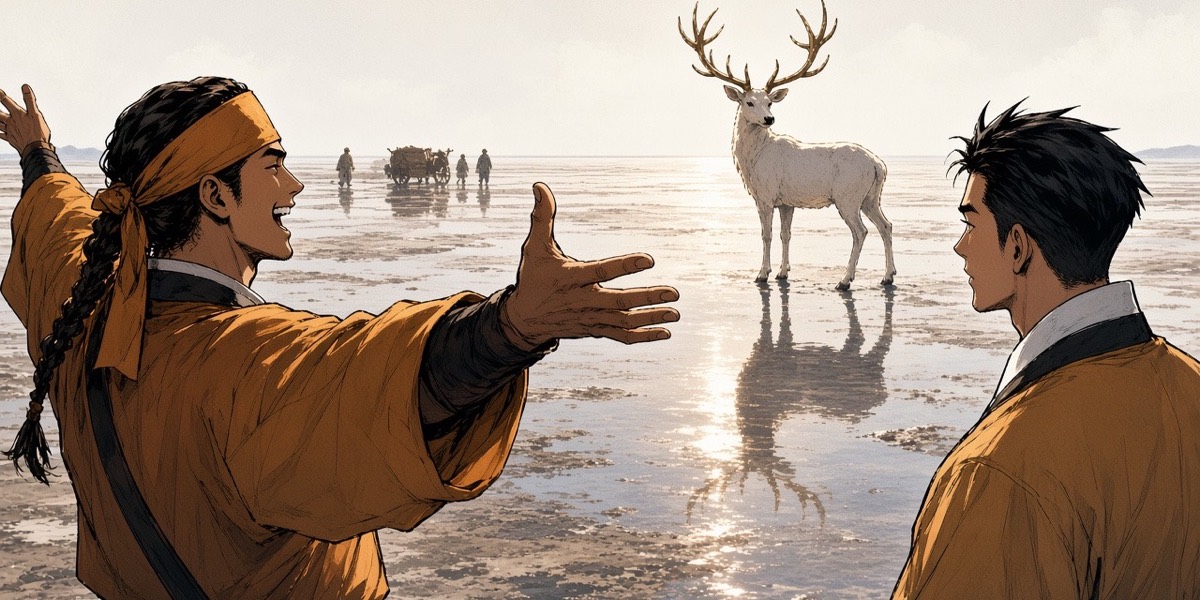
Halfway, where comes down wide and brown out of the eastern mountains, on a ridge path too narrow for the cart, a stag is standing in the way. Pale as mulberry paper, gold wherever the light touches it, antlers branching like a winter tree somebody decided to keep. It does not run. It looks at the three of them as if it had been told to expect three.
lowers the bow the way an elder son does, slowly enough that everyone understands it was his own idea. The stag turns, walks ten paces up the ridge, and stops to look back. When they do not follow, it waits. When they do, it walks on. It keeps that up for three days.
On the third day it takes them up Mount Buak, and from the top the brothers see all of it: a river looped across the plain like a belt somebody has unbuckled, high peaks at their backs, wet green flats to the south and, somewhere past the haze, the sea. smells the salt before he sees it.
Nobody answers him. The stag, which has stood a little apart all morning, turns and walks off the summit to the west, toward the salt. laughs out loud and says even the deer agrees. So they follow it, all of them, down off Buak and across the wet flats, and it walks them all the way to . At the edge of the sea it stops, because there is nowhere left to walk. It looks at the water a long time. Then it looks back at the river.
stays. The youngest two of the ten stay with him, because somebody has to make sure the elder prince eats. They promise to write. They don’t. turns the other eight back east, and in the morning the stag is already ahead of them on the riverbank. It lies down in the grass at ’s feet, facing the river. will call it , the guardian deer, for as long as has anything to call.
takes the sea. takes the river. Up north, their half-brother Yuri keeps the chair, and his line keeps it after him.
The land south of the river already has an owner. Mahan holds it, fifty-four small countries under one high king histories call Jin. sends with iron and salt, and instructions to bow lower than feels necessary.
On the way out of the high king’s hall, is passed on the steps by a small bald foreigner being shown out much faster. He has a dried gourd tied at his waist, and the face of a man who has just been threatened with death and considers it a scheduling problem.
laughs all the way back to the river. It will be a long time before meets that boy’s people properly.
The Mahan villages watch ’s wall rise and decide these northerners know how to dig a ditch. They bring grain. They bring daughters. The glad following starts here, a hundred crossings before anyone counts them.
is damp earth and salt water. The wells come up brackish. The stored grain sweats. ’s people cough through their first winter, and the youngest two of the ten write north letters they don’t send.
In the second year walks back over the ridge to look at his brother’s town. The wall is finished. The market is loud. Nobody is coughing. He stands outside the gate for a long time, and does not go in.
They bury him facing the sea he wanted. His people walk north to with their carts, and the youngest two of the ten walk in front, crying and pretending it is the dust. Sipje grows by a hundred crossings at once.
People keep coming — Mahan villages, river folk, ’s people — gladly, unforced. Ten crossings become a hundred. The joke made on the mountain finally fits, and Sipje, the land of ten, becomes , the land of a hundred crossings.
One more thing, before the joke hardens into history.
is already under the earth by then. The name still lands. writes on the lintel, and the blood underneath does not argue.
So that is the family joke and used to throw at each other over wine. and are one father’s sons. One got the hall. One got the road. Neither has forgiven the other since.
Seven hundred years later, the road ends at a riverbank in . ’s heir is wringing the out of his sleeves. He once said a country is a territory governed by a single story. This was the story. He is about to learn who else can tell it.
Back to . Two armies are on the road, the boat for still hasn’t sailed, and the king wants to know why…!
