











Chapter 5
Prince Euija



AI Summary
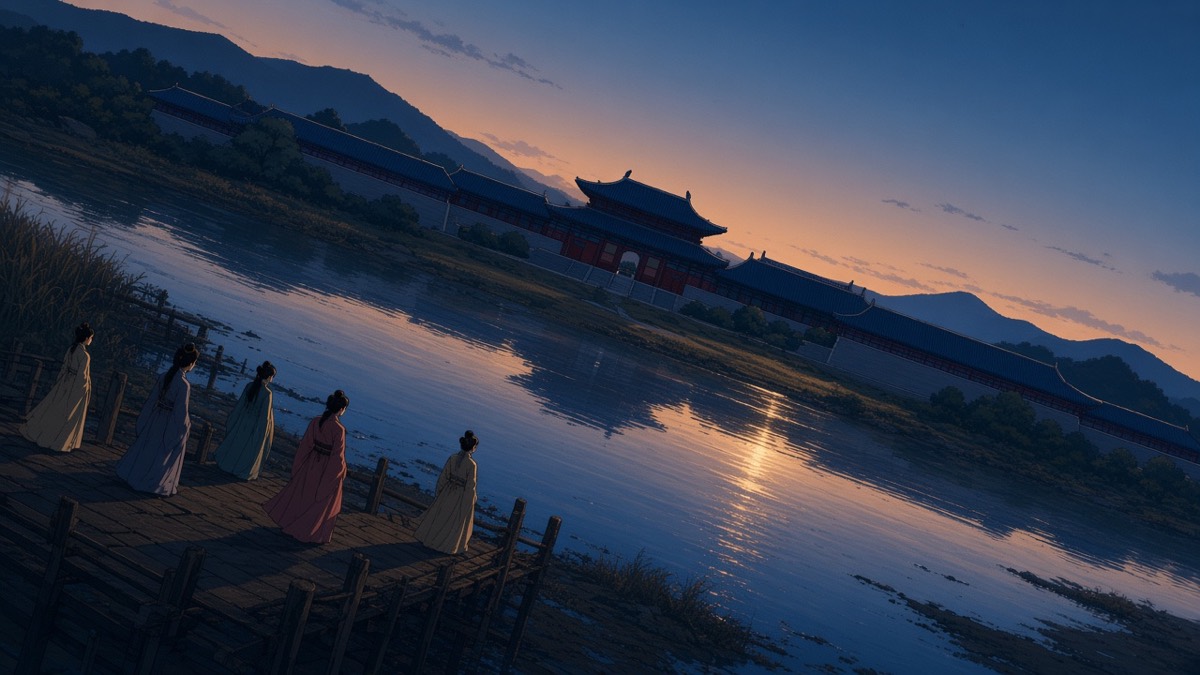
- The Sluice Dawn, below the walls of Sabi.
- The Ministers’ Hall The eight houses do not argue about Euija in public.
- Go Under the Eaves They play go in the shade of the west eaves.
- Queen Satek’s Chamber Night.
- A Yunbi Berth What the Satek room does not hear: Euija has started counting too.
- King Mu’s Yard He asks his father for one privilege only.
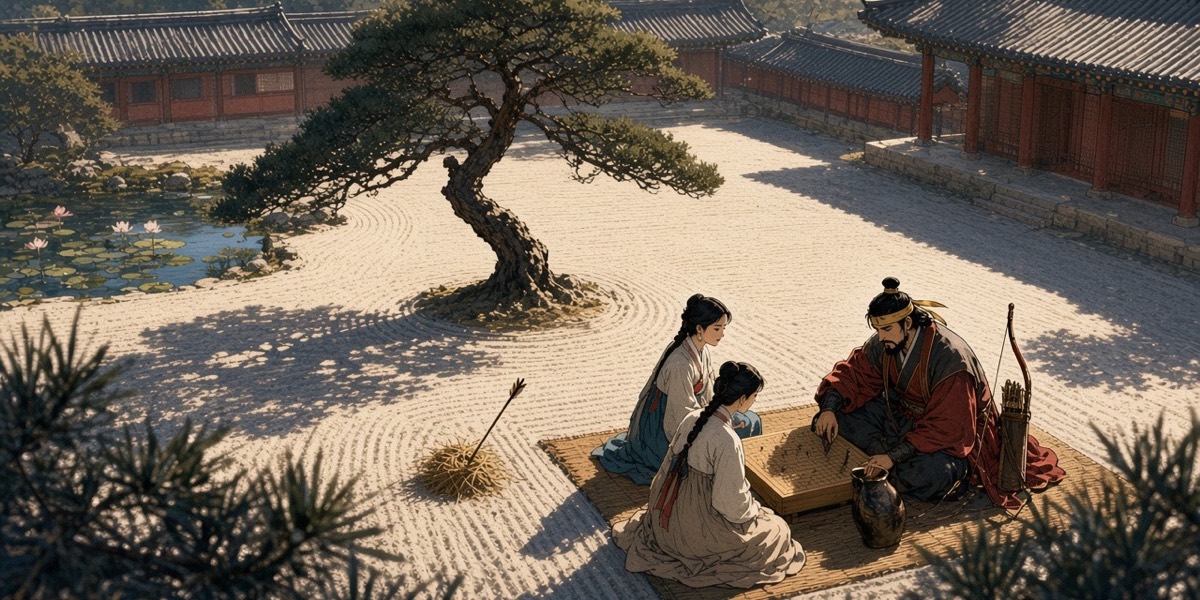
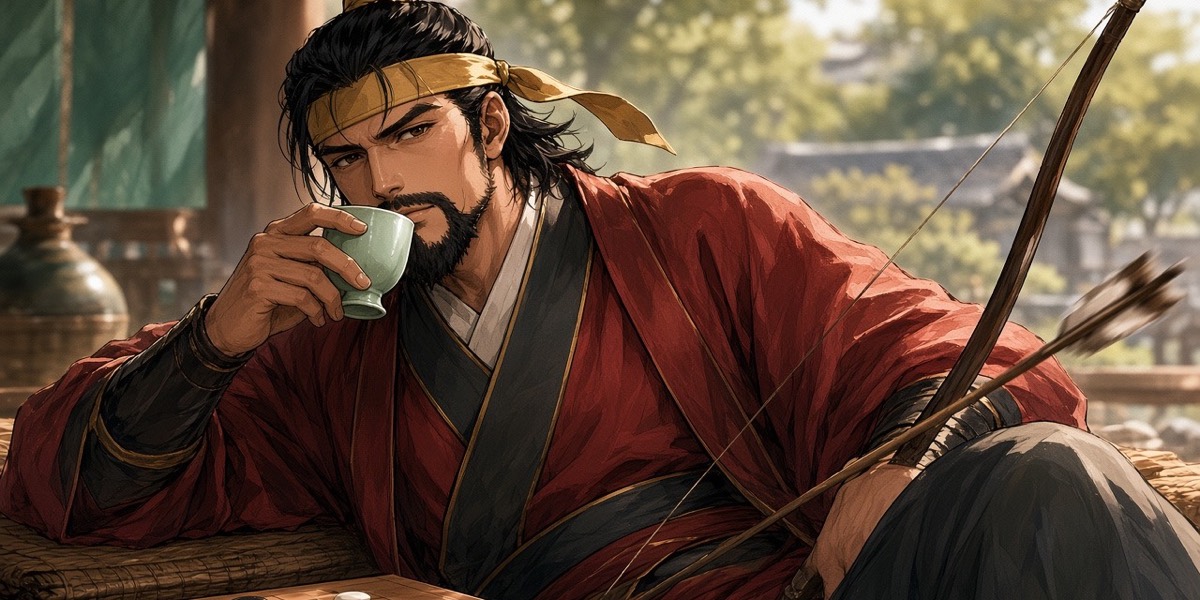
- The Rear Garden At mid-morning the prince is in the rear garden with a bow, a go board, a jar of wine and two court ladies, and he is winning at all four.
- The Yard Five days before a crown prince is made, each of the eight houses brings a boy to the palace yard to be looked at, the way you bring a horse to market.
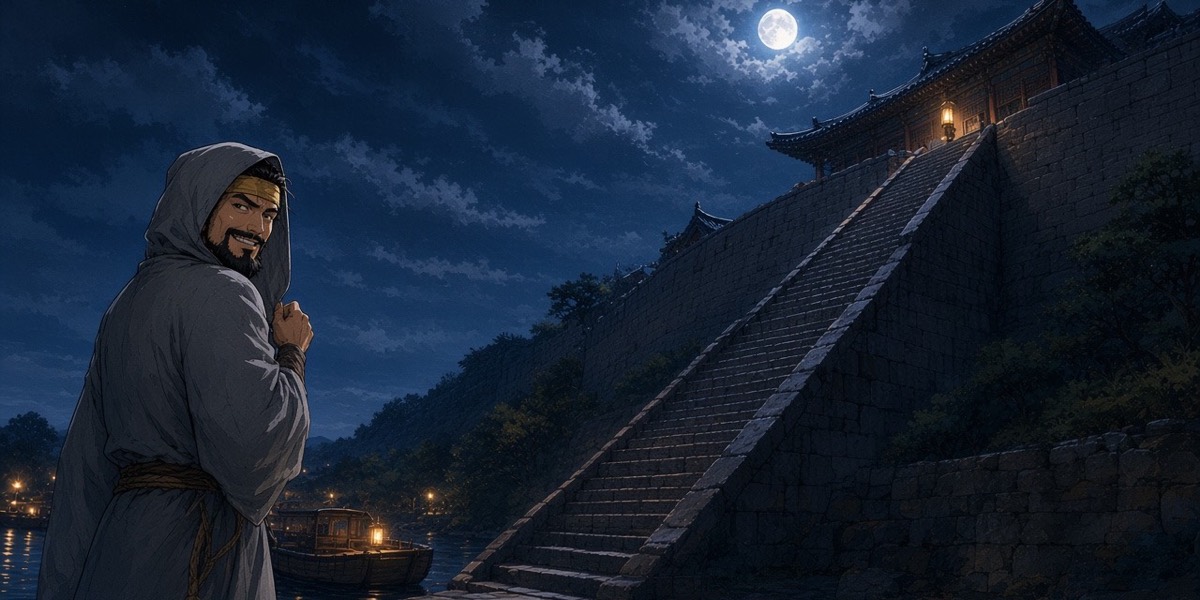
- The White River That night Euija sneaks out of the palace in a grey hood and a grey robe.
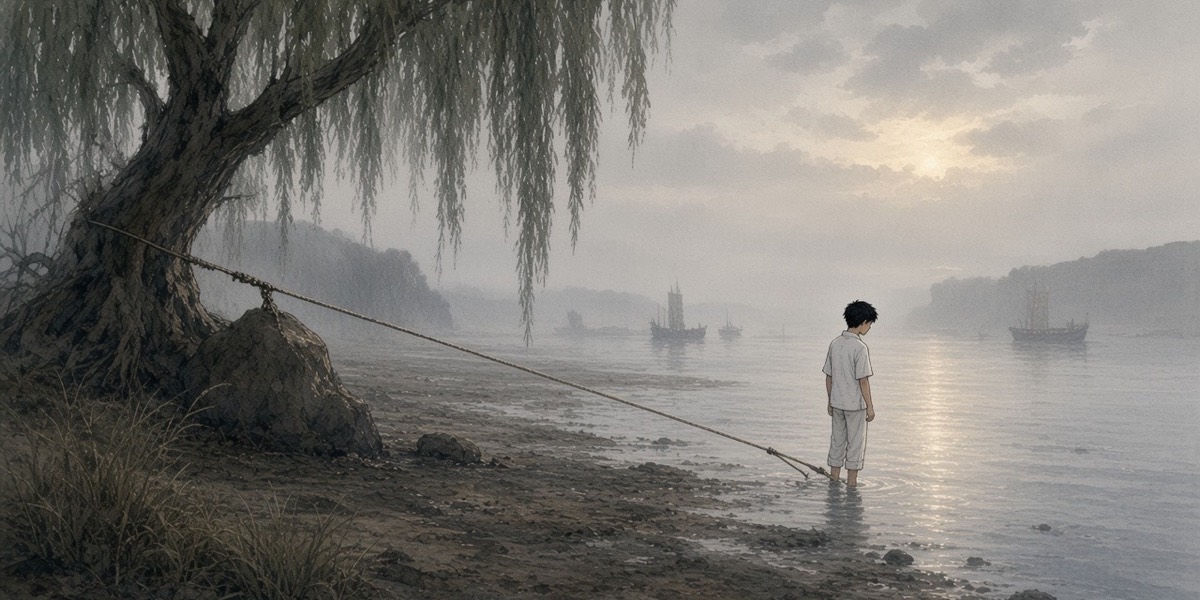
- The Diving Boy There is an old willow on the bank with a rock wedged in its roots.
- Night on the Bank On the third night the crowd has gone home.
- The Deer On the bank the crown prince-to-be is wearing a crown he has no business wearing.
- Characters
Episode· 640
Prince Euija
- Buyeo Euija
- Gyebek
- King Mu
- Prince Gyogi
- The Jinmo Boy
- Kimi
- Elder Satek
- Elder Yunbi
- Queen Satek
Everyone in agrees that is a good king. Even the eight great houses say so. They are already discussing the next one.
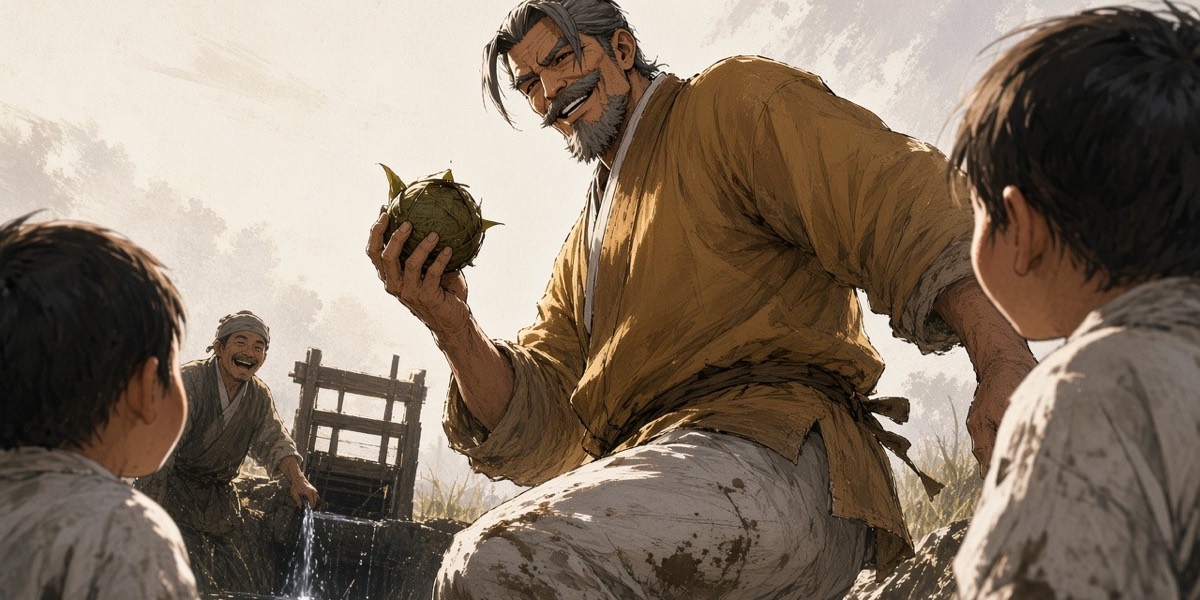
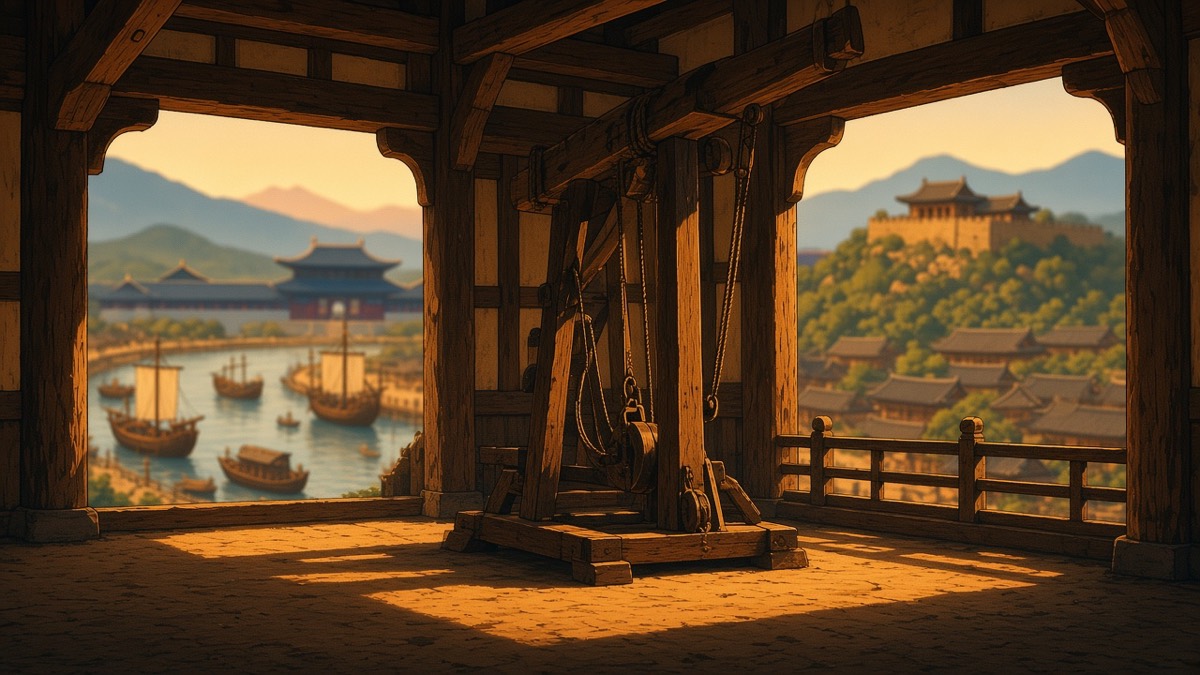
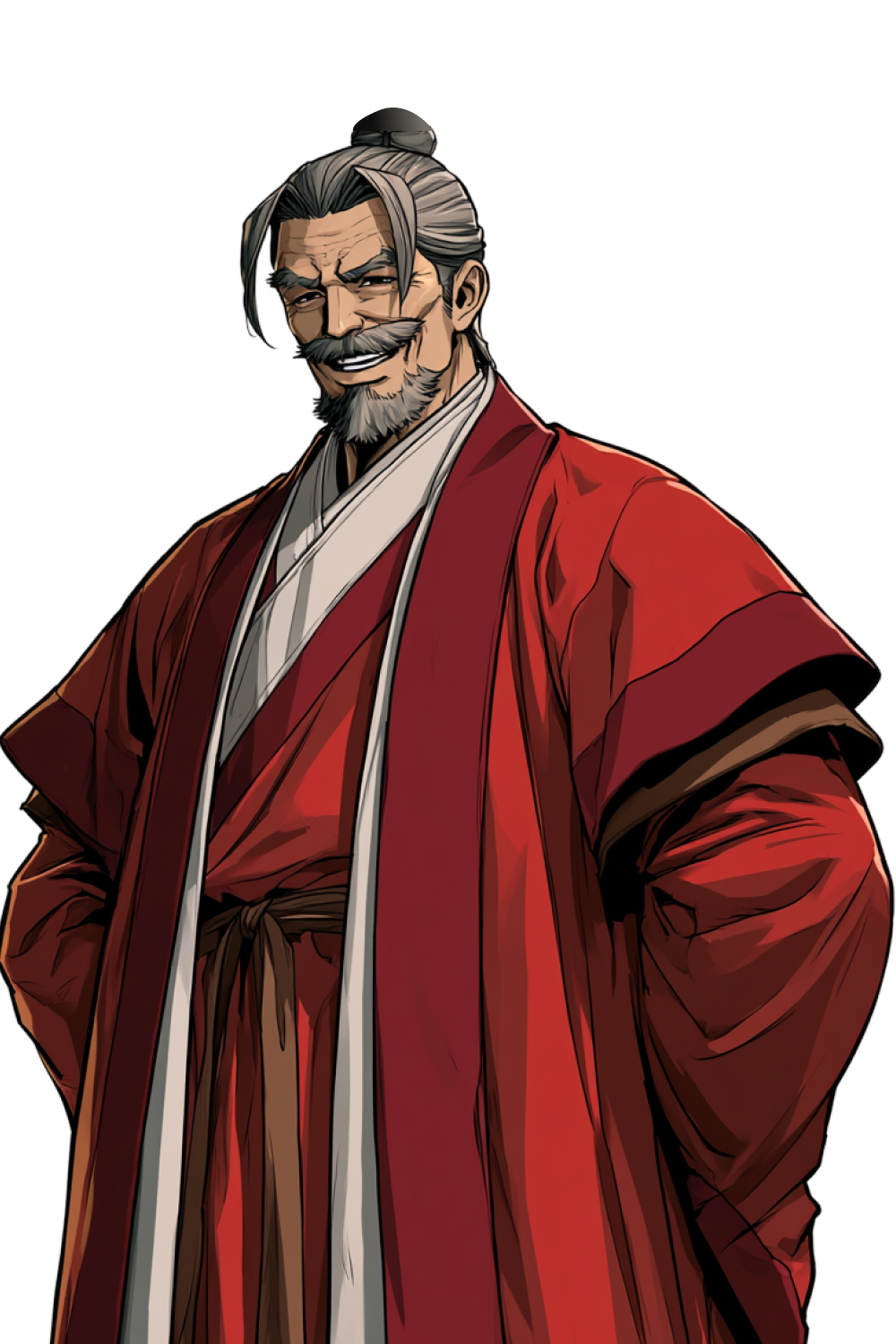
Dawn, below the walls of . Two villages share one timber sluice. This spring they have been sharing it with sticks. The king came down to look before breakfast. He is seventy-one, his sleeves are tied back, and he is up to his shins in the ditch.

👑

The farmers laugh before the steward has worked it out. By the time he has, the gate is open and the king is holding out a hand for something to eat.
He eats it standing in the ditch. Two village children watch him chew, in case he does something royal with it.
The king looks up the hill, past the walls, to where the palace garden is. Something up there catches the sun. An arrowhead, probably.
He climbs out slowly. Halfway up the bank he stops and looks back at the sluice. He has kept it working for thirty years. Somebody else will have to oil it.
He goes up the hill to see who.
The eight houses do not argue about in public. They argue about in private, which is worse.
is younger. His mother is — true sleeve, blood. is a princess the song still remembers. The houses have been doing that arithmetic since both boys could walk.
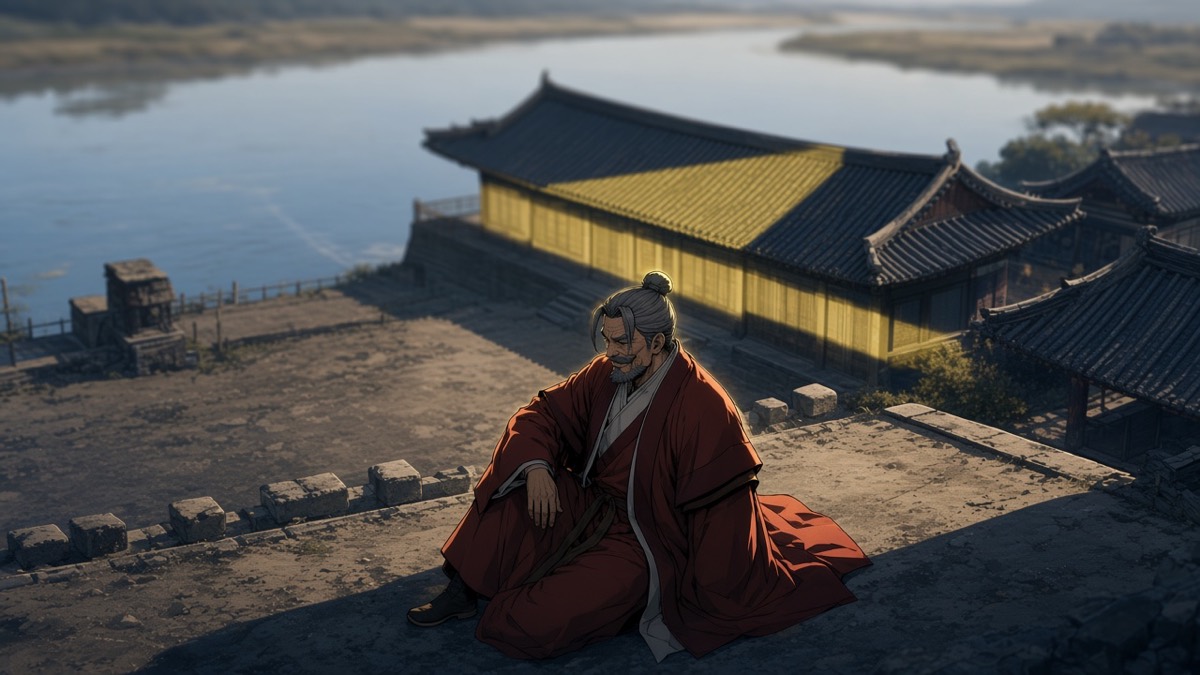
has been waiting for a seal that should have come at twenty. He is forty now. He drinks through the wait. He tells himself he does not care who sits where.
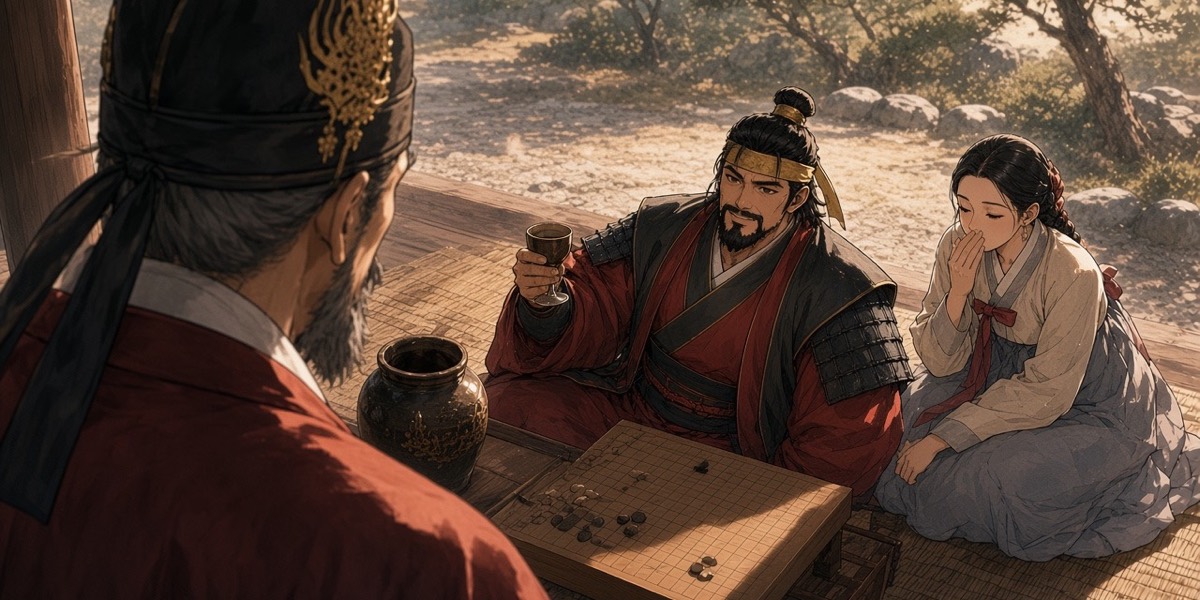
They play go in the shade of the west eaves. never hurries a stone. never looks at the board until the cup is empty.
smiles the smile that is not warm. He takes another of ’s groups without looking down. The game is already over. Neither of them says so.
He means the apathy, mostly. Wanting a chair somebody else’s mother already warmed is uglier than wine.
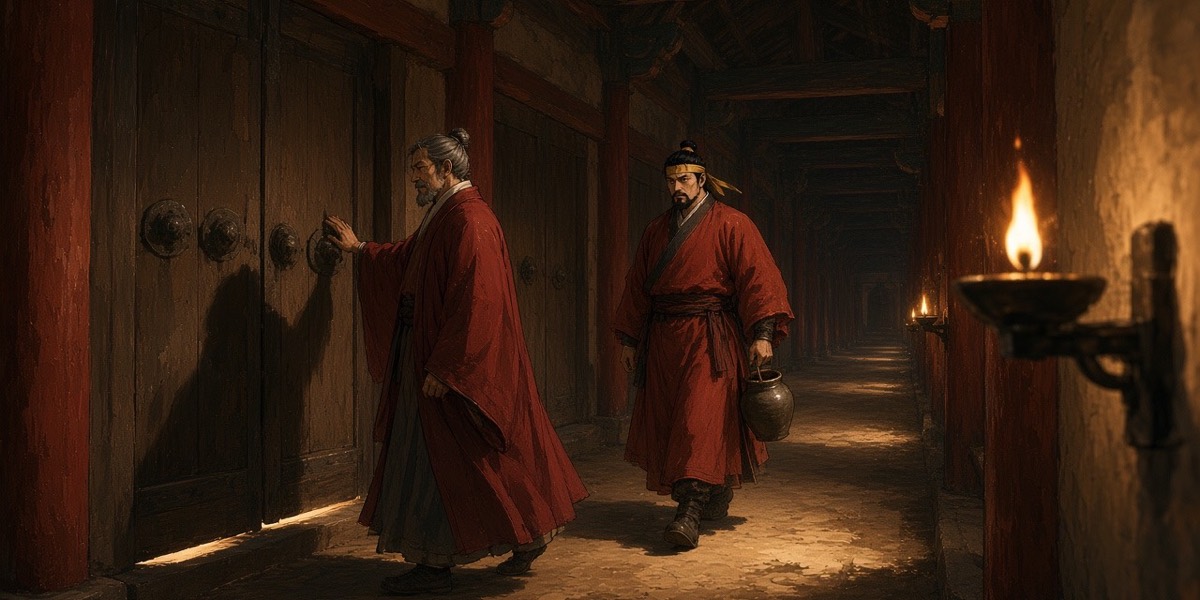
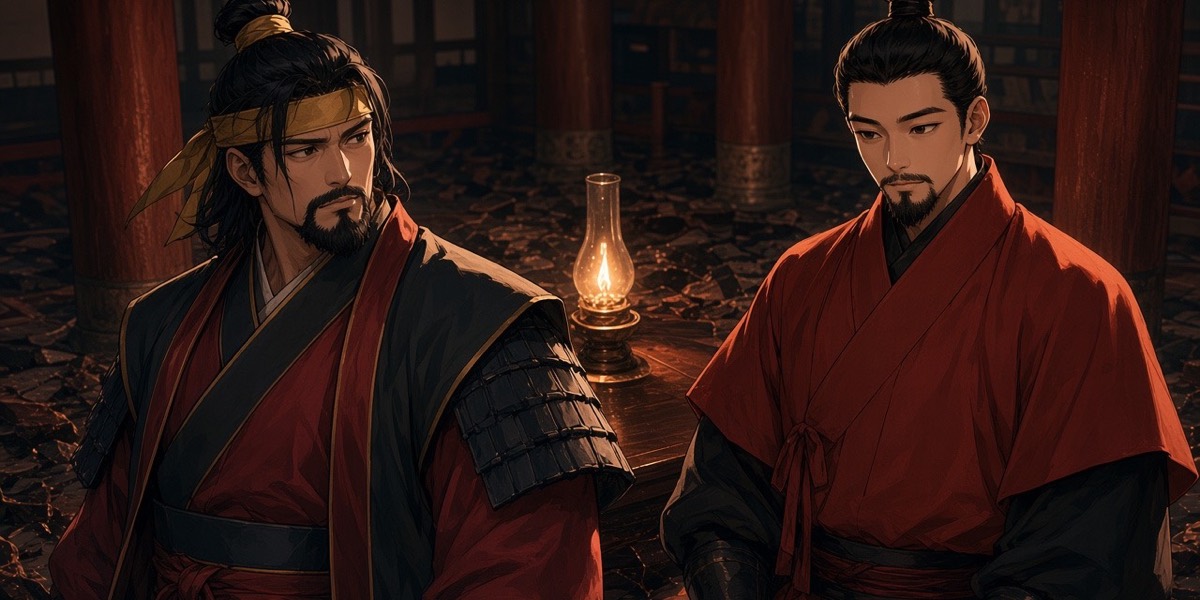
Night. One lamp. Black-pearl binyeo in ’s hair. counts berths on his fingers the way other men count prayer beads. sits where the light is kind. stands where he can see the door.
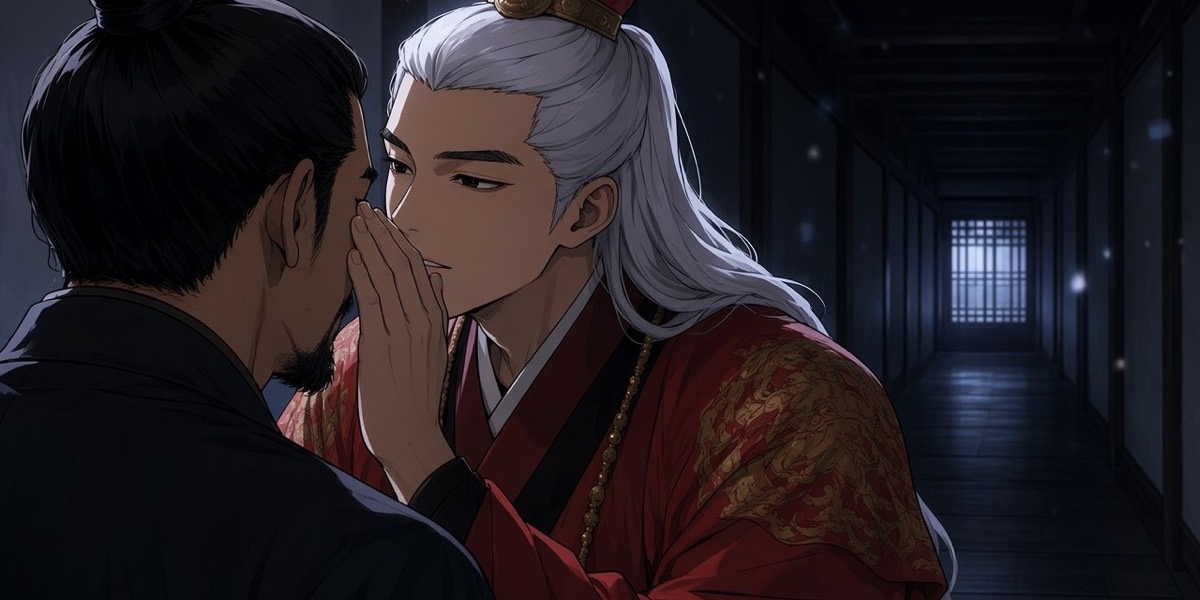
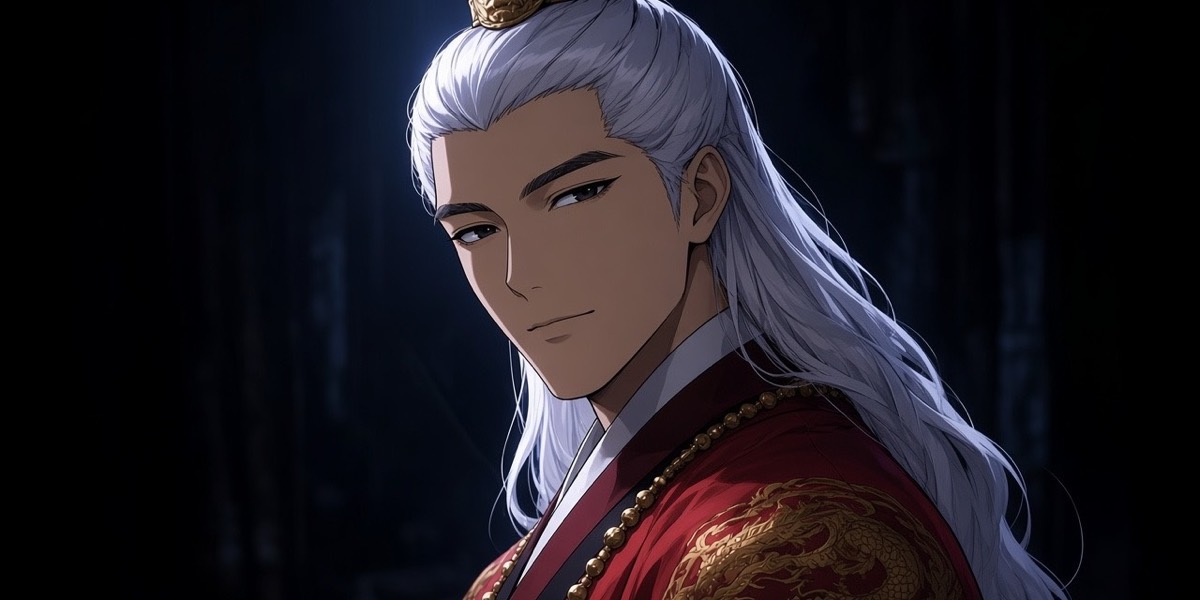
does not raise his voice. He never has to. White hair at ’s ear, red silk, a smile that rearranges chairs.
Outside the lacquer, has been leaning on the corridor rail long enough to hear the horse, the berths, and the smile. He laughs once — short — and goes back to the garden with a bow.
What the room does not hear: has started counting too. He does it badly on purpose in public. In private he drinks with the houses that hate sharing a harbour with .
He copies one page of ’s harbour ledger through a clerk who likes silver more than weather. He does not use it. Not yet. A story needs the right hour.
He asks his father for one privilege only. It sounds like theatre. It is.
He writes ’s name first. Then . Then forty men who smile when smiles. He folds the paper into the tiger-pommel’s wrapping and goes hunting as if nothing happened.
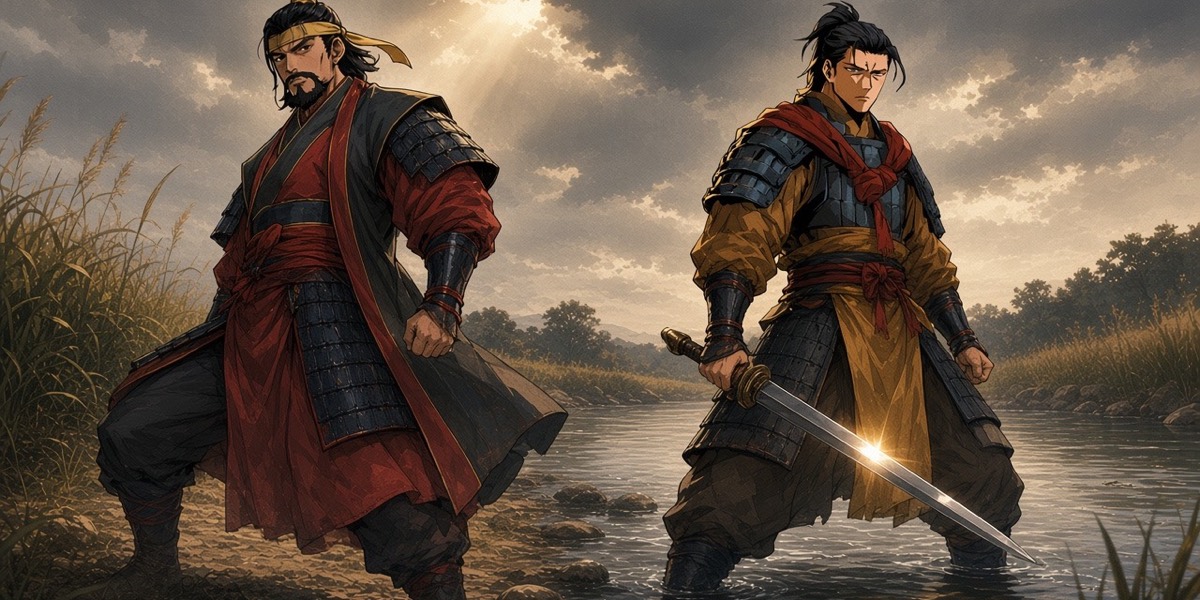
That is the boy who will meet a nameless fighter at the river in five days — and discover what resolve looks like when it is not wearing a sleeve. The list can wait. Resolve cannot.
In five days, becomes Crown . He is forty, which is late for it — late enough that the houses have already picked another boy. He has fifteen sons, which is early for everything else.
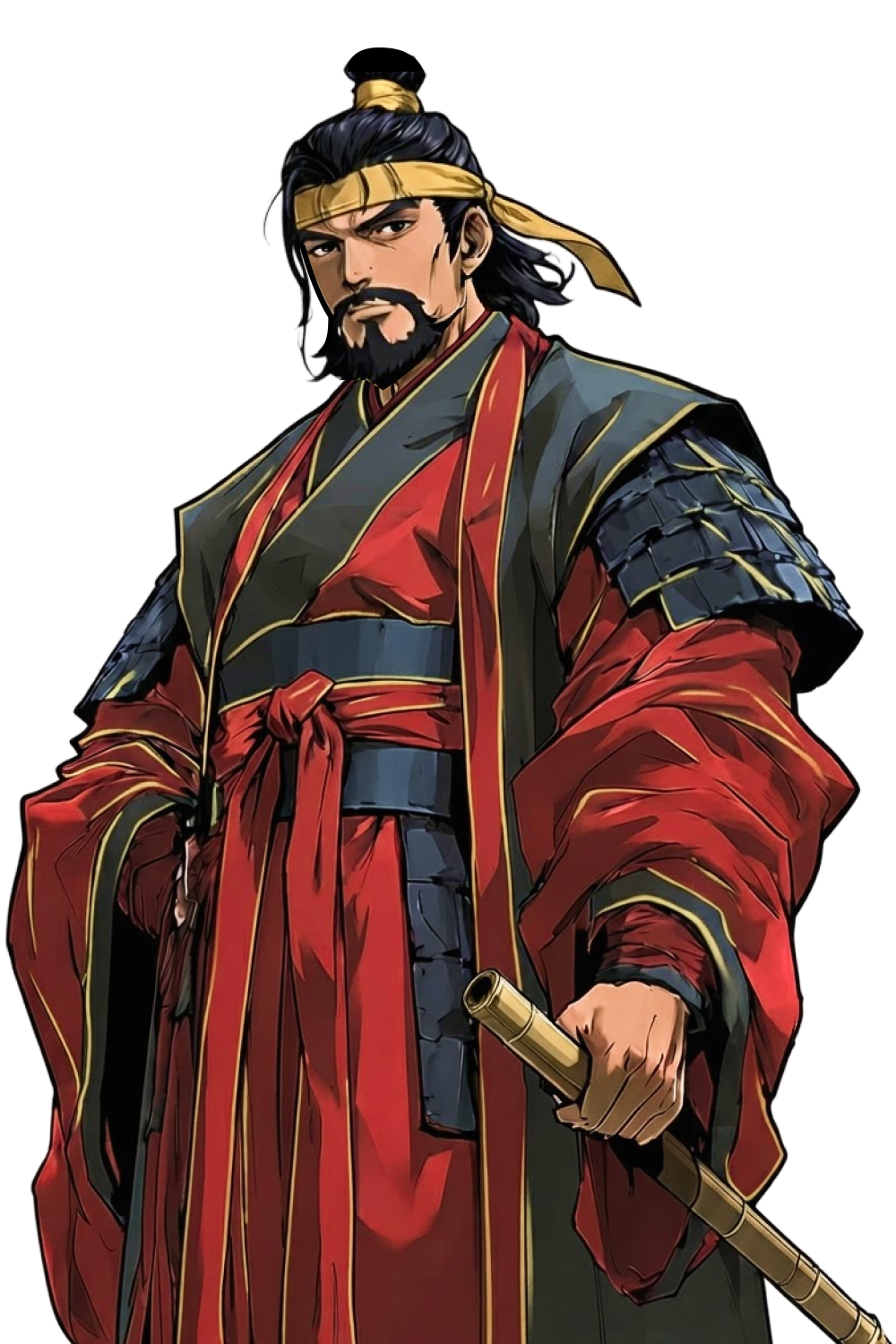
This is said admiringly. It is that kind of court.

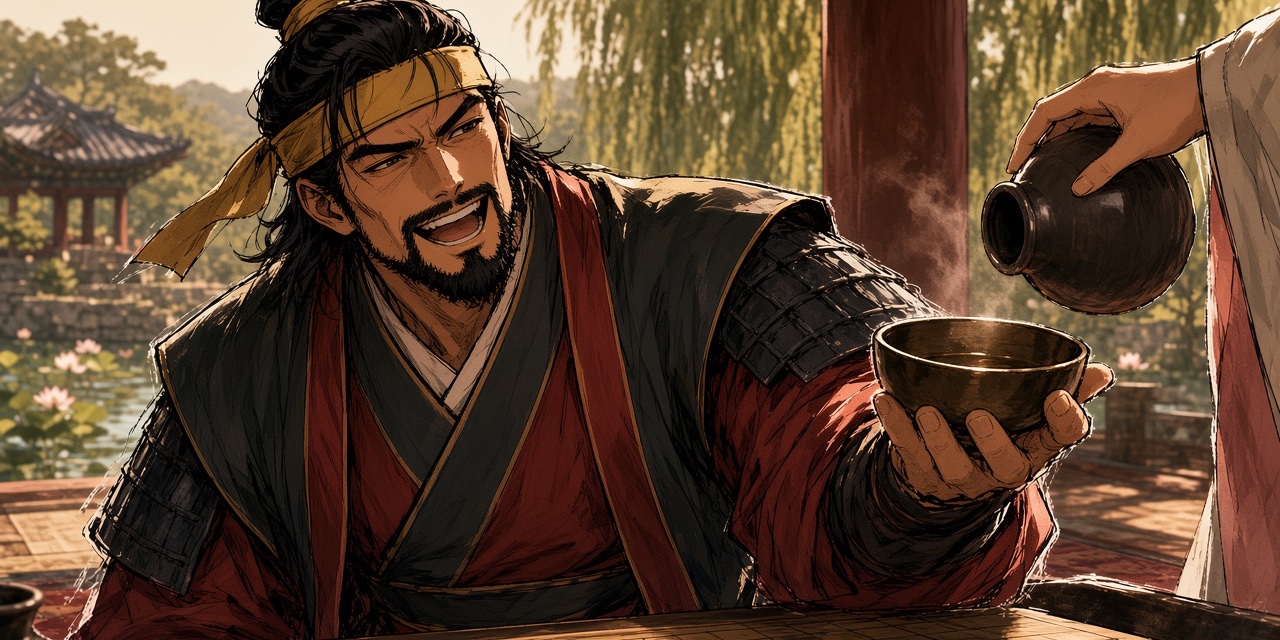
At mid-morning the prince is in the rear garden with a bow, a go board, a jar of wine and two court ladies, and he is winning at all four.
The arrow goes in without his looking. He is already reaching for a stone.
The ladies stop giggling all at once, the way sparrows stop when a hawk goes over.
There is ditch mud to his knees. Nobody in the garden mentions it.
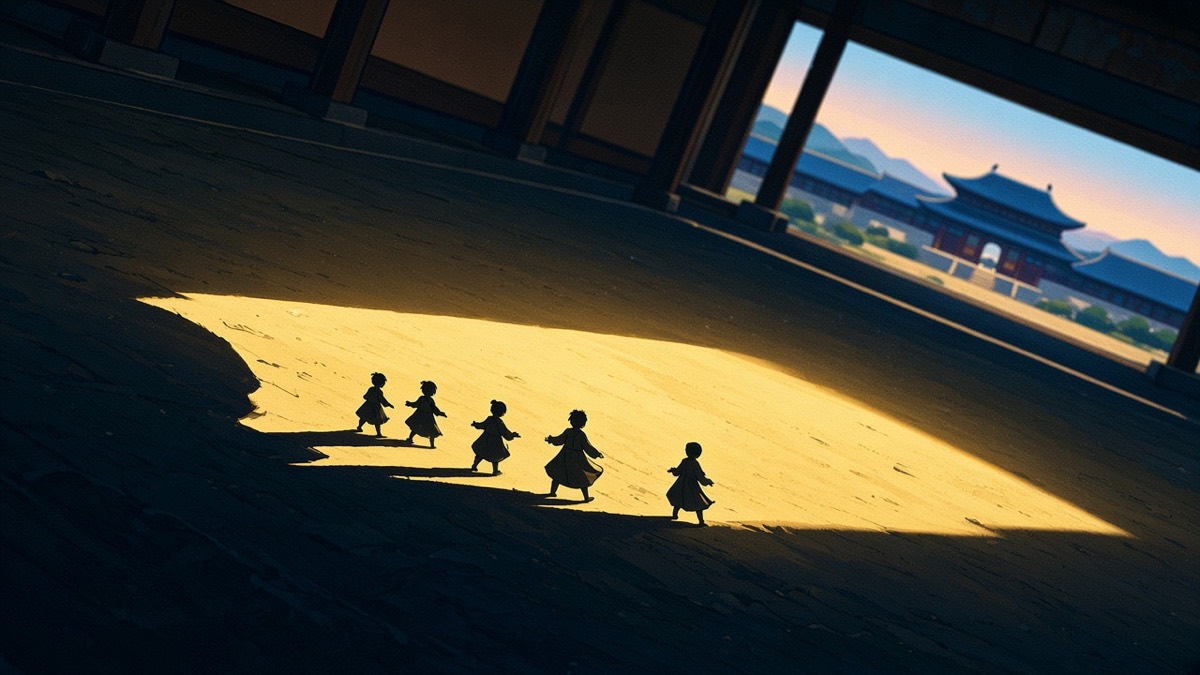
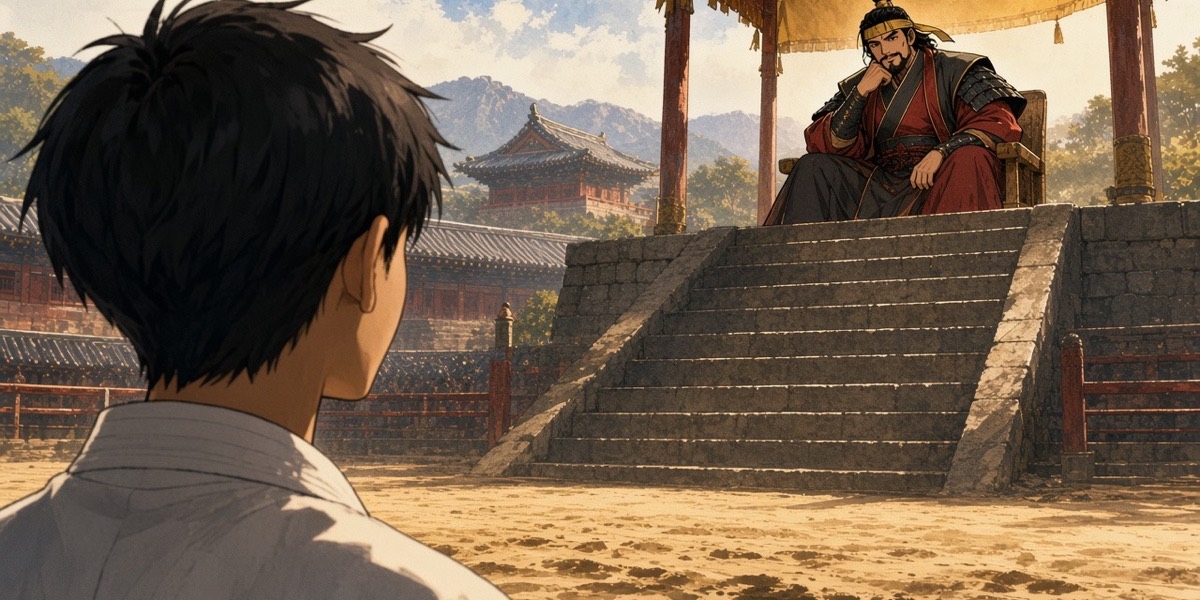
Five days before a crown prince is made, each of the eight houses brings a boy to the palace yard to be looked at, the way you bring a horse to market. On the day itself they wrestle. The crown prince puts up a boy too.
Eight boys in white stand on the sand. The ninth place is empty, and everyone is looking at it.
His sons grow up already spoken for. wears a ring. has a grandmother. Little has lovely handwriting and a tutor.
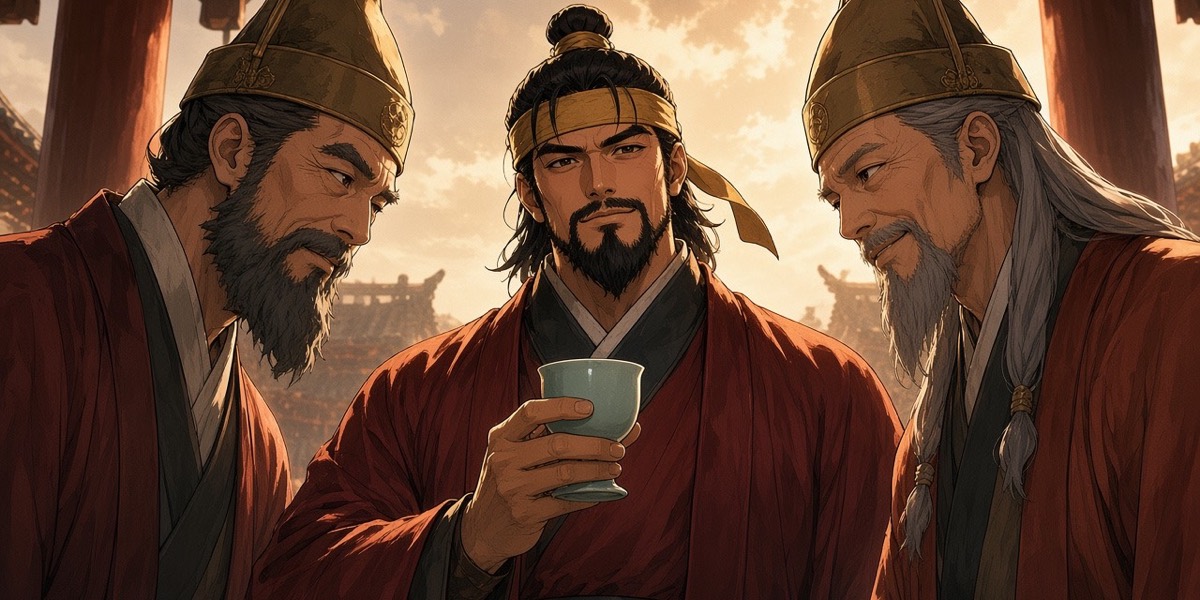
Two old men reach the prince before the king has finished speaking.
He served his parents with filial piety and treated his brothers with fraternal love; in his time he was called the of the Sea.
어버이를 섬김에 효로써 하고, 형제와 더불어 우애하니, 그때 해동증자라 일컬었다.
The of the Sea was cheating at go an hour ago. He smiles at both of them like a man being sold his own horse.
When they have bowed themselves away, he says what he thinks. His father has been trying to cure him of that for forty years.
That night sneaks out of the palace in a grey hood and a grey robe. He tells himself it is to see how the common people live. Mostly it is to get away from a list with an empty ninth line.
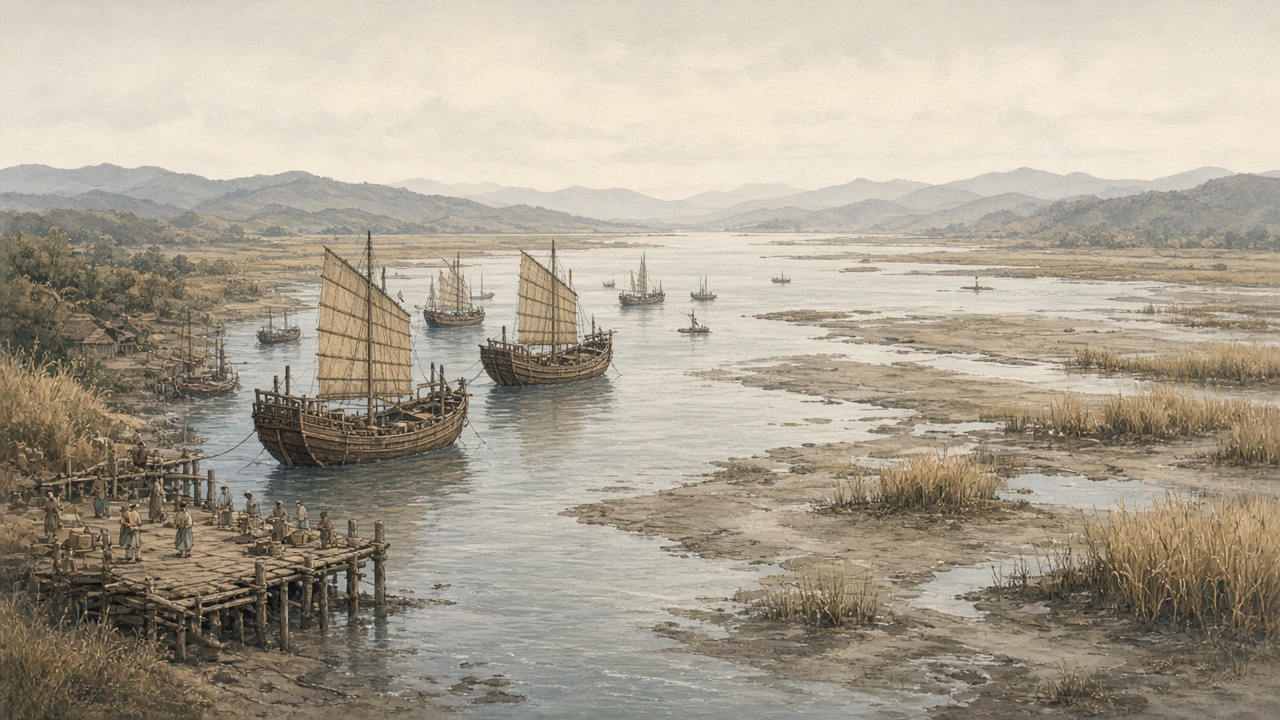
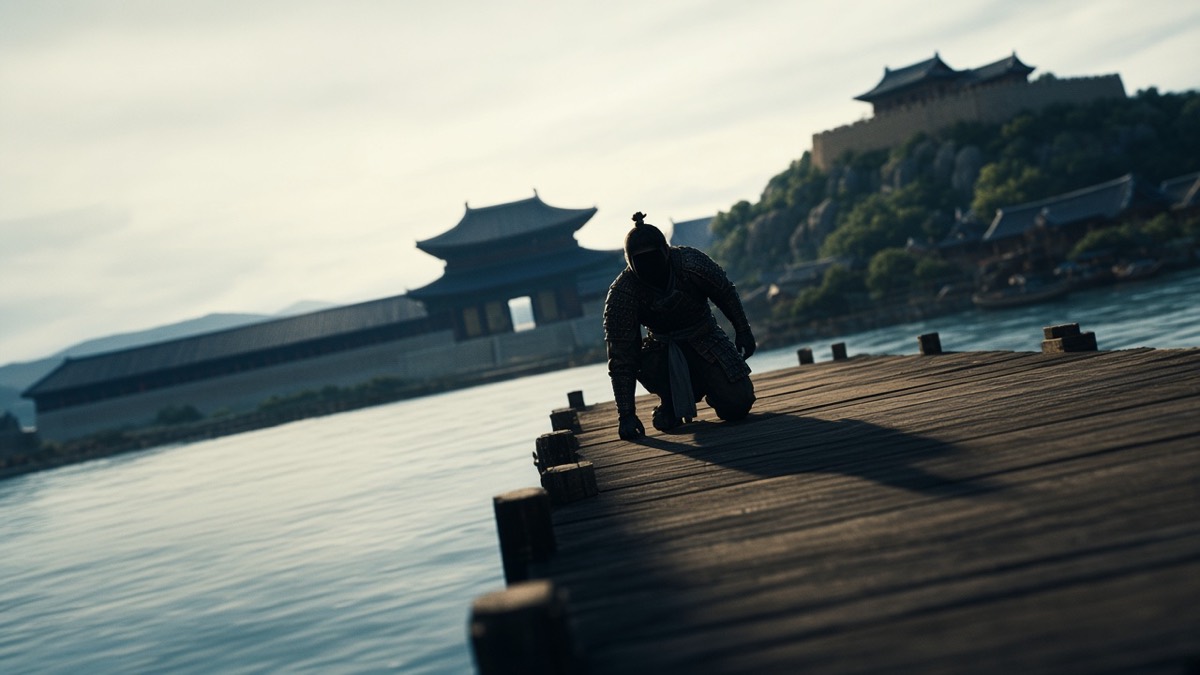
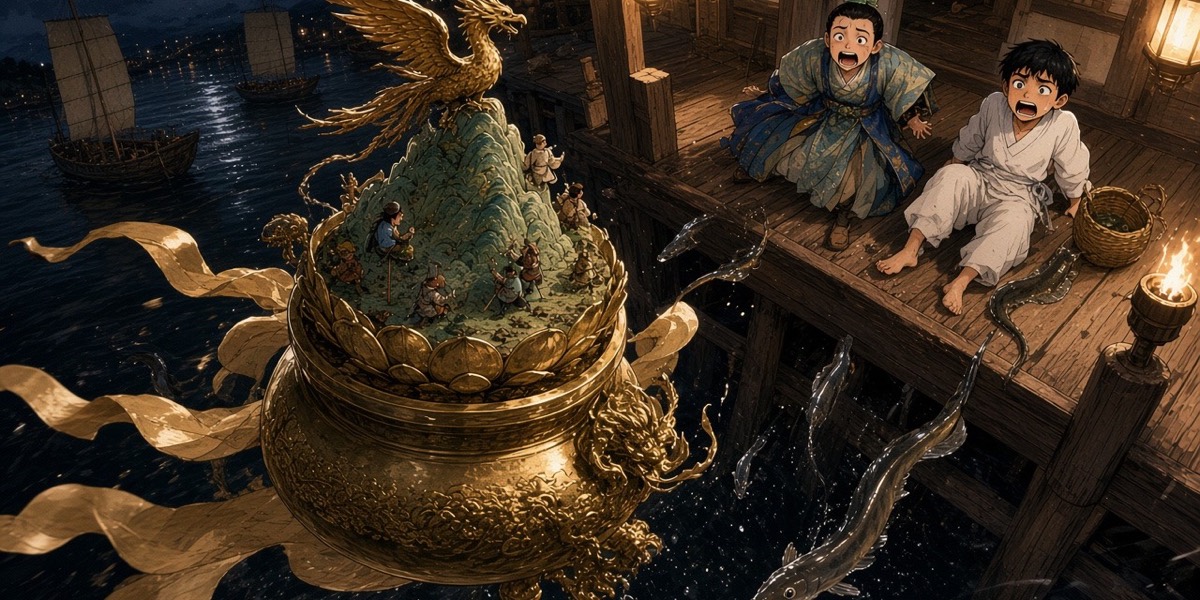
On the landing a is shouting at four porters and a great gilt-bronze incense burner. The burner is wrapped in silk for the crown prince’s day. It is as tall as a child, with mountains on the lid, musicians on the mountains, and a phoenix on top who looks as if he would rather be elsewhere.
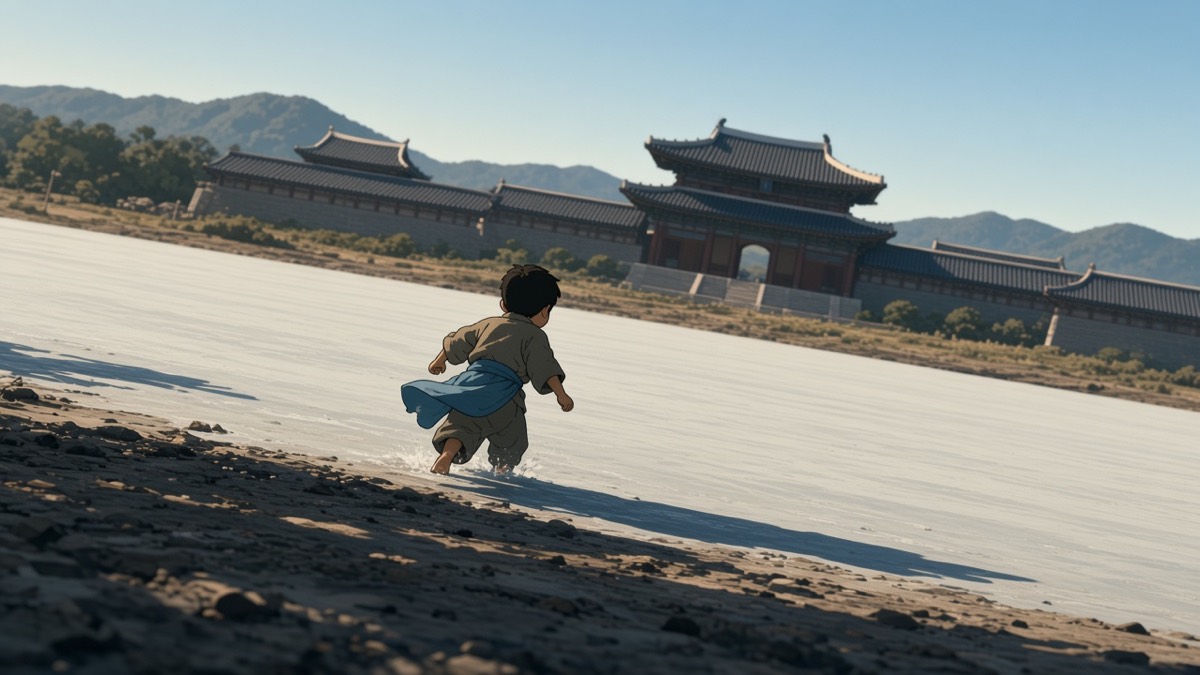
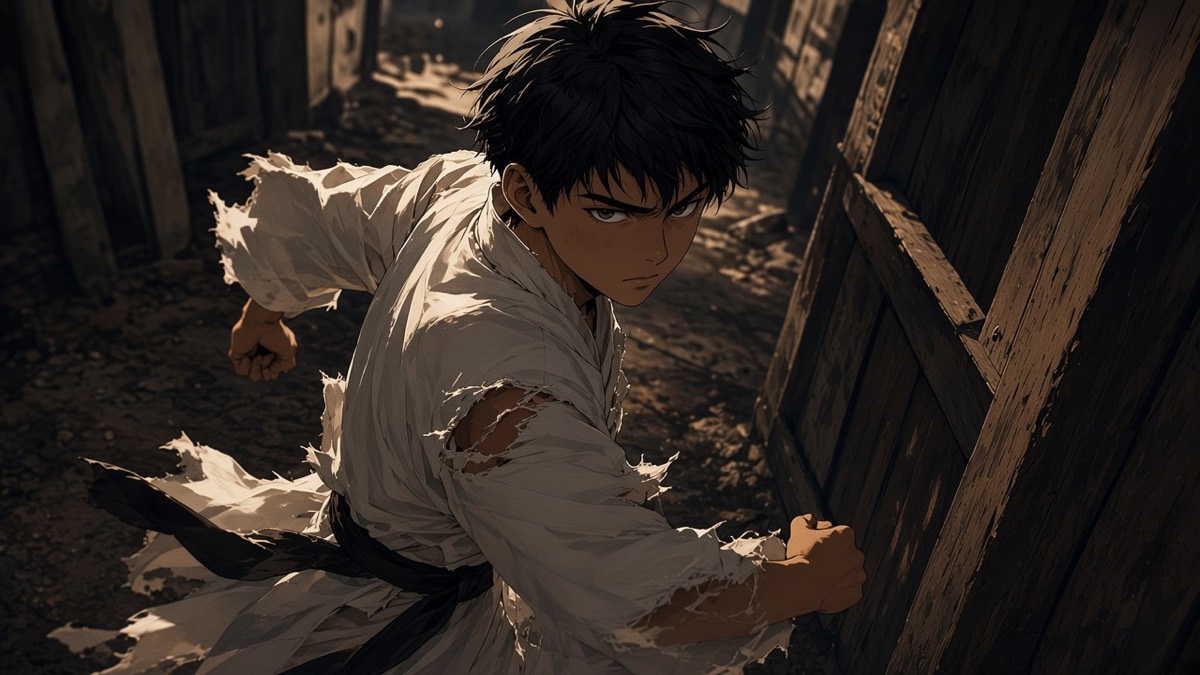
A barefoot boy with a basket of eels comes round the stack at a run. The steps back into him. The burner goes over the rail. It does not float.
Nobody on the landing moves. The porters find their feet very interesting.
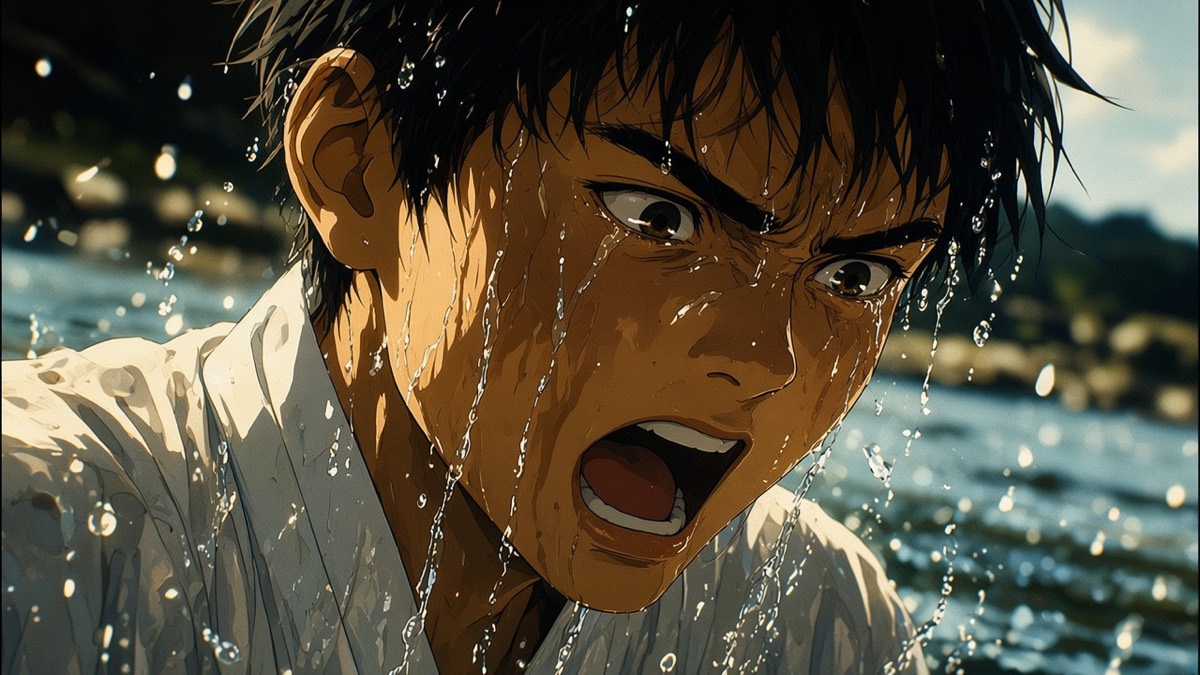
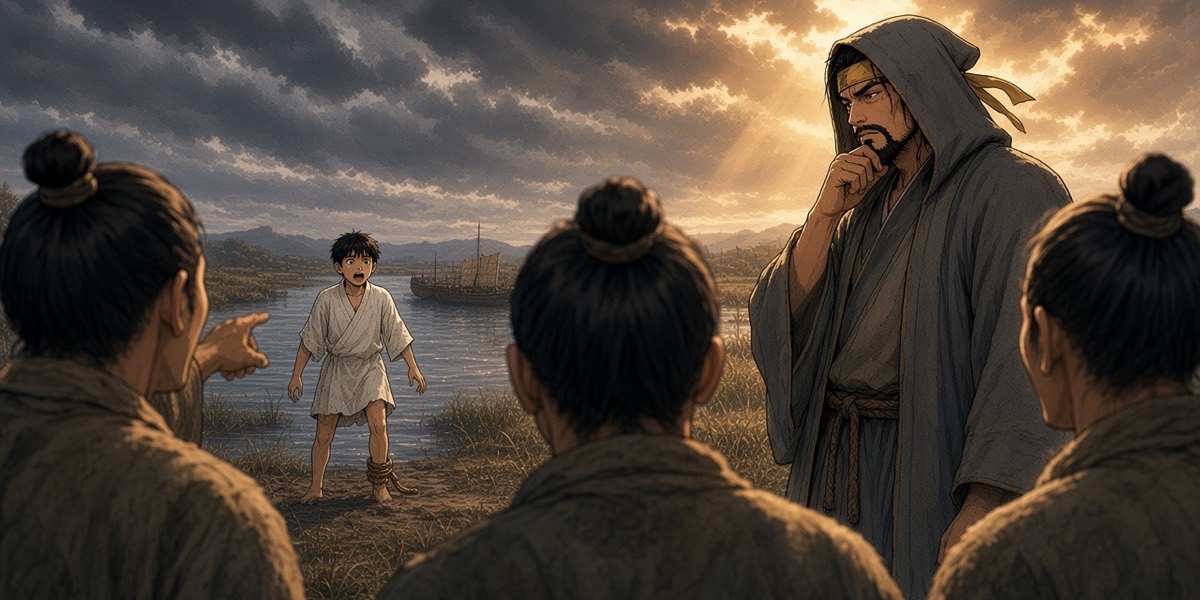
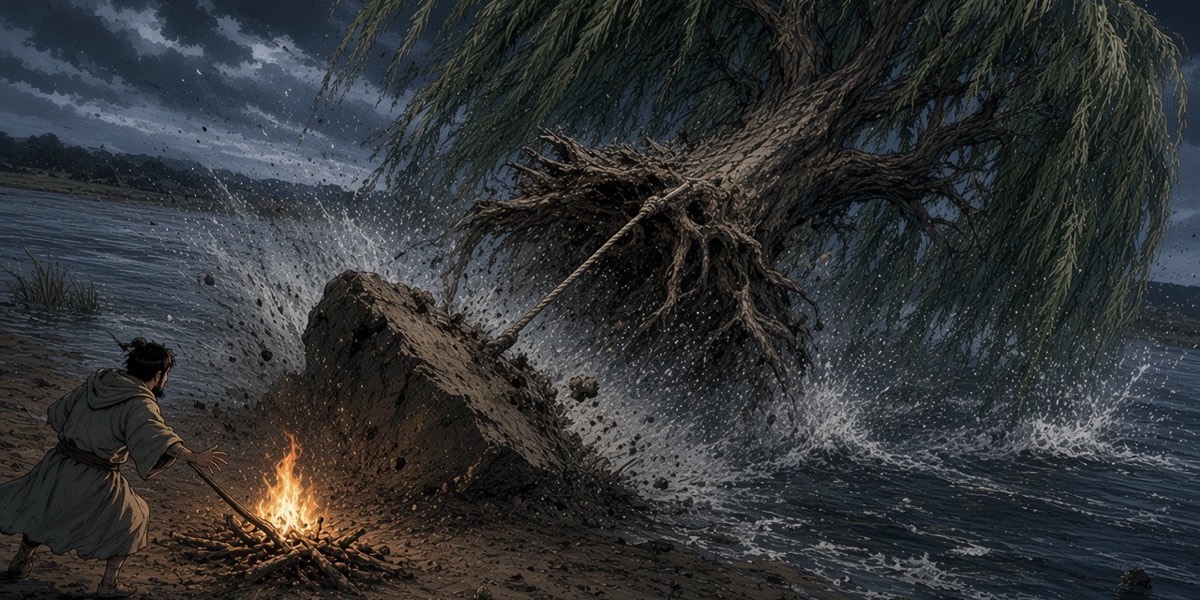
There is an old willow on the bank with a rock wedged in its roots. ties one end of a rope round the rock and the other round his ankle, so the river can’t keep him. Then he goes in.
The boy is going back into the water. He has been at it since morning, and he is not a strong swimmer.
On the second day a man in a grey hood stops at the back of the crowd. He stays longer than he means to.
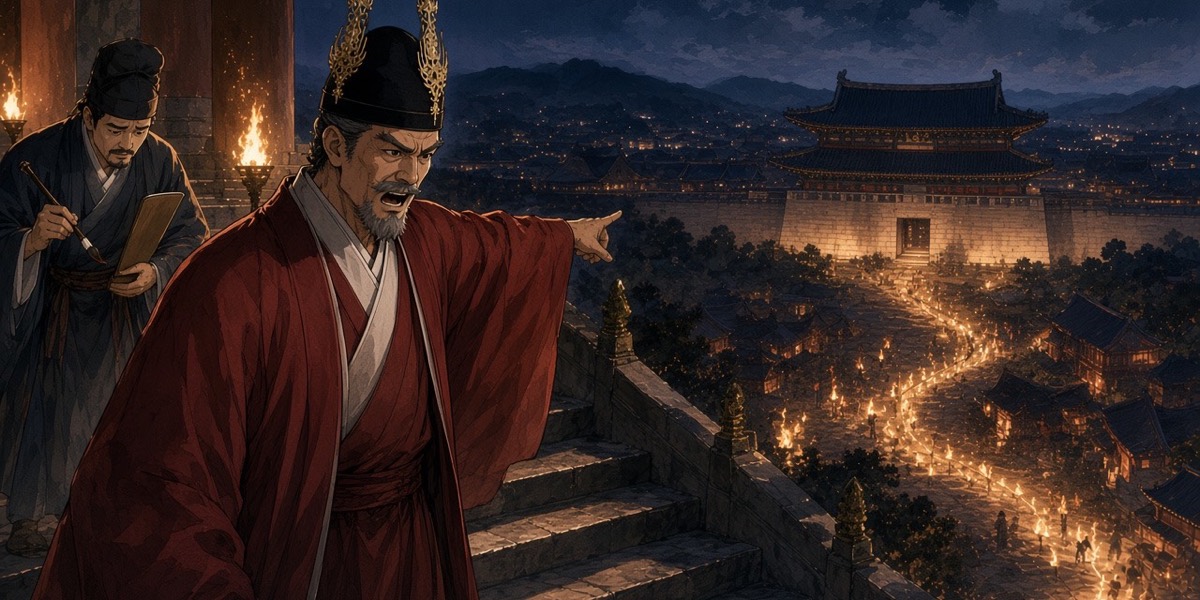
In the palace, the crown prince has been missing for two days. has the city turned over, and says several things about his son that the herald is asked not to write down.
does not eat. Nobody sees him sleep. Each time he comes up, the rock in the willow roots has shifted a finger’s width, and he reties the knot and goes back down.
On the third night the crowd has gone home. comes down the bank with rice balls in a leaf and a jar he has not opened, which for him is a sacrifice.
He says it in exactly the same words, the way you set a stone back where it was.
does not answer. He goes back in. Far down, in the black, something catches the moon: a curve of gold.
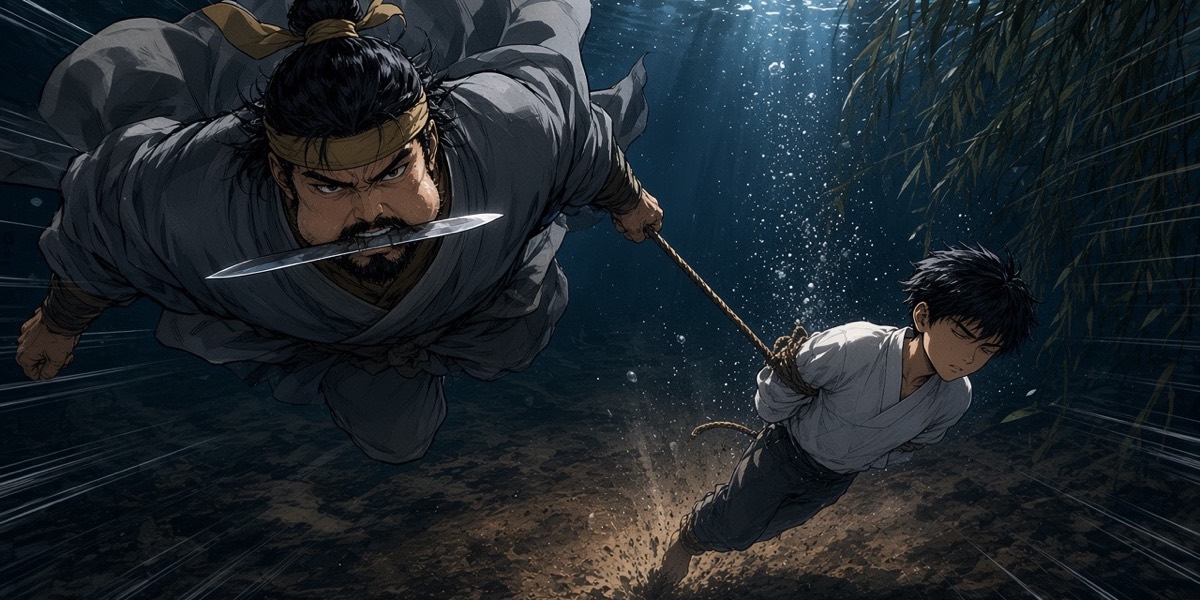
Then the rock comes out of the willow roots. The willow, which has been leaning on that rock for a hundred years, comes after it. The rope goes taut, and the river takes the boy, the rock and the tree down together.
The crown prince of goes in after him in a grey robe, with a knife in his teeth. He finds the rope by feel and cuts it.
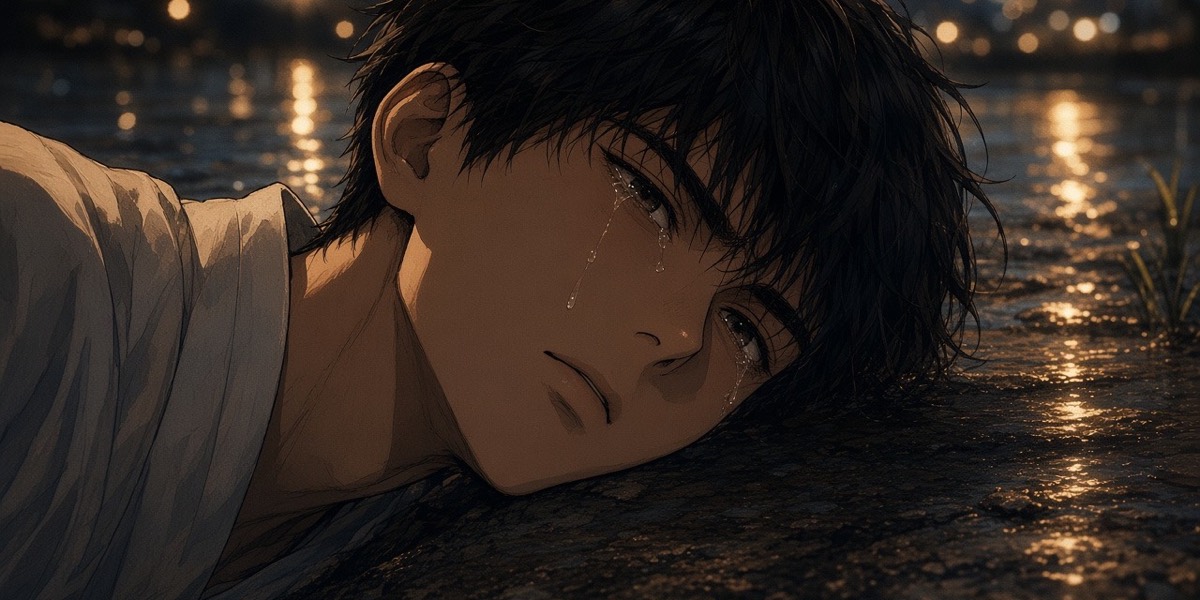
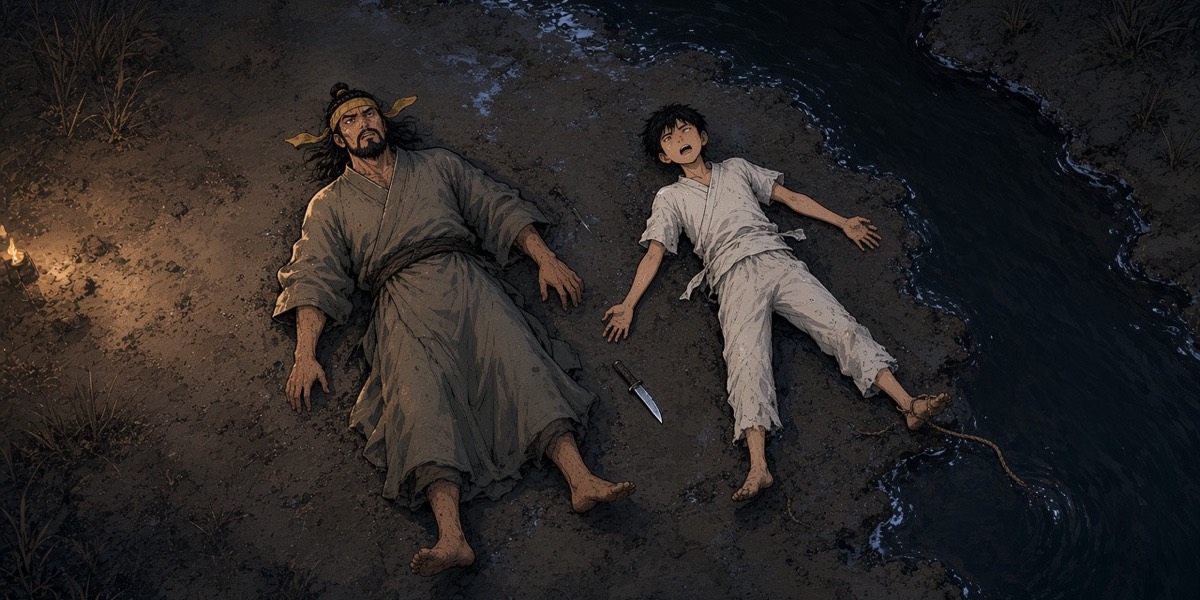
They come up onto the mud together and lie there like two fish.
Then he gets up, picks up the cut end of the rope, and starts looking for another rock.
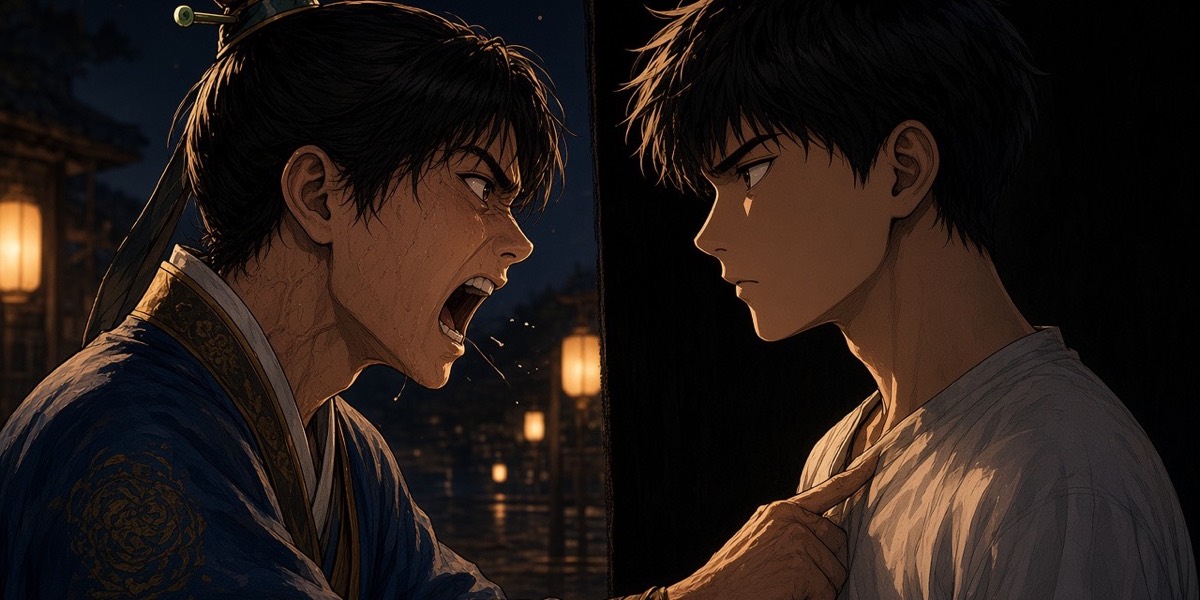
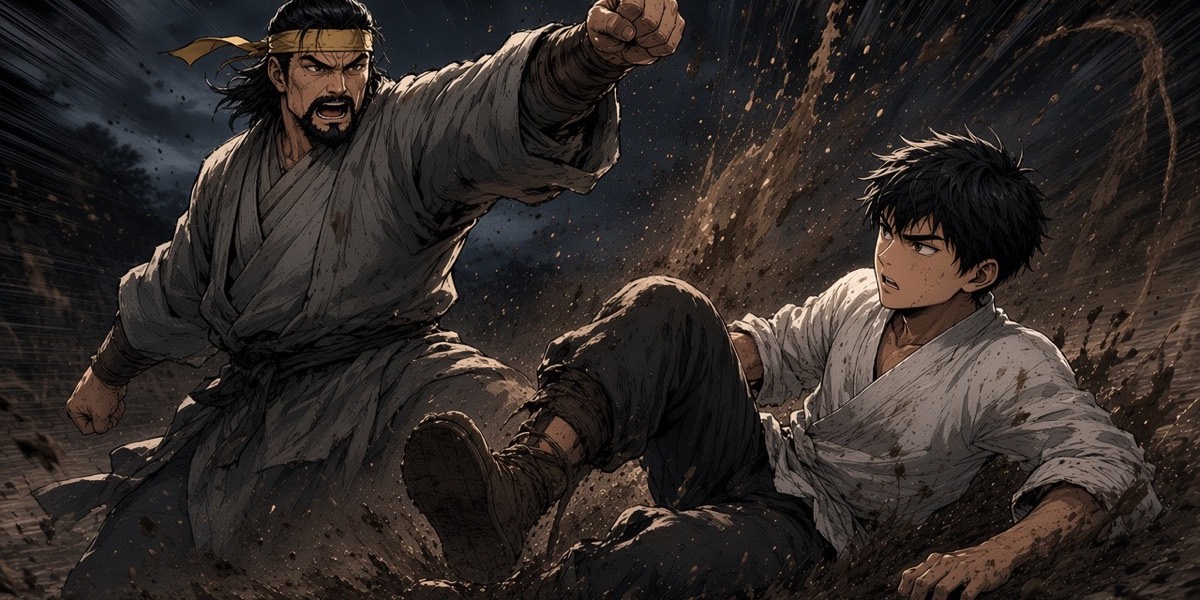
hits him once, properly, in a way princes are not taught. goes down on the mud and stays there.
He lies with his eyes open, and the tears just come, without a sound, the way the river does.
It takes a while to get it out of him.
says nothing for a long time. All week he has been called the of the Sea by men who would sell him by the pound, and he had decided there were no honourable men left in . It is very annoying to be proved wrong about that on a mudbank, at night, by an eel boy.
The boy opens his mouth, and nothing comes. A man he loved told him to forget everything, and he did as he was told. He put the words away somewhere safe when he was small. He has not looked since.
It comes out as a whisper. The second time, it doesn’t.
stands. He is soaked to the waist, the hood is gone, and for once in his life he does not laugh first.
Before dawn goes in one more time, with no rope at all. He reaches the gold. He gets both arms round it. Halfway up, with the surface a body’s length away, his eyes close.
Under the water, there is a flash of light.
On the bank the crown prince-to-be is wearing a crown he has no business wearing. He took it out of his father’s chest that afternoon, the way he has been taking things out of his father’s chest since he was six.
Out of the river, as if the water were a door, walks a pale stag with tall antlers. Across its back lies a boy with no name, both arms still locked round a gilt-bronze incense burner.
Nobody else sees it. Nobody else is up.
On the fifth morning knocks at the gate with the incense burner on his back, wrapped in his own shirt.
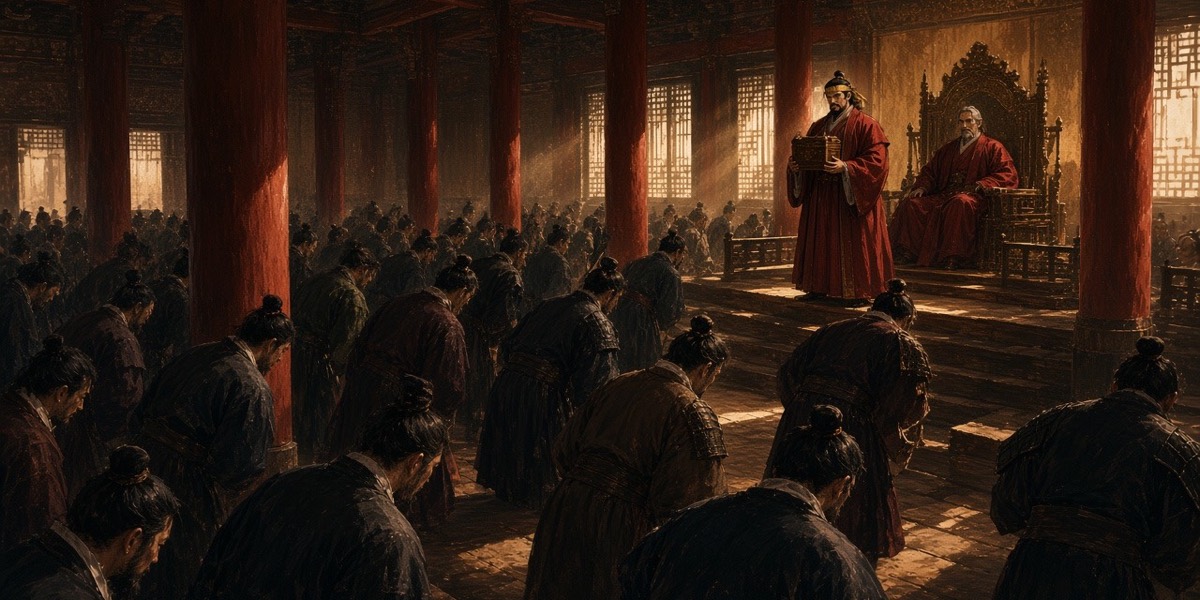
The investiture takes less time than the wine did. A seal, a robe, and the whole hall bowing at once, like barley under wind.
Then the yard. The houses’ boys stand at the edge of the sand in white. The herald reads the board.
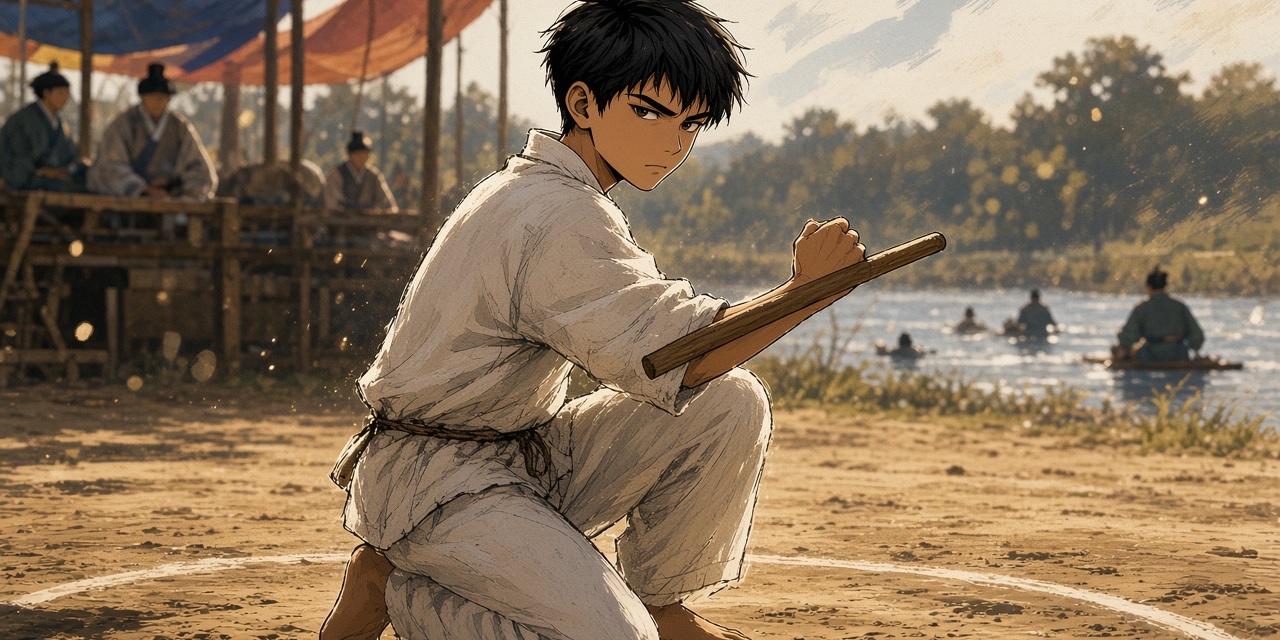

The yard says the surname back to itself, louder each time. A royal name on an eel boy. At the edge of the sand the goes the colour of his burner.
looks back, and up, at the royal seats. The crown prince is already looking at him.
For the first time in years the arithmetic goes quiet. Not ’s blood. Not ’s chairs. A boy who held the line because somebody had to.
puts the borrowed crown back on crooked and laughs — the real kind. He has found what he was drinking past.
That night he unfolds the condolence list by one lamp. The names have not changed. He has.
The eel boy is gone. What is left is counting.
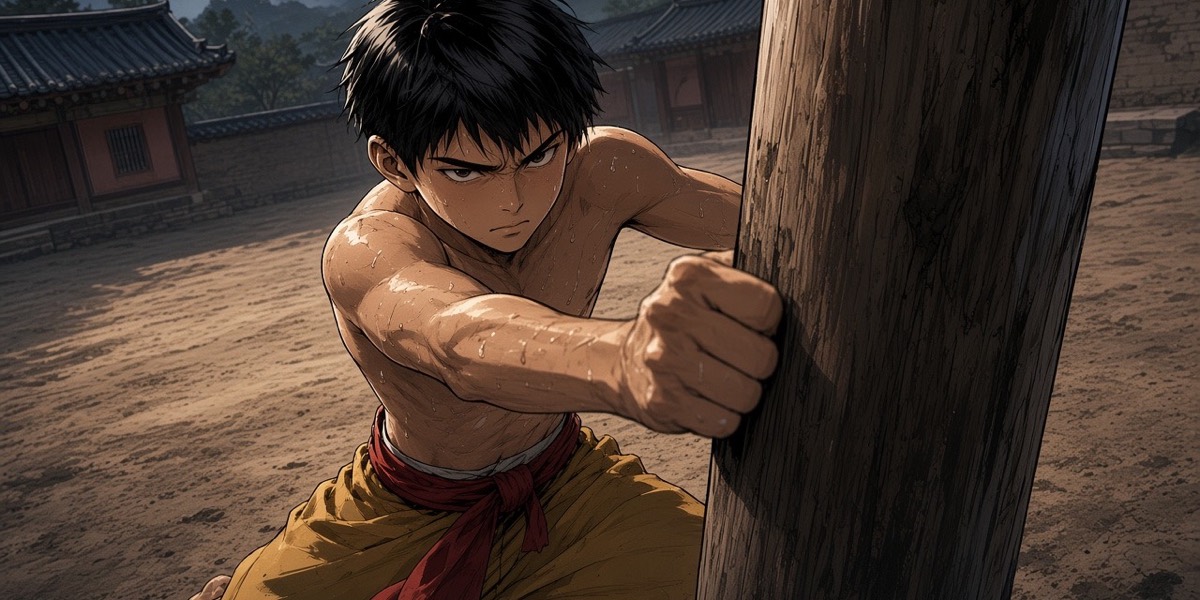
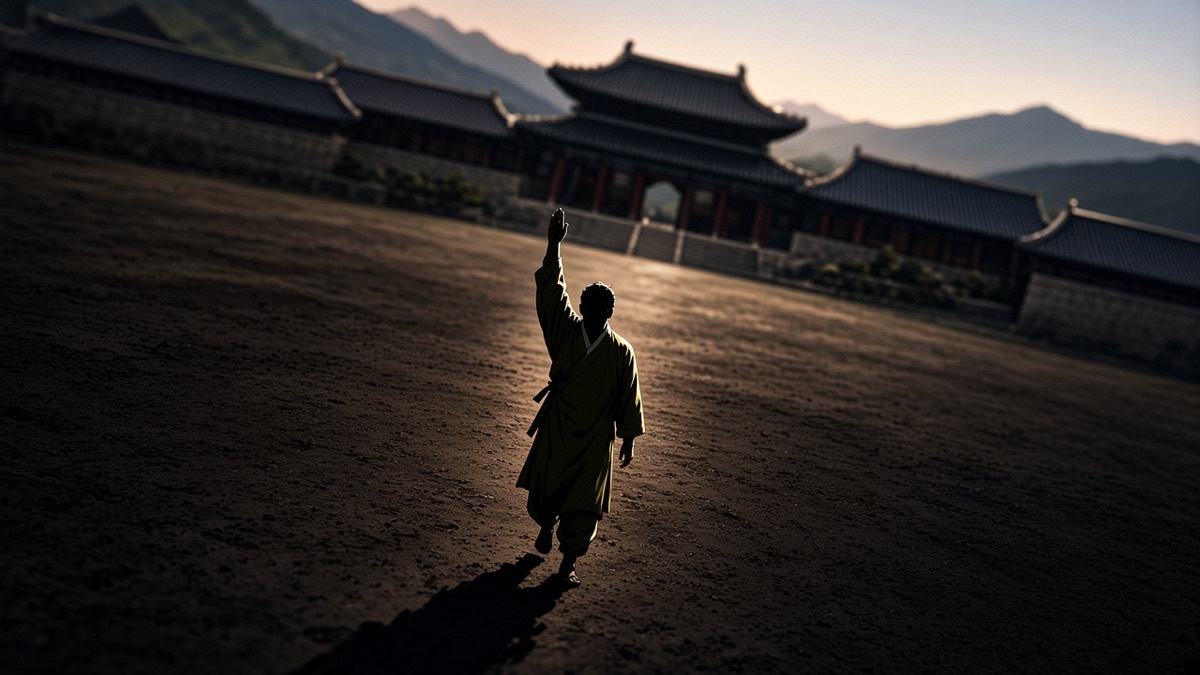
He trains until the body is a number he can trust. Dawn. The post. The same cut, reverse, until the shoulder stops arguing. comes some mornings and does not speak. That is a kindness. Words would be two orders at once.
The first year he is still thin. You can see the river on him. The third year the river is gone. What stands on the packed earth is a chest, a waist, a back that will hold five thousand later and does not know it yet. He does not look at it. He looks at the count.
laughs once, into his fist, and leaves him the yard. A man is measured by his self-control. is measured by the count. By the time the clans start calling him Turtle, the thin boy is a story, and the body is the one that will walk to the .
Eight houses. Eight boys on the sand. And one with a borrowed name…!
