



Chapter 81
Snake River



AI Summary
- The Ford Here is the plan, such as it is.
- Thirteen Sons The river does not take them in a heap.
- Yumla Defied In the worst hour of it — arrows spent, horse down, the Western blade a finger from his throat — the air thins the way Tamla stories promised.
- The White Tiger Then only the tiger is left.
- The Rice Road In the second month a train of carts comes north out of Silla and across the Imjin, through snow to the axles.
- The Far West A thousand miles the other way, the courier finds Xue Rengui.
- Pyongyang
- Two Envoys
- The Turtle Then the Baekje envoy plays the only card he brought.
- Two Boats So the king of Tamla makes his choice the way the island does everything: sideways.
- Characters
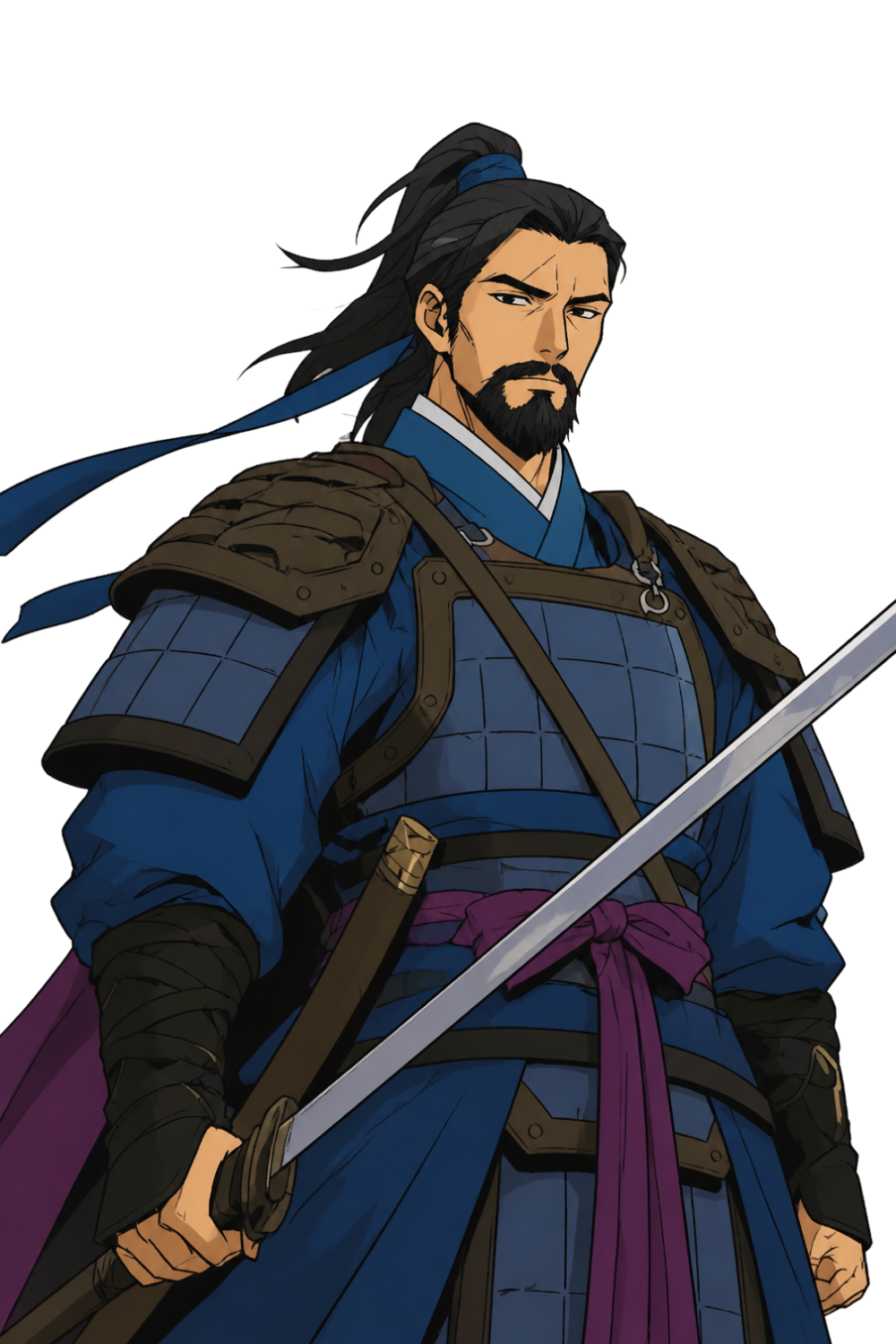
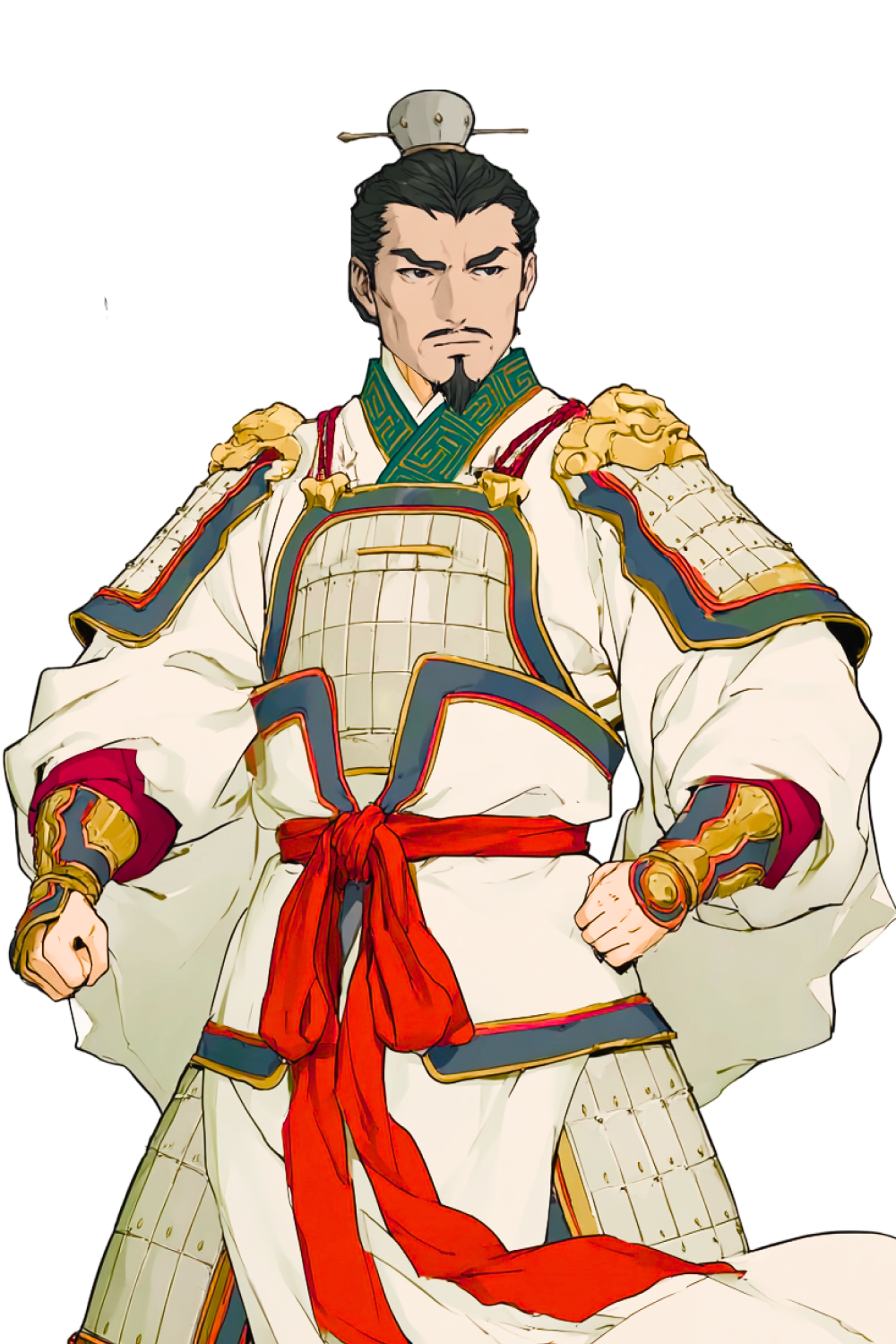
Episode· 662
Snake River
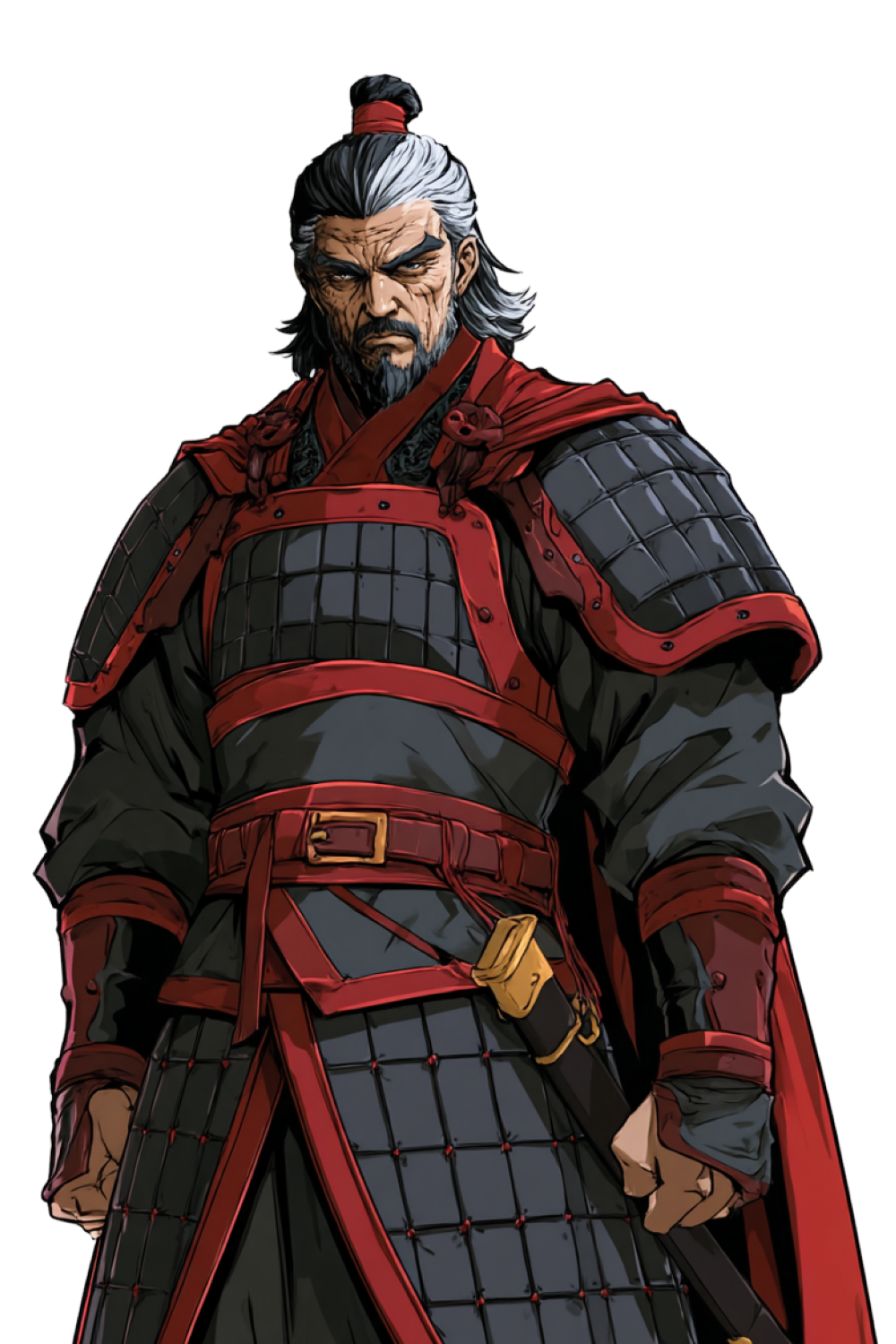
The White Tiger still believes rivers are roads. Yeon Gesomun has been waiting for a man who thinks that.
- Yeon Gesomun
- Yuri Dora
- Kangrim
- White Tiger
- Haewonmek
- Kim Yushin
- Xue Rengui
- Red Fowl
2 stills without a cue
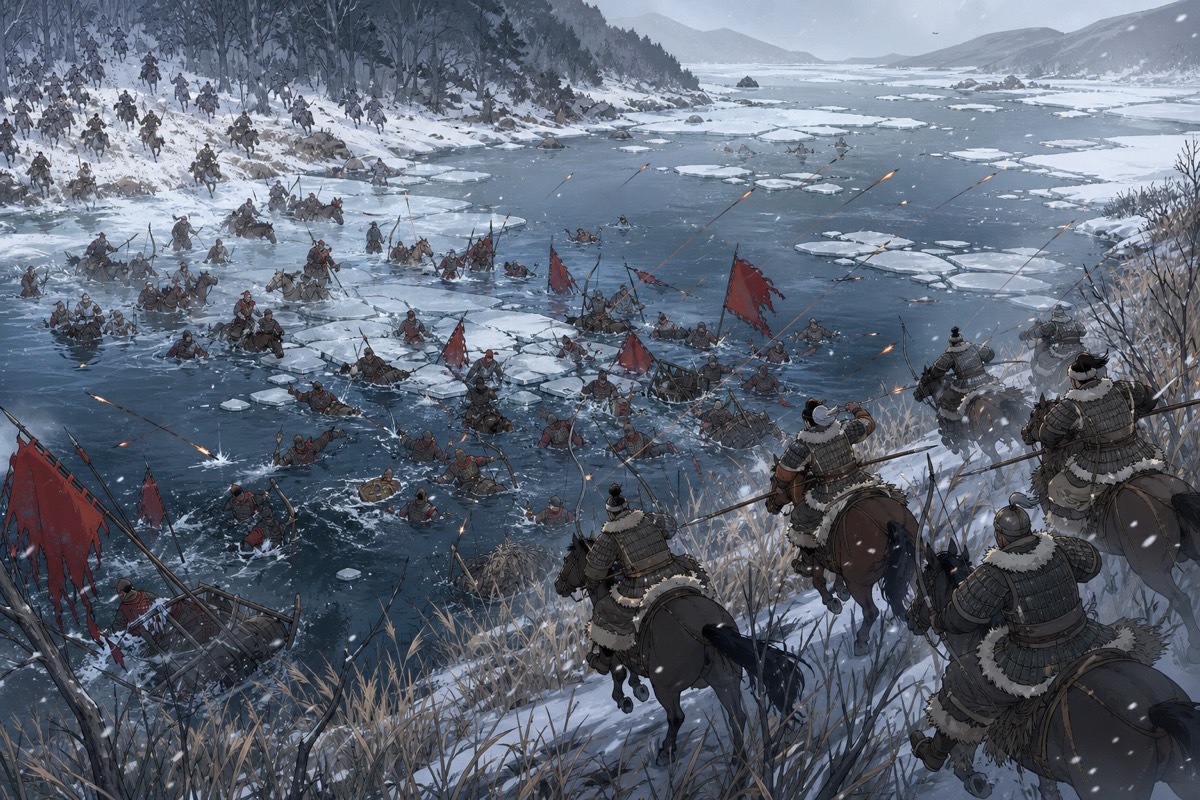
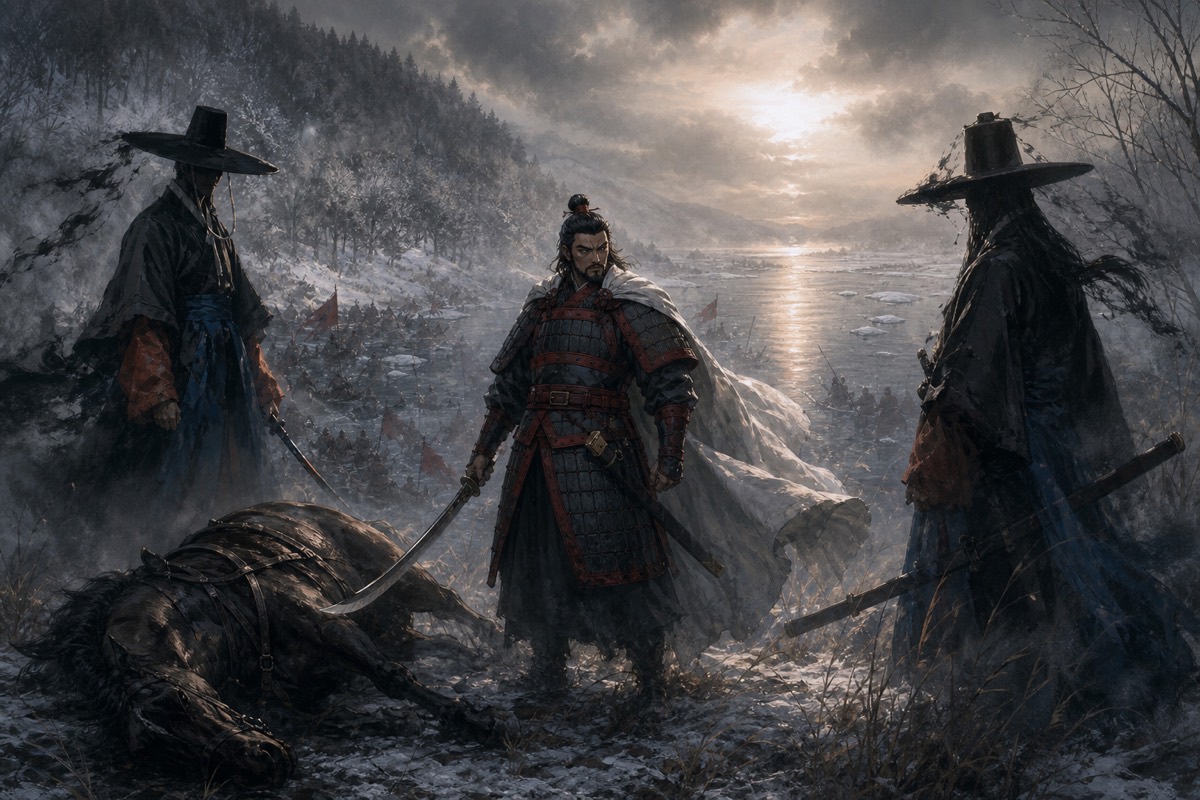
The drives his host into the . They still believe rivers are roads. has been waiting for a man who thinks that. Old men in the north remember another river that ate an army. The Snake is younger. It's hungrier. And it has 's teeth.

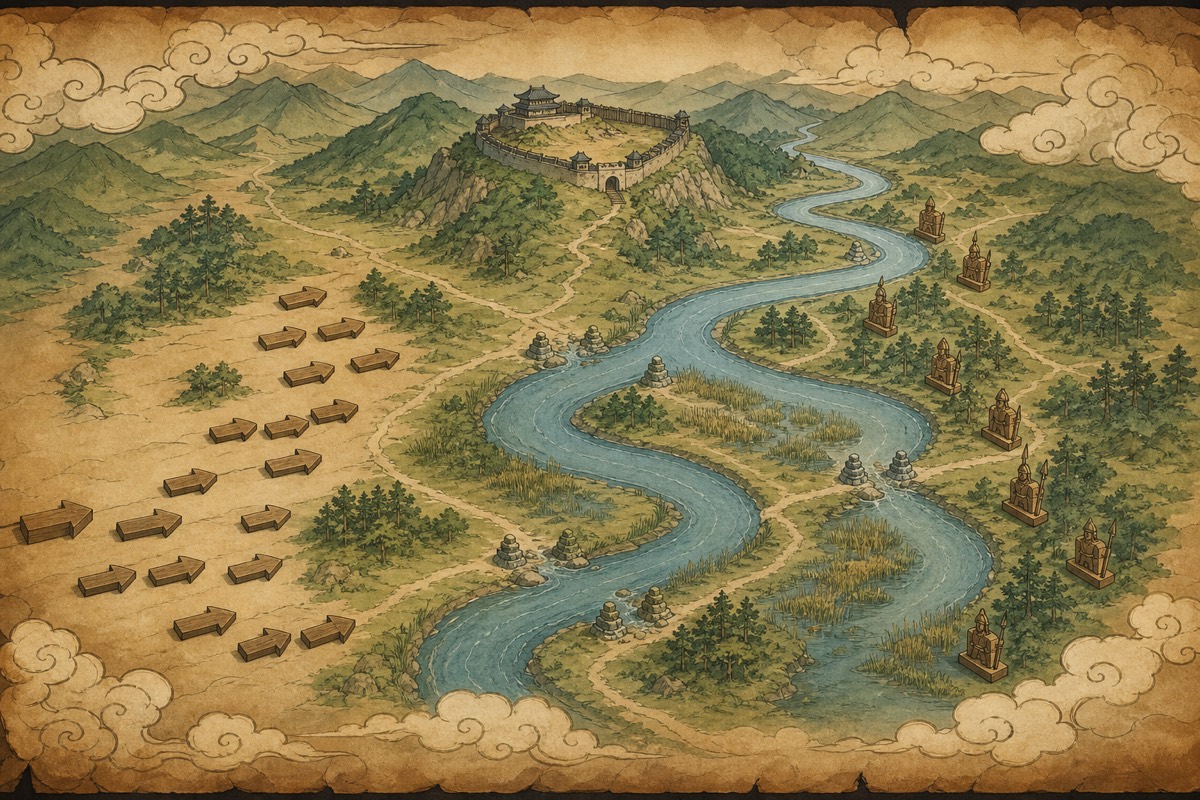
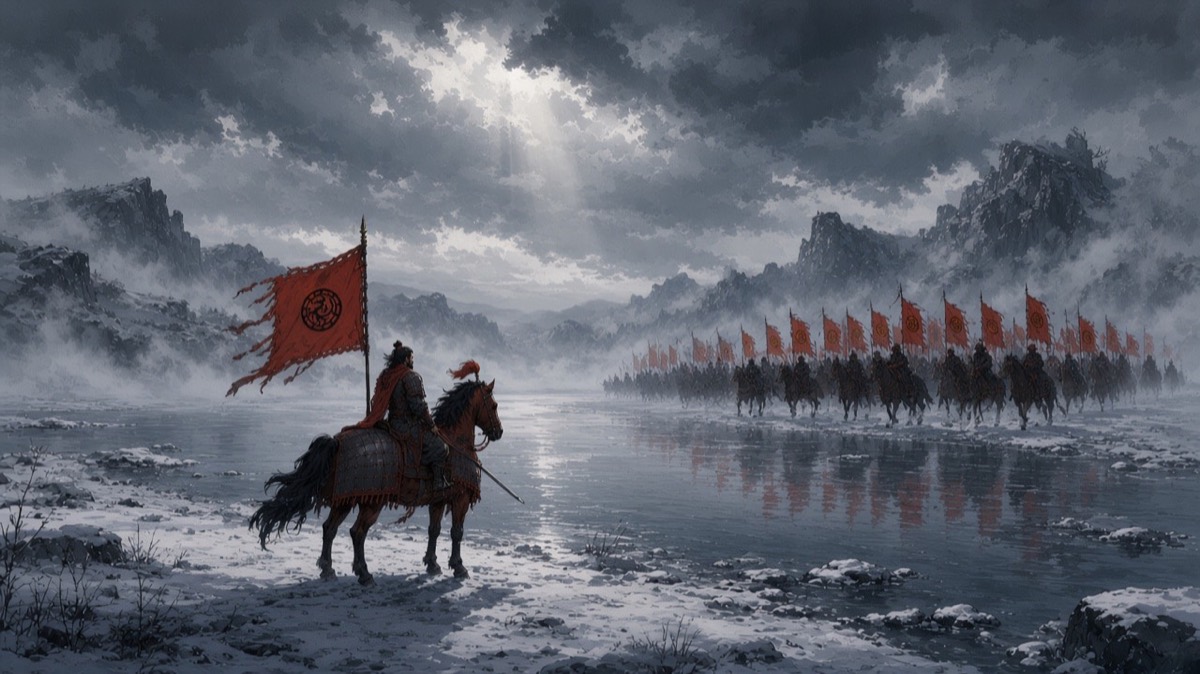
Here is the plan, such as it is. The Tiger is marching west to join outside , and the Snake is in his way. If he gets there, the city is in a ring.

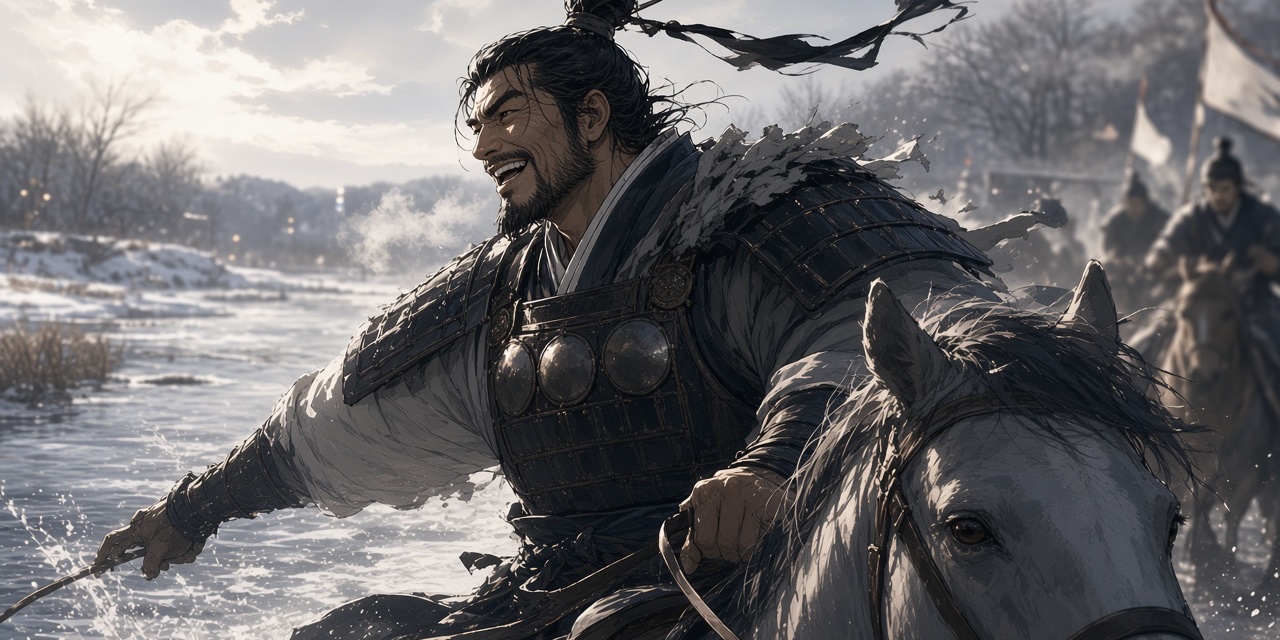
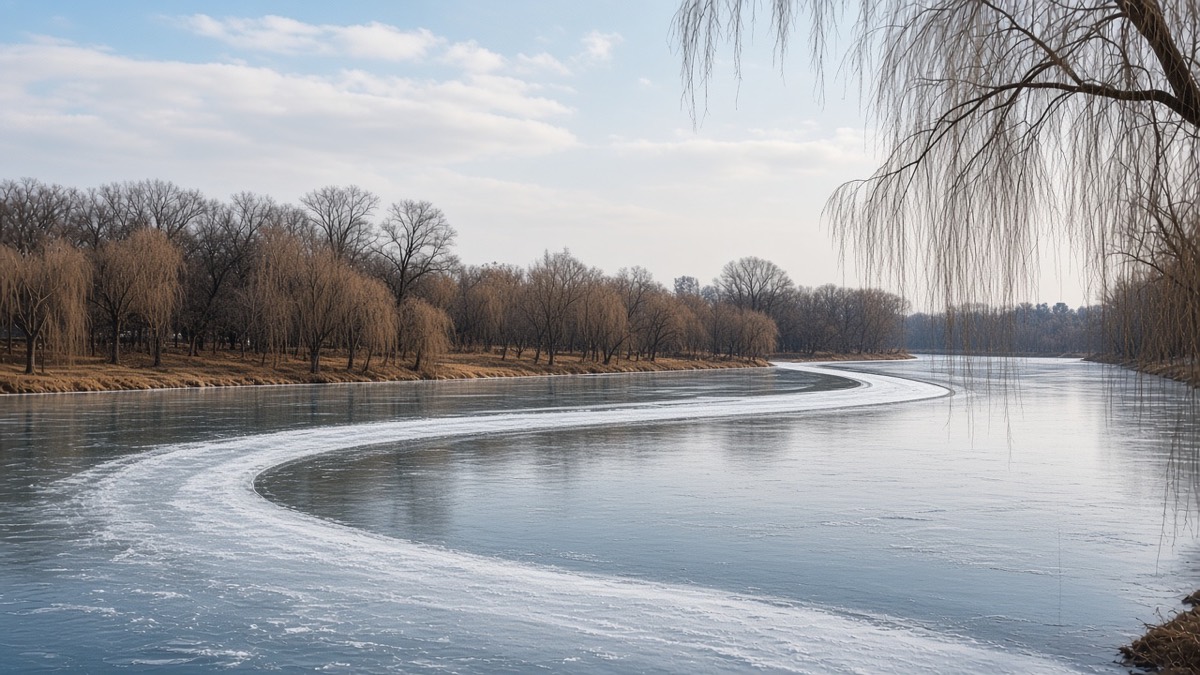
lets him get halfway. The Snake has gravel at the edges and mud in the middle, and knows which is which. His men already hold the west bank, and more of them wait on the east, behind the Tiger, where nobody has looked.
The middle horses sink. Both banks open up at once.
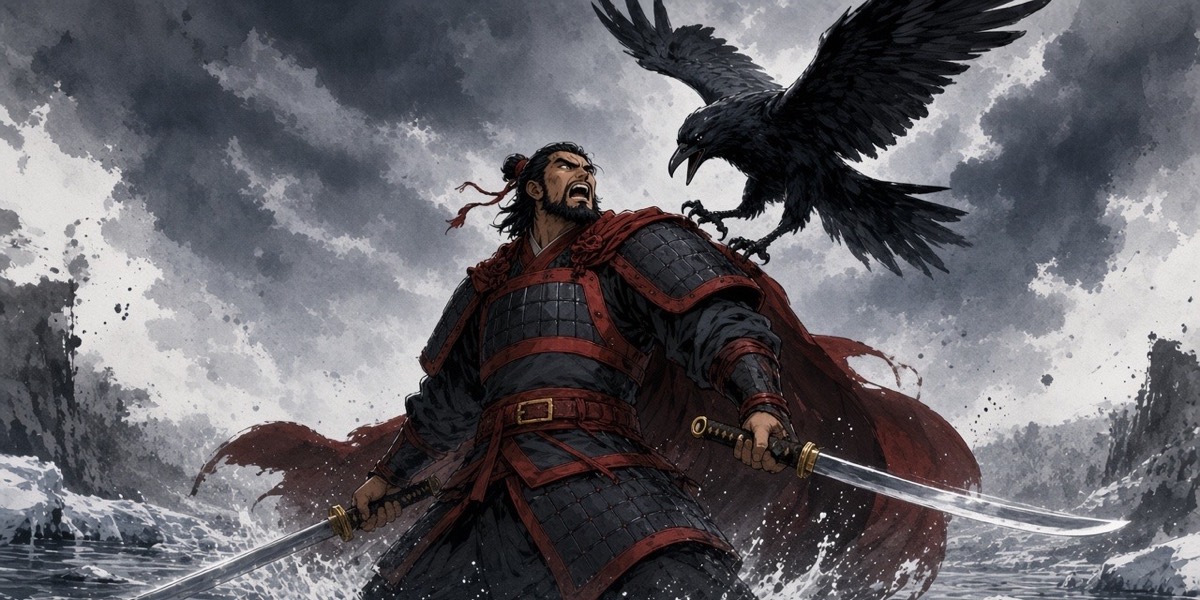
The river does not take them in a heap. counts. ’s clerks will later write thirteen sons as if a number were a grave. It is a morning. The water is February-cold.
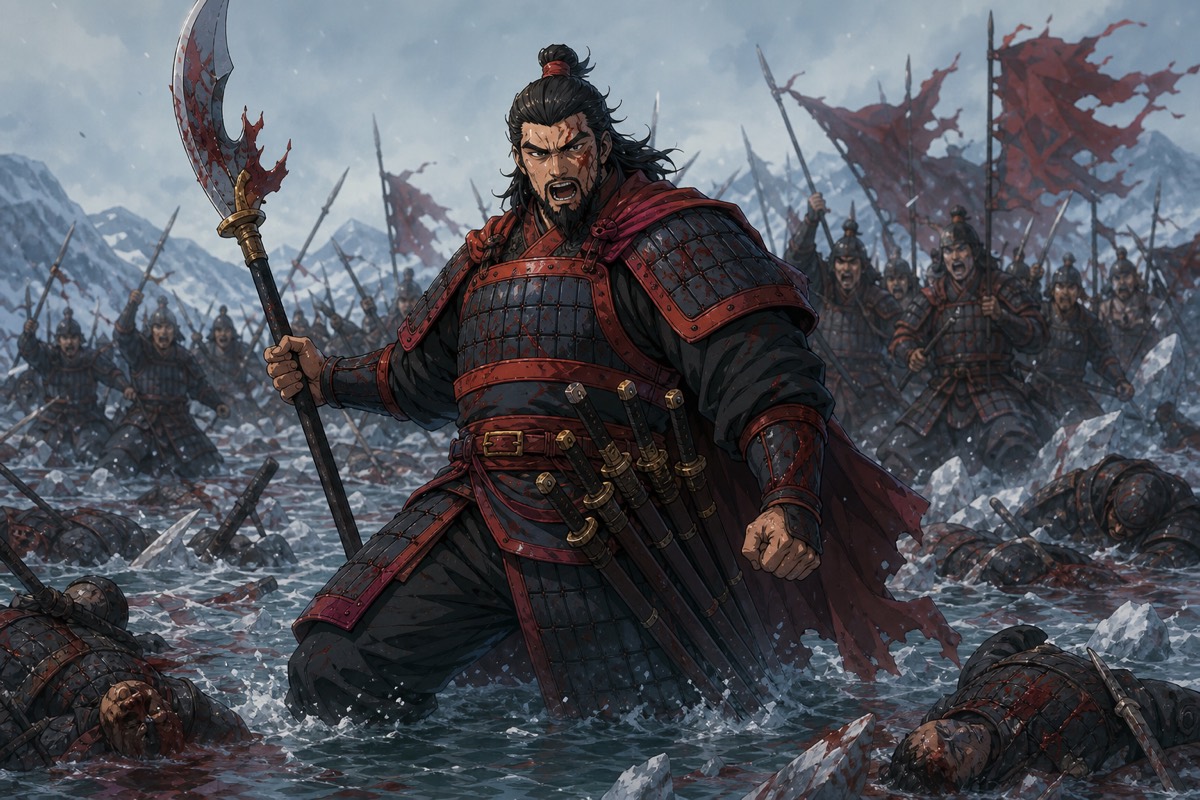
The thirteenth and the twelfth come together at the first bend — brothers who still share a horse’s width. meets them in the shallows where the current lies. One stroke. Two bodies. The horse walks on a few steps with no one left to tell it to stop.
The eleventh tries the reeds. Reeds keep a secret until a man breathes too loud. does not spend a speech on a boy hiding in grass.
The tenth and the ninth turn back toward their father. That is the expensive choice. They die reaching for a sleeve that is still too far upriver.
The eighth is the archer. He puts three shafts into the rim of ’s shield and the fourth into his horse’s neck. The horse goes down, and goes into the water with it.
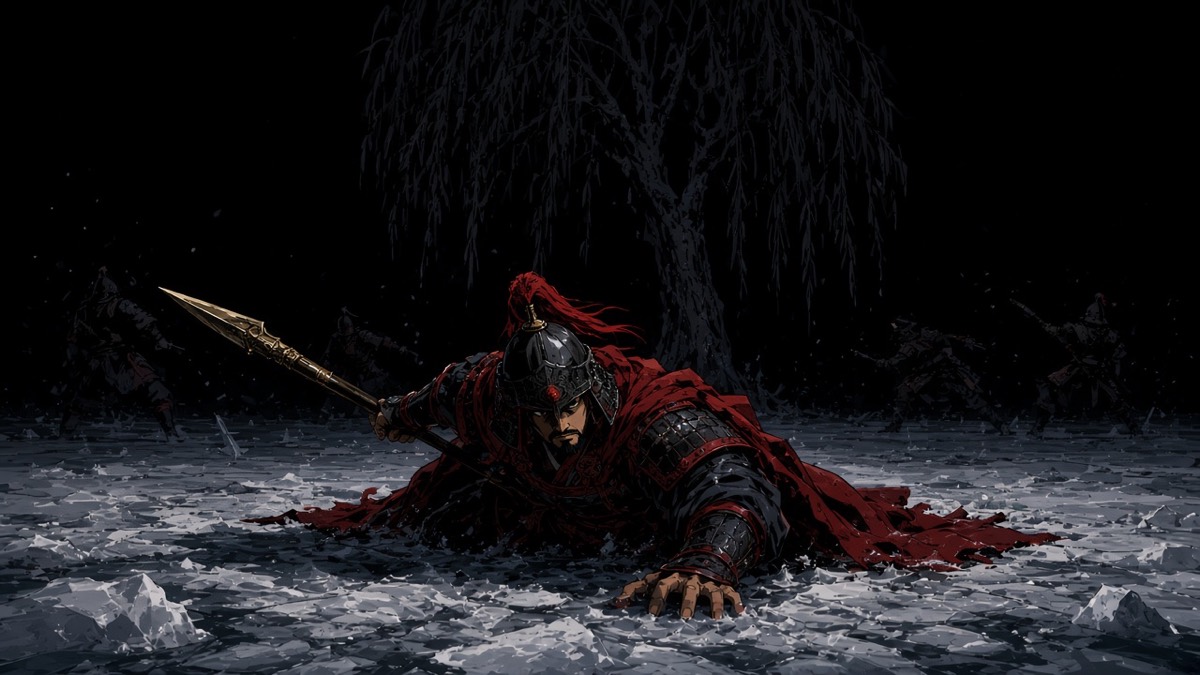
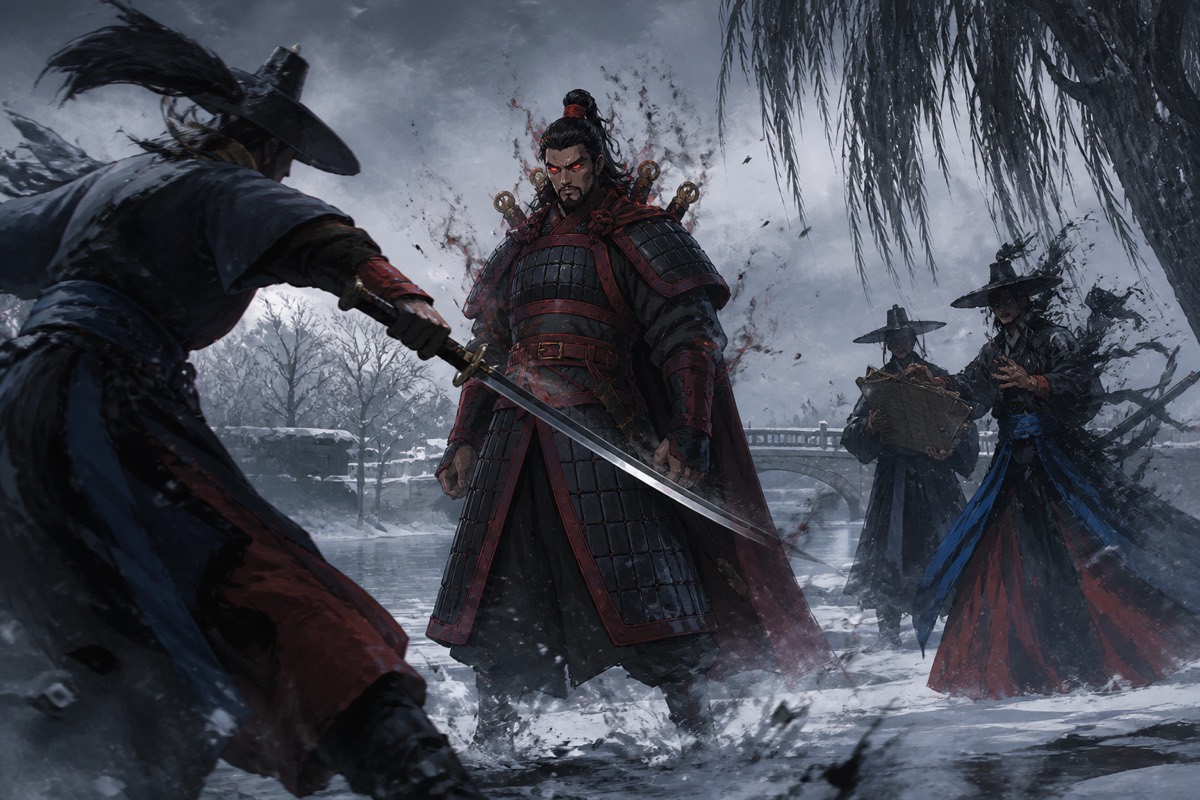
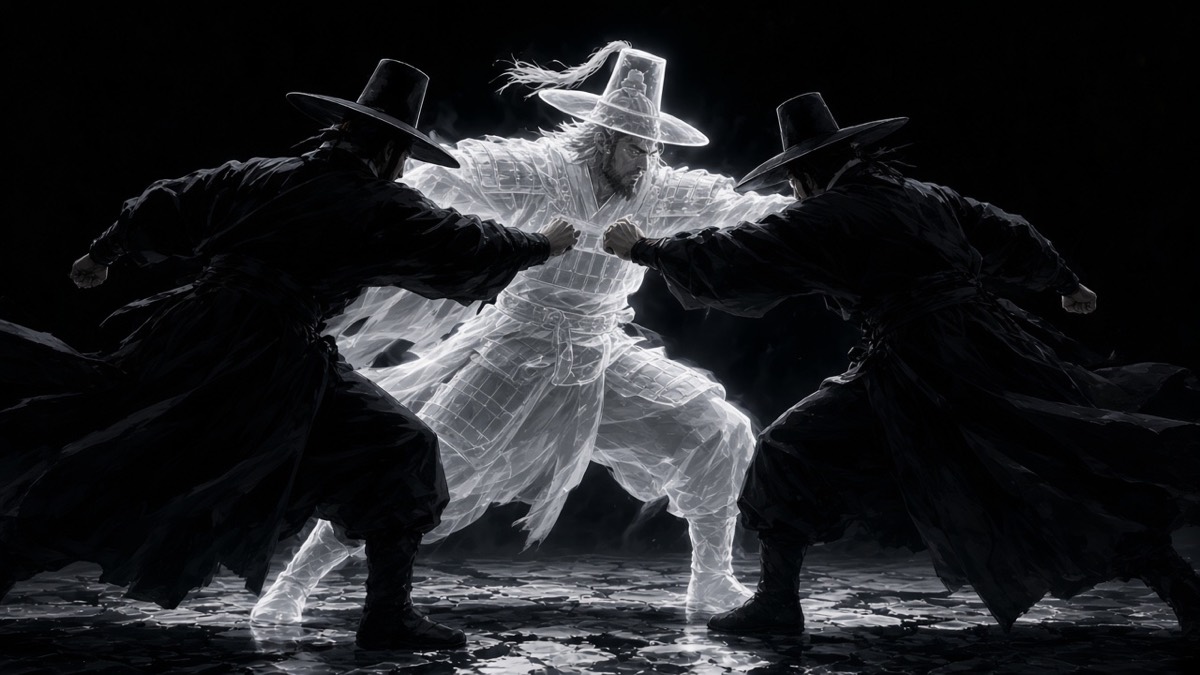
In the worst hour of it — arrows spent, horse down, the Western blade a finger from his throat — the air thins the way stories promised. The river stops moving. and are standing on it, a ledger half-open between them.
Then he turns his back on them. He takes hold of his own body the way you take a coat off a peg, and puts it back on. The river starts moving again.
He stands up on will alone. The blade misses. He breaks the spearman’s wrist before the man has finished the thrust. Behind him, close the ledger with something like respect.
The archer is still nocking his fifth arrow. He does not finish it. Afterward takes the bow out of the water and breaks it across his knee.
The seventh almost makes the east bank. ’s throw finds him between the shoulder-blades, and the current carries him the rest of the way.

Three at once in a knot of horses: the sixth, the fifth, the fourth. They shout one father’s name in three pitches.
The third is old enough to bargain. He offers the banner, the southern levy, a road south, if the will count him as a messenger instead of a son.
The second is younger. He does not speak. does not ask him to.
The first — the eldest — holds banner with both hands so the silk will not touch the water. He lasts longer than the others because he has decided to be a flagpole. cuts the pole. The cloth goes under. The boy goes with it, still holding on, which is how eldest sons are trained.
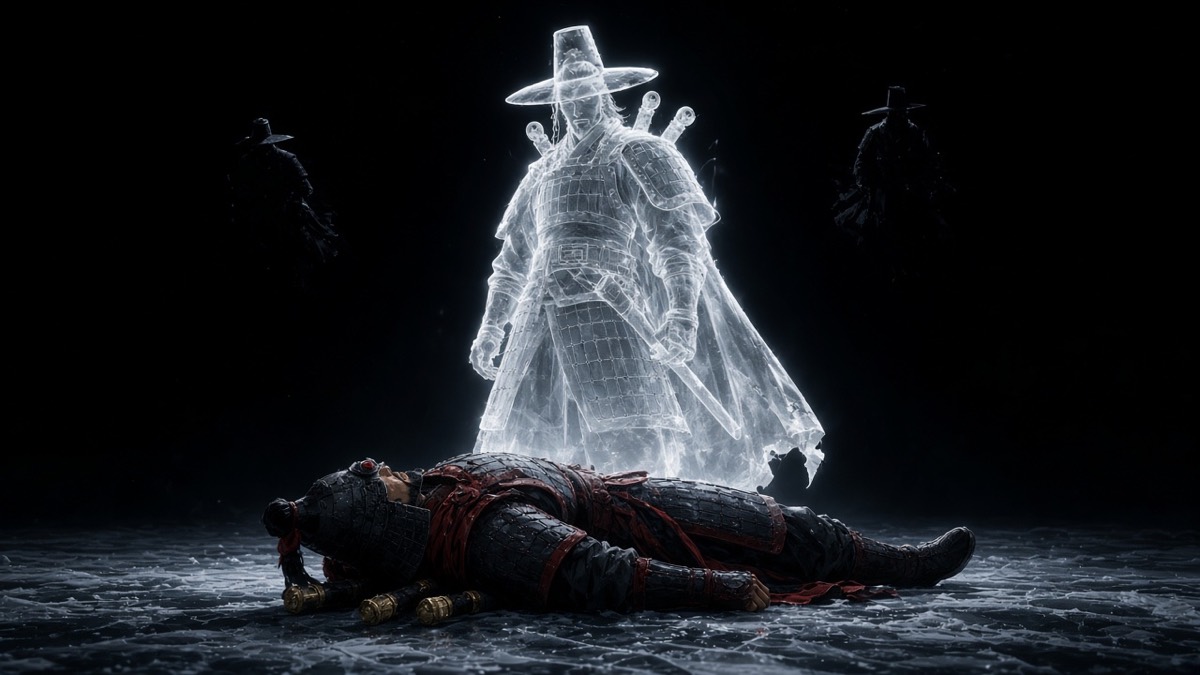
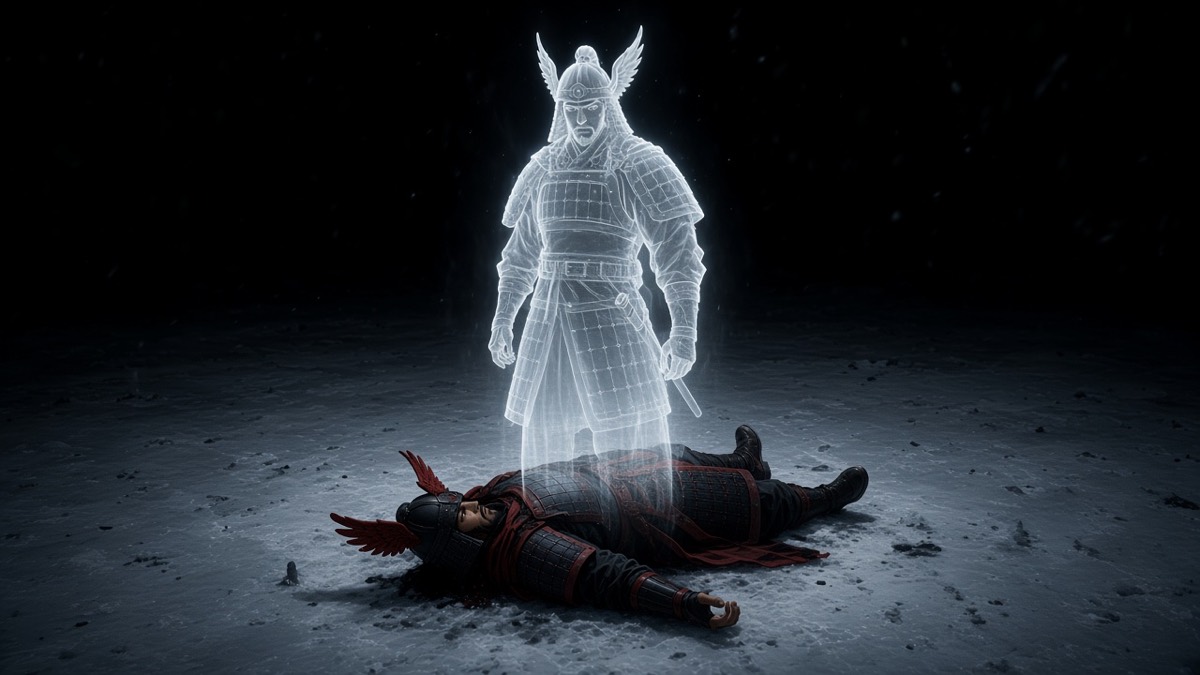
Then only the tiger is left. He stands where his boys could still see him, if any of them still had eyes. Someone shouts to break east, toward any camp that is not this one.
He does not run. The arrows make a hedgehog of him. walks the last three steps through the water and finishes what the shafts began.
In the second month a train of carts comes north out of and across , through snow to the axles. is sixty-seven, and he has walked half the road beside his white horse so that Hansul can carry a sack of rice instead of him.
The Western camp outside has been eating its horses. Men sit hugging their knees in the snow and look at the carts as if they might be another rumour.
On ’s wall that night, counts fires twice. They have stopped going down.
The takes the rice, breaks camp within the week, and sails. The road back is ’s problem. ’s horsemen follow the empty carts south all the way to . At the ford, turns the white horse round.
A thousand miles the other way, the courier finds . You may remember him: the farmer in the white coat who left his ancestors unburied to answer a muster. He has just ended a war in the far west with three arrows. Now he is given the dead man’s title, . And the bill.
The fangtian ji goes east again. Men who never learned his birth name learn the white coat and the crescent blade — and begin, quietly, to fear the second tiger more than the first.
The Red Fowl comes up the Tedong in the eighth month, takes the river forts one by one, and sits down in front of Pyongyang. Far to the north, Namseng holds the Amnok with tens of thousands, and the White Dragon is on his way.
- Tang 44,000+ ?
- Goguryeo 30,000+ ?
- Silla 0
- = 1,000 men
- = size not recorded
Sources: Old Book of Tang 109, Biography of Qibi Heli · New Book of Tang 110, Biography of Qibi Heli; 111, Biography of Su Dingfang · Zizhi Tongjian 200, Longshuo 1–2 · Samguk Sagi 6, Annals of Silla, Munmu years 1–2 · Samguk Sagi 22, Annals of Goguryeo, Bojang years 20–21 · Samguk Sagi 42, Biography of Kim Yushin; 44, Biography of Kim Inmun; 47, Biography of Yulgi
The White Tiger is marching to join the Red Fowl outside Pyongyang, and the Snake River is in the way. Gravel at the edges, mud in the middle. Gesomun knows which is which, and both banks are already his.
- Goguryeo ?
- Tang 5,000
- = 1,000 men
- = size not recorded
Sources: Zizhi Tongjian 200, Longshuo 2, second month · Cefu Yuangui 373 (Pang Xiaotai's refusal and his five thousand) · New Book of Tang 220, Goguryeo · Samguk Sagi 22, Annals of Goguryeo, Bojang year 21 · Samguk Sagi 6, Annals of Silla, Munmu year 2
And on an island far to the south, someone is asking: whose side are we on now?
“Whose side are we on now?” On , the one who asks is usually holding a fish.

This time it is a diver, still wet from the morning, with an octopus in one fist. She asks it in the king’s hall, loudly, because the king’s hall is also where the island dries its nets.
does not answer at once. He never answers anything at once. He has a fire, two cups, and two envoys who will not sit down.
One came down from the last hill fort. The other came from , with the Western officer behind him like a second shadow.
So they eat. Raw octopus, barley, a bowl of something orange. The envoy eats like a man who has not seen a full bowl since . The envoy eats like a man being watched, which he is.
Then the envoy plays the only card he brought.
The hall goes quiet. Even stop chewing. Every one of them remembers the Turtle.
turns his cup in his hands for a long time.
He fills the second cup anyway and sets it by the door, where a man used to stand.
He points his cup at the door. Outside, on the black rock by the eastern shore, a handful of children are drilling in fives, badly, out of step. Nobody taught them. They learned it by standing behind a man who never turned round.
So the king of makes his choice the way the island does everything: sideways.
The two boats leave on the same tide, one east, one north. From the black rock the children wave at both. Nobody has told them which one to wave at.
In the emperor’s city, a clerk writes the visit down. He has never seen the island. It shows.
Early in Longshuo there was a land called Danluo, whose king, , sent envoys to court. It lies on an island south of 's Muju. Its ways are plain and rough: they wear the hides of great pigs, live in leather huts in summer and in pit-houses in winter. … At first it was attached to . … Later it attached itself to .
용삭 초에 담라라는 나라가 있어, 그 왕 유리도라가 사신을 보내 입조하였다. 나라는 무주 남쪽 섬 위에 있으며, 풍속이 소박하고 거칠어 큰 돼지 가죽을 입고, 여름에는 가죽 집에, 겨울에는 움집에 산다. … 처음에는 백제에 붙었다. … 뒤에는 신라에 붙었다.
In the south, a restoration still has a name, and a fortress that will not keep it…!
