
















Chapter 45

Suro
AI Summary
- The Sky and the Mountain Ibiga keeps the sky the way other gods keep a hall.
- Turtle Peak Down on the coast, nobody saw any of this.
- Six Kings The chiefs call all six back to the peak where the box came down.
- The Red Sail Suro has a palace, a harbour and a market.
- DAY 2 Back on the Radiance road, the second morning comes up grey.
- Characters
Episode· 42
Suro
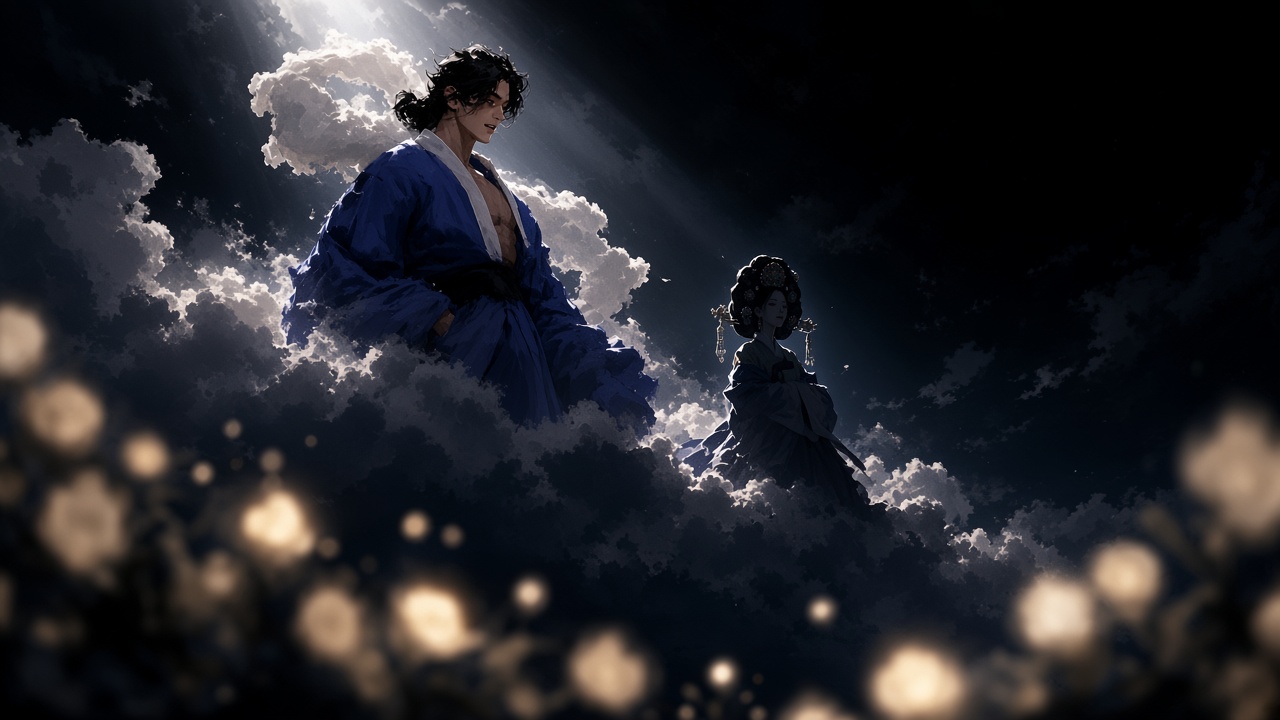
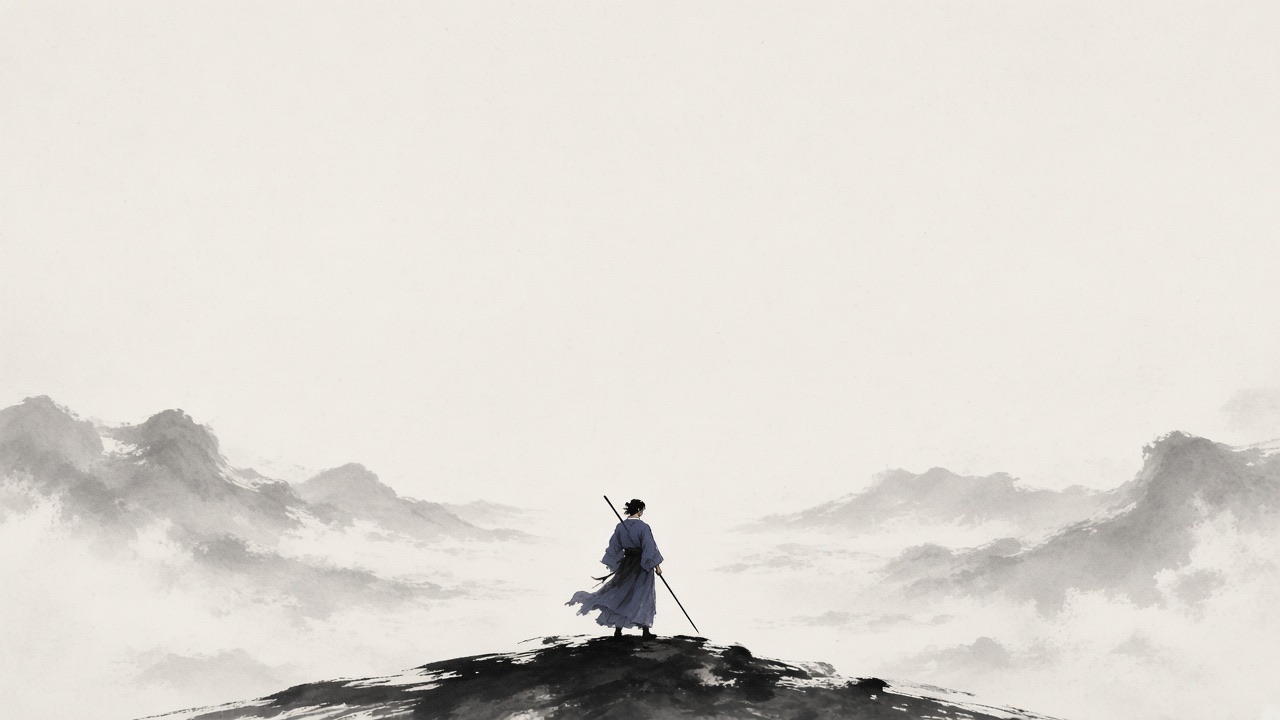
Before there is a Gaya, there is a ridge, and a sky god who looks at it too long.
- King Suro
- Queen Hu
- Ibiga
- Lady of the Right View
- King Ijinasi
- Bidam
2 stills without a cue
Before there is a , there is a ridge, and a sky god who looks at it too long.
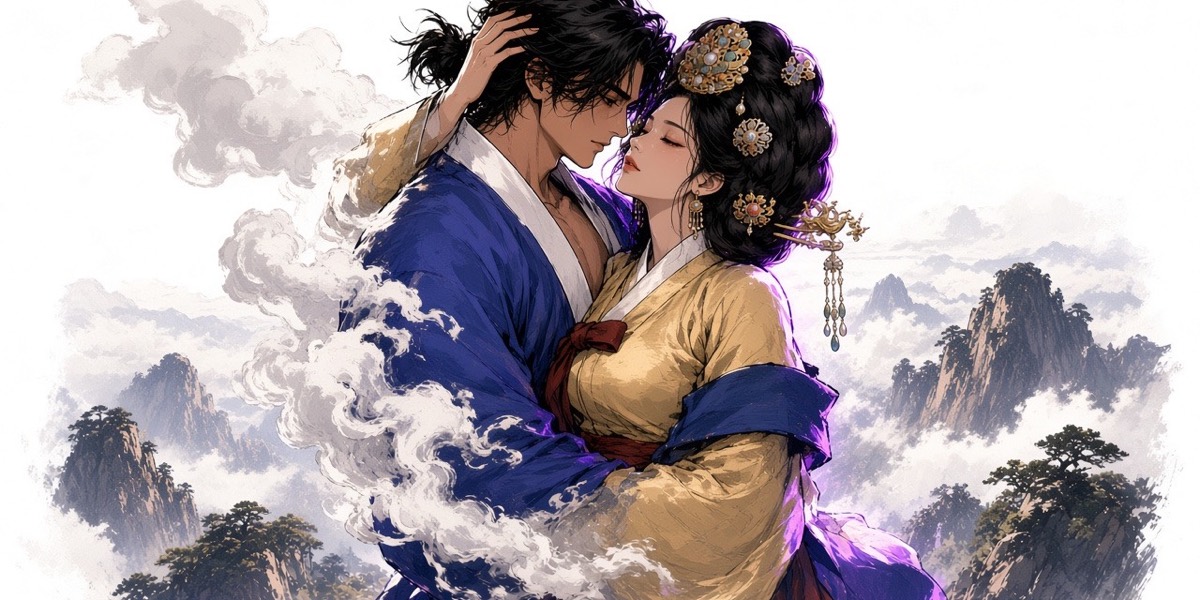
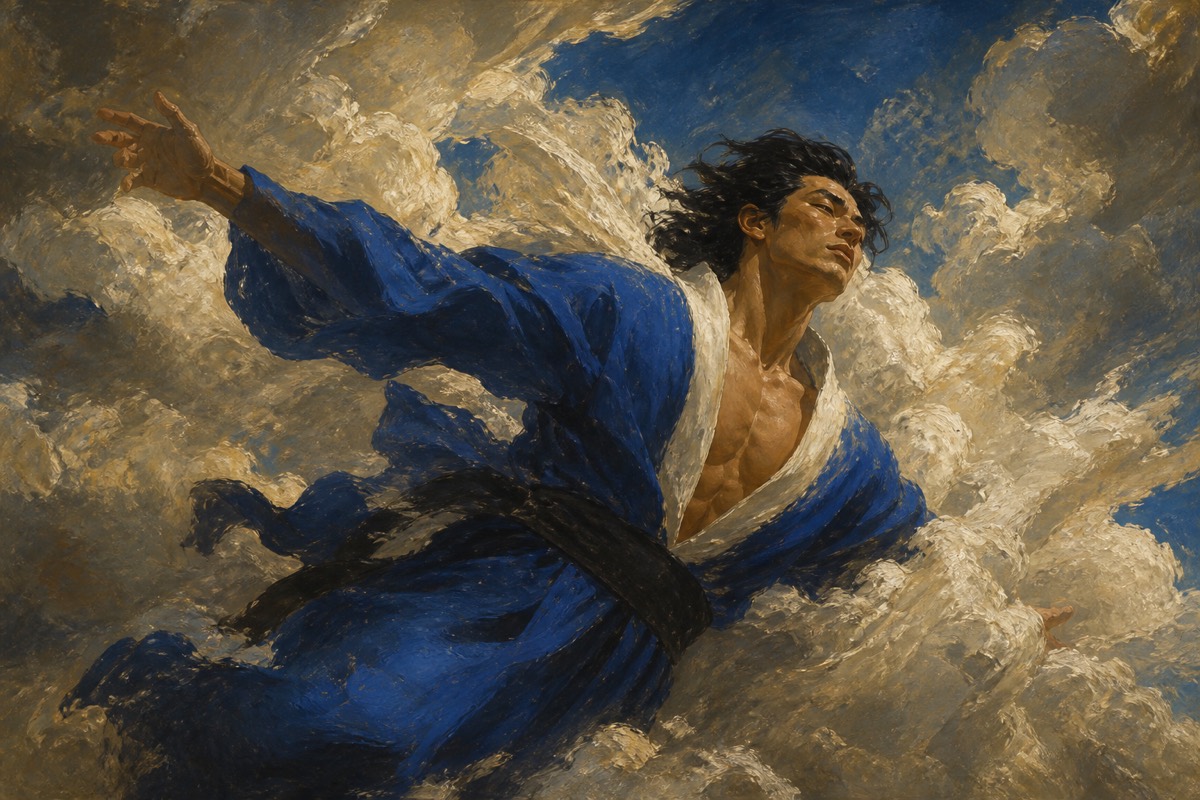
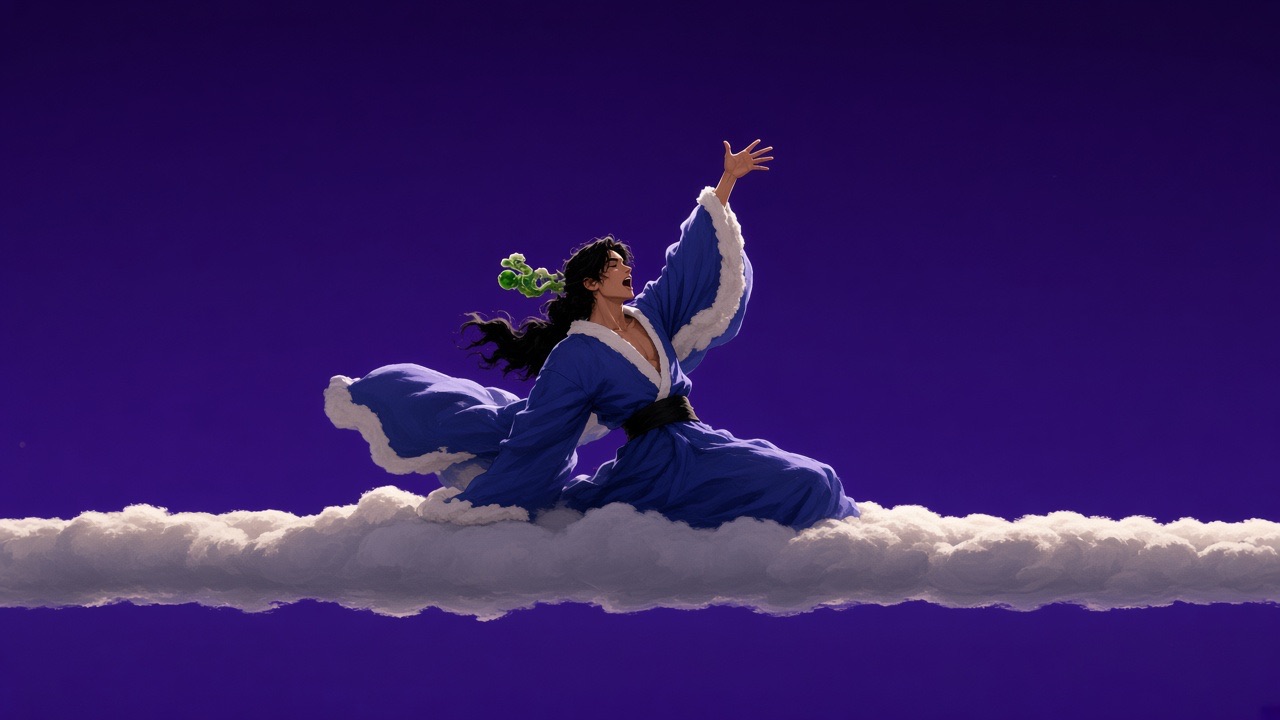
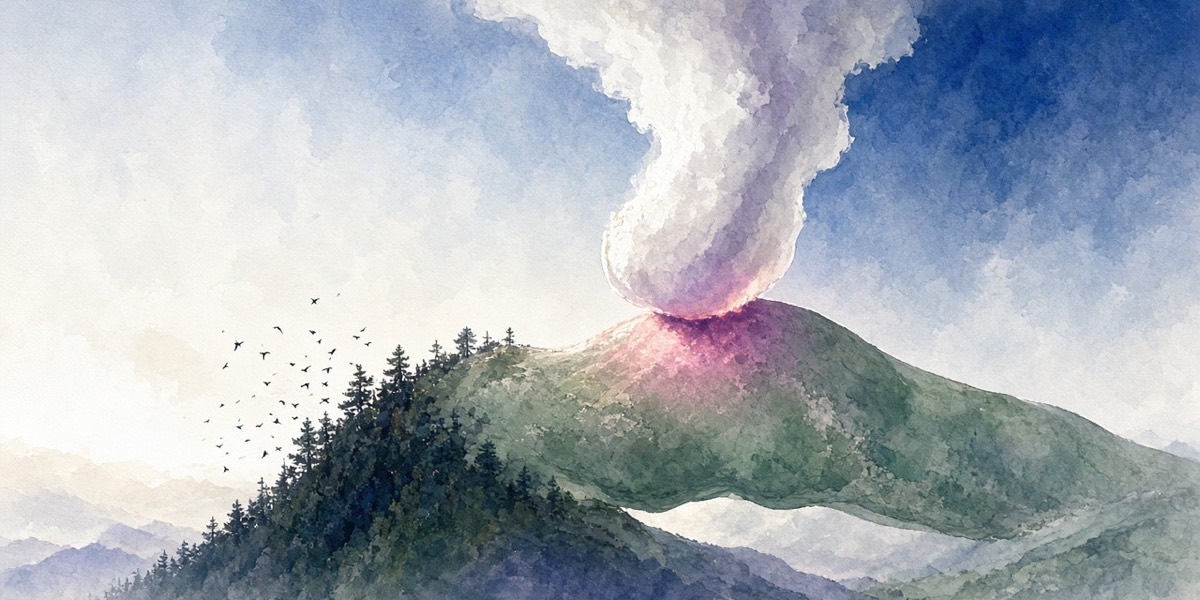
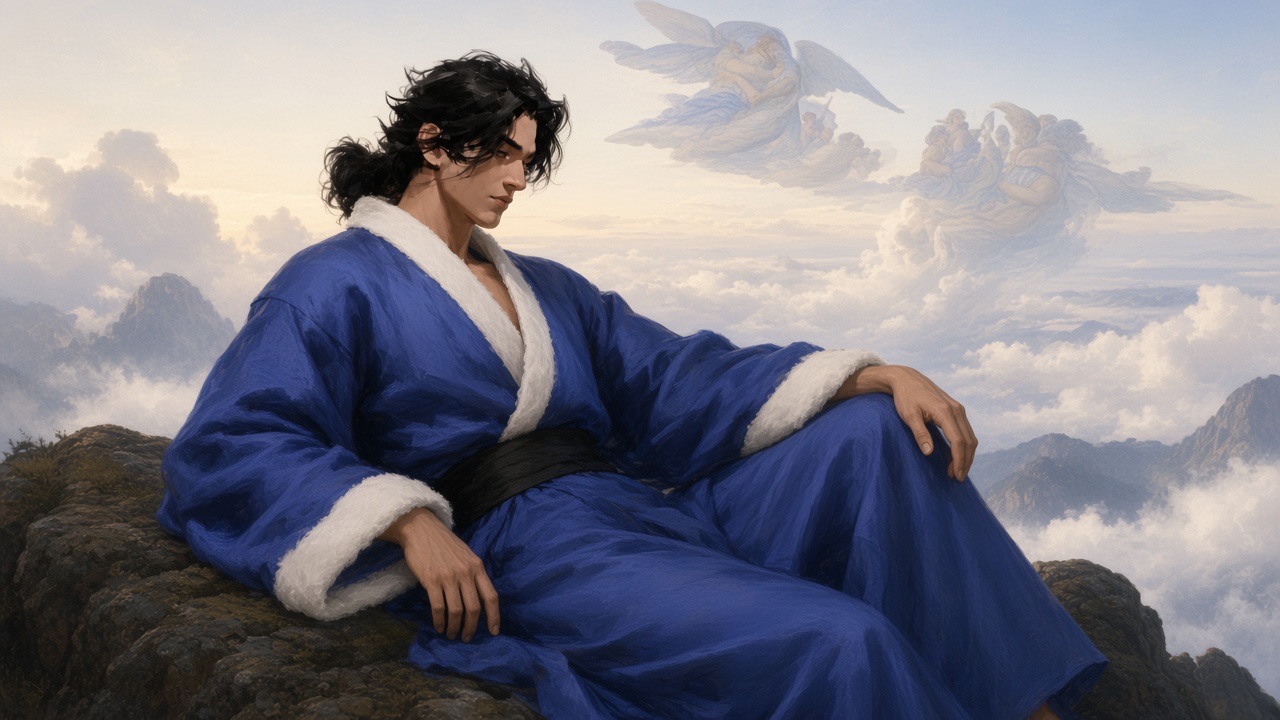
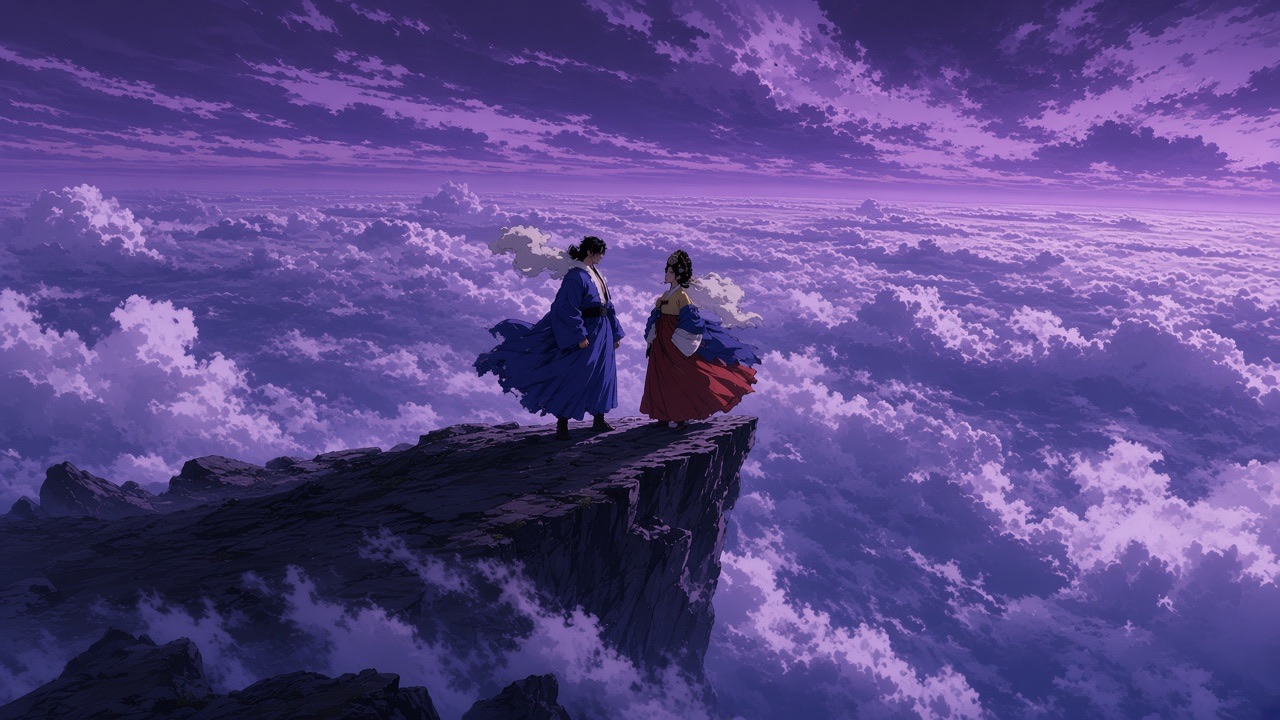
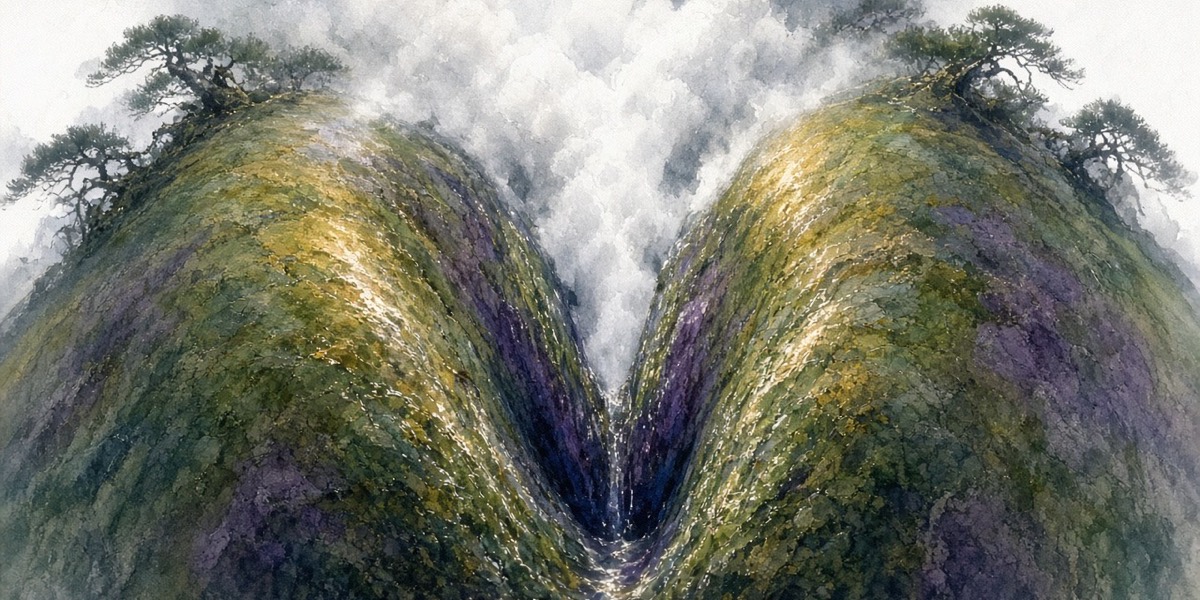
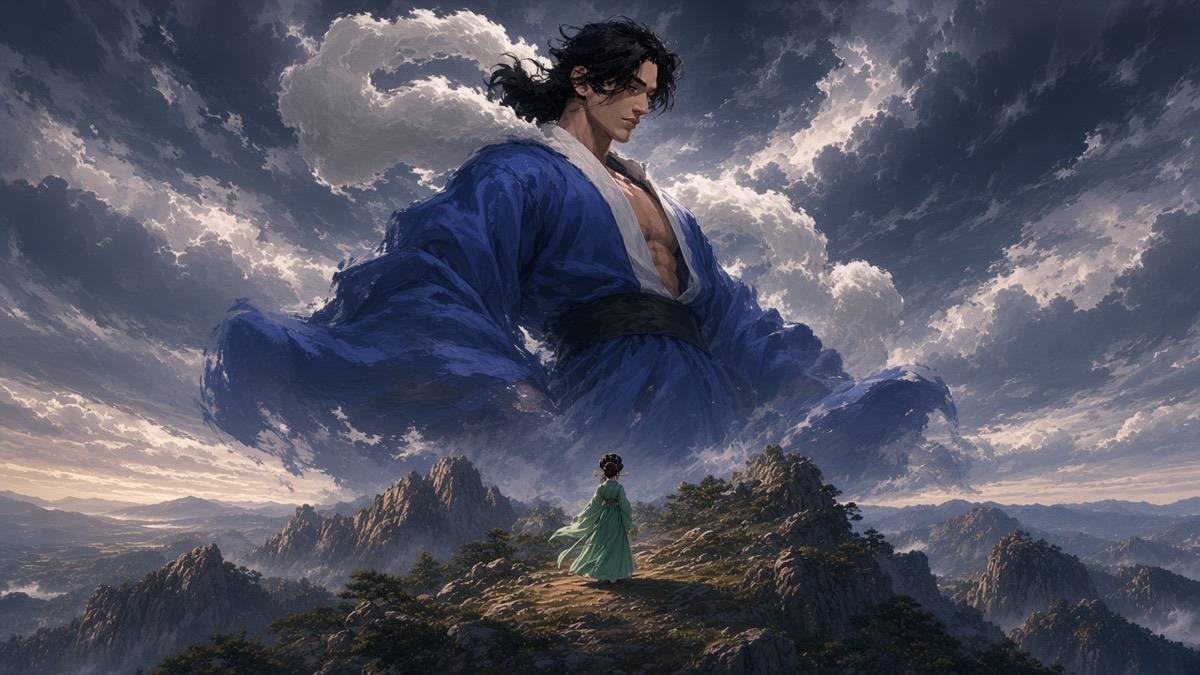
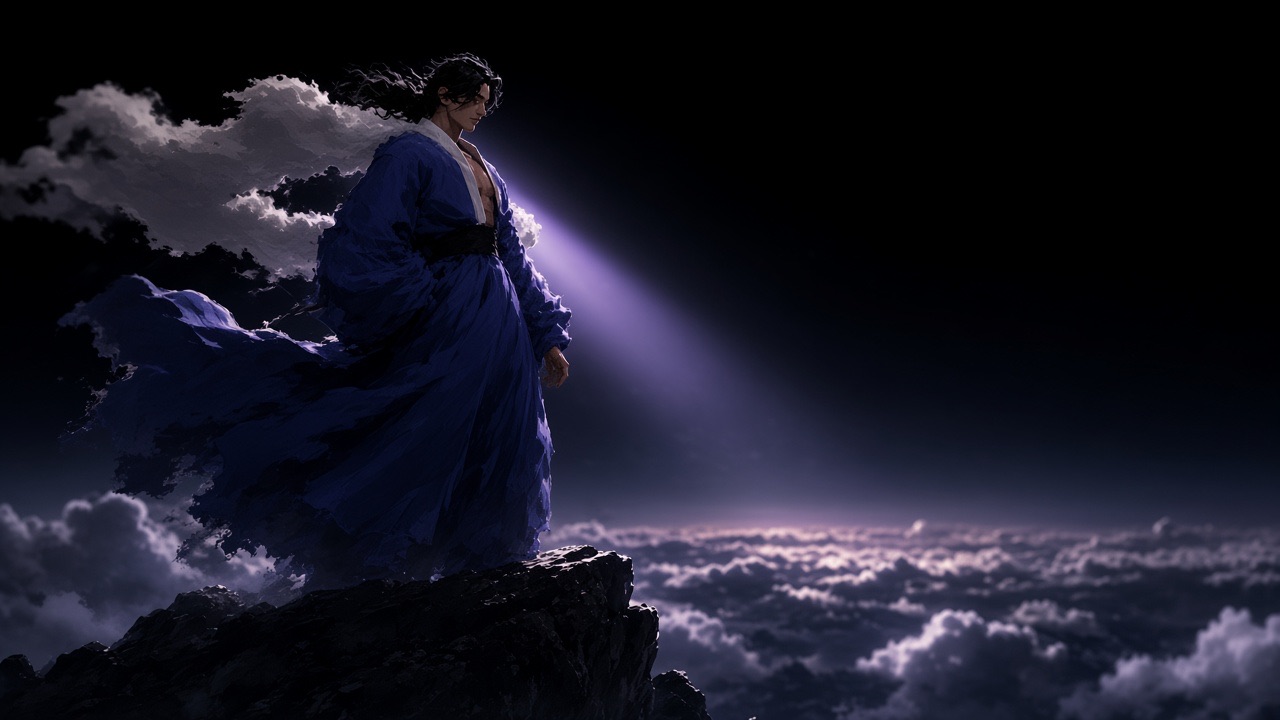
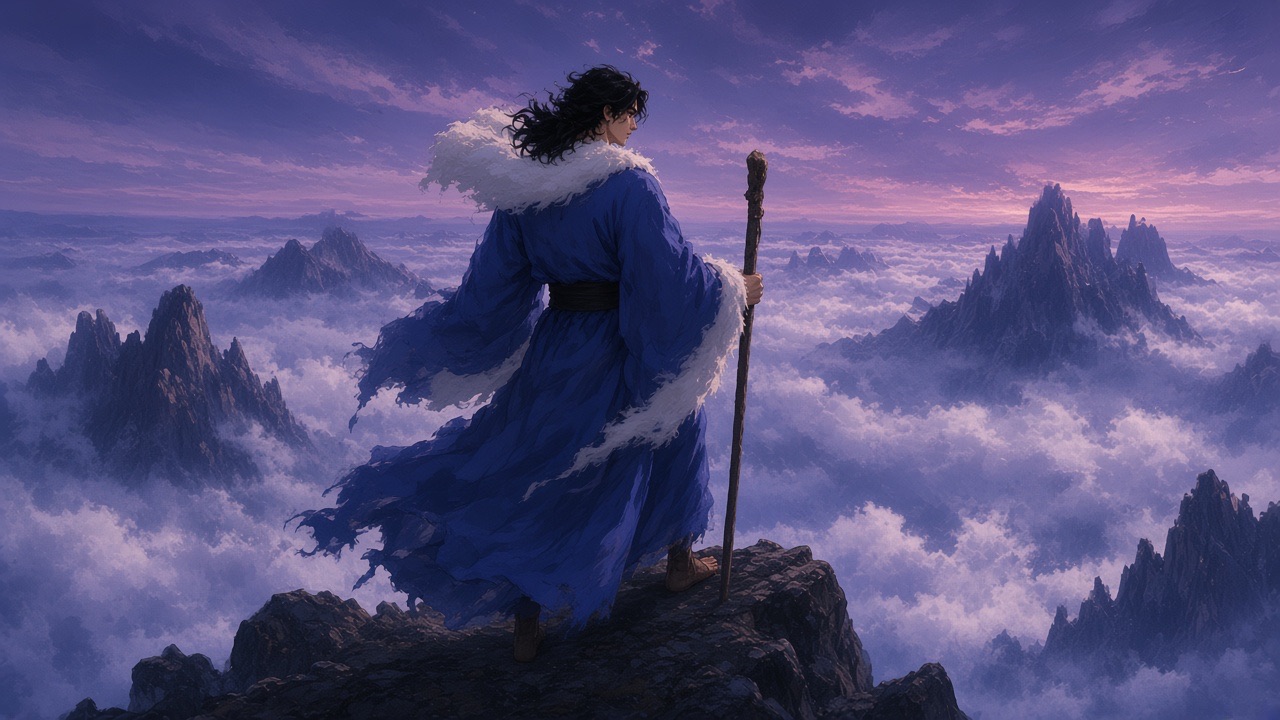
keeps the sky the way other gods keep a hall. Cloud is his body. The living world is a map he does not usually read. Then he looks down.

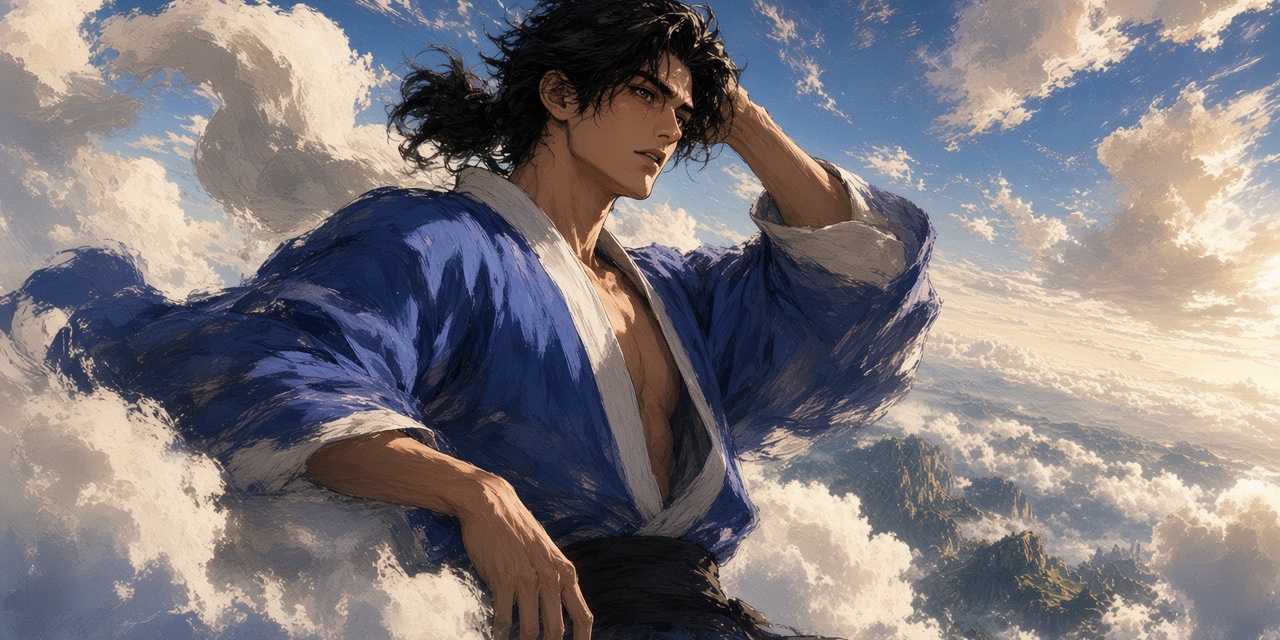
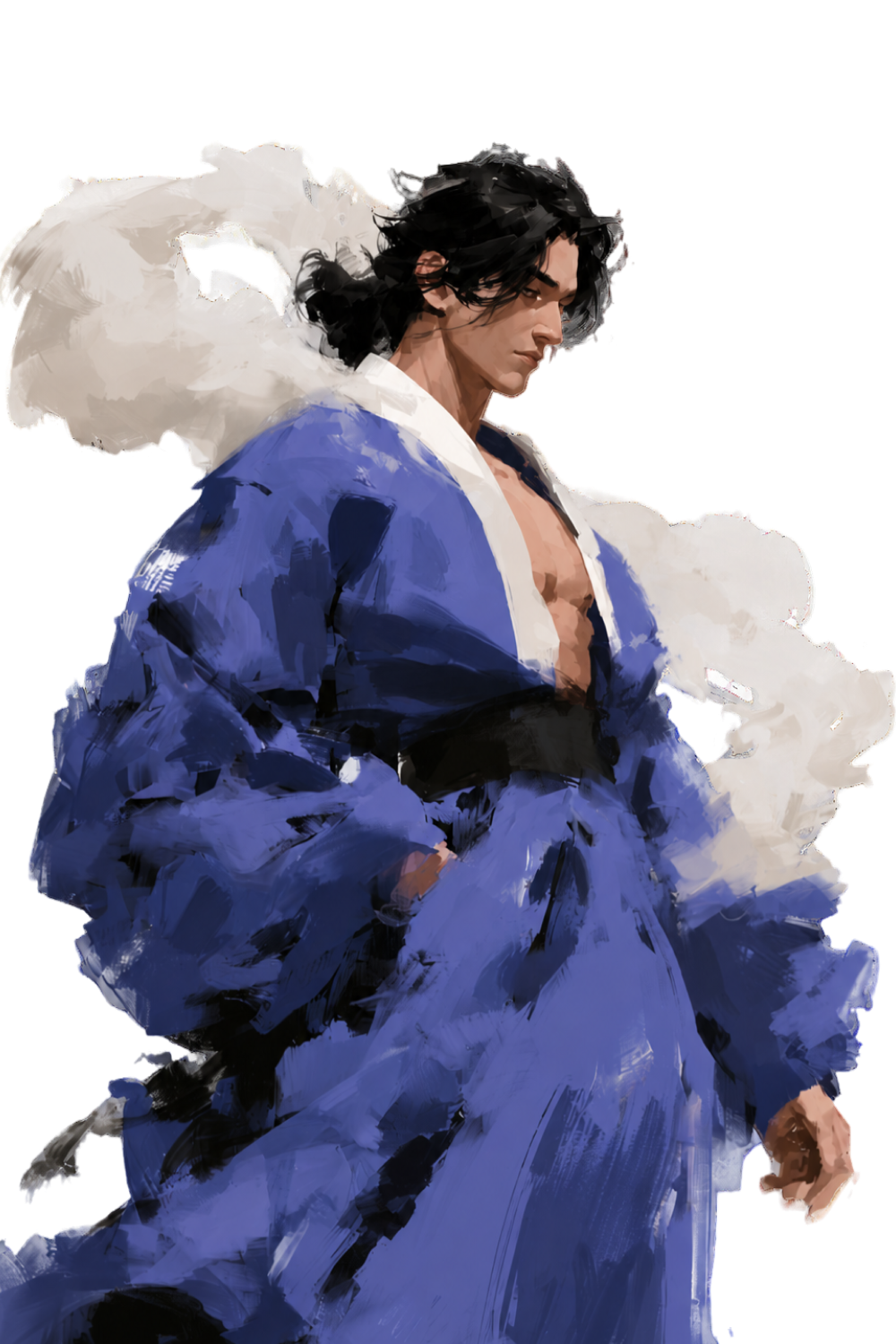
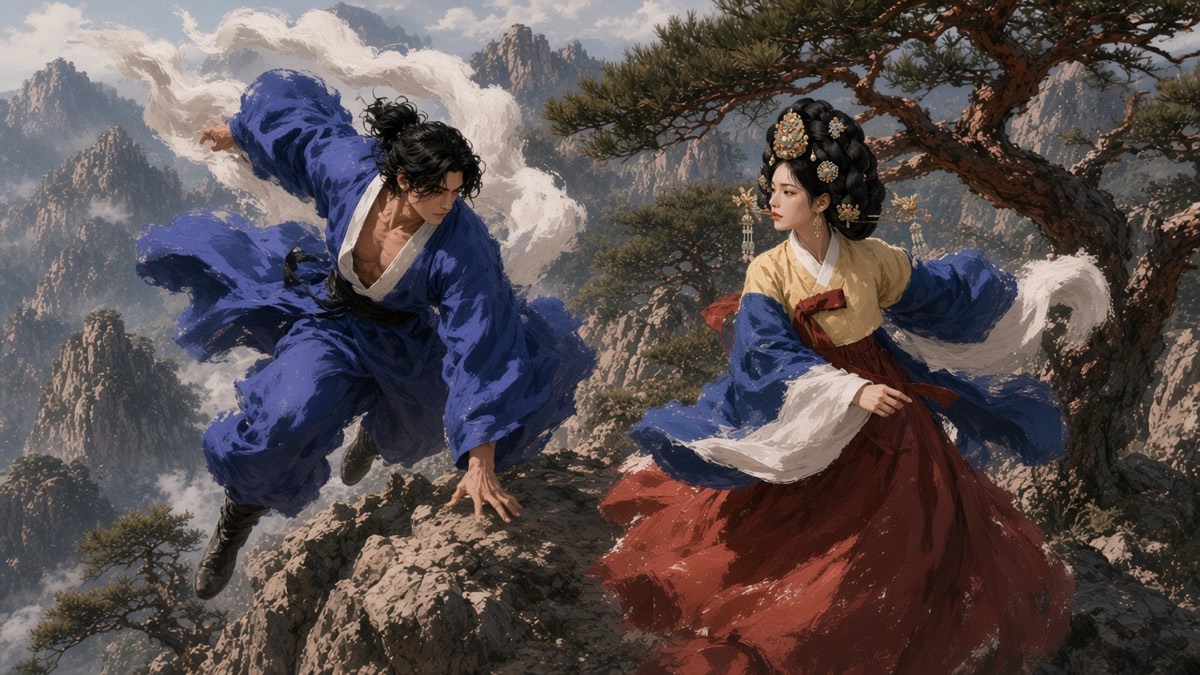
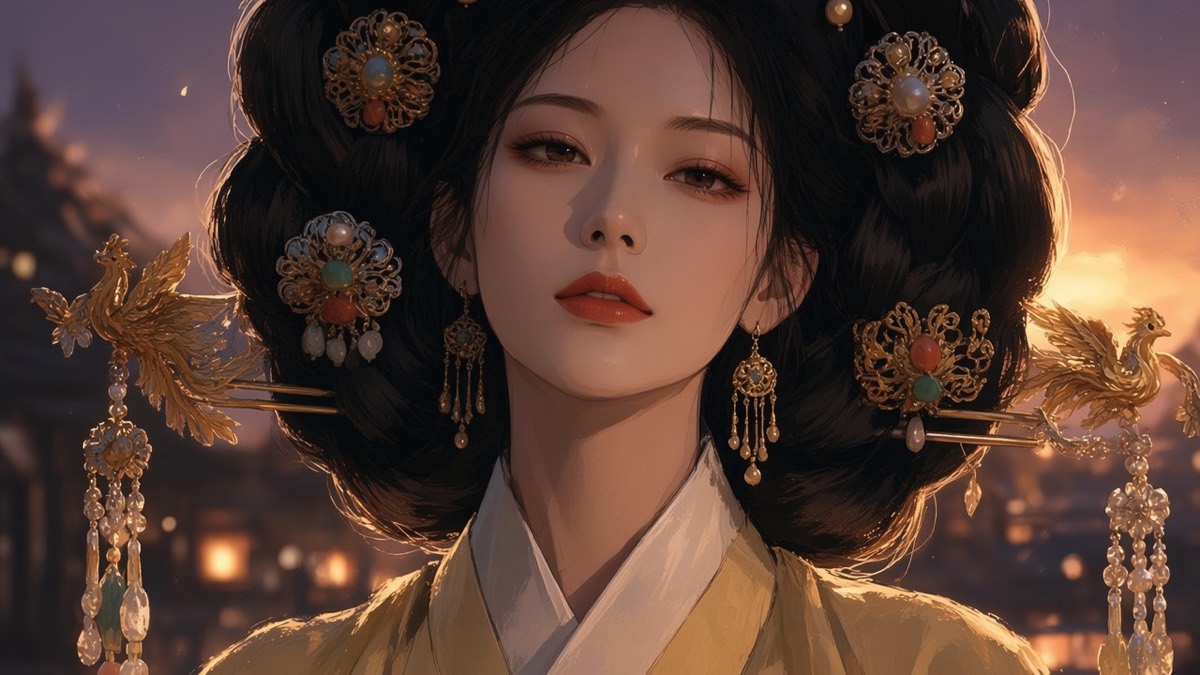
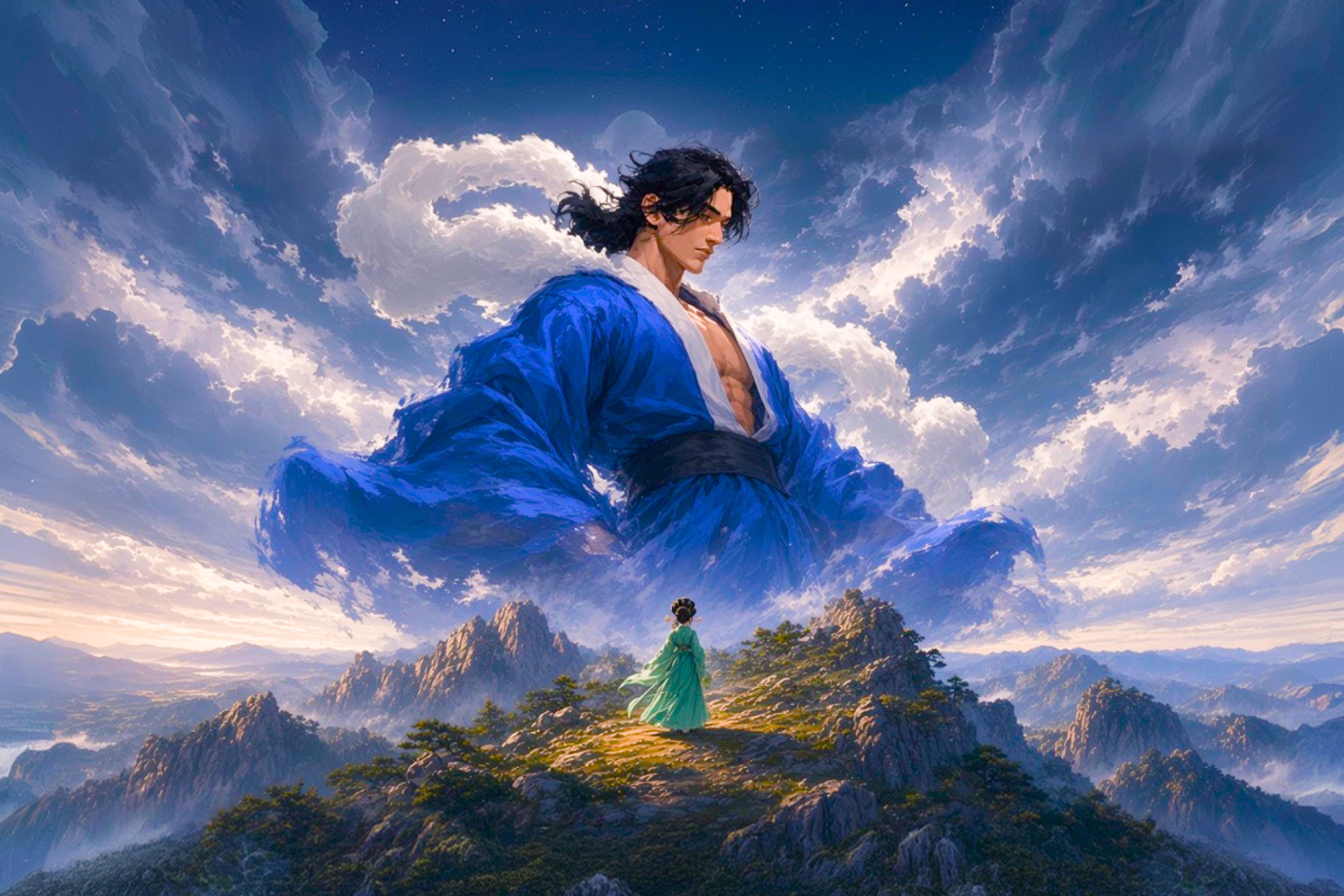
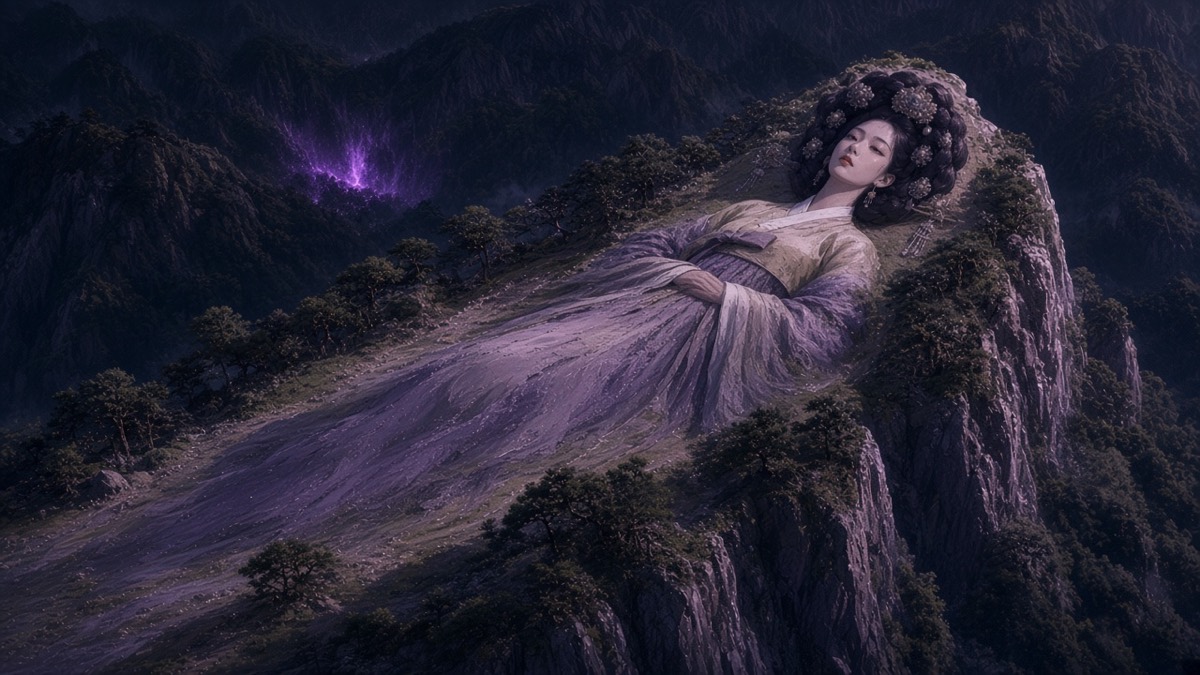
On her mountain, the is on watch. At first she is only the ridge: jade stone, mist, a shape the hill has not admitted to. The mountain is a woman before it has a face. Then a face comes out of the stone. She is guarding the mountain as if it were a country. She does not look up. Cloud comes down to the ridge anyway.
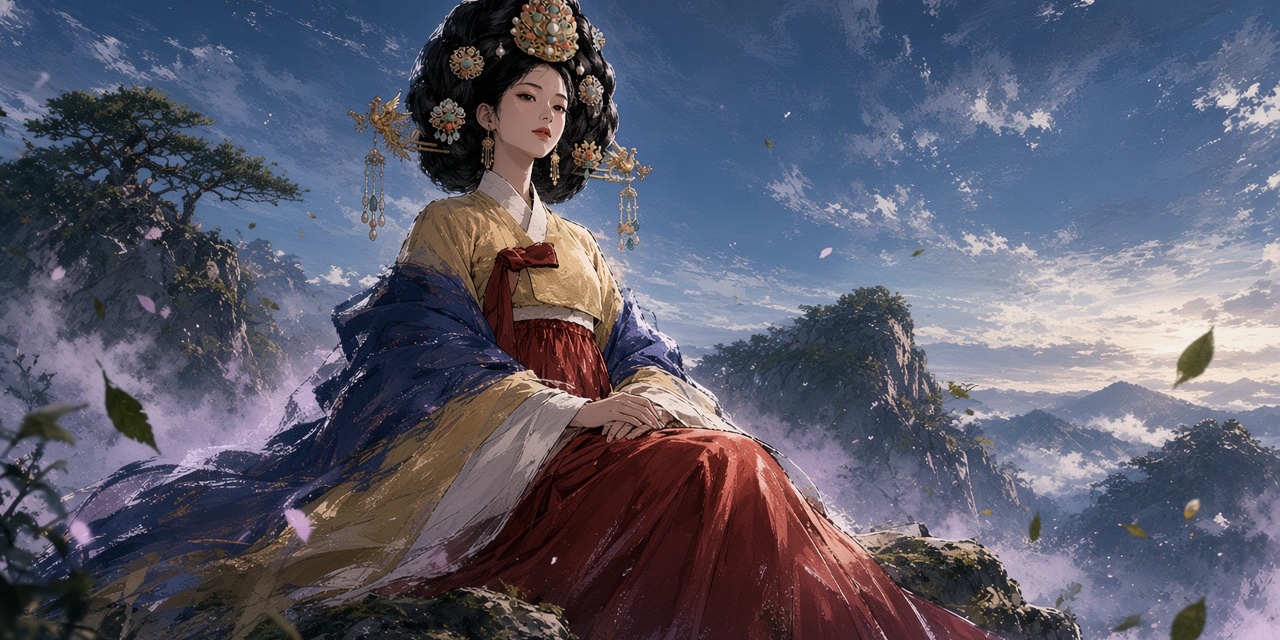
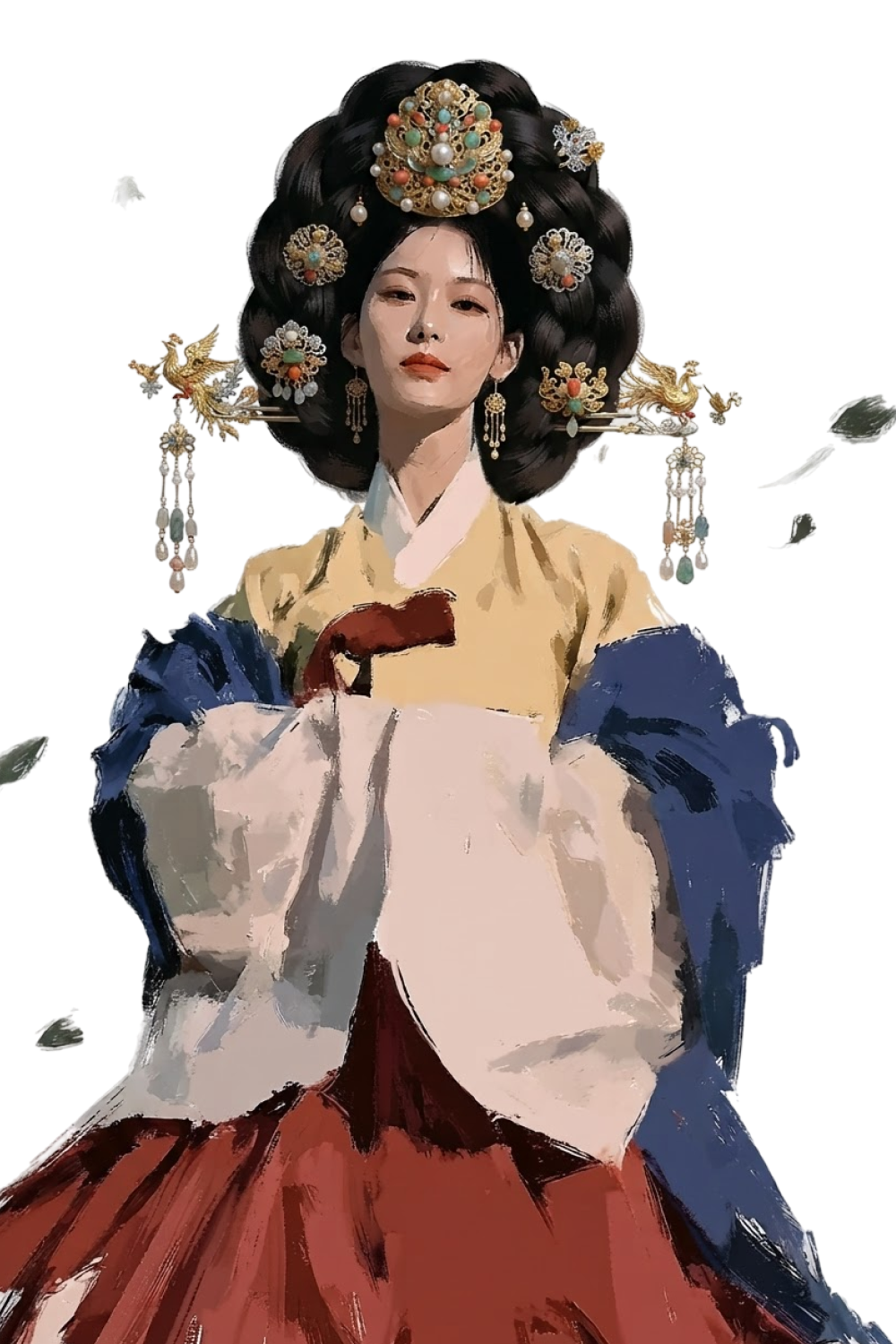
He has been flying lower every day for a month. The pines noticed before she did. The crows noticed before the pines.
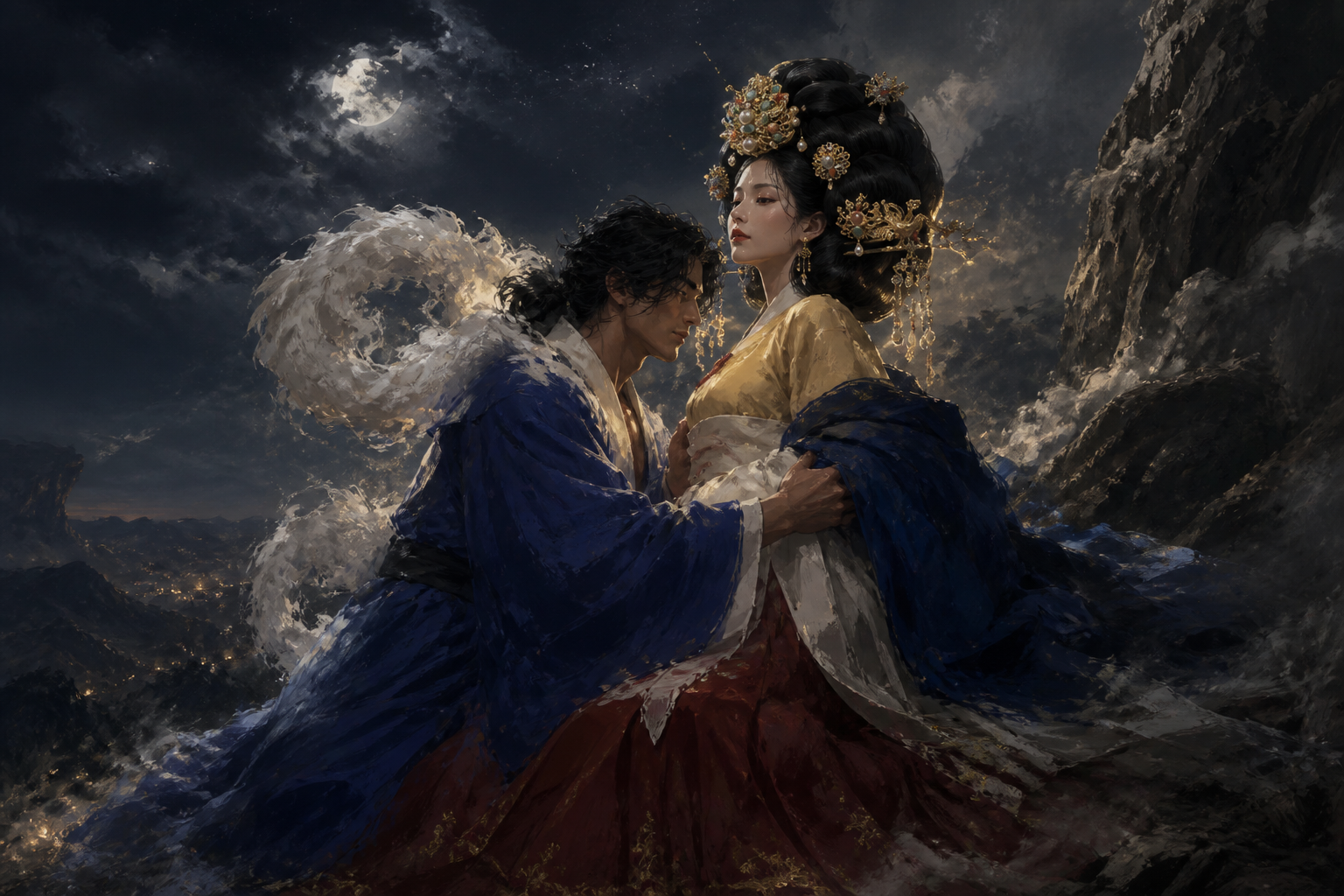
Love arrives the way weather does. It does not ask. He falls before he lands. The sky comes down to touch the mountain, and does not leave.
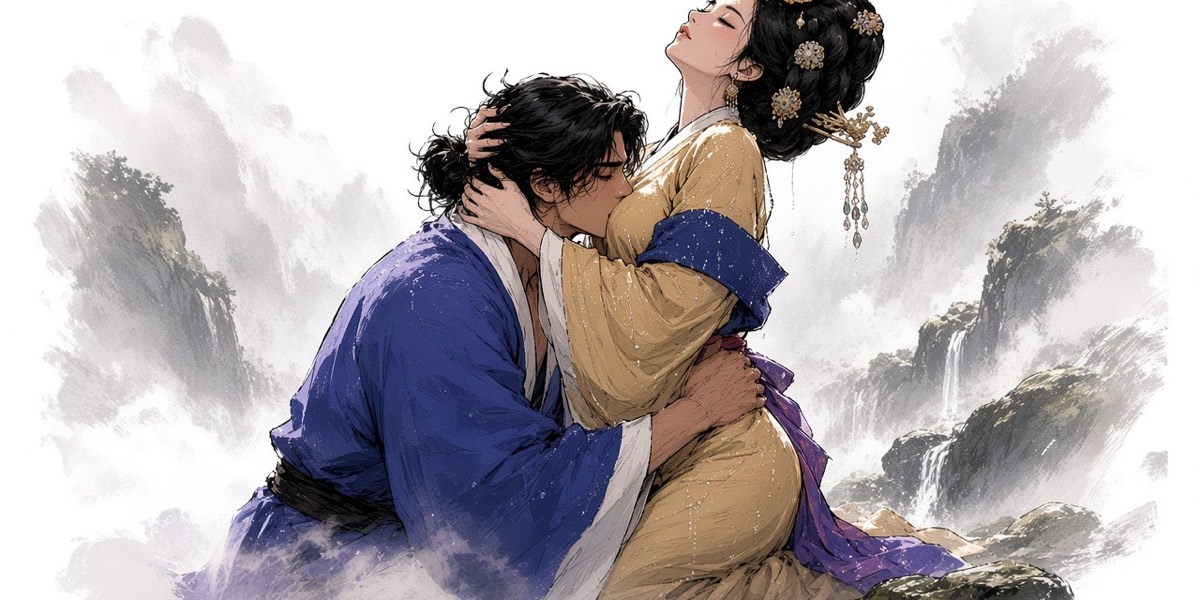
He kneels. The cloud kneels with him, all down the ridge, filling the ravines one by one, the way water finds every low place in a field.
Cloud covers the ridge. The song stops there, out of politeness. The mountain doesn’t.
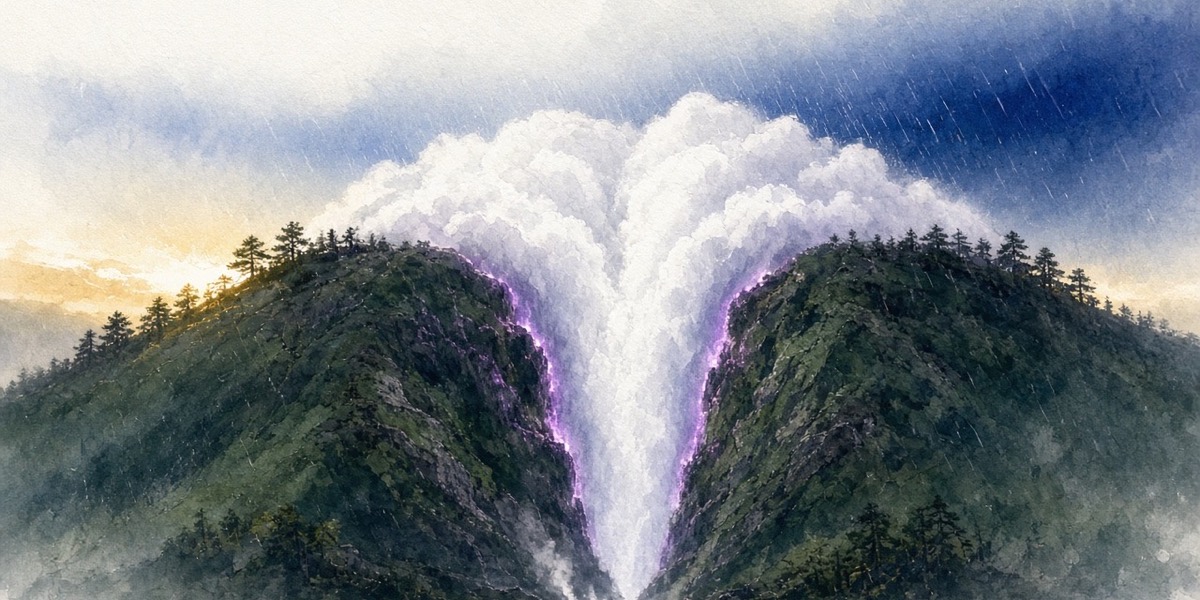
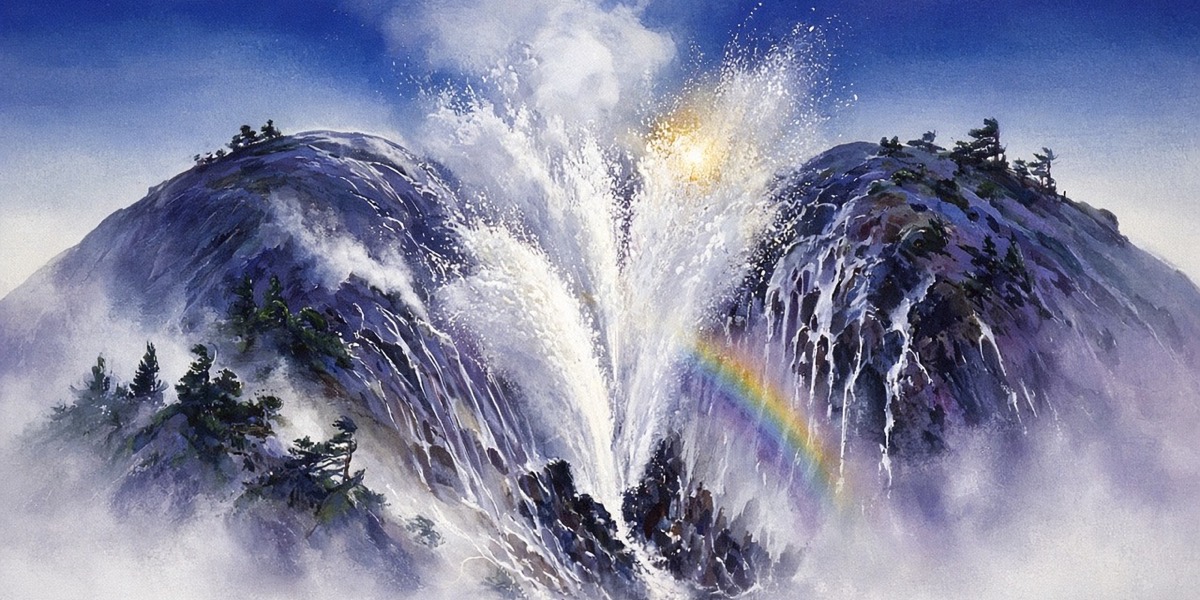
Mist goes into every fold of her and does not come out. Her pines bend all one way. A spring that has been dry since before there were people comes up out of the rock, hot. Somewhere under the cloud the gives an order and it is obeyed, then gives the opposite order, and that is obeyed too. Rain falls upward. Thunder rolls without any lightning, one long low sound, and it does not stop for a very long time.
Down in the valley, a farmer waits for dusk to bring his ox in. Dusk is in no hurry. He naps, wakes, and the shadow of his fence post hasn’t moved a finger. The cocks crow at nothing, then give up. A grandmother hangs the washing, and it dries, and she hangs it again. Nobody looks up. Some things in the sky you don’t stare at.
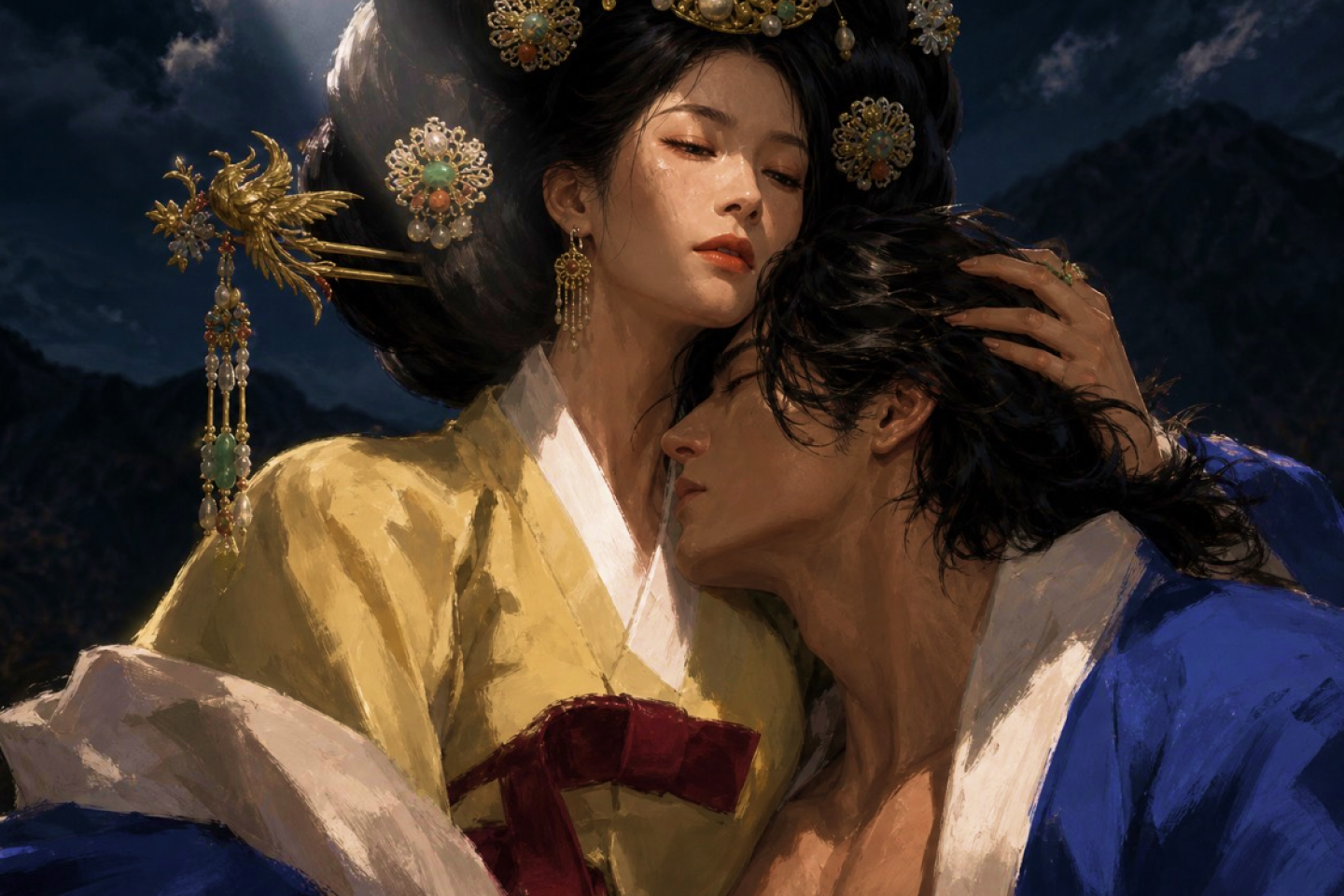
He holds her with one arm. The other is cloud. The ridge is still a mountain. The mountain is still a woman. She does not look up. She doesn’t have to.
On the seventh morning, the farmer’s ox comes home in a perfectly ordinary dusk, and nobody in the valley mentions the week. By morning the ridge remembers two gods who would not let go. From that heat come eggs. Two of them, warm as hearthstones, cupped in her lap.
He takes them down. He knows the way to the turtle-shaped hill above the southern coast rather well, it turns out. He doesn’t say why. She doesn’t ask. There are other mountains on this coast, and other rivers, and one or two of them have had a funny look about them all spring.
Down on the coast, nobody saw any of this. They remember a very long afternoon, and they don’t talk about it.
The coast has nine chiefs and no king. Nine chiefs means nine opinions about every boundary stone, so mostly they argue. Each spring, on washing day, they bring their people down to the stream to scrub off the winter.
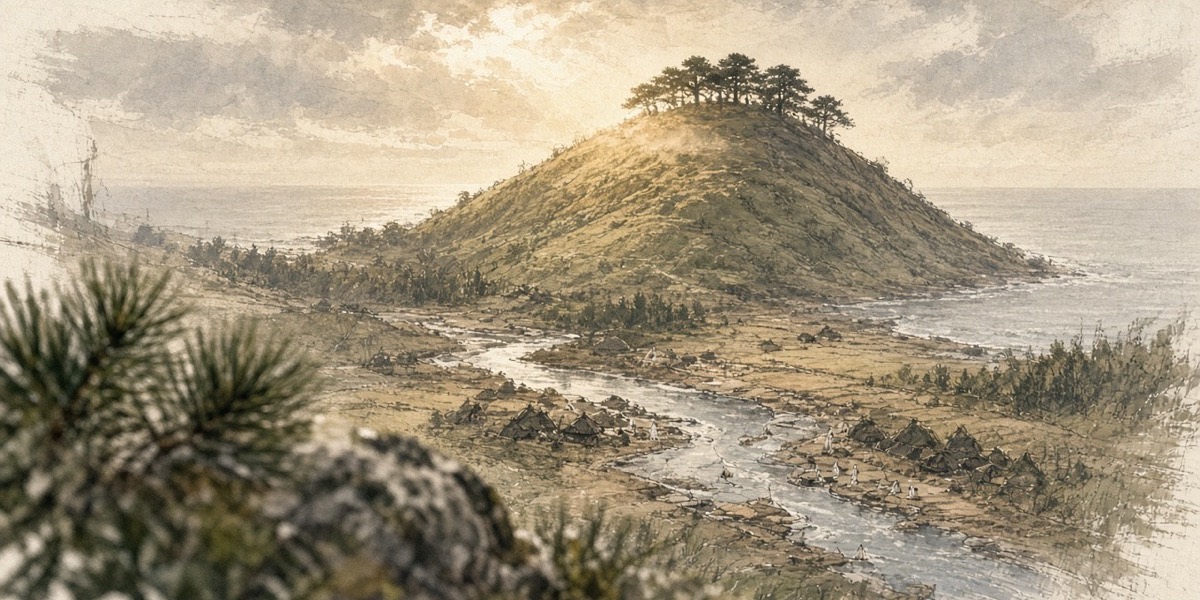
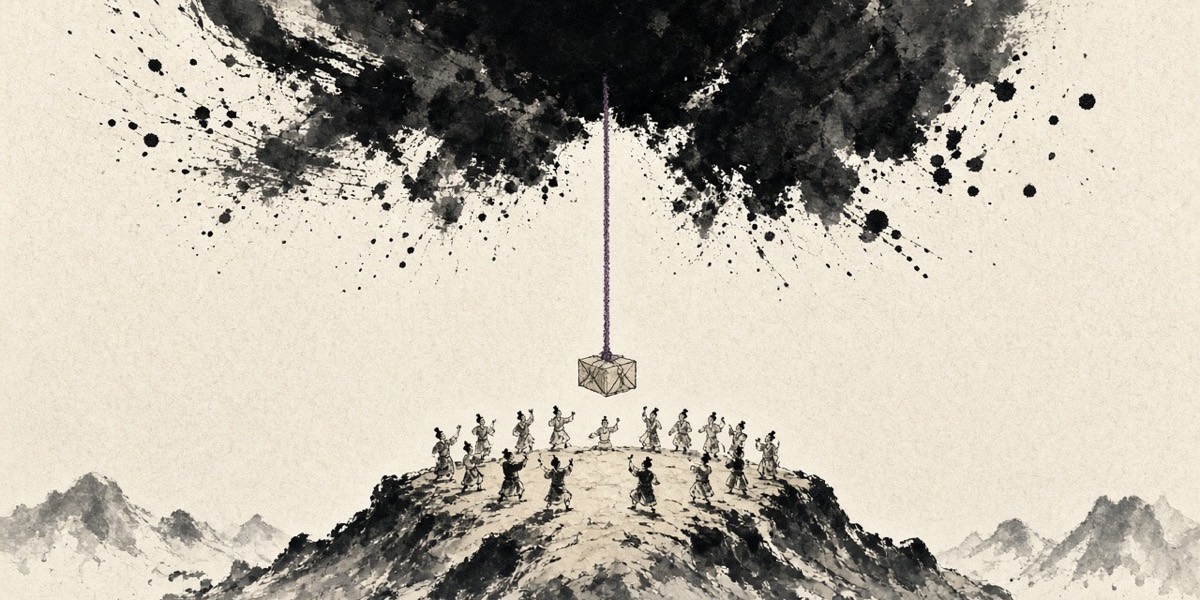
This spring, a voice comes down from the peak above the stream, the one shaped like a turtle lying in the sun.

The voice is easy and a little amused. It sounds like it has been somewhere warm for a week.
This is how a coast with nine chiefs learns to sing a song to call for a new king: badly at first, then louder, with a few hundred people stamping on a hill and promising to eat it.
Turtle, turtle — show your head. If you do not, we will roast and eat you.
거북아 거북아 머리를 내어라. 내어놓지 않으면 구워서 먹으리.
A purple rope comes down out of the sky and touches the ground. At its end, wrapped in red cloth, sits a gold box. They unwrap the cloth on a box of six eggs, round and gold as the sun.
Nobody in finds this as strange as you’d think. ’s founder came out of an egg too, and you saw how that went. Six more, then. Two of them you’ve already met, sort of, on a ridge, in a long afternoon. The other four? The sky is wide. It gets around.
The eldest chief carries the box home and sets it on a table, and nobody sleeps. By morning the eggs are boys. Within a fortnight the boys are taller than the chiefs, which the chiefs take personally.
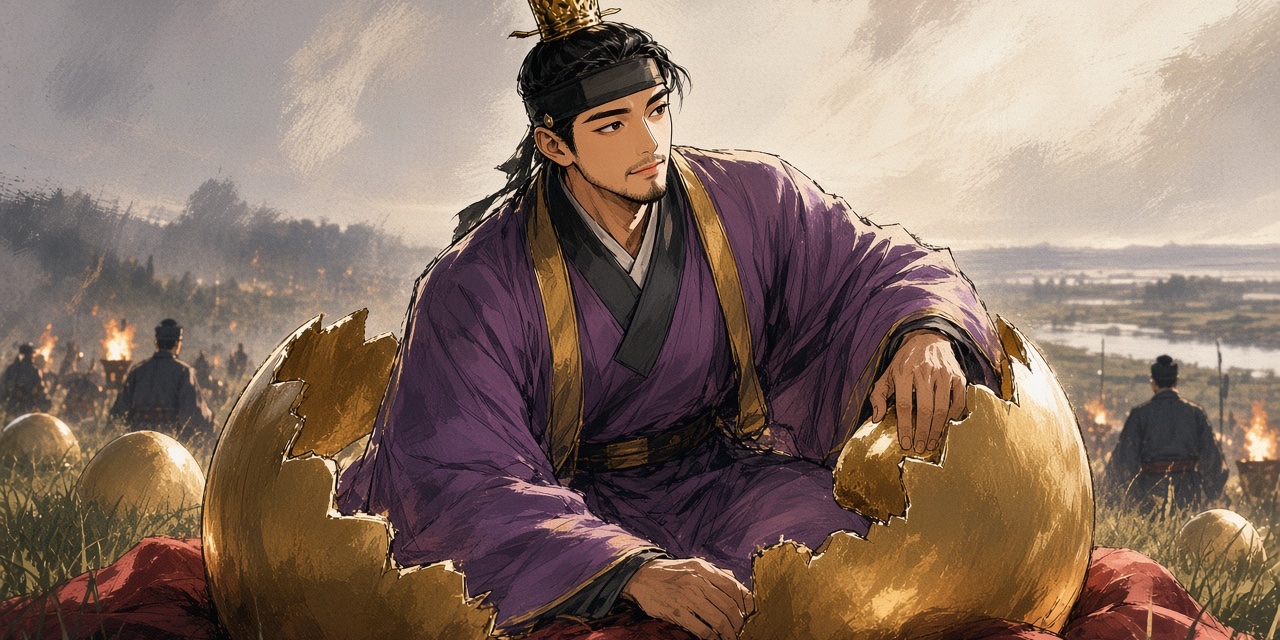
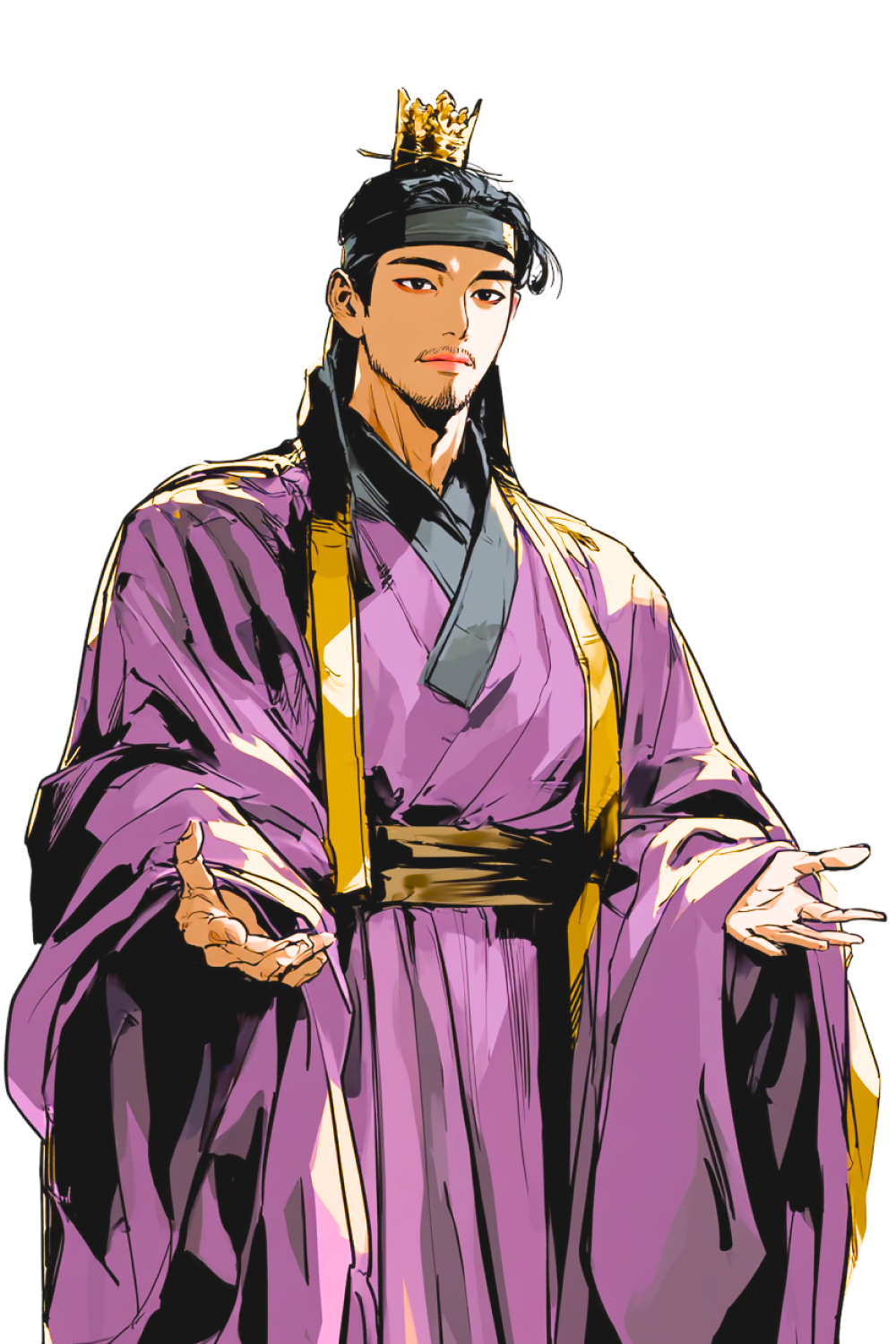
He stood nine feet tall, like of Yin. His face was a dragon’s, like the High Ancestor of . His eyebrows shone in eight colours, like Yao. His eyes had double pupils, like Shun.
키가 아홉 자이니 은나라 탕왕과 같고, 얼굴이 용과 같으니 한나라 고조와 같으며, 눈썹이 여덟 빛깔이니 요임금과 같고, 눈동자가 겹으로 있으니 순임금과 같았다.
The first one out is . He looks at the sea, and keeps looking, like a man expecting a delivery.
Half a breath behind him comes his twin from the ridge. He looks at the mountains instead, and you can watch him measuring them. He will be , and the hills of will be his.
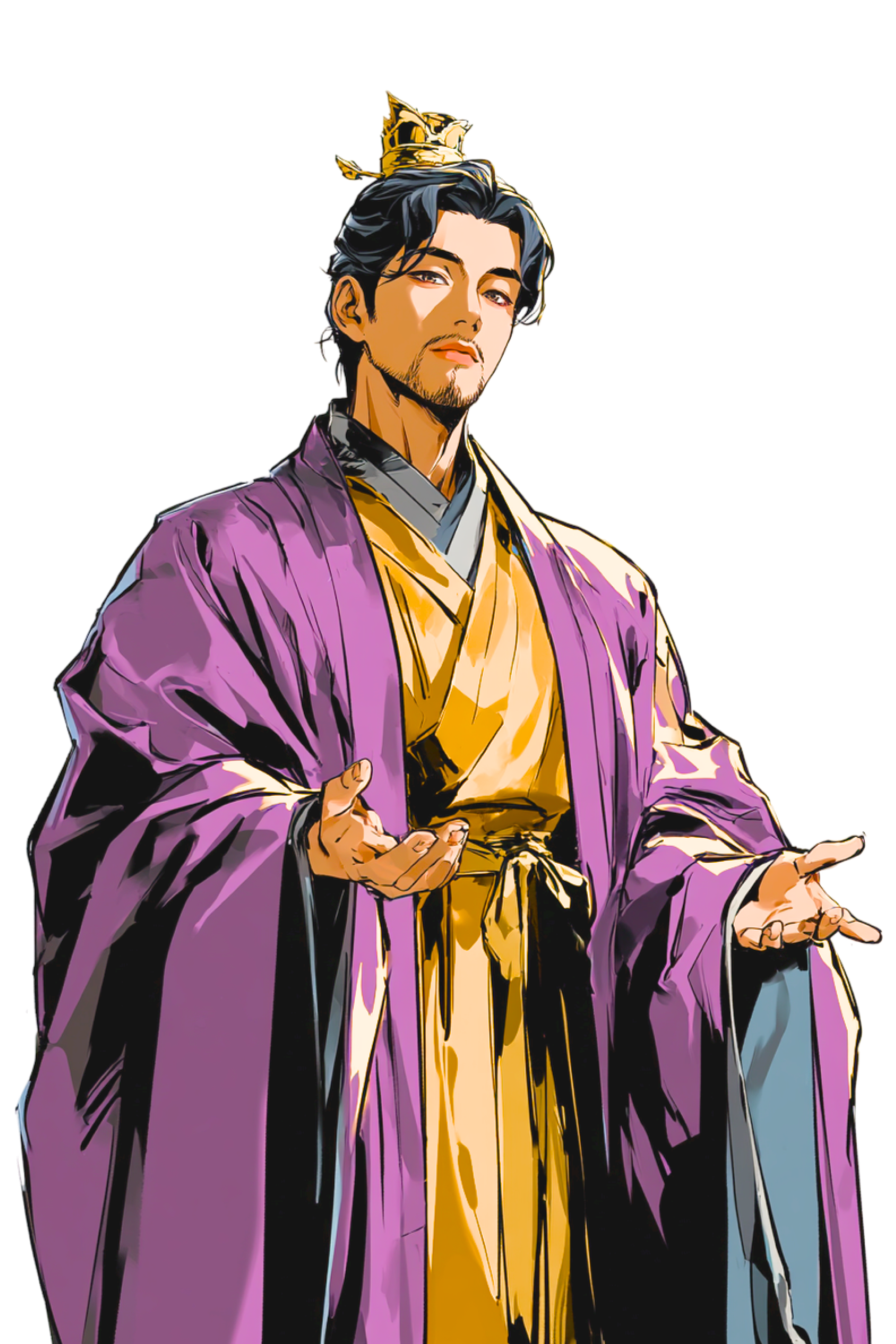
walks inland that same afternoon, up the river, counting hills under his breath. He picks the high valley where the iron sits closest to the grass, and calls it . He means it.
stays on the beach. He builds a timber hall facing the water, then a market, then a pier, in that order. Ships come in before the pier is finished. The harbour gets a name, . was right about the sea, and will not mention it for forty years.
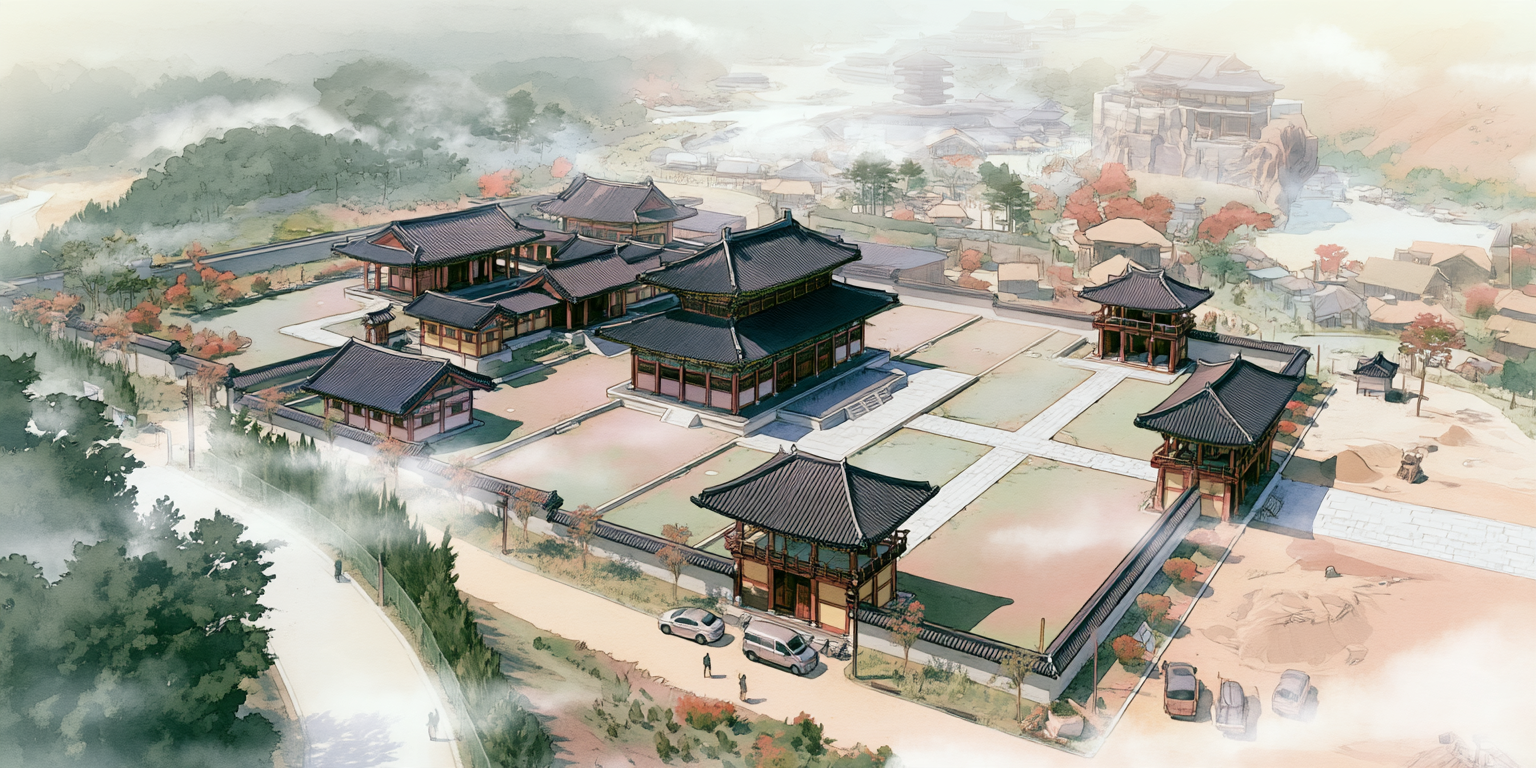
The other four have their own ideas. One takes — , on the river bend to the west, and wants a horse before he can walk. His people will one day put armour on their horses, and on themselves as an afterthought.
One takes , far up the river. He is so quiet his brothers forget to invite him to things.
One takes — Sungsan, the hill nearest the neighbours, and spends his life staring at them over the wall.
The last takes , a bay full of boats, and smells of salt before he is a week old.
And those are only the six big ones. Round them the little ones crowd in, like boats round a good pier. The old villages keep Byunhan names nobody can say twice: Mirimidong, Gojamidong, Jupdo, Gamno. Later come Taksun, Takgitan, Sanbanha, Jolma, Dara, Gimun, Bihwa, and more. Each has a chief, a wall and a grudge. Don’t try to remember them. The six didn’t.
Six boys, six kings before their voices break. That leaves the nine chiefs with a question nobody on this coast has ever had to ask. Which one is the king?
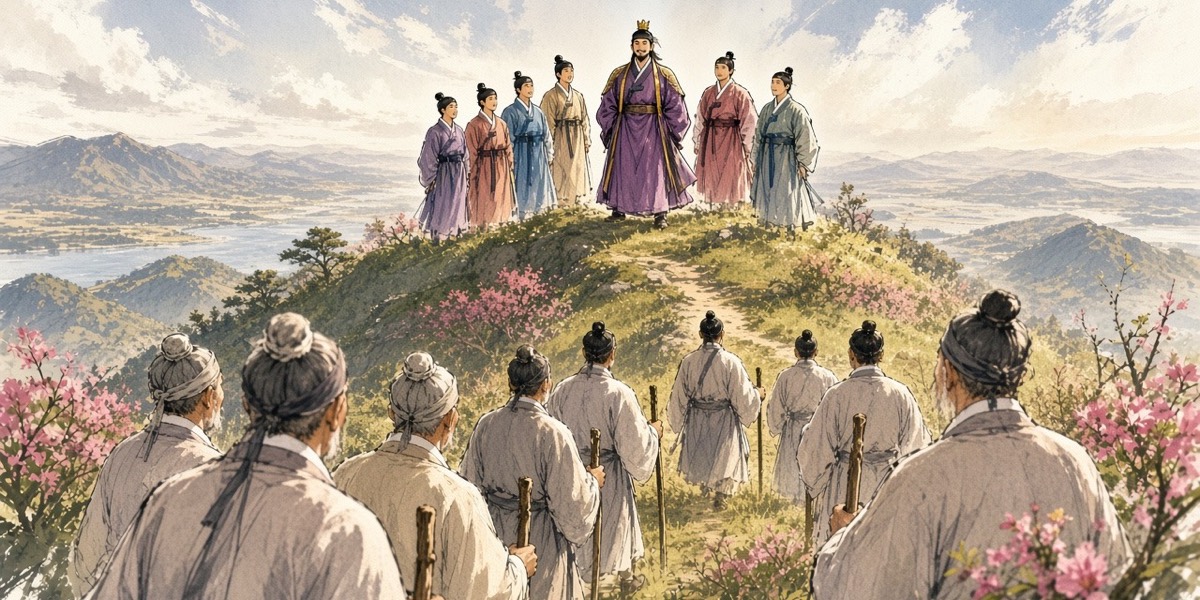
The chiefs call all six back to the peak where the box came down. Six young kings, one hilltop, no chairs. The chiefs thought chairs would only start an argument. The chiefs have met these boys.
It goes round the hilltop like that until noon. calls a vote, counts it, loses, and calls for a recount. The king votes for nobody, on principle. The king votes for whoever said “horse” last.
Five heads turn. Nobody saw him sit down.
Nobody answers. Everybody looks at .
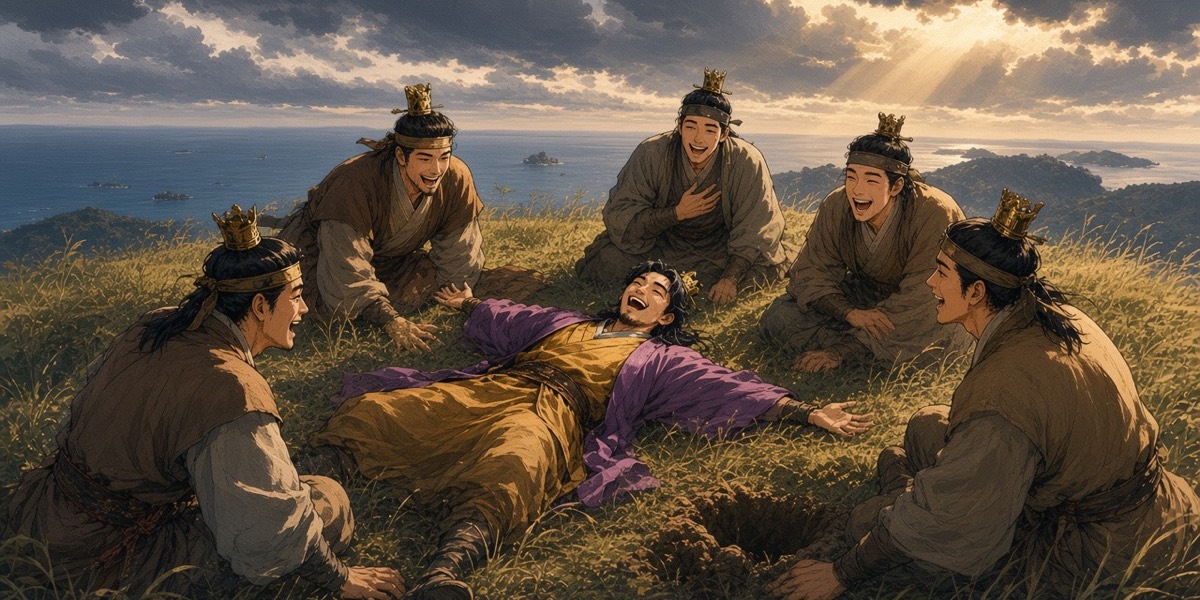
The king goes first, through his nose. Then . The king tries to keep an eye on his wall and can’t. The quiet one laughs without a sound, shoulders going. holds out longest, which is the most thing anyone has seen him do, and then he is flat on his back in the grass where he hatched, howling. laughs last. He said it, and he is only now hearing it.
So doesn’t have a crown. It has a league of iron harbours, six of them, give or take. No one king can lock the vote. would find that exhausting.
Not one crown — a league of iron harbours.
has a palace, a harbour and a market. He does not have a wife, and the nine chiefs have opinions about that too.
The notice goes up on every road and every pier. Then the women come.
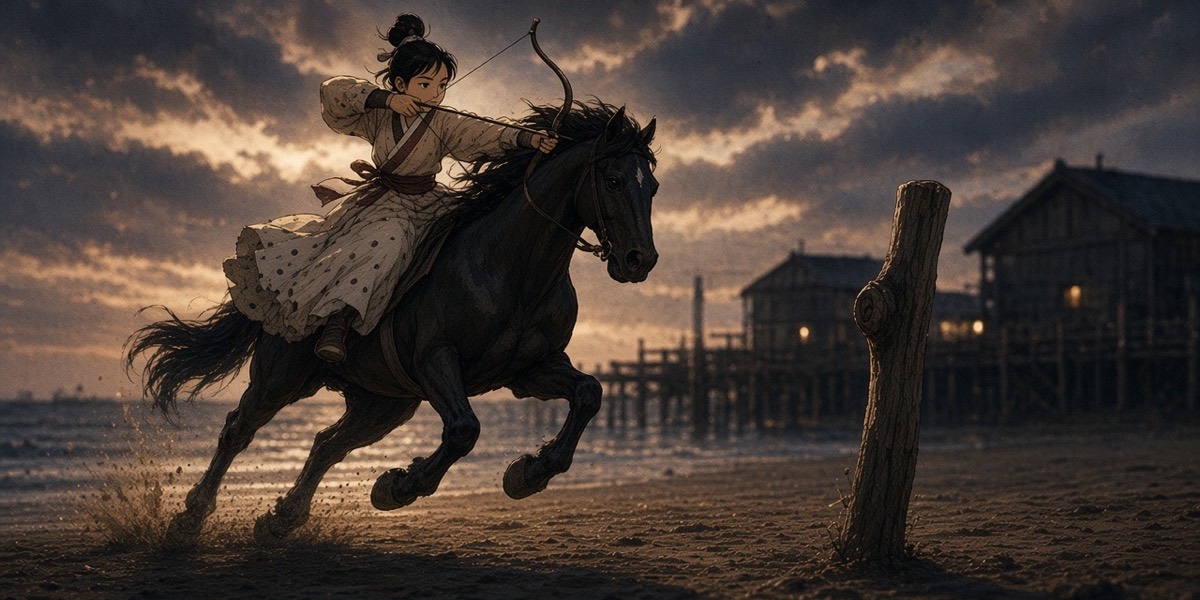
The first rides down from on a horse she has clearly taken from someone important. Dotted skirt, sleeves tied back, a bow across her shoulders. She shoots an arrow into the welcome post, so they know she’s here.
From on the east coast comes a woman in a spotted sealskin cloak, with a dowry of short bows and a long story about her village’s tiger god. Her people never marry inside their own clan, she explains. She has run out of clans.
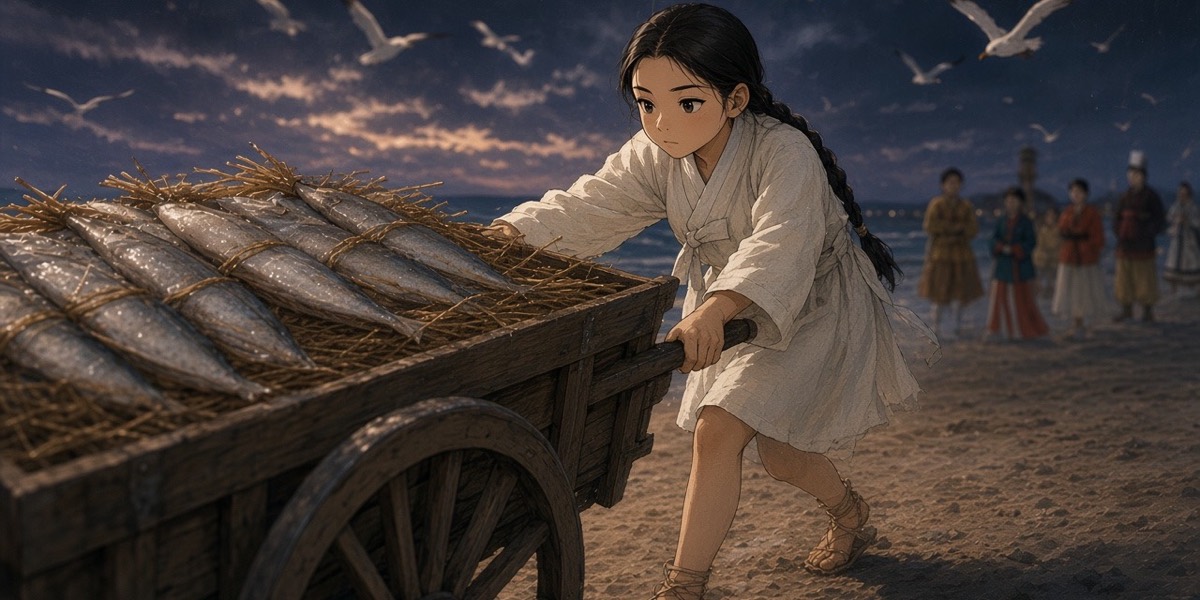
From comes a girl who was sent to live in her future husband’s house at ten, as is their custom. She has come to say she’d like to try a different husband. She brings salted fish. A great deal of salted fish.
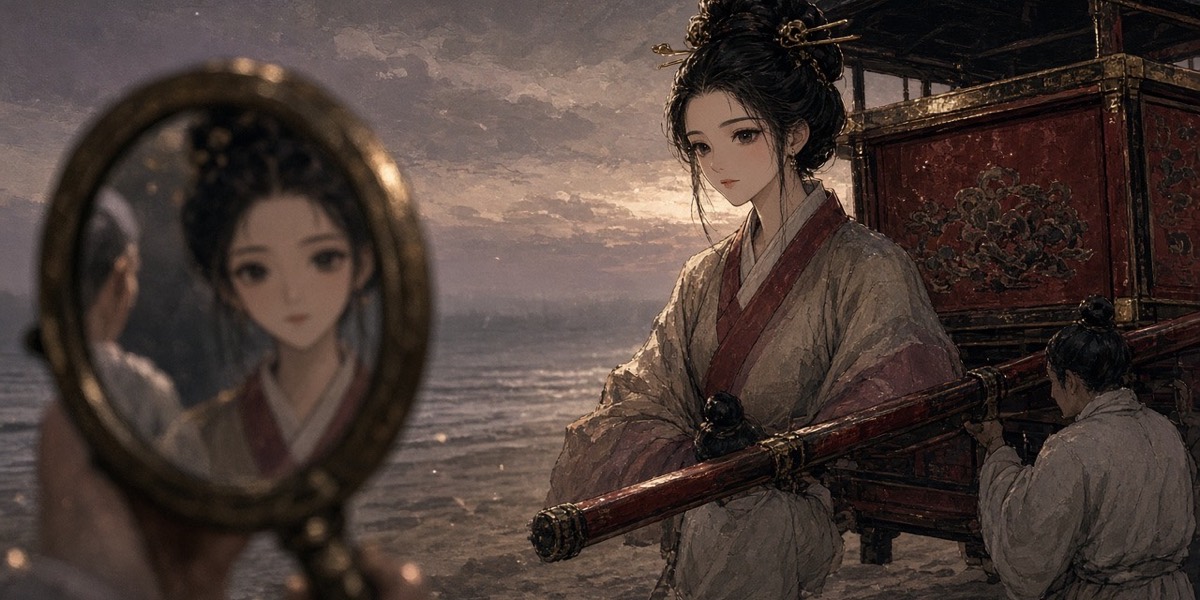
From , commandery up north, comes a lady in a lacquered palanquin. A maid walks in front of her holding up a bronze mirror, so she can keep checking.
From Mahan in the west comes a chief’s daughter wearing more jade beads than skin. In Mahan beads count for more than gold. She can’t turn her head quickly.
The rider from walks her horse over to pull her arrow out of the post, and takes a good long look at the beads on the way.
Every morning of the contest, goes down to the beach in a plain coat and stands in the crowd. A king can’t think on a dais. Everyone keeps looking at him.
On the second morning a second plain coat turns up beside him, on a man who has never looked plain in his life.
From Jinhan, next door, comes a silk-weaver’s daughter with mulberry-stained fingers, who spends the whole contest inspecting the other women’s hems.
From the Byunhan villages up the river, practically family, comes a smith’s daughter with tattooed forearms. She brings an iron ingot for a dowry and asks where the forge is.
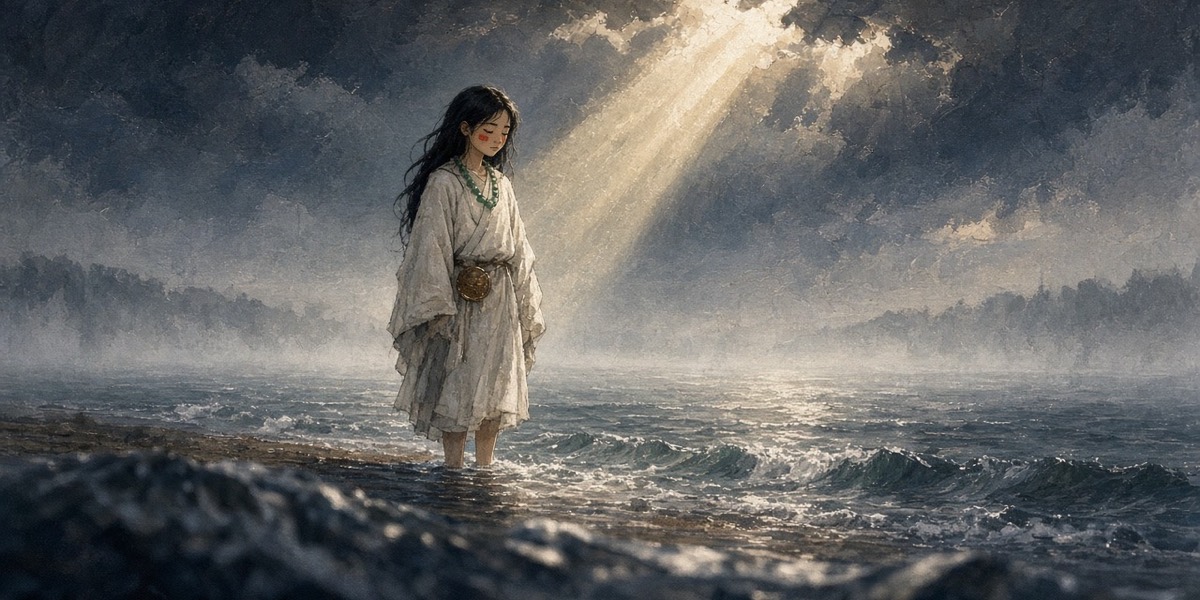
From across the strait comes the Eastern priestess with comma-shaped jade at her throat and red paint on her cheeks. She says she has dreamed of this beach, and will not say what happened in the dream.
She looks at each of the other women in turn. At the Mahan girl she smiles, the way you smile at a funeral you’ve been invited to.
From ’s lands, by way of three boats and a long apology, comes a magistrate’s niece in sleeves that sweep the floor. She has never seen the sea before, and is sick in it twice.
From , the island to the south, comes a diver who rows herself across, swims the last stretch because the boat is too slow, and walks up the beach wringing out her hair.
She walks straight into the crowd, still wringing, and stops in front of a man in a plain coat. She finishes. Most of it lands on his feet. She holds his eyes the whole time. Then she walks on.
Up the beach, the rider from has seen it too. She turns her stolen horse and walks it down through the crowd, close enough that has to step back, and looks down at him the way she looked at the welcome post.
She wheels the horse. The spray off its hooves catches the diver, who is already soaked and takes it personally anyway.
By the third day there are factions. and , neighbours up the east coast, have pooled the sealskins and the salted fish and are voting for each other. The lady has lent niece her mirror, so the niece can see how green she is. The smith’s daughter has found the forge and won’t come out. The weaver keeps looking at hems.
On the third afternoon the chiefs, who have run out of ways to look at women without being obvious, announce a race. Up Turtle Peak, to the rock where the box came down. First to touch it gets the king’s cup. The king, they say, will be at the top, judging. He is at the top. He is also in a plain coat, holding the cup, and pretending to be the man who holds the cup.
She runs it anyway, in riding boots, and leads to the first bend. The diver doesn’t take the path at all. She swims round the headland, climbs the seaward cliff barefoot, and arrives a hand behind, dripping. The Eastern priestess walks the whole way and announces at the top that she dreamt the result, and it was her. The Mahan girl does not run. Jade does not run. She arrives last and least out of breath.
They split the cup. Neither will drink first. It goes round the peak half-full, through ten women and nine chiefs, and comes back to empty. says it is the most kingly thing his brother has done all week.
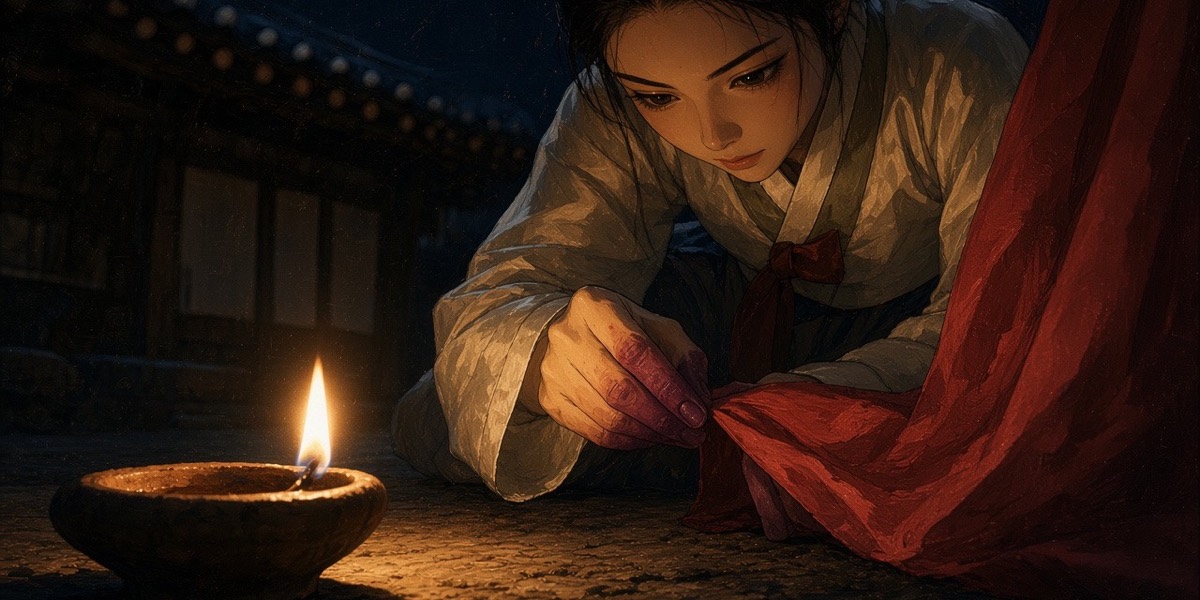
On the fourth night the chiefs hold a feast, so the women can be looked at properly, by lamplight, which is kinder. Each of them dances once. stands at the back in the plain coat with a wine jar, pouring. Half the hall knows. Nobody says.
The Mahan girl dances last, slowly, because she has to, and well. Halfway through, her great rope of beads gives way. You remember the weaver’s daughter who spent the contest inspecting hems? She was not admiring them. She was looking for knots.
Jade goes everywhere: across the floor, under the tables, into the salted fish. The chiefs dive after it like boys. The Mahan girl does not dive. She stands in the middle of the floor, bare-throated for the first time in her life, and keeps dancing.
One man comes through the scramble on his knees, a wine jar still in one hand. He picks up the last bead from beside her foot and holds it up to her.
Overnight, the book moves. The Mahan girl goes from favourite to certainty. The king knelt. The chiefs start talking about dowries.
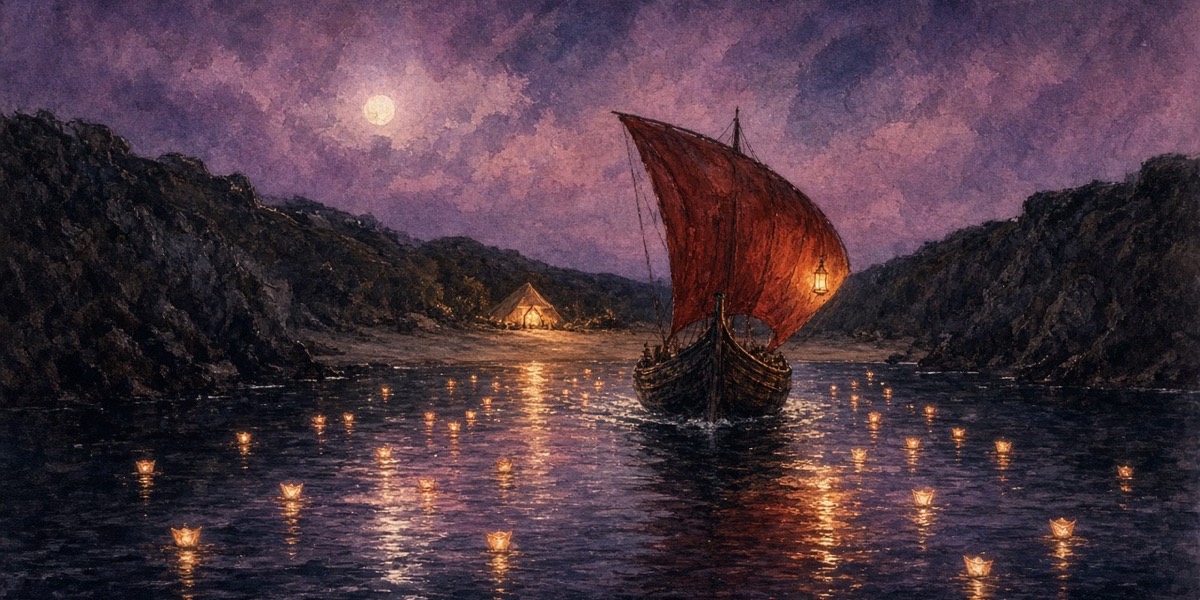
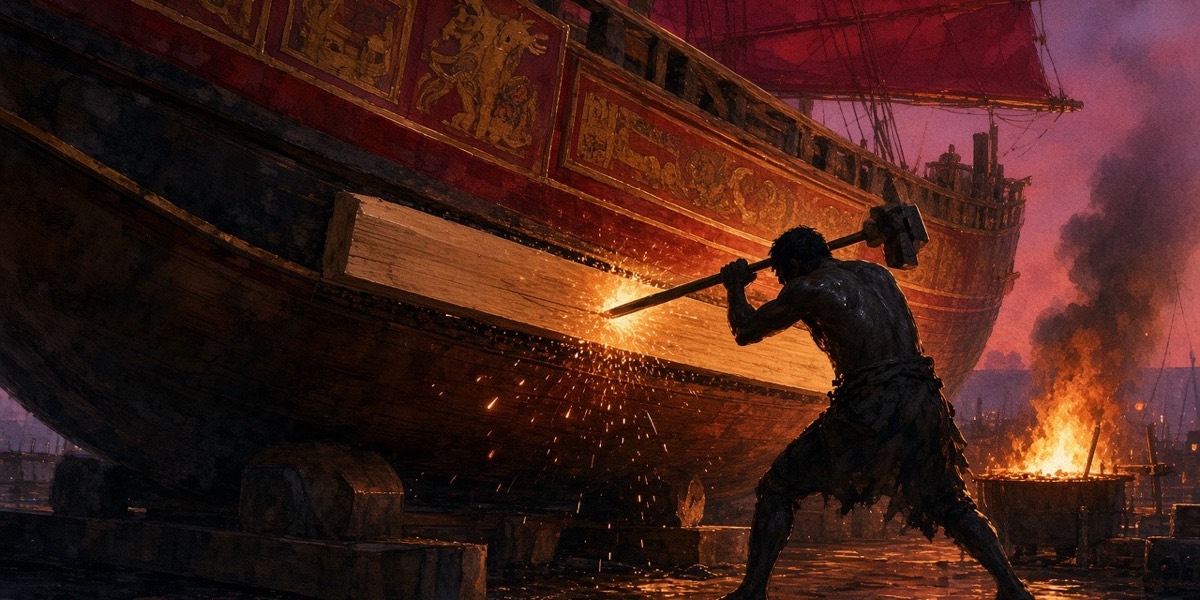
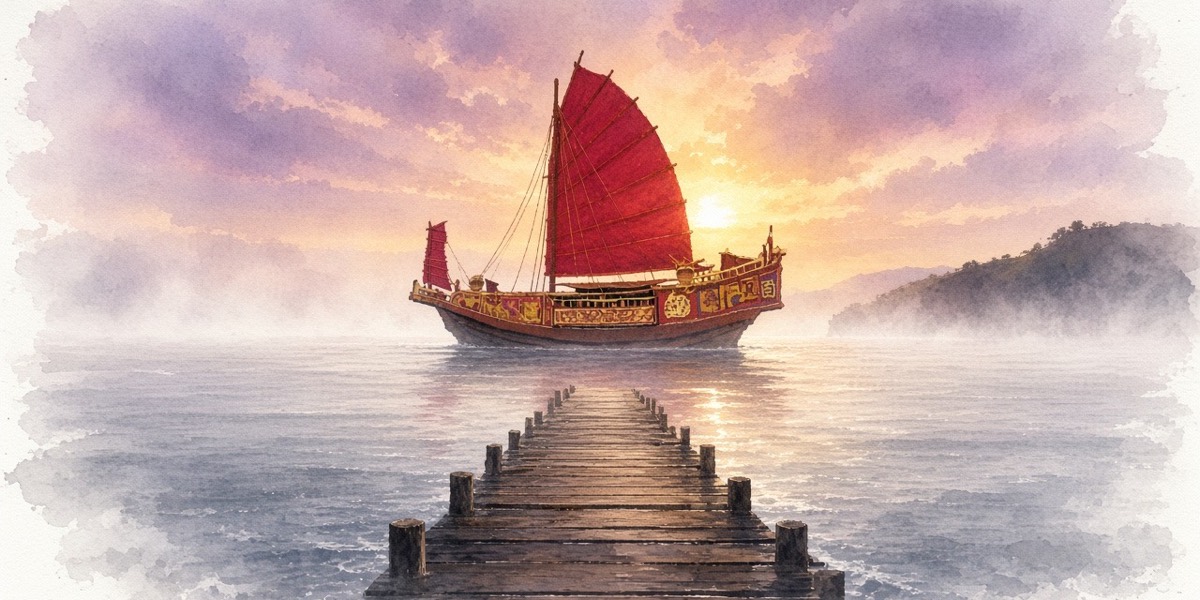
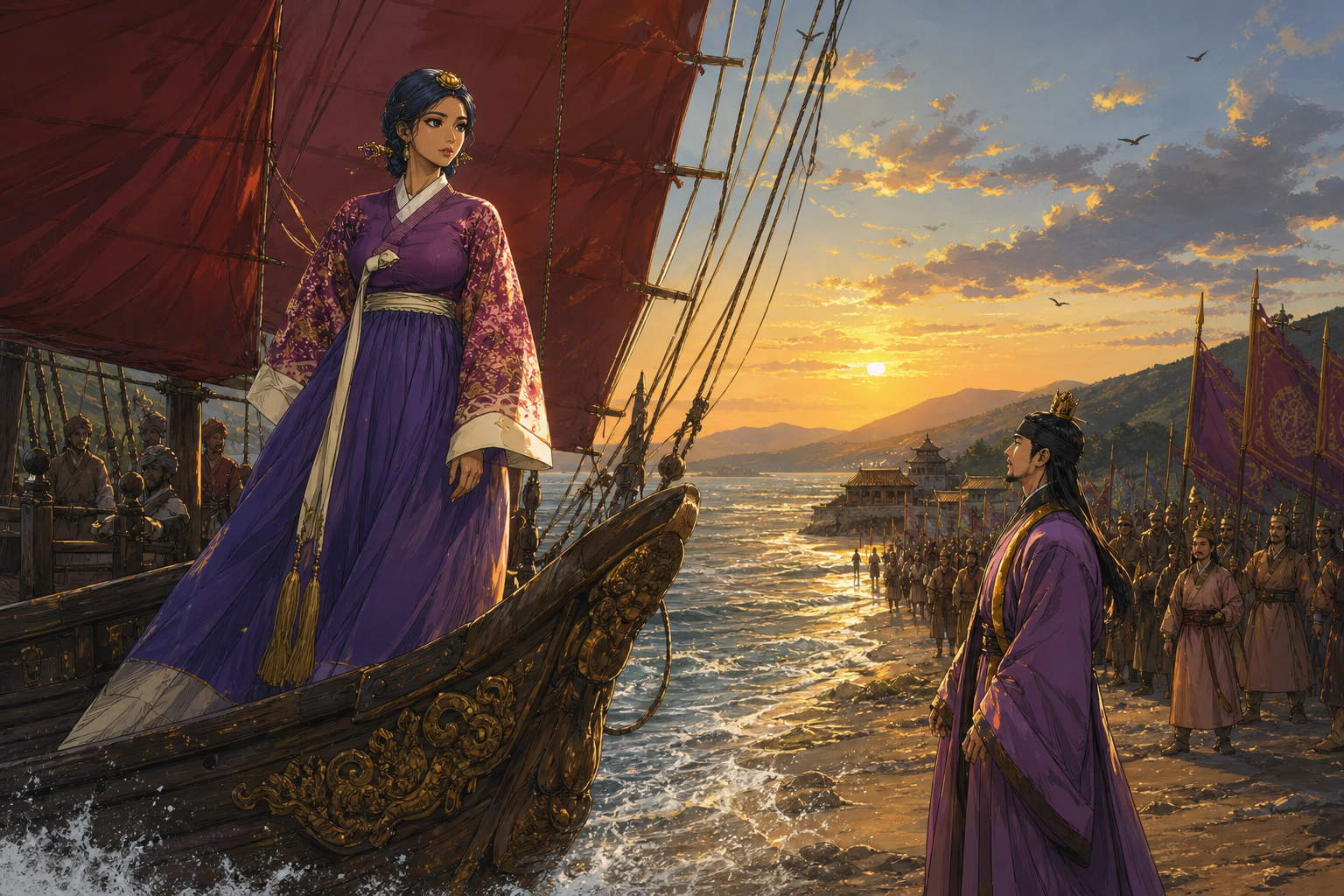
On the last afternoon, when the chiefs have nearly agreed on the Mahan beads, a red sail comes round the headland from the southwest.
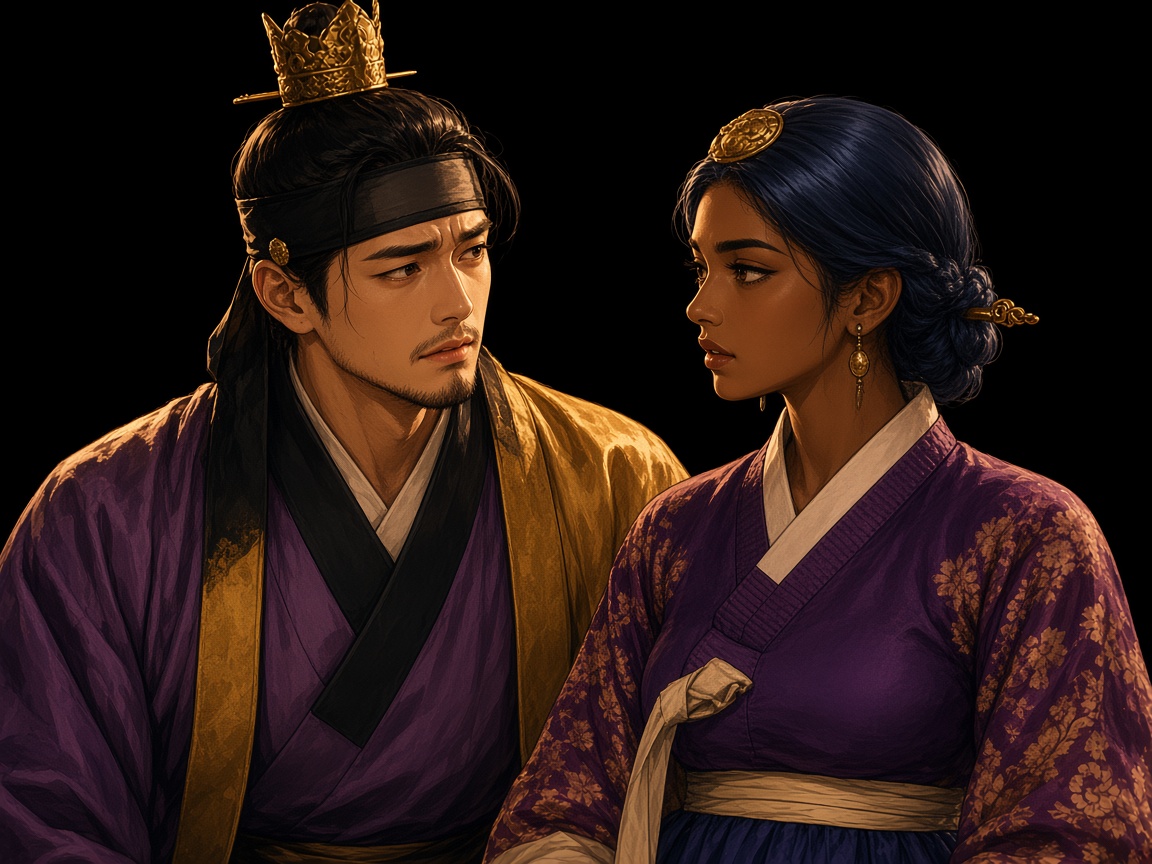
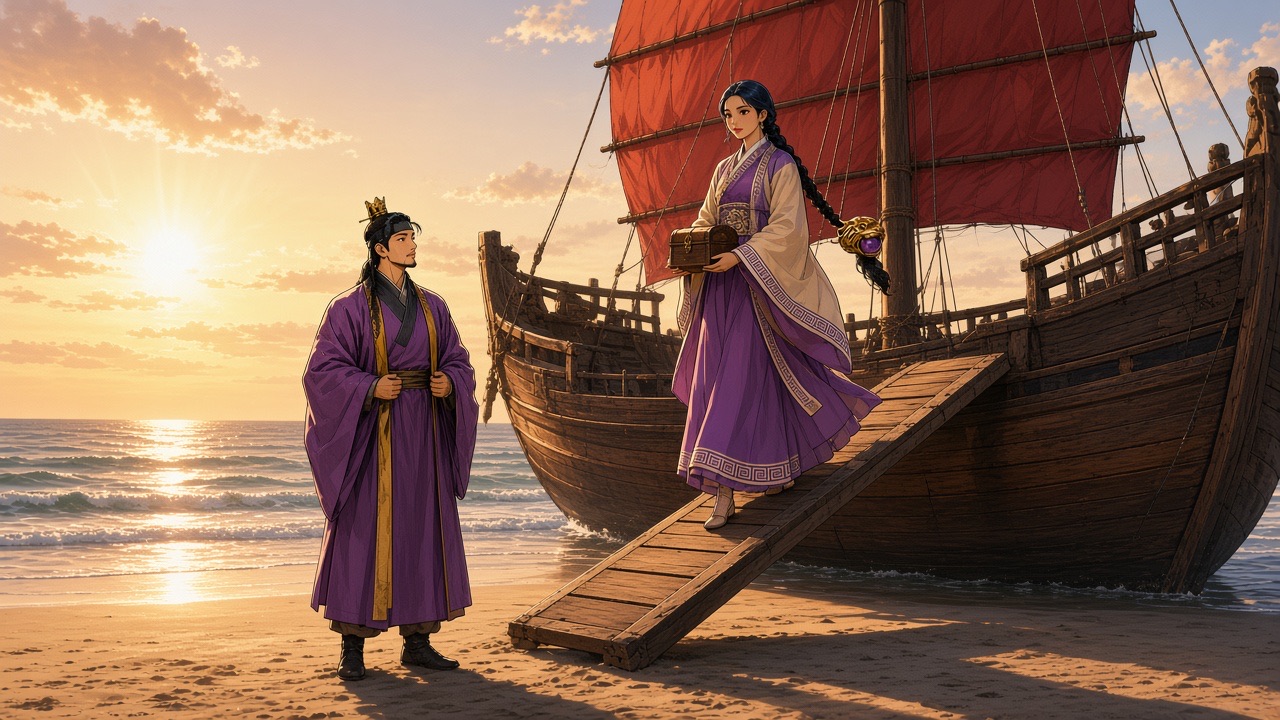
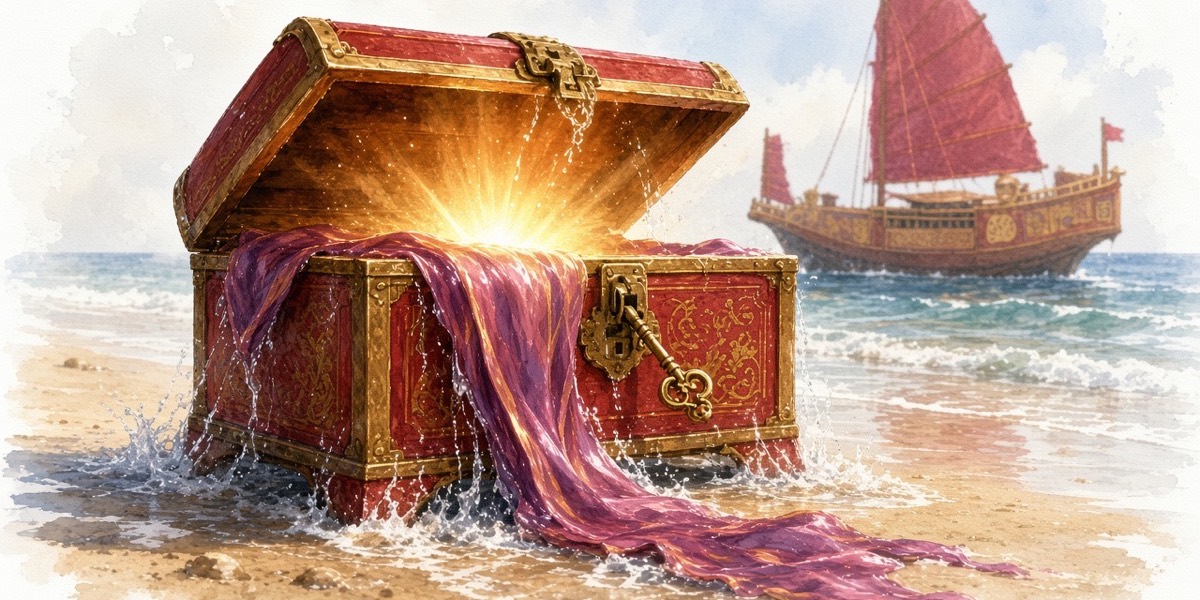
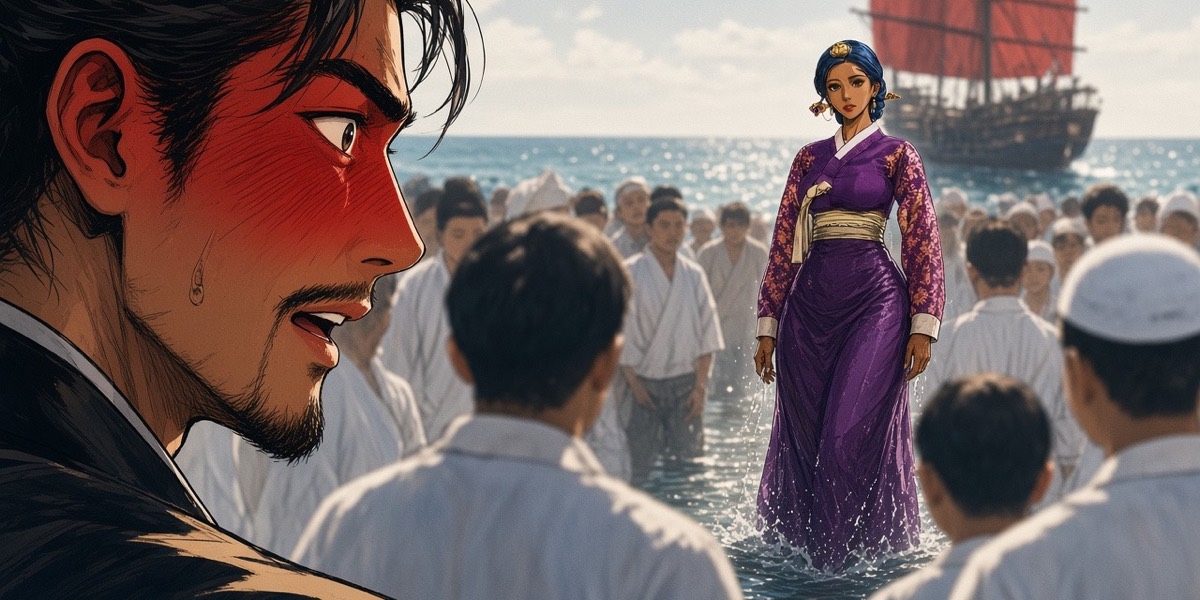
She arrives on a red-sailed ship, the last of them and from farthest away, from a country on the far side of the southern sea that nobody here has heard of. With her come a brother, two old servants and their wives, and a chest nobody is allowed to touch. She is twenty-one, and built like nowhere on this coast. She has spent the last night on deck, and it shows only in her eyes.
She steps down into the shallows before anyone can carry her. is in the crowd, four rows back, behind a fish seller. He came to judge a contest. He sees one woman, and love hits him before protocol can stand up.
From four rows back she is a long way off: a violet shape at the waterline, half a beach and a hundred heads between them. It is far enough to see everything. Her skin is darker than anyone’s on this coast, burnt gold where the sun sits on it. Her silk is purple and cut close, to the waist, to the hip, and then exactly as much as it needs to be. She is wringing seawater out of her hem and arguing with her brother, and she has not looked at the beach once.
would like it on record that he fell in love first. The rest of him arrives at the same moment and does not wait to be recorded. He starts walking.
He goes through the crowd like a man wading out to a ship. He loses her behind a cart of eels. He finds her again. Ten paces from the waterline he stops, because she has finally looked up, and he has forgotten how feet work.
All along the beach, the contest turns round to look. The rider lowers her bow. The diver stops wringing her hair. The Mahan girl puts a hand to her throat, where the beads used to be.
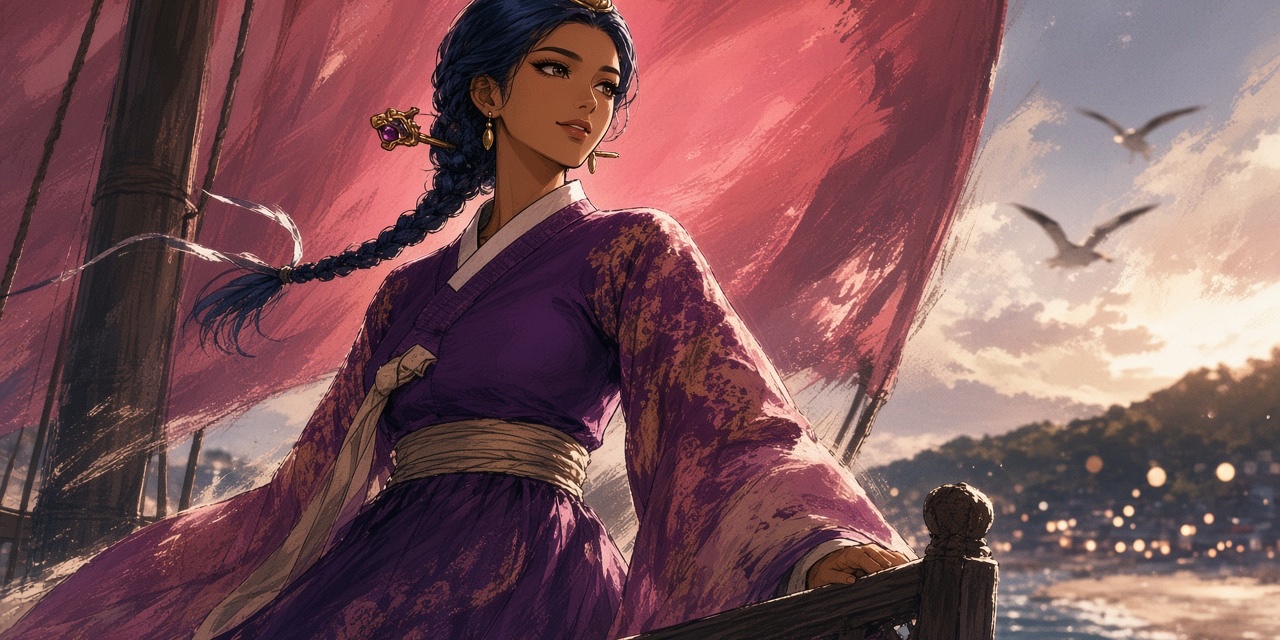
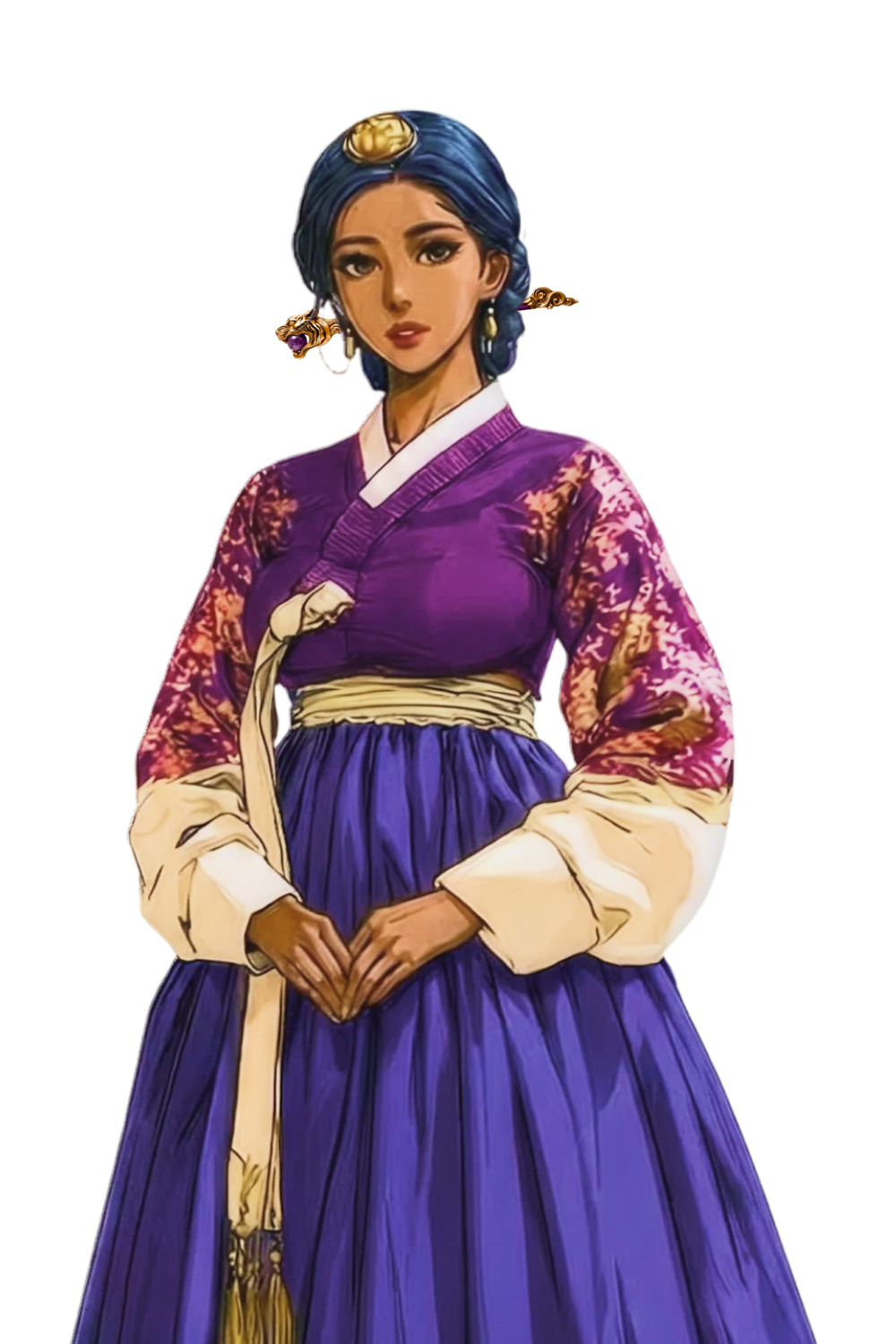
She does not go to the palace. The chiefs send men to fetch her, and she sends them back: she doesn’t follow strangers, however nicely dressed. Instead she climbs the hill above the beach, takes off her silk trousers and offers them to the mountain spirit. Half the coast watches. watches as if the rite were meant for him alone.
That night he walks down to her fire without the crown. He tells himself it is diplomacy.
They walk the tide line. Her brother follows at a polite distance, then at a less polite one.
Morning. The chest nobody is allowed to touch is still on the ship, and the ship is still in the shallows, because the tide went out while everyone was looking at her.
wades out to carry it himself. He takes his coat off first, which he will later claim was practical.
He lifts with his legs. The chest goes up onto one shoulder, water sheets off his back, and on the rail above him a woman who crossed two months of sea without blinking forgets what she was about to say.
He did. He walks the chest up the beach with his ears the colour of her sail. She comes down the plank behind him with her hair still wet from washing, and wet silk does what wet silk does. He puts the chest down. He picks it up again. He puts it down somewhere else.
The second night he comes earlier. She already has going, which he decides not to mention.
After the lesson she still won’t come up to the palace. So he walks her round the outside of it.
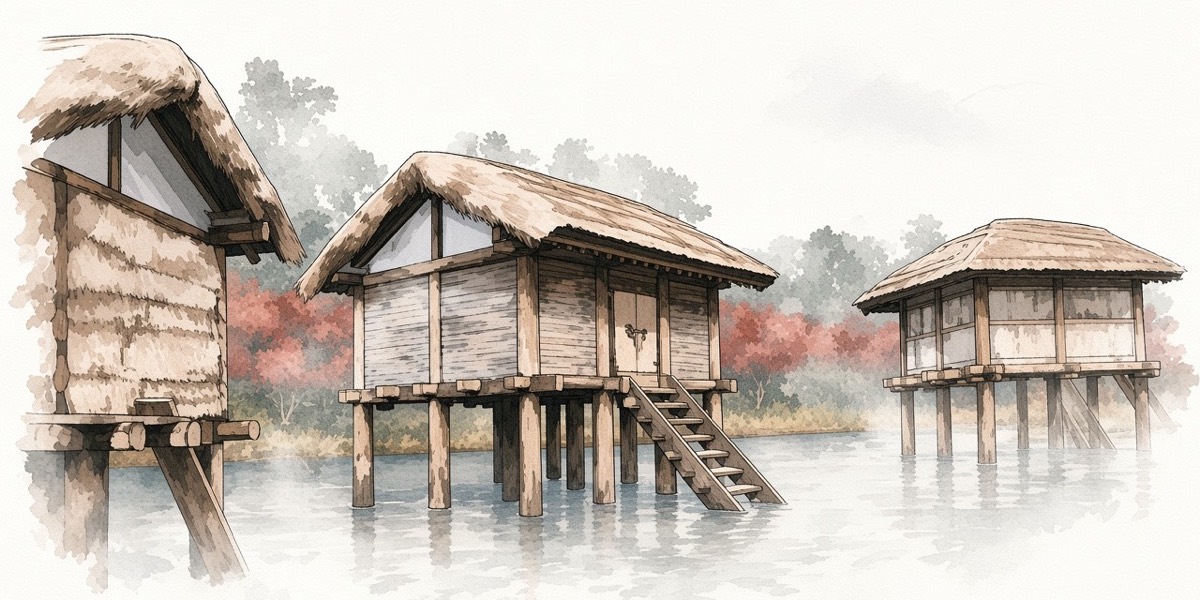
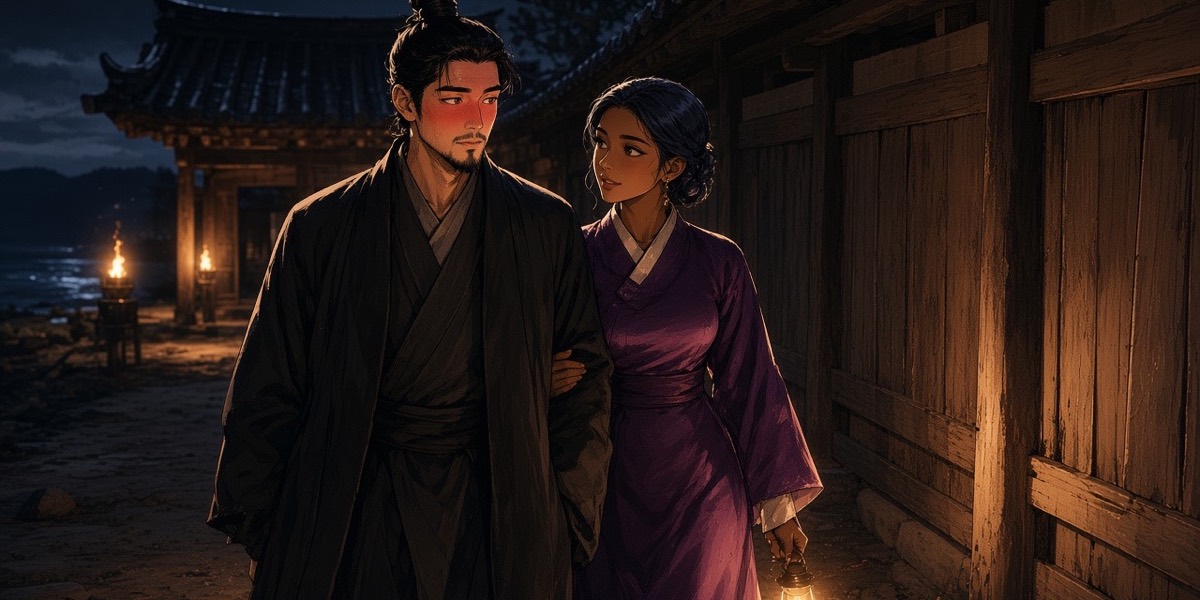
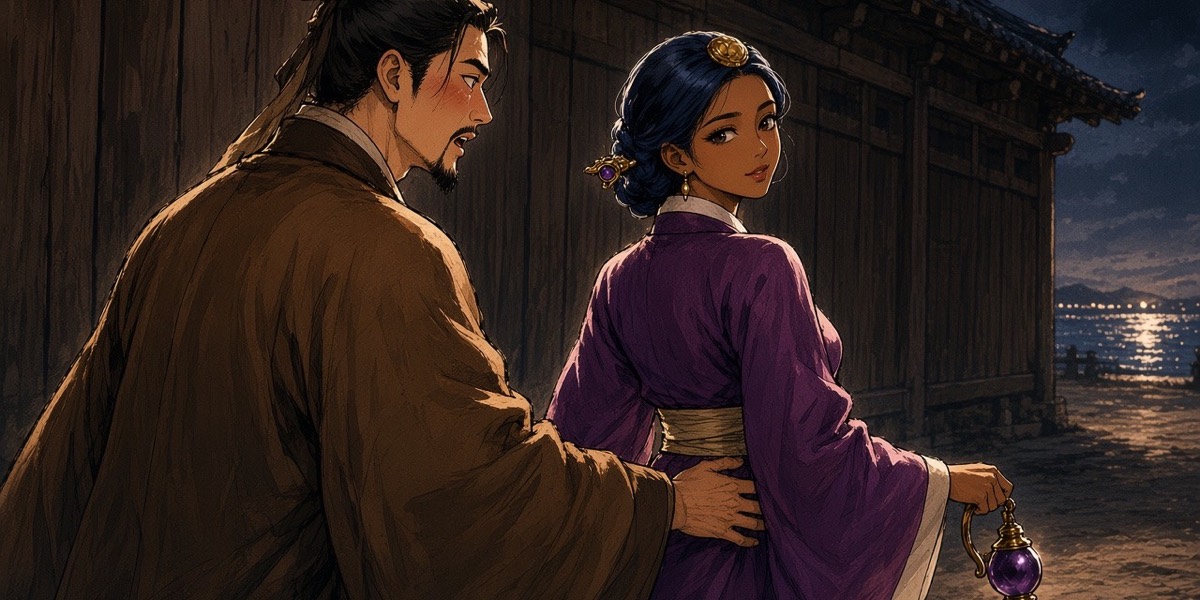
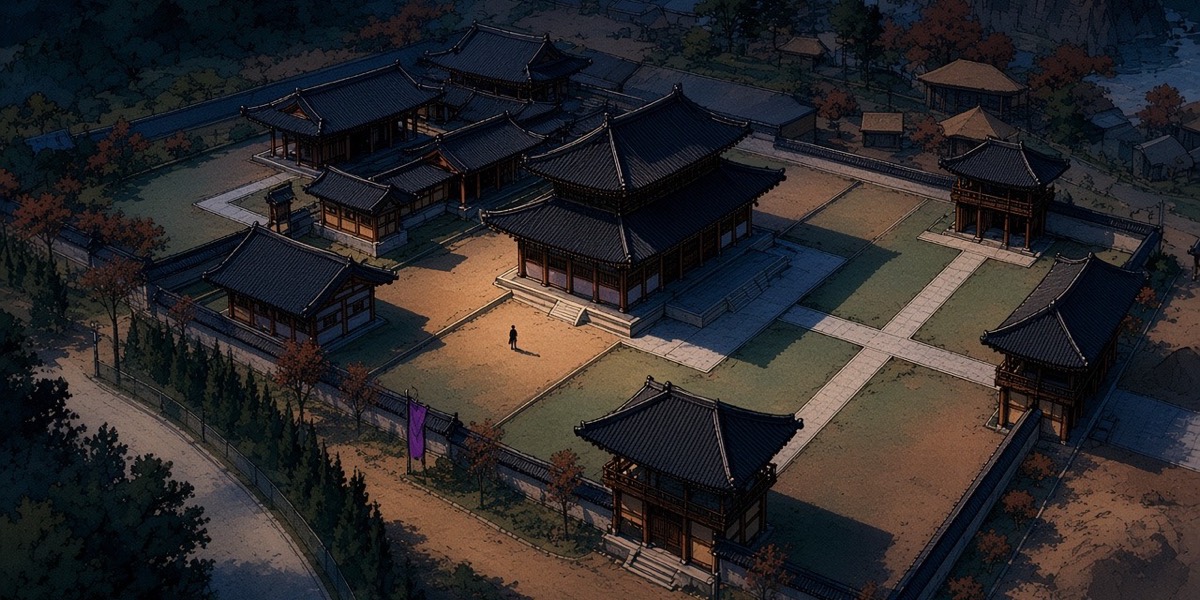
It is a timber wall, new enough to smell of resin. He built it, and he has never once walked its outside. Torches on the gate, dark everywhere else. Her brother follows at a polite distance, then at a less polite one, then turns round and goes to bed.
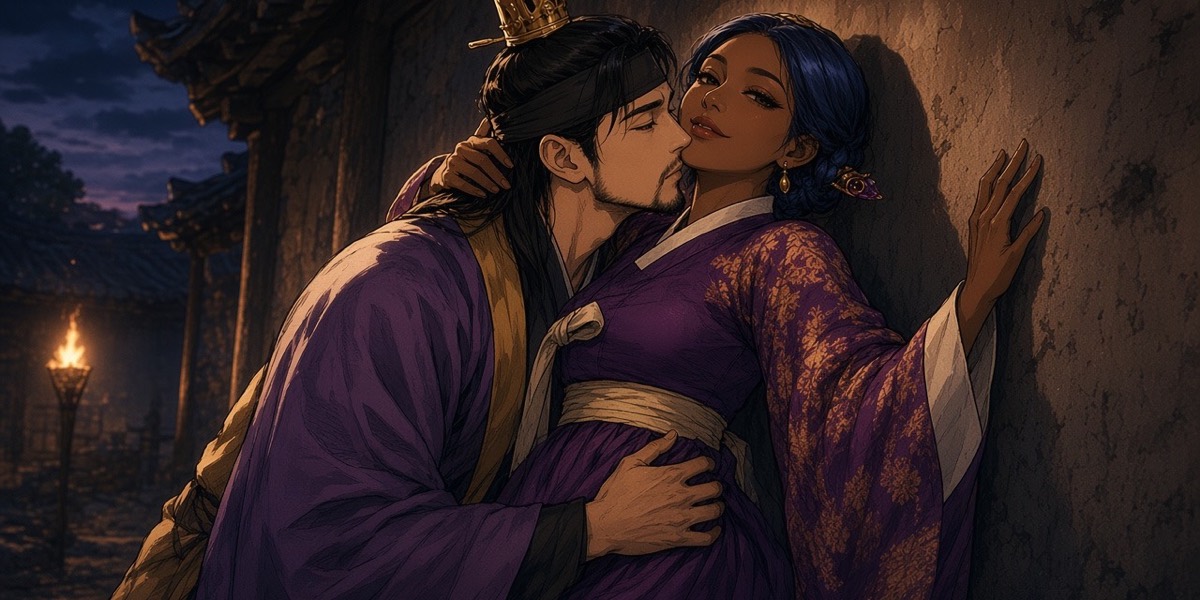
She walks closer to him than the path needs. On the dark side of the wall, where the torches can’t see, her shoulder finds his arm and stays there. He forgets which way the gate is.
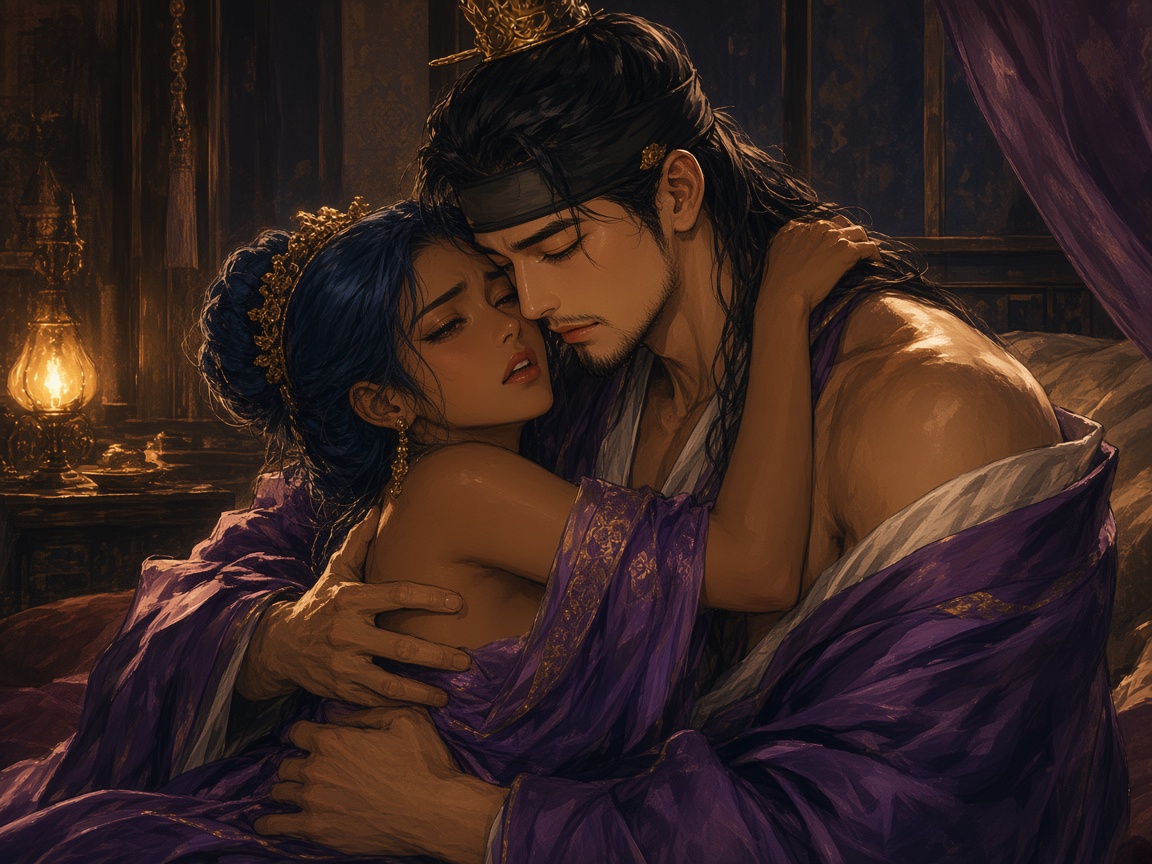
He holds on to her. She lets him find out what the purple silk has been keeping from the beach, a hand’s width at a time, and goes on walking, as if a king’s hand at her waist were weather.
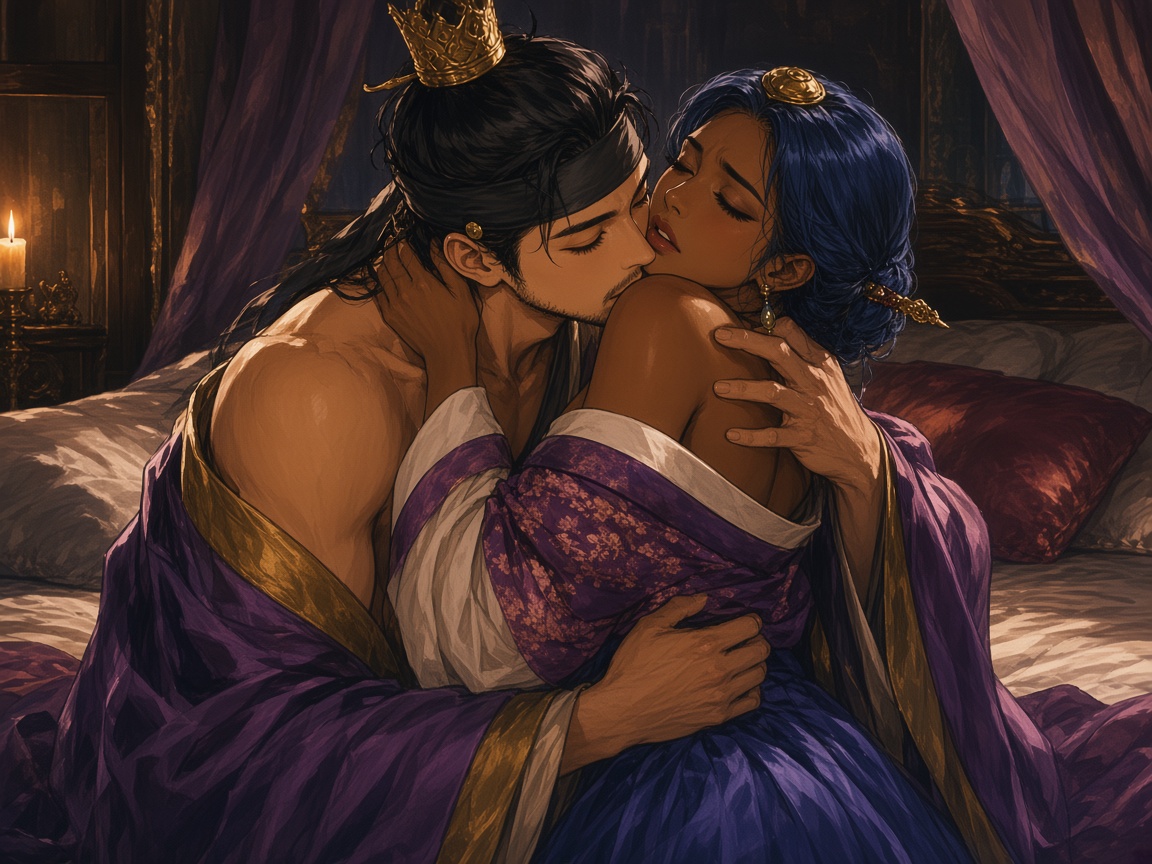
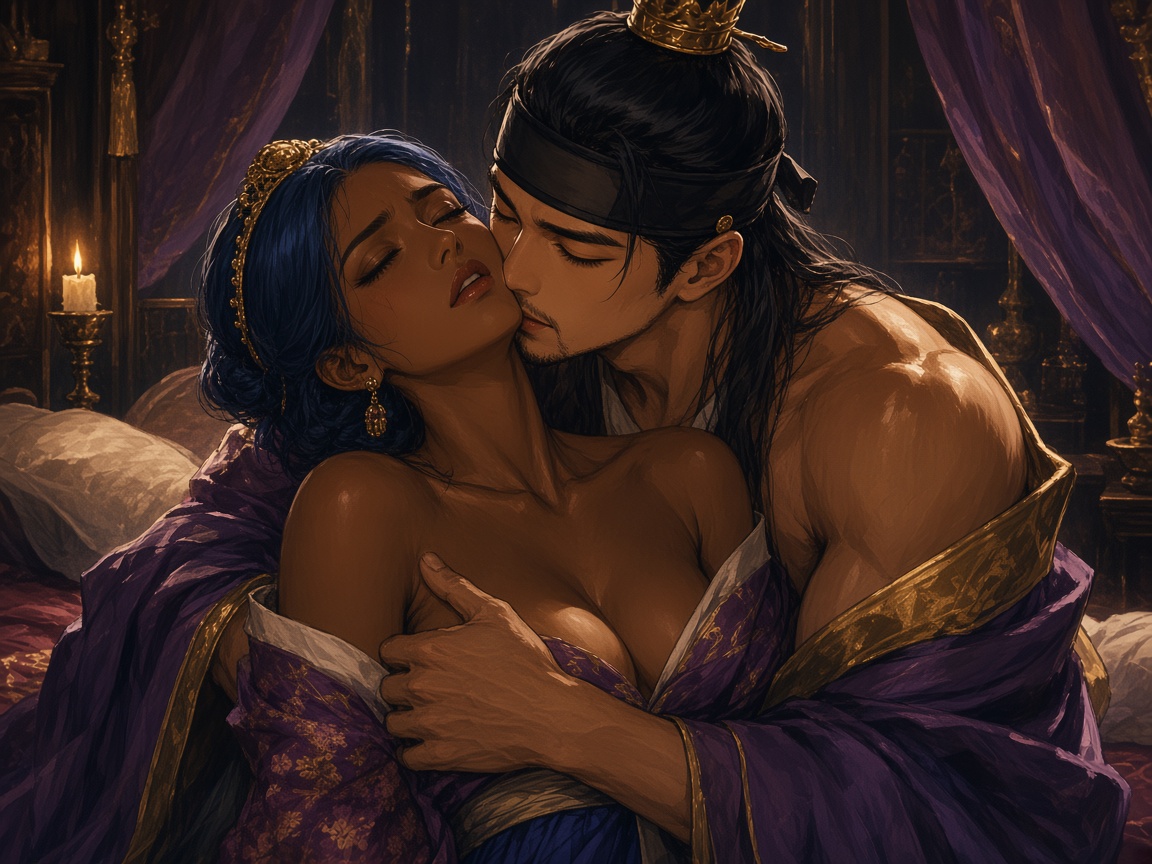
Halfway round, at the darkest corner, the walk stops being a walk. He is kissing the throat he will marry before anyone has told him he may, with her back to the wall of his own palace. It is the first thing the wall has ever been for.
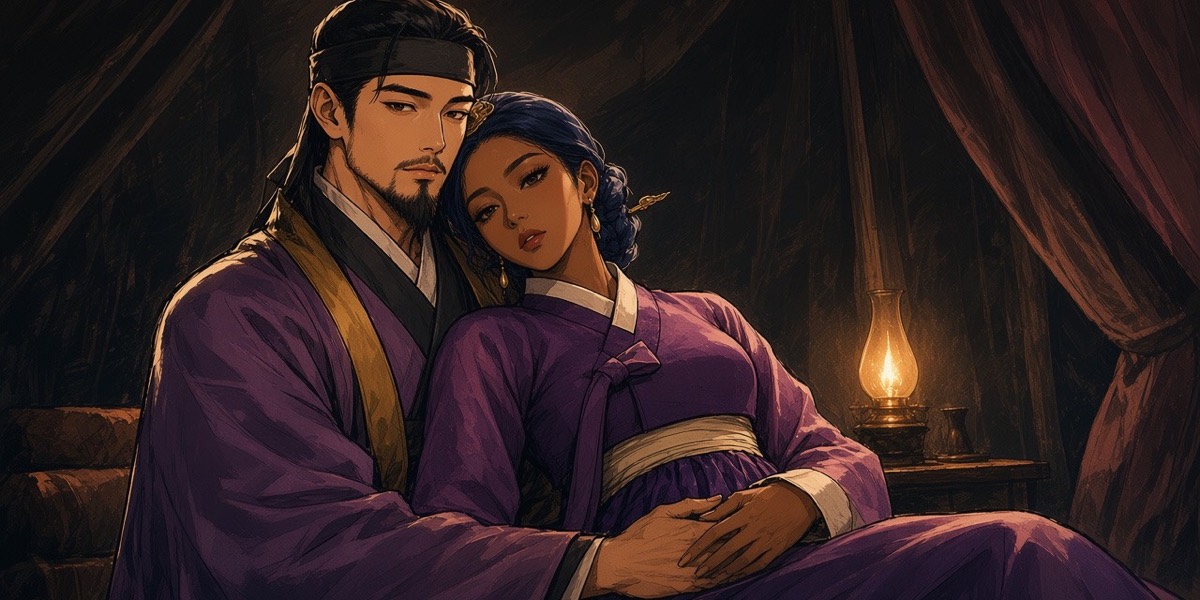
She takes him by the collar back down the path to the tent by the water. Before anyone may say marriage, the lamp in the tent burns late.
She lights the lamp herself. She turns, and he sees the curve of her hip catching lamp through the silk. Then she lets the purple go, all at once, the way she let her trousers go to the mountain, and watches him take it.
He was a king this morning. He is not one now. She takes her time with him, sure of every move, a woman who crossed a sea and will not be hurried by a beach. He comes apart under her hands about as fast as he said he would. She does not let him be embarrassed about it. She starts again, and this time she tells him what to do in a language he doesn’t speak, and he understands every word.
Later she lies watching the width of his back while he trims the wick, and doesn’t hide what it does to her mouth.
In the timber court of she presents herself that same morning. No servant speaks for her. She gives her own name, Hu Hwang-ok, and her own country. The chiefs who backed the Mahan beads study their feet. is off the dais before protocol can stand. He comes down with one arm out, the same hold the sky once used on a ridge.
She becomes the first queen of . They will be married a hundred and fifty years. The record is firm about this, and entirely untroubled by it.
The others go home with better stories than they came with. The rider keeps the stolen horse. The diver swims. and are still voting for each other. The weaver opens a stall by the pier and does very well in knots. On the wedding morning the king walks down to the Mahan tents himself, puts one jade bead in a girl’s palm, and says nothing. She keeps it all her life, and tells her grandchildren a version where she won.
In the second spring, the lamp is still lit when the boy arrives. He comes out loud, like his father’s side of the family, and looks around the room with her eyes.
Half this coast, half a warm brown river nobody here has seen. Kingdoms will come and go on this shore. The eyes keep turning up anyway, a generation here and there, like a word nobody can quite translate.
Back on the Radiance road, the second morning comes up grey. Nine days of grain behind the palace gate. sends a runner across the field with a folded note. It says one word: tea.
Nine days of grain. One folded note. Will the Marshal of come to tea with a traitor…?
