Chapter 52
Wa



AI Summary
- Wood Island The song stops before anyone gives an order.
- The south shore The mast goes first.
- Green wood They walk him into the village.
- A new fashion They walk north in the dark.
- The red guest The hall is new wood and old loyalties, and the rest of it is dark.
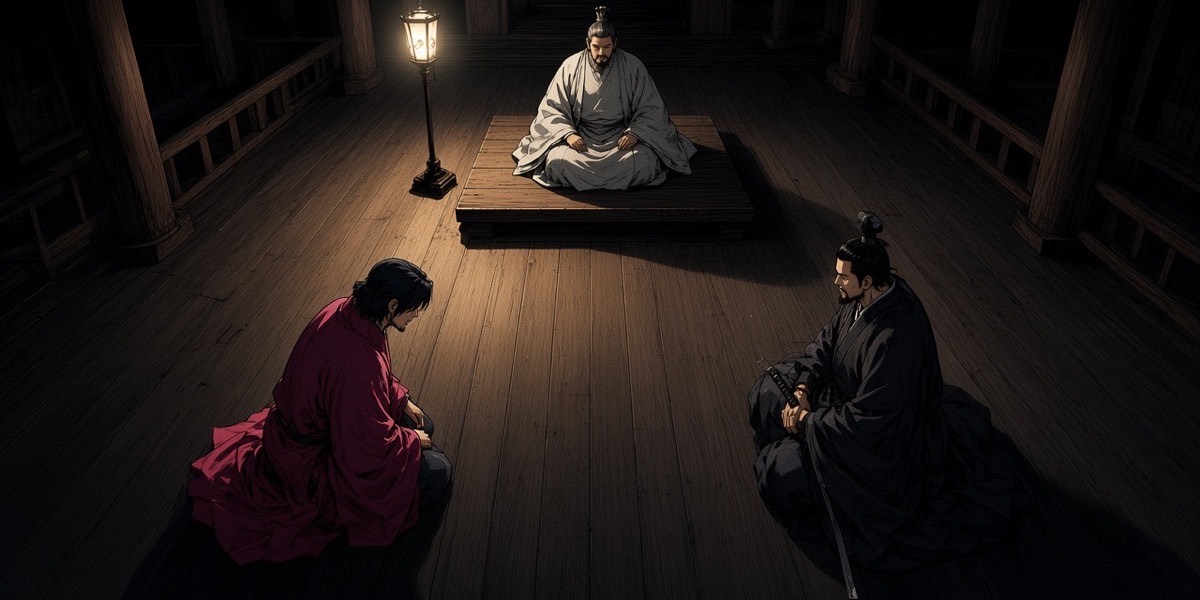
- The audience The hall is night.
- Before dawn Before the court is awake, Pung walks him down to a boat.
- Characters
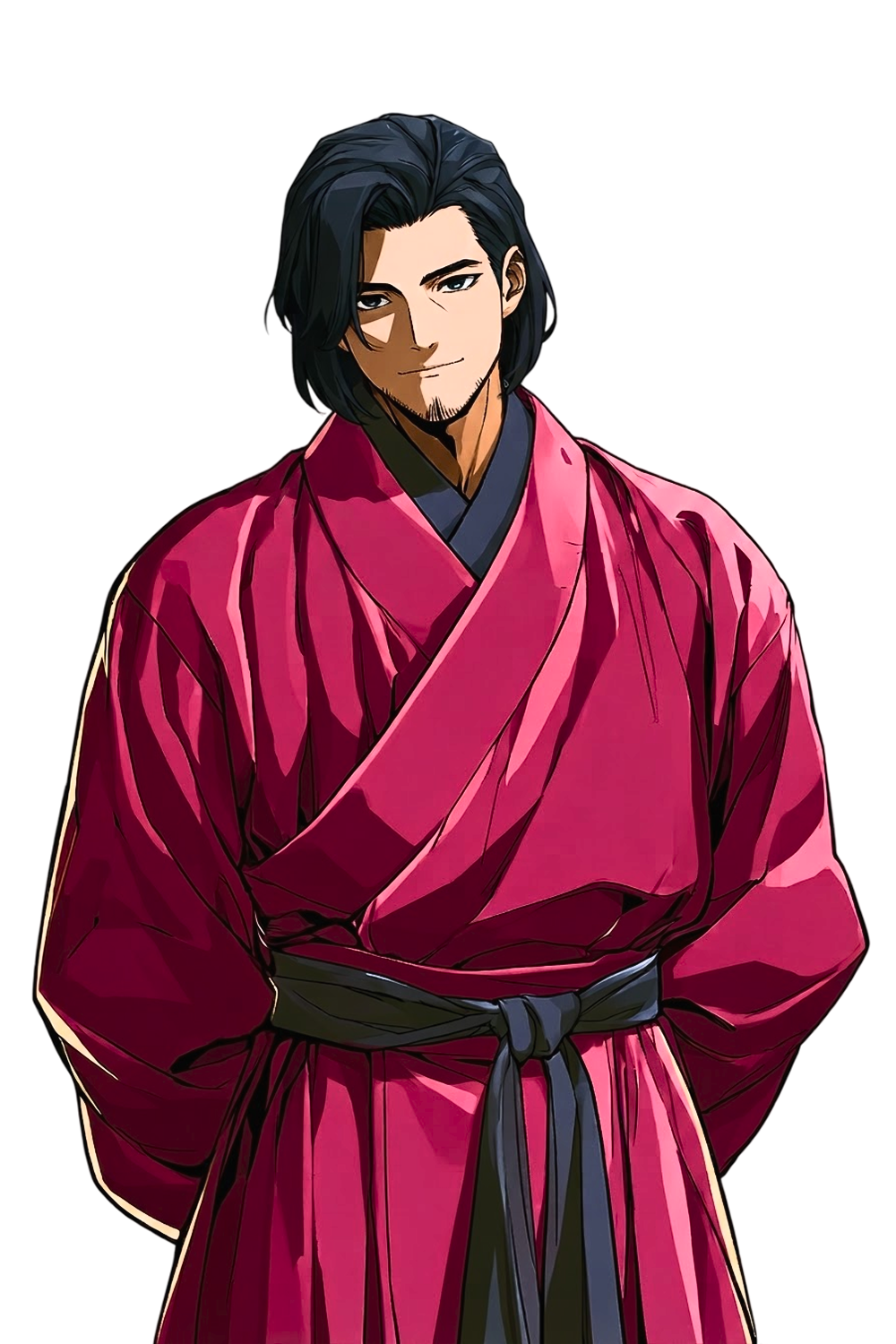
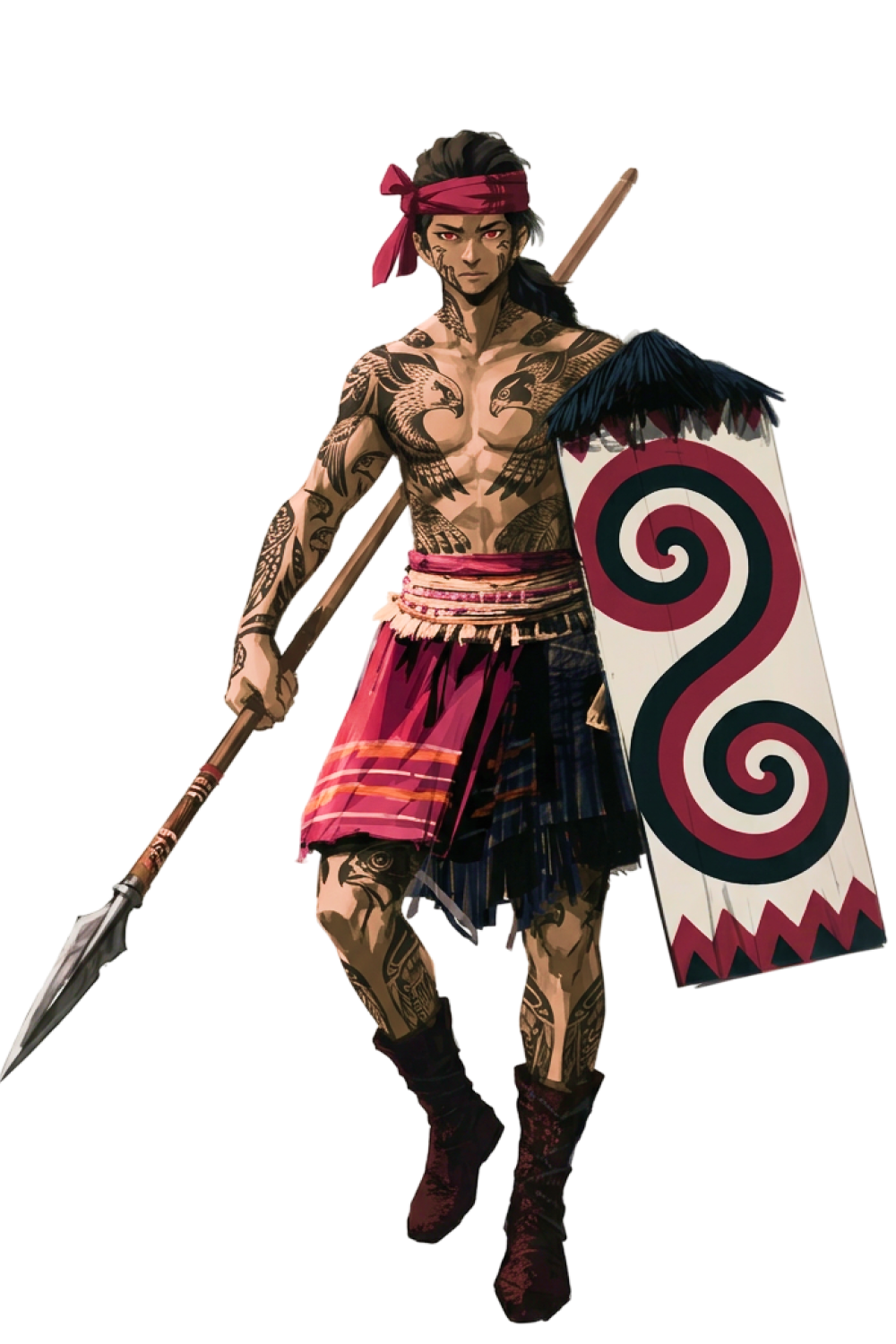
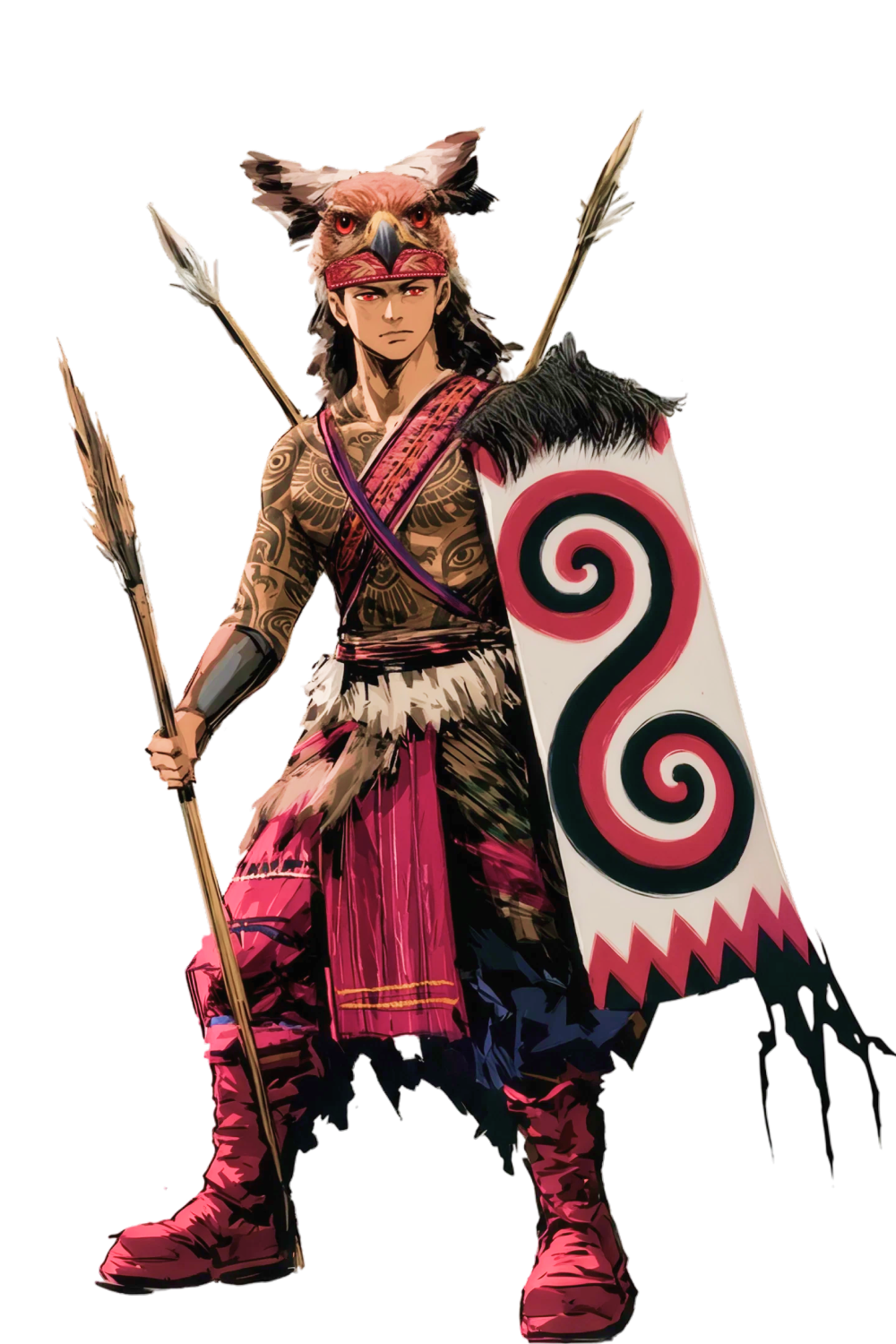

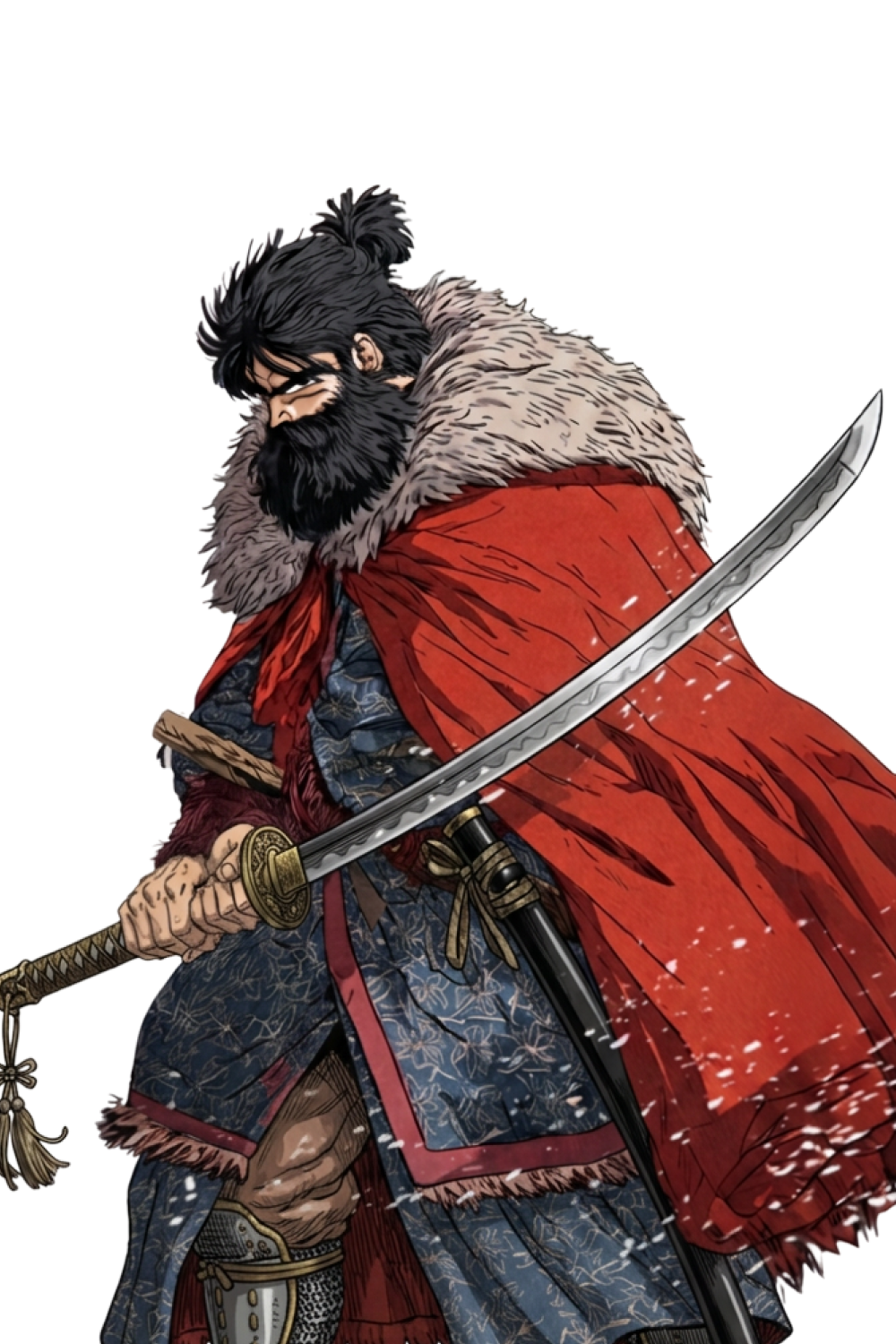
Episode· 647
Wa
The sea was in a good mood. It introduced him to people who had never heard of Silla.
- Kim Chunchu
- The Falcon
- The Falcon Chief
- The Bear
- Abe no Hirafu
- Echi no Takutsu
- Prince Pung
- The Eastern Prince
- The Eastern Empress
is a month dead. The sea is in a good mood.
Two courts on this water call the man on the seat heaven. They mean it. In you may look a queen in the face. In these rooms the piety is the floor.
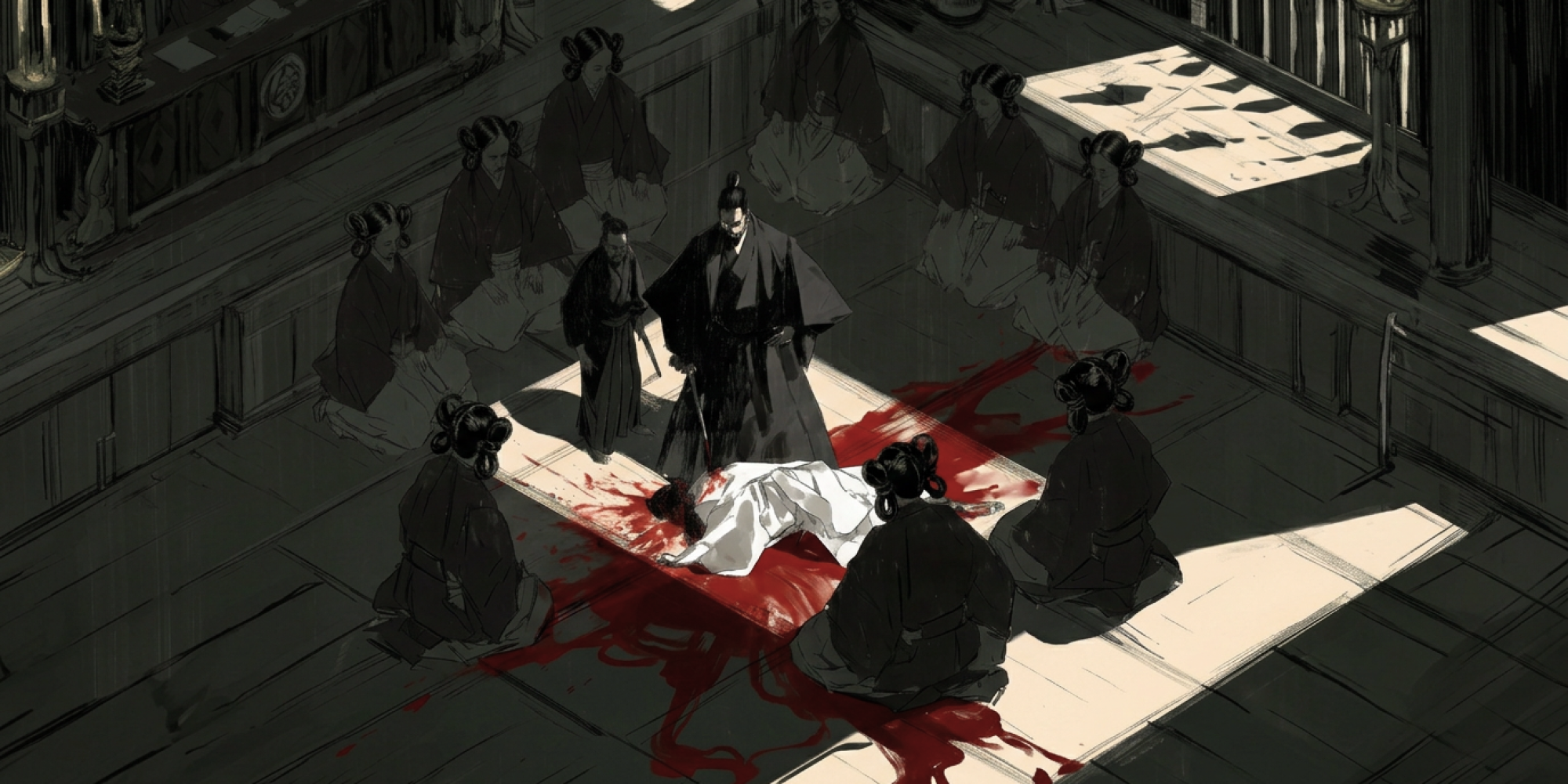
Two summers ago the eastern seat changed hands in a ceremony. A prince walked up to the man who ran the court and cut him down in front of the empress. She left the room. The dead man was Soga no Iruka. The prince is Naka no Ōe. He is twenty-one. He did not take the seat. He put his uncle on it.

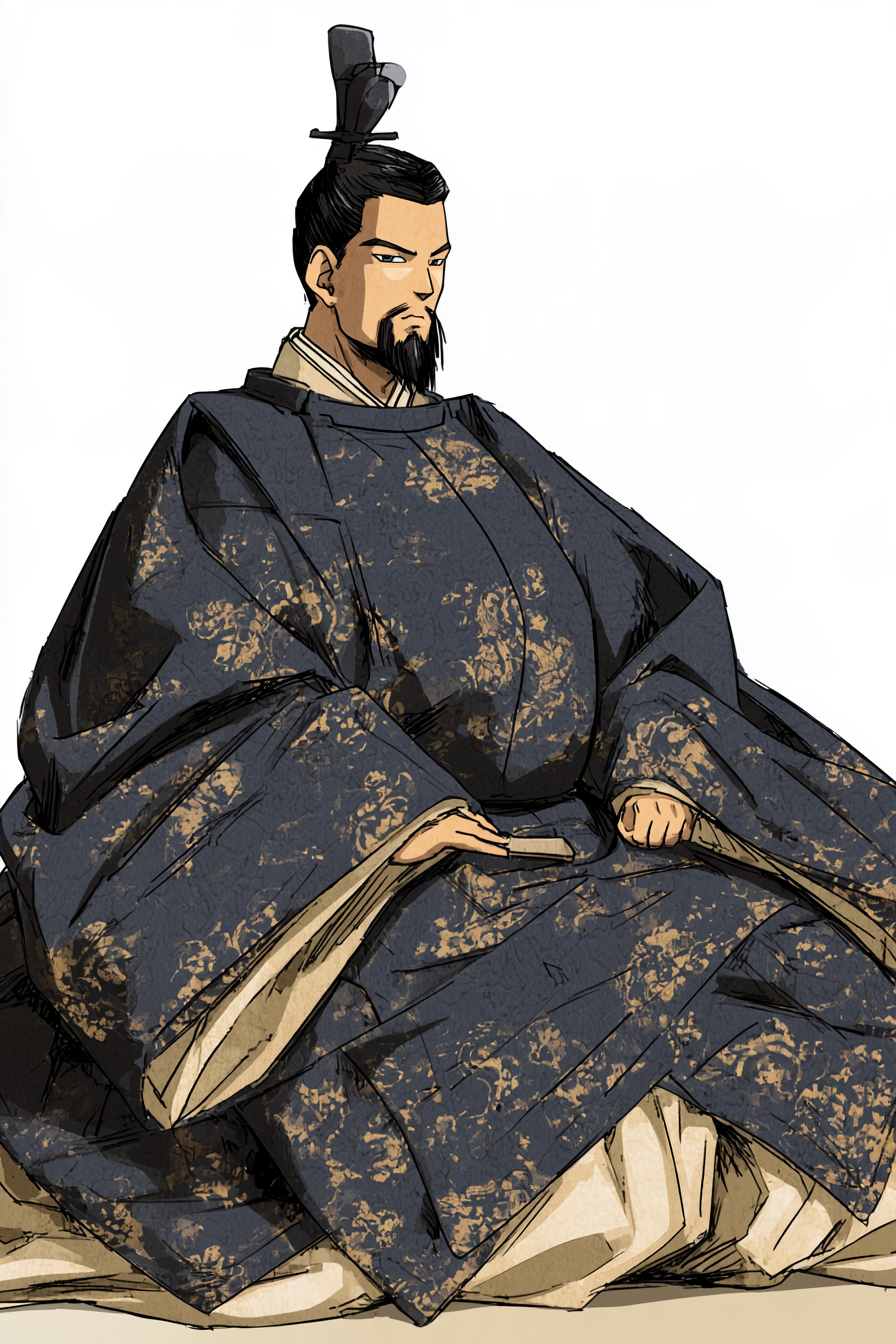
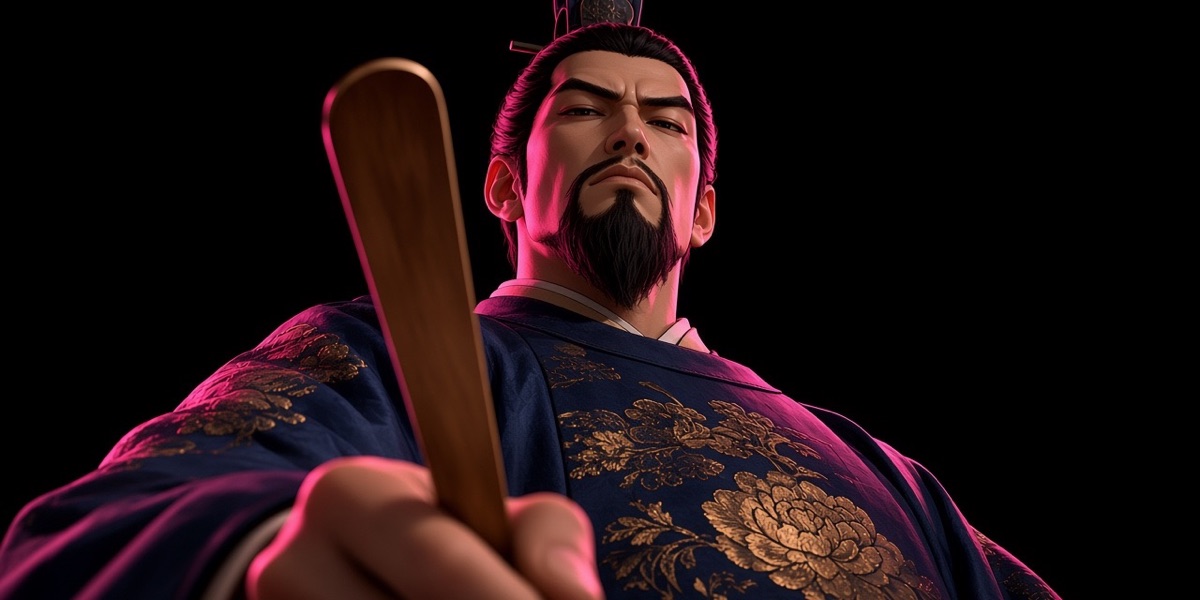
The uncle is . He thanks people. He is rewriting the laws so they look like the western ones. The prince who made him sits where the lamp thins. The room watches that dark the way other rooms watch a crown.
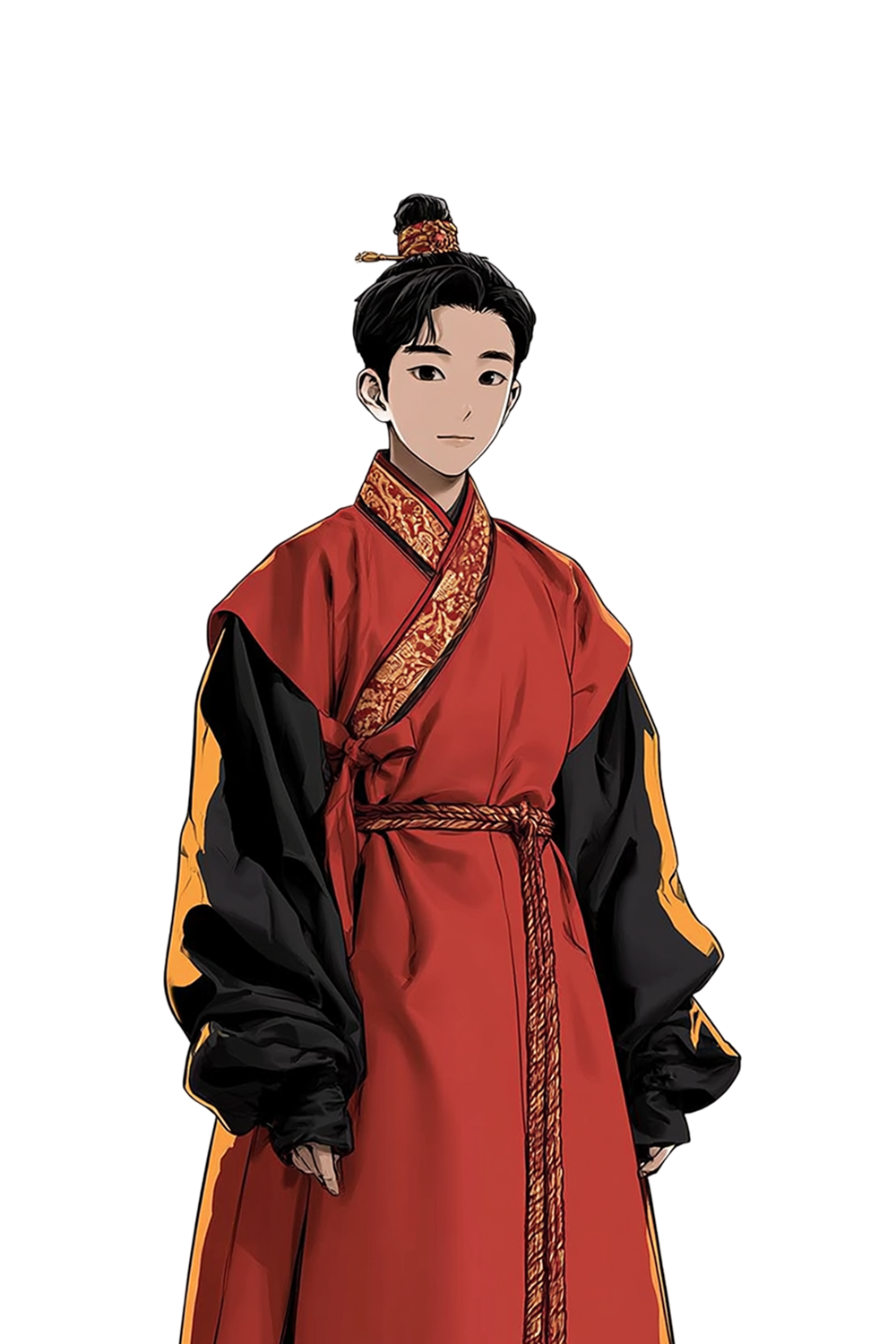
came east at seventeen. He is past thirty. The cushion has his shape. The clerks copy a hand he taught them. The court calls him a friend. That is the polite word for a hostage it has decided to love.
Across the wider water, the man this ship wants killed his own brothers at a gate. The world agreed to call that heaven. The floor is the same. So is the worship. The knife is larger. This court first. Then that one.
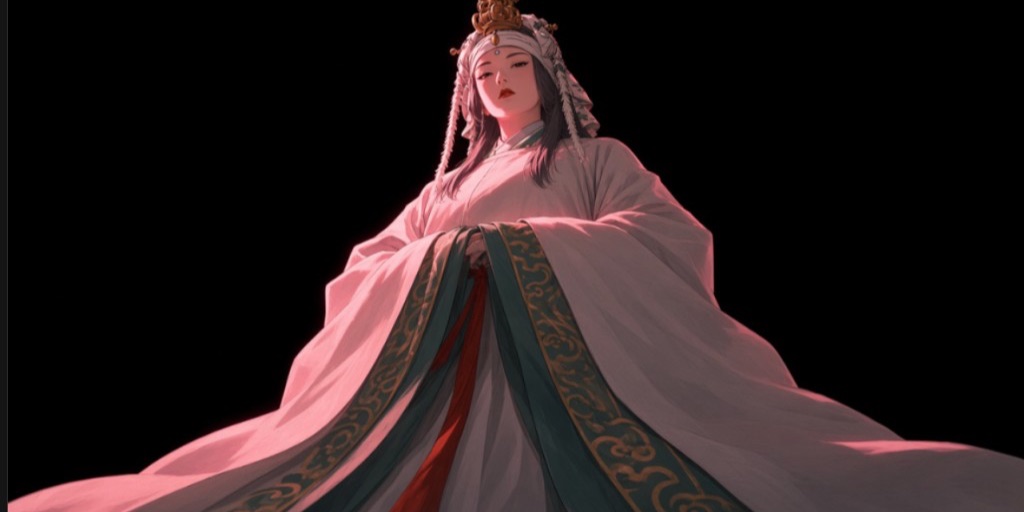
distrusts a good mood. The yard at home is still damp where they scrubbed it. Half the guards are counting the dead. The queen, who cannot tell him about the rain, has sent him west with one small ship and a speech she practiced.
The crossing is gentle. The sailors sing. He lets them.
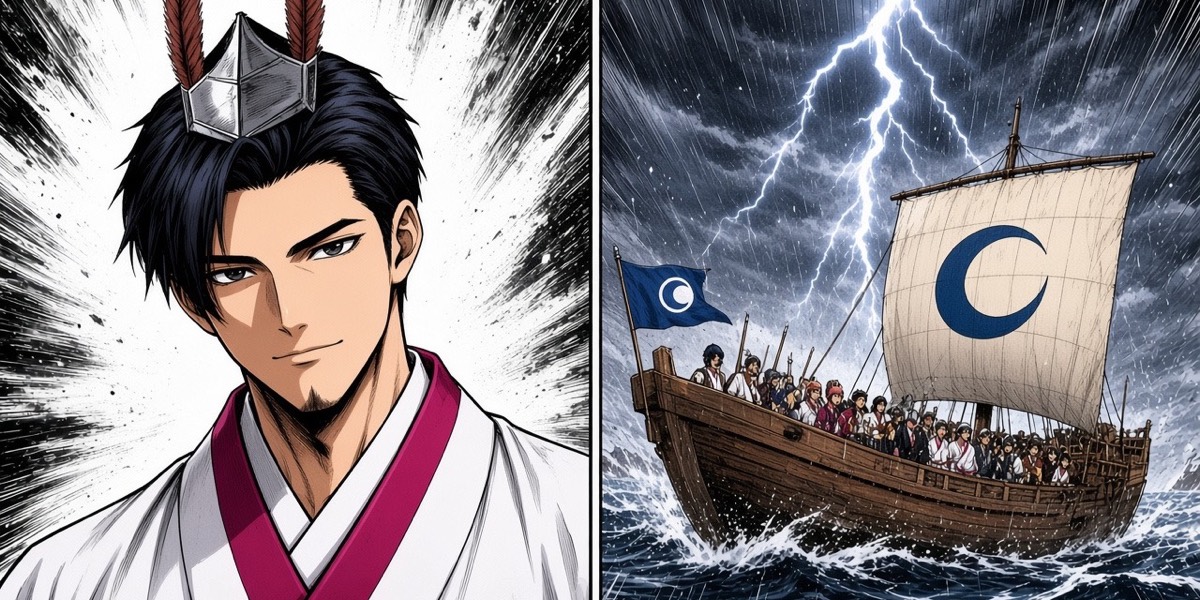
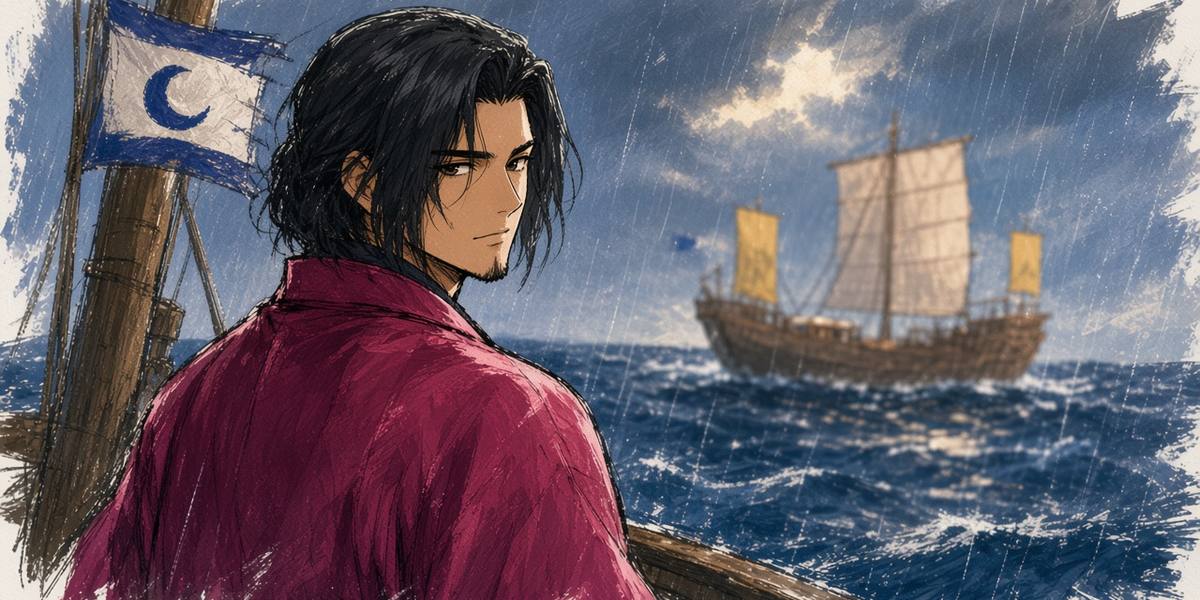
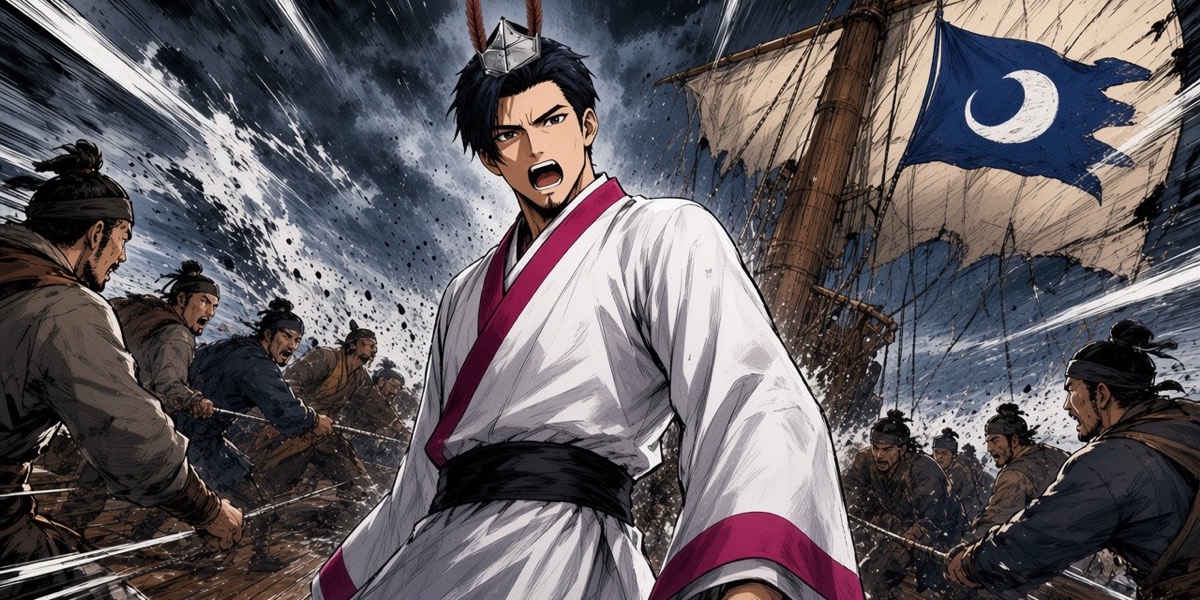
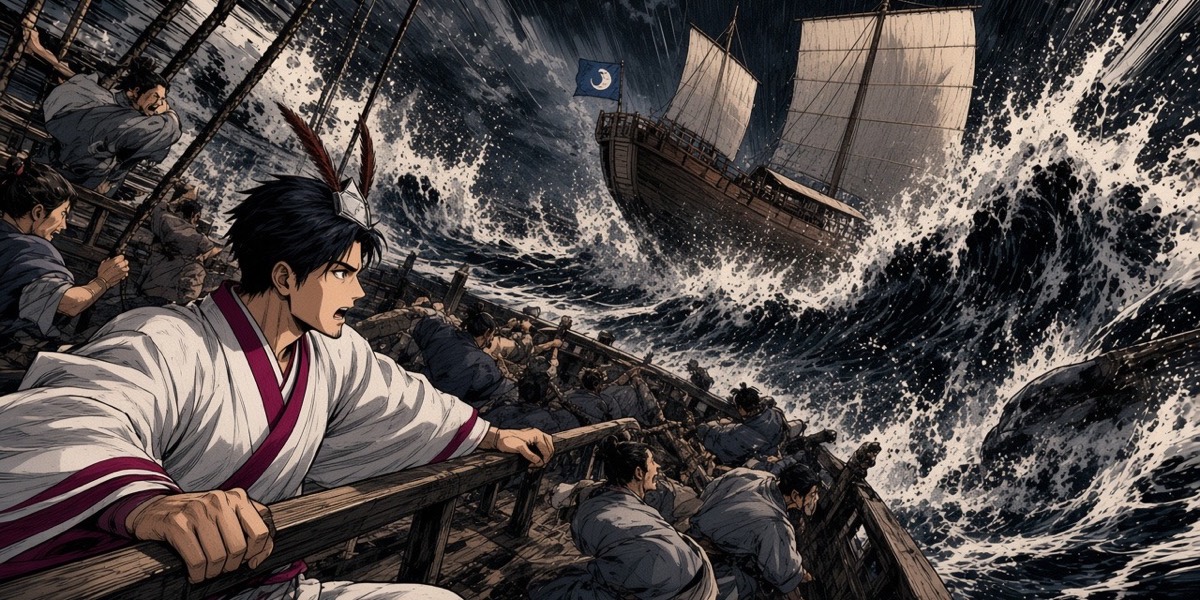
He stands at the rail in the white envoy silk with the magenta bands — the ambassador dress — and counts islands the way other men count beads. Around him the crew works the sheets. The strait is a door. He has a speech for the other side of it.
The song stops before anyone gives an order.
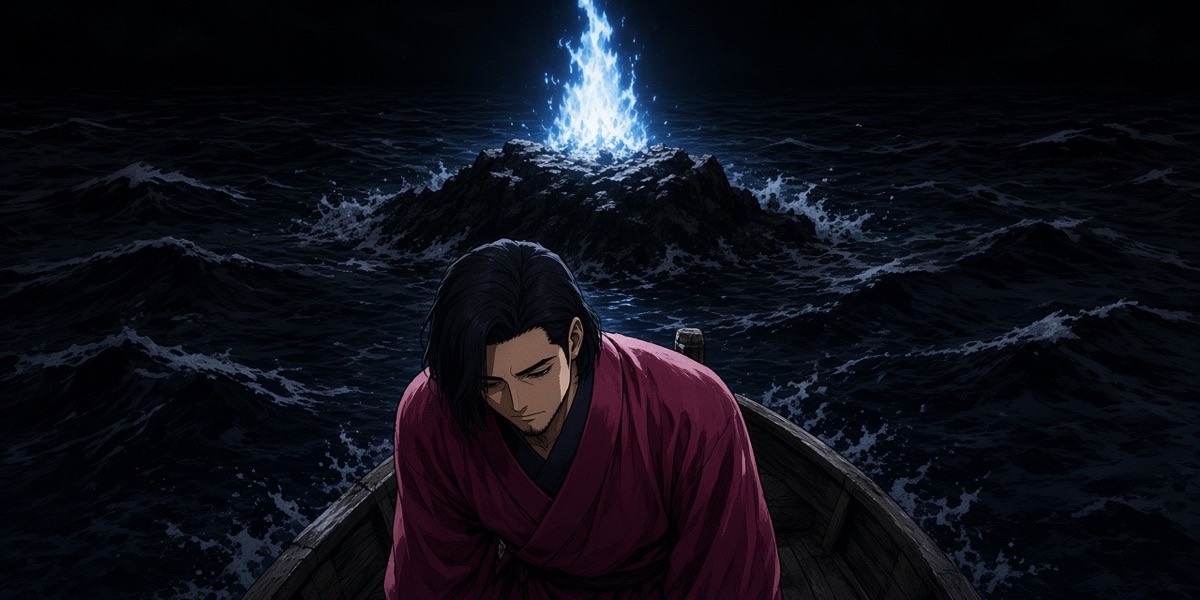
On the rock, a blue flame stands up like a post that forgot to fall. Two centuries of weather. The column is still the hottest color there is.
The record is very proud of that detail. called himself a dog of while the color climbed him. read it as a boy and thought it was a line. From the rail it is a man who had a choice of fleets and took the one that burned him.
He bows. It is a ridiculous thing to do to a fire. The fire has had enough bows. It does not flicker.
He is still bowed when the wind changes its mind.
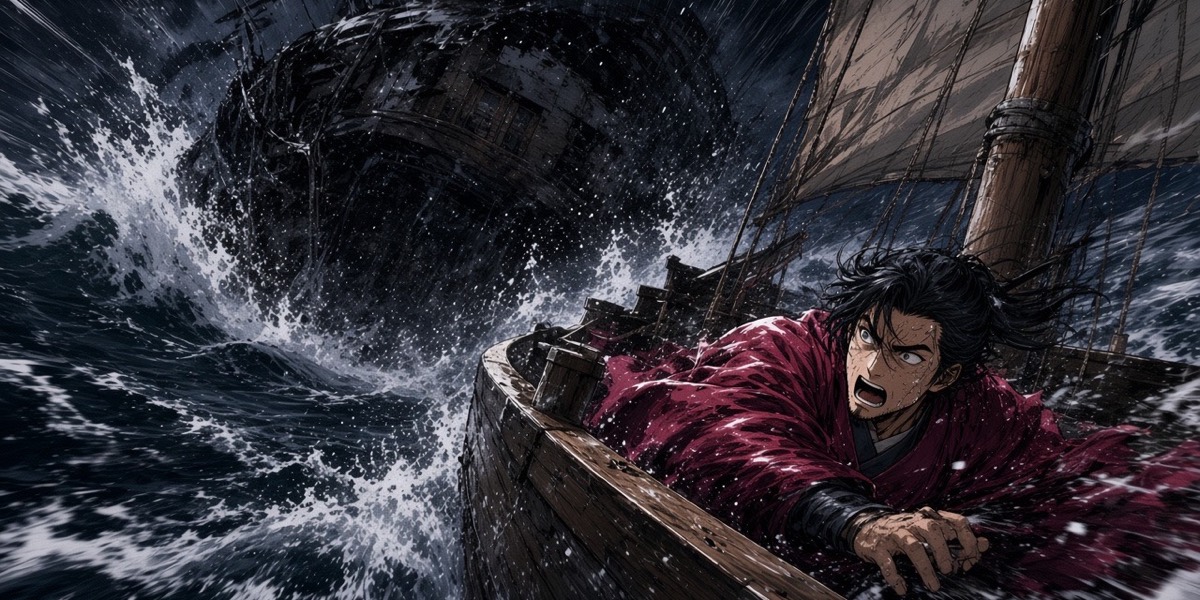
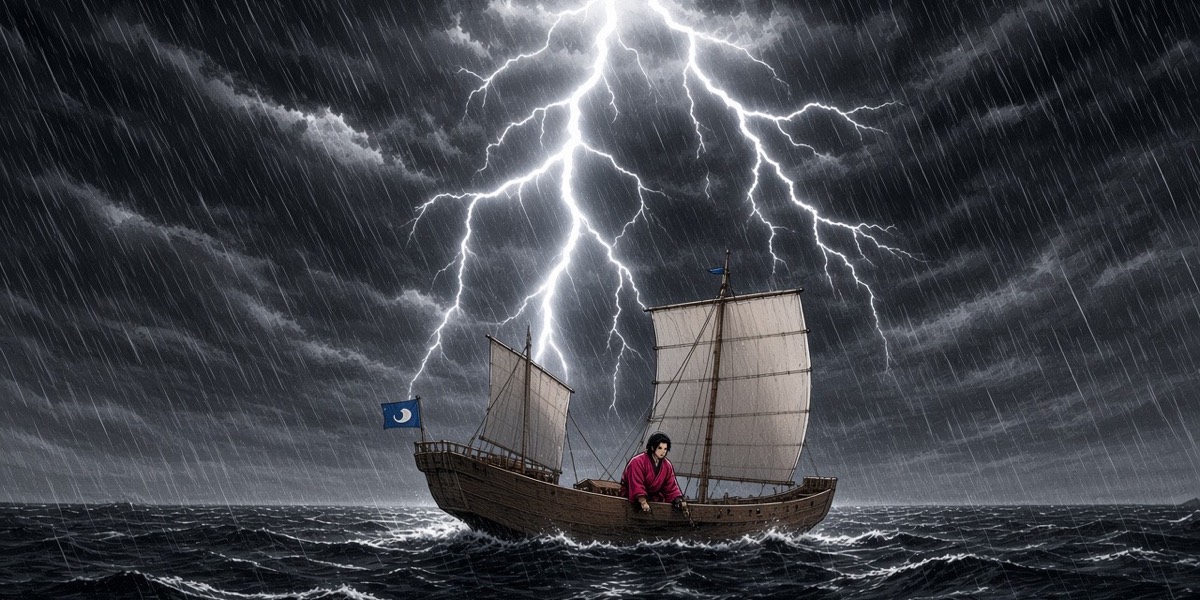
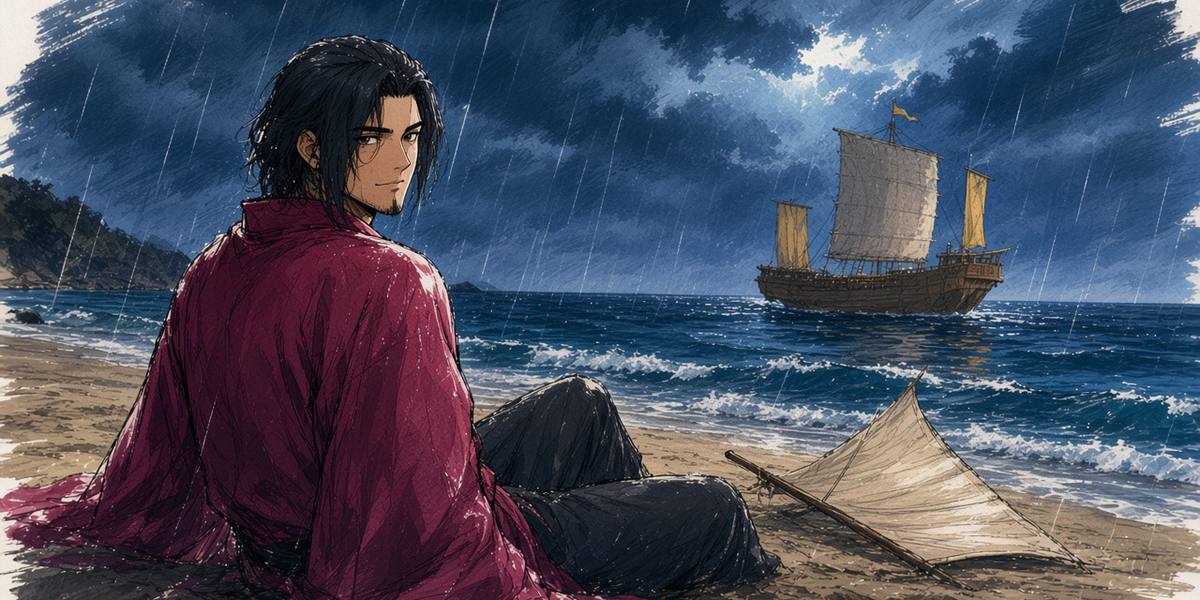
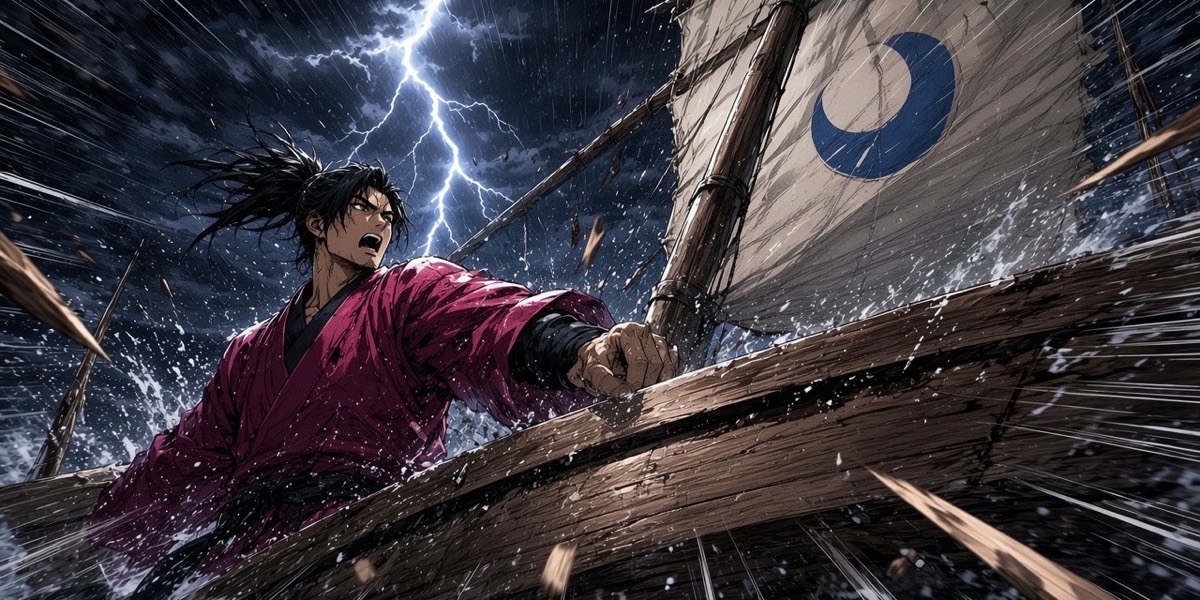
The mast goes first. It does not snap clean. It folds, screaming wood, and the cream sail tears down the blue crescent like a mouth opening.
The song, which had started again out of fear, becomes water. Then the ship.
He holds the rail among shouting sailors and thinks of a knot would have opinions about. The knot does not ask. A wall of black water takes the deck. The white envoy silk goes dark under it; men and rope go with it.
Lightning whites the whole strait for one blink. In that blink the hull is a toy. The next blink is only rain and the taste of salt where a couplet used to be.
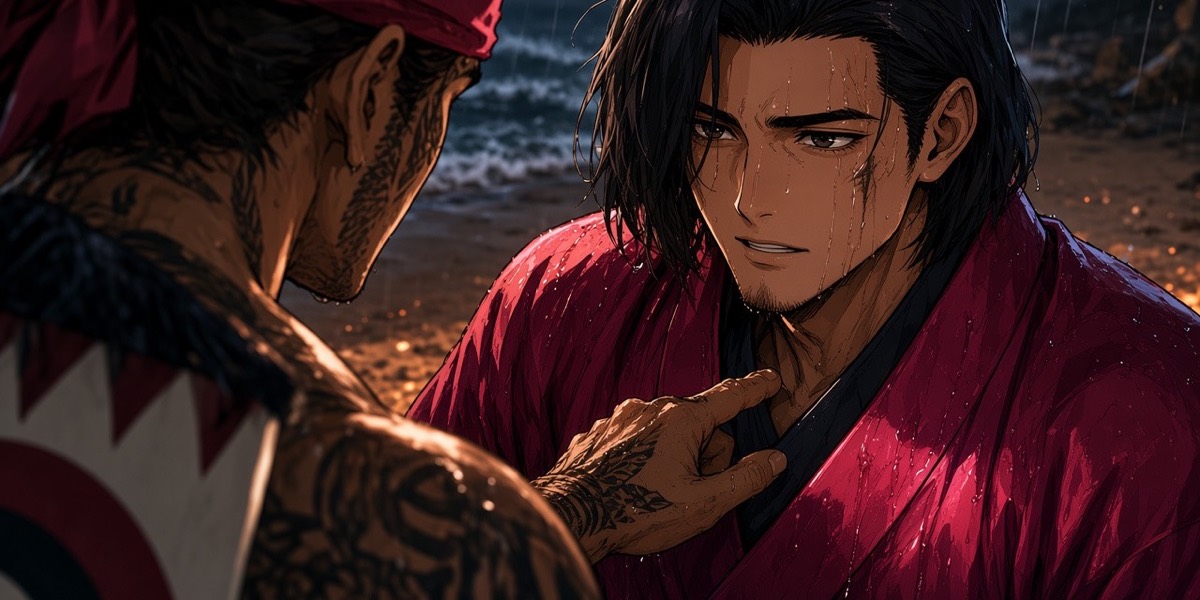
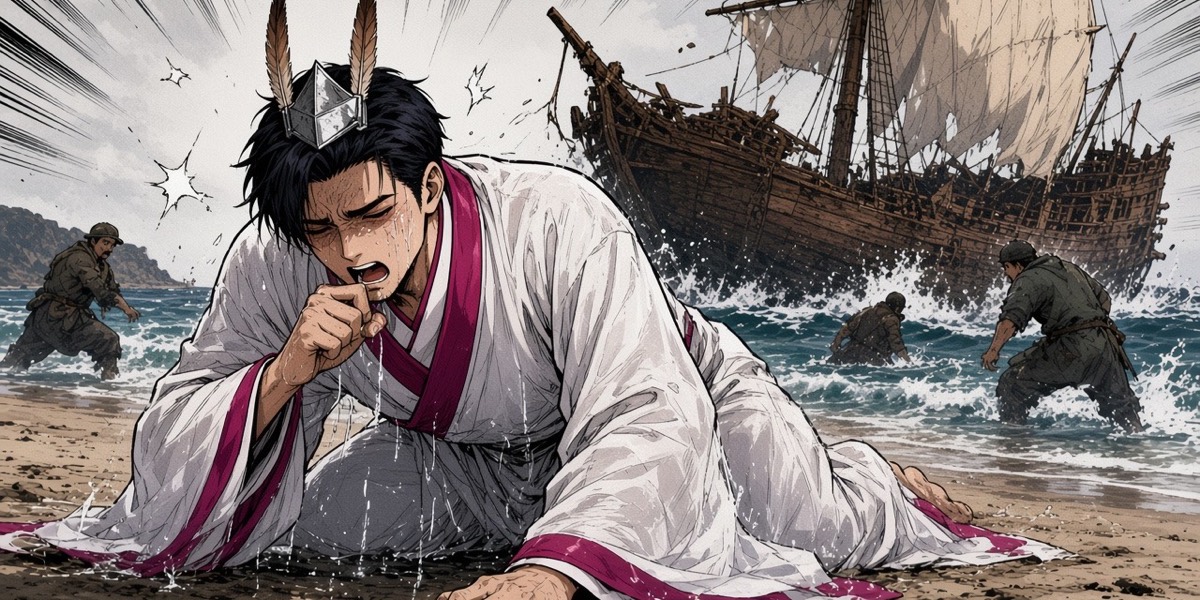
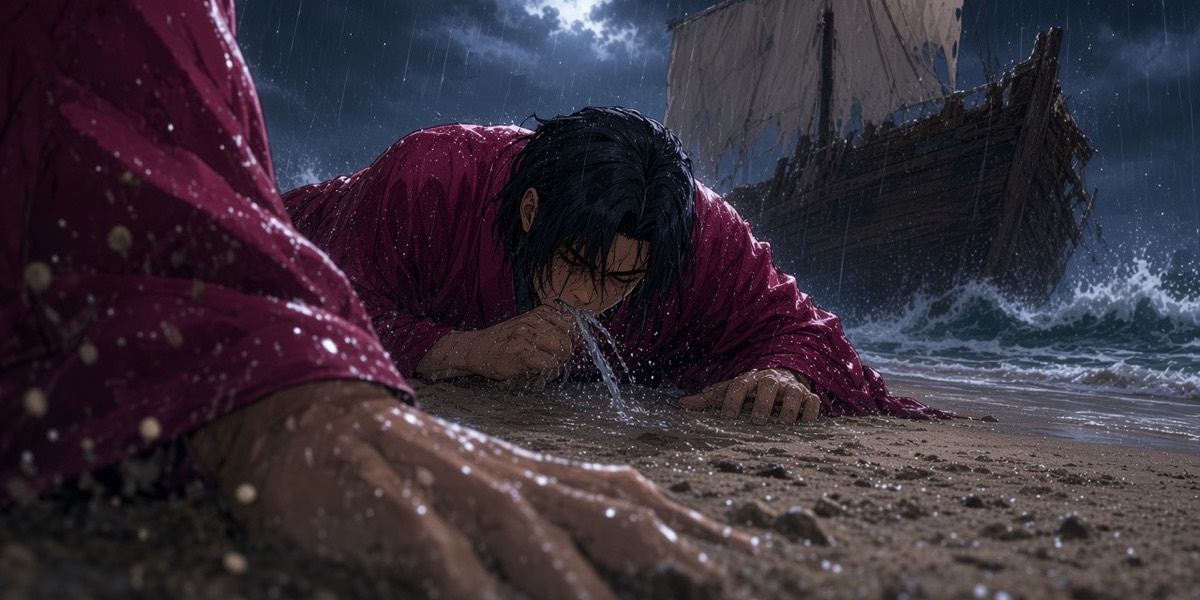
The sea puts him on sand and keeps most of the crew. He coughs the ocean out of a court throat. The wreck behind him is already a shape the tide is erasing — a snapped mast, a cream sail, bodies the water has not decided on.
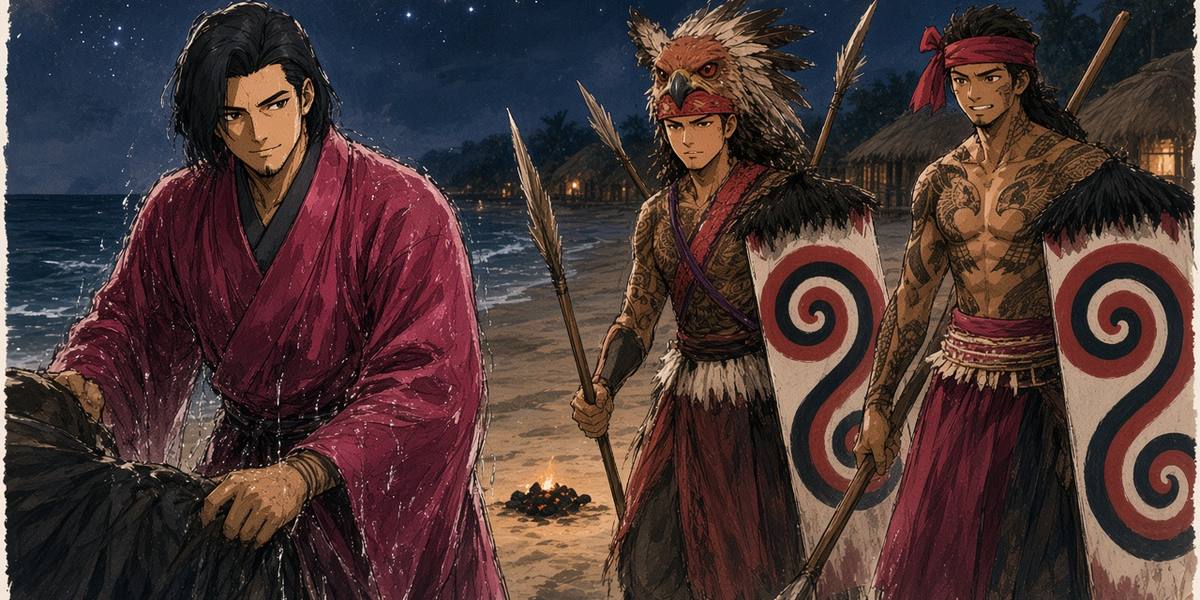
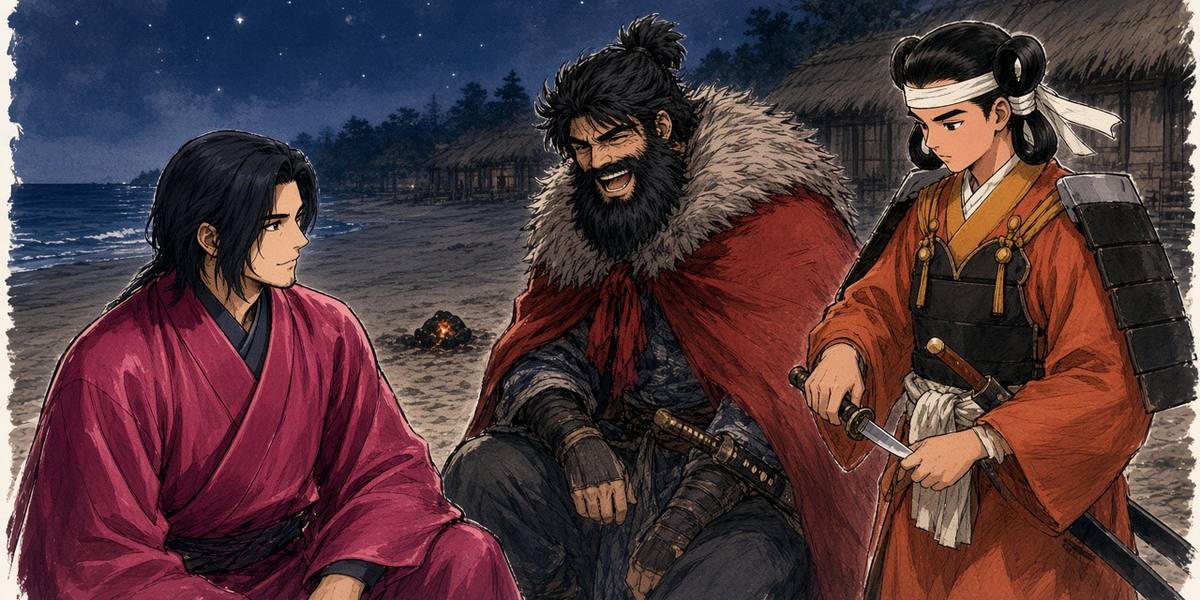
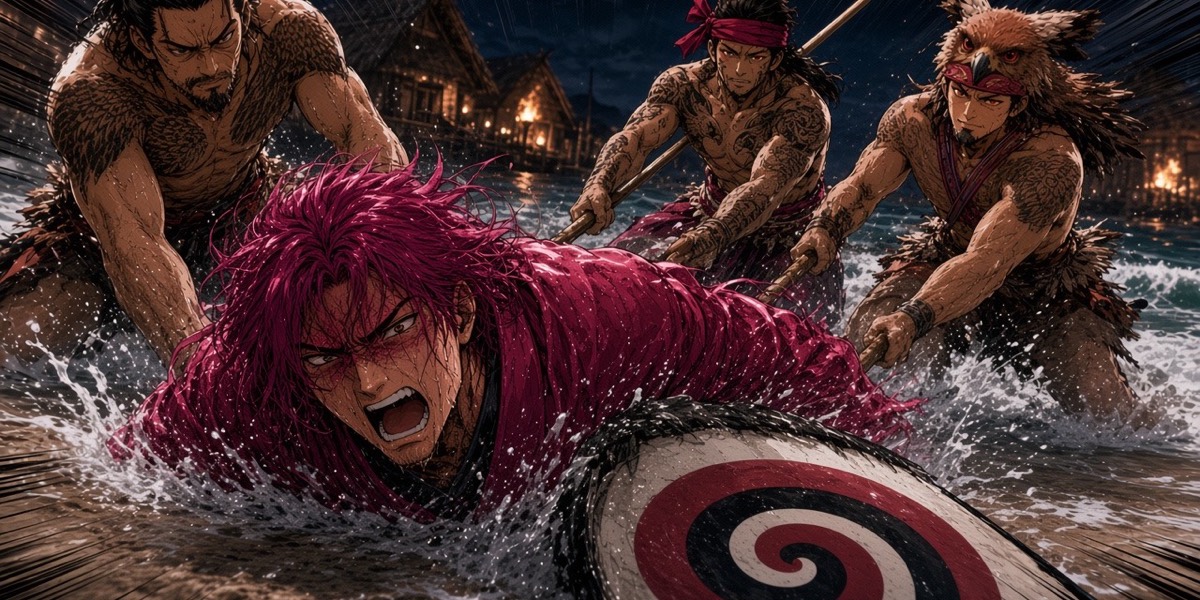
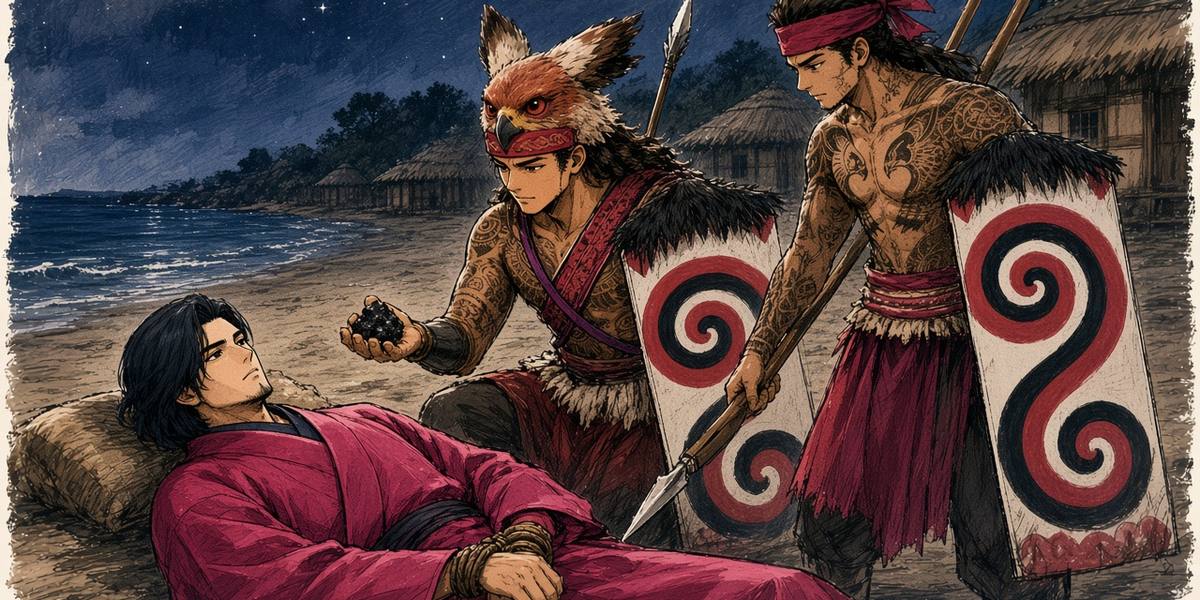
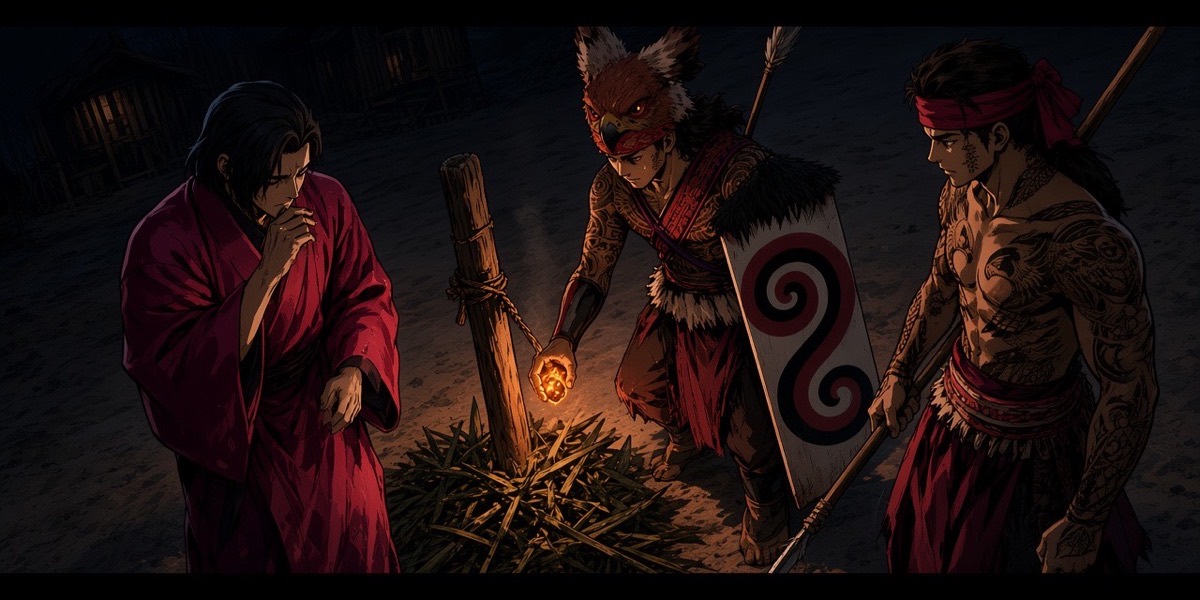
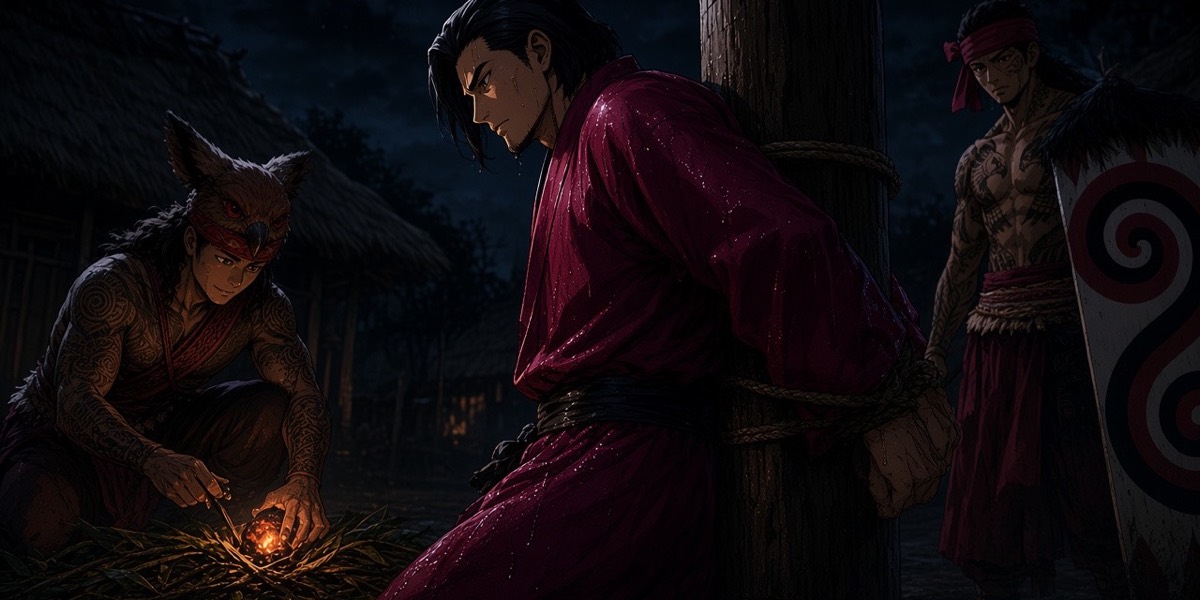
The men who pull him out of the surf have falcons inked on their chests and a shield painted in a spiral. A bear-skin hangs in the same row of huts. The court up the island has been writing these houses down as finished. The beach has not heard.
stands up in wet magenta and gives them the greeting he practiced on eastern envoys. Name. Rank. He is not a raider. He would like a fire that is not a person.
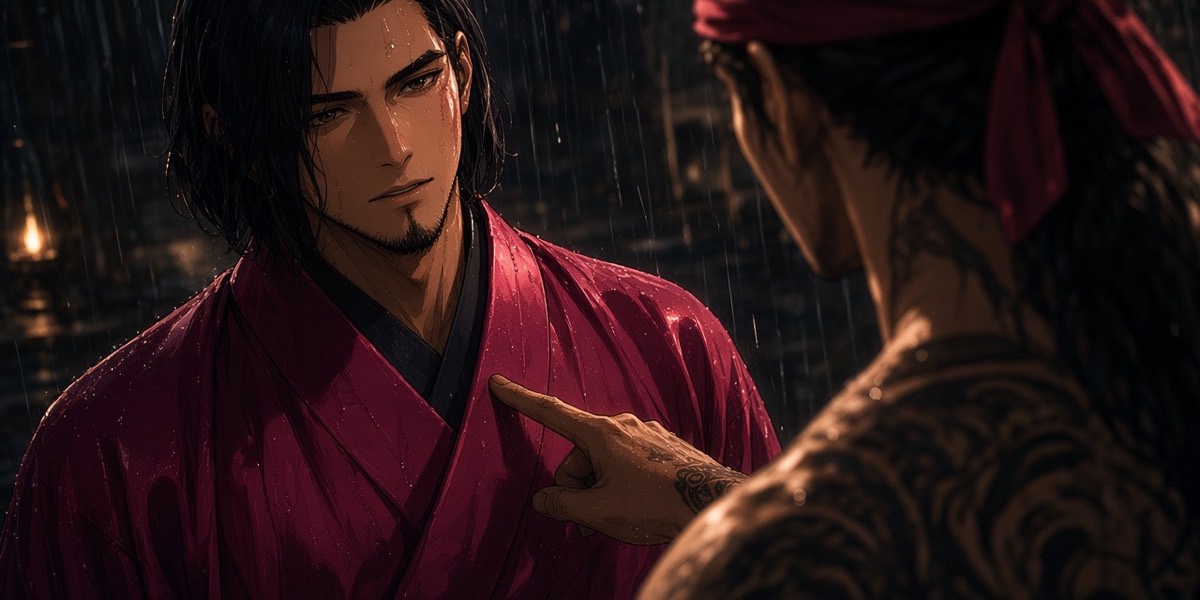
He tries the word back, hopeful. The man points at ’s chest. Then at his own.
So he has been told that he is a person. It is less than he hoped from a sixth language.
He tries . The faces do not move. He tries his own tongue, slower, as if speed had been the offense. A man in a falcon headdress steps out of the huts. The feathers are wet. The eyes are not.
A bear-elder behind him says the same word, and nods at a bare patch of ground. , who hates to leave a syllable unused, answers in kind.
The chief looks pleased. That was a mistake.
They do not hurry . The bear elder goes for dry wood and comes back with an armful that still drips. The young falcon man says the word again, softer, as if the second time might land. counts the gaps between the huts. Three. All of them end at the sea.
Night comes down on the stakes and the spirals. Up the island a capital is lighting lamps for a king who thanks people. Down here the piety is a coal and a green branch.
They walk him into the village. Someone puts a one-piece wooden clog on each wet foot. It clacks. He looks down as if the shoe had joined the conversation.
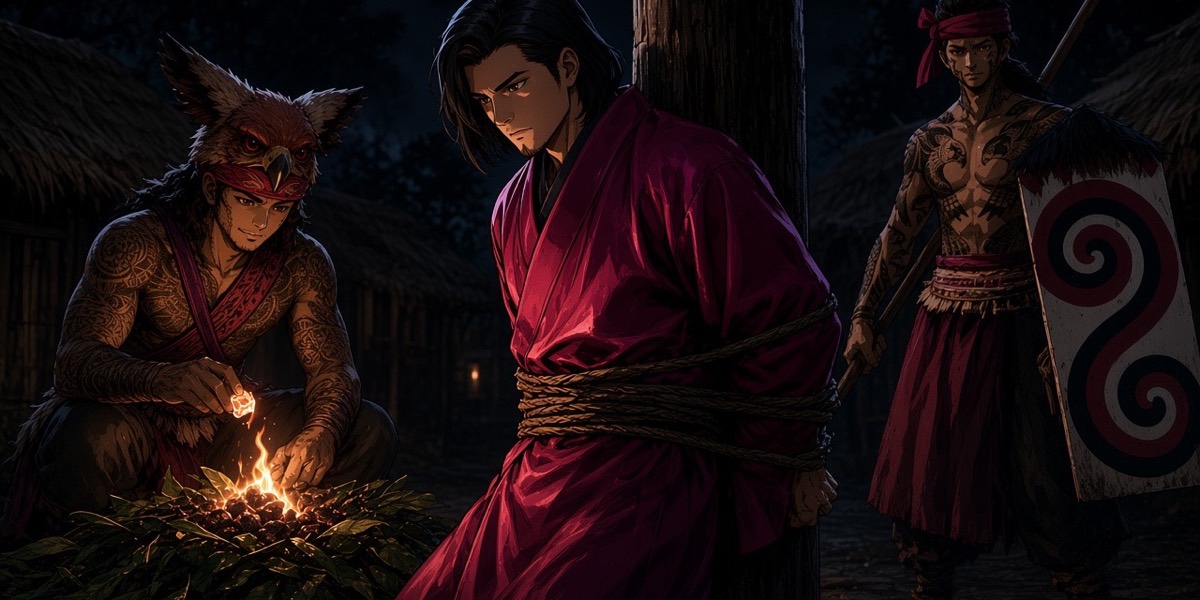
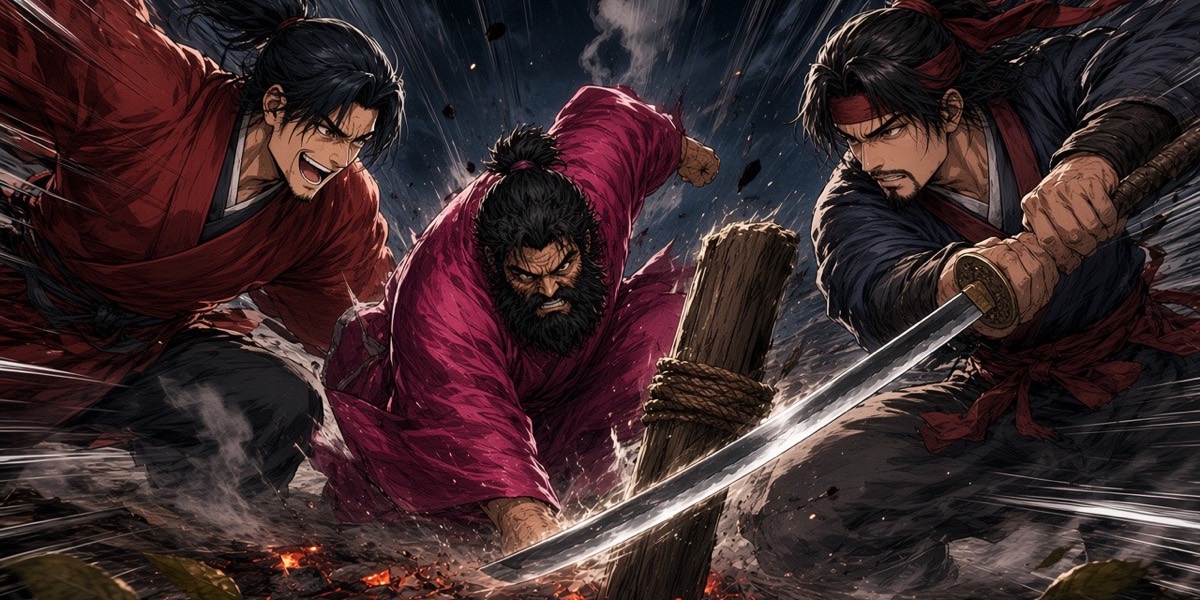
The ground they nodded at is a stake. The wood piled at it still has leaves. He understands the word then, which is late, which is his least favorite time to understand a thing.
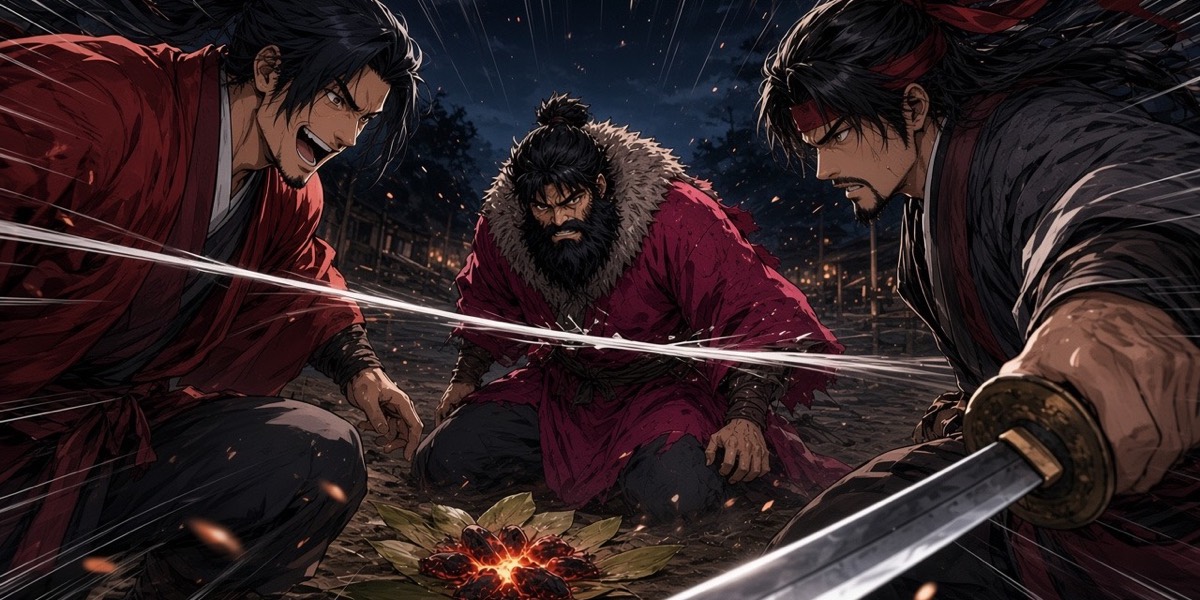
They tie his wrists to the post with a cord that has done this before. The falcon chief touches the green wood with a coal. The leaves hiss. Smoke goes up in a thick polite column and declines to become fire.
A shy orange takes the hem of the magenta and dies when the next wet leaf gives up its water. coughs a couplet. The couplet does not impress the wood.
The chief sends a boy for the dry pile behind the huts. The boy is quick. The red cloak is quicker.
The cord parts. The hem smokes and decides to stop. The falcon chief looks at the red cloak, at the spiral shields, and at the boy coming back with dry wood that no longer has a job.
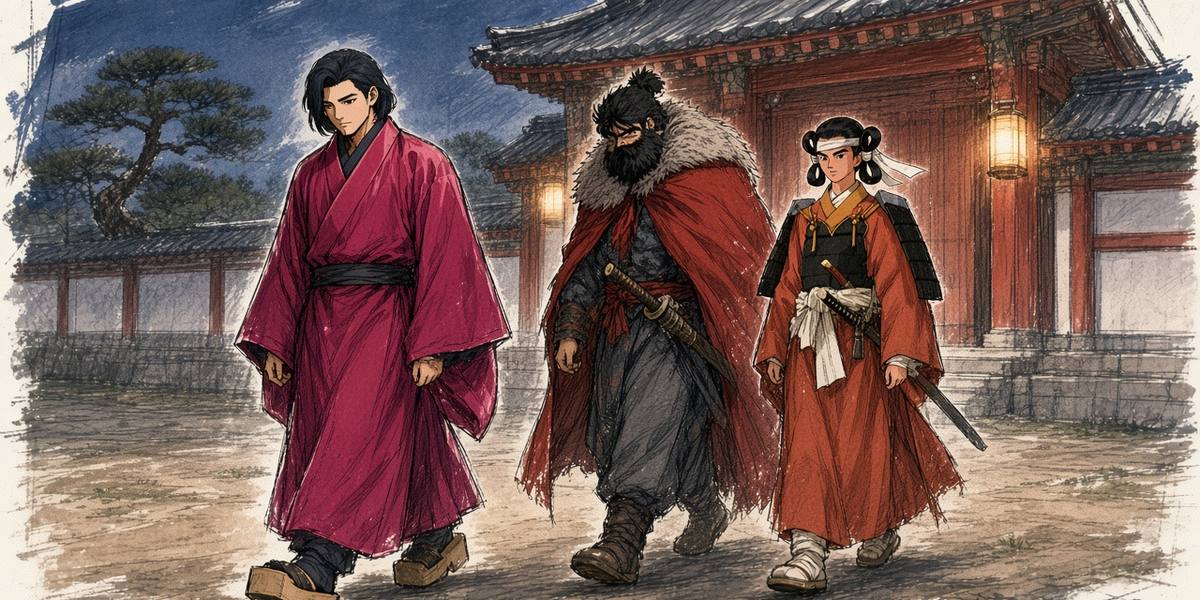
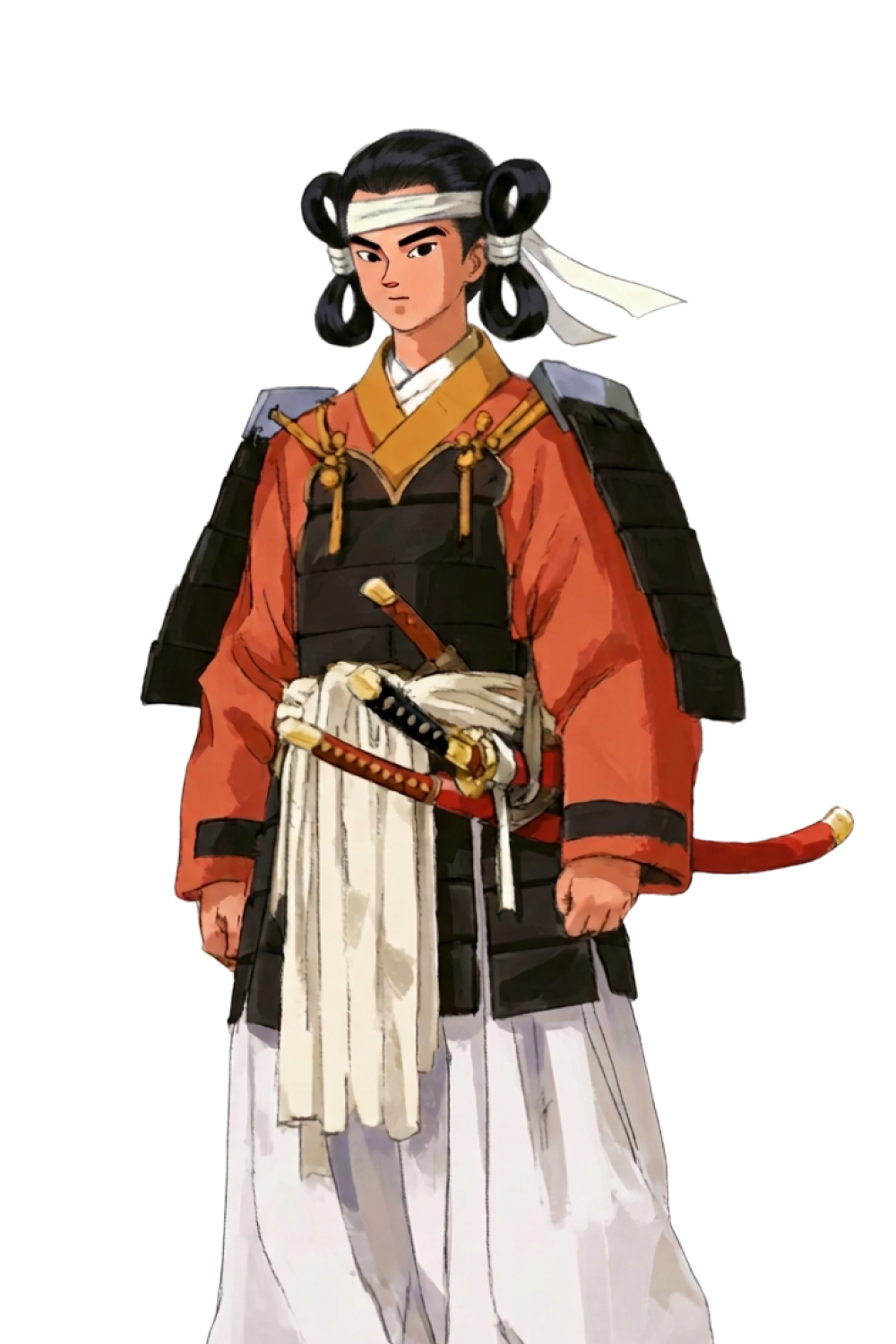
They walk north in the dark. The wooden clogs clack the whole way. Echi’s hair is looped over each ear like two black shells under a white band, and the loops bounce when he turns his head, which he does whenever starts a sentence and does not finish it.
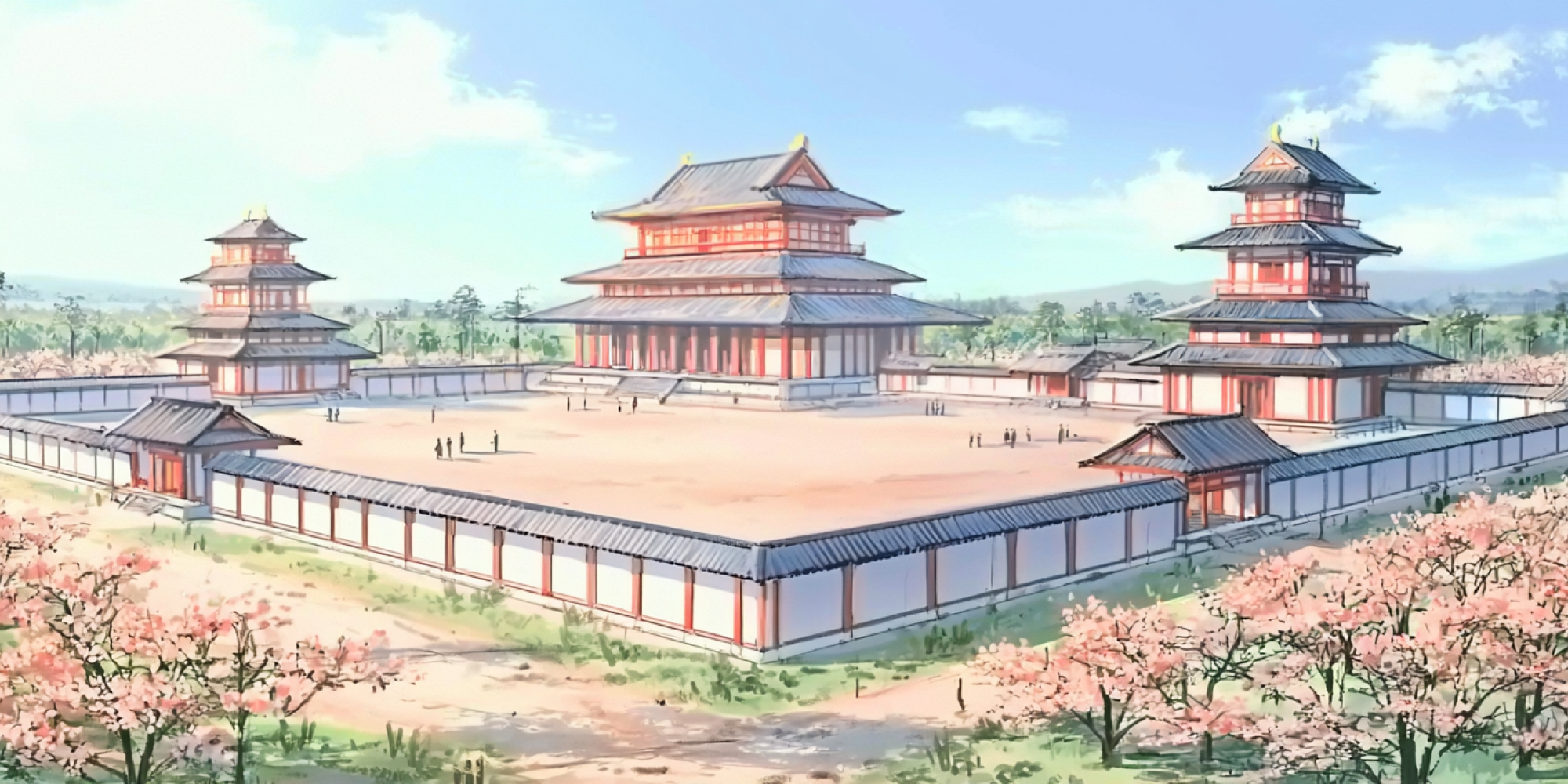
At the gate, the king’s men wear stiff leather shoes with a point, cut from a western pattern. They walk as if the floor were a rumor they are trying to believe. looks down at his own clogs and feels, for the first time since the beach, overdressed for the wrong century.
Echi kneels, takes the clogs off him, and sets them outside the threshold. He does it the way a man sets down a dog that followed him in.
A man at the post claps twice before he steps through. claps once. Faces turn. He adds the second clap late, like a man joining a hymn on the last word.
A woman of the court crosses the yard. Her brows are her own, dark and low. A comma of jade sits at her throat, cousin to the curved green stones at home, and her jacket is a cut that went out of fashion in his mother’s rooms. He bows to the jade. She laughs, because she thinks he bowed to her. He decides to let her keep the mistake. It is the first thing today that has gone well for anyone.
Inside, a clerk shaves a wooden slip with a small knife. The characters are . The teacher who carried the books over is dust. His students’ students are still copying his hand, and they cover the slip when they notice a foreigner reading it. Too late. has already had the line. It is a drill. Even the drills here have better handwriting than his court on a good day.
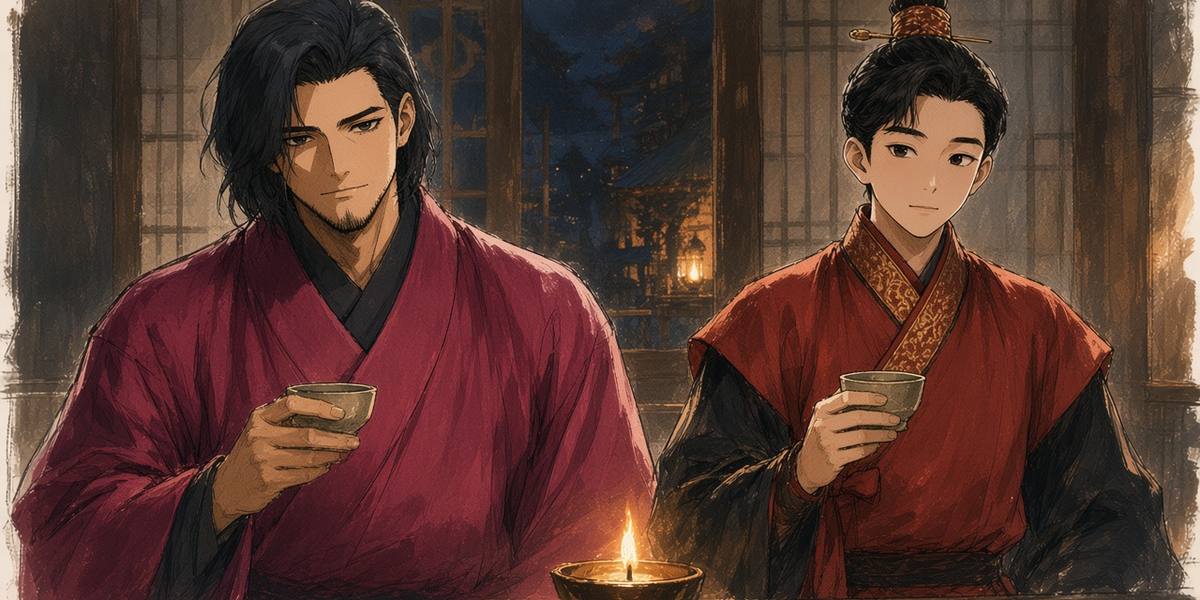
They feed him raw bream, cut so clean it looks offended. He eats it with the face he uses for bad wine at a good table. laughs into his cup. Echi does not.
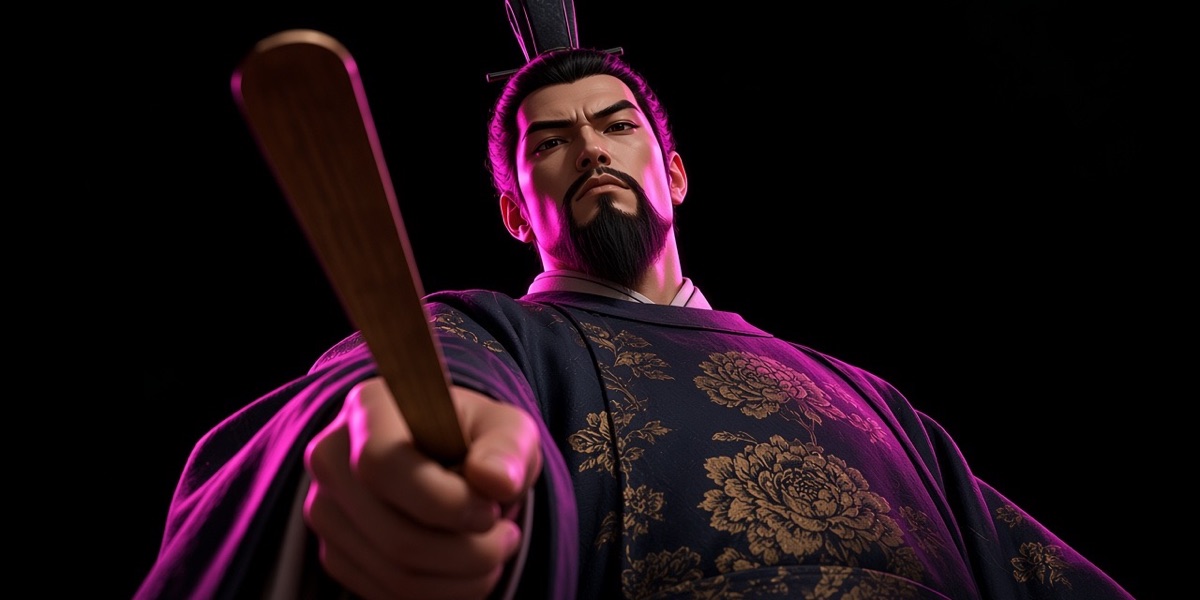
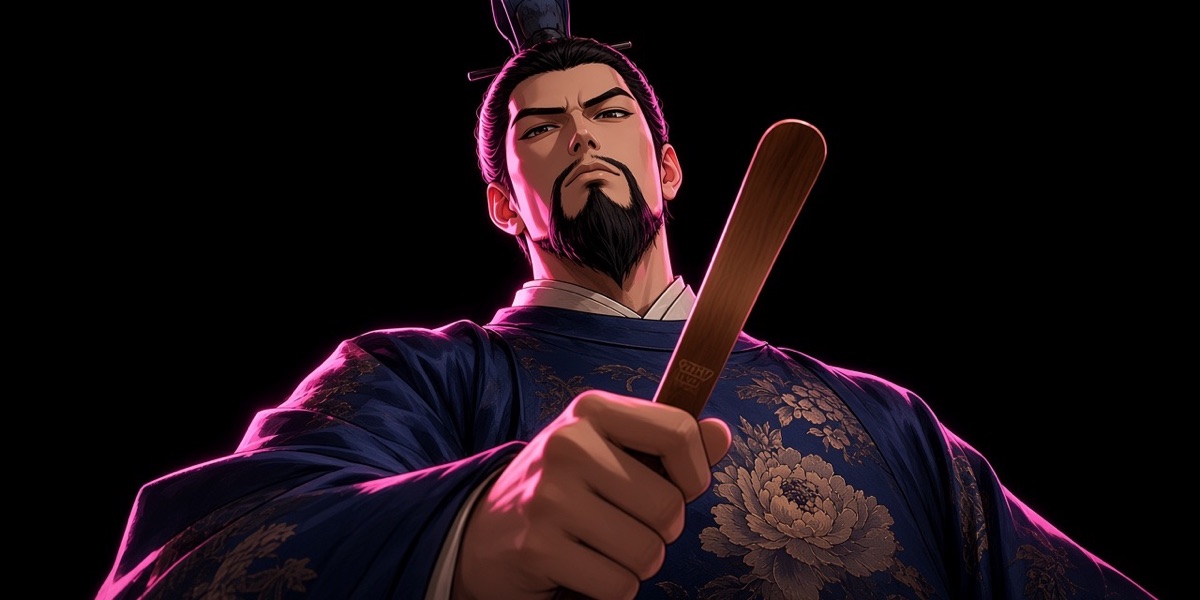
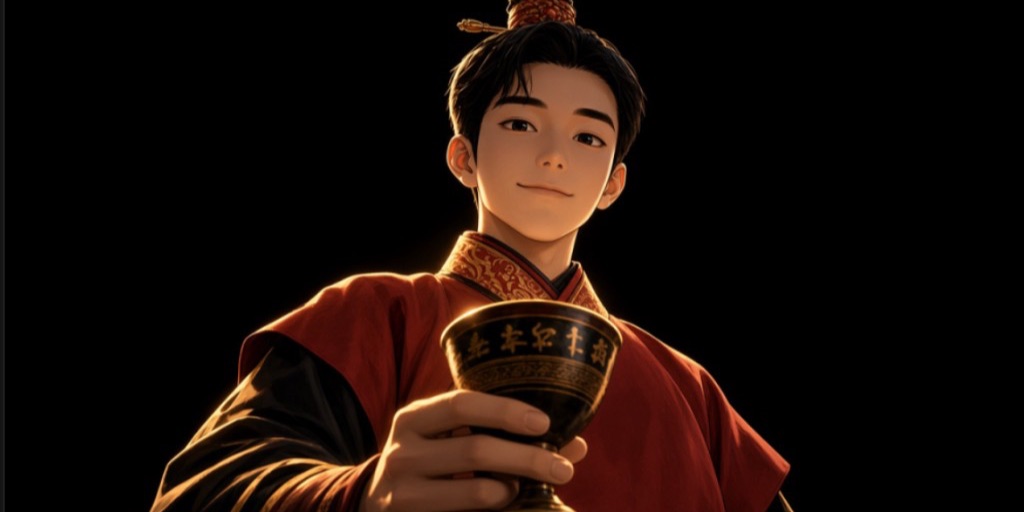
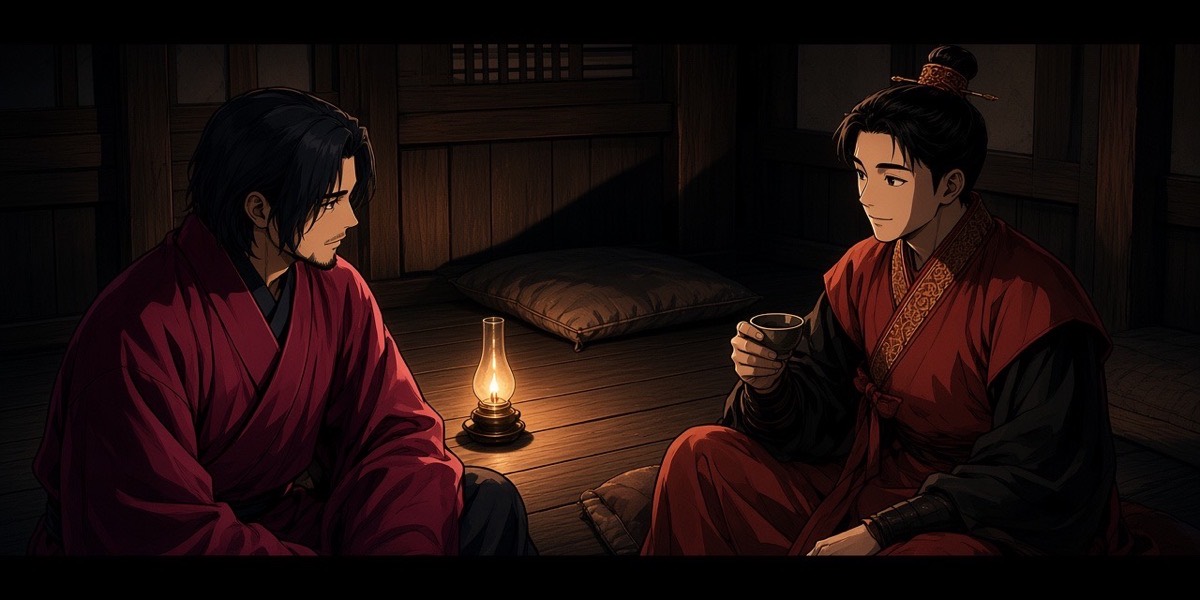
The hall is new wood and old loyalties, and the rest of it is dark. A chair has been set for the visitor, a western idea with legs that do not know where to stand. Across the room, on a floor cushion, in red and gold, a man is laughing at a song and wearing the pointed shoes as if he had been born in the rumor.

The room behind him is a life. A chest with clasps. A stack of slips in a hand he has taught other people. A lamp he lit himself, before anyone came to fetch him. He has been this court's favorite guest for half his life. He wears it the way a man wears a house.
He does not stand up quickly. That is the welcome, and the little cut inside it. Then he stands, because he is still a prince, and the standing is graceful and half a breath late.
He says it lightly. The cup in his hand is full, and was full before came in. The man on the cushion is past thirty. He was seventeen when they sent him. The laugh is a man’s, and he uses it when he wants the next sentence to arrive softly.
The hall is night. One lamp on the floor. The king sits in the light. A younger man sits just outside it, hair looped, a sword already used in a ceremony. Nobody presents him. The knees point at him. The sentences point at the king. The crown gets the sentence. The knife gets the room.
The king is courteous and unhurried. He asks after the new queen. He admires the padding in a crown he has never seen. He lets get all the way to the army.
pours the king’s cup and does not translate. He does not have to. The king has understood every word, and the pouring is the answer standing in the room in red.
A minister starts the sentence about filling the strait with ships. The king thanks him before the verb arrives. He thanks . He thanks the prince of for the wine. He decides nothing out loud, which is how this court refuses a man without making a face.
bows the correct depth. His hands are steady. The chair, when he sits again, is just a chair. , on the cushion, lifts his cup a finger, the way you salute a game you have already won.
Before the court is awake, walks him down to a boat. The pointed shoes are quiet on the new planks. The wooden clogs have not been invited.
He looks sorry for half a breath. Then the sorry leaves, and the cup is still in his other hand, and he is a man going back to a cushion that knows his shape.
The boat takes the current. Behind him the new halls are a dark comb against the last of the night. Somewhere south, a boy is still explaining a pile of dry wood to a chief. Somewhere in the strait, a blue post is still standing its watch.
keeps its old friend. West of west, a man who hates to lose is still on his throne…!
