




Chapter 84
White River



AI Summary
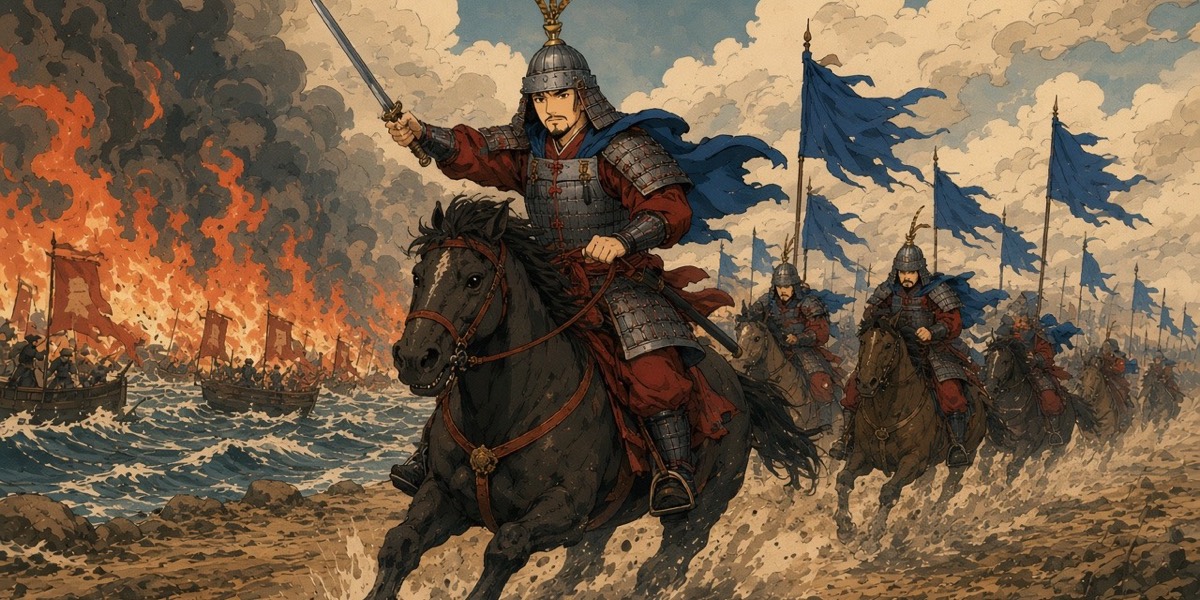
- The Shore On the south shore of the mouth the Baekje horsemen guard the landing.
- The Twenty-Seventh Day The first the Eastern ships to arrive do not wait for the rest.
- The Twenty-Eighth Day That night the Eastern captains and the king of Baekje hold council on a deck, and nobody looks at the sky.
- The Tide Takutsu’s ship is in the first line.
- Brothers In the smoke a small boat gets away from the king’s ship with a handful of men in it and turns north.
- Juryu Juryu holds ten more days without its king.
- Imjon One fortress doesn’t hear it.
- Characters
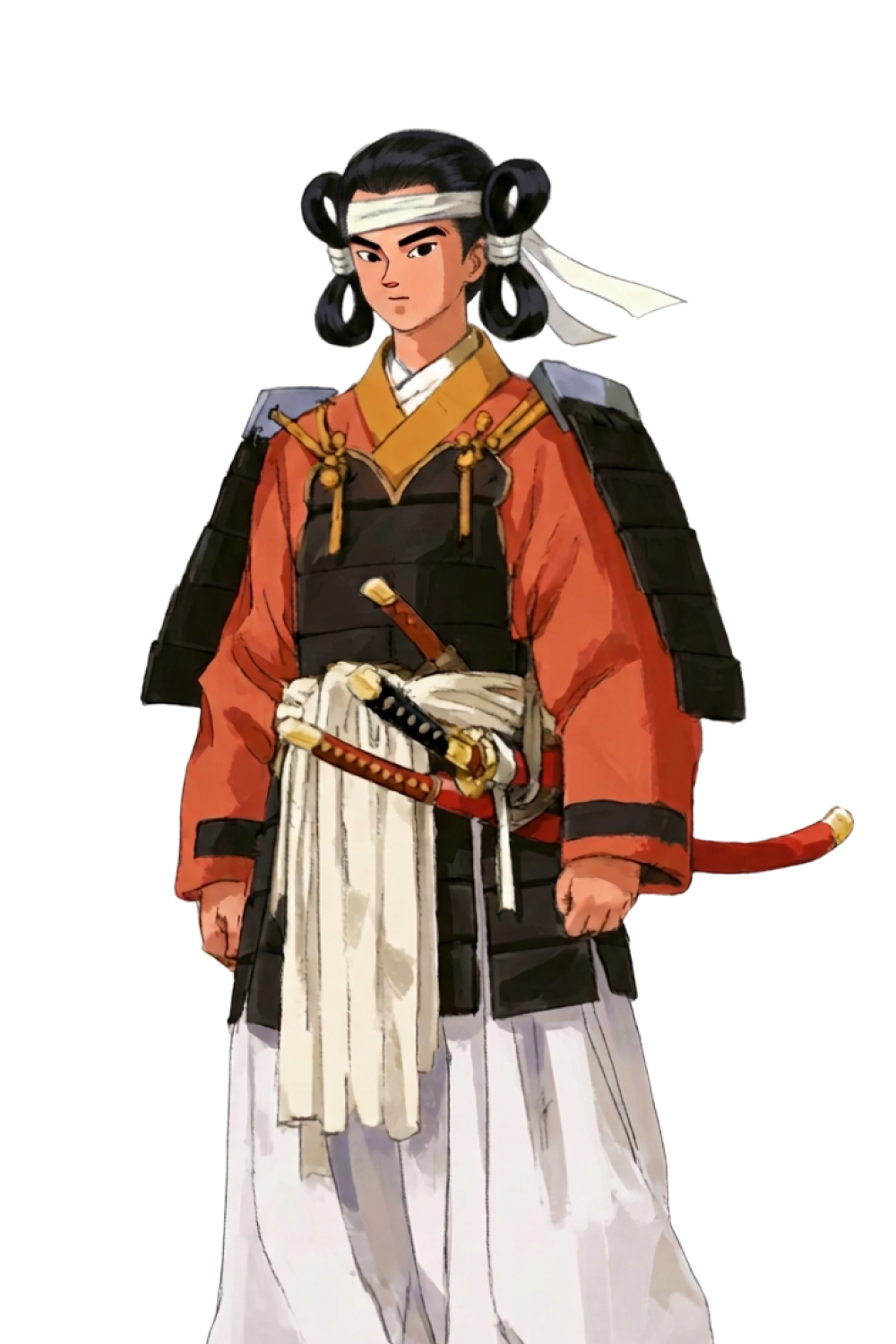
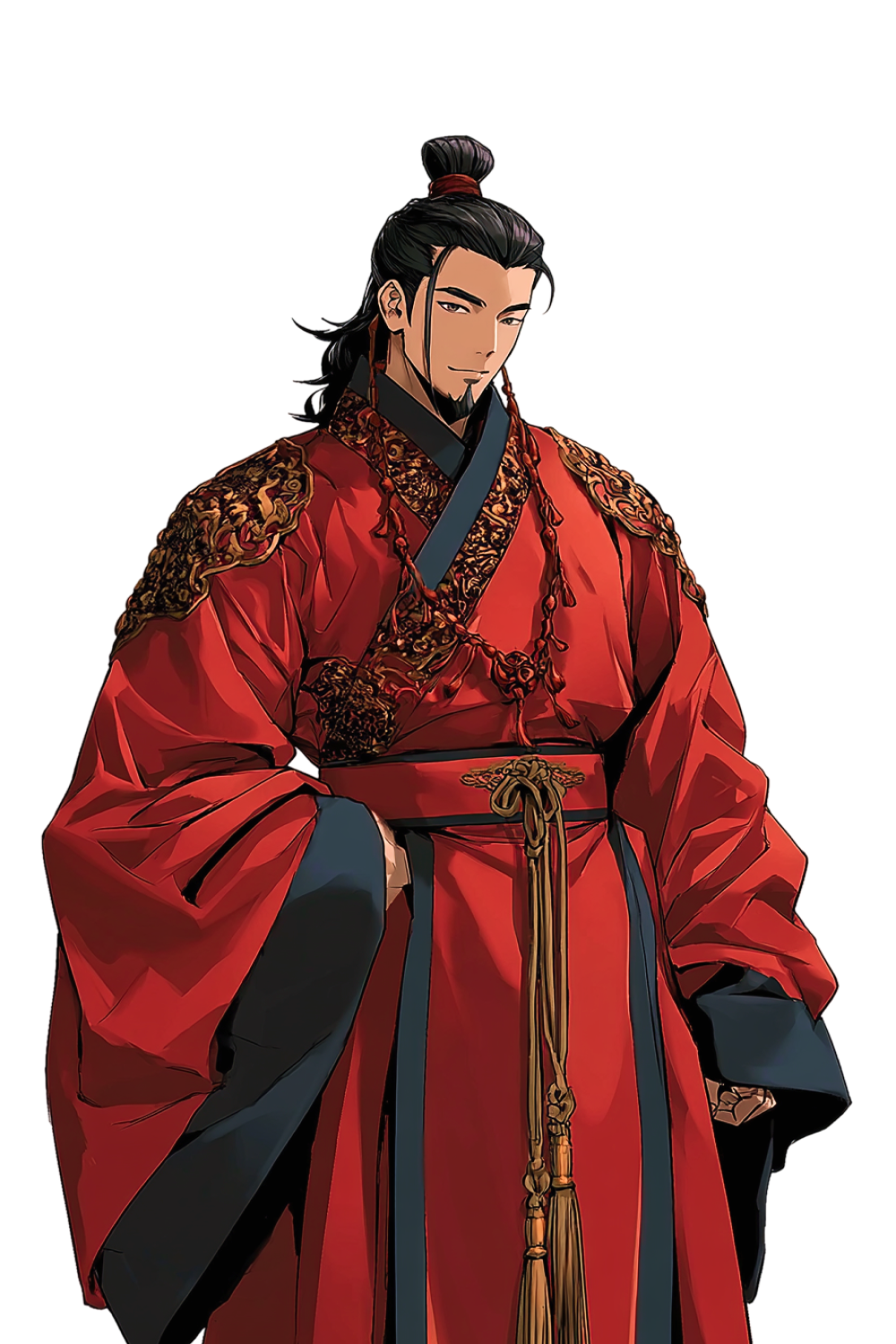
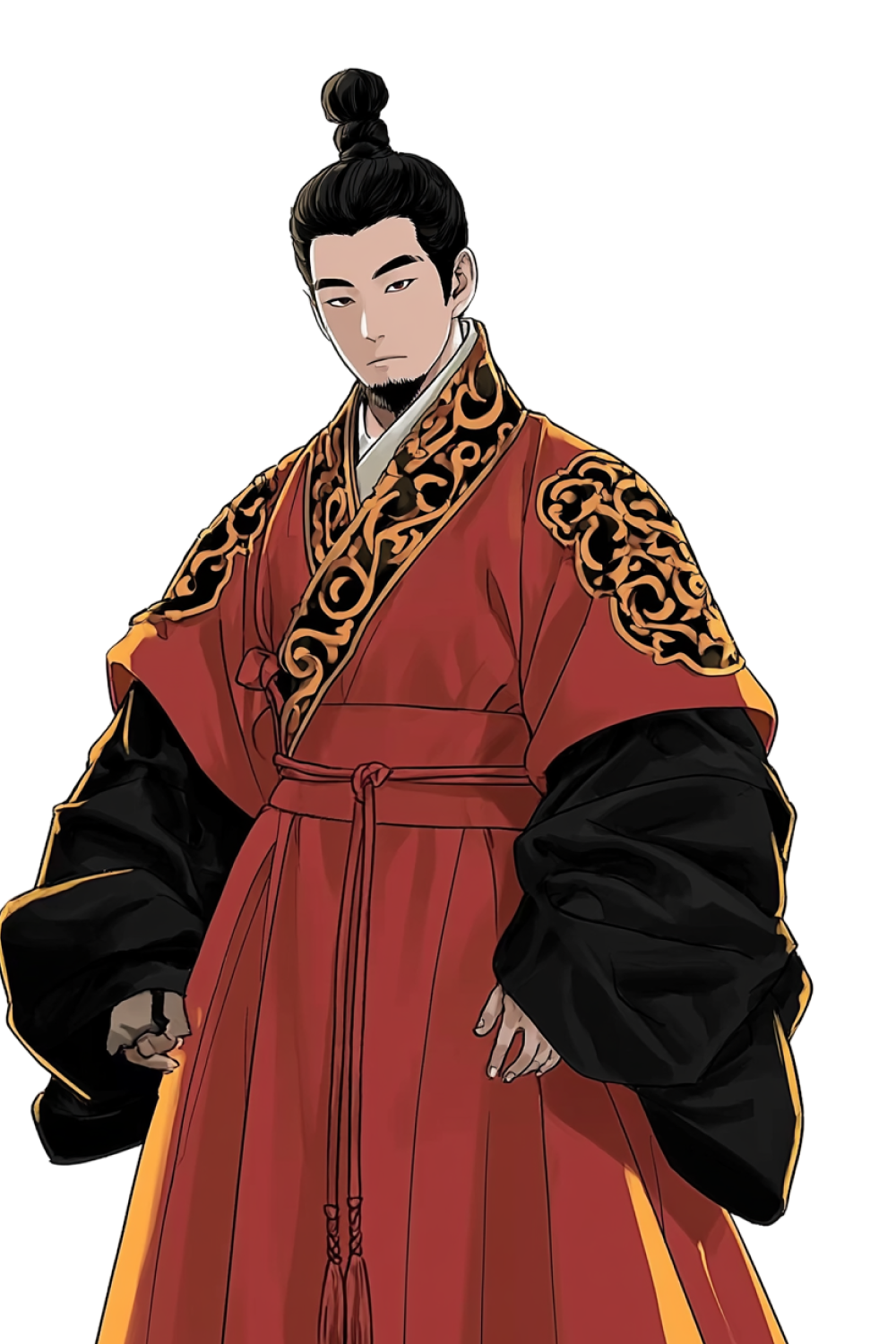
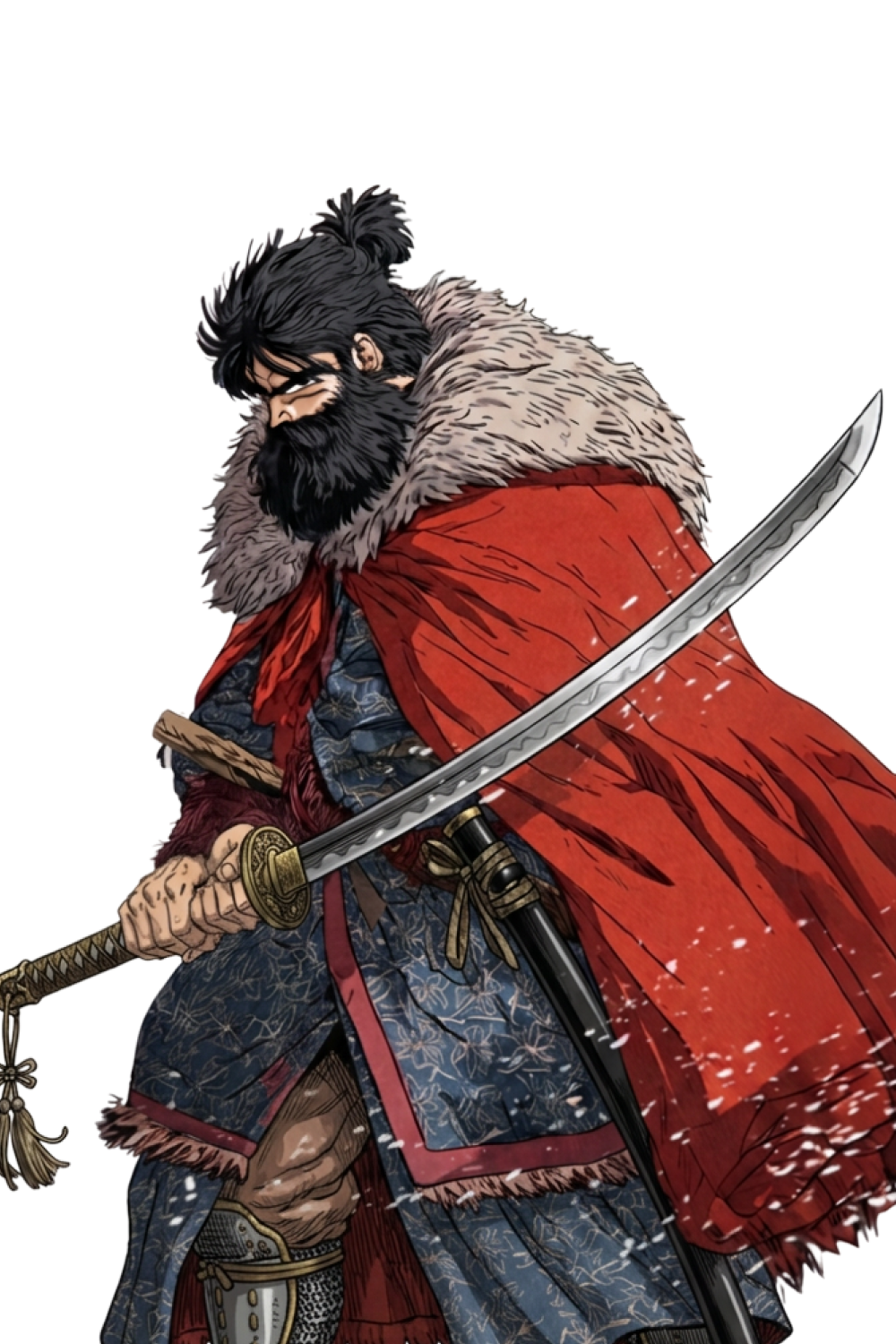
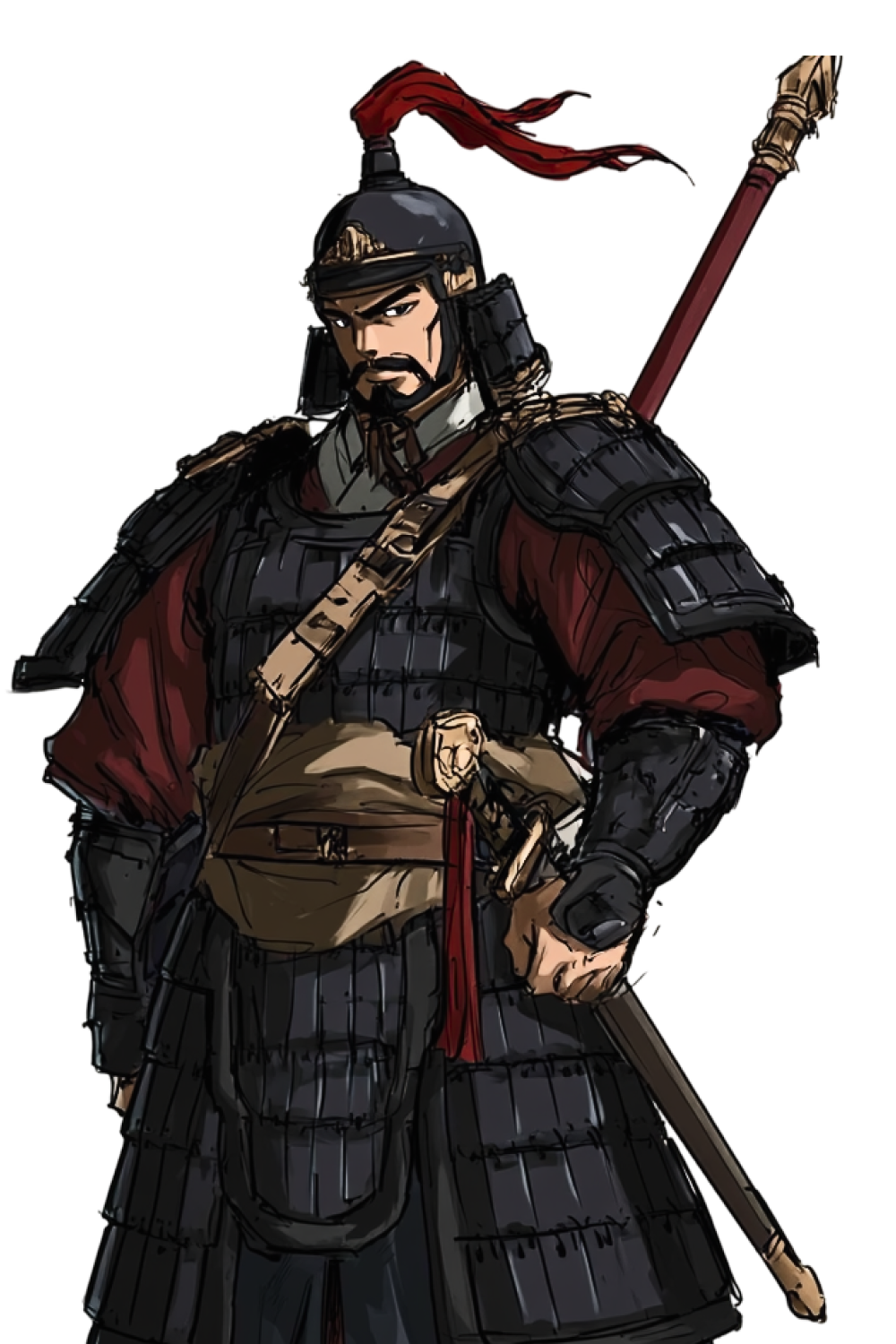
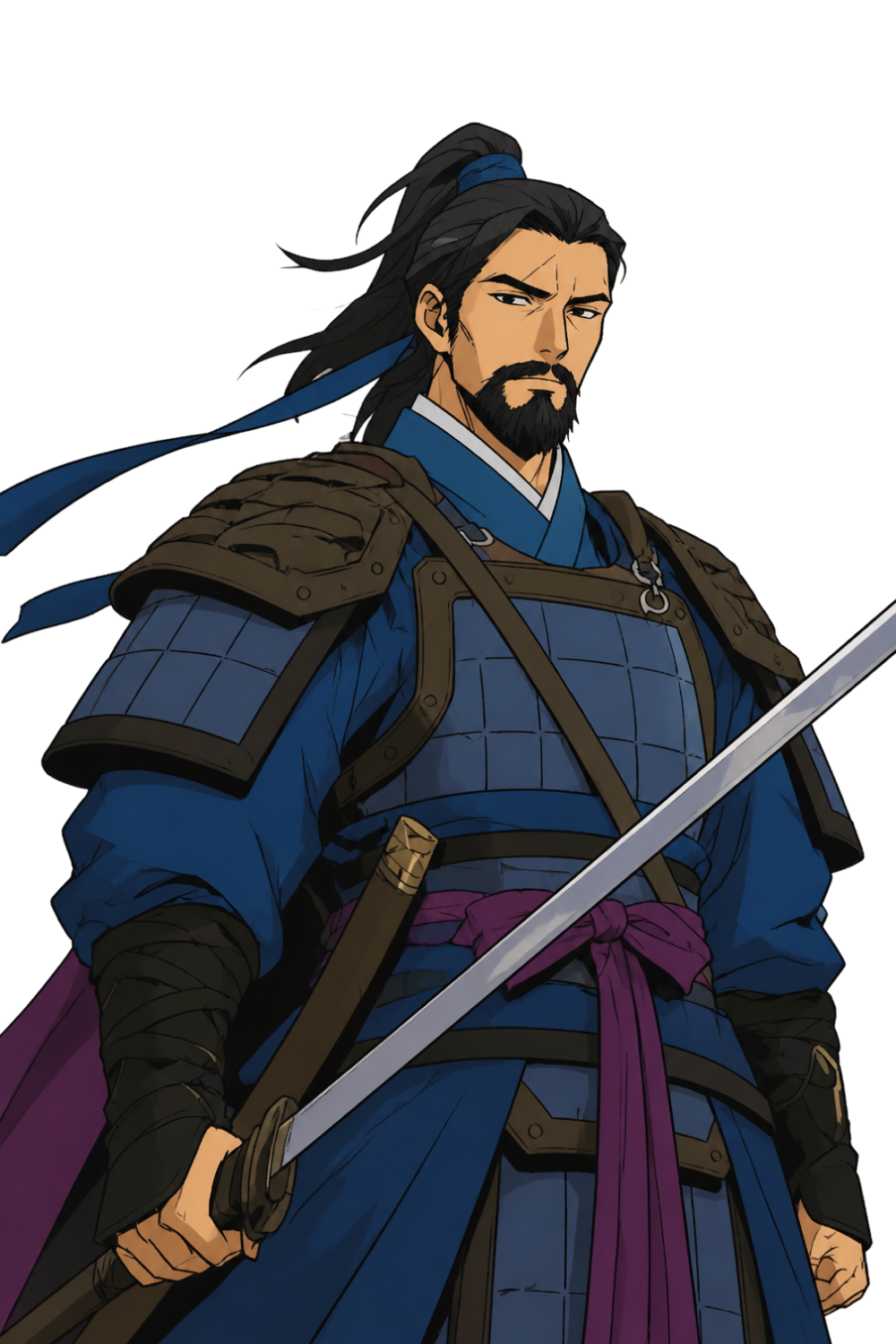
Episode· 663
White River
For the first time, the West, Samhan and the East meet in one mouth of water. The tide is nobody’s friend.
- Black Tortoise
- Echi no Takutsu
- King Pungjang
- Prince Yung
- Abe no Hirafu
- Hukchi Sangji
- Kim Yushin
- King Munmu
2 stills without a cue
One hundred and seventy warships. A thousand sails. One river mouth.
’s eldest. He knelt at three summers ago, was taken to with his father, and has come back in the Western officer’s coat to fight his younger brother for the right to tell the survivors what happened to them. Nobody on the deck says this. Everybody on the deck knows it.


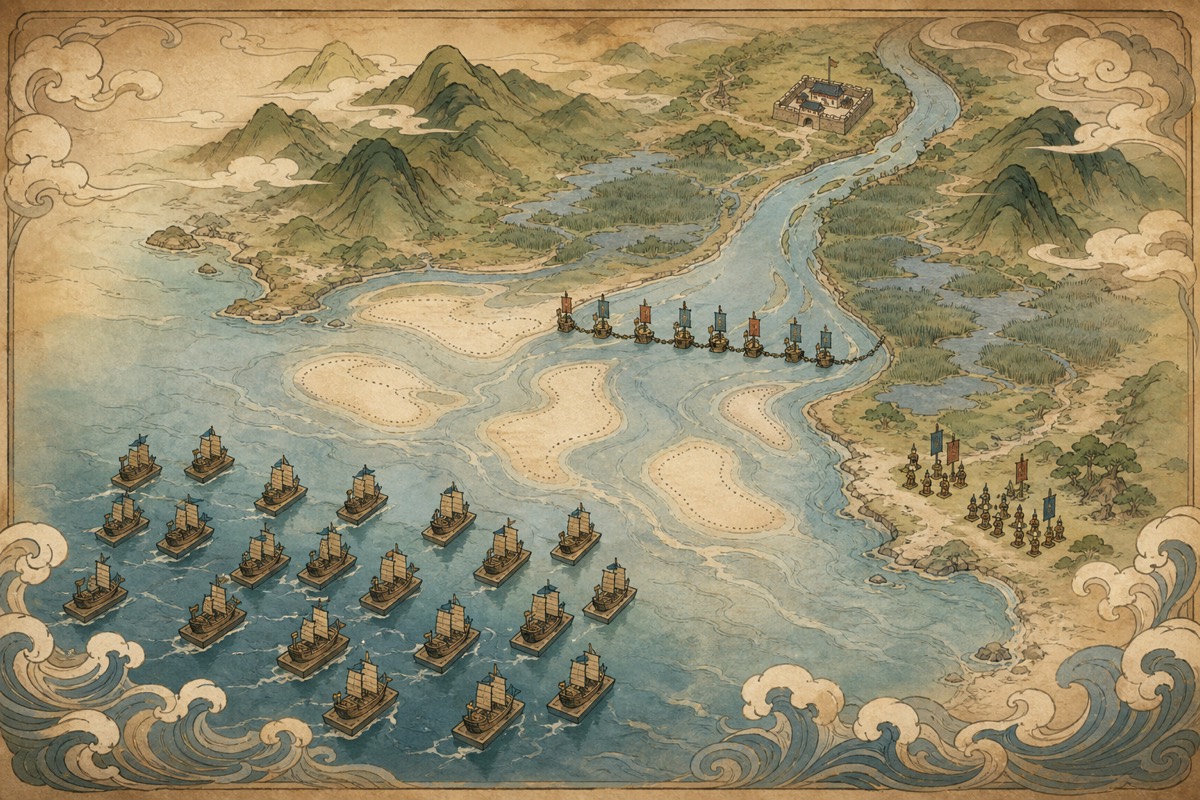
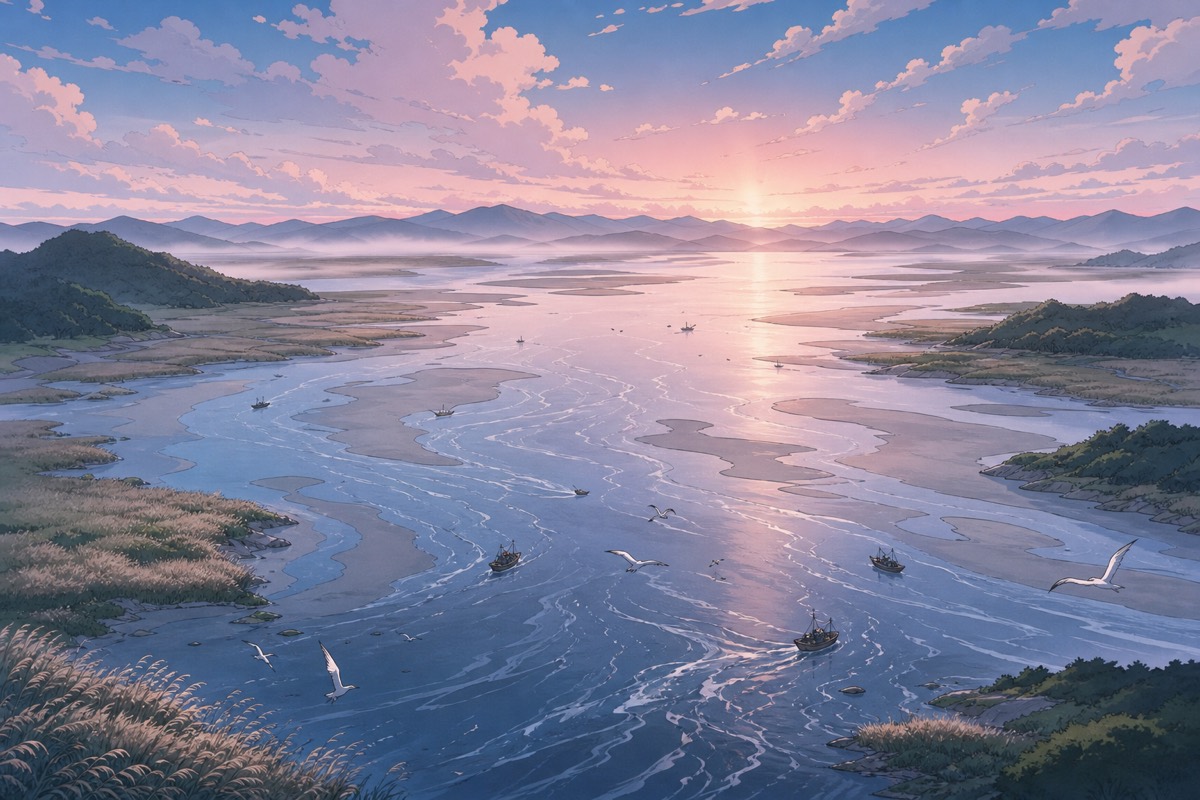
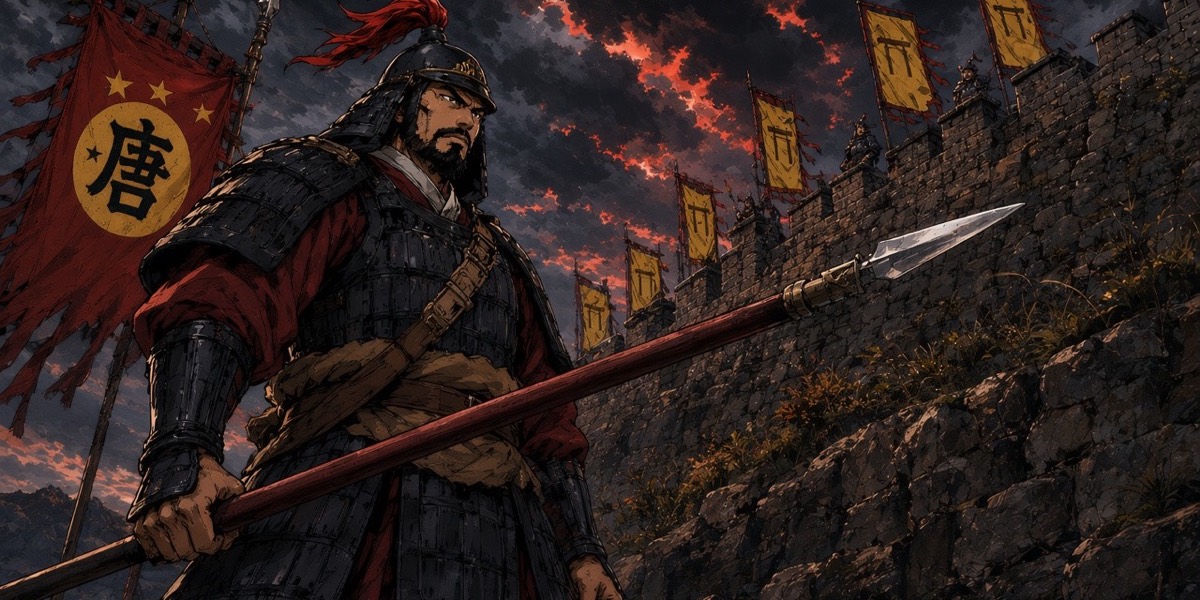
The has already learned the river's grammar. A narrow mouth. Sandbars that shift like lies. A current that punishes anyone who charges out of line. He anchors his hundred and seventy ships across the throat and waits. On the east bank, 's army keeps the shore from becoming a pier.
On the south shore of the mouth the horsemen guard the landing. They are the last mounted men the restoration can field, drawn up in front of the beached hulls the way you stand in front of a door you cannot afford to lose. ’s cavalry comes at them first, out ahead of the Western foot, because the king of wants it written down later who went first.
The shore camp goes in one charge. watches it from the ridge with the reins loose in one hand, which is how old generals watch something they no longer need to do themselves. Then he takes the foot south down the road to Juryu, and closes the ring.
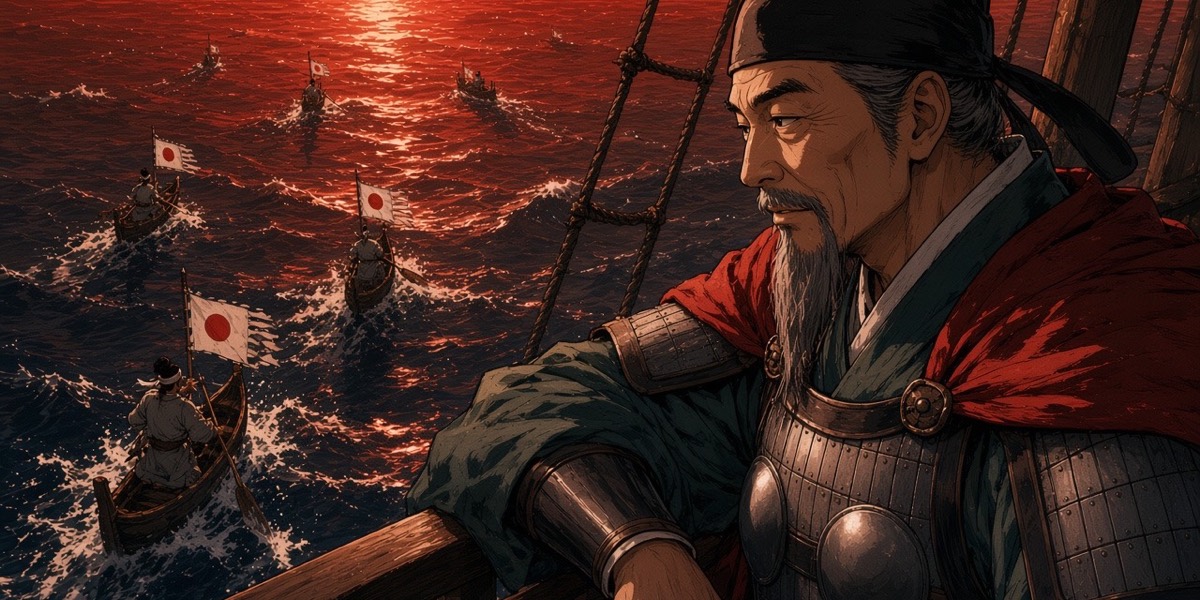
The first the Eastern ships to arrive do not wait for the rest. They come up out of the south-west and row straight at the Western line on the evening water, and the Western line does not move. It does not chase them, either. When the Eastern boats fall back, the hundred and seventy are exactly where they were that morning, in the same order, at anchor.
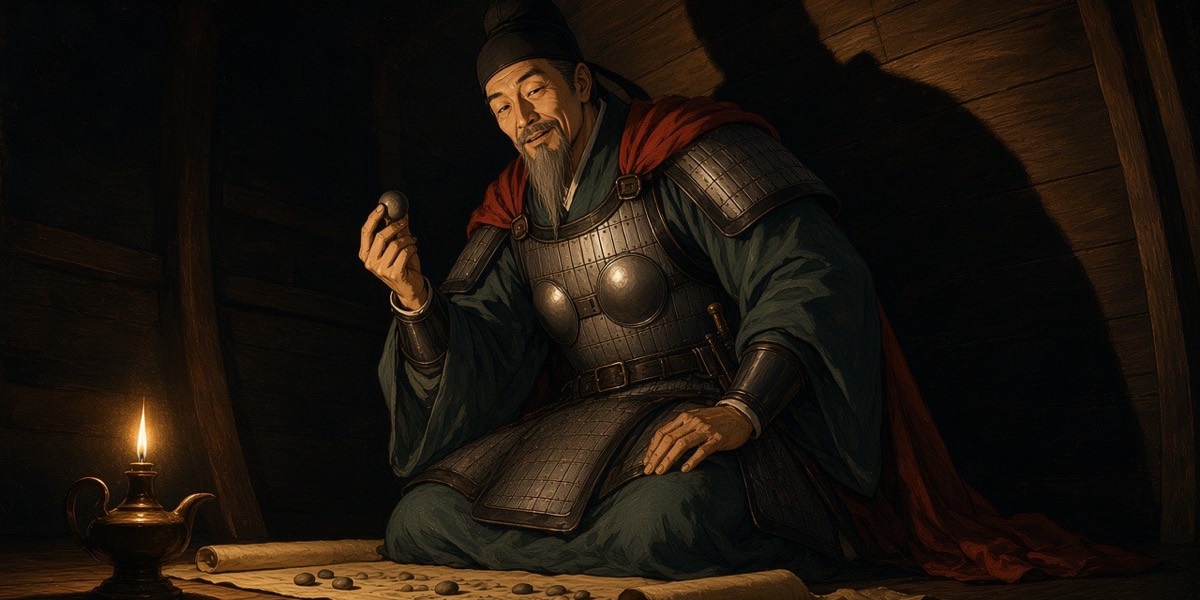
The has seen men of once before, in the emperor's city. They were envoys in court silk, and they bowed in all the right places. The court kept them in a guesthouse for two winters, so they couldn't carry home where the fleet was going. These are their cousins. They row standing up. They shout from too far away. They charge a hundred and seventy anchored hulls in boats built for rice. Nobody in his army has fought them before. He watches the first wave break on his line like a scholar reading a new script. He is looking for the grammar.

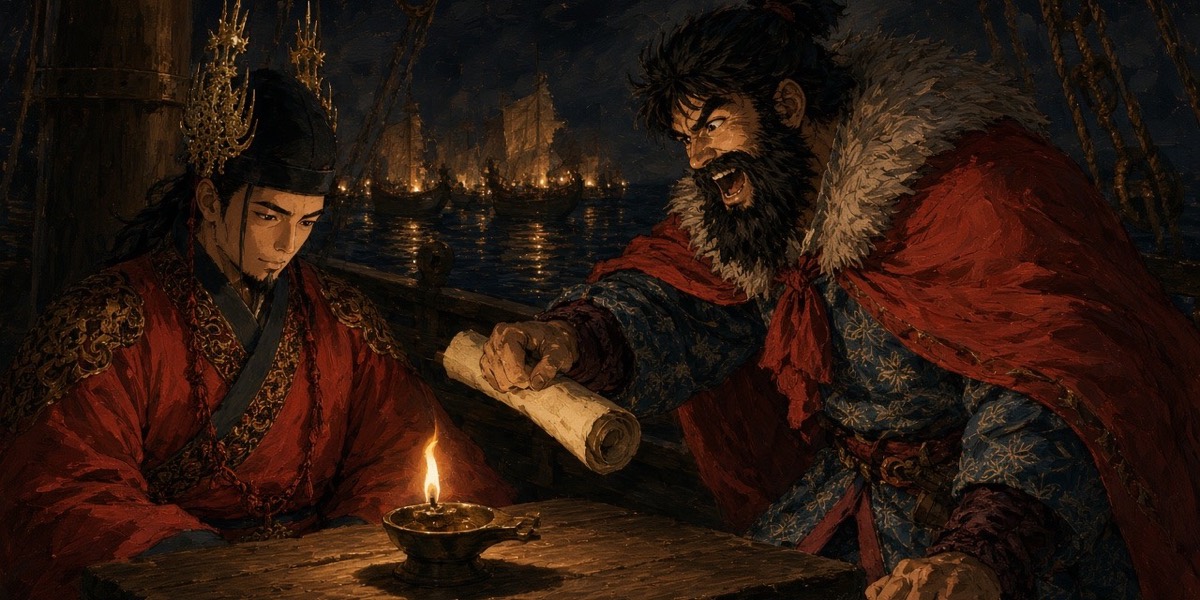
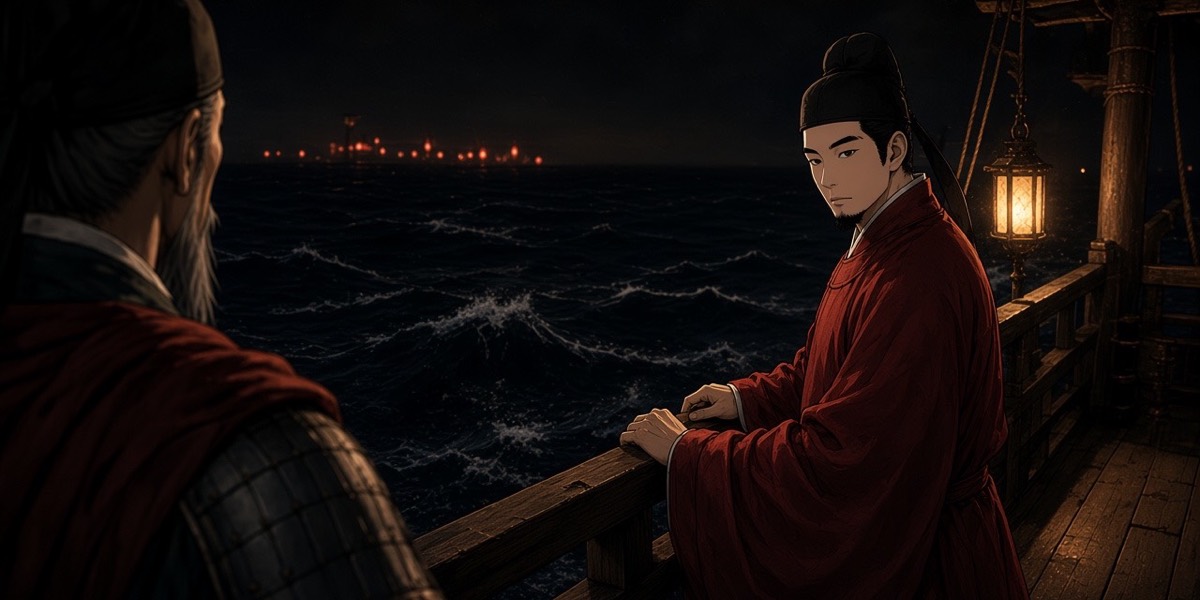
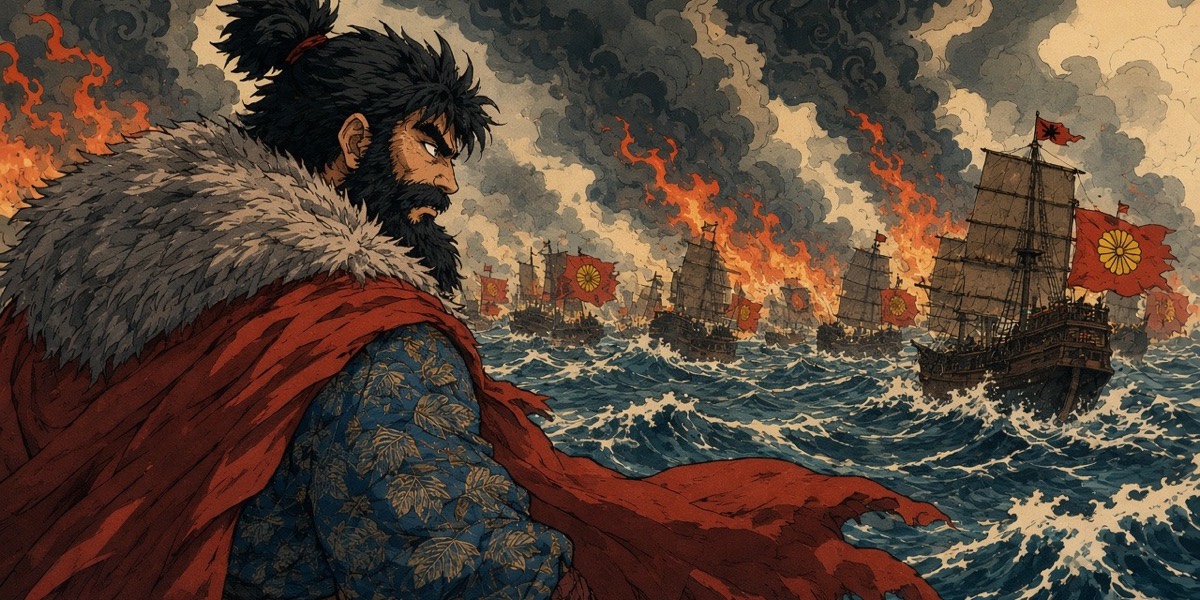
That night the Eastern captains and the king of hold council on a deck, and nobody looks at the sky. does most of the talking. He is the rear general, a big man in a wolf-fur mantle who spent three summers chasing the along the cold northern coast, and he has the habit of men who have lived through bad water: he believes the sea gives way to whoever moves first.
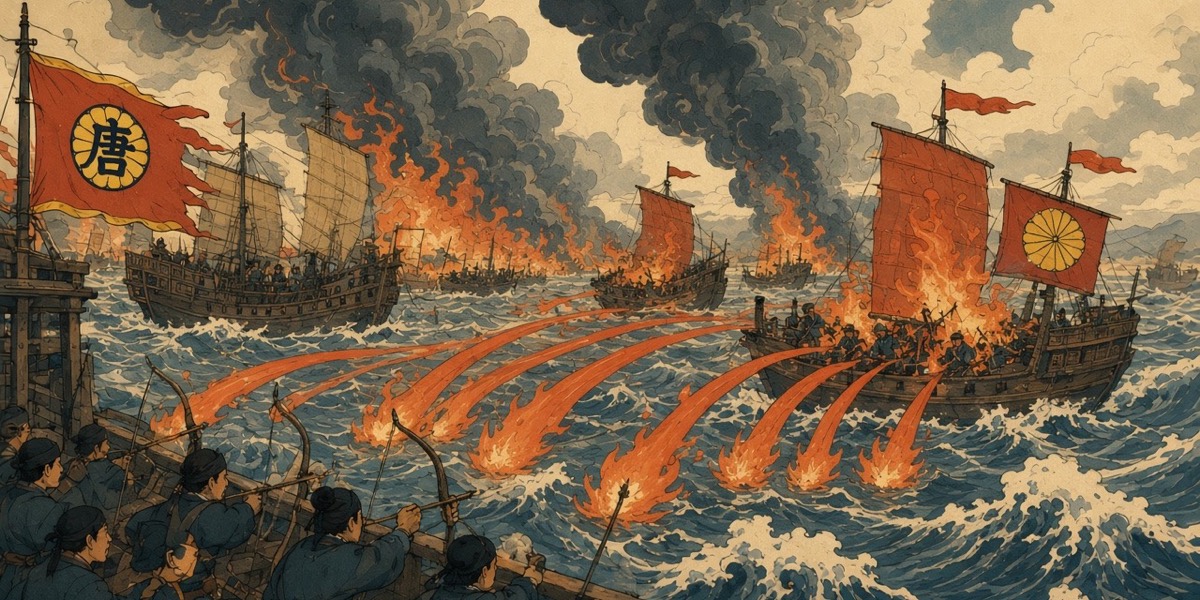
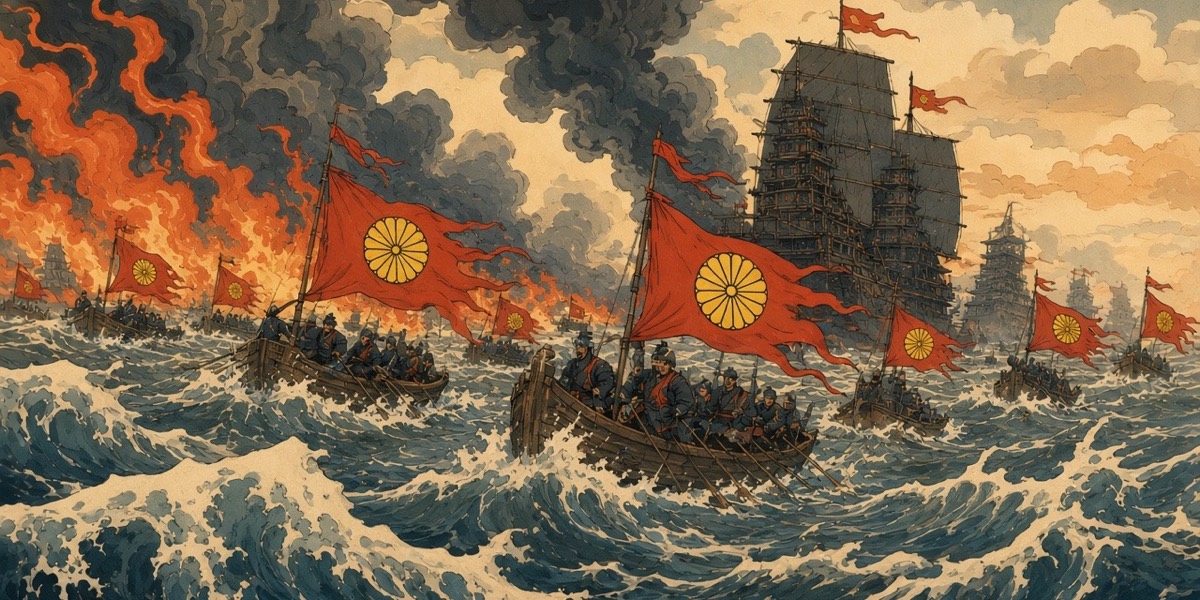
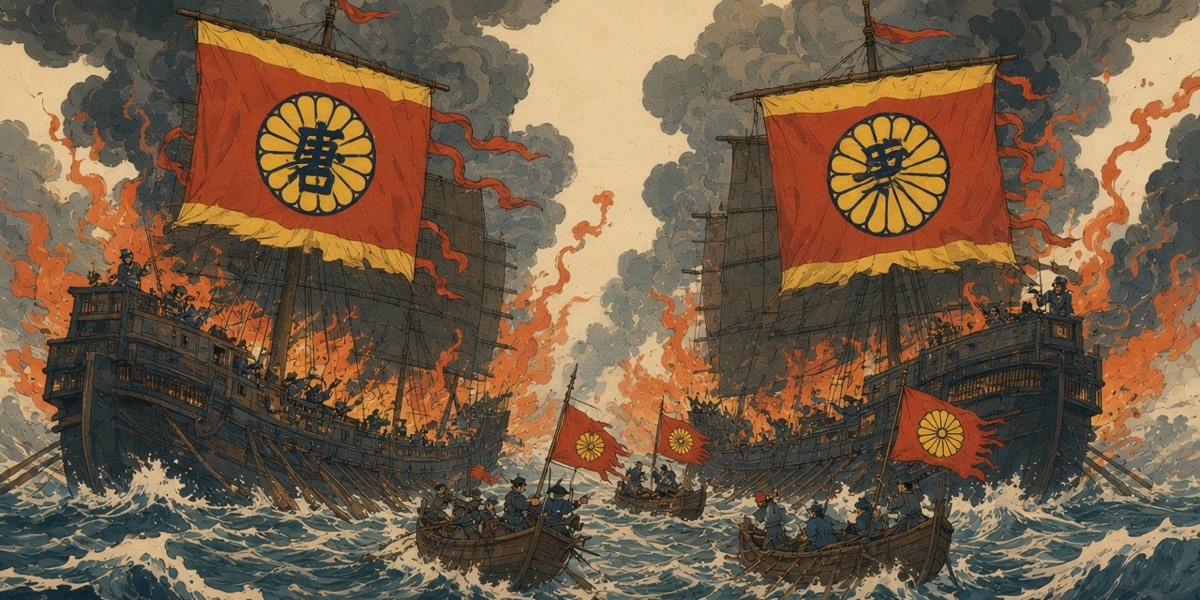
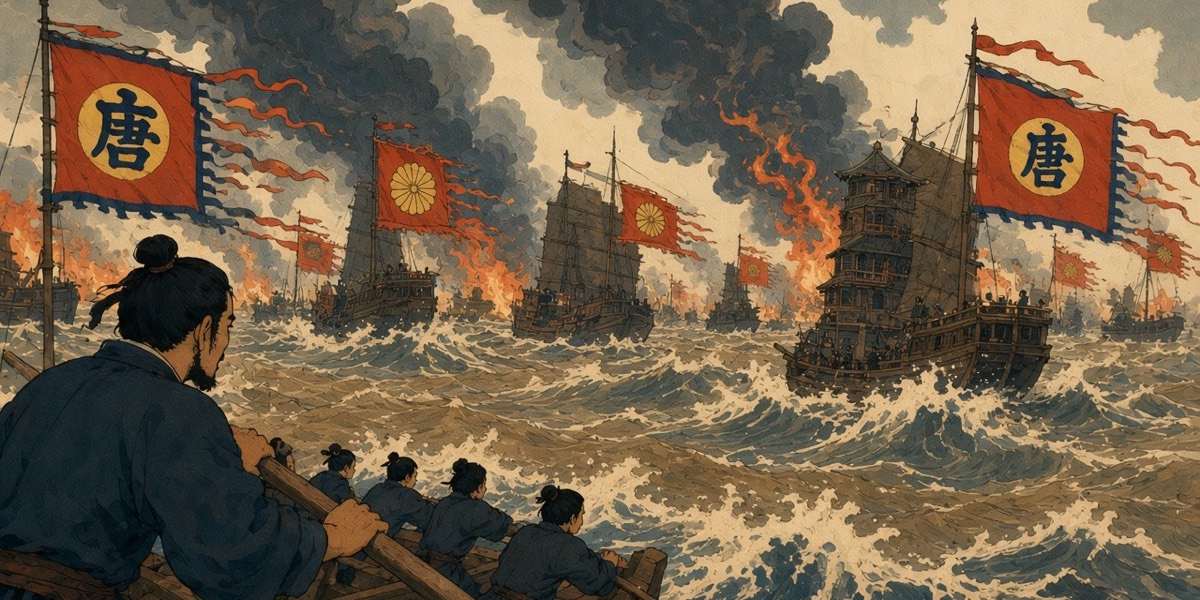
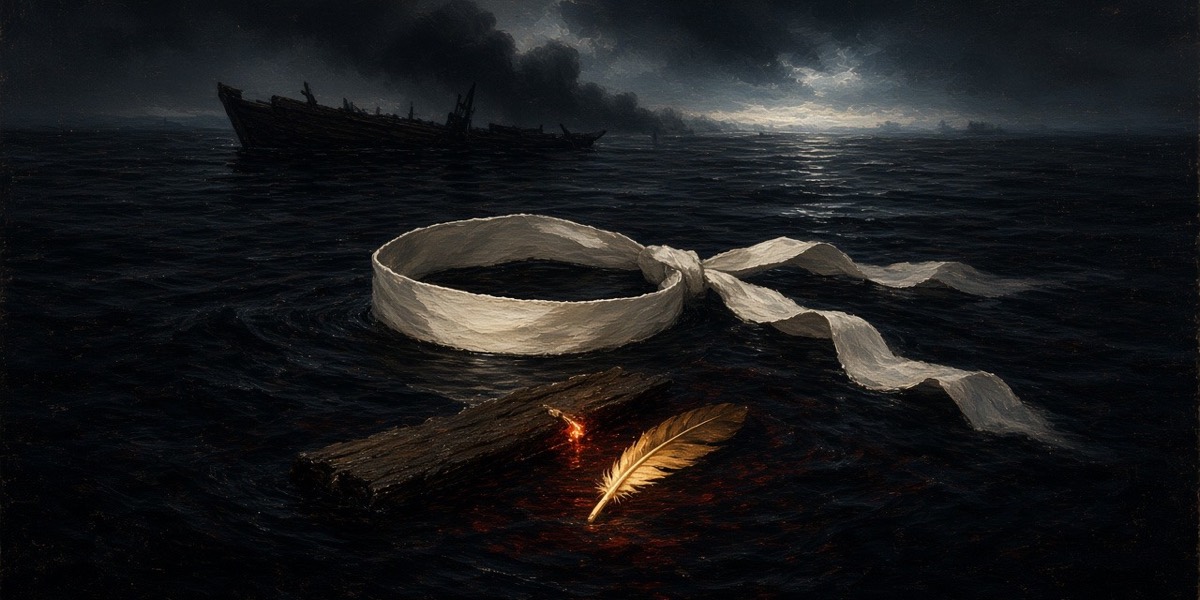
Four charges into a formed Western line, against the tide, in a river mouth too narrow for the eastern numbers. Smoke, flame, and a cinnabar sea.
’s ship is in the first line. His rowers pull standing. The Western hulls come up out of the haze like a wall, and do not move.
The first charge hits a wall of hulls and stops dead. Grapnels go over. Crossbows fire down from the Western decks built a man’s height higher. ’s men climb, fall back, and climb again.
The second charge goes in on slack water and comes out against the ebb, the current turning against them. Now the river is pushing the eastern ships back onto each other. Hulls grind. Oars snap against a neighbour’s oars. Nobody can turn.
On the Western flagship, has waited all morning for exactly this. He says one word.
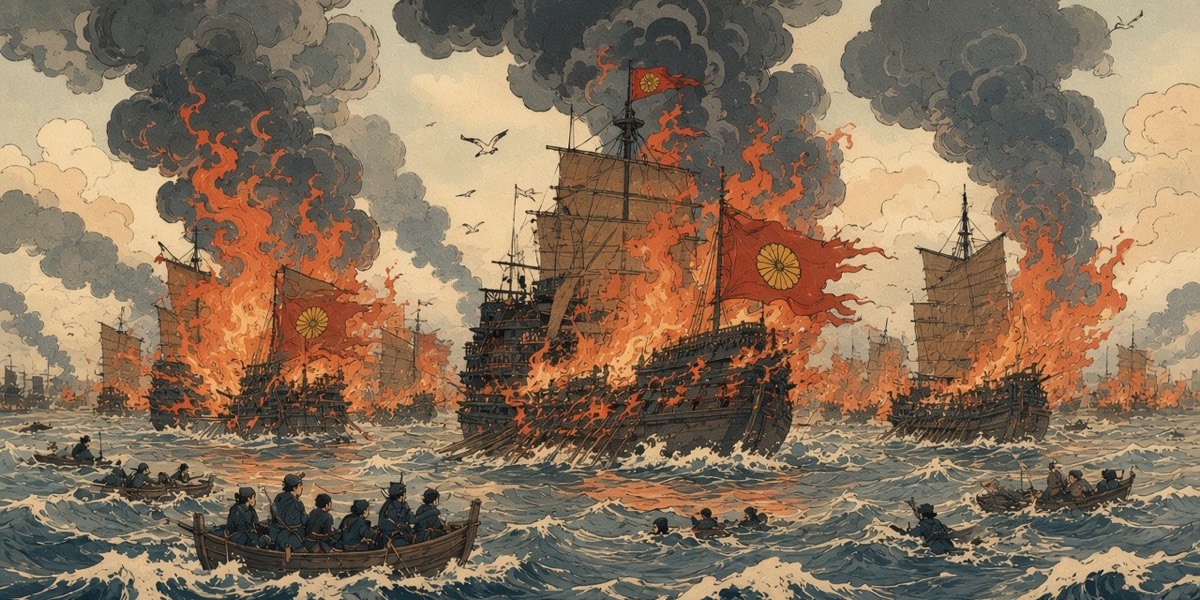
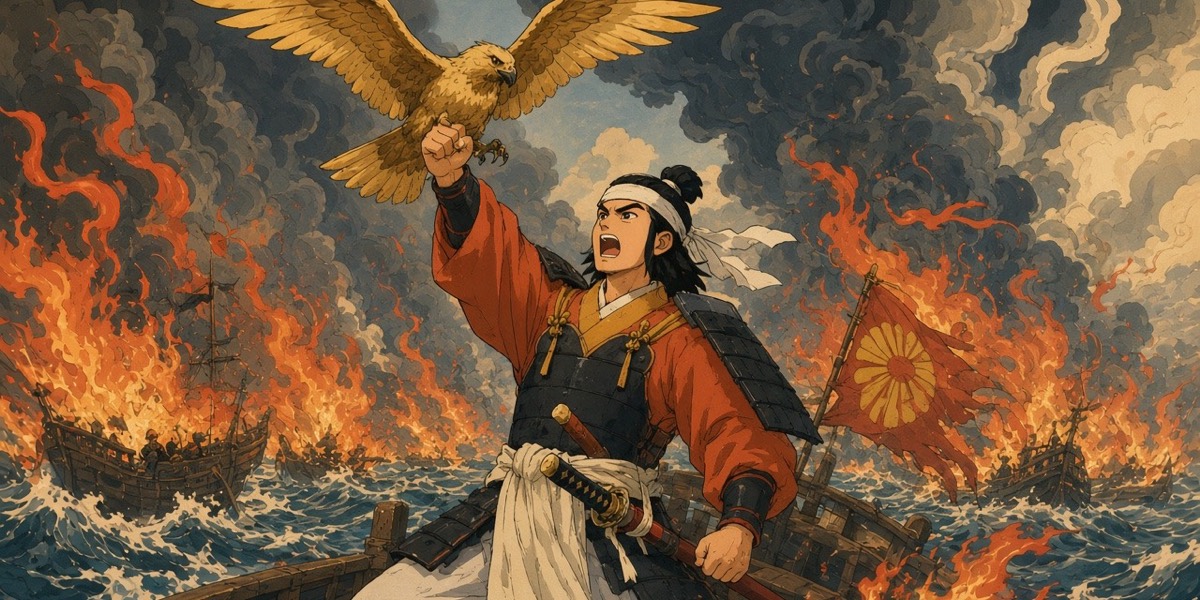
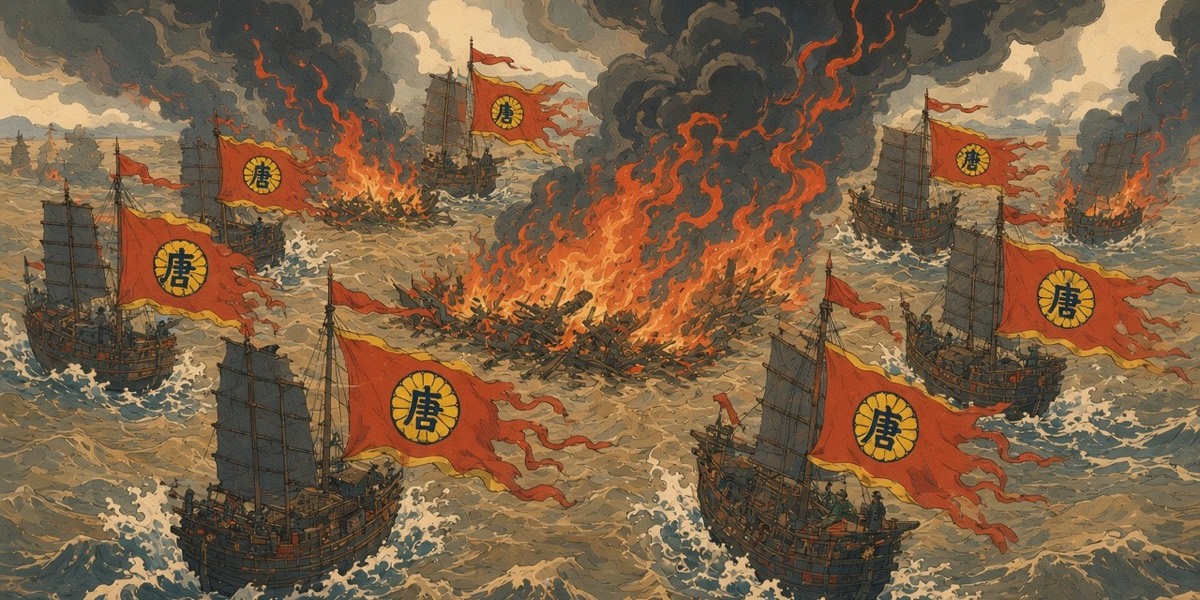
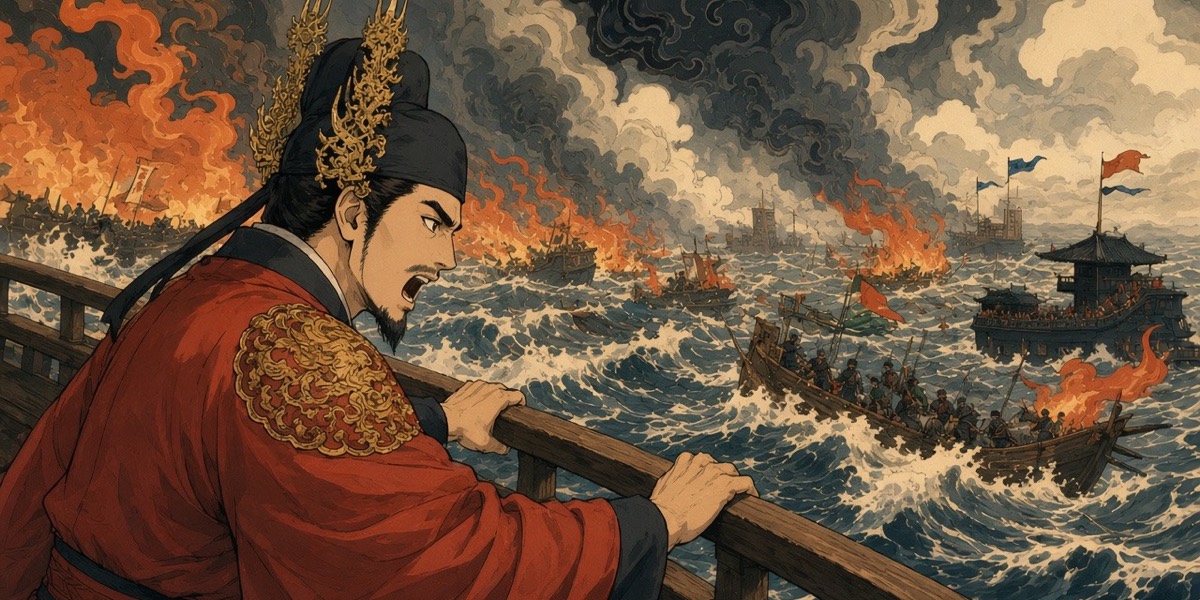
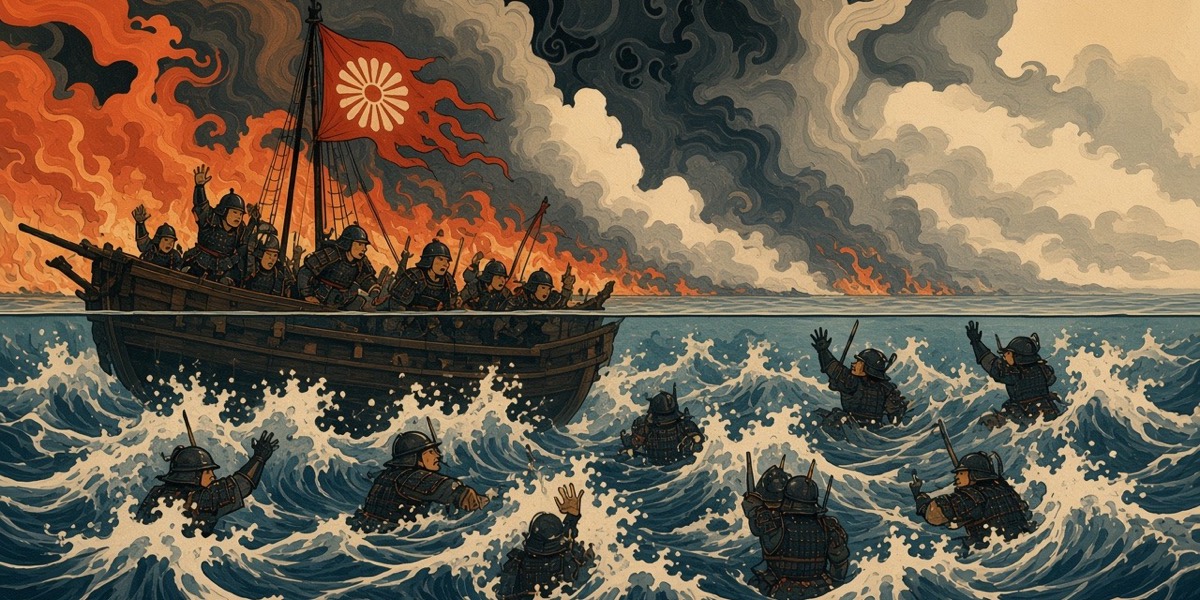
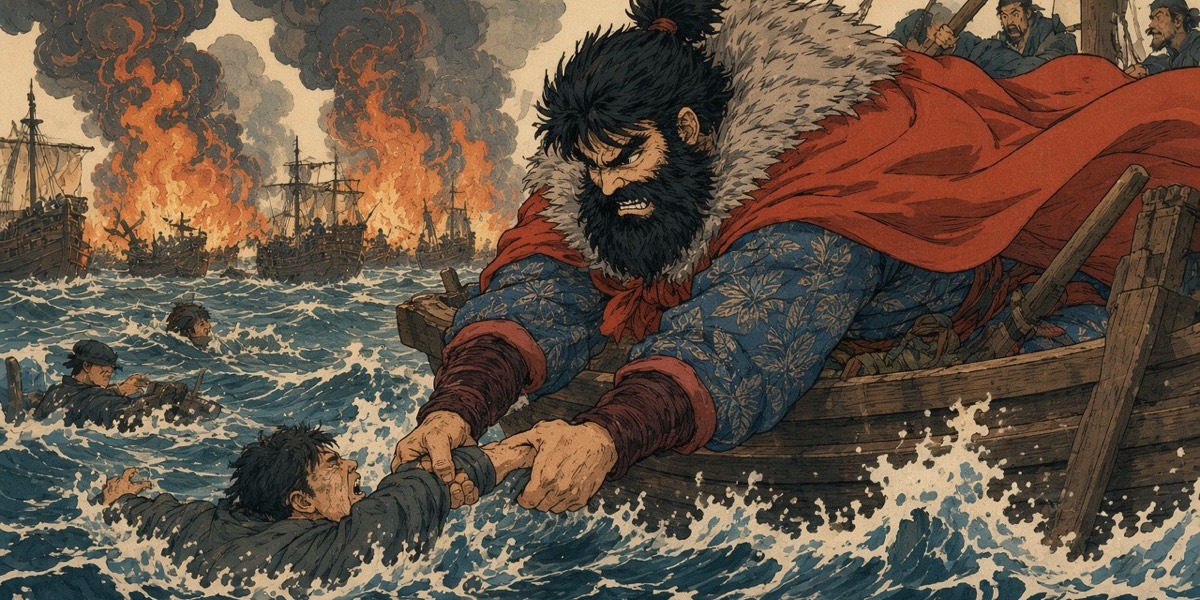
The arrows wrapped for flame go up white and come down burning. Ships pressed together turn one burning deck into a neighbourhood. On the third charge and the fourth, fire travels faster than orders. Four hundred eastern ships do not sink so much as spend themselves into light.
They burned four hundred of their ships; smoke and flame filled the sky, and the seawater was all red.
그 배 사백 척을 불사르니, 연기와 불꽃이 하늘에 가득하고, 바닷물이 모두 붉었다.
Then the wings close. The Western ships that looked like a wall turn out to have been a door with two leaves, and they swing shut from left and right around the Eastern centre, so tight that the eastern ships cannot turn bow or stern, and men who cannot row and cannot climb go into the water in their armour.
From the king’s ship can see the Western flagship. On its deck, in the Western coat, stands his elder brother.
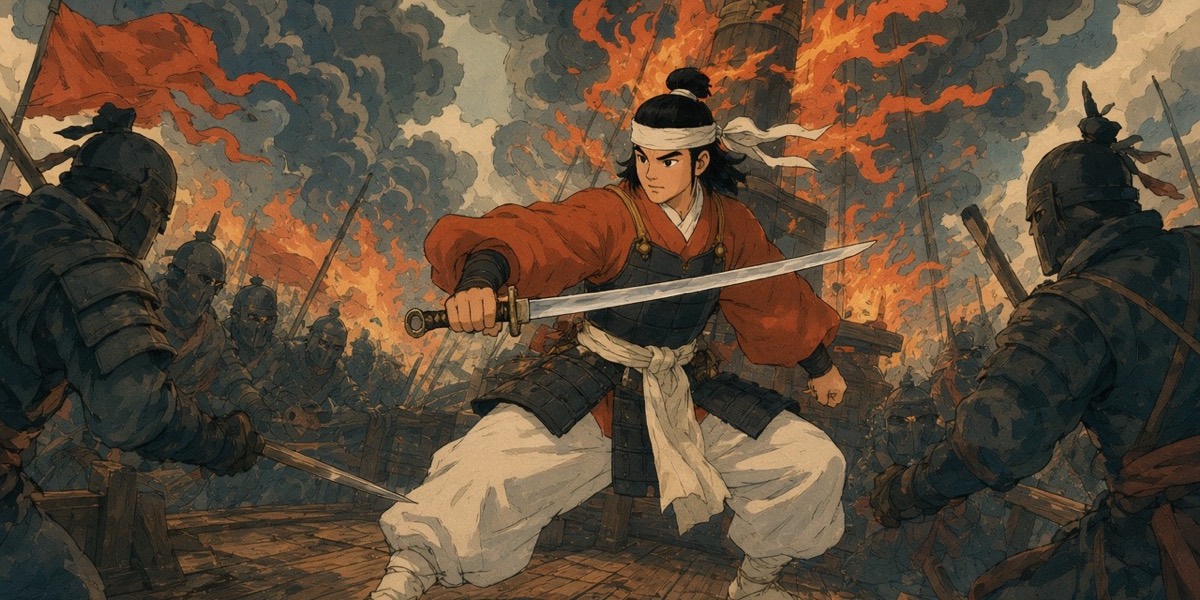
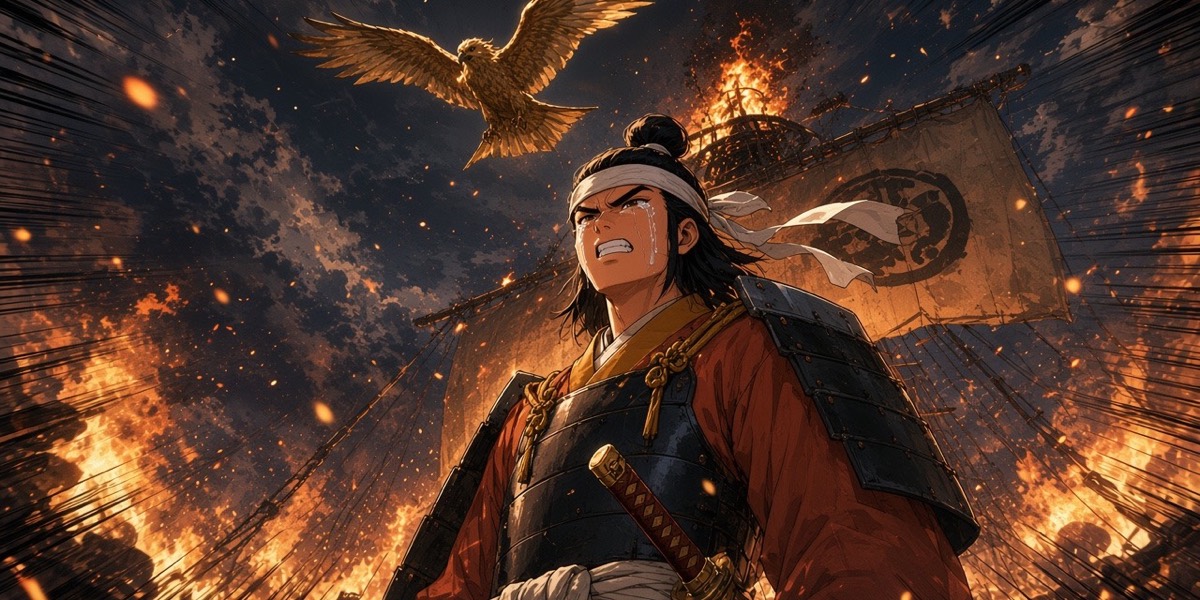
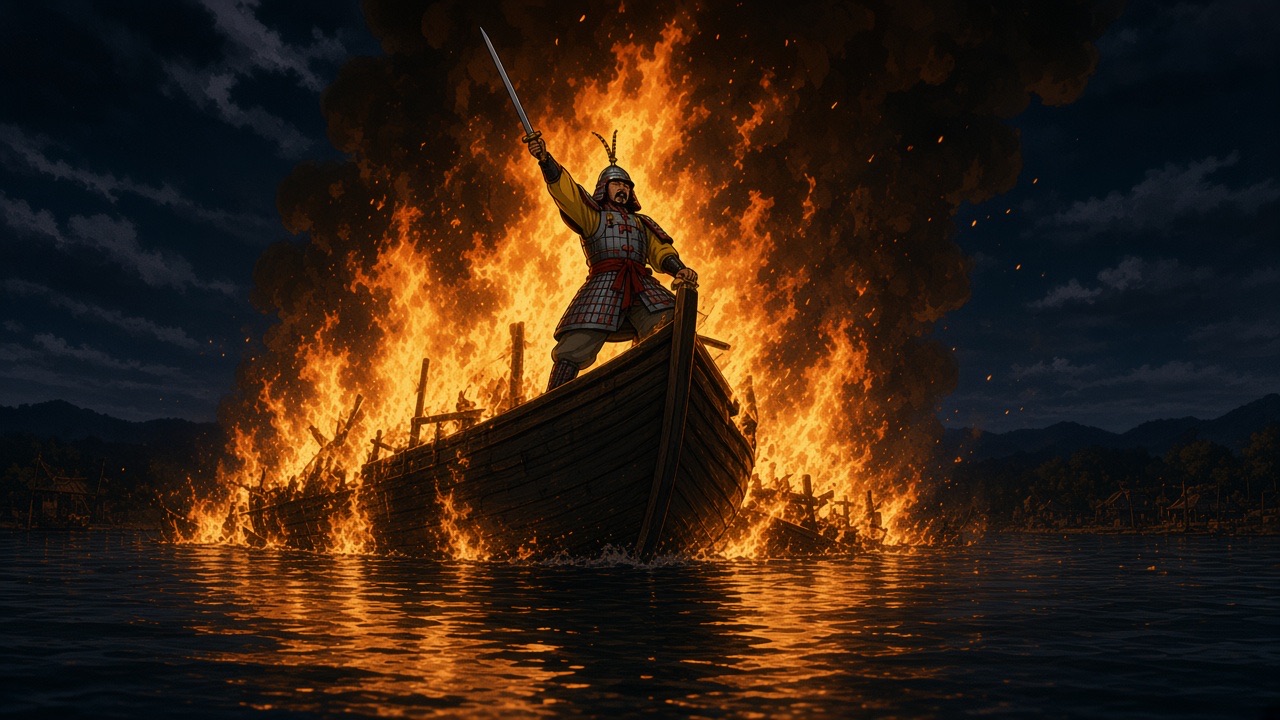
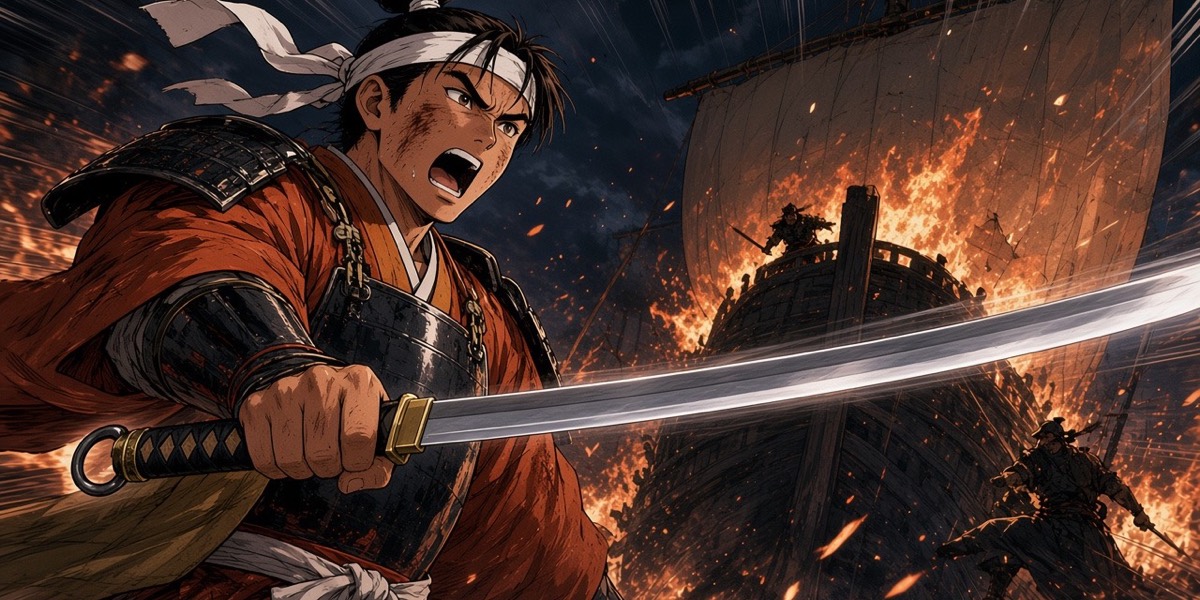
His ship is burning under him and he does not leave it. He fights on the deck until there is not enough deck left to fight on.
looked up to heaven and swore an oath, gnashed his teeth in fury, killed some dozens of men, and there fell in battle.
에치노 다쿠쓰는 하늘을 우러러 맹세하고 이를 갈며 성내어 수십 명을 죽이고, 거기서 싸우다 죽었다.
At the back of the fleet ’s ships are still afloat. He has seen a lost tide before, on a colder sea. He turns them for home and hauls in every swimmer the hulls will carry, men in half their armour, men with no oars, and he does not laugh again until .
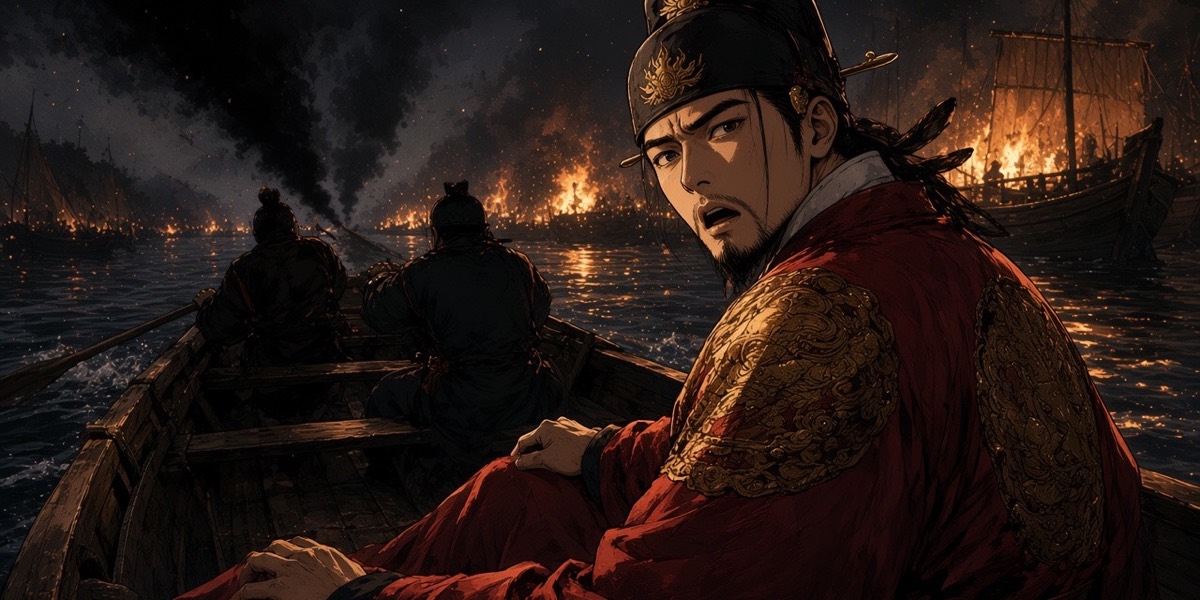
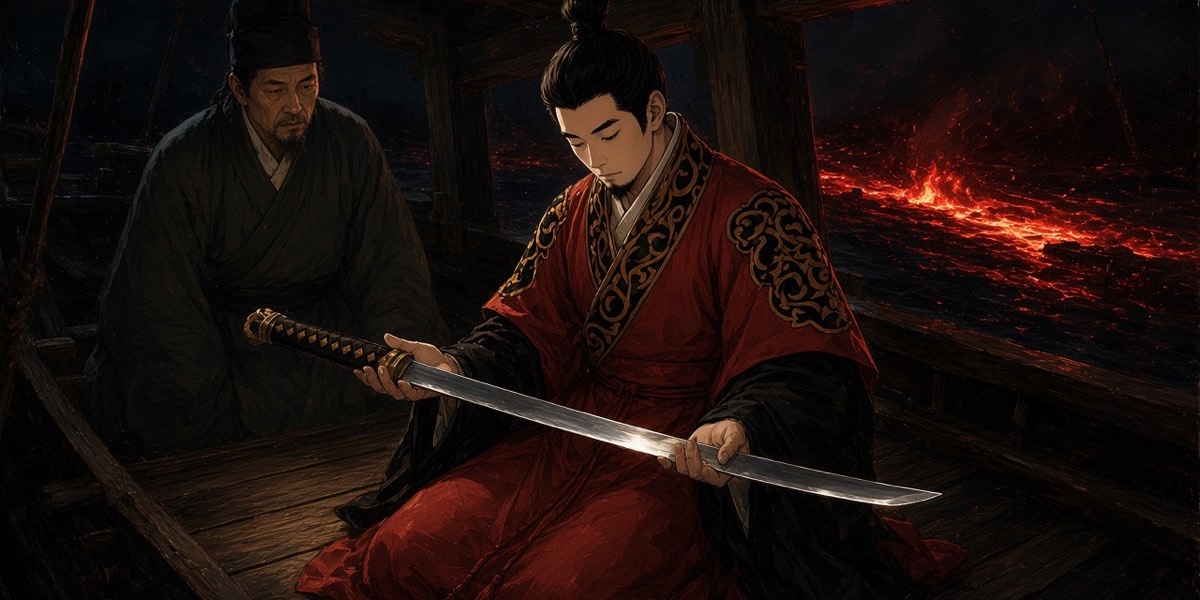
In the smoke a small boat gets away from the king’s ship with a handful of men in it and turns north. It is . He leaves behind his fleet, his allies, his capital on the hill, and his sword.
They bring the sword to the Western flagship. It is a ring-pommel blade with the ring worn smooth, nothing like a king’s, and hands it to the one man aboard who would know.
Juryu holds ten more days without its king. Then it opens its gate. ’s younger brothers walk out at the head of what is left: soldiers, women, the Eastern men who missed the boats, and an envoy from who came up the hill to bargain for an island and is now surrendering for it.
The people who are not surrendering go south, to the port where the Eastern ships will take them off. On the road they say the thing to one another that the Eastern chronicle wrote down, because nobody was left in to write it.
Juryu has surrendered. Nothing more can be done. The name of ends today. The place of our ancestors’ graves — how can we ever go back to it?
주류가 항복하였으니 일은 어찌할 수 없다. 백제의 이름은 오늘로 끊어졌다. 조상의 무덤이 있는 곳을 어찌 다시 갈 수 있으랴.
One fortress doesn’t hear it. Its commander shuts the gate and holds all autumn, and the siege goes home. Then two generals walk into the Western camp and ask for their armour back.
The hands back their armour and points them up the slope.
Imjon falls to its own people’s hands. Its commander leaves his wife and children inside and goes north to , which by now is where ’s last kings go.
When the water cools to ordinary colour again, the restoration has no fleet worth the word. The sits down with . Neither of them believes a word the other says, and they get a great deal done — which is how alliances sound after four hundred ships have paid for the silence.
The Black Tortoise brings a hundred and seventy warships down from Bear Fortress and anchors them across the river mouth. The land army takes the road south to Juryu. Out at sea, the East is coming in a hurry.
- Tang ?
- Silla ?
- Baekje ?
- Yamato 27,000
- = 1,000 men
- = size not recorded
Sources: Nihon Shoki 27, Tenji 2 (third, eighth and ninth months) · Old Book of Tang 84, Biography of Liu Rengui · New Book of Tang 108, Biography of Liu Rengui · Zizhi Tongjian 201, Longshuo 3 · Samguk Sagi 28, Annals of Baekje, end of the restoration · Samguk Sagi 6–7, Annals of Silla, Munmu year 3 and King Munmu's letter to Xue Rengui (year 11)
Two reapers failed to take at the river. The ledger still has his name in it…!
