Samhan · Later Three Kingdoms Korea L3K
King for All Shores 모든 해안의 왕 後三帝王
Sequel to King for All · the crown that also takes Tamla and Balhae
Three men pick up the names of three dead kingdoms. A soldier who was nursed by a tiger, a one-eyed monk who reads minds, and a merchant’s son who mostly listens. Only one of them gets to keep his name.
“Two hundred years later, Silla had kept everything except the country.”
Synopsis
Two hundred years after Munmu put Samhan under one roof, the roof is still there. The walls are not. Wonhyo’s One Mind is the water everyone drinks. The old gods are a grandmother’s story, and the huts are dark. The streets are waiting for a man.
Out of the rot climb three men, and each one borrows the name of a dead kingdom. A coast-guard soldier raised by a tiger (so he says) calls himself king of Baekje and swears to avenge Euija. A one-eyed monk who was thrown from a window as a baby calls himself king of Goguryeo and cuts the Silla king’s face out of a temple wall. A merchant’s son from Songak, who mostly listens, serves the monk until the monk starts reading minds.
The monk dies in a barley field. The soldier sacks the old capital and then loses everything to his own eldest son. In the end he rides at the front of his enemy’s army against that son, and dies on Hwangsan, the plain where Gyebek fell. The merchant’s son wins without ever being the best general in the room. He marries twenty-nine wives, takes in the refugees of Balhae, and keeps the monk’s name for his kingdom: Goryeo.
The sequel is the same chronicle in the same voice. The old sky lord narrates, Kangrim collects the dead, and the reader already knows how the last unification went. This time it is done with weddings.
Maps
Stills

poster 915 Cheorwon. “You needn’t say it. I have already looked.” Wang Geon decides what to confess. 
romance 903 Naju. Lady Oh puts a willow leaf on the water. Wang Geon drinks slowly and asks her name. 
900 Wansan. Gyeon Hwon promises to avenge Euija, and calls his kingdom Baekje. 
901 Buseoksa. Gung Ye sees the Silla king’s portrait and cuts it across the face. 
903 Naju. Lady Oh puts a willow leaf on the water so the thirsty soldier won’t gulp. 
918 Behind the curtain. Wang Geon says no to the crown, and his wife brings out his armour. 
936 Hwangsan. Kyun Singum surrenders on the plain where Gyebek fell, with his father on the other side.
Leads
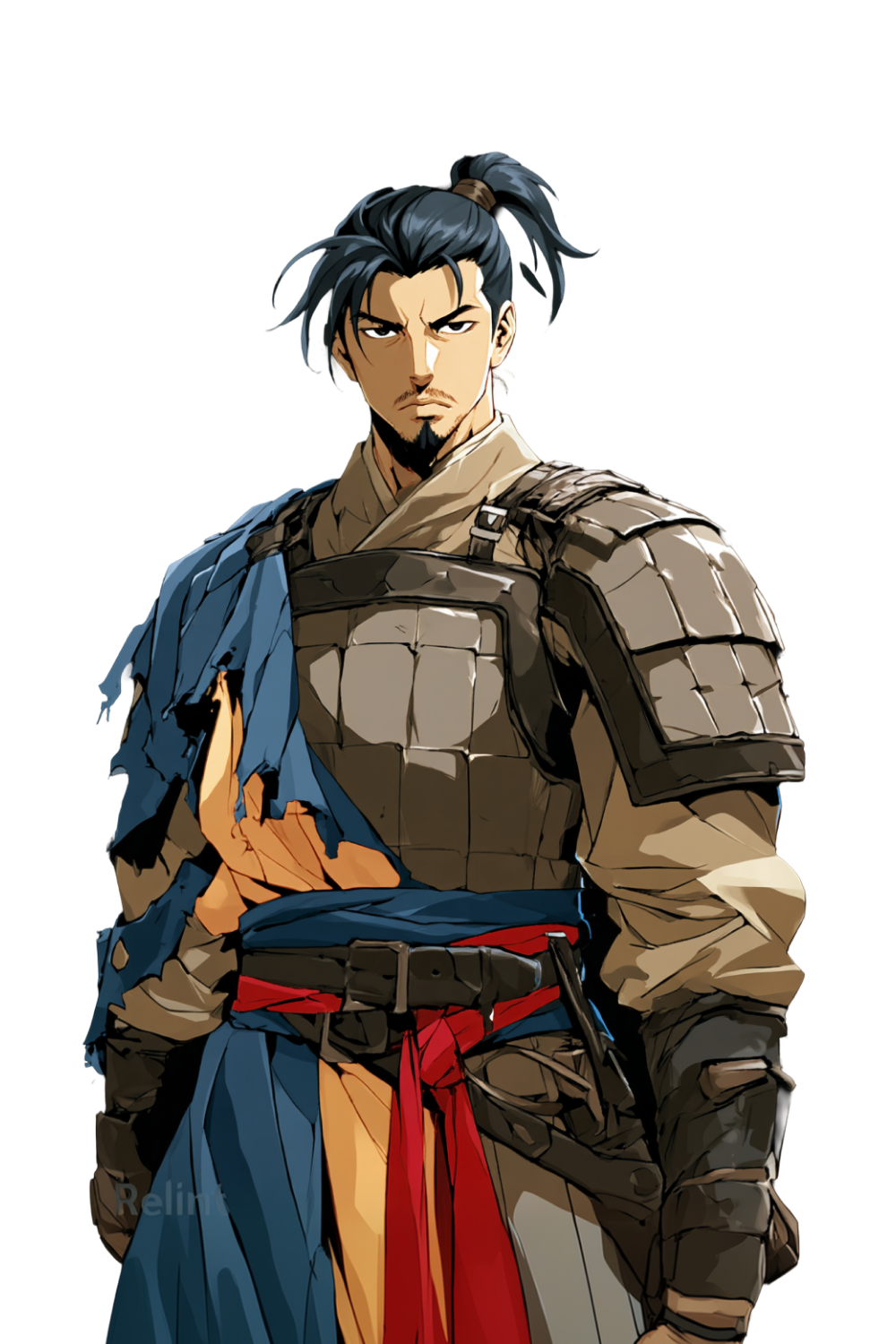
Gyeon Hwon 견훤 甄萱
The Tiger’s Milk
- The Tiger’s Milk
- The Spear Pillow
- Sangbu, Honoured Father
“Sangbu? Fine. Then listen to your father, boy, and get off my river.”
- Creed
- Baekje revanchist. To avenge Euija, and to be loved by his sons.
- Wants
- To be Baekje’s king, and to call the old gods back. He gets the chair. His son keeps the gods and throws the jokes out.
- Voice
- Barracks loud and sentimental. Jokes at funerals, cries at feasts, holds a grudge for decades. Korean: rough 반말 to his men and sons, mock-formal to Wang Geon.
- Arc
- Coast-guard soldier, avenger, sacker of the old capital, father betrayed by his heir, turncoat for his enemy, dead on Hwangsan.
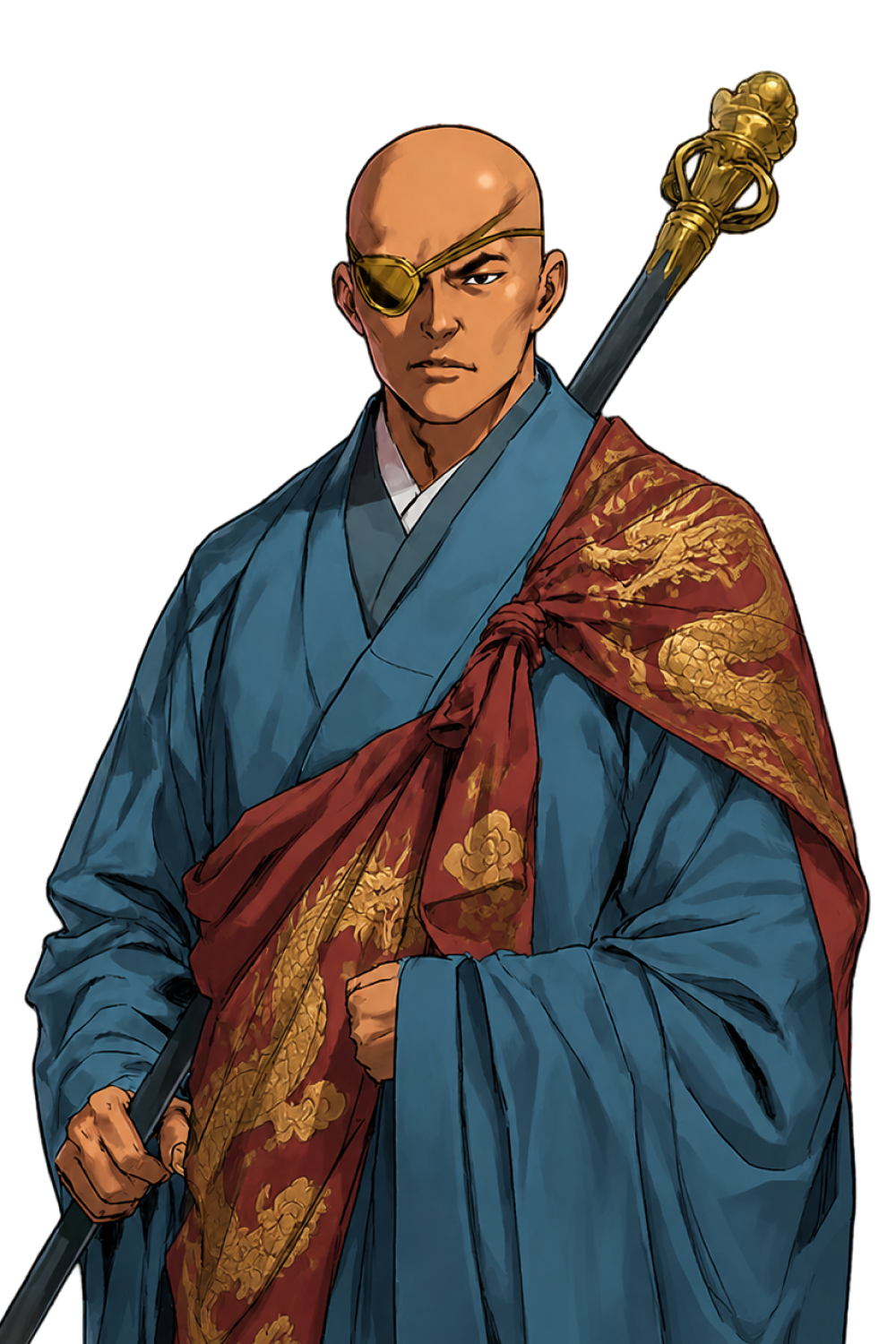
Gung Ye 궁예 弓裔
The One-Eyed Maitreya
- The One-Eyed Maitreya
- The Thrown-Away Prince
- Sunjong the monk
- Kim Chang, the name he never wore
“You needn’t say it. I have already looked.”
- Creed
- Messianic absolutist. To be seen, and to see into every heart.
- Wants
- To be the man the streets are already waiting for. Wonhyo’s water won. He sits down in it and says the man is him.
- Voice
- Soft, certain, sutra cadence, never raises his voice. Asks questions he already knows the answer to. Korean: low 하게체 that slides into 해라체 when he is sure.
- Arc
- The name set aside for him was Kim Chang. He never wore it. His maid raised him, and the monastery called him Sunjong, until he founded a new Goguryeo and named himself. Then equal-rice general, king, Maitreya, mind-reader, killed in a barley field.
Wang Geon 왕건 王建
The Bridegroom of Samhan
- The Bridegroom of Samhan
- Taejo (太祖)
- The Listener
“Tell me more. No, really. I have all night.”
- Creed
- Coalition-builder. To survive the monk, and then to be owed by everyone.
- Wants
- To survive the monk, and then to be owed by everyone. He does not ask which god won.
- Voice
- A listener. Questions, short agreements, long silences, a merchant’s patience. Never says no out loud. Korean: courteous 해요체 even to inferiors, which unnerves them.
- Arc
- Merchant’s son, admiral, minister who confesses falsely, reluctant usurper, the peninsula’s bridegroom, founder.
Sin Sung-gyeom 신숭겸 申崇謙
The King’s Double
- The King’s Double
“Same height. Same shoulders. Give me the helmet, my lord, and go.”
- Creed
- Loyalty to a person. To be useful to one man.
- Wants
- To be useful to one man.
- Voice
- Laconic soldier. Jokes only about archery.
- Arc
- Coup general, the king’s double, dead in the king’s armour.
Supporting cast
Choe Chiwon 최치원 崔致遠
The Lonely Cloud
“Huang Chao fell off his chair reading me. Silla didn’t even get up.”
- Wants
- A chair at the table. He settles for being right.
- Voice
- Too clever, too many allusions, bitter wit in perfect parallel couplets. Licensed to quote; he quotes himself. Korean: literary 하오체, Chinese loanwords.
- Arc
- Child exile, Tang laureate, reformer ignored, hermit, vanished. The book’s chorus.
Queen Jinseong 진성여왕 眞聖女王
The Third Queen
“A queen? Again? Yes. I heard the joke the first time too.”
- Wants
- To be let off. The crown came to her because nobody else was left.
- Voice
- Tired, dry, quick to laugh at herself, slow to act. Korean: 하오체 to ministers, 반말 to Wi Hong.
- Arc
- Third queen, widowed partner, scapegoat, abdicates.
Lady Yu (Queen Sinhye) 신혜왕후 유씨
The Woman Behind the Curtain
“Arms up. No— the other arm. You can refuse it with your armour on.”
- Wants
- For her husband to stop being careful.
- Voice
- Plain, few words, acts first. Korean: 해요체 to her husband, with the edge showing.
- Arc
- The wife behind the curtain who arms the king.
Lady Oh (Queen Janghwa) 장화왕후 오씨
The Willow Leaf
“Slowly. You drink like a man who’s never been thirsty before.”
- Wants
- For her son to be king despite her family.
- Voice
- Teasing, practical, Jeolla country lilt. Korean: dialect-tinged 해요체.
- Arc
- The girl with the willow leaf; mother of the second king.
Lady Kang 강씨
The Last Honest Voice
“Look at me with both of your eyes, the one you have and the one you lost.”
- Wants
- Her husband back.
- Voice
- Gentle, direct, the only person who speaks to Gung Ye as a man.
- Arc
- The last honest voice in the palace.
Kyun Singum 견신검 甄神劍
Divine Sword
“Father has always been generous. With other people’s sons.”
- Wants
- What the eldest son is owed.
- Voice
- Clipped, resentful, rehearsed. Korean: stiff 합쇼체 to his father, which is the insult.
- Arc
- Neglected heir, usurper, pardoned prisoner.
Kyun Gumgang 견금강 甄金剛
Golden Scepter
“Hyeong, he just likes my jokes. That’s all it is.”
- Wants
- His father’s attention, which he already has.
- Voice
- Bright, unguarded, says the thing his brothers won’t.
- Arc
- The favourite. The first casualty of the favouritism.
Kyun Yang'gum 견양검 甄良劍
Broad Sword
“Send someone.”
- Wants
- The grudge, held at Gangju until someone sends for him.
- Voice
- Quiet for a barracks son. He lets the eldest speak, then does the errand. Korean: 반말 to his brothers.
- Arc
- Second son. Governor of Gangju. Comes home for the coup, and dies after the river.
Kyun Yong'gum 견용검 甄龍劍
Dragon Sword
“Hold the south.”
- Wants
- The south, until the river takes it.
- Voice
- Short orders. A beard he earned in a saddle. Korean: 반말.
- Arc
- Third son. Governor of Muju. Exiled with his brother after the surrender, and killed.
Kyun Nung'ye 견능예 甄能乂
Golden Vase
“The guards are asleep.”
- Wants
- The door out of the temple.
- Voice
- The quiet one in a loud house. One useful sentence, then he moves. Korean: 반말, almost a whisper.
- Arc
- Youngest of the five. Walks out of Geumsansa with his father and his sister.
Kyun Aebok 견애복 甄哀福
The Daughter in the Temple
“I’m coming.”
- Wants
- Out. With them.
- Voice
- Steady. She does not plead and she does not stay. Korean: 반말 to her father and her youngest brother.
- Arc
- The daughter in the temple. Not one of the five blades. She walks.
Yu Geumpil 유금필 庾黔弼
The First Charge
“They’re still forming up? Good. Go.”
- Wants
- A fair fight he can win before it starts.
- Voice
- Blunt cavalryman, impatient with letters.
- Arc
- Goryeo’s best field general; Unju.
King Gyeongsun 경순왕 敬順王
The Last King of Silla
“A thousand years is long enough to be proud. It is not long enough to be stupid.”
- Wants
- For nobody else to die for Silla.
- Voice
- Courteous, mournful, very careful. Korean: 하오체.
- Arc
- Put on the throne by the man who killed his cousin; hands the country to the other one. Outlives everyone by forty years.
The Hemp-robed Prince 마의태자
Maui Taeja
“Then give it away, Father. I’ll be in the mountains, still Silla.”
- Wants
- One last fight.
- Voice
- Young, furious, formal until he isn’t.
- Arc
- The heir who refuses the surrender and walks into the mountains.
Jang Bogo 장보고 張保皐
King of the Yellow Sea
“I bought them a king. They can’t spare one chair?”
- Wants
- A chair at the table for his daughter.
- Voice
- Seaman’s humour, big laugh, counts in cargoes.
- Arc
- Prologue: the islander who ran the sea and was killed for asking.
Neungchang 능창
The Otter
“Call me Otter once more and I’ll drown you in a puddle.”
- Wants
- The sea, without kings.
- Voice
- Mocking, fast, insults in fishermen’s slang.
- Arc
- Pirate captured by Wang Geon, killed by Gung Ye.
Doseon 도선 道詵
The Reader of Mountains
“Build the house here. The hill wants a son.”
- Wants
- For the land to be read correctly.
- Voice
- Talks about mountains as if they were patients.
- Arc
- Geomancer of the flashbacks, who points at a house and a son.
Returning
- The narrator
- The old sky lord, still unnamed. He has watched one unification already and is not impressed by the second. Hindsight jokes about Kim Yushin, Euija and Gyebek are his to make.
- Kangrim
- The psychopomp keeps his ritual question at every major death: Jang Bogo, Jinseong, Gung Ye, Lady Kang, Gyeongae, Sin Sung-gyeom, Kyun Gumgang, Gyeon Hwon, Wang Geon. Choe Chiwon is the name he can never collect.
- The cavern sisters
- Narim, Golhwa and Hyullé, patrons of the Kims, get one wordless ink cameo as the last Kim king leaves the old capital. The hill goes quiet.
- The dead, as names
- Euija, Gyebek, Kim Yushin, Gesomun and Munmu never appear. They live in speeches, letters and place names, and the reader hears every reference land.
Where they stand
Each player’s position and private want, with how far the sources back the characterisation.
- Gyeon Hwon Baekje revanchist Historically backed
To avenge Euija, and to be loved by his sons.
The Samguk Sagi records his Wansan speech on Euija’s grievance and his letters boasting he will water his horses in the Taedong. His sons’ coup and his defection to Wang Geon are recorded; the sentimentality is ours.
- Gung Ye Messianic absolutist Partly backed
To be seen, and to see into every heart.
The Maitreya claim, the gwansim mind-reading, the purges and the murder of his wife and sons are in the Samguk Sagi, but that history was written by the dynasty that overthrew him. Modern historians read part of it as Goryeo propaganda. The outline lets the reader suspect both.
- Wang Geon Coalition-builder Historically backed
To survive the monk, and then to be owed by everyone.
Twenty-nine marriages into regional families, the reception of Balhae refugees, generous treatment of Silla’s last king and of Gyeon Hwon: all recorded. The Ten Injunctions are his testament (some scholars doubt parts).
- Sin Sung-gyeom Loyalty to a person Historically backed
To be useful to one man.
At Gongsan (927) he wears Wang Geon’s armour so the king can escape, and dies in his place. Goryeo honours him for centuries.
Bonds
Gyeon Hwon & Wang Geon
Enemies who write like family
They kill each other’s hostages and sign their letters with affection. Wang Geon calls him Sangbu, honoured father, and means it as a weapon. The last time he says it, on the shore at Naju, he means it as a welcome, and the old man weeps. The best love story in the book has no women in it and is conducted entirely by mail.
Gung Ye & Wang Geon
The seer and the listener
The monk looks at the boy too long the first day and likes what he sees. For fifteen years each is the only man the other trusts. Then the monk “sees” treason, and the listener survives by confessing to it. Every scene between them is a man who claims to read hearts facing a man whose heart cannot be read.
Gyeon Hwon & Kyun Singum
Father and heir
The old king loves his fourth son’s jokes and his eldest son’s obedience, and only rewards one of them. Kyun Singum’s 합쇼체 is perfectly polite and perfectly cold. The son locks the father in a temple; the father leads an enemy army at the son. Neither of them ever says the word “love”, and both die before the other can.
Gung Ye & Lady Kang
The marriage that ends the kingdom
She knew him as a monk with one eye and a sense of humour. She keeps talking to that man after he has gone. Her death is the hinge of the book: the night after, four generals start meeting.
Wang Geon & Sin Sung-gyeom
The king and his double
Same height, same shoulders. A dare with three geese makes them friends. At Gongsan the friend puts on the king’s armour so the king can walk away. Wang Geon has a gold head made for the body, because the real one was taken.
Choe Chiwon & Queen Jinseong
The cure and the patient
The cleverest man in Silla and the most tired woman. She is the only one who reads his memorial and agrees with it, and she cannot make anybody act on it. They are a quiet, funny double act on the way down.
Quotes
今予敢不立都於完山 以雪義慈宿憤乎
“Baekje stood six hundred years, until the Tang and Silla pulled it down. How dare I not set up my capital at Wansan, and wipe away the long grievance of King Euija?”
Gyeon Hwon, at Wansanju · Samguk Sagi
往者新羅請兵於唐 以破高句麗 故平壤舊都 鞠爲茂草 吾必報其讐
“Silla begged the Tang for troops to destroy Goguryeo, so the old capital at Pyongyang has gone to weeds. I will surely avenge it.”
Gung Ye, proclaiming Goryeo · Samguk Sagi
期掛弓於平壤之樓 飮馬於浿江之水
“I expect to hang my bow on the tower of Pyongyang, and water my horses in the Pae River.”
Gyeon Hwon, letter to Wang Geon · Samguk Sagi
不唯天下之人 皆思顯戮 抑亦地中之鬼 已議陰誅
“Not only does everyone under heaven mean to kill you in the open; the ghosts under the earth have already agreed to kill you in secret.”
Choe Chiwon, proclamation against Huang Chao · Gyewon pilgyeong
鷄林黃葉 鵠嶺靑松
“Gyerim’s leaves are yellow. The pines of Swan Ridge are green.”
Choe Chiwon, letter north · Samguk Sagi
車峴以南 公州江外 山形地勢 並趨背逆 人心亦然
“Beyond the Charyeong range and the Gongju river, the hills run against the grain, and so do the hearts of the people.”
Wang Geon, eighth of the Ten Injunctions · Goryeosa
Chapters
Each episode opens on one short hook line and ends on a bold next-episode card. † marks a named death; flashbacks are told as memory inside the episode around them.
The Fall of Silla 신라말기
889–918A prince is thrown from a tower on the day he is born. His maid raises him as a commoner. The monastery calls him Sunjong. Silla keeps crowning and taxing while he gathers men, and the part ends when those men kill him in a barley field.
01 Kim Chang 김창 c. 869
They had a name ready for him. He never got to wear it.
- A prince is born on Dano, under a strange white light, with teeth already in. The astrologer tells the king this child will ruin the country. The king orders him killed.
- The name set aside for him is Kim Chang, 金昌. It is never announced. The same day he is thrown from a tower.
- His maid catches him. Her finger goes into his eye. She runs, and raises him in a commoner’s house as her own boy.
- He grows up one-eyed and nameless, hauling water, eating what she eats. Nobody in the lane knows a name was chosen.
- At ten she tells him. The light, the tower, and Kim Chang. Then she walks him to a monastery and leaves him there as the monk Sunjong. He does not use the other name. He does not tell it.
The house that threw him away had already put a king in the sea…!
02 The Sea Tomb undo 바다의 무덤 681
Munmu told his son to bury him in the sea, and the son did.
- The old king is dying. He tells Sinmun he will become a dragon in the East Sea and guard the country from there.
- The funeral leaves the shore. The coffin goes into the water. The son stays on the sand until the boat is a speck.
- Callback: this is Bupmin, the boy who said King for All. The country kept the sentence and gave it a dragon.
- The narrator, who knew him: a king who becomes weather is still a king who left.
The sea sends something back…!
03 Manpasikjuk auto_awesome 만파식적 681
A flute came out of the water, and the waves lay down.
- Sinmun receives a bamboo flute. The story says his father the dragon sent it from a small island in the East Sea.
- Played, it calms waves, sickness, and a court that has started to frighten itself.
- They name it Manpasikjuk: the flute that quiets ten thousand waves. One object. The whole reign leans on it.
- Ink, because a flute from a dead king is a myth even when the court writes it down as history.
The court has three more names it bows to…!
04 Three Shrines undo 세 사당 681–828
They put incense in front of Yushin, Chunchu, and Bupmin, and called that a country.
- Unified Silla keeps three shrines. Kim Yushin, Kim Chunchu, Kim Bupmin. Men the living court treats as near gods. Later mouths will call them the Three Great Unifiers.
- By now Wonhyo’s One Mind is the state faith, the way a new religion becomes the air. The old gods are drafted, then forgotten. Mudang huts are still up. Almost nobody sends for them.
- What the roads wait for is a man. The incense does not answer. The waiting does.
- What the shrines do not hold: Tamla, still a king on his own island, and Balhae, the northern house that kept Goguryeo’s name.
- The first unification stopped at the land. The prayers pretend it didn’t.
On an island nobody wanted, a man is about to ask for a chair…!
05 The Crow’s Slip 까마귀 c. 891
A crow dropped an ivory slip into Sunjong’s bowl. It had one character on it.
- Sunjong begs with the other monks. A crow drops an ivory slip into his bowl. One character: 王, king.
- He tells no one. Not the abbot. The one time his maid comes to look at him, he keeps his sleeve closed.
- He leaves the monastery for a bandit camp and finds the bandit boring. The slip stays in the sleeve.
- The men he meets call him Sunjong. He lets them.
In the capital, they are crowning a woman. Again…!
06 A Queen? Again? crown 또 여왕? 887–888
A Queen? Again?
- Jinseong is crowned, the third queen. The court repeats the old joke from Seondeok’s day and thinks it is new.
- Her uncle Wi Hong is her consort, her minister and the editor of Silla’s songbook. He dies within a year.
- Alone, she rules with favourites. The men who write it down say so at length.
- Plant: her tiredness, and her one good instinct, which is to listen to Choe Chiwon.
Someone in the capital has started writing curses…!
07 The Dharani 다라니 888
Someone wrote a curse in a Buddhist spell and pinned it to the main road.
- The charm reads like a prayer and means “the country is dying, and these three ministers did it.”
- The court arrests the man who complains best, Wang Geo-in. Nobody asks whether he wrote it.
- In his cell he writes a poem of grievance on the wall. That night thunder and hail hit the palace (legend), and he is freed.
- The narrator: Silla can still be frightened by the weather. It cannot be frightened by the provinces.
The granaries are empty. The court has an idea…!
08 Sangju 상주 889
The granaries were empty, so the court sent men to fill them.
- Tax collectors ride out to every province at once.
- In Sangju, Wonjong and Aeno take the hills. The officer sent against them looks at their numbers and does not attack.
- Elsewhere the castle lords stop forwarding grain and start calling themselves generals.
- In Sangju a farmer-lord named Ajagae is counting men. His eldest son is not at home.
That son is on the far coast, asleep on his spear…!
09 The Spear Pillow 창베개 c. 885–892
When Gyeon Hwon was a baby, a tiger came and fed him. Everyone who met him later believed it.
- Ink flashback: a baby left under a tree at the edge of a field; a tigress lies down and lets him drink.
- The narrator gossips about the other story, in which his father was a purple-robed visitor who turned out to be a giant earthworm. He prefers the tiger.
- A soldier on the southwest coast, he sleeps with his head on his spear. His men start to sleep the same way.
- He takes Mujinju without a fight. He still does not use the word “king”.
Somebody in Silla wrote a cure. To meet him, we go back to a boy of twelve…!
10 Ten Years undolocal_fire_department 십 년 868–885
Choe Chiwon was twelve, and his father had given him ten years.
- Sent to the Tang alone: “Pass the exam in ten years, or you are no son of mine.” He passes in six.
- He writes for a Tang general in the Huang Chao war. His proclamation against the rebel is read across the empire.
- Legend says Huang Chao fell off his seat reading it. Choe Chiwon tells that story himself, more than once.
- He comes home at twenty-eight, the most famous writer in Asia, to a country where his birth caps his rank at six.
He brings home a cure for Silla. Silla would rather have the poems…!
11 Ten Points† 시무 십여 조 894–897
Choe Chiwon wrote the fix. It was ten points long. The court read it.
- He presents his reform memorial. Jinseong accepts it and gives him the highest rank his birth allows.
- The true-bone nobles let it die quietly in committee.
- Bandits in red trousers raid within sight of the capital.
- Jinseong gives up the throne, saying she lacks virtue, and dies within months. Choe Chiwon leaves the court for the mountains.
In the eastern mountains, a one-eyed monk is sharing his rice…!
12 Equal Rice 똑같은 밥 894–896
Sunjong had one eye and three thousand five hundred men, and he ate what they ate.
- He marches on Myeongju with fourteen companies. Rewards are split equally, hardship too.
- The men choose him as their general. His bandit patron Yanggil notices.
- He sweeps the central mountains, castle by castle, mostly by being invited in.
- Plant: the first time anyone tells him “you see right through me,” he likes it too much.
A rich family in Songak is watching him come. They have a city, a fleet and a son…!
13 Songak sailing 송악 896
Wang Ryung had a city, a fleet and a son, and he gave the monk all three.
- The Wangs are sea traders. They submit before they can be conquered, which is how traders win.
- Sunjong makes the son, Wang Geon, lord of the new fort at Songak. He is nineteen.
- Flashback: years before, the monk Doseon stopped at the Wang house, told the father where to build, and said a son born there would rule (legend).
- First meeting. The monk looks at the boy with his one eye for slightly too long. The boy asks him a question.
The Wang fleet sails a road an islander drew fifty years ago. To understand it, we go back…!
14 The Sea God† undofavoriteswords 해신 828–846
They called Jang Bogo the Sea God after he was dead. Alive, he was a man who wanted a chair.
- Memory, from the deck of a Wang ship: the sea road the Wangs sail was drawn by one islander, fifty years ago.
- Home from the Tang, where he rode as a cavalry officer, he had seen Silla boys sold as slaves in the Shandong ports. He asked the king for ten thousand men and an island, and got both, because nobody else wanted the island.
- The slavers were gone in a season. The Yellow Sea became his toll road between Silla, the Tang and Japan.
- He put a king on the throne and asked one thing back: his daughter married to the next king. The court said an island girl cannot be queen.
- A friendly officer arrived as a “defector”, drank with him all night, and killed him while he was drunk. The garrison was broken up and moved inland.
- Back on deck: Wang Ryung tells his son the story so he remembers what the bone ranks do when a rich man asks for a chair.
In the southwest, Gyeon Hwon has found the word…!
15 Euija’s Grievance sailing image 의자의 숙분 900
Wansan. Gyeon Hwon promises to avenge Euija, and calls his kingdom Baekje. Two hundred and forty years after Sabi burned, someone finally took it personally.
- Gyeon Hwon tours Wansanju. The town comes out to cheer him.
- He stands in the ruined palace at Sabi and picks gold out of the floor like a letter. A mudang, rare by then, gives him the old names. Daebyeol. Sobyeol.
- He starts wearing the Three Kingdoms century. In public he spits on the three incense names and calls Yushin, Chunchu, and Bupmin traitors.
- His speech: Mahan first, Baekje six hundred years, then the Tang fleet and Kim Yushin rolling through Hwangsan to Sabi. He ends: how dare I not avenge Euija?
- He builds his capital at Wansan and calls the kingdom Baekje. He sends ships to the court of Wuyue.
- Plant: Hwangsan, named by his own mouth. The reader knows the plain; he only knows the speech.
One dead kingdom back is not enough. Sunjong still has his old name…!
16 The Portrait crown image 초상 901
Buseoksa. Gung Ye sees the Silla king’s portrait and cuts it across the face. There was a painting of the Silla king on the temple wall, so Sunjong drew his sword and gave himself a name.
- Until this day the army calls him Sunjong. He proclaims a new Goguryeo, the name that kingdom used for itself, and takes a name of his own: Gung Ye. Kim Chang stays where his maid left it.
- Silla begged the Tang to destroy Goguryeo, and Pyongyang has gone to weeds. He will avenge it.
- At Buseoksa he sees the king’s portrait among the frescoes and cuts it across the face.
- He orders his court to call Silla “the city to be destroyed”, and kills Silla men who come over to him.
- Wang Geon watches the cut and says nothing. He is learning how this king reacts to faces.
Gung Ye sends his young admiral south, behind the tiger’s back…!
17 The Willow Leaf favoritesailing image 버들잎 903
Naju. Lady Oh puts a willow leaf on the water. Wang Geon drinks slowly and asks her name. Wang Geon took Naju with a fleet. Then he asked a girl for water.
- He sails around Baekje’s coast and takes Naju. Gyeon Hwon now has a Goryeo port behind him.
- At a spring (folk tradition) a girl hands him a gourd with a willow leaf floating on top, so the thirsty soldier won’t gulp.
- She is Lady Oh. Her family is low, and he marries her anyway. Their son will be king.
- Callback: the willow from Euija’s and Gyebek’s riverbank, and the well-yard grammar of Jumong and Sosuno.
Choe Chiwon has gone up a mountain and isn’t coming down…!
18 Gayasan undo 가야산 c. 908
Choe Chiwon went up a mountain, and they only found his shoes.
- He lives at Haeinsa with his brother, a monk, and writes epitaphs for other men.
- He sends a letter north (recorded): “Gyerim’s leaves are yellow; the pines of Swan Ridge are green.” Silla is autumn; Songak is not.
- One morning his shoes and hat are found by the path and he is not (legend: he became an immortal).
- Kangrim arrives with the name on his list and finds no body. Plant: the one name he cannot collect.
The south sea has a pirate who swims better than anyone alive…!
19 The Otter sailing 수달 c. 909–910
Neungchang could swim farther than any man, so they called him the Otter, which he hated.
- An island pirate allied with Gyeon Hwon, he raids the Goryeo fleet in the reed channels.
- Wang Geon baits him with a light boat and takes him alive.
- Gung Ye has him killed in front of the court. The officers spit on him first.
- Wang Geon wins at sea and comes home to a king who is getting stranger.
Back in the north, the monk-king has learned to read minds…!
20 Gwansim 관심법 911–915
Gung Ye could read minds. He said so, and nobody wanted to test it.
- The kingdom is renamed Taebong. The streets are already waiting for a man, the way another empire once waited for a messiah. Gung Ye says the man is him: Maitreya, the Buddha to come. Gold cowl, incense, chanting monks.
- He writes his own sutras. A monk calls them false; Gung Ye has him beaten to death with an iron club.
- He tells Wang Geon he has seen treason in his heart. A scribe drops his brush, stoops beside him and whispers, “Confess, or you die.”
- Wang Geon confesses to something he did not do. Gung Ye laughs and forgives him. The best scene in the part.
One person in the palace still tells the king he is wrong. His wife…!
21 The Iron Pestle† 쇠공이 915
Lady Kang told her husband he was doing wrong. She was the only one left who would.
- She begs him to stop the killings.
- He says he has looked into her heart and seen adultery.
- He kills her with a heated iron pestle, and then their two sons. Off the page: a sound, a door, a long corridor.
- The court says nothing. Four generals start meeting at night.
Four men knock on Wang Geon’s door after dark…!
22 Behind the Curtain image 휘장 뒤 918
Behind the curtain. Wang Geon says no to the crown, and his wife brings out his armour. Four generals asked Wang Geon to be king. He said no. His wife was listening.
- Hong Yu, Bae Hyeongyeong, Sin Sung-gyeom and Bok Jigyeom come at night. Wang Geon refuses: a subject does not replace his lord.
- Lady Yu steps out from behind the curtain carrying his armour and puts it on him herself.
- By dawn the crowd at the palace gate is in the tens of thousands.
- Gung Ye hears the drums, changes into a commoner’s clothes and slips out through the north gate.
A king, hungry, in a field that isn’t his…!
23 Barley† 보리 918
A king, hungry, in a field that wasn’t his.
- He hides in the mountains near Pyeonggang.
- The record says only that the local people killed him. Folk tradition says he was caught eating raw barley from someone’s field.
- Kangrim: “Were you the Buddha who was coming, or a monk with one eye?”
- Plant: the gold cowl is left in Cheorwon. Wang Geon has it burned, then wishes he hadn’t.
Wang Geon has a throne, a borrowed name and a neighbour who calls himself his elder brother…!
The Rise of Goryeo 고려만세
918–936Wang Geon keeps the dead man’s name. For eighteen years he marries, writes, and outlasts the tiger. Silla hands over its crown, and the war ends on the plain where it ended once before.
24 Goryeo 고려 918–919
Wang Geon kept the name. It had been the monk’s.
- He calls his kingdom Goryeo and moves the court home to Songak.
- Gung Ye’s loyalists rise in the first months, and he puts them down with as little blood as he can.
- The weddings begin: each castle lord’s daughter makes one more queen and one more ally. The count will reach twenty-nine.
- Silla sends envoys. He sends back gifts and calls the Silla king his elder. He means none of it and all of it.
At Jochamul the two armies meet, and neither attacks…!
25 Hostages 볼모 925–926
They traded relatives, which is how you know two men are serious about peace.
- A standoff at Jochamul ends in a truce. Wang Geon sends a cousin; Gyeon Hwon sends a nephew, Jinho.
- Wang Geon calls Gyeon Hwon “Sangbu”, honoured father. Plant.
- The next spring Jinho dies suddenly in the Goryeo capital. Gyeon Hwon does not believe it was an illness.
- He kills the cousin. The truce lasted one winter.
That same winter, in the far north, a kingdom falls in the snow…!
26 The Northern King undo 북쪽의 왕 698
A Mohe boy walked out of the snow with Goguryeo’s name in his mouth.
- Told by a refugee on the road south, so the reader hears Balhae before watching it die.
- Dae Joyoung, the boy the first book’s epilogue sent into the dark, gathers the leftover Goguryeo forts and the Malgal rivers.
- He calls the kingdom Balhae. For two hundred years it is the north Silla’s shrines pray about and never hold.
- Silla and Balhae write to each other like cousins who will not share a table. The pines of Swan Ridge stay green.
The cousins run out of letters…!
27 Khitan Snow 거란의 눈 926
The kingdom from the last book’s last page ended in the snow.
- The Khitan take Balhae’s capital in a few weeks.
- Refugees come over the mountains into Goryeo, and Wang Geon gives them land and names.
- Callback to the epilogue of King for All: the shard in the Mohe father’s pack, still warm. Somebody in the column is carrying something like it.
- Plant: the Balhae crown prince will come later, with tens of thousands.
In the south, King Gyeongae is planning a party…!
28 Poseokjeong† swords 포석정 927
King Gyeongae was at a party in the garden where the wine cups float down a stone channel.
- Gyeon Hwon’s cavalry ride into the capital while the court is drinking.
- The king is forced to kill himself. What is done to the queen is one sentence of narration, then nothing.
- Gyeon Hwon picks a Kim cousin for the throne: Gyeongsun, the last king of Silla.
- The narrator notes the three kings before were Parks, Hyukgose’s line, back on the throne after seven hundred years for one bad decade.
Wang Geon rides to rescue Silla with five thousand horse. It is a trap…!
29 Gongsan† swords 공산 927
Sin Sung-gyeom had the same build as the king, and it turned out that was his job.
- Gyeon Hwon ambushes the Goryeo cavalry under Gongsan.
- Surrounded, Sin Sung-gyeom puts on Wang Geon’s armour and climbs into the king’s carriage. Wang Geon slips out on foot.
- Sin Sung-gyeom and Kim Rak are cut down. The mountain is later said to be named for the eight generals who died there (folk tradition).
- Plant: earlier, Sin was the archer who shot the third goose in a flight on the king’s dare. The king remembers that, not the armour.
Gyeon Hwon picks up a brush. He wants Wang Geon to know how this ends…!
30 The Letters 서신 927–928
Gyeon Hwon wrote Wang Geon a letter, because winning wasn’t enough.
- His letter (quote block): he expects to hang his bow on the tower of Pyongyang and water his horses in the Pae River.
- Wang Geon’s reply lists every broken promise and is the politest insult in the chronicle.
- Both letters were written for them by men named Choe, who had studied together in the Tang. Silla’s three Choes now serve three kings.
- The narrator: the war is now partly about who writes better.
At Gochang the castle lords of Andong will choose a winner…!
31 Gochang favoriteswords 고창 930
Three lords in Andong decided who would rule Samhan, and only one of them could ride.
- The armies meet at Gochang. Andong’s three local lords bring their men over to Goryeo at the last moment.
- Gyeon Hwon loses eight thousand men in a day.
- Within weeks thirty castles on the east coast change sides.
- Theme: the castle lords pick kings now. Wang Geon has married several of their daughters.
Gyeon Hwon is sixty-seven. His sons are counting…!
32 Unju swords 운주 934
Yu Geumpil charged before the Baekje army had finished forming up, which was rude and decisive.
- Gyeon Hwon offers peace. Yu Geumpil attacks first with the cavalry.
- The Baekje army breaks; everything north of the Ungjin river goes over to Goryeo.
- At home the old king starts favouring his fourth son, Kyun Gumgang, who is tall and clever and not the eldest.
- Kyun Singum, the eldest, notices.
Kyun Singum has noticed…!
33 Geumsansa† 금산사 935
Gyeon Hwon’s eldest son locked him in a temple, which was at least a pious place for it.
- Kyun Singum and two brothers seize the palace and kill Kyun Gumgang.
- He is past his father. New Baekje has to be its own country. He sets three tablets — Mu, Euija, Gyebek, his Three Great Gods — and puts the god-king Onjo back above them. The men who liked the jokes stop being asked.
- The old king, shut in Geumsansa, hears his own century with the mercy cut out. He understands, late, what he raised.
- Three months later he gets the guards drunk and walks out with his youngest son, a daughter and his concubine Gobi.
- He takes a boat to Naju, Wang Geon’s old port, and sails to Goryeo. Wang Geon meets him on the shore: “Sangbu.” Payoff.
In the old capital, the last king of Silla is counting his ministers…!
34 Hemp favorite 삼베 935
A thousand years of Silla, handed over in one morning.
- Gyeongsun asks his court whether to surrender. They argue all day.
- The crown prince says a thousand-year country should not be given away without a fight. His father gives it away.
- The prince walks to the Diamond Mountains in hemp clothes and lives on wild plants. He is remembered as the Hemp-robed Prince.
- The royal procession to Songak stretches thirty li of carriages. On the hill above the old capital, three sisters watch the last Kim king leave (house cameo, ink).
- Wang Geon gives Gyeongsun his daughter in marriage and the old capital as his estate.
Only one Baekje is left, and its king is in Wang Geon’s army…!
35 Illicheon 일리천 936
Gyeon Hwon rode at the front of the army, which was the wrong army.
- Wang Geon gives the old king the vanguard.
- The Baekje generals see Gyeon Hwon’s banner on the other side and put down their spears.
- Kyun Singum’s army breaks without a real fight.
- Bak Yeonggyu, Gyeon Hwon’s son-in-law, has already gone over. Nobody in his own family is on his son’s side.
Kyun Singum runs south, to a plain the reader knows…!
36 Yellow Mountain, Again† image 다시, 황산 936
Hwangsan. Kyun Singum surrenders on the plain where Gyebek fell, with his father on the other side. He had named Hwangsan in his first speech. He died there.
- Kyun Singum surrenders on Hwangsan. Wang Geon pardons him, saying others led him astray, and executes the advisers.
- Gyeon Hwon wanted his son dead. He falls into a rage, an abscess opens, and he dies in a temple on the mountain within days.
- The same plain as Gyebek’s last stand: the narrator walks the reader across the old ground, once.
- Kangrim: “Were you Baekje’s avenger, or Silla’s soldier?” He doesn’t like the question.
- His tomb is said to face Jeonju. Wang Geon builds a temple on the spot and names it Heavenly Peace.
Samhan is one country again. The man who did it has seven years and twenty-nine wives…!
37 Manbu Bridge 만부교 942
The Khitan sent fifty camels as a gift. Wang Geon had never been so insulted.
- He calls the Khitan beasts who destroyed Balhae without cause.
- He exiles the envoys and ties the camels under Manbu Bridge until they starve.
- Payoff for the Balhae refugees. Plant for the next book: the Khitan remember.
The king is sick. He has ten things to say…!
38 Ten Injunctions† 훈요십조 943
A king for all, with twenty-nine wives and ten pieces of advice.
- Dying, he gives his minister ten injunctions for his heirs: keep the temples, mind the geomancy, honour the Buddha and the spirits.
- The eighth: do not give office to men from south of the Charyeong range, the old Baekje country. The grievance has a new owner.
- Kangrim reads the name: “Were you a king for all, or a very good guest?”
- Kangrim’s list has one name left over, Choe Chiwon. He has given up looking.
- The narrator closes the second book the way he closed the first: from the sky, on the peninsula, without saying who he is.
THE END. But the Khitan remember the camels…!
Arcs
Gyeon Hwon
- Sleeps on his spear
- Finds the word “Baekje”
- Sacks the old capital
- Favours the wrong son
- Locked in a temple
- Leads his enemy’s army
- Dies on Hwangsan
Mirror: Euija (a king who sells a story) and Gyebek (the same field).
Gung Ye
- Thrown from a window
- The crow’s slip
- Shares the rice
- Cuts the portrait
- Becomes Maitreya
- Reads hearts
- Dies in the barley
Mirror: Bidam (the monk who wants the throne) and Gesomun (the crows, Goguryeo’s pride).
Wang Geon
- Given away by his father
- Wins at sea
- Confesses falsely
- Armed by his wife
- Writes the polite letter
- Says “Sangbu”
- Twenty-nine weddings
Mirror: Chunchu (marriage and diplomacy) and Munmu (the King for All, by other means).
Choe Chiwon
- Ten years
- The proclamation
- Ten points
- The yellow leaves
- The shoes
Mirror: Kangrim (the one who sees how it ends) in reverse: he leaves before his death can be recorded.
Silla
- The island refused
- A third queen
- Red trousers
- The floating cups
- Hemp clothes
Mirror: Seondeok’s Silla, run backwards: every door she opened closes.
Themes
- Borrowed names
- Nobody in this story founds anything new. Gyeon Hwon calls his state Baekje. Gung Ye calls his Goryeo, the name Goguryeo used for itself. Wang Geon keeps Gung Ye’s name after he kills him. The prefix “Later” is the historians’ word, not theirs. Each man wins or loses by how well he wears a dead country’s name.
- Seeing and listening
- Gung Ye has one eye and claims to read hearts. Wang Geon asks questions and lets other people talk until they have told him everything. The one who sees too much dies; the one who listens is crowned.
- A grievance outlives everyone
- Euija’s fall, two and a half centuries old, is a recruiting speech in Jeonju. It ends on the same plain where it began. Wang Geon inherits it anyway: his last will warns his sons off the men of the old Baekje country. The grudge is the only thing in the book that does not die.
- Who gets a chair
- Silla’s bone ranks decide who may marry, rule and dress in purple. Jang Bogo, Choe Chiwon and every castle lord in the provinces hit the same ceiling. The new kings are the men the table would not seat.
- Weddings instead of wars
- Munmu united Samhan with Tang troops and fifteen years of war. Wang Geon does it with marriages, hostages, pardons and a bed for every rival. The book should let the reader feel both are a kind of conquest.
- The winner writes it
- Every account of Gung Ye and Gyeon Hwon was written by Goryeo. The narrator knows it and says so, slyly. The madness, the sack of the capital and the cruelty are recorded, and they may also be propaganda. Let the reader hold both.
Legends
The era’s cultural lexicon: the dead kings, gods and prophecies every character already knows.
- Euija’s grievance의자의 숙분
- The fall of Baekje in 660, two and a half centuries old, and still the best recruiting speech in the southwest.
- Goguryeo and Pyongyang gone to weeds
- The lost northern kingdom. Gung Ye names his state for it; Wang Geon keeps the name.
- Hwangsan황산
- The plain where Gyebek fell. Gyeon Hwon names it in a speech and dies near it.
- Maitreya, the Buddha to come미륵
- The future Buddha who will end a corrupt age. Every peasant has heard of him; Gung Ye says he is him.
- Doseon’s prophecy
- The geomancer who told the Wang family where to build and promised a son who would rule the Three Hans.
- Munmu’s sea tomb
- The king who unified Samhan asked to be buried in the sea as a dragon to guard it. Silla’s founding myth of its own unification.
- Jang Bogo장보고
- The island king the bone ranks murdered. Every sea family remembers what happens when a rich man asks for a chair.
Concepts
The institutions and terms of art the drama runs on.
- Bone rank골품제
- Silla’s birth caste: sacred bone, true bone, head ranks six to one. Choe Chiwon’s ceiling is six.
- Castle lords호족 · 성주장군
- Local strongmen with walls, men and grain, who now call themselves generals. Whoever wins them wins Samhan.
- Gwansim관심법 觀心法
- Gung Ye’s mind-reading: he looks at you and declares what you are thinking. There is no defence except confessing.
- Marriage alliances혼인정책
- Wang Geon’s twenty-nine wives: every marriage is a treaty with a castle lord.
- Hostages and inspectors기인 · 사심관
- Lords’ sons kept at court as guests; former local magnates made answerable for their home regions. The early Goryeo leash.
- Geomancy풍수
- Doseon’s science of land and energy. It chooses capitals, temples and, the Wangs say, kings.
- The Ten Injunctions훈요십조
- Wang Geon’s testament to his heirs. The eighth, about the people south of the Charyeong range, is still argued over.
Plants and payoffs
| Plant | Payoff |
|---|---|
| Gyeon Hwon names Hwangsan in his founding speech (900). | He dies on Hwangsan (936). |
| Wang Geon calls Gyeon Hwon “Sangbu” during the truce (925). | He says it again on the shore when the old king defects (935). |
| The crow drops the 王 slip into Sunjong’s bowl. | Gesomun’s crows, and a crow on the barley field where Gung Ye dies. |
| Lady Oh’s willow leaf at the Naju spring. | Gyeon Hwon escapes to Goryeo through that same Naju port. |
| Sin Sung-gyeom shoots the third goose on the king’s dare. | He wears the king’s armour at Gongsan. |
| Balhae refugees cross in the snow (926). | The camels starve under Manbu Bridge (942). |
| Choe Chiwon’s shoes by the path. | Kangrim’s leftover name in the last episode. |
| Gyeon Hwon favours Kyun Gumgang over Kyun Singum. | Geumsansa, and Illicheon. |
| Gung Ye’s mind-reading saves Wang Geon’s life once (the dropped brush). | It kills Lady Kang, and then him. |
Timeline
- 828Jang Bogo founds the Cheonghae garrison on Wando.
- 846Jang Bogo killed (some sources give 841).
- 857Choe Chiwon born.
- 867Gyeon Hwon born in Sangju.
- 868Choe Chiwon, twelve, sent to the Tang.
- 874Choe Chiwon passes the Tang examination for foreigners.
- 877Wang Geon born in Songak.
- 881Choe Chiwon writes the proclamation against Huang Chao.
- 885Choe Chiwon returns to Silla.
- 887Queen Jinseong crowned.
- 888Wi Hong dies; the dharani poster; Wang Geo-in jailed.
- 889Revolt of Wonjong and Aeno at Sangju; provinces stop paying tax.
- 891Sunjong leaves the monastery for the rebels.
- 892Gyeon Hwon takes Mujinju.
- 894Choe Chiwon’s ten-point reform memorial. Sunjong takes Myeongju.
- 896Red Trousers raid near the capital. Wang Ryung submits Songak to Sunjong.
- 897Jinseong abdicates and dies.
- 898Sunjong makes Songak his base.
- 900Gyeon Hwon proclaims Baekje at Wansanju.
- 901Sunjong proclaims a new Goguryeo and names himself Gung Ye.
- 903Wang Geon takes Naju by sea.
- 904Gung Ye renames his state Majin.
- 905Capital moved to Cheorwon.
- c. 908Last trace of Choe Chiwon.
- c. 910Neungchang the Otter captured.
- 911State renamed Taebong; Gung Ye as Maitreya.
- 913Wang Geon made chief minister.
- 915Lady Kang and her sons killed.
- 918Coup; Gung Ye killed; Wang Geon founds Goryeo.
- 919Goryeo capital moved to Songak.
- 925Truce at Jochamul; hostages exchanged.
- 926The hostage Jinho dies; Balhae falls to the Khitan.
- 927Gyeon Hwon sacks the Silla capital; Gyeongae dies; Gongsan.
- 930Battle of Gochang.
- 934Battle of Unju; the Balhae crown prince comes to Goryeo.
- 935Kyun Singum’s coup; Gyeon Hwon defects; Silla surrenders.
- 936Illicheon; Kyun Singum surrenders at Hwangsan; Gyeon Hwon dies.
- 942Manbu Bridge.
- 943Ten Injunctions; Wang Geon dies.
Research
Sources
- Samguk Sagi (1145)
- Kim Busik’s history, compiled for the Goryeo court. Its last biography chapter holds Gung Ye and Gyeon Hwon side by side, as rebels against Silla. Source of the Wansan speech, the Buseoksa portrait, Lady Kang, the coup, Geumsansa, the Hwangsan abscess, and Gyeon Hwon’s letter.
- Samguk Yusa (c. 1281)
- Iryeon’s collection of tales. Its Later Baekje entry adds the earthworm father, alternative birth stories, and a different spin on the sons. The tone source for the ink frames.
- Goryeosa (1451) and Goryeosa jeolyo (1452)
- The dynastic history of Goryeo, written under Joseon. Wang Geon’s annals, the Naju campaign, Neungchang, the dropped-brush confession, Lady Yu and the armour, Gongsan, the Ten Injunctions, Manbu Bridge, and biographies of the coup generals and Yu Geumpil.
- Choe Chiwon’s own writing
- His collected Tang writings, including the proclamation against Huang Chao and the preface quoting his father, plus stele inscriptions for Silla monks. Rare first-person voice from inside the period.
- Ennin’s diary (838–847)
- A Japanese monk who travelled on Silla ships and wrote to Jang Bogo. The best outside picture of the Korean sea network, and of how foreigners saw him.
The world
- How Silla is run
- Bone rank decides everything. The holy-bone line ended with Jindeok; true-bone families hold the throne and the top offices. Head-rank six, Choe Chiwon’s class, stops at the sixth grade no matter what. Ranks fix the colour of your robe, the size of your house and whom you may marry.
- From the mid-ninth century the throne is a revolving door among true-bone cousins. Central tax collapses after 889.
- The castle lords
- Local strongmen, the hojok, run their own walls and armies and call themselves castle lord or general. They pay whoever protects them. All three founders begin as one of them or by recruiting them, and Goryeo wins by marrying them.
- Religion
- Wonhyo’s One Mind has won, the way a new faith becomes the air of an old empire. Clan gods were drafted into it, then forgotten. People wait for Maitreya the way another road once waited for a messiah. Mudang are rare, and sidelined.
- Gung Ye does not found that waiting. He claims it, and says he is the man.
- Kyun Hwon goes the other way. A mudang at ruined Sabi gives him Daebyeol and Sobyeol. He revives the Three Kingdoms century and curses the Three Great Unifiers as traitors.
- Kyun Singum is harsher than the father. New Baekje must be a new creation. He worships Mu, Euija, and Gyebek as the Three Great Gods, and brings back the god-king Onjo. Softliners go.
- Wang Geon does not take a side in the heaven. He counts the door.
- Seon monasteries, the Nine Mountains, are still funded by the castle lords. Geomancy, Doseon’s, reads the land as a body. Wang Geon’s will is full of it.
- The sea
- Silla merchants run the Yellow Sea after Jang Bogo. The Wangs of Songak are a trading house with ships. Gyeon Hwon and Wang Geon both send envoys to the southern Chinese courts (Wuyue, Later Tang), and the war in the southwest is half naval.
Contested or legendary
- Gung Ye’s royal birth. The histories name two possible fathers, and some scholars think the story was his own invention. They do not record the name Kim Chang.
- How mad Gung Ye really was. The mind-reading and the killings come from the men who overthrew him; modern studies of Taebong often read him as a centralising, Buddhist reformer.
- Queen Jinseong’s favourites. The record of lovers and misrule is written by men who had already decided a queen was the problem.
- Jang Bogo’s death year: 841 or 846.
- Gung Ye’s birth year and the exact date of Choe Chiwon’s disappearance.
- The willow leaf, the barley field, the eight generals of Palgongsan and Choe Chiwon’s shoes are folk tradition, not record. Mark them as legend in the narration.
- The Ten Injunctions’ eighth article may be a later insertion; some historians doubt it is Wang Geon’s.
- Where Gyeon Hwon is buried. The tomb in Nonsan is tradition.
Invented for the book
- The intended birth name Kim Chang (金昌). The histories never record it. He is the monk Sunjong until he names himself Gung Ye.
- Kangrim failing to find Choe Chiwon.
- The Balhae refugee who carries a shard like the one in the first book’s epilogue.
- A crow at Gung Ye’s death; the gold cowl burned at Cheorwon.
- Every signature line on the cast cards. The recorded speeches and letters go in quote blocks once, and the scenes around them are dramatised.
Places
| Place | Today | In the story |
|---|---|---|
| Seorabeol 서라벌 | Gyeongju | Silla’s capital to the end; Poseokjeong is here. |
| Wansanju 완산주 | Jeonju | Later Baekje capital from 900. |
| Songak 송악 | Kaesong | The Wang family seat; Gung Ye’s base 898–905; Goryeo capital from 919. |
| Cheorwon 철원 | Cheorwon | Taebong capital 905–918, now in the DMZ. |
| Naju 나주 | Naju | Wang Geon’s port behind Baekje lines; the willow spring. |
| Cheonghae 청해 | Wando | Jang Bogo’s island garrison. |
| Buseoksa 부석사 | Yeongju | Where Gung Ye cuts the king’s portrait. |
| Haeinsa 해인사 | Gayasan, Hapcheon | Choe Chiwon’s retreat. |
| Geumsansa 금산사 | Gimje | Where Kyun Singum locks up his father. |
| Gongsan 공산 | Palgongsan, Daegu | Sin Sung-gyeom’s death. |
| Gochang 고창 | Andong | The castle lords choose Goryeo. |
| Unju 운주 | Hongseong | Yu Geumpil’s charge. |
| Illicheon 일리천 | Seonsan, Gumi | Father against son. |
| Hwangsan 황산 | Yeonsan, Nonsan | Gyebek’s field in 660; Kyun Singum’s surrender and Gyeon Hwon’s death in 936; Gaetaesa. |
Production
- Portraits
- Have: Gyeon Hwon (ch_kyun_hwon), Gung Ye (ch_gung_ye). Need: Wang Geon (young admiral and old king), Choe Chiwon, Jinseong, Lady Yu, Lady Oh, Lady Kang, Kyun Singum, Kyun Gumgang, Sin Sung-gyeom, Yu Geumpil, Gyeongsun, the Hemp-robed Prince, Jang Bogo, Neungchang, Doseon, Wang Ryung.
- Places and flags
- Place boards for Wansanju, Cheorwon, Songak, Naju spring, Poseokjeong, Geumsansa, Haeinsa and Cheonghae. Hwangsan already exists and should be reused, so 660 and 936 are visibly the same ground.
- Banners for Later Baekje, Taebong and Goryeo.
- Dress and look
- Since Chunchu’s reform in 649, court men wear Tang-style dress: round-collared robes, belts of rank and the black bokdu cap with stiff wings. The feather jougwan of the first book is an antique here, worn only by a few old castle lords.
- Armour stays lamellar steel. The ring-pommel sword is old-fashioned; most blades are plain straight swords. Monks matter on screen: Gung Ye’s gold cowl, the Seon robes.
- Palette by state: Later Baekje yellow and rust, Taebong purple-black, Goryeo sea-teal and white, Silla faded crimson.
- Canon
- A ninth-century costume chart (round-collared robe and bokdu), Gung Ye’s gold cowl and eyepatch, Wang Geon’s horse, and a never-list so the feather cap doesn’t come back.
Other titles
- Reignmaker 후삼제왕
- The name on the shelf. Three men make a reign. Only one of them makes a country.
- Kin for All 모두를 위한 핏줄
- Same sentence, one letter over. Balhae is the kin the first crown never took.
- King for All, This Time 이번엔 모두를 위한 왕
- The comma is two hundred years. Silla kept a name. This crown keeps the island and the north.
- A King for Everyone 모두를 위한 왕
- Bupmin’s boyhood sentence, said again when the crown is no longer Silla’s.
- For All of Them 그들 모두를 위하여
- The same sentence as King for All, said for the people who were never Silla.
- The Whole Country 온 나라
- Goryeo’s difference. Silla kept a name. This crown keeps the country.
- One Name 하나의 이름
- Wang Geon stops wearing a dead kingdom.
- Borrowed Names 빌린 이름
- Every founder wears a dead country’s name.
- Euija’s Grievance 의자의 숙분
- Gyeon Hwon’s founding speech. Ties it straight to the first book.
- Yellow Mountain, Again 다시, 황산
- The plain where both books end.
- Sangbu 상부
- “Honoured father”: what Wang Geon calls the man trying to kill him.
- Twenty-Nine Weddings 스물아홉 번의 혼례
- How this unification is actually won. Lighter, more ironic.
- The Listener 듣는 자
- Wang Geon’s book, if the series ever wants one title per king.